What Are the Paradigm Shifts Necessary for the Arts
←
→
Page content transcription
If your browser does not render page correctly, please read the page content below
1

What Are the Paradigm Shifts Necessary for the Arts
 Sector to Nurture More Sustainable THRIVING
               Institutions of Color?
   Learnings from practitioners in New York City–based organizations that serve African, LatinX,
                  Asian, Arab, and Native American Culture and Communities
2

LET’S BE INTENTIONAL WITH OUR WORDS.

           What is Sustainability?

               Able to maintain viability by using techniques that allow for
               continual reuse: sustainable agriculture.

               Capable of being supported or upheld, as by having its
               weight borne from below: a sustainable structure.

               Able to be maintained or kept going, as an action or pro-
                                                                                          The Bronx Academy of Arts and Dance (BAAD!)
               cess: a sustainable negotiation between the two countries.

               Able to be confirmed or upheld: a sustainable decision.

               Able to be supported as with the basic necessities or
               sufficient funds: a sustainable life.

              (Source: Dictionary.com)

In light of these definitions, Yancey Consulting asked the question whether
sustainability is the true intent. Is the desire for organizations to “maintain [their]
own viability” or be “able to be supported with the basic necessities or sufficient
funds”?

We found that sustainability is the start but not the end. More viable operating
conditions are irrefutably desired, but organizations ultimately aspire to thrive
[“flourish,” “prosper,” and “grow vigorously”].1

So, for the context of this report, our findings and analyses for moving toward
sustainability are intended as critical steps in creating a more equitable
environment for historically disinvested arts and culture organizations to thrive.

                                   Thrivability is the ultimate goal.
1 See   http://www.dictionary.com/browse/thrive?s=t.
                                                                                                       Noel Pointer Foundation
3

Contents
04
Acknowledgments
                   07
                   Preface
                                                  08
                                                  About ALAANA

10
Introduction
                   14
                   Organizational
                                                  24
                                                  Findings
                   Snapshot of
                   Participants

31
Cross-Literature
                   36
                   Top Takeaways
                                                  41
                                                  Yancey Consulting’s
Comparative Data                                  5-Point Pathways
Points                                            to Culture Shifts For
                                                  Philanthropy

                   Appendix

44
Conclusion
                              46
                              Study Methodology and
                                                        49
                                                        Full list of eligible
                              Due Diligence             organizations
4

     ACKNOWLEDGMENTS

                            The people directly affected by issues are the most innovative in
                            sourcing solutions.

                            We say, “Well done” to the Doris Duke Charitable Foundation and The New York Community
                            Trust for commissioning a process that lifted the voices of New York City–based administrators
                            and creative entrepreneurs stewarding arts and culture organizations that serve African
                            American, LatinX American, Asian American, Arab American, and Native American culture
                            and communities. Each of the study participants represented their organization’s distinct
                            history and cultural practices while weaving a coherent narrative as to how philanthropic
                            investments and behavioral shifts could have transformational impacts.

                            Yancey Consulting acknowledges . . .

                            FUNDERS
                            Maurine Knighton, Program Director for                 Michele Kumi Baer, Program Associate,
                            the Arts | Doris Duke Charitable Foundation            Thriving Communities | The New York
                                                                                   Community Trust
                            Kerry McCarthy, Program Director, Thriving
                            Communities Arts & Historic Preservation |             Valerie Bailey, Program Associate for the
                            The New York Community Trust                           Arts | Doris Duke Charitable Foundation

                                             ORGANIZATIONS THAT PARTICIPATED IN THE SURVEY
                                             Alliance for Inclusion in the Arts                  Black Public Media

                                             Alvin Ailey Dance Foundation, Inc.                  Bronx Arts Ensemble, Inc.

                                             American Indian Artists, Inc. d/b/a                 Bronx Council on the Arts, Inc.
                                             AMERINDA
                                                                                                 Camera News, Inc. d/b/a
                                             ARTs East New York, Inc.                            DreamYard Project, Inc.

                                             Arthur Aviles Typical Theater, Inc.                 Casita Maria, Inc. d/b/a Casita
                                                                                                 Maria Center for Arts & Education
                                             Asian American Arts Alliance, Inc.
                                                                                                 Cave Canem Foundation, Inc.
                                             Asian American Writers Workshop, Inc.
                                                                                                 H.T. Dance Company, Inc./
                                             BAAD! Bronx Academy of Arts and Dance               Chen Dance Center
                                             Ballet Hispanico of New York, Inc.                  City Lore, Inc.
                                             Bedford Stuyvesant Restoration Corporation          DreamYard Project, Inc.

Pregones Theater and Puerto Rican Traveling Theater
5

 ORGANIZATIONS THAT PARTICIPATED IN THE SURVEY-CONT’D
 Elisa Monte Dance                            Mind Builders Creative Arts Co. (Mind Builders
                                              Creative Arts Center)
 Spanish Dance Arts Co Inc. a.k.a Flamenco
 Vivo Carlota Santana                         Museum of Contemporary African Diasporan
                                              Arts
 Groundswell Community Mural Project, Inc.
                                              Multicultural Music Group, Inc.
 Harlem School of the Arts, Inc.
                                              New York Live Arts, Inc.
 Aaron Davis Hall, Inc. d/b/a Harlem Stage
                                              Noel Pointer Foundation, Inc.
 Hip-Hop Theater Festival, Inc. d/b/a
 Hi-ARTS                                      Pan Asian Repertory Theatre, Inc.

 Ifetayo Cultural Arts Academy, Inc.          Pregones/Puerto Rican Traveling Theater, Inc.

 International African Arts Festival, Inc.    Spanish Theatre Repertory Co., Ltd. d/b/a
                                              Repertorio Espanol
 Jamaica Center for Arts and Learning, Inc.
                                              The Laundromat Project, Inc.
 Kings Majestic Corp. d/b/a 651 ARTS
                                              Theatre of the Oppressed NYC, Inc.
 Kyle Abraham/Abraham.In.Motion, Inc.
                                              Tibet House, Inc.
 Lotus Fine Arts Productions, Inc. d/b/a
 Lotus Music & Dance                          Topaz Arts, Inc.

 Louis Armstrong Educational Foundation,      Tropicalfete, Inc.
 Inc.
                                              Urban Word NYC, Inc.

SMALL-GROUP PARTICIPANTS
Alton Aimable, President & Founder |          Kamala Cesar, Artistic Director & Founder |
Tropicalfete                                  Lotus Music & Dance

David Archuletta, Chief Development           Raymond Codrington, Executive Director |
Officer | New York Live Arts                  Hi-ARTS

DJ Brumfield, Chief Consultant, External      Patricia Cruz, Executive Director | Harlem
Relations Strategies (ERS) | Louis            Stage
Armstrong Educational Foundation
                                              Dian Dong, Associate Director | Chen
Tisa Chang, Artistic Producing Director |     Dance Center
Pan Asian Repertory Theatre
                                              Jesse Ehrensaft-Hawley | Executive
Lillian Cho, Interim Executive Director |     Director | Global Action Project
Alliance for Inclusion in the Arts
                                              Abby Felder, Former Managing Director |
                                              Pan Asian Repertory Theatre
6

                SMALL-GROUP PARTICIPANTS-CONT’D
                 Leslie Fields-Cruz, Executive Director |      Arnaldo Lopez, Development Officer |
                 Black Public Media                            Pregones Theater/Puerto Rican Traveling
                                                               Theater
                 Diane Fraher, Director | AMERINDA
                                                               Tim Lord, Co-Executive Director |
                 Hanaah Frechette, Executive Director |        DreamYard Project
                 Flamenco Vivo Carlota Santana
                                                               Andrea Louie, Executive Director | Asian
                 Daniel Gallant, Executive Director |          American Arts Alliance
                 Nuyorican Poets Cafe
                                                               Dora Lu, Board Member | Pan Asian
                 Justin Garlinghouse, Director of              Repertory Theatre
                 Institutional Giving | Alvin Ailey Dance
                 Foundation                                    Ellen Pollan, Director of Advancement |
                                                               Bronx Arts Ensemble
                 Bryan E. Glover, Grants Director | Bronx
                 Council on the Arts                           Eric G. Pryor, President | Harlem School of
                                                               the Arts
                 Andrea Gordillo, Program Outreach
                 Manager | Loisaida                            Charles Rice-Gonzalez, Co-Founder |
                                                               BAAD! The Bronx Academy of Arts and
                 David Harrell, Disability and Programming     Dance
                 Associate | Alliance for Inclusion in the
                 Arts                                          Rosalba Rolón, Artistic Director | Pregones
                                                               Theater/Puerto Rican Traveling Theater
                 Gail Heidel, Associate Director of Creative
                 Arts Programs | Casita Maria Center for       Carlota Santana, Artistic Director &
                 Arts & Education                              Founder | Flamenco Vivo Carlota Santana

                 Cathy Hung, Executive Director | Jamaica      Charlie Vazquez, Bronx Writers Center
                 Center for Arts and Learning                  Director | Bronx Council on the Arts

                 Becky Y. Kinard, Development Officer |        Eduardo Vilaro, Artistic Director and Chief
                 Noel Pointer Foundation                       Executive Officer | Ballet Hispanico

                 Sulu LeoNimm, Joker and Program
                 Director | Theatre of the Oppressed NYC

Yancey Consulting is
deeply appreciative to
all survey and small-
group conversation
participants. Together,
we chart the path to a
more fertile ecosystem
where sustainability
is the baseline and
THRIVABILITY
is the goal.

                                                                                                   651 ARTS
7

PREFACE

                         This is a study about righting a wrong. The wrong is “that despite important efforts by many
                         leading foundations, funding overall has gotten less equitable, not more, over the past five
                         years.”2 The righting is seeking solutions that could radically disrupt this dogged trend of
                         disinvestment and make bold philanthropic investments and sector-wide behavioral shifts
                         over a sustained period. The focus of this study is on New York City–based arts and culture
                         organizations with budgets over $200,000 that are run by or in the service of African, LatinX,
                         Asian, Arab, and Native American (ALAANA) culture and communities.3

                         Equity as an ideal and ambition permeates the nonprofit arts and culture philanthropy.
                         Americans for the Arts established its Statement on Cultural Equity, which “embodies the
                         values, policies, and practices that ensure that all people—including but not limited to those
                         who have been historically underrepresented based on race/ethnicity, age, disability, sexual
                         orientation, gender, gender identity, socioeconomic status, geography, citizenship status, or
                         religion—are represented in the development of arts policy; the support of artists; the nurturing
                         of accessible, thriving venues for expression; and the fair distribution of programmatic,
                         financial, and informational resources.” 4 Grantmakers in the Arts has made racial equity in
                         arts philanthropy a primary focus of the organization with a host of dedicated actions in its
                         Racial Equity in Arts Philanthropy Statement of Purpose. 5 Investments of Art Equity, Race
                         Forward, Leveraging a Network for Equity, World Trust, and the People’s Institute for Survival
                         and Beyond are examples of the investments philanthropy has been making in board and
                         leadership trainings, equity-centered convenings, publications, tools, templates, and other
                         material manifestations in this movement for a more just, inclusive, and equitable society. 6

                         There is no shortage of actions that one could point to that suggest there exists a pregnant
                         consciousness around equity within the arts and culture sector from local to national funders.
                         Yet, the distribution of funding that should reflect the evolving diversity of our cultural
                         landscape continues to trend in the wrong direction. Why is that? We know the stronghold
                         of social injustices is deeply entrenched in the structural fabric of American culture,
                         but is it impenetrable to sustaining change? History has shown that when applied with
                         persistence and unified efforts, integrated strategies, meaningful resource investments, and
                         public activation toward empathetic engagement can foster change. If we do not see the
                         transformations that we envision, we have to lean into the bold, radical ideation space more
                         and vet strategies that activate more allies.

                         By targeting this study, Doris Duke Charitable Foundation and The New York Community
                         Trust created the opportunity for rich solutions-based discussions directly with practitioners
                         affected by funding inequities.

2 Helicon  Collaborative, Not Just Money: Equity Issues in Cultural Philanthropy, 2017, http://heliconcollab.net/our_work/not-just-money/.
3 The $200,000 budgetary threshold was established as a marker of organizations that were more likely to have existing data available in external databases, be eligible
for funding consideration by institutional grantmakers, and have the capacity to fill out the survey or participate in the in-person conversations. We acknowledge there
is additional information that can be gained from the 147 NYC–based ALAANA organizations that did not meet this budgetary threshold at the time of the study. We
also acknowledge the many informal cultural practitioners that enrich ALAANA communities.
4 Americans for the Arts Statement on Cultural Equity, https://www.americansforthearts.org/about-americans-for-the-arts/statement-on-cultural-equity.
5 Racial Equity in Arts Philanthropy Statement of Purpose and Recommendations for Action, http://www.giarts.org/sites/default/files/GIA-racial-equity-statement-of-

purpose.pdf.
6 Art Equity, http://www.artequity.org/; Race Forward, https://www.raceforward.org/; LANE: A New NPN/VAN Program. https://npnweb.org/2015/03/25/leveraging-a-

network-for-equity/; World Trust: Social Impact through Film and Dialogue, https://world-trust.org/; Undoing Racism. http://www.pisab.org/.
8

ABOUT ALAANA

Yancey Consulting analyzes the findings in this report by asking,
Where are the bright spots and opportunities for innovations when
piloting an initiative that could produce radical change?

If we aren’t vigilant about safeguarding our identities
and telling and documenting our stories in our own
voice, someone else can and will rewrite and
define who we are.
                                             —Lisa Yancey

                                                                                   The Bronx Academy of Arts and Dance (BAAD!)

      Cultural appropriation, pervasive experiences of revisionist history, and the erasure of distinct
      indigenous practices and identity norms require vigilance in safeguarding native differences. This is
      why resistance sometimes emerges when acronyms are adopted that may appear to conflate a myriad
      of identities into a homogenous persona—as if the differences are inconsequential. The stewards at
      Doris Duke Charitable Foundation, The New York Community Trust, and Yancey Consulting, LLC, who
      were responsible for commissioning and producing this report, value and uplift cultural differences.
      They are sensitive to the use of summative phrases like people of color and culturally specific, the term
      minorities, and the acronym ALAANA, which stands for African, LatinX, Asian, Arab, and Native American
      culture and communities. They understand that brevity often comes at a price when conceiving public
      policies and attempting to effectuate social change.

      The use of ALAANA throughout this report was chosen with these considerations in mind. We caution
      the reader from perceiving that the needs, challenges, and aspirations of all of the African, LatinX, Asian,
      Arab, and Native American participants in this study are the same. There are undoubtedly aligned
      themes, but we hold true that the distinct lived experiences across and within the breadth of these
      cultural organizations equally matter.

      Our purpose for choosing to use the acronym ALAANA was brevity. Among the imperfect options,
      ALAANA acknowledges and attempts to call out each of the targeted cultural communities in this
      abbreviated form by name. We are aware that each of these letters read together repeatedly over the
      course of the report as ALAANA can have the similarly aggregated effect as people of color does. So,
      we ask that you remain vigilant in resisting that adoption.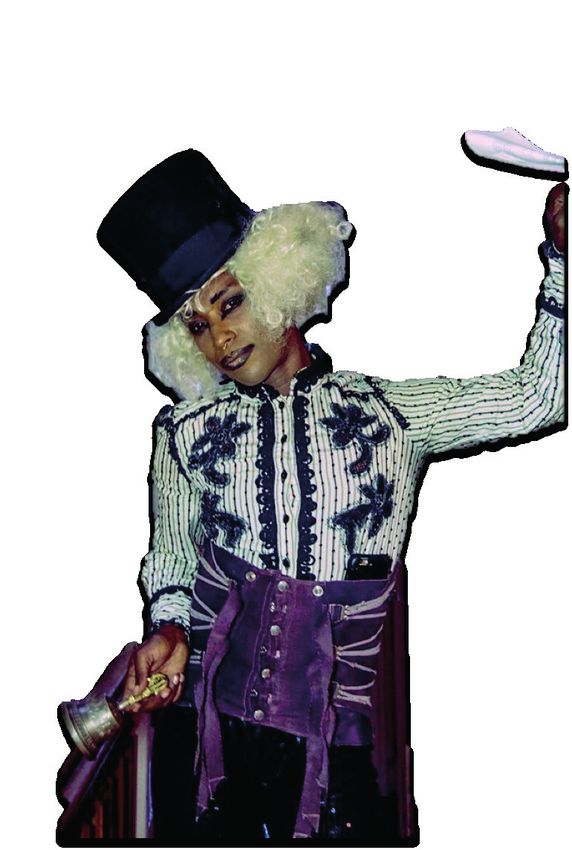
9

FlamencoVivo_ChristopherDuggan

ALAANA organizations primarily grow from need. A
community or group of people have a need and usually
people from that community rise up to meet it. So, it’s
challenging to think of framing. Framing to who? White
funders? Then, I would say that the stability of the fabric
of American societies depends on the health of ALAANA
       organizations to serve their constituencies.
                                         —Survey participant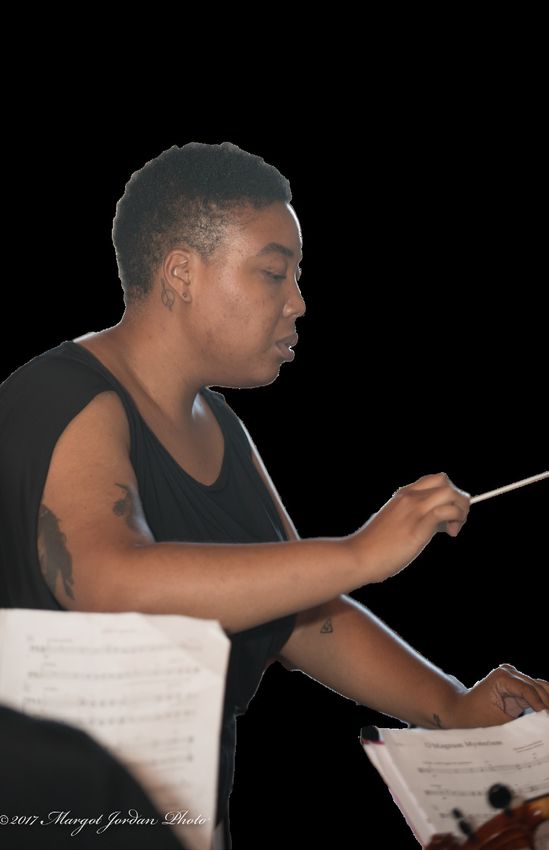
10

INTRODUCTION

The purpose of this study was to assess the state of agencies created by, for, and about
ALAANA culture and communities in New York City. These organizations had to have
established operating budgets of $200,000 or more. This budgetary threshold was
established as a marker of organizations that were more likely to have existing data available
in external databases, be eligible for funding consideration by institutional grantmakers, and
have the capacity to fill out the survey or participate in the in-person conversations.

               The objectives of the assessment were to

                    I. Better understand the complex conditions that influence the sweeping health of these
                    organizations;
                    II. Identify meaningful metrics and patterns that could project future trends and these
                    organizations’ capacities and readiness for change;
                    III. Elevate the visibility and credibility of inequitable realities in a context that does not derive
                    from a fault-based or deficit-based lens, understanding that most of these organizations are
                    undercapitalized and not inherently challenged;
                    IV. Build upon existing data to deepen the commissioning foundations’ understanding of this
                    subset of cultural organizations, and
                    V. Inform near-term grantmaking strategies to enhance the viability of these institutions.

               At a minimum, we aimed to identify challenges while simultaneously illuminating the strength,
               resilience, and creativity of these organizations’ ability to sustain in environments that are
               systematically designed to impair their ability to thrive. Our ultimate goal is to provide information
               for grantmakers to use to produce, pilot, and test radical ideas that could yield long-term solutions
                 for the arts and culture sector. Aligned and sustained efforts of a dedicated few could launch a
                     new model of how arts and culture stewards collaborate to dismantle persistent inequities
                     affecting the sustainability and thrivability of ALAANA organizations.

                                          Noel Pointer Foundation
11
Ideas that emerged during this study include the following:
I.Increase Financial Investments and Continue General Operating
Support (GOS) Flexibility
Increase investment amounts. One-third of the organizations participating in this study cannot
offer fair wages or benefits to their staff with current operating budget amounts. The average
contributed revenue amount made to ALAANA arts and culture institutions in ten major US
cities, including New York City, in 2016 was $519,379. Comparatively, organizations primarily
focused on Western art traditions received an average of $1,897,535 in contributed revenue. 7
Increase investment amounts over sustained periods of time. The median arts and culture
grant size of $25,000 has not changed for decades and, in fact, has decreased due to
inflation. 8 Local governmental funding agencies have a practice of sustained support over
an organization’s life cycle, and although these donations are deeply needed, appreciated, and
validating to these organizations, they are often small amounts. The National Assembly of
State Arts Agencies reported the median size of state arts agencies’ GOS awards was $9,149
in 2015. 9 Also, “on average from 2004–2010, only one-tenth of all sampled funders reported
some multi-year grantmaking; of those that did, an average of 41% reported giving at least
half of their grant dollars as multi-year grants.” 10 This 2011 report suggests that less than
half of a tenth of funders, 4% to be exact, had a practice of multiyear grantmaking. Although
an updated survey on the state of multiyear funding that covers a similar six-year span could
be enlightening (capturing trends from 2011 through 2016), Jagpal and Laskowski’s findings
revealed that nearly 96% of the funding landscape could enhance both the viability and
continuance of more institutions by adopting multiyear funding practices.
Allow grants to support a larger portion of general operating expenses. All participants noted
the continued need for GOS to cover expanding costs for health insurance (for those able to
offer it), staff development, industry-standard compensation levels, board development, and
external communications. These expenses are often deprioritized to meet budgetary restrictions
and constraints, compromising the steady state needed for sustainability. Research shows that
providing long-term GOS and multiyear grants “enables grantees to use their discretion in
determining individual, organizational needs.” 11 Unfortunately, only 40% of foundation support
in 2016 was GOS grants. 12
7 Helicon Collaborative, Not Just Money.
8 Arts Funding Snapshot: GIA’s Annual Research on Support for Arts and Culture,” GIA Reader 25, no. 3 (fall 2014).
9 State Arts Agency Fact Sheet, “General Operating Support,” National Assembly of State Arts Agencies, 2017.
10 Niki Jagpal and Kevin Laskowski, “The State of Multi-Year Funding,” National Committee for Responsive Philanthropy, 2011.
11Niki Jagpal, Criteria for Philanthropy at Its Best: Benchmarks to Assess and Enhance Grantmaker Impact (Washington, D.C.: National Committee for Responsive
Philanthropy, 2009).
12 Foundation Source Report on Grantmaking, Foundation Source Philanthropic Services, 2017.12
II. Build Capacity within Organizations
Complement technical assistance support with professional development training so that the added
capacity of the organization enhances and remains with the team after the professional consultancy
period expires. This professional development investment is designed to leave entities with more than
templates and tools created by the consultant.
Increase the number of experienced operating staffing in areas of development, marketing, and
financial forecasting and management. There is not a capacity deficit in areas of programming. In fact,
organizations could better balance dedicated programming staff with core operating support. Archiving
and legacy preservation also emerged as an area requiring greater attention in conversations regarding
sustainability.
III. Foster Peer Connections and Behavioral Shifts
Support more in-person convenings and opportunities for creative exchange and peer learning. People
desire to see and learn from each other more. Elevate spaces for sharing learned experiences and tactical
approaches employed by administrators to sustain and expand their organization’s impact.
Foster conversation spaces that allow administrators and managers to have safe and candid dialogue
about organizational management behaviors that challenge institutional growth and thrivability.
Exposure to ideas and experiences helps managers know that they are not alone in figuring out how to
lead in changing environments. We know best until we learn better.
IV. Make a Bold Commitment
Create a manifesto that is bold. Grantmakers could establish a quantifiable percentage of funds to
commit to the ALAANA arts and culture sector sustainability by a set date. Just as renewable energy
sustainability goals have been set by agencies across the nation, arts and culture funders could commit
to adjusting fund allocations to reflect the cultural diversity of that area. Imagine grantmakers committing
to this kind of intentional disbursement to shift the tide of inequitable distributions, until the practice of
equitable philanthropy becomes the norm.
Approach sustainability goals as a field-wide effort versus an organization-by-organization initiative.
The response to resourcing a single community-valued arts organization one emergency at a time
compromises the ability to change the sector. The principal question explored in this study is “How do
we enhance the sustainability of ALAANA arts and culture organizations in New York City to foster an
ecosystem where these organizations have an ability to thrive?” not “How do we enhance the sustainability
and thrivability of a few ALAANA arts organizations?” Starting from this nuanced point of departure will
guide how grantmakers think about community-wide sustainability.13
Jamaica Center for Arts & Learning (JCAL)
Not all things have to be new to be right.
Sometimes the slightest tweak can change the
course of history.
—Lisa Yancey14
ORGANIZATIONAL SNAPSHOT OF PARTICIPANTS
The following findings reflect the data gathered from Yancey Consulting’s field scan of
relevant databases, survey respondents, and facilitated small-group discussions.
YANCEY CONSULTING’S STUDY NYC ORGANIZATIONS THAT FIT THE
PARTICIPANTS CRITERIA WITH ACCESSIBLE DATA
(Sample size: 45 organizations) (Sample size: 97 of the 137; data reflect FY15)
Profile Profile
Average years of existence is 33. Average years of existence is 35.
91% of organizations are older than 10 years. 92% of organizations are older than 10 years.
The proportion of organizations in each discipline is as
follows:
visual arts
music
dance
multidisciplinary
literary arts
film/media
theater15
YANCEY CONSULTING’S STUDY PARTICIPANTS
(Sample size: 45 organizations)
Survey sample breakout by budget size and average
organization age
$200K–$500K - 28% of participants
average organization age 33 years
$500K–$1MM - 21% of participants
average organization age 22 years
$1MM–$3MM - 35% of participants
average organization age 34 years
$3MM–$5MM - 5% of participants
average organization age 68 years
$5MM–$10MM - 7% of participants
average organization age 25 years
$10MM and up - 5% of participants
average organization age 55 years16
YANCEY CONSULTING’S STUDY NYC ORGANIZATIONS THAT FIT THE
PARTICIPANTS CRITERIA WITH ACCESSIBLE DATA
(Sample size: 45 organizations) (Sample size: 97 of the 137; data reflect FY15)
Budget Budget
The median size budget of the organizations is The median size budget of the organizations is $853,961.
$1,100,000.
The average median budget growth since 2015 is 9%.
42% of organizations ended the year net negative.
19% of organizations project net negative for 2017.
21% of organizations project to break even for 2017; most
of these organizations are under $500K focusing on
dance and music.
26% of organizations have cash reserves of median
$100,000.
19% of organizations under $1MM have a line of credit.
About one-third of organizations cannot offer fair wages or
benefits to staff with their current budget.
Earned to contributed revenue sources average 35%:65%.
The top 3 contributed revenue sources are government,
foundations, and individual giving.
The top 3 earned revenue sources are program fees, rental
income, and sales.17
YANCEY CONSULTING’S STUDY NYC ORGANIZATIONS THAT FIT THE
PARTICIPANTS CRITERIA WITH ACCESSIBLE DATA
(Sample size: 45 organizations) (Sample size: 97 of the 137; data reflect FY15)
Assets Assets
Real estate Real estate/space
12% of organizations with a Own - 6%
budget under $3MM have
real estate. Rent - 72%
86% of organizations with Donated /in-kind - 23%
a budget over $3MM have
real estate.
Endowment/asset-based
fund
11% of organizations with
a budget under $1MM
have an endowment/
fund.
36% of organizations
with a budget between
$1MM and $3MM have
an endowment/fund.
57% of organizations with
$3MM emerged as a
a budget above $3MM distinct marker in Yancey
have an endowment/
fund. Consulting’s survey
regarding ALAANA
Equipment
organizations’ in NYC’s
72% of organizations own equipment.
abilities to aggregate
assets.
Working capital
The median number of months of working capital is 3.18
YANCEY CONSULTING’S STUDY PARTICIPANTS
(Sample size: 45 organizations)
Liabilities Constituencies served
Accrued debt Over 50% of organizations continue to serve the same
constituencies (no change over the years).
Roughly one-third of organizations with a budget under
$3MM have accrued debt. 45% of organizations (n = 38) said that their constituency
has changed over the years.
57% of organizations with a budget over $3MM have
accrued debt. 47% of organizations (n = 17) said that their constituencies
expanded due to
Mortgages/notes Covering more geographic area,
9% of organizations with a budget under $3MM have More immigrants,
mortgages/notes.
More inclusive programming, and
57% of organizations with a budget over $3MM have
mortgages/notes. Using social media.
6% of organizations (n = 17) explicitly said that their
Accounts payable audiences decreased.
A little bit over one-half of organizations have accounts 6% named gentrification as a major factor in the
payable. change of constituencies served.
Fundraising
The average number of yearly fundraising events is 2.
63% of organizations would modify the nature of the
fundraising events in the following ways:
Increase geographic coverage (organize in other cities)
Increase the number of small fundraising events (like
house parties)
Increase attendance and have more higher profile and
net-worth attendees19
YANCEY CONSULTING’S STUDY NYC ORGANIZATIONS THAT FIT THE
PARTICIPANTS CRITERIA WITH ACCESSIBLE DATA
(Sample size: 45 organizations) (Sample size: 97 of the 137; data reflect FY15)
Staff* Staff
12% of organizations state they are sufficiently staffed. The median number of FT employees is 5.
The median number of FT employees is 4. The median number of PT employees equivalent to FT
positions is 1.
The median number of PT employees is 6 (equivalent of
median 3 FT positions).
A median of 42% of staff is dedicated to programming, as
compared to
13% to fundraising,
8% to finance,
8% to marketing, and
8% to HR.
Capacity needs are prioritized as follows:
Development staff (29% of organizations)
Communications/marketing (24% of organizations)
*A detailed staff profile snapshot is provided below this table.
*A detailed staff profile snapshot is provided below this table.20
YANCEY CONSULTING’S STUDY NYC ORGANIZATIONS THAT FIT THE
PARTICIPANTS CRITERIA WITH ACCESSIBLE DATA
(Sample size: 45 organizations) (Sample size: 97 of the 137; data reflect FY15)
Board Board
Average board size is 13. Average board size is 11.
88% of organizations view their boards as active.
66% organizations have boards where all board members
contribute financially.
89% of organizations would like to adjust their current board
makeup to have more expertise and diversity (age, race,
gender) and to be fiscally stronger
Volunteers Volunteers
More than 70% of organizations have volunteers that 74% of organizations have volunteers that assist a few
assist a few times a year and are mostly returning times a year.
volunteers.
Median number of volunteers is 6.
All organizations above $3MM have volunteers.
Smaller organizations are challenged to manage
volunteers.
.21
YANCEY CONSULTING’S STUDY PARTICIPANTS
(Sample size: 45 organizations)
Networks
77% of organizations that consider themselves being part
of a network noted that networks meaningfully augment
their capacity in the following ways:
Allow them to share resources
Amplify their mission-driven advocacy
Provide collaboration opportunities
Top greatest organizational needs (percentage of
participants that stated the need)
More money (more earned revenue, more capacity to
fundraise, cash reserves) - 73%
Communications (clear message, greater audience
reach) - 15%
Space (obtain space, build out space, maintain space) -
7%
IT support - 5 %
.
Space
7%
More money IT support
73% 5%
Communications
15%22
DETAILED STAFF PROFILE
Survey participants’ employee profile
Organization’s Average number of Average number of employees in
budget size full-time employees executive management positions
$200–$500K 1.58 1.5
$500K–$1MM 3.11 1.56
$1MM–$3MM 8.4 3.13
$3MM–$5MM 15 4.5
$5MM–$10MM 25.67 3.33
$10MM and up 103 5.5
Percentage of employees dedicated to specific staffing areas (average within
budgetary brackets)
Organization’s
budget size Programming Fundraising Finance Marketing HR/Ops
$200–$500K 53% 15% 11% 18% 8%
$500K–$1MM 75% 13% 12% 12% 11%
$1MM–$3MM 30% 9% 7% 5% 7%
$3MM–$5MM 77% 3% 5% 3% 4%
$5MM–$10MM 76% 5% 3% 3% 5%
$10MM and up 65% 3% 3% 4% 4%23
Noel Pointer Foundation
CONTEXTUALIZING DATA
Data is illuminating and powerful when contemplating change. It is
the anchor to new ideas. The paper and ink when crafting a story.
Data, however, has no loyalty. It is used to tell any story desired by
the author.
This is why data must be in the service of a bold, radical vision.
It is vision and artistry that spark culture shifts and inspire people
to demand and sustain change.
—Lisa Yancey24
FINDINGS
What We Learned from the Survey
SELF-IDENTIFIED STRENGTHS FROM RESPONDENTS
Programming that reflects and gives voice to the communities served
Providing opportunities to artists of color
Commitment to the mission and vision
Cultural diversity in constituencies served
Self-reliance and dedication
A dedicated team (72% of the organizations have staff that have been with the
organization for over ten years.)
How do you assess commitment and passion when
evaluating sustainability?
—Small-group conversation participant
The Laundromat Project
BRIGHT SPOTS
Marginal increase in earned revenue contributions in 2017 as compared to the national
average of nonprofits in 2014. Nationally, nonprofits’ contributed to earned revenue ratio was
40% to 60%, whereas survey participants’ earned to contributed revenue ratio was 35% to
65%. 13
Improved financial forecasting. 65% of organizations of color in the 2015 DeVos Institute
of Arts Management survey sample reported deficits in FY13, 14 whereas only 19%
of organizations project net negative for FY17. The DeVos survey had a national reach
and focused solely on African American and Latino museums, dance companies, and
theater companies, so the comparative percentage is not apples to apples. That said, we
believe that the percentage difference is relevant because New York City had the highest
percentage of African American and Latino organizations represented in DeVos’s survey,
thus a significant margin of the 65% noted reflects New York City. Even with the improved
financial forecasting, it is Important to note here that only 12% of the organizations in
Yancey Consulting’s survey consider their operations “sufficiently staffed”; and only about
2/3 of surveyed organizations can afford to offer fair wages and benefits. So, there are more
improvements to be had.
13 MinaPara Matlon, Ingrid Van Haastrecht, and Kaitlyn Wittig Mengüç, Figuring the Plural: Needs and Supports of Canadian and US Ethnocultural Arts Organizations,
School of the Art Institute of Chicago/Art Institute of Chicago, 2014.
14 DeVos
Institute of Arts Management, Diversity in the Arts: The Past, Present, and Future of African American and Latino Museums, Dance Companies, and Theater
Companies, 2015.25
Enhanced effectiveness of NYC ALAANA board members:
74% of respondents affirmed their board members bring access to different networks.
88% of participants refer to their boards as “active.”
Approximately 66% of the organizations have boards where all members contribute
financially (although more board members with greater financial contributions and
wealthier networks are a priority need according to participants).
Consistency on the type of investments that could make a “catalytic” difference to
organizations’ sustainability:
29% noted leadership transition.
26% noted space/infrastructure.
18% noted capacity building.
16% noted the need for greater investments in innovation and risk taking; pivoting to
greater business practices.
16% noted investments in new programming or shifts in current programming.
NOTED CHALLENGES
The revenue generating capacity of boards. 90% of organizations would like to adjust the
current makeup of their boards by bringing more financial power, diversity in ethnicity, age,
and expertise to governance leadership.
Need for deeper investments in operational competencies (finance, reach, scale,
communications, and revenue diversification)
Capacity (fundraising, marketing, financial management, archives/legacy preservation, and
board development)
Little to no investments available for meaningful professional development of staff
Minimal time invested for reflection (within staff and with board)
A culture of exhaustion and perpetual hand-to-mouth operations
Lack of financial planning and business modeling expertise
Reliance on contributed income. Despite the fact that the median contributed revenue ratio of
participants is 35%, organizations with budgets between $200,000 and $500,000 heavily
rely on contributed income (65% of revenue is contributed).26
Founders of many of these organizations have
dedicated their lives to this work. The life-
dedication trend started to shift with Gen-X
administrators and is distinctly different in the
millennial generation. Understanding the needs
and non-negotiables of the future workforce
within this sector is critical for sustainability.
—Yancey Consulting
The Bronx Academy of Arts and Dance (BAAD!)
REGARDING FRAMING OF ALAANA ORGANIZATIONS
FROM SURVEY PARTICIPANTS:
92% of organizations (n = 37) said that it is necessary to distinguish the needs of ALAANA
organizations from white cultural organizations.
“ALAANA organizations make for a more inclusive, more democratic world, which in itself is
priceless.”
“The populations that these organizations serve and the work they feature have relevance
to wide populations. As such, these organizations should be seen as active partners in better
understanding the experiences of all people.”
“We are critical to the landscape. We are the future of America.”
“I think a large part of the discussion about ALAANA organizations mostly has to do with
budget size. For a variety of reasons, ALAANA organizations tend to be smaller; so I think
sometimes the conversation turns to cultural specificity when really it might be about money
and capacity.”27
“Perhaps it’s necessary to have framing, but it does ghettoize ALAANA organizations by
its very nature. ALAANA artists are artists—like any other artists. It is funders—individual,
corporate, foundation—and audiences who need to understand that the work of ALAANA
organizations is not the work of ‘others.’”
“Many of these organizations are community based and were created to serve a specific
need within their community. With this focus on community also comes a set of shared
values that many of these organizations share as a common philosophy for serving the
community.”
“ALAANA organizations can be framed as community-based service providers and agencies
that have a vision to improve the quality of life for underserved multicultural communities by
being a voice advocating for the reduction of ethnic disproportionalities.”
“It is not a one-size-fits-all conversation.”
“Cease using the term mainstream to define non-ALAANA organizations.”
“We eat Chinese food; we don’t think of it as being only for Chinese people, for example,
unless the menu wasn’t translated, I suppose. Culture and identity are over politicized.”
Even if the blinds are down, we still see the sky.
—Small-group conversation participant
The Bronx Academy of Arts and Dance (BAAD!)28
WISH LIST FROM PARTICIPANTS
Three to five years of unrestricted funding to give “breathing room” and space for innovation
Dedicated physical space for programming (long-term rental or ownership)
Capacity building:
29% of organizations identified the need for greater development capacity.
24% of organizations expressed that strengthening marketing/communications is a
capacity priority.
Administrative support (especially for organizations with budgets of $200,000 to
$500,000) was notable.
Financial planning support (particularly organizations with budgets ranging between
$1,00,000 and $3,000,000) was also prioritized.
“Leadership matters. ALAANA organizations tend to exist on the margins. We encounter
obstacles in attracting white and ALAANA board members, ALAANA senior staff, and major
donors. ALAANA organizations at every level face these challenges, and investments need to
be made to enable organizations like ours to make the full impact we are capable of. If mere
existence is the constant struggle, then we will be prevented from realizing our mission. Staff
development resources are also very important, as organizations face challenges in providing
professional development resources to talented staff, specifically in order to advance
ALAANA staff to higher-level positions,” said a survey participant.
Succession planning
Active, diverse, and financially strong boards
We have the emotional capital, access
to the community, and expertise. Fund
us directly to do the work that big white
institutions contract us to do.
—Small-group conversation participant
FlamencoVivo_ChristopherDuggan29
WHAT WE LEARNED FROM THE SMALL-GROUP
CONVERSATIONS
ALAANA as a term is problematic for some. We had one organization that chose not to
participate while we conducted the study using that rubric. Yancey Consulting included a
series of questions about the use of ALAANA in the survey and discussed it in the small-
group sessions. Participants shared the following pros and cons:
Pros
The label is useful in resourcing the field.
The label provides organizations a point of entry and becomes the framework for
inclusivity, but “cultural sensitivity” is important.
The label brings attention to organizations and communities that are under systematic
oppression and marks the needs of specific communities. “I think every organization is
different, but there is definitely a disparity of resources [for these] communities.”
“It is important to have organizations say that they are here to identify and support their
communities.”
Cons
The label is counterproductive in boxing an organization into a tight frame and pitting
organizations against each other: “we versus they.”
ALAANA-defined organizations are specific, but they also face general organizational
issues. “These organizations are very diverse and distinct when it comes to creating the
art and serving our distinct communities.”
An umbrella label minimizes the diversity of these communities. The full story of
an organization cannot be told looking at generalized descriptors. You lose defining
nuances.
Labels are a generational self-identification thing. New terminology is not the solution.
An acronym does not encompass multicultural value.
It is about inclusion, not about labels.
Being able to talk with others doing this work in person is important. Participants appreciated
the opportunity to hear and learn from each other in the small-group conversations. They
expressed appreciation that it “wasn’t a full room where folks are essentially competing to be
heard.”30
There is not a sufficient supply of individuals within or across organizations who bring business
management competencies for growing a cultural enterprise. This is often augmented by
consultancies that temporarily bolster the organization. Take an organization that receives financial
auditing consultancy support to affirm or clarify its financial positioning, for example. During the
consultancy, leadership unearth operating practices that challenge the organization’s ability to sustain
financial acuity. The consultant conducts a comprehensive audit and identifies areas of concern. The
organization has good information to move forward in the near term. The asset returns on this work
are typically short-lived if the organization continues to lack the capacity to steward better business
management practices.
Limited capacity is tied to scarce capital. Operating from scarcity breeds creative problem solving but
stagnates innovation.
There is a desire and need to create more human-centric work environments that value employees’
self-care, skills development, and relationship building with colleagues and within communities.
One-time workshops are not cutting it. “Everyone can’t get a master’s
degree—nor should they—but we could build a community of
learning.”
There was a palpable need to better broadcast and publish available
resources to organizations with smaller budgets, and what
they need to do to access them. Despite efforts to ensure
that all NYC–based ALAANA organizations are aware
of the resources available to nonprofits, many of the
organizations were either not aware or not actively
utilizing these resources. It is reminiscent of having
open and free events that are not well attended by
all or specific populations. Something is getting lost
in translation. The message, “This is for you” is not
connecting as well as it should. Given that promotional
efforts have been made to specific organizations and the
public broadly, a targeted awareness and incentivized usage
campaign should be considered as a field-wide effort. Without
casting fault, it is not enough for organizational leaders to
be told that resource lists exist, such as the one found at
the New York City Department of Cultural Affairs website,
when we know that such support systems are being
underutilized by this subset of ALAANA organizations.
15 Perhaps efforts can be made in partnership with
the New York City Department of Cultural Affairs
to launch a campaign to enhance grantees’
awareness and usage of existing resources. Not
only would it maximize the return on NYC’s
existing suite of services (presuming that they
have the capacity to handle increased demand), it is
a cost-efficient way to have greater adoption and thus
impact from the current cultural amenities ecosystem.
AMERINDA
15 NYC Resources, New York City Department of Cultural Affairs, http://home2.nyc.
gov/html/dcla/html/resources/resources.shtml.31
CROSS-LITERATURE
COMPARATIVE DATA POINTS
Interesting Comparisons from Existing Reports
Source Data points from existing Comparative findings with
reports Yancey Consulting’s study
Not Just Money: Equity The top revenue sources for This study confirmed a similar revenue
Issues in Cultural organizations serving communities of source lineup based on the size of
Philanthropy, by Helicon color are the following: contributions:
Collaborative, 2017.
Investments Box office, program fees (62% of
organizations name as top revenue
Admission, box office, tuition source)
Government Government (34%)
Foundations Foundations (34%)
Rental income (14%)
Diversity in the Arts: The Earned revenue as percentage of the This study showed that the average
Past, Present, and Future total budget in the largest mainstream earned to contributed ratio is 35% to
of African American organizations is 59% compared to 40% 65% percent.
and Latino Museums, for the largest African American and
Dance Companies, and Latino organizations.
Theater Companies, by
DeVos Institute of Arts
Management, 2015. The average board size of the largest The average board size of organizations
mainstream organizations is 40. African surveyed is 13.
American and Latino organizations’
boards are an average of 13.32
Source Data points from existing Comparative findings with
reports Yancey Consulting’s study
65% of organizations of color in the In this study, 19% of organizations project
DeVos survey sample reported deficits net negative for FY17.
in FY13.
In this study, 26% of organizations
30% of organizations of color reported
reported an endowment/asset-based
an endowment.
fund.
The average age of mainstream The average age of organizations in this
organizations is 72 years versus 35 years study was 33 years.
for culturally diverse organizations.
The surveyed organizations closely
45% of organizations are
Figuring the Plural: Needs mirror national breakdowns by discipline:
multidisciplinary.
and Supports of Canadian multidisciplinary organizations are most
and US Ethnocultural Arts prevalent (56%).
Organizations, by Mina
Para Matlon, Ingrid Van
Haastrecht, and Kaitlyn The national average gross income is In this study the average gross income is
Wittig Mengüç, School of the $701,358. $2.6MM (median: $1.1MM).
Art Institute of Chicago/Art
Institute of Chicago, 2014.
The national ratio of contributed to In this study the ratio of contributed to
earned revenue is 40% to 60%. earned revenue is 35% to 65%.
Financial resource needs: Financial resource needs:
Increasing contributed revenue (39% Increased government and
ranked 1) foundation support (30% ranked 1)
Identifying new funding sources (30% Increased earnings (27% ranked 1)
ranked 1)
Increased individual contributions
Grant assistance reported as not (27% ranked 1)
a challenge or need by 61% of
respondents33
Source Data points from existing Comparative findings with
reports Yancey Consulting’s study
Increased corporate support (13%
ranked 1)
Administrative support (7% expressed
the need) and grant compliance
reporting revealed as issues with
existing capacities in conversations
and the survey
Organizational challenges: Organizational challenges:
Financial resources (86% ranked 1–2) Financial resources
Organizational capacity building (53% Organizational capacity building
ranked 1–2)
Space
Space (21% ranked 1–2)
Audience development
Audience development (20% ranked
1–2)
Top capacity building needs: Top capacity building needs:
Increasing the number of paid staff 86% of surveyed organizations stated
(41% ranked 1–2) they are not sufficiently staffed.
Board development (29% ranked 89% of organizations would like to
1–2) adjust their current board makeup.
Obtaining appropriately skilled staff 29% of organizations need
(25% ranked 1–2) development staff.
Marketing/promotion assistance 24% of organizations need marketing
(24% ranked 1–2) staff.
14% need program staff.34
Source Data points from existing Comparative findings with
reports Yancey Consulting’s study
Developmental constraints are Developmental constraints of surveyed
characteristic of the organizational life and interviewed organizations are
stage “growth and renewal” and in some characteristic of the life stage “growth
cases “stagnation” (Figuring the Plural, and renewal” and in some cases
298–99). “stagnation.”
Need for unrestricted funds
Need to diversify revenue streams, increase
individual contributions
Fundraising limitations due to capacity
Need for access to wealthy individuals,
corporations, and foundations
Need to create leadership succession plan
Need to diversify board
Need to develop leadership
Need to have affordable, sustainable space
Need to educate the public on the value of
arts
Lack of marketing expertise
Pregones/Puerto Rican Traveling Theater35
Noel Pointer Foundation
One cannot expect sustained change with
temporary solutions that assuage symptoms
without eliminating the core problems. We can only
get to these core problems by investing differently
and collaboratively in capacity, shared learning, and
behavioral modifications that can lead to field-wide
culture shifts.
—Lisa Yancey36
TOP TAKEAWAYS
Funders are doing a lot of the right things. Don’t stop.
I. Go further.
Shifts in grantmaking practices over the years are creating more resilient organizations. All
participants remarked that the following grantmaking practices, which are becoming more
commonplace, have been critically important to their organization’s ability to sustain and
scale:
Larger grant amounts
Multiyear funding
More general operating support to cover the people who make the programs happen
Technical assistance support to augment capacity and integrate complementary
expertise into the organization’s intellectual assets pool (albeit temporarily)
Convening clusters of grantees for strategic conversations
Supporting and encouraging professional development of staff
Supporting succession planning
Adoption of these practices by more funders will continue to fortify the field. For sector
sustainability, the current challenge with these practices is their adoption case by case. The
beneficiaries are often few. And the focus is singularly skewed, so all of the strategy and
meaningful problem solving that could benefit others in the field are conducted behind closed
doors. No plan or structure is in place for field-wide learning. So, when stories of success are
lauded, they are almost exclusively about a specific entity in which enduring investments have
been made—not in a cluster of a community of organizations.
What if grantmakers came together to transform the ethos of NYC’s
cultural sector into a nonprofit Silicon Valley?
This transformation would require abiding investments in the ecosystem broadly, which
includes individual investments in organizations but understanding that the bulk of
investments need to have broader reach throughout the field. 16
16 Inherent challenges with this idea are twofold. On the one hand, one might ask, Where is the appeal for
the philanthropic reach to have broader touch points when given to white cultural organizations? Why are the
investments in ALAANA organizations stretched so thin? And this, of course, is a valid question and critique.
The other challenge is that the burden of determining opportunities for more organizations to benefit
from investments in an allied organization cannot fall squarely on the shoulders of the grantee. Grantors,
grantees, consultants, and other thought leaders in the field need more collective strategizing spaces to
pilot sector-wide solutions.
FlamencoVivo_ChristopherDuggan37
In building an ecosystem of thrivability, ALAANA organizations
II. need investments with a generational outlook.
One remarkable statistic given the context of this study is the comparative data point noting that the
average age of mainstream organizations is seventy-two years versus thirty-five years for culturally
diverse organizations. 17 Yancey Consulting’s study yielded a median organizational age of thirty-
two years. This finding indicates that these organizations have sustained for over a generation,
presuming a generation is approximately twenty-five to thirty years. The single-entity sustainability
approach makes absolute sense given the average life cycle of ALAANA organizations. Now that
we are seeking a paradigm shift, we have to plan for organizations to continue to exist within New
York City’s cultural tapestry for the next hundred years. It is time to fertilize environs where these
organizations thrive season after season.
We need an ecosystem approach to sustainability, breaking away
III. from the practice of building one institution at a time.
Now that ALAANA arts and culture organizations in New York City are moving into multiple
generations of existence as a sectoral class, to nurture an environment that will foster sustainability
and thrivability over time, the broader landscape needs to be fortified with (1) leadership development
as common practice; (2) solid operational and management skills situated within organizations,
recognized as an effective mission-driven practice; and (3) spaces that foster idea sharing and
collaborative learning.
Redirect the thinking from focusing on sustaining individual institutions to building a fertile
ecosystem. This means developing and maintaining a lens where the question, How can this
benefit the sector? is asked. The answer may include digital sharing platforms, convenings,
publishing investment rationales, or resourcing institutional mentorship or experiential exchange
initiatives for better sector-wide learning.
Build the people. Have more individuals understanding the business of sustainable operations that
flow across institutions. Ecosystem sustainability will also require advocacy for better wages and
fringe benefits across the field. Keep in mind sustainability is not the end goal. It is along the path
to nurturing an environment where ALAANA organizations can thrive.
This takeaway does not suggest that individual institutions should not receive significant
investments. Instead, it recognizes that investments in institutions should not be made without
understanding the context of how that investment fortifies the field. The needle of sustainability
won’t move until the field is an ecosystem where generative ideas and cross-pollinated learning
become normative practice.
17 DeVos Institute of Arts Management, Diversity in the Arts.38
Set an audacious goal that could shift the diversity and
level of investments in ALAANA institutions (financial, time,
IV. strategic problem solving, peer knowledge exchange, etc.) to
directly impact the long-term viability of these organizations
in New York City.
What if grantmakers piloted a model focused on ALAANA organizations’ thrivability, seeking proof
of concept within the next ten years, and built a brand that heralds New York City as a fertile ground
where creative innovation thrives? There would be a concentrated focus on shifting an ecosystem
to a culture of excellence, collaborative practice, experimentation, incontestable business operations,
and well-compensated stewards. What if New York City’s arts and culture sector was celebrated
alongside other respected industries by people outside of the arts and culture orbit? What would it
take to accomplish this recognition?
Create a goal that feels equally plausible and implausible to stretch beyond
conventional thinking. Aspiring for a paradigm shift requires atypical
thinking.
I. Create an ALAANA arts and culture paradigm-shift think tank
Aggregate a group of thinkers to devise a series of tactics that a philanthropy cohort could implement
in sum or part over a sustained period (five, ten, fifteen, twenty years, for example). Working with a
consultant to facilitate the process, these culture-shift thinkers would identify specific indicators of
sustainability (maintaining viability) and thrivability (flourishing and prospering) to shape goals and
AMERINDA steps to launch an improved cultural ecosystem. Once the goals and clear picture of sector-wide
sustainability and thrivability are canvassed, the think tank would suggest strategic actions that
track directly with the targeted indicators, which the cohort could pilot as a prototype. Such actions
would take into consideration other sectors that are excelling and assess the landscape that allows
them to thrive.
The think tank would
Build upon what funders are already doing well,
Assess opportunities to expand field leaders’ exposure to different growth and operational
practices to manifest an audacious vision (getting beyond day-to-day operations),
Create scenarios of capacity building that distinguish the needs of different budget sizes and
offer ways to strengthen existing economic models and sharing platforms,
Identify opportunities for transformative mentorship and skills development for staff and
board members that allow the intellectual capital of the sector to grow over time, and
Offer ways to cultivate idea sharing sector-wide so that such practices become characteristics
attributed to how cultural leadership is practiced in New York City as the prototyping model.You can also read


