Security token (STO) analysis - CP Insight February 25, 2019 - Finyear
←
→
Page content transcription
If your browser does not render page correctly, please read the page content below
CP Insight
February 25, 2019

Security token (STO)
analysis

Jay Han
joongsub@chainpartners.net

Daehoon Han
daehoon@chainpartners.net

KC Lee
kyeongcheol@chainpartners.net

Chain Partners Research
CONTENTS

           Key chart                                                              2

           Summary                                                                4

           1. The background of security token boom                               5

           2. Security token ecosystem analysis                                 12

           3. The myth of security token                                        22

           4. Security token market size analysis                               26

                                                                                 1
                                                      Security token (STO) analysis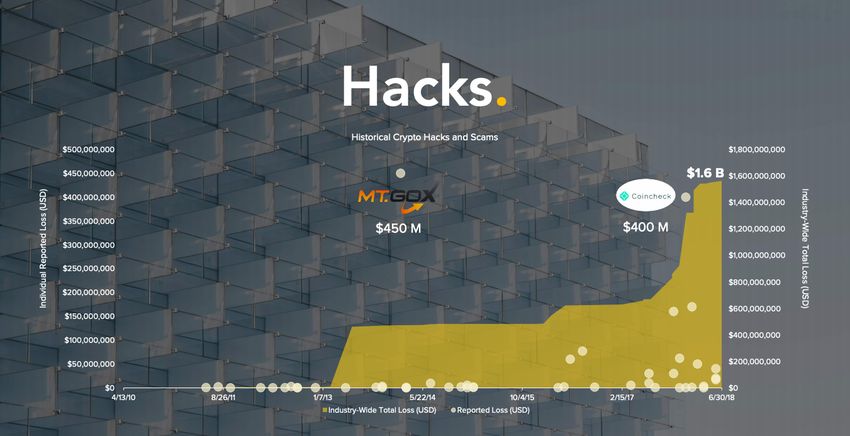
KEY CHART #1

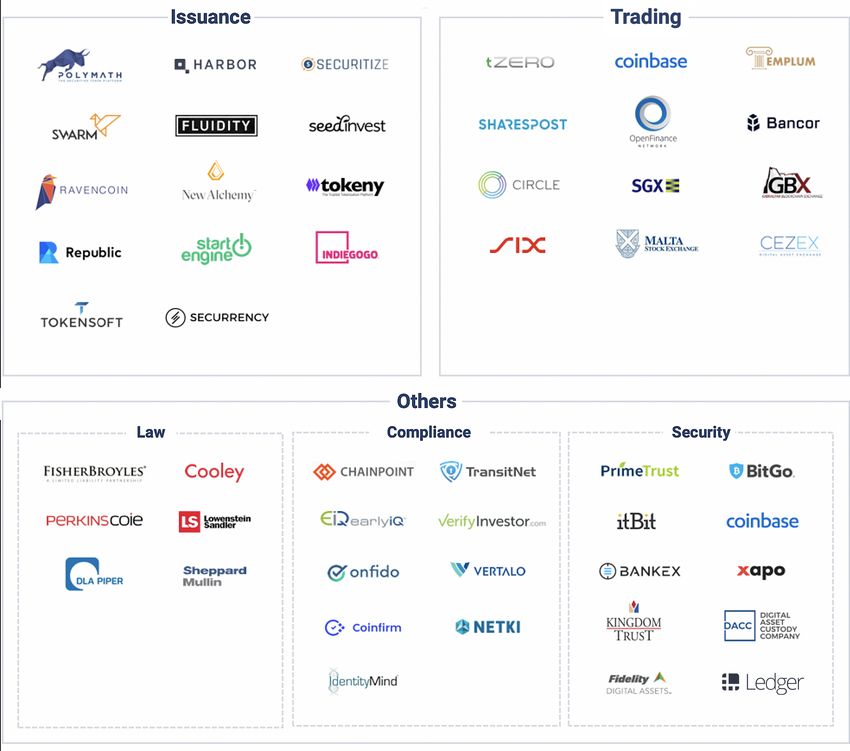
          Security token ecosystem

                                             Source: Chain Partners

                                                                2
                                     Security token (STO) analysis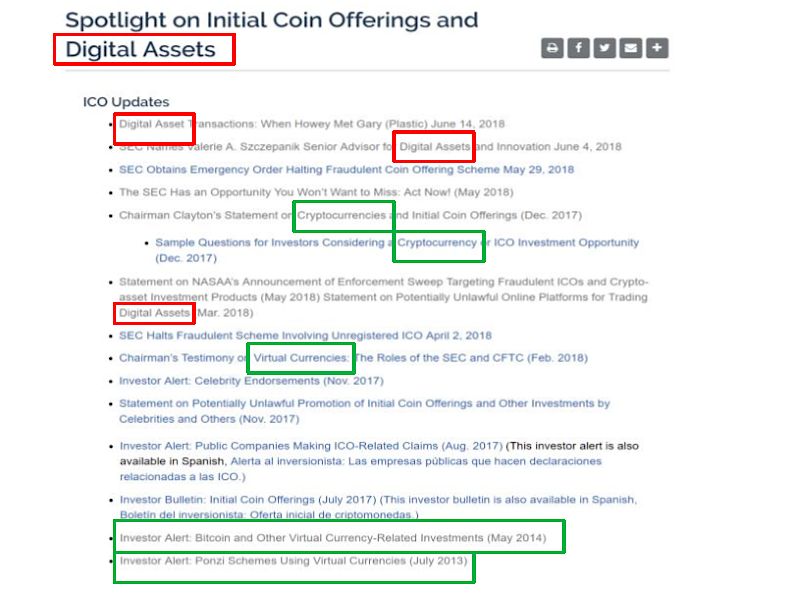
KEY CHART #2

          Security token market size (accumulated issuance base)

             (USD b)
                                                                         Startup financing
              2,500
                                                                         Asset backed security tokens (ABST)

              2,000

              1,500
                                                          CAGR 59%

              1,000

               500

                 0
                       2019   2020   2021   2022   2023    2024   2025     2026    2027      2028    2029   2030

                                                                                             Source: Chain Partners

                                                                                                                3
                                                                                  Security token (STO) analysis
SUMMARY

          We are observing the emergence of a boom in the security token (STO: Security
          Token Offering) sector of the digital asset market. Although some optimists
          forecast that the security token market value will reach several trillion dollars
          within 2-3 years, this is a lofty expectation in our view. Our view is that security
          tokens still remain at an experimental stage, and 2019 will become the initial
          period for the appearance of legitimate infrastructure for the
          institutionalization of digital assets. As security tokens fall under the
          framework of traditional finance, we believe it is nearly impossible for it to
          expand into a trillion dollar market without the entrance of financial institutions.
          (In early 2018 when the majority of the market was utility tokens, the maximum
          value of the digital asset market was USD 814b). For the institutionalization of
          digital assets, there needs to be: 1) clear regulations; 2) international standards;
          3) legitimate infrastructure; and 4) participation of reputable traditional
          financial institutions. We believe it may take a long time for the digital asset
          market to fulfill these standards. We project the security token market size will
          grow to USD 2t by 2030 with a 59% CAGR during 2019-2030, amid steady
          improvement of the digital asset ecosystem, toward institutionalization
          possibly after 2025. The contents of this report are as follows.

          1. The background of security token boom

          2. Security token ecosystem analysis

          3. The myth of security token

          4. Security token market size analysis

                                                                                               4
                                                                    Security token (STO) analysis
1. The background of security token boom

            Security token is a token that assets are converted into a form of token and
            has similar features with traditional financial products such as stocks, bonds,
            and derivatives. Although FINMA specified security token as 'Asset token', the
            term 'Security token' is more commonly used in the blockchain industry. What
            makes security token different from payment token or utility token is whether it
            is regulated by capital market law. To bypass jurisdiction, many ICO projects
            claimed their tokens were utility tokens and succeeded in easily raising capital
            despite the fact that every altcoin may be classified as securities based on the
            Howey Test. (Investment of money, in a common enterprise, with the
            expectation of profit, solely on the efforts of others).

            Security token vs. Utility token

                        Security token             VS.                Utility token

                      Ownership of asset                           Access to protocol

                   Investor expecting profits                         Service buyer

               Complicated fund-raising process                Relatively easy fund-raising

                   Only accredited investors                   Allowed to public investors

                                                                            Source: Chain Partners

                                                                                               5
                                                                    Security token (STO) analysis
The progress of ICO project in business stages
(the possibility of being interpreted as security)
Decentralization progress of ICO Project
100 %
The
possibility
of being
interpreted
Incorporation Marketing Token sale and Network Network growth as security
and team (whitepaper, listing on launch encourages
setting website, SNS, exchanges decentralization
and others)
0%
The progress of ICO project
Source: Chain Partners
The reason why security token in gaining attention is strengthened regulation
across the world. For instance, G20 announced the agreement on crypto asset
regulation in Dec 2018, to resolve money laundry, tax evasion and other issues.
Of note, we believe ICO should have been regulated since many investors have
lost money unfairly during ICO frenzy in 2017-1H18. Low quality projects that
raised funds through ICO spent investors` money on luxury meet ups, rather
than the development of product and service. In addition, ICO promoters
disappeared after collecting investment funds and gained unfair profits
through pyramid scheme.
However, the ICO frenzy is over. The average monthly amount of funds raised
in the second half of 2018 was USD 271m, which is 74% lower than 1H18. As
regulations intensify, most tokens will likely fall under securities law going
forward, in our view. We believe this is positive movement for the digital asset
market to become more professional. In fact, regulators in the US, Singapore,
Hong Kong, Thailand, Japan, Philippines and other countries have been
attempting to properly legalize the digital asset market.
6
Security token (STO) analysisThe evolving stance on digital asset by country
Country 2013-2015 2016 2017 2018
Developed 2013 – SEC SEC Federal Court
countries ● Warned investment ● In "Report of ● Recognized digital
of bitcoin and investigation", asset as commodities
cryptocurrency at announced digital asset
"Investor alert" with features of SEC
securities that are ● Announced
2014 – IRS issued or sold on the "Statement on digital
● Interpreted digital platform asset securities
asset like bitcoin as DAO(Decentralized issuance and trading”
asset and levied Autonomous ● Started using the
income tax Organization) can be term ‘digital asset’
regulated under instead of ‘virtual
appropriate law currency’
2015 – CFTC
● At "Statement on
● Recognized digital
crypto currencies and
asset as commodity
initial coin offering", Jay
Clayton announced 11
sample questions that
investors should have
before investing in
‘Crypto currency or ICO’
2015 – Japan Japan FSA FSA
Government Government ● Gave digital asset an ● Conducted a total
● Announced ● In Payment legal authority of a inspection on digital
guideline that treats Service Act, payment method, asset exchanges and
bitcoin as normal legalized utilizing removed 8% took follow-up actions
commodity after digital asset as a consumption tax, and on Coincheck hacking
Mt.Gox hacking and use of payment; tried tax exemption event; In June, FSA
bankruptcy defined bitcoin delivered an order of
and altcoins as Japan Government business improvement
'Crypto currency' ● Announced to 6 exchanges.
accounting standards ● Announced the
that recognize digital consideration of
asset as asset of changing regulation
corporation; the law from digital asset
valuation profit and loss payment service act
by the price variation of from 2017 to financial
digital asset in instrument transaction
company is reflected on law
financial reports ● Gave over the
authority to regulate
the industry to JVCEA
(Japan's Virtual
Currency Exchange
Association)
● Considered changing
the term 'Virtual
currency' into 'Crypto
asset'
7
Security token (STO) analysisFINMA Capital Law &
● Categorized 3 token Technology
types (Payment, Utility, Association
Asset) at "FINMA ● Released AML
guidance" standards for digital
asset and distributed
President of Central ledger technology
Bank
● Announced an opinion FINMA
that bitcoin and altcoins ● Approved application
are more traditional for digital asset
vehicles, rather than investment fund
currency business which created
an opportunity for more
institutional investors
to enter the digital
asset market
● Asked EXPERT, an
association composed
of Swiss experts of
accounting, audit, and
tax, to treat digital
asset as "Risky asset"
Stock Exchange
● Published Exchange
Traded Products(ETP)
that reflects the price
of different digital
assets.
2014 - Financial Futures Financial Futures
Government Commission Commission
● Gave a warning ● Gave a warning that ● Gave a warning about
about the risk of digital assets or tokens trade in digital asset
bitcoin trade and that conducted ICO can exchange and ICO
involvement into be defined as securities investment; sent
money laundry according to Hong Kong warning to 7 digital
securities law asset exchanges and
2015 - Central notified that they will
Bank regulate unlicensed
● Gave a warning exchanges and ICO
about the risk of according to securities
bitcoin related law
investment ● In annual report,
warned that they will
keep eyes on digital
asset and ICO
● Announced that they
are enforcing
regulation sandbox on
digital asset exchanges
and issuing license for
digital asset
investment fund
management
companies
8
Security token (STO) analysisMAS MAS
● Announced that all ● Announced that MAS
the issues related to and Singapore
digital asset that can be Exchange (SGX) has
under securities law will co-developed DvP
be regulated by MAS (Delivery versus
● Executed sandbox for Payment) for digital
fostering blockchain assets transaction
startups in line with settlement
releasing ICO guideline. ● Issued proposal
Categorized token types report for solving
intopPayment token, cross-border payment
utility token, security problem with England
token and Canada
● Released updated
"Guide to Digital Token
Offerings"
- ICO token sales
require investment
proposals under local
securities law
9.29 Financial 01.12 Ministry of
Committee Justice
● Announced full ICO ● Announced that they
ban will use 'Virtual Badge'
instead of 'Virtual
12.28 Government Currency'
● Announced that they
● Announced a special
were considering
measure for eradicating
shutting down all
digital asset
exchanges and
speculation
allowing only P2P
- put in force a real-
trade
name system for
trading by halting
issuance of virtual 05.31 Supreme
account on major Court
exchanges ● Acknowledged
- announced a review of bitcoin as property
shutting down all digital
asset exchanges
Emerging 2013 – Central ● Established Central Bank Central Bank
countries Bank digital currency
● Complete ban on ● Applied for total 41
institute for
● Banned bitcoin digital asset trading and patents by June
researching
related institutions ICO - Announced “it is
digital asset
and payment ● Shut down exchanges getting rid of the border
services between blockchain-
based cryptocurrency
and existing currency
system”
● Looked for crypto
experts in order for
cryptocurrency issue
plan
● Conducted “the ban
on digital asset related
events and commercial
activities”
9
Security token (STO) analysis2013 – Central Securities and Securities and
Bank Exchange Exchange
● Illegalized bitcoin Commission Commission
and prohibited its ● Announced ICO ● Discussed ICO and
trade. halted the guidance exchanges with Vitalik
business of Taiwan Buterin and OmiseGO
major digital asset (decentralized
exchange Bitcoin Co. exchange and payment
Ltd for months service)
● Digital asset act into
effect: categorized
digital asset into crypto
currency and digital
token
- set license and
investment limit for
digital asset related
companies
● Issued license to 7
exchanges and
brokerage companies
for digital asset trading
● Allowed 7
cryptocurrencies (BTC;
ETH; BCH; ETC; LTC;
XRP; XLM)
● Hosted public
hearing in order to relax
ICO regulation and
listen to voices from
the field; goal of
making new guide that
helps decrease hurdles
and protect investors
Bond Market
Association
● Said they are
researching blockchain
technology targeting
Bond Coin issue
Central Bank
● Announced they will
conduct research on
CBDC (Central Bank
Digital Currency)
10
Security token (STO) analysis2014 – Central Central Bank Government
Bank ● Released guideline for ● Appointed Cagayan
● Warned bitcoin exchanges Economic Zone
investment and risk Authority (Ceza) as
of it special zone
- Gave digital asset and
blockchain companies
license
- Promoted that it is
positive on job
employment and
economic growth
● Planned giving out
license to exchanges
that treat fiat currency
Peso
● Focused on the
benefit of making
remittance by digital
asset for Filipino
working abroad
Securities Exchange
and Commission
● Released ICO
guideline
- Categorized tokens
into Asset token;
Payment token;
Security token; Utility
token
Source: Various articles, Chain Partners
Note: blue letters are positive change and red ones are negative change
11
Security token (STO) analysis2. Security token industry ecosystem analysis
US government once recognized bitcoin and altcoins as ‘currency’, thereby
thought they could threaten the authority of key currency, dollar, in our view.
However, as the entire ecosystem grew significantly (particularly China has
largely dominated this industry), US framed bitcoin and altcoins as ‘Digital
Asset’ from 2018 and has actively attempted to institutionalize it. Of note, SEC
started to strengthen regulation and treat the majority of tokens as securities.
For instance, SEC levied a fine on EtherDelta (Decentralized exchange), Airfox
(Financial service project), and Paragon (Marijuana project). Thanks to SEC`s
clear stance and communication with industry participants, US is leading
security token ecosystem at the moment.
SEC uses ‘Digital Assets’ instead of ‘Virtual Currencies’
Source: US SEC; Chain Partners
12
Security token (STO) analysisAmong the various participants, we believe the most promising segments in
the security token ecosystem are issuance (primary), trading (secondary) and
security. Although others such as legal and compliance are also necessary, we
believe these core segments will play a key role in the security token
ecosystem. The fate of the security token market will depend on the maturity
of these segments, in our view. In order for digital asset to grow to a trillion
dollar market, trustworthy infrastructure will need to be installed to attract
more institutions. Notably, the security segment is gaining attention amid the
security token trend and this will be discussed further later.
Security token ecosystem
Source: Chain Partners
13
Security token (STO) analysisFirstly, let's examine security token primary market. The STO platforms such as
Polymath, Harbor, Swarm, Securitize and others provide general services on
issuing security token. Of note, contrary to ERC-20 which doesn't provide
KYC/AML, STO platforms have their own protocols that support KYC/AML.
Although protocols vary by platforms (e.g. Polymath: ST - 20, Harbor: R - token,
Swarm: SRC - 20, Securitize: DS), they share the same goal which is “complying
with regulation” Under STO platforms` protocol, Only verified participants on
whitelist are allowed to access security token market. Since security token
market is immature at present, it should take time for us to figure out which
STO platform will set standard and dominate security token primary market.
Another interesting trend is that equity crowdfunding platforms have made
foray into security token primary market. For instance, Indiegogo cooperated
with Templum to tokenize Aspen Resort real estate, raising USD 18m fund. In
addition, Circle, digital asset oriented financial institution backed by Goldman
Sachs, has acquired Seed Invest to enhance presence in security token primary
market. Equity crowdfunding and security token issuance are similar in a way
that they raise funds from public online investors. It`s fair for major equity
crowdfunding platforms to consider security token business since they can
easily leverage customer base, in our view. It is well known that one of the
biggest disadvantages of equity crowdfunding is scarce liquidity. If security
token secondary market works well, we believe many equity crowdfunding
platforms will jump into security token primary market in the future.
Secondly, regarding security token secondary market, notable companies are
exchanges such as tZero, Open Finance Network, Templum, Sharepost,
Coinbase and liquidity provider like Bancor. Given the fact that secondary
market players (exchange, OTC, etc.) have been most lucrative among various
players in utility token era, we believe security token secondary market player
will benefit the most in terms of dollar revenue. Of note, the major difference
between utility token exchange and security token exchange is that security
token exchange has to obtain license to deal with security tokens. We expect
rising security token trend to improve quality of market participants and weed
out bad actors due mainly to strict hurdles. For instance, ATS (Alternative
Trading System) license is necessary for US based security token exchange to
operate business properly. This legal hurdle should block many startups and
scammers which have limited financial capability. Since it takes much effort to
obtain license, lucrative exchanges are starting to acquire and/or make alliance
with companies that already own relevant license.
14
Security token (STO) analysisMajor security token issuance and distribution platforms
Fund raising
Companies Establishment Features through their
own token
Primary Polymath
market ● Security token issuance platform
2017 based on ST-20 O
● KYC provider, smart contracts.
audit, etc.
Harbor
● Security token issuance platform
based on R-Token
● Open source security token
2017 O
platform that traditional institutional
investors can easily access
● Possible to legally tokenize equity,
bond, real estate, and other securities
Swarm
● Security token issuance platform
based on SRC-20
2018 O
● Tokenizing assets such as real
estate, agriculture, technology, and
energy companies company
Securitize
● Security token issuance platform
based on Digital Securities(DS)
2018 protocols X
● End-to-end security token issuance
platform that conducts from investor
application to fund-raising for issuer
Seed Invest
● Equity crowdfunding platform
company
2012 X
● Acquired by digital asset financial
company Circle (backed by Goldman
Sachs)
Start Engine
● Equity crowdfunding platform
● Expanded business scope to
2011 X
security token
15
Security token (STO) analysisSecondary tZERO
market ● Cooperating with Polymath, security
token issuance platform based on ST-
20
● Subsidiary of Overstock, online
2017 O
retail company
● Provides different services such as
security token brokerage service and
wallet management system for
receiving and sending digital assets
Coinbase
● Acquired companies that own
2012 license from SEC or FINRA X
- ex: Keystone Capital, Venovate
Marketplace, Digital Wealth
Open Finance Network
● Security token trading platform
2014 X
● BCAP (Blockchain Capital tokenized
VC fund) listed
Bancor
● Decentralized network providing
2016 blockchain-based assets with liquidity O
● Enable customers to trade security
tokens utilizing Bancor token, BNT
Templum
● Platform that owns a system for
security token issuance and trading
2017 X
● Gained ATS license through
acquiring an exchange, Liquid M in
2018
Sharepost
● Originally trading platform
specialized in private equity and
2009 launched GLASS for entering security X
token trading platform
● Partnered with Securitize, security
token issuance platform
CEZEX
● Philippines based security token
2018 trading exchange X
● Planning to securitize gold, real
estate, bond, stock, and derivatives
Source: Chain Partners
16
Security token (STO) analysisAs for security token exchange, not only license but also technological barrier
exists. Most utility token exchanges can set up low quality exchanges by
simply outsourcing developers, which creates quality issue. Contrary to some
low quality utility token exchanges, security token exchanges need to possess
skillful developers to implement blockchain technology appropriately. Of note,
blockchain technology can be used to potentially reduce operation cost and
improve trading efficiency, particularly in post-trading process.
The status of blockchain technology adoption in securities exchange
Public Private
The examples of securities transaction function or task
market market
Trading Trading
Case1.
Case2.
Trading
Integration of settlement
Separation of settlement and clearing Hard to adopt Adoption
and clearing
completed
매매 ex) NASDAQ
Non-listed Exchange Exchange Non-listed
Exchange
market I II market Clearing Clearing
Adoption plan Adoption
ex) Australia ASX completed
Clearing
ex) NASDAQ
POC
청산 Clearing agency ex) Japan JPX
Central securities Settlement Settlement
depository
Settlement
Adoption Adoption
reviewing completed
Central securities Central securities ex) Australia ASX ex) NASDAQ
depository depository
I II
Source: Financial Supervisory Service of Korea, Chain Partners
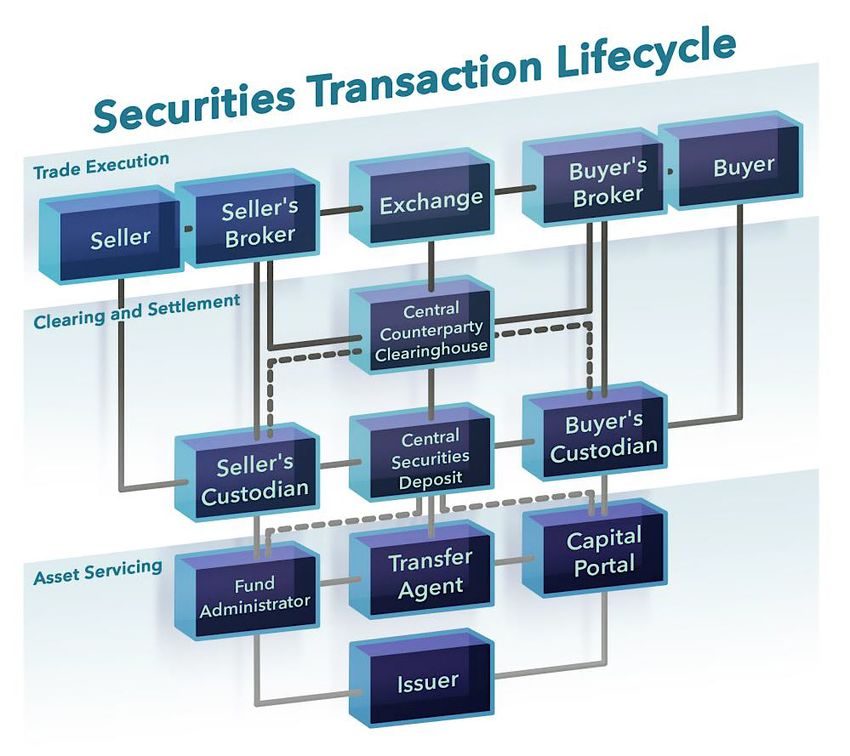
To understand how blockchain technology could be implemented at security
token exchange, it`s necessary to know the process of security trading. After
brokers submit client`s order, time consuming clearing and settlement are
proceeded to complete the transaction. Therefore, it takes several days after
the trading day for the final settlement of securities, which is expressed as T +
1, T + 2, and so on. For example, It usually takes 2 days for the settlement of
stocks (T+2) in Korea. In other words, when you sell stocks on Monday, you`re
expected to receive money on Wednesday, assuming there`s no holiday
between Monday and Wednesday. However, if blockchain technology is
adopted so that post-trading process is simplified, it is possible to reduce time
gap between trade date and settlement date. For example, when you sell
security tokens on Monday, post-trading process can be completed quickly and
you`re able to get money on the same date. Notably, tZero (Subsidiary of
Overstock, security token exchange), has a vision of achieving one day trading,
clearing, and settlement and that`s why they named their company title as
‘tZero’
17
Security token (STO) analysisSecurities transaction lifecycle
Source: Open Finance Network
If the security token market size surpasses trillion dollars, existing national
securities exchanges should consider entering this market, in our view. In that
case, the competition between new security token exchanges and existing
securities exchanges is inevitable, which would be a case of David vs. Goliath.
In fact, securities exchanges in many countries are studying blockchain
technology`s potential application. For example, in 2015, NASDAQ launched
Linq, which deals with private equities based on blockchain technology. In
2018, Australia securities exchange ASX announced that they will replace their
clearing and settlement system with new blockchain-based system by 2021.
JPX, securities exchange of Japan, has been trying to implement blockchain
technology to the clearing and settlement process of securities after
constructing a consortium with finance and IT companies in 2016. In 2018,
SGX, securities exchange of Singapore, developed DvP, which is settlement
solution for effective digital asset settlement across various blockchain
platforms. KRX, securities exchange of Korea, declared in 2016 that they will
utilize blockchain technology at KSM, startups over the counter market. SIX
and MSE, securities exchange of Swiss and Malta, even announced that they
18
Security token (STO) analysiswill build exchanges that deal with security token beyond the level of testing
blockchain technology.
The status of blockchain technology adoption by major security exchange
Exchanges Country Adoption of blockchain technology
● Execute margin call through distributed network among deposit provider, recipient,
and other intermediaries
- Distributed network of Nasdaq is based on PoW
● Establish private equity market trading system utilizing Nasdaq Linq based on
private blockchain
● Attempt to simplify settlement process, cooperating with TMX(Toronto Stock
Exchange) and City group
● Aim to replace existing clearing and settlement system of securities with
blockchain based system, CHESS
● Only permissioned participants such as securities can participate in running nodes
while exchange manages blockchain nodes.
●Attempt to find projects such as securities trading, trading verification, KYC·AML by
creating blockchain consortium with financial company; IT company and others.
● Aim to create new finance service that bestow dividend and voting right based on
holding period
● Completed an experiment of improving “Delivery Versus Payment(DvP)” system
cooperating with SGX, MAS, Nasdaq, Deloitte, Anquan
- Succeeded testing a distributed network that can automize DvP system and let
investors trade tokenized securities in various platforms through smart contracts
●Verify documents based on blockchain technology
●Reviewed applying blockchain technology to trading, information distribution,
clearing and settlement system of EXTURE+ through a informatization strategy
planning consulting,
● Promote to develop new trading platform that can tokenize existing
securities asset
- Poised to launch the first service in mid-2019
● Singed MOU with Binance to develop a platform where security token
trading and legal public offering are viable
● Singed MOU with OKEx to develop OKMSM which is an institutional grade
security token trading platform
Source: Chain Partners
19
Security token (STO) analysisLastly, we believe it is inevitable for the security segment to gain popularity
going forward amid the rising security token trend. Before the digital asset
market crash, the primary goal of most exchanges was to maximize profit by
boosting the trading volume and protecting investors` assets was out of their
concern, in our view. However, a series of hacking events occurred due mainly
to vulnerable security systems, and some exchanges lost their customers’
money and trust. From the regulator`s perspective, the most important matter
is investor protection. Therefore, we anticipate regulators to demand security
token handling institutions to prepare a regulation compliant system (with
KYC/AML monitoring, insurance, research service and others) in order to
reduce information asymmetries and protect investors. That is why we believe
the security segment, including wallet, custody, insurance and others is set to
grow amid intensified regulation across the world.
The history of digital asset hacking
Source: Coindesk
We foresee “Big Blur” (a phenomenon that the border between industries gets
blurry) in the digital asset market and some lucrative exchanges will likely lead
this trend. After market crash, retail driven trading volume has sharply plunged
and many exchanges are putting an effort to diversify revenue streams toward
institutional-grade exchanges. To do so, we believe exchanges need to invest
in security segments and build up brand reputation. As a matter of fact,
Coinbase and Gemini have already started to provide their own custody service.
We believe the demand for digital asset specialized security companies such
as Ledger and Bitgo will grow. Other than digital asset specialized startups,
traditional financial institutions such as Fidelity and Nomura also announced
that they will commence digital asset custody service. We believe this is
absolutely positive impact on improving quality of digital asset market
infrastructure.
20
Security token (STO) analysisThe list of digital asset security companies
Opening
Company Custody digital asset Fee
date
Mar- Free except for deposit and
BTC
2014 withdrawal
Custody fee: 0.40%
Withdrawal admin fee: USD 125
Oct- BTC, ETH, LTC, ZEC,
Yearly: 0~0.964%
2016 BCH
Minimum annual membership:
USD 100,000
More than 100 kinds of
Jan-
digital assets N/A
2017
(including ERC-20)
Nov- BTC, BCH, ETH, LTC,
N/A
2017 XLM
Monthly account fee
BTC, BCH, BTG, ETH,
Jan- - Account fee: USD 20
ETC, LTC, XRP, ZEC,
2018 - Custody fee: 0.07% of total
XLM
account
More than 100 kinds of
May- Minimum deposit: USD
digital assets
2018 10,000,000
(including ERC-20)
BTC, BCH, HSR, KMD,
USD 60,000 set up fee
BTG, DASH, LTC, PIVX,
May- Yearly: 0.48%
DGB, ETH, POSW,
2018 Minimum annual membership:
QTUM, XT, STRAT, VTC,
USD 48,000
VIA, ZEC
USD 100,000 set up fee
BTC, BCH, ETH, LTC,
Jul- Monthly: 0.1%
ETC, ZRX, BAT, OMG,
2018 Minimum deposit: USD
XRP
10,000,000
Aug- BTC, ETH, and ERC20
Monthly: 0.05-0.1%
2018 tokens
Source: Chain Partners
21
Security token (STO) analysis3. The myth of security token
We anticipate security token to lead digital asset market growth, which helps
digital asset be incorporated into traditional finance market. We argue it`s long-
term scenario, predicting traditional financial institutions won`t deal with
security token anytime soon. Nevertheless, some optimists argue successful
security token handling startups will significantly threat traditional financial
institutions within a few years amid exponential growth of security token
ecosystem. We believe this is one of the biggest myths of security token.
In order for security token market to grow for real, financial institution`s
participation must be required. To do so, 1) clear regulation; 2) international
standard; 3) legitimate infrastructure; 4) participation of reputable traditional
financial institutions are necessary and it should take long time to meet all
standard, in our view. The reason why we`re skeptical about scenario that
security token handling startups will dethrone traditional financial institutions
is that traditional financial institutions have larger capital, talent pool and most
importantly better reputation. Our view it that reputation based upon trust is
core of financial institutions and it`s something startups can`t mimic anytime
soon.
While traditional financial institutions at Wall Street are currently observing
digital asset market, it doesn`t necessarily mean they can`t do this business.
They’re waiting for the right moment. In fact, they are exploring digital asset
market by investing in relevant startups and deploying manpower for new
business. Therefore, to survive in the long term, digital asset specialized
startups should co-operate with traditional financial institutions rather than
competing with them, in our view.
22
Security token (STO) analysisWall Street is making foray into the digital asset market
Source: Chain Partners
Another myth of security tokens is about liquidity. In theory, security tokens
seem perfect. The advantages of security tokens, such as 24/7 trading,
fractional ownership, operation cost reduction, enhanced trading efficiency,
compliance automation, and better access for global capital market are
obvious. However, these benefits have not been realized yet. In order for the
theory to be of practical use, the security token market should be buoyant, and
sufficient liquidity is necessary. Since the security token market is at an early
stage, where infrastructure is gradually being installed, it is hard to measure
the market depth at the moment and we need to wait and see.
Security token issuance is expected to spread gradually from 2019 as a
starting point. However, we`ll be able to check the liquidity level of newly
issued tokens at least from the year 2020. This is because security tokens
require a lock-up period, usually 6 months to 1 year, according to US capital
market law. (Since US is leading the security token market, it is necessary to
check US rules.) Therefore, it will be at least the year 2020-21 when we will be
able to figure out the liquidity of the security token market. In the early stage of
the security token market, it is hard to expect there will be enough liquidity
because there are not many security tokens currently traded.
23
Security token (STO) analysisUS capital law regarding security token
Reg D
Act Reg S Reg A+ Reg CF
Reg 504 Reg 506(b) Reg 506(c)
Offer limit Max USD Unlimited Unlimited Unlimited Max USD 1.07m
5m Tier 1
Max USD
20m
Tier 2
Max USD
50m
Investors US International US US
Investor None Unlimited Unlimited Unlimited Tier 1 Both accredited
requirements accredited accredited foreign None and non-
investors investors investors accredited
investor is
Up to 35 1) Collective Tier 2
allowed
sophisticated income of a Non-
but non- parent is accredited
accredited greater than In case annual
investors income is less
investors USD 1m 1) Up to 10% than USD 1.07m
2) Annual of yearly
income ● Allowed to
income of an
or invest USD 2,200
individual for
2) Up to 10% for 12 months or
recent 2 years
of assets 5% of annual
is greater than
income
USD 200k /
Income of
spouse is In case annual
greater than income is
USD 300k greater than
USD 1.07m
Non-accredited
● Allowed to
investors are
invest up to USD
not allowed
1.07m for 2
months or 10%
1) 부
of annual
income 부
소
Lock up 6 months / 12 months No lock up / Tier 1 12 months
period 40 days /
12 months
1 year
Tier 2
X
Source: Chain Partners
24
Security token (STO) analysisIf the secondary market will not be activated for the next few years, the
theoretical benefits of security tokens could become a moot point. Since
security tokens that lack liquidity do not have a practical advantage over equity
crowdfunding, limited liquidity may actually hamper the security token market
growth, in our view. Of note, the size of year 2017 equity crowdfunding
issuance is approximately USD 822m, which is only 0.4% of the size of IPO in
the same year, USD 188b. Equity crowd funding market size was too negligible
to attract traditional financial institutions, which limits market growth. Unless
security token overcome liquidity issue, which is one of the biggest
disadvantages of equity crowdfunding, there will be lower chance of
institutional money flow in security token market, which may lead muted
growth.
Lastly, another myth of security token is related to "decentralization".
Decentralization has been regarded as the sacred ideology of blockchain.
However, as centralization is positively correlated with business efficiency,
decentralized blockchain companies have struggled in their businesses. For
instance, the number of daily active users of the top Dapp (decentralized
application) is only in the thousands; and for DEX’s (decentralized exchange)
only 0.4% of the entire trading volume (according to Crypto Compare CCCAGG
Exchange Review). Steemit (a decentralized SNS), which appeared as a rising
contender of Facebook, dismissed around 70% of their employees.
We expect security token trend to accelerate centralization of blockchain
ecosystem. As security token market expands, the ‘Decentralization to
Recentralization’ phenomenon in blockchain ecosystem will more broadly
appear and this is because security token is part of finance. The essence of
financial industry is fundamentally different from that of IT industry. In contrast
to financial industry that cares ‘safety of service’, IT industry pursues
‘convenience of service’. The reason why consumers deposit their money at
financial institutions is due mainly to its safety and reliability rather than
convenience. Therefore, without trustful centralized organization, it`s hard for
us to see mass adoption of security token in the future.
25
Security token (STO) analysis4. Security token market size analysis
We divide security tokens into two types based on primary characteristics:
startup financing and asset backed security tokens (ABST). Of note, it is
possible to achieve both objectives through traditional capital markets without
issuing a security token. For example, startups which attempt to raise funds
can utilize equity crowdfunding and/or venture capital. In addition, ABS (Asset
Backed Securities) have been used to securitize assets in the traditional capital
market. Therefore, in order for the security token market to grow significantly, it
must provide superior benefits beyond existing traditional capital market
products and attract high quality market participants. Aforementioned features
of security token - improving trading efficiency, cost reduction, automation of
compliance and others – are only theoretical benefits which have not been
realized yet.
We forecast that the security token market (accumulated issuance base) will
grow to USD 2t in 2030 with a 59% CAGR during 2019 to 2030 on the back of
institutional money inflows amid the gradual improvement of the security
token ecosystem as well as an enhanced regulatory environment. We expect
institutions to be engaged in the security token market post 2025 after they
monitor, via trial and error, the security token market for the next few years. We
expect ABST to lead robust growth of the security token market. (CAGR during
2019-2030 breakdown: 1) startup financing: 12% 2) ABST: 51%) Institutions
will likely be more interested in ABST than startup financing, in our view.
26
Security token (STO) analysisSecurity token market size (accumulated issuance base)
(USD b)
Startup financing
2,500
Asset backed security tokens (ABST)
2,000
1,500
CAGR 59%
1,000
500
0
2019 2020 2021 2022 2023 2024 2025 2026 2027 2028 2029 2030
Source: Chain Partners
The proportion of security tokens by type
Startup financing
(%) Asset backed security tokens (ABST)
100%
90%
80%
70%
60%
50%
40%
30%
20%
10%
0%
2019 2020 2021 2022 2023 2024 2025 2026 2027 2028 2029 2030
Source: Chain Partners
27
Security token (STO) analysisThe rationale behind our estimate is as follows. First of all, the TAM (Total
Addressable Market) of the startup financing type of security token is about
USD 102b, which is the sum of the early-stage startup financing, such as equity
crowdfunding, angel, seed and others. Assuming STO will account for 5% of
this segment, the market size of startup financing is estimated to be USD 5.1b.
Given the fact that the ICO fund-raising amount in 2017 and 2018 (sum of
January to November excluding December) was USD 6.2b and USD 7.6b
respectively, our STO (startup financing only) estimate is undemanding, in our
view.
The comparison of market size among various startup financing methods
(USD b)
100
90 85.8
80
70
60
50
40
30
20 15.0
7.6
10 5.1
1.0
0
Early-Stage Angel & Seed ICO ECF STO
Source: Chain Partners; Icodata; Crunchbase News; Thomson Reuters TAB data
Notes: ICO figure is sum of Jan to Nov 2018
We do not expect the STO growth period to resemble the ICO craze. This is
because companies which plan on STO have to comply with strict regulations,
which raises entry barriers to block scammers. In addition, contrary to
experimental STOs, there are plenty of well-established alternative financings
(equity crowdfunding and VC) in the traditional capital market. Meanwhile,
companies which are not involved in blockchain will not likely consider STO.
Lastly, for those companies which have already raised capital via traditional
ways, we believe it will not be easy for companies to convince existing
shareholders to proceed with STO, which may dilute shareholder equity. In that
sense, we do not foresee dramatic growth of the startup financing type of
security token in the future. We project a 12% CAGR of the startup financing
type of security token during 2019-2030, assuming mild growth.
28
Security token (STO) analysisWe believe ABST is the growth driver of STO. For instance, illiquid assets such
as real estate, fine art, venture capital funds and others can theoretically have
higher liquidity through tokenization. In fact, Indiegogo and Maecenas
tokenized Aspen resort and Andy Warhol`s fine art, respectively. In addition,
Blockchain Capital and SPiCE VC tokenized their own venture investment fund.
However, this is only a couple of cases and ABST still remains at nascent
phase.
Understanding ABS market is helpful for figuring out the ABST. ABS is a
financial security collateralized by a pool of assets such as loans, leases, credit
card debt, receivables and others. In general, the underlying assets of an ABS
are illiquid and can't be sold on their own. However, through issuing ABS,
pooling the assets together enables the owner of assets to make them
marketable securities. ABS Investors are expected to earn relatively higher
return. If everything goes as planned without default, ABS gives benefit to both
issuer and investor. Of note, there are many middle men involved in ABS
market such as underwriter, credit rating, credit enhancement, custody, etc.
The basic structure of ABS issuance
Source: Korea Ratings
ABS gained popularity as an innovative financial tool and showed steady
growth. The ABS market size in US grew with a 39% CAGR during 1985 to 2007
before 2008 financial crisis (US account for 53% of the entire global ABS
market in 2017). However, MBS (Mortgage Backed Securities, a type of ABS
29
Security token (STO) analysisthat collateral is real estate) caused financial crisis and ABS growth halted due
mainly to strengthened regulation. Nevertheless, ABS is still a popular financial
product used in various fields such as credit card, auto loan, student loan, real
estate and more.
US ABS market growth trend
(USD b)
Automobile Credit Card Equipment Other Student Loans CDO/CLO
2,500
2,000
1,500
1,000
500
-
1985
1986
1987
1988
1989
1990
1991
1992
1993
1994
1995
1996
1997
1998
1999
2000
2001
2002
2003
2004
2005
2006
2007
2008
2009
2010
2011
2012
2013
2014
2015
2016
2017
Source: SIFMA: Chain Partners
Despite ABS and ABST are fairly similar, the major potential benefit of ABST is
it`s based on blockchain technology. ABS has notoriously complicated product
structure, which causes significant information asymmetry. The opaque ABS
structure and moral hazard of traditional financial institutions led to the 2008
financial crisis. Blockchain can potentially improve transparency of ABS
market. In theory, smart contact could automatically update information and
signal warnings if there`s any negative issues on underlying assets.
Furthermore, it`s widely accepted that blockchain technology can be used to
save cost and improve operating efficiency by cutting many middle men. Not
surprisingly, many traditional financial institutions have already tested potential
application of blockchain. In 2016, traditional financial institutions such as JP
Morgan, BoA Merrill Lynch, Citi, Credit Suisse, Barclays tested to utilize
blockchain technology for the processing of post-derivatives trading.
30
Security token (STO) analysisThe potential use case of blockchain in securitization
Source: Deloitte
We believe the ABST market growth will be mainly driven by traditional
financial institutions and the majority of ABST will be ‘tokenized ABS’. In other
words, the ABST market is expected to meaningfully grow only if financial
institutions that have dealt with ABS would seamlessly convert ABS to ABST,
and after they carefully monitored and tested blockchain adoption. We believe
it will take time for conservative traditional financial institutions to fully
embrace blockchain and tokenize ABS. That is why we assumed significant
institutional money flow into the security token market after 2025. While a
limited number of smart startups will survive, traditional financial institutions
will play a key role in the ABST market, in our view.
We estimate the market size of the ABST market will be USD 1.9t in 2030,
which accounts for 38% of the ABS market size (the total ABS market size is
worth USD 4.9t based on SIFMA, S&P 500, and our estimate) in 2018. Having
referred to the REIT value out of the total real estate value (REIT value came at
USD 1.1t which is 0.5% of the total real estate value worth USD 217t as of
31
Security token (STO) analysis2017), we assumed 0.4% of illiquid assets (real estate, art pieces, VC funds,
and others) will be tokenized in 2030. In contrast to alternative assets which
generally have low liquidity, traditional assets such as stocks and bonds are
typically liquid. Therefore, it is difficult for us to expect traditional assets such
as these to become tokenized anytime soon, and thus we have not reflected
traditional assets on our ABST estimate.
We highlight that institutions participation is dependent on the maturity of the
security token ecosystem. Although our basic assumption for institutions to
participate in security token market is post year 2025, inflection point could
vary on market situation. Also, tokenization of intangible assets (intellectual
property rights, brand, and more) and various derivatives which underlying
asset is security token are significant swing factors that lift up security token
market size. However, we have not reflected these on our estimate since it is
too early to discuss tokenization of intangible asset and derivatives at the
moment. We will carefully monitor development progress and provide
investors with up to date information on the security token market.
32
Security token (STO) analysisChain Partners Research
This report is for information purposes only and is not related with any kind of advisory or service. This report should not be used as a reason for investment, construed as a
recommendation of participating in trading, or to suggest investment strategies. Although the information in this report is based on reliable data, Chain Partners does not guarantee
the completeness or accuracy of such information. Chain Partners shall not be liable for any direct or indirect damages arising from this report or the use of the contents in this
33
report. The content mentioned or described in this report may be different from the official view of Chain Partners, and Chain Partners may have expressed in the past or express in
the future any information, opinion, or position that are inconsistent with the information contained in this report.
Security token (STO) analysisYou can also read


