SEXUAL HARASSMENT DEFENSES IN HAWAII - HOW HAS #METOO IMPACTED HAWAII AND WHAT YOU CAN DO TO STAY OUT OF THE NEWS - KENDRA K. KAWAI
←
→
Page content transcription
If your browser does not render page correctly, please read the page content below

Sexual Harassment Defenses
in Hawaii – How has #MeToo
 Impacted Hawaii and What
  You Can Do to Stay Out of
         the News

         Kendra K. Kawai
The Origin of the #MeToo
Campaign
The “Me Too” campaign was originally started by
Tarana Burke in 2007, well before hashtags existed
Grass-roots movement was to reach sexual assault
survivors in underprivileged communities
Catchphrase was used from survivor to survivor to
let others know that they were not alone
Campaign turned into a hashtag after actress Alyssa
Milano wrote a call-out on Twitter asking followers
to share their stories of sexual harassment and
assault using the phrase “Me too”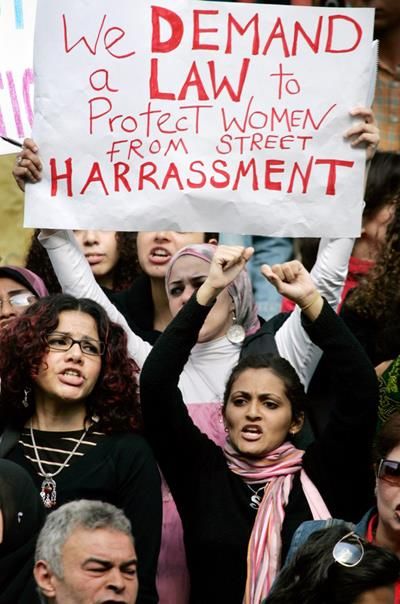
How has the recent #MeToo Movement impacted the workplace? Puta spotlight on the issue of sexual harassment Gaveindividuals the opportunity to speak out about their personal experiences Caused employers to take a fresh look at their anti-harassment training and policies and practices
Statistics on Sexual Harassment
An estimated 1 in 4 American women report having
experienced sexual harassment in the workplace,
according to a 2016 report by an EEOC task force
Number of sexual harassment complaints made to
the EEOC and HCRC in Hawaiʻi has declined over the
past 10 years, but sexual harassment is still an
issue.
EEOC (Honolulu office) – The EEOC had 38 complaints in 2008,
and 29 complaints in 2017.
HCRC – The Commission had 99 complaints in 2008, and 43
complaints in 2017.
The national EEOC report found that most victims
do not want to report workplace harassment.
Instead, they might avoid the harasser; deny or downplay the
gravity of the situation; or try to ignore, forget or endure the
inappropriate behavior.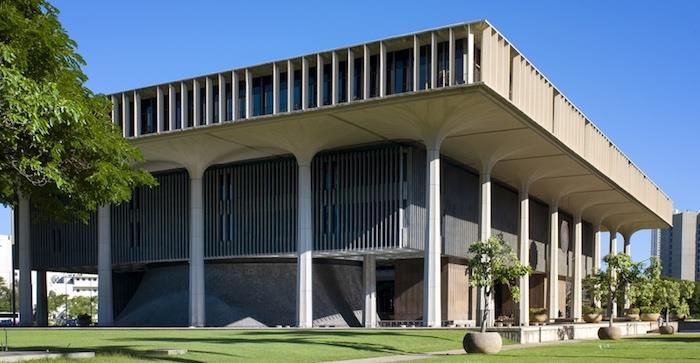
Recent Notable Story in the Media
JosephSouki – Two-time State Speaker of the
House (March 2018)
Firstaccused of inappropriate conduct by former
Director of Human Services Rachael Wong
Wong complained to the State Ethics Commission
claiming abuse of power
Alleged that he made inappropriate comments
about her physical appearance and an
inappropriate request for physical contact
beyond the traditional greetings exchanged in
Hawaiʻi
Wong did not want any compensation or personal
gain
Under settlement agreement with the Ethics
Commission, Souki agreed to resign, pay a fine
and publicly apologize for his behavior.
Another Notable Recent Story…
Judge Alex Kozinski – Former Chief Judge of the U.S.
Court of Appeals for the 9th Circuit and member of the
Court for 32 years
Allegedly called a law clerk into his office several times,
pulled up pornography on his computer and asked her if
she thought it was photoshopped or if it aroused her
sexually
Also told law clerk he had a chart with his friends listing the
women whom they have had sexual relations
Reportedly at least 15 women made allegations of
unwanted sexual comments or physical contact
Reason why law clerks/interns did not complain? New
lawyers often count on recommendations from the judges
to propel their careers
One law clerk did not complain after discovering that the
complaint would go to Kozinski himself then be referred
elsewhere
Prevention is the Key
Have clearly written anti-harassment policies
Specify expected behaviors
Examples of what constitutes sexual harassment
or harassment based on a protected category
Information on the complaint process
Provide regular training for both employees and
management
Recommendations on Training Training should be conducted by qualified, live, and interactive trainers Trainer should provide examples of unacceptable behavior in the workplace, or have individuals portray scenarios of such conduct, and then be able to answer such questions For management, training needs to teach them how to respond to a report or observance of harassment
Workplace Civility Training
This
type of training promotes respect
and civility in the workplace generally
Promoting civility and respect in a
workplace may be a means of
preventing conduct from rising to the
level of unlawful harassment
Focuseson the positive – what
employees and managers should do,
rather than on what they should not do
Why Do We Have Policies Against Workplace Harassment? Workplace harassment law has expanded dramatically, expanding the scope of conduct covered and the recoveries that courts can award. Employers must prevent and correct workplace harassment, and an anti- harassment policy is key to those efforts.
What is Workplace Harassment? Workplace harassment rises to an unlawful level whenever unwelcome conduct on the basis of gender or other legally protected status affects a person’s job. Management has a responsibility to prevent and stop workplace harassment.
Management Needs to Understand
their Role and Responsibilities under
the Anti-Harassment Policy
Maintaining a workplace free of discrimination and
harassment
Identifying and stopping behaviors that violate the
policy
Be professional at all times
Understand the Complaint Procedure under the Policy
Take Prompt and Appropriate Disciplinary Action to
End the Harassment and Prevent Future Harassment
Ensure no retaliationIdentifying and Stopping Behaviors that Violate the Anti-Harassment Policy
What Is Workplace
Harassment? Legally Two Kinds:
(1)
Quid Pro Quo (“This for
that”)
Conditioningemployment
benefits on sexual favors
Thiskind of sexual harassment
can be committed only by
someone who can take
employment actions (such as
firing, demotion, and denial of
promotion). (2) Hostile Work Environment A hostile environment can result from the gender-based or protected status unwelcome conduct of supervisors, co-workers, customers, vendors, or anyone else with whom the victim interacts with on the job.
Is It Really Harassment? Because the boundaries are so poorly marked, the best course of action is to avoid all conduct in the workplace that is potentially offensive on the basis of a person’s protected status.
Hawaii Cases on Touching
Arquero v. Hilton Hawaiian Village, LLC, 104
Hawaiʻi 423 (2004)
One instance of grabbing of a co-worker’s buttocks
was “severe”
Conduct “appears to constitute sexual assault in the
fourth degree”
Mariano v. Liberty Dialysis-Hawaii, LLC, 2013
U.S. Dist. LEXIS 18270 (D. Haw. 2/11/13)
Plaintiff alleged that she was touched by a patient
on her shoulder and back many times.
District court said that these acts did not rise to the
severe or pervasive level required to maintain a
claim under state law.Be Professional At All Times Applies to everyone, but it starts at the top Remindmanagement that they are a role model Management is held to a higher standard as an authority figure Youremployees look up to management and may use their behavior as a guide of what is permissible
Complaint Procedure Provide employees with multiple avenues to report unlawful discrimination and/or harassment Why? Because the alleged harasser could be the employee’s supervisor or a member of management
Take all complaints seriously. Don’t fail to act simply because the person telling you about the conduct asks you not to do anything. Don’t fail to act simply because the person telling you about the conduct won’t sign a written statement. Don’t fail to act simply because you don’t think the conduct sounds bad.
Take Prompt, Appropriate
Remedial Disciplinary Action:
1) Temporary remediation –
   separate harasser from
   victim;
2) Permanent fix “reasonable
   calculated to end future
   harassment”;
3) Warn further violation could
   lead to termination; and
4) Ensure consistent
   application of discipline.
Gauging the Appropriate
Discipline
Discipline,
if imposed, needs to end the
harassment
Warnemployee that any further harassment
could result in further discipline, including
termination
Need to be consistent
Shouldconsult with Human Resources before
imposing disciplineNo Retaliation
TheCompany’s policy prohibits
retaliation against any employee who:
Usesthe complaint procedure under the
Company’s policy;
Reportsunlawful discrimination and/or
harassment; or
Files,
testifies, assists or participates in
any manner in any investigation,
proceeding or hearing conducted by the
Company or governmental enforcement
agency.Liability Issues
Employer Liability
(1) Harassment by a Supervisor
Federal
Law – Strict liability where tangible
employment action has been taken
State law – Strict Liability with no affirmative defense
(2) Co-Employee Harassment
Employer liable if it knew or should have known about
the harassment and failed to take steps reasonably
calculated to end the harassment. HAR § 12-46-109(d).
Individual Liability
Aiding and Abetting under HRS § 378-2(a)(3)
Sirois v. East West Partners, Inc., 2018 U.S. Dist. LEXIS 2575
(D. Haw. Jan. 5, 2018) – failure to investigate or impose
remedial action could be seen as benefiting not only the
alleged harasser but the company generally, and thus,
support an aiding and abetting claim.What damages can an employee
potentially recover at trial?
Federal law
Compensatory and punitive damages up to
$300,000
Attorney’s fees and costs
State law
Back pay, compensatory damages and
unlimited punitive damages
Attorney’s fees and costsMahalo! Kendra K. Kawai kkawai@torkildson.com
You can also read


