Shipyard roundup Looking Back: Tlingit salmon management - Alaska salmon notes Magnuson-Stevens progress - Pacific Fishing
←
→
Page content transcription
If your browser does not render page correctly, please read the page content below
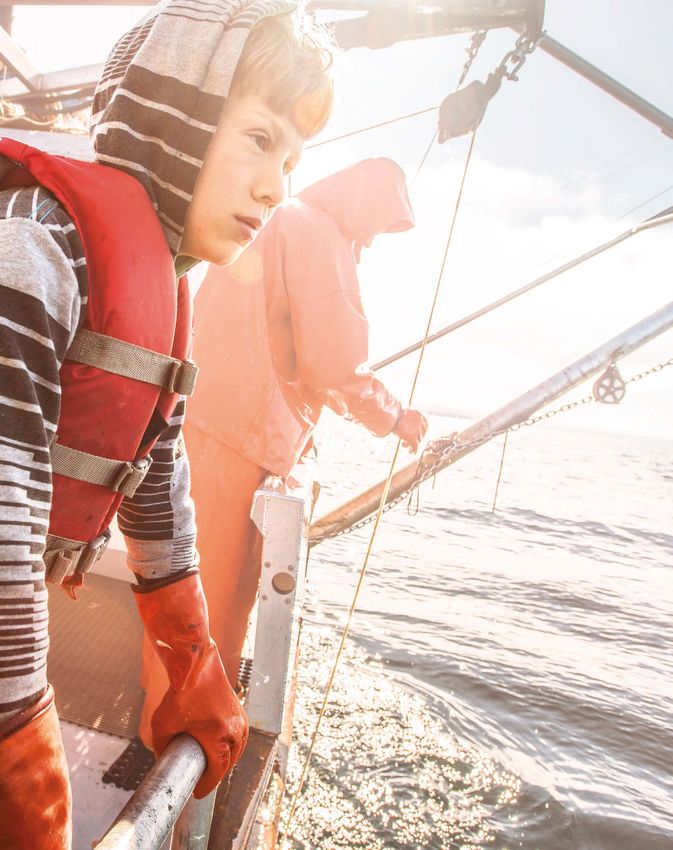
Looking Back: Tlingit salmon management

www.pacificfishing.com   THE BUSINESS MAGAZINE FOR FISHERMEN n SEPTEMBER 2017

  Shipyard roundup

                                                                      US $2.95/CAN. $3.95
                                                                                            09
• Alaska salmon notes
                                                              63126

• Magnuson-Stevens progress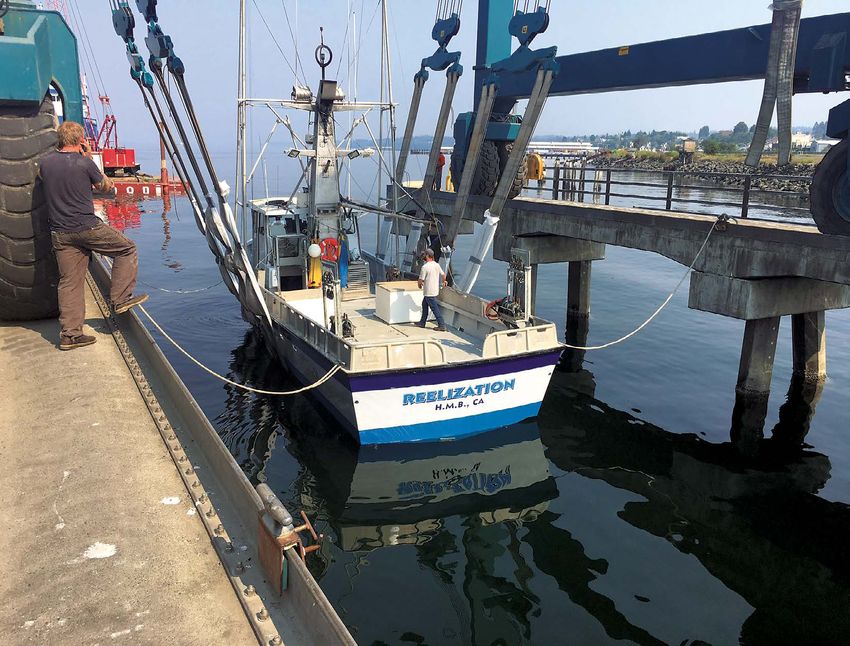
135 Shipyard Way - Reedsport, OR 97467
                                                        Ph: (541) 271-5720 - Fax: (541) 271-4349
                                                              Email: info@fredwahlmarine.com
                                                             Website: www.fredwahlmarine.com

   Fred Wahl
Marine Construction, Inc.
       Established in 1974
                                                FOR SALE
                                                     UNDER CONSTRUCTION
                                                    NEW 58’ x 28.5’ - 13’ Draft

                                                                         $2,895,000
                                                                                                   2017
                                                                                           d in
                                                                                  Delivere
                     Caterpillar / Mitsubishi - Twin Disc / ZF
                   2-150kw John Deere.     2-60hp hydraulic pumps.
              1-40kw Northern Lights.      2-5”x4” circulation pumps.
                  5” Aquamet shafting.     2-1½” Bilge pumps.
   72“x62”- 4 blade bronze propeller.      5-Racor fuel filters.
                         SS stuffing box.  Super critical grade mufflers.
               9000 gal diesel capacity.   SS exhaust tips.                                        16
        Over 4000ft3 fish hold capacity.   FWMC anchor winch.                          r e d in 20
                                                                                    ve
         2-Steel 76”x76” main hatches.     SS bow roller.                    Deli
Fiberglass fish hold w/SS stanchions.      FWMC 600# anchor.
                       SS sump screens.    Fire Suppression system.
      SS distribution pipe in fish hold.   Fire extinguishers.
                Aluminum bin boards.       SS cap rail on main deck.
       Aluminum doors w/SS frames.         Oil change system.
                     1-4 man stateroom.    Air compressor.
                     1-2 man stateroom.    Crab davit.
   Laminate & vinyl covered interior.      Beavertail.
              Stackable washer/dryer.      Rain gear locker.
                SS trimmed appliances.     Rolling chocks.                                   15
                                                                                   d in 20
                          5-8D batteries.  Pressure washer.                 ve r e
                                                                       Deli
                4-1000w sodium lights.     Tool box.
    6-11,000 Lumens LED deck lights.       Stainless package.
              1-35hp IMS RSW system.       Hydraulic oil.
              1-25hp IMS RSW system.       Picking boom w/winch.
                         Please Call or E-mail for details.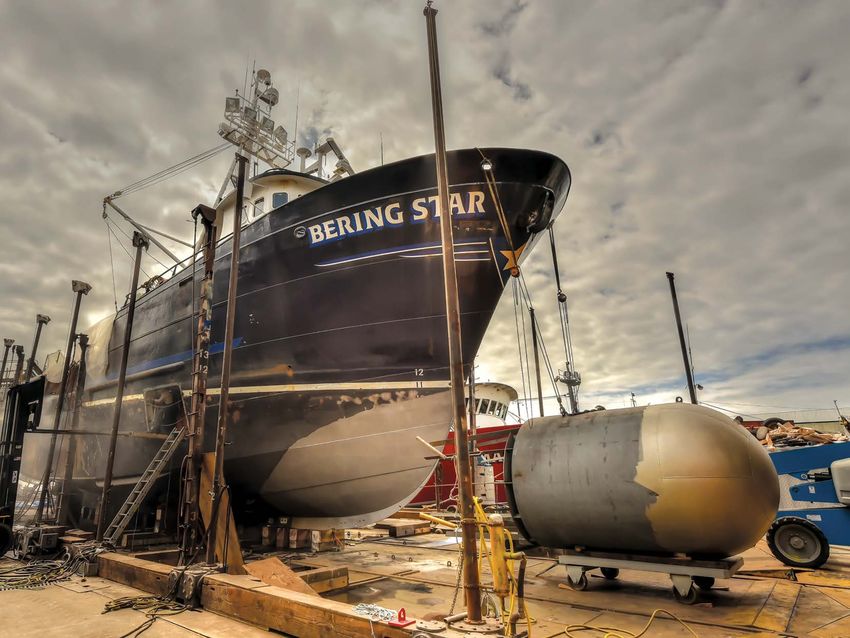
IN THIS ISSUE Editor's note
Wesley Loy
®
Things we’re
watching
THE BUSINESS MAGAZINE FOR FISHERMEN
INSIDE
We’re in riveting times when it comes to events in Washington, D.C.
Amid the seemingly endless political drama surrounding President Trump,
it’s important to keep an eye on legislation and regulatory changes that could
significantly affect commercial fishing.
As this issue of the magazine was heading to press, a number of interesting
developments were emerging out of Congress.
One concerns the fiscal year 2018 appropriations bill for the Department of
Commerce, which houses the National Marine Fisheries Service. The Senate bill
Magnuson-Stevens progress • Page 6 appears to include increased funding levels for such crucial operations as stock
assessments and surveys.
But what really catches my eye is language toward “a more streamlined pro-
cess for buyback implementation and loans to better benefit Alaskan fisheries,”
according to an Aug. 1 press release from U.S. Sen. Lisa Murkowski, R-Alaska.
A committee report on the bill elaborates a bit, offering the following:
Technical Drafting Assistance – The Committee understands that several mem-
bers have requested NOAA to provide assistance in drafting language that would
authorize a more streamlined process for fishery buyback implementation and loans,
including for refinancing existing buyback loans, but the agency has failed to respond.
Around the Yards • Page 12
The Committee directs NOAA to respond to these congressional member requests and
supply language appropriate for technical drafting assistance within 45 days of the
enactment of this act.
This is certainly interesting stuff, but we’d like to know more. Specifically,
which fleets are pursing this language? We’ll try to bring you more details soon.
Another noteworthy piece of legislation concerns the West Coast Dungeness
crab fishery.
“The states of Washington, Oregon, and California cooperatively manage the
West Coast crab fishery in federal waters under a tri-state agreement that Con-
Looking Back: Tlingit and salmon • Page 24 gress first authorized in 1998,” said an Aug. 4 press release from U.S. Sen. Maria
Cantwell, D-Washington. “The act would make that authority permanent. The
agreement expired without a replacement in 2016.”
Having passed Congress, the crab measure was signed into law by the
president on Aug. 18.
The law will “help reintroduce much-needed stability to the industry, and
preserve a sustainable, science-based fishery management program that keeps
fishermen fishing and crab stocks thriving,” Cantwell said.
A third bill also deserves mention – the Save Our Seas (SOS) Act, sponsored
by U.S. Sen. Dan Sullivan, R-Alaska, and colleagues. This would boost the gov-
Alaska salmon notes • Page 25 ernment’s response to the crisis of trash and marine debris in the ocean and on
our shores.
ON THE COVER: The F/V Bering Star undergoing work at “Alaska feels the brunt of this crisis with its extensive coastline,” Sullivan said.
Pacific Fishermen Shipyard in Seattle. Jeff Pond photo The SOS Act passed the Senate unanimously and was headed to the House
for consideration.
VOLUME XXXVIII, NO. 9 • SEPTEMBER 2017
Pacific Fishing (ISSN 0195-6515) is published 12 times a year (monthly) by Pacific Don’t miss it: We’re fortunate to have historian Anjuli Grantham writing her
Fishing Magazine. Editorial, Circulation, and Advertising offices at 1028 Industry
Drive, Seattle, WA 98188, U.S.A. Telephone (206) 324-5644. Subscriptions:
Looking Back column for us each month.
One-year rate for U.S., $18.75, two-year $30.75, three-year $39.75; Canadian In this issue, Grantham examines the sophisticated Tlingit salmon
subscriptions paid in U.S. funds add $10 per year. Canadian subscriptions paid in
management structure in Southeast Alaska at the dawn of industrialization. A
fascinating read.
Canadian funds add $10 per year. Other foreign surface is $36 per year; foreign
airmail is $84 per year. The publisher of Pacific Fishing makes no warranty,
express or implied, nor assumes any legal liability or responsibility for the
information contained in Pacific Fishing. Periodicals postage paid at Seattle,
Washington. Postmaster: Send address changes to Pacific Fishing, 1028 Industry
Drive, Seattle, WA 98188. Copyright © 2017 by Pacific Fishing Magazine. Contents
may not be reproduced without permission. POST OFFICE: Please send address
changes to Pacific Fishing, 1028 Industry Drive, Seattle, WA 98188
WWW.PACIFICFISHING.COM £ SEPTEMBER 2017 £ PACIFICFISHING 3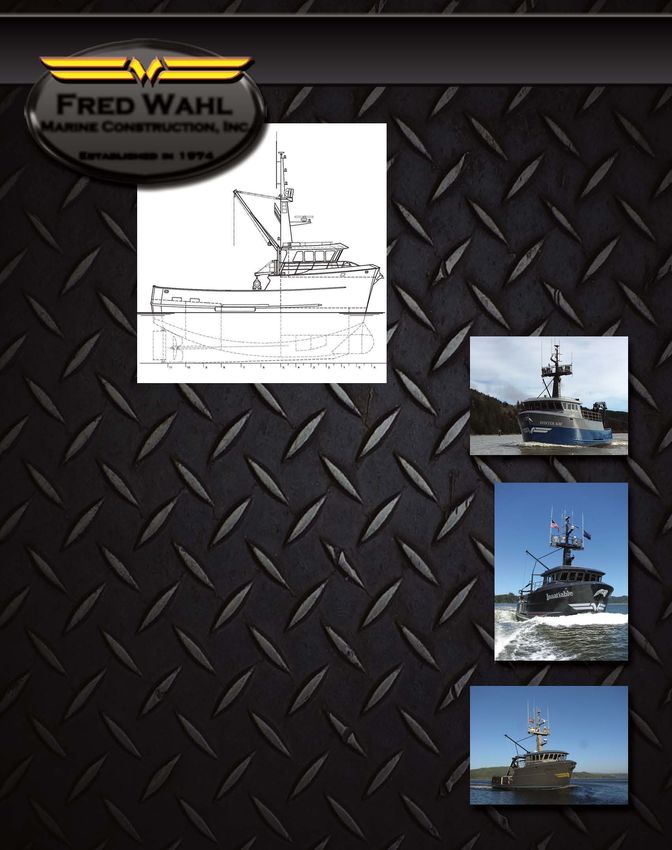
KEEPING UP

PREFERRED PUBLICATION OF:

      BRISTOL BAY
FISHERMEN’S ASSOCIATION
                                            Fish Wrap                                                       It’s FREE! It’s DAILY!*
                                                                                                     It’s the best commercial fishing news digest
                                                                                                     available in the North Pacific. Here’s some of
                                                                                                     what you missed by not reading Fish Wrap.
     CORDOVA DISTRICT
     FISHERMEN UNITED                        Bristol Bay surge: Fishermen enjoy massive              F/V Destination found: The wreckage of
   OREGON DUNGENESS                          sockeye catches over the Fourth of July holiday.        a crabbing vessel missing since February
    CRAB COMMISSION                          – kdlg.org                                              has been found off St. George Island, Alaska.
     UNITED FISHERMEN                                                                                – noaa.gov
                                             California comeback: The state’s Dungeness
        OF ALASKA                            crab industry rebounds with a strong season.            GE ban renewal: Alaska Sen. Lisa Murkowski
 WASHINGTON DUNGENESS                        – sfchronicle.com                                       is among the federal legislators supporting
 CRAB FISHERMEN’S ASSOC.                                                                             renewal of a ban on GE salmon imports.
                                             Less work, high pay for Alaska fishing
  WASHINGTON REEF NET                                                                                – juneauempire.com
                                             commissioners: Juneau commissioners who
    OWNERS ASSOC.                            oversee fewer than two dozen employees earn             Pacific Seafood embezzler sentenced:
     WESTERN FISHBOAT                        the same as commissioners who supervise                 A prison sentence has been handed down
      OWNERS ASSOC.                          thousands. – adn.com                                    for the former executive who embezzled
                                                                                                     hundreds of thousands of dollars from
                                             Seattle project could double commercial
                                                                                                     Pacific Seafood Group. – oregonlive.com
                                             fishing: The redevelopment of Fishermen’s
       To subscribe:                         Terminal aims to modernize and expand                   Skipper saves crewman: The captain of a
    www.pacificfishing.com
                                             commercial fishing facilities. – seattlepi.com          capsized fishing boat re-entered the frigid
  Ph: (206) 324-5644, ext. 221
 circulation@pacificfishing.com                                                                      waters near Kodiak Island to rescue a crewman.
                                             Primed for GE salmon: AquaBounty Technolo-
                                                                                                     – adn.com
              Main Office
                                             gies moves to establish its first U.S. production
     1028 INDUSTRY DRIVE
      TUKWILA, WA 98188
                                             facility. – theweek.com                                 Salmon funding targeted: President Donald
       PH: (206) 324-5644                                                                            Trump is proposing to eliminate a federal fund
                                             Whale rescues barred after fisherman’s
                                                                                                     for salmon protection. – times-standard.com
        Chairman/CEO/Publisher
                                             death: NOAA suspends responses to whale
           MIKE DAIGLE                       entanglements after a fatal rescue attempt.             Pinks running strong: The Kodiak area
    miked@nwpublishingcenter.com
                                             – bangordailynews.com                                   pink salmon fishery has reopened and
          Associate Publisher
                                                                                                     the harvest has already matched a five-year
        CHRISTIE DAIGLE                      Alaska salmon harvest: Retail prices ease as
   christied@nwpublishingcenter.com                                                                  average. – kmxt.org
                                             Alaska’s salmon catch reaches 48 million fish.
        EDITORIAL CONTENT:                   – thecordovatimes.com                                   OSHA probes Silver Bay: The workplace
                 Editor                                                                              safety conditions of the Silver Bay Seafoods
           WESLEY LOY                        Higher salmon prices: Prices for Alaska salm-
                                                                                                     plant in Naknek, Alaska, are under investigation.
          wloy61@gmail.com                   on of all types see increases this year. – adn.com
      Ph: (206) 324-5644, ext. 234                                                                   – kdlg.org
              Field Editor                   Trump’s NOAA pick pleases: President
        MICHEL DROUIN                                                                                Worker shortage: Seafood processors have
                                             Donald Trump’s NOAA Fisheries appointment
              Copy Editor                                                                            struggled to hire enough workers to handle
       BRIANNA MORGAN                        satisfies both the commercial fishing industry
                                                                                                     Bristol Bay’s high salmon harvest. – adn.com
                                             and scientists. – washingtonpost.com
     PRODUCTION OPERATIONS:                                                                          Fishing vessel drug bust: Police raided
                                             Trident’s value: Trident Seafoods is now
          Production Manager                                                                         a Bristol Bay fishing vessel and arrested
        DAVID SALDANA                        valued at over $2 billion, a credit to founder
                                                                                                     a man for drug possession and trafficking.
   davids@nwpublishingcenter.com
                                             and owner Chuck Bundrant’s leadership.
                                                                                                     – kdlg.org
      Art Director, Design & Layout
                                             – bloomberg.com
        PATRICIA WOODS
  patriciaw@nwpublishingcenter.com                                                                   Fishing deaths spike: Following a year with
                                             Salmon initiative downscaled: An Alaska
                                                                                                     no fatalities, Alaska has seen 10 commercial
                                             ballot initiative to protect salmon habitat from
        SALES & MARKETING:                                                                           fishing deaths in 2017. – adn.com
                                             dams and mining projects will be scaled back
         JOHN NORDAHL
          Ph: (206) 775-6286                 due to constitutional issues. – adn.com
       johnn@pacificfishing.com

              Ad Support
         CANDICE EGAN
                                              * You can subscribe to Fish Wrap by sending an email to circulation@nwpublishingcenter.com. Write your first
      Ph: (206) 324-5644, ext. 221
                                              name, your last name, and the words “Fish Wrap.” Do it now, before you go another month without Fish Wrap.
   candice@nwpublishingcenter.com

                                      4 £ PACIFICFISHING £ SEPTEMBER 2017 £ WWW.PACIFICFISHING.COM
IT PAYS TO
                                                          STAY IN
                                                          TOUCH
                                                          USING
                                                          FLEET ONE

                                                          Inmarsat’s unrivalled Fleet
                                                          One service is the choice
                                                          for smarter, cost effective
                                                          fishing.
                                                          Flexible voice and data packages
                                                          help you stay in touch whenever
                                                          you go to sea. It's now easier to get
                                                          live weather updates, send catch
                                                          reports, track and trace fish and
                                                          improve vessel performance.
                                                          For more information email
                                                          fleetone@inmarsat.com

  INCREASE       RELIABLE      SEASONAL     SIMPLE AND
PROFITABILITY   VOICE CALLS   FLEXIBILITY   EASY TO USE

Powering global connectivity
 inmarsat.com/fleet-one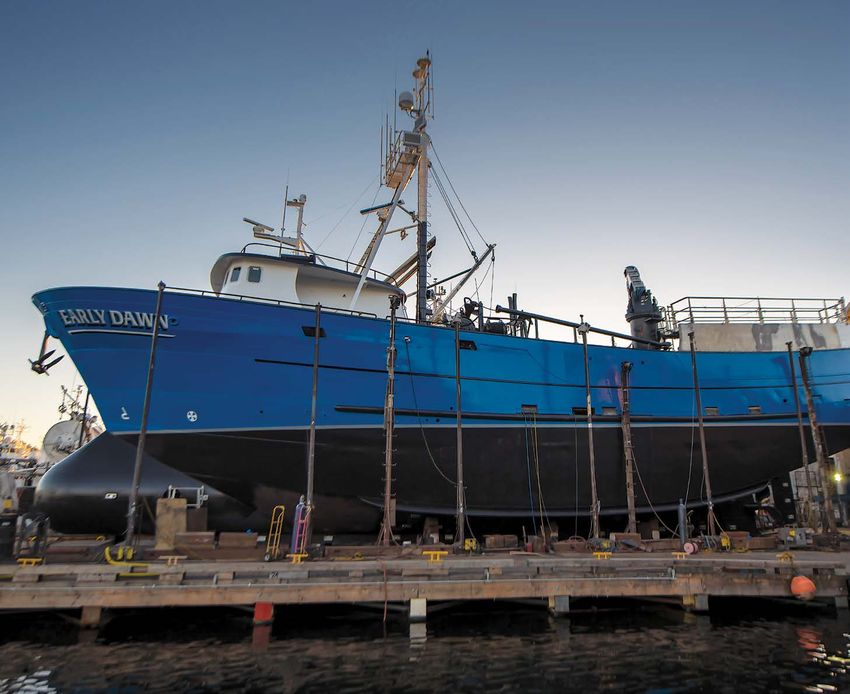
COMMENTARY                                                                                                                     BY CHRIS OLIVER

Successes and challenges for Magnuson-Stevens Act
   Editor’s note: This commentary is adapted from the written testimony
of Chris Oliver, who in June took over as head of the National Marine
Fisheries Service. He submitted the testimony for an Aug. 1 hearing of
the Senate Commerce Subcommittee on Oceans, Atmosphere, Fisheries,
and Coast Guard.
   Today, I will describe the agency’s work under the Magnuson-
Stevens Fishery Conservation and Management Act, which sets
forth standards for conservation, management, and sustainable use
of our nation’s fisheries resources.
Progress under Magnuson-Stevens
   The Magnuson-Stevens Act provides the nation with a very suc-
cessful fisheries management construct. U.S. fisheries are among
the world’s largest and most sustainable. For 40 years, Magnuson-
Stevens has demonstrated that a dynamic science-based manage-
ment process is fundamental for sustainably managing fisheries.
The goal of fisheries management is to achieve fisheries that are         as well as a major contributor to the national economy. Subsistence
environmentally, economically, and recreationally sustainable.            and ceremonial fishing also provides an essential food source and
   In partnership with the regional fishery management councils,          has deep cultural significance for indigenous peoples in the Pacific
interstate fishery commissions, and our stakeholders, and driven by       Islands and Alaska and for many tribes on the West Coast.
the Magnuson-Stevens Act, the agency has effectively ended over-             The advancement of our science, management, and enforcement
fishing and is rebuilding domestic fish stocks. As of Dec. 31, 2016, 91   tools has resulted in improved sustainability of fisheries and greater
percent of stocks for which we have assessments are not subject to        stability for industry. The 2007 Magnuson-Stevens Act reauthoriza-
overfishing, and 84 percent are not overfished. By preventing over-       tion provided more explicitly for market-based fishery manage-
fishing and rebuilding stocks, we are strengthening the value of fish-    ment through Limited Access Privilege Programs, and addressed
eries to the economy and communities that depend on them, and also        the need to improve the science used to inform fisheries manage-
ensuring a sustainable supply of seafood for the nation in the future.    ment. Limited Access Privilege Programs, while not appropriate
   Our most recent data show that after adjusting for inflation the       for all fisheries, are an important tool in our collective tool box,
landed volume and the value of commercial U.S. wild-caught fish-          and the current act allows for development of such programs to be
eries remained near record highs. U.S. commercial fishermen land-         tailored to the specific needs of each fishery.
ed more than 9.7 billion pounds of seafood valued at $5.2 billion            Under the Magnuson-Stevens Act, the United States has many oth-
in 2015. The seafood industry – harvesters, seafood processors            er effective tools to apply in marine fisheries management. Yet, as we
and dealers, seafood wholesalers and seafood retailers, including         look to the future, we must continue seeking opportunities to further
imports and multiplier effects – generated an estimated $208 billion      improve our management system. Our progress has not come without
in sales impacts and supported 1.6 million jobs in 2015, the most         costs, including reductions in near-term harvests for both commer-
recent year for which economic impact numbers are available.              cial and recreational fisheries in some cases, and challenges remain.
   Saltwater recreational fishing is among the nation’s favorite pas-     Fishermen, fishing communities, and the councils have had to make
times and is a major contributor to the U.S. economy at all levels.       difficult decisions and absorb the near-term costs of conservation in
   Marine aquaculture production totaled 90 million pounds in 2014,       exchange for long-term economic and biological sustainability.
with the largest regional producer being the Atlantic, which repre-       Flexibility and regional approach
sents almost 50 percent of the total value. Aquaculture production           The Magnuson-Stevens Act created broad goals for U.S. fisheries
has tremendous untapped potential, and under Secretary Ross’ direc-       management and a unique, highly participatory management
tion NMFS will be working to expand aquaculture opportunities.            structure centered on the councils. Given my past work as executive
   Marine fish and fisheries – such as tropical tunas in the Western      director of the North Pacific Fishery Management Council, I can
and Central Pacific, salmon in the Pacific Northwest, halibut and         attest to the value of the regional fishery management council
groundfish in Alaska, cod in New England, and red snapper in the          system established through the Magnuson-Stevens Act. This
Gulf of Mexico – are vital to the prosperity and cultural identity        structure encourages a collaborative, “bottom up” process where
of coastal communities in the United States. U.S. fisheries play an       input and decisions about how to manage U.S. fisheries include
enormous role in the U.S. economy. In Alaska, where I have lived          fishermen, other fishery stakeholders, affected states, tribal
for the last 27 years, Dutch Harbor leads the nation for the 19th         governments, and the federal government.
consecutive year as the port with the highest volume of seafood              The councils can choose from a variety of approaches and tools
landed (787 million pounds valued at $218 million).                       to manage fish stocks and meet the mandates of the Magnuson-
   Around the country, commercial fishing supports fishermen, con-        Stevens Act – e.g., catch limits, catch shares or other allocation
tributes to coastal communities and businesses, and provides Amer-        mechanisms, area closures for habitat or protected species consid-
icans with a valuable source of local, sustainable, and healthy food.     erations, and gear restrictions. These measures are submitted to the
Recreational and subsistence fishing provides food for many indi-         secretary of commerce for approval and are implemented by NMFS.
viduals, families, and communities; is an important family activity;         Effects on fishing communities are central to many fishery man-
and is a critical economic driver of local and regional economies,        agement decisions.

6 £ PACIFICFISHING £ SEPTEMBER 2017 £ WWW.PACIFICFISHING.COM

The need to provide stable domestic fishing and processing jobs is   the most successfully managed fisheries in the world. In 2015, land-
paramount to fulfilling one of the Magnuson-Stevens Act’s goals –       ings revenue totaled about $1.7 billion, a 32 percent increase from
to provide the nation with sources of domestic seafood. This objec-     2006 (a 25 percent increase in real terms after adjusting for inflation).
tive has even greater purpose now than when the act was passed,         Remaining challenges
as today U.S. consumers are seeking – more than ever – options for         Amid these successes, some critical challenges remain. For example,
healthy, safe, sustainable, and local seafood.                          while our West Coast groundfish fisheries have rebuilt several impor-
   Under the standards set in the Magnuson-Stevens Act, the nation
                                                                        tant stocks, in recent years fishermen are leaving a substantial amount
has made great strides in maintaining more stocks at biological-
                                                                        of the available harvest of some groundfish species in the water, due to
ly sustainable levels, ending overfishing, rebuilding overfished
                                                                        regulatory or bycatch species constraints. We must find ways to maxi-
stocks, building a sustainable future for our fishing-dependent
                                                                        mize allowable harvests that are still protective of non-target species in
communities, and providing more domestic options for U.S. sea-
                                                                        all of our fisheries. Solving difficult management issues will require us
food consumers in a market dominated by imports.
                                                                        to reexamine our own stock assessment and data collection systems,
Regional successes                                                      which we are doing independent of Magnuson-Stevens Act reauthori-
   There are many examples of what fishermen, scientists, and           zation, and will require the close cooperation of the states, the regional
managers can do by working together to bring back a resource that       fisheries management councils, and all involved stakeholder groups.
once was in trouble.                                                       Annual catch limits are a cornerstone of sustainable fisheries
   Atlantic sea scallops provide one example of rebuilding success.     management around the nation, but managing fisheries using
In the early 1990s, the abundance of Atlantic sea scallops was near     annual catch limits and accountability measures was a major
record lows and the fishing mortality rate was at a record high.        change and has been challenging in certain fisheries, particularly
Fishery managers implemented a number of measures to allow the          recreational fisheries where total harvest data can be much more
stock to recover, including an innovative area management sys-          difficult to collect and timely report than in most commercial
tem. The stock was declared rebuilt in 2001. In real terms, gross       fisheries. This is particularly true where data is scarce, which is the
revenues in New England increased more than six-fold from $44           case for many of the stocks in the Pacific Islands Region and the
million in 1998 to $287 million in 2015, making New Bedford the         Caribbean, especially those species being fished in the coral reef
nation’s top port by value of landings since 2000.                      ecosystem. I believe there are opportunities to have it both ways –
   In the Pacific Islands Region, NMFS, the Western Pacific Fishery     to maximize our domestic harvest potential, without compromising
Management Council, the state of Hawaii, and fishing communi-           the long-term sustainability of the resources we manage.
ties have ended overfishing of the Hawaiian archipelago’s deepwa-          Stock assessments provide the fundamental information neces-
ter bottomfish complex – a culturally significant grouping of seven     sary to successfully manage sustainable fisheries. Preservation and
species of snapper and grouper. This has enabled NMFS to increase                                                                  Continued on Page 34
annual catch limits for these stocks for both
commercial and recreational fishermen and
ensure these fish are available year-round.
   On the West Coast, NMFS and the Pacific
Fishery Management Council, the fishing
industry, recreational anglers, and other part-
ners have successfully rebuilt a number of
once overfished stocks, including coho salm-
on, lingcod, Pacific whiting, widow rock-
fish, canary rockfish, and petrale sole. These
and other conservation gains, including
implementation of the West Coast ground-
fish trawl rationalization program, enabled
NMFS to increase catch limits for abundant
West Coast groundfish species that co-occur
with groundfish species in rebuilding plans.
   In the Southeast Region, NOAA, the Gulf
of Mexico and South Atlantic fishery man-
agement councils, the fishing industries,
recreational anglers, and other partners have
successfully rebuilt a number of once over-
fished stocks, including gag, red grouper,
and king mackerel in the Gulf of Mexico, and
black sea bass in the South Atlantic. These
and other conservation gains enabled NMFS          STRONG. STURDY. AFFORDABLE.
to increase catch limits for six stocks or stock
complexes and eliminate or reduce two fixed
seasonal closures.
   I’m most proud of the accomplishments
                                                 CHARLESTON MARINA TRAVEL LIFT
in Alaska where our management decisions
have led us to be widely recognized as one of
                                                   www.portofcoosbay.com/travel-lift                 541-297-2713

                                                                                     WWW.PACIFICFISHING.COM £ SEPTEMBER 2017   £ PACIFICFISHING £ 7
NEWS NET
NOAA to offer fishermen
time – place observers on small boats between 40 and 60 feet, and
boats harvesting halibut in Alaska.
electronic monitoring
Some small boat owners and operators identified unique issues
with carrying an observer. They advocated for the choice to use an
EM system instead.
option in 2018 Boat owners worked with NOAA Fisheries and the North Pacific
Fishery Management Council to develop the EM technology that
Beginning in 2018, Alaska fishermen, some of whom may lack works best in Alaska for collecting fishery data. The EM systems
vessel space or life raft capacity for a fisheries observer, will have developed can effectively identify almost all species or species
the option to use an electronic monitoring (EM) system instead. groupings required for management. NOAA Fisheries would use
An EM system uses cameras and associated sensors to passively EM to collect catch and bycatch data from vessels while fishing.
record and monitor fishing activity – work traditionally done by “NOAA Fisheries and the council are making progress in meet-
human observers placed aboard vessels to collect data crucial to sus- ing the needs of fishermen by providing an option for electronic
tainable management of Alaska’s multibillion-dollar fishing industry. monitoring,” said Jim Balsiger, Alaska regional administrator for
NOAA Fisheries is integrating EM into the North Pacific Observer NOAA Fisheries. “This program is a first step toward automat-
Program for the 2018 fishing year. ing observer data for the very specialized North Pacific fleet. The
The agency restructured the program in 2013 to – for the first results will be important as we evaluate this technology’s success.”
Voluntary participation: EM technology will only be available
to owners and operators of fixed-gear (hook-and-line and pot) ves-
On the horizon
sels in the “partial coverage category” of the observer program, in
which the agency places observers on randomly selected vessels
(not vessels in the full coverage category, which requires observers
on all vessels). Full coverage vessels have separate requirements
Pacific Fishing magazine’s monthly digest of upcoming for video monitoring systems for compliance monitoring purposes
management meetings and other notable events. only, not catch estimation.
Participation in EM is voluntary, and each year vessel owners
or operators would need to apply by Nov. 1 to participate in EM
• Pacific Fishery Management Council meeting, Sept. 11-18,
instead of carrying an observer. If eligibility criteria are met, the
Boise, Idaho.
vessel would be placed in the EM selection pool and NOAA Fisher-
• Bellingham SeaFeast 2017, Sept. 22-23, Bellingham, Wash. ies would randomly select trips among participating vessels to use
More information at bellinghamseafeast.com. an EM system. Vessel owners and operators who do not volunteer
• Fishermen’s Fall Festival, Sept. 23, Fishermen’s Terminal, Seattle. for EM would remain subject to observer coverage.
Benefitting the Seattle Fishermen’s Memorial. More information at Vessel owners and operators that volunteer would have respon-
fishermensfallfestival.org. sibilities to make sure the EM system is working and to send the
video storage devices back to NOAA Fisheries for review.
• North Pacific Fishery Management Council meeting,
Oct. 2-10, Anchorage. – NOAA Fisheries
• Alaska Board of Fisheries work session, Oct. 17-19, Anchorage.
• Pacific Fishery Management Council meeting, Nov. 14-20,
Costa Mesa, Calif.
McIsaac appointed to
• Pacific Marine Expo, Nov. 16-18, Seattle. A major trade show Washington Fish and
Wildlife Commission
for commercial fishermen and mariners. More information at
pacificmarineexpo.com.
• International Pacific Halibut Commission interim meeting, Nov.
28-29, Seattle. Gov. Jay Inslee has appointed Don McIsaac, the recently retired
executive director of the Pacific Fishery Management Council, to
• Alaska Board of Fisheries meeting, Dec. 1-5, Valdez. The board will the Washington Fish and Wildlife Commission.
consider Prince William Sound finfish proposals. The commission is a nine-member citizen panel that sets policy
• North Pacific Fishery Management Council meeting, Dec. 4-12, for the Washington Department of Fish and Wildlife. Members
Anchorage. The council will set Bering Sea and Gulf of Alaska are appointed by the governor and are subject to state Senate
groundfish catch limits for 2018. confirmation. Three members must reside in Eastern Washington,
three in Western Washington, and three may live anywhere in the
• 2017 Alaska Young Fishermen’s Summit, Dec. 6-8, Anchorage. state. No two members may live in the same county.
More information at tinyurl.com/y7vq9bkn. The governor appointed McIsaac, who lives in rural Clark County,
• Alaska Board of Fisheries meeting, Jan. 11-23, Sitka. The board will to a term ending Dec. 31, 2022. McIsaac was executive director of
consider Southeast and Yakutat finfish and shellfish proposals. the Pacific Fishery Management Council from 2000 to 2016. He
previously worked for the Oregon Department of Fish and Wildlife
• International Pacific Halibut Commission annual meeting,
and the then Washington Department of Fisheries.
Jan. 22-26, Portland.
Inslee also reappointed Larry Carpenter, of Mount Vernon, to the com-
mission. Carpenter currently serves as vice chair of the commission.
8 £ PACIFICFISHING £ SEPTEMBER 2017 £ WWW.PACIFICFISHING.COM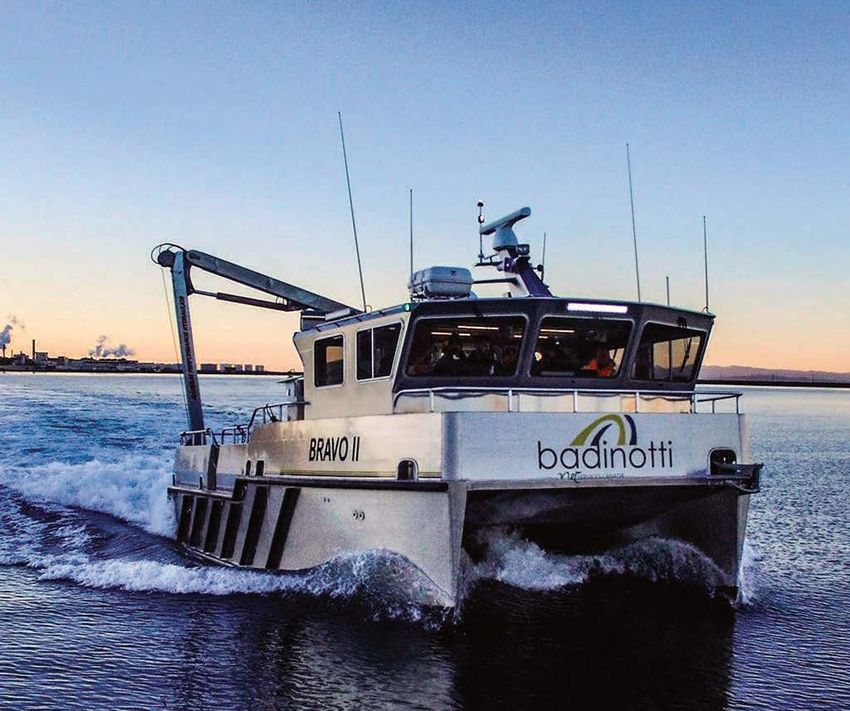
Washington state appeals to U.S. Supreme Court
in long-running culverts case
    The Washington State Attorney General’s Office on Aug. 17 filed government sued Washington over the old culverts designed to
a petition asking the U.S. Supreme Court to review a decision by the federal standards. The petition asks that the federal government be
9th U.S. Circuit Court of Appeals in the “culverts case,” officially blocked from bringing its claim, or at least be required to contribute
referred to as United States of America et al. v. State of Washington. to the cost of fixing the federally designed culverts.
    The petition asks the high court to review the case and resolve           • The 9th Circuit adopted a sweeping treaty interpretation that
some of the especially challenging effects of the lower court ruling, contradicts the U.S. Supreme Court’s previous interpretation of
which reach beyond culverts.                                               the state’s obligation under the treaty. The 9th Circuit held that the
    The petition does not prevent the state Legislature from appro- treaty language guaranteed “that the number of fish would always
priating money to replace old culverts, and it does not halt or delay be sufficient to provide a ‘moderate living’ to the tribes.” While
state agencies’ efforts to replace old culverts to improve fish passage.                                                          Continued on Page 10
    “Filing this appeal does not in any way lim-
it the state’s ability to replace culverts,” Wash-
ington Attorney General Bob Ferguson said,

                                                         put your
“and the state should increase the pace of
culvert replacement. … The state should not
need a court order to restore salmon habitat.”
    The petition also does not prevent the

                                                         best fleet
Attorney General’s Office from engaging
Washington tribes in ongoing discussions to
potentially resolve challenges with the 9th
Circuit ruling outside of court.

                                                         forward
    “Tribal treaty rights are vitally impor-
tant,” Ferguson said. “I appreciate and share
the goal of restoring salmon habitat, but the
state has strong legal arguments that the 9th
Circuit decision is overbroad. We are work-
ing with tribes to resolve this matter, but we
needed to file this appeal … to preserve our
ability to challenge aspects of the 9th Cir-
cuit’s opinion.”
    The impacts of the 9th Circuit decision
extend beyond culverts. As nine dissenting
judges of the 9th Circuit pointed out, “Legal
commentators have noted that plaintiffs
could use the panel’s decision to demand the
removal of dams and attack a host of other
practices” that affect fish habitat, from farm-               Foss Maritime’s two full-service shipyards
ing to logging to construction.                               are equipped to take on any project from
    The Attorney General’s Office is asking for
                                                              cost-effective repairs and maintenance to
Supreme Court review for the following reasons:
    • The 9th Circuit’s decision forces the state             major conversions and new construction.
to expend resources on projects that will not                 With multiple dry docks and marine
benefit salmon. The decision requires the                     railways, cranes up to 90-tons, experienced
state to replace culverts even when other bar-                teams of ABS- and DNV-certified engineers
riers, such as dams or federal culverts, block
                                                              and highly skilled craftspeople, we keep
salmon from ever reaching the state’s culvert.
Money squandered on such projects could                       your fleet moving forward.
and should instead be used for more effec-
tive salmon restoration efforts.
   • The lower court decision forces state                    always safe. always ready.
taxpayers to pay for problems largely creat-
ed by the federal government. For decades,                    www.foss.com/shipyards
the federal government specified the design                   800.426.2885
for the state’s highway culverts. The state
then invented and began using a new design
that is better for salmon. Then, the federal

                                                                                          WWW.PACIFICFISHING.COM £ SEPTEMBER 2017   £ PACIFICFISHING £ 9
NEWS NET
Canada faulted on Pacific salmon monitoring
Fisheries and Oceans Canada (DFO) is not monitoring enough One of the five key recommendations in the study calls for increased
spawning streams to accurately assess the health of Pacific salmon, federal funding to ensure that salmon are adequately monitored.
according to a new study led by Simon Fraser University research- Visits to spawning streams provide vital information on trends over
ers Michael Price and John Reynolds. time. Without such information, fisheries may continue to catch dimin-
The study, published in the Canadian Journal of Fisheries and ished populations without the necessary warning bells sounding.
Aquatic Sciences, reveals that DFO does not have enough data to “Our knowledge of salmon populations in B.C. is eroding rapidly,”
determine the status of 50 percent of all managed salmon popula- says Price, a doctoral candidate. “Without increased support for
tions along British Columbia’s north and central coasts. annual spawning surveys, the rich legacy of population data avail-
Analysis of DFO’s own data by the SFU researchers, and able for B.C.’s coast is at serious risk of becoming irrelevant for
researchers from other institutions, shows that the annual number future assessments of management and conservation status.”
of streams monitored by DFO has steadily decreased to a record “You can’t manage salmon populations if you don’t know how
low. This despite a key commitment of Canada’s Wild Salmon Pol- they’re doing,” says Reynolds, a biology professor.
icy to assess the health of salmon populations, and to increase the
– Simon Fraser University
abundance of those populations deemed at risk.
David Wilson, owner of the fishing vessel Destination, testifies Aug. 7 in Seattle before a U.S. Coast Guard Marine Board of Investigation. The
board is looking into the February sinking of the crab boat near St. George Island in the Bering Sea. Six crewmembers were lost in the tragedy.
Wilson, who was not aboard the vessel at the time of the sinking, testified the Destination’s skipper, Jeff Hathaway, was “very capable and
knowledgeable,” the Seattle Times reported in coverage of the marine board hearing. Freezing spray could have been a factor, but Hathaway
had successfully dealt with that many times, Wilson said. USCG photo by Petty Officer 3rd Class Amanda Norcross
Culverts case continued from Page 9 The case began in 2001 when the federal government and 21
Washington is committed to protecting salmon – spending hun- tribes sued the state, claiming that culverts under state roads vio-
dreds of millions toward this goal in recent years – many factors late this treaty provision if they restrict salmon passage and reduce
beyond the state’s control affect whether there are enough salmon the number of salmon available for the tribes.
“to provide a ‘moderate living’ to the tribes,” including global cli- In 2013, the District Court for the Western District of Washington
mate change and ocean acidification. Therefore, the state may be ruled for the federal government and the tribes, ordering Washing-
unable to comply with the court’s order if factors outside the state’s ton to replace by 2030 hundreds of culverts under state highways,
control negatively affect the salmon population, regardless of how at a cost of billions of dollars. The state appealed. In 2016, the 9th
many culverts it restores. Circuit upheld the District Court’s order.
The culverts case involves the meaning of 1850s treaties between If the Supreme Court decides to take the case, it will be argued
the federal government and Western Washington Indian tribes that in the spring of 2018. A decision would come before adjournment
promised the tribes the “right of taking fish, at all usual and accus- in June 2018.
tomed grounds and stations … in common with all citizens.” – Washington State Attorney General’s Office
10 £ PACIFICFISHING £ SEPTEMBER 2017 £ WWW.PACIFICFISHING.COMFlexible Solutions.
Solid Support.
Vessel: Bravo II
Built by Armstrong Marine, Inc.
Twin Cummins Marine QSB6.7 engines
Cummins offers a full range of EPA Tier 3 propulsion and auxiliary solutions from 6.7 to 60
liters. Cummins Tier 3 product line applies advanced combustion technology to reduce
emissions in-cylinder without the need for aftertreatment and will serve as the platform for
future, more stringent emissions in the U.S. and globally. These engines run cleaner and
stronger with exceptional dependability and durability.
Let our marine professionals help navigate you and improve your bottom line.
British Columbia/Alberta/Washington: Tony Thomas (425) 277-5330
Oregon/Alaska: Mike Fourtner (360) 742-2864
California/Hawaii: Tom O’Connor (510) 347-6614
salesandservice.cummins.comAROUND THE YARDS by DANIEL MINTZ
The newly extended F/V Reelization at launch. Photo courtesy of Platypus Marine
Projects aplenty
California crabbers get longer, a rotting B.C. boat gets an overhaul
and a new name, and a mothership gets a factory upgrade
Here’s a look at shipyard activity around the North Pacific. marketing and sales manager. “We also extended the aluminum
bulwarks along the side decks to match the extension.”
Platypus Marine Inc. in Port Angeles, Washington, has com- The Reelization was about 38 feet long when it came into the
pleted a fiberglass reinforced plastic (FRP) extension on a crabbing yard, and its completed length is 44 feet.
vessel and is in the finishing stages of extending another. The second FRP extension project is for the F/V Pacific Rival,
The F/V Reelization hails from Half Moon Bay, California, and out of Bodega Bay, California. The vessel will be extended by 8 feet
received a 6-foot extension with three deck hatches aft. from its original length of 43 feet.
“That will allow more on-deck space for crab pots and additional In addition to the extension, Platypus is adding an FRP bulb
options for trim when tanking the boat,” said David Kane, Platypus with a hydraulic bow thruster to the boat.
12 £ PACIFICFISHING £ SEPTEMBER 2017 £ WWW.PACIFICFISHING.COMThis vessel entered the Commodore’s Boats yard as the
F/V Skeena Cloud (left) and emerged in much better
shape as the F/V Haida Legend. Photos courtesy of
Commodore’s Boats
“The FRP bulb is an engineered design that was fabricated with it’s now called the F/V Haida Legend.
resin infusion for a stronger, lighter bulb,” Kane said. “We’ll also The vessel is jointly owned by the Coldfish Seafood Co.,
match the current aluminum bulwarks to the new extension.” headquartered in Richmond, and Barney “B.J.” Dudoward.
The vessel’s new bulb will have a compressed air option. Using
the vessel’s existing compressor or a new
one, air pressure added to the inside of
the bulb compartment will increase the
bow’s buoyancy.
Release of air pressure will allow the ves- WESTCOAST SHIP
sel to sit deeper in the water.
“The bulb itself is heavy, so typically a
bulb is installed and additional foam is
REPAIR SPECIALISTS
sealed into it to allow it to be what’s known
as ‘neutral buoyant,’” Kane said. “It will
have a hole drilled into it to fill the unfoamed
portion to be neutral with seawater, which
will then drain out at the next haulout.”
The Pacific Rival will get new hull paint
as well.
The 46-foot F/V Skeena Cloud arrived
about six months ago at Commodore’s
Boats in Richmond, British Columbia, with
extensive areas of rot in its wooden bul-
warks, deck, and wheelhouse.
“Most of the wood was replaced with alu-
minum without losing the look and lines of w w w . seaspan.com
the original boat,” said Ryan Galovich, Com-
modore’s business development manager.
A new aluminum command station was Whether you have one vessel or an entire fleet you should get to know our
added along with electrical and hydraulic shipyards. We provide a complete range of services to marine operators
upgrades, he said, and the vessel’s stern and boat owners in the Pacific Northwest. We repair, modernize, re-engine,
ramp was extended. refit and maintain virtually every kind of vessel. Yachts included.
With the project’s completion, the vessel’s Vancouver Drydock Vancouver Shipyards Victoria Shipyards w w w .se a sp a n.com
new identity is reflected in a name change – 604 988 7444 604 988 6361 250 380 1602
WWW.PACIFICFISHING.COM £ SEPTEMBER 2017 £ PACIFICFISHING £ 13AROUND THE YARDS Major improvements to the factory of the 367-foot M/V Excellence – one of three processing motherships working the Bering Sea pollock fishery – are in the closing stages. Managed by Seattle-based Premier Pacific Seafoods, the Excellence is diversifying from its primary operation, surimi production. Pre- mier Pacific President Joe Bersch said the factory upgrade will boost production capacity and introduce pollock and hake filet operations. Working with Industrial Resources Inc., of Clear Lake, Wash- ington – the company that was also contracted for replacement of the Excellence’s engine – Premier Pacific is having the work done dockside at Pier 90 and Pier 91 in Seattle. Previous work on the project was done at Washington’s Port of Bellingham. The mothership Excellence. Port of Seattle photo Built in 1973, the Excellence originally worked as a factory trawler. Since 1990, she has operated as a processing platform, now travels faster, up to 14.5 knots, burns less fuel, and makes far taking raw fish deliveries from catcher boats. less noise, so we are delighted with the results.” “We were able to replace the 5,000-horsepower engine with a The factory vendor is Kami Tech Inc., of Seattle. 4,000-horsepower engine because we needed less horsepower for Bersch said the goal is to have the Excellence back to work by the the ship’s work as a processor,” said Bill Lucas, Premier Pacific port end of October. engineer, quoted on the Industrial Resources website. “The ship Continued on Page 16 The F/V Early Dawn undergoing some work recently at Pacific Fishermen Shipyard in Seattle’s Ballard district. Jeff Pond photo 14 £ PACIFICFISHING £ SEPTEMBER 2017 £ WWW.PACIFICFISHING.COM
EYES
                 ON THE
          HORIZON
                            YOUR PASSION:
                        harvesting Alaska’s
                             wild seafood.
                               OUR MISSION:
                             making sure the
                            world demands it.

While you spend time working on your boats
and gear to prepare for the season ahead, we
are also looking beyond the horizon, developing
new markets and maintaining relationships with
your customers in the U.S. and overseas.

Building global demand for Alaska seafood
sustains fishing families and communities for
generations. The Alaska Seafood Marketing
Institute team is proud to be on deck with you.

                                     www.alaskaseafood.org

Alaska Seafood Marketing Institute
AROUND THE YARDS
Around the Yards continued from Page 14
Two fiberglass Puget Sound crab boats are being built at the La Conner
Maritime Service yard in La Conner, Washington. Due for delivery in October
to customers in the La Conner/Anacortes area, the 32-foot and 34-foot vessels
will be powered by Volvo Penta D6 mains.
The vessels are the third and fourth of their type built at La Conner Maritime
this year.
“Our customers love ’em so far,” said Isaac Oczkewicz, La Conner’s general
manager. “They’re efficient, seaworthy, and relatively affordable to get into.”
Oczkewicz said the basic version of the fiberglass crab vessel is priced at $200,000.
As of mid-August, La Conner Maritime was also awaiting arrival of an Alaska
fishing vessel in need of collision damage repair.
La Conner’s Naknek, Alaska, shop will be doing two refrigeration refit
projects this fall and spring.
Fred Wahl Marine Construction in Reedsport, Oregon, is finishing work
on two new vessels and advancing the expansion of its Bolon Island facility.
A new 50-by-125-foot machine shop is being built adjacent to the current
fabrication shop and will be 40 feet longer than the one at Wahl’s Port
Dock facility.
“We’ve also got our eye on a new shafting lathe, but nothing’s set in stone,”
said Rob Vest, Wahl’s safety and environmental manager.
The expansion project also includes construction of a building to house the
company’s 685-ton travel lift.
The nearly completed fishing vessel projects involve construction of a 47-foot
combination boat and a 58-foot spec boat that was up for sale as of mid-August.
This combination boat measures 58 feet by 28 feet and is for “Mostly, we’ve been working on tug boats the last few weeks,” Vest said. “So
sale at Fred Wahl Marine Construction in Reedsport, Oregon. far, we’ve serviced and/or begun construction on 22 vessels, with seven boats at
Photo courtesy of Fred Wahl Marine once in just the Bolon Island yard.”
The 47-foot combination boat F/V Stacey Jo under construction at Fred Wahl Marine. Photo courtesy of Fred Wahl Marine
16 £ PACIFICFISHING £ SEPTEMBER 2017 £ WWW.PACIFICFISHING.COMFINANCE by CHARLES MORGAN
New Capital Construction Fund regulations
increase flexibility and access to your money
T he National Marine Fisheries Service issued new regulations to
the Capital Construction Fund (CCF) Program on June 29. This
is the first amendment to the regulations since 1997.
The requirement that a used vessel had to be reconstructed has
been eliminated. Now used vessels can be purchased with CCF
money provided they meet the harvest capacity restriction.
Regulations proposed in September 2014 to improve access to Prior to the changes, a vessel reconstruction had to meet a mini-
CCF money contained a fatal flaw. The revised final regulations mum cost of 20 percent of the original purchase proceeds of the
address the flaw and make major changes in the program. vessel. This restricted access to CCF money for smaller projects.
The flaw was a requirement that any construction, acquisition, or The dollar threshold has been eliminated. Now a reconstruction
reconstruction using CCF money not increase harvesting capacity must either substantially prolong the useful life of the reconstruct-
of any vessel. But the regulations did not provide a definition of ed vessel; increase its value; materially increase its safety, reliability,
harvesting capacity. For each improved vessel, another vessel with or energy efficiency; or adapt it to a different commercial use in the
equal harvesting capacity would have to lose its fishing endorse- fishing trade or industry. It is hard to imagine a project that will not
ment permanently, dramatically reducing its value. The U.S. Coast accomplish one of these objectives.
Guard would be notified that the vessel would never be eligible to As part of the goal to eliminate excess funds on deposit in the pro-
participate in a U.S. fishing operation. gram, the minimum annual deposit requirement has been dropped.
To overcome this issue, the final regulations add an excep- The revised regulations are a major step forward in keeping the
tion for a vessel that fishes in a limited access system. As long program relevant and helping the fishing industry improve the
as the improved vessel operates in a limited access program, the safety and reliability of the fleet.
fisherman does not have to retire another vessel.
Charles Morgan is a certified public accountant with CliftonLarsonAllen
A limited access system is a management program that “limits
(CLA) in Seattle. Since 1985, he has specialized in tax and accounting
participation in a fishery to those satisfying certain eligibility
services for the commercial fishing and maritime industries. He assists
criteria or requirements contained in a fishery management plan or
clients with tax and business planning and IRS compliance and
associated regulation.”
disputes and also testifies as an expert witness in fisheries litigation. The
The exception applies to fisheries managed under the North
information contained herein is general in nature and is not intended, and
Pacific Fishery Management Council, the state of Alaska limited
should not be construed, as legal, accounting, investment, or tax advice or
entry program, and similar programs throughout the nation.
opinion provided by CLA to the reader.
My discussions with NMFS staff indicate that many commercial
fisheries will qualify for the exception.
The limited access system exception means that CCF money
can continue to be used for the construction of new vessels that
are necessary for the safe and efficient harvest of the resource on a
sustainable basis.
The rest of the changes are good news for fishermen and simplify
the process for using CCF money to improve a vessel.
The U.S. Coast Guard is building a fleet of offshore patrol cutters
and has announced names for the first 11 vessels: Argus, Chase,
Ingham, Pickering, Rush, Icarus, Active, Diligence, Alert, Vigilant,
and Reliance. The Coast Guard has established a project office at
Eastern Shipbuilding Group in Panama City, Florida. “The offshore
patrol cutter is the Coast Guard’s highest investment priority,” the
Coast Guard said. “The offshore patrol cutter will bridge capabili-
ties between the national security cutter, which patrols the open
ocean, and the fast-response cutter, which serves closer to shore.
The offshore patrol cutter will replace the service’s 270-foot and
210-foot medium endurance cutters.” The first cutter is scheduled
for delivery in fiscal year 2021. USCG photo
WWW.PACIFICFISHING.COM £ SEPTEMBER 2017 £ PACIFICFISHING £ 17SCIENCE
New federal program monitors changes in
Puget Sound salmon habitat
P uget Sound’s iconic salmon are struggling. A team of research-
ers led by fish biologist Tim Beechie at NOAA’s Northwest
Fisheries Science Center (NWFSC) have begun an ambitious, long-
on by providing a clear path to their upstream spawning sites. But
it turned out that the wood is vital for young salmon on their way
downstream, as it provides them with food, protection, and a place
term program to monitor and track changes in the natural habitat to rest and hide from predators.
most essential to the health and survival of threatened steelhead, “So now,” Beechie says, “a lot of the restoration is putting wood
coho, and Chinook salmon. back in streams. We often point to that as one example of us think-
A new technical memorandum, the first report on this program, ing we can do better than nature and then realizing later that there
has just been published at NWFSC. actually was some utility to all that wood. I think people see it as
It’s not just overfishing messy. As it turns out, messy is good for fish.”
The mighty salmon. It’s a beautiful, powerful fish, a symbol of Getting out of nature’s way
the Pacific Northwest. It’s delicious, too. Eaten raw, smoked, baked, Natural systems are complex, and if we want to make changes
or canned, salmon is tied with tuna and second only to shrimp as that will be useful without causing unintended problems down the
the most popular seafood in America. line, we need to take the time to understand them first.
Steelhead, coho, and Chinook salmon are all threatened species. Beechie calls this “process-based restoration.” Think of it as let-
Overfishing is certainly part of the problem – if they didn’t taste so ting nature tell us what to do.
good, we might be less inclined to pull them out of the water. But “Back in the ’90s, we realized that the best thing we could do
it’s not the only challenge they face. Less obvious, but arguably was to either allow or restore the processes that create habitat for
more significant, are the changes we’ve made to the natural envi- salmon to function as naturally as possible – and that would be the
ronments these fish call home. best kind of restoration,” he says.
Land developed for human use may be good for people, but it’s In other words, if dead trees pile up in salmon streams, maybe
often destructive to salmon. Roads, levees, and shoreline armoring that’s what they have to do for the system to function correctly.
all reduce the amount of fish habitat available. Fewer trees means “The restoration we like to see,” Beechie continues, “is things
warmer streams, with less food and easier access for predators. that get out of the way of nature as much as possible – reconnecting
Cars, houses, and boats produce pollutants that degrade the quality floodplains or delta habitats, removing levees – because those are
of the water. Dams keep fish from reaching some of their historical the things that allow processes to work naturally and create the
spawning areas. And to top it all off, hatchery salmon can compete habitat, without us trying to figure out what it should look like. If
with wild stocks for food and habitat resources. we just let nature work, it creates what it’s supposed to create.”
The Endangered Species Act requires government agencies like
– Northwest Fisheries Science Center
NOAA and NWFSC to work toward restoring wild salmon popu-
NMFS declines to list
lations. In order to do this, we need to be able to understand not
only the current state of their habitat in and around Puget Sound,
but also how it’s changing over time. Is it getting better or worse?
The Puget Sound Habitat Status and Trends Monitoring Pro-
gram, established in 2014 at NWFSC by a group of researchers led Pacific bluefin tuna
by Beechie, aims to find out. The National Marine Fisheries Service has denied a petition to
‘Messy is good for fish’ list the Pacific bluefin tuna as threatened or endangered under the
Beechie and his team have developed a new methodology for Endangered Species Act.
using aerial photographs and satellite images to keep track of “Based on the best scientific and commercial data available … and
changes over time. after taking into account efforts being made to protect the species,
These changes affect four key environments essential to salmon: we have determined that listing of the Pacific bluefin tuna is not
large rivers, floodplains, deltas, and the nearshore (defined as a warranted,” NMFS said in a notice published Aug. 8.
650-foot zone along the water’s edge). The agency in June 2016 received a petition from the Center for
The team digitizes the images according to a strict set of proto- Biological Diversity to list the Pacific bluefin tuna as threatened
cols they developed. Once entered into the program’s database, the or endangered.
images form a timeline of the changing Puget Sound environment. NMFS considered potential threats to Pacific bluefin tuna including
At this point, the program is in its early stages and is purely commercial fishing.
observational. Japanese fisheries are responsible for the majority of landings,
“It’s just a monitoring program,” Beechie says. “All we’re trying to followed by Mexico, the United States, Korea, and Taiwan, the
do is see if the restoration efforts that we have going on now are mak- notice said. In 2014, the United States reported commercial land-
ing a big enough change that we can see it in the habitat conditions.” ings of 408 metric tons, while Japan reported 9,573 metric tons.
Recommending actions based on those changes will come later. Nearly all commercial Pacific bluefin tuna catches by U.S.-flagged
Scientists learned the hard way that even well-meaning efforts vessels on the West Coast of the United States are landed in California.
to improve conditions for salmon can have unintended negative “We find that U.S. domestic management of commercial and rec-
consequences. In the 1960s and ’70s, it was thought that clearing reational fishing poses no or low risk of contributing to population
wood from rivers and streams would help migrating mature salm- decline or degradation in Pacific bluefin tuna,” NMFS said.
18 £ PACIFICFISHING £ SEPTEMBER 2017 £ WWW.PACIFICFISHING.COMYou can also read


