Signpost - Global Road Safety Partnership
←
→
Page content transcription
If your browser does not render page correctly, please read the page content below
Signpost

                                                                                           February 2021

How Do We Improve Vehicle Safety Standards?
In 2019, over 67 million new cars and 24 million commercial vehicles were produced globally.
However, many of these vehicles lacked known and affordable safety technology. The UN has
in place clear Priority Safety Standards:
   Seat-belt anchorages
   Safety belts and restraints
   Frontal collision
   Lateral collision
   Electronic stability control
   Pedestrian protection
   Child restraints
   Motorcycle ABS
However, out of 193 UN member states, only 40 countries have fully implemented all priority safety standards.
The accompanying table prepared by Global NCAP (Global New Car Assessment Programme) shows which, of the
top thirty new vehicle purchasing countries, have implemented each of these lifesaving standards.
As examples, both the United States and Canada have still not regulated Pedestrian Protection or Motorcycle ABS
resulting in thousands of preventable deaths and injuries every year, while the EU has implemented all standards.

                                                                                                               1
Vehicles equipped with high levels of active and passive safety, and which          Road Map for Safer Vehicles
meet the UN Priority Safety Standards, are at significantly lower risk of           2020. UN regulations for:
crashing and if a crash does occur are much less likely to result in death or
serious injury to their occupants or where involved, pedestrians.                   CAR
                                                                                                  Frontal Impact
                                                                                    TESTS
Some vehicle manufacturers choose to produce what visually appear to be                           (No. 94)
the same vehicles, but with dramatically different levels of safety for different                 Side Impact
global markets. Global NCAP provide one graphic example from Africa of a                          (No. 95)
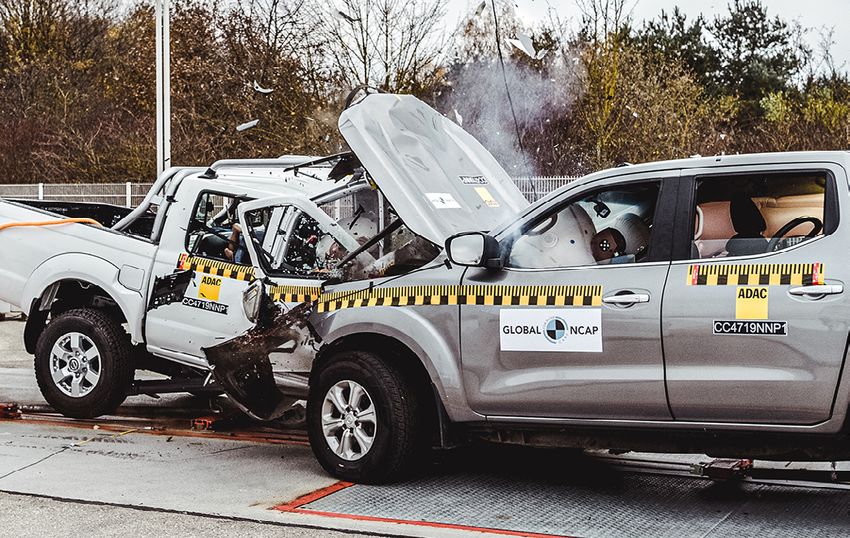
vehicle achieving poor safety performance.
                                                                                    SEAT
In summary, a new South African 2019 Nissan NP300 Hardbody was crash
                                                                                    BELTS         Seat Belt &
                                                                                                  Anchorages
tested against a second-hand Nissan Navara NP300 manufactured in
                                                                                                  (No. 16 & 14)
Europe in 2015. Visually, the vehicles appear to be very similar. However,
the crash test demonstrated that the driver of the new African Nissan would
likely sustain fatal injuries in the simulated collision, while the driver of the   ELECTRONIC
                                                                                    STABILITY     Electronic
equivalent second-hand European model would have likely walked away                 CONTROL
                                                                                                  Stability Control
from the crash.                                                                                   No. 140 (GTR. 8)
Stringent vehicle safety regulation in Europe ensures that only vehicles
meeting high safety standards can be sold. A lack of vehicle safety regulation      PEDESTRIAN

across Africa and other parts of the world allows some manufacturers to sell
                                                                                    SAFETY        Pedestrian
                                                                                                  Protection
vehicles with poor safety standards that could never be sold in Europe.
                                                                                                  No. 127 (GTR. 9)
Global NCAP report that the difference in manufacturing and equipment
costs to produce vehicles that meet these standards is only a few hundred           ANTI-LOCK
dollars per vehicle and producing vehicles that are known to greatly increase       BRAKES        Motorcycle Anti-
road crash deaths and serious injuries is unacceptable.                                           Lock Brakes
                                                                                                  No. 78 (GTR. 3)
We call on every government to ensure their local regulation complies
with all UN Regulations which is another essential step required to reduce          AUTONOMOUS
preventable road trauma.                                                            EMERGENCY
                                                                                    BRAKING
                                                                                                  Autonomous
                                                                                                  Emergency
Dave Cliff                                                                                        Braking Systems
CEO, GRSP

                                                                                                                   2
Dr. Judy Fleiter’s Return To Queensland, Australia
                           For the last four years, Judy Fleiter, worked as GRSP’s Global Manager, leading the
                           partnership’s delivery of the three components of the Bloomberg Philanthropies
                           Initiative for Global Road Safety (BIGRS). Over this period, each of the programmes has
                           grown, with the Advocacy and Grants Programme expanding from 7 to 15 countries
                           and adding vehicle safety regulation in Latin America to its focus; Road Policing Capacity
                           Building expanding to 11 cities in 8 countries and the Road Policing Leadership Course
                           being added alongside to the Global Road Safety Leadership Course. In no small way,
                           the enormous success of these initiatives has been due to the depth of knowledge,
                           passion and warm people skills that Judy has brought to her role.
                            Not only has Judy ably led this work, but she has contributed enormously to a variety
                            of other initiatives including Chairing Pillar Four of the UN Road Safety Collaboration,
                            authoring or contributing to numerous papers, providing advice as well as delivering
insightful lectures at an array of international road safety events and educational programmes.
Judy has firmly established her reputation as a global road safety expert, and in so doing, further cemented GRSP
as a leader in the development and implementation of evidence-based road safety interventions. Judy’s decision
to resign from her role has not been an easy one for her to make, but we are extremely fortunate that she will
continue to contribute to the GRSP programme as a consultant based in Australia. As Judy prepares for her return
home to a hot Queensland summer, we at the GRSP, our partners, donors and grantees wish her well, offer our
deep thanks for her extraordinary contribution and look forward to continuing to work with her in coming years.

UWM Virtual Symposium
On the 25th November 2020, a virtual symposium for key     of Shiv Secondary School (Sion MPS) said, “we have
stakeholders in road safety education was organised by     650 students, who are learning something practical
United Way Mumbai (UWM) as part the VIA Global Road        without textbooks… our school is next to a highway,
Safety Education Programme in India. VIA was jointly       and students come alone as parents are working. When
created by the Total Foundation and the Michelin           the [VIA] project was introduced, teachers and students
Corporate Foundation and is managed by GRSP.               were happy. I hope that the [VIA] project can continue
                                                           for a very long period of time.”
The symposium focused on the importance of road
safety education for school children and its inclusion     In virtual attendance were officers and field experts
in the daily education system. UWM shared local            from the Municipal Corporation of Greater Mumbai
experiences in implementing road safety education and      (MCGM), Regional Transport Office (RTO) of Mumbai
unveiled an educational video created on Safe Walking      East and Pune, as well as programme managers
for Children at the symposium.                             from Total Foundation, Michelin, Global Road Safety
                                                           Partnership, along with representatives of UWM’s
Ajay Govale, Community Director of Community
                                                           NGO partners - United Way Delhi NCR, United Way
Impact in UMW, explained the methodology behind
                                                           Chennai and Nirmaan Organisation. They each warmly
VIA modules, and presented the impacts of VIA in 140
                                                           expressed their insights and aspirations for VIA.
schools and 20,000 students across 6 cities in India
since 2019. “We want to empower young minds […] and        Prakesh Jadhav, Deputy Regional Transport Officer in
their ability to take charge of the future and improve     the Regional Transport Office of Mumbai East, “The
their own safety”, Ajay said.                              Road Safety Cell is the primary body established by the
                                                           Government of Maharashtra for the sole purpose of
Observing that some school children are now more
                                                           reaching out to the public […] road safety education is
conscious of displaying safer behaviours on the road,
                                                           important for children because they are a vulnerable
several educators from participating schools in Mumbai
                                                           group.” He further commented, “the strategy of
enthusiastically contributed their personal encounters
                                                           Training of Trainers by United Way Mumbai is effective
and interactions with children during the road safety
                                                           because the outreach is extended to many children
activities delivered by UWM. Anup Sarwade, principal
                                                           across India.”.

                                                                                                                   3
Expressing support for VIA, Mahesh Palker, Education         officials to support private stakeholders in ensuring
Officer of the Education Department in the Municipal         safer road behaviours in young children to create a
Corporation of Greater Mumbai, highlighted that              sustainable impact in community and in country.
the fruitful cooperation between GRSP, UWM and
                                                             Nora added, “As a parent, I want my child to be safe
private sector was key to making VIA a success. In the
                                                             on the road. Without road safety education, our
symposium, he declared that the Education Department
                                                             children are unknowingly exposed to risks on the roads
of MCGM will continue to “support the programme and
                                                             that will not only affect their own safety, but also the
expand it in all schools for all children”.
                                                             safety of other road users.” While VIA focuses on a
Apart from highlighting the key impacts of VIA, the          non-formal approach for children to learn about road
symposium gathered a stream of common sentiments             safety through engaging activities, Nora stressed the
from the attendees towards a sustainable approach            importance of joint cooperation from both the private
moving forward, particularly the inclusion of road           sector and the government in India to make VIA a
safety education in the National Curriculum. Kanchan         sustainable programme.
Dahiya from Total Oil India Limited and Nora Guitet
                                                             “We launched VIA in India in February 2019 starting
from the Michelin Group eagerly encouraged external
                                                             small: only four schools. Less than a year later, it has
collaborations with new partners to broaden the
                                                             become the programme’s flagship country with over
outreach of VIA, emphasising that each stakeholder has
                                                             150 schools participating. It is remarkable, but we
an essential role to play in VIA, which leads to a greater
                                                             know this is just a drop in the ocean. We need to on-
collective impact.
                                                             board more corporates and, especially, governments
“The unique feature of the VIA Programme gives children      to further widen this VIA Community and really have
the responsibility of ownership towards safe practices       a long-lasting impact in the life of young people across
through multiple activities in schools.” Kanchan shared.     the country.” said Michael Chippendale, Manager,
She is “happy to see how well designed and structured        Communications, Membership and Project Support at
the VIA Programme is, and the level of involvement it        GRSP and VIA Global Manager. Michael then concluded,
gives students with structure to follow”. In efforts to      “With the established vision and drive of VIA partners,
increase the scale of VIA for greater impact, Kanchan        India truly has been the flagship for the programme and
urged the road transport, traffic police and education       will remain a model for expansion in other countries.”

                                                                                                                   4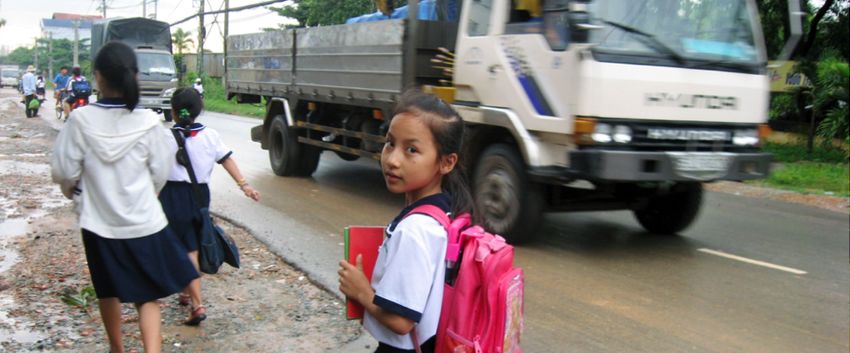
VIA Partner Trains Local Stakeholders On Child Road Safety In
                               Mumbai, India

VIA is a global road safety education programme            invited United Way Mumbai to organise a training on the
targeting children and youth aged 10 to 18. Jointly        topic of road safety for children. This was delivered to
created by the corporate foundations of Total and          a total of 2,000 officers from the education department
Michelin, the programme is managed by GRSP.                and to selected teachers from all the municipal schools
                                                           in Mumbai.”. The selected school teachers were then
VIA is currently implemented in several countries
                                                           tasked to upskill their colleagues from their respective
across three continents by local GRSP partners. In
                                                           schools on how to conduct road safety sessions with
addition to educating young people to practice safer
                                                           students. This training will be monitored and reported
behaviours on the road, the programme aims to
                                                           to the Ward Supervisor of Education.
raise awareness on the importance of road safety
education through stakeholder engagement. The long-        “This is a good development in our journey to make
term goal is to integrate road safety education into       road safety integral to the school curriculum in
school curriculums, and in this area we have observed      Mumbai,” added Ajay, who also shared his belief
promising development in our flagship country, India.      that the collaborative engagement embedded within
                                                           the VIA Programme will help UWM strengthen their
Last year in India, local VIA implementor United Way
                                                           partnerships with local education and road safety
Mumbai (UWM), through their engagement with
                                                           stakeholders. The initiative and ability of UWM to
schools in the Municipal Corporation of Greater
                                                           engage in stakeholder relations has been inspiring for
Mumbai (MCGM) conducted road safety training for
                                                           the whole VIA Community. It has also been an important
271 teachers. One of those sessions was attended by
                                                           step forward towards the vision of VIA, a vision whereby
an Education Officer from the Education Department
                                                           every child receives quality road safety education.
of the MCGM.
“We at United Way Mumbai firmly believe in collective
community impact,” said Ajay Govale, Director of
Community Impact at UWM. He continued, “While
implementing VIA in India, we have been actively
engaging various stakeholders including the Motor                      GRSP ANNUAL
Vehicle Department, the Traffic Control Branch, the
Mumbai Police, and the Education Department of the
                                                                       REPORT 2019
Municipal Corporation of Greater Mumbai.”
                                                               We wish to share with you the GRSP Annual Report
On 2 November 2020, the Motor Vehicle Department               2019. This document shares in quite some detail
of the Government of Maharashtra issued a circular             the different GRSP programmes and their impact
for Education Departments and Institutes to conduct            right around the world.
road safety education sessions for school students.
“Impressed with the quality of our training,” said Ajay,       We hope you will find it useful, informative and
“the Education Department of Municipal Corporation             enjoyable. Please feel free to share it with your
                                                               colleagues and peers should you see fit.

                                                               You can find the GRSP Annual Report 2019 here.

                                                                                                                 5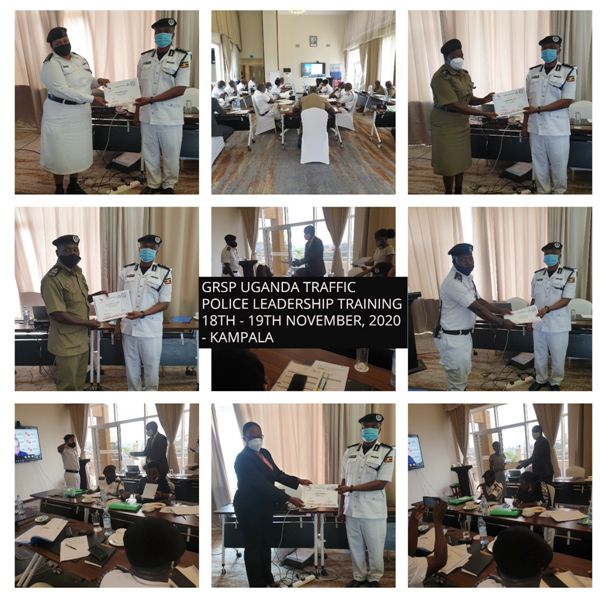
GRSP Partners Are Awarded The Prince Michael International Road
Safety Awards

                    Each year, the most outstanding examples of international road safety initiatives and
                    achievements are given public recognition through the Prince Michael International Road
                    Safety Awards. The Global Road Safety Partnership is thrilled to celebrate and send our
                    heartfelt congratulations to two of our local partners for this honourable acknowledgment.

   Speed Limit Setting And Enforcement In The Philippines Wins Prince
                             Michael Award
ImagineLaw was awarded recognition for speed limit           training enforcers on enforcing speed limits, guided
setting and enforcement projects in the Philippines. In      by international practices. Through this project more
2018, as a result of continued advocacy by ImagineLaw        than 170 enforcement officers were trained in best
supported by GRSP’s Road Safety Grants Programme             practice speed management and a comprehensive
within the Bloomberg Initiative for Global Road Safety,      speed enforcement package was shared with the Land
the Department of Transportation, Department of              Transportation Office (LTO) to ensure sustainability. An
Public Works and Highways and the Department                 online speed awareness campaign also engaged more
of Interior and Local Government issued Joint                than 750,000 people, including high level officials and
Memorandum Circular No. 2018-001, which provided             media representatives from across the country.
an important opportunity to focus much-needed
                                                             The Prince Michael Award was duly presented to
attention on addressing speed with evidence-based
                                                             ImagineLaw in recognition of their sustained focus on
interventions across the Philippines. The policy clarified
                                                             the issue of speed reduction in the Philippines that will
that local government units (LGUs) are empowered to
                                                             lead to a reduction in death and serious injuries on the
lower speed limits on all roads (including those under
                                                             roads.
jurisdiction of the national government), established
coordination mechanisms between the national                 “While ImagineLaw is deeply honoured to be recognised
government and LGUs, and institutionalised the use           for our efforts, this award is a testament to how civil
of the Data for Road Incident Visualisation, Evaluation      society organisations and government agencies can
and Reporting (DRIVER) system. ImagineLaw started            come together to make our road safety laws work
providing technical assistance and trainings to LGUs         for the people. The award is the fruit of ImagineLaw’s
in 2018 to help them enact speed limit ordinances            partnership with the Global Road Safety Partnership,
according to their local road conditions. This campaign      which has always been supportive of our advocacy to
led to not only the adoption of the national policy but      increase the level of speed limit enforcement in the
also the enactment of 15 speed limit ordinances, and         Philippines”, said Sophia San Luis, Executive Director of
three comprehensive road safety ordinances.                  ImagineLaw.
To support implementation of the new Circular,
ImagineLaw, in partnership with GRSP and UNESCAP              READ MORE
(United Nations Economic and Social Commission for
Asia) and funded by the United Nations Road Safety               About the award here.
Fund, launched a new project in 2019 that focused on

                                                                                                                    6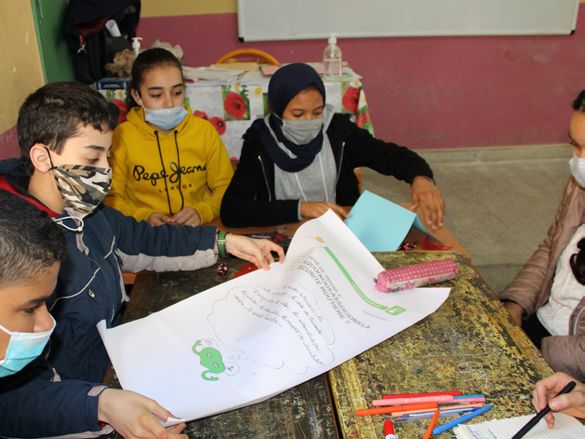
Asia Injury Prevention (AIP) Foundation – Vietnamese Government
partners win Prince Michael Road Safety Award for the Slow Zones, Safe
                          Zones programme

                                                                        ”
Vietnam’s National Traffic Safety Committee (NTSC) and the Student
                                                                            Both of these richly deserved
Affairs Department of the Ministry of Education and Training
                                                                            awards were for projects that
(MoET) received the prestigious 2020 Prince Michael International
                                                                            focused squarely on speed
Road Safety Award in recognition of their efforts to protect children
                                                                            reduction and that was for one
through the two-year Slow Zones, Safe Zones speed reduction
                                                                            very sound reason: human beings
programme.
                                                                            are fragile and the higher the
The pilot programme, implemented in partnership with AIP                    impact speed in a collision, the
Foundation and Gia Lai local governments from 2018 to 2020,                 greater the injury that results.
managed by the Global Road Safety Partnership and funded by                 As impact speeds rise above 30
Fondation Botnar, has delivered comprehensive safety interventions          km/hour (e.g., a car striking a
and secured a legislative decision that reduces school zone speed           child), the chances of survival fall
limits to 30 km/h in Pleiku City, Gia Lai Province, Vietnam.                dramatically. We congratulate
                                                                            both ImagineLaw and Asia Injury
“GRSP's role was fundamental in addressing the legislative gaps
                                                                            Prevention (AIP) Foundation for
on road safety in Vietnam. With their support, we were able to
                                                                            driving these important projects
successfully develop and implement a programme to improve
                                                                            that are saving lives.
safety in school zones. Our Slow Zones, Safe Zones programme was
piloted at two schools where we engineered road modifications with          David Cliff, CEO of GRSP.
school zone signs, traffic lights, and proper pedestrian footpaths,
we led road safety public awareness campaigns and joined forces
with local authorities to conduct speed reduction enforcement.
                                                                             READ MORE ABOUT
The results were overwhelmingly positive. Not only did the local
government issue a landmark decision to reduce speed limits                     The Royal Award
around schools to international standards, but also called for an               announcement here.
allocation of the city's budget to renovate infrastructure. These
changes towards saving lives would not have been possible without               The Slow Zones, Safe Zones
the guidance and technical assistance of GRSP,” said Nguyen Thi                 program here.
Quy Linh, AIP Foundation’s National Programme Director.

                                                                                                              7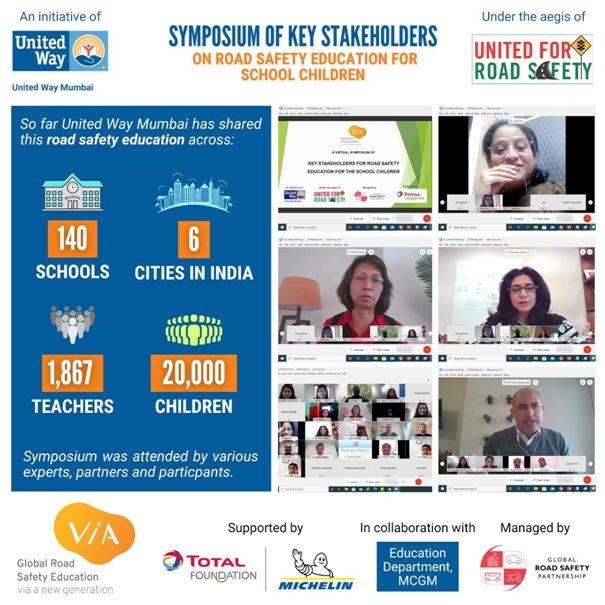
Kampala Road Policing Leadership Training
In 2020, Kampala joined the group of cities in which         including the scientific evidence base that underpins
GRSP is implementing the Road Policing Capacity              effective road safety policy; (iv) effective road policing
Building Programme under the Bloomberg Initiative for        and enforcement strategies, and (v) enforcement
Global Road Safety (BIGRS). Based on the experience          strategies and procedures applicable to primary
gained in the previous phase of this programme, high         causative road safety risk factors, with an emphasis
priority was placed on educating the police leadership.      on speed. Despite the online modality of this training,
                                                             leaders were able to raise questions and share real-
In November 2020, GRSP launched enforcement
                                                             life experiences in their roles as managers. Evaluation
capacity buildings activities in Kampala, Uganda, with
                                                             forms indicated that particular interest was placed on
two training sessions on Road Policing leadership. The
                                                             road policing leadership, enforcement strategies aimed
two-half day training sessions were delivered online.
                                                             to deter offences, and the importance of improved
The 47 attendees that participated in these sessions,
                                                             crash investigation techniques.
hold managerial levels positions at the national and
metropolitan levels, and reported having an average of       Future plans in Kampala include data management
17 years of police service, with professional experience     training for mid- and high-level officers, and the
ranging from five to 33 years.                               formation of a road policing task force, the members
                                                             of which will be trained in the skills needed to become
Through the training, officers enhanced their
                                                             trainers themselves in coming years. These sets of
knowledge on each of the following themes: (i) outline
                                                             leadership training sessions are paving the road for
of BIGRS road policing capacity building programme
                                                             the next four years of capacity building activities, with
delivered by GRSP, (ii) principles of leadership in the
                                                             speed enforcement as a priority.
road policing context, (iii) ‘Safe System’ for road safety

                                                                                                                     8
Welcome To GRSP

BRETT HARMAN, MANAGER ROAD POLICING AND ROAD SAFETY PROJECTS
(BASED IN KUALA LUMPUR)
GRSP welcomes Brett Harman to its Kuala Lumpur Office as GRSP’s new Asia Pacific
Manager, Road Policing Programmes and Road Safety Projects. Brett has over 30 years
policing experience including specialist duties in Road Policing Enforcement and Road Safety;
Intelligence and Covert Support; and Emergency and Major Event Management. Brett returns
to GRSP after having performed the role of GRSP’s Senior Road Policing Advisor between
2017-19, supporting phase one of the Bloomberg Initiative for Global Road Safety. He has
performed secondments to the Transport Accident Commission (TAC. Victoria, Australia) as
a Specialist Road Policing Advisor; to Vic Roads International Projects Division as a Road
Safety Training Specialist based in Hanoi, Vietnam; and to the to Indonesia Infrastructure
Initiative based in Jakarta as a Specialist Advisor where he provided technical enforcement
expertise to the Indonesian National Traffic Police.
Brett has co-authored several government road safety strategies and road policing
organisational strategies and has been involved in a number of research projects including
road user behaviour change through analysis of mass crash data. “It’s humbling to be able
to contribute to GRSP’s various programmes of work and I look forward to collaborating with
our respective members and partner agencies to reduce the number of preventable deaths
and injuries across the globe at a time when our support and expertise is so greatly needed”
Brett said.

DR. CRISTINA INCLAN VALADEZ , SENIOR OFFICER ADVOCACY
Cristina Inclan Valadez has worked in the public health, road safety and the urban mobility
fields for a number of years in cities across Latin America, Asia and Africa. Cristina has a
Master’s Degree in Public Health from Mexico and a PhD in Urban and Regional Planning
from the UK.
Having grown up in Mexico City and lived for many years in London, Christina is both curious
and passionate about cities, and would like to continue her efforts in making life happier,
healthier and more inclusive for the people who live in them. She is a Mexican national and
speaks English, Spanish and Portuguese. She loves cooking with her child.

SABRINA GANDER, SENIOR OFFICER ADVOCACY
Ms. Sabrina Gander comes to GRSP with more than 10 years of experience in the international
development sector, advocating for policy change in the areas of public health, education
and climate change. Sabrina’s most recent experiences include a consultancy with the WHO
on active mobility and her work in managing the Benefits Research programme in over 40
cities across seven regions at the C40 Cities Climate Leadership Group.
Her previous work in policy advocacy and grants management includes diverse assignments
with Bloomberg Associates, UNESCO and other organisations in Brazil. She has a Master’s
Degree in International Relations from Geneva. Sabrina is a Swiss national and speaks five
languages: English, French, Spanish, Portuguese and German. In her free time, she loves
hiking in the mountains and reading books.

                                                                                           9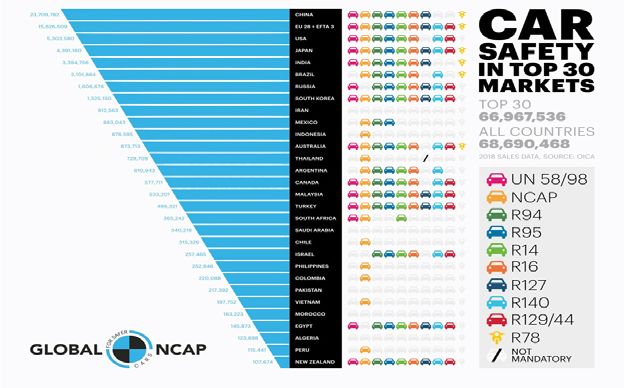
CYNTHIA GARIBAY LÓPEZ, GRANTS AND ADMINISTRATION SUPPORT OFFICER
Cynthia Garibay López is originally from the suburbs of Mexico City, where she commuted for
long hours to the University (and the cool areas of the city of course) to get a BA in Sociology.
She worked some years in the academia and NGO sector in Mexico as an administrator,
project manager and researcher in the field of human rights, getting certified as a yoga
teacher along the way - a big passion of Cynthia’s and “a much-needed skill when living in a
city as big as Mexico City!”, she says.
Thereafter, she received a MSc in Conflict Prevention and Peacebuilding by the University of
Durham, a little endeavor that took her to Kenya, where she started a year-long engagement
in the field of refugee, IDPs and asylum seeker protection. She had the opportunity to
collaborate with several grassroot NGOs and other UN agencies while working in refugee
camps in Sofia, Bulgaria for about 3 years, before moving to Prague and becoming a full-
time consultant on Institutional Development. Cynthia is an avid eater (vegetarian), zen
meditation practitioner and doggie lady, and is beyond excited to start this new chapter
here at GRSP!

CLARENCE MACKORI, SENIOR OFFICER ADVOCACY
Clarence Mackori is a seasoned operations professional, IT expert and certified Project
Manager with extensive experience encompassing the private and humanitarian sectors.
A humanitarian at heart, he has been privileged to serve with several international
organisations at country, regional and global levels over a period spanning two decades.
Clarence is humbled and extremely motivated to be part of such an important global
cause - the sustainable reduction of road-crash death and injury in low- and middle-income
countries.
Academically, he has a business background with a Bachelor’s Degree in Commerce
(Finance), Master’s Degree in IT Systems from the U.K., and is nearing completion of his PhD
in Management from Switzerland. He is a Kenyan national and speaks English, French and
Swahili.
In his spare time (and when not taken by his top priority – family), Clarence is a sports/
fitness enthusiast who also loves the arts (music & theatre) and travelling. In the endless
pursuit of excellence, he considers himself a student of life, constantly learning, adapting
and innovating.

ISOTTA CLEPS, GRANTS AND ADMINISTRATION SUPPORT OFFICER
Isotta has joined the GRSP office in Geneva to assist with grants administration, and is looking
forward to supporting its mission to reduce road-crash deaths and injuries.
Isotta’s previous professional experience is in grant management and administration in
the areas of health, environment and education, at a private foundation in Geneva. Most
recently she worked at an NGO in Geneva, supporting advocacy activities on the adoption of
WHO recommendations and access to quality essential maternal health medicines in low-
and middle-income countries. Isotta holds an MA in Migration and Diaspora Studies and a
BA(Hons) in Anthropology & Communications.

                                                                                              10
Civil Society Coalition Successful In Advocating For Mexican
Constitutional Amendment, One Step Closer To National General Road
Safety Law
GRSP would like to take this opportunity to congratulate the coalition of Mexican civil society organisations led
by Centrico, Bicitekas and Reacciona por la Vida on their most recent and historic accomplishment! Thanks to the
persistence and dedication over the past seven years of this broad coalition (comprised of over 60 organisations
across the Mexican Republic), Mexico may now be on the verge of creating a General Road Safety and Mobility
Law in Mexico, a first of its kind.
Here is a timeline of how quickly this happened in the last few months of 2020:
On 15 October, the Mexican House of Representatives unanimously voted (351- 0) in favour of a constitutional
amendment that would reform the Mexican Constitution and allow for the creation of such legislation. More
specifically, a General Road Safety and Mobility Law would grant the federal government the power to legislate
on road safety issues, something which is not within the federal government’s powers today.
After the historic vote in the Mexican House of Representatives, the constitutional amendment proceeded
to the state legislatures. Each of the 32 Mexican states considered the text and voted for approval of this
constitutional amendment to be formally incorporated into the Mexican Constitution.
Less than two weeks later, on 30 October, 17 out of the 32 Mexican state legislatures required to approve the
constitutional amendment had already supported and voted in favour. To date, 25 out of 32 Mexican states
have voted in favour.
On 18 December, the new constitutional amendment became official when it was formally published in the
Mexican National Government’s official gazette.
Mexico’s national congress is now on the clock and has only 180 working days (not including weekends and
holidays) to pass a General Law on Road Safety, which will be instrumental for future federal road safety
legislation.
Congratulations, once again, to all the advocates as well as to all the Mexican lawmakers at both the national and
state level for their commitment and action towards this important step in road safety and towards saving lives!
We look forward to hopefully congratulating you all once again this year when the potential of a General Road
Safety Law may become a reality.
11VIA In Morocco VIA In Mauritania
Morocco will be one of the new Although the pandemic has disrupted the work in
countries where VIA will be schools across the globe this year, there are a few
implemented in early 2021 with pockets of good news that reach us. The imminent
the support of Total Morocco and implementation of the VIA Programme in Mauritania is
in partnership with Foundation one of those.
Sanady. The project is structured
In early November, together with the Total local affiliate,
around interventions in 14 schools,
GRSP delivered a Training of Trainers (ToT) workshop
seven in Casablanca and seven in
for three senior educators from the Mauritanian Red
Agadir, for a total of approximately 600 students.
Crescent. This two-day workshop commenced the VIA
One of the peculiarities of the implementation pilot project in Mauritania, which will directly engage
of VIA in Morocco is that it will, from its very start, three schools in the country’s capital, Nouakchott,
involve local school teachers, who will be trained starting from the end of November 2020. In the
on VIA and who will participate in the delivery of following five weeks, the Mauritanian Red Crescent will
the programme in their respective schools. This will help children and young adults learn more about road
provide, as the project continues in years two and safety and understand its implication in their daily life,
three, sustainability and continuity to a programme making VIA really theirs.
”
that can change lives.
”
At Total E&P Mauritania, we look forward to the
We are very happy and excited to be working implementation of the VIA programme in the three
on the VIA Programme in Morocco. We look selected schools. This will be a first pilot that will
forward to starting the implementation in the allow us to refine the programme to Mauritanian
first 14 schools with a vision to increase the realities to maximise its impact - which will
number of schools involved as the programme consequently help ensure the safety of our young
progresses. people on the road.
Rim Zouhry, Foundation Sanady’s Project Abdellahi Hourmatalla, Director of Public
Manager in charge of VIA. Relations & Sustainable Development at Total
E&P Mauritania.
12ADB Online Course
From November 10 to December 3, 2020, GRSP Legislation and enforcement
delivered an online course on road safety management
Vehicle safety
and leadership in partnership with our member the
Asian Development Bank (ADB) and the Asia Pacific Safer road infrastructure
Road Safety Observatory (APRO). As the first key pillar
Road safety data and post-crash care
of the United Nations Global Plan for the Decade
of Action for Road Safety, road safety management Strategic communications and behaviour change
is recognised as a central element in reducing road A primary focus was also given to the way in which
crash deaths and serious injuries. The ability for road Governments can link infrastructural interventions with
safety managers, lead agencies and high-level technical other evidence-based initiatives, such as enforcement
experts to collaborate and implement complementary and communications campaigns. A number of case
evidence-based interventions from across the Safe studies were also provided to showcase the impact of
System Approach is vital, and this is precisely why these approaches.
strong management and leadership in road safety is
essential. It was in response to the continued need for The response to this activity was extremely positive,
stronger capacity in these areas that GRSP and ADB with all participants reporting that the course met its
jointly developed the course. objectives and that they had acquired new knowledge
and skills as a result of their participation. “It was
The course, which was attended by more than excellent to see so many senior executives from many
120 participants, was conducted through eight countries complete the Road Safety Management and
online interactive modules that allowed for strong Leadership Course.” said Michael Anyala, Senior Road
engagement between facilitators and participants. Asset Management Specialist, Asian Development Bank.
The participants were drawn from 23 countries across Adding, “Many thanks to GRSP for bringing together so
Asia and the Pacific and came primarily from national many international experts to share useful insights in
governments, including ministries of transport, road guiding country and regional road safety efforts.”
safety committees, police, and other relevant agencies.
A number of ADB staff also attended the course. Dave Cliff, GRSP’s CEO commented on the course
saying: "This training provided an outstanding
The course was delivered by experts from GRSP and opportunity to provide much needed capacity building
the ADB, as well as many of our partner organisations, for road safety managers and leaders on the way in
including the International Road Assessment which the Safe System can be implemented through a
Programme (iRAP), Johns Hopkins University coordinated approach. Delivering evidence-based road
International Injury Research Unit (JH-IIRU), the Global safety interventions that complement each other is
New Car Assessment Programme (Global NCAP), the vital to ensuring we reduce deaths and serious injuries
Transport Accident Commission (TAC) of Victoria, on the roads. We look forward to working further
Australia and the National Traffic Safety Committee of with our member the ADB to continue to deliver high-
Vietnam. The National Transport Research Centre from quality capacity building opportunities for road safety
Pakistan also provided a presentation in partnership practitioners across the region."
with the ADB.
The course presents a fantastic model for tailored
Topics covered in the course included: online capacity building opportunities and GRSP will
Road safety lead agencies continue to work with our partners to identify similar
opportunities during the period of restricted travel.
Road safety plans and resource mobilisation
13Child Restraint System Fitter’s Training In The Philippines
As the Philippines prepares to implement the ‘Child
Safety in Motor Vehicles Act’ in February, which requires
drivers of private vehicles to secure children 12 years
old and below in a CRS whilst travelling in motor
vehicles, LTO law enforcers from the central office and
17 regional offices underwent this important 2-day
training programme. As part of their commitment to
provide fitting and inspection services to the public,
sessions also emphasised the importance of using
CRSs, their correct installation, use, maintenance and
inspection.
According to Natasha Daphne Marcelo, Imagine Law’s
Global Road Safety Partnership (GRSP) and the Global Project Manager for Road Safety, “In 2017, the Philippine
Health Advocacy Incubator (GHAI), through the GRSP’s Statistics Authority determined that 1,226 children
Road Safety Grants Programme, supported local non- below 14 years old died on Philippine roads due to
profit organisation Imagine Law who organised a crashes. That is at least three children a day. Of these
capacity building training for the Land Transportation numbers, 134 children were motor vehicle passengers”.
Office (LTO) law enforcement officers in the Philippines In addition to completion and passing of the written
on childhood injury prevention. On January 12 and 13, assessment, Kidsafe Western Australia will also
GRSP and GHAI invited childhood injury prevention conduct online practical assessments to evaluate each
experts from Kidsafe Western Australia along with participant’s capacity before they are certified as Fitters.
GRSP’s expert consultant, Michael Griffiths, to train These capacity building activities for LTO enforcers are
representatives from the LTO on child restraint systems pivotal to minimise risk to children in the event of a
(CRS). road crash and thus keeping them safer on the road.
Enforcement Training In The Philippines
the 3-day workshop built the capacity of local law
enforcers to perform effective CRS enforcement. This
equipped the participants with greater understanding
and knowledge of the new law as well as best practices
in CRS enforcement aimed to ensure the protection of
children on the road.
During the training, LTO Law Enforcement Service
Deputy Director Roberto Valera presented the draft
guidelines on enforcement, including how to conduct
Following the training of law enforcers from the visual inspections of motor vehicles during random
Land Transportation Office (LTO) on Child Restraint safety checkpoints. Participants also learned about
System (CRS) use and installation, officers underwent effective media campaigns aimed at strengthening the
another three days of virtual training on effective CRS implementation of the legislation.
enforcement from 19 to 21 January 2021.
Effective implementation of the act will require LTO
The training was led by GRSP’s consultant, road policing enforcers to ensure that children of ages 12 and below
expert, and former Director of Slovenian Traffic Police are properly secured in CRS and/or car seats that are
Robert Susanj, and it was organised by ImagineLaw, appropriate to the child’s age, weight, and height while
a non-profit public interest law group based in the in a motor vehicle. Complementing the knowledge
Philippines, supported by GRSP’s Road Safety Grants gained from their previous training on CRS, Robert
Programme. Susanj reminded the LTO law enforcers that “children
Coinciding with the mandatory compliance of the are not the subjects of enforcement, but victims of non-
“Child Safety in Motor Vehicles Act” in the Philippines, compliance of drivers with the law.”.
14Members Of The Global Road Safety Partnership:
Global Road Safety Partnership
Geneva Office Kuala Lumpur Office
P.O. Box 303 Menara Tokio Marine
Chemin des Crêts, 17 Level 10,
Petit-Sacconex, Geneva No. 189, Jalan Tun Razak,
Switzerland Hampshire Park,
Email: grsp@grsproadsafety.org 50400 Kuala Lumpur,
Tel: +41 22 730 4249 Malaysia.
Fax: +41 22 733 0395
For more information about how to join the Global Road Safety Partnership please visit our website
www.grsproadsafety.org
Follow us on:
The Global Road Safety
Partnership is hosted by:
What is GRSP?
www.grsproadsafety.orgYou can also read


