Health & Safety Policy - Sir Martin Frobisher Academy September 2019
←
→
Page content transcription
If your browser does not render page correctly, please read the page content below
Sir Martin Frobisher Academy

                 Health & Safety Policy

                      September 2019

Page 1 of 31
Reference Number            Version           Status               Author(s)

  Amendments                                                         Date                By whom

  Intended Recipients               Group/Persons Consulted:
  All School staff                  • REAch2 Head of Health, Safety & Wellbeing
  Local Governing Body              • Deputy Director of Education
  Parents and guardians             • Head Teacher / School Business Manager
                                    • Staff representatives
                                    • Union Representatives
                                    • Governing body
  Monitoring Arrangements           Annually by Local Governing Body
  and Indicators:
  Training/Resource                 Refer to Training Matrix
  Implications:
  REAch2 Touchstone                 Leadership, integrity and responsibility
  REAch2 KPI                        KPI 4: Wellbeing of staff and children is effectively supported
  Approving Body                    Local Governing Body
  Date Approved                     Summer Term 2019
  Review date                       September 2020
  Policy Location                   School web site / Parago
  Summary

    This policy supplements the REAch2 Health & Safety Policy, establishing the local school
    arrangements and responsibilities for managing safety. All staff are to be familiar with this policy and
    the arrangements contained within.

  Reference Documents               •   Risk Assessment Policy
                                    •   Safeguarding Policy
                                    •   Asbestos Management Policy
                                    •   Training Matrix

Page 2 of 31
Contents
Foreword ........................................................................................................................................... 5
Statement of Intent............................................................................................................................ 6
Responsibility .................................................................................................................................... 7
Local Governing Body................................................................................................................................. 7
Headteacher ............................................................................................................................................... 7
Premises Manager...................................................................................................................................... 8
All School Staff ........................................................................................................................................... 9
Pupils & Parents ......................................................................................................................................... 9
Visitors and Contractors........................................................................................................................... 10
Arrangements .................................................................................................................................. 11
People ............................................................................................................................................. 11
Accident Reporting, Recording & Investigation ....................................................................................... 11
First Aid ................................................................................................................................................... 11
Working at Height .................................................................................................................................... 12
Handling & Lifting..................................................................................................................................... 12
Jewellery & Clothing................................................................................................................................. 13
Lone Working ........................................................................................................................................... 13
Smoking .................................................................................................................................................... 14
Stress and staff wellbeing ........................................................................................................................ 15
Training and Development....................................................................................................................... 15
Display Screen Equipment and Home Working ....................................................................................... 16
Sun Safety & Hydration ............................................................................................................................ 16
Violence & Aggression ............................................................................................................................ 17
Premises .......................................................................................................................................... 18
Asbestos ................................................................................................................................................... 18
Contractor Management ......................................................................................................................... 18
Page 3 of 31Electrical Equipment.................................. 20
Fire Precautions ...................................................................................................................................... 22
Outdoor Play Equipment.......................................................................................................................... 22
Hazardous Substances (COSHH)............................................................................................................... 22
Housekeeping, Cleaning & Waste Disposal ............................................................................................ 23
Lettings/shared use of premises .............................................................................................................. 23
Property Defect Reporting ....................................................................................................................... 23
Snow and Ice ............................................................................................................................................ 24
Vehicles on Site ........................................................................................................................................ 24
Water Hygiene ......................................................................................................................................... 24
Preventing Slips & Trips ........................................................................................................................... 25
Processes ......................................................................................................................................... 25
Staff Consultation and Communication .................................................................................................. 25
Health & Safety Committee ..................................................................................................................... 26
Supervision & DBS Arrangements ............................................................................................................ 26
Swimming and Pool Management ........................................................................................................... 27
Work Experience and Young Workers ..................................................................................................... 27
Drugs & Medications ................................................................................................................................ 28
Intimate care ............................................................................................................................................ 28
Health and Safety Advice ........................................................................................................................ 29
Risk Assessments...................................................................................................................................... 29
School Journeys & Off-Site Activities ....................................................................................................... 30
School Transport – e.g. minibuses ........................................................................................................... 30
Monitoring & Audit Arrangements ................................................................................................... 30
Page 4 of 31Foreword The safety of our staff is our priority. We will endeavour to undertake our work, teaching and activities with all due regard for the risk they present, and will ensure that we are committed to the highest levels of safety management. It is my expectation that all staff will read and enshrine the principals set out in this policy in their everyday life at the school. Staff are encouraged to challenge poor safety behaviours and to make us immediately aware of any issue or deficiency that may potentially harm someone, regardless of how trivial it may seem. SIGNATURE SIGNATURE Sarah Barton Tim Culpin Head Teacher Chair of Governors Page 5 of 31
Statement of Intent
This policy statement complements (and should be read in conjunction with) the REAch2 Health & Safety
Policy, it records the school’s local organisation and arrangements for implementing the health and safety
arrangements of the academy.

The requirement to provide a safe and healthy working environment for all employees is acknowledged
and the Governing Body and those in control of the school recognise and take responsibility for
compliance with the statutory duties under the Health and Safety at Work etc Act 1974.

In compliance with the Health and Safety at Work etc. Act, this school’s Governing Body will ensure so
far as is reasonably practicable that:
   ●    All places and premises where staff and pupils are required to work and engage in school
        activities are maintained in a condition which is safe and without risk to health. (This includes
        the health and safety of persons on school premises or taking part in school activities
        elsewhere.)
   ●    All plant and equipment is safe to use and that arrangements exist for the safe use, handling and
        storage of articles and substances at work.
   ●    Appropriate safe systems of work exist and are maintained.
   ●    Sufficient information, instruction, training and supervision is available and provided to ensure
        that staff and pupils can avoid hazards and contribute in a positive manner towards their own
        health and safety and others.
   ●    A healthy working environment is maintained including adequate welfare facilities.

In addition to the above the school will ensure so far as is reasonably practicable that the health and
safety of non-employees is not adversely affected by its activities.
Employee involvement is an important part of managing safety, and consultation on health and safety
with employees and employee representative’s forms part of this policy.

Page 6 of 31
Responsibility
Local Governing Body
The Local Governing Body (LGB) will:
● Provide critical oversight of health and safety management arrangements at the school,
providing assurance at Trust level on overall school safety performance.
● Ensure that appropriate safeguarding arrangements are in place, including risk of harm to pupils.
Including the naming of a dedicated safeguarding lead for the school.
● Preserve, develop, promote and maintain the school’s health and safety management system, in
partnership with REAch2 Head of Health, Safety & Wellbeing.
● Ensure that health and safety matters are taken into account when organisational decisions are
made.
● Receive information to allow the governing body to monitor the effectiveness of this policy and
management arrangements
● Ensure that Health & Safety is maintained as a standing item of all Governing Body and school
senior level meetings.
Headteacher
The Headteacher is responsible for implementing this policy. They will:
● Ensure that the school has a structure in place to manage health and safety, including the
delegation of key functions within this policy to suitable competent persons.
● Ensure that all safeguarding requirements are fulfilled for the school, including the delegation of
a competent safeguarding lead.
● Provide feedback to the Trust on any issue, deficiency or shortcoming in local health and safety
management arrangements.
● Ensure that plans for continuous improvement in health and safety management are developed
and reviewed regularly.
● Ensure that all school activities are organised and have sufficient arrangements and resources.
● Provide reports to the governing body on a termly basis to allow the governing body to monitor
the effectiveness of the health and safety policy and management arrangements.
● Prepare an emergency evacuation procedure and arrange for periodic practice evacuation drills
(at least once a term) to take place and for the results of these to be recorded;
● Make arrangements to draw the attention of all staff employed at the school to its Health &
Safety policy and procedures. This should take place during induction and upon any change of
role.
Page 7 of 31● Ensure that all incidents are reported on the Trust’s online incident system and that any critical
or serious incident is notified immediately to the Trust.
● Ensure that regular safety inspections are undertaken, ensuring that the Trust’s online risk
management system is appropriately updated and monitored.
● Ensure that appropriate estates safety arrangements are in place, including the monitoring of
school equipment and estate safety issues.
● Report to the governing body and REAch2 Estates Team any defect in the state of repair of the
buildings or their surrounds which is identified as being unsafe and make such interim
arrangements as are reasonable to limit the risk entailed.
● Ensure that suitable arrangements are in place for the monitoring of contractors on site,
including arrangements for induction of contractors onto school grounds.
● Must assign responsibilities for Health and Safety within the staff team which include premises
manager, health and safety coordinator, educational visits coordinator, first aiders, and site
safety maintenance and where necessary appoint competent contractors to advise and ensure
all key health and safety and maintenance responsibilities are met.
● Must ensure that those who have been assigned specific responsibilities in school for Health &
Safety have been identified, this has been communicated, and adequate training or instruction
has been given.
● Ensure that the Trust’s Online Risk Assessment system is updated and that suitable and
sufficient risk assessments have been conducted for relevant school activities, estates
maintenance and curriculum activities.
● Consult with staff as necessary on matters of health and safety which may affect them at work
and receive health and safety reports from Health and Safety Representatives, responding as
necessary.
Site Manager
Their responsibilities are:
● To maintain an understanding of the Trust’s health and safety policy arrangements, and an
awareness of relevant premises-related health and safety legislation, issues and procedures and
operating within these requirements;
● To control contractors working on the premises, and ensure that hazard information has been
exchanged and suitable risk control measures implemented;
● Ensuring adequate security arrangements are maintained;
● Ensuring the general cleanliness of the premises and that adequate welfare facilities are
provided;
Page 8 of 31● Arranging for regular inspection of the areas of the premises for which they are responsible to
monitor that workplace health and safety standards are in effective working order and that a
safe means of access and egress is maintained;
● Ensuring that adequate fire safety arrangements and emergency procedures are implemented
and maintained;
● Ensuring that plant and equipment is adequately maintained;
● Arranging for the regular testing and maintenance of electrical equipment;
● Maintaining records of plant and equipment maintenance;
● Ensuring that all estate-related hazards are adequately identified, assessed and suitable and
sufficient control measures implemented and monitored;
● Undertaking thorough investigation of all premises-related accidents/incidents;
● Ensuring the adequate provision of health and safety notices and warning signs are prominently
displayed and comply with the Health and Safety (Safety Signs and Signals) Regulations.
All School Staff
Staff must be aware that they are obliged to take care of their own safety and health whilst at work
along with that of others who may be affected by their actions. All employees, volunteers and
helpers are advised to:
● Ensure that all safety guidance and training provided is followed;
● Attend and undertake necessary training provided by the Trust within the timeframe specified;
● Never act or do anything that may put yourself in danger or endanger others;
● Report immediately to any senior staff member any act, condition or process that you feel may,
or has the potential to cause harm or loss;
● Never interfere with any safety provision, such as barriers, interlocks or signs;
● Report any dangerous act undertaken by a colleague, contractor or visitor immediately to a
senior staff member of safety representative;
● Take responsibility for your visitors, ensuring that they are provided necessary safety
information, as well as relevant safeguarding information.
Pupils & Parents
Pupils of the school are considered, under this policy and HSE guidance, as visitors. As such we will
manage the school and our activities to account for their age and limited experience. However, it is our
expectation that pupils and parents will:
● Observe all the safety rules of the school and in particular the instructions of the teaching staff
in the event of an emergency;
Page 9 of 31● Use and not wilfully misuse, neglect or interfere with safety systems, barriers or anything
provided to ensure the safety of others;
● Inform any member of staff of any situation which may affect their safety or the safety of others;
● Ensure that pupils are provided with suitable clothing for school, including provision of suitable
sun (UV) protection;
● Report to the school any medical condition, injury or condition that may impact on their child’s
safety whilst at school, and to provide such information as is necessary for the school to assess
the risk of its activities and tasks.
Visitors and Contractors
All visitors and contractors to the school are advised to:
● Observe all the safety rules of the school and in particular the instructions of the teaching staff
in the event of an emergency;
● Use and not wilfully misuse, neglect or interfere with safety systems, barriers or anything
provided to ensure the safety of others;
● Ensure that, where required, risk assessments and details of works are provided to the school
and approved;
● Never to park in a way that may increase the risk to others, block an escape route or present a
security risk;
● Observe the safeguarding rules and guidance when on site and report anything you believe to
be inappropriate or in breach of the safeguarding principals to the school’s dedicated
safeguarding lead or reception staff;
● Always wear identify passes provided to you through the course of your visit.
Page 10 of 31Arrangements The following procedures and arrangements have been established within the school to eliminate or reduce health and safety risks to an acceptable level and to comply with relevant legal requirements. Arrangements are categorised into People, Places and Processes. People: Our arrangements to ensure the safety of our staff and their activities. Places: How we will ensure the safety of our school premises. Processes: Our procedures and polices put in place to ensure effective management of the school. People Accident Reporting, Recording & Investigation If an accident occurs, it must be reported in detail to allow investigation and follow up. All incident, near miss, violence and aggression, including acts of bullying can be reported on the Trust’s online risk management systems (Parago). All schools will as a minimum have one staff member trained to input data to the system. Details of who incidents can be reported to will be provided during staff induction and in the staff handbook. It is the school’s expectation that all incidents will be investigated, to ensure that the root causation is identified and appropriate action undertaken. For serious incidents, and for all RIDDOR reportable incidents, the Trust’s Head of Health, Safety & Wellbeing will be notified and if required, an independent investigation undertaken. All staff are advised to provide the required support for any investigation. The school will review all reported accidents termly to identify trends and issues, this will be supplemented by the Head of Health, Safety & Wellbeing who will undertake Trust-wide reviews, offering the school appropriate feedback on emerging trends and issues. Staff must ensure that all accidents are reported immediately (within 4 hours) to their line manager or an appropriate member of senior management staff. First Aid The school has assessed its first aid needs and staff have been trained in the provision of first aid / Emergency First Aid. A copy of the first aid needs risk assessment will be available from the Business Manager and will be reviewed annually and approved by the Governing Body. Page 11 of 31
Medical supplies are held in the medical room and there are first aid bags for use in the playground and
on educational visits. The designated staff member is responsible for checking boxes on a monthly basis
and the office staff will order as required.

If the emergency services are required, the first aider will contact the Headteacher or a member of the
Senior Leadership Team who will advise the office to contact the emergency services. The Headteacher
or an appropriate member of the Senior Leadership Team or teaching staff would act as loco parentis
and accompany the child to hospital.

First Aid training is recorded in a central record and is updated regularly and monitored to ensure that
refresher training is undertaken when required. A list of First Aiders is displayed in locations around the
school detailing the name and location of the first aiders.

Working at Height
    •   Staff are prohibited from standing on chairs, tables etc. to carry out work on displays
        etc. The Site Manager has steps and access equipment which are regularly inspected
        and can provide assistance where needed.
    •   Any staff member required to use access equipment must have appropriate training in the use
        and maintenance of this equipment by a competent provider. To support staff e-Learning in safe
        work at height is available and will form the basis for any new staff induction.
    •   Where necessary external contractors will be used for high level cleaning and maintenance
        requirements.

Handling & Lifting
It is probable that all staff will undertake some form of manual handing at work, to varying degrees. The
school will:

   ●    Provide Manual Handing e-Learning training to all school staff.
   ●    Where any significant handling task is identified steps will be taken to avoid, assess and reduce
        the load concerned, taking into account individual capabilities and skills. The need for manual
        handling training of inanimate objects and for people moving will be identified and provided as
        it emerges.
   ●    Ensure that risk assessments are undertaken for manual handling tasks conducted by staff.
   ●    Require suppliers to deliver to point of use where possible.
   ●    Provide a trolley to aid the movement of equipment, stationery through the school.
   ●    Staff are requested to notify their line manager of any injury, illness or medication that may
        affect their ability to perform manual handling tasks.

Page 12 of 31
● All staff must use equipment provided for manual handling tasks, including trolleys and
supports.
● It is the school expectation that people lifting and handling will not be expected. Any staff who is
required to undertake people handling as part of any care and support work will be provided
specific training and support.
Jewellery & Clothing
There is no specific legislation that governs the wearing of school uniforms and jewellery. The school will
ensure it meets the guidance offered by ‘School uniform guidance for governing bodies, school leaders,
school staff and local authorities September 2013’. The school will manage a dedicated policy on the
management of school uniform, which will be agreed by the governing body and subject to annual
review.
It is expected that where the wearing of jewellery may present a risk, such as during sports and PE
activities, it will be removed.
The school cannot be liable for lost jewellery; staff and parents are reminded that they must ensure all
valuable items are kept secure.
Lone Working
A lone worker is an individual who spends some or all of their working hours working alone without
direct supervision. This may occur during normal working hours at an isolated location within the
normal workplace or when working outside normal business hours. Staff may also be considered to be
lone workers if the nature of their work places them in isolation from others, either in or outside of core
hours where the nature of the work may lead to injury.
• Core school hours are considered to be 7:30am – 6:00pm
• No lone working will be permitted after 6.00pm.
No staff member should work alone outside of the core hours unless they have the permission of the
Headteacher or a member of the SLT. Individuals must ensure that they have informed a responsible
adult that they are working alone in the school and carry a mobile phone with them at all times.
All lone working activities will be risk assessed. Our risk assessments will cover all work currently
undertaken alone (or proposed to be), where the risk may be increased by the work activity itself, or by
the lack of on-hand support should something go wrong. Once all job roles involving lone working have
been identified, the following factors will be considered:
Page 13 of 31● Risk of violence - All jobs involving an element of lone working will be assessed for any risk of
verbal threats, or violence. The priority will be those involving face-to-face dealings with
members of the public and/or cash handling.
● Plant and equipment - Plant and equipment used by lone workers will be assessed to ensure
that it is suitable for use by one person.
● Work at height - Working at height will NOT be undertaken when working alone.
● Chemicals - Any existing, or planned use of chemicals will be considered with regards to their
suitability for use by those working alone.
● Access and egress - Some lone working may require access to locations that are difficult to
access or exit. Assessments will consider whether these tasks are suitable to be carried out by
one person.
● Staff must not arrange meetings with parents or members of the public when lone working. All
meetings must be arranged during school occupancy times or when there is more than one
informed member of staff on site for the duration of the meeting.
● Staff are required not to handle cash when lone working.
● Late meetings must finish promptly and not leave one member of staff alone on site.
● Staff must not approach, or let into the buildings, unauthorised persons when lone working.
Personal Protective Equipment (PPE)
The need for personal protective equipment will be identified by risk assessment for tasks and
processes. Where the need is identified, for instance, for protective clothing, this will be provided free of
charge by the employer. It is the responsibility of staff and helpers to ensure they wear and use all PPE
as directed. Any defect, damage or other issue that renders the PPE not effective must be reported
immediately to the line manager.
Smoking
The school is a non-smoking site and will do its upmost to support staff to quit smoking. No smoking is
allowed:
• On any part of the premises.
• In any school owned vehicle.
• In a personal vehicle whist transporting any staff for students.
• In any location where it poses any nuisance to others, such as near other premises.
• All smoking debris must be safety disposed of and not left on the floor.
• All external areas utilised by the school in the event of an emergency will be deemed as a
workplace, as such no smoking is permitted around any students whilst outside of the school
property.
• The Headteacher, on agreement, will support staff with time for smoking cessations sessions.
Page 14 of 31Stress and staff wellbeing
• Schools are dynamic and changing environments, with fluctuating pressures. The school
leadership team acknowledge that within the changing environment staff need support, and will
ensure that pressures are reasonably managed.
• Staff are encouraged to identify and areas of concern that are affecting their mental or physical
wellbeing at an early stage to allow for appropriate support to be planned.
• Individual risk assessments will be developed by line managers with staff who may become
more vulnerable through pregnancy, disability or ill health including mental ill health. Where
necessary, staff will be referred for Occupational Health support.
• Staff may self-refer to the school’s staff counselling service or Education Support Partnership
helpline. These self-referrals are strictly confidential and managers will not be notified or receive
reports.
• The school will undertake a risk assessment in line with the HSE’s Stress Management
Standards, and will ensure that it has in place procedures for managing work load and
competence.
Training and Development
• New staff will receive a health and safety induction which will be recorded. The training will
cover all critical aspects of safety on site, including;
o Responsibilities for safety
o Fire safety arrangements
o Reporting incidents
o Safety handling and lifting
o Working at height
o Reporting safety concerns
o Policy induction
o Asbestos management
o Safeguarding
o Security and lockdown
• The school has access to a range of e-Learning courses to fulfil part of the induction
requirement. New starters will be provided with log in details to enable them to complete their
assigned e-learning courses.
• The school will maintain a training matrix, establishing minimum levels of training based on job
role type. All staff at induction and through their appraisal will be expected to provide evidence
that all necessary training has been undertaken.
• The Headteacher is responsible for ensuring that all staff have undertaken mandatory training
identified in the training matrix and by the Trust.
Page 15 of 31• All staff are responsible for ensuring that where training is provided, that it is undertaken and
the principles adhered to.
Display Screen Equipment and Home Working
Staff who are regular users of computers, tablets, laptops etc (continuous use for more than an hour a
day or as a habitual part of their job) are required to undertake an online e-Learning training course and
self-assessment. Where staff are required to undertake work from home, on a regular or semi-regular
basis, a Home Worker Self-Assessment will be required.
The school will have a nominated DSE lead, who will review all completed assessments and follow up on
any defect, issue or support request arising from the self-evaluation. All staff must inform their line
manager should the assessment no longer be valid, and as a minimum reviewed on a two-year rolling
basis.
Guidance on good ergonomic posture is available to staff and eye tests will be paid for by the school
every two years. Where the test results in the need for corrective appliances solely for VDU use the
school will contribute to the cost of basic corrective appliances.
Where equipment is identified for the purpose of home working, the school will agree funding on a case
by case basis.
Staff who are classified as Home Workers, either on an ad hoc or contracted basis, will be required to
complete a Home Workers safety assessment. The DSE Lead or designated line manager will be
responsible for reviewing and approving the home worker assessment and will, where identified, rectify
any identified issues.
Sun Safety & Hydration
To ensure that children and staff are protected from skin damage by the harmful ultra-violet rays in
sunlight and maintain a healthy level of hydration we will:
● Educate children throughout the curriculum about the causes of skin cancer and how to protect
their skin;
● Encourage children to wear clothes that provide good sun protection;
● Hold outdoor activities in areas of shade whenever possible, and encourage children to use
shady areas during breaks, lunch time, sports and trips;
● Sunbathing is strongly discouraged;
Page 16 of 31● Work towards increasing the provision of adequate shade for everybody;
● Encourage staff and parents to act as good role models by practising sun safety;
● Regularly remind children, staff and parents about sun safety through newsletters, posters,
meetings and activities for pupils;
● Invite relevant professionals into school to advise the school on sun safety;
● Request that parents / guardians provide adequate sun protection;
● Where outdoor activities are planned, such as sports events, a dynamic assessment will be taken
to ensure that children are not exposed to unreasonable sun exposure;
● Ensure that suitable potable water supply is available to all children and staff;
● Encourage hydration breaks during sport and PE activities.
Violence & Aggression
• The school operates a zero tolerance policy to acts of aggression and violence to our staff and
pupils. Our staff must feel confident to speak out in the event that they feel they have been
treated with disrespect, aggression or have been the subject of a physical assault. It will be the
policy of the school to remove any person from site who acts in a way that intimidates others,
and will work closely with our Police Community Support Officer (PSO) to review arrangements
for managing violence and aggression to staff.
• In the first instance staff must report any violence / aggression immediate to their line manager
or any member of the SLT Group. Once reported, it is the duty of the SLT member to ensure that
immediate action is taken to address the nature of the disclosure and, if necessary report to the
Headteacher and Deputy Director of Education. The school will ensure that all reports are fully
investigated and all staff fully consulted on the progress of any investigation.
• The school will undertake regular risk assessments of the risk of violence and aggression to staff.
• The school reserves the right to refuse entry to its grounds, any person known to engage in acts
of aggressive behaviour or having history of violence towards staff members.
• The school, where required, may take a court order to prevent the entry of any person where
the court and Headteacher believe there are grounds to do so.
• The school will have in place robust procedures to address internal acts of bullying and
harassment and will take action against those are believed to participate in any act that
victimises any staff, parents or students.
• To minimise the risk of violence, no staff may be permitted to lone work without prior
agreement (see lone working section).
• No cash handling will be undertaken by staff without a risk assessment having been undertaken.
• All visitors, including parents, must report to reception on their arrival and must not be
permitted entry until a staff representative has confirmed their visit.
Page 17 of 31• All acts of violence and aggression must be reported on the Trust’s online risk management
system.
Premises
Asbestos
The school is of a pre-2000 construction and asbestos has been identified in the most recent asbestos
management survey. It is the school’s policy that no works likely to disturb the building fabric can be
undertaken without a full review of the asbestos register and risk assessments undertaken. All premises
staff will sign the register annually to confirm they know and understand where asbestos is located
within the school. The school will name an Asbestos Responsible Person, who will take oversight of the
day to day management of asbestos, including its monitoring and ensuring that works are managed in an
appropriate way.
All asbestos incidents will be reported immediately to the Trust’s Estates Team and full investigation
undertaken.
The school will maintain on site copies of the:
● School asbestos management survey
● Asbestos register
● Asbestos log book
● Asbestos Management Plan
Contractor Management
Any contractor coming to work on the school site must make arrangements in advance and have a
meeting with the Premises Manager or member of the SLT to agree their work arrangements to cause
minimum disruption to the school and prompt communication about hazards and risks and how these
will be managed.
Contractor activity will be monitored by the Premises Manager to ensure agreed rules are followed and
contractors will be required to sign in and out of site as per the school agreed procedure, including the
Asbestos Log Book.
Contractors will take all reasonable steps, including background and criminal record checks, to ensure
that their employees and those of Subcontractors are suitable for working within an educational
environment. Supervisory measures must be in place to ensure no contact with pupils except where
urgent matters prevail of a Health & Safety nature.
Page 18 of 31REAch2 has set a minimum safeguarding requirement that at least one person who has a current (i.e. no
more than 3 years old) Enhanced DBS Check will supervise all individual employees, operatives and
Subcontractors during the course of every project. Specifically, these requirements are:
• Wherever possible, Contractors will be restricted to an exclusively "contractor-occupied site"
during term-time where their activities are segregated from the remainder of the school
population as much as possible and they are always to be under the direct, continuous and
uninterrupted control of at least one Site Supervisor (who has a current Enhanced DBS check)
for the full duration of the works on site.
• A copy of the DBS certificate/s and Site Supervisor’s photo ID must be provided to the Client, the
School Business Manager and retained within the Construction Phase Plan prior to
commencement of work on site.
• The Client reserves the right to question the content of the DBS certificate/s (in particular,
aspects relating to positive disclosure) with the Site Supervisor’s employer and, furthermore,
reserves the right to reject supervisory staff based on the contents of the DBS certificate and /
or the outcome of discussions with employers.
• All site operatives must be in possession of and wear their company photo ID at all times when
on site.
• Operatives must always "sign in" at Reception first, wear their visitors badge at all times while
on the premises and sign out at the end of their shift. Operatives may also be required to sign in
/ out elsewhere on the premises but Contractors will be advised of this at the time.
• Where necessary, all operatives will be escorted to and from the "contractor-occupied site" by a
member of school staff such as the Site Manager / Caretaker.
• Where site segregation is not possible (e.g. for short-term, localised or remote aspects of a
project and / or emergency maintenance carried out by one (or a small number of) operatives
then they will be supervised by a member of school staff such as the Site Manager / Caretaker /
School Business Manager - where necessary, Academy Trust Regional Maintenance Surveyors
will practically support this supervisory function.
• The Site Supervisor/s, in possession of a current Enhanced DBS check, will ensure that they are
familiar with the Safeguarding Policy & Procedure for the school at which the work is being
undertaken - a copy of the Safeguarding Policy & Procedure will be provided at the Project Pre-
Start Meeting, acknowledgment of receipt will be recorded in the minutes of that meeting and a
copy of the Safeguarding Policy & Procedure will be retained within the Construction Phase Plan.
• The Site Supervisor/s, in possession of a current Enhanced DBS check, will arrange to meet
regularly (at least weekly) with the School’s Head Teacher in order to review the effectiveness of
safeguarding arrangements.
•
•
Page 19 of 31• Particular protocols, as agreed with the Head Teacher, will be recorded within the Construction
Phase Plan and will include provision to allow the Head Teacher to raise safeguarding concerns
directly and immediately with the Contractor.
• Any identified shortcomings in terms of safeguarding must be immediately and fully addressed
to the satisfaction of the Head Teacher and Client - note that this can include the removal of site
operatives from the project in the event of shortcomings in safeguarding provision and / or
failure to adhere to either agreed protocols and / or the provisions herein.
Contractors will be inducted onto the school site by the Premises Manager. Site inductions will vary
depending on the nature of the works, but will as a minimum cover the following aspects:
• Access and egress from the site
• Reporting incidents and near misses
• Asbestos (log book and confirmation of locations)
• Fire safety arrangements
• Site conduct
• Management of waste and chemicals
• Site segregation
All incidents that occur on site must be notified to the school, regardless of who the employer is. The
school may request details from the contractor on follow up action to rectify an incident, near miss or
failing by the contractor to manage their site risks. Where the REAch2 Estates Team are the contract
managers, the school will ensure the Regional Maintenance Surveyor is notified of any incident and
corrective action taken.
Electrical Equipment
● All staff should undertake a visual check of electrical equipment prior to using it to ensure it is
safe. Guidance can be provided by the Premises Manager.
● Staff are prohibited from bringing in electrical appliances into school unless they have
permission from the Premises Manager.
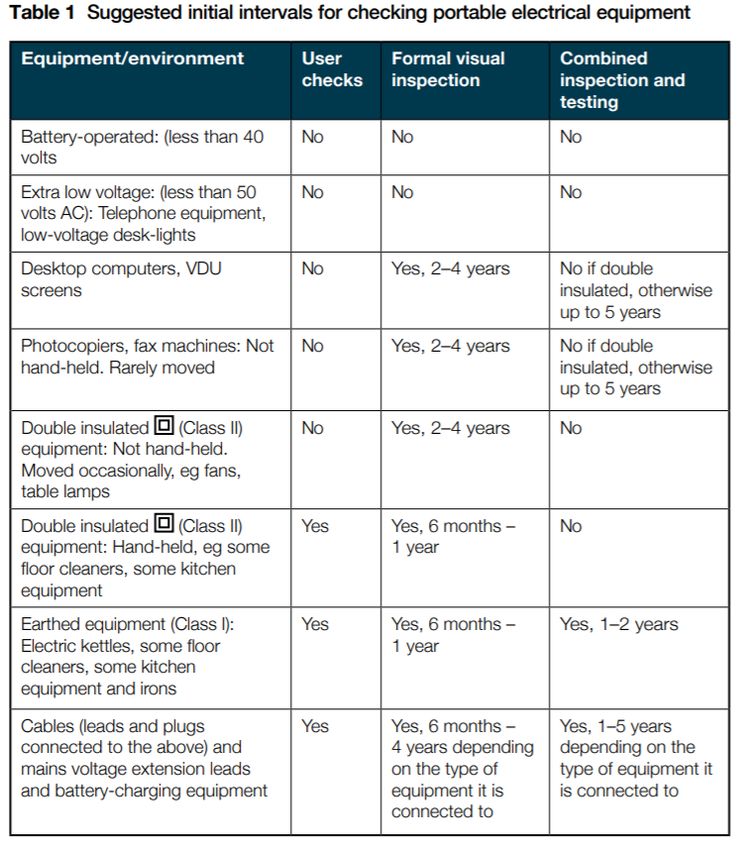
● It is the school policy to follow HSE guide INDG236 to set out PAT test frequencies. The school
will observe the below for a typical low risk school environment:
Page 20 of 31● The hard wiring of the building will be inspected and tested every five years.
● Any unsafe equipment must be taken out of use and repaired or disposed of.
● Pupils using electrical equipment should be supervised.
● Only qualified and competent persons may be permitted to work on any electrical equipment of
supply i.e. NICEIC.
Page 21 of 31Fire Precautions
The school will ensure it fully meets the requirements of the Regulatory Reform (Fire Safety) Order
2005, and will ensure that:
● A full and comprehensive fire risk assessment is conducted for the school by a competent
person.
● The Headteacher will ensure that all actions arising from the FRA are reviewed and undertaken
within the specified time.
● Where actions require funding or specific expertise, full consultation will be given to REAch2
Estates team and the lead Regional Maintenance Surveyor.
● The Fire Risk Assessment will be reviewed at least annually or following any fire incident.
● All staff regardless of their role will be provided a fire safety induction, including the location of
exits, actions to be taken the event of discovering a fire and where necessary firefighting.
● Life safety comes first; staff must never endanger themselves and must ensure as a priority the
safety of students.
● The Site Manager is responsible for weekly and monthly tests of emergency lighting and the fire
alarm system.
● The SLT to organise termly fire drills and provide feedback from these drills.
● Fire action notices are posted in each room identifying the fire evacuation procedure.
● The school will ensure that a suitable number of fire marshals are appointed, details of which
will be posted to the rear of class doors and within the staff room.
Outdoor Play Equipment
• The school has a number of external play apparatus. To ensure their safety, it is our policy that
all external equipment is provided a full RPII accredited annual inspection. The Premises
Manager will have the responsibility for overseeing that all checks are completed and for the
undertaking of weekly visual inspections on all play equipment.
• All staff are to report damage and defects immediately and to take all reasonable steps to
prevent dangerous equipment from being used.
• The school will ensure that playground and supervision risk assessments are completed, and
communicated to relevant staff.
Hazardous Substances (COSHH)
● The school will procure where possible non-hazardous cleaning substances and other chemicals,
e.g. paints. Safety data sheets will be obtained for product and an assessment made to ensure
that substances are stored, used and disposed of safely.
● Substances MUST not be decanted into other containers.
Page 22 of 31● All cleaning and other hazardous products must be stored in locked areas, with any flammable
substances in flammable containers.
● The Premises Manager is responsible for carrying out COSHH assessments and training will be
provided to them.
● Protective clothing is provided where required by assessments or in accordance with Safety Data
sheet information.
● Staff are reminded not to bring any substances or preparation into the school without prior
consent.
Housekeeping, Cleaning & Waste Disposal
● The school employs cleaning staff in the evening who may respond to spillages etc.
● In the event that no support staff are available staff are responsible for making safe any spillage.
Cleaning supplies are kept in cleaning cupboards and warning signs must be placed to identify
slippery floors.
● Rubbish is cleared on a daily basis and stored securely in a compound until it is collected.
● Arrangements are in place for the disposal of clinical and other hazardous waste.
● The school will provide facilities to recycle waste.
● All staff are reminded to clean away food stuff after all meals and not to leave food waste where
it may attract vermin.
Lettings/shared use of premises
• The school will only let the named areas for commercial and community purposes so long as
hirers submit a copy of any risk assessments for activities to be carried out in the school building
and the school is confident that these pose no risk to the building.
• Hirers will be notified of their health and safety responsibilities including responsibility for
raising the alarm, school security, public entertainment licenses etc.
• All hirers are responsible for ensuring their own insurance is in place for their activities; a copy
of the indemnity cover must be provided as part of any hire.
• The school reserves the right to cancel any event in line with the booking terms.
• Hirers will be liable for all damages and costs associated with their hire.
Property Defect Reporting
Any minor defects or building concerns should be reported to the Premises Manager and recorded in
defects book for remedial action. Staff are to use the online reporting system can raise a helpdesk ticket.
Page 23 of 31Where a major issue is identified, or the defect presents an imminent risk to the safety of building
occupants, the school will take all necessary measures to cordon and make the area safe. The school will
notify the Estates Team and Regional Maintenance Surveyor.
Staff must take steps to warn others of any immediate hazards, for example by placing warning signs
which can be found in the cleaners’ store.
Snow and Ice
The school will prepare a gritting plan, identifying all key priority access and egress routes. All staff are
advised to familiarise themselves with safe access routes. Where severe weather warnings are issued,
the school leadership team, on approval of the Headteacher will close the school. External activities,
such as play and PE will be dynamically assessed; if severe weather presents a risk the school will opt to
run indoor play to reduce the risk to staff and pupils.
Vehicles on Site
• Staff must park their vehicles in the designated car park.
• Vehicle speeds are limited to 5 miles an hour and notices are displayed in the car park.
• All delivery drivers and contractors have to report to Reception.
• The school will ensure that large vehicles to site, such as for larger deliveries and construction
works, are planned to transit to a safe area and where possible out of hours.
• Children awaiting transport for visits will be accompanied by teachers and escorted onto
vehicles.
• Road awareness safety training takes place for pupils.
• All staff wishing to park on the school premises must register their car with the school, so that
ownership can be identified.
• Any suspicious vehicle must be reported immediately to the school reception staff, who will
clarify ownership or seek further assistance.
Water Hygiene
• To ensure the safety of the water supply, the school will ensure that a Legionella risk assessment
is undertaken, in alignment to HSE Guide L8. All assessment and corrective works to the water
system will be undertaken by a competent person.
• The Premises Manager will be responsible for the day to day management of the water system,
and will work with any external appointed contractor to ensure that the necessary checks,
cleaning and dosing activities are undertaken, as identified in the Legionella control plan.
•
Page 24 of 31• The water system should be regularly tested by an external contractor, and the risk assessment
updated regularly by a competent external company.
• Any external contractor working on the water system must record their activities in the water
system log book and refer to it before commencing work.
Preventing Slips & Trips
Slips and trips are amongst the highest reported incident type. The school will ensure that:
• The Premises Manager is undertaking daily site tours and conducts formal monthly / termly
property inspections.
• All floor damage will be ideally made safe immediately; however, if not, the Premises Manager
will ensure that suitable steps are taken to cordon off or secure areas where trip hazards are
identified.
• Areas of changes in level will be suitably lit and marked.
• All staff are reminded to deal with small spillages when they happen and to take action where
they see spillages.
• The Premises Manager will support staff with managing larger spillages or ground
contamination.
• The school will ensure that wet play activities or those involving potential floor contaminates
are planned and risk assessed to prevent or minimise any slip / trip risk.
• Annual building condition surveys will be undertaken by REAch2, and will include floor
condition and life span.
• The Regional Maintenance Surveyor working with the school Business Manager will identify a
plan of work to address defect as well as advise on potential budgets i.e. SCA / Capital.
Processes
Staff Consultation and Communication
Health and safety will be included on the agenda for all staff (teaching and non-teaching) meetings to
allow staff to raise any concerns and make suggestions for improvements.
All staff will have access to the REAchIn intranet pages, where they will have access to a range of
supportive material and consultation documents, including information on safety initiatives and news
bulletins.
The school will post relevant safety information within the staff room on the noticeboard. Where a
change to work practice is identified, staff and union representatives will be consulted.
Page 25 of 31Headteachers will have access to a regular Heads Forum, facilitated by REAch2. The forum will provide
update information on safety management including trends and actions required from schools.
The Deputy Director of Education will work with schools to discuss and consult on new safety
developments, including issues related to new policy and work practice.
Health & Safety Committee
To supplement the ongoing staff meetings, the academy will hold a termly Health & Safety Committee
meet. This meeting will be hosted by the lead Health & Safety governor representative and will comprise
of, as a minimum:
• Headteacher
• SBM
• Health & Safety Union representative
• Premises Manager
All meeting will be minute and the Business Manager will be responsible for ensuring that all actions are
appropriately assigned and actioned. Terms of reference will be provided and reviewed annually by the
Local Governing Body.
The Committee will provide oversight of the academy health and safety performance, providing support
and guidance to the school to improve safety performance and understanding. The committee will, as
part of its operation review:
• Incident reports and trends
• Audit actions
• Inspection logs and defects reports
• Training and staff competency
• School condition reports and estates related actions
• Policy review
• Health & Safety policy review
• Risk assessment matrix review and outstanding actions
• REAch2 Initiatives and reports
Supervision & DBS Arrangements
• The DfE requires that recruitment practices in schools and nurseries meet a certain standard of
safety. Their recruitment procedures should help deter, identify or reject people who might pose
•
Page 26 of 31a risk to children. DBS checks are a key part of determining a prospective employee’s suitability
to work in a school, college or nursey.
• It is the school policy to adhere to all DfE requirements related to DBS checks, and as such will
ensure that all staff, governors and those likely to interact with children or work within any
school-related activity, will have all necessary enhanced DBS checks. The DBS check will include a
check of the children’s barred list if the person has been assessed to be working in regulated
activity.
• No staff may be permitted to undertake activities within the school until the DBS check has been
returned and agreed by a member of the SLT group.
• All staff members will have their DBS check reviewed at three year intervals, or sooner if
identified by the LGB or a SLT staff member or where directed by the Deputy Director of
Education.
• Those visiting the site who have not been appropriately DBS checks MUST be accompanied on
site at all times by a school staff member and at no time left unsupervised whist in the school
grounds.
• Pupils will be supervised at all times during the school day in the classroom, at playtime, at
lunchtime and during any afterschool activities.
• During out of school activities pupils will be supervised at all times and a risk assessment will be
undertaken for all out of school activities to ensure that the appropriate levels of supervision
and DBS checks are in place.
Swimming and Pool Management
• If teachers accompany children to swimming lessons off-site they must make themselves aware
of the normal and emergency operating procedures for the pool being attended.
• The school will risk assess and provide suitable supervision arrangements based on the age, skill
and support requirements of the pupils.
• The school, where using an external pool provider, will ensure that on an annual basis relevant
copies of public liability cover is provided and stored. In addition, the school will ensure that the
provider has at all times competent and qualified lifeguard cover.
Work Experience and Young Workers
Where work experience placements are offered to external students, it is the policy of the school that:
• All work experience students will receive a full Health & Safety induction to the school.
• Work will be planned to take into account their limited work experience and knowledge of risks.
• A risk assessment for Young Workers will be undertaken and communicated to relevant staff.
Page 27 of 31You can also read


