Small Arms in Small Hands - German Arms Exports Violating Children's Rights Christopher Steinmetz (BITS) - Terre des Hommes
←
→
Page content transcription
If your browser does not render page correctly, please read the page content below
Christopher Steinmetz (BITS)

                      German Arms Exports
                      Violating Children’s Rights

                      Small Arms in
                      Small Hands

Cooperation partner                 Publisher

                                       Help for Children in Need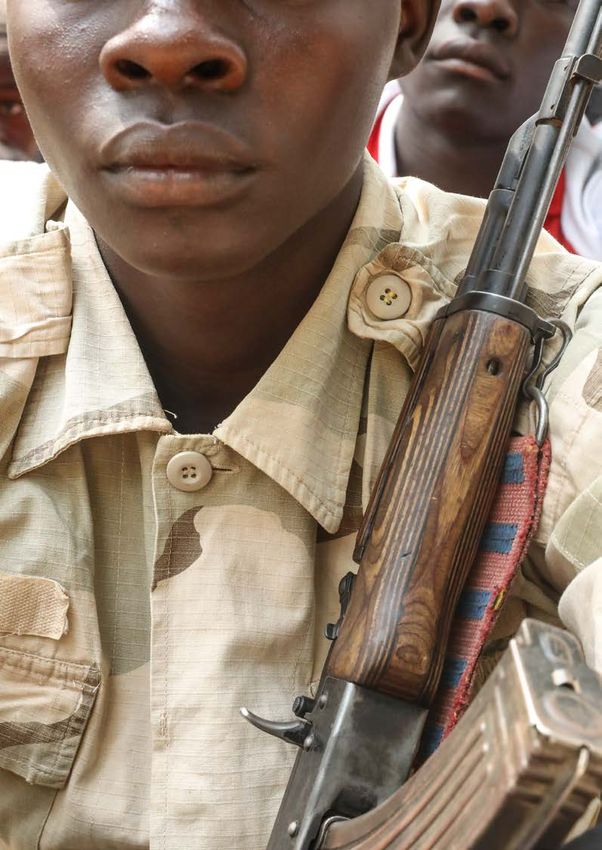
This study is dedicated to Otfried Nassauer (1956 – 2020),
who passed away unexpectedly and much too early.
Without him and his decade-spanning commitment to peace,
disarmament and arms control this study would never have
been written. As director of the Berlin Information-Center for
Transatlantic Security (BITS), which he co-founded in 1991,
and with his vast knowledge, his relentless research
and questioning, his astute comments and advice
he has laid the foundations for today’s critical discussion
on German arms export policy. We will miss him dearly.
Christopher Steinmetz (BITS)

German Arms Exports Violating Children’s Rights
Small Arms in Small Hands
2

    Imprint

    Author                                                   This study is a follow-up to the study “Small Arms in the
    Christopher Steinmetz,                                   Hands of Children – German Arms Exports and Child Soldiers”
    research associate,                                      published in January 2017 by Brot für die Welt, Kindernothilfe,
    Berlin Information-center for                            terre des hommes and World Vision Germany
    Transatlantic Security – BITS
                                                             Photos
    Coordination                                             Cover page 1:   AnasALhjj PHOTOGRAPHY / AdobeStock,
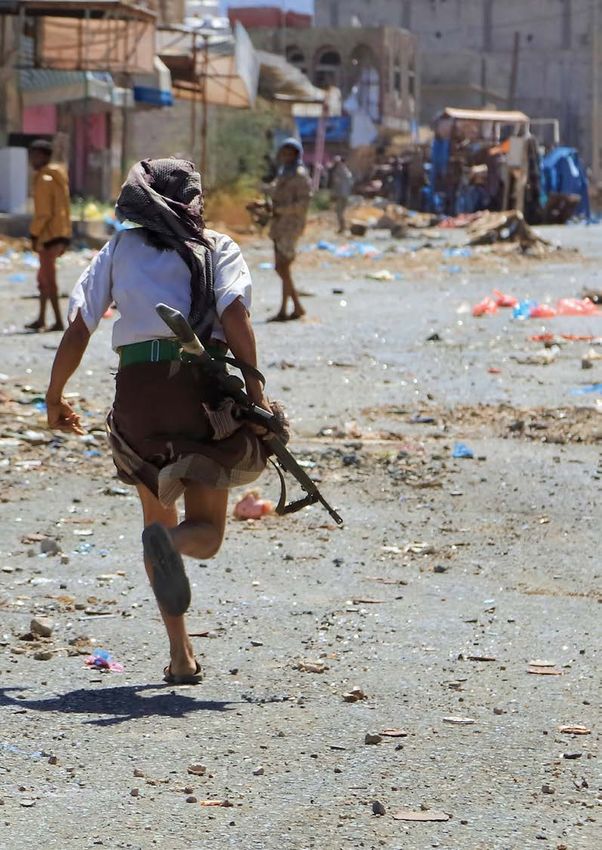
    Ralf Willinger / terre des hommes                                        Armed Boy in southern Yemen Jan. 2019
                                                             Cover page 2:   Wolfgang Borrs
    Editing and Contribution of Content                      Page 6:         Photographer unknown
    Bodo Schulze / Brot für die Welt                         Page 14:        terre des hommes
    Ralf Willinger / terre des hommes                        Page 19:        Grosse-Oetringhaus / terre des hommes
                                                             Page 21:        German Coalition to Stop the Use of
    Cooperation                                                              Child Soldiers
    Otfried Nassauer                                         Page 25:        Carlos Vásquez
                                                             Page 32:        Isaac Billy / UN Photo
    Design                                                   Page 36:        Manfred Leuchter, terre des hommes
    kippconcept gmbh, Bonn                                   Page 43:        terre des hommes
                                                             Page 45:        Simon Boesterling / terre des hommes
    Published by and on behalf                               Page 48:        CIPO / terre des hommes
    Brot für die Welt                                        Page 49:        Juliane Eirich / Brot für die Welt
    terre des hommes Deutschland e.V.                        Page 52:        Christian Jungeblodt / terre des hommes
                                                             Page 54:        Photographer unknown
                                                             Pages 61, 71:   Florian Kopp / terre des hommes
    The publishing organizations Brot für die Welt and
    terre des hommes are members of the network              ISBN-number 978-3-94-1553-33-0
    “Action Outcry – Stop the Arms Trade”.
    www.aufschrei-waffenhandel.de                            Order number (with terre des hommes) 301.1411.00

    The views expressed in this publication are those        © 2020 All rights reserved
    of the author, not necessarily those of the supporting
    organizations.                                           October 2020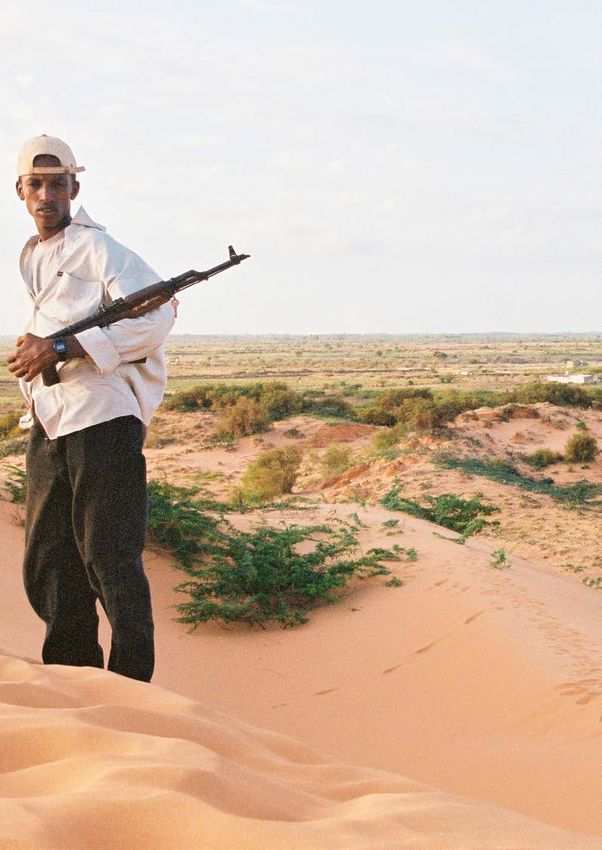
3

Content

    Preface                                                                                       5

    Executive Summary and Recommendations                                                         7
        Recommendations to the UN Committee on the Rights of the Child                           12
        Recommendations to the Federal Government of Germany                                     12
        Recommendations to German arms companies                                                 13

1   Introduction                                                                                 14

2   The Principles of Make-Believe – German Arms Export Control Policy                           19

3   Fueling Grave Violations – German Arms Exports 2014 – 2019                                   25

4   German Arms Impacting Children in Armed Conflicts and Internal Violence                      33

    4.1. Syria & Iraq                                                                            34
    4.2. Yemen and the Saudi-led Military Intervention                                          37
    4.3. India                                                                                   42
    4.4. Philippines                                                                             43
    4.5. Colombia                                                                                45
    4.6. Brazil                                                                                  46

5   Unchecked Proliferation of German Small Arms and Ammunition – Three Areas of Concern         49

    5.1. Licensed Production – Outsourcing Responsibility                                       50
    5.2. Uncontrolled Re-Export                                                                  53
    5.3. Ammunitions Exports – Feeding the Guns                                                  57

Appendix                                                                                         61
   Appendix 1:    Summary of German Laws and Regulations Covering Arms Exports                   62
   Appendix 2:    International Definitions of Small Arms and Light Weapons                      64
   Appendix 3:    Selected German Manufacturers of Small Arms and Light Weapons and Ammunition   66
   Appendix 4:    German Arms Export Licenses 2014 – 2019                                        68

Glossary of Terms                                                                                69

List of Sources                                                                                  72

Index                                                                                            79
   Companies                                                                                     79
   Countries                                                                                     79

The publishers                                                                                   80

Demands of Brot für die Welt & terre des hommes                                                  82
4

    Info Box 1:           Countries Involved in Grave Child Rights Violations in Armed Conflicts &
                          Receiving Small Arms from Germany                                           8
    Info Box 2:           Grave Violations of Children's Rights in Armed Conflicts 2014 – 2019       16
    Info Box 3:           “List of Shame” & UN Annual Report on Children and Armed Conflict          17
    Info Box 4:           Changes to Small Arms Export Licensing since 2014                          20
    Info Box 5:           Main Deficits of the German Arms Exports Regulation                        22
    Info Box 6:           Corporate Responsibility and Accountability                                23
    Info Box 7:           Lacking Transparency on Exports of Small Arms and Light Weapons            26
    Info Box 8 a:         German Arms Exports 2014 – 2019                                            28
    Info Box 8 b:         German Small Arms Exports 2014 – 2019                                      28
    Info Box 8 c:         German Small Arms Ammunition Exports 2014 – 2019                           28
    Info Box 9:           Export of Small Arms and Ammunition to Countries with UN-documented
                          Grave Violations of Children’s Rights in Armed Conflict 2014 – 2019        29
    Info Box 10:          German Security Cooperation & Violations of Children’s Rights              32
    Info Box 11:          German Exports of Small and Light Arms and Ammunition to
                          the Kurdish Regional Government in Iraq 2014 – 2016 	                      37
    Info Box 12:          Export of Small Arms and Ammunition to the Saudi-led Military Coalition
                          in Yemen 2014 – 2019                                                       39
    Info Box 13:          German Arms Exports to Brazil 2014 – 2019                                  47
    Info Box 14:          Turkish Exports of License-produced MP5 Submachine Guns 2016 – 2019        51
    Info Box 15:          Transfer of Know-How                                                       53
    Info Box 16:          German Arms Exports to the USA 2014 – 2019                                 55
    Info Box 17:          Distinction between Military and Civilian Ammunition                       58

    Company Info Box 1:   Sig Sauer Pistols in Colombia                                              46
    Company Info Box 2:   Fritz Werner Industrie-Ausrüstungen GmbH                                   50
    Company Info Box 3:   Heckler & Koch and Rheinmetall Production Licenses                         52
    Company Info Box 4:   German Small Arms Manufacturers in the USA 2014 – 2018                     56
    Company Info Box 5:   Rheinmetall Defence                                                        58
    Company Info Box 6:   Metallwerke Elisenhütte GmbH                                               59
    Company Info Box 7:   RUAG Ammotec GmbH                                                          59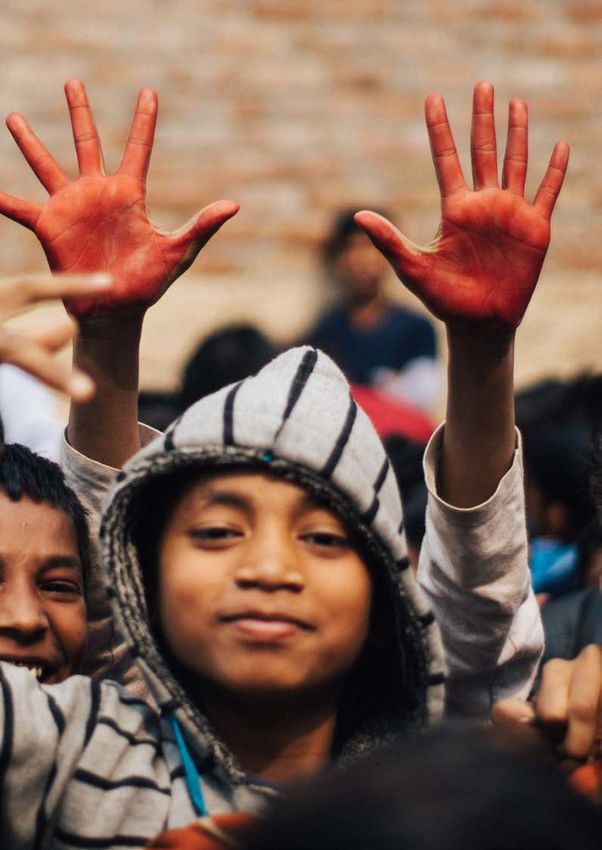
Foreword | 5

Preface

To which countries involved in armed conflict does Ger-     Based on official numbers released by the government
many export arms – especially small arms – and what         and UN-documents, the author identifies serious deficits
are the consequences of these exports for children and      in German arms export policy and their negative con-
youth there? After the study “Small Arms in the Hands       sequences. In order to correct these deficits a compre-
of Children – German Arms Exports and Child Soldiers”       hensive legal reform and a new law for the control of
of 2017 this is only the second study dealing with these    arms exports are needed. While the Common Position
questions. The reason for this second study is the          of the EU and the Political Principles of the German
review of Germany’s implementation of the UN Conven-        government prohibit arms exports to countries involved
tion on the Rights of the Child by the UN Committee on      in armed conflicts and grave human rights violations,
the Rights of the Child in 2021.                            Germany continues to export weapons to these desti-
                                                            nations. So far it is not possible to sue against it, this
The results of the new study are alarming: Despite          means: no plaintiff, no judge.
promises and mantra-like repetitions of the German
government that the German arms export policy is            The only positive development was the stark decline of
restrictive, the current period under investigation         exports of small arms and their ammunition to so-called
(2014–2019) saw no decline in licensed German arms          Third Countries in the last two years. On the other
exports. To the contrary, in 2019, the German govern-       hand, small arms exports to NATO and EU countries
ment approved more individual licenses for arms             climbed dramatically to reach a new record high in
exports than ever, reaching a new record high of eight      2019. From these countries, the deadly freight was
billion Euro. Especially concerning is the fact, that       already frequently re-routed into war zones – either
on average more than 50 % of these export licenses          legally or illegally. For instance, the German arms man-
were issued to so-called Third Countries (neither           ufacturer Sig Sauer illegally shipped 40,000 pistols from
member states of the EU or NATO nor considered as           Germany to Colombia via the USA some years ago. The
NATO-equivalent countries). Many of these recipients        containers with German pistols were simply relabeled in
are involved in armed conflicts and the commitment          the USA and then send on their way to Colombia.
of grave human rights violations. In 2019, the German
government licensed arms exports worth € 3.5 billion        Missing sanctions and end-use controls
to these Third Countries.
                                                            Such illegal arms transfers are facilitated because there
Germany exports small arms and ammunition                   are nearly no controls of the end-use of German arms.
into war zones                                              The German government trusts arms companies and
                                                            buyers blindly even though violations and illegal prac-
Germany has been one of the largest arms exporting          tices are being revealed permanently. This study shows
nations for a long time – currently the fourth-largest –    that countries like the USA, Saudi Arabia and Turkey
and continues to export huge amounts of small arms          have repeatedly violated German end-use obligations
and ammunition to war zones. It is known that this type     on a large scale without any sanctions and are still
of weapons is responsible for a large share of the casu-    among the largest German arms recipients.
alties among civilians, including many children.
                                                            For children in conflict zones it doesn’t matter if Ger-
This study proves that since 2014, Germany has export-      man arms are shipped there directly, as in the case of
ed these deadly arms to at least eight of the twenty        Saudi Arabia, Iraq, India or Brazil, or if re-exports there
countries with grave violations of children’s rights in     via NATO countries like the USA and Turkey are licensed
armed conflicts documented by the UN Secretary-             or tolerated by the German government. Regardless of
General, among which the recruitment of child soldiers,     their route of transportation, German weapons are used
and also to nine countries of the war coalition led by      in armed conflicts and claim many victims.
Saudi Arabia and the United Arab Emirates that, accord-
ing to the United Nations, is responsible for the killing
and maiming of at least 3,550 children and a number of
other grave violations of international law in Yemen.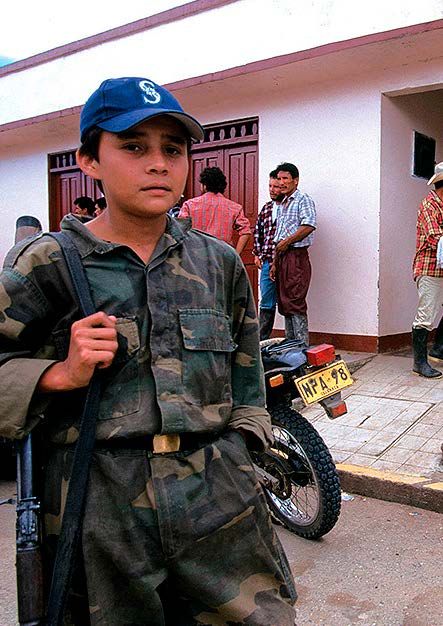
6 | Executive Summary and Recommendations

                                                                           want to reinforce, is unambiguous: The misguided arms
                                                                           exports policy of the German government has to be
                                                                           stopped. It constantly violates the international obli-
                                                                           gations under the UN Convention on the Rights of the
                                                                           Child and other international treaties as well as legally
                                                                           binding EU guidelines and regulations, like the EU
                                                                           Common Position on arms exports. The UN Committee
                                                                           on the Rights of the Child, responsible for the review
                                                                           of the implementation of the Convention on the Rights
                                                                           of the Child, has repeatedly called on Germany since
                                                                           2008 to “ensure the greatest transparency regarding
                                                                           the transfer of arms and explicitly prohibit in law the
                                                                           sale of arms when there is risk that the final destination
                                                                           is a country where children are, or potentially could be,
                                                                           recruited or used in hostilities” – to no avail until today.

                                                                           Due to the disregard of this demand for 12 years and
                                                                           the results of this study, we as civil society organiza-
                                                                           tions recommend to the UN Committee to formulate
                                                                           further concrete demands to Germany.

                                                                           In addition to a legal ban on direct arms exports to
                                                                           conflict regions and countries with grave child rights
                                                                           violations, especially the re-exports of German arms
                                                                           from NATO and EU countries to conflict regions, should
                                                                           be prevented – for instance through mandatory end-
                                                                           use-controls and tough sanctions in case of violations.
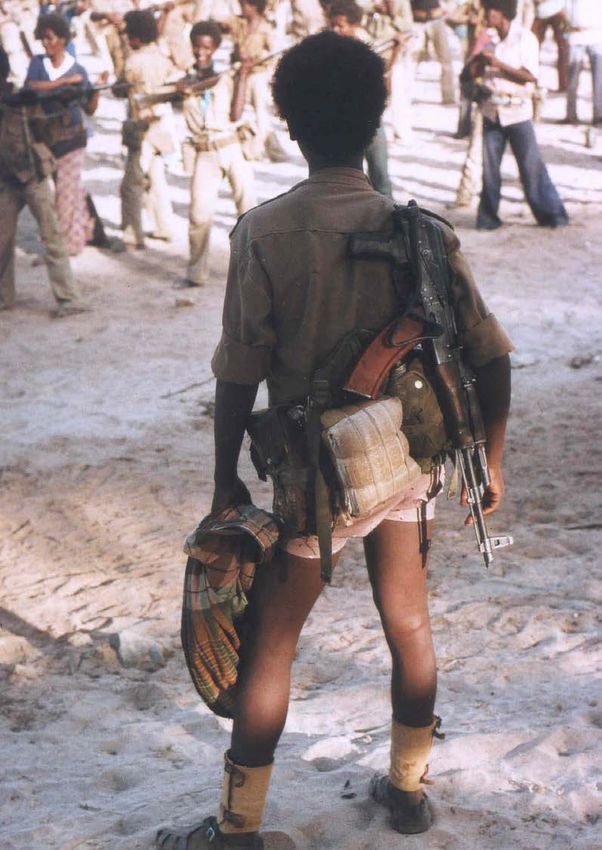
Child soldier with German G3-rifle from Heckler & Koch                     Furthermore, instruments for parliament and civil
                                                                           society to monitor and take legal action must be
                                                                           established.*

             The six country cases covered in this study (Syria &          We have officially submitted the English version of this
             Iraq, Yemen and the Saudi-led military coalition, India,      study to the current state reporting procedure on the
             the Philippines, Colombia and Brazil) make clear: In          German implementation of the UN Convention on the
             these countries, German arms are being used for brutal        Rights of the Child and will present the results to the
             violence against children and youth and against civilians     UN Committee on the Rights of the Child in Geneva next
             as a whole – bombs from Rheinmetall in Yemen, pistols         year. The national and international pressure on the
             made by Walther and hand grenades from Diehl in Iraq          German government must be increased significantly so
             and Syria, Sig Sauer rifles and pistols in the Philippines,   that it finally stops its scandalous arms exports at the
             Brazil, Colombia and India, Airbus helicopters in Brazil      expense of children and the civilian population – please
             or Heckler & Koch rifles in all of these countries.           support us!

                                                                           Bodo Schulze, Brot für die Welt
             Demands of the UN Committee on                                Ralf Willinger, terre des hommes
             the Rights of the Child to Germany

             The conclusion of the author Christopher Steinmetz
             from the Berlin Information Centre for Transatlantic          *   Further recommendations at the end of the Executive Summary
             Security (BITS), which we as publishing organizations             and on the back cover.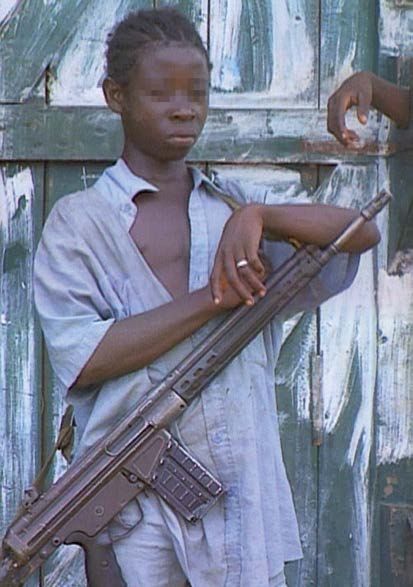
Executive Summary and Recommendations | 7

Executive Summary
and Recommendations

More than 145 million children were directly affected    destined for so-called Third Countries.3 Despite the
by violent conflict in 2018. In 2019, the United         Federal Government’s official commitment not to per-
Nations documented more than 10,000 children             mit the export of arms to regions of conflict and to
being killed or maimed in armed conflicts, and many      ensure that German arms exports do not undermine
more cases remain unregistered. Overall, the United      the protection of human rights, Germany continued
Nations documented 24,000 grave violations of the        to export weapons and ammunition to many parties
rights of children (each of these cases affecting        of conflict between 2014–2019, e.g. to the Saudi-led
numerous children) in that year. 1                       military coalition in Yemen or Iraqi security forces.

Arms are the primary fuel for this continuing viola-     Germany was repeatedly called upon by the UN Com-
tion of children’s rights, whether exported legally      mittee on the Rights of the Child to “explicitly pro-
or illegally or used by foreign powers in military       hibit in law the sale of arms when there is risk that
interventions. Accordingly, the United Nations have      the final destination is a country where children are,
reaffirmed the need for its member states to restrict    or potentially could be, recruited or used in hostili-
the transfer of weapons and ammunition, especially       ties”. 4 Nevertheless, the German government contin-
small arms and light weapons, to areas of armed          ued to license arms exports worth almost €3 billion
conflict on numerous occasions. The UN Committee         to nine of the 20 countries mentioned as country
on the Rights of the Child, monitoring the implemen-     situations in the UN Secretary-General Annual
tation of the Convention on the Rights of the Child      Reports on Children and Armed Conflict for grave
and its Optional Protocols, has made respective          violations of children’s rights since 2014: Afghani-
recommendations to member states. The “Paris Prin-       stan, Colombia, India, Iraq, Israel, Nigeria, Pakistan,
ciples and Guidelines on Children Associated with        the Philippines, Thailand.5 In this context, it is cause
Armed Forces or Armed Groups” of 2007, signed by         for alarm that all of these countries except for Nige-
105 states, even contain an explicit state obligation    ria even received export licences for small arms and
to refrain from arms exports to these areas. Ger-        their ammunition in that time period – worth at least
many, as a signatory to the aforementioned interna-      €150 million (see Info Box 1). The massive military
tional agreements, claims to be in full compliance       aid for the Kurdish Regional Government in Iraq is
with all obligations and even to prioritize the pro-     the most drastic example of this shortcoming: More
tection of children in armed conflicts. The findings     than 24,000 assault rifles and 24 million rounds of
presented in this study challenge this claim.            rifle ammunition have been delivered since 2014.
                                                         But equally concerning is the fact that police and
Ranking as one of the top five arms exporting nations    military forces in India, the Philippines, Colombia
worldwide for many decades, Germany has been and
still is exporting vast amounts of arms and ammu-
nition to well over 130 countries every year. The
Stockholm International Peace Research Institute         3   Third Countries (Drittländer) is the name used by the German
                                                             government for all countries that are neither members of
(SIPRI) ranks Germany at fourth place for 2019. In
                                                             the NATO or EU nor classified as NATO-equivalent countries
comparison to the previous five-year period (2010–
                                                             (Australia, Japan, New Zealand, Switzerland); See Info Box 8a,
2014) SIPRI identified a 17% increase in German arms         8b, 8c for the annual values of arms export licenses.
sales between 2015 and 2019.2 This is also supported     4   See UN Committee on the Rights of the Child (2014), p. 14.
by data made available by the German government:         5   The following countries mentioned in the annual UN reports
Since 2014, it has licensed arms exports                     have also received German arms export licences. But since
worth more than €46 billion, with at least €20 billion       these were mainly destined for UN- and EU-missions or
                                                             German embassies, they were excluded here: Central African
                                                             Republic, DR Congo, Ivory Coast, Lebanon, Libya, Mali,
                                                             Somalia, South Sudan, Sudan, Syria, Yemen. Furthermore,
                                                             Chad was mentioned in the UN report for the last time in 2014
                                                             and received no German arms in this year, therefore, Chad
1   UN Secretary General (2020), p. 2.                       was not included in the above calculations. See also Info Box 9
2   SIPRI (2020).                                            in this study (p. 29).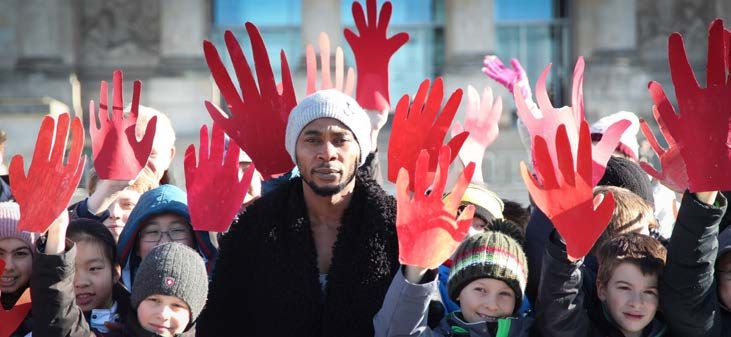
8 | Executive Summary and Recommendations

Info Box 1: Countries Involved In Grave Child Rights Violations in Armed Conflicts & Receiving Small Arms from Germany

                                                                                                                Afghanistan       Pakistan
                                                                                         Jordan
                                                                                Israel
                                                                                                  Iraq
                                          Morocco                                                        Kuwait
                                                                                                            Bahrain
                                                                                                              Qatar
                                                                                Egypt
                                                                                                Saudi Arabia                      India

    Colombia                          Senegal                                                              United Arab Emirates                         Philippines
                                                                                                                                             Thailand

 n Countries that received small arms / ammunition from Germany and were mentioned for grave child rights violations in
   the UN Secretary-General Annual Reports on Children and Armed Conflict 2014–2019 (see data in Info Box 9):
   Afghanistan, Colombia, India, Iraq, Israel, Pakistan, the Philippines, Thailand.
 n Countries that received small arms / ammunition from Germany and are or were members of the Saudi-led military coalition intervening
   in Yemen since 2015 (see data in Info Box 12):
   Bahrain, Egypt, Jordan, Kuwait, Marocco, Qatar, Saudi-Arabia, Senegal, United Arab Emirates.
    This military coalition was listed for grave child rights violations in the ‘list of shame’ in the annex of the UN Secretary-General Annual Reports
    on Children and Armed Conflict for the years 2016, 2017 and 2018. For 2015 it was first listed in the ‘list of shame’ and later removed from
    the list due to political pressure. For 2019 it was not listed despite being responsible for numerous grave child rights violations documented by
    the UN (see Info Box 3).

               and Brazil continually received pistols, submachine                          In Syria and Iraq, the UN has documented more than
               guns, assault rifles and other firearms and ammu-                            9,500 grave violations of children’s rights since 2014.6
               nition even though its forces are involved in armed                          Between 2014 and 2016, the German government
               conflicts or internal violence and responsible for a                         poured more than 24,000 assault rifles and 24 million
               large share of grave violations of children’s rights                         rounds of rifle ammunition, 20,000 hand grenades and
               and human rights, including extra-judicial killings                          hundreds of recoilless anti-tank weapons and anti-tank
               and maiming of children.                                                     missile systems into the Syrian and Iraqi conflict region,
                                                                                            equipping non-state armed actors known to recruit child
               Furthermore, Germany continued to license the                                soldiers and to cooperate with other armed actors also
               export of vast amounts of arms to the member                                 connected with grave violations of children’s rights.7
               states of the Saudi-led military intervention in Yemen                       Since 2016, Iraq has become a regular recipient of
               since 2015, which is responsible for a large share                           German military aid, being supplied with further military
               of the killing or maiming of children there. Bahrain,                        equipment for use in the armed conflict.
               Egypt, Jordan, Kuwait, Morocco, Qatar, Senegal,
               Saudi Arabia and the United Arab Emirates received                           In Yemen, the UN has documented more than 4,000
               licenses worth €6.4 billion for a wide array of weap-                        grave violations of children’s rights since 2014. At least
               ons, ranging from small arms and missiles to fighter                         8,000 children were killed or maimed in the armed
               aircraft (see Info Box 12).                                                  conflict. According to the data provided by the United
                                                                                            Nations, the Saudi-led military coalition was responsible
               The case studies in this report confirm the assess-
               ment that the German Federal Government did not
               take the recommendations made by the Committee
                                                                                            6       See the country chapters for Iraq and Syria in UN Secretary-
               on the Rights of the Child to heart. Instead Germany
                                                                                                    General (2015a), UN Secretary-General (2015b); UN
               continued to pursue an arms export policy that puts                                  Secretary-General (2016); UN Secretary-General (2017); UN
               national security and economic interests over its                                    Secretary-General (2018); UN Secretary-General (2019a); UN
               international obligations to protect children’s rights                               Secretary-General (2020).
               in armed conflicts:                                                          7       See Info Box 11 in this study (p. 37).
Executive Summary and Recommendations | 9
for 3,550 child casualties in Yemen, almost all of them issued, including licenses for assembly of MILAN anti-
as a result of air strikes, and numerous other grave vio- tank missile systems. India has received at least 3,800
lations, including the denial of access to humanitarian submachine guns from Germany since 2015, with some
aid and attacks on schools and hospitals.8 Contrary to distributed to police and paramilitary units deployed in
the “Political Principles” (see Appendix 1) of the German those armed conflicts. In addition, small arms from Ger-
Federal Government stating that weapons of war should man companies were also supplied via the USA. Most
not be exported to Third Countries involved in armed recently, in 2019–2020, the Indian government received
conflicts, Germany continued to grant arms export 72,400 Sig Sauer SIG716 assault rifles from the compa-
licenses worth more than €6.4 billion to the countries ny’s U.S.-subsidiary in New Hampshire.12
participating in the Saudi-led military intervention. The
share of the two main drivers of the intervention, Saudi The Philippines saw an escalation of armed violence
Arabia and United Arab Emirates, amounts to €2.2 bil- after President Duterte’s rise to power in 2016. The mix
lion.9 Furthermore, the decade-long close cooperation of so-called counter-terrorism operations and the “War
with Saudi-Arabia resulted in German Heckler & Koch on Drugs” led to a steady rise in civilian casualties,
G36 assault rifles, partially license-produced in Saudi not least because Duterte openly advocates extra-legal
Arabia, proliferating on the Yemen battlefields. killings. By 2019, the government acknowledged 6,600
killings by the police since 2016.13 The UN Human Rights
India has been included in the UN Annual Reports on Commissioner assumes the numbers to be as high as
Children and Armed Conflict as a further country of 27,000, with many children among them.14 Every year,
concern since 2009. At least three armed conflicts have the UN Secretary-General documents numerous grave
been waged for decades at the eastern and western violations of children’s rights in the Philippines. While
borders of the country.10 Grave violations of children’s Germany issued few direct export licenses for the
rights are regularly reported by the UN.11 According to Philippines in recent years, the Federal Government
Indian non-governmental organizations, security forces apparently tolerates the flow of German small arms via
were responsible for the death of at least 144 children the USA to those Philippine security forces engaged in
in the provinces of Jammu & Kashmir between 2003 and “counter-insurgency” and “counter-drug operations”
2017. Armed Naxalite opposition groups are continuing and responsible for the maiming and killing of children
to recruit children. Nevertheless, India continues to be or other human rights violations. In 2018, Sig Sauer won
the largest recipient of German arms in Asia. As a strate- a contract for the delivery of 2,702 SIG M400 assault
gic partner and potentially lucrative market, the country rifles to the armed forces, manufactured at its U.S.
can rely on German export approvals even if it is obvi- subsidiary. A further 829 Sig Sauer SIG716 G2 sniper
ous that some of the weapons delivered are then used in rifles are also reported to have been purchased by the
its armed conflicts, contribute to human rights violations Philippine Armed Forces and delivered in 2019, again
and the escalation of conflict with Pakistan. Since 2014, via the USA.15
more than €600 million worth of licenses have been
In Colombia, Germany continued to support security
forces despite the resurgence of armed conflict and
continual recruitment of child soldiers. The UN docu-
8 See the country chapters for Yemen in UN Secretary-General mented the recruitment of 706 children by the various
(2015a); UN Secretary-General (2015b); UN Secretary-General
armed groups between 2016 and 2019 and verfied the
(2016); UN Secretary-General (2017); UN Secretary-General
killing and maiming of 232 children by armed groups
(2018); UN Secretary-General (2019a); UN Secretary-General
(2020).
in that same period.16 While Germany issued export
9 See Info Box 12 in this study (p. 39). licences of €98 million, it seemed to have exercised
10 On the western borders the conflict in Jammu & Kashmir,
on the eastern borders conflicts in the “Seven Sister States”
(Assam, Arunachal Pradesh, Manipur, Meghalaya, Mizoram,
Nagaland, Tripura) and the Indian states of Andhra Pradesh, 12 Bedi (2019); Pandit (2020).
Bihar, Chattisgarh, Jharkhand, Madhya Pradesh, Maharashtra, 13 Gonzales (2019).
Odisha, Uttar Pradesh and West Bengal. 14 Taub (2016); Human Rights Watch (2019).
11 See the country chapters for India in UN Secretary-General 15 Philippine Defense Resource (2019); Maass (2016);
(2015a); UN Secretary-General (2015b); UN Secretary-General Raymundo et al. (2016); Police Magazine (2011).
(2016); UN Secretary-General (2017); UN Secretary-General 16 UN Secretary General (2019c), p. 5ff; UN Secretary-General
(2018); UN Secretary-General (2019a). (2020), p. 8f.10 | Executive Summary and Recommendations
restraint in regard to small arms exports compared to including submachine guns, assault rifles, rifles, pistols,
previous decades. But this does not mean, that no Ger- ammunition and Airbus H225 helicopters.21 There is
man small arms enter Colombia. German companies, evidence of an older Airbus helicopter being used in at
foremost Sig Sauer, exploit the special status of the least one security operation in Rio de Janeiro as a firing
United States as a close NATO ally and itself the largest platform.22 Many military and police units participating
arms producing and exporting nation worldwide. The in these domestic security operations are equipped with
Federal Government regularly turns a blind eye to the the whole spectrum of small arms offered by Heckler &
re-export of German small arms via the USA to Colom- Koch and Sig Sauer, from pistols and submachine guns
bian state armed actors. The illegal shipment of at least to precision rifles and assault rifles. In 2018, Sig Sauer
38,000 German-made Sig Sauer pistols to Colombia delivered at least 3,140 P320 to the police in the federal
via the USA between 2009 and 2011 underscores the state of Ceará, despite their documented involvement
importance of introducing effective and comprehensive in the unlawful killing of civilians.23 Between 2015 and
end-use controls for all recipients. In April 2019, three 201924 the police in Ceará killed 710 people. In one case
managers of Sig Sauer involved in this deal were served documented by terre des hommes and the Instituto Sou
suspended sentences and fines by a German court. The de Paz, police officers murdered eleven people, seven
company itself was also fined.17 Terre des hommes has of whom were children, in the state capital of Fortaleza
documented several cases of human rights violations in 2015. Sixteen officers have been indicted and will be
committed with these pistols. For example, they were tried in court.25
used by Colombian soldiers to kill children or were
handed out by paramilitaries to child soldiers in their
ranks.18 Major Deficiencies of
German Arms Export Controls
While not on the agenda of the UN Security Council,
the case of Brazil highlights an often ignored dimen- Covering the current national reporting cycle for
sion of the consequence of arms exports for children’s compliance with the Convention on the Rights of the
rights. Since 2014, Brazil has seen an escalation of Child and its Optional Protocols (2014–2019), this report
armed violence due to an increasingly militarized state reveals numerous deficiencies in Germany arms export
response to social unrest and staggering crime rates. policy. The measures initiated by the German Federal
More than 22,000 people have been killed as a conse- Government to improve export controls have failed
quence of state security operations, the cases almost to address the underlying policy-based factors for the
doubling from 3,146 in 2014 to 6,220 in 2018. In the proliferation of German weapons worldwide and their
years 2017 and 2018 children accounted for 10% of contribution to the plight of children in regions of
the victims.19 The Brazilian Polícia Militar was respon- conflict. While German laws and regulations appear
sible for the vast majority of the documented killings. to weave a tight net of controls, Germany’s arms
The MP5 from Heckler & Koch has been the preferred export control system contains many tolerated or
submachine gun both of the army, navy and Polícia even sanctioned loopholes. Economic and strategic
Militar. According to the public prosecutor’s investiga- security policy-based considerations are regularly
tions, a MP5 submachine gun was used in the killing of given higher priority than the safety of children and
Marielle Franco, a popular Rio city councillor who spoke the respect for human rights.
up against police violence.20 Despite these develop-
ments, Germany has continued to support the Brazilian
security forces. Since 2014, arms export licenses worth
more than €330 million have been issued by Germany,
21 See Company Info Box 1 in this study (p. 47).
17 Deutsche Welle (2019 a); Deutsche Welle (2020 b). 22 terre des hommes and Instituto Sou da Paz (2020 b).
18 For more background on Sig Sauer in Colombia see terre des 23 The Firearmsblog (2018); Taurus (2018).
hommes (2019 b). According to Lapper (2019), the police in Ceará ordered
19 See the annual reports of the “Anuário Brasileiro Segurança a total of 15,000 P320 pistols from Sig Sauer.
Pública” published by the Forum Brasileiro de Segurança 24 Fórum Brasileiro de Segurança Pública e Rede de
Pública 2014-2018. Observatórios de Segurança.
20 terre des hommes and Instituto Sou da Paz (2020 a). 25 terre des hommes and Instituto Sou da Paz (2020 c).Executive Summary and Recommendations | 11
The following structural deficits remain are using the USA to re-export their weapons to
uncorrected: armed conflict where children’s rights are vio-
lated, for example Colombia, India, the Philippines
1. The Federal Government still refuses to anchor or Thailand.
the 2005 UN Working Definition of Small Arms
and Light Weapons (SALW) in its national laws and 4. The so-called Political Principles of the Federal
regulations even though it is also part of the Arms Government, which establish certain criteria to be
Trade Treaty (ATT) ratified by Germany in 2014. As a applied to export licensing decisions and gen-
consequence, exports of many small arms, like pis- erally are supposed to prohibit arms exports at
tols, hand grenades and various types of rifles, can least to so-called Third Countries (see Glossary),
go completely unchecked and end up in armed con- are still not legally binding and often not followed
flict contributing to grave violations against children. by the government.
a. Between 2014 and 2019, the government licensed
2. The Federal Government has refrained from tak- arms exports worth more than €20 billion to Third
ing any measures to improve the public account- Countries (see Info Box 8a). Many of these coun-
ability for its SALW export decisions since 2014. tries are involved in armed conflicts and human
The annual national reports still don’t include rights violations, like Colombia, India, Iraq, the
any information on SALW-related export licences Philippines, the United Arab Emirates.
for EU-, NATO- and NATO-equivalent countries. b. So-called strategic partners, e.g. Brazil, India or
No information at all is provided for export Saudi Arabia, receive military technology, know-
licenses for light weapons, their components how and sometimes support in setting up pro-
and ammuniton. So while the last three years offi- duction lines for weapons and ammunition, even
cially saw a decline of German small arms exports though they are involved in military interventions,
(according to the EU definition) to Third Countries, grave human and child rights violations or violent
it needs do be kept in mind that these figures domestic struggle.
actually only cover a small segment of all firearms
transfers (see Info Box 8b). 5. The Federal Government has failed to implement
an effective system of post-shipment controls to
3. The Federal Government has eroded the War prevent the uncontrolled proliferation of German
Weapons Control Act and other export control weapons and ammunition. Between 2014 and 2019,
provisions to justify a special treatment of EU-, only eight such controls were carried out and purely
NATO- and NATO-equivalent countries in regard on a voluntary basis by the buying state.26
to arms exports. This keeps the door wide open for
future contributions of German arms to grave viola- 6. Even though the German Federal Government has
tions of children’s rights: publically acknowledged the inherent danger of
a. They are regularly exempt from restrictive licensing the production of weapons and ammuni-
export control measures despite the previously tion abroad, it has not taken appropriate steps to
demonstrated use of German weapons by these ban such transfers. By allowing Heckler & Koch to
countries, e.g. France, the United Kingdom and set up G36 production lines in Saudi Arabia in 2008
the USA, in military interventions without explicit or permit the assembly of MILAN anti-tank missile
UN mandate (e.g. Operation Enduring Freedom systems in India, it is continuing to lay the founda-
2001–2014, Iraq War 2003, Syria 2015) and clear tion for the uncontrollable proliferation of German
evidence of contributing to grave violations of arms to areas of conflict in the future.
children’s rights in these conflicts.
b. The same holds true for a subsequent re-export
from these countries into conflict zones where
grave violations of children’s rights are
committed. The cases of arms transfers via the
USA show that re-exports of German arms and
ammunition from these countries pose at least
as great risks to children in armed conflicts as 26 Deutscher Bundestag (2018), p. 5; Bundesministerium für
direct exports. German small arms manufacturers Wirtschaft und Energie (2020), p. 7.12 | Executive Summary and Recommendations
Recommendations to the 5. Comply with the “General comment No. 16 –
UN Committee on the Rights of the Child On State Obligations Regarding the Impact of
the business sector on Children’s Rights” 27
It is the purview of the Committe on the Rights of and introduce mechanisms to ensure that all
the Child, as the legitimate international monitoring arms companies in Germany introduce a pol-
body for the implementation of the Convention on icy commitment to protect children’s rights
the Rights of the Child and its Protocols by the sig- in their business operations and adequate
natory states, to call upon the Federal Government due diligence processes to address negative
of Germany to: impacts from their business conduct in Ger-
many and abroad.
1. Explicitly prohibit by law the sale of arms,
arms components and technology when there
is risk that the final destination is a country
where children are, or potentially may be,
recruited or used in armed conflicts, or other
grave violations against children are com- Recommendations to
mitted, including the killing, maiming, sexual the Federal Government of Germany
violence and abduction of children as well as
attacks on schools and hospitals and denial of
humanitarian access; The Federal Government of Germany, in order to
satisfy its international obligations in regard to the
2. Fully implement the Arms Trade Treaty into protection of children’s rights in armed conflicts,
national law and use the UN Working Defini- should take the following actions with all urgency:
tion on Small Arms and Light Weapons as the
basis for the licensing process and subse- 1. Ban by law any export of weapons, ammu-
quent reporting; nition, arms components and technology to
countries involved in armed conflicts and
3. Improve the transparency on and accounting where grave human rights violations, espe-
for arms exports, especially in regard to the cially of children’s rights, are committed,
export of pistols and “non-military” firearms including the recruitment and use of children
presently not reported to the UN Register as soldiers, killing, maiming, sexual abuse and
of Conventional Arms. Transparency is the abduction of children as well as attacks on
precondition for any independent verification schools and hospitals and denial of humani-
of governmental compliance claims with its tarian access.
international treaty obligations in regard to
the protection of children and human rights; 2. Conduct a fundamental overhaul of German
arms export laws based on the restrictive
4. Introduce a verifiable and inclusive system provisions of the War Weapons Control Act,
of mandatory post-shipment controls and including the following urgent measures:
end-use certification, applying also to any EU-,
NATO- and NATO-equivalent country, in order a. Establish legal codification of the criteria
to prevent the uncontrolled transfer of Ger- for the denial of arms exports presently
man arms inside any country and the further contained in the binding EU Common Posi-
proliferation through re-export; tion and non-binding Political Principles
on the Export of War Weapons and other
Military Equipment;
27 UN Committe on the Rights of the Child (2013).Executive Summary and Recommendations | 13
b. Integrate the UN Working Definition of Recommendations to
Small Arms and Light Weapons of 2005 German Arms Companies
into the German arms export legislation
and international reporting requirements,
thereby fulfilling the obligations of the Independent of national laws and regulations, arms
Arms Trade Treaty and also improving companies remain bound to respect and adhere to
transparency and accountability; international humanitarian law. Therefore, and in
line with the UN “Guiding Principles on Business
c. Terminate the special privileges and treat- and Human Rights” and the “Business and Chil-
ment of EU-, NATO- and NATO-equivalent dren’s Rights Principles”, all German arms compa-
states in regard to arms exports; nies are called upon to implement the following
measures:
d. Stop licensing the transfer of know-how,
technology and manufacturing equipment 1. Incorporate in their statutes a policy
to set up and maintain production facilities commitment to meet their responsibility to
for small arms, light weapons and ammuni- respect human rights and children’s rights
tion abroad; in particular;
e. Establish mandatory post-shipment con- 2. Introduce a due diligence process in regard
trols for all recipients of German arms and to human rights and children's rights to
the possibility for class action lawsuits identify, prevent and mitigate risks and to
against arms exports (“Verbandsklage account for how they address the impact of
recht”); their business conduct on these rights;
f. Strengthen transparency and accountabil- 3. Establish procedures to enable the remedia-
ity for government arms export licensing tion of any adverse impacts on human
decisions and actual arms exports, e.g. by rights and children's rights they cause or
improving parliamentary access to infor- to which they contribute, including their
mation and monitoring as well as introduc- business operations abroad.
ing an obligation for written justification by
the government for all arms export licenses
issued, especially in regard to Third Coun-
tries.
3. Ensure by law that all arms companies oper-
ating in Germany introduce a policy com-
mitment to respect human rights, especially
children’s rights, and to conduct a risk assess-
ment and implement a due diligence process
to address the impact of their business
conduct on these rights – including processes
to enable remediation of negative impacts
from their business conduct in Germany and
abroad.14 | Key Findings and Recommendations
1 Introduction
India: Red Hand-protests against the use
of children as soldiers, organized by
Indian partners of terre des hommesIntroduction | 15
“ I tried to refuse but I couldn’t. I just had to go
with them [al-Shabab]. If you refuse, maybe some-
times they come and kill you or harm you, so I just
went with them. One of my friends who was older
than me, they came and started with him the same
as they did to me and he refused, and they left
him, but another day they found him on the street
and shot him.” 28
Unknown 14-year-old boy from Kenya on recruitment
attempts by the al-Shabab militas, 29.5.2011
Children don’t start wars, but they pay the price for Nevertheless, reality stands in stark contrast to the chil-
them. Being the weakest segment of the population, dren’s rights enshrined in these international treaties.
they are hit hardest by strife and violent conflict. They According to the Peace Research Institute Oslo (PRIO),
lose their lives, their family, their home. They are forced in 2018 around 415 million children lived in conflict
to endure hunger and torture. They are denied access zones, 145 million of these in high-intensity conflict
to humanitarian aid and suffer most from attacks on regions.29 “Grave violations against children’s rights
schools and hospitals. Added to this plight are abduc- in armed conflicts”, defined by the UN as recruitment
tions and abuses of children by parties to the armed of children, kidnapping and abduction of children,
conflict, whether as human shields, as slaves, as sol- killing and maiming of children, sexual violence against
diers, or through sexual exploitation. children, attacks on schools and hospitals, denial of
access to humanitarian aid, occur all too frequently.30
Over the past three decades, the international com- In 2019, the UN Secretary-General’s Annual Report
munity has undertaken many efforts to address this on Children and Armed Conflict documented well
situation and strengthen children’s rights in situations over 24,000 grave violations of children’s rights
of armed conflict. In 2019, the Convention on the Rights committed in 19 countries. More than a third of
of the Child, signed by 192 states and to date the human these were committed by government and interna-
rights instrument with most signatories, celebrated its tional actors.31
30th anniversary. In addition, 170 states are party to
the Optional Protocol on the Involvement of Children in Child soldiers continue to be part of the tragic
Armed Conflict (OPAC) of 2000 and the Principles and reality of contemporary armed conflicts worldwide.
Guidelines on Children Associated with Armed Forces In 2019, the United Nations documented the recruit-
or Armed Groups of 2007 (short: “Paris Principles”) ment of more than 7,700 children. All in all, the UN
have been signed by 105 states. identified 64 armed groups, including eight state-
associated actors, as recruiting children or being
responsible for other grave violations of children’s
rights.32
29 PRIO (2020), p. 1.
30 See UN Security Council (1999), p. 1. See UN Security Council
(2005) for the incorporation of the “grave violations” in the UN
Monitoring and Reporting Mechanism (MRM).
31 UN Secretary-General (2020a), p. 2.
32 See UN Secretary General (2020), p. 34ff. Due to a lack of
reliable information from the armed groups themselves, it is
impossible to identify the exact number of child soldiers in
28 Human Rights Watch (2012), p. 20. their ranks.16 | Introduction
Info Box 2: Grave Violations of Children’s Rights in Armed Conflicts 2014–2019
Lebanon Syria Afghanistan Pakistan
Israel & Palestine Iraq
Myanmar
Libya
Sudan
Chad
Mali (2014) Philippines
Colombia Yemen
India Thailand
(2014-18)
Somalia
Côte d’Ivoire (2014)
Nigeria
South Sudan
Central African Republic
DR Congo
Countries where grave violations of children's rights were documented in the “UN-Secretary-General’s Annual Reports on Children and Armed Conflict”
between 2014 and 2019 (countries with parties listed in “List of Shame” (in the Annex of the report) in blue, other reported situations of armed conflict in
red): Afghanistan, Central African Republic, Chad (2014), Colombia, Côte d’Ivoire (2014), DR Congo, India, Iraq, Israel & Palestine, Lebanon, Libya, Mali,
Myanmar, Nigeria, Pakistan, Philippines, Somalia, South Sudan, Sudan, Syria, Thailand (2014–2018), Yemen.
Additional symbols:
Recruiting children (highlighted in purple if state actors were involved in recruiting children):
Afghanistan, Central African Republic, Colombia, DR Congo, India, Iraq, Israel & Palestine, Lebanon, Libya, Mali, Myanmar, Nigeria, Pakistan,
Philippines, Somalia, South Sudan, Sudan, Syria, Yemen.
The reasons for the ongoing recruitment of child the availability of weapons and ammunition, especially
soldiers are as numerous as the causes for the perpet- small arms and light weapons (SALW), armed groups
ual commitment of grave violations against children. would lack the means to carry out these human rights
Various factors make children attractive as a reservoir violations. This causality was already recognized in the
for state security forces and other armed groups: They first report on the protection of children by the UN
are regarded as cheap and easily manipulated human Secretary General to the General Assembly in 1996.34
resources. They have fewer possibilities to claim and
exercise their rights. Compared to adults, children are
more vulnerable and defenseless when facing local
34 UN General Assembly (1996a), p. 14. The availability of small
and state authorities.33 One core truth though: Without
arms and light weapons, i.e. pistols, hand grenades or other
man-portable armaments, influences the likelihood of children
being recruited. They are available in large quantities, easy
to carry, handle and repair/maintain and are intimidating in
33 See Steinmetz (2017), p. 16 (footnote 7). children’s hands.Introduction | 17
Info Box 3
“List of Shame” & Annual Report on Children
and Armed Conflict
However, it took eleven more years before it was incor-
porated in an international treaty. The “Paris Principles”
of 2007 contain the following obligation: Since the year 2000 and based on UN Security Council Resolu-
“States (...) should seek to limit the supply of arms and tion 1261 (1999), the Special Representative of the UN Secretary-
other support to parties unlawfully recruiting or using General for Children and Armed Conflicts has been compiling an
children in armed conflict. Control of the availability annual report about the situation of children in areas of conflict
of small arms and light weapons may be especially based on documented cases.38 Since 2002, the annual reports
important in reducing children’s capacity to participate have also included country-specific summaries and an appendix
in armed conflict.”35 with a list of armed actors who have committed at least one of
the six grave violations of children’s rights in armed conflicts.
Germany considers itself one of the frontrunners in The unofficial reference term for this appendix is the “List of
the fight to protect children in conflict-torn regions. Shame”.
Presently, as a non-permanent member of the UN Secu-
rity Council (2019–2020) and having a seat on the UN Both the annual report and the “List of Shame” have proven to be
Security Council Working Group on Children and Armed valuable instruments to name and shame armed actors violating
Conflict, the German government declared the improve- children’s rights in armed conflict. But neither of them is com-
ment of children’s rights as one of its priorities: “Now plete or in itself consistent. In the end, political decisions and
again a non-permanent member of the Security Council, political pressure applied by UN member states influences the
Germany is committed to keeping the protection of selection. For instance, in the main part every annual report men-
children in armed conflict high on the international tions state armies or non-state armed groups from specific coun-
agenda and to driving forward on the issue.” 36 Germany tries who commit grave violations of children’s rights in armed
wants to include – “where appropriate” – the violation conflicts but does not include all of them in the “List of Shame”
of children’s rights in armed conflict as a criterion in the in the annex. In 2019, this was the case for armed actors from
UN sanctions process and to explicitly include parties Afghanistan (including the International Forces in Afghanistan),
that conduct attacks on schools and hospitals on the DR Congo, India, Israel & Palestine, Lebanon, Libya, Pakistan and
“List of Shame”.37 Somalia. Saudi Arabia and the other members of the Saudi-led
military coalition intervening in Yemen were not included even
though the annual report found that this coalition was responsi-
ble for the killing and maiming of at least 222 children in Yemen
in 2019.39
In addition, armed actors are sometimes even removed from the
“List of Shame” despite their continuous violation of children’s
rights, like the Afghan National Army in different years, or the
Saudi-led military coalition in Yemen in 2015 and 2019. Further-
more, other armed conflicts with many documented grave child
rights violations have never been included in the report, e.g. the
armed conflict in the Ukraine.
35 Paris Principles (2007), p. 21. 38 UN Secretary General (2020).
36 Auswärtiges Amt (2019a). 39 https://watchlist.org/publications/open-letter-to-the-
37 Deutscher Bundestag (2019a), p. 3; see also Auswärtiges Amt secretary-general-on-the-2020-annual-report-on-children-and-
(2019b). armed-conflict/; UN Secretary General (2020).18 | Introduction
At the same time, the UN Committee on the Rights of The next section, Section 2, provides an overview of
the Child, the designated treaty body for monitoring the legal framework of the German arms export policy,
the implementation of the Convention on the Rights with a focus on small arms and light weapons (SALW).
of the Child and its Protocols, called upon Germany Section 3 analyzes the available figures on German arms
in 2008 and 2014 to correct its arms export policy in exports for those countries included in the UN Annual
regard to countries where child soldiers are being Report on Children and Armed Conflict in connection
used or other grave violations of children’s rights with grave violations of children’s rights. Section 4 pre-
are committed. sents a selection of country cases illustrating the broad
spectrum of German arms exports and their impacts on
Germany was asked to: “Ensure the greatest trans- conflicts. It covers two regions of conflicts currently
parency regarding the transfer of arms and explicitly causing great suffering among children, Syria-Iraq and
prohibit in law the sale of arms when there is risk that Yemen. Furthermore, it outlines the contribution of Ger-
the final destination is a country where children are, or man arms in countries with escalating internal armed
potentially could be, recruited or used in hostilities.” 40 struggles and increasingly blurring lines between armed
military and police response affecting children (e.g.
The German State Report for the reporting cycle Brazil, Colombia, India and the Philippines). Section 5
2014–2019, submitted April 2019, is currently under concludes with an overview of structural deficits and
review by the UN Committee. 41 dangers of German arms export policy that contribute
to the proliferation of German arms into regions of
This study provides an assessment of the implemen- conflict and into the hands of children.
tation of the arms export-related recommendations
made by the UN Committee and Germany’s general
adherence to its international obligations in this
regard.
It is a follow-up to the study “Small Arms in the Hands
of Children – German Arms Exports and Child Soldiers”
published in January 2017 and covers the years
2014–2019, matching Germany’s reporting cycle to the
UN-Committee. While special emphasis is given to small
arms and light weapons, other arms exports are also
included. This is in accord with the Paris Principles and
the statements of the UN Committee on the Rights of
the Child, that any arms export to a party of conflict is
conducive to grave violations of children’s rights.
40 UN Committee on the Rights of the Child (2014), p. 14ff.
41 The review is expected to be concluded by 2021. Alongside
the German national State Report, the "National Coalition
Germany – Network for the Implementation of the UN
Convention on the Rights of the Child" submitted an
independent evaluation of Germany's policies on children's
rights, see National Coalition (2019). Furthermore,
a supplementary report provided by the German
Coalition against Child Soldiers, Kindernothilfe, terre des
hommes Germany and World Vision Germany offers an
in-depth assessment of the shortcomings of the German
implementation of OPAC, first and foremost the continuing
recruitment of children by the German Armed Forces
(Bundeswehr). Between 2014 aud 2018 more than 109.000
children joined the German Armed Forces. See Michael
Krennerich (2019).The Principles of Make-Believe – German Arms Export Control Policy | 19
The Principles
2 of Make-Believe –
German Arms Export
Control Policy20 | The Principles of Make-Believe – German Arms Export Control Policy
Info Box 4
Changes to Small Arms Export Licensing
since 201444
“ As my 10th birthday approached the devil came
over my doorstep. I was abducted by the Lord’s
Resistance Army and brought to one of their hide-
outs in the Darfur region in today’s South Sudan.
The “Small Arms Principles” (2015) broaden the
German definition of small arms to include preci-
I was so very young and had to watch as they shot sion rifles, pump-action guns and semi-automatic
my father right before my eyes as he tried to help weapons for military purposes. Principally, no
me. I had no choice. I had to take up arms and export licenses for small arms were to be issued
fight for my survival. The weapon, which I was to private entities. No “Third Countries” (meaning
handed from the rebels, was a German G3 assault states neither part of the EU or NATO or considered
rifle.” 42 NATO-equivalent states) were to receive licenses
Innocent Opwonya, former child soldier from Uganda
for the export of small arms or ammunition-related
components and technology, which then could be
used to set up new production lines for ammuni-
Undeniably, the German government refined its stance tion or small arms. Any transfer of small arms and
on arms exports during the two terms of office of the ammunition inside a recipient country or export to
CDU/CSU-SPD coalition (2013–2017 & 2017–2021). On another country would require German consent.
paper, some deficiencies in regard to small arms were
addressed: New “Principles of the Federal Government “Post-Shipment-Controls” (2015) introduce
for the Issue of Licenses for the Export of Small and measures for monitoring the end-use of small
Light Weapons, Related Ammunition and Corresponding arms in Third Countries. As an exemption to every
Manufacturing Equipment to Third Countries” (“Small other official German document on arms exports,
Arms Principles”) and “Key Points for the Introduction it also covers pistols. Until 2019 only eight such
of Post-Shipment Controls for German Arms Exports” controls were carried out (i.e. Brazil, India, Indo-
(“Post-Shipment Controls”) were introduced in 2015. nesia, Jordan, Malaysia, South Korea, Trinidad &
Four years later, both were then included by the Ger- Tobago, United Arab Emirates). 45 So far, this mech-
man government in its revised version of the general anism is only applied on a voluntary basis, meaning
“Political Principles on the Export of War Weapons and with consent from the buying state.
other Military Equipment” (“Political Principles”) of
June 2019 (see Info Box 4 for the changes and improve- In the revised “Political Principles” (2019) the pre-
ments). amble now explicitly mentions the overarching goal
to reduce the risk of proliferation of small arms
Any assessment of these measures needs to bear in and light weapons. In principle, the export of small
mind that in practice they only serve as a guidance arms to non-NATO and non-EU states is to be ruled
in the licensing process. They are not considered out. Both of the above-mentioned documents were
legally binding by the German government and incorporated in this new administrative guidance.
therefore don’t need to be applied in practice. It
remains impossible to judicially challenge arms
export decisions based on the Political Principles.
They can easily be ignored by governments and com-
panies without any legal risk. Furthermore, in Germany
the legal term “in principle” (“grundsätzlich”) actually
implies that exceptions to the rule are always
possible. 43
44 These documents can be accessed at www.ruestungsexport-
info.de/ruestung-recht/politische-grundsaetze.html; for a short
42 terre des hommes (2019 a). summary see Appendix 1.
43 For a commentary on the meaning of the term “in principle” in 45 Deutscher Bundestag (2018), p. 5; Bundesministerium für
Germany’s arms export policy see Nassauer (2011). Wirtschaft und Energie (2020), S.7.You can also read


