South Pacific WWII Museum
←
→
Page content transcription
If your browser does not render page correctly, please read the page content below
South Pacific
                                   WWII Museum
                                                            Subscribers newsletter

                                                     southpacificwwiimuseum.com

                                                                       October 2020

                                                              volume 05 number 11

                                           Donna hits
                                         the airwaves
                                         You may remember our story from
                                          last month’s newsletter regarding
                                         the amazing work Donna Esposito
                                         has been doing tracking down the
                                          owners of the dog tags that were
                                                   donated to the Museum.

                                      Following Donna’s recent discoveries,
                                          we were contacted by ABC Radio
                                      Australia Reporter and Producer Mala
                                          Darmadi who wanted to interview
                                       Donna for a story she was preparing.

                                      Donna and Mala hooked up via Zoom
                                       and had a wonderful chat about her
                                        work with the dog tags. If you’d like
                                         to hear that interview visit: https://
                                          www.abc.net.au/radio-australia/
                                          programs/pacificbeat/van-dog-
                                        tags-mystery/12801034 or click the
                                            web address to take you there.

Official Navara Sponsors

                   T U SA N
            PIRI
       ES                     TO

                       Boys
    Thiele
        197
              0- 1976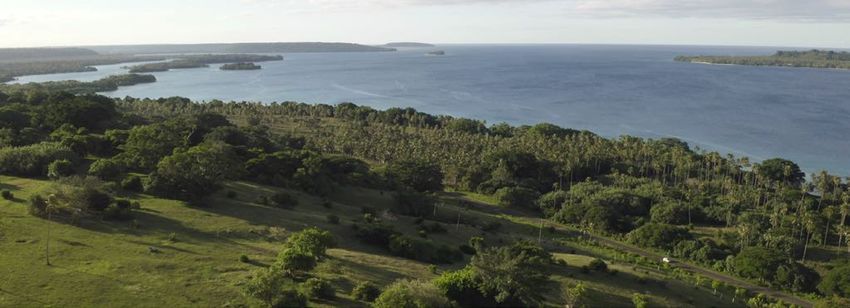
South Pacific WWII Museum Newsletter                                                                             October 2020

                                                          Heading out north on the East Coast Highway towards

Off the radar                                             Turtle Bay Airfield, you’ll find it hard to miss the sight of
                                                          some of the most beautiful beaches on Santo.

                                                          However, what you will probably drive right past, is what is
                                                          known as ‘Hospital Hill’. A fairly innocuous looking rise with
                                                          a view from the top that takes your breath away.

                                                          It was on this hill during World War II that the US Army
                                                          constructed a sophisticated early warning station to prevent
                                                          an enemy invasion or attack from the north east. It was also

                                                          the site of the 31st Navy General Hospital, from which the
                                                          site obviously gets its nick name.

                                                          Until fairly recently, what was actually constructed on
                                                          Hospital Hill was somewhat of a mystery. South Pacific
                                                          WWII Museum Project Manager James Carter, having
                                                          visited and photographed the site set about finding out
                                                          what and who were lucky enough to take in some of the
                                                          best views on the island.

                                                          Visiting the area today, it can be clearly seen that a number
                                                          of structures were located there.
Some of the many concrete footings on Hospital Hill

                                                          To the north of the site is a large square concrete pad with
                                                          angled steel supports protruding from concrete bases in
                                                          each corner. Following a line along the edge of the plateau
                                                          to the south, you come across two more concrete pads.

                                                          Back to the west are a number of concrete slabs and
                                                          ground level concrete structures. There are also what
                                                          appears to be culverts that may have been for storing or
                                                          transferring water around the site. (Continued...)

                                                      2
South Pacific WWII Museum Newsletter                                                                              October 2020

    While just to the west of the second concrete slab
    where the road loops around, one would suggest was
    the remains of some sort of camp, given the way the
    road is laid out.

    Research has uncovered three maps of the area. All
    three maps feature military map markings on the hill,
    including coastal artillery positions, infantry and the
    ‘PETERSEN PT. WATCH TOWER’, also labelled ‘NAB
                                                                   HOSPITAL HILL AREA
    SIG TOWER’ (NAB - Naval Advance Base). That tower
    was featured in the August edition of our newsletter.

    Captain ‘Windy’ Welch                                             Two of the US military
                                                                      maps we had obtained
    Captain Claude H. ‘Windy’ Welch from Marine                       from the US Archives
                                                                     that clealry indicate the
    Observation Squadron 251 (VMO-251) was tasked with
                                                                    Signal/Watch tower on the
    getting two radars built on Santo.
                                                                     northern end of ‘Hospital
                                                                      Hill’. The upper image
    In August 1942, the first location chosen was far up
                                                                     suggests another area at
    north on Cape Cumberland. By September 4, 1942 the               the southern end where        HOSPITAL HILL AREA
    radar was operational in one of the most remote areas             the road loops around.

    of Santo, protecting its northern approaches from
    surprise attack.
                                                                       On September 6, Welch was pegged by Admiral
                                                                       McCain to install the second radar station just near
                                                                       Turtle Bay. He selected the Petersen Plantation for
                                                                       the site due to its location and the fact it already
                                                                       had access roads. He then commandeered a
                                                                       construction battalion and after clearing the
                                                                       coconut palms, construction was relatively
                                                                       straightforward and the radar was up and running
                                                                       very quickly. Within the space of two months, the
                                                                       Marines of VMO-251 established two fully functional
                                                                       radar stations on Santo. (Continued...)

                                                                                                     Sed Diam Nonummy

    A VMO-251 Wildcat
    at Turtle Bay, with its
    distinctive squadron crest
    on the engine cowling.
    While flying the Grumman
    F4F Wildcat during World
    War II, the squadron
    participated in numerous
    Pacific campaigns
    including Guadalcanal,
    Southern Solomons, Santa
    Cruz, Luzon, and the
    Southern Philippines.

3       2014 | Magazine                                       3
                                                               3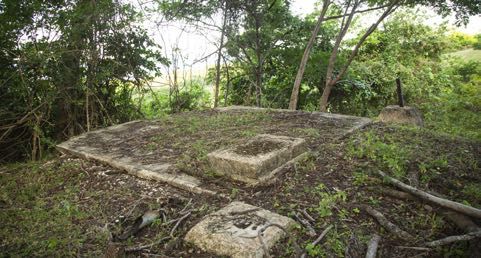
South Pacific WWII Museum Newsletter                                                                                     October 2020

Pearl Harbour radars
The radars on Santo were the SCR-270 (Set
Complete Radio model 270). One of the first
operational early-warning radars of WWII. In fact,
the same radars that detected the Japanese
aircraft approaching Pearl Harbour.
                                                                              NEW RADAR BUILDING
Looking at the footprint of the antenna mast in the
photograph of a fixed SCR-270 unit (as opposed to
the mobile version), it appears to be similar in size to
the concrete pad and footings on Hospital Hill.                        Not just any hospital
Aerial reconnaissance photographs taken on April                       Until quite recently, we couldn’t be ceratin which
22, 1943, include the northern area of Hospital Hill.                  hospital was on Hospital Hill and its exact location.
The shot is entitled ‘Radar and Searchlight’ and
based on that title alone, one could surmise that this                 However, a copy of another map had actually been

was the location of the SCR-270 radar.                                 donated to the Museum by a Santo local many years
                                                                       ago. When he heard about our research, he said check
In another shot taken around a month later on May                      the map. No one knew of the map’s existence and after
18, 1943, a new building has been constructed right                    a thorough search it was located. Sure enough, the
next to the slab we believe the radar tower was                        31st Navy General Hospital was marked on the map.
on. The building appears to have the approximate                       The very hospital that Bob Hope visited on July 1, 1944!
dimensions of the building in the SCR-270 photo.
                                                                       After months of research, we now know for certain
              The SCR-270 radar. This is not the radar on Santo.       that Hospital Hill was home to a watch/signal tower,
                                                                       a searchlight, a sophisticated radar, artillery, infantry
                                                                       and of course a hospital all sharing some of the most
                                                                       stunning views on the whole of Espiritu Santo.

                                                                   4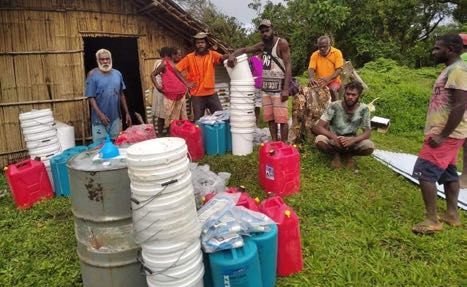
South Pacific WWII Museum Newsletter                                                                                                October 2020

       Mail call

        Battleships, frigates and destroyers
        are probably the first thing that
        springs to mind when you think of the
        US Navy. But what about mail - good
        old-fashioned letters and parcels?

        Navy Post Offices (NPOs) and Fleet
        Post Offices (FPOs) were military
        branches of the main New York City
        Post Office - and there were a lot of
        them scattered around the world.

        By April 1945 there were 3,457 post
        offices on Navy vessels, 857 Navy
        post offices at foreign bases and 567
        at domestic shore stations. A total of
                                                     Mail Arrives at the FPO after being offloaded from a Navy ship November 1943
        4,881 mail facilities attached to the
        Navy alone.
                                                     FPO BUTTON, officially designated                   With over 50,000 personnel based
                                                     as Navy Post Office 140, began                      on Santo during 1943/44 it’s not
        In the early days of Base BUTTON,
                                                     operations in late January 1943.                    hard to imagine the vast volumes of
        mail from the United States regularly
        took three to four months to reach                                                               mail coming and going from Santo.
                                                     All US Navy mail was dispatched
        Espiritu Santo and in some cases,            through the Fleet Post Office which                 In fact, in late 1944 over one million

        mail remained in transit for up to           was located near Pier One not far from              pounds (500 tons) of parcels were
        seven months!                                the communications centre.                          handled in just one month!

                    Why have one postal service when you can have four?
                    In addition to the Navy’s Mail service, the Army, Marines and Army Air Force had their own postal
                    systems and regularly faced a mountain of mail not unlike their counterparts in the Navy. In March
                    1944 the Army dispatched and received over 200,000 items of mail through Santo.

                                                                   5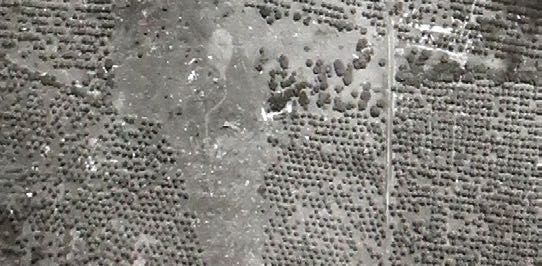
South Pacific WWII Museum Newsletter                                                                                                October 2020

        An icon of the South Pacific
        Burns Philp was a major Australian
        shipping line and trading company
        that operated in the South Pacific
        from the late 1800s until around
        the 1970s when its shipping
        business declined.

        At its peak it had offices and branches
        throughout Australia in Townsville,
        Normanton, Burketown, Thursday
        Island, Cairns, Charters Towers,
        Sydney and Brisbane. It was also          The original Burns Philp Santo store in 1953.

        operating a large branch in London
        and its South Pacific interests were      Stuart is often in Vanuatu doing                      The photos show the incredible
        vast covering New Guinea, Norfolk         archaeological research.                              range of products Burns Philp
        Island, Central Pacific, Fiji, Tonga,                                                           offered locals on Santo despite its
                                                  On his visit he mentioned he had
        Samoa, Java, Wellington and of                                                                  relatively remote location.
                                                  some photographs of Santo back
        course New Hebrides.
                                                  when the Burns Philp stores opened                    Some of the collection we’ve
        Recently, friend of the Museum Dr         in Luganville - the first of which was                already put up on the Museum’s
        Stuart Bedford, who is a Fellow in        just 5 years after the huge Allied base               Facebook page. However, for those
        the School of Culture, History and        closed on Santo. The collection is                    not on social media, we thought
        Language at the Australian National       quite incredible and is part of the Noel              we’d share some of the wonderful
        University (ANU) in Canberra came         Butlin collection, in the Burns Philp                 shots from Burns Philp Luganville
        and visited us at the Museum.             archives at ANU.                                      in our newsletter.

Christmas in the original store December 1952.                          The interior of the original Burns Philp Store in Luganville 1953.

                                                                 6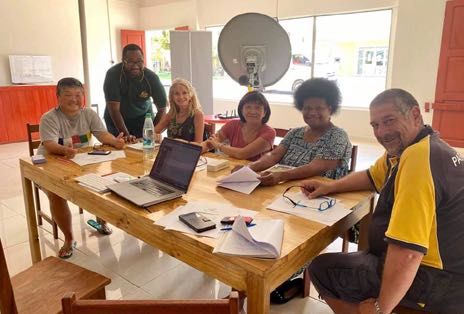
South Pacific WWII Museum Newsletter                                                                                            October 2020

Burns Philp’s new store in Santo November 1961.                           Santo Branch retail store September 1961.

Groceries section Santo store February 1964.

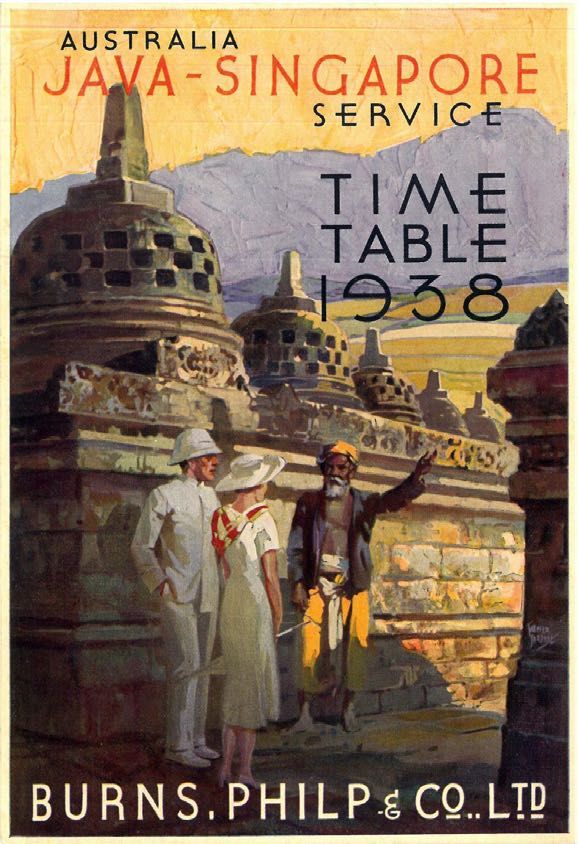
Santo Branch men’s section September 1961.        Burns Philp reflected the glamour of travel to exotic destinations in all its posters.

                                                           7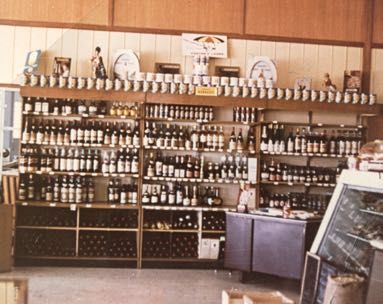
South Pacific WWII Museum Newsletter                                                                                                 October 2020

Inspiring
everyday
heroes
Our hero this month is someone who has done an
extraordinary amount of charity work for the people
                                                                            A relief package sent to Nokonbok village in on Central Pentecost.
of Vanuatu - on Espiritu Santo, its surrounding islands
and on Efate and other islands down south. It’s the
                                                                            as possible through fundraising and donations.
Museum’s very own Secretary, Mayumi Green.
                                                                            Following its success, Mayumi and her group of
                                                                            incredible volunteers continue to provide help when
                                                                            and where it’s needed. And this year the unbelievable
                                                                            devastation caused by Cyclone Harold, has kept
                                                                            Mayumi busy around the clock since April.

                                                                            The team’s relief work will continue well into 2021. We
                                                                            can’t thank Mayumi enough for all she has done.

                                                                            Maybe you’d like to thank her too with a donation to
                                                                            Big Heart Island Vanuatu? This can be done via the
                                                                            gofundme page set up by Matthew Lo. You’ll find the
                                                                            page here: https://gf.me/u/yqq3sf
Mayumi (left) and the Big Heart Island Vanuatu volunteer team.
                                                                            Or if you want to see the work being undertaken,
Following cyclones and other natural disasters that hit
                                                                            visit the Big Heart Island Vanuatu Facebook page
our beautiful country, Mayumi is always one of the first
                                                                            here: https://www.facebook.com/groups/
to put up her hand from her Toyota Hilux and offer to do
                                                                            BigHeartIslandVanuatu/
what needs to be done - whatever it takes.

Her Facebook group ‘Big Heart Island Vanuatu’ began                         Inspiring Everyday Heroes is our Museum brand and
following the destruction from Cyclone Pam in 2015. Its                     means how the stories of yesteryear and our project
aim was to provide relief to as many people and villages                    can inspire today’s new generation.

                                                          South Pacific WWII Museum
                                                            Unity Park, Main Street,
                                                           Luganville, Espiritu Santo
                                                                   Vanuatu
                                                 email: info@southpacificwwiimuseum.com
                                                   web: southpacificwwiimuseum.com

                                                                      8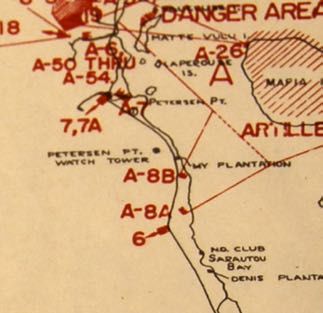
You can also read


