SUPPORTING PRACTICE, ADVOCACY, RESEARCH, AND KNOWLEDGE - UBC Blogs
←
→
Page content transcription
If your browser does not render page correctly, please read the page content below
SPARK: The Early Years
       SUPPORTING PRACTICE, ADVOCACY, RESEARCH, AND KNOWLEDGE

           PONDEROSA COMMONS, UBC VANCOUVER | BLOGS.UBC.CA/SPARKTHEEARLYYEARS2019

                                       2nd Biennial Early Childhood Education
                                            Graduate Student Conference

             CHALLENGING DIVIDES & SURFACING CONNECTIONS:
       RESEARCH, PRACTICE, AND POLICY IN EARLY CHILDHOOD EDUCATION
                                                May 10 & 11th, 2019
                          Day One:                                                         Day Two:
Dr. Annabella Cant, Capilano University, UBC Conflict Theatre   Keynote by Dr. Veronica Pacini-Ketchabaw, Western University
Academic paper presentations, workshops & sharing circles        Academic paper presentations, workshops & sharing circles
   Lunch & Learn with Emily Franchett, Harvard University                       Gallery of Children's Artwork
                UBC Childcare Centres Tour.                                       Resource tables & vendors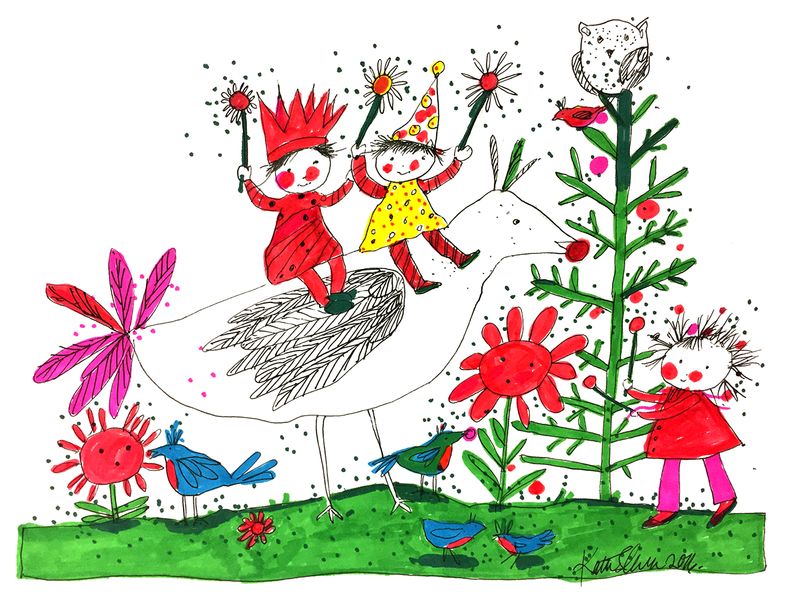
PROGRAM AT A GLANCE

  SC
  PP

                      GALLERY OF CHILDREN'S ARTWORK
 SPARK 2017, the first UBC biennial early childhood graduate student conference, was conceived to
bring together students, researchers, educators, and practitioners to share their experiences in the
field of early childhood education and care.

In the spirit of engaging the young children who motivate our work and learning, and hoping to
have some of them being part of this experience, the Call for Children’s Artwork invited children in
their early years (up to eight years old) to share their free and un-prescribed artistic expressions to
be exhibited as part of the conference.

The children's art exhibition, on display at the conference, advocates for the use of art as a language
that should be used and supported equally with other ways of meaning making and
communication. It is our hope that you will be inspired by the range and quality of the pieces of art
that were created by diverse children from the province of British Columbia and beyond. We hope
this small gesture speaks clearly to the power of art in our lives.

We wish to thank all of the children who accepted our invitation and the adults who supported
them. Special thanks to Kathie Shoemaker for her support with this aspect of the conference and
for sharing her beautiful illustration above.

                                                                                                          3
                                  SPARK 2019 Organizing Committee                                         2
PROGRAM AT A GLANCE

              FORMATS                                        QUICK OVERVIEW
These initials will be used in the program for   Friday, May 10th | CONFERENCE DAY ONE
your convenience since each session might
have a variety of formats.                        8:00    Registration & Refreshments
                                                  9:00    Musqueam Welcome by
                                                          Elder Larry Grant
                                                          & Opening Remarks by

 SC
 PP
            Presentations will outline an
            issue or research question(s).
                                                          Dr. Margot Filipenko, UBC
                                                          Director, Early Childhood Education
            They will layout a theoretical        9:30    Concurrent Session A
            framework and the research            11:00   Break (Coffee, Tea, Snacks)
            methods used, and present             11:15   Concurrent Session B
            some findings and conclusions         1:15    Lunch & Learn with
            followed by a discussion.                     Emily Franchett, Harvard University
            Maximum 15 minutes in length.         2:30    Concurrent Session C
                                                  3:00    UBC Childcare Centres Tour
            Sharing Circles will be               4:00    Break (Coffee, Tea, Snacks)

SC          interactive discussions relating
            to practice. They will explore
                                                  4:30
                                                  6:00
                                                          Concurrent Session D
                                                          Adjourn
            challenges and share ideas and
            solutions, and /or present
            pedagogical narratives,
            materials, and practitioner          Saturday, May 11th | CONFERENCE DAY TWO
            reflections.
            Maximum 45 minutes in length.         8:00    Registration & Refreshments
                                                  9.00    Keynote
                                                  10:30   Concurrent Session E
            Workshops will involve the
                                                  12:30   Lunch

WS
             exploration of a theme or an
                                                  1:30    Concurrent Session F
            area of practice through
                                                  3:00    Break (Coffee, Tea, Snacks)
            teaching and learning,
                                                  3:30    Concurrent Session G
            extended discussion, mini-
                                                  6:00    Adjourn
            tutorials, and/or concept
            demonstration sessions.
            About 75 minutes in length.

                                                                                                3
Friday,
May 10
SCHEDULE
                 ROOM            ROOM           ROOM          ROOM           OTHER
                 1001            1003           1008          1009

                 Marva           Annabella      Innovative                   Conflict
                 Headley         Cant           Pedagogical                  Theatre
                                                Approaches                   (Ponderosa
     SESSION
                                                                             Ballroom)
         A
     9:30 am-
     11:00 am
                          P.6           P.6            P.6                           P.6

                 Family,         Children's     Innovative    Indigenous     Pop -Up
                 Community       Activity and   Pedagogical   Research       Studio
     SESSION     and Culture     Movement       Approaches    and Practice   (Room 1011)
          B
     11:15 am-
WS
      1:15 pm
                          P.7           P.7            P.7           P.8             P.8

                    Lunch and Learn with Emily Franchett
     LUNCH                                                                           P.8
                    (Ponderosa Ballroom)

                 Family,         Leadership,    Innovative    Education      Pop- Up
                 Community       Policy and     Pedagogical   of             Studio
     SESSION     and Culture     Advocacy       Approaches    Pre-Service    (Room 1011)
         C                                                    ECEs
     2:30 pm-
                                                                                      P.8
     4:00 pm                                                                 UBC
                                                                             Childcare
                          P.8            P.9           P.9           P.9     Services
                                                                             Tour (3 pm)

                 Digital                                                     Pop- Up
                                 Leadership,    Innovative    Education
                 Technology                                                  Studio
                                 Policy and     Pedagogical   of
     SESSION                     Advocacy       Approaches    Pre-Service
                                                                             (Room 1011)
                          P.9
         D                                                    ECEs
     4:30 pm-    Social and
                 Emotional
     6:00 pm     Learning

                          P.10          P.10           P.10         P.10              P.8
Saturday,
May 11
SCHEDULE

                 ROOM              ROOM          ROOM           ROOM          ROOM
                 1001              1003          1008           1009          1254

                 Keynote Address by Dr. Veronica Pacini-Ketchabaw
                 "Reconfiguring Early Childhood Pedagogies at a Time of
     9:00 am -   Climate Crisis"
      10:15 am

                                                                                    P.11

                 Outdoor           Pedagogical   Professional   Gender        Parenting
                 Learning,         Narration     Development    Inclusivity
     SESSION     Climate and                     and            and
                                   and
         E       Sustainability    Inquiry       Practice       Sexuality
                 Discourse
     10:30 am-
     12:30 pm
                         P.12            P.12           P.13           P.6
                                                                       P.13          P.14

                  Outdoor          Pedagogical   Professional   Innovative    Surfacing
                  Learning,                      Development
     SESSION                       Narration                    Pedagogical   Children's
WS                Climate and
                                   and           and            Approaches    Voices
         F        Sustainability
                                   Inquiry       Practice
                  Discourse                                                   and
     1:30 pm-                                                                 Agency
     3:00 pm

                         P.14            P.14           P.14          P.15          P.15

                 Family,           Pedagogical   Reconcept-     Indigenous    Digital
                 Community         Narration     ualizing       Research      Technology
     SESSION
                 and Culture       and           ECED P.16      and           and
         G                         Inquiry                      Practice      Multimod-
     3:30 pm-                                    Surfacing                    ality
     6:00 pm                                     Children's
                                                 Voices and
                         P.15            P.16    Agency P.16           P.17          P.17

                                                                                            5
PRE-CONFERENCE
       CONFERENCE DAY ONE
       APRIL 28 | 10:00 AM – 12:30 PM
       APRIL 28 | 2:00 PM – 7:00 PM
       MAY 10th | 8:00 AM - 6:00 PM

       WELCOME
       8:00 AM | REGISTRATION & REFRESHMENTS
       Ponderosa Foyer
       9:00 AM | MUSQUEAM WELCOME by sʔəyəɬəq Elder Larry Grant
       Opening Remarks by Dr. Margot Filipenko | Ponderosa Ballroom

       CONCURRENT SESSION A
       9:30 - 11:00 AM | Ponderosa Commons
       ROOM 1001 | Marva Headley, Aga Khan Education Services
       Marva's role at the Aga Khan Early Learning Centre (AKELC) in Dubai, United Arab Emirates is to support
WS
       the professional development of teachers so that teachers and children can engage in mutually fulfilling
     WS
       learning experiences. She works with staff at the AKELC and Pre-primary staff across the Aga Khan
       Education Services network to enrich the ECD outcomes for children through coaching, workshops and
       training.
                                          COMING TOGETHER: CELEBRATING DIVERSITY AROU
       ROOM 1003 | Dr. Anabella Cant, Capilano University
       Unswaddling Pedagogy
WS
       Dr. Cant will share many lessons she has learned from children as an educator and from her students as
       a university professor. She will disclose to the world that our field has six hearts and will describe each of
       them through a new lens she calls “Unswaddling Pedagogy.” Her dynamic talk will invite everyone to
       participate whole bodily and to reflect wholeheartedly on early childhood education. Be ready to be
       unswaddled! Spaces are limited and assigned on a first-come, first-serve basis.

      Ponderosa Ballroom | UBC Conflict Theatre
    Rainbow of Desire
    Join the UBC Conflict Theatre project and explore how our personal fears and desires can create both
WS
    internal & external conflict. To begin, participants will act out a real story of conflict (solicited from the
  WS
    group) and then will deconstruct the internal struggles of the people in that conflict. By the end of the
    session, participants put their new knowledge into action by rehearsing alternative endings to the story of
    conflict, based on a deeper understanding. Spaces are limited and assigned on a first-come, first-serve basis.

       ROOM 1008 | Innovative Pedagogical Approaches and Curriculum
    Playful inquiry and loose parts in children's gardens
WS
    Megan Zeni, UBC
  WS
    Play is an essential ingredient for engaging children in garden learning. Through images &
    storytelling, this session will share ready-to-use examples that deepen our collective understanding
    of how the pedagogy of loose parts   COMING       TOGETHER:
                                            play outdoors                CELEBRATING
                                                          can result in positive               DIVERSITY
                                                                                 social, emotional, cognitive 6AROU
    and physical benefits. No gardening experience is required.
BREAK
     APRIL 28 | 10:00 AM – 12:30 PM
     APRIL 28 | 2:00 PM – 7:00 PM
     11:00 - 11:15 AM | COFFEE, TEA, LIGHT SNACKS

     CONCURRENT SESSION B
     11:15 AM - 1:15 PM | Ponderosa Commons
     ROOM 1001 | Family, Community and Culture
     Outdoor play in early childhood - exploring the role of neighbourhood safety and trust in neighbours
PP
     Savithri Cooray, UBC
     Outdoor play is an exciting part of childhood. It fosters curiosity, imagination, and helps children make
     sense of the world around them. This study examines how parents' perception of neighborhood safety
     influences Kindergarten aged children's access to outdoor play in British Columbia.
     An asset-based community initiative supporting early-childhood literacy and health promotion
PP
     Paul Abraham and Cheryl Gascoyne, The Reading Bear Society
     The Reading Bear Society is an established Vancouver based program aimed at promoting early literacy
     and social well-being through peer mentorship. Recently, with help from UBC medical students, the
     program expanded its scope to include educating children about health and wellness through a module
     called “A Visit to Dr. Bear”.
     Research on the use of developmental parenting by supported child development
SC
     Yvonne Kwok, Kinsight Community Services
PP   Reflecting on an SCD practicum experience, we will explore how Supported Child Development works
     with Educators to build their capacity to be inclusive through focusing on the interactions between the
     Educator and the child and explore how this might intersect with better developmental outcomes in
     children.

     ROOM 1003 | Engagements with Children's Activity and Movement
     Go outside and play! An observational study of environmental factors related to physical activity in
PP
     outdoor early learning centres
     Tracy Ross, Dr. Stephen Berg & Dr. Brent Bradford, UBC
     This presentation will discuss how eight preschool outdoor settings in two provinces were scanned over a
     four-month period to determine children’s levels of physical activity. As a number of children are spending
     increasing amounts of time in preschools, the design of outdoor preschool environments is important for
WS   promoting physical activity.
     Kids on Wheels - Spark a Lifelong Love for Cycling
WS   Maya Goldstein, The British Columbia Cycling Coalition
     Kids on Wheels is an innovative program introducing young children to the joy of cycling and active
     lifestyles. In this workshop we will share key elements of the program and discuss the benefits of balance
                                        COMING
     bikes for children’s development and             TOGETHER:
                                             the advantages of startingCELEBRATING           DIVERSITY AROU
                                                                       to ride at an early age.

     ROOM 1008 | Innovative Pedagogical Approaches and Curriculum
WS   Using museum/natural objects in the classroom
     Lindsey Snyder, Museum Education, UBC
     Teach your students to “read” an object! Object-based inquiry allows students to act as scientists:
     making discoveries, sharing their thinking, planning and conducting investigations and more. This
     session will help you develop confidence and give you inspiration to incorporate objects as         7
     teaching tools.
ROOM 1009 | Indigenous Research and Practice
Coming to know: How Indigenous ways of knowing and forest schools (dis)(re)connect
PP
Lisa Johnston, Ryerson University
Through a review of literature written by both Indigenous and settler scholars, Lisa Johnston, herself a
settler, presents her journey of coming to know where Forest School pedagogy and Indigenous
educational perspectives meet, where they are far apart and where they may come together.
Urban Aboriginal Parent-Child Mother Goose Program with Indigenous Early Years
WS
Cindy Pete, Indigenous Early Years & Vancouver Native Health Society
In this workshop we will demonstrate how the Urban Aboriginal Parent Child Mother Goose Program
PP works. Our focus will be to share our experience delivering the program to further support its
implementation and growth. Knowledge about Aboriginal culture is critical for all early years professionals
as we strive to move forward together and in a good way.
ROOM 1011 | Exploring Materials in Studio Spaces
Co-researching with young children in studio with materials: Anticipating new contingencies
WS
Yuko Shimomura, Art Education, UBC & UBC Childcare Services
The participants experience creating a studio space to engage with art-making process such as drawing
while constantly asking, ‘What do materials in the studio do?’ Instead of arriving at an answer, we
document our process as pedagogical narration to understand how we construct new meanings
together. Yuko's studio will be open for exploration & experimentation throughout the day
LUNCH
1:15 - 2:30 PM | Lunch & Learn with Emily Franchett, Harvard University
LEAPS (Youth Leaders for Early Childhood Assuring Children are Prepared for School) is a youth-led
ECCE program which trains female Community Youth Leaders (CYLs), ages 18-24, to deliver preschool
curriculum in community-based preprimary schools for children aged 3.5-6.5 years in rural Sindh,
Pakistan. This presentation will provide an overview of the program and present findings from two
recent analyses, highlighting the impact of LEAPS on child participants and the experiences of the CYL
participants.
CONCURRENT SESSION C
2:30 - 4:00 PM | Ponderosa Commons
3:00 PM | UBC Childcare Services, Centres Tour
Join Dr. Deb Thompson and UBC Childcare Services for an opportunity to observe and experience UBC's
innovative ideas in practice. Spaces are limited and assigned on a first-come, first-serve basis.
ROOM 1001 | Family, Community, and Culture
Improving outcomes for children in care aged 0-6 through early intervention, assessment and
WS
training to foster parents
Amanda Oliver, Rachel Douthwaite & Amy Ris, Ministry of Children and Family Development
MCFD, Vancouver Coastal Health and Fostering Early Development work collaboratively to support
the baby’s journey through foster care. This workshop details how specialized baby foster carers are
chosen and approved, the education and supports provided to these carers, and the ongoing 8
assessment for infants and young children.ROOM 1003 | Leadership, Policy and Advocacy in Early Childhood Studies
WS
Innovation and scale in co-operative early learning environments
Paul Cabaj, Cooperatives and Mutuals of Canada
This workshop will review recent research exploring the potential of establishing local shared
services alliances for ELCC providers based on scaling up/adapting successful Canada and
international best practices including such innovations incorporating new technologies and co-
operative strategies for formally linking home care providers to fully licensed facilities.
ROOM 1008 | Innovative Pedagogical Approaches and Curriculum
Transforming teaching and learning through a theme and project-based approach: Theme and
WS
project-based learning workshop for kindergarten, grades 1 and 2
Alexis Birner, Louisa Chan & Andrea Page, Pear Tree Elementary
We will provide examples from our classrooms, and hands-on, interactive activities to discover: what
theme and project-based learning are; how to select themes that interest students, while covering
curricular expectations; restructuring a traditional classroom to one that is “flipped”; scope and sequence
of content; developing soft skills; and assessment methods.
ROOM 1009 | Education of Pre-service Early Childhood Educators
The early childhood educator pedagogist project
WS
Jacky Hughes, Dr. Bo Sun Kim, Saaiqa Bhanji, Rebecca Sung & Judy Lim, SFU Childcare Society &
Capilano University
How can we support Early Childhood Educators leadership capacities, enhance educators’ professional
development and student-educators’ learning, while continuing to promote meaning making in
childcare centres? Through this workshop we will explore these questions by looking at the theory
behind the Early Childhood Education Pedagogist Project which Capilano University has piloted in
partnership with SFU Childcare Society.
BREAK
4:00 - 4:30 PM | COFFEE, TEA, LIGHT SNACKS
CONCURRENT SESSION D
4:30 - 6:00 PM | Ponderosa Commons
ROOM 1001 | Digital Technology and Multimodality
Early childhood education for Afghan families via Mobile-Learning
PP Shahnaz Quaymi, Langara College & Partnership Afghanistan
Due to long standing conflict in Afghanistan, children’s holistic development was neglected.
Researchers at UBC have created a Learning technology called LIVES (Learning through Interactive
PP
Voice Educational System). This technology is proven to improve learning outcomes for many
parents and is about to be publicly launched.
The ways of expanding and constructing meanings: During shared reading of print, electronic,
PP
PP and digital books
Ji Eun Kim, UBC
This study investigated the ways parents and children expanded and constructed meanings (e.g.,
thoughts, ideas, etc.) during their shared reading of books in the four different formats (one print
[PB], one electronic with a digital pen [LB], and two digital books [DB1 with manual page-turning 9
and DB2 with automatic play].ROOM 1001 | Social Emotional Learning
Exploring cultural conceptions of emotion and social emotional learning in the Spanish picture book
PP
El monstruo de colores and its English translations. Lauren Hathaway, UBC
How does the emotional content of a Spanish-language picturebook from Spain change in translation
into English? My close reading of the picturebook El monstruo de colores and its translation into English
reveal different social expectations of how children should express and regulate negative emotions like
anger and fear.
ROOM 1003 | Leadership, Policy, and Advocacy in Early Childhood Studies
SC
Courageous and capable: A story of early childhood community coalitions
Janice Kraemer, UBC & Family and Community Support Services of Alberta
The role of community influencing the early years is complex. Navigating and leveraging resources
supports engagement and collaboration. Explore innovative and multi-dynamic ways to bring people
together for collective influence. Come discuss how Early Childhood Coalitions increase community
capacity by contributing to positive outcomes for young children and their families.
ROOM 1008 | Innovative Pedagogical Approaches and Curriculum
Creating a collaborative leadership framework to ensure success when implementing research driven
WS
curriculum in ECE. Pat Frouws, Jacky Hughes & Jacqueline Ewonus, SFU Childcare Society
Participants will explore their own personal core values with the intention of connecting them to ECE
curriculum values. Using our experience at SFU Childcare Society, we will explore how intentionally aligning
our personal core values to those of our Society, brought about the desired culture change needed to
support a Reggio-inspired curriculum.
ROOM 1009 | Education of Pre-service Early Childhood Educators
Experiences of early childhood educators when working with students with fetal alcohol spectrum
PP
disorder. Shaista Fatehali, Heath Elementary School (Delta School District)
This research presentation is intended for staff, early childhood educators (ECEs) and child care assistants
(CCAs) that work in childcare programs with children with FASD. The strategies outlined are general and
may also be helpful for other children who share some of the same learning needs. Many of the strategies
that will be discussed may also be useful for parents to use at home. Success is often achieved when ECEs
and parents work together to create a supportive environment for the child in both the childcare program
and at home.
Examining the use of phenomenography to explore supervised practicum in early childhood
PP
teachers’ education. Mariel Gómez, UBC
This presentation focuses on the ways in which phenomenography contributes to the exploration
of the range of conceptions of supervision existing now in early childhood teacher education
programs. The presentation will be based on the author’s experience conducting a
phenomenographic study on conceptions of supervision held by faculty supervisors.
Where do educators fit: The role of pre-service education in early childhood educators’
PP
engagement of advocacy. Sophia Mohamed, Ryerson University & George Brown College
Through a preliminary qualitative survey, the researcher has investigated pre-service and in-service
educators’ understandings of and commitment to advocacy in ECEC. The study highlights that
ECEs in Ontario do not feel prepared to engage in self-advocacy nor do they see the value of their
voices in advocacy. 10PRE-CONFERENCE
CONFERENCE DAY TWO
APRIL 28 | 10:00 AM – 12:30 PM
APRIL 28 | 2:00 PM – 7:00 PM
MAY 11th | 8:00 AM - 6:30 PM
WELCOME & KEYNOTE
8:00 AM | REGISTRATION & REFRESHMENTS
Ponderosa Foyer
9:00 AM | KEYNOTE: DR. VERONICA PACINI-KETCHABAW, Western University
Ponderosa Ballroom
Reconfiguring Early Childhood Pedagogies at a Time of Climate Crisis
The Anthropocene has emerged as a contested figure of uncertain and precarious futures, requiring
new kinds of thought and action. This presentation will engage with responses to the Anthropocene
within early childhood education and foreground pedagogies that engage educators and young
children to adopt a critical response to the social and environmental legacies of settler colonialism.
The talk will introduce ‘common world pedagogies’ as an alternative perspective to neocolonial
environmental stewardship approaches, and aspire to reconfigure colonial relations between
childhood and nature.
Dr. Veronica Pacini-Ketchabaw is a Professor of Early Childhood Education in the Faculty of
Education at Western University in Ontario. Dr. Pacini-Ketchabaw's writing and research is informed
COMING
both by her experiences as an academic TOGETHER:
in early CELEBRATING
childhood education DIVERSITY
and as a pedagogista. Her work AROU
draws insights from feminist theory, environmental humanities, Indigenous studies, and cultural
WS geography. Currently, Dr. Pacini-Ketchabaw is co-founder of the Common Worlds Research
Collective, and focuses on how 21st century children inherit, inhabit and share in a ‘common world’
shaped by legacies of environmental damage, colonial dispossession, global inequality and
displacement. She collaborates with educators to develop responsive pedagogies that pay close
attention to place, other species and materials. 11ROOM #### | Languages, literacies, and young children
PP CONCURRENT SESSION E
10:30 AM - 12:30 PM | Ponderosa Commons
ROOM 1001 | Outdoor Learning, Climate and Sustainability Discourse
Engaging unruly voices: Growing climate action pedagogies in ECE
PP
Narda Nelson & B. Denise Hodgins, University of Victoria Child Care Services
This presentation transgresses the boundaries of child-centred practice to think with trees at the
intersection of climate change and ECE inheritances. We will explore "voices" (i.e., trees' communication,
children’s theories, and educators’ perspectives) to provoke discussion on climate change pedagogies
that move beyond human-centered perspectives and neoliberal solutions.
The Anthropocene: Food waste & alternative pedagogies for children.
PP
Dana Lee & Maira Ramirez-Lazo, Capilano Children's Centre & Capilano University
This paper presentation shares an ongoing project with children on food waste in the Anthropocene. It
was initiated to re-imagine different possibilities of interactions with waste and to disturb practices that
view waste as an end-point. This project also explores and invites new ways of living with food waste in
our time of ecological crisis.
The exploration of pedagogy and practice of nature preschool in Korea through children's perspectives
PP
Ashley Boyoung Jeong, UBC
The presentation demonstrates how the “Project Based Learning in Nature Setting” approach could meet
the new needs of education by empowering young children with the global competencies of 21st
Century skills (4Cs) and more through a case study of a hybrid nature preschool in Korea. It will also
explore the overall pedagogy, curriculum and practice of this preschool.
Contextualizing early childhood education for sustainability: Findings from Green School, Bali
PP
Annie Montague, UBC
This presentation details the experiences and findings from a six-month research project with Green
School’s ECE program in Bali, Indonesia. The findings focus on the often-underrepresented complexities
and contradictions within place-based nature education and promote a deeper examination of
interconnectedness and complexity within the fields of ECE and EE.
ROOM 1003 | Pedagogical Narration and Inquiry
Inquiry process of our lived experience exploring shadows
SC
Janet Ambrosio, Heloisa Porto Alvarez & Rafaela do Nascimento Bicheski, Capilano University
We will present the documentation informed process of co-composing curriculum that we experienced
in an ECE course with Dr. Sylvia Kind at Capilano University. The inquiry took form through the
languages of light, photography, stories, clay and drawing. Shadows came to our attention during an
exploration of place which engendered a question about creatures living in the shadows.
A phenomenological experience of becoming blue
SC
Melanie Walters, UBC ECED, UBC Childcare Services
Melanie will share a Pedagogical Narration that focuses on her program’s approach to materials
inquiries. This PN highlights a brief moment in time during a lively experience with blue paint in the art
space. Participants are invited to share their questions and thoughts, engaging in a discussion that
seeks to think deeply about our practices alongside children. Explore how far you would go to support
children in their natural curiosity and joyful approaches towards materials inquiries.
12ROOM 1008 | Professional Development and Practice
Curriculum-as-lived in an early childhood education classroom: How does dialogue with young
PP children shape teacher’s everyday practice?
Kwang Dae (Mitsy) Chung, UBC
This academic paper presentation examines how indwelling in the zone of between the “curriculum-as-
plan” and the “curriculum-as-lived” provides the tensionality in an Early Childhood Education classroom.
It also evokes some of personal lived experience with young children and wonder how dialogue with
children has evolved in the educator’s daily practices.
Swimming against the current: Combating deficit discourse in teachers’ education resources
PP
Negar Khodarahmi, UBC
Through the perspective of Critical Race Theory, this paper presentation intends to engage participants
in a conversation to acknowledge and challenge the deficit-discourse in the surrounding refugee
students and discuss the negative impacts it can cause on their academic careers. The aim of this
presentation is to discuss applicable, evidence-based strategies to battle this negative impact in our
practice and classrooms.
Teacher research and narrative inquiry in practice
SC
Emily Corley & Cassidy Taylor, Westcoast Childhood Resource Centre
A recent surge in the discussion of narrative inquiry in Early Childhood Education has sparked interest in
exploring what this means for ECE specialists as researchers. Our discussion will encourage ECE
professionals to find practical ways to incorporate the new ELF and narrative inquiry into their daily
practices.
ROOM 1009 | Gender Inclusivity and Sexuality
Gender disrupted during story time: A visual essay
PP Cayley Burton, UBC
Using children’s literature as a conversational entry point into gender diversity, this presentation
advocates for critical readings of picture books between children and adults. Through exploration of
gender (non-)normative portrayals in children’s books, space for authentic inclusivity within early
childhood education is created for all gender identities and expressions..
Love Is an open door: Frozen and the closet metaphor
PP Leila Matte-Kaci, UBC
The popular children’s film Frozen (2013) tells the story of a young woman with magical powers coming
to term with her difference. This presentation argues that the film can easily be read as a coming-out
metaphor and may be a starting point for discussions of queer sexuality with young children.
Gender fluid discourse: Bridging theory and practice
SC Chloe Waters, Ryerson University
Research on the limitations of a heteronormative discourse, the positive impacts of gender fluid
discourse, and the disconnect between theory and practice in ECE settings will guide this sharing circle.
Feedback on a proposed study will be sought. I hope to invoke a rich discussion that will encourage
inquiry and sharing of ideas.
13ROOM 1254 | Parenting
Conceptualizing fathers as diverse socio-cultural and linguistic texts: How fathers contribute to
SC
their 3-year-old children’s early literacy development
Rose Walton, Brock University
This presentation explores the contributions of fathers in the development of early literacy practices
of three year olds. Employing Family Systems Theory to explore naturally occurring systems within
reciprocal relationships and hegemonic masculinity as a gender position. This proposed critical
ethnographic case study explores hegemony and themes through descriptions of shared behaviour
patterns, beliefs and language in ordinary settings.
Culturally-responsive parent-educator relationships
SC Esther Aquillano, UBC
The cultural differences between parents and educators may sometimes negatively affect the quality of
the parent-educator relationship at the expense of the child. This session will discuss factors that parents
and educators of different cultural backgrounds find inhibit or facilitate a collaborative relationship and
aim to highlight culturally-responsive practices.
LUNCH
12:30 - 1:30 PM | Hot Lunch
CONCURRENT SESSION F
1:30 - 3:00 PM | Ponderosa Commons
ROOM 1001 | Outdoor Learning, Climate and Sustainability Discourse
Finding flow at forest school
WS Tricia Edgar & Heather Nelson, Fresh Air Learning & Saplings Outdoor Program
How can nature play help children move into focus and flow? In this hands-on workshop, you'll
experience and reflect on nature play as you would experience it at forest school, and you'll discuss the
reasons why open-ended nature play is beneficial for children's social, emotional, mental, and physical
development.
PP
ROOM 1003 | Pedagogical Narration and Inquiry
WS Inseeing: The aesthetic-political nature of emergent curriculum
Elaine Beltran-Selleti, SFU & Capilano University
Illustrated by a project with toddlers, this workshop aims at contesting the narrow orientation of the
discourse of children’s interest in emergent curriculum. It proposes emergent curriculum as an
encounter with the mystery of what lies beyond the immediate. This, van Manen (2017) conceptualizes
as in-seeing into the hearts of things, which calls for an aesthetic and political orientation to curriculum
making.
ROOM 1008 | Professional Development and Practice
Early Childhood Sensitivity Study
WS Shailja Jain & Samantha Burns, OISE, University of Toronto
This study aims to improve the cognitive sensitivity of educators in ECE settings in order to enhance
educator-child interactions, and improve the overall quality of the ECE environment through an
innovative model of professional learning developed by researchers at University of Toronto and 14
George Brown College.ROOM 1009 | Innovative Pedagogical Approaches and Curriculum
Engaging with long term project work – examples from a toddler centre
WS Dominika Svec & Amy Wesley, UBC Childcare Services
Gain insights into our journey of creating a studio and exploring art materials with toddlers
through pedagogical narrations, stories, and hands-on exploration with black and white materials.
We will discuss the challenges we encountered along the way, including preconceived notions
about toddlers capabilities, bridging gaps in philosophy, communication, finding time to
collaborate and involving families.
ROOM 1254 | Surfacing Children's Voices and Agency
Caregiver's co-construction of children's voice
WS Madelaine Hittos, UBC & Camosun College
This workshop will explore in what ways children communicate their understanding of their
emotional, physical and relational experiences through their behaviours. Participants will connect
with ways we can honour all children’s behaviours and ways we can support children to become
more connected to their voice and sense of personal agency.
BREAK
3:00 - 3:30 PM | TEA, COFFEE, LIGHT SNACKS
CONCURRENT SESSION G
3:30 - 6:00 PM | Ponderosa Commons
ROOM 1001 | Family, Community, and Culture
Bilingualism in postcolonial Ukraine: Addressing the language divide in the Eastern Ukraine
PP Anna Vozna, UBC
This study analyzes how postcolonial Ukraine approaches designing a language policy that would both
satisfy the desire of ethnic Ukrainians to revitalize Ukrainian language and address the needs of ethnic
minorities, including Russian speakers, to maintain their languages. The study uses critical discourse
analysis methods to analyze online resources for pre-schoolers, children attending elementary schools,
and their parents.
Challenge or opportunity? Perspectives on strengths and resources of culturally and linguistically
PP diverse young children and Families
Jane Wakefield, UBC
Home, school, and community stakeholders’ beliefs about opportunities to develop cultural identity and
access social capital for culturally and linguistically diverse young children and their families will be
presented. Responsibilities for preparing young children for school, including supporting language and
culture in their transition to school will also be discussed.
Exploring language development of preschoolers in a play Group: How partnerships between
WS inter-professionals makes a difference
Rose Walton, Brock University
Visiting preschools in New Zealand and Reggio Emilia, partnerships in schools and abroad have
fostered relationships with inter-professionals to support play groups reflective of the community
through the selection of intelligent materials and texts. Join the conversation from theory to 15
practice as we explore loose parts through a gallery walk.ROOM 1003 | Pedagogical Narration and Inquiry
Ontario’s Pedagogy and Curriculum Development in Reggio Emilia-inspired Centres
PP Sandra Vuckovic & Gabriela Gonzalez, Sheridan College
Sandra Vuckovic & Gabriela Gonzalez are 4th year students who have recently completed their
capstone research study which examined when, why and how Early Childhood Practitioners use
the How Does Learning Happen Framework within early childhood Reggio Emilia-inspired
settings. They will happily share their findings and what they learned from their recently
conducted research study.
Time, technology, & collaboration: The messiness of pedagogical narrations.
SC
Deb Thompson, UBC Childcare Services
The sharing circle will take the form of pedagogical narrations and will be a process, not a finished
product, and will invite others to bring their reflections, ideas and interpretations to our discussion of our
evolving practice. Our process creates messy, unfinished uncertainties that do not reveal what we should
do. However, the process has made space for new possibilities including re-thinking time, considering
different interpretive stories and sometimes engaging in deeper thinking about purpose. We hope this
sharing circle will add to our stories of practicing pedagogical narrations while offering participants
potential for their own.
Writing as inquiry and research
SC April Martin, UBC
Elizabeth St. Pierre (2018) states: “The long preparation for post qualitative inquiry is reading, thinking,
writing, and living with theory in ‘experimentation in contact with the real’ “ (p. 604). As ECE
researchers/ educators, writing to verify our work is expected. However, how is the act of writing “Living
Inquiry”? April is eager to share and learn from others who have embarked on this journey.
ROOM 1008 | Reconceptualizing ECED
SC Experiments in the reconceptualization of ECED through discussion
Chenying Wang, UBC
This sharing circle will spark rich conversations with the question “what’s the best pedagogical
approach in ECED?” and the introduction of two concepts - listening and participatory development.
This sharing circle aims to provoke critical thinking on pedagogical approaches and to collaboratively
create a condition for continuous and dynamic experimentation in ECED.
ROOM 1008 | Surfacing Children's Voices and Agency
PP Broadening interpretations of children's ideas and actions and educators' practices
Alejandra Sánchez Álvarez, UBC
I argue that hermeneutic enquiry or circles of understanding, as explained by Hans-Georg Gadamer,
might help educators and EC instructors to improve our ways of interpreting children’s ideas and
actions, and our pedagogy, and to learn about ourselves. Particularly, I focus on how circles of
understanding might be practiced in ECE.
Inspiring young learners to be change makers in their community
PP Jennifer Ford Sharpe, York House School
How Do We Foster Social Responsibility in Young Children? This presentation will provide a case
study on how a group of teachers navigated an inquiry unit on water that encouraged Grade 2
students to take action and make a difference in their community in developmentally appropriate 16
ways.Child-constructed spaces: What picturebooks about forts and playhouses can tell us about child
PP spatial empowerment in the home and classroom
Emily Antcil, UBC
Emily will be presenting on her research into children's picturebooks that depict the building of
childhood forts, playhouses, and treehouses. She will endeavour to use the analysis to shed light on
how adults can empower children to take charge and make use of space in a largely adult-
controlled environment.
ROOM 1009 | Indigenous Research and Practice
SC Embracing the needs of First Nation children through the voices of First Nation early childhood
educators
Lori Huston, Roxanne Loon & Elder Brenda Mason, Oshki-Pimache-O-Win Education & Training Institute
The talking circle will provide an overview of an Indigenous ECE leadership in-service program
highlighting the associated summative Indigenous research. This education innovation in northern
Ontario responds to the needs of Indigenous ECE across fourteen First Nation communities. The talking
circle will ask the participates to respond from their perspectives.
Decolonization and Indigenous place in early childhood education
WS Kristin Webster & Bronson Charles, UBC Childcare Services
Bronson and Kristin will speak to their journeys as an Indigenous man and a settler ally woman walking
this path of decolonizing Early Childhood Education. Story and history is embedded in these lands on
which we dwell, so its a good starting point in our work with the children. They both believe children
are the change we all aspire to be and we have to hold them capable of making deeper meaning.
ROOM 1254 | Digital Technology and Multimodality
Literacy in the 21st century through iPad and tablet: Digital, multimodal and transformative
SC Munizah Salman, Ryerson University
The benefits of integrating technology in a kindergarten classroom can be effective when the
educators are proficient in seamlessly embedding it into the curriculum. This sharing circle will discuss
how educators can be professionally supported to achieve this and empower children to make
meaning of content in multiple modes.
Digital childhoods: Can digital and hands-on play co-exist?
SC Laura Teichert, UBC
This sharing circle explores the contested and uncharted terrain of digital childhoods. Research
describing how children play with digital technology will be presented alongside the Canadian
Paediatric Society’s screen time recommendations. Guiding questions ask “What can ECED educators
do?” and “How can ECED educators support families in this digital world?”
CLOSING REMARKS
6:00 PM | Adjourn
17THANK YOU !
We wish to warmly thank each of our presenters, attendees, and supporters for coming together to surface
connections and challenge divides in early childhood education during this conference. Without each of
you, it would not have been possible to engage with the ideas for the second biennial SPARK. We trust that
the diverse range of approaches and experiences here will strengthen the connections among ourselves
and with the children around us, while also contributing to the bridging of research and practice. We hope,
too, that we all enjoy meaningful conversations about early childhood and care and continue those
throughout the following two years, when we certainly hope to see you again during SPARK 2021.
Special thanks to each of the children in our lives who, in so many ways, inspire, guide, and challenge our
work and lives.
We also want to wholeheartedly thank all our supporters: particularly, the SPARK Reviewing Committee for
their advice and expertise, Dr. Deb Thompson and UBC Childcare Services for welcoming SPARK
participants to tour their incredible centres, and finally, Dr. Margot Filipenko and Dr. Janet Jamieson, whose
kind guidance and constant enthusiasm have been invaluable to the vision for SPARK.
Sincerely,
SPARK 2019 Organizing Committee
Shruti Asokan, MEd, UBC Alumni
Master of Education in Early Childhood Education
Laurel Donison, MA, UBC Alumni
Master of Arts in Early Childhood Education
Katherine Jarman, BA student, Capilano University
Bachelor of Arts in Early Childhood Care and Education
Negar Khodarahmi, MA student, UBC
Master of Arts in Early Childhood Education
Harini Rajagopal, Ph.D. candidate, UBC
Department of Language and Literacy Education
Karima Rehmani, MA, UBC Alumni
Master of Arts in Early Childhood Education
Nancy van Groll, MA student, UBC
Master of Arts in Early Childhood Education
Karina Vásquez, MA student, UBC
Master of Arts in Early Childhood Education
Áurea Vericat, Ph.D. candidate, UBC 18
Cross Faculty Inquiry Program19
You can also read


