FIGHTING FOR BREATH CALL TO ACTION - End childhood pneumonia deaths - Save the Children UK
←
→
Page content transcription
If your browser does not render page correctly, please read the page content below
FIGHTING FOR BREATH
CALL TO ACTION
End childhood pneumonia deaths
Biggest killer, yet forgotten

Pneumonia is the world’s leading infectious killer of
children, claiming the lives of more than 800,000 children
                                                                             Many countries are
under the age of five every year, more than 2,000 every                      off track to reach
day. It is a shocking demonstration of pervasive health
                                                                             globally agreed targets
    1

inequities disproportionately affecting the most deprived
and marginalised children in low- and middle‑income                          In 2013, the World Health Organization (WHO) and UNICEF
countries. It represents a violation of children’s right                     published a comprehensive global framework – the Integrated
to survival and development, as enshrined in the                             Global Action Plan for Pneumonia and Diarrhoea (GAPPD) –
UN Convention on the Rights of the Child. Yet pneumonia
                                                   2                         with the goal to end preventable pneumonia and diarrhoea
has been largely forgotten on global and national health                     deaths by 2025. It set a target of reducing pneumonia deaths
                                                                             in children to less than three per 1,000 live births by 2025. If
agendas. We can and must change this.
                                                                             current trends continue, the world will not meet this target      4

Almost all child pneumonia deaths are preventable.                           and many countries will not reach the SDG3 child mortality
However, progress on reducing these deaths is slower                         target of 25 deaths per 1,000 live births.    5

than for most other major killers of children (Figure 1) –                   Nigeria had the largest number of child pneumonia deaths in
and too slow to achieve the Sustainable Development                          2018, followed by India, Pakistan, the Democratic Republic
Goal (SDG) of ending preventable child deaths by 2030.               3
                                                                             of Congo (DRC) and Ethiopia. Together, these five countries

  Figure 1: Deaths of children under five by infectious disease, 2000 vs 2018

                                                                                                              1,755,000
           Pneumonia
                                                           802,000                                                               54%
            Diarrhoea
                                        437,000
                                                                                1,200,000
                                                                                                 64%
                Sepsis
                                        482,000
                                  339,000                 30%
                                                   656,000
               Malaria
                              272,000                                59%
  Tetanus/Meningitis/                       513,000
         Encephalitis             162,000                    68%
                                         483,000
              Measles
                              90,000                      81%
                                                                                                                          2000
                            233,000
             HIV/AIDS
                             76,000          67%                                                                          2018
                                                                                                                          Percentage decline

  Source: UNICEF analysis based on WHO and Maternal and Child Epidemiology Estimation Group interim estimates produced in September 2019,
  applying cause of deaths for the year 2017 to United Nations Inter-agency Group for Child Mortality Estimation estimates for the year 2018

                                                                         2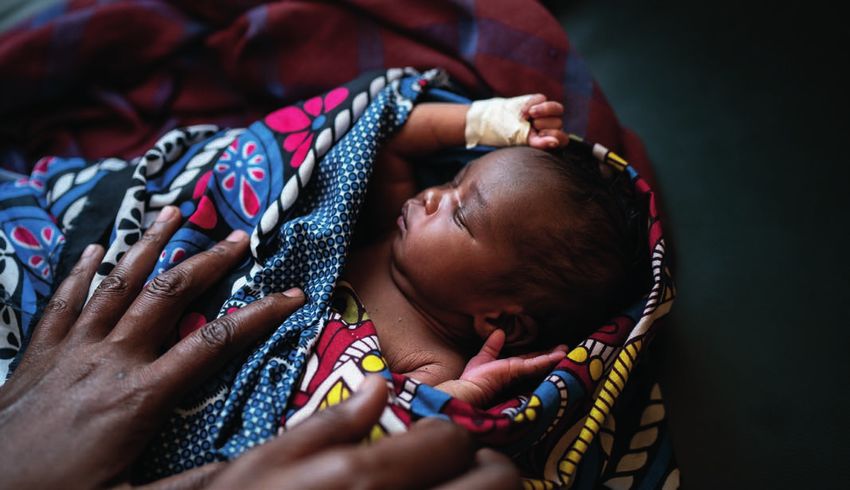
account for more than half of all deaths due to pneumonia
among children under five years. Only three of 30 pneumonia Children left behind
high-burden countries – Bangladesh, Indonesia and China – Under-five deathsfrom
Child deaths (in thousands)
6
by country
pneumonia are concentrated in the
are on track to achieve the GAPPD target by 2025 (see world’s poorest countries and within these countries it is
7
d Annex 1 for progress across 30 high-burden countries). the most deprived and marginalised children who suffer
The 2019 Pneumonia and Diarrhoea Progress Report Card the most. Children from the poorest families living in
developed by International Vaccine Access Centre (IVAC) low- and middle‑income countries (LMICs) are nearly
8
Somalia shows that countries are not making sufficient progress 0 40
twice as likely80to die before
120
their fifth160
birthday as children
and calls for greater investment in the development of from wealthier families, because of social and economic 9
high‑quality data that can be collected more
Under-five regularly
deaths to by country
(in thousands) inequalities and poor access to basic, good-quality health
improve our understanding of where countries are progressing services through poorer provision or out‑of‑pocket
Nigeria
or lagging on key indicators. Figure 2 looks at how child costs. They are further disadvantaged by high rates
pneumonia death rates are changing over time. The vertical of malnutrition, co-infections with other diseases,
axis
Southcharts
Sudan the death rate and the size of the bubble indicates
exposure to polluted air, and limited access to safe water,
the number of deaths caused by pneumonia
0 40 in 2018
80 for each
120 160
sanitation and hygiene.
Guinea country, while the horizontal axis measures the rate of decline.
It shows that in too many countries with a high burden of
frican Republic
child pneumonia deaths the rate of decline is too slow.
Angola
Figure
Pakistan 2: Child pneumonia mortality rate and average annual rate of reduction, 2000–18
30 West anddeaths
Under-five deaths (in thousands) by country
Under-five Central
(inAfrica
thousands) by country
Ethiopia
Eastern and Southern Africa
tic
ad Chad
of
Middle East and North Africa
Angola Tanzania
South Asia
Indonesia
Somalia Somalia
0 40 80 120 0 40
160 80 120 160
25 East Asia and Pacific
India
GAPPD target:
Under-five mortality rate due to pneumonia per 1,000 live births, 2018
West and Central Africa deaths
3 under-five Latin America and Caribbean
Ethiopia per 1,000 live births
Nigeria Nigeria Eastern and Southern Africa North America
China
Middle East and North Africa Eastern Europe and Central Asia
South 20
Tanzania
Sudan South Sudan
South Asia Western Europe
5 15 10
Guinea India Guinea East Asia and Pacific
Average annual rate of reduction in pneumonia under-five mortality, 2000−18 (%)
GAPPD target:
3 under-five deaths Latin America and Caribbean
African Republic Central African Republic per 1,000 live births
North America
15 China
Angola Angola Eastern Europe and Central Asia
Pakistan Pakistan Western Europe
10 15
duction in pneumonia under-five mortality, 2000−18 (%) West and Central Africa West an
Ethiopia Ethiopia
10
Eastern and Southern Africa Eastern
atic Democratic
c of Republic of
Congo
Middle East and North Africa Middle E
Tanzania Tanzania
South Asia South A
Indonesia Indonesia
India India East Asia and Pacific East Asi
5 GAPPD target: GAPPD target:
3 under-five deaths 3 under-five
Latin America deaths
and Caribbean Latin Am
per 1,000 live births per 1,000 live births
North America North A
China China
Eastern Europe and Central Asia Eastern
0 Western Europe Western
0 5 5 10 10 15 15
Average annual rate of reduction in pneumonia under-five
Average annual rate mortality, 2000−18
of reduction (%) under-five mortality, 2000−18 (%)
in pneumonia
Source: UNICEF analysis based on WHO and Maternal and Child Epidemiology Estimation Group interim estimates produced in September 2019,
applying cause fractions for the year 2017 to United Nations Inter-agency Group for Child Mortality Estimation estimates for the year 2018.
3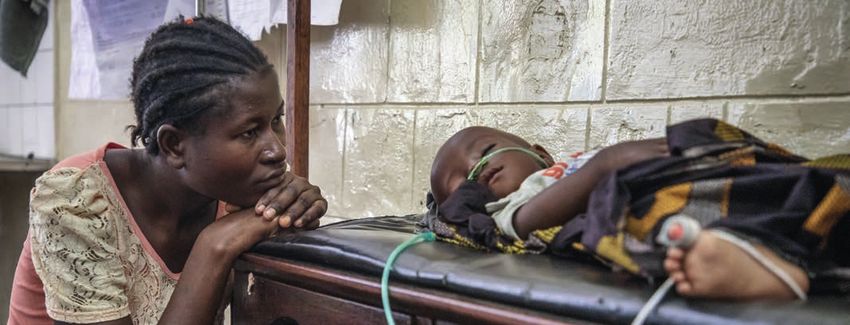
Tackling childhood pneumonia

Reducing the number of children getting sick and dying                       needed to ensure that all children have clean air to
from pneumonia will require achieving universal access                       breathe, sufficient nutritious food to eat, and access to
to primary health care, so that all children have access to                  safe water, sanitation, and hygiene. Figure 3 illustrates
vaccination and nutrition services, and to good‑quality                      the three pillars of the approach needed to put the
diagnosis and treatment. Multi-sectoral actions are                          GAPPD into operation.

  Figure 3: Critical areas for tackling pneumonia

                                                               INNOVATION

                                                                INCREASE
                                                               VACCINATION
                                                                COVERAGE

                PREVENT                                                                                          PROTECT
                                                                                                                 CHILDREN
                PNEUMONIA                                                             IMPROVE
                                                                                   BREASTFEEDING                   FROM
                IN CHILDREN                  IMPROVE ACCESS                          PRACTICES
                                              TO SAFE WATER,                                                    PNEUMONIA
                                                SANITATION
                                               AND HYGIENE

                                                            REDUCE
                              REDUCE
                                                          PNEUMONIA                                              ENSURE
                                AIR
                             POLLUTION
                                                        MORBIDITY AND                                           ADEQUATE
                                                                                                                NUTRITION
                                                        MORTALITY AND
                                                        IMPROVE CHILD                                ACHIEVE
                                                           SURVIVAL                                UNIVERSAL
                                                                                                     HEALTH
                                                                                                   COVERAGE
                                                                                                   TO DELIVER
                                                                                                     FOR ALL
                           INCREASE                                                                 CHILDREN
                             CARE-
                            SEEKING

                                                                                   ENSURE
                                                  SCALE UP                        ACCESS TO               INVEST IN
                                                INTEGRATED                        ESSENTIAL                HEALTH
                                                   SERVICE                       COMMODITIES              WORKERS
                                               DELIVERY AND
                                                QUALITY OF
                                                    CARE

                                                               DIAGNOSE
                                                               AND TREAT
                                                               CHILDREN WITH
                                                                PNEUMONIA

  Source: Adapted from WHO/UNICEF, 2013. Ending Preventable Child Deaths from Pneumonia and Diarrhoea by 2025: The Integrated Global Action
  Plan for Pneumonia and Diarrhoea (GAPPD)

                                                                        4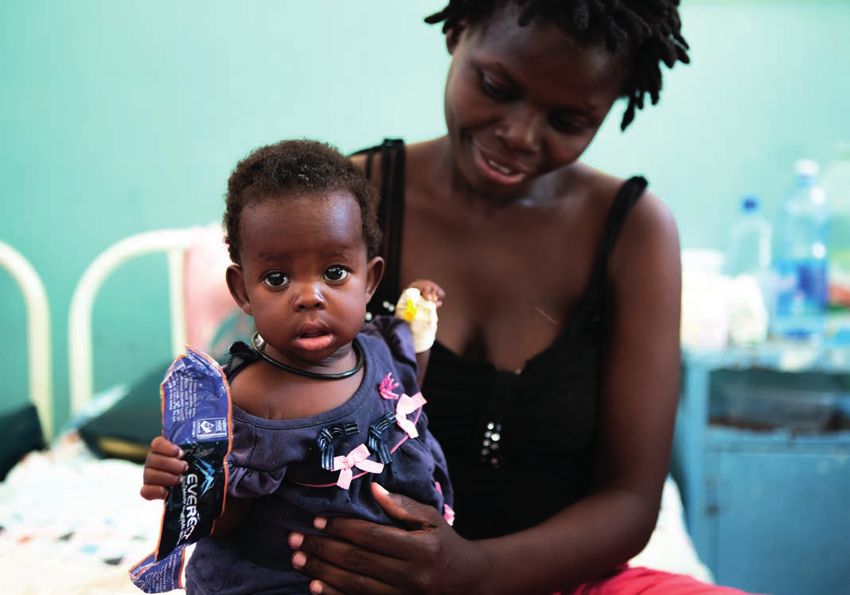
PREVENT pneumonia in children
Increase vaccination coverage                                               situations. Gavi, the Vaccine Alliance, has supported the
                                                                                      14

                                                                            introduction and scale-up of PCV in many low-income
Improved vaccination coverage has contributed to significant                countries, yet lower-middle and middle-income countries
                                                                                     15

reductions in child deaths, saving two to three million lives a             not eligible for Gavi support are lagging behind. In the
                                                                                                                            16

year and protecting millions more children from disease and                 three countries with the highest number of pneumonia
disability. Immunisation also creates contact points between
                                10
                                                                            deaths, PCV coverage is only 57% in Nigeria, 6% in India
families and health services for the provision of health                    and 79% in Pakistan.
services. Each dollar invested in immunisation in 91 LMICs
from 2021–30 provides a return of $20 in benefits; this                     Children from the poorest families, the most remote areas
increases to $51 when considering broader societal benefits                 and marginalised groups are left behind in immunisation.
of people leading longer and healthier lives.             11                Survey data across 72 low- and middle-income countries
                                                                            from 2012–17, for example, indicate a gap of 25 percentage
Several vaccines protect against pneumonia: Haemophilus                     points for DTP3 coverage between children in the poorest
influenzae type b (Hib), pneumococcal conjugate vaccines                    and richest households. 17

(PCV), measles vaccine (MCV), and diphtheria, tetanus and
pertussis (DTP). However, nearly 20 million children still                  Governments must improve immunisation delivery through
miss out on basic vaccinations, with global coverage of three               increasing domestic investment, strengthening primary
doses of DTP and one dose of the measles vaccine continuing                 health care, creating a reliable supply chain system, and
to stall at 86% in 2018. In 2018, approximately 39 million
                                         12                                 focusing on children missing out. Donors and the global
children globally did not receive the recommended three                     health community should support countries to achieve these
doses of the Hib vaccine and 71 million did not receive the                 steps, particularly poorer countries and those experiencing
recommended three doses of PCV, putting them at higher                      humanitarian crises. Gavi’s third replenishment, in June 2020,
risk of pneumonia (Figure 4). Many countries still have not
                                              13                            must raise at least $7.4 billion to support the delivery of its
introduced PCV because of a variety of factors, including                   2021–25 strategy to immunise 300 million people and save
high vaccine prices, underfunded health budgets, and conflict               up to eight million lives. Donors should make significant
                                                                                                    18

   Figure 4: Estimated coverage of pneumonia-fighting vaccines in 2018, by World Bank
   income group
                              100

                              90

                              80

                               70
  Immunisation coverage (%)

                              60

                               50

                              40

                              30

                               20                                                                                                   DTP3
                                                                                                                                    MCV1
                               10
                                                                                                                                    Hib3

                                0                                                                                                   PCV3
                                       High        Upper-middle   Lower-middle               Low                 Global
                                     income          income          income                income

   Source: WHO/UNICEF estimates of national immunisation coverage, 2018 revision
   Note: World Bank income groups, 2018

                                                                        5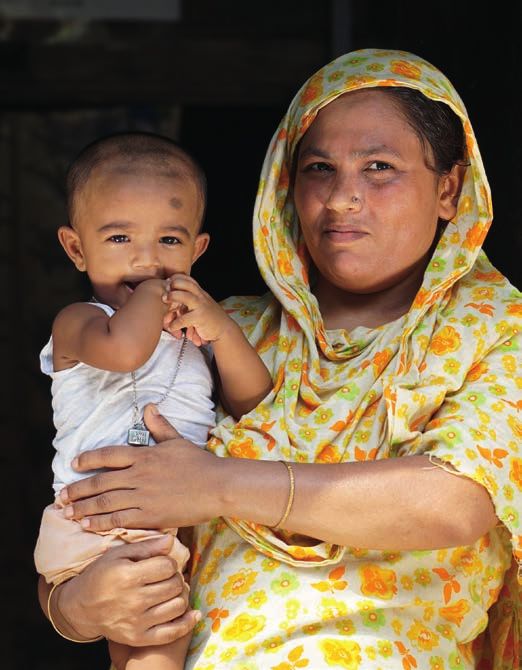
pledges to Gavi, while ensuring this investment drives a                          particulate matter, is a contributory factor in an additional
strong policy agenda on equity and strengthening primary                          38%. One of the reasons that air pollution is such a
                                                                                       22

health care systems. In its next strategic period, Gavi aims to                   major factor is the low level of access to clean fuels and
accelerate improved access to immunisation for the world’s                        technologies for cooking, especially in sub-Saharan Africa. In
poorest children, while leaving a stronger health system in the                   Nigeria, DRC, Ethiopia, Tanzania, Niger, Chad, Burkina Faso,
countries it supports. Gavi remains committed to prioritise                       Madagascar, South Sudan and Mali, less than 10% of the
a market-shaping role to improve vaccine affordability and                        population has access to clean fuels and technologies for
access, including accelerating new entrants to the vaccine                        cooking. This needs to be addressed by governments.    23

market to ensure genuine competition, which could drive
down prices and improve quality.
                                                                                  Improve access to safe water, sanitation
                                                                                  and hygiene
Reduce air pollution
                                                                                  Good hygiene practices help prevent pneumonia and other
Air pollution (both indoor and outdoor) is a significant risk                     illnesses, including diarrhoea. Studies have shown that
factor for pneumonia deaths among children. The percentage
                                                       19

                                                                                  improved handwashing with soap reduces pneumonia risk
of child pneumonia deaths attributable to air pollution varies                    by up to 50% by reducing exposure to bacteria and other
                                                                                                 24

widely across high-burden countries, ranging from 27% in                          microbial agents. But in least developed countries (LDCs)
                                                                                                      25                                       26

Indonesia to 56% in Niger; however, the impact might be
                                    20

                                                                                  in 2017, nearly three-quarters of the population lacked
under- or over-estimated. Increasing urbanisation and urban
                               21

                                                                                  handwashing facilities with soap and water, and two-thirds
population growth in many high-burden pneumonia countries                         lacked basic sanitation services at home. Lack of water,
                                                                                                                                   27

may increase the number of children exposed to air pollution.                     sanitation, and hygiene services in health care facilities places
According to Global Burden of Disease estimates, household                        newborns and young children at great risk. In LDCs one in five
air pollution from using solid and unclean fuels for cooking                      health care facilities has no water, sanitation or health care
and heating contributes to 62% of air pollution-related                           waste management services.        28

child pneumonia deaths, while outdoor pollution, especially

Jamillah, age six months, is being treated for pneumonia at a hospital in Turkana, Kenya. Photo: Nina Raingold/Save the Children

                                                                              6
PROTECT children from pneumonia
Ensure adequate nutrition funding deficit. This will require significantly increased
35
domestic and innovative financing, supported by international
Malnutrition is a risk factor in nearly half of all deaths among development assistance. Nutrition financing also needs to
children under five. In 2018, 49 million children suffered
29
be better aligned with investments in primary health care to
from wasting and 149 million from stunting. A severely30
achieve universal health coverage.
undernourished child is nine times more likely to die from
common infections, including pneumonia, compared with
a well-nourished child. Children from the poorest 20%
31
Improve breastfeeding practices
of households are more than twice as likely to be stunted
Newborns are particularly susceptible to infections, and
and have a 40% higher risk of being wasted as those from
pneumonia claimed 153,000 newborn lives in 2018 (6% of
the richest 20%. And while around 80% of children who
32
newborn deaths). Babies born to mothers who enter
36
complete treatment for severe undernutrition are cured, 33
pregnancy well-nourished, who receive nutrition services
currently less than 20% of those who need treatment have
during and after pregnancy, and who exclusively breastfeed
access to it. 34
over the first six months of life are less likely to contract
Countries with high burdens of both childhood pneumonia or die from pneumonia and other infections. Immediate37
deaths and malnutrition, especially acute malnutrition, should breastfeeding in the first hours and days of a baby’s life
scale up nutrition-related programmes within primary health provides protection against pneumococcal bacteria and
care, including improving infant and young child feeding, other pathogens, and strengthens a baby’s natural defences,
nutrition counselling, growth monitoring, and work to yet rates of colostrum feeding in many high pneumonia
promote behaviour change around feeding and care seeking. risk areas remain too low. Breastfeeding exclusively until
38
Integrated service delivery approaches, such as integrated six months of age, and continued breastfeeding with the
management of child illness (IMCI) and integrated community gradual introduction of complementary foods up until two
case management (ICCM) are key strategies to address years of age or beyond, can similarly reduce the risk of
pneumonia at the primary health care level and to integrate babies contracting and dying from pneumonia. Despite the 39
the community-based management of acute malnutrition. protective properties of breast milk, less than half of infants
Financing for nutrition also urgently needs to increase. The in low-income countries, and only one third in lower-middle-
Tokyo Nutrition for Growth Summit in 2020 is a critical income countries, are exclusively breastfed for the first six
opportunity to galvanise world leaders to address the current months of life. 40
Nakwan, just seven days old, has pneumonia. She is being treated at a health clinic in northern Kenya. Photo: Fredrik Lerneryd/Save the Children
7DIAGNOSE AND TREAT children with pneumonia
Increase care seeking vaccines and treatment for pneumonia, has the largest effect
on averting deaths among children under the age of five. 44
Improved care seeking is critical to ensure sick children are Expanded access to primary health care at community level
taken to and seen by a health worker who can effectively also requires functioning referral and transport pathways,
diagnose and treat them or refer them for special care. data collection and monitoring.
Globally, only 68% of children with suspected pneumonia
are taken to a health facility. This is far lower in most
41 IMCI delivered at primary care facilities and ICCM delivered
high-burden pneumonia countries – for example, in Somalia by community health workers are critical strategies to
and Benin, only 46% of children with suspected pneumonia address pneumonia and other key causes of child illness and
are taken for care. Just 60% of children with pneumonia
42 death. While there has been progress, the coverage of these
symptoms from the poorest households and 65% in rural services remains patchy, and only a handful of countries
areas are taken to a health facility compared with 78% and have recognised ICCM as a core child survival strategy and
74% of children from the wealthiest and urban households. 43 rolled it out at scale. Over the past years, the Global Fund
Improving care seeking requires improved engagement and has provided substantial support to the scale-up of ICCM,
communication with families and communities. including community health worker training and malaria
commodities. Yet, the financing of treatments for pneumonia
and diarrhoea, not supported by the Global Fund, has been
Scale up integrated service delivery a major challenge. Very few countries finance community
case management through their national health budgets. The
and quality of care recent successful replenishment effort of the Global Fund
Increased demand for services must be matched by improved and upcoming country allocations provide an opportunity
availability and accessibility of comprehensive, high-quality to again strongly promote ICCM and leverage country
health services, especially for the most deprived and commitments for child health commodities and services,
marginalised children. It has been shown that a package of while at the same time clearly defining the overall budget
key interventions delivered at community level, including needs and resources gaps.
Box 1: 13-day-old Emran recovers from
severe pneumonia
While community health volunteer Honufa was making
her regular house-to-house visits in a remote village in the
Barisal Division of Bangladesh, she found Sharmin worrying
about her 13-day-old son, Emran. Sharmin complained
that Emran couldn’t breastfeed, was breathing rapidly,
and that his chest was drawing in. Honufa immediately
recognised the danger signs of pneumonia and advised
Sharmin to go to the nearest community clinic.
Within 15 minutes of being seen by Naznine, a community
health care provider at the clinic, Emran was diagnosed
with pneumonia and treated with his first dose of
dispersible Amoxicillin. Naznine showed Sharmin how
to give the tablet at home for the next seven days, and
explained how to care for Emran at home. Thanks to the
quick referral, diagnosis and treatment, Emran made a
full recovery.
Like all community health care providers in Bangladesh,
Naznine had received training on the diagnosis and
management of pneumonia. The Government’s investment
in strengthening health services at the community level,
with the support of organisations like Save the Children,
means that communities now have access to health
services and a trained health worker closer to home. They
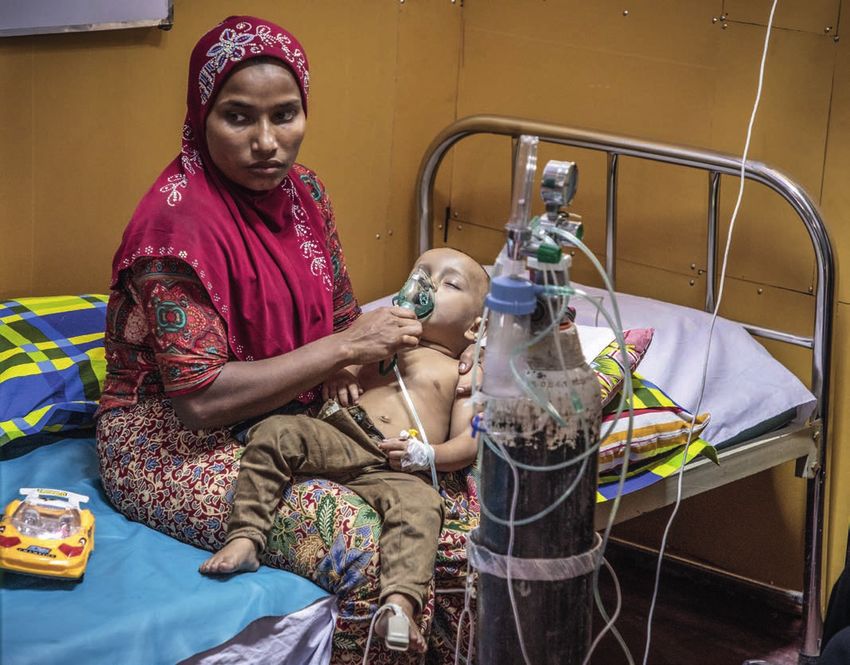
Emran, seen here with his mother, Sharmin, was treated for
no longer have to travel to sub-district facilities and bear pneumonia at a community clinic in Bangladesh. He was referred
the huge financial burden of hospital treatment. It also for treatment by a trained community health volunteer.
means that treatment can be started much more quickly. Photo: Md. Touqir Islam/Save the Children
8Ensure access to essential commodities minimum of 44.5 doctors, nurses or midwives for every
10,000 people. Health worker shortages are most widespread
Detecting and managing child pneumonia is challenging as in low- and middle-income countries. Community health
46
no simple diagnostic test exists, so health workers rely on workers are recognised as a crucial workforce to deliver
assessing and interpreting signs and symptoms. This carries life-saving interventions, yet support for community health
the risk of both under- as well as over-diagnosis and results workers and their integration into health systems and
in some children failing to get access to treatment while communities remain uneven across and within countries. 47
others receive treatments they don’t need, contributing to
antibiotic resistance and wastage of medicines. Affordable
and highly effective amoxicillin in dispersible tablet form Achieve universal health coverage
is the recommended first-line treatment for childhood to deliver for all children
pneumonia but coverage remains low in many settings. Of
great concern is the almost complete lack of access to pulse Ending preventable child deaths from pneumonia can only
oximetry, a non-invasive mechanism for measuring oxygen be achieved if countries make faster progress in achieving
levels in blood, and the availability of medical oxygen at universal health coverage, and pneumonia will be the litmus
all levels of the healthcare system in high-burden countries, test of whether universal health coverage can truly deliver
meaning that many children die from pneumonia for lack of for all children. Governments have the core responsibility to
oxygen. Unitaid has recently invested more than $40 million fulfil this right, ensuring children have access to an essential
to increase access to pulse oximeters in several high-burden package of good-quality health care, free at the point of
countries, which could improve the identification and referral use, prioritising those furthest behind. Health systems must
of very sick children and save many lives. deliver good-quality care for children at all levels. 48
While there has been global progress on delivering universal
health coverage, a third of the world’s population (34%) is
49
Invest in health workers still missing out. There are huge variations across countries
50
A health worker with the right training, skills, medicines and with low-income countries and those affected by conflict
supplies, based in a functional health centre or his/her having the lowest coverage (see Map 1). Care-seeking for a
51
community, is needed to prevent and treat pneumonia. child showing symptoms of pneumonia is the indicator used
However, countries are facing severe health workforce to monitor ‘child treatment’ in the UHC Service Coverage
shortages, with the quantity and quality of health workers Index. Yet, currently most high‑burden pneumonia countries
under threat. Globally, an estimated 18 million more health fall far below the target of 90% of children with pneumonia
workers are needed by 2030 to reach the SDG targets symptoms being taken for healthcare. 52
on universal health coverage. WHO standards call for a
45
Map 1: Universal health coverage across countries
Health coverage on a scale of 0 to 100
Health coverage on a scale of 0 to 100
80 or more 70–79 60–69 50–59 40–49 Less than 40 Data not available Not applicable
80 or more 70–79 60–69 50–59 40–49 Less than 40 Data not available Not applicable
Source: WHO, 2019. Primary health care on the road to universal health coverage: 2019 monitoring report. WHO: Geneva.
Note: This map has been produced by the WHO. The boundaries, colours or other designations or denominations used in this map and the
publication do not imply, on the part of the World Bank or WHO, any opinion or judgement on the legal status of any country, territory, city or area
or of its authorities, or any endorsement or acceptance of such boundaries or frontiers.
9Government spending on health care is far too low in many The first-ever UN High-Level Meeting on Universal Health
parts of the world, resulting in patients picking up the bill Coverage in September 2019 saw the endorsement of a
for their treatment. Governments should increase domestic Political Declaration with commitments on strengthening
53
public health expenditure towards a target of 5% of GDP, primary healthcare, health financing and leaving no one
prioritising spending at the primary healthcare level and behind. This followed the Astana Declaration in October
raising revenue in an equitable way. The Global Financing 2018, which refocused efforts on primary health care.
Facility for Women’s Children’s and Adolescents’ Health Governments must be held to account to deliver on these
has a key role to play in helping countries to grow domestic promises, both at national level and through global reporting
resources and structure health services to reach those left and accountability mechanisms, such as at the World Health
furthest behind. Assembly, SDG reporting and UHC2030. 54
Box 2: Addressing pneumonia in humanitarian contexts
Common causes of illness and death are often intensified A long-standing barrier to PCV use in in the humanitarian
in humanitarian contexts, as are many pneumonia context has been price. After sustained advocacy on this
risk factors, such as malnutrition, missed vaccination front, in 2016 GSK and Pfizer committed to offer their
opportunities, air pollution, and overcrowding, while health PCV vaccines at the lowest global price in humanitarian
systems are at risk of breaking down. Pneumonia is one of settings. Save the Children, Médecins Sans Frontières,
the top causes of morbidity in crisis contexts, accounting WHO and UNICEF set up the Humanitarian Mechanism 58
for 20–35% of deaths among children under five. Four 55
to operationalise these commitments. Two years in,
out of five countries identified as having exceptionally high the mechanism has contributed to the immunisation of
humanitarian need in 2019 – DRC, Ethiopia, Nigeria and
56
around 647,000 children and has the potential to increase
South Sudan – are also among the ten countries with the immunisation access significantly in the future.
highest number of child pneumonia deaths or the highest
Diagnosing and treating children
child pneumonia mortality rate.
While health systems may break down or become
Preventing children from becoming sick inaccessible to large parts of the population during
Unvaccinated children are disproportionately found in humanitarian crises, it has been shown that community
fragile or conflict-affected states. Almost half are in just health workers have the potential to provide continued
16 countries – Afghanistan, Central African Republic, services, including ICCM, creating a lifeline of health
Chad, DRC, Ethiopia, Haiti, Iraq, Mali, Niger, Nigeria, care provision to affected populations. ICCM is a critical
Pakistan, Somalia, South Sudan, Sudan, Syria and Yemen. approach to helping reach the most deprived and
Immunisation programmes often come to a halt in marginalised children and it should be prioritised and
humanitarian contexts, and when they are reinstated the strengthened in humanitarian responses. Concerted effort is
only vaccines reliably and consistently introduced are to needed to overcome challenges to delivering ICCM in these
protect against measles, polio, and tetanus. This is despite situations, such as obstacles to accessing referral centres,
the Vaccination in Acute Humanitarian Emergencies WHO medicine and supply shortages, disrupted supervision,
Framework listing other routine vaccines for consideration increased demand on community health workers and
in crises, including PCV. 57
security threats for patients and health workers. 59
One-year-old Luc is treated for severe pneumonia at a hospital in the DRC; his mother, Makenda, waits at his side. Photo: Jonathan Hyams/Save the Children
10INNOVATE to improve access to affordable and
cost-effective pneumonia technologies and services
Only 3% of global infectious disease research spending such as temperature and pulse rate, are advancing rapidly
is currently allocated to pneumonia, despite pneumonia
60
and need to be incorporated within health services. Lung
causing 15% of deaths in children under the age of five. ultrasound – more portable and less dangerous and costly
Innovations can catalyse and accelerate progress, but there than x-ray imaging – has been shown to be feasible in
must be an emphasis on innovations that will meet the needs low‑resource settings. 61
of high-burden countries and improve equity.
Promising treatment innovations include ways to produce,
New vaccines targeting the leading viral cause of pneumonia store, deliver and transport medical oxygen, more robust
(Respiratory Syncytial virus, RSV) are in the final stages ventilation support systems and simplified antibiotic
of development, and new technologies that would reduce treatment schedules with child-friendly formulations.
reliance on cold chain vaccine storage are showing great However, there is an alarming lack of an antibiotic drug
promise. Research is also under way to help identify optimal pipeline in an age of antimicrobial resistance; this problem
PCV mass immunisation strategies for crisis-affected must be addressed. There is also a need for innovations
populations, as well as looking at the potential of one-off that can reduce two of the leading risk factors for child
PCV campaigns amongst displaced populations. pneumonia death – wasting and poor air quality. All of
these areas should be the focus of increased research and
There is an urgent need for cost-effective diagnosis of
development in the years ahead. Public–private partnerships
illnesses such as pneumonia. Devices that measure
have a role to play in supporting this.
respiratory rate, plus pulse-oximetry and other vital signs,
Sohai, age two, being treated for acute pneumonia at a primary health centre in Cox’s Bazar, Bangladesh. Photo: Jonathan Hyams/Save the Children
11The time to act is now – The
Fighting for Breath Global Forum
With ten years left to deliver on the SDGs – and five on the Meeting on Universal Health Coverage, where governments
GAPPD targets – now is the time to act to reduce pneumonia made commitments that must now be translated into action
deaths and improve child survival. Failure to do so could leave and monitored. The Global Forum will also take place in
11 million children robbed of their futures. The Fighting for
62
the run-up to the Gavi replenishment in June 2020 and the
Breath Global Forum on Childhood Pneumonia, taking place Tokyo Nutrition for Growth Summit later in 2020 and will
from 29–31 January 2020 in Spain, is a critical opportunity encourage donors to support governments by strengthening
to galvanise urgently needed national action and mobilise immunisation, nutrition, primary health care and universal
country governments, development partners and the donor health coverage. The Forum is a real opportunity to galvanise
community. The Forum will also demonstrate the power of action on combatting child pneumonia. We encourage
partnerships, such as the Every Breath Counts coalition. 63
governments and partners to drive progress towards a world
in which no child dies needlessly of pneumonia.
The Global Forum continues the work of the Global
Conference on Primary Health Care and the UN High-Level
A global call to action on childhood pneumonia
1. Develop pneumonia control strategies as part of wider plans for universal health coverage and commit to
reducing child pneumonia deaths to fewer than three per 1,000 live births, the target set by the Integrated Global
Action Plan for Pneumonia and Diarrhoea (GAPPD).
2. Strengthen quality primary health care and action on pneumonia as part of national multi-sectoral plans
and through integrated strategies (including nutrition, water, sanitation and hygiene, and air pollution), including at
community level, focusing on the most deprived and marginalised children.
3. Increase domestic government investment in health and nutrition (to at least 5% of GDP on health) and
ensure that increased spending improves access to child health and nutrition services, including by removing user fees,
addressing non‑financial barriers to accessing care, and prioritising primary health services.
4. Improve health governance by ensuring accountability, transparency and inclusiveness in planning, budgeting and
expenditure monitoring, including for pneumonia control strategies.
5. Accelerate vaccination coverage by supporting Gavi’s 2020 replenishment and ensuring the investment drives
more equitable vaccination coverage and improves vaccine affordability.
6. Enhance official development assistance by increasing allocations to child health services and advancing the
achievement of universal health coverage (aligned with national priorities and plans), including through pledges as part
of Gavi replenishment and Nutrition for Growth.
7. Engage the private sector to improve access to affordable, quality vaccines, diagnostic tools, new antibiotics,
medicines and medical oxygen, especially for the most deprived and marginalised children.
8. Measure and report progress in achieving universal health coverage to promote accountability for the
development of stronger health systems that deliver quality primary health care and reduce child deaths, including
from pneumonia, as well as against SDG child survival and GAPPD targets.
9. Prioritise research, development and innovation to improve access to the most affordable and cost-effective
pneumonia prevention, diagnosis, referral and treatment technologies and services.
10. Champion multi-sectoral partnerships between the child health and nutrition communities and the broader
infection control, clean air, water, sanitation and hygiene, and development financing communities.
12Annex 1 – Pneumonia high-burden
countries 64
Country Number of Under-five Percentage Average Year country
under-five mortality of under-five annual rate is expected to
deaths from rate due to deaths due to of reduction reach the 2025
pneumonia pneumonia pneumonia in pneumonia GAPPD target
(2018) per 1,000 live (2017) deaths at current rate
births (2018) 2000–18 (%) of progress
Nigeria 161,515 21.7 18.6 1.5 Later than 2050
India 126,535 5.2 14.3 6.7 2026
Pakistan 57,970 9.7 14.2 4.4 2044
DRC 39,796 11.5 13.4 3.0 Later than 2050
Ethiopia 32,006 9.0 16.8 6.4 2035
Indonesia 19,152 4.0 15.8 4.8 2024
China 18,382 1.1 12.6 10.7 2009
Chad 17,783 27.2 23.7 1.6 Later than 2050
Angola 16,270 12.9 17.3 6.4 2040
Tanzania 15,288 7.4 14.3 6.2 2032
Somalia 15,165 24.1 20.7 2.1 Later than 2050
Niger 12,803 12.3 15.5 6.8 2038
Mali 12,557 15.8 16.7 4.7 Later than 2050
Bangladesh 11,967 4.1 13.5 8.1 2022
Sudan 11,463 8.5 14.4 5.3 2037
Afghanistan 11,086 9.2 14.9 5.1 2039
Mozambique 10,206 9.2 12.9 4.4 2043
Côte d’Ivoire 10,142 11.3 14.4 1.7 Later than 2050
Uganda 10,065 6.2 13.6 6.9 2028
Cameroon 9,955 11.1 15.0 4.7 2045
Philippines 9,919 4.5 15.8 3.2 2031
Kenya 8,856 6.0 14.7 5.8 2029
Guinea 8,072 17.8 18.2 1.9 Later than 2050
South Sudan 7,641 19.7 20.3 3.0 Later than 2050
Benin 5,193 12.5 13.8 3.4 Later than 2050
Haiti 3,643 13.5 20.9 3.5 Later than 2050
Sierra Leone 3,491 13.6 13.2 5.3 2046
Central African Republic 2,949 17.8 15.5 1.3 Later than 2050
Equatorial Guinea 539 12.4 15.0 3.1 Later than 2050
Comoros 315 11.9 17.9 3.0 Later than 2050
13Endnotes
1 UNICEF analysis based on WHO and Maternal and Child Epidemiology 15 Some Gavi-eligible countries still have not introduced PCV (Chad,
Estimation Group interim estimates produced in September 2019, Somalia, South Sudan, Vietnam, Ukraine) or have low coverage (India,
applying cause fractions for the year 2017 to United Nations Inter-agency Nigeria, Central African Republic, Indonesia, Laos, Mongolia, Papua
Group for Child Mortality Estimation estimates for the year 2018. New Guinea), based on International Vaccine Access Center
(https://view-hub.org/).
2 Convention on the Rights of the Child: https://www.unicef.org/
child-rights-convention/convention-text 16 International Vaccine Access Center. https://view-hub.org/, last access
29 October 2019.
3 Between 2000 and 2018, child pneumonia deaths fell by 54%
compared with 81% for measles, 68% for tetanus, 67% for HIV/AIDS, 17 UNICEF analysis of DHS and MICS survey reports via WHO Health
64% for diarrhoea, and 59% for malaria. WHO and Maternal and Equity Monitor for the period 2012–2017.
Child Epidemiology Estimation Group (MCEE) estimates 2017.
18 Gavi – The Vaccine Alliance (2019). Gavi sets ambitious goal to
4 Calculation of progress towards GAPPD target based on average annual immunise 300 million people by 2025, leaving no one behind (Press
percentage change 2000 to 2017; WHO and UNICEF (2013). Ending release). https://www.gavi.org/library/news/press-releases/2019/
Preventable Child Deaths from Pneumonia and Diarrhoea by 2025: The gavi-sets-ambitious-goal-to-immunise-300-million-people-by-2025-
integrated Global Action Plan for Pneumonia and Diarrhoea (GAPPD). leaving-no-one-behind/, last access 29 October 2019.
5 Goal 3.2 of the Sustainable Development Goals. 19 IHME (2017). Global Burden of Disease. Available at: https://vizhub.
healthdata.org/gbd-compare/
6 High pneumonia burden refers to both numbers of pneumonia deaths
and mortality rates due to pneumonia (see list of countries in Annex 1). 20 IHME (2017). Global Burden of Disease. Available at: https://vizhub.
healthdata.org/gbd-compare/
7 Calculation of progress towards GAPPD target based on average annual
percentage change 2000 to 2017. 21 UNICEF (2019). Silent suffocation in Africa: Air pollution is a growing
menace. Available at https://www.unicef.org/reports/silent-suffocation-
8 The Report Card includes a total of 23 countries – the top 15 by number
in-africa-air-pollution-2019
of under-five pneumonia and diarrhoea (combined) deaths, and the
top 15 by under-five pneumonia and diarrhoea (combined) mortality 22 IHME (2017). Global Burden of Disease. Available at: https://vizhub.
rate, with seven countries appearing on both lists. It scores countries healthdata.org/gbd-compare/
based on the latest available data for ten GAPPD indicators – Protection:
23 IHME (2017). Global Burden of Disease. Available at: https://vizhub.
exclusive breastfeeding; Prevention: DTP3, MCV1, Hib3, PCV3, and
healthdata.org/gbd-compare/
RotaC coverage; and Treatment: oral rehydration salts and zinc for
diarrhoea, and antibiotics and visiting an appropriate health care 24 Luby, SP, Agboatwalla, M, Feikin, DR, Painter, J, Billhimer, W, Altaf, A,
provider for pneumonia/ARI. The Report Card is available here: & Hoekstra, RM (2005). Effect of handwashing on child health: a
https://www.jhsph.edu/ivac/resources/pdpr/. randomised controlled trial. The Lancet, 366(9481), 225–233.
9 Comparison of under-five mortality rates in richest and poorest quintile 25 Kumar, S et al. “Handwashing in 51 countries: Analysis of proxy
for 74 countries with last data point 2012 or later. Source of data is DHS measures of handwashing behavior in multiple indicator cluster surveys
or MICS, accessed via GRID, Save the Children’s Child Inequality Tracker. and demographic and health surveys, 2010–2013.” The American
Data is weighted by number of births per country. journal of tropical medicine and hygiene 97.2 (2017): 447–459.
10 WHO Immunization. https://www.who.int/news-room/facts-in- 26 Least developed countries are low-income countries confronting severe
pictures/detail/immunization, last access 22 October 2019. structural impediments to sustainable development, highly vulnerable
to economic and environmental shocks and with low levels of human
11 Johns Hopkins University / International Vaccine Access Centre (2019).
assets. https://www.un.org/development/desa/dpad/least-developed-
Methodology Report: Decade of Vaccines Economics – Return on
country-category.html
Investment Analysis. Available at: http://immunizationeconomics.org/
dove-roi 27 UNICEF and WHO (2019). Progress on household drinking water,
sanitation and hygiene 2000–2017: special focus on inequalities.
12 WHO (2019). 20 million children miss out on lifesaving measles,
diphtheria and tetanus vaccines in 2018 (News release). 28 WHO and UNICEF (2019), WASH in health care facilities: global baseline
https://www.who.int/news-room/detail/15-07-2019-20-million- report. Available at: https://data.unicef.org/resources/wash-in-health-
children-miss-out-on-lifesaving-measles-diphtheria-and-tetanus- care-facilities/
vaccines-in-2018, last access 29 October 2019. 29 Black RE, Victoria CG, Walker SP, Bhutta ZA, Christian P, de Onis M et
13 WHO (2019). Global and regional immunisation profile. al. Maternal and child undernutrition and overweight in low-income
https://www.who.int/immunization/monitoring_surveillance/data/ and middle-income countries. The Lancet Series: Maternal and Child
gs_gloprofile.pdf?ua=1 Nutrition. 2013; 382:427–451.
14 The challenge of high vaccine prices continues to be raised as a problem 30 UNICEF/WHO/World Bank. Joint child malnutrition estimates 2019.
by governments and development partners. At the 72nd World Health 31 UNICEF. Severe acute malnutrition. https://www.unicef.org/nutrition/
Assembly in 2019 countries endorsed a resolution to improve the index_sam.html, last access 29 October 2019.
transparency of markets for medicines, vaccines, and other health
products (https://apps.who.int/gb/ebwha/pdf_files/WHA72/A72_ 32 Comparison of stunting and wasting rates in richest and poorest quintile
ACONF2Rev1-en.pdf). Previously, at the 67th World Health Assembly for 81 countries with last data point 2012 or later. Source of data is DHS
(WHA) in 2014, many countries requested greater price transparency, or MICS, accessed via GRID, Save the Children’s Child Inequality Tracker.
information on cost of production, support for improving negotiation Data is weighted by population under age 5 per country.
capacity and access to lower prices. Vaccine affordability has also been 33 Shekar, Meera; Kakietek, Jakub; Dayton Eberwein, Julia; Walters, Dylan.
raised by ministers of health at subsequent WHAs and at the Ministerial 2017. An Investment Framework for Nutrition: Reaching the Global
Conference on Immunisation in Africa in 2016. This was also a key Targets for Stunting, Anemia, Breastfeeding, and Wasting. World Bank,
finding from consultations conducted by the WHO MIC Task Force Washington D.C. Available at: https://openknowledge.worldbank.org/
(see http://who.int/immunization/programmes_systems/ procurement/ handle/10986/26069
v3p/platform/database/en/).
1434 Calculation for severe acute malnutrition is based on UNICEF Nutridash, Monitoring Report. Available at: https://www.who.int/healthinfo/
2016 Edition, and for moderate acute malnutrition on WFP data for universal_health_coverage/report/uhc_report_2019.pdf?ua=1
2016. https://www.nowastedlives.org/the-facts
51 WHO. Global Health Observatory. UHC service coverage index.
35 Government of Japan (2019), Tokyo Nutrition for Growth Summit 2020:
52 Stop Pneumonia (2019). Pneumonia Careseeking Scorecard 2019.
vision and Roadmap – August 2019 version.
https://stoppneumonia.org/pneumonia-careseeking-scorecard-2019/
36 UNICEF analysis based on WHO and Maternal and Child Epidemiology
53 UN General Assembly (2019). Political Declaration of the
Estimation Group interim estimates produced in September 2019,
High-Level Meeting on Universal Health Coverage. Available at:
applying cause fractions for the year 2017 to United Nations Inter-agency
https://www.un.org/pga/73/wp-content/uploads/sites/53/2019/
Group for Child Mortality Estimation estimates for the year 2018.
09/UHC-HLM-silence-procedure.pdf
37 Lamberti, L et al. (2013). Breastfeeding for reducing the risk of
54 UHC2030 is a provides a multi-stakeholder platform to promote
pneumonia morbidity and mortality in children under two: a systematic
collaborative working in countries and globally on health systems
literature review and meta-analysis. BMC Public Health 13(Suppl 3): S18.
strengthening. See www.uhc2030.org.
https://bmcpublichealth.biomedcentral.com/articles/10.1186/1471-
2458-13-S3-S18 55 Bellos, A, Mulholland, K, O’Brien, KL, Qazi, SA, Gayer, M, Checchi, F.
The burden of acute respiratory infections in crisis-affected populations:
38 Khan J, Vesel L, Bahl R, Martines JC. Timing of breastfeeding initiation
a systematic review. Confl Health, 4 (2010), p. 3
and exclusivity of breastfeeding during the first month of life: effects
on neonatal mortality and morbidity – a systematic review and 56 Syria, the Democratic Republic of the Congo, Ethiopia, Nigeria and
meta-analysis. Matern Child Health J. 2015;19(3):468–79; UNICEF. South Sudan are identified as having exceptionally high levels of
Infant and young child feeding, available at https://data.unicef.org/topic/ humanitarian need in 2019. United Nations Office for the Coordination
nutrition/infant-and-young-child-feeding/. of Humanitarian Affairs (2018). Global Humanitarian Overview 2019.
https://www.unocha.org/sites/unocha/files/GHO2019.pdf
39 Lamberti, L.M. et al. (2013). Breastfeeding for reducing the risk of
pneumonia morbidity and mortality in children under two: a systematic 57 WHO (2017). Vaccination in Acute Humanitarian Emergencies: A
literature review and meta-analysis. BMC Public Health 13(Suppl 3): S18. Framework for Decision Making. Geneva: WHO.
https://bmcpublichealth.biomedcentral.com/articles/10.1186/1471- 58 WHO (2017). Accessing Affordable and Timely Supply of Vaccines for
2458-13-S3-S18 use in Humanitarian Emergencies: the Humanitarian Mechanism (WHO
40 UNICEF Data. Monitoring the Situation of Children and Women – Infant Working Document). Available at: https://www.who.int/immunization/
and young children. Available at: https://data.unicef.org/topic/nutrition/ programmes_systems/sustainability/The_Humanitarian_Mechanism_
infant-and-young-child-feeding/, last accessed 20 August 2018 ToRs.pdf?ua=1
41 UNICEF Global databases based on DHS, MICS and other national 59 Save the Children (2019). Community case management in
household surveys, updated August 2019. humanitarian settings – Guidelines for humanitarian workers.
Available at: https://resourcecentre.savethechildren.net/node/15870/
42 UNICEF Global databases based on DHS, MICS and other national
pdf/iccm-guide_formatted-online.pdf
household surveys, updated August 2019.
60 Brown, R and Head, M (2018). Research Investments in Global Health
43 UNICEF Global databases based on DHS, MICS and other national
Study (ResIn). Sizing up Pneumonia Research: Assessing Global
household surveys, updated August 2019.
Investments in Pneumonia Research 2000–2015. Southampton, UK:
44 Black RB, Levin C, Walker N, Chou D, Liu L, Temmerman M for the ResIn.
DCP3 RMNCAH Author’s Group. Reproductive, Maternal, Newborn and
61 Nadimpalli, A et al. (2019). Feasibility of Training Clinical Officers
Child Health: key messages from disease control priorities 3rd Edition.
in Point-of-Care Ultrasound for Pediatric Respiratory Diseases in
Lancet 2016
Aweil, South Sudan. Am J Trop Med Hyg, Sep 2019;101(3):689–695;
45 WHO (2016). Health Workforce Requirements for Universal Health Iorio, G et al. (2015). Lung ultrasound in the diagnosis of pneumonia
Coverage and the Sustainable Development Goals, Geneva. in children: proposal for a new diagnostic algorithm. PeerJ. 2015; 3:
e1374; Ellington, LE et al. (2017). Lung ultrasound as a diagnostic tool
46 UNICEF (2019). Healthy Mothers, Healthy Babies: Taking Stock of
for radiographically-confirmed pneumonia in low resource settings.
Maternal Health, UNICEF, New York.
Respir Med. 2017 Jul; 128: 57–64; Zar, HJ, Andronikou, S., Nicol MP
47 WHO (2019). WHO guideline on health policy and system support (2017). Advances in the diagnosis of pneumonia in children. BMJ
to optimize community health worker programmes. Available at: 2017;358:j2739; Prina, E, Ranzani, OT, Torres, A (2015). Community-
https://apps.who.int/iris/bitstream/handle/10665/275474/ acquired pneumonia. Lancet 286(9998); Lenahan, JL et al. (2018).
9789241550369-eng.pdf?ua=1 Multicentre pilot study evaluation of lung ultrasound for the
48 The Lancet Commission on High-Quality Health Systems in the SDG management of paediatric pneumonia in low-resource settings: a study
Era argues that “High-quality health systems should be informed by protocol. BMJ Open Resp Res 2018;5:e000340
four values: they are for people, and they are equitable, resilient, and 62 UN Interagency Group for Child Mortality Estimation. Levels and Trends
efficient.” A global movement is underway to improve the quality of in Child Mortality. Report 2019. p.15
care for maternal, newborn, and child health services. WHO issued in
63 Every Breath Counts is the world’s first public–private partnership to
2018 the Standards for Improving the Quality of Care for Children and
support national governments to end preventable child pneumonia
Young Adolescents in Health Facilities. The quality of care standards
deaths by 2030. This global coalition has 40 members from
encompass the delivery of evidence-based clinical services, an elevated
governments, UN and multilateral health agencies, companies,
experience of care for children and their families, an equipped,
foundations, and NGOs working together to close the most critical
motivated, supervised, and supported health workforce, and health
gaps in pneumonia prevention, diagnosis and treatment. See:
facilities replete with essential child health commodities, technologies,
https://stoppneumonia.org/
and physical resources and infrastructure. Based on these and similar
standards for improving the quality of maternal and newborn care, 64 The 30 high-burden countries include 22 countries with the highest
WHO and UNICEF launched The Network for Improving Quality of Care absolute number of pneumonia deaths and the top 14 countries in
for Maternal Newborn and Child Health (the QoC Network). terms of pneumonia-specific mortality rates. UNICEF analysis based on
WHO and Maternal and Child Epidemiology Estimation Group interim
49 Measured by an index of 16 tracer indicators
estimates produced in September 2019, applying cause fractions for
50 The UHC service coverage index based on 16 tracer indicators, the year 2017 to UN Inter-Agency Group for Child Mortality Estimation
measuring progress on SDG indicator 3.8.1; WHO (2019). Primary estimates for the year 2018; WHO Global Health Observatory – Causes
Health Care on the Road to Universal Health Coverage – 2019 of deaths 2017.
15Acknowledgements This briefing was prepared by: Save the Children, London, and UNICEF, New York. Organisations and individuals involved in producing this brief: Save the Children: Kirsten Mathieson, Simon Wright, Oliver Fiala, Jessica Winn, Katherine Richards, Samy Ahmar, Jason Lopez, Sam Kennedy, Christopher Twiss UNICEF: Anne Detjen, Tyler Andrew Porth, Philippa Lysaght, Jennifer Requejo, and colleagues from the Data & Analytics section of the Division of Data, Analytics, Planning and Monitoring including Danzhen You, Lucia Hug, Padraic Murphy, Allysha Choudhury, Richard Kumapley, Chika Hayashi, Vrinda Mehra, Tom Slaymaker, Robert Bain Every Breath Counts Coalition: Leith Greenslade, Androulla Kyrillou ISGlobal: Gonzalo Fanjul, Quique Bassat Fighting for Breath: Global Forum on Childhood Pneumonia: stoppneumonia.org/latest/global-forum/ Cover: Abrahim, age seven months, after recovering from pneumonia at a hospital in Turkana, Kenya. Photo: Nina Raingold/Save the Children Some names in this report have been changed to protect identities. Design and layout: GrasshopperDesign.net
You can also read


