SPEED DATING ENCOUNTERS BETWEEN PUPILS AND SCIENTISTS & ENGINEERS - Expect Everything
←
→
Page content transcription
If your browser does not render page correctly, please read the page content below
SPEED DATING
ENCOUNTERS BETWEEN PUPILS AND                                  INTRO
SCIENTISTS & ENGINEERS          The toolkit is a ready-to-use digital collection of modules aimed at
                                teenagers to be used by teachers, informal learning organisations,
                                researchers and industry.

                                The aim is to engage young people and especially girls in STEM
                                and in the discovery of the variety of STEM related careers in a
                                gender inclusive way. The toolkit includes a wide range of
                                hands-on activities: workshops with a scientific content,
                                informal discussions and meetings with STEM professionals.

                                Each module is composed of three guidelines:

                                   •   Explanatory guidelines specific for each activity
                                   •   Guidelines dedicated to the theme of gender inclusion
                                   •   Guidelines with suggestions for the facilitation

                                The guidelines give practical support and guidance for the
                                users, recommendations on how to debate gender approaches and
                                differences with young people, support and guidance for
                                facilitators on how to overcome their own stereotypes and
                                suggestions on how to manage the group dynamics by implementing
                                different facilitation strategies.

                                The toolkit is produced in the context of the Hypatia project by
                                five science centres and museums (NEMO Science Museum, Museo
                                Nazionale della Scienza e della Tecnologia “Leonardo da Vinci”,
                                Bloomfield Science Museum Jerusalem, Experimentarium,
                                Universcience) in collaboration with gender experts, teachers,
                                research industry institutions and teenagers.

INDUSTRY &
                                The Vision of Hypatia is of a European society that communicates
                                science to youth in a gender inclusive way in order to realise

RESEARCH                                                          1
the full potential of girls and boys around Europe to follow                                  SPEED DATING
STEM related careers.                                                      ENCOUNTERS BETWEEN PUPILS AND SCIENTISTS & ENGINEERS

Below is the complete list of modules that compose the Toolkit,
divided into the three contexts.                                  AT A GLANCE

Schools                                                           Age Group           Teenagers from 15 years old

   •   Find Gender Stereotypes in STEM Representations            Format              Meet a scientist and moderated discussion
   •   Gender Inclusiveness in your Science Teaching
                                                                  Duration            About 1 hour
   •   Inquire: Shape and Action
   •   Play Decide Game & Debate
   •   Science Ambassadors and Ambassadresses                     OVERVIEW

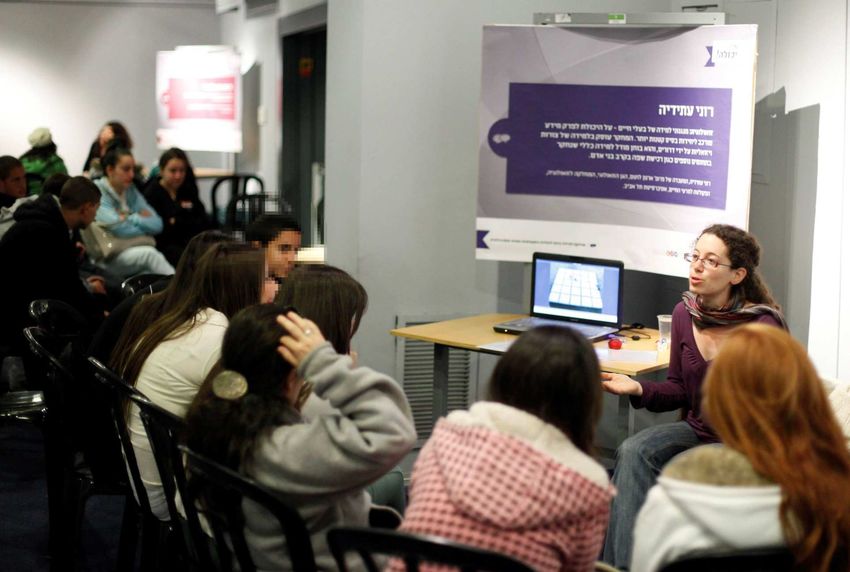
   •   STEM Women Cooperative Card Game                           Young scientists and engineers who work in diverse STEM fields
   •   Test Yourself                                              (Science, Technology, Engineering and Mathematics) in the
   •   What's your Opinion?                                       academia and the industry, meet small groups of pupils for one
                                                                  time informal encounters. The participants are exposed to
Science Centres & Museums
                                                                  diverse STEM fields by female scientists from under represented
   •   Find gender stereotypes in STEM Representations            fields such as computer sciences and physics, and male
   •   Science Café or Café Scientifique                          scientists who represent fields where male representation is
   •   STEM Women Cooperative Card Game                           inadequate or equal to female representation such as biology or
   •   Test Yourself                                              chemistry. The activity will emphasize representation of various
   •   Wearable Technology                                        careers in STEM disciplines, including less familiar ones such
   •   Your Role in Research: Inquiry into Chemical Reactions     as patent registration and consultancy. The activity ends with a
                                                                  short interactive game (Kahoot - see the explanation below),
Industry & Research Institutions
                                                                  intended to expose the participants to a stereotypical approach
   •   Gender optimizing software programming                     and generate curiosity over statistics regarding STEM and
   •   Science Ambassadors and Ambassadresses                     gender.
   •   Skill Game
   •   Speed Dating
   •   Your Role in Research: Inquiry into Chemical Reactions

                                   2                                                                 3
OBJECTIVES FORMAT
• To expose the participants to the diverse STEM subjects, Meet a scientist and Moderated discussion.
especially those in which women are poorly represented.
• To expose the participants to the diverse careers in STEM TOPICS COVERED BY THE ACTIVITY
subjects.
This activity has an unspecified STEM content but it deals with
• To present female engineers and researchers as role
the issue of encouraging teenagers to choose STEM studies.
models for the school girls (on the assumption that the
public is more familiar with male engineer and researcher
DURATION OF THE ACTIVITY
role models).
About 1 hour.
SUGGESTED SCENARIO
RESOURCES
• For the industry: In the framework of open days for
pupils that include visits at authentic work place of the MATERIALS
engineer/researcher (laboratories, clean room etc.).
• For schools: In the framework of an event to encourage Gong 1
the choice of STEM subjects followed by presentation of
the STEM subjects taught in school by the teachers.
Stopper 1
• For museums: In the framework of an event to encourage
the choice of STEM subjects at schools and STEM careers
An easel or something else
in the future.
to hang a sign with 1 for each
information about the researcher/engineer
TARGET AUDIENCE
researcher / engineer
Age Teenagers from 15 years old
Computer + internet
1
N. participants 40 pupils connection
N. facilitators 1 facilitator and 5-6 researchers & engineers Projection screen or white
1
wall
Type of audience Pupils 9th-10th grade (before selection their
course of study in high school) Smart phone 1 for each pupil
4 5USEFUL LINKS, VIDEOS, ARTICLES activity with a minimum of five researchers and
engineers, so that each participant will be able to meet
Before holding the activity, we recommend reading background
five researchers and engineers.
material on the subject that includes statistical data and
• When the activity is held in school, we recommend
sources deal with the following topics: Why is it important to
recruiting the engineers/researchers from amongst the
encourage equal opportunities? Possible reasons for the given
parents. It is important to maintain the balance between
gender inequality and proposals for improving the existing
the number of men and women.
situation.
You can find data in English in the report from UNESCO: Women in Please note!
Science and in the document “Criteria for Gender Inclusion at
We recommend holding two rounds of the session, i.e., for a
the individual, interactional, institutional, and
double number of pupils. Much time is invested in the
societal/cultural levels”.
recruitment of the researchers/engineers, and it is a pity
not to expose them to many school students.
SETTING • It is important to talk to or to meet the engineers and
Preparation for the activity includes recruiting several the researchers before the session with the pupils:
researchers and engineers. While recruiting it is important to o To explain to them the format in which the sessions
consider the following topics: with the pupils will be held (small groups for seven
minutes).
• The researchers and the engineers will represent a broad
o To tell them what is expected of them when talking to
variety of STEM subjects. Female will represent STEM
the pupils:
areas with low female representation and male will
The personal aspect – why and how they chose their
represent STEM areas with low/equal male representation.
occupation, was there anyone who influenced their
• The researchers and the engineers will represent a broad
direction of choice? Were there difficulties on the
variety of careers that can be developed in the STEM
way? What were they? Etc.
subjects.
The professional aspect – talk about their work, about
• We recommend choosing researchers and engineers as far as
the larger picture of the subject in which they work,
possible, with good communications abilities with people
rather than only about the small details: how does
in general and with pupils in particular.
their research/work contribute to society at large and
• The number of researchers and engineers is in accordance to them personally?
with the number of participants – an engineer/researcher o To emphasize the importance of a conversation at the
for each six-seven pupils. We recommend conducting the level suitable to the pupils, so that they can
6 7understand and gain an impression regarding the work. and will have the opportunity to ask them about their
It is important to use scientific terms with which the professional careers and some personal aspects such as:
pupils are familiar, and if necessary to explain their challenges, obstacles, successes, disappointments etc.
meaning. There is no need to go into small details.
DEVELOPMENT OF THE ACTIVITY
One should think of ways to simplify the subject so
that it will be popular and give a feeling of Speed Dating activity, 40 minutes
understanding, even if not in depth. (It cannot be
• The participants are divided into groups of seven male
expected that a talk of a few minutes will cause them
and female pupils (we recommend maintaining a numerical
to understand the occupation/research in depth.)
balance between the genders).
o To prepare them to questions the pupils might ask at a
• Each female researcher or engineer sits on a chair with
personal level, so that they are not surprised… pupils
seven chairs around her. Next to her is a sign with her
often ask very practical questions such as What
name, her field of work, and the name of the company or
subjects did you study in school?, Were you an
university in which she works.
outstanding student?, Are the university studies
• Each group sits on the chairs opposite a different
difficult?
engineer/researcher.
o To send them the "Gender Equality in the Classroom"
• The progression of the game is explained: From the moment
brochure, with the tips for egalitarian teaching and
the gong is heard, each researcher/engineer talks for
the guidelines on facilitation and on gender issue
exactly seven minutes with the group next to her. After
(see below).
six minutes the gong is struck reminding the participants
that one minute remains. After seven minutes, the gong is
DESCRIPTION AND TIME SCALE
again struck and each group moves to the adjacent
GROUP MANAGEMENT station, (moving clockwise or counter clockwise).
The pupils work in small groups at the speed dating stage and Please note!
work together in the plenum at the conclusion.
• Each group of pupils talks at four or five stations,
INTRODUCTION according to the time allocated and the pupils' interest.
• The operator strikes the gong and the conversation
The moderator tells the participants that in the next 45 minutes
starts.
they will meet females and males scientists who work in diverse
• After six minutes the operator strikes the gong and
STEM fields in the academia and the industry. They will have a
reminds the participants that one minute remains.
short conversation with each scientist/engineer in small groups
8 9• After seven minutes, the operator strikes the gong to The pupils will be told that in this activity they will have to
conclude the discussion. use their smartphones and the Kahoot application to answer a few
• Each group rises and moves to the adjacent station questions about the professions of STEM and gender.
(decide in advance if movement is clockwise or counter
Please note!
clockwise).
A detailed explanation of the Kahoot application can be found on
Summary, 5 minutes the link: getkahoot.com
The pupils are gathered and asked: • Follow this link. The game will be projected on the
• Did you discover something new or surprising in the screen.
activity? • The pupils are asked to connect to the "Kahoot"
• Did you encounter an area of science/technology you did application (write the word Kahoot in Google and connect
not know previously? to the application (kahoot.it), and type in the number
(pin code) appearing on the screen.
• Did you hear something today that caused you to think
differently about STEM professions and gender? • One can see the names/nicknames of the pupils who are
connected to the game on the screen.
CONCLUSION
Please note!
An interactive game with smartphones (the Kahoot application),
The first part of the game is a survey in which it is important
15-20 minutes
for the voting to be anonymous and secret. It is important to
Please note! tell the participants that the response is personal, and it is
For this part of the activity, each participant needs a important for each to answer according to his/her personal
smartphone and there is need for internet connection. feeling.
The closure of the event summons a trigger to expose the • The moment the screen shows that all the pupils are
participants to the stereotypical perception and to generate connected to the game, the START key should be pressed.
curiosity over statistics regarding the professions of STEM and • The pupils will answer ("agree", "disagree", or "no
gender. opinion") three survey questions:
1. Some believe that men are better than women in science
This part will be conducted by a representative from the world
and technology.
of industry, or the teacher, or the instructor (hereinafter the
2. Some believe that women are less rational than men and
operator) dependent on the place where the activity takes place.
therefore less suitable to work in STEM.
10 113. Some believe that women may be good students but lack A small gap in favour of females; A small gap in
scientific talent. favour of males; No difference between the scores;
• The results of the participants' voting can be seen after A big gap in favour the females.
each question.
2. What is the ratio between the number of female and
• After responding to the survey, the operator will say
male pupils in computer sciences in high school?
that now, after expressing their opinion, we will see
some data from the field. 50% females 50% males; 68% males 32% females; 82%
males 18% females; 40% males 60% females
Please note!
3. The ratio between the number of female and male
In the next game the pupils will have to answer seven questions
pupils in the academia for a PhD in engineering
regarding the extent of success of females compared to males in
is:
tests in STEM, the ratio between the number of females and males
studying STEM subjects in school and in the academia, the number 60% males 40% females; 23% males 77% females; 50%
of male workers compared to the number of female workers in R&D males 50% females; 77% males 23% females
in STEM occupations, and so on.
4. The proportion of women in the senior academic
This time, in contrast to the previous game, it is a competitive faculty in 2011 was:
game. The pupils' names who answered the most questions
correctly will be displayed on the screen. 2.7%; 35.1%; 77%; 11.2%
• The operator will press the following link. The game will 5. The ratio between the number of male and female
be projected on the screen. workers in Hi-Tech industries in the R&D
• The pupils will connect to the game code that will appear departments is:
on the screen.
65% males 35% females; 90% males 10% females; 50%
• The operator will press the START key and the game will
males 50% females; 40% males 60% females
begin.
6. What is the ratio between female and male
• The questions that will appear on the screen (one after
engineers in computer sciences in Africa and South
the other) are:
America?
1. The ratio between the males' and the females'
averages in national tests scores in Science and
A small gap in favour of males; A big gap in
Technology is:
favour of females; A small gap in favour of males;
The same number of males and females
12 137. Marie Curie won the Nobel Prize in: Physics; One piece of evidence for this is the existence of
Biology; Chemistry; Physics and Chemistry cultures in which the two genders are represented and
• At the end of the game it will be possible to see who succeed equally. In the western world, for example, the
won, i.e., who knew (guessed…) the data from the field on participation of women in computer sciences is
gender and science. particularly low, while in eastern cultures, Eastern
Europe, South America and Africa, they are represented
Please note!
equally in this discipline (and sometimes the percentage
The questions should be adapted to the data suitable to the of their participation is even higher than that of their
country. Should the event be held in school, data can be added male colleagues).
that relate to the school. Should it be held an industrial
• So how can one alter the situation?
framework, data pertaining to the gender situation in that
society can be added. Listen to the pupils' comments.
Subjects for discussion: Summarize and say that it is primarily important that both the
boys and the girls know the data - both regarding the females'
• Did the answers to the questions, i.e. the data from the
ability and the statistical data that show that although females
field, surprise you? Why?
can do as well as males, fewer of them study and work in STEM
Listen to the pupils' comments. areas. Furthermore, it is important to arrange for the boys and
girls to meet women who work in these areas as role models, to
We have seen from the data from the field that females do
refute common stereotypical thought regarding women and STEM.
as well in tests as males, i.e., the assumption is that
the ability of females is similar to that of males. It is important for women to work in STEM areas for several
• If this is the case, why do you think there is a reasons:
difference in the ratio between the number of females and
• The value aspect of social equality in an advanced
the number of males studying/working in STEM?
society.
Listen to the pupils' comments. • The importance of creating a society that encourages
diversity. In solving complex problems in every sphere,
Say that the current situation is that women are not
including in Science and Technology, it is important to
represented adequately in some areas of STEM, and that
hear a broad variety of opinions and approaches from
the main reason for this does not lie in their lack of
women, men, diverse sectors etc.
compatibility or their ability, but in the social
• The potential embodied in a particular society cannot be
cultural impact. There is a different expectation of men
realized if 50% of it is not fully realized
compared to women regarding areas of study and career.
14 15GENDER INCLUSION CRITERIA INSTITUTIONAL LEVEL
INDIVIDUAL LEVEL • At the end of the activity statistical data are presented
that describe the gender situation in STEM in school, in
• The activity presents a broad range of subjects from STEM
the academia and in industry. The pupils are asked to
areas and a variety of careers in which one can work
express their opinion on ways to alter the existing
after studying these fields.
reality.
• All the pupils have the opportunity to express their
• During the discussion the engineers or the researchers
opinion in the Kahoot game by using their own cell phone.
can relate the fact whether their company/university has
• Most pupils feel comfortable participating in an informal
a gender policy or not.
conversation with a small number of participants.
• The area in which the activity is conducted is adapted to
• The instructions to researchers and engineers emphasize
holding a large number of conversations in small groups.
the contribution of their research or work to society and
It is important to assure a large, spacious space that
not only the details of the research itself. Presentation
can contain several conversations simultaneously in an
of these different aspects allows a wide range of
informal atmosphere.
learners to be involved in the conversation.
SOCIETAL/CULTURAL LEVEL:
INTERACTIONAL LEVEL
• The activity includes exposing the participants to female
• The activity includes diverse formats of activity that
researchers and engineers from areas and careers in which
facilitate diverse interactions amongst the participants:
women are inadequately represented. This exposure in fact
a discussion in the plenum and participation in an
introduces to the participants a less known aspect of
informal conversation in a small group.
STEM areas.
• The activity includes a presentation of young female
• During the conclusion of the activity the pupils are
researchers and engineers, who serve as a role model for
exposed to the importance industry allocates to
the female pupils. Male researchers and engineers are
increasing the number of pupils in STEM areas, who will
more familiar to the pupils, and therefore it is
be part of the reserve from which the employees will be
necessary to mainly present women. In any case, male
recruited in the future.
researchers and engineers can be integrated in the
• Presenting statistical data regarding gender and STEM in
activity, as long as a numerical balance between men and
a manner that surprises and arouses thought.
women is maintained.
16 17• Presents the different representation of females in the
STEM subjects - there are subjects (in school, in GUIDELINES ON GENDER BALANCE
academia and in industry) where there is greater
representation of females, such as biology and chemistry, WHY IS IT IMPORTANT FOR PEOPLE OF ALL GENDERS TO STUDY AND WORK
compared to professions where this is particularly low, IN STEM AREAS?
such as in computer sciences and physics.
In the coming years, with Europe’s knowledge economy developing
and new technologies on the rise, skills in science, technology,
LEARNING OUTCOMES
engineering and mathematics (STEM) are becoming increasingly
At the end of the lesson: necessary in order to guarantee an adequate & professional
workforce in a broad range of careers. It is therefore
• Pupils should be able to choose an area of study based on
imperative to attract and recruit more youth to STEM study
broader familiarity with a variety of subjects and new
programs and ensure the diversity of STEM-trained professionals.
types of career.
The Vision of Hypatia is of a European society that communicates
• The pupils will be able to make a more rational decision
science to youth in a gender inclusive way in order to realize
when choosing an area of study in high school and later
the full potential of girls and boys around Europe to follow
in the academia.
STEM related careers.
Institutions and facilitators responsible for implementing
PARTNER DETAILS
science education activities, such as schools, museums and
This module was first developed by Bloomfield industries have a key role in this. They may influence the ways
Science Museum Jerusalem, Israel. Contact: Eti in which learners construct and negotiate their gender and their
Oron, etio@mada.org.il attitude towards STEM. This is why it is important to reflect on
the gender and science biases we have, to acknowledge the
stereotypes and make sure we do not perpetuate them in our
Cover image: Courtesy Bloomfield Science Museum Jerusalem, Israel.
interactions with the participants.
FACILITATING GENDER INCLUSION
In facilitating gender inclusive activities it is important to
be aware of a few significant concepts.
18 19GENDER AND SEX under-represented in mathematics or informatics. Besides, women
are less likely to reach a high level of responsibilities in
Sex refers to biological characteristics and functions which
sciences.
distinguish between males and females: chromosomal sex, gonadal
sex, morphological sex. They are depicted as rational, intellectual and independent, and
these characteristics are often associated with masculinity.
Gender refers to the social construction of men and women, of
This means that boys or girls who do not identify with such
masculinity and femininity, which differs across time and space,
characteristics will think that STEM studies and occupations are
and across cultures. It is a hierarchical and hierarchizing
“not for them” and avoid STEM completely. This is why it is
system of masculine and feminine norms.
important to present a complex and diverse image of science.
GENDER STEREOTYPES AND SKILLS
A gender stereotype is our social perception regarding the SUGGESTIONS FOR THE IMPLEMENTATION OF THE ACTIVITY
attributes of males and females (character, abilities, Defining, recognizing and implementing gender inclusive
tendencies, preferences, external appearance, types of behavior, activities is complex and challenging and requires a constant
roles, career paths etc.) and our tendency to relate such auto reflexivity of the facilitator about his/her own gender
attributes to individuals of each sex, prior to meeting them stereotype and bias. Here are some practical indications and
(example of stereotype: male are more rational and female more reflection questions to assist the facilitator in being
emotional). inclusive.
When we talk about gender stereotypes and science we refer to
INTERACTING WITH THE GROUP
roles and abilities that are supposed to be "suitable" for males
and for females in science (for example engineering and building • Neutrality in assigning tasks and roles
are associated more with males than with females). How will I assign tasks? What responsibilities will I
assign and to whom?
GENDER AND SCIENCE
Avoid assigning stereotypical gendered roles to
STEM are fields of inquiry and knowledge. Like other forms of
participants that may contribute to the internalization
knowledge, they may include gendered dimensions. When the gender
of ‘female’ or ‘male’ identities, for example asking boys
variable is not taken into account by researchers, this can
to build things and girls to take notes. Ensure that the
influence the results: for example when medicines are not tested
different roles required by the activity are rotated
on both male and female. Furthermore, there is a persistent
between participants.
gender gap in the production system of scientific and
technological knowledge and in many European countries women are
over represented in biology and medical sciences while they are
20 21• Attribution of success and failure, overcoming Teenagers often reproduce gender stereotypes
stereotypical responses unconsciously or in a subtle way. This might be taken as
the chance to underline it and use it as a point of
Do male students who have failed link their failure to
reflection.
themselves or to external factors?
Do female students who have succeeded link their success DURING A DISCUSSION
to themselves or to external factors? • Are boys more interested in building things and girls in
Set a high level of expectations for both sexes. Avoid decorating the things produced? Can you switch these
over indulging with the girls (this leads to dependency roles in the activities?
rather than independence). Encourage both girls and boys Challenge learners to depart from their preferred
to take risks. interests and widen their engagement in science (many
• Adopt a “Wait Time” to encourage girls to speak in an children have gender stereotypic interests that might be
environment of risk-taking boys who might respond faster challenged).
than they do • Do you think it could be useful to introduce and discuss
How attentive was I to the students’ responses? How long the concept of gender or stereotype before or after the
did I let them speak for? activity?
Wait 4-5 second before calling on a student to answer a Consider if a forgoing explanation of the main concepts
question. Delaying the answer enables all the students to about gender and about the terminology/concept connected
respond, thus giving everyone the opportunity to come up could enrich the discussion.
with it. • While facilitating a discussion
• Interaction with the sexes to overcome the tendency to Acknowledge that different learners have different kinds
engage with male students more than with females: of prior knowledge that may be relevant in different
Did I direct questions to boys more than to girls? ways. Discussion can take its point of departure in what
learners already know about the subject matter.
Be aware whether the questions are directed more to boys
or to girls.
• Unaware expression of stereotypes
Did I pay attention to the students’ behaviour in
relation to their expression of gender stereotypes?
22 23MEETING A STEM PROFESSIONAL FACILITATING AN EXPERIMENTAL SITUATION
Role models are effective in stimulating girls’ and boys’ While dealing with a specific scientific content participants
interest in STEM. Many activities have STEM professionals as might not see clearly how this is related with gender balance in
protagonist or give examples of STEM professionals. It is STEM. Hypatia activities aim to propose unexpected ways to
important that these role models do not reinforce gender approach science and scientific content (like chemistry,
stereotypes. robotics or making), breaking the stereotypical perception of
STEM. This serves to introduce and disseminate a different view
• How many men and how many women appear in the example of
of the world of science, unveiling different aspects with which
STEM professionals I give in the activity? Are they
more people - girls and boys - can identify. You can emphasize
stereotypical?
this aspect while facilitating an activity focused on scientific
Keep a balance between the number of females and males as content rather than on gender.
speakers or examples. Where possible ask them to talk not
• For example, an activity framing technology such as the
just about the scientific content but also about their
one on wearable technologies could attract more girls
personal life.
than one on transport or missiles.
Ensure that the involved science educators and scientists • Many girls feel more comfortable in a situation based on
reflect a broad variety of personalities. Girls and boys cooperation, and others even avoid competitive
are most inspired by role models they feel activities. The facilitator could present a challenge
psychologically similar to themselves (as regards to with a “story” behind and not just as a competition, or
origin, culture, age, etc.). Otherwise, the standards set pay attention in balancing competition and cooperation in
by the other person can be seen as contrasting, and girls the same activity.
and boys may react against them.
• Many studies show that girls learn better in an
• In the activities, do I present the variety of STEM - environment that is esthetically pleasing. This is why it
from computer games to engineering? is important to create a pleasant and esthetic
environment for the activities.
While choosing STEM professionals and examples involved
in the activity, ensure that the diversity of science is
represented to the largest extent possible.
24 25USEFUL LINKS ABOUT GENDER INCLUSION IN THE CLASSROOM GUIDELINES ON FACILITATION
HYPATIA’S THEORETICAL FRAMEWORK
A BIT OF ADVICE FOR GOOD FACILITATION
The present document proposes a framework to address gender
A key element for good facilitation is the active involvement of
inclusion in STEM activities. It gives rise to a set of criteria
the participants every time a concept or content is presented.
for the analysis of the gender inclusiveness of existing STEM
Involvement means for example:
education activities, or for the design of new, gender-inclusive
activities. • Considering participants’ personal experience as a
starting point of the engagement.
Theoretical Framework
• Building on their own point of view or prior knowledge.
GENDER EQUALITY IN THE CLASSROOM • Embedding continuously the contributions of the
We are frequently unaware of the manner in which we relate to participants in the process.
boys and girls. School classrooms are no exceptions. Here is a Facilitation is not easy; it takes practice, time and
list of points of attention and suggestions aimed at improving reflection! In order to transfer these concepts into practical
the degree of equality in the class in order to encourage girls situations - and thus to foster engagement, interaction and
and boys to pursue the fields of STEM. discussion - you can find a brief list of suggestions below.
Gender Equality in the Classroom They can be helpful in developing good facilitation.
INTERACTING WITH THE GROUP
• Prepare the environment where the activity will take
place in advance, organize the space according to the
needs of the activity, even changing its usual structure
if needed (i.e. you can move tables and chairs around).
• Make sure that all participants can see and hear well.
• Keep eye contact with the participants.
• Address participants as peers rather than as passive
spectators or ignorant individuals.
• Listen to people and use their own terms.
• Use questions as much as possible – they can be a useful
tool to encourage interaction among the group.
• Stimulate reflections among participants.
26 27• If possible, ask and build on information or elements • Engage learners through an alternation of manual
that can be discovered through direct observation. activity, questions and discussion.
• Engage people by linking to their personal experience.
• Encourage participants to express their opinion and DURING A DISCUSSION
elaborate their own considerations.
• Engage learners through a balance of open-ended
• During an activity, you might want to organise different
questions, closed questions, discussion and exchange of
group settings - work in smaller groups or in pairs,
opinions, etc.
create plenary moments - to help engagement and better
• You might want to use provocative dilemmas as tools for
interaction with the experience.
debate. Disagreements can be valuable for analysing
• Before interacting with the participants in plenary, you
notions and negotiating views, use them constructively.
might want to ask participants to discuss in small groups
• Stimulate and build not only on participants’ already-
as a “warm up”. This helps involving the shiest people or
acquired knowledge but also on emotions and imagination.
helps everybody to feel more comfortable about the topic
• Challenge the participants at a suitable level.
before sharing any consideration in plenary.
• Avoid:
• When the discussion is set in small groups, move around
o A didactic approach and the assessment of
the groups checking on work and discussion, and intervene
participants’ knowledge.
– only in case of difficulties!
o Monologue.
• In plenary, try to address everyone as much as possible,
o Specialized terms with no reference to real
encouraging everybody to participate and engage.
objects.
o Seeking and dealing only with the correct answers
FACILITATING AN EXPERIMENTAL SITUATION
or, even worse, with the correct questions.
• Try to make the activity as participatory as possible: o Not listening.
every participant should have the possibility to engage
directly with the experiment; avoid demonstrations. HOSTING A STEM PROFESSIONAL
• Do not reveal the results of the experience before the
• You might suggest to the speaker to alternate between
participants’ own discoveries and considerations.
questions and speech allowing participants to take up a
• Encourage participants to make initial
more active role and prevent long talks.
hypotheses/descriptions/comments about what they think
• Before introducing a STEM professional, you can ask
would happen.
participants to share their perception about the
• Keep the experiment at the centre of attention and of the
particular profession, and then discuss it with the
discussion.
speaker.
28 29• Young participants, when they have the possibility to ask learners are in the position to ask and answer questions. In
free questions, often seem to be interested in the this sense, questions are the stimulus for initiating dialogue,
speaker’s daily personal lives, in their career path and the tool and not the objective. They help new knowledge to be
about what they were like when they were students. You elicited and information to be added within a free flow of
can suggest that speakers use these topics as “hooks” ideas, leading to the broadening of understanding.
during speeches and conversations.
What are the types of questions that would operate as the method
for eliciting information and interpretation, for initiating
It helps if speakers bring tools or objects from their daily
constructive dialogue, for developing skills and self-confidence
work with them as examples from their daily practice.
in learners – and facilitators themselves?
QUESTIONS: A FUNDAMENTAL TOOL FOR LEARNING First of all the basic categories:
Building a relationship with an object is like ‘getting to know • Closed questions – the ones that have only one correct
a new person’. Indeed, this kind of comparison can help answer.
understand a possible way of developing questions to be used in • Open questions – those that accept more than one correct
learning experiences. In the process of getting to know a person answer.
or starting a conversation we move from the basic and concrete
Closed questions are usually used when we seek specific
to the abstract and more complex. Using questions in a learning
information about the phenomenon/topic/exhibit/object etc. and
situation involves similar steps: starting from basic
can be further divided to:
information (usually elements that could be discovered through
observation) working at levels where there is compatibility • Questions for examination: Answering those questions
(i.e. levels where the pupils can become involved and engage requires careful examination. The answers offer the first
through their knowledge, experiences and views), in order to information on the basis of which we construct more
proceed to the discovery of more complex information and detailed knowledge.
concepts. Such an approach invites learners to search within • Questions for explanation: The answers offer an
their own repertoire of knowledge and experience for the explanation – how something works, how it was created,
necessary elements that would help them discover new insights, etc. and are closely related to the information derived
while at the same time it can operate as the foundation for the from the examination questions.
development of questions by the learners themselves. • Questions for comparison: These stimulate comparisons
with other situations of the same type, materials,
In fact, we are not arguing here for a linear process of
dimensions, etc. and encourage the identification of
‘facilitator-asks – learners-answer’; rather, we argue for a
similarities, differences and connections with the
two-way-contribution process, in which both facilitator and
learners’ personal knowledge and experience.
30 31On the other hand, open questions encourage the expression of In the philosophy of an interactive, constructivist approach to
personal views, the employment of pre-existing knowledge of the learning, the asking-answering of questions means not only the
learners, and the search for personal meanings. Discussion and acceptance of more than one correct answer (through open
open-ended questions offer learners the opportunity to pool questions), but also ‘allowing learners to get things wrong’,
ideas and share insights in the group followed by opportunities that is, not allowing a learning situation to be limited by
to develop understandings further through deploying and seeking only ‘correct’ answers, or by the expectation of pre-
defending insights and opinions. determined outcomes. It is important that the facilitator does
not jump in too quickly to correct learners, but rather uses the
Open questions can be divided into the following categories:
conflicts that arise between their different perspectives
• Questions for problem-solving: Those demand the use of helping them to see that there are standards and that their own
critical thinking, imaginative thinking, hypothesis and interpretations are not necessarily the same or as good as those
analysis skills and ability for using knowledge for held by other learners. Learning results from reference to, and
problem solving. drawing from, learners’ own understanding of situations, and
• Questions for prediction: The answers to those questions opportunities for exploration through trial and error.
offer predictions in instances of changes of parameters.
• Judgement questions: Answers to those can be very
personal and unique. They demand choices, evaluation of a
situation, justification, etc.
You should be seeking a balance between closed and open
questions. Asking only closed questions might create a feeling
of ignorance among those learners who find it difficult to
answer them, since they require relatively minor use of skills
and more of specialised knowledge. Closed questions should be
used for exploring the object and the new knowledge around it,
and, in addition, offer the basis on which to ask the open
questions. For any learner, answering open questions implies
using their personal context to find the new information. It
also enables them to use their own personal experiences,
emotion, imagination and skills for meaning-making and personal
interpretations.
32 33Hypatia is an EU Horizon 2020 funded project that addresses the
challenge of gathering different societal actors around bringing more
teenagers, especially girls, into STEM careers both in school and as a
choice of learning and career in the future. It aims at changing the
ways sciences are communicated to young people in and out of school to
make them more gender inclusive.
This project has received funding from the European Union’s
Horizon 2020 Framework Programme for Research and Innovation
(H2020-GERI-2014-1) under the grant agreement No. 665566.
34You can also read


