SPREYDON-CASHMERE COMMUNITY BOARD PLAN 2017-2019 - Ōpāwaho Heathcote River
←
→
Page content transcription
If your browser does not render page correctly, please read the page content below
SPREYDON-CASHMERE
COMMUNITY BOARD PLAN
      2017-2019

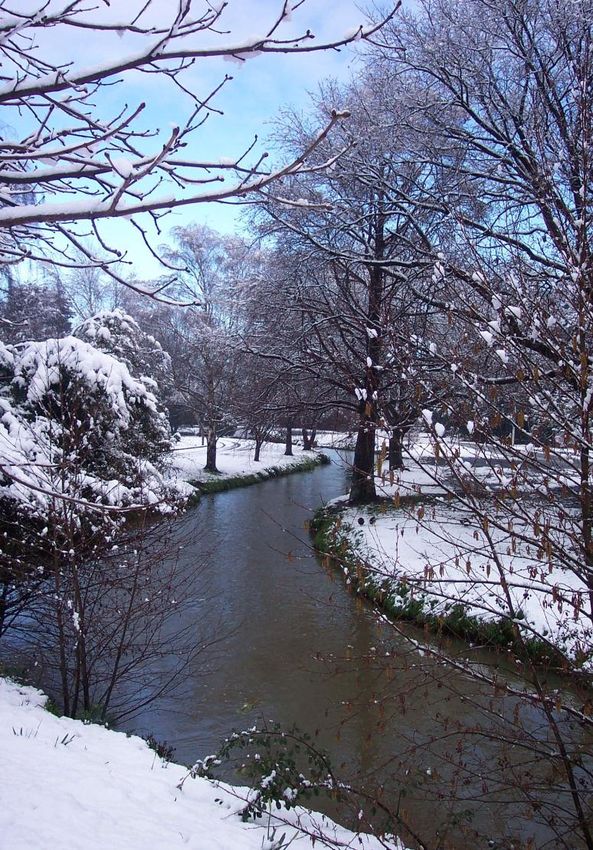
          Ōpāwaho Heathcote River
Message from the Chair

                     Karolin Potter, Chair
                   Spreydon-Cashmere Community Board

Tēna koutou katoa,
The Spreydon-Cashmere Community Board's Community Plan brings to the
community’s attention the issues, ambitions and concerns that the people of our
two wards consider to be important for them and their Board, together with the
Council, to address, pursue and try to resolve over the next two years. We include
consultation and discussion about a few ambitious projects that may not even be
started in the life of the current board, or ever have the first sod turned. It is the
Margaret Mahy playgrounds of this world that contribute to a city's soul, while the
absolute necessities such as housing, sewerage, roads, prevention of flooding and
so on must take first priority. Having said that, our Board notes that the Ōpāwaho
Heathcote River, its health and that of its environment, is the context within which
we discuss all other issues in our wards. We have also discussed, as we do every
year, city-wide projects that we believe to be vital. For the children, older people,
people with disabilities and families, the swimming pools of south and east Christ-
church will always have our Board's support. In terms of that belief, that no com-
munity board is alone, and is part of a city wide collaboration, we are asking for all
Boards and the Council to prioritise access for people with disabilities to be a con-
sideration in every project and proposal that comes before us.
Finally our Board believes that mental health issues and loneliness are the most
debilitating conditions faced by all people in all socio-economic strata. We intend
to be imaginative in considering all proposals, including some of those you will see
below. We want to involve people in meeting one another, and encouraging each
other to be active, conversational, idiotic, test their strength, laugh, climb a rock,
listen and maybe even cry. We cannot address the issues that each of us has in bat-
tling through life.
We can provide opportunities for people to be with their neighbours having fun.
We hope you will find places in our wards where you can do this.

                                             2
What is a Community Board?
Community Boards were created by the local government reforms in 1989. Over
100 community boards now operate in both urban and rural areas within local
authorities throughout New Zealand. They carry out functions and exercise those
powers delegated to them by their councils. Local body elections for Community
Board members and Councillors are held every three years.
The Community Board's main role is to:
Ø Represent and act as advocate for the interests of its community.
Ø Consider and report on all matters referred to it by the Council, or any matter
  of interest to the Board.
Ø Maintain an overview of services provided by the Council within the
  community.
Ø Prepare an annual submission to the Council for expenditure within the
  community.
Ø Communicate with community organisations and special interest groups within
  the community.

The Spreydon-Cashmere Community Board generally meets on the first
Tuesday of the month at 5pm and the third Friday of the month at 8am. These
meetings are held in the Boardroom at the Beckenham Service Centre and are
open to the public. Agendas and minutes for each meeting can be found on
the Council's website at www.ccc.govt.nz.
If you would like to get in touch with the Board or have any questions, please
contact:
Ø Community Governance Manager (03) 941 6663 or
Ø Community Board Adviser (03) 941 5108

                                      3
Area Overview
                                                   The Spreydon-Cashmere Community
                                                   Board represents residents and
                                                   ratepayers across the southern side
                                                   of the city from Rapaki Road in the
                                                   east to Hillmorton in the west.
                                                   The community includes the city
                                                   fringe suburb of Addington, as well
                                                   as Beckenham, Spreydon, Cracroft,
                                                   Cashmere, Huntsbury, Somerfield,
                                                   Hillmorton, St Martins and Hoon
                                                   Hay .

Key Facts
In Spreydon-Cashmere there are:
Ø 2 Council libraries: Christchurch South and Spreydon.
Ø 5 major sport and recreation amenities: Pioneer Recreation and Sport Centre, Addington
  Raceway, AMI Stadium, Victoria Park and Christchurch Adventure Park.
Ø 1 Council service centre: Beckenham.
Ø 92 Council Parks: 67 local/community parks, 9 sports parks, 11 regional parks, 5 garden &
  heritage parks.
Ø 1 cemetery.
Ø 17 Council owned social housing complexes with 408 units.
Ø 2 major shopping centres: St Martins and Barrington.
Ø 18 schools: 13 primary, 1 intermediate, 2 secondary, 2 composite years 1-13.
Ø 2 public hospitals: The Princess Margaret, and Hillmorton.
Ø Approximately 4,400 businesses employing 20,650 people.
   There are approximately 35 community groups supporting community and social
   development in the Board area. Two community group networks meet regularly,
   supported by local Community Governance staff.        The Spreydon-Cashmere
   Community Board liaises with community networks, and also provides funding to
   approximately 25 community projects.
   In addition, the Community Board provides small "Off the Ground" grants to local
   community-building activities. Regular Community Board projects include Community
   Service and Youth Service Awards, Community Pride Garden Awards, Hoon Hay Fiesta,
   Youth Achievement and Development Fund, and Neighbourhood Week. In 2018, the
   inaugural Spreydon-Cashmere Edible Garden Awards will be held.
                                             4
Key Spreydon-Cashmere Demographics (2013 Census)
    Usual Resident Population                                     Family Type

             8,025                                                15.7%

                                                                             42.4%
                   34,626                                         41.9%

      Usual Resident Population 15+ Years

      Usual Resident Population 0-14 Years

                                            Personal Income
                                                 (15+ Years)
        $150,001 or more            2%
      $100,001- $150,000            4%
       $70,001- $100,000                     9.2%
        $50,001- $70,000                            14.7%
        $30,001- $50,000
                                                                 22.4%
        $20,001- $30,000                            13.7%
         $20,000 or less
                                                                                     34%
                                         Spreydon-Cashmere
                                         Christchurch City

                                             Ethnicity

                                                            European - 87.5%
                                                            Maori - 5.5%
                                                            Pacific Peoples - 2.9%
                                                            Asian - 6.7%
                                                            MELAA - 0.8%
                                                            Other Ethnicity - 1.9%

                                             5
Christchurch City Council
                             Community Outcomes
Strong communities                             Liveable city
• Strong sense of community                    • Vibrant and thriving central city,
• Active participation in civic life             suburban and rural centres
• Safe and healthy communities                 • A well connected and accessible city
• Celebration of our identity through          • Sufficient supply of, and access to,
  arts, culture, heritage and sport              a range of housing
• Valuing the voices of children and           • 21st century garden city we are proud
  young people                                   to live in

Healthy environment                            Prosperous economy
• Healthy waterways                            • Great place for people, business and
                                                 investment
• High quality drinking water
                                               • An inclusive, equitable economy with
• Unique landscapes and indigenous               broad-based prosperity for all
  biodiversity are valued                      • A productive, adaptive and resilient
                                                 economic base
• Sustainable use of resources                 • Modern and robust city infrastructure
                                                 and community facilities

                                 Strategic Priorities
                 Our focus for improvement over the next two years

                                               Maximising opportunities to develop a
      Enabling active citizenships and          vibrant, prosperous and sustainable
         connected communities                            21st Century city

                                               Informed and proactive approaches to
        Climate change leadership
                                                       natural hazard risks

    Increasing active, public and shared        Safe and sustainable water supply and
      transport opportunities and use                   improved waterways

                                           6
Spreydon-Cashmere Community Board
            Community Outcomes and Priorities
Two principles weave throughout the whole plan. These are:
Ø Honouring the Treaty of Waitangi, the partnership it represents by the Crown and
  Tangata Whenua/Maori and its inherent commitment to loyally and co-operatively act
  in the utmost good faith with one another.
Ø Accessibility for all citizens to Council’s services and environments.

 Strong communities
   Community Board Outcomes:
   Ø People are connected, knowledgeable about their local neighbourhoods, and
     involved.
   Ø Community organisations are strong, well-functioning and responsive to their
     populations.
   Ø Communities are stable, safe and resilient.
   Why we want this (evidence)
   Ø Sense of community and social connectedness is grown by shared knowledge
     and enjoyment of local history, heritage, culture, and use of public amenities
   Ø Enduring local organisations are created and maintained through equitable
     involvement and management by local people
   Ø People in Spreydon-Cashmere have said they value community highly and
     would like to see more opportunities to bring people together
   What the Board will do (priorities)
   1. Ongoing research and engagement to meet the needs and aspirations of local
      communities in Spreydon-Cashmere.
   2. Support initiatives that make it easier for people to know who and what is
      available in their neighbourhoods.
   3. Support and promote community events and gatherings.
   4. Support key local resilience building, community organisations and projects.
   5. Work to ensure neighbourhood community facilities meet local needs.
   6. Improve access to recreation, sport and cultural activities.
   7. Promote community discussion and understanding of the effects of climate
      change and natural hazard risks.
   We will measure our success by:
   1. Residents and groups are able to communicate with the Community Board
      members through a range of media, including face to face engagements.
   2. Monitoring indicates that people get good communication about who and what
      is available, including information on climate change and natural hazard risks
   3. Community events and gatherings are held.

                                           7
Strong communities continued...
4.  Community organisations are funded to contribute to identified local priorities.
5.  An Age-Friendly Spreydon-Cashmere action plan is developed.
6.  Increased participation in recreation, sport and cultural activities.
7.  The feasibility of a new Men’s Shed is investigated with the community.
8.  Communities have developed local emergency response plans.
9.  Community facilities are retained or secured and improved for Addington
    (Manuka Cottage) and Hoon Hay (90 Hoon Hay Rd), Spreydon (Coronation and
    Centennial Halls) and Cashmere (the sites behind South Library, the old pump site
    and distribution centre).
10. Improved connection with diverse communities including Pacific, minority
    ethnicities and young people.
11. Proposals in Council reports demonstrate consideration of the impacts on people
    with disabilities (including mental health).

Liveable city
Community Board Outcomes:
Ø Healthy, affordable and appropriate housing is available in Spreydon-Cashmere.
Ø Public transport, cycle-ways and walking routes in Spreydon-Cashmere are
  connected and accessible.
Ø The infrastructure in our neighbourhoods meets the needs of all abilities and
  disabilities.

Why we want this (evidence)
Ø Rebuild and repair delays, accelerated densification, and provision of social
  housing are identified as housing concerns in some neighbourhoods.
Ø Accessibility and the impact for individuals and businesses of the many transport
  related developments have been identified as local concerns in engagements with
  the Community Board.
Ø Communities have expressed concern that roading and water management infra-
  structures need to be adequate and well maintained.

                                        8
What the Board will do (priorities)
1. Investigate the housing situation in the local Community Board area and seek op-
   portunities with appropriate agencies to bring about improvement.
2. Identify local needs and support and advocate for a range of accessible
   transport options.
3. Work to ensure the provision of safe passage to schools.
4. Review the provision of playgrounds and sport and recreation facilities and
   identify new opportunities to meet the needs of local communities.
5. Actively promote collaborative partnerships between Council units and
   communities to ensure programmes and services are joined up and affected
   communities are empowered to participate.

We will measure our success by:
1. A profile of housing in Spreydon-Cashmere is completed.
2. Support and participation in bus transport review for routes in Spreydon-
   Cashmere.
3. Appropriate exercise of delegation regarding transport infrastructure.
4. Evidence of advocacy for increased safety routes to school.
5. A stocktake is undertaken of toilets for local parks and walking tracks, and a
   programme for adequate provision is identified.
6. Investigate the feasibility and installation of an adults’ playground, a paddling pool
   and a bike training park.
7. Enable the tracking and monitoring of RFS and Snap Send Solve requests.
8. The feasibility of a major/metropolitan event in the Spreydon-Cashmere
   Community Board area is investigated.

                                          9
Healthy environment
Community Board Outcomes:
Ø Our waterways are clean and clear.
Ø People are able to use healthy, quality greenspaces, including parks, river banks,
  reserves and hills.
Ø The Port Hills and Ōpāwaho Heathcote River are healthy ecological corridors.
Why we want this (evidence)
Ø Key environmental features that are valued and people wish to see enhanced in
  the Spreydon-Cashmere area are the Ōpāwaho Heathcote River and the
  biodiversity created by trees, plantings and terrestrial and aquatic life.
Ø Recovery work due to the Port Hills Fires will need continued support.
Ø Local parks and reserves are well utilised and seen as important recreational
  features by local people and visitors.
What the Board will do (priorities)
1. Actively promote collaborative partnerships between residents, the Council and
   other agencies to create a joined-up approach of environmental programmes and
   initiatives.
2. Review and renew the Mid-Heathcote/Ōpāwaho Linear Plan Master Plan (2009).
3. Support Predator-Free Port Hills and other biodiversity initiatives.
Ø Support the Port Hills restoration following the fires, including sediment control
   measures.
We will measure our success by:
1. Collaborative projects which involve the community are showcased.
2. A review and update of the Mid-Heathcote/Ōpāwaho Linear Plan Master Plan
   (2009) is underway.
3. Community Board support of Port Hills and Ōpāwaho Heathcote River
   environmental groups through membership, representation, funding support and
   advocacy.
4. Local communities are connected to information, expert advice and planning
   opportunities.
5. Clear commitment from Council to prioritise and fund measures that address
   flooding of the Ōpāwaho Heathcote River and its waterways.

                                        10
Prosperous economy
Community Board Outcomes:
Ø Local people can access local goods and services.
Ø Spreydon—Cashmere communities are actively committed to food resilience.
Why we want this (evidence)
Ø Key local activity centres are highly valued by local people, and we have also
heard that more locally-owned businesses would be welcome.
Ø Healthy eating is fundamental to community wellbeing. There is significant
interest in the Spreydon-Cashmere area in the quality, availability and capacity
for local production of food.
What the Board will do (priorities)
1. Research the current situation regarding local services and commerce.
2. Continue to endorse the Food Resilience Charter by supporting and promoting
action which builds local economies including supporting local producers, mar-
kets, services and co-operatives.
We will measure our success by:
1. Local communities and businesses are engaged with, to build understanding
and identify areas for improvement to business investments.
2. The Spreydon-Cashmere Community Board Edible Garden Awards are piloted.
3. Local community garden and food security projects are funded and supported.
11Spreydon-Cashmere Community Board
From left to right: Tim Scandrett, Karolin Potter, Phil Clearwater,
Helene Mautner, Lee Sampson , Melanie Coker
Spreydon Ward
Karolin Potter (Board Chair) - karolin.potter@ccc.govt.nz 027 427 4671
Dr Melanie Coker (Deputy Chair) - melanie.coker@ccc.govt.nz 021 156 9281
Councillor Phil Clearwater - phil.clearwater@ccc.govt.nz 022 394 1073
Cashmere Ward
Dr Helene Mautner - helene.mautner@ccc.govt.nz 021 027 73863
Lee Sampson - lee.sampson.CBM@ccc.govt.nz 021 772 929
Councillor Tim Scandrett - tim.scandrett@ccc.govt.nz 027 693 5155
12You can also read


