State of Engineering 2018 - Office of Projects Victoria
←
→
Page content transcription
If your browser does not render page correctly, please read the page content below
State of Engineering 2018
The Secretary                               Victorian State of Engineering report is
Department of Treasury and Finance          licensed under a Creative Commons
1 Treasury Place                            Attribution 4.0 Australia licence,
Melbourne, Victoria 3002                    provided you credit the State of Victoria
Australia                                   (Department of Treasury and Finance) as
                                            author, indicate if changes were made and
Telephone: +61 3 9651 5111                  comply with the other licence terms.
Website: dtf.vic.gov.au                     The licence does not apply to any
                                            branding, including Government logos.
Authorised by the Victorian Government
1 Treasury Place, Melbourne, 3002           Copyright queries may be directed to
                                            IPpolicy@dtf.vic.gov.au
Printed by Doculink, Port Melbourne         Published October 2018

Printed on recycled paper                   ISBN 978-1-925551-15-0 (pdf/online)
                                            ISBN 978-1-925551-14-3 (print)
© State of Victoria 2018

Accessibility
This document is available in PDF
and Word format on the internet at
www.opv.vic.gov.au

Email enquiries: enquiries@opv.vic.gov.au
Telephone: 03 9651 1690
Treasurer’s foreword

                  The Victorian State of Engineering   Engineers are driving a range of improvements in
                  report makes clear the critical      the way Victorians live, play, work, commute and
                  role of engineers to Victoria’s      socialise, through the delivery of record levels of
                  social, environmental and            new infrastructure in Victoria. Alongside the
                  economic wellbeing, now and in       many professionals required to ensure the
                  the future.                          success of the State’s infrastructure, engineers
                                                       play a critical role in the planning, delivery,
The appointment of Victoria’s inaugural Chief          operation and maintenance of our major projects.
Engineer within the Office of Projects Victoria
acknowledges the importance of this vital              By shining a spotlight on the essential
profession and strengthens the Victorian               contribution of engineers, this report also
Government’s commitment to supporting it.              highlights the importance of enhancing
This is further confirmed by the proposed              engineering education pathways and career
Victorian Engineers Registration Scheme,               structures. This will support a trained and
recognising the value of Victorian engineers.          experienced engineering workforce able to meet
                                                       the challenges before us.
Engineers are problem solvers, innovators and
builders that help drive Victoria’s economic           The Victorian Government recognises that
engine. Engineering projects generate                  engineers shape the landscape of our
employment and construct essential                     community, and encourage more to join this
infrastructure that improves the quality of life       critical profession.
for all Victorians.
                                                       We will continue to engage with the profession to
As Victoria’s economy evolves and we                   develop policies and projects that bring benefits
prepare for the future, our engineers face             to all Victorians.
complex challenges, such as creating efficient
public infrastructure, reducing pollution,
delivering faster broadband, designing our
hospitals and schools, and building more
energy‑efficient homes.

                                                       Tim Pallas MP
                                                       Treasurer of Victoria

                                                                                          State of Engineering   1
Introduction by
Victorian Chief Engineer

                           Engineers have a significant     Victoria has always needed skilled engineers
                           impact on Victorian industries   and this need will increase as the population
                           and our everyday life.           grows and technological change accelerates.
                           Engineering-enabled industries   It is vital engineers work together and with
                           generate more than 600 000       other professions to provide continued social,
                           jobs and contribute to nearly    environmental and economic benefits
                           25 per cent of gross state       for Victoria.
                           product in Victoria.
                                                            Increasing the involvement of engineers in
Engineers enable critical infrastructure to be              decision-making and planning processes
developed and constructed. Without the                      helps to address technical challenges in the
technical skills and knowledge of engineers,                complex areas of sustainability, infrastructure,
many industries would fail to operate, and our              climate change and renewable energy.
community would struggle to adapt to the
challenging future we face. Engineers work                  Continued support from the Government and
alongside architects, scientists, financiers,               industry is imperative to attract and shape the
economists and policy makers to ensure                      next generation of engineers. To meet the
Victoria continues to be known as the state for             significant engineering demands of the future,
successful and innovative industries and                    we need to encourage more engineers to enter
infrastructure development.                                 and thrive in the profession. This includes
                                                            promoting cultural and gender diversity to bring
                                                            broader perspectives, and to make Victoria more
                                                            liveable, cleaner, efficient and productive.

                                                            To foster professional pride and cohesion and
                                                            increase public awareness of the importance of
                                                            engineers, this report showcases the wide range
                                                            and outstanding quality of engineering in
                                                            Victoria. It also explores coming challenges
                                                            and initiatives to consider that will prepare
                                                            us for the future.

                                                            Dr Collette Burke
                                                            Victorian Chief Engineer

2   State of Engineering
Contents

Treasurer’s foreword                            1   The future of engineering                        27

Introduction by Victorian Chief Engineer        2   A networked society needs
                                                    interdisciplinary engineering                    29
Report purpose                                 4
                                                    Transforming cities for a smarter future         30
Engineers’ influence                            5
                                                    Victoria’s strategic horizon                     31
Engineering Victoria’s economy                 6
                                                    Changing skill needs                             32
Engineering for the environment                 8
                                                    Non-technical skills                             32
Waste and water management                      8
                                                    Technical skills                                 33
Engineering and climate change                 10
                                                    The life cycle of an engineer                    34
Improving biodiversity and land health         12
                                                    Before school                                    34
An engineer’s reach                            13
                                                    Primary school                                   34
The public infrastructure boom                 13
                                                    Secondary school                                 34
The built environment                          15
                                                    TAFE                                             36
Information and communication technologies     17
                                                    University                                       37
Space                                          18
                                                    Workplace                                        38
Medical technology and pharmaceuticals         20
                                                    Engineering equality                             40
Defence, aerospace and security technologies   21
                                                    Female representation                            40
Energy                                         22
                                                    Aboriginal engineers                             43
Manufacturing                                  23
                                                    International and culturally diverse engineers   43
The wider impact of engineers                  24
                                                    Engineering a better future                      44
Engineering in the public sector               26
                                                    Conclusion                                       46

                                                    Acknowledgements                                 47

                                                                                                          3
Report purpose

The Victorian State of Engineering report has     The report also details future challenges and
been written to highlight the value of the        current key initiatives that will enable the
engineering profession to environmental,          engineering profession to continue delivering
social and economic benefits for Victoria,        creative solutions for Victoria.
both now and into the future.
                                                  With the support of the Office of Projects
The report’s purpose is to identify areas where   Victoria, the profession, wider government and
Victorian engineers interface with our lives,     other influential stakeholders, the Victorian Chief
where engineers add value to the State, and to    Engineer will continue to develop initiatives and
celebrate engineering success stories.            programs to address the needs of infrastructure
                                                  and engineering development in Victoria.

4   State of Engineering
Engineers’ influence

Using their technical skills and an understanding     As industry and society transform, Victorian
of our needs and wants, engineers develop and         engineers will continue to maintain independence
implement solutions to benefit all Victorians.        and strive for honesty and diligence, as well as
This can enable cleaner water, more affordable        continuously advancing their knowledge and
electricity, a quicker commute to work, faster        skills to meet the challenges of a changing world
internet access, better health and more               with integrity.
affordable housing.
                                                      Engineers’ contribution progresses our society
Victorian engineers take the lead in developing       towards a more cohesive, automated, innovative
and implementing innovative and sustainable           and sustainable state. The benefits generated by
solutions to pressing issues such as climate          the profession requires increased awareness to
change, sustainable resource management,              best attract younger generations to become
an increasing population, a growing demand            engineers of the future.
for health care, and our transition to renewable
energy sources.                                       || The Budj Bim cultural landscape of the
                                                         Gunditjmara community in south-west Victoria
To address these issues, Victoria’s engineers            is one of the world’s first engineering projects
must go beyond their technical specialisations           delivering water needs, preceding the pyramids
and collaborate across engineering disciplines,          of Egypt and Stonehenge more than 6 000
along with other professional fields. As the fourth      years ago.
industrial revolution (termed ‘Industry 4.0’)
approaches rapidly, engineers must adapt to the       || Victorian engineering innovations include the
digitisation of virtually everything, and harness        black box, plastic banknotes and the bionic ear.
synergies between humans and machines,
managing autonomous robots, big data and the
transition toward connected life, termed the
‘Internet of Things’ (IoT).

                                                                                          State of Engineering   5
Engineering Victoria’s
economy

The value of engineering reaches far beyond              || Engineering-enabled job creation is not
the profession. Engineers make an enormous                  confined to urban areas – one in five jobs is in
contribution to Victoria’s economy across a wide            a regional area.
range of industries and regions. Engineers are
                                                         These businesses design, manufacture and
often the minds behind the competitive products
                                                         deliver important products and services to other
and services that drive a large portion of
                                                         businesses and consumers across Victoria,
Victorian exports.
                                                         Australia and globally. The contribution of skilled
According to the Australian Bureau of Statistics         Victorian engineers is vital to these industries
(ABS), engineering-enabled industries contributed        and businesses.
$93 billion to the Victorian economy in 2016–17,
                                                         || The value addition of Victorian engineering to
representing 25 per cent of gross state product
                                                            the economy is larger when considering
(Figure 1).
                                                            downstream industries. Scientific and
An engineer’s technical expertise is required in            engineering advances provide a $330 billion
developing almost all the consumer, commercial              boost for the Victorian economy through
and industrial products we need. These products             productivity gains and flow-on effects (Figure 2).
generate a large number of jobs in the areas of
                                                         Victoria leads many engineering and technology-
procurement, marketing, manufacturing,
                                                         based industries. In these industries, one of the
financial services and retail.
                                                         engineer’s roles is to maintain and improve our
Arguably, no other profession has a greater              competitive edge and growth capabilities so
impact on Victorian job creation than                    Victoria continues to flourish.
engineering. Engineering-enabled industries
generate more than 600 000 Victorian jobs and
40 000 Victorian businesses across construction,
information technology, power,
telecommunications, manufacturing, and
infrastructure.

Figure 1: Engineering-enabled industry sectors 2016-17

Mining $3 billion                                                                Construction $31 billion
» 7 000 people employed                                                          » 262 000 people employed
» 45% jobs in regional Victoria                                                  » 17% jobs in regional Victoria

Engineering consulting $4 billion
» 32 000 people employed
» 11% jobs in regional Victoria

Electricity, gas, water and waste $13 billion
» 27 000 people employed
» 28% jobs in regional Victoria

ICT $14 billion                                                                  Manufacturing $28 billion
» 48 000 people employed                                                         » 250 000 people employed
» 10% jobs in regional Victoria                                                  » 22% jobs in regional Victoria

Source: ABS

6   State of Engineering
Victorian engineers:                                   || B
                                                           usinesses in engineering-enabled industries
                                                          employ more than 600 000 people in Victoria.
»» design and fabricate a large proportion of retail      This equates to around 22 per cent of the
   products;                                              workforce, or 10 per cent of the total Victorian
»» build the roads that take us to and from work          population (Figure 3).
   every day;
»» develop and manage the public transport and
   infrastructure that gets us to our destinations;
»» plan and construct the homes and buildings in
   which we work and live;
»» enable the delivery of the food on our table and
   clean water in our taps;
»» develop the grids that reliably distribute
   electricity to us; and
»» create the mobile towers that allow us to call
   our friends and family at any time of day.

Figure 2: Engineering-enabled industries flow chart

From an engineer’s     Manufacture       Logistics        Marketing             Sales and              Customers
  role in product                                                              Performance
  conception and
   development

Figure 3: Proportion of Victorian workforce employed in an engineering-enabled industry 2016-17

                                                         Employed in a Victorian engineering-enabled industry
                                                         Employed elsewhere

Source: ABS

                                                                                                 State of Engineering   7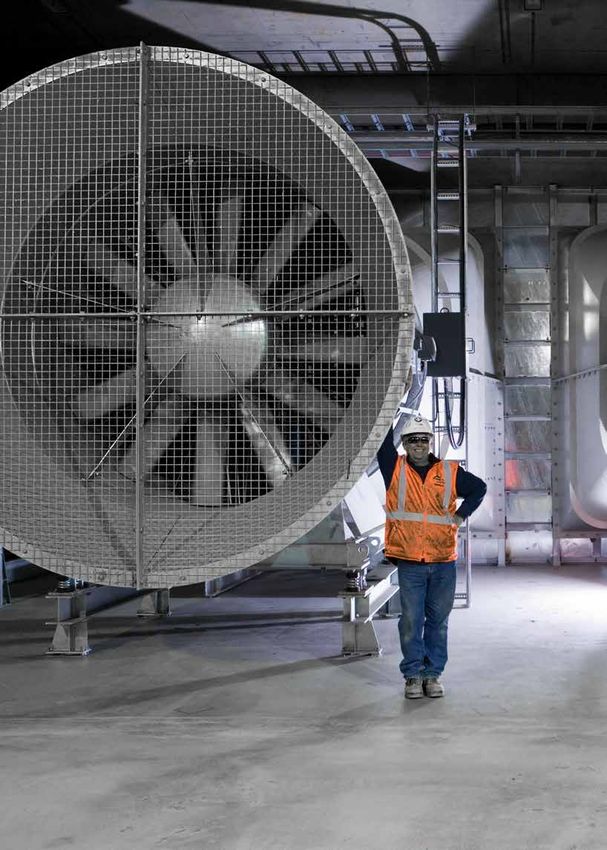
Engineering for
the environment

The next generation of Victorians should have        Waste and water management
the same or a better quality of life than we
have now. Victorian engineers play a large role      Clean drinking water and a hygienic environment
in creating this future.                             are integral to a civilised society. Victorians enjoy
                                                     some of the purest drinking water in one of the
This future requires decision-making to focus        cleanest environments in the world, and the
on the triple-bottom line: economic, social          ingenuity of our engineers has been pivotal in
and environmental sustainability, including          creating this.
climate change.
                                                     When you turn on your tap, it is engineers who
The Interim Victorian State of the Environment       have designed, manufactured, constructed,
Report 2018 provides a considered glimpse into       operated and maintained the extensive systems
the content, challenges and structure of             behind it: the dams, reservoirs, pumps, water
Victoria’s environment. The final Victorian State    treatment facilities, and large network of
of the Environment Report to be released in 2019     pipework. When you throw your rubbish in the
by the Commissioner for Environmental                bin, it is engineers who have developed the tools
Sustainability will highlight the opportunities      to collect, dispose of, or recycle our waste in an
and challenges ahead for a cleaner future.           efficient manner.

Engineers need to be informed about the current      Victoria’s population growth is challenging the
state of the environment to be effective in          capacity of our water supply systems. We need to
collaborating for the development of next-           move to a more distributed demand and supply
generation products, infrastructure and energy       management framework with environmental
sources. They will need to consider the              sustainability as a core objective. The growing
environmental impacts of a project or product in     population will greatly increase pressures on
order to move away from merely minimising            assets, infrastructure and wastewater services
harmful impacts, towards net-zero impact and         and will affect water resource availability and
regenerative outcomes.                               management. Victorian engineers will be key in
                                                     making more effective use of existing assets and
Innovation and technology will play a large part
                                                     designing and building the infrastructure to
in creating a positive future for the next
                                                     address these issues.
generation of Victorians. Engineers will need to
collaborate with political and economic
stakeholders to support them in the quest for a
more sustainable Victoria by giving insight on
how new technologies, innovative systems and
products can help to achieve this quest. Following
are some of the ways Victorian engineers are
striving to be more sustainable.

8   State of Engineering
The Victorian Government has already been Water and waste management will become
proactive in this space with mitigation easier and more efficient with a combined
infrastructure such as our large reservoirs, effort from all Victorians. If individuals take
the Victorian Desalination Plant and the responsibility for managing their water and
North‑South Pipeline. waste, and fully utilise the tools and
infrastructure developed by engineers, Victoria
At the beginning of this year, China introduced will be able to cope with population growth.
new trade measures that limit the import of
low‑quality mixed recyclables, including paper There are many opportunities for individuals
and plastic. This change has had an impact and large organisations to develop procurement
globally, as many countries have relied on frameworks that favour the circular economy,
China for recycled materials. including avoiding single-use products such as
plastics, and promoting infrastructure projects
In the short term, the Victorian Government that use sustainable materials and construction
included funding to increase capability to techniques. This includes the use of recycled
process materials to a higher quality to meet materials such as high-density polyethylene,
China’s new specifications or for the Australian reclaimed asphalt pavement, crumb rubber,
market. For the medium to long term, the glass fines/cullet and crushed concrete.
Government has committed to a Recycling
Industry Strategic Plan in July 2018 with || C
urrently more than 300 000 tonnes of fine
$23 million that aims to stabilise the recycling glass is stockpiled in Victoria and most of it goes
sector, increase the quality of recycled materials, to landfill. RMIT University researchers are
improve the productivity of the recycling sector, developing methods to recycle glass for
and develop markets for recycled materials. construction material, such as cladding systems,
With continued support, Victorian engineers can providing a sustainable alternative to other
create a sustainable system that embraces the materials on the market.
circular economy.
|| Victorian engineers have taken advantage of the
While the Victorian Government and our local digital revolution to optimise Victoria’s water
councils are responsible for regulating and supply, installing smart meters around the State
managing our waste and water services, the to monitor our water use. Melbourne’s Federation
Victorian community also has a role to play. Square has improved its water efficiency and
Very little of our drinking water is consumed. emergency maintenance procedures, with
Waste should not be disposed of without thought systems that can detect abnormal usage within
for the arduous and expensive task of sorting the 15 minutes.
different types of materials in our garbage.
State of Engineering 9Engineering for the environment
|| Researchers at Victoria University are developing Engineering and climate change
a method for purifying water by harnessing UV
light to make waste water treatment more Australia has committed to reducing its
affordable, healthier and energy efficient. emissions by a minimum 26 per cent over the
The sophisticated membrane technology does next two decades to mitigate the impacts of
not require specialised skills or resources and is climate change.
ideal for use in disaster-affected areas and
The Victorian Government has committed to
remote communities in Victoria, Australia and
renewable energy generation targets of
the rest of the world.
25 per cent by 2020 and 40 per cent by 2025,
|| Engineering students from Monash University and has introduced incentives to encourage
have developed a backyard mini-recycling unit. us to meet and exceed the minimum targets,
The unit can recycle old milk bottles, plastic bags as well as funding renewable energy projects
and containers to make anything from phone around the State. This includes rebates for solar
cases to bowls and even structural beams. photovoltaics (PV) and hot water systems,
helping households reduce their emissions and
energy bills. It also includes decentralised grid
trials, and funding for solar farms, wind farms
and large energy storage systems. Victoria is
on track to meet these renewable energy
generation targets.
These are only a handful of the countless
solutions already available that, if adopted,
enable progress to achieving or exceeding our
emissions targets.
10 State of EngineeringVictorian engineers have the skills, technology || The Melbourne Renewable Energy Project is the
and some of the most advanced facilities in the first time in Australia local government, cultural
world to champion initiatives that reduce our institutions, universities and corporations have
emissions and mitigate climate change. purchased renewable energy from a wind farm in
Crowlands, north-west of Melbourne.
Climate change management also involves
infrastructure and technology in the transport || Engineers recently upgraded EastLink’s tunnel
industry. As our population grows, so does the ventilation system to create a world-leading
need for an expanded, efficient transport apparatus, which adjusts fan speed using real-
network. However, greenhouse gas emissions and time data from air flow sensors. As a result,
noise pollution are adverse effects of this power usage has reduced by 68 per cent,
transport boom. The Government has accounted reducing annual greenhouse gas emissions by
for this by advancing our public transport 9 000 tonnes with no compromise to air quality.
network. Engineers must develop and implement
|| The Gannawarra Energy Storage System,
the upgrades for our trains, railway lines, tram
developed by Edify Energy, is one of the world’s
and bus networks.
largest integrated battery and solar projects,
and is supported by $25 million in funding from
the Victorian Government and the Australian
Renewable Energy Agency. Situated near the
township of Kerang, this innovative project uses
Victorian-designed and built electrical
equipment, including Wilson’s manufactured
kiosk transformers. Together with a Tesla battery
storage system, it provides a world-class storage
facility coupled with Victoria’s largest
operational solar farm.
State of Engineering 11Engineering for the environment
Improving biodiversity A key challenge for engineers is helping protect
and land health and enhance our state’s biodiversity, together
with maintaining the viability of the agricultural
Protecting our environment benefits tourism sector, which is essential to all Victorians.
and our economy. Solar Victoria, Sustainability The State has seen a decline in the condition of
Victoria and Land Use Victoria represents a land, water and biodiversity, which Victorian
significant commitment by the Victorian engineers need to mitigate and potentially
Government to protect our ecosystems and contribute to improvements to the condition of
improve overall biodiversity. our natural environment. To assist with this
challenge, the Victorian Government has
Engineers share an interest in protecting our
provided a 20-year strategy – Protecting
natural ecosystems. Conserving and improving
Victoria’s Environment: Biodiversity 2037.
Victoria’s biodiversity begins with an
The plan brings together the latest conservation
understanding of the potential impact of
and social science to ensure that Victoria’s
Victoria’s engineering projects. Engineering
biodiversity is healthy, valued and actively cared
projects should aim to cost-effectively mitigate
for. A focus on protecting and improving our
the negative impact on the natural environment,
natural environment is also a paramount
and appropriately offset any impacts that
consideration to ensure our agricultural
cannot be avoided, including harmful by-
industry thrives as the population grows.
products and waste. This is particularly true
when delivering projects. .
12An engineer’s reach
By collaborating in multidisciplinary teams and
dynamic environments, Victorian engineers add
value at all stages of our lives.
The public infrastructure boom
Victoria’s population is expected to increase by
around 50 per cent (more than 3 million) in the
next 28 years. As our population increases, we
must continue to build the infrastructure to meet
our community’s needs.
Figure 4: Population growth and public sector spending on engineering construction
6.6 7000
Victoria’s public sector spending in engineering construction ($million)
6.4
6000
6.2
5000
Victoria’s population growth (million)
6
4000
5.8
3000
5.6
2000
5.4
1000
5.2
5 0
2007 2010 2013 2016 2019
Source: ABS
State of Engineering 13An engineer’s reach
In recent years, the Victorian Government has This roadmap should be underpinned by the
taken major steps to improve the delivery and ‘fundamentals’ that drive infrastructure need:
planning of infrastructure, as seen in Figure 4. engineering, future technologies and societal
drivers (such as birth and migration rates),
In 2016, the Asset Management Accountability with the aim to achieve statewide prosperity
Framework was released to improve the way and advancement.
Victoria’s public assets are planned, used and
maintained. The Asset Management Nevertheless, the large-scale infrastructure
Accountability Framework applies a consistent projects underway will continue to connect
approach to asset management, which is aligned Victoria and service the community.
with international best practice. These projects will provide exciting
opportunities for our engineers. The West Gate
Beginning in 2017, the Department of Treasury Tunnel Project is only one example, and brings to
and Finance and Office of Projects Victoria Victoria some of the best tunnel engineers in the
instigated improvements in the project world. Combined with the skills and knowledge of
assurance framework for the State’s high-value, local engineers, Victoria’s capabilities in this
high-risk projects. The improvements provide area continue to develop.
increased central oversight of major
infrastructure projects to increase the confidence || A large portion of Victorian Government
that these projects are well planned and can be investment has been on transport infrastructure.
successfully delivered. Over the coming years, $36 billion will go towards
road and rail upgrades, and more than $4 billion
In 2018, the Department of Treasury and Finance of that has already been invested to improve the
refreshed, standardised and streamlined the connection between regional Victorian towns,
State’s construction contracts to align with to get people and freight to their destinations
Australian standards, contemporary practice, faster and more efficiently. Further investments
and with other jurisdictions. are planned for health, education, energy, water
Infrastructure Victoria was created in 2015 to and waste, justice, culture and sport and
provide independent guidance and advice on digital connectivity.
Victoria’s future infrastructure needs. Victoria’s infrastructure investment will present a
Infrastructure Victoria’s Victorian Infrastructure multitude of job opportunities for a wide range of
Plan outlines $80 billion of strategic investments engineering businesses and roles over the next 10
over the next 30 years. Many of these strategic years. This investment pipeline creates an
investments will be developed over the long term, excellent catalyst to grow the engineering
but we also need to continue to focus on the capability and capacity in the State, which will
short to medium-term development roadmap. cement Victoria as Australia’s engineering capital
for decades to come. The Office of Projects
Victoria, the Victorian Chief Engineer and the
Office of the Coordinator General are working
together to ensure Victoria has the engineering
skills available to realise this investment.
14 State of EngineeringFuture engineers will be required to design and The built environment
construct physical and virtual infrastructure, as
well as take part in decision-making, project Victoria’s rapid increase in population has
planning and management, cost estimation and created an unprecedented demand for housing
risk management. The delivery of projects will see and social infrastructure, leading to housing
engineers continue to collaborate with architects, affordability problems and a chronic shortage
scientists, planners, financiers, constructors, of social housing.
economists and policy makers to ensure land use The Victorian Government released a housing
and transport infrastructure decisions maximise strategy in 2017 to address this, which involved
the development of our cities and towns and the increasing funding to support home buyers and
benefits for Victorians. homeless Victorians.
|| Victoria’s Major Project Skills Guarantee seeks
To complement the current Government
to engage more Victorian apprentices,
initiatives, Victorian engineers have developed a
trainees or engineering cadets on all projects
number of solutions to address the problem of
above $20 million.
building high-quality housing and infrastructure
efficiently and sustainably. Some of these
solutions are already underway.
Modular housing is one answer. Modular
housing is fast and affordable, and Victoria is
fortunate to host many companies that have
contributed greatly to the development of off-site
prefabricated construction modules.
Critical focus areas for the built environment that
Victoria can adopt include: new materials and
systems, digital design and engineering, including
building information modelling, advanced
manufacturing and automation, as well as
Industry 4.0.
State of Engineering 15An engineer’s reach
Industry 4.0 will likely transform Victoria’s built By doing so, Victorians will likely achieve more
environment. Sensors and automation affordable social housing, timely delivery of
technologies will integrate with lean public buildings, better living conditions, and
manufacturing to make our built environment more sustainable designs.
smarter. Smarter building includes mass-
customisation, new structural and architectural || The Victorian Government is procuring 100
forms, predictive maintenance, proactive building prefabricated school classrooms. Building the
control and improved material selection. classrooms off-site ensures minimal disruption to
students, a safer school environment and
Adopting these new approaches and reduced waste from construction by up to
technologies may require a shift in economic 40 per cent.
assessments, business models and risk-sharing
contract methodologies to accommodate || As more families move closer to the city, the
step-outs in innovative technologies. restriction in space has led to Victoria’s first
vertical state schools developed by teams,
including engineers, providing the latest and
safest facilities for primary and high
school children.
|| In 2018, Swinburne University engineers won a
Research Impact Award from the Australian Road
Research Board for their work on strengthening
bridges with carbon-fibre polymers. This
reinforcement technique uses less material for
greater strength and has been employed on the
West Gate Bridge and M80 Western Ring Road.
16 State of EngineeringInformation and communication Industry 4.0 will have a dramatic effect on ICT,
technologies with many areas of engineering converging
toward the cyber-physical realm, which involves
The engineer-rich Victorian information and integration between computation, networking
communication technologies (ICT) industry is and physical processes. These digital
thriving. Melbourne is the second largest ICT city technologies will rapidly change the way
in the Asia-Pacific, home to more than half of Victorians work, play and live.
Australia’s top-20 technology companies and the
largest number of multinational ICT companies in The development of new digital technology will
Australia, including IBM, Microsoft and Intel. drive innovation in, and increase the capabilities
of, many other industries. For example, in fishing
ICT is a big part of Victoria’s economy, contributing and agriculture, the CSIRO is leading the digital
$14 billion towards the gross state product. revolution with:
Victorian engineers play fundamental roles in the »» phenomics sensing, which tracks how plants
ICT industry, including designing and respond to changes in environment or genetics;
manufacturing ICT equipment, providing ICT
infrastructure services and maintaining »» software engineering, to create decision
computer hardware. Almost half of Victorians in support tools for real-time decision-making;
our ICT industry provide computer software and »» precision agriculture, which observes,
digital content development, publishing, measures and responds to crop variability
consulting and system analysis services. using data analytics;
Victoria is globally competitive in software »» food innovation, which allows for more efficient
development, market platforms, cloud processing of food while preserving flavour and
technology, spatial technology, sensor networks essential nutrients; and
and data analytics, which are all engineering- »» farm systems management.
enabled aspects of ICT.
The Victorian Government is proactive in this area
of engineering. On-farm IoT technology is being
rolled out across Victoria to promote agricultural
ICT, such as sensors for soil moisture, which will
improve crop yield and livestock tracking.
IoT is also being applied in the management
of Victoria’s infrastructure, water, waste, parks,
sporting facilities and roads, involving
technologies such as virtual and augmented
reality, cross-reality digital twins, which allow
visualisations of existing objects that can be
viewed from any angle, complex-systems
simulations and intelligent transport systems.
The future performance of Victorian digital assets
will be determined by Victorian ICT engineers.
State of Engineering 17An engineer’s reach
This transition brings challenges such as Space
systems interconnectivity, cyber-security, digital
identity and data ownership and protection. Victoria is home to 250 businesses and
As technology continues to evolve, engineers must organisations in the space and space-enabled
take a lead role in the implementation, industry, employing around 2 300 workers and
management, and adoption of these new generating around $400 million a year.
technologies across both the private and With the Commonwealth Government allocating
public sector. $41 million over four years towards the
|| The CSIRO is applying sensor systems that establishment of an Australian Space Agency,
cheaply and accurately monitor agriculture for this sector is ready to grow. Victoria is well-
farmers to maximise production sustainably and positioned to support an Australian Space
cost-effectively. The Victorian Government has Agency to achieve its goal to triple the size of
committed $27 million for Victorian farmers to Australia’s space industry by 2030, with
install IoT and other digital technologies, Melbourne being the technology hub of the
including robotics, biotechnology adoption and country and home to the largest number of
virtual fencing. multinational information technology companies
in Australia.
|| La Trobe University has developed a low-cost and
lightweight Fitbit-like device for farm animals,
which will help farmers understand individual
animal behaviour in large-scale farming.
18 State of EngineeringVictoria is a leader in using and applying space Engineers will be the ones to design the systems
data. It has five top-500 globally ranked and devices that will launch us into space
universities with space-related research physically or virtually, manage and analyse the
disciplines and well-established space-related vast amounts of space and geospatially
engineering, research and development generated data, and transform our
capabilities, and national and international understanding of the universe.
networks. Three of Australia’s largest aerospace
and defence companies, Lockheed Martin, BAE Engineers and scientists support the innovative
Systems and Thales, operate in Victoria with research of Victorian universities and industries,
extensive capabilities and engineering talent. which have the capability to meet the challenges
presented by a growing space industry.
The space industry sector is far greater than just
launching rockets. It will be the driving force behind ‘With the global space industry forecast to be
improvements in real-time communications and worth more than $1 trillion by 2040, there is a
on-demand access to information. Space and huge opportunity for Victoria to play a major role
space-enabled technologies will become an in the aerospace industry for decades to come.’
increasing part of our everyday life, through areas – Dr Amanda Caples, Victorian Chief Scientist
such as reliable and real-time communication,
|| Engineers at La Trobe University have created
accurate weather information and GPS satellites.
advanced on-board control systems for an
earth-sensing imaging spectrometer aboard the
International Space Station, which monitors
bushfires and other natural disasters around
the world.
State of Engineering 19An engineer’s reach
Medical technology The Victorian Government has committed to
and pharmaceuticals digitising the Victorian health system, for
example, with real-time prescription monitoring.
Victoria’s medical technology and Embracing Industry 4.0, Victorian engineers are
pharmaceutical industry is the largest in the already developing technology that connects
nation, home to nearly half of Australia’s medical devices, sensors and software
biomedical researchers and medical research applications to clinical systems to improve
funding. It delivers some of the world’s most productivity, accuracy, service and reliability.
advanced research and development and adds
$2.2 billion to the Victorian economy each year. || The bionic eye is being developed by Bionic Vision
Technologies in Victoria to help restore vision to
The medical and pharmaceutical sector benefits vision-impaired people. This is an excellent
from an interdisciplinary approach that example of successful interdisciplinary
integrates engineering, life sciences, physical collaboration by world-leading experts in
sciences, computer science and mathematics ophthalmology, biomedical engineering, electrical
with medicine and health sciences to prevent, engineering, materials science, ICT, neuroscience,
diagnose, monitor and treat many conditions. psychophysics, and surgical and clinical practice.
Victorian engineers are driving rapid growth in || Victoria is at the forefront of orthopaedic and
this sector by contributing to the design and maxillofacial personalised devices, with
development of emerging technologies such as successful world-first surgeries replacing the heel
bionics, bioelectronics, nanomedicine, bone and the jaw joint. The University of
customised implants, robotics and organ-on-a- Melbourne has helped engineer Australia’s first
chip. Our engineers have created life-changing 3D-printed titanium jaw for implantation in a
technologies including cochlear implants, bionic patient. This development is key to the success of
eyes, 3D-printed spinal implants and epilepsy a local start-up company, OMX Solutions, which
management implants. has since implanted more than 100 customised
jaw prostheses in Australian patients.
Victorian engineers are developing precisely
tailored medical devices based on patient-
specific genomic, molecular and digital profiles.
Using data mining and machine learning
techniques, Victorian engineers assist the
Australian Genomics Health Alliance to turn
large volumes of complex medical and
biologica data into information on which
clinicians can base treatments.
20 State of EngineeringDefence, aerospace and Victoria is home to:
security technologies »» Australia’s largest concentration of military
Victoria’s defence, aerospace and security vehicle engineers;
technologies sector is worth $8 billion annually. It »» significant maritime engineering design and
comprises more than 400 businesses, employing development capabilities;
around 20 000 people (including in industry and
the Australian Defence Organisation). »» leading aerostructures designers and
manufacturers;
With the Commonwealth Government injecting
»» the Defence Materials Technology Centre; and
$200 million into defence capabilities, Victoria’s
defence, aerospace and security sector is primed »» elements of the Defence Science and
for growth. Victoria can lead the way through Technology Group.
diversifying capabilities vertically in global supply
Victoria is also the home of many research and
chains and growing our defence, aerospace and
development facilities, advanced manufacturing
security research, development and education
and education precincts that focus on defence
capabilities. This can only be achieved by
and aerospace, such as those located at
showcasing and utilising our engineering
Fishermans Bend. As we continue to grow our
expertise. Growing Victoria’s technical capability
skills in all engineering disciplines, Victoria is in
in the defence, aerospace and security sector
a prime position to lead many future defence
will require further development of domestic
and aerospace projects that underpin
talent in all areas of engineering.
Australia’s security.
|| Thales’ plant in Bendigo manufactured the
|| The Northrop Grumman sensor system for the
Bushmaster Protected Mobility Vehicle and will
Joint Strike Fighter F-35 was manufactured and
now manufacture the Hawkei vehicles, with 16 out
machined by AW Bell in Victoria.
of 19 tier-1 suppliers based in Victoria.
State of Engineering 21An engineer’s reach
Energy || Examples of recent renewable energy initiatives
include the Victorian Government’s purchase of
Victoria’s electricity supply has been primarily two new wind farms and a solar farm, as well as
sourced from lignite (brown) coal, one of the investments in solar battery storage.
worst-polluting fossil fuels with an imminent
expiry date. By transitioning to renewable energy Victorian engineers are well positioned to
sources, Victoria can mitigate significant future decarbonise Australia and the world. They are
environmental issues and associated costs. working on innovative energy projects, including
As part of this transition, engineers must next-generation battery prototyping, next-
continually ensure the reliability and affordability generation solar-cell fabrication and carbon
of electricity. In the short term, this requires capture and storage. They are also integrating
improvements to our current electricity network. carbon reduction technology in large-scale
This can be achieved as we build a low-intensity infrastructure projects.
energy power grid, begin diversifying our
Victoria is transitioning toward a greener future
electricity sources and move towards a
with the recent announcement of six large-scale
decentralised energy system.
wind and solar farms across regional Victoria,
In the medium to long term, engineers can lead a microgrid grant program for the Latrobe
the transition to renewables, applying extensive Valley and further solar energy rebates. This
expertise in batteries, solar cells, energy-systems momentum towards a cleaner, greener, brighter
modelling and large-scale infrastructure future for our children must continue and be
projects. These lower-cost and clean-energy built on.
options will help Victoria achieve its target of
generating 40 per cent of the State’s energy from
renewable sources by 2025.
22 State of EngineeringDeveloping and innovating in this industry Manufacturing
presents an opportunity for Victoria to gain a
competitive advantage. With increased funding Manufacturing in Victoria is adapting to global
for renewable energy research and development, changes and is thriving. Manufacturing is the
Victorian engineers could create innovative, third-largest employer in the State and
entrepreneurial solutions that will be in high contributes more than $18 billion (70 per cent)
demand nationally and globally. For this to occur, to Victoria’s exports.
Victorian engineers need support to enhance Victoria leads the nation in manufacturing
their technical skills around power systems, ICT, research and development investment. Many
big data, new energy technology, and large-scale global companies such as Ford, Siemens and
project management and planning. Boeing choose to base their engineering
|| Monash University’s Net Zero Emissions Initiative research, development and design operations
focuses on making its campuses carbon-free by here. They do this to take advantage of Victoria’s
2030, partly by installing renewable power and engineering capabilities.
micro grids – the largest campus demonstration
Victoria’s manufacturing capabilities are strong
of this in the world.
in construction, defence, food, medical
|| The world’s first coal-to-hydrogen plant was technology, pharmaceuticals, new energy and
launched in Victoria, with immense potential for transport. Engineers provide critical skills across
reduced carbon emissions. Hydrogen can create the many disciplines needed by manufacturers
clean energy for power generation, transport, fuel at all levels of business, including electrical,
cells and batteries. mechanical, automotive, aerospace, biomedical,
civil, ICT and systems.
To continue to compete in the global economy,
Victoria must manufacture advanced, high-value
products, requiring skilled engineers to manage
the complex product life cycle through
development, manufacturing, logistics, and
disposal. The Victorian Government’s Advanced
Victorian Manufacturing report highlights the key
high-value products that are already being
developed in our state, as well as potential future
growth areas.
State of Engineering 23An engineer’s reach
Victorian engineers will play a key role in the The wider impact of engineers
rapid transition of manufacturing toward
Industry 4.0, by taking a lead role in scoping, Beyond the contribution to areas mentioned,
design and implementation of digital the impact of engineering on our lives is deep
manufacturing and supply chain technologies. and widespread with extensive benefits for all
Victorians, including:
The transition to Industry 4.0 will increase
demand for systems engineering, a complex »» mining and petroleum engineers in regional
discipline of engineering that focuses on Victoria deliver the coal for our electricity,
interdisciplinary integration of systems, projects, petrol for our cars, precious metals for our
equipment and processes. Systems engineers electronics and jewellery, and materials for our
have extensive training on complex processes, houses and other constructions;
and develop effective digital solutions for »» pipeline engineers deliver the gas we use to
manufacturers. cook our meals, heat our homes and take
hot showers;
|| The Victorian Government is upskilling our
manufacturing workforce to create opportunities, »» aerospace engineers design and manufacture
with commitments to retraining automotive aircraft components to increase efficiency
supply chain workers and to the Latrobe Valley and push down the price of our next holiday;
Worker Transition Service, for example.
»» automotive engineers working for global
FormFlow is a Victorian company that has
vehicle companies are developing next-
successfully transitioned workers and technology
generation cars we will soon be driving;
from automotive manufacturing to producing
prefabricated modular structures. »» mechanical engineers in Victoria’s regional
areas have for generations designed and
|| Wilson Transformer Company (WTC) is a great continue to design the equipment farmers use
testament to engineering longevity in Victoria, to put food on our tables; and
celebrating 85 years in 2018. WTC is Australian
»» nano-engineers are helping find cures to
owned and the largest local supplier of
diseases by revolutionising diagnosis and
distribution and power transformers in Australia.
treatment techniques and increasing insight
Around 600 employees contribute to the firm’s
into how our bodies process medicine.
engineering and manufacturing operations in
Glen Waverley and Wodonga, and hundreds of
thousands of transformers are currently
operating in Australia and various parts of
the world.
24 State of Engineering|| R
MIT engineers are collaborating with
international aerospace company RUAG and the
Innovative Manufacturing Cooperative Research
Centre to develop 3D-printed aircraft parts with
similar, if not superior, mechanical properties,
which can potentially save operators huge
overhaul costs.
|| Engineers at Deakin University have found a way
to recycle denim jeans to create artificial
cartilage for joint reconstruction, water filtration
and advanced battery technology.
|| Victoria is the biggest exporter of mining
equipment, technology and services (METS) in
Australia, with more than 1 800 METS businesses.
Australia’s biggest mining companies, including
BHP Billiton, Rio Tinto, Newcrest and Orica choose
to locate their headquarters in Melbourne.
|| The Port of Melbourne is Australia’s busiest
container port, handling more than a third of
Australia’s container trade. Engineers Australia
Engineering Excellence Award Winners AECOM
Australia showcased the engineering input into
the world’s most automated container terminal
at the Port of Melbourne.
State of Engineering 25Engineering in
the public sector
The number of engineers employed at all levels As our projects grow larger and more complex,
of government has declined from 100 000 to government agencies will require greater
around 20 000 over the past few decades. engineering expertise. It is important we retain
The main reasons for this decline are due to existing government engineers and continue
changes in agency delivery models surrounding to develop them to build public
government infrastructure, rail and shipping engineering capability.
businesses, electricity and gas, roads and
waterways, and construction and || O
ne of the Victorian Chief Engineer’s initiatives is
maintenance functions. to champion the Victorian Digital Asset Strategy
through the Office of Projects Victoria, to extract
As a result, industry is now the major custodian the benefits data and digital assets can deliver to
of the engineering expertise government needs major infrastructure projects and asset
for the future. Internal government technical management.
capabilities are required to deliver successful
and feasible project outcomes. A good example || The Office of Projects Victoria is committed to
of this need for technical expertise in increasing government capability in major
government is in procurement. project delivery by:
The traditional driver for procurement has || e
stablishing the Victorian Major Projects
always been value for money. Judging value Leadership Academy for current and emerging
requires impartial assessment of life cycle costs Victorian Government project leaders;
and public value, which engineers are well || estimating the employment impacts of major
positioned to contribute to. For the benefit of infrastructure projects to guide industry
Victorian taxpayers, government needs workforce planning; and
engineers to provide advice on foreseeable asset
costs and life cycle management. || providing independent support and advice to
government infrastructure delivery agencies.
The Victorian Government has taken important
steps to address this need. The Office of Projects
Victoria and the role of the Victorian Chief
Engineer were established to provide high-
quality, independent advice on developing major
infrastructure assets. The Victorian Government
has also created Infrastructure Victoria, Rail
Projects Victoria, the Major Roads Projects
Authority, the North East Link Authority, the
Western Distributor Authority, and various
building authorities, as well as the Advanced
Manufacturing Advisory Council. All these entities
are tasked with delivering better outcomes for
the State throughout the life cycle of our assets.
26The future of engineering
Interacting with policy makers and other Key changes that will revolutionise the future of
professional fields, the engineer of the future engineering are the networked society and smart
must be able to plan, design and build solutions, city living and governance. As Victoria becomes
which address challenges such as affordable automated and connected, the ways we
housing, clean and low-cost energy, reduced communicate, make decisions and go about
congestion and enhanced social connectivity. everyday life will change. Therefore, we must
carefully consider how society will also influence
Engineers must also address these large and accept developments in technology,
challenges while navigating Industry 4.0, which digitisation, mobility and the way we live.
brings its own challenges and benefits. Figure 5
identifies how Industry 4.0 will change society || The University of Melbourne, Monash University
and the future role of engineers. and La Trobe University have developed and
implemented testing of autonomous vehicles on
Just as oil was the main commodity powering the campus. This technology is closer than you think
last industrial revolution, data is driving the and is likely to be a disruptor – leading to large
fourth industrial revolution. The engineers of the changes in the vehicle industry, regulation,
future will need to plan, design and build the data insurance, and urban planning.
infrastructure equivalents of refineries, grids and
pipelines to allow Victoria to realise the
benefits of data.
State of Engineering 27The future of engineering
Figure 5: Changes in activity enabled by Industry 4.0
Existing activity Industry 4.0 The engineer’s role
Routine and Automation and Developing 3D printers,
repetitive work precision movement robotics, drones
Manual interpretation Digital forensics and Implementing sensor
of information business intelligence and interpreting big data
Direct engagement E-learning, virtual and Developing software
with other people augmented reality and hardware
28 State of EngineeringA networked society needs Many sectors are embracing this transformation
interdisciplinary engineering and realising the benefits:
As the industrial revolution transformed global »» process improvements in logistics and
society in the 18th century, digital, networked and information management;
automated technologies are driving massive »» productivity gains in mining, agriculture and
social changes in the 21st century. health care; and
Our social, professional and political lives are »» new commercial opportunities in shared
increasingly influenced by digital connectivity infrastructure, services and skills.
between people, places, and things. Our
Automation and digitalisation will transform the
experiences are becoming more virtual.
economy. Some jobs will vanish, and new jobs
Engineers can apply rapidly increasing and new approaches to work will emerge.
computing power to autonomous learning and
To manage this transition, there is a need to
adaptation – in cars, smart phones and traffic
further develop the skills in Victorian engineering,
systems, for example. Automated, networked
including professional engineers, engineering
digital systems that allow rapid transmission and
associates and engineering technicians.
processing of data are disrupting how we live,
Technicians and associates are often overlooked,
work, shop, interact, travel, manufacture, conduct
but they are critical to deliver future projects
business and govern Victoria.
because they boost our capability and capacity
The increased digitalisation of our lives is in engineering with specialised skills, fulfilling the
generating large amounts of data about us. technical needs of Victoria’s development.
Engineers are needed to deal with this, as well as
The digital revolution brings with it strong social
the associated cyber-security concerns.
and environmental benefits, which will be
|| Roads Australia is a not-for-profit industry maximised if industry sectors and engineering
association that collaborates with international disciplines adapt in synchrony. Engineers should
transport networks to explore the potential of be active in the decision-making process,
advanced technology and digital systems to providing unbiased technical guidance on how to
develop transport to world-class standard. best implement new technology.
State of Engineering 29You can also read


