STATE OF NEW JERSEY 2018 Annual Action Plan - NJ.gov
←
→
Page content transcription
If your browser does not render page correctly, please read the page content below
STATE OF NEW JERSEY
                                         2018 Annual Action Plan

                                                    State of New Jersey
                                                   Phil Murphy, Governor

                                              Department of Community Affairs
                                     Lt. Governor Sheila Oliver, Commissioner

                                                      Annual Action Plan        1
                                                            2018
OMB Control No: 2506-0117 (exp. 06/30/2018)
Contents
Executive Summary ..................................................................................................................................................... 3
   AP-05 Executive Summary - 24 CFR 91.200(c), 91.220(b) ....................................................................................... 3

   AP-10 Consultation - 91.110, 91.300(b); 91.315(l) ................................................................................................ 10

Expected Resources ................................................................................................................................................... 23
   AP-15 Expected Resources – 91.320(c)(1,2) .......................................................................................................... 23

Annual Goals and Objectives ..................................................................................................................................... 31
   AP-25 Allocation Priorities – 91.320(d) ................................................................................................................. 35

   AP-35 Projects – (Optional) ................................................................................................................................... 52

   AP-38 Project Summary ......................................................................................................................................... 52

   AP-45 Community Revitalization Strategies – 91.320(k)(1)(ii) .............................................................................. 53

Affordable Housing .................................................................................................................................................... 54
   AP-55 Affordable Housing – 24 CFR 91.320(g) ...................................................................................................... 54

   AP-70 HOPWA Goals – 91.320(k)(4) ...................................................................................................................... 60

   AP-75 Barriers to affordable housing – 91.320(i) .................................................................................................. 61

   AP-85 Other Actions – 91.320(j) ............................................................................................................................ 62

Program Specific Requirements ................................................................................................................................ 65

                                                                       Annual Action Plan                                                                        2
                                                                             2018
OMB Control No: 2506-0117 (exp. 06/30/2018)
Executive Summary
AP-05 Executive Summary - 24 CFR 91.200(c), 91.220(b)
1. Introduction
The New Jersey Department of Community Affairs (DCA) is the lead agency overseeing the implementation of the
Consolidated Plan and is responsible for the administrative oversight of the State’s federally-funded U.S
Department of Housing and Urban Development (HUD) programs. The five federally-funded HUD programs
covered by the Annual Action Plan (Action Plan) are: Community Development Block Grant (CDBG), HOME
Investment Partnerships (HOME), Emergency Solutions Grant (ESG), Housing Trust Fund (HTF), and Housing
Opportunities for Persons with AIDS (HOPWA).
The 2018 Annual Action Plan (Plan) is the annual update to the five-year Consolidated Plan. The Plan sets forth
priorities and serves as a guide in coordinating the delivery of housing, community and economic development
resources to meet the needs of low and moderate-income households.
The state will use its CDBG, ESG, HOME, HTF and HOPWA funds to provide decent affordable housing and suitable
living environments and to expand economic opportunities for low and moderate-income households.
The following chart represents the Federal FY 2018 formula allocation for CDBG, ESG, HOME, HTF and HOPWA:
PROGRAM ALLOCATION
Community Development Block Grant Program (CDBG) $6,716,197
Emergency Solutions Grant Program (ESG) $2,933,940
HOME Investment Partnerships Program (HOME) $5,113,599
Housing Opportunities for Persons With AIDS Program (HOPWA) $1,499,957
Housing Trust Fund $7,726,903
Total Federal FY 2018 Funds $23,990,596
For the 2018 program year, the State proposes to allocate these funds to the following activities.
Annual Action Plan 3
2018
OMB Control No: 2506-0117 (exp. 06/30/2018)CDBG funds: The State will allocate $4,594,712 to public facilities; $1,000,000 to housing rehabilitation; $800,000
to innovative development; $20,000 to emergency housing repair; and $301,485 for administration.
ESG funds: The State will allocate $781,312.93 to emergency shelters and transitional housing facilities;
$1,352,807.10 to rapid re-housing; $579,774.47 to prevention; and $220,045.50 for administration.
HOME funds: The State will allocate $2,301,119.55 to tenant-based rental assistance (TBRA); $1,534,079.70 for
rental and homeownership projects; $767,039.85 for Community Housing Development Organization (CHDO)
rental and homeownership projects; and $511,359.90 for administration.
HOPWA funds: The State will allocate $1,349,961.30 to tenant-based rental assistance and $149,995.70 for
administration.
HOUSING TRUST FUND (HTF): The State will allocate $6,954,213 for the development of extremely-low income
rental housing; and $772,690 for administration.
2. Summarize the objectives and outcomes identified in the Plan
This could be a restatement of items or a table listed elsewhere in the plan or a reference to another location. It
may also contain any essential items from the housing and homeless needs assessment, the housing market
analysis or the strategic plan.
The Action Plan identifies the state’s housing and community development needs and priorities. These needs were
identified in the 2015-2019 Plan through public input and an analysis of socioeconomic and housing market
conditions.
The objectives of the 2015-2019 Consolidated Plan are:
Increase the supply and quality of affordable housing including accessible housing for very low-income and low-
income households.
During the next fiscal year, the State will construct 54 affordable rental units and 3 affordable homeowner
units using its HUD funds.
Decrease the number of households experiencing homelessness through the provision of rental assistance and
supportive services.
During the next fiscal year, the State will provide rental assistance to 481 very low-income households and
provide homelessness prevention assistance to 100 households using its HUD funds.
Support the replacement or reconstruction of deteriorating infrastructure and the construction of essential
community facilities.
Annual Action Plan 4
2018
OMB Control No: 2506-0117 (exp. 06/30/2018) During the next fiscal year, the State will fund 10 public facility or infrastructure projects.
Improve and preserve the existing affordable housing stock and neighborhoods.
During the next fiscal year, the State will rehabilitate 60 affordable units.
Increase homeownership opportunities for low and moderate-income households.
During the next fiscal year, the State will provide mortgage assistance to 50 low-income households.
Support local jurisdictions' planning process to reduce and end homelessness.
During the next fiscal year, the State will continue to support the local Continuum of Cares’ plans to reduce
and end homelessness by providing over $4 million in Homelessness Prevention and Homelessness
Prevention and Rapid Re-Housing funds.
Support community and economic development programs that expand business enterprises and increase job
opportunities for low- and moderate-income households.
During the next fiscal year, the State will continue to support community and economic development
programs that expand business enterprises and increase job opportunities for low and moderate-income
households through programs including the Neighborhood Revitalization Tax Credit program.
Affirmatively further fair housing.
The State continues to be committed to affirmatively furthering fair housing opportunities, including
mailing information and fair housing posters to owners of multifamily properties throughout the State and
referring tenants with discrimination complaints to the Division of Civil Rights.
3. Evaluation of past performance
This is an evaluation of past performance that helped lead the grantee to choose its goals or projects.
This section of the report summarizes all federal and state resources used during FFY 2017 to support the housing
and community development goals identified in the Consolidated Plan. As can be seen from the chart below, the
State made significant progress in meeting its expected goals during this program year, including assisting 768
homeless households with ESG, HOME and HOPWA funds; assisting 35 low- and moderate-income households with
first-time homebuyer assistance; creating or rehabilitating 120 units of affordable housing with HOME and CDBG
funds; and creating or improving public facilities and infrastructure affecting 12,477 households.
The State also continued its efforts to affirmatively further fair housing by doing the following:
Annual Action Plan 5
2018
OMB Control No: 2506-0117 (exp. 06/30/2018) Completing the design and marketing materials for “Opportunity Knocks”, an intensive housing counseling
program that will assist voucher holders living in areas with high concentrations of poverty to move to
areas of high opportunity.
Developing a fair housing website (in English and Spanish) to serve as a “one stop shop” for information
about housing discrimination law and other fair housing issues.
Mailing out letters to all owners of multiple unit dwellings in the State (approximately 61,000) to remind
owners of their responsibilities under the NJ Law Against Discrimination (LAD) and to provide posters (in
English and Spanish) to post to inform tenants of those rights.
Expected Actual Percent Expected Actual Program
Goal Category Source / Amount Indicator Unit of Measure
Strategic Plan Strategic Plan Complete Program Year Year
ESG: $770,000 Tena nt-ba s ed renta l
As s i s t homel es s
Homel es s HOME: $1,810,036 a s s i s ta nce / Ra pi d Households Assisted 1225 520 42% 525 520
hous ehol ds
Rehous i ng
As s i s t homel es s
Homel es s ESG: $330,000 Homel es s nes s Preventi on Pers ons As s i s ted 500 142 28% 100 142
hous ehol ds
As s i s t homel es s Hous i ng for Peopl e wi th
Homel es s HOPWA: $1,079,202 Household Housing Unit 125 106 85% 125 106
hous ehol ds HIV/AIDS
Expand homeownership 100 Percent
Di rect Fi na nci a l
opportunities for low and Affordable Housing Fi na nci ng: Households Assisted 250 35 14% 50 35
moderate income
As s i s ta nce to Homebuyers
$10,000,000
Public Facility or Infrastructure
Fos ter communi ty Non-Housing Community Activities other than
CDBG: $4,860,403 Pers ons As s i s ted 50,380 22,553 45% 32,258 12,477
economi c devel opment Development Low/Moderate Income
Housing Benefit
Fos ter communi ty Non-Housing Community
CDBG: $0 Bus i nes s es a s s i s ted Businesses Assisted 10 2 20% 0 0
economi c devel opment Development
Increa s e the s uppl y of Affordable Housing HOME: $724,015
Renta l uni ts cons tructed Household Housing Unit 84 6 7% 20 6
a fforda bl e hous i ng Homeless HTF: $3,738,267
Increa s e the s uppl y of Affordable Housing Homeowner Hous i ng
HOME: $724,015 Household Housing Unit 50 5 10% 20 5
a fforda bl e hous i ng Homeless Added
Nei ghborhood Homeowner Hous i ng
Affordable Housing CDBG: $1,425,000 Household Housing Unit 420 193 46% 186 109
reha bi l i ta ti on Reha bi l i ta ted
Revi ta l i ze Publ i c Fa ci l i ty or
Non-Housing Community
Muni ci pa l i ti es CDBG: $3,420,478 Infra s tructure Acti vi ti es Persons Assisted 50,380 22,553 45% 32,258 12,477
(s ma l l ci ti es ) Development
other tha n Low/Modera te
Affordable Housing
Homeless
Non-Homeless Special Homeowner Hous i ng
Sa ndy Revi ta l i za ti on CDBG-R: * Household Housing Unit 7,600 5,300 70% 2,260 1,660
Needs Reha bi l i ta ted
Non-Housing Community
Development
Affordable Housing
Homeless Tena nt-ba s ed renta l
Sa ndy Revi ta l i za ti on Non-Homeless Special CDBG-R: * a s s i s ta nce / Ra pi d Households Assisted 1,100 1,960 178% 240 640
Needs Rehous i ng
Non-Housing Community
Development
Affordable Housing
Homeless
Sa ndy Revi ta l i za ti on Non-Homeless Special CDBG-R: * Bus i nes s es a s s i s ted Businesses Assisted 900 1,200 134% 50 113
Needs
Non-Housing Community
Development
*Tota l Fundi ng
$41 bi l l i on
Annual Action Plan 6
2018
OMB Control No: 2506-0117 (exp. 06/30/2018)2016 CAPER Data
4. Summary of Citizen Participation Process and consultation process
Summary from citizen participation section of plan.
Development of Consolidated Plan and Annual Action Plan
The State encouraged all citizens, especially those of low and moderate-income, non-English speaking persons,
minorities, and those with disabilities to provide input and comments during development of the document.
Public Forums
Developmental Phase
To maximize citizen participation, a conference call to obtain public input on the housing and community
development needs throughout the State was held was held on February 28, 2018, prior to the development of
the Annual Action Plan. The conference call allowed anyone desiring to make a comment or discuss policy to
participate directly from their home, business etc. The information regarding the conference call was posted on
the DHCR website and an e-mail notice was distributed to nonprofits, for-profits, local governments, Continuum of
Care and other interested parties statewide.
Draft Plan
A public hearing on the draft plan will be held on July 10, 2018 prior to the submittal of the Annual Action Plan to
the U.S. Department of Housing and Urban Development (HUD). The public hearing will be held at 10:00 AM in
Conference Room 129 at the NJ Department of Community Affairs’ building in Trenton, a location that is both
convenient to public transportation and is accessible to persons with physical disabilities. Accommodations for
non-English speaking persons and persons with other disabilities were available if needed.
5. Summary of public comments
Public comments regarding the plan may be submitted to the Department until July 19, 2018.
6. Summary of comments or views not accepted and the reasons for not accepting them
N/A
7. Summary
TBD
Annual Action Plan 7
2018
OMB Control No: 2506-0117 (exp. 06/30/2018)2017 Call Center Report:
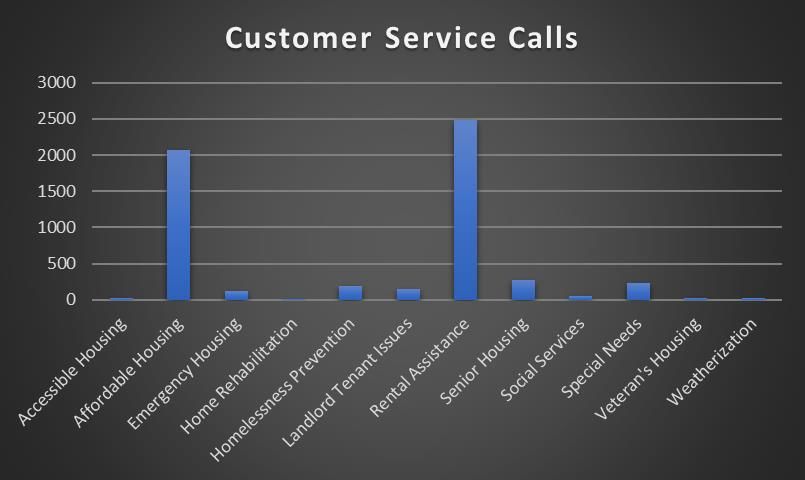
In addition to the citizen participation process described above, DCA conducted a review of customer service calls
received through the first quarter of 2018, to determine the topics of most concern to callers. According to this
review, the two major housing concerns were rental assistance and affordable housing.
1. Agency/entity responsible for preparing/administering the Consolidated Plan
The following are the agencies/entities responsible for preparing the Consolidated Plan and those
responsible for administration of each grant program and funding source.
Agency Role Name Department/Agency
Lead Agency NEW JERSEY
CDBG Administrator NEW JERSEY Community Affairs
HOPWA Administrator NEW JERSEY Health
HOME Administrator NEW JERSEY Community Affairs
ESG Administrator NEW JERSEY Community Affairs
HOPWA-C Administrator NEW JERSEY Community Affairs
HTF Administrator NEW JERSEY Community Affairs
Annual Action Plan 8
2018
OMB Control No: 2506-0117 (exp. 06/30/2018)Table 1 – Responsible Agencies
Narrative
Consolidated Plan Public Contact Information
Sheri Malnak, Administrator
Housing Assistance Programs
NJ Department of Community Affairs
Division of Housing and Community Resources
PO Box 051
Trenton, New Jersey 08625-0051
e-mail: Sheri.malnak@dca.nj.gov
Annual Action Plan 9
2018
OMB Control No: 2506-0117 (exp. 06/30/2018)AP-10 Consultation - 91.110, 91.300(b); 91.315(l)
1. Introduction
The NJ Department of Community Affairs (DCA), NJ Department of Human Services (DHS), NJ Department of
Health (DOH) and the Housing and Mortgage Finance Agency (HMFA) will continue to enhance coordination
between housing and service providers throughout the state. This will be accomplished through 1) grantee
meetings with affordable housing developers, mental health providers, shelter providers, homeless
assistance providers, and local government agencies to discuss the implementation of programs; and 2) Homeless
Management Information System (HMIS) meetings that are attended by the agencies participating in the NJ
Collaborative.
Provide a concise summary of the state's activities to enhance coordination between public and
assisted housing providers and private and governmental health, mental health and service agencies
On September 19, 2017 DCA allocated $1.2 million to the SRAP Housing First initiative to provide security deposits
and at least 120 vouchers to long-term homeless individuals who have an opioid addiction. The purpose of this
initiative is to help stabilize homeless opioid addicts by providing housing and case management. The vouchers
are being utilized in the following counties with the highest number of substance use admissions: Atlantic County,
Bergen County Ocean County, Camden County, Essex County, Monmouth County, Middlesex County and other
counties as recommended to DCA by DOH. As part of this initiative, community-based agencies are providing case
management to assist the program participants identify and secure housing, and access behavioral health and
other supportive services to address their addictions and increase their income.
Describe coordination with the Continuum of Care and efforts to address the needs of homeless
persons (particularly chronically homeless individuals and families, families with children, veterans,
and unaccompanied youth) and persons at risk of homelessness
DCA hosted the following Continuum of Care meetings:
• On February 22, 2018, DCA in partnership with Monarch Housing Associates held a meeting to discuss
resources available for homelessness prevention, emerging practices in evaluating program impact, and how
prevention programs can be integrated with coordinated assessment. Representatives from 14 Continuums of
Care attended, along with representatives from the NJ Housing and Mortgage Finance Agency’s Homelessness
Management Information Systems unit, the NJ Department of Human Services, Division of Family Development,
and from the St. Clare’s HIV Statewide Homelessness Prevention Program. During the meeting, stakeholders
expressed the need for the State to take the lead in presenting best practices in homelessness prevention and the
need for better use of data to measure the effectiveness of homelessness prevention programs. DCA has hired a
consultant, CSH, to conduct an assessment of the current homelessness prevention resources throughout
the State and to make recommendations to DCA on how to improve its prevention programs.
Annual Action Plan 10
2018
OMB Control No: 2506-0117 (exp. 06/30/2018)• On March 23, 2018, DCA held a meeting for Continuum of Care leads and representatives from the local
Offices of Emergency Management to discuss the Code Blue legislation and challenges and lessons learned from
this past winter. Twenty-two representatives from 16 counties attended the meeting. Comments included the
difficulty in providing Code Blue shelter for people who were homeless and actively using drugs or who had serious
criminal backgrounds; the difficulty in providing warming centers and shelters without designated funding; and
the need for better coordination with Continuums of Care to attempt to engage people who are homeless in
longer-term shelter and supports.
State representatives will continue to work closely with CoC staff to end the cycle of homelessness and assist
individuals and families in sustaining housing, acquiring income and employment, and improving the quality of
their lives. DCA will continue to require CoC support letters for all applications submitted for the Homelessness
Prevention and Rapid Rehousing (HPRP) Request for Proposals (RFP) and the Shelter Support RFP. The support
letter must comment on the need for the proposed project and indicate whether it is a high priority in the CoC’s
homeless assistance plan.
Describe consultation with the Continuum(s) of Care that serves the State in determining how to allocate ESG
funds, develop performance standards for and evaluate outcomes of projects and activities assisted by ESG
funds, and develop funding, policies and procedures for the operation and administration of HMIS.
DCA requires CoC support letters for all applications submitted for the Homelessness Prevention and Rapid
Rehousing RFP and the Shelter Support RFP. The support letter must comment on the need for the proposed
project and indicate whether it is a high priority in the CoC's homeless assistance plan. DCA notified all of the CoCs
about the developmental conference call in order to obtain their input on needs and funding priorities and held a
separate meeting with the CoC leads on March 1, 2018 to obtain input on the State’s use of Emergency Solutions
Grant funds.
The New Jersey Statewide Homeless Management Information Collaborative is a unique partnership between
state agencies and local communities. The New Jersey HMIS Statewide Collaborative assists participating CoCs
and their provider agencies to meet HUD HMIS requirements needed to receive HUD McKinney-Vento Homeless
Assistance funding. HMIS partners include the New Jersey Housing and Mortgage Finance Agency, the New Jersey
Department of Human Services, the New Jersey Department of Community Affairs and 19 counties. Participating
counties in New Jersey include: Atlantic, Burlington, Cape May, Camden, Cumberland, Essex, Gloucester, Hudson,
Hunterdon, Mercer, Monmouth, Morris, Ocean, Passaic, Salem, Somerset, Sussex, Union, and Warren counties.
HMFA and DCA staff meet regularly with the CoCs for feedback on HMIS performance. DCA uses data from HMIS
to evaluate current programs. DCA provides financial support to the HMIS Statewide Collaborative annually.
Annual Action Plan 11
2018
OMB Control No: 2506-0117 (exp. 06/30/2018)Number of Homeless Persons by County and Percentage of State Total
Total
% of Total Chronic Homeless % of Chronic Unsheltered % of Unsheltered
County Homeless
Homeless Persons Persons Homeless Persons Homeless Persons Homeless Persons
Persons
Atlantic 422 4.9% 105 9.6% 109 7.7%
Bergen 302 3.5% 3 0.3% 5 0.4%
Burlington 604 7.1% 113 10.3% 44 3.1%
Camden 540 6.3% 56 5.1% 78 5.5%
Cape May 119 1.4% 13 1.2% 6 0.4%
Cumberland 151 1.8% 15 1.4% 39 2.8%
Essex 2,048 24.0% 182 16.7% 428 30.2%
Gloucester 128 1.5% 3 0.3% 4 0.3%
Hudson 822 9.6% 176 16.1% 184 13.0%
Hunterdon 130 1.5% 17 1.6% 17 1.2%
Mercer 478 5.6% 71 6.5% 84 5.9%
Middlesex 546 6.4% 71 6.5% 125 8.8%
Monmouth 299 3.5% 49 4.5% 44 3.1%
Morris 378 4.4% 73 6.7% 27 1.9%
Ocean 224 2.6% 24 2.2% 43 3.0%
Passaic 449 5.3% 58 5.3% 89 6.3%
Salem 17 0.2% 0 0.0% 4 0.3%
Somerset 244 2.9% 3 0.3% 5 0.4%
Sussex 99 1.2% 10 0.9% 12 0.8%
Union 475 5.6% 43 3.9% 55 3.9%
Warren 57 0.7% 7 0.6% 13 0.9%
Total 8,532 100.0% 1,092 100.0% 1,415 100.0%
New Jersey's 2017 Point in Time Count of the Homeless
2. Agencies, groups, organizations and others who participated in the process and consultations
Annual Action Plan 12
2018
OMB Control No: 2506-0117 (exp. 06/30/2018)NEW JERSEY HOUSING AND MORTGAGE
Agency/Group/Organization
FINANCE AGENCY
Agency/Group/Organization Type Housing
Housing Need Assessment
Homeless Needs - Chronically homeless
What section of the Plan was addressed by Homeless Needs - Families with children
Consultation? Homelessness Needs - Veterans
Homelessness Needs - Unaccompanied youth
Homelessness Strategy
Briefly describe how the HMFA provided data on HMIS, affordable
Agency/Group/Organization was consulted. What housing and special needs housing. DCA and
are the anticipated outcomes of the consultation HMFA will continue to work together to address
or areas for improved coordination? the needs of the State.
Agency/Group/Organization NJ DEPARTMENT OF HEALTH
Housing
Services - Housing
Agency/Group/Organization Type Services-Children
Services-Persons with HIV/AIDS
Services-Health
Housing Need Assessment
Homeless Needs - Chronically homeless
What section of the Plan was addressed by Homeless Needs - Families with children
Consultation? Homelessness Needs - Veterans
HOPWA Strategy
Lead-based Paint Strategy
Department of Health and DCA will continue to
Briefly describe how the
work together to assist individuals diagnosed
Agency/Group/Organization was consulted. What
with HIV/AIDs and to identify and provide
are the anticipated outcomes of the consultation
assistance to households impacted by lead-
or areas for improved coordination?
based paint.
Agency/Group/Organization CSBG Grantees
Housing
Services - Housing
Services-Children
Services-Elderly Persons
Services-Persons with Disabilities
Agency/Group/Organization Type Services-Persons with HIV/AIDS
Services-Victims of Domestic Violence
Annual ActionServices-homeless
Plan 13
2018 Services-Health
OMB Control No: 2506-0117 (exp. 06/30/2018) Services-Education
Services-EmploymentTable 2 – Agencies, groups, organizations who participated
1 Agency/Group/Organization NEW JERSEY HOUSING AND MORTGAGE
FINANCE AGENCY
Agency/Group/Organization Type Housing
What section of the Plan was addressed by Housing Need Assessment
Consultation? Homeless Needs - Chronically homeless
Homeless Needs - Families with children
Homelessness Needs - Veterans
Homelessness Strategy
Briefly describe how the HMFA provided data on HMIS, affordable
Agency/Group/Organization was consulted. housing and special needs housing. DCA and
What are the anticipated outcomes of the HMFA will continue to work together to
consultation or areas for improved address the needs of the State.
coordination?
2 Agency/Group/Organization NEW JERSEY DEPARTMENT OF HEALTH
Agency/Group/Organization Type Housing
Services - Housing
Services-Children
Services-Persons with HIV/AIDS
Services-Health
What section of the Plan was addressed by Housing Need Assessment
Consultation? Homeless Needs - Chronically homeless
Homeless Needs - Families with children
Homelessness Needs - Veterans
HOPWA Strategy
Lead-based Paint Strategy
Briefly describe how the Department of Health and DCA will continue
Agency/Group/Organization was consulted. to work together to assist individuals
What are the anticipated outcomes of the diagnosed with HIV/AIDs and to identify and
consultation or areas for improved provide assistance to households impacted
coordination? by lead-based paint.
Annual Action Plan 14
2018
OMB Control No: 2506-0117 (exp. 06/30/2018)3 Agency/Group/Organization CSBG Grantees
Agency/Group/Organization Type Housing
Services - Housing
Services-Children
Services-Elderly Persons
Services-Persons with Disabilities
Services-Persons with HIV/AIDS
Services-Victims of Domestic Violence
Services-homeless
Services-Health
Services-Education
Services-Employment
What section of the Plan was addressed by Housing Need Assessment
Consultation? Economic Development
Anti-Poverty Strategy
Briefly describe how the DCA staff will continue to meet with its
Agency/Group/Organization was consulted. Community Services Block Grant grantees to
What are the anticipated outcomes of the discuss issues such as employment,
consultation or areas for improved education, income management, housing,
coordination? nutrition, emergency services, and health.
4 Agency/Group/Organization HPRP grantees
Agency/Group/Organization Type Services - Housing
Services-Children
Services-Elderly Persons
Services-Persons with Disabilities
Services-Persons with HIV/AIDS
Services-Victims of Domestic Violence
Services-homeless
What section of the Plan was addressed by Housing Need Assessment
Consultation? Homeless Needs - Chronically homeless
Homeless Needs - Families with children
Homelessness Needs - Veterans
Homelessness Needs - Unaccompanied youth
Homelessness Strategy
Annual Action Plan 15
2018
OMB Control No: 2506-0117 (exp. 06/30/2018)Briefly describe how the DCA continues to meet with its Homelessness
Agency/Group/Organization was consulted. Prevention and Rapid Re-Housing grantees to
What are the anticipated outcomes of the identify new strategies to identify homeless
consultation or areas for improved households and how to convince them to
coordination? accept services.
5 Agency/Group/Organization Shelters
Agency/Group/Organization Type Housing
Services-homeless
What section of the Plan was addressed by Homeless Needs - Chronically homeless
Consultation? Homeless Needs - Families with children
Homelessness Needs - Veterans
Homelessness Needs - Unaccompanied youth
Homelessness Strategy
Briefly describe how the DCA continues to discuss homeless needs
Agency/Group/Organization was consulted. throughout the State with emergency
What are the anticipated outcomes of the shelters and transitional housing facilities.
consultation or areas for improved
coordination?
Identify any Agency Types not consulted and provide rationale for not consulting
None; all agency types had the opportunity to participate in development of the 2018 Annual Action Plan
through the conference call, public comment period and public hearing.
Other local/regional/state/federal planning efforts considered when preparing the Plan
Name of Plan Lead Organization How do the goals of your Strategic Plan overlap with the
goals of each plan?
The Continuum of Care 10-year plan goals are to assist
Continuum of Care County CoCs households experiencing homelessness and decrease the
number of homeless households.
The Analysis of Impediments to Fair Housing Choice was
2015-2019 Analysis
DCA updated to identify remaining challenges in ensuring fair
of Impediments
housing choices for all New Jersey residents.
Table 3 - Other local / regional / federal planning efforts
Annual Action Plan 16
2018
OMB Control No: 2506-0117 (exp. 06/30/2018)Narrative
The State consulted all relevant agencies. DCA consulted with public and private agencies as described
below when developing this Plan. The preparation of the Plan involved the following: a developmental
conference call; meetings with program grantees; a review of customer service calls; posting of the Annual
Action plan and a public hearing.
AP-12 Participation - 91.115, 91.300(c)
1. Summary of citizen participation process/Efforts made to broaden citizen participation
Summarize citizen participation process and how it impacted goal-setting
The State recognizes that citizen participation and consultation are ongoing processes. During the
development of the 2015-2019 Consolidated Plan, comprehensive outreach was conducted to obtain
public input. All DCA grantees and non-profit organizations that participate with these programs were
contacted via email about the opportunity to participate in the planning process by either phoning in their
recommendations or submitting comments in writing. This comprehensive outreach continues through
the development of each Annual Action Plan.
Plan Development Conference Call
On March 18, 2018, DCA staff conducted a conference call to obtain public input on the housing and
community development needs throughout the State and identify the priorities that should be addressed
in FFY 2018 utilizing federal funding. Those who were unable to attend the conference call was
encouraged to submit written comments. 47 individuals representing county government, New Jersey
residents and nonprofit organizations participated in the call/webinar. The following comments were
received in response to the developmental conference call:
Dennis J. McNany, CFO
THE GATEWAY FAMILY YMCA
I just wanted to add a note on Transitional Housing. Our organization is probably the largest nonprofit
provider of housing in Union County and from our vantage point, we agree with, desire and support that
home ownership for all is the ultimate goal. That being said, the practicalities and realities in trying to
reach that goal need to be considered and planned-for funding for transitional housing will remain a huge
need.
Dawn Metzger, Executive Director
Samaritan Inn
Is there any funding for shelter nights that will be available for Emergency Shelters to be able to continue
to help families that are in need of shelter because they are literally homeless? I understand that the goal
is permanency, but it is difficult for families to maintain permanency when they do not have the skills
needed to do so. Our program is a 3 month program, that teaches clients how to budget and long term
Annual Action Plan 17
2018
OMB Control No: 2506-0117 (exp. 06/30/2018)skills to enable them to not return to homelessness. We are finding that more of our homeless families
are the working poor and not eligible for governmental assistance.
Kent R. Pipes, President
The Affordable Homes Group, including: The Salt and Light Company, Inc.
1. One of the biggest obstacles to development is gaining site control and keeping the project alive with
all the pre-development costs until full development approvals are obtained and full funding is committed
and available to be drawn down.
The Affordable Homes Group, of which I am President, purchased six foreclosed properties in the summer
of 2016 using money from my mother’s estate after it was distributed following her death. We were not
successful in getting funding commitments from NHTF, FHLB or NY or Pittsburgh or the NJ Shelter Support
program. In short, we lost over $100,000 in interest payments to conventional lenders, costs for
architectural and engineering, surveys, vacant property insurance and real estate taxes that were incurred
during the pre-development period. We have now sold four of them and have the other two listed for
sale trying to cut our losses and recapture any of the funds we can.
I strongly urge the State to consider the various ways non-profit groups could access dedicated pre-
development funds so we can take advantage of very attractively priced foreclosure properties that have
great appeal for lower income people looking for decent, affordable housing that is not in ‘projects’ with
names on the signs as they enter the complex. Not everyone wants to live in typical townhouse style
developments so popular in the LIHTC world or converted school buildings, etc. The financial cost
difference in redeveloping existing REO properties as opposed to building new is huge, like 50% of the
cost.
Please review the recent OCC publication “Expanding Housing Opportunities: Single-Family Rehabilitation
Financing programs” available from the website: https://www.occ.gov/publications/publications-by-
type/other-publications-reports/cdi-newsletter/single-family-february-2018/pub-cdi-ezine-single-family-
feb-2018.pdf
2. The practice of most capital subsidy funding programs is the philosophy that they want to see
commitments from the other sources as part of the application for their funding and that they want their
money to be “gap” funding, to make up the difference between what a project costs and what resources
are available. The State needs to take a more aggressive position to network with various other funding
sources and find ways to negotiate around this development obstacle.
3. The lower the rent and the lower the income of the population being served, the less tolerance there
is for errors in planning for expenses and income to support a project long-term. As long ago as the 90s
affordable housing groups in Chicago were beginning to recognize that affordable housing projects cost a
lot more to operate than predicted and that without sufficient maintenance budgets and replacement
reserves good buildings and properties deteriorated to the point that tenants lost confidence in
management and conditions only worsened. I am increasingly concerned with long-term viability of
housing that will extend in affordability far beyond my remaining years of actively managing what we have
Annual Action Plan 18
2018
OMB Control No: 2506-0117 (exp. 06/30/2018)developed. Being almost 72 makes me reflect on my own expectations and become concerned about what
I am leaving as an inheritance to others. Watching experience, professional groups like MEND access
limited Affordable Housing Trust funds a decade ago that had been deposited into the Moorestown
Housing escrow account by the Moorestown developers in lieu of developing affordable housing
themselves that allowed them to rehab units that were put into service 25 years earlier convinced me
that much more long-range maintenance reserves and budgeting needs to be in place so that new monies
can develop new housing, not rehab existing housing. This same issue plagued the Federal Home Loan
Bank over the past two years when they gave extra points in the scoring to projects that were preserving
“at risk” units. Their limited funds were to a great extent provided to housing authorities, who in my
opinion did not manage their projects well and for who HUD had an on-going responsibility to fund. We
need to seriously think about this critical issue and the State needs to help lead the way to changing our
practices.
4. Lastly, the State should consider funding a Line of Credit program where non-profit groups are granted
funds for a 2-year period providing acquisition and rehab funds in advance of site control so we can go
into the market place and negotiate real estate purchases in a competitive manner against investors who
operate with ready cash. Being able to quickly close after all conditions are met, including environmental
and appraisal, etc. would enhance our productivity and minimize our risk.
Johnesia McKenzie
I am writing to express the need for more affordable housing for people with disabilities. Many people
with disabilities are on fixed incomes and unable to afford the high cost of rent. The lack of affordable
housing in the community has played a major role in forcing people with disabilities into nursing homes
or homelessness. I am a person with a physical disability and on a fixed income. I have been in the midst
of this very housing crisis for the past three and a half years.
Trying to find housing that I can afford has been a daunting task. I have lived in nursing homes and with
relatives throughout this ordeal and cannot express enough how degrading this situation has been. I have
been placed on countless waitlists and told over and over again that these waitlists are years long due to
lack of funding. I would like to suggest that the need of suitable housing for people with disabilities be
taken into serious consideration and a plan of action be developed to allocate more funding for more
suitable housing that would allow people with disabilities to live their best lives possible out in the
community.
Diane Young, Executive Director
Newark Emergency Services for Families
As the Executive Director of Newark Emergency Services for Families (NESF), I am writing regarding HUD
entitlement funding for New Jersey on behalf of the Newark and Essex County community that NESF
serves. Our mission is to stabilize families and individuals in crisis, especially the working poor, homeless
and those in financial need and provide them with financial support and life skills training to live on their
own.
NESF relies on four key HUD entitlement program: CDBG, ESG, HOME and HOPWA. This funding allows
NESF to provide critical community development initiatives through programming in six areas: emergency
Annual Action Plan 19
2018
OMB Control No: 2506-0117 (exp. 06/30/2018)services, workforce development, housing, prisoner re-entry, health, and family development. With
intensive and holistic case management and our referral network, we help resilient individuals and
families who face multiple barriers achieve self- sufficiency through earning a livable wage and securing a
stable place to live.
The need for affordable housing and community development initiatives for Newark and underserved
neighborhoods in Essex County continues to grow. Now in its 40th year of operation, NESF works to meet
the needs of this low and moderate-income constituency. I can’t overstate the importance of HUD
funding in providing these critical services for the NESF community. It is our hope that New Jersey’s Plan
for HUD 2018 funding will not only match last year’s allocation but increase to meet the growing need for
housing, basic services and economic development in Newark and Essex County.
Lori Dibble, Manufactured Home Owners Association of New Jersey, Inc.
New Jersey's Consolidated plan does not include any mention of Manufactured Housing, we would like to
change that. In New Jersey manufactured housing is an important source of unsubsidized affordable home
ownership that is often in land lease communities. New Jersey's HMFA has no programs that help
manufactured home owners and no CDBG funds go towards these often low income, elderly homeowners.
I am attaching two items to start a conversation. One example is New York State including manufactured
homes in their consolidated plan and the other is a fact sheet prepared for House of Representatives Bill
H.R. 3793 - The HUD Manufactured Housing Modernization Act of 2017 which was introduced to make
the inclusion of manufactured housing a required part of state consolidated plans.
Donald L. Brown Jr., Executive Administrator
Belmont Homes
I am an Executive Administrator for God Squad Inc, a/k/a Belmont Homes and Special Services. We are a
nonprofit organization that provides (EA) Emergency Assistance housing and case management for
homeless families in Burlington County. In addition we are grantee recipients for HPRP, SSH and Sect. 8
Vouchers. I would like to briefly comment on our experience as a Housing Provider Agency and as it may
relate to 2018 Consolidated Plan. I have witnessed the increasing changes in rents and in the homeless
population, with many gaps in services from affordability of rental housing, financial responsibility of
maintaining housing to the eligibility for housing assistance. However, I believe much attention should
also be brought to the case management component for homeless and the at risk-homeless population.
As an agency we pride ourselves on the level of service we provide. There is a distinct difference in the
families and singles who receive case management and advocacy versus those who are simply placed
based on a subsidy. Understanding HUD’s position and the sense of urgency for permanent housing, we
believe a great deal of attention should also be placed on the wrap around services and/or the ICMS. Due
to the upkeep, maintenance and condition costs of housing that seems to steadily increase, experience
has shown that we are more successful transitioning families when there is ongoing monitoring and face
to face contact. I simply propose that allocation of resources be considered for case management.
Public Comment Period
The draft plan will be posted on the DHCR website from June 19, 2018 to July 19, 2018. The website
address is: http://www.nj.gov/dca/announcements/2017/approved/20170707DHCR.html. E-mail blasts
advertising both events and the 30 day public grantees comment period (HUD wavier 24 CFR 91.115 (b)
Annual Action Plan 20
2018
OMB Control No: 2506-0117 (exp. 06/30/2018)(4)) will be sent out to over 700 affordable housing developers, grantees, CHDOs, CoCs, and other
stakeholders.
Mode Target of Summary Citizen Participation Outreach
Order of Outreach of Summary of
Outreach response/ comments received
attendanc
e
Minorities
Persons 47
with participants
disabilities on call for
Plan The draft plan will be posted on the DHCR website from June
Plan developme 19, 2018 to July 19, 2018. The website address is:
Developme Non-
nt; 8 http://www.nj.gov/dca/announcements/2017/approved/2017
nt Webinar targeted/
1 written 0707DHCR.html. E-mail blasts advertising both events and the
and
Conference
comments 30 day public grantees comment period (HUD wavier 24 CFR
broad submitted
Call 91.115 (b) (4)) were sent out to over 700 affordable housing
community
developers, grantees, CHDOs, CoCs, and other stake holders.
Public
Residents of Hearing
Public and TBD
Assisted
Housing
Annual Action Plan 21
2018
OMB Control No: 2506-0117 (exp. 06/30/2018)Mode Target of Summary Citizen Participation Outreach
Order of Outreach of Summary of
Outreach response/ comments received
attendanc
e
Minorities
Persons
with
disabilities
Draft Plan Non-
Public
2 targeted/br TBD TBD
Comment
Period oad
community
Residents of
Public and
Assisted
Housing
NJDCA
Minorities
posted the
announce
Persons ment on its
with website
and
disabilities
reached
out to
Non- every
Public
3 targeted/ grantee TBD
Hearing within the
broad
DHCR,
community
CoC’s non-
profits and
Residents of municipal
Public and governmen
ts
Assisted
Housing
Annual Action Plan 22
2018
OMB Control No: 2506-0117 (exp. 06/30/2018)Expected Resources
AP-15 Expected Resources – 91.320(c)(1,2)
Introduction
Anticipated Resources
Program Source Uses of Funds Expected Amount Available Year 1 Expected Narrative
of Annual Program Prior Year Total: Amount Description
Funds Allocation: $ Income: Resources: $ Available
$ $ Remainder of
Con Plan
$
CDBG public - Acquisition The CDBG
federal Admin and Program will
Planning provide funds
Economic to rehabilitate
Development housing,
Housing create
Public suitable living
Improvements environments,
Public and enhance
Services economic
opportunities
in non-
entitlement
areas
throughout
6,716,197 0 0 6,716,197 13,432,394 the State.
Annual Action Plan 23
2018
OMB Control No: 2506-0117 (exp. 06/30/2018)Program Source Uses of Funds Expected Amount Available Year 1 Expected Narrative
of Annual Program Prior Year Total: Amount Description
Funds Allocation: $ Income: Resources: $ Available
$ $ Remainder of
Con Plan
$
HOME public -
Acquisition The HOME
federal
Homebuyer Program will
assistance provide funds
Homeowner to develop
rehab affordable
Multifamily housing units
rental new and provides
construction rental
Multifamily assistance to
rental rehab elderly and
New disabled
construction households.
for ownership
TBRA 5,113,599 0 0 5,113,599 10,227,198
HOPWA public - Permanent The HOPWA
federal housing in Program will
facilities provide
Permanent housing
housing assistance to
placement low- income
Short term or persons with
transitional HIV/AIDS.
housing
facilities
STRMU
Supportive
services
TBRA 1,499,957 0 0 1,499,957 2,999,914
Annual Action Plan 24
2018
OMB Control No: 2506-0117 (exp. 06/30/2018)Program Source Uses of Funds Expected Amount Available Year 1 Expected Narrative
of Annual Program Prior Year Total: Amount Description
Funds Allocation: $ Income: Resources: $ Available
$ $ Remainder of
Con Plan
$
ESG public - Conversion The ESG
federal and rehab for Program will
transitional provide grants
housing to create,
Financial expand or
Assistance improve the
Overnight quality of
shelter shelters and
Rapid re- transitional
housing housing
(rental facilities. The
assistance) program also
Rental provides
Assistance temporary
Services financial
Transitional assistance and
housing services to
prevent
households
from
becoming
homeless;
divert people
who are
applying for
shelter into
other
housing; and
help those
who are
experiencing
homelessness
to be quickly
re-housed and
2,933,940 0 0 2,933,940 5,867,880 stabilized.
Annual Action Plan 25
2018
OMB Control No: 2506-0117 (exp. 06/30/2018)Program Source Uses of Funds Expected Amount Available Year 1 Expected Narrative
of Annual Program Prior Year Total: Amount Description
Funds Allocation: $ Income: Resources: $ Available
$ $ Remainder of
Con Plan
$
Housing public - Acquisition The Housing
Trust federal Multifamily Trust Fund
Fund rental new will provide
construction funds to
Multifamily develop
rental rehab affordable
rental housing
7,726,903 0 0 7,726,903 15,453,806 units.
Annual Action Plan 26
2018
OMB Control No: 2506-0117 (exp. 06/30/2018)LIHTC public - Acquisition Each year, the
Federal Multifamily State awards
rental new the full
construction allocation of
Multifamily 9% credits to
rental rehab 12-15
projects,
which will
construct or
rehabilitate
approximately
1,000 units of
affordable
rental
housing. The
9% tax credits
are awarded
competitively
in 3 cycles.
At least 50%
of the credits
are awarded
to non-age
restricted
(family)
projects. At
least 20% are
awarded to
age-restricted
(senior)
projects and
at least 12.5%
are awarded
in supportive
housing
projects. The
4% tax credits
are non-
competitive
and are
21,500,000 0 0 21,500,000 43,000,000 considered as
Annual Action Plan 27
2018
OMB Control No: 2506-0117 (exp. 06/30/2018)Program Source Uses of Funds Expected Amount Available Year 1 Expected Narrative
of Annual Program Prior Year Total: Amount Description
Funds Allocation: $ Income: Resources: $ Available
$ $ Remainder of
Con Plan
$
-of- right for
projects that
finance at
least 50% of
construction
cost.
Other public - Acquisition The State will
federal Admin and use its CDBG-
Planning DR funds to
Economic address the
Development housing and
Financial community
Assistance development
Homebuyer needs that
assistance were the
Homeowner result of
rehab Superstorm
Housing Sandy.
Multifamily
rental new
construction
Multifamily
rental rehab
New
construction
for ownership
Rental
Assistance
TBRA 4,000,000,000 0 0 4,000,000,000 1,600,000,000
Annual Action Plan 28
2018
OMB Control No: 2506-0117 (exp. 06/30/2018)Program Source Uses of Funds Expected Amount Available Year 1 Expected Narrative
of Annual Program Prior Year Total: Amount Description
Funds Allocation: $ Income: Resources: $ Available
$ $ Remainder of
Con Plan
$
Other public - Homebuyer Provides
state assistance mortgages for
home
purchase.
Income and
purchase
price limits
10,000,000 0 0 10,000,000 20,000,000 apply.
Table 4 - Expected Resources – Priority Table
Explain how federal funds will leverage those additional resources (private, state and local
funds), including a description of how matching requirements will be satisfied
New Jersey will be allocated approximately $21 million in 9% tax credits in FFY 2017 and will receive
roughly the same amount each year through 2018.
Each year, the State awards the full allocation of 9% credits to 12-15 projects, which will construct or
rehabilitate approximately 1,000 units of affordable rental housing. The 9% tax credits are awarded
competitively in 3 cycles. At least 50% of the credits are awarded to non-age restricted (family)
projects. At least 20% are awarded to age-restricted (senior) projects and at least 12.5% are awarded in
supportive housing projects. The 4% tax credits are non-competitive and are considered “as-of-right”
for projects that finance at least 50% of construction costs with tax exempt bonds.
The Qualified Allocation Plan (QAP), which outlines the application requirements for both the 4% and 9%
LIHTCs, is the tool that NJHMFA utilizes to guide the affordable housing growth in NJ. In the competitive
cycles, points are awarded for proximity to positive attributes such as transit, employment opportunities
and high performing schools. Additionally, point incentives are awarded for targeting lower affordability
levels, providing units for supportive housing, green building practices, utilizing minority and women
owned businesses, providing social services to residents, and providing unit/project amenities.
The Sandy Fund for Restoration of Multifamily Housing (FRM) Program provided developers and Public
Housing Authorities subsidies to finance the development of affordable housing in the nine counties
impacted by Superstorm Sandy (Atlantic, Bergen, Cape May, Essex, Hudson, Middlesex, Monmouth,
Ocean and Union). Eligible projects rehabilitate or replace affordable rental units damaged as a result of
Superstorm Sandy or build new rental housing that addresses an unmet need resulting from the storm.
New Jersey will leverage federal CDBG, ESG, HOME, HTF and HOPWA funds with other State and federal
Annual Action Plan 29
2018
OMB Control No: 2506-0117 (exp. 06/30/2018)funds to address the housing and community development needs previously discussed.
The State will satisfy the required matching requirements in the following manner:
Community Development Block Grant Program requires that the State match administration funds after
the first $100,000 on a one-to-one basis. The match for CDBG is the State’s Affordable Housing Trust Fund.
Emergency Solutions Grant Program requires a one to one match. The match for ESG is provided by the
State Affordable Housing Trust Fund and the Homelessness Prevention Program.
HOME Program requires a 25% match. The match for HOME is the State Rental Assistance Program (SRAP).
National Housing Trust Fund (HTF) does not require a local match.
If appropriate, describe publicly owned land or property located within the jurisdiction that
may be used to address the needs identified in the plan
N/A
Discussion
The state will use its CDBG, HOME, ESG, HTF and HOPWA funds to provide decent affordable housing,
suitable living environments and expanded economic opportunities for low and moderate-income
households.
Annual Action Plan 30
2018
OMB Control No: 2506-0117 (exp. 06/30/2018)Annual Goals and Objectives
AP-20 Annual Goals and Objectives – 91.320(c)(3)&(e)
Goals Summary Information (Fourth Year of Five-Year Objectives)
Sort Goal Name Start End Category Geographic Needs Addressed Funding Goal Outcome
Order Year Year Area Indicator
1 Increase the 2015 2019 Affordable State of Affordable CDBG: Rental units
supply of Housing New housing $1,000,000 constructed:
affordable Homeless Jersey Eliminate HOME: 55 Household
housing homelessness $1,592,936 Housing Unit
Housing Trust Homeowner
Fund: Housing
$6,954,213 Added: 3
Household
Housing Unit
Homeowner
Housing
Rehabilitated:
60 Household
Housing Units
2 Assist homeless 2015 2019 Homeless State of Eliminate HOPWA: Tenant-based
households New homelessness $1,229,717 rental
Jersey HOME: assistance/
Sandy $1,592,935 Rapid
Impacted ESG: Rehousing:
Counties $2,710,624 481
Households
Assisted
Homelessness
Prevention:
100 Persons
Assisted
Annual Action Plan 31
2018
OMB Control No: 2506-0117 (exp. 06/30/2018)Sort Goal Name Start End Category Geographic Needs Addressed Funding Goal Outcome
Order Year Year Area Indicator
3 Revitalize 2015 2019 Non-Housing CDBG - Affordable CDBG: 12 Public
municipalities Community Eligible housing $4,594,712 Facility or
(small cities) Development Towns Community Infrastructure
revitalization Activities.
Economic Low/Moderate
development Income
Neighborhood Housing
revitalization Benefit:
23,000
Persons
Assisted
4 Expand 2015 2019 Affordable State of Affordable 100% Direct
homeownership Housing New housing Financing: Financial
opportunities Jersey Homeownership $10,000,000 Assistance to
for low and mod Homebuyers:
50 Households
Assisted
5 Foster 2015 2019 Non-Housing CDBG - Community CDBG: 2 Innovative
community Community Eligible revitalization $800,000 Development
economic Development Towns Economic Activities.
development Sandy development Low/Moderate
Impacted Neighborhood Income
Counties revitalization Housing
Benefit: 1,000
Persons
Assisted
Annual Action Plan 32
2018
OMB Control No: 2506-0117 (exp. 06/30/2018)Sort Goal Name Start End Category Geographic Needs Addressed Funding Goal Outcome
Order Year Year Area Indicator
6 Sandy 2015 2019 Affordable Sandy Affordable CDBG-DR: Rental units
Revitalization Housing Impacted housing $4,100,000,000 constructed:
Homeless Counties Community 4500
Non- revitalization Household
Homeless Economic Housing Units
Special development Homeowner
Needs Homeownership Housing
Non-Housing Neighborhood Added: 5,200
Community revitalization Household
Development Housing Units
Homeowner
Housing
Rehabilitated:
7,600
Household
Housing Units
Direct
Financial
Assistance to
Homebuyers:
350
Households
Assisted
Tenant-based
rental
assistance /
Rapid
Rehousing:
1,100
Households
Assisted
Businesses
assisted: 1,200
Businesses
Assisted
Table 5 – Goals Summary
Annual Action Plan 33
2018
OMB Control No: 2506-0117 (exp. 06/30/2018)You can also read


