Statement of Performance Expectations - TAUĀKĪ MAHI HUA - G.11 - Creative New Zealand
←
→
Page content transcription
If your browser does not render page correctly, please read the page content below
G.11

      ARTS COUNCIL OF NEW ZEALAND TOI AOTEAROA

Statement of Performance
             Expectations
                                      TAUĀKĪ MAHI HUA
                                                                        2018/19
                    Creative New Zealand Statement of Performance Expectations 2018/19 1
Section 1:
Introduction
Contact us Crown copyright ©. This Statement of Performance
Expectations is licensed under the Creative Commons
Website: www.creativenz.govt.nz Attribution 4.0 International licence. In essence, you are
free to copy, distribute and adapt the work, as long as you
Email: info@creativenz.govt.nz
attribute the work to the Arts Council of New Zealand Toi
Wellington Office Aotearoa (Creative New Zealand) and abide by the other
Level 10 licence terms. To view a copy of this licence, visit
Aorangi House www.creativecommons.org/licenses/by/4.0/
85 Molesworth Street
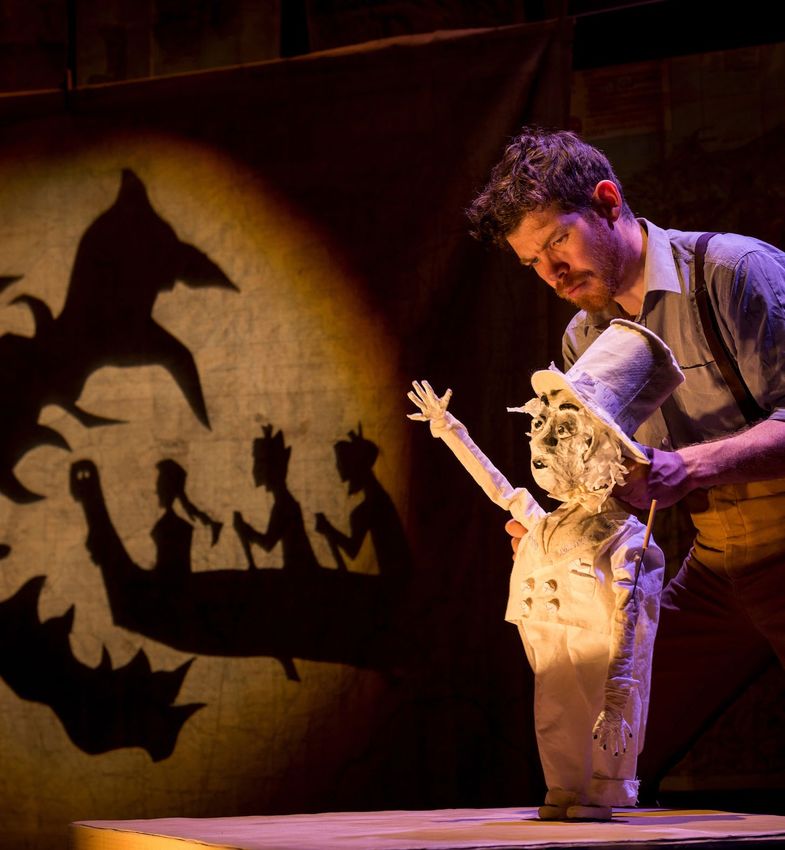
Front Cover:
PO Box 3806
Wellington 6140 Trick of the Light Theatre and Zanetti Productions are a
T: 04 473 0880 step closer to realising their global ambitions after being
selected to take part in Creative New Zealand’s new
Auckland Office International Coaching Programme.
Level 1
Southern Cross Building Ralph McCubbin Howell performing in The Road That
Cnr High and Victoria Streets Wasn’t There - photo: Anita Pitu.
PO Box 1425
Auckland 1140
T: 09 373 3066
ISSN 2463-3127 (Print)
ISSN 2463-3135 (Online)This Statement of Performance Expectations documents planned activity, performance targets and forecast financial information for the Arts Council of New Zealand Toi Aotearoa (Creative New Zealand) for the period 1 July 2018 to 30 June 2019. It is presented in accordance with sections 149B to 149M of the Crown Entities Act 2004. Michael Moynahan Chair, Arts Council 27 June 2018 Caren Rangi Deputy Chair, Arts Council 27 June 2018
Contents
Ngā ihirangi

INTRODUCTION1                                                 Prospective statement of changes in net assets
KUPU ARATAKI                                                   and equity                                      34
  Forward2                                                    Prospective statement of financial position     35
  About our plan                                      3       Prospective statement of cash flows             36
  Our performance framework                          4        Notes to the prospective financial statements   37
    Output class funding model                        4
                                                           OUR ORGANISATION                                    45
    Creative New Zealand’s strategic direction            TŌ TATOU TARI
    for 2016–2021                                     5
                                                             What we do                                        46
    Creative New Zealand’s performance framework
                                                             Our relationships                                 46
    for 2018/19                                       7
                                                             The Arts Council                                  46
    The year ahead                                    9
                                                             Policies and processes                            47
NON-FINANCIAL PLANNING AND PERFORMANCE               12     Our staff                                         47
WHAKAMAHERE UTU KORE MAHI
                                                               More information                                47
  Our outcomes                                       13
  Our deliverables                                   16
    Investing in the arts                            17
    Developing the arts                              22
    Advocating for the arts                          24
    Improving service delivery                       26
    Improving our organisation (internal focus)      28

FINANCIAL PLANNING AND PERFORMANCE                   30
WHAKAMAHERE PŪTEA MAHI
  Financial planning and performance                 31
    Financial planning and performance context       31
    Our investment for 2018/19                       31
  Prospective Financial Statements                   33
    Prospective statement of financial performance   33
    Prospective statement of comprehensive revenue
    and expense                                   34
SECTION Section 1: 1 Introduction INTRODUCTION KUPU ARATAKI 1 Creative New Zealand Statement of Performance Expectations 2017/18
Foreword                                                        In the first part of 2018/19, we will also finalise a new Māori
                                                                arts strategy and a new Pacific arts strategy that will chart
                                                                a new course for how we support these treasured features
Kupu whakataki                                                  of the arts landscape in Aotearoa.

We are pleased to present our Statement                         Our advocacy work will also continue, boosted by the key
                                                                findings from our New Zealanders and the arts and Audience
of Performance Expectations for 2018/19,                        Atlas New Zealand research. We will keep developing
the third annual plan under our Statement                       our relationships with Māori and Pacific groups and local
of Intent 2016–2021.                                            government, as a part of our advocacy mahi this year.

The arts matter to New Zealanders. Our most recent New          As the national arts development agency, we are dedicated
Zealanders and the arts research shows New Zealanders           to seeing the arts thrive in New Zealand. The continued,
are engaging with the arts at the highest rates ever, with      generous support of the New Zealand Lottery Grants
four out of five of us participating in the arts or attending   Board, the New Zealand Government and other patrons,
an arts event over the past 12 months.                          funders and partners allows this to happen. We are grateful
                                                                for this support.
We are proud to help make the arts happen in Aotearoa
every day, for the benefit of all New Zealanders. Our           Once again, we look forward to an exciting year ahead
support covers the length of the country, from our              where New Zealand’s arts and artists shine at home
funding for arts projects in towns and cities right             and abroad, and where every New Zealander has the
around New Zealand through to our support for artists           opportunity to participate in and experience the arts.
and arts practitioners, and our investment into major
arts organisations. We also help Kiwi artists shine
internationally, taking our vibrant and engaging stories to
places all around the world.

The year ahead is an exciting one. Another strong year of
lottery funding has placed us in a good financial position.
We also start the year with a new investment strategy to
help guide the way we support the arts in New Zealand.
                                                                Michael Moynahan
Under the Investment Strategy Te Ara Whakamua 2018–             Chair, Arts Council
2023, the way we invest in the arts will increasingly support
their diversity and reach into our communities, dynamic arts
that delight and provoke New Zealanders, and a resilient
arts sector that grows and adapts to new ways of working.

To those ends, in 2018/19, we will advance major new
initiatives around young people and youth arts, arts in the
regions and innovation in the arts, as well as continuing our
                                                                Stephen Wainwright
support across all our major programmes.
                                                                Chief Executive, Creative New Zealand

                                                                       Creative New Zealand Statement of Performance Expectations 2018/19 2
Section 1:
Introduction
About our plan
Ta tātau mahere
Creative New Zealand is the national arts
development agency of Aotearoa. We
encourage, promote and support the arts
in New Zealand for the benefit of all New
Zealanders. More information about our
organisation is on page 46.
Each year, Creative New Zealand publishes a Statement of
Performance Expectations (SPE) that outlines its planned
activity, performance targets and forecast financial
information for the relevant financial year.
The SPE sits under the Statement of Intent (SOI) 2016–2021
and describes how this year’s work will contribute to
achieving the SOI’s medium-term strategy.
This SPE covers the 2018/19 financial year (ie, 1 July 2018 to
30 June 2019) and comprises two parts:
▪▪ non-financial planning and performance – describes
our work for the year ahead and outlines performance
measures around our outcomes and deliverables (the
latter being our annual priorities and core activities)
▪▪ financial planning and performance – provides our
financial statements for the 2018/19 year and the notes
to those statements.
We will report against these two parts in the Annual Report
for 2018/19.
Given the potential for change in the level of funding
we receive from the New Zealand Lottery Grants Board
(NZLGB), and the timing of the NZLGB’s funding advice
with respect to our own planning and reporting cycle, we
may need to amend this SPE during the 2018/19 year as
circumstances require. We will consult with the Minister
for Arts, Culture and Heritage, should changes be required.
3 Creative New Zealand Statement of Performance Expectations 2018/19Our performance Our goals and objectives are directly supported by our five
deliverable areas:
framework ▪▪ investing in the arts (external focus)
▪▪ developing the arts (external focus)
Te tūtuki i a mātau mahi ▪▪ advocating for the arts (external focus)
▪▪ improving service delivery (external and internal focus)
The SOI outlines Creative New Zealand’s
▪▪ improving our organisation (internal focus).
strategic direction over the 2016 to 2021
Delivering on these goals (our focus), supported by our
period. Our performance framework is
purpose and values (ie, our foundation), will help us
derived from that strategic direction. achieve our outcomes and vision (ie, our future).
Broadly, our strategic direction comprises three parts: No output classes have been given reporting exemptions
by the Minister of Finance. We do not propose to supply
▪▪ our future – what we want to achieve overall (our
any class of outputs in 2018/19 that are not a reportable
vision) and the difference we want our work to make
class of outputs.
(our outcomes)
▪▪ our focus – what we want to achieve by 2021 (our We operate under one central government output
goals, supported by objectives) and what we do to expense: Promotion and Support of the Arts and Film.
support this (our deliverables) The Ministry for Culture and Heritage is our monitoring
department. The Minister for Arts, Culture and Heritage is
▪▪ our foundation – our reason for being, as set out in the
our responsible Minister.
Arts Council of New Zealand Toi Aotearoa Act 2014 (our
purpose) and the core principles that guide our work We are principally funded through Vote: Arts, Culture and
(our values). Heritage and the NZLGB. In 2018/19, Creative New Zealand
expects to receive:
We also contribute to the broader aims for the cultural
sector and the Government’s wider priorities. ▪▪ $15.689 million from the Crown through Vote: Arts,
Culture and Heritage
Our strategic direction for 2016–2021 and our performance
framework for 2018/19 are outlined in the following pages. ▪▪ an estimated $40.350 million from the NZLGB. This
In 2018/19, we will implement the new Investment Strategy figure takes into account Lotto New Zealand’s forecast
Te Ara Whakamua 2018–2023 and develop a Māori arts payment to the NZLGB for 2018/19, along with the
strategy and Pacific arts strategy, to further shape our average payment from the NZLGB to Creative New
strategic direction for the arts in New Zealand. Zealand over the previous six years. The budgeted
2018/19 payment from the NZLGB will be confirmed in
Output class and funding model July 2018.
Creative New Zealand has one output class – Promotion
and support of the arts – which is a reportable class
for the purposes of the Crown Entities Act 2004. Under
this, we will work to achieve our five strategic goals and
related objectives by 2021 (refer to Creative New Zealand’s
strategic direction for 2016–2021 on the next page).
Creative New Zealand Statement of Performance Expectations 2018/19 4Section 1:
Introduction
Our strategic direction for 2016-2021
OUR VISION
DYNAMIC AND RESILIENT NEW ZEALAND ARTS, V
What we want to achieve overall
OUR FUTURE
Titiro whakamua
OUR OUTCOMES STRONGER ARTS COMMUNITIES, ARTISTS
The difference we want our
AND ORGANISATIONS
as shown by
work to make
High-quality New Zealand art is developed
New Zealand arts gain international success
We regularly refine our We develop the a
OUR GOALS investment to ensure the arts capacity to su
(supported by objectives) continue to develop in New
OUR FOCUS
Zealand for New Zealanders
Te arotahi
What we want to achieve
by 2021
EXTERNAL FOCUS EXTERNAL F
▲
We improve service delivery and systematically
OUR DELIVERABLES
look afresh at how best to deliver activities with
What we do to support our and for the arts sector
goals/objectives
EXTERNAL/INTERNAL FOCUS
OUR FOUNDATION
Te tūāpapa
OUR PURPOSE
Our reason for being, as set out in our Act
To encourage, promote and support the arts in
New Zealand, for the benefit of all New Zealanders
5 Creative New Zealand Statement of Performance Expectations 2018/19CULTURAL SECTOR VISION
VALUED IN AOTEAROA AND INTERNATIONALLY
New Zealand’s distinctive culture enriches our lives
GREATER PUBLIC ENGAGEMENT WITH
CULTURAL SECTOR OUTCOMES
THE ARTS
as shown by Create: Cultural and sporting activity flourishes in
New Zealanders participate in the arts New Zealand
New Zealanders experience high-quality arts Engage: Engagement in cultural and sporting
activities is increasing
Preserve: Our heritage can be enjoyed by future
generations
arts sector’s We are a powerful advocate
Excel: Artists, athletes and organisations achieve
ucceed for the arts
excellence
FOCUS EXTERNAL FOCUS
CULTURAL SECTOR PRIORITIES
We become a more focused, Fostering inclusive New Zealand identity
higher-performing, learning organisation Supporting Māori cultural aspirations
Front footing transformative technology
Improving cultural asset sustainability
INTERNAL FOCUS
Measuring and maximising public value
OUR VALUES
The core principles that guide our work
Mana Toi • Tauiwi • Mana Māori • Mana Pasifika • Mahitahi •
Te Taumata • Tauutuutu • Manaakitanga
Creative New Zealand Statement of Performance Expectations 2017/18 6Section 1:
Introduction
Our performance framework for 2018/19
VISION OUTCOMES AND MEASURES GOALS
We regularly refine our investment to
ensure that the arts continue to develop
Stronger arts communities, artists
in New Zealand for New Zealanders
and organisations as shown by:
NEW ZEALAND ARTS, VALUED IN AOTEAROA
High-quality New Zealand art is
developed
# of new New Zealand works developed ●
(across all programmes)
New Zealand arts gain international
DYNAMIC AND RESILIENT
success
AND INTERNATIONALLY
# of individuals/organisations funded ●
by Creative New Zealand to engage
internationally (across all progammes)
# of international arts activites/events ●
funded by Creative New Zealand
(across all progammes) We develop the arts sector’s capacity
to succeed
Greater public engagement with the
arts as shown by:
New Zealanders participate in
the arts
# of participants in arts activities ● We are a powerful advocate
funded by Creative New Zealand for the arts
New Zealanders experience
high-quality arts
# of attendances at arts activities/ ●
events funded by Creative New Zealand
We improve service delivery and
systematically look afresh at how best to
deliver activities with and for the arts sector
● SPE measure
● Non-SPE measure
We become a more focused, higher-
performing, learning organisation
7 Creative New Zealand Statement of Performance Expectations 2017/18DELIVERABLE AREAS AND MEASURES
Annual Priorities Core Activities
Investing in the arts
Implementing the Investment Strategy Investment programmes
Te Ara Whakamua 2018–2023
% of investment organisations that meet or exceed expectations set in their ●
Implementing the Māori Arts Strategy funding agreements
% of investment organisations that meet or exceed expectations against KPIs set in ●
Implementing the Pacific Arts Strategy
individual funding agreements (‘Investment programme success rate’)
# of organisations in the investment programme: Tōtara and Kahikatea ●
Grants Investment Category
% of completed projects that meet/exceed expectations in funding agreements ●
# of grants awarded (Grants and special opportunities, and International programme) ●
# of grants awarded (Creative Communities Scheme) ●
% Project completion rate ●
Developing the arts
Implementing the Innovation Fund % of clients who agree capability building programmes align with their needs and ●
priorities
Implementing the Young
% of clients who rank capability building initiatives as extremely or very effective, ●
New Zealanders in the Arts Toi
relevant and helpful
Rongatahi Initiative
% of capability building initiatives delivered to the sector that have met or exceeded our ●
Developing an Arts in the Regions expectations
Initiative # of capability building initiatives delivered to the sector ●
Advocating for the arts
Developing new advocacy agendas % of advocacy actions described in the annual advocacy action plan that have met or ●
with Māori, Pacific groups and local exceeded our expectations
government # of advocacy actions, including submissions on arts matters ●
Boosting the impact of our research
Improving service delivery
Aligning our business practices with % of clients who are satisfied with the overall service received from Creative New Zealand ●
our investment intentions % of funding decisions made within timeframes
●
Refining our systems
Improving our organisation
Developing a cohesive learning and # Maintain or improve audit management ratings ●
development framework % Improve on Best Workplaces Survey – overall performance index ●
$ Maintain operating costs inline with agreed budgets ●
Embedding high performance in our
# Undertake internal review of process and policy against standards ●
new operating model
Creative New Zealand Statement of Performance Expectations 2017/18 8Section 1:
Introduction
The year ahead Creative New Zealand’s support for ngā toi Māori and
Pacific arts is central to its work as the national arts
We have an exciting year planned in encouraging, development agency. As with all our investment, we
promoting and supporting the arts in New Zealand, for continue to refine how we fund, develop and advocate for
the benefit of all New Zealanders. Alongside our main these treasured features of the arts in Aotearoa.
programmes for investing in, developing and advocating
for the arts, other major areas of work are described below. As part of enhancing our operating model (see next page),
We also include an outline of the Minister for Arts, Culture we have appointed a new Senior Manager, Māori Strategy
and Heritage’s expectations of us, and of the challenges & Partnerships who is overseeing a workplan that includes
we face in the year ahead. developing:
▪▪ the Māori Arts Strategy 2018–2023, guided by the Arts
Implementing the new Investment Council’s Māori Committee, to guide future investment
Strategy Te Ara Whakamua 2018– in ngā toi Māori (to be finalised in 2018/19)
2023 ▪▪ Memoranda of Understanding with Te Matatini, Te
Creative New Zealand regularly refines its investment, Māngai Pāho, the Department of Internal Affairs and Te
to ensure the arts continue to develop in New Zealand Papa (in addition to existing agreements with Te Puni
for New Zealanders. To help with this, we are currently Kōkiri and Te Taura Whiri i Te Reo Māori)
implementing the Investment Strategy Te Ara Whakamua ▪▪ a navigational tool to enable better access for Māori to
2018–2023. The strategy will systematically test the funding, advice, training and research.
contribution of our main programmes to ensure they are
improving the resilience of artists and the country’s arts Like the arts sector as a whole, Pacific arts continue to
infrastructure, and delivery to New Zealanders. Throughout grow and change. As such, we are looking at improving our
this process, we will engage with the sector and our key strategic approach to supporting Pacific arts, to ensure we
stakeholders, to ensure we understand the impact of continue to advance the aspirations of Pacific artists. The
potential changes on the sector and our partners. Arts Council has agreed to develop the Pacific Arts Strategy
2018–2023, led by a Council working group that includes
The Investment Strategy has been shaped by our guiding the Council’s Pacific members. The aim is for the strategy
principles, as set out in the Arts Council of New Zealand Toi and an initial action plan to be finalised in early 2018/19.
Aotearoa Act 2014, and our current strategic direction.
Building our relationship with local
We will use the Investment Strategy as the main tool
government
for guiding investment decisions in the arts sector and
to improve the sector’s understanding of the policies, An important objective for Creative New Zealand is
guidelines and criteria that underpin our investment to strengthen its relationship with local government
decisions. as a significant co-investor and funder of the arts. To
do so, we have been developing our relationship with
The Investment Strategy, to apply from 2018/19, will
both Local Government New Zealand (as the national
enable us to refine our investment decisions and allocate
body representing local government) and a selection of
resources based on transparent policies. The strategy
territorial authorities.
is linked to many of the deliverables discussed in the
following pages. These include new initiatives around We undertook a research project in 2017/18 to establish
innovation, young people and youth arts, arts in the an estimate of spending on arts and culture by territorial
regions and enhancing our strategic support for Māori arts authorities. This baseline report estimated public
and Pacific arts. investment in arts and culture at nearly $1.2 billion in
2015/16, comprising around $591 million from central
government (excluding the NZLGB) and an estimated $580
9 Creative New Zealand Statement of Performance Expectations 2018/19million in operating expenditure across all 67 territorial ▪▪ Opportunities for all New Zealanders to access and
authorities. participate in the arts: We plan to build on learnings
from our regional arts pilots in Waikato and Southland
The significance of local government in delivering arts
(which started in 2014), through the development of a
and culture services points to the desirability of greater
new Arts in the Regions Initiative. We will also begin a
collaboration. This will help ensure both spheres of
new Young New Zealadners in the Arts Toi Rangatohi
government are working in complementary ways and that
Initiative. These will help boost the diversity and reach
opportunities to collaborate to advocate for the value of
of our investment in the arts, as signalled in our new
arts and culture are explored.
Investment Strategy.
Enhancing our operating model ▪▪ Promote the arts in a way that reinforces our unique
culture and national identity: We are committed to
In 2017/18, we reviewed the way we work to achieve our advancing ngā toi Māori and advocating their value
goals. The Organisational Development Project focused on as part of Aotearoa’s unique culture and identity. We
how we can best position ourselves for future success. recognise the important place Pacific peoples hold in
In 2018/19, this project will see changes to our internal New Zealand and the immense value Pacific arts bring
processes so we are better aligned with the changing to our country. We will explore the best ways to maintain
shape of our investment. This includes an increased momentum for Māori and Pacific peoples engaging in
emphasis on placing external expertise at the heart of our ngā toi Māori and Pacific arts, as well as introduce more
funding processes, and roles that are more dedicated to New Zealanders from other ethnic backgrounds to these
evolving art practices. Our research capacity and capability rich and vibrant practices. In 2018/19, we plan to boost
will also be enhanced, as will our responsiveness to Māori the impact of our New Zealanders and the arts 2017
and Pacific peoples. research, informed by our emerging Māori and Pacific
arts strategies, and advance our agreements with key
Ministerial expectations Māori and Pacific partners so Māori and Pacific arts
develop regionally, nationally and internationally.
By convention, the Minister for Arts, Culture and Heritage
writes to the Arts Council each year outlining expectations With regard to strategic direction:
for the forthcoming performance year. For 2018/19, the
▪▪ Implementation of the Investment Strategy Te Ara
following expectations have been conveyed and our
Whakamua 2018–2023: See details earlier in this
response to these is also described. An overarching
section.
expectation is that of ‘no surprises’. We are committed to
informing the Minister in a timely manner about matters of ▪▪ Recognising and celebrating the value of te reo and
significance as they relate to the arts. actively supporting its development: We have a long
history of supporting te reo Māori through our support
In the policy context: for ngā toi Māori, including language-related arts such
as waiata, mōteatea, whaikōrero and karanga. Our new
▪▪ Response to Government priorities: We support the
Māori arts strategy will set a refreshed direction for how
Government’s aims of developing a broader approach
we support ngā toi Māori, including te reo. As noted, we
to considering the measures of New Zealand’s
have a Memorandum of Understanding with Te Taura
success. We are eager to contribute to The Treasury’s
Whiri i Te Reo Māori, which covers providing mutual
work on its Living Standards Framework, particularly
support to each other’s work programmes and interests
as the thinking around ‘social capital’ and ‘human
in te reo. In May 2018, we provided feedback to Te Taura
capital’ develops, as well as the well-being measures
Whiri i Te Reo Māori as it began information gathering
supporting this. We also hope to contribute to updating
around the Maihi Karauna (the Crown’s Māori Language
best practice around cultural well-being, prompted by
Strategy). We will continue to engage and provide
the Government’s plans to restore the ‘four well-beings’
support as work around the strategy develops.
to local government legislation.
Creative New Zealand Statement of Performance Expectations 2018/19 10Section 1:
Introduction
In respect of service delivery: ▪▪ Best practice governance, self-evaluation of
governance practices, consistency with Institute of
▪▪ Collaboration and co-operation: We will work with
Directors’ best practice and alignment with the State
others in the cultural sector on collaborative initiatives,
Services Commission’s ‘It Takes Three’ framework: See
to share resources, reduce duplication and to respond
‘Our organisation’ on page 46, for further details on our
appropriately to digital technology and convergence.
organisational policies. The Arts Council undertakes an
We have strong relationships across the cultural sector,
annual self-evaluation exercise that helps identify areas
particularly with our fellow cultural Crown entities.
for improvement; the results of the self-evaluation are
Many of these relationships are articulated through
reported to the Minister for Arts, Culture and Heritage
Memoranda of Understanding, including with Te Taura
each year.
Whiri i Te Reo Māori, Te Matatini, Te Māngai Pāho and
Te Papa (as mentioned above). We will also support the Fluctuations in revenue
Suffrage 125 commemorations with a special one-off
fund. We are also supporting the broader kaupapa of Over the past decade, we have been the fortunate
Tuia – Encounters 250 commemorations through our recipient of increased public funds, largely through an
contribution to contemporary Pacific artworks being upswing in revenue from the NZLGB over time (we receive
shown at the Oceania exhibition in London, England, in 15 percent of Lotto New Zealand’s profits each year via the
late 2018 and Paris, France, in early 2019. NZLGB). The Crown’s investment via Vote: Arts, Culture and
Heritage has remained static at $15.689 million per annum
▪▪ Financial sustainability: We are currently exploring
since 2008/09.
potential areas for collaboration with NZ On Air and
the New Zealand Film Commission. Our partnership on As welcome as increases in lotteries funding are, it is
‘Wild Creations’, with the Department of Conservation, difficult to predict lotteries forecasts from Lotto
was relaunched in 2017, and we continue our New Zealand, and revenue often fluctuates. As a result,
successful partnership with all 67 territorial authorities we have had to use some of our reserves and implement
in delivering the Creative Communities Scheme. policies, to soften these shifts. Although we have been
▪▪ Agility in responding to new and emerging priorities largely successful at this, it has prevented us from
and technologies in the arts: We work closely with undertaking more proactive, ambitious work in recent
the arts sector to understand emerging trends. This times. The excellent lotteries results for 2016/17 and
includes examining performance information from 2017/18 mean we can now start this work in earnest,
Investment clients and acquittal reports from our including on new initiatives around innovation, young
grants customers, and seeking their views through our people and youth arts, and arts in the regions.
annual client–customer survey. Our New Zealanders
and the arts research also points to where the public’s
attitudes, attendance and participation in the arts are
heading, and we have identified five main areas for
further research out of this. We also maintain a formal
complaints management system that contributes to
our continuous improvement approach to how we
run our organisation. Digital technology continues
to transform how New Zealanders interact with and
find out about the arts and culture. Through the new
Investment Strategy, we will work to maintain and
develop arts delivery through digital channels, to
increase arts participation and audience size.
11 Creative New Zealand Statement of Performance Expectations 2018/19SECTION 2
NON-FINANCIAL
PLANNING AND
PERFORMANCE
WHAKAMAHERE UTU KORE MAHI
Creative New Zealand Statement of Performance Expectations 2018/19 12SECTION 2:
Non-financial planning and performance
Non-financial planning
We have developed baseline data for the Grants
investment category: Arts Grants, Quick Response Grants
and special opportunities in 2017/18 and new targets are
and performance included for 2018/19.
Our performance framework will be reviewed in 2018,
Whakamahere utu kore mahi as we look to align it with the Investment Strategy Te
Ara Whakamua 2018–2023 and bring a more external
This section outlines performance perspective to our measures. We also plan to continue
measures around our outcomes and improving our data collection methods, so we get a more
deliverables (the latter comprising our well-rounded picture of the sector’s performance.
annual priorities and core activities). Our outcomes
We will report on these, along with significant areas of Our outcomes describe the difference we want our work
work set out in the ‘What we will do’ sections, quarterly to make. They guide our work, including how we assess
throughout the financial year and in our Annual Report applications to our funding programmes and the delivery
2018/19. In addition, quarterly reporting will provide of our development and advocacy initiatives.
regular updates on risks and opportunities related to our
outcomes and deliverables. We are working towards achieving two outcomes.
Our ability to meet the expectations in these measures ▪▪ Stronger arts communities, artists and
depends on the level of resourcing we receive over the organisations as shown by: high-quality
year. Unlike many other government agencies, the degree New Zealand art is developed and New Zealand
of our revenue that is variable is high (eg, around 70 arts gain international success.
percent in 2017/18). ▪▪ Greater public engagement with the arts as
shown by: New Zealanders participate in the arts and
Because of this, we adopt a conservative approach to
New Zealanders experience high-quality arts.
forecasting our measures. While they are described as
‘targets’ in the tables throughout this section, in many Stronger arts communities, artists and
areas, they are generally either: organisations as shown by:
▪▪ demand driven and therefore dependent on the → High-quality New Zealand art is developed
number of applications received and the specific
→ New Zealand arts gain international success
amounts funded (eg, the number of new New Zealand
works developed) Dynamic and resilient arts come from sustainable and
▪▪ the result of activity in the arts sector outside of our successful arts communities, artists and organisations.
direct control (eg, New Zealanders participating in or To achieve this outcome, we will work to ensure
experiencing the arts). high-quality New Zealand arts are developed. This will
Despite our cautious approach, we have increased give artists and arts organisations opportunities to
targets in some areas. This is due to strong performance continually develop their artforms, the quality of their work
in these areas in previous years, such as the number of and their artistic skills and capabilities. It will also allow
international arts activities and events we funded, and them to experiment, be innovative and take risks, and
the number of attendances at arts activities and events create work that excites and engages audiences.
funded through our Investment programmes. As we note Given that international success is an important part
in our SOI, this is a sign of an enthusiastic, confident and of a healthy New Zealand arts sector, our international
productive arts sector, where creative output is flourishing.
13 Creative New Zealand Statement of Performance Expectations 2018/19programme connects high-quality artists with global
markets and audiences through presentation, touring,
relationship building and collaborative projects, including
cultural and artistic exchange. This in turn helps them
increase their income, develop their practice in relation to
the international arts environment, and promotes
New Zealand and its arts to international audiences.
Measures:
No. Name 2016/17 Actual 2017/18 Target 2018/19 Target Note
O1.1 High-quality New Zealand 319 1 ≥360 ≥450 The number of new New Zealand works
art is developed: Number includes those funded through Grants
of new New Zealand works and special opportunities funding and
developed (across all the Investment programmes. The number
funding programmes) is largely driven by available resources,
applications received and amounts funded.
We ensure high-quality New Zealand art
is funded through robust application and
assessment processes.
From 1 July 2017, the reporting
methodology for the Grants investment
category changed from reporting at
granting stage to reporting at completion
stage (from counting all projects funded
to be completed, ie, 1 project = 1 new
New Zealand work, to all new New Zealand
works completed for projects evaluated in
the period).
O1.2 New Zealand arts gain 220 ≥150 ≥180 Targets fluctuate across years, in line with
international success: biennial international events.
Number of individuals
and organisations funded
by Creative New Zealand
to engage internationally
(across all programmes)
O1.3 New Zealand arts gain 765 ≥400 ≥600
international success:
Number of international
arts activities and events2
funded by Creative
New Zealand (across all
programmes)
1 The reporting methodology for 2016/17 reported the number of new 2 ‘Arts activities’ capture a variety of works that Creative New Zealand
New Zealand works developed through Investment programmes (140 funds (eg, plays, concerts, dance performances, exhibitions,
works) and the number of grants provided to clients who developed workshops, masterclasses, publications). ‘Events’ capture the
new New Zealand works funded through Grants and special number of opportunities audiences have to experience arts activities
opportunities (179 grants). (eg, each time a play, concert, dance performance, workshop,
masterclass occurs; each day an exhibition is open to the public;
each sale or publication).
Creative New Zealand Statement of Performance Expectations 2018/19 14SECTION 2:
Non-financial planning and performance
Greater public engagement with the arts as Two significant pieces of research published in 2018
shown by: support our work to increase attendance and participation
in the arts in New Zealand. These reports are available on
→ New Zealanders participate in the arts
our website: www.creativenz.govt.nz
→ New Zealanders experience high-quality arts
New Zealanders and the arts, our triennial national
By engaging with the arts, New Zealanders show they research on attendance, participation and attitudes
appreciate and value them as a part of daily life. Our to the arts, was launched by the Prime Minister at the
recent New Zealanders and the arts research (see below annual Nui te Kōrero arts sector hui, in Wellington in
for further discussion) shows that four out of five New May 2018. Managers, leaders, producers, marketers and
Zealanders engaged with the arts over the previous 12 administrators working in the arts gathered for a ‘big
months. While attendance has remained broadly the same conversation’ about how to use this research to better
since the last survey in 2014 (73 percent of New Zealanders engage New Zealanders with the arts.
having attended an arts event in the past 12 months),
New Zealanders’ participation in the arts has significantly The Audience Atlas New Zealand research, launched
increased (52 percent, up from 43 percent in 2014). alongside the New Zealanders and the arts research,
tracks New Zealanders’ relationship with arts and culture.
To maintain this good progress and help achieve our This online survey measures trends and changes in
outcome of greater public engagement with the arts, audience behaviour, to help develop the arts sector’s
we want New Zealanders to have as many opportunities capacity to increase audience engagement. Investment
as possible to participate in the arts. This includes clients and other agencies have the opportunity to access
opportunities to celebrate, practise and transmit their data specific to their organisation, artform or region.
diverse artistic traditions and cultural heritage, and to
develop links between communities that improve cross-
cultural understanding.
Audiences are vital to a vibrant arts sector. This year,
we will continue to broaden opportunities for all
New Zealanders to experience the arts, providing them
with access to diverse artistic experiences. The Investment
Strategy Te Ara Whakamua 2018–2023 has a focus on
diversity and reach, including investment that:
▪▪ ensures a range of arts practices are supported,
reflecting New Zealand’s growing diversity
▪▪ ensures communities across New Zealand can
participate in and experience the arts, and investment
that engages with under-represented communities
▪▪ engages new audiences, in New Zealand and
internationally
▪▪ encourages the delivery of art through digital channels,
to increase arts participation and audience size.
15 Creative New Zealand Statement of Performance Expectations 2018/19Measures:
No. Name 2016/17 Actual 2017/18 Target 2018/19 Target Note
O2.1 New Zealanders participate in Participation includes the active
the arts: Number of participants involvement of individuals, groups
in arts activities funded by and/or communities in the making
Creative New Zealand: or presentation of art. It applies to
professional, emerging and non-
O2.1.1 Investment programmes 44,791 ≥40,000 ≥42,000
professional artists, including those
O2.1.2 Creative Communities Scheme 181,860 ≥150,000 ≥160,000 involved in cultural and recreational
activities.
O2.1.3 Grants: Arts Grants, Quick New in 2016/17 Baseline ≥50,000
Response Grants and special developed
opportunities
O2.2 New Zealanders experience This measure refers to audience
high-quality arts: Number of numbers, including paid audiences,
attendances at arts activities readers, viewers and attendances at
and events funded by Creative free events.
New Zealand:
O2.2.1 Investment programmes 1,286,665 ≥955,000 ≥1,200,000
O2.2.2 Grants: Arts Grants and Quick New in 2016/17 Baseline ≥400,000
Response Grants developed
Our deliverables Each area’s deliverables comprise a combination of:
Our deliverables are what we will do to support our goals ▪▪ annual priorities: these are a mix of new projects and
and objectives, as outlined in our SOI. ongoing work, and tend to be more innovative or high
profile in nature than core activities – annual priorities
▪▪ Investing in the arts: Providing financial assistance are likely to change from year to year, as we make
to artists, art practitioners and arts organisations and progress towards meeting our goals and objectives
their projects. ▪▪ core activities: these relate to more business-as-usual
▪▪ Developing the arts: Helping arts organisations and type activities, such as running funding programmes
individual artists and practitioners to develop their skills like Arts Grants or Quick Response, delivering capacity
and capability, including in community engagement. building initiatives or carrying out advocacy actions.
▪▪ Advocating for the arts: Promoting the value of the
arts to advocacy audiences and empowering the arts
sector, and the public, to ‘make the case’ for the arts.
▪▪ Improving service delivery: Continuing to improve
the way in which we deliver services to the arts sector,
including focusing on what we are best placed to
deliver.
▪▪ Improving our organisation: Improving the way we
operate as the national arts development agency
of Aotearoa.
Creative New Zealand Statement of Performance Expectations 2018/19 16SECTION 2:
Non-financial planning and performance
Investing in the arts
Investing in the arts supports the following goal/objectives.
Goal Objectives
We regularly refine 1. We’ll develop an investment strategy which systematically tests the contribution of our key
our investment to programmes to improving the resilience of artists and arts infrastructure and delivery to
ensure that the arts New Zealanders.
continue to develop
2. We’ll use the investment strategy as the principal tool for guiding investment decisions
in New Zealand for
in the arts sector, and improve the sector’s understanding of the policies, guidelines and
New Zealanders
criteria that underpin investment decisions.
(external focus)
3. We’ll refine our investment decisions and reallocate resources based on transparent policies.
What we’ll do
Funding from Creative New Zealand supports individual
professional development opportunities as well as
the creation, presentation and distribution of art – across
community and professional arts – throughout
New Zealand and overseas.
Most of Creative New Zealand’s work is delivered through
its main funding programmes, as outlined below. More
information about funding programmes is available on our
website: www.creativenz.govt.nz/find-funding
17 Creative New Zealand Statement of Performance Expectations 2018/19Investment category Funds Time and value Description
Investment Toi Tōtara Haemata (Arts Leadership) Funding for two to five Contestable longer-term funding to arts
programmes Investment Programme (Tōtara) years from a total funding organisations, to support regular or
pool of $17 million continuous delivery of arts programmes
that deliver to our outcomes.3
Toi Uru Kahikatea (Arts Development) Funding for one to three
Investment Programme (Kahikatea) years from a total funding
pool of $9.5 million
Grants: Arts Grants, Quick Response Grants (including Tohunga Funding up to $7,500 Contestable shorter-term funding
Quick Response, and Tukunga) per grant, three funding to artists, arts practitioners and arts
Special Opportunities rounds per year organisations, to support the delivery of
arts that meet our outcomes.
Arts Grants (including Toi Ake) Funding up to $65,000
per grant (up to $130,000,
depending on artform),
two funding rounds per
year
Scholarships, residencies and bursaries Varies
Creative Communities Creative Communities Scheme Average funding of $2,000 Small grants funding that supports local
Scheme per grant administered arts projects and encourages broad
through local authorities community involvement, diversity and
engaging young people.
International International market development $582,000 per annum The International Programme includes
Programme initiatives, including International Art across a variety of funding a variety of grants as well as targeted
Fair Fund, Craft/object artist to Munich, rounds and targeted initiatives that connect high-quality
incoming visitors programme Te Manu Ka initiatives artists and arts organisations with global
Tau, participation at international book markets and audiences. The programme
fairs and capability building programmes also develops international networks
and capability, and offers opportunities
International Cultural Exchange, including $245,000 per annum
for cultural and artistic exchange.
Indigenous Art Form Exchange Fund, across a variety of funding
Indigenous and Pacific exchange initiatives rounds and targeted The programme supports key artform-
for artists and practitioners initiatives based platforms globally.
International presentations, including $480,000 per annum over
International Initiatives Presentation several funding rounds
Fund, International Promotional Fund for per year
Literature and Translation Grants
Focus on Asia programme, including $500,000 per annum
New Work to Asia Fund, artist residencies, across a variety of funding
cultural exchange initiatives, market rounds and targeted
research and capability building in China, initiatives
Hong Kong, Japan, Singapore, South Korea
and Taiwan
Arts development initiatives, including Varies, $757,000 in
New Zealand’s participation at La Biennale 2018/19
di Venezia, Edinburgh Festivals, Festival
of Pacific Arts and leveraging major events
such as the Royal Academy’s Oceania
exhibition
3 Examples of a ‘regular’ programme are: a regional arts festival delivering a programme once every two years; a three-month artist’s residency that is
offered once a year, for three years. Examples of a ‘continuous’ programme are: a theatre company delivering an annual season of productions; an
organisation delivering an ongoing programme of arts services.
Creative New Zealand Statement of Performance Expectations 2018/19 18SECTION 2:
Non-financial planning and performance
As mentioned, we will implement the Investment Strategy ▪▪ an Arts in the Regions Initiative, to broaden the
Te Ara Whakamua 2018–2023 as our main tool for guiding reach of the arts to under-served communities around
investment decisions across all our funding programmes. New Zealand.
Implementing the strategy is linked to many of the Progress on these initiatives will be presented in
deliverables discussed in the following pages. Our Toi Creative New Zealand’s Annual Report, both for 2017/18
Tōtara Haemata (Arts Leadership) Investment Programme and/or 2018/19.
and Toi Uru Kahikatea (Arts Development) Investment
Programme will be reviewed first. All Investment clients In 2018/19, we are budgeting for $44.7 million to be
will be invited to contribute to the review, to ensure that, distributed to the community through investments or
together, we can bring the Investment Strategy’s principles grants. We are often only a partial investor, with additional
and features to life. funding or resources coming from local government, other
central government agencies, corporate sponsorship,
In addition to the core funding programmes outlined on community and gaming trusts, ticket sales, volunteers,
page 18, several important initiatives continue in 2018/19. private philanthropy and donations.
These include:
▪▪ the Auckland Diversity Project – working to increase the
participation and attendance of Māori, Pacific peoples
and Asian audiences with the arts in Auckland, and
support and promote development of arts by, with and
for Māori, Pacific peoples and Asian individuals and
communities. This initiative is offered in partnership
with Foundation North
▪▪ the 58th La Biennale di Venezia – artist Dane Mitchell
and curators Zara Stanhope and Chris Sharp have been
invited to represent New Zealand at the 58th Venice
Biennale in May 2019. Dane will create an ambitious
new work that will speak to his interest in exploring
how different forms of knowledge can intersect across
the visible and the invisible
▪▪ Wild Creations – an opportunity for artists to
experience one of several Department of Conservation
environments as inspiration for an artwork or works.
Three major new initiatives will also be undertaken to
develop as well as invest in the arts, as outlined in the next
section. These comprise:
▪▪ an Innovation Fund, to help arts organisations
funded through our Investment programmes to build
innovation into their arts and organisational practices
▪▪ a Young New Zealanders in the Arts Toi Rongaohi
Initiative, to support young people’s and youth
engagement with the arts
19 Creative New Zealand Statement of Performance Expectations 2018/19Annual priorities
Measures:
No. Name Description 2018/19 milestones Achievement result
G1.1 Implementing the We will align our systems • Implementing the Investment The arts sector has a clear
Investment Strategy Te and processes with the Strategy: understanding of our investment
Ara Whakamua 2018–2023 principles and features of – within the Toi Tōtara Haemata principles and features, and our
our new investment strategy. (Arts Leadership) and Toi Uru investment shifts to match the
Kahikatea (Arts Development) Investment Strategy.
investment categories (review
completed by December 2018
to apply from 1 January 2020)
– within the Grants investment
category (by June 2019)
– within the Creative
Communities Scheme (by
June 2019).
Note: The International Programme
investment category will be reviewed
in 2019/20.
• Review our strategic framework to
ensure the Investment Strategy is
reflected in our Statement of Intent
(review completed by December
2018 to apply from 1 July 2019).
G1.2 Implementing the Māori We will develop and The Māori Arts Strategy is agreed Māori arts development
Arts Strategy implement a new Māori arts by the Arts Council (by December directions are identified and
strategy that contributes to 2018), communicated to the arts acted on, informed by the
the direction of our funding, sector (by February 2019) and arts sector and in line with the
capability and advocacy implementation begins (by March Investment Strategy.
programmes and supports 2019).
the arts sector for long-term
success.
G1.3 Implementing the Pacific We will develop and The Pacific Arts Strategy is agreed Pacific arts development
Arts Strategy implement a new Pacific by the Arts Council (by September directions are identified and
arts strategy that contributes 2018), communicated to the arts acted on, informed by the
to the direction of our sector (by October 2018) and arts sector and in line with the
funding, capability and implementation begins (by Investment Strategy.
advocacy programmes and November 2018).
supports the arts sector for
long-term success.
Creative New Zealand Statement of Performance Expectations 2018/19 20SECTION 2:
Non-financial planning and performance
Core activities
Measures:
No. Name 2016/17 Actual 2017/18 Target 2018/19 Target Note
INVESTMENT PROGRAMMES
G1.4 Percentage of investment 95% ≥95% ≥95% This measures overall organisational
organisations that meet or performance. It reports on Investment
exceed expectations set in clients’ delivery against performance in
their funding agreements four areas: artistic, audience, financial and
organisational. It includes all Tōtara and
Kahikatea clients with continuous funding
agreements.
G1.5 Percentage of investment 96% ≥95% ≥96% This measure reports on Investment clients’
organisations that meet delivery against the key performance
or exceed expectations indicators in individual funding agreements.
against key performance It includes all Tōtara and Kahikatea clients
indicators set in individual with continuous funding agreements.
funding agreements
(‘Investment programme
success rate’)
GRANTS: ARTS GRANTS, QUICK RESPONSE, SPECIAL OPPORTUNITIES
G1.6 Percentage of completed 100% ≥98% ≥99% This measure reports on evaluated
projects that meet or completion reports for project-based
exceed expectations in funding: Project funded Kahikatea
funding agreements clients; Grants and special opportunities;
International and capability building
programme grants; and other project-
based funding.
21 Creative New Zealand Statement of Performance Expectations 2018/19Developing the arts
Developing the arts supports the following goal/objectives.
Goal Objectives
We develop the arts 1. We will identify relevant capacity areas to provide services in, which support the growth and
sector’s capacity to development of the arts sector.
succeed (external
2. We will communicate our capacity offerings to the arts sector, and those offered in
focus)
complementary areas by others, and deliver initiatives that help support:
▪▪ Māori, Pacific peoples and New Zealand’s growing diversity
▪▪ artistic quality and renewal and international success
▪▪ audience focus and diversifying revenue generation
▪▪ digital expertise.
3. We will ensure that those who we provide services for and/or to maximise the opportunities
they take up and use this development as a strong platform for future growth.
What we’ll do The 2018/19 programme will again provide initiatives
tailored to Investment clients with similar characteristics,
Creative New Zealand provides opportunities for
to align with their development goals. Five tailored
arts organisations and individual artists and practitioners
offerings provide support across the following
to build their skills and capability, with the goal of
development areas.
developing the arts sector’s capacity to succeed.
Investment in capability building delivers to Creative ▪▪ Foundation – helping organisations to get established.
New Zealand’s outcomes of stronger arts communities, This includes an induction programme, with access to
artists and organisations. training resources, and helps share information and
build networks. It also includes an offer of targeted
In response to the Investment Strategy Te Ara Whakamua
capability support.
2018–2023, three major new initiatives will be undertaken
to develop as well as invest in the arts. These initiatives ▪▪ Growth – helping organisations to continue to grow
comprise (as noted on page 19) an Innovation Fund, and develop through developing a digital strategy and
a Young New Zealanders in the Arts Toi Rangatahi increasing skills in database management, as well
Initiative, and an Arts in the Regions Initiative. improving systems, processes and reach. This package
also provides training on how to diversify income so an
Further details on these initiatives will be announced by organisation becomes more sustainable.
mid-2018/19.
▪▪ Extension – helping organisations to develop
Our Capability Building Programme is informed by the partnerships and extend networks and reach.
main findings from the Organisational Development ▪▪ Refresher – helping organisations to deliver and/or
Model self-assessment survey of Investment clients. This extend high-quality programming and explore new
information is considered alongside data we receive from opportunities for growth and development.
clients about their organisations, key trends as identified
▪▪ Change – helping organisations to evaluate strategy
by consultation with the sector, and our strategic priorities.
and business planning in a time of change and/or
Our capability building initiatives are primarily targeted at
development.
Investment clients but resources are also available for the
wider arts sector.
Creative New Zealand Statement of Performance Expectations 2018/19 22SECTION 2:
Non-financial planning and performance
The Capability Building Programme will be delivered In 2018/19, $3 million is currently budgeted for developing
through various approaches, including in partnership with the arts, noting that the three new initiatives outlined
other agencies or organisations and through contracts with earlier are accounted for under ‘Investing in the arts’, given
consultants for coaching and workshops, Creative their investment element.
New Zealand-led initiatives and customised grants.
Annual priorities
Measures:
No. Name Description 2018/19 milestones Achievement result
G2.1 Implementing the To provide one-off funding Initiative to be implemented and We provide investment that
Innovation Fund for selected organisations funding granted to successful supports innovation in
currently funded through applicants (by June 2019). New Zealand arts practice.
the Tōtara and Kahikatea
Investment Programmes
to build innovation into
their regular arts and
organisational practice.
G2.2 Implementing the Young To provide a three-part Fund: Implemented and funding We provide investment
New Zealanders in initiative that supports young granted to successful applicants that supports young
the Arts Toi Rangatahi New Zealanders to value, (by June 2019) New Zealanders to value,
Initiative access, and participate in, Partnerships Programme: access, and participate in, the
the arts. Scoping and implementation arts, with a focus on under-
(from December 2018) represented communities.
Strategy: Development process
commenced (by December 2018)
G2.3 Developing an Arts in the We will develop a new Scoping and development to be We confirm our approach to
Regions Initiative initiative focused on enabling completed by June 2019. broadening the reach of the
communities across New arts to under-represented
Zealand to engage in the communities around
arts, with a focus on under- New Zealand.
represented communities.
Core activities
Measures:
No. Name 2016/17 Actual 2017/18 Target 2018/19 Target Note
G2.4 Percentage of clients who 84% 70% ≥85% These measures are based on the
agree capability building Organisational Development Model survey, a
programmes align with self-assessment tool for Investment clients
their needs and priorities to review their organisation’s strengths and
weaknesses and to track progress over time.
G2.5 Percentage of clients who 74% ≥70% ≥75%
The survey results help us tailor capability
rank capability building
initiatives that respond to areas of need. The
initiatives as extremely or
survey is completed annually.
very effective, relevant and
helpful
G2.6 Percentage of capability New in 2017/18 Baseline ≥92% This measure focuses on Creative
building initiatives developed New Zealand’s assessment of the immediate
delivered to the sector results of individual capability building
that have met or exceeded initiatives against the relevant objectives set
our expectations for each initiative.
23 Creative New Zealand Statement of Performance Expectations 2018/19You can also read


