Statement of Performance Expectations Ngā Matapae mō Te Pūteaa
←
→
Page content transcription
If your browser does not render page correctly, please read the page content below

B.21

Statement of Performance
Expectations
Ngā Matapae mō
Te Pūteaa
For the period 1 July 2021 // 30 June 2022

                                             2021

                                                    2022
   Guardians of New Zealand Superannuation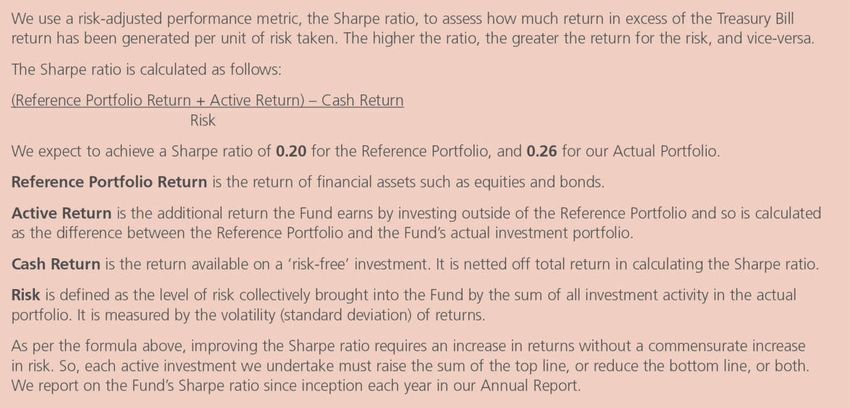
C O NT E NT S

01                                                                                 Part 2: Elevate NZ Venture Fund

Introduction
He Kupu Whakataki ...................................................... 01
                                                                                   07
                                                                                   The ultimate goal (outcome)
Part 1: NZ Super Fund
                                                                                   Te tino whāinga (te putanga) ........................................13

02                                                                                 08
Our ultimate goal (outcome) and strategic objectives
Tā mātou whāinga mātāmua me ngā                                                    What we intend to achieve in 2021/2022 and
whāinga rautaki ............................................................ 03    how we will measure our performance
                                                                                   Ko tā mātou e whai nei ki te whakatutuki
                                                                                   i te tau 2021/2022 me te huarahi ka whāia

03                                                                                 hei ine i te whaihua o ā mātou mahi .......................... 14

                                                                                   Part 3: Financials
How we measure our performance
Te huarahi e inea ai e mātou ā mātou mahi .............. 05

                                                                                   09
04                                                                                 Financial Projections for 2021/2022
                                                                                   Ngā whakapae ā-pūtea mō te tau 2021
What we intend to achieve in 2021/2022                                             me te tau 2022 ...............................................................16
Ngā kaupapa e whai ana mātou ki te
whakatutuki i te tau 2021 me te tau 2022 .................. 06

                                                                                   10
05                                                                                 Prospective Financial Statements
                                                                                   Ngā pūrongo tahua e whakapaetia ana ......................17
Statement of Estimated Fund Performance
Te Tauākī e Whakatau Tata ana i te
Tupu o te Tahua ............................................................. 09

06
What are the key risks to the Fund’s performance in
2021/2022 and how are we managing them?
He aha ngā tūraru matua ka pā pea kit e tupu
o te Tahua I te tau 2021 me te tau 2022, ā,
e pēwhea ana tā mātou noho takatū ki era? ..............10

GUARDIANS OF NEW ZEALAND SUPERANNUATION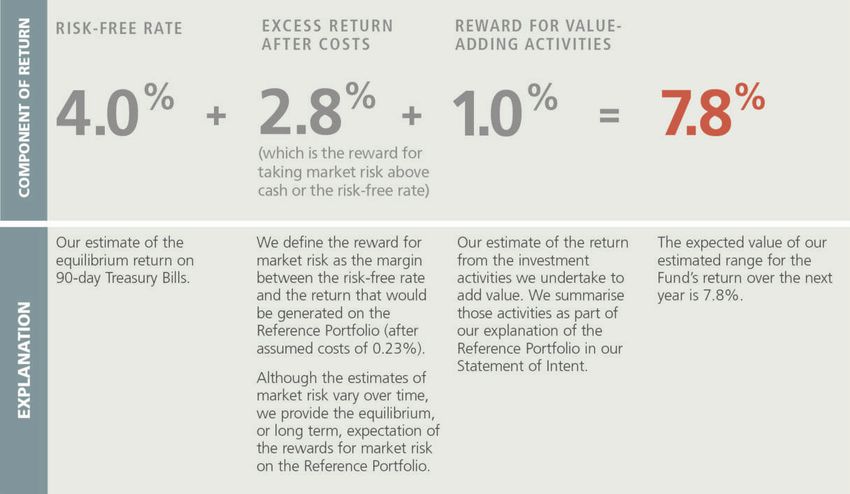
ST ATE M E N T O F P E R F O R M A N C E E X P EC TA TI O N S 2 02 1- 20 22                                 01

                                                  Introduction

                                        He Kupu Whakataki

The Guardians of New Zealand Superannuation is a Crown              Our Statement of Performance Expectations outlines the
entity charged with managing the NZ Super Fund and the              activities we will undertake in the financial year to 30 June 2022
Elevate NZ Venture Fund.                                            towards our long term objectives, and how we will measure
                                                                    our performance.
The NZ Super Fund is a global investment fund set up in 2001
to partially pre-fund the future cost of New Zealand                Our Statement also sets out:
superannuation. By using the Fund to save now in order to pay
                                                                    • the Board’s expectations for the NZ Super Fund's
for future retirement benefits, the Government aims to smooth
                                                                      performance over the 2021/22 financial year;
the cost of New Zealand Superannuation between today’s
taxpayers and future generations.                                   • the key risks to our performance and the actions being
                                                                      taken by the Board to manage those risks;
Investing began in 2003. The Guardians invests the capital
                                                                    • forecast operating costs to be incurred by the Elevate NZ
contributions made by the Government, as well as the net
                                                                      Venture Fund; and
returns generated from the investments made (less the tax
paid).                                                              • forecast financial statements for the 2021/22 financial year
                                                                      for both the Guardians and the NZ Super Fund. Forecast
In 2019, the Government established a venture capital fund,           financial statements for the Elevate NZ Venture Fund are not
a second fund managed by the Guardians. The venture capital           required.
fund, called the Elevate NZ Venture Fund, is a fund-of-funds
programme, managed on behalf of the Guardians by New                Each year we receive a Letter of Expectations from the Minister
Zealand Growth Capital Partners Limited (NZGCP). The Elevate        of Finance outlining the Minister’s expectations of the
NZ Venture Fund consists of $259.5 million of initial               Guardians’ activities for the forthcoming year. A number of the
contributions. The Government expects to make further               activities referred to are multi-year activities that we undertake
contributions, such that total contributions to the fund are        as part of our business as usual work streams. A copy of the
$300 million over time.                                             Letter, along with the Guardians’ response, is available on our
                                                                    website (www.nzsuperfund.nz).
                               NZ SUPER FUND - SINCE
                               INCEPTION (after costs,
                               unaudited, as at 31 March 2021

Government Contributions       $19.43 billion

Investment Returns             $43.84 billion

NZ tax paid                    $(7.54) billion

Other movements                $0.02 billion

Fund size, as at 31 March      $55.76 billion
2021

                                                                                          GUARDIANS OF NEW ZEALAND SUPERANNUATION
02 S TAT EM E N T O F P E R F O R MA NC E EX P E C T A T I O N S 2 0 2 1 - 2 0 2 2
01
NZ Super Fund
GUARDIANS OF NEW ZEALAND SUPERANNUATIONST ATE M E N T O F P E R F O R M A N C E E X P EC TA TI O N S 2 02 1- 20 22 03
Our ultimate goal (outcome) and strategic objectives
Tā mātou whāinga mātāmua me ngā whāinga rautaki
The Guardians’ output is to invest the NZ Super Fund on a Managing the NZ Super Fund comprises five work streams
prudent, commercial basis and, in doing so, manage and covering:
administer it in a manner consistent with:
• investment;
• best-practice portfolio management; • risk management;
• maximising return without undue risk to the Fund as a • cost control;
whole; and
• governance; and
• avoiding prejudice to New Zealand’s reputation as a
• organisational capability.
responsible member of the world community.
Our 2021-2026 Strategic Plan sets out our medium term
The Guardians’ mission is to maximise the NZ Super Fund’s
strategic objectives and strategic priorities that we will
return over the long-term, without undue risk, so as to support
undertake to achieve these objectives.
this outcome.
More information on these objectives and what success looks
like for the NZ Super Fund in the medium term can be found
in our 2021-2026 Statement of Intent (pages 7 - 8).
GUARDIANS OF NEW ZEALAND SUPERANNUATION04 S TAT EM E N T O F P E R F O R MA NC E EX P E C T A T I O N S 2 0 2 1 - 2 0 2 2
Our strategic framework is outlined in our Statement of Intent
2021-2026 (available on our website at www.nzsuperfund.nz)
and is summarised below:
GUARDIANS OF NEW ZEALAND SUPERANNUATIONST ATE M E N T O F P E R F O R M A N C E E X P EC TA TI O N S 2 02 1- 20 22 05
How we measure our performance
Te huarahi e inea ai e mātou ā mātou mahi
In line with this, over rolling 20 year periods, we expect the NZ Super Fund to achieve:
• the 90 day Treasury Bill Return
• + 2.8% p.a. in Reference Portfolio Returns
• + 1% p.a. value add in Actual Fund Returns
With only a 1% chance of delivering a return over 20 years worse than -1.7% p.a.
More information about the measures used to track our long term performance can be found in our Statement of Intent (pages
10 - 12) and on our website. Our Statement of Intent (pages 12 - 15) also sets out how we measure success in delivering on each
of our five work programmes through which we manage the NZ Super Fund.
Those measures will be used to assess our performance in carrying out key activities we expect to achieve in 2021/22. Where
possible we look to obtain assessment of our performance from independent third parties and global experts in benchmarking.
We report on the NZ Super Fund’s progress towards its long-term and short-term objectives in our Annual Reports, including
performance against specific measures in the Statement of Performance.
GUARDIANS OF NEW ZEALAND SUPERANNUATION06 S TAT EM E N T O F P E R F O R MA NC E EX P E C T A T I O N S 2 0 2 1 - 2 0 2 2
What we intend to achieve in 2021/22
Ngā kaupapa e whai ana mātou ki te whakatutuki i te
tau 2021 me te tau 2022
In this Statement of Performance Expectations we describe the key priorities for the Guardians in respect of the NZ Super Fund
in 2021/22. These priorities relate to the work programmes that support the objectives set out in our Statement of Intent.
The performance measures for each of these work programmes are set out in the Statement of Intent. Our expectations for the
Fund’s financial performance over the 2021/22 financial year are covered later in this document.
We will report on our performance in implementing these activities in our 2021/22 Annual Report.
Strategic Priority 2021/22 Metrics Key Risks to Achievement Contribution to Strategic Pillars
& Long-Term Goals
1. Responsible Investment Specific activities and success Business as usual demands Active membership and
Strategy Review metrics for 2021/22 will be set preventing sufficient leadership of influential global
(Investment) once the strategies have been resources from being applied forums.
approved in June 2021. to this longer-term planning
The current responsible Integration of environmental,
initiative.
investment strategy has been social and governance (ESG)
in place for ten years, and as Investment frameworks factors into investment
approaches to responsible hinder implementation. decisions.
investment and the external
Best practice ESG and
context have evolved, a
responsible investment
review was prioritised for
strategies integrated into
2020/21.
investment processes.
This work remains a strategic
Continuing Board education
priority into 2021/22 and may
and leveraging of insights and
involve multi-year
experience.
implementation.
Relevant Strategic Pillar(s): #1
Best Portfolio
2. Investment Data Ability to measure data Eagerness to make progress Single top-down view across
Strategy accuracy and completeness, results in too many tactical a range of opportunities.
(Investment, Cost Control) providing accountability and solutions.
Greater internal capability in
insight.
The investment data strategy Delay in onboarding new identifying opportunities.
is being established in Improvements in data cloud services, caution over
Structured and consistent
2020/21, and the ongoing accuracy and completeness. cyber security risk.
opportunistic investing.
operating model resourced.
Measures of efficiency, both Conflicting requirements for
Best practice governance,
The three legs of the data in consuming and managing change to our legacy
data and information
strategy for 2021/22 are: data. Sentiment feedback platforms could act as a
management.
regarding trust and
GUARDIANS OF NEW ZEALAND SUPERANNUATIONST ATE M E N T O F P E R F O R M A N C E E X P EC TA TI O N S 2 02 1- 20 22 07
Strategic Priority 2021/22 Metrics Key Risks to Achievement Contribution to Strategic Pillars
& Long-Term Goals
• Data technology - a confidence in our investment moving target for our Frameworks and processes
decision on the strategic data. emerging new solutions. are scalable and flexible to
direction for our accommodate new initiatives
Agility and flexibility when Identifying and engaging
investment data and products.
onboarding new sources of suitable capability and
architecture will be made
data and when trading new capacity (people) takes too
in 2020/21. Progress on
products. long.
retiring legacy solutions in
favour of more efficient, Analytical models are robust, Decision-making process
flexible and lower risk efficient and sustainable, delays progress.
solutions is expected. resulting in accuracy,
Three highly dependent
• Data analytics - we will completeness, trust and
functions are not adequately
establish a data analytics confidence in their output and
coordinated, with various
support function, long-term agility and
side-effects resulting from
supporting cross- flexibility.
conflicting priorities.
Guardians' data analysis
and reporting needs and Lack of alignment between
the provision of end users and service
convenient frameworks providers.
and ways to access
investment data.
• Data services - we will
establish a data services
function to provide a hub
for data sourcing,
production and
maintenance activities,
identifying those
responsible for data
definition and validation
of data.
Relevant Strategic Pillar(s): #1
Best Portfolio, #4 Enterprise
Excellence
3. Human Resources Complete implementation of Underestimating the Frameworks and processes
System phase 1 (core HR activities,complexity of this project, are scalable and flexible.
(Organisational Capability) recruitment and onboarding including the
Embed ongoing innovation
implementation). interconnectedness of the
The selected Oracle HCM and leverage technology.
systems and risks to be
solution for the new Human Prototype refinement, testing,
managed - increasing Motivated staff with
Resources system will deliver training and implementation
implementation times, costs, organisational buy-in
an integrated set of human of phase 2 (performance,
likelihood of business achieved through
resources modules, allowing careers & goals, learning
interruption. development and talent
processes and data to be management and health &
programmes.
streamlined. This will increase safety) and phase 3 Buy-in from the team and
the value of the workplace (compensation management, change management risks.
experience provided to talent review and succession).
employees. It will also deliver
Phase 4 (benefits) will be
the revised talent life cycle
completed in 2022/23.
framework.
Project implementation will
span multiple financial years,
with main deliverables during
2021/22.
Relevant Strategic Pillar(s): #3
Great Team, #4 Enterprise
Excellence
GUARDIANS OF NEW ZEALAND SUPERANNUATION08 S TAT EM E N T O F P E R F O R MA NC E EX P E C T A T I O N S 2 0 2 1 - 2 0 2 2
Strategic Priority 2021/22 Metrics Key Risks to Achievement Contribution to Strategic Pillars
& Long-Term Goals
4. Diversity, Equity and The review will enable us to Resourcing the programme Diversity and inclusiveness
Inclusion understand our current state, of work required. policies firmly embedded.
(Organisational Capability) clarify threats and
Buy-in from the team and Motivated staff with
opportunities, and enable
An external review is being change management risks. organisational buy-in
concrete action.
undertaken in 2020/21 to achieved through
heighten our awareness and A road map will be established development and talent
deepen our understanding of with success metrics for programmes.
diversity, equity and inclusion. 2021/22.
The objective is to gain
actionable insights, at both a
strategic and tactical level,
into areas for improvement.
We expect this will help the
organisation to become more
diverse, improve employee
experience and role model
inclusivity.
The review will extend
throughout the entire
employee life cycle and
related activity, policies,
procedures and systems.
Relevant Strategic Pillar(s): #3
Great Team
GUARDIANS OF NEW ZEALAND SUPERANNUATIONST ATE M E N T O F P E R F O R M A N C E E X P EC TA TI O N S 2 02 1- 20 22 09
Statement of Estimated Fund Performance
Te Tauākī e Whakatau Tata ana i te Tupu o te Tahua
Predicting short-term financial market returns with any useful accuracy over such a near-term horizon is impossible. We therefore
show our long-term, or equilibrium, expectations for the Reference Portfolio return (see our 2021-2026 Statement of Intent for
more information about the Reference Portfolio).
To that we add our expectations of returns from value-added activities to arrive at the mid-point for the actual Fund. This is shown
in the table below. We note that given the volatility of returns there is a range of possible return outcomes around these estimates.
GUARDIANS OF NEW ZEALAND SUPERANNUATION10 S TAT EM E N T O F P E R F O R MA NC E EX P E C T A T I O N S 2 0 2 1 - 2 0 2 2
What are the key risks to the NZ Super Fund’s
performance in 2021/22 and how are we managing
them?
He aha ngā tūraru matua ka pā pea kit e tupu o te
Tahua I te tau 2021 me te tau 2022, ā, e pēwhea ana tā
mātou noho takatū ki era?
Investment strategies are designed to improve the Sharpe ratio of the NZ Super
Fund, that is to increase return without a commensurate increase in risk.
The Board has developed a risk-appetite statement outlining its of systems for internal controls and financial reporting. The
expectations of the level of risk that is appropriate for the NZ Board delegates day-to-day management of risk to the Chief
Super Fund to take on. This statement, along with our wider Executive Officer.
approach to managing risk, is set out in schedule 2 of the
Inherent in this delegation is a desire to ensure that day-to-day
Guardians’ Risk Management Policy and in our Statement of
responsibility for risk management is at the business unit level,
Investment Policies, Standards and Procedures, available on
where risk is seen as part of the overall business process, and
www.nzsuperfund.nz. Performance against this statement is
a robust framework of identification, evaluation, monitoring
measured and reported to the Board on a regular basis.
and control exists.
The Guardians has identified five major categories of risk with
More information on the Guardians’ risk management process
respect to the NZ Super Fund:
can be found in the risk management section of our Annual
1. Investment risk: The risks attached to investment goals and Report. While each of the five categories of risk identified
objectives, including market, credit, counterparty, manager above affect the performance of the Fund, further comment
and liquidity risk; on key investment risks is set out below.
2. Strategic risk: The risk that we make inappropriate strategic Market Risk: Market risk is the risk that the fair value of future
choices or are unable to successfully implement selected cash flows of financial instruments will fluctuate due to
strategies; changes in market variables such as equity prices, interest
3. Legislative and regulatory risk: The risk of loss due to rates, foreign exchange rates and credit default swap spreads.
noncompliance with laws, rules and regulations and
The market risks that the Fund is primarily exposed to are:
prescribed industry practice;
4. Operational risk: The risk of loss from inadequate or failed • Equity price risk, both globally and in New Zealand. We
internal processes, people and systems or from external manage this through diversification between asset classes
factors; and by imposing investment constraints at a total Fund level
and within individual investment mandates.
5. Reputation risk: The risk of loss of reputation or credibility
sufficient to have a commercial or other practical impact • Foreign currency risk, primarily due to changes in the New
due to internal or external factors. Zealand dollar versus the United States dollar. This is
managed by establishing a target hedge ratio for all foreign
The Board and management of the Guardians are responsible currency exposures at a total Fund level and by specifying
for managing these risks. The Guardians’ risk-management bounds within which external investment managers may
framework is reviewed and approved by the Board. The Audit take on foreign currency exposures.
Committee reviews the reports of management, and of the
Guardians’ external and internal auditors, on the effectiveness
GUARDIANS OF NEW ZEALAND SUPERANNUATIONST ATE M E N T O F P E R F O R M A N C E E X P EC TA TI O N S 2 02 1- 20 22 11
• Interest rate risk, primarily due to changes in New Zealand Counterparty Risk: The Board and management closely monitor
and United States interest rates. This is managed by the creditworthiness of the NZ Super Fund’s counterparties by
diversification between asset classes and by imposing reviewing credit ratings, credit default swap spreads, equity
investment constraints on external investment managers. pricing, news flows and other indicators on a regular basis.
The NZ Super Fund is also exposed to market risk in respect of Liquidity Risk: Liquidity risk is the risk that the NZ Super Fund
its forestry activities due to the global volatility of log prices, will encounter difficulty in meeting the obligations associated
exchange rates and transportation costs. These exposures are with its financial liabilities as they fall due.
managed through adjustments to harvest levels and marketing
Our liquidity framework is designed to ensure that the NZ
efforts in order to minimise the risk of financial loss.
Super Fund has the ability to generate sufficient cash in a
Additionally, the NZ Super Fund is exposed to market risk in timely manner to meet its financial commitments.
respect of its farming activities due to the global volatility of
Liquidity risk is managed by:
product prices and the price of key inputs. Prices relative to key
inputs are continually monitored so that operations can adapt • forecasting liquidity requirements;
as required. • maintaining a buffer of cash and highly liquid securities to
Credit Risk: Credit risk is the risk that a third party will default meet short-term liquidity requirements;
on its obligation to the Guardians, causing the Fund to incur • regular reviews of the liquidity available by senior
a loss. The NZ Super Fund is exposed to credit risk arising from management;
its cash and cash equivalents, receivables and investments. • periodic ‘stress tests’ of the liquidity framework using
The Board and management mitigate the NZ Super Fund’s theoretical scenarios.
exposure to credit risk associated with our internally managed
investments by applying specific prudential limits to any
unhedged exposure to any single investment manager or
asset. Investment strategy specific constraints are also imposed
to limit the NZ Super Fund’s net unhedged exposure to
individual counterparties and clearing houses.
The credit risk associated with externally managed investments
is managed by including specific prudential limits in our
investment management agreements which restrict the credit
risk the NZ Super Fund is exposed to.
Manager Risk: External investment managers are monitored
individually on an ongoing basis. We evaluate our managers in
two ways:
1. 'Conviction' - our confidence in the manager's competence
to execute an investment opportunity and the general
quality and 'fit' of the organisation. Key inputs include the
manager's performance, their overall conduct and the
extent to which they are meeting any knowledge transfer
expectations that we have of them. The management of
ESG factors is also a key element. Conviction reviews are
undertaken at least annually.
2. Operational Due Diligence - the manager's regulatory,
operational, organisational, and financial processes and
procedures. If a manager does not pass the operational due
diligence review, we do not invest. Once invested, if we
have operational concerns, we act on them immediately
(including termination if appropriate).
GUARDIANS OF NEW ZEALAND SUPERANNUATION12 S TAT EM E N T O F P E R F O R MA NC E EX P E C T A T I O N S 2 0 2 1 - 2 0 2 2
02
Elevate NZ Venture Fund
GUARDIANS OF NEW ZEALAND SUPERANNUATIONST ATE M E N T O F P E R F O R M A N C E E X P EC TA TI O N S 2 02 1- 20 22 13
The ultimate goal (outcome)
Te tino whāinga (te putanga)
The outcome of the Elevate NZ Venture Fund is its contribution, over a 15 year
timeframe, to a sustainable and productive New Zealand economy.
This is to be achieved through: Through 2019/20 the Guardians worked with The Treasury,
Ministry of Business Innovation and Employment, and with
• Increased venture capital being available to New Zealand
NZGCP to develop an effective and workable legislative
entities;
approach to establish the Elevate NZ Venture Fund. We worked
• More self-sustaining early stage capital markets; and closely together on all of the policy detail to ensure that it was
• Successful and sustainable New Zealand businesses. consistent with best practice in the context of New Zealand
venture capital markets.
The Guardians is responsible for managing and administering
the Elevate NZ Venture Fund, according to the high level policy The appointment of NZGCP as the external funds manager was
directions provided in the Policy Statement, and using best- anticipated in the Venture Capital Act 2019. The Management
practice investment management that is appropriate for Agreement negotiated with NZGCP reflects best practice in the
institutional investment in those markets. Managing the fund context of New Zealand's venture capital markets. As required
in this manner is our output. in the legislation, the agreement was reviewed by the Minister
of Finance before it was signed by both parties in February
We deliver on this output by: 2020.
• Appointing New Zealand Growth Capital Partners Limited The Elevate NZ Venture Fund was launched in March 2020. In
(NZGCP) as the external fund manager for the Elevate NZ spite of the disruptions caused by the COVID-19 pandemic, the
Venture Fund; fund has made good progress in allocating capital to New
• Ensuring the management agreement reflects best practice Zealand-focused venture capital managers and in turn those
in the context of institutional investment in New Zealand managers have commenced the deployment of capital to
venture capital markets; investee companies.
• Ensuring that information reporting requirements relating
to the flow of capital are covered in the management
agreement;
• Continuing to monitor the performance of NZGCP; and
• Ensuring compliance with the Statement of Investment
Policies and Procedures.
GUARDIANS OF NEW ZEALAND SUPERANNUATION14 S TAT EM E N T O F P E R F O R MA NC E EX P E C T A T I O N S 2 0 2 1 - 2 0 2 2
What we intend to achieve in 2021/22 and how we
will measure our performance
Ko tā mātou e whai nei ki te whakatutuki i te tau
2021/22 me te huarahi ka whāia hei ine i te whaihua o
ā mātou mahi
The Elevate NZ Venture Fund is a fund-of-funds programme, managed on behalf of
the Guardians by NZGCP.
It is the responsibility of NZGCP to appoint private sector venture capital fund managers who will select the entities to invest in.
It is our responsibility to monitor NZGCP's performance in line with the best practice approach we have developed to manage
relationships with other local and international investment managers, as applicable to the New Zealand venture capital market.
We use a conviction process to assess a manager’s competence to execute an investment opportunity on our behalf. We use
eight factors of performance, reflecting our view that for a manager’s capabilities to be repeatable, they need to demonstrate:
• Viability – the manager is credible and stable as an organisation such that they can deliver on their strategy over time.
• Structure & Focus – the manager is appropriately focused on and aligned to the Guardians.
• Trust – we are confident that the manager will do what they say they will do, and always act in our interests.
• Risk Awareness & Management – the manager has robust systems and processes for identifying, assessing, managing and
reporting investment and non-investment risks.
• People Capabilities – the manager’s team has the necessary competencies and depth to execute on the investment strategy.
• Process Capabilities – the manager has the necessary tools, systems, networks and processes to execute on the investment
strategy.
• Opportunity Consistency – the manager can demonstrate that they understand our investment objective and how their
strategy will deliver, and they consistently execute their strategy as we would expect and according to the risk-return profile
in line with the opportunity.
• Performance – the manager has demonstrated performance in executing on the investment strategy.
Over 2021/22 we will undertake a conviction review of NZGCP, as manager of the Elevate NZ Venture Fund, and report back in
the Statement of Performance section of our 2021/22 Annual Report.
GUARDIANS OF NEW ZEALAND SUPERANNUATIONST ATE M E N T O F P E R F O R M A N C E E X P EC TA TI O N S 2 02 1- 20 22 15
03
Financials
GUARDIANS OF NEW ZEALAND SUPERANNUATION16 S TAT EM E N T O F P E R F O R MA NC E EX P E C T A T I O N S 2 0 2 1 - 2 0 2 2
Financial Projections for 2021/22
Ngā whakapae ā-pūtea mō te tau 2021 me te tau 2022
COST ALLOCATION We have prepared estimates of these variable costs based on
Costs are incurred directly by the Guardians and both of its our expectations of the NZ Super Fund over the year.
mandates, the NZ Super Fund and Elevate NZ Venture Fund. No prospective financial statements are required to be prepared
The Guardians’ costs – with the exception of those incurred by for the Elevate NZ Venture Fund.
the Board – are met from the NZ Super Fund and Elevate NZ Costs incurred and charged to the Elevate NZ Venture Fund by
Venture Fund and include remuneration, staff expenses such NZGCP in their day-to-day management of that fund will be
as office services, travel, and professional development. disclosed in its Statement of Performance Expectations.
Certain expenses of the Board are met from Parliamentary EXPECTED TOTAL COST OF MANAGING THE NZ SUPER
appropriation and are composed of Board fees, the cost of
FUND 2021/2022
travel to and from Board meetings and the cost of external
audit for the Guardians. The forecast cost of managing the NZ Super Fund in 2021/22
– excluding performance fees, is $164.0 million or 0.29% of
Of those costs not met from appropriations, the Guardians expected average funds under management, compared to the
charges the Elevate NZ Venture Fund a flat rate fee, equating forecast for 2020/21 of $153.3 million or 0.36%.
to 18 basis points per annum of the planned $300m
commitment to that mandate. This amount will be revised if Of this amount the Guardians’ expenses are $89.7 million,
costs are consistently higher or lower than expected. All other amounting to 0.16% of expected average funds under
costs are recharged to the NZ Super Fund, resulting in the management.
Guardians’ incurring a nil gain/loss each year. Performance fees are only paid when investment managers
All of these operating costs, irrespective of whether they are outperform their benchmarks and so they are better described
met from appropriations or from the Guardians’ two as an offset against returns than a cost. If we include forecast
mandates, are consolidated in the financial statements of the performance fees, the total forecast cost of managing the NZ
Guardians and subject to the reporting and disclosure Super Fund in 2021/22 is $182.0 million or 0.32%, compared
obligations of the Crown Entities Act (2004). to the forecast for 2020/21 of $168.4 million or 0.40%.
NZ Super Fund costs are those incurred in the establishment It is important to emphasise that these are forecast figures and
and implementation of investment policy and the financial and that actual fees will be dependent on investment performance
risk management of that fund’s assets, including: fees paid to and the availability of suitable investment opportunities and
external managers and the master custodian; and the recharge access points.
paid to the Guardians noted above. Actual performance fees paid each financial year are disclosed
Elevate NZ Venture Fund costs are primarily composed of: in our Annual Report.
manager fees; fees paid to NZGCP for the day-to-day REPORTABLE OUTPUTS
management of the fund; and the recharge paid to the
The Guardians receives an annual appropriation to meet fees
Guardians.
and expenses of its Board members and fees paid to its
We have prepared prospective financial statements for both external auditor. The appropriation for 2021/22 is
the Guardians and the NZ Super Fund. The NZ Super Fund $0.73 million.
estimates assume that earnings will be broadly in line with the
All of the Guardians’ outputs are funded by payments from the
long-term estimate (i.e. 7.8% p.a. after costs but before New
funds rather than from annual appropriations through
Zealand tax). Some costs are fixed (e.g. audit costs) and can be
Parliament.
easily estimated, but the majority are variable (i.e. base and
performance fees paid to investment managers or transaction
fees paid to the custodian).
GUARDIANS OF NEW ZEALAND SUPERANNUATIONST ATE M E N T O F P E R F O R M A N C E E X P EC TA TI O N S 2 02 1- 20 22 17
Prospective Financial Statements
Ngā pūrongo tahua e whakapaetia ana
We have prepared prospective financial statements for the The Board authorised the issue of these prospective financial
Guardians (in our role as manager and administrator of the NZ statements on 14 April 2020. The Board is responsible for the
Super Fund and the Elevate NZ Venture Fund) and for the NZ prospective financial statements presented, including the
Super Fund consistent with this Statement of Performance appropriateness of the assumptions underlying the prospective
Expectations. Prospective financial statements are not required financial statements and all other required disclosures.
for and have not been prepared for the Guardians other
The assumptions used in preparing the prospective financial
mandate, the Elevate NZ Venture Fund.
statements have been disclosed following the accounting
These prospective financial statements rely on assumptions policies of the Guardians and the NZ Super Fund. Actual
with respect to unknown or uncertain future events. financial results have not been incorporated into the
Assumptions represent a risk in that actual events may vary prospective financial statements. The Board does not intend to
from the assumption and that all of the outcomes that may update these prospective financial statements subsequent to
flow from actual events cannot be guaranteed. presentation.
These prospective financial statements should be read within
the context of the 2021-26 Statement of Intent and this
Statement of Performance Expectations. Information in these
prospective financial statements may not be appropriate for
purposes other than those described.
GUARDIANS OF NEW ZEALAND SUPERANNUATION18 S TAT EM E N T O F P E R F O R MA NC E EX P E C T A T I O N S 2 0 2 1 - 2 0 2 2
GU A RDIA NS OF NEW ZEALAND SUPERANNUATION AND GROUP
Prospective Consolidated Statement of Comprehensive
Revenue and Expense
FOR THE YEAR ENDING 30 JUNE 2022 NZD'000
Cost reimbursement from the New Zealand Superannuation Fund 88,884
Cost reimbursement from the Elevate NZ Venture Fund 500
Other revenue 95
Revenue from exchange transactions 89,479
Appropriations from the Crown 728
Revenue from non-exchange transactions 728
Total revenue 90,207
Board members' fees (404)
Employee entitlements (58,979)
Other expenses (30,824)
Total expenses (90,207)
Surplus/(Deficit) for the year -
Total comprehensive revenue and expense for the year -
GUARDIANS OF NEW ZEALAND SUPERANNUATIONST ATE M E N T O F P E R F O R M A N C E E X P EC TA TI O N S 2 02 1- 20 22 19
GU A RDIA NS OF NEW ZEALAND SUPERAN NU ATION AN D GR OUP
Prospective Consolidated Statement
of Financial Position
AS AT 30 JUNE 2022 NZD'000
ASSETS
Current assets
Cash and cash equivalents 3,774
Receivables from exchange transactions 15,764
Receivables from non-exchange transactions -
Non-current assets
Receivables from exchange transactions -
Total assets 19,538
LIABILITIES
Current liabilities
Payables under exchange transactions (1,544)
Employee entitlements (14,486)
Deferred lease incentive (86)
Non-current liabilities
Employee entitlements (2,660)
Deferred lease incentive (262)
Total liabilities (19,038)
Net assets 500
PUBLIC EQUITY
Accumulated comprehensive revenue and expense -
General equity reserve 500
Total public equity 500
GUARDIANS OF NEW ZEALAND SUPERANNUATION20 S TAT EM E N T O F P E R F O R MA NC E EX P E C T A T I O N S 2 0 2 1 - 2 0 2 2
GU A RDIA NS OF NEW ZEALAND SUPERANNUATION AND GROUP
Prospective Consolidated Statement of
Changes in Public Equity
ACCUMULATED
COMPREHENSIVE
GENERAL EQUITY REVENUE AND
RESERVE EXPENSE TOTAL
FOR THE YEAR ENDING 30 JUNE 2022 NZD'000 NZD'000 NZD'000
Balance at 30 June 2021 500 - 500
Total comprehensive revenue and expense for the year - - -
Balance at 30 June 2022 500 - 500
GUARDIANS OF NEW ZEALAND SUPERANNUATIONST ATE M E N T O F P E R F O R M A N C E E X P EC TA TI O N S 2 02 1- 20 22 21
GU A RDIA NS OF NEW ZEALAND SUPERAN NU ATION AN D GR OUP
Prospective Consolidated Statement of
Cash Flows
FOR THE YEAR ENDING 30 JUNE 2022 NZD'000
CASH FLOWS FROM OPERATING ACTIVITIES
Cash was provided from:
Receipts from the Crown 728
Receipts from the New Zealand Superannuation Fund 83,347
Receipts from the Elevate NZ Venture Fund 460
Interest received 4
Goods and Services Tax 25
Other receipts 108
Total cash inflow from operating activities 84,672
Cash was applied to:
Payments to Board members (404)
Payments to suppliers (35,714)
Payments to employees (48,455)
Total cash outflow from operating activities (84,573)
Net cash provided by/(used in) operating activities 99
Net increase/(decrease) in cash and cash equivalents 99
Cash and cash equivalents at the beginning of the financial year 3,675
Cash and cash equivalents at the end of the financial year 3,774
GUARDIANS OF NEW ZEALAND SUPERANNUATION22 S TAT EM E N T O F P E R F O R MA NC E EX P E C T A T I O N S 2 0 2 1 - 2 0 2 2
GU A RDIA NS OF NEW ZEALAND SUPERANNUATION AND GROUP
Summary of significant accounting policies
GENERAL INFORMATION consolidated financial statements, all inter-entity transactions,
These are the prospective financial statements of the Guardians balances, unrealised gains and losses are eliminated.
of New Zealand Superannuation (Guardians) and its b) Subsidiaries
subsidiaries (Group). The Guardians is a Crown entity as defined
by the Crown Entities Act 2004. The Guardians is also a public Subsidiaries are those entities that are controlled by the
authority in terms of the Income Tax Act 2007 and therefore Guardians under the provisions of PBE IPSAS 35 Consolidated
is exempt from income tax. Financial Statements. The Guardians controls an entity when it
is exposed to, or has rights to, variable benefits from its
The Guardians is domiciled in New Zealand and the address of involvement with the entity and has the ability to affect the
its principal place of business is 21 Queen Street, Auckland. nature or amount of those benefits through its power over the
entity. The Board and management reassess whether or not the
The prospective financial statements of the Guardians and
Guardians controls an entity if facts and circumstances indicate
Group for the year ending 30 June 2022 were authorised for
that there are changes to one or more of the elements of
issue in accordance with a resolution of the Board of the
control.
Guardians of New Zealand Superannuation on 14 April 2021.
c) Revenue
STATEMENT OF COMPLIANCE
The prospective financial statements have been prepared in The Guardians primarily derives revenue through the provision
accordance with the Crown Entities Act 2004 and the Public of services to the Crown, the NZ Super Fund and the Elevate
Finance Act 1989 and comply with Public Benefit Entity Fund. Revenue is recognised when it is probable that economic
Financial Reporting Standard 42: Prospective Financial benefits will flow to the Guardians and the revenue can be
Statements. reliably measured. The following specific recognition criteria
must also be met before revenue is recognised:
The Guardians is a public benefit entity, as the primary purpose
is to manage and administer the New Zealand Superannuation REVENUE FROM EXCHANGE TRANSACTIONS
Fund (NZ Super Fund) and the Elevate NZ Venture Fund (Elevate Exchange transactions are transactions in which one entity
Fund). The prospective financial statements have been receives assets or services, or has liabilities extinguished, and
prepared in accordance with Generally Accepted Accounting directly gives approximately equal value (primarily in the form
Practice in New Zealand (NZ GAAP) as it applies to prospective of cash, goods, services, or use of assets) to another entity in
financial statements. They comply with Tier 1 Public Benefit exchange.
Entity (PBE) Accounting Standards. Rendering of services
BASIS OF PREPARATION Cost reimbursement from the NZ Super Fund and the Elevate
The prospective financial statements have been prepared on Fund is recognised by reference to the stage of completion of
a historical cost basis. services provided at balance date when the transaction
involving the rendering of services can be reliably estimated.
The prospective financial statements are presented in New The stage of completion is measured by the proportion of costs
Zealand dollars. All values are rounded to the nearest thousand incurred to date compared with estimated total costs of the
dollars (NZD'000) unless stated otherwise. transaction.
Accounting policies are selected and applied in a manner that Interest income
ensures the resulting financial information satisfies the
Interest income is recognised as the interest accrues, using the
concepts of relevance and reliability, thereby ensuring the
effective interest method. The effective interest method
substance of the underlying transactions or other events is
allocates interest at a constant rate of return over the expected
reported.
life of the financial instrument based on the estimated future
The following particular accounting policies that materially cash flows.
affect the preparation of the prospective financial statements
REVENUE FROM NON-EXCHANGE TRANSACTIONS
have been applied:
Non-exchange transactions are transactions that are not
a) Basis of consolidation exchange transactions. In a non-exchange transaction, an
The prospective consolidated financial statements comprise the entity either receives value from another entity without directly
prospective financial statements of the Guardians and its giving approximately equal value in exchange, or gives value
subsidiaries as at 30 June 2022. to another entity without directly receiving approximately equal
value in exchange.
The prospective financial statements of subsidiaries are
prepared for the same reporting period as the Guardians using
consistent accounting policies. In preparing prospective
GUARDIANS OF NEW ZEALAND SUPERANNUATIONST ATE M E N T O F P E R F O R M A N C E E X P EC TA TI O N S 2 02 1- 20 22 23
GU A RDIA NS OF NEW ZEALAND SUPERAN NU ATION AN D GR OUP
Appropriations from the Crown The classification of financial instruments at initial recognition
Revenue is recognised from the Crown when it is probable that depends on the Group’s business model for managing the
appropriations will be received, the value of those financial assets and the financial asset’s contractual cash flow
appropriations can be reliably measured and the transfer is free characteristics. In making an assessment of the business model
from conditions that require the asset to be refunded or for managing a financial asset, the Board and management
returned to the Crown if the conditions are not fulfilled. To the consider all relevant information.
extent there is a related condition attached to the SUBSEQUENT MEASUREMENT
appropriations that would give rise to a liability to repay the
The Group’s financial assets and financial liabilities are
appropriate amount, deferred revenue is recognised instead of
subsequently classified into the following categories:
revenue. In such situations, revenue is then recognised as the
conditions are satisfied. Financial assets at amortised cost
d) Operating leases The Group’s financial assets are classified at amortised cost if
both of the following criteria are met:
The determination of whether an arrangement is (or contains)
a lease is based on the substance of the arrangement at the • The financial asset is held within a business model whose
inception of the lease. The arrangement is (or contains) a lease objective is to hold financial assets in order to collect the
if fulfilment of the arrangement is dependent on the use of a contractual cash flows; and
specific asset or assets and the arrangement conveys a right to • The contractual terms of the financial asset give rise to cash
use the asset. Leases in which the lessor retains substantially all flows that are solely payments of principal and interest.
the risks and benefits of ownership of an asset are classified as
operating leases. Operating lease expenses are recognised on This category includes cash and cash equivalents and
a straight-line basis over the period of the lease. receivables.
e) Foreign currency translation Subsequent to initial recognition, financial assets at amortised
cost are measured at amortised cost using the effective interest
FUNCTIONAL AND PRESENTATION CURRENCY
method and are subject to impairment. When a financial asset
Items included in the prospective financial statements of the is impaired, impairment losses are recognised in the Prospective
Guardians are measured using the currency of the primary Consolidated Statement of Comprehensive Revenue and
economic environment in which the Guardians operates (the Expense in the period in which they arise.
functional currency). The functional currency of the Guardians
is New Zealand dollars. It is also the presentation currency. The Group’s financial assets are reclassified when, and only
when, the business model for managing those financial assets
TRANSACTIONS AND BALANCES changes.
Transactions denominated in foreign currencies are converted
to New Zealand dollars using the exchange rates prevailing at Financial liabilities at amortised cost
the dates of the transactions. Foreign currency monetary assets Financial liabilities at amortised cost are non-derivative financial
and liabilities are translated at the exchange rate prevailing at liabilities. This category includes trade payables and accrued
balance date. Where there is a movement in the exchange rate expenses. Subsequent to initial recognition, these financial
between the date of a foreign currency transaction and balance liabilities are measured at amortised cost using the effective
date, the resulting exchange differences are recognised in the interest method.
Prospective Consolidated Statement of Comprehensive
DERECOGNITION
Revenue and Expense.
Financial assets are derecognised when the rights to receive
f) Financial instruments cash flows from the assets have expired or when the Group has
A financial instrument is any contract that gives rise to a transferred substantially all of the risks and rewards of
financial asset of one entity and a financial liability or equity ownership. A financial liability is derecognised when the
instrument of another entity. Group’s obligation under the liability is discharged, cancelled
or has expired.
The Group is party to financial instruments as part of its normal
operations. These financial instruments include cash and cash IMPAIRMENT
equivalents, receivables and payables. All financial instruments The Board and management assess, at each reporting date,
are recognised in the Prospective Consolidated Statement of whether a financial asset is impaired. The amount of the
Financial Position and all revenues and expenses in relation to impairment loss is the difference between the contractual cash
financial instruments are recognised in the Prospective flows due in relation to the financial asset and the cash flows
Consolidated Statement of Comprehensive Revenue and that the Group expects to receive, discounted at an
Expense. approximation of the original effective interest rate.
INITIAL RECOGNITION Financial assets that are measured at amortised cost and
Financial assets and financial liabilities are recognised in the therefore subject to the impairment provisions (the ‘expected
Prospective Consolidated Statement of Financial Position when credit loss model’) of PBE IFRS 9 Financial Instruments comprise
the Group becomes a party to the contractual provisions of the cash and cash equivalents and receivables.
financial instrument. They are initially recognised at fair value The impairment loss for cash and cash equivalents is considered
plus transaction costs that are attributable to the acquisition immaterial.
of the financial asset or financial liability.
The Board and managment have applied a simplified approach
for calculating expected credit losses (ECLs) on receivables
GUARDIANS OF NEW ZEALAND SUPERANNUATION24 S TAT EM E N T O F P E R F O R MA NC E EX P E C T A T I O N S 2 0 2 1 - 2 0 2 2
GU A RDIA NS OF NEW ZEALAND SUPERANNUATION AND GROUP
under PBE IFRS 9 Financial Instruments. As a result, the Board LONG SERVICE LEAVE
and management do not track changes in credit risk, but Employees become eligible for long service leave after five
instead, recognise impairment losses based on lifetime ECLs at years of service.
each reporting date. The Group's approach to ECLs reflects a
probability-weighted outcome using reasonable and INCENTIVES
supportable information that is available without undue cost The Guardians has an incentive scheme in place for all
or effort at reporting date about past events, current conditions employees. For some employees, a component of their
and forecasts of future economic conditions. incentive payment is based on the performance of the NZ
Super Fund and is calculated progressively over a rolling four-
OFFSETTING FINANCIAL ASSETS AND FINANCIAL
year period. During the first three years of the four-year
LIABILITIES
calculation period, the value of the accrual is dependent on the
The Group offsets financial assets and financial liabilities when outcome of future periods. The liability reflected in the
it has a current legally enforceable right to set-off the Prospective Consolidated Statement of Financial Position
recognised amounts and there is an intention to settle on a net reflects the present value of the Guardians obligations in
basis. respect of that liability. The liability has been calculated based
g) Cash and cash equivalents on a medium-term expectation of the NZ Super Fund's
performance.
Cash and cash equivalents includes cash on hand, cash held in
bank accounts, demand deposits and other highly liquid l) Statement of Cash Flows
investments with an original maturity of three months or less. The following are the definitions of the terms used in the
h) Receivables Prospective Consolidated Statement of Cash Flows:
Receivables are initially recognised at fair value which is equal Operating activities include all activities other than investing or
to the amount of consideration that is unconditional. The financing activities. Cash inflows include all receipts from the
Group holds receivables with the objective to collect the sale of goods and services, interest and other sources of
contractual cash flows and therefore measures them revenue that support the Group’s operating activities. Cash
subsequently at amortised cost less impairment losses using the outflows include payments made to employees, suppliers and
effective interest method. for taxes and levies, other than income tax.
i) Goods and Services Tax (GST) Investing activities are those activities relating to the acquisition,
Revenues, expenses, assets and liabilities are recognised in the holding and disposal of current and non-current securities and
prospective financial statements exclusive of GST, with the any other non-current assets.
exception of receivables and payables which are stated inclusive Financing activities are those activities relating to changes in
of GST. Where GST is irrecoverable as an input tax, it is public equity and debt capital structure of the Group and those
recognised as part of the related asset or expense. The net activities relating to the cost of servicing the Group's equity
amount of GST recoverable from, or payable to, the Inland capital.
Revenue Department (IRD) is included as part of receivables or
payables in the Prospective Consolidated Statement of Cash flows are included in the Prospective Consolidated
Financial Position. Statement of Cash Flows on a gross basis. The GST component
of cash flows arising from investing and financing activities,
j) Payables which is recoverable from, or payable to, the IRD, is classified
Short term trade and other payables are initially recognised at as cash flows from operating activities.
fair value, then subsequently at amortised cost.
m) Changes in accounting policies
k) Employee entitlements There have been no changes in accounting policies. All
Liabilities for salaries, annual leave, long service leave and accounting policies have been applied consistently throughout
incentives are recognised in the Prospective Consolidated these prospective financial statements.
Statement of Comprehensive Revenue and Expense during the
n) Significant judgements and estimates
period in which the employee rendered the related service,
when it is probable that settlement will be required and such The preparation of the Guardians prospective financial
employee entitlements are capable of being measured reliably. statements requires the Board and management to make
judgements and use estimates that affect the reported
Employee entitlements that are due to be settled within 12 amounts of revenue, expenses, assets, liabilities and the
months are measured at their nominal values using the accompanying disclosures. Uncertainty about these
remuneration rate expected to apply at the time of settlement. judgements and estimates could result in outcomes that require
Employee entitlements that are not due to be settled within 12 a material adjustment to the carrying amounts of assets and
months are measured at the present value of the estimated liabilities in future periods. The judgements and estimates used
future cash outflows. The estimated future cash flows are in respect of the Guardians are continually evaluated. They are
based on likely future entitlements accruing to staff, based on based on historical experience and other factors, including
years of service, years to entitlement, the likelihood that staff expectations of future events that may have a financial impact
will reach the point of entitlement, and contractual entitlement on the Guardians and that are believed to be reasonable under
information. the circumstances. The judgements and estimates that the
Board and management have assessed to have the most
significant risk of causing a material adjustment to the carrying
GUARDIANS OF NEW ZEALAND SUPERANNUATIONST ATE M E N T O F P E R F O R M A N C E E X P EC TA TI O N S 2 02 1- 20 22 25
GU A RDIA NS OF NEW ZEALAND SUPERAN NU ATION AN D GR OUP
amount of assets and liabilities within the next financial year
are as follows:
EMPLOYEE ENTITLEMENTS – LONG SERVICE LEAVE
The key assumptions used in calculating the long service leave
liability include the discount rate, the likelihood that the
employee will reach the required level of service and the salary
inflation factor. Any changes in these assumptions will affect
the carrying amount of the liability. Expected future payments
are discounted using forward rates derived from the yield curve
of New Zealand government bonds. The discount rates used
have maturities that match, as closely as possible, the estimated
future cash outflows. The salary inflation factor has been
determined after considering historical salary inflation patterns.
EMPLOYEE ENTITLEMENTS – LONG TERM PORTION OF
INCENTIVES
Calculation of the long-term portion of the incentive liability
utilises assumptions regarding the future performance of the
NZ Super Fund, the employee's average salary over the vesting
period and the percentage of service rendered. The key
variable is the performance of the NZ Super Fund. Should the
performance of the NZ Super Fund differ from the assumption
used in the calculation of the long-term portion of the incentive
liability, this will impact the employee entitlements expense in
the Prospective Consolidated Statement of Comprehensive
Revenue and Expense and the carrying amount of the incentive
liability in the Prospective Consolidated Statement of Financial
Position. The Board and management mitigate this risk by using
a medium-term expectation of the NZ Super Fund's
performance.
HEADCOUNT
The Guardians forecast is based on the key assumption that the
headcount for the Guardians will increase from the budgeted
level of 185.4 as at the end of March 2021 to 208.2 full-time
equivalent employees by 30 June 2022. The actual headcount
as at end of March 2021 was 166.2.
The forecast increase in headcount numbers is determined
from the annual business plan compiled by the Guardians
senior management team.
In the event that the Guardians is unable to recruit the
additional headcount as forecast, actual results may vary
materially from the forecast. Any variance in actual headcount
is likely to result in a material reduction of expenses, resulting
in a corresponding decrease in revenue received from the NZ
Super Fund.
GUARDIANS OF NEW ZEALAND SUPERANNUATION26 S TAT EM E N T O F P E R F O R MA NC E EX P E C T A T I O N S 2 0 2 1 - 2 0 2 2
N EW ZEALAND SUPER ANNUATION FUND
Prospective Statement of Financial Position
AS AT 30 JUNE 2022 NZD'000
ASSETS
Cash and cash equivalents 3,301,696
Cash pledged as collateral 777,820
Trade and other receivables 1,192,757
Investments
Investments in derivative financial instruments and other financial assets 53,382,938
Investments in unconsolidated subsidiaries 5,432,685
Total investments 58,815,623
Property, plant and equipment 4,196
Intangible assets 28,536
Total assets 64,120,628
LIABILITIES
Cash collateral received (4,110,771)
Trade and other payables (688,973)
Income tax payable (198,598)
Provision for performance-based fees (14,360)
Deferred tax liability (40,082)
Total liabilities (5,052,784)
Net assets 59,067,844
PUBLIC EQUITY
Retained surplus 36,662,588
Asset revaluation reserve 23,176
Contributed capital 22,382,080
Total public equity 59,067,844
GUARDIANS OF NEW ZEALAND SUPERANNUATIONYou can also read


