Strategic Plan 2017-2021 - Shining a light on epilepsy since 1966 - Epilepsy Ireland
←
→
Page content transcription
If your browser does not render page correctly, please read the page content below
Strategic Plan 2017-2021

Shining a light on
epilepsy since 1966
Introduction
Epilepsy Ireland celebrates our 50th birthday in 2016. This            It is against this backdrop that we present our 2017-2021
significant anniversary has allowed us to look back on the many        Strategic Plan. Developed over an 18-month period with input
positive changes for people with epilepsy that have happened in        from a wide range of stakeholders, the Plan is reflective of both
that time, not just in terms of treatments and health services, but    the environmental context and the needs and aspirations of our
also the contribution that Epilepsy Ireland has made to the lives      stakeholders, in particular people with epilepsy and their families
of almost 40,000 people with epilepsy.                                 who remain at the core of everything we do.
From early achievements like ensuring that epilepsy medications        Over the next five years, we aim to protect and maintain existing
would be covered free of charge under what is now the Long             services and activities, while also developing in new directions to
Term Illness Scheme, through to more recent developments such          ensure we continue to meet the needs of our service users and
as establishing our regional network, setting up the innovative        members. It’s not just about what we do, but also how we do it
Training For Success programme and the appointment of                  and we are committed to maintaining a sustainable organisation
Community Epilepsy Nurses, the organisation has a proud track          operating under the highest standards of governance,
record of ‘getting things done’.                                       organisational quality and financial management.
Even in the term of our last Strategic Plan (2012-2016), a difficult   Our Plan is ambitious and many challenges lie ahead, particularly
time for the country generally and for the voluntary sector in         in resourcing our 21 objectives but with the support of existing
particular, Epilepsy Ireland has developed and grown. Despite          and potential funders; our members, volunteers and fundraisers;
funding cuts and fundraising challenges, we have invested              the wider epilepsy community and the general public, we can
almost €1m in Irish epilepsy research, we have organised               continue to ensure that we achieve our mission and move closer
major annual awareness initiatives, and we have introduced             to our vision of a society where no person’s life is limited by
a comprehensive set of new services including educational              epilepsy.
programmes for those newly diagnosed, self-management
                                                                       I want to thank everyone who gave input or feedback to the
programmes and a greatly expanded training service. These and
                                                                       development of this Plan, whether through meetings, interviews,
other developments have seen double-digit growth in demand
                                                                       focus groups or surveys. Thank you also to the Strategic Planning
for our core services in recent years.
                                                                       sub-group of our voluntary board for guiding the process and to
In that same time, we have also seen significant improvements          our staff and management team, particularly Wendy Crampton,
in epilepsy care in Ireland, thanks to the work of the National        Director of Services who has admirably led the process from the
Epilepsy Care Programme and other initiatives. Internationally,        very beginning.
epilepsy has been afforded greater priority in arenas such as the
                                                                       Please join with us as we now embark on our five year journey
European Union and World Health Organization.
                                                                       towards a brighter future for all those living with epilepsy in
The last five years have not been without challenges however.          Ireland.
We operate in an ever-changing health, policy, funding and
regulatory environment. There are still many issues to be tackled,
for example: the growing demand for community services;                Peter Murphy
epilepsy and neurology services still lag behind those available in
                                                                       CEO
other European countries; there are significant gaps in how the
rights of people with epilepsy and other disabilities are protected;   December 2016
and the battle against epilepsy stigma is not yet won.

                                                                                                                                             3
What is Epilepsy?
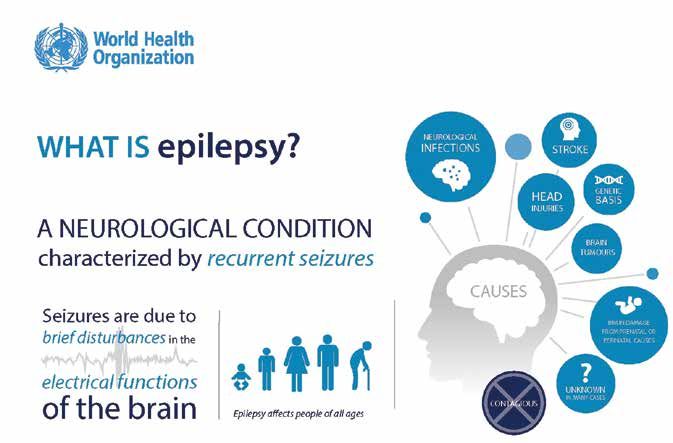
Epilepsy is a general term used for a group of disorders there are at least 10,000 people in Ireland living with uncontrolled
characterised by recurrent, unprovoked seizures. Seizures are seizures. For this group in particular, the consequences of an
episodes of abnormal electrical activity in the brain that briefly epilepsy diagnosis can be long-lasting and significant, often
alter a person’s consciousness, movements or actions. About one affecting the person’s education, employment, psychological &
in every 20 people will have a seizure at some time during their social functioning, self-esteem and independent living. People
lives. with epilepsy must also cope with the physical impact of seizures,
the side-effects of medications, and for many, the social stigma
Epilepsy is one of the most common neurological conditions.
that can be associated with it. Epilepsy can also often cause
In Ireland, 37,000 people over the age of five have epilepsy and
significant psychological, social and economic consequences for
there are an estimated 1600 - 2900 new diagnoses each year.
families and carers.
Worldwide, more than 50 million people live with epilepsy. It
can affect people of all ages, but is more prevalent in children, People with epilepsy also have a higher risk of mortality than the
adolescents and the elderly. It is also more common in people general population. There are an estimated 130 epilepsy-related
with an intellectual disability. Common causes include head deaths in Ireland each year, about half of which are due to SUDEP
injuries, strokes, brain infections and birth defects. Genetic (Sudden Unexpected Death in Epilepsy).
mutations are also known to play a role in some cases. However,
The financial cost of epilepsy is also significant. In Europe, more
in about 60% of cases, no specific cause can currently be
than €15 billion is spent annually on the treatment of epilepsy,
identified.
which equates to 0.2% of total GNP, and a figure comparable to
Epilepsy is a treatable condition and the majority of people can that of lung and breast cancer combined.
become seizure-free. However, Epilepsy Ireland estimates that
4Epilepsy Ireland:
A Brief History
1966 1968
1976
The Irish Epilepsy The Association was
Association was founded. successful in ensuring
The driving force behind that the granting of free The 8th International
the setting up of the IEA medications to people Symposium on Epilepsy
was Professor Patrick with epilepsy was came to Dublin in 1976
(Paddy) McNally, a
physician from Mercer’s
Hospital.
included in legislation
establishing the Long
Term Illness Scheme (LTIS).
which attracted much
national attention and
helped lead to improved
1984
treatment and services for
people with epilepsy.
The hugely successful Training for Despite turbulent financial
Success one-year pre-employment times we managed to
course was set up at IT Sligo for
young adults with epilepsy. In
it’s18 years, 85% of TFS graduates
1997 extend educational
services throughout the
80s and today have 10
have found employment or regional offices which
After many years of continued in education after provided crucial advice
campaigning Sinead Murphy
was appointed as Epilepsy
Ireland’s first Community
graduation.
1998 EI hosted the 22nd
Intentional Epilepsy
Congress in the RDS,
and support.
one off the largest ever
Specialist Nurse, a position she
international events in
still holds today.
Ireland at that time.
2002
The EI Research Funding
Scheme was set up in 2009 to
provide epilepsy researchers Ireland Rugby Head Coach
in Ireland with an avenue to Joe Schmidt fronts a major
access funding for important seizure first aid awareness
2006 research aims. Almost €1m has
been invested by EI to date.
campaign for International
Epilepsy Day.
Future
2009
RTE 2FM Presenter
Rick O’Shea
answered the call to
become EI patron.
2015 Strategic Plan
2017 – 2021
5About our work
Through our national and regional structures, we endeavour to Diagram 1: Who we work with
work with and meet the needs of all those with an interest in the
condition of epilepsy. This includes those who are members of
our organisation and those who are not. It includes people living Services for
with epilepsy, parents of children with epilepsy and other family Parent of Child people with
members. It also includes healthcare and other professionals, with Epilepsy epilepsy and
their families
teachers, employers, community groups, service providers
supporting people with epilepsy and the broader community.
In all instances, the interests and needs of the individual with
epilepsy is at the heart of what we do (see diagram 1). Our
Person with
services for and work with each group is highlighted below in Epilepsy
diagram 2. Guardians,
Wider
Family, Carers
community
& friends of
and the public
people with
Epilepsy
Professionals -
Medical,
Healthcare and
Teachers
Person With Epilepsy Parents/Carers of Children Supporting Professionals Broader Community
with Epilepsy
One-to-one support services One-to-one support services Teachers seminars, schools talks Providing funding for and supporting
epilepsy research
Information Materials
Information Materials
(online and print) Buccal Midazolam training for
(online and print)
healthcare professionals and teachers
Living Well With Epilepsy Raising public awareness of epilepsy
Living Well With Epilepsy and challenging epilepsy stigma
Teachers & Nurses information packs
Self-Management Programmes
Parents STEPS programme
Training for Success 1-year
Events & Seminars for professionals Advocating on key issues
programme
Parents Buccal Midazolam
information & support
Specialist Nurses & Advice Lines Working with the Clinical Care
programme and supporting medical
Support Groups, Seminars, professionals Educating the public through multiple
Support Groups, Seminars, Conferences. Online Support
communication channels
Conferences. Online Support
One-to-one information and support
Family fun days & Events for professionals
Aids and Appliances
Working with other organisations to
Social Media Community Epilepsy Awareness talks achieve common objectives
Social Media
Diagram 2: Our Services & Activities
6Developing THE Strategic
Plan 2017 – 2021
We have endeavoured to operate a fully consultative and • The need to ensure that people with epilepsy and their
transparent process in the development of this 5-year Plan. families are central to our work through their volunteering,
During 2015 and 2016, we conducted an extensive consultation participation in consultation groups, advocacy and fundraising.
process. We consulted with over 100 service users via an online • The need for capacity building, peer leadership and
survey and over 100 Epilepsy Ireland members participated in volunteering approaches to be developed for people with
focus groups organised across the country. We consulted with epilepsy
leading medical, healthcare and research professionals working
Many other themes also emerged and are contained within the
in epilepsy and undertook group discussions among staff,
Plan’s 21 objectives, and the actions identified within them.
management and board. We believe that these consultations
have shaped a Plan which captures and reflects the key concerns
New Approaches
facing people with epilepsy in Ireland, their families and the
wider epilepsy community. An important feature of our Plan is the continuance and
improvement of our existing range of services and activities.
Key Themes However, our Plan also identifies new ideas and approaches
which we will endeavour to fund, develop and operate. See
A number of key themes emerged from discussions with our
diagram 3.
stakeholders and these themes were critical in informing the
direction and focus of the Plan. These themes included:
Funding
• The need to continue to advocate for the availability of The implementation of the 2017 - 2021 Strategic Plan is
neurological services for people with epilepsy. dependent on funding being made available within each of
• The continued need to provide timely and accurate the identified objectives. While this will entail challenges for the
information and support for adults with epilepsy and for organisation, we will focus on securing the additional ongoing
parents of children with epilepsy. funding required to meet our objectives, while ensuring that our
• The need to consider groups with particular needs (people fundraising activities continue to develop in line with the needs
with epilepsy and an intellectual disability, those with mental of our strategy. Implementation plans and budgets will be agreed
health co-morbidities, older people, etc.). annually by the board based on the funding available.
• The need to engage and support younger people (teens and
young adults with epilepsy).
PODS- New New website with Improved
working groups Teenagers and
updated resources communications -
of our staff to share young persons
and e-learning print, electronic and
ideas and progress summer project
features social
plans
New and New Transition
Volunteer and innovative Resources for
Nurse support for
Peer Leadership epilepsy self- groups with
teenagers with
Programme management particular needs
epilepsy
programmes
Diagram 3: New approaches
7Epilepsy Ireland 5-year
Strategic Plan: 2017 - 2021
Our Vision:
Epilepsy Ireland’s vision is to achieve a society where no person’s
life is limited by epilepsy. 1. Support &
Information
Our Mission:
6. Governance 2.
Epilepsy Ireland is committed to working for, and to meeting Communications,
the needs of everyone with epilepsy in Ireland, their families and & Organisational Awareness &
carers. Quality Advocacy
Our Six Strategic Aims
Epilepsy Ireland has identified six Strategic Aims which together
Strategic
form the framework for the Plan. These are: Providing support
and information services; Communicating, raising awareness and
advocating about epilepsy; Providing training and education;
Plan
Undertaking and supporting epilepsy research; Raising the 3. Training &
5. Raising Funds
necessary funds for our work; and Operating a stable, transparent Education
and accountable organisation meeting best practice standards.
See Diagram 4.
Each of these Aims and their associated Outcome Statements are 4. Epilepsy
detailed below. Research
Diagram 4: Six Strategic Aims
Strategic Aim Outcome Statement
Aim #1: To provide quality and relevant support, information & Outcome #1: People with epilepsy, their parents and families, and
advice, meeting the needs of people with epilepsy, their families and those with an interest in epilepsy are supported with, and are well
carers, professionals and the wider community. informed about, the condition of epilepsy.
Aim #2: To communicate effectively with stakeholders; to raise Outcome #2: Broader groups in society and the general public have
awareness and to improve public understanding of epilepsy; and a strong understanding of epilepsy – how it affects people and what
to advocate for the rights of those with epilepsy, their families and it is, and how to respond to the condition appropriately.
carers.
Aim #3: To provide relevant training and education services to Outcome #3: Groups and individuals with an interest in epilepsy
people with epilepsy, their families, and healthcare and other improve their knowledge and skills through engaging with relevant
professionals. training activities provided by the organisation.
Aim #4: To undertake, encourage, fund and communicate research Outcome #4: Epilepsy Ireland contributes to the body of research
into the causes of, cures for and management of epilepsy and into relating to epilepsy causes, cures and management and this research
the social and psychological effects of the condition. is effectively communicated to stakeholders.
Aim #5: To support people with epilepsy by raising the funds Outcome #5: The organisation is sustainable and continues to
necessary to ensure the short-term funding requirements and long develop and deliver its services over the long term.
term sustainability of the organisation.
Aim #6: To operate a stable, progressive organisation meeting all Outcome #6: The organisation demonstrates best practice in
regulatory requirements and striving to implement best-practice the areas of governance, quality, human resources and financial
standards in the areas of governance, organisational quality, human management.
resources and financial management.
8Our 21 Strategic Objectives and achieving the objectives over the five year period. Under
Strategic Aim 6, we will introduce service audits, evaluation &
Built into the six Strategic Aims are 21 Strategic Objectives that
measurement processes and feedback & monitoring mechanisms
we will endeavour to meet during the five year period of the
which will inform the measurement of the KPIs and allow us to
plan, subject to suitable funding streams becoming available and
monitor our progress against our objectives and our identified
being maintained.
outcomes.
These 21 objectives will be measured using agreed Key
Performance Indicators (KPIs) to ensure that we are reaching
Strategic Aim #1 : To provide quality and relevant support, information & advice, meeting the needs of people with epilepsy,
their families and carers, professionals and the wider community
Strategic Outcome #1: People with epilepsy, their parents and families, and those with an interest in epilepsy are supported
with, and are well informed about, the condition of epilepsy.
Strategic Objective Strategic Objective Outcome Statement
Objective #1. Providing a high quality support Outcome Statement: Epilepsy Ireland provides a high quality one-to-one support service
and advice service for people with epilepsy, and a range of up-to-date information resources to meet the needs of people with
their families and carers epilepsy, their families and carers, professionals and the wider community
Objective #2. Developing service user Outcome Statement: Epilepsy Ireland will develop our service volunteering, peer support
participation, involvement and peer-to-peer and will access service user expertise to ensure that service users are at the centre of
opportunities everything we do.
Objective #3: Supporting service user needs for Outcome Statement: Epilepsy Ireland provides aids & appliances to support people with
aids & appliances epilepsy (ID bands and safety pillows) and provides up to date A&A information based on
latest technology and developments.
Objective #4: Supporting children and young Outcome Statement: Epilepsy Ireland will increase our work with children and young
people with Epilepsy people through developing our services and resources for children, young people,
schools and teachers.
Objective #5: Reaching particular groups with Outcome Statement: Epilepsy Ireland will develop our approach, services and resources
specific needs for groups with specific needs, including: Intellectual Disability, Mental Health, Older
People and Complex Epilepsy. We will endeavour to provide adapted materials for those
with particular needs.
Objective #6: Building relationships with Outcome Statement: Epilepsy Ireland will prioritise and support healthcare professionals
professionals and shared working working with people with epilepsy to provide maximum support and information
exchange and build on our referral pathways.
Objective #7. Supporting Adult and Transitional Outcome Statement: Epilepsy Ireland will develop a model of transitional care for young
Nursing Services people with epilepsy moving from paediatric to adult services and will provide continued
support to adult epilepsy medical services through our Adult Epilepsy Specialist Nurse.
9Strategic Aim #2: To communicate effectively with stakeholders; to raise awareness and to improve public understanding
of epilepsy; and to advocate for the rights of those with epilepsy, their families and carers.
Strategic Outcome #2: Broader groups in society and the general public have a strong understanding of epilepsy – how it affects people
and what it is, and how to respond to the condition appropriately.
Strategic Objective Strategic Objective Outcome Statement
Objective #8: Ensuring active and ongoing Outcome Statement: Epilepsy Ireland will ensure that our communications and
communication and awareness about epilepsy awareness-raising work is visible, effective and reflective of the priorities of the epilepsy
to key target audiences community. We will ensure our activities are effectively tailored for our key target
audiences.
Objective #9: Prioritising issues of risk, safety Outcome Statement: Epilepsy Ireland will continue to prioritise awareness of SUDEP
and SUDEP in our communications and across and other epilepsy loss through risk and safety education, supporting those who have
all areas of the organisation lost a loved one, and maintaining SUDEP as an advocacy and awareness priority of the
organisation.
Objective #10: Representing and advocating for Outcome Statement: Epilepsy Ireland will provide a strong voice to advocate on behalf
the rights of those with epilepsy of those with epilepsy and the epilepsy community and maintain a strong membership
base to increase our impact at local and national levels.
Strategic Aim #3: To provide relevant training and education services to people with epilepsy, their families, and
healthcare and other professionals
Strategic Outcome #3: Groups and individuals with an interest in epilepsy improve their knowledge and skills through engaging with
relevant training activities provided by the organisation
Strategic Objective Strategic Objective Outcome Statement
Objective #11: Providing quality training, Outcome Statement: Epilepsy Ireland will continue to provide a range of quality training
education and self-management programmes & education programmes to meet the needs of various groups including adults, young
to people with epilepsy & parents of children people and parents of children with epilepsy.
with epilepsy.
Objective #12: Providing Epilepsy Awareness & Outcome Statement: Epilepsy Ireland will continue to provide and develop training in
Buccal Midazolam training and information epilepsy awareness and the administration of Buccal Midazolam rescue medication to
key groups including healthcare professionals and teachers.
Objective #13. Providing educational seminars, Outcome Statement: Epilepsy Ireland will continue to provide access to professional
conferences and events expertise through regular national and regional educational conferences, seminars and
events addressing the needs of people with epilepsy and their families.
Objective #14. Developing website and online Outcome Statement: Epilepsy Ireland will provide an improved online presence
educational resources and service through a new epilepsy.ie and by developing new online resources and
educational e-learning opportunities.
10Strategic Aim #4: To undertake, encourage, fund and communicate research into the causes of, cures for and management
of epilepsy and into the social and psychological effects of the condition
Strategic Outcome #4: Epilepsy Ireland contributes to the body of research relating to epilepsy causes, cures and management and this
research is effectively communicated to stakeholders.
Strategic Objective Strategic Objective Outcome Statement
Objective #15. Providing research funding Outcome Statement: Epilepsy Ireland will continue to provide funding for epilepsy
and supports to encourage and support Irish research in partnership with other funding organisations to support new and innovative
research research into epilepsy in Ireland.
Objective #16. Communicating research Outcome Statement: Epilepsy Ireland will develop our research communications to
findings & volunteering opportunities and ensure that stakeholders are informed about research developments and opportunities
advocating for research to participate in research and we will continue to advocate for improved research
infrastructure and expertise in Ireland.
Strategic Aim #5: To support people with epilepsy by raising the funds necessary to ensure the short-term funding
requirements and long term sustainability of the organisation
Strategic Outcome #5: The organisation is sustainable and continues to develop and deliver its services over the long term
Strategic Objective Strategic Objective Outcome Statement
Objective #17. Providing and developing the Outcome Statement: Epilepsy Ireland will review, manage and develop existing income
financial resources required to operate the streams; seek to diversify income streams and identify new sources of funding through
organisation to its full potential grants, fundraising activities and corporate partnerships, while maintaining the highest
standards of transparency and governance.
Objective #18. Managing and building Outcome Statement: Epilepsy Ireland will continue to maintain transparent and
relationships with key funders supportive relationships with our funders and meet all reporting and operative
requirements.
Strategic Aim #6: To operate a stable progressive organisation meeting all regulatory requirements and striving to
implement best-practice standards in the areas of governance, organisational quality, human resources and financial
management
Strategic Outcome #6: The organisation demonstrates best practice in the areas of governance, quality, human resources and financial
management.
Strategic Objective Strategic Objective Outcome Statement
Objective #19: Operating good governance, Outcome Statement: Epilepsy Ireland will operate to the highest standards of governance
financial management and managing and financial management, meeting the requirements of all relevant regulatory bodies
organisational resources and authorities, and will provide adequate IT, financial and technological resources to
achieve the organisational aims.
Objective #20: Supporting people who are Outcome Statement: Epilepsy Ireland is committed to supporting our staff team and
working or volunteering in the organisation volunteers and to ensuring best practices are in place to support wellbeing, good
communications, valuing peoples contributions and celebrating achievements.
Objective #21: Operating the organisation in Outcome Statement: Epilepsy Ireland will seek to ensure best practice and continuous
line with recognised operating standards and improvement of quality in the organisation. We will work towards international quality
ensuring that we provide a service which is standards and engage at national and international levels to continue to improve and
informed by wider national and international reach high standards within the organisation.
models of working
11Epilepsy Ireland 249 Crumlin Road Dublin 12 Tel: 01 4557500 Email: info@epilepsy.ie Web: www.epilepsy.ie Facebook: facebook.com/epilepsy.ie YouTube: BrainwaveEpilepsy Twitter: @epilepsyireland Instagram: epilepsy_ireland CHY Number: 6170 Registered Charity Number: Registered Charity Number: 20010553 Companies Registration Office Number: 77588 Cork | Dundalk | Galway | Kilkenny | Killarney | Letterkenny | Limerick | Sligo | Tullamore
You can also read


