Student's guide to Slovakia
←
→
Page content transcription
If your browser does not render page correctly, please read the page content below
T
                 O
                 C

                 1
                 2
                 3
                 4
                 5
                 6

            a l   7
Internation guide
   Student’s a 8
      to Slovaki 9
T
                                                                       O

     e r n a t i o n  a l                                              C
In t
           e n  t ’ s  g u i d e                              hello    1
    St u d
         to Slovakia                                            ahoj
                                                                       2
This updated version of the publication was produced within
the National Scholarship Programme of the Slovak Republic
funded by the Ministry of Education, Science, Research
and Sport of the Slovak Republic.
                                                                       3
                                                                       4
                                                                       5
International Student’s Guide to Slovakia
4th (updated) edition
Published by:
                                                                       6
SAIA, n. o.

                                                                       7
Námestie slobody 23, 812 20 Bratislava 1, Slovakia
Updated by:
Lukáš Marcin, Eva Balažovičová, Júlia Karabová,
Miroslava Szórádová and Michal Fedák
Graphic design and press:
xpression, s. r. o.                                                    8
© SAIA, n. o., December 2012
ISBN 978-80-89521-21-0
                                                                       9
T
O
VI. Grants and Scholarships 62 C
content 1.
2.
Funding Based on Slovak Sources
Funding for Bilateral Co‑operation
62
65
1. About Slovakia 4
3. Multilateral Programmes
VII. Life in Slovakia and other practical information
68
78
1
1. Slovakia in Brief 4 1. Transport 78
2.
3.
4.
Geography
Political System and State Bodies
Languages Spoken in Slovakia
5
6
7
2.
3.
4.
Import of Goods
Accommodation
Health and Medical Care
86
87
88
2
5. Religion 8 5. Language Courses for International Students 91
6. Slovakia and UNESCO World Heritage 9
3
6. Student Organisations 92
7. Famous Slovaks 11 7. Student Cards 95
8. Banks 95
I1. Higher Education in Slovakia 16 9. Shopping 97
1. Oldest Slovak Universities 16 10. Electrical Appliances and Computers 97
2.
3.
4.
Higher Education Institutions
Organisation of Study
Admission and Tuition Fee
16
25
27
11.
12.
13.
Communications and Post Offices
Sport
Culture and Media
98
100
102
4
5. Recognition of Education 29 14. Cuisine 107
5
15. Libraries 109
16. Other Services 110
II1. Entering and Staying in Slovakia – Visa and Residence 34 17. Public Holidays 111
1. Navigation 34 18. Living Costs 112
2. Duties of EU/EEA/Swiss Nationals Coming to Slovakia 38
6
3. Duties of Third Country Nationals Coming to Slovakia 39
4. Useful Addresses for Visa and Residence Permits 52
VIII. Useful Addresses and Links 114
1V. Working while studyinG 56 IX. Glossary 116
7
1. When Is a Work Permit Not Required? 56
2. Easier Conditions for Granting Work Permit 57
3. How to Obtain a Work Permit? 58
V. Use of Foreign Documents in Slovakia 59
1.
2.
3.
Apostille
Legalisation
Where to Find an Official Translator
59
60
61
8
2 3 9
T
                                                                                                                                                             O
     1. About Slovakia                                                      Population and their religions: Roman Catholic (62 %), Evangelical
                                                                            Lutheran of Augsburg Confession (5.9 %), Greek Catholic (3.8 %),
                                                                            Reformed Christian (1.8 %), Orthodox (0.9 %), Jews (0.1 %), others
                                                                                                                                                             C

                                                                                                                                                             1
                                                                            (1.2 %), without denomination (13.4 %) and unknown (10.6 %)

1. Slovakia in Brief                                                        Currency: euro (since 1 January 2009); 1 euro (1 €) = 100 cents
                                                                            (100 c), banknotes issued in 500 €, 200 €, 100 €, 50 €, 20 €, 10 €
Official name: Slovak Republic                                              and 5 € denominations; coins in 2 € and 1 € and 50 c, 20 c, 10 c,

                                                                                                                                                             2
Capital: Bratislava (432,801 inhabitants)                                   5 c, 2 c and 1 c denominations

Date of establishment: 1 January 1993                                       Membership in international organisations: EU (since 1 May 2004),
(after splitting of the Czech and Slovak                                    NATO (since 29 March 2004), UN, OECD, OSCE, WHO, INTERPOL, etc.
Federative Republic)                                                        Main agricultural crops: wheat, rye, corn, potatoes, sugar beets
Political system: parliamentary democracy
Administrative organisation: 8 higher
                                                                            Breeding: cattle, pigs, poultry, sheep, goats
                                                                            Main fields of industry: automotive industry, chemical industry, iron ore
                                                                                                                                                             3
territorial units, 8 regions, 79 districts,                                 processing, fertilisers, plastics, mechanical and electrical engineering

                                                                                                                                                             4
2,933 municipalities out of which are 138 cities and towns;
Regional capitals: Bratislava, Trnava, Nitra, Trenčín, Žilina,              Natural resources: iron ore, mercury, copper, lead, zinc
Banská Bystrica, Prešov, Košice
Official language: Slovak                                                   2. Geography
Neighbouring countries: Austria, Czech Republic, Hungary, Poland, Ukraine
Area: 49,035 km2
                                                                            The Slovak Republic is situated in Central Europe, sharing borders with
                                                                            Austria, Czech Republic, Hungary, Poland and Ukraine. Mountains,
                                                                            lowlands, valleys, lakes, cave formations, forests and meadows
                                                                                                                                                             5
Population: 5.4 million (out of them 51.4 % of women)                       provide many examples of Slovakia’s year‑round natural beauty.
Density of population: 110.1/km2
                     Large towns: Košice (240,688), Prešov (91,782),
                                                                            The Carpathian Arc, a range of mountains stretching across the north,
                                                                            takes up almost a half of the country. The south and east of the country
                                                                            lie in the lowlands, an important agricultural area in Slovakia.
                                                                                                                                                             6
                         Žilina (81,494), Banská Bystrica (80,003), Nitra
                                                                            The highest point:
                             (78,916), Trnava (66,358), Martin (57,428),                                    Did you know?
                                Trenčín (55,877), Poprad (52,862),
                                  Prievidza (48,978), Zvolen (43,318)
                                                                            Mount Gerlach
                                                                            in the High Tatras
                                                                            2,655 m above sea                     The Tatra Chamois is a completely
                                                                                                                                                             7
                                    Ethnic mix of population: Slovaks       level                                 unique chamois, because after
                                     (80.7 %), Hungarians (8.5 %), Roma

                                                                                                                                                             8
                                                                            The lowest point:                     the end of the ice ages it evolved
                                     (2 %), Czechs (0.6 %), Ruthenians                                            thousands of years totally isolated.
                                      (0.6 %), Ukrainians (0.1 %),          River Bodrog 94 m
                                                                            above sea level                       At present, there are only slightly
                                      Germans (0.1 %), others (0.2 %),                                            more than 200 pieces.
                                      unknown (1.0 %)

 4                                                                                                                                                       5   9
T
Maximum length: 428 km (Záhorská Ves [W] – Nová Sedlica [E])                   The electoral system is proportional
                                                                                                                                                                O
                                                                               representation. Parties are                                                      C
Maximum breadth: 195 km (Štúrovo [S] – Skalité [N])
                                                                               allocated seats in the Parliament

                                                                                                                                                                1
The longest river: River Váh (378 km)                                          according to the percentage
                                                                               share of the votes they get
Time: GMT + 1 (GMT + 2 from last Sunday in March to last Saturday              in parliamentary elections. Only
in October). In winter, the Sun rises approximately at 7:30 and sets           a party with at least 5 % of votes
around16:00. In summer, sunrise is before 5:00 and sunset is around            can obtain seats in the Parliament.

                                                                                                                                                                2
21:00.
                                                                               The President is the Head of State
Weather: The Slovak Republic has a continental climate with 4 seasons          elected for a 5‑year term in a direct
(spring, summer, autumn, winter). Summers are hot; winters are cold,           two round election. The same person
cloudy and humid. The average winter daily temperature is -2 °C,               can be elected President for a maximum of

                                                                                                                                                                3
but can plummet to -15 °C.                                                     two consecutive 5‑year terms. The current Slovak
The average daily temperature                                                  President is Mr. Ivan Gašparovič (elected for the 2nd period in 2009).
in summer is 21 °C, but can
be as warm as over 30 °C.
                                             Did you know?                     The Government is the highest tier of executive power and consists
The coldest month is January;                                                  of the Prime Minister, Deputy Prime Ministers and Ministers.
the hottest month is July. The
period from May to July is often
considered the best season. Data
                                     The largest river
                                     island in Europe
                                                                               The Government is formed on the basis of parliamentary elections
                                                                               (last one held in March 2012). The Prime Minister is appointed and
                                                                               can be dismissed by the President. Upon the advice of the Prime
                                                                                                                                                                4
concerns Bratislava, the capital     is the Rye Island                         Minister, the President appoints and dismisses other members

                                                                                                                                                                5
of Slovakia. Weather in northern     in southern Slovakia                      of the Government. The Government is collectively responsible for the
and mountainous regions could        (1,326 km2).                              exercise of governmental powers to the Parliament, which may hold
be much colder.                                                                a vote of no confidence at any time. The Parliament can hold a vote of
                                                                               no confidence to a single member of the Government, too. The current
                                                                               Prime Minister, Mr. Róbert Fico, has been appointed in April 2012.
3. Political System and State Bodies
The Slovak Republic has been established on 1 January 1993 as one
                                                                               Other constitutional bodies are the Constitutional Court of the Slovak
                                                                               Republic and the Supreme Audit Office of the Slovak Republic.
                                                                                                                                                                6
of the successors to the Czech and Slovak Federative Republic. It is           The state administration power is mostly executed on central level.

                                                                                                                                                                7
a parliamentary democracy, and its Constitution guarantees equal rights        The central bodies have lower – regional – levels. If needed, local state
for all citizens regardless of sex, race, colour, language, faith, religion,   administration authorities establish other authorities and offices in regions.
political affiliation or conviction, national or social origin, nationality
or ethnic origin, property, birth or any other status.
                                                                               4. Languages Spoken in Slovakia
State Bodies
The National Council of the Slovak Republic is a unicameral
parliament and the country’s main legislative body. The National
                                                                               Slovak is the official language of the Slovak Republic and belongs
                                                                               to the West Slavic subgroup of the Indo European language family, and
                                                                                                                                                                8
Council has 150 members elected for 4‑year terms in direct elections.          uses the Roman script. It does not differ significantly from Czech, and

 6                                                                                                                                                         7    9
T
                                 comprehension in both languages is            Religious Services
                                                                                                                                                           O
                                  rather common. The majority of the           There are services available in foreign languages (mainly in English,
                                                                                                                                                           C
                                   population of the Slovak Republic           German and Hungarian) all over the country (for more information,

                                                                                                                                                           1
                                    (86 %) speaks Slovak as their mother       please, consult your church).
                                    tongue. The second most widely
                                    spoken mother tongue is Hungarian.         List of registered Churches in the Slovak Republic:
                                                                                 Apostolic Church                       Greek (Byzantine) Catholic
                                       The most widely spoken foreign
                                                                                 Bahá’í Community                       Church

                                                                                                                                                           2
                                      languages are English, German,
                                                                                 Baptist Union                          New Apostolic Church
                                     Russian, Hungarian and French.
                                                                                 Brethren Church                        Old Catholic Church
                                   The young urban population is generally
                                                                                 Central Union of Jewish                Orthodox Church
                                 considered to be the most linguistically
                                                                                 Religious Communities                  Reformed Christian Church
                               proficient. Foreign languages are sometimes

                                                                                                                                                           3
                                                                                 Christian Corps                        Religious Society of Jehovah’s
                            taught at kindergarten, usually at primary
                                                                                 Church of Jesus Christ                 Witnesses
                      school in lower grades and always in the upper
                                                                                 of Latter‑day Saints                   Roman Catholic Church
ones (5th till 9th) and at secondary schools. There are some primary
                                                                                 Czechoslovak Hussite Church            Seventh‑day Adventists Church
and secondary schools that conduct classes in foreign languages
                                                                                 Evangelical Church of Augsburg         United Methodist Church

                                                                                                                                                           4
such as Hungarian, Ukrainian, Bulgarian, English, German, French,
                                                                                 Confession
Italian and Spanish. Private language schools offer many possibilities
for children, young people and adults to learn foreign languages.
                                                                               6. Slovakia and UNESCO World Heritage
5. Religion
The Slovak Republic is by tradition a religious country; the first Christian
                                                                               Places included in the UNESCO List of the World Heritage and the
                                                                               UNESCO List of the Masterpieces of the Oral and Intangible Heritage
                                                                               of Humanity in Slovakia:
                                                                                                                                                           5
bishopric was established in the 9th century in Nitra. At present,
several legal norms regulate the freedom of conscience and religion,           Cultural Monuments
and provide a guarantee for general respect of these fundamental
human rights
and freedoms.                                    Did you know?
                                                                                 Vlkolínec – a Monument Reserve of Folk Architecture – a remarkably
                                                                                 intact settlement of 45 traditional log houses,
                                                                                                                                                           6
                                                                                 often found in mountainous areas
According to the
                        The world‘s highest                                      (www.vlkolinec.sk).

                                                                                                                                                           7
Slovak Constitution,
                        wooden gothic altar
“Freedom                                                                         Historic Town of Banská Štiavnica
                        is to be admired in Levoča,
of thought,                                                                      and the Technical Monuments in
                        in the St. James Church. It is 18.6 m
conscience, religion                                                             its Vicinity – the town of Banská
                        high and his author is Master
and belief will be                                                               Štiavnica is an old medieval mining

                                                                                                                                                           8
                        Paul from Levoča. He carved it
guaranteed. This                                                                 centre that grew into a town with
                        of lime wood at the beginning
right will include                                                               Renaissance palaces, 16th century
                        of the 16th century. It took him
the right to change                                                              churches, elegant squares and
                        10 years to finish it.
religion or belief.”                                                             castles (www.banskastiavnica.sk).

 8                                                                                                                                                     9   9
T
 Levoča, Spišský Hrad                                                          extremely rare combination of tropical and glacial climatic effects,
                                                                                                                                                          O
 and the Associated                                                            they make it possible to study geological history over tens of millions    C
 Cultural Monuments                                                            of years. Caves open to the public: Dobšinská Ice Cave, Domica Cave,

                                                                                                                                                          1
 – Spišský hrad (castle)                                                       Gombasecká Cave, Jasovská Cave, Krásnohorská Cave,
 has one of the largest                                                        Ochtinská Aragonite Cave (www.ssj.sk/jaskyne).
 ensembles of 13th and 14th
 century military, political
                                                    Did you know?              Primeval Beech Forests of the Carpathians and the Ancient Beech
                                                                               Forest of Germany – a transnational (Germany, Slovakia, Ukraine)
 and religious buildings                                                       serial property comprising fifteen components. They represent an
 in Eastern Europe,
 and its Romanesque
 and Gothic architecture
                                Spišský hrad (castle)
                                is the largest medieval
                                castle complex in Central
                                                                               outstanding example of undisturbed, complex temperate forests and
                                                                               exhibit the most complete and comprehensive ecological patterns
                                                                               and processes of pure stands of European beech across a variety
                                                                                                                                                          2
 has remained                   Europe. It is more than                        of environmental conditions (http://whc.unesco.org/en/list/1133).

                                                                                                                                                          3
 remarkably intact              40,000 m2 large.
 (www.spisskyhrad.sk).                                                       Intangible Heritage
 The extended site features the addition of the historic town‑centre
                                                                               Fujara – musical instrument that can be found only in Slovakia.
 of Levoča, founded in the 13th and 14th centuries, within fortifications.
                                                                               It is a wooden over‑tone fipple flute that can be up to 1.8 m long.
 Most of the site has been preserved and it includes the 14th century
 Church of St. James, a remarkable collection of polychrome works
 in the Late Gothic style, including an 18.6 metre high altarpiece
 completed around 1510 by Master Paul (www.levoca.sk).
                                                                             More information: http://whc.unesco.org/en/statesparties/sk

                                                                             7. Famous Slovaks
                                                                                                                                                          4
 Bardejov Town Conservation Reserve – a small but exceptionally              Art                                   Cikker, Ján
 complete and well‑preserved example of a fortified medieval town.
 Among other remarkable features, it also contains a small Jewish
 quarter around a fine 18th‑century synagogue (www.bardejov.sk).
                                                                             Brunovský, Albín
                                                                             (1935 – 1997)
                                                                                                                   (1911 – 1989)
                                                                                                                   composer
                                                                                                                   and pedagogue
                                                                                                                                                          5
                                                                             painter, graphic designer             He continued in
 Wooden Churches of the Slovak part of the Carpathian Mountain               and illustrator

                                                                                                                                                          6
                                                                                                                   the tradition of
 Area – two Roman Catholic, three Protestant and three Greek                 One of the most important             late romanticism,
 Orthodox churches built between the 16th and 18th centuries                 modern Slovak painters.               often employing Slovak folk
 (http://whc.unesco.org/en/list/1273).                                       He employed imaginative, fantastic    music. In the 1960s, he turned to
                                                Did you know?                themes in his creative work.          modernisation and a rational style

                                                                                                                                                          7
Natural Monuments                                                            He was an adherent of fantastical     of composition. He encouraged
 Caves of Aggtelek Karst and                                                 realism (the second surrealistic      the development of a Slovak
 Slovak Karst – the variety of          Ochtinská Aragonite Cave is the      wave), based upon perfect drawing     national sentiment and its music,
 formations and the fact that they      only cave of its type in Europe.     and a philosophical/ethical           and his art traversed the borders
 are concentrated in a restricted                                            message. Works: Czechoslovak          of Slovakia. He became a UNESCO

                                                                                                                                                          8
                                        Along with other caves
 area means that 712 caves              of the Slovak Karst, it is           banknotes, paintings on wood          Music Prize Laureate in 1979.
 currently identified make up           included in the UNESCO               at the National Council of the        Works: operas Juro Jánošík
 a typical temperate‑zone karstic       World Heritage list.                 Slovak Republic, and paintings        (1950 – 1953), Beg Bajazid (1957)
 system. Because they display an                                             at the UN building in New York.       and Mr. Scrooge (1963), as well

10                                                                                                                                                   11   9
T
as symphonic compositions Popp, Lucia It has acquainted the European Science and Technology
O
and the arrangement of songs (1939 – 1993) musical scene with the typical C
for folk groups. opera singer psychological world of the Slovak Banič, Štefan
(1870 – 1941)
1
A world famous opera man and his national ethics on
Fleischmann, Arthur inventor
and concerto soprano. the high artistic level, and in spirit
(1896 – 1990) He lived in the USA from
She graduated from the Bratislava of the fundamental tendencies
sculptor 1907 to 1921. He constructed
School of Opera, emigrated of the European music of this
He worked in the Republic a prototype parachute in 1913,
from Czechoslovakia in 1963, century. The success of his first
2
of South Africa, France (Paris), which was patented at the United
and worked primarily in Austria opera “Krútňava” (The Whirlpool)
United Kingdom (London), Bali, States Patent Office. He was also
and Germany. An event entitled established modern Slovak opera,
Australia and Spain. He was an involved in the improvement
Hommage á Lucia Popp is held in and drew international attention.
adherent of kinetism and op art of mining production and bridge
Bratislava every year in her honour.
in sculpture. He created fountains, Warhol, Andy construction. The parachute has,
statues and the “Crystal Crown”
for Queen Elizabeth II. He also
worked with George Lucas on
Sokol, Koloman
(1902 – 2003)
painter and graphic designer
(1928 – 1987)
painter, graphic
designer
of course, become a vital part
of modern aviation. 3
the first Star Wars sci‑fi trilogy. One of the most famous Slovak and filmmaker Bel, Matej
(1684 – 1749)
4
(Arthur Fleischmann Museum, artists in the world and the He was born into
Biela ulica 6, Bratislava, Slovakia) founder of modern Slovak graphic a Slovak Ruthenian family that had polyhistor,
art. His paintings involve the immigrated to the USA. Warhol was pedagogue,
Hložník, Vincent scientific
intersection of real experience, the founder of pop art and also its
(1919 – 1997) researcher
dreams, fantasy, personal most important representative;
5
painter, graphic artist and evangelical
knowledge, desires and belief. he was involved in drawing, painting,
and illustrator priest
He worked in Czech Republic graphic design and film. He
The leading figure He was one of the greatest
(Prague), Mexico, USA and painted everyday objects and film
in the generation of scientific figures of the 18th
in Slovakia (Bratislava). He lived in stars, while his films were about
artists that came of age during the century, and was referred to as the
6
the USA from 1948, and received time, boredom and repetition.
World War II. The prevailing ethos Magnum decus Hungariae – the
many state awards. (Koloman (Andy Warhol Museum of Modern
of his works is one of humanism Great Ornament of Hungary. He
Sokol Centre, Pongráczovská kúria, Art, Medzilaborce, Slovakia)
and anti‑fascism. Typical hallmarks made an important contribution
Liptovský Mikuláš, Slovakia)
include expressive overstatement, to pietism, was a pioneer in the
Did you know?
7
masterly calligraphy and bold Suchoň, Eugen field of collective research into
imagery. Graphics and illustrations (1908 – 1993) the Hungarian nation, and carried
loom large in his output. For his composer out comprehensive scientific,
work in these fields he has been Ranks among the most prominent The Andy Warhol
historical and geographical
the recipient of numerous awards representatives of contemporary Museum of Modern
research. He was the co‑author
both at home and abroad. He was
Rector of the Academy of Fine
Arts and Design in Bratislava from
Slovak music. From the very beginning
the work of the artist has been
a representative expression of the
Art in Medzilaborce
is today the only
one of its type
of a unique account of agriculture
in the Hungarian Empire – the
works Hungaria antiquae et novae
8
1960 to 1964. modern Slovak musical culture. in Europe.
prodromus (1723), Adparatus ad
12 13 9
T
historiam Hungariae (1735 – 1736)     Politics                             from the party and became              and Eduard Beneš, with whom
                                                                                                                                                      O
and Notitia Hungariae novae                                                a subject of persecution.              he established an anti‑Austrian     C
historico geographica. The Matej      Beňovský, Matúš Móric                As a symbol of efforts towards         resistance movement
                                      (1746 – 1786)

                                                                                                                                                      1
Bel University in Banská Bystrica                                          reform, he returned to politics        abroad for the creation of an
bears his name.                       nobleman and King of Madagascar      in 1989; he became the Speaker         independent Czecho‑Slovak
                                      Baron Beňovský began his career      of the Federal Parliament and          State. He worked in France as an
Murgaš, Jozef                         in the Seven Years’ War. He fled     the leader of the Slovak Social        astronomer, became a French Air
(1864 – 1929)                         to Poland in 1768, where he          Democratic Party.                      Force officer during the World

                                                                                                                                                      2
priest and electrical                 fought against the Russian Tsar,                                            War I and was one of the founders
engineer                              was captured and was sent into       Hodža, Milan
                                                                                                                  of the Czechoslovak Republic.
He lived in the USA,                  exile in Kamchatka. He managed       (1878 – 1944)
                                                                                                                  He died in a tragic air accident.
where he worked as                    to escape by boat in 1770.           politician, diplomat and statesman
a priest. He was also                 He sailed across the North Pacific   He was involved in the Agrarian        Štúr, Ľudovít
involved in electrical
engineering and registered
12 patents in the field of wireless
                                      and arrived in France in 1772.
                                      King Louis XV appointed him the
                                      Governor of Madagascar and
                                                                           Movement. He was a co‑founder
                                                                           of the most powerful party
                                                                           in the Czechoslovak Republic
                                                                                                                  (1815 – 1856)
                                                                                                                  national
                                                                                                                  activist and
                                                                                                                                                      3
telegraphy. He established            he was elected the country’s         (1918 – 1939) – the Czechoslovak       linguist

                                                                                                                                                      4
different frequencies for the dots    King in 1776. He fought in the       Agrarian Party. He was a Member        The leader
and dashes in Morse code,             American War of Independence         of Parliament, the Minister for the    of the Slovak
thus accelerating the transmission    in 1779 and 1781, and was            unification of laws, agriculture,      National
of messages. He is often referred     a friend of Benjamin Franklin        education and national edification,    Revival in the
to as the “Slovak Edison”.            and George Washington. Works:        and finally the Prime Minister. He     19th century,
Stodola, Aurel
(1859 – 1942)
                                      Memoirs and Travels (1783).
                                      Dubček, Alexander
                                                                           immigrated to France in 1939, and
                                                                           then to the USA in 1941. He was
                                                                           active in the foreign resistance
                                                                                                                  the author
                                                                                                                  of the Slovak language standard
                                                                                                                  eventually leading to the
                                                                                                                                                      5
engineer, professor and inventor      (1921 – 1992)                        movement during the World War          contemporary Slovak literary
He graduated in the field of          politician

                                                                                                                                                      6
                                                                           II. He created the idea of a federal   language, an organiser of the
mechanical engineering and worked     The leading                          state in Central Europe, stretching    Slovak Volunteer Campaigns
as a professor at the Federal         figure in the                        from the Baltic to the Aegean,         during the 1848 Revolution in the
Polytechnic in Zurich, Switzerland.   Prague Spring                        from Germany to Russia.                Kingdom of Hungary, a member
He achieved his greatest successes    (1968 – 1969). In the 1960s,                                                of the Diet of the Kingdom of

                                                                                                                                                      7
in the area of steam turbines; his    he endeavoured towards               Štefánik, Milan Rastislav
                                                                                                                  Hungary, politician, Slovak poet,
calculations and constructions        reforming the Communist Party        (1880 – 1919)
                                                                                                                  journalist, publisher, teacher,
formed a basis for this particular    of Czechoslovakia and establishing   politician, soldier
                                                                                                                  philosopher and linguist.
field of mechanical engineering.      ‘socialism with a human face’.       and astronomer
He received the highest engineering   He faded into the background         During his
awards – the Grashof Medal and
the James Watt Gold Medal. He was
also a correspondent member to
                                      after the invasion of Warsaw Pact
                                      forces in August 1968. During
                                      the period of ‘normalisation’
                                                                           studies in Prague,
                                                                           he became
                                                                           acquainted with
                                                                                                                                                      8
the French Academy of Sciences.       in the 1970s, he was expelled        Tomáš G. Masaryk

 14                                                                                                                                              15   9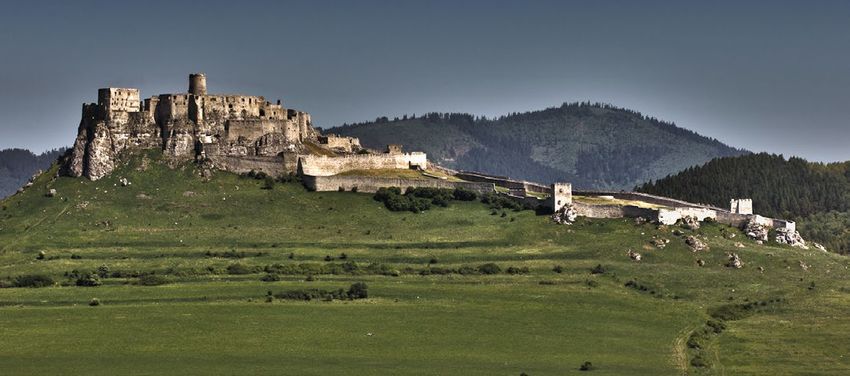
T
                                                                                                                                                             O
  I1. Higher Education
                                                                             Higher education institutions are classified by the nature and scope of their
                                                                             activities into university type of HEIs and non‑university type of HEIs:        C
                                                                             a) The university type of higher education institutions provides
      in Slovakia                                                               education in the study programmes of all three levels of higher
                                                                                education (Bachelor’s, Master’s, Doctoral) with a significant portion
                                                                                                                                                             1
                                                                                of study programmes of the second level and study programmes of
                                                                                the third level. The study programmes are carried out in connection
1. Oldest Slovak Universities                                                   with activities of higher education institutions in the field of science,
The first university on the territory
of the present‑day Slovakia, the
Academia Istropolitana (1465 – 1491),
                                                                                technology or art, and in compliance with the current state and
                                                                                development of such fields. The term “university” may only be used
                                                                                in the name of a university type of higher education institution.
                                                                                                                                                             2
was established in Bratislava during                                         b) The non‑university type of higher education institutions provides

                                                                                                                                                             3
the rule of the King Matthias Corvinus                                          higher education mostly in the study programmes of the first level.
(1458 – 1490). In 1635, Peter Pazmany
                                                                             Based on founding and funding there are 3 types of HEIs:
established the Trnava University
                                                                               Public higher education institutions are established by law.
(relocated to Budapest in 1777).
                                                      Did you know?            They are financed mostly by the government. They are statutory

                                                                                                                                                             4
The Jesuits founded the             Academia                                   and self‑governing institutions. At present, there are 20 public
Košice University in 1657.          Istropolitana was                          higher education institutions, comprising 9 more or less traditional
In 1762, the enlightened            the first university                       universities, 5 universities of technology, 3 higher education
absolutist ruler, Maria Theresa,    in the Kingdom of                          institutions of art and music, 1 university of economics, 1 university
established the first school                                                   of veterinary medicine and pharmacy and 1 agricultural university.

                                                                                                                                                             5
                                    Hungary, and it was
of mining in the world – the        founded in 1465,                           State higher education institutions (3 HEIs) are military, police and
Mining Academy in Banská            even before America                        medical schools. They are established by law and governed by the
Štiavnica.                          was discovered.                            state through the corresponding ministries of the government.
                                                                               The state HEIs are fully financed from the state budget.
            Did you know?
                                                                                                                                                             6
                                                                               Private higher education institutions (11 HEIs) need a state
                                                                               approval issued by the Government of the Slovak Republic.
                                                                               They are established and financed by non‑governmental institutions
                The first technical university in the world was the Mining     or founders. Most of the private higher education institutions provide
                Academy founded by Maria Theresia in 1762. It was              education in the fields of economics, business, management, public
                placed in Banská Štiavnica, which used to be the centre
                of mining science and technical development in Europe.
                                                                               administration, law, international relations, regional development,
                                                                               medical and social work.                                                      7
                                                                             Also foreign higher education institutions established and situated
2. Higher Education Institutions                                             on the territory of another EU Member state or EEA State or

Higher education institutions (HEIs) are third level education, scientific
and art institutions. The major task of HEIs is to provide higher
                                                                             Switzerland may provide higher education in accordance with the law
                                                                             of their country of origin on the territory of Slovakia once they have
                                                                             been granted official approval by the Ministry of Education, Science,
                                                                                                                                                             8
education and creative scientific research or creative artistic activity.    Research and Sport of the Slovak Republic.

 16                                                                                                                                                    17    9
T
All types of higher education institutions provide higher education Faculty of Mathematics, Physics and Informatics
O
within the framework of accredited study programmes. Faculty of Medicine C
Faculty of Natural Sciences
List of Higher Education Institutions
1
Faculty of Pharmacy
The universities are listed in the alphabetical order Faculty of Philosophy
according to the university cities: Faculty of Physical Education and Sports
Faculty of Social and Economic Sciences
Public Higher Education Institutions Jessenius Faculty of Medicine in Martin
BANSKÁ BYSTRICA
Academy of Arts in Banská Bystrica
Roman Catholic Faculty of Theology of Cyril and Methodius
Slovak University of Technology in Bratislava (www.stuba.sk) 2
Faculty of Architecture
(www.aku.sk)
Faculty of Chemical and Food Technology
3
Faculty of Dramatic Arts
Faculty of Civil Engineering
Faculty of Fine Arts
Faculty of Electrical Engineering and Information Technology
Faculty of Music
Faculty of Informatics and Information Technologies
Matej Bel University in Banská Bystrica Faculty of Material Sciences and Technology in Trnava
4
(www.umb.sk) Faculty of Mechanical Engineering
Faculty of Economics
University of Economics in Bratislava (www.euba.sk)
Faculty of Education
Faculty of Applied Languages
Faculty of Humanities
Faculty of Business Economy in Košice
Faculty of Law
5
Faculty of Business Management
Faculty of Natural Sciences
Faculty of Commerce
Faculty of Political Sciences and International Relations
Faculty of Economic Informatics
BRATISLAVA Faculty of International Relations
Faculty of National Economy
Did you know?
6
Academy of Fine Arts and Design in Bratislava (www.vsvu.sk)
Academy of Performing Arts in Bratislava (www.vsmu.sk) KOMÁRNO
Film and Television Faculty J. Selye University
The so called “Bratislava tapestries“
Music and Dance Faculty in Komárno
exhibited in the
7
Theatre Faculty (www.selyeuni.sk)
Primatial Palace are
Faculty of Economics
Comenius University in Bratislava the world‘s most
Faculty of Education
(www.uniba.sk) complete collection
Reformed Theological
Evangelical Lutheran Theological of tapestries made
Faculty
8
Faculty in English royal
Faculty of Education manufactory
Faculty of Law in Mortlake
Faculty of Management (part of London).
18 19 9T
Slovak University of Agriculture in Nitra (www.uniag.sk)
O
KOŠICE C
Faculty of Agrobiology and Food Resources
Pavol Jozef Šafárik University
Faculty of Biotechnology and Food Sciences
in Košice (www.upjs.sk)
1
Faculty of Economics and Management
Faculty of Arts
Faculty of Engineering
Faculty of Law
Faculty of European Studies and Regional Development
Faculty of Medicine
Horticulture and Landscape Engineering Faculty
Faculty of Public Administration
2
Faculty of Science PREŠOV
Technical University of Košice University of Prešov in Prešov (www.unipo.sk)
(www.tuke.sk) Faculty of Arts
Faculty of Aeronautics Faculty of Education
3
Faculty of Arts Faculty of Health Care
Faculty of Civil Engineering Faculty of Humanities and Natural
Faculty of Economics Sciences
Faculty of Electrical Engineering Did you know? Faculty of Management
and Informatics Faculty of Orthodox Theology
Faculty
of Manufacturing
Technologies in Prešov
The gothic St. Elisabeth
Cathedral in Košice is the
Faculty of Sports
Greek‑Catholic Theological Faculty 4
Faculty of Mechanical most eastern situated RUŽOMBEROK
5
Engineering western-type cathedral Catholic University in Ružomberok (www.ku.sk)
Faculty of Metallurgy in Europe. At the same Faculty of Arts and Letters
Faculty of Mining, time, it is the largest Faculty of Education
Ecology, Process Control church in Slovakia. Faculty of Health Care
and Geotechnology Faculty of Theology in Košice
University of Veterinary Medicine and Pharmacy in Košice
(www.uvm.sk)
TRENČÍN
Alexander Dubček
Did you know? 6
The most northern point
University of Trenčín
NITRA in Central Europe,
7
(www.tnuni.sk) where the Roman
Constantine the Philosopher University Faculty of Healthcare
in Nitra (www.ukf.sk) legions came to, was
Faculty of Industrial Laugaricio – today’s
Faculty of Arts Technologies in
Faculty of Central European Studies town of Trenčín. There
Púchov
8
Faculty of Education is a proof of their stay
Faculty of Social and engraved in the castle
Faculty of Natural Sciences Economic Relations
Faculty of Social Sciences rock dating back
Faculty of Special to 179 A.D.
and Health Care Technologies
20 21 9T
TRNAVA Faculty of Nursing and Professional Health Studies
O
Trnava University in Trnava (www.truni.sk) Faculty of Public Health C
Faculty of Arts
LIPTOVSKÝ MIKULÁŠ
1
Faculty of Education
Faculty of Health Care and Social Work Armed Forces Academy of General Milan Rastislav Štefánik
Faculty of Law in Liptovský Mikuláš (www.aos.sk)
Faculty of Theology in Bratislava
Private Higher Education Institutions
2
University of Sts. Cyril and Methodius
in Trnava (www.ucm.sk) BANSKÁ ŠTIAVNICA
Faculty of Arts Ján Albrecht Music and Art Academy in Banská Štiavnica
Faculty of Mass Media Communications (www.huaja.org)
Faculty of Natural Sciences
Faculty of Social Sciences
ZVOLEN
BRATISLAVA
Bratislava International School of Liberal Arts in Bratislava
(www.bisla.sk)
3
Technical University in Zvolen (www.tuzvo.sk)
Goethe Uni School in Bratislava (www.goethehb.eu)
4
Faculty of Ecology and Environmental Sciences
Faculty of International Business
Faculty of Environmental and Manufacturing Technology
Faculty of Media and Cultural Studies
Faculty of Forestry
Faculty of Tourism
Faculty of Wood Sciences and Technology
Media Academy in Bratislava (www.akademiamedii.sk)
ŽILINA
University of Žilina in Žilina (www.uniza.sk)
Faculty of Civil Engineering
Pan‑European University in Bratislava (www.paneurouni.com)
Faculty of Economics and Business
5
Faculty of Informatics
Faculty of Electrical Engineering
Faculty of Law
6
Faculty of Humanities
Faculty of Mass Media
Faculty of Management Science and Informatics
Faculty of Psychology
Faculty of Mechanical Engineering
Faculty of Operation and Economics of Transport and Communications School of Economics and Management in Public Administration
Faculty of Special Engineering in Bratislava (www.vsemvs.sk)
State Higher Education Institutions St. Elizabeth University of Health and Social Work in Bratislava
(www.vssvalzbety.sk)
7
BRATISLAVA
DUBNICA NAD VÁHOM
8
Academy of the Police Force in Bratislava (www.akademiapz.sk)
Dubnica Institute of Technology in Dubnica nad Váhom (www.dti.sk)
Slovak Medical University in Bratislava (www.szu.sk)
Faculty of Health in Banská Bystrica KOŠICE
Faculty of Medicine University of Security Management in Košice (www.vsbm.sk)
22 23 9T
O
PREŠOV 3. Organisation of Study C
International School
of Management ISM Slovakia Higher education institutions provide higher education in the framework
1
in Prešov of accredited study programmes. The main teaching language is Slovak,
(www.ismpo.sk) however there are programmes delivered also in foreign languages
(mainly in English), mostly for international students.
SKALICA
Academic Year
2
University of Central Europe
in Skalica The academic year begins on September 1 of the current year and
(www.sevs.sk) ends on August 31 of the following year. It is composed of 2 semesters
(the winter semester lasts from September to January and the summer
SLÁDKOVIČOVO semester lasts from February to June). The organisation of academic
University in Sládkovičovo
(www.vssladkovicovo.sk)
Faculty of Public Politics
year is set by the statute of the faculty or statute of the higher
education institution. 3
and Public Administration Teaching Process and ECTS
4
Faculty of Social Studies The teaching process includes lectures, seminars, exercises, laboratory
Janko Jesenský Faculty of Law work, projects, practical training, consultations, etc. For the assessing
students’ achievements the credit system following the rules of the
TRENČÍN European Credit Transfer System (ECTS) is used; it was introduced
College of Management in Trenčín (www.vsm.sk) in 2002 for all levels and forms of higher education study. Student‘s
Foreign Higher Education Institutions in Slovakia
standard work load is expressed by the number of credits: 60 credits per
academic year and 30 credits per semester. Every higher
education institution determines the total number of
5
Banking Institute/College of Banking, Prague, credits required for the due completion of the study
6
Czech Republic (www.bivs.sk) in its respective stages. Grading is based on the ECTS
grading scale:
Institute of Hospitality Management in Prague,
Czech Republic (www.vsh.cz) A Excellent = 1
Palacký University, Olomouc, Very good (above-average achievements) = 1.5
7
B
Czech Republic (www.upol.cz)
C Good (average achievements) = 2
University College of International and Public Relations, Prague,
Czech Republic (www.vip-vs.sk) D Laudable (acceptable achievements) = 2.5
8
E Satisfactory (achievements fulfil only the minimum criteria) = 3
Unsatisfactory – fail
FX (achievements do not fulfil even the minimum criteria) = 4
24 25 9T
Levels of Study and Degrees Awarded in the Slovak Republic In accordance with the level of study, higher
O
Study programmes are usually offered in one of the three levels education institutions award following C
of higher education, but a HEI may join the first two levels of higher academic degrees:
1
education into a single whole. 1st level – Bachelor
(comprising app. 180 credits)
The first level is a Bachelor study programme. – “bakalár” (abbr. “Bc.”).
Study programmes of the second level and those of the first two levels 2nd level – Master
of higher education joined into a single whole are: (comprising app. 120 credits)
Master study programmes,
Engineer study programmes,
Doctor study programmes.
– “magister” (abbr. “Mgr.”),
in the field of art “magister
umenia” (abbr. “Mgr. art.”),
2
– “inžinier” (abbr. “Ing.”)
Study programmes of the third level are doctoral study programmes.
3
in technical, agricultural and
All study programmes must be accredited by the Ministry of Education, economic fields of Engineer’s
Science, Research and Sport of the Slovak Republic. programmes, and in the field
of architecture and town‑planning
Higher Education System in the Slovak Republic: the academic degree of “inžinier architekt”
3
2 PhD., ArtD., ThDr.
(abbr. “Ing. arch. ”),
– “doktor medicíny” (abbr. “MUDr. ”) in the field of human medicine,
– “doktor stomatológie” (abbr. “MDDr.”) – dentists,
4
– “doktor veterinárskej medicíny” (abbr. “MVDr.”) in the field
5
1 of veterinary medicine.
3rd – PhD (doctoral) level
– “philosophiae doctor” (abbr. “PhD.”),
6 – “artis doctor” (abbr. “ArtD.”) in the field of art.
5
4
4. Admission and Tuition Fee 6
3 General Principles
7
The principal requirement for entering a Bachelor degree programme
2
or a combined 2nd level degree programme (4 – 5 years Master)
1 is the completion of a full secondary general education or vocational
education with a “maturita” – school‑leaving examination. Admission
MUDr., MDDr., MVDr., Mgr. art., Mgr., Ing. Bc.
to a follow‑up Master’s degree programme (1 – 2 years) depends on
8
Bc. Mgr. art., Ing. arch., Ing.
Mgr. art., Ing. arch., Ing. Mgr. art., Mgr. the completion of the relevant Bachelor degree programme or its
Mgr. art., Mgr., Ing. equivalent. Admission to Doctoral studies depends on the successful
completion of a Master’s degree programme.
Secondary education giving access to higher education
26 27 9T
Students who want to study a full degree should apply directly to For the administration of admission proceedings fees apply – the
O
the higher education institution of their choice. Students may apply amount is to be set by the respective higher education institution and C
for several study programmes at various institutions and faculties. the information can change each year, therefore consult the website
1
The deadline for submitting applications is usually the end of February of the institution of your choice.
or March. The date, content and form (oral or written examination,
aptitude test) of the entrance process are decided upon by the Tuition Fees
faculty or the higher education institution. Entrance examinations are Full time study at state and public
usually held between June and September. Examinations at art higher higher education institutions is
education institutions take place earlier, in January, and the deadline
for filing applications is usually the end of November.
available free of charge for the
citizens of the Slovak Republic. 2
Admission of International Students Citizens of the European
Union/European
3
Admission requirements for international students are, in general,
Economic Area/Switzerland
the same as for Slovak nationals. In justified cases the academic senate
(referred to as “member
of faculty may appropriately adapt them upon the proposal given by
states” in the Slovak legislation),
the dean/rector. International Baccalaureate holders meet general
together with citizens of Belarus,
requirements for admission to higher education institutions in Slovakia.
4
Bosnia and Herzegovina, Macedonia, Moldova,
For the admission process, documents of your previous education
Montenegro, Serbia and Ukraine or persons having permanent
must be recognised by the Slovak Republic – for more information see
residence in a member state studying full time in Slovakia without
chapter “5. Recognition of Education” (page 29).
exceeding the standard length of study, are also exempt from the duty
Foreign applicants who do not meet all the requirements for admission to pay tuition fees at public or state higher education institutions.
may be required to attend preparatory courses, including Slovak
language courses. Such courses are offered by the Institute for Language
and Academic Preparation of Foreign Students, an independent unit of
For other foreign students the tuition fees for study programme at any
level apply and are set by each higher education institution individually.
5
Fees vary from 750 € to 10,000 € per one academic year. Up‑to‑date
the Comenius University in Bratislava (www.cdvuk.sk). Courses of Slovak
information on fees can be obtained from the international relations
6
language are also organised by respective universities.
office of respective institutions.
Every faculty determines its own criteria for
Tuition fees and study‑related fees for students studying under
students’ admissions. Students should ask for
international agreements shall comply with the provisions of these
information and apply for admission at
agreements. The provisions are not applicable to foreign students with
the faculty of their choice. Up‑to‑date
information on Slovak and English study
programmes is available on the web
permanent residence at the territory of the Slovak Republic.
7
pages or at the international offices 5. Recognition of Education
of the respective higher education
institutions/faculties. A list of study
programmes offered in English by
Slovak HEIs can be found also on
Recognition of Primary and Secondary Education
According to the legislation in force, the foreign qualifications giving
access to higher education are recognised by District Education
8
the SAIA website www.saia.sk. Authorities as a part of the general state administration in Slovakia.
28 29 9T
At present, there are eight regional authorities. The regional school A graduate who is not a Slovak national does
O
authority has competence to make the decision on the recognition not have to take a supplementary C
of education and is given according to the place of residence. examination in Slovak Language
1
and Literature.
The subject of nostrification is a document on education issued by the
foreign school, which is comparable by its concentration and content The District Education
of teaching to the primary school or corresponds to the study of an Authority determines the
equal or similar subject in a secondary school. secondary school in which
2
the graduate shall take
The application for recognition is submitted to the Centre
the supplementary
for Recognition of Diplomas (download application form in Slovak at
examination,
www.minedu.sk/ekvivalencia-studia-na-zakladnych-a-strednych-skolach-
the content and the date
v-zahranici).
of examination.
The holder of a foreign certificate should attach to the application
for nostrification:
a) a verified copy of certificate (notary‑certified copy and translation
A different procedure could
apply when credentials were
3
issued by a foreign school of
into Slovak);
a state with which an agreement has
4
b) unless the certificate directly shows successful completion of the
been concluded on the mutual recognition
entire study, a verified list of subjects with the number of teaching
of documents on education by which the Slovak Republic is bound.
hours in individual years of study (transcript of the curricula,
In this case, the recognition is necessary for academic purposes
notary‑certified copy and translation into Slovak);
(continuing in higher education in the Slovak Republic) the credentials
c) a document from the foreign school on the extent of practical training
5
are considered as equal without nostrification. The regional school
in the case of a profiling component of the education and training,
authority shall issue, within 15 days from delivery of the application,
and is not shown in curricula (notary‑certified copy and translation
a statement, in which it indicates the document on education with
into Slovak).
which the submitted document is equivalent.
The Centre for Recognition of Diplomas issues a recommendation
6
Contact:
to the applicant.
Ministry of Education, Science,
The applicant delivers the recommendation of the Centre together Research and Sport of the Slovak Republic
with the appropriate documents to the District Education Authority Centre for Recognition of Diplomas
according to the applicant’s place of residence. Stromová 1, 813 30 Bratislava, Slovak Republic
In case that the study in the foreign school only partially corresponds to
the curricula of secondary schools in Slovakia, or the graduate did not
E‑mail: eva.kaczova@minedu.sk
Tel.: +421/2/59 37 43 12
7
attach all the required documents mentioned above, the responsible
Office hours: Monday, Wednesday and Thursday
authority could lay down the obligation to take a supplementary
8
from 9:00 to 11:30 and 12:30 to 14:00
examination. The supplementary examination is meant to verify the
knowledge and skills of the graduate in subjects, or in their parts, which Further information is available on the website of the Centre
were not studied by the applicant in a foreign school and which have for Recognition of Diplomas at www.minedu.sk.
a direct relation to the graduate’s profile or the field of study pursued.
30 31 9T
Recognition of Diplomas (Tertiary Education) transcript of records officially translated into Slovak language verified
O
The Slovak Republic has its own rules, which are applied for recognition by a notary, C
of education from abroad. It is within the scope of competence of the fee stamp of 99.50 € (or fee stamp of 33 € if the document has
1
Ministry of Education, Science, Research and Sport of the Slovak already been recognised by another EU Member State different from
Republic. There is a Centre for Recognition of Diplomas, organisationally the State of origin of the document).
a part of the Ministry, and part of the international network of In this case, the decision of the Ministry shall be issued within
UNESCO, ENIC (European Network of Information Centres) and NARIC 2 – 3 months since the application was filed.
(National Academic Recognition Information Centres).
The procedures of recognition differ according the purpose
of recognition:
For academic purposes the decision lies upon the higher education
institution that provides similar study programmes (if no such HEI exists,
the decision is taken by the Ministry). There are bilateral agreements
2
1. for the purpose of work (Act No. 293/2007 Coll. on Recognition with Croatia, Czech Republic, Germany, Hungary, Poland and Romania,
of professional qualification),
3
providing that the recognition by the HEI is done automatically
2. for the purpose of further education (without any additional examinations).
(Act No. 596/2003 Coll.
on State administration of education A PhD degree from an EU/EEA/Swiss HEI is also recognised
and school self‑government automatically for both purposes; an application shall be filed to the
4
and Act No. 131/2002 Coll. on Higher Ministry and it shall issue the decision within 30 days from when
education institutions). the application is filed (download form in Slovak at www.minedu.sk/
automaticke-uznanie-vysokoskolskeho-vzdelania-iii-stupna-z-clenskych-
Recognition for the purpose of work statov-eu-ehp-a-svajciarska/).
is important if the profession
5
to be performed is regulated Contact:
or not. In case of a non‑regulated Ministry of Education, Science,
profession, the decision lies with Research and Sport of the Slovak Republic
the employer (the employer can Centre for Recognition of Diplomas
ask for the opinion of the Ministry Stromová 1, 813 30 Bratislava, Slovak Republic
that should provide an answer within
30 days since the application was
filed). In case of a regulated profession,
E‑mail: eva.kaczova@minedu.sk
Tel.: +421/2/59 37 43 12
6
Office hours: Monday, Wednesday and Thursday
the decision lies with the Ministry.
from 9:00 to 11:30 and 12:30 to 14:00
7
It is necessary to present, to the Centre
for Recognition of Diplomas, the following Further information is available on the website of the Centre
documents: for Recognition of Diplomas at www.minedu.sk.
completed application (download in Slovak at
www.minedu.sk/uznavanie-ukonceneho-vzdelania-zo-zahranicia-na-
vykon-regulovaneho-povolania-v-sr),
copy of ID or passport,
copy of diploma, apostilled, officially translated into Slovak language
8
verified by a notary,
32 33 9T
O
II1. Entering and Staying
II. Is your stay in Slovakia shorter than 90 days?
A. Yes – if you want to study or carry out research in Slovakia you C
in Slovakia – Visa
will not need to apply for a residence permit, but you may need
1
visa to enter Slovakia.
Do you need visa to enter Slovakia (or Schengen Area
and Residence in general)? (you can check it here: http://ec.europa.eu/
immigration/tab2.do?subSec=12&language=7$en#novisa)
1. Yes – then apply for visa in case you want to study or carry
Aim of this chapter is to give you – university students or PhD students
out research in Slovakia. For detailed information about visa
procedures see chapter “Application for Schengen Visa“,
page 40.
2
coming to Slovakia – an overview of the formalities towards the national
After arrival to Slovakia, there are also some other
3
authorities related to your stay in Slovakia.
duties, you have to fulfil – see chapter “Duties after
This part will help you to identify the entry and stay procedures and Arrival to Slovakia“, page 51.
documents you will need in your specific situation. Please, follow
2. No – in this case, you do not need to make any
the “Navigation” and find the tailor‑made guidelines to get through
administrative steps before your arrival, if you want to study
4
the formalities smoothly.
or carry out research in Slovakia. After arrival to Slovakia,
Please, note that these guidelines are for your information only, they there are also some duties you have to fulfil – see chapter
do not contain exhaustive information on stay of foreigners in Slovakia “Duties after Arrival to Slovakia“, page 51.
in general, and give no right for claims or legitimate expectations of any B. No – if your stay is longer than 90 days, you will need to apply
5
kind. Full official information is provided in the Act on Stay of Aliens that for a temporary residence permit; the application procedures
is available in English at can vary depending on where you will apply for residence
permit.
www.minv.sk/swift_data/source/policia/hranicna_a_cudzinecka_
Do you need visa to enter Slovakia (or Schengen Area in general)?
policia/pravne_predpisy/zakony/ACT%20No%20404-2011%20on%20
1. Yes – you can obtain residence permit in 2 ways:
6
Residence%20of%20Aliens%20and%20Amendment%20and%20
a) you can apply for temporary residence permit abroad
Supplementation%20of%20Certain%20Acts.pdf.
prior to your arrival to Slovakia (to find out details about
temporary residence permit, please, continue with question
III.). After issuing the temporary residence permit a Slovak
1. Navigation
7
embassy/consulate on the basis of an application issues
Start with part I. and continue as advised in each answer you have given the National visa allowing the entry into Slovakia. While
according to your situation: planning your stay, please, note that this procedure may
last longer due to diplomatic post between a Foreign Police
I. Are you an EU/EEA/Swiss national? Office in Slovakia and the respective Slovak embassy/consulate.
8
A. Yes – proceed directly to chapter “Duties of EU/EEA/Swiss
Nationals Coming to Slovakia“, page 38. After arrival to Slovakia, there are also some other
B. No – continue with question II. duties, you have to fulfil – see chapter “Duties after
Arrival to Slovakia“, page 51.
34 35 9T
b) in case that from objective reasons it is not possible to apply in one half-year after having entered Slovakia (Schengen
O
for temporary residence permit from abroad due to lack Area). If the cumulative stay as a result of multiple stays C
of time, and the applicant is considered to be a “preferred in the territory of Slovakia (Schengen Area) were to exceed
1
immigrant” (e.g. scholarship holders coming to Slovakia 90 days in the 6 consecutive months, conditions of the
on the basis of bilateral intergovernmental agreements entry to Slovak territory (Schengen Area) would have to be
or programmes approved by the Government of the Slovak consulted with the Slovak representative body abroad.
Republic, or in case of a research stay on the basis of
After arrival to Slovakia, there are also some other
a hosting agreement) you can apply for the National visa
2
duties, you have to fulfil – see chapter “Duties after
abroad (for further details about visa procedures see chapter
Arrival to Slovakia“, page 51.
“Application for National Visa“, page 42. Afterwards you
come to Slovakia and apply for temporary residence permit b) you can apply for temporary residence permit abroad
in Slovakia (to find out details about temporary residence prior to your stay in Slovakia (to find out details about
3
permit, please, continue with question III.). Do not forget to temporary residence permit, please, continue with question
bring all documents needed for residence permit with you; III.). While planning your stay, please, note that this
otherwise you will have to leave Slovakia (Schengen Area) procedure may last longer due to diplomatic post between
at the latest on the date when your visa expires. a foreign police office in Slovakia and the respective Slovak
embassy/consulate.
4
After arrival to Slovakia, there are also some other
duties, you have to fulfil – see chapter “Duties after After arrival to Slovakia, there are also some other
Arrival to Slovakia“, page 51. duties, you have to fulfil – see chapter “Duties after
Arrival to Slovakia“, page 51.
2. No – you can obtain residence permit in 2 ways:
5
a) you can come to Slovakia and apply for temporary III. For detailed information about procedures and required
residence permit in Slovakia (to find out details about documents concerning the temporary residence permit,
temporary residence permit, please, continue with please answer the following question: What do you intend
question III.). Do not forget to bring all documents needed to do in Slovakia?
for residence permit with you; otherwise you will have to A. study at a university – independent from the type of study
leave the territory of Slovakia (Schengen Area) at the latest
on the date when your visa expires.
(full programme study or academic mobility/exchange stays),
you can apply for temporary residence permit for the purpose
of study – see chapter “Purpose of Study in Case of University
6
Note: The application procedure for temporary residence
Students/PhD Students“ page 45.
permits for the purpose of study, research and development
7
B. carry out research – Are you invited by a Slovak university
and special activity, may take 30 days after the date the
to stay as a PhD student?
application was accepted by the respective Foreign Police
Office. In other cases the procedure can take 90 days. a) Yes – if you have an invitation letter (letter of acceptance)
Beware, you will have to apply and also obtain the residence as a PhD student (i.e. explicitly stating that you are invited
8
permit within 90 days after entering Slovakia (Schengen as PhD student), proceed as “A. study at a university“
Area), otherwise you will have to leave the territory of mentioned above,
Slovakia (Schengen Area). Without having visa, you can b) No (irrespective of whether you have an invitation from
reside in the Slovak territory (Schengen Area) for 90 days a university or another research organisation)
36 37 9You can also read


