Sudan Case Study 2021 - TRIAS Consult - Principles for Peace
←
→
Page content transcription
If your browser does not render page correctly, please read the page content below
Interpeace / Christelle Mestre

Sudan Case Study
2021

TRIAS Consult
Contents
3    Acronyms

4    Key Messages
4    Political Will
5    Ownership and Inclusivity
6    Transparency
6    Negative and Positive Peace

7    1. Introduction
7    1.1. Methodology

8    2. Background
8    2.1. Legacies of a Violent History: Root Causes of Conflict
9    2.2. Sudan’s Regional Rebellions: Dynamics in the Peripheries
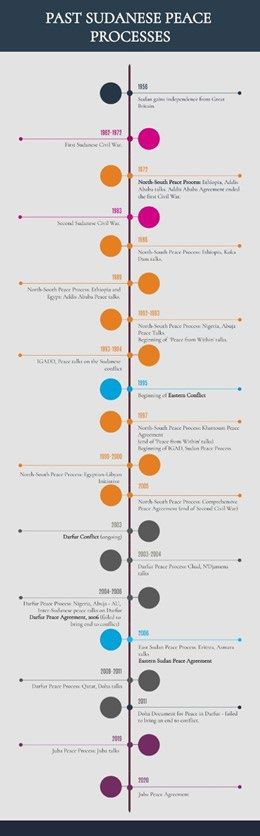
10   2.3. Broken Patterns of Peace-Making
12   2.4. Actors
13   2.5. Timeline of the Process
14   2.6. Description of the Agreement

16   3. Analysis
16   3.1. A Most Inclusive Process
17   3.2. In Pursuit of Comprehensive Peace
18   3.3. A Track-based Approach
19   3.4. Ownership: An Agreement by Sudanese for the Sudanese?
20   3.5. A Focus on Conflict-Resolution
20   3.6. The Political Economy of Peace Making

23   4. Conclusions
23   Short-term milestones vs. sustainable peace
23   Fixation on at the table negotiations
23   Lack of inclusivity and local ownership
24   Lack of implementation and long-term oversight
24   Strategic deficit of international peace and security interventions
24   Historical grievances and drivers of conflict
25   Political economy of conflict
25   Other issues at play

26   5. Annexes
26   Annex 1: Description of the fundamental flaws proposed by
     the Principles for peace Initiative.
27   Annex 2: List of Contributors
28   Annex 3: Outline of the Juba Agreement by Chapter
29   Annex 4: Prominent Actors at the Juba Peace Process

                                                                           2
Acronyms
AU African Union
CPA Comprehensive Peace Agreement
FFC Forces for Freedom and Change
IDP Internally Displaced Persons
IGAD Intergovernmental Authority on Development
JEM Justice and Equality Movement
NCP National Congress Party
RSF Rapid Support Forces
SAF Sudan Armed Forces
SC Sovereign Council
SLA-AW Sudan Liberation Army-Abdel Wahid
SLM-AW Sudan Liberation Movement/Abdel Wahid
SLM/M-M Sudan Liberation Movement/Mini Minawi
SML/A Sudan Liberation Movement/Army
SPLM Sudan People’s Liberation Movement
SPLM-N/AH Sudan People’s Liberation Movement/Al Hilu
SPLM-N/M-A Sudan People’s Liberation Movement-North-Malik Agar
SRF Sudan Revolutionary Front
TMC Transitional Military Council
UNAMID United Nations-African Union Mission in Darfur
US United States
3Key Messages
T his report forms part of a series of country case
studies by the Principles for Peace Initiative
(P4P). This Interpeace initiative is designed to re-
The Key Messages section is designed to draw out
the themes and lessons learned from an analysis
of the Juba Peace Process in Sudan between 2019 –
think the way peace processes are conceived and 2020, in order to inform the exercise of drafting new
structured in light of evidence that conflict tends principles to guide the structure of future peace
to re-onset on average within 7-12 years after a processes. The conclusion summarises findings
peace agreement is signed. This has been the case against the seven interrelated and fundamental
for all of Sudan’s peace agreements. problems with the way peace processes are
structured, that the Principles for Peace Initiative
has proposed.
Political Will
It seems fundamental to the success of any is yet to emerge. Sudan is rich in resources and
process that there is the political will to pursue thus opportunities for extraction. These attract
and implement peace. Sudan’s peace processes, significant interest from regional powers. The
including the Juba Process, all merit from an Transition’s “strongman”, Vice President of the
examination of the particular circumstances Sovereign Council, RSF Leader Hamdan Dagalo
in which the process takes place, the political (Hemetti) is being backed internationally in the
economy of the context, and an analysis of the actors hope he will hold access to these resources in his
themselves. The four processes negotiated under gift. The latest rapprochement between the Gulf
the Bashir regime were not negotiated in good nations will have ramifications for the next phase
faith.1 Their lack of meaningful implementation of Sudan’s peace process.4
would support that proposition.2
On the other hand, many of the actors in
The Juba Process is the first to be negotiated
this process have cut their teeth over the last
with a transitional government, as opposed to an
twenty years of conflict, opposition politics
incumbent leader keen to secure their position.
and peace-making. It is possible the perspec-
This should be a strength. The range of signatories
tive gained from this experience, alongside
is a credible attempt to bring peace-actors
the fact that the space for this negotiation
together on one platform. However, it also points
was created by the popular overthrow of the
to tendencies to fragment. There was evidence
regime many fought against, strengthens
amongst contributors to this report of divisions
genuine political will for sustainable peace.
along ethnic, ideological and political lines.
In this case, it would be a great loss if a peace
Now power-sharing arrangements have been
brokered under such circumstances were
agreed, the real test of political will to pursue
not to win international financial support to
sustainable peace, will be in implementation.
implement.
The signatories who now share power have a
stake in a dubious prize.3 Sudan’s economy is at
breaking point, and a guarantor of the peace plan
1 The Comprehensive Peace Agreement (2005), the Darfur Peace Agreement (2006), the Eastern Sudan Peace Agreement (2006), and
the Doha Document for Peace (2011) were all negotiated by Omer al Bashir’s government with little effort at genuinely sharing
power or implementing the agreements. See for example Jok Madut Jok, (2015), John Young (2007), J. Brosché & A. Duursma (2017)
2 See section 3.3 Broken Patterns of Peace-Making. Seen through the lens of De Waal’s market place analysis, these processes played
to the hand of the leading NCP allowing it to gain credibility internationally in signing an agreement, while simultaneously buy-off
opponents, without relinquishing any real power. See De Waal (2009).
3 Jan Pospisil (2020). See section 4.6 The Political Economy of Peace Making
4 https://www.reuters.com/article/us-gulf-qatar-usa/breakthrough-reached-in-gulf-dispute-with-qatar-senior-trump-official-
idUSKBN29924S accessed 14.01.2021
4Ownership and Inclusivity
The level of ownership flows from the degree to should be strived for, while recognising that
which a peace process has been inclusive. Those the ideal will never be achieved. Those who
included in the process tend to feel a sense of remain outside negotiations do so as they feel it
ownership and this was very clear when comparing better represents their interests. This maintains
the perspectives of contributors to this report who the fractured and transactional nature of the
had and had not been included.5 political market-place in Sudan and makes the
simultaneous pursuit of democracy and institution
The level of local ownership of the Juba Peace
strengthening a far harder task.
Process was mentioned as a point of pride by
many contributors. They cited the degree to which International support that helps parties
the direction of negotiations were set by those overcome the limitations of resources and
around the table. There were no international weak institutions to strengthen engagement in
government delegations imposing their agendas, tracks 2 and 3 could go a considerable way to
although it was acknowledged international supporting inclusion. UNAMID engagement of
influence was still present through allegiances Darfuri women in the Juba Process is a good
with those in the room.6 International technical example of this.8 They could have gone even
support was provided to mediators and in drafting further to engage other parts of the UN to support
the document, and facilities were funded by tracks 2 and 3 in other parts of the country. That
Gulf nations. Technical mediation support was said, efforts at inclusivity will be empty if peace-
appreciated as being professional, practical and making lacks genuine political will and remains
was perceived as politically neutral. transactional within a power-sharing paradigm.
Who needs to feel ownership? Who needs to be The flip side of high national ownership is
included? Future principles for structuring peace low international ownership. While this was
processes might provide practical guidance on unanimously viewed as a “pro” amongst
these questions. There is a strong argument for Sudanese contributors to this report, in a fragile
ownership to be required nationally at all levels. context like Sudan with an economy broken by
In Sudan, those who felt they were not represented, decades of extractive economic management,
not included, or who felt the agreement did not this leaves no answer to the looming funding
cover their interests could act as spoilers in the question: who will foot the bill? The international
future, as they have in the past.7 community was poorly informed about the content
of the agreement not having been engaged in its
Whilst it is clear not everyone can have a seat genesis, and therefore “buy-in” may take time, if it
at the table, stronger strategies to engage comes at all.9
communities around tracks 2 and 3 could
This is where ownership and inclusivity connect to
strengthen inclusion and its link to a sense
transparency.
of ownership.
Groups in Eastern Sudan steadfastly reject the If the peace process is to succeed then the
Juba Agreement. Groups in the West have done “comprehensive ideal” should be strived for,
the same, and two armed groups have so far while recognising that the ideal will never be
declined to sign-up. If the peace process is achieved.
to succeed then the “comprehensive ideal”
5 Interviews for this report
6 Many analyses of past peace processes in Sudan cite international influence and lack of deep understanding of the context as a
reason for the failure of previous Sudanese peace agreements, particularly those built around the Comprehensive Peace Agreement
of 2005. See for example, J. Brosché & Allard Duursma (2018), P. Wright (2017) and J. Young (2005)
7 See section 3.3 Broken Patterns of Peace-Making
8 See section 4.1 A Most Inclusive Process
9 The removal of Sudan from the US State Sponsors of Terrorism List on December 14th 2020, allows for US support of debt relief at
the international monetary fund and World bank, a debt relief agreement being one of several conditions before access to financial
support from international financial institutions can be granted.
5Transparency
Many contributors to this report who held sceptical Sudan’s is not just a peace-building process, but
or critical views of the Juba Peace Process, also the dual process of peace and nation building.
mentioned its lack of transparency. Specifically, Transparency is critical to establish trust
their lack of awareness of how the process was between the population and its government.
structured, who was included and how. On the There is space here for strategic technical
other hand, the riposte given most frequently to communications support from the international
criticisms that the process was shallow, co-opted community, should the negotiating parties
by military interests, or failed to address the call for agree. That agreement may be tricky to secure
“freedom, peace and justice”, was that critics were in geographies where there are few examples
misinformed or had not read the weighty tome of of successful national public information or
over 100 pages. consultative processes to point to, or there is a
restrictive media environment.
Whilst it is understood much of the negotiations
must remain confidential due to their sensitive
Transparency is critical to establish trust be-
nature, a means of appropriately updating two
tween the population and its government.
key constituencies: the population and the
There is space here for strategic technical
international community, could have been found.
communications support from the interna-
Accurate, timely and appropriate communication
tional community.
is often a challenge in fragile contexts where
styles of governance have not historically preferred
transparency.
Negative and Positive Peace
While setting a goal to realise the “comprehensive Nevertheless, sequencing and prioritising of
ideal” sets ambitions high, pragmatic choices the implementation process and continuing
will need to be made along the way to keep the negotiations with those outside it remains
process intact. Preventing a relapse into conflict important. Firstly, the implementation pro-
– or negative peace – will rightly be prioritised. A cess is a chance to make gains on inclusion
success of the Juba Process is the continuation and ownership; secondly, this phase requires
of discussions despite conflict events, and the deep analysis and broad engagement in or-
agreement to assess and renew the ceasefire der to effectively address root causes of con-
despite relapses. flict. These extend back decades and will
take concerted time and effort to address.
In the Sudan case, the Juba peace process has
They involve addressing deep cultural biases,
resulted in agreements on security arrangements
tackling firmly held attitudes and restructur-
and power-sharing, with the complexities of
ing the institutions of power. Ideally, process-
governance, transitional justice, accountability
es will find a way of engaging the population
and development shifted to the implementation
in the restructure of its constitution, and the
phase. The degree to which “positive” peace will be
debate around what constitutes the national
achieved is yet to be determined.
identity. Only a participatory process would
The process will not be linear with discrete effectively gain the trust of the population
clearly distinguishable phases. Negotiations in in this level of change. Thirdly and simulta-
the Juba process stayed on track despite violence neously, peace-making must continue with
continuing and even increasing in some parts of all those constituencies that lie outside the
the country, often directly linked to disputes with agreement, until it becomes truly national.
the process. There is evidence that insecurity Lastly, it’s worth noting that in Sudan, the
is greater now than prior to the revolution in pursuit of sustainable peace is accompanied
December 2018.10 by the pursuit of democracy. Weak institu-
tions are not able to provide justice, protect
rights, distribute services fairly. This greatly
complicates matters.
10 ACLED (2020) https://acleddata.com/2020/08/27/riders-on-the-storm-rebels-soldiers-and-paramilitaries-in-sudans-margins/
Accessed 12.12.2020
61. Introduction
W hat has become known as the Juba Process began in October 2019, two months
after a joint civilian-military transitional government signed a new constitution in
August of the same year. This just four months after a popular uprising toppled the regime
of Omar al Bashir which dominated the country for almost 30 years. For the purposes of
this research, the Juba Peace Process is considered as a peace process with clear links to
the many peace processes which preceded it. Conflict has been a feature of Sudan’s post-
independence history, aside from a brief interlude of a mere 11 years following the Addis
Ababa agreement in 1972 until the second civil war in 1983. Regional powers have shifted,
but Sudan remains a strategically important country for its neighbours and gulf countries
who continue to play an important influence as the
country attempts to transition out of both armed
“Sudan’s example is a serious
conflict to peace, and from authoritarianism to
indictment against the presumption democracy. This dual-project is infinitely more
that negotiated peace agreements complicated than the “mere” pursuit of sustainable
are the only way to end wars.” peace.
Jok Madut Jok, 2015 This report forms part of a series of country case
studies by the Principles for peace Initiative (P4P), an
initiative of Interpeace to re-think the way peace processes are conceived and structured in
light of evidence that conflict tends to re-onset on average within 7-12 years after a peace
agreement. This has been the case for all of Sudan’s peace agreements. P4P has identified
seven interrelated and fundamental problems with the way peace processes are structured
including: (i) an overfocus on conflict resolution than sustainable peace; (ii) fixation on
‘at-the-table’ negotiations; (ii) a lack of real inclusivity and local ownership; (iv) a lack of
implementation and long-term oversight; (v) a strategic deficit in international peace and
security interventions; (vi) the failure to address historical root causes and past grievances,
and; (vii) the failure to understand and address the political economy of conflict.11
The objectives of this study are firstly to test the aforementioned assumptions in the case
of the Juba Process in Sudan and secondly, to provide a holistic analysis of this ongoing
peace process, in particular to identify factors that influence its success or otherwise.
1.1. Methodology
The methodology comprised a review of the literature of the causes of conflict in Sudan, and
its peace processes between 1972 and 2020, including media coverage and early analysis of
the 2019 Juba Peace Process. Informed by the literature review, ten key informants were
interviewed, drawn from civil society, armed movements, women’s groups and academia.
Additionally, and in order to corroborate and fact-check, over 20 further contacts were
made with different contributors from the United Nations (UN), Forces for Freedom and
Change (FFC), youth and women’s groups and journalists.
This research will be limited to an examination of processes around peace-making rather
than peace-building, given the Juba Peace Agreement was signed on October 3rd 2020. The
timeframe of this research leaves insufficient time to provide a meaningful examination
of some P4P hypotheses. Namely, the proposal that there is an over-emphasis on at-the-
table negotiations assumes a comparative timeframe; the quality of implementation
and long-term oversight will not be examined. Likewise, problems of local ownership,
historical grievances, root causes, and the political economy of conflict will not be examined
extensively as they relate to the post-agreement implementation phase which has barely
passed three months at time of writing. Further analysis at a later stage could do this.
11 See Annex 1: Description of the fundamental flaws proposed by the Principles for peace Initiative.
72. Background
T his section provides an overview of the conflict in Sudan, its dynamics, root causes and
trajectories as well as a description of key elements of the Juba Process. It provides the
context in which to examine if and how root causes were addressed during negotiations in
Juba, and how inclusive and relevant the process was to the conflict dynamics.
2.1. Legacies of a Violent History: Root
Causes of Conflict
Sudan has been fraught by conflict since it celebrated its independence from Britain in
1956. The conflicts of contemporary Sudan trace their roots back to this moment of the
creation of a nation and even earlier.
The vast inequalities between centre and the periphery were entrenched through a
history of slave trading. Khartoum itself grew as an established marketplace for slaves and
Sudan was one of the most active slave-raiding areas in Africa. Slaves were transported from
south to north Sudan, and onwards to Egypt, the Middle East and Mediterranean regions.
Inequalities of development during the colonial period always favoured the north. The
colonial administration trained and promoted northern riverine communities who still form
today’s elite, and who have concentrated their wealth in Khartoum and its environs. This
structural preference for the centre was audaciously formalised in policy by former Minister
of Finance, Abdul Rahim Hamdi, who defined clear zones for economic development in
Khartoum, Northern State and Port Sudan which became known as the Hamdi Triangle.
The peripheries of Sudan are wealthy in natural resources and labour but are subject to
both direct and indirect state violence, social injustice and deprivation.
The arrival in the late 19th century of militant Islam mitigated against the emergence of
a secular state, in favour of a brand of nationalism that sought to create an Arab, Islamic
based state, that subjugated those who did not fit its strictures. This doubled down on
the prejudice and structural racism against non-Arab and non-Muslim groups sewn
through slavery.
British withdrawal from Sudan in 1956 took place without any viable development plan,
and a failure to find a national consensus, or consult with the population on issues
essential to their concept of nationhood: national identity, systems of governance,
including the question of federalism and the legacy of slavery.12 According to Douglas
Johnson, “Sudanese independence was thrust upon the Sudan by a colonial power
eager to extricate itself from its residual responsibilities; it was not achieved by national
consensus expressed through constitutional means”.13
South Sudanese scholar Jok Madut Jok summarises the legacy of this violent
history whereby the “marginalisation of the peripheries, state violence,
religious and racial biases that relegated a large part of the citizenry to
a position of second class citizenship, all of which had sparked multiple
regional rebellions against Khartoum, were all rooted in the failure of the
Sudanese state to become a nation that encompasses all of its citizens.”
Jok Madut Jok, 2015
12 Interviews for this report.
13 D. Johnson, (2003): pg. 24.
82.2. Sudan’s Regional Rebellions: Dynamics in the
Peripheries
Taking the long view, although Sudan has many and ethnically-based rebel movements emerged
regional conflicts, each with their own dynamics in the 1950-1960s in direct resistance to a national
of time, space, power and actors, they share the identity based on Arabism and Islam, and to
historical root causes described above. These advocate for economic development and greater
manifest themselves differently in each context of autonomy.
Sudan’s vast geography.14 A number of regionally
SUDAN Figure 1: Map of Sudan15
Administrative map
EGYPT Halayeb
LIBYA K S A
Halfa
Jabiet Al Maadin
Dalgo Abu Hamed
Port Sudan
Alborgag El Qaneb
RED SEA
Re
Port Sudan
Dongola
d S
Dongola Suakin
NORTHERN
ea
Sinkat
Haya
Barbar
Merawi
RIVER NILE Tokar
Agig
Algolid Atbara
Dordeb
CHAD Al Daba
Ed Damer
Ed Damer
Hamashkoreib
El Matammah
S U D A N
Umm Badda Shendi North Delta
Telkok
Karari Khartoum North KASSAL A
El Malha
KH ARTOUM Atbara River Aroma ERITREA
Sharq El Nile Halfa
Khartoum
NORTH DARFUR
Um Durman Kassala
Jebrat El Sheikh Khartoum El Jadeeda
Um Buru Sodari Western Kassala
Kornoi Jabal Aulia
El Kamleen Kassala
El Tina El Gutaina Eastern El Gezira El Butana Khashm Ghirba
El Hasaheesa Rural
Kassala
Kutum Umm Ramtta ALGEZIRA Um El Qura
GEDAREF Wad El Helew
Kulbus Mellit
El Kuma Wad Madani Greater
NORTH KORDOFAN
Middle Gedaref
Bara Wad Madani
Jebel Moon El Douiem El Manageel Southern El Fashaga
El Faw Gedaref
WEST El Sireaf El Gezira Gedaref
Sirba El Fasher El Fasher Eastern Sennar Al Mafaza Western Al Quresha
DARFUR Saraf Omra Kebkabiya
Tawilla
Sennar El Galabat
Eastern
El Geneina Umm Keddada
El Nehoud Rabak
Dar El Obeid Kosti Qala El Nahal El Galabat
LEGEND El Geneina
Kreinik Zalingei Nertiti Rokoro El Salam Kalimendo Um Rawaba Rabak Singa Singa
Beida
Sharg
Zalingei Jabel Marra
Wad Banda Shiekan
Tendalti
WHITE El Souki
El Rahad
Basonda
International boundary Habila Azum Niteaga
Marshang
Abu Zabad
NILE SENN AR El Dindir
El Dali Abu Houjar
WEST KORDOFAN
Kass Sheiria El Taweisha
Wadi Salih
CENTRALShattai Alwehda El Salam El Jabalian
State boundary Foro
Nyala North Al Sunut
Al Qoz
Baranga
Undetermined boundary DARFUR Kubum Nyala Bielel
Nyala
Ailliet
Ghubaysh
Dilling
Rashad El Abassiya El Damazine
Habila Ed Damazine
Bindisi Mukjar Ed El Fursan Yassin Abu Karinka El Fula
Al Tadamon El Roseires
Abyei PCA Area El Salam Ed Daein
Assalaya
Adila El Salam SOUTH KORDOFAN
Gereida Ed Daein Lagawa Reif Ashargi Heiban BLUE NILE
River Nile
Umm Dukhun Rahad
El Berdi
Katayla Tullus
Dimsu
El Ferdous
Babanusa
Kadugli
Kadugli Abu Jubaiha Bau Geissan ETHIOPIA
Buram EAST Umm Durein
Country capital SOUTH Al Buram
Um Dafug
Sunta
DARF UR Abyei - Muglad Keilak El Kurumuk
State capital DARFUR Bahr El Arab
Abu Jabra Talodi
El Radoom Abyei Area
C. A. R.
SOUTH SUDAN
The boundaries and names shown and the designations used on this map do not imply official edorsements or acceptance by the United Nations.
Creation date: 02 October 2019 Sources: boundaries (IMWG), River (WFP), Settlements (OCHA) Feedback: ochasudan_feedback@unocha.org | www.unocha.org/sudan | www.reliefweb.int
The conflict with the South, originally with and violence heightened when resources waned
a group called Anyanya which then merged after the drought in the 1980s. In April 2003, two
into the Sudan People’s Liberation Movement new opposition movements the Sudan Liberation
(SPLM), was brought to an end with the signing Movement/Army (SLM/A) and the Justice and
of the Comprehensive Peace Agreement (CPA) in Equality Movement (JEM) caught the government
2005. Although this agreement ended decades of off-guard with attacks on the airport in Al Fasher,
civil war, it brought peace to neither the South nor capital of North Darfur. Over-stretched militarily
the North. the government employed proxy tactics by arming
militia, known as the Janjaweed, to defeat the
In Darfur, age old conflict between pastoralists and
rebels. The Darfurian rebels were not included
sedentary farmers, caused in part by environmental
in the “Comprehensive” Peace Agreement
pressures and changing land ownership patterns,
which was then under negotiation.16 In protest
was an important cause of the Darfur violence. The
the groups took up arms again until under
opposition Darfur Development Front formed in
international pressure, a peace process began in
the mid-1960s, aligned with rebels in the south,
14 Prof Guma asserts Sudan’s conflicts are many and distinct and therefore they should have peace processes designed to address these
distinctions. The geographical track approach adopted by the Juba Process allows for this. To the detriment of the unification a
national approach would take.
15 Source: https://reliefweb.int/map/sudan/sudan-administrative-map-october-2019
16 P. Wright, (2017)
9Nigeria. This shortly collapsed, and was followed by marginalisation and resentment that fuelled those
the Doha Agreement signed in July 2011. Formally rebellions were also present here, in a region rich in
known as the Doha Document for Peace in Darfur, resources (fertile agricultural zones, grazing areas,
the document was signed between Khartoum and and minerals like gold, oil, and natural gas), and
the Liberation and Justice Movement, an alliance woeful humanitarian needs and food insecurity.18
of ten small Darfuri rebel groups. It established Resources tend to serve elites in Khartoum rather
a compensation fund for victims, a new Darfur than the indigenous Beja and Rashaida tribes.19
Regional Authority to govern the territory until Armed struggle began in the 1990s, led by the Beja
the region’s status could be determined through Congress, but had largely disintegrated by late 2005,
a referendum, and a set of power-sharing having lost the support of the SPLM/A who signed
agreements. their Comprehensive Peace Agreement. The Beja
Congress changed tack and formed the Eastern
What have become known as the Two Areas, Blue
Front – an alliance of smaller groups including the
Nile state and South Kordofan are the legacy of the
Rashaida Free Lions – based on a regional rather
CPA and its subsequent succession of the South.
than ethnic logic to government opposition.20 Its
The CPA quickly led to a splintering of the SPLM
military achievements were limited however, and
into the new SPLM-North faction, led by Malik Agar,
after becoming increasingly dependent upon
in order to avoid calls to disband or merge into the
Eritrea, the Eastern Front joined the Eritrean
SAF under the terms of the CPA.17 Those who had
mediated Eastern Sudan Peace Process whose
been left out of this “comprehensive” agreement
agreement ended the conflict in 2006.
effectively became its spoilers. These liberation
movements have mobilized local populations and These regional peace agreements, each of which
continue to exert control over much of the territory were based on the CPA model, collapsed in short
in Blue Nile and South Kordofan. succession. Few made much headway in terms of
implementation, and all failed to realise an end to
Conflict in the East, in the states of Kassala, Al
the marginalisation that had rallied the opposition
Qadarif and the Red Sea are often obscured by
movements.21
the conflicts in Darfur and against the South. The
2.3. Broken Patterns of Peace-Making
Sudan has brokered five peace agreements between Prof Abdul Jalil summarised the lessons learned
1972-2011. Three of these – the Comprehensive from these agreements in an analysis designed to
Peace Agreement in 2005, and the Darfur Peace inform understanding of Juba Peace Process. He
Agreement, Abuja and the Eastern Sudan Peace highlights the need to break with old patterns of
Agreement in 2006 - were signed within one year “transactional peace deals among competing
of each other. The structure and pattern of the CPA elites to real, comprehensive peace engaging all
dictated the format of the subsequent agreements. stakeholders and in particular those victimized
There was heavy engagement of regional and by violent conflict.”24 The multiple platforms of
western governments throughout negotiation and the past have only incentivised fragmentation of
implementation. rebel movements, and made more difficult the
chances of reaching a comprehensive peace. The
Mediators took similar approaches centred on a
paradigm of power and wealth sharing adopted
power and wealth sharing paradigm placing the
in all Sudan’s previous peace agreements ultimately
government of Sudan and armed movements
resulted in dividing up jobs and incentives and
in pivotal positions.22 There were few efforts at
made rent-seekers of rebel leaders who prioritised
genuine and diverse inclusion.23
short-term interests to the detriment of long-term
sustainable solutions.
17 J. Madut Jok (2015)
18 Red Sea state is consistently rated at crisis levels of food insecurity (phase 3) according to Integrated food security phase
classification (IPC) ratings. http://www.ipcinfo.org/ipc-country-analysis/details-map/en/c/1152718/?iso3=SDN. Red is one of the
poorest states, with 51% of people living on less than $1.25/day according to the Humanitarian Needs Overview, 2020.
19 M. Ottoway & M. El Sadany (2012)
20 J. Young, (2007)
21 ibid
22 Peace Research Institute, University of Khartoum. Draft paper, (2020)
23 ibid
24 ibid
10The author goes on to recommend that future
peace agreements must address not just the
physical insecurity but ontological insecurity of
the groups divided by vicious dichotomies of “us”
and “them”. Security underpins the legitimacy of
peace-making efforts allowing parties to negotiate
in good faith towards a permanent solution
to the “security dilemma”. Implementation of
all the aforementioned agreements was woeful,
and could have been strengthened by penalties
for violation, capacity building, development
programming, and clear governance architecture
to facilitate coordination between different level of
government.
Many authors have examined the role of
international actors in Sudan’s peace agreements,
highlighting the influence of unresolved external
factors in hampering a resolution to civil war.25
25 See for example Jok Madut Jok, (2015), John Young (2007), J. Brosché & A. Duursma (2017)
112.4. Actors
Understanding the cast of actors who assembled Abdel Wahid (SLM-AW), there is little indication he
in Juba to negotiate, and their attendant groups will do so. SLM-AW maintains a stronghold in the
and allegiances, is essential to any analysis of the Jebel Marra region of Darfur, that covers an area
process. A table describing key actors is included at the border between Central, North and South
in Annex 4: Prominent Actors at the Juba Peace Darfur states, alongside a small presence in Libya.30
Process. In Darfur, the movement finances itself through
extortion of taxes from those resident in the areas
Opposition to Omer Al Bashir’s National Congress
it controls, including IDP camps, alongside taxes
Party was both political and armed. Political
from gold mines in its territory.31 The movement
parties like the Umma National Party led by
also maintains relations in Libya and Chad, with
the Mahdi family, the Sudan Communist Party,
Libya remaining the main source of financing for
the Baath Party and Democratic Unionist Party
Darfuri armed groups.32 The movement has been
Groups have a long history of opposition. Despite
fraught with leadership struggles, played out
historical election success and strengths in
in fierce competition for control of IDP camps.33
public mobilisation, the leadership and internal
Abdel-Wahid is known as a serial naysayer. In June
governance of these parties is at odds with a
2019 he signed a statement with Sudan Liberation
revolution that prominently featured the voices
Forces Alliance rejecting the transitional council
of youth and women.26 For instance, Sadig al
“as an elite pact at the expense of protesters
Mahdi led his Umma Party for longer than Bashir
and marginalised areas of the Sudan.”34
led the country: an uncomfortable parallel that
undermines its ability to represent those who took The second leader holding out is Abdel-Aziz al Hilu
to the streets in the December Revolution.27 of the SPLM-North (Al-Hilu) who by contrast did
go to Juba and began negotiating. He withdrew
Sudan’s armed movements are represented by
almost immediately in October 2019 after the Rapid
a complex collection of acronyms that change
Support Forces (RSF) detained 16 people in South
as allegiances shift and the fortunes of leaders
Kordofan on the grounds that the military had
fluctuate. The main groups participating at the
violated the terms of the ceasefire. From that point
negotiations in Juba were:
on, negotiations with Al Hilu remained outside
1. Sudan Revolutionary Front (SRF)28, led by El- the main negotiations, and he officially withdrew
Hadi Idris in August 2020 citing the “lack of neutrality” of
Hemetti who chairs the government delegation.35
2. Justice and Equality Movement (JEM), led by
Hemetti is also Commander-in-Chief of the RSF,
Jibreel Ibrahim
and implicated in the genocide in Darfur and more
3. Sudan Liberation Movement/Mini Minawi recently the deadly crackdown on the sit-in outside
(SLM/M-M), led by Mini Arcua-Minawi the military headquarters on June 3rd 2019.36
4. Sudan People’s Liberation Movement-North- Al-Hilu controls an area in the Nuba Mountains
Malik Agar (SPLM-N/M-A), led by Malik Agar around Kauda, South Kordofan having taking the
majority of forces with him when the movement split
5. Beja Congress29, led by Osama Saeed
in 2017 with weapons including armoured vehicles,
Notably, leaders from the only two armed groups tanks and long-range artillery. It looks unlikely his
controlling significant Sudanese territory have position on the right to self-determination can be
not signed up to the agreement. In the case of reconciled with that of SPLM-N led by Malik Agar
Abdel-Wahid of the Sudan Liberation Movement/ and Yasir Arman.
26 The National Umma Party won largest majority in 1966 and 1986 elections.
27 Party leadership has now passed to Sadig’s daughter Mariam, following his death in November 2020. The restriction of leadership to
within one family is also a characteristic of the Democratic Unionist Party Groups.
28 SRF includes the SPLM-N/M-A, SLM-MM, JEM and other smaller groups.
29 The Beja Congress is a political group comprising several ethnic groups, which has since splintered. Saeed signed the Eastern Sudan
Track on behalf of two Beja Congress splinter groups (United People's Front for Liberation and Justice and the Beja Congress in
opposition)
30 UN Security Council, (2020);
31 ibid
32 ibid
33 ibid
34 ibid
35 https://www.dabangasudan.org/en/all-news/article/sudan-peace-talks-7-protocols-signed-in-juba Accessed 10.11.2020
36 https://www.hrw.org/news/2020/06/02/sudan-justice-june-3-crackdown-delayed Accessed 18.11.2020
12Those armed movements participating in the the call for a secular state by Abdel Wahid and
Juba negotiations draw their support along Al Hilu will be irreconcilable with the ideals of
ethnic lines and from IDP camps. They control the Umma Party whose interest lies in marginal
little if any territory in the Sudan, and primarily change bearing in mind their historic links with
engage in mercenary activity in South Sudan and the NCP.40
Libya. JEM maintains regional links with Qatar
There are already signs that the era of coalition
and Turkey and has support from the Islamist
building is tipping back into familiar patterns of
movement and Zaghawa IDPs and refugees.37 SLM-
fragmentation. Mini-Minawi has elected to leave
MM also maintains regional links with the Emirates
the Sudan Revolutionary Forces alliance.41 Groups
and Egypt.38 SPLM-N/M-A has ethnic support
in the East have splintered as they fail to reach
amongst the Ingessana in Blue Nile state and links
consensus and align to different interests abroad.
with South Sudan, Emirates and South Africa. Each
There are accounts of ethnic groups in areas
movement therefore shared an interest in reaching
outside the tracks, organising themselves into
a swift deal with a share in power.
groups in order to be represented. The assumption
The practice of coalition building across armed being that unless you have a “movement” your
and civilian groups grew in the latter years of voice won’t be heard and, on the contrary, you
Bashir’s rule, and reached its zenith in the Forces may lose what you already have.42 Fragmentation
for Freedom and Change (FFC). The FFC is the across the political and armed blocs is reminiscent
political constituency of Prime Minister Hamdok, of historical trends in Sudan’s peace processes
however it is a fragile coalition. In 2014, an alliance that were all based on the paradigm of power and
of the Umma National Party, the Sudanese wealth sharing.
Congress Party and Sudan Revolutionary Front
In addition to pressure from armed movements,
(itself an alliance of several armed groups) formed
civil unrest and popular uprising has a strong
to call for the dissolution of one-party rule and the
track record of deposing governments in
establishment of a transitional government under
Sudan.43 Many of the early protests of the
the Sudan Call banner. This alliance formed an
December 2018 revolution were in non-conflict
influential bloc within the FFC, until the Umma
affected states, including in areas along the Nile
Party ultimately withdrew its membership. Many
in the north where many of the elite come from.
observers believe Sadig Al Mahdi’s intention had
The triggers were rising bread prices, fuel
been to negotiate a means of controlling the
shortages, power shortages, water cuts and
largest political coalition in the history of Sudan.39
the spiralling cost-of-living, all set in a context
Issues around the separation of religion and state,
of developmental neglect. These trigger factors
equitable share of development opportunity and
have not been resolved and public patience with
resources, ethnic representation all act as potential
the new transitional government is finite.
dividers within this fragile coalition. For instance,
2.5. Timeline of the Process
Talks between civilian, military and armed groups sides also bear the hallmark of ethnic dividers.
began almost immediately as Bashir fell. Unable to The fall of the dictator did not leave in its wake a
convert the victory of the revolution into civilian led clear path in which these divided groups could
leadership, the military quickly filled the power fulfil their expectations of government. Talks
vacuum with the formation of a Transitional between the military and armed movements were
Military Council (TMC). A ceasefire was announced also announced days after the formation of the
by armed movements on April 17, 2019. Talks TMC. This split negotiation between civilians and
between the civilians, led by the FFC, and armed armed movements played to the advantage of the
groups exposed rifts between the two sides military.
who opposed the former regime and yet did
The African Union (AU) gave the new TMC an
not easily align. Civilian and armed struggles had
ultimatum with a 3-month timeframe in which to
quite different experiences of opposition. Both
37 Partners for Development Services, (2020). Draft paper.
38 UN Security Council, (2020). ibid
39 Partners for Development Services, (2020). Draft paper.
40 ibid
41 SLM-Minnawi is not considered as SRF faction in Sudan peace process: mediator https://sudantribune.com/spip.php?article69369=
42 Interviews for this report
43 Peaceful civil disobedience in Sudan brought down military regimes in 1964 and 1985
13hand over power to a civilian led authority or face Fuel, power and water shortages remained a
expulsion. In August, an agreement was reached feature of everyday life, bread prices increased – all
between the FFC and the military to share power of which were triggers for the uprising. Reasons
and a Transitional Government was formed under for optimism on the economy remain elusive: an
a new draft constitution. international “Partners for Sudan” conference
pledged $1.8 billion – barely enough to keep the
Over the ensuing months of talks in Addis
country afloat, and removal from the US’s State
Ababa, Cairo and Juba, involving armed groups
Sponsors of Terrorism list which would allow
and civilians, a declaration of principles was
the country to access international finance
reached upon which to agree the basis of peace
has taken time to materialise. This leaves the
negotiations with the Sudan Revolutionary Front,
country beholden to immediate cash hand-
and separately with Abdel Aziz Al Hilu, (SPLM-N/
outs from Saudi Arabia and UAE, who prefer to
AH) who declined to join the coalition.44
channel their support to favoured strongmen
In December 2019 the process was resumed, Hemetti and Burhan. To add to the challenges,
with a team of 52 members drawn from civil the Covid-19 global pandemic put additional
society, armed movements and the transitional pressure on government and added challenges to
government. The final agreement was reached in convening, alongside the country experiencing the
August 31st and on October 3rd the formal signing worst flooding in decades.
took place.
Despite this, negotiators continued to meet and
Negotiations were threatened at many points. Of overcome challenges as they presented themselves,
note is the massacre at the sit-in on June 3rd 2019 which contributors said testified to the political will
at which over 100 people were killed.45 Yasir Arman, on all sides. Pressure from below remains palpable
deputy for SPLM-N Agar and a signatory to several as many of the reasons for dissatisfaction with
tracks, was in Khartoum at the time - despite the previous regime remain to be addressed and
a death warrant remaining in place - and was public demonstrations continued throughout
arrested on 5th June.46 Fighting occurred in Darfur 2019 and 2020. The Juba Process presents a
and Red Sea states. In Darfur, talks were suspended unique opportunity to renegotiate the terms of
until a cessation of violence, and in the case of Red government in Sudan and the pressure of public
Sea, groups directly linked dissatisfaction to lack of expectation is immense. Disappointment could be
representation in the Juba Peace Process.47 dangerous.
2.6. Description of the Agreement
The Juba Agreement includes ten different from the fact that each of the bilateral agreements
chapters. The first is an agreement on national has national level implications. The drafters made
issues. Six chapters consist of bilateral agreements an effort to consolidate provisions relating to some
between the Government of Sudan and different areas in the same sections in some of the individual
armed groups.48 These different chapters agreements, but this was not done systematically,
cover a wide range of issues, including power which makes the agreement more difficult to read
sharing, revenue sharing, transitional justice and and understand.49
transitional security arrangements. Remaining
Virtually all of the agreements make reference to
chapters focus on security arrangements and an
the 2019 Constitutional Charter.50 Many reconfirm
ambitious implementation matrix.
the relevant signatories’ commitment to the
There is an added level of complexity that stems Charter’s section on rights and freedoms. At the
44 Table outlining key actors, names of groups and geographical areas of operation to be added. The Sudan Revolutionary Front is a
coalition of the Sudan People’s Liberation Movement-North faction led by Malik Agar in Blue Nile state (SPLM-N Agar), the Sudan
Liberation Movement faction headed by Minni Minawi (SLM-MM), and the Justice and Equality Movement (JEM), includes SPLM-N
Agar
45 Physicians for Human Rights (2020); Human Rights Watch (2019)
46 Interviews for this report
47 Dabanga https://www.dabangasudan.org/en/all-news/article/beja-nazirs-hold-vigil-in-khartoum https://www.dabangasudan.org/
en/all-news/article/eastern-sudan-nazirs-blame-peace-track-for-violent-clashes
48 A Matrix of the different chapters can be found in Annex 4
49 IDEA (2020)
50 A Constitutional Charter was signed on August 4th 2019 between the Forces for Freedom and Change (FFC) and the Transitional
Military Council (TMC). Included is provision for a national constitutional conference to be held before the end of the transitional
period.
14same time, some of the individual documents can either exacerbate or contain polarisation
go further and purport to substantially amend along ethnic lines. The distribution of seats in
the Constitutional Charter’s contents. In brief, key the Legislative Council will be based on census
outcomes of the agreement include: indicators, taking into account the representation
of all communities in Sudan, meaning the region
▶ Thousands of fighters from armed movements of Darfur could see over 20% of seats.
to be incorporated into the military;
Some analysts have noted that prescriptions of
▶ Support for millions of displaced people to this agreement are reminiscent of previous peace
return home; agreements in Sudan (discussed in section 2.3).51
The agreement describes agreements on the
▶ More power for local administrations through
powers of specific regions within the tracks, there
a reworked federal system;
is little on the structure of the national government
▶ Land reform and courts to bring war crimes or on the powers of regions outside the tracks.52
suspects to justice, and; This was also a weakness of the past. Prof. Abdul
Jalil asserted in contributing to this report, the
▶ Establishment of a Legislative Council and the
complexities of vertical coordination across
appointment of civilian state governors.
locality, region and centre should not be under-
Governors have proved a contentious issue estimated.53 These issues will have to be resolved
particularly in conflict affected areas where they during or before the constitutional process.
51 Interviews for this report
52 IDEA (2020)
53 Interviews for this report
153. Analysis
T his section examines the Juba Peace Process described in the previous section against
the evidence for P4P’s seven hypothetical flaws that undermine efforts towards creation
of sustainable peace.
3.1. A Most Inclusive Process
There are different narratives on the extent to which deliberation in Juba was informed
by consultation with key constituencies on the ground. Although it is widely agreed that
the Juba Peace Process is exemplified by being the most inclusive process in Sudan’s
history of peace processes, that is a low base to start from.
Women, youth and IDPs were poorly represented within the delegates. Engagement
with women’s groups in Darfur provides an example of the nature of the interaction
between Track 2 groups and the negotiating team. The Darfur Women’s group took the
initiative to reach consensus on a set of demands, drafted a paper and presented these to
different institutions of government in Khartoum in December 2019. On the back of this
they secured an invitation to Juba for 3 days in March to attend the IDP session which they
attended with logistical support from UNAMID.
The Darfur Women’s group was one of the better organised, even so, their engagement
was limited to a lobbyist role for a matter of days which restricted their ability to
influence conversations around the table for the duration of the negotiations, which
may in turn have influenced the level of emphasis on human security, protection, conflict
resolution and other issues prioritised by the women’s delegation. Women from other
parts of Sudan were even less well represented. The poor representation of women
during negotiations was widely recognised by the mainly male negotiators, who referred
to the constant references made to UN Security Council Resolution 1325 (on women, peace
and security), and the fact that the structures of the Juba Process fell so clearly short of
those principles. It was “embarrassing” according to one.54
That said, the degree of inclusivity of different interest groups was widely recognised to
be better than any time in Sudan’s history of peace processes. Armed movements had
women well represented in their delegation who vouch their participation was meaningful
and genuine, even if the arrangements of talks were not gender sensitive. One delegate
said she didn’t see her son for almost a year during negotiations; another spoke of a “first-
come, first-served” approach to sitting each day, whereas if you weren’t on time your
seat could be taken by someone else.55 The women collaborated to do their best to ensure
they were dispersed amongst committees. One contributor noted it was the first time they
had seen an IDP group sitting together at the table, facing armed movements and the
government.56 These were IDPs invited from the camps. In previous peace negotiations,
the former ruling National Congress Party (NCP) had the habit of recruiting “IDPs” from
Khartoum and coercing them into a position which supported them, for the appearances
of inclusivity. The Juba Process has come a long way from here.
54 Chatham House’s presentation on “Sudan’s Juba Peace Agreement: Ensuring implementation and prospects for
increasing inclusivity”
55 Interviews for this report
56 Interviews for this report
163.2. In Pursuit of Comprehensive Peace
The Juba Peace Process is not comprehensive. Also in November 2020, Abdel Wahid visited South
Two significant armed leaders remain outside Sudan, however despite rumours that he was to join
the Juba platform. Abdel Wahid, leading SLA-AW negotiations, he merely presented his position on
and Abdel-Aziz Al Hilu, leading SPLM-N, have a national all-inclusive dialogue to President Salva
both elected not to join the alliance of armed Kiir. Abdel Wahid’s movement is committed to a
movements to negotiate.57 This partly reflects united Sudan and is not seeking independence.
splits amongst the groups themselves: both The question remains as to how much space there
these leaders have grievances with members of is for these actors to negotiate into an agreement
armed movements who have joined negotiations. that has already been signed.
It also reflects principles the leaders demand
The risk of these two groups remaining outside
of those in power. For Abdel Wahid this is a
negotiations is real. Armed groups left out of
national, all inclusive dialogue around the key
agreements have shown a tendency to return
issues of state, for which there is already some
to conflict in Sudan. Negotiators are well aware
provision in the agreement. Abdel-Aziz Al Hilu
of the risks of failing to bring these actors into the
and negotiators have failed to reach agreement
fold. The Comprehensive Peace Agreement saw an
around the genuine separation of religion and
increase in violence by Darfuri armed movements
state and the right of self-determination for
directly as a consequence of being left out of
South Kordofan.58 Efforts are ongoing to try and
negotiations.61
engage both. Abdel-Aziz al Hilu met Prime Minister
Hamdok in Addis Ababa in September, 2020 where Perhaps the greatest concern against leaving the
they signed a joint agreement on principles of Al Hilu and Abdel Wahid’s movements as outliers
engagement including a clause on separation of to the process, is their ability attract support from
religion and state, alongside the right of residents those – national and international – unhappy
in Blue Nile to determine their own fate.59 In with the settlement or who no longer feel their
November, 2020, Abdel-Aziz Al Hilu also joined a interests lie in negotiation. Following De Waal’s
workshop in Juba with Hamdok to debate issues analysis of the patrimonial political marketplace,
around the separation of state and religion. Lead the only semi-stable outcome is an “inclusive
negotiator of the Juba Process, military member buy-in of all elites by the best-resourced actor in
of the Sovereign Council and hailing from Nuba the marketplace”.62 If De Waal’s theory is correct,
mountain himself, Shems al-Din Kabashi refused these outliers could resort to violence to force a re-
to sign the declaration that was the product of negotiation, becoming spoilers.
this workshop, and stated the Prime Minister had
Comprehensive peace will only be achieved
reached beyond his mandate to sign the joint-
once all parties are in. In its favour, the Juba
agreement with Al Hilu.60 The ensuing debate
Process provides for a single platform and a
marked the first public disagreement between the
single negotiating team. So far, this team have
Prime Minister and a member of the military on the
demonstrated the political will to overcome
peace process. It also indicates a lack of willingness
challenges and reach an agreement. This contrasts
to engage in coherent efforts to include those
with previous agreements (CPA, Abuja, Doha,
remaining outside the Juba Agreement.
Eastern Agreement) where different wars had
different platforms, allowing those left outside to
become spoilers.
57 SLA-AW has large constituencies amongst the Fur tribes and IDPs in Darfur particularly around the Jebel Marra area, SPLM-N
controls much of the area in the Nuba Mountains around Kauda, South Kordofan
58 https://www.dabangasudan.org/en/all-news/article/juba-talks-between-sudan-govt-and-armed-movements-adjourned
59 https://www.dabangasudan.org/en/all-news/article/sudan-govt-splm-n-el-hilu-agreement-in-addis-ababa-rebels-to-retain-arms
accessed 9/12/2020
60 Sudan Tribune (2020) Sudan’s Premier rejects claims that he has no mandate to sign joint agreement with SPLM-N https://
sudantribune.com/spip.php?article70157
61 Young (2017); J. Madut Jok (2015)
62 De Waal (2009) p102
173.3. A Track-based Approach
Although ostensibly the regional track approach that could, for example, see Governors from armed
is an attempt to address the complexity of issues movements placed in their region (which is seen as
by the specific context of each geography, there threatening).
are criticisms of this approach both within these
While the Juba Agreement contains terms on many
geographical tracks as well as from those left
of the root causes and issues of concern, they were
outside them.
negotiated without adequate representation from
Taking the East as an example, Hadendawa leaders IDPs, women, youth and war affected communities.
have rejected the outcome of the agreement in Moreover, much of the detail of how these issues
the east on the grounds that the negotiators did will be addressed is relegated to the role of
not represent them. Those in the delegation were commissions and other mechanisms which will
of Beni Amer ethnicity, a group that straddles be established at implementation phase leaving
the Sudan-Eritrean border, with a history rooted much still to be negotiated and the onus very
in Islamic fundamentalism dating back to the much on implementation. While the advantage
1980s.63 On 15th November 2020, when traditional of this “political unsettlement” is that it will buy
leaders were welcomed from across Sudan to a much needed time for complex negotiations to
grand ceremony in Khartoum to celebrate the continue to be discussed, the disadvantage is
Juba agreement and welcome the signatories to the weight of public expectation may not allow
the capital, roads were blocked and many took this luxury.67 Implementation will also very much
to the streets of Port Sudan and Suakin to reject rest on continued political will, and the ability to
the agreement.64 Weeks later a delegation of High positively manage potential spoilers. Sudan, so far,
Council of Beja Nazirs and Independent Chieftains has a deplorable record on implementation of
travelled to Khartoum where they presented peace agreements.
a memorandum to the Council of Ministers
Despite notching up an impressive number of peace
declaring their “categorical rejection” of the
agreements, there has never been a permanent
eastern track in the Juba Peace Agreement,
constitution, informed by an inclusive debate
including the consultative conference on eastern
of issues of national importance to the nation:
Sudan stipulated in the agreement.65 This has been
identity, religion, governance structures, resource
their position since the track was concluded in
management, relationships between centre and
February this year. The Nazirs explicitly linked the
periphery. This goes back to the establishment of
negotiations to a rise in violence in the area.
the state in 1956. The Sudanese have not addressed
In Darfur there is also evidence that a failure to what is that makes them a nation state. Increases
comprehensively include different stakeholders in inter-communal violence over the course of
and issues is causing tension. In November, 2020 a peace negotiations 2020 – while exacerbated by
delegation of Arab nomads travelled to Khartoum harsh humanitarian and economic conditions –
and met Burhan, Hemetti and Hamdok to reject the point to the continued lack of resolution of the
proposal in the Darfur track that Darfur return to a roots causes of conflict.68
single state.66 Arab nomads in Darfur are affected
The people remain in a crisis of identity, built
by the developmental neglect of the region like
on a history of mistrust, of tribalism and ethnic
any other ethnic group. However, since the 2003-4
division, the contentions of Arab Islamism
conflict they have benefitted from protection and
remain, as do unresolved issues of historical
benefits offered by Hemetti’s Rapid Support Forces.
slavery. Contributors argued that inclusivity of
This has included access to opportunities to fight
these issues is crucial, such that “even if not all
in Yemen for a bounty, and the ability to continue
the people are around the table, if there was a
to occupy land and use resources captured during
debate about these concerns there could be a real
the Darfur conflict with impunity. An agreement
breakthrough.”69
63 when Iaisas Afwerki ejected many from Eritrea into the welcoming arms of Omer Al Bashir’s National Congress Party, at that time
dominated by hardline Islamists.
64 Personal experience
65 https://www.dabangasudan.org/en/all-news/article/beja-nazirs-hold-vigil-in-khartoum accessed 9/12/2020
66 Interviews for this report
67 C. Bell and J. Pospisil (2017)
68 OCHA reported a two-fold increase in inter-communal violence in Darfur in the second half of 2020 compared to the previous year
https://reports.unocha.org/en/country/sudan/
69 Interviews for this report
18You can also read


