SUSTAINABILITY CERTIFICATE PROGRAM - UNIVERSITY OF CALIFORNIA, SANTA CRUZ sustainability.ucsc.edu - UCSC Sustainability
←
→
Page content transcription
If your browser does not render page correctly, please read the page content below

SUSTAINABILITY CERTIFICATE PROGRAM

          2020
   ANNUAL
    REPORT

      UNIVERSITY OF CALIFORNIA, SANTA CRUZ
                sustainability.ucsc.edu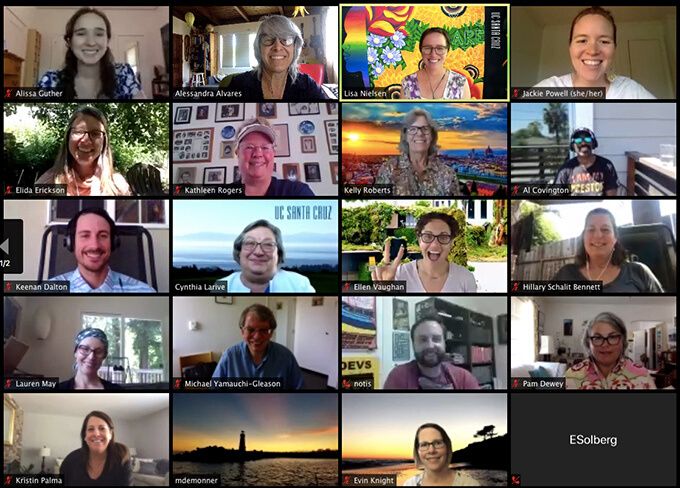
INTRODUCTION                                                                     PAGE 02

    PROGRAM SUMMARY
      Fostering meaningful dialog and engagement in sustainability, justice, & inclusion.

   The Sustainability Certificate                 justice. Brought together under
Program provides a unique                         one program, participants are
opportunity for UCSC employees                    able to make connections
to explore issues, concepts and                   between the many facets of
strategies for building a more                    sustainability and consider their
sustainable and inclusive campus                  interrelationships when
through the lens of multiple                      identifying solutions to
disciplines and perspectives.                     sustainability challenges.

   The staff and faculty in our                      As UCSC strives to meet its
program have ventured beyond                      carbon neutrality, zero waste, and
their departments to share                        water conservation goals while
knowledge, expertise and                          balancing the needs of a growing
curiosity with one another. The                   and diverse student body, we
result is a rich learning                         need approaches to sustainability
community that leverages and                      that recognize diverse lived
highlights the unique resources                   experiences and support people's
of our campus. Our instructors                    abilities to meet their own basic
are experts in a variety of                       needs. The Sustainability
sustainability topics, from                       Certificate Program provides a
renewable energy, city waste                      forum for a meaningful
reduction, regional planning &                    exploration of these important
ecological anthropology to                        and relevant issues and trends.
psychology, buddhism and
environmental

      "[The program] stimulates a sense of urgency based on understanding about
      the need to foster sustainable practices, particularly in the area of climate
      change..."

      "The topics covered were really informative and the instruction was
      fantastic. I learned a lot and enjoyed being in the program..."
                                                                -Past Participants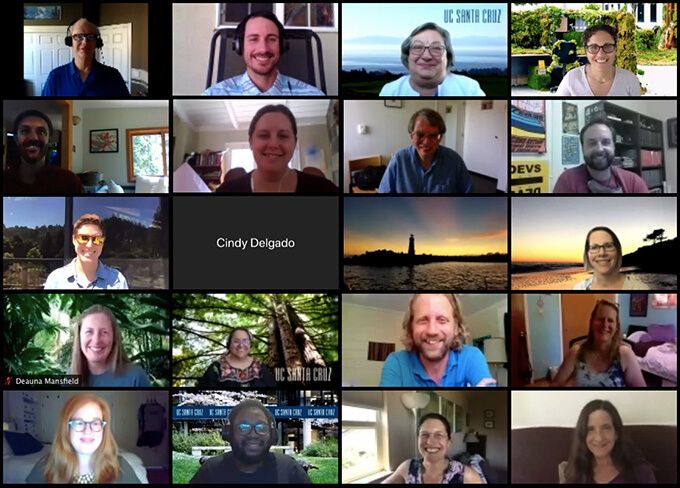
DEMOGRAPHICS                                   PAGE 03

Summary
The 2020 program engaged 90 staff
participants representing 41 departments or
units across campus. 31% of participants
graduated in one year.

        98
        PARTICIPANTS

        36
        GRADUATES

        Representing 41 campus departments
        and units.This represents a 64%
        increase in the graduation rate from
        the 2018-19 academic year.
SURVEY RESULTS PAGE 04
Summary
15% of program participants completed a
program evaluation. 94% of respondents
were satisfied with their experience in the
program, and 6% were neutral.
PROGRAM SATISFACTION
53%
OF RESPONDENTS
Said the program would be most
improved by expanding the program
in some way, whether it be through
more electives, hands on projects,
continual learning or more
interaction overall.CONCLUSION PAGE 05
2020 PROGRAM
HIGHLIGHTS
FIRST EVER STUDENT- SUCCESSFUL
TAUGHT COURSE TRANSITION TO
OFFERED REMOTE LEARNING
Students from the Green Successfully transitioned all
Office Team created and spring quarter workshops to
taught two workshops that Zoom format without losing
covered ways to become more enrollment and with
sustainable at work. maintained engagement.
LOOKING AHEAD
Our goals for the 2020-21 Certificate Program include:
MODIFY COURSE IMPROVE ALUMNI
OFFERINGS ENGAGEMENT
We utilize program feedback Respond to feedback that calls
to identify educational needs; for ways in which alumni can
for 2020-21 we'll be continue to connect with and
adjusting course structures to act on sustainability issues at
adapt to the most effective UCSC.
remote learning models.CONCLUSION PAGE 06
2020 GRADUATES
Aaron Jones, African American Resource & Cultural Center & EOP
Alexander Covington, ITS- Resource Planning & Management
Alessandra Alvares, Sustainability Office
April Zilber, Library
Benjamin Short, Staff HR - Compensation
Carla Sette, Teaching Assistant
Christopher Leverenz, Physical Planning Development and Operations, Grounds Division
Corinne O'Connell, ITS
Deauna Mansfield, FiUC Scout
Erika Solberg, Contracts Office - Physical Planning, Development and Operations
Erika Wolford, Academic Affairs
Esperanza Zamora, MA/Credential Program & Central California Writing Project in the Education Department
Hillary Schalit Bennett, Academic Affairs
Jackie Powell Research Center for the Americas
Jessica Bulleri, Risk Services
Kathleen Rogers Procurement Services
Katie Ritchey, University Library
Keenan Dalton, Procurement and Supply Chain Services
Kelly Roberts, Benefits Office
Kim Chamlin, Center for Agroecology and Sustainable Food Systems (CASFS)
Kimberley Hughes, Library
Kristin Palma, Special Events Office, University Relations
Lauren May, ProcurementLisa Nielsen, Communications and Marketing
Matt DeMonner, PPDO - Engineering Services, Sr. Mechanical Engineer
Mark Firestone, Engineering Project Manager, Physical Planning, Development & Operations - Engineering Services
Mike Yamauchi-Gleason, CHES- Porter College & Kresge College
Nick Otis Office of Emergency Services
Nikki Vamosi, Real Estate Services/PPDO
Oxo Slayer, Senior Physical Planner
Pamela Dewey, Division of Social Sciences - Dean's office
Sarah Woodside Bury, Colleges Nine and Ten
Teresa Buika, TAPS
Zoe Weldon-Yochim, Graduate student in Visual Studies
The 3rd graduating class for the Sustainability Certificate Program celebrated via
Zoom this year. Participants were honored by Chancellor Cindy Larive.APPENDIX PAGE 07
2020 COURSES
Sustainability in the UC
This course provides a general overview of sustainability efforts at UCSC, from
policy and operations, to student initiative and programming, to academics and co-
curricular activities. We will contextualize the UCSC campus’ lens into sustainability
within the larger context of the campus sustainability movement across institutions
of higher education. Small group discussion and hands-on activities will engage
participants proactively throughout the session. Instructor: Elida Erickson,
Sustainability Office.
Sustainable Cities & Social Equity
We have become an urban planet, with most major economic, social, and
environmental processes shaped by how our cities grow and change. Promoting more
sustainable urban growth is critical for the planet's future, but there are important
equity concerns in how we move towards more sustainable urban growth. This course
will examine overall global patterns of urbanization and plans for development more
sustainable cities, but will focus on California cities. We'll look at state legislation
designed to promote more sustainable cities, and the social equity impacts of the
urban planning processes that have emerged in recent years. Instructor: Dr. Chris
Benner, Professor of Environmental Studies.
Climate Change & Justice
The people who have historically benefited the most from the burning of fossil fuels
are not the same people who will bear the most severe consequences from climate
change's impacts. This course will examine global and local climate impacts of
climate change, and discuss the strengths and weaknesses of various efforts around
policy and technology to reduce greenhouse gas emissions. The course will also
explore the social and environmental impacts of climate change and fossil fuel
extraction, with a focus on indigenous rights and forest protection in Ecuadorian
Amazon. Instructors: Christina Thomure, Capital Planning; Kevin Koenig, Amazon
Watch.
Fostering Sustainable Behavior
Creating a more sustainable campus requires engaging people in behaviors that
reduce waste and conserve resources, as well as more complex behaviors required to
shift institutional norms and foster a more just, equitable and sustainable culture.
The common response to this realization emphasizes needing to "change people's
behavior." This course will challenge the premise that people need “fixing” and
provide a framework for exploring what psychology can tell us about how to best
foster sustainable behaviors that endure over time. Participants will gain tools for
developing and evaluating engagement strategies within their role in the University
setting. Instructor: Shauna Casey, Sustainability OfficeAPPENDIX PAGE 08
2020 COURSES
Intersections Between Diversity & the Environment
A core value at UCSC is our commitment to environmental sustainability,
conservation, and a “green” ethic. It is such a foundational principle that it is
assumed that all members of our campus community share the same understanding
of sustainability, and that it is an unqualified good. This class/workshop/elective
explores how certain forms of environmentalism, including those in the mainstream,
have perpetuated discrimination and exclusion based on race, class, ethnicity, gender,
place of origin, and other characteristics. We share the results of research conducted
with undergraduates to highlight how these issues have manifested at UCSC and how
they affect student success, sense of belonging, and retention. We also expand our
discussion to include how low- income, people of color disproportionately bear the
brunt of environmental degradation, contamination, and scarcity. Finally, we discuss
how our campus and larger community can be more environmentally just, from
forms of communication and interaction, to curricular and co-curricular programs.
Instructors: Dr. Flora Lu, College 9 & 10 Provost and Professor of Environmental
Studies; Elida Erickson, Sustainability Office; Dr. Rebecca Hernandez, American
Indian Resource Center.
Green Offices
As campus employees, we each spend a significant portion of our time in offices
across campus. How offices are set up and the everyday choices that employees make
while they are at work can have a major impact on sustainability! This course
provides an introduction and overview of ways to implement sustainable practices in
an office environment. You will learn best practices from staff and student experts
through our Green Office program, and share highlights and lessons learned with
other colleagues across campus in regards to the formation of office green teams,
zero waste practices, water and energy use. You'll also have an opportunity to learn
more about how to get Green Office Certified. This class meets for 1.5 hours and
would require 1-2 additional hours should you choose to pursue a formal
certification. Instructors: Sustainability Office Staff and Student Green Office TeamAPPENDIX PAGE 09
2 0C2 O
0 UCROSUERSS&
ES
INSTRUCTORS
Beyond the Blue Bin
This course provides an in-depth look at waste management. We’ll explore waste
systems on campus, locally and regionally, the current international recycling
industry collapse, and how our cultural conception of waste as a society has gotten us
into this pickle. This course will examine how the mantra of the 3Rs: reduce, reuse,
recycle needs some updating and have fun with interactive games. The goal of this
course is to provide you with the information you need to take action, get Trash Talk
certified so you can make your department’s events Zero Waste, and to equip you
with skills to be able to think through a reduction and reuse lens in your role both on
campus and at home. Instructors: Kristen Lee, UCSC Sustainability Program
Manager; Leslie O’Malley, City of Santa Cruz Waste Reduction Assistant
Climate Science & Policy
This course will provide participants with an updated overview of climate science
and examine global and local climate impacts. The presenters will discuss the
strengths and weaknesses of various political and technological efforts to reduce
greenhouse gas emissions, and examine how municipalities plan for and address
climate change. Instructors: Ellen Vaughan, UCSC Climate & Water Action Manager
& Tiffany Wise-West, City of Santa Cruz Sustainability & Climate Action ManagerYou can also read


