Campus Vote Report
2020-2021
←
→
Page content transcription
If your browser does not render page correctly, please read the page content below
Campus Vote Report 2020-2021
2

POINT OF CONTACT:
     Name:                    Keith Lanser

   Institution:       Mount St. Joseph University
   City/ State:              Cincinnati, OH
                     Associate Director of Service
      Title:
                     Learning & Civic Engagement
     Email:              Keith.lanser@msj.edu

     Phone:                 (513) 244-4634

COMMITMENT:
Mount St. Joseph University (the Mount) champions election engagement because it complements
our mission of "educating students through interdisciplinary liberal arts and professional curricula
emphasizing values, integrity and social responsibility." At the Mount, we are known for having strong
community service, service learning, and student philanthropy programs; this is reflected in our
inclusion in the President's Community Service Honor Roll in 2009, 2010, 2012, 2013, and 2015.
While service to others is one of our core values, and while service is an important component of what
it means to be a responsible citizen, participation in the democratic process is also a cornerstone of
what it means to be a responsible citizen. Since beginning our democracy program in 2015, we have
significantly increased our student voter registration and our student voting rates. By continuing to
strengthen our democracy program, students will be more likely to develop across the engaged
citizenship continuum, moving from personally responsible citizenship to participatory citizenship and
then to transformative citizenship. Because of our success with turning students into student voters,
NASPA designated Mount St. Joseph University as a Voter Friendly Campus in 2017-2018 and 2019-
2020. Additionally, the ALL IN Campus Democracy Challenge recognized the Mount with the Silver
Seal for our student voting rate in 2016 and the Gold Seal for our student voting rate in 2018. We
were also included in Washington Monthly’s Best Colleges for Student Voting in 2018, 2019, and
2020. In 2020, Washington Monthly ranked Mount St. Joseph University as the 12th Best College for
Student Voting in the United States.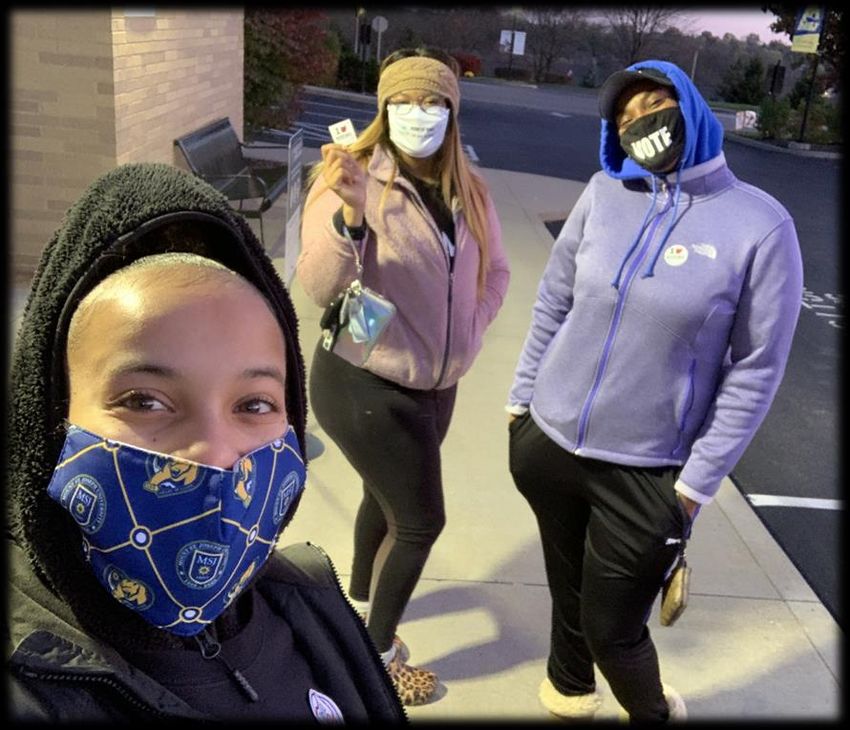
3 ELECTION ENGAGEMENT COALITION: The following individuals and organizations helped to facilitate the democracy program at Mount St. Joseph University in the spring and fall of 2020: Chair: Keith Lanser, Associate Director of Service Learning & Civic Engagement Faculty: Dr. Pete Robinson, Professor of History Dr. Jennifer Morris, Professor of History Dr. Georgana Taggart, Professor of Legal Studies Dr. Jennifer Withrow, Assistant Professor of Social Work Roxana Hawkins, Assistant Professor of Social Work Dr. Richard Simon, Assistant Professor of Sociology Dr. Jim Bodle, Professor of Psychology Dr. BC Charles Liscombe, Associate Professor or Exercise Science & Integrative Health Cindy Shibinski, Faculty Instructor of Special Education Staff: Dr. Rayshawn Eastman, Chief Diversity & Inclusion Officer/Title IX Coordinator Janet Cox, Dean of Students Amy Demko, Health Services Manager Jeff Hurley, Coordinator of Residence Life S. Karen Elliott, C.PP.S, D. Min., Director of Mission Integration Michelle Arnold, Assistant Director of Mission Integration Nicole Rottmueller-Jones, Career Development Coordinator Linda Pohlgeers, Director of The Career & Experiential Education Center Michael Heckmann, Director of Corporate and Foundation Relations Amanda Gratsch, Web Services & Technology Coordinator Scott Lloyd, Director of Library Services Students: Jaleah Fair-Harris- Democracy Fellow Ben Stanton- Democracy Fellow Sarah Teuschl- Graphic Design Co-op Tiffany Manning- Career Center Co-op Community Partners: Campus Vote Project League of Women Voters of the Cincinnati Area Hamilton County Board of Elections The Service Learning & Civic Engagement Office in the Career & Experiential Education Center served as the backbone office for this project, providing the leadership for strategic planning, project coordination, and program evaluation. Our student Democracy Fellows facilitated a variety of the programs and services offered through our democracy program. Democracy Fellows were supervised by the Associate Director of Service Learning & Civic Engagement, who chaired the Election Engagement Coalition.
4

STUDENT VOTING DATA (FROM NSLVE):
Since beginning our democracy program in 2015, we have significantly increased our student voter
registration and student voting rates over time:
                     Student Voter               Rate of Registered
    Year                                                                  Student Voting Rate
                   Registration Rate            Students Who Voted
    2012                 80.4%                         77.2%                      62%
    2014                 75.8%                         33.9%                     25.7%
    2016       85.7% (+5.3% over 2012)         76% (-1.2% over 2012)    65.2% (+3.2% over 2012)
    2018       83.9% (+8.1% over 2014)        54% (+20.1% over 2014)   45.3% (+19.6% over 2014)

GOALS FOR 2020-2021:
We have three primary goals for 2020-2021:
  1. Increase our student voter registration rate in 2020 to 90% (a 4.3% increase over 2016), as
      seen in the 2020 NSLVE report for Mount St. Joseph University.
  2. Increase our overall student voting rate in 2020 to 70% (a 4.8% increase over 2016), as seen
      in the 2020 NSLVE report for Mount St. Joseph University.
  3. Increase student voting rates to 50% for the following majors, as outlined by the 2020 NSLVE
      report for Mount St. Joseph University: communication & journalism, parks/ recreation/ leisure/
      fitness studies, and visual & performing arts.
5

ANALYSIS OF WORK:
Activities               Strategies                            Outputs/ Outcomes                             Lessons Learned
                1.   Hired two Democracy
                     Fellows to assist with voter
                     registration and other
                     programs.
                2.   Facilitated voter registration
                     during all in-person
                     orientations and via in-class
                     voter registration drives        1.   Successfully hired two Democracy             1.    Not all incoming freshmen
                     during the first two weeks of         Fellows.                                           attended orientation due
                     class.                           2.   162 voter registrations were submitted in          to the pandemic.
                3.   Facilitated voter registration        2020 (+12.5% over 2016).                     2.    When we did in-class
Voter                events like: Spring Voter        3.   18 campus-wide email voter registration            voter registration drives,
registration         Registration Day, National            reminders were sent in 2020.                       students registered to vote
                     Voter Registration Day, Last     4.   Voter registration information was                 online, which meant that
                     Minute Voter Registration             updated on both the MSJ external                   we could not track that
                     Day, and the Dorm Storm               website and the MSJ internal website.              data.
                     Voter Registration Drives.
                4.   Disseminated campus-wide
                     email reminders on voter
                     registration.
                5.   Updated voter registration
                     information on MSJ’s
                     external website and MSJ’s
                     internal website.

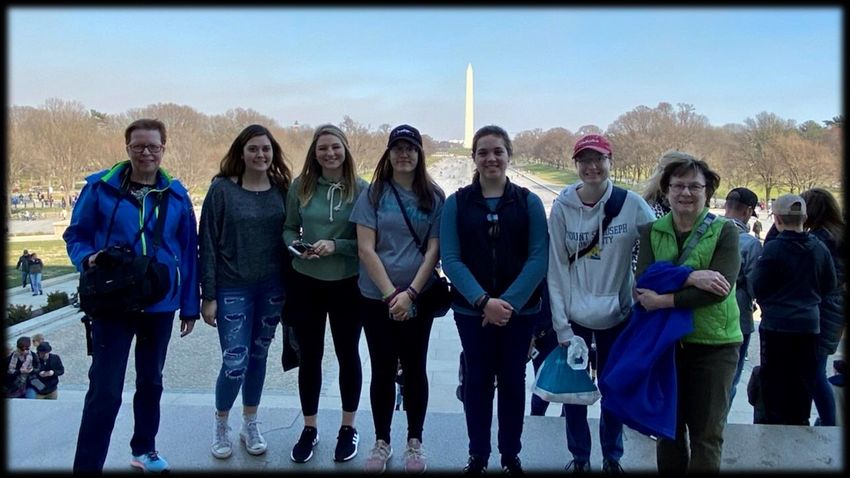
                1.   Distributed the League of
                     Women Voters of                  1.   Disseminated 100 copies of the League
                     Cincinnati’s nonpartisan              of Women Voters’ primary election voter
                     voter guides (at the campus           guide and 50 copies of their general          1.    We did not need as
                     library and over email).              election voter guide. Sent out 3 campus-            many physical copies of
                2.   Facilitated the Cincinnati            wide emails about the League of Women               the voter guide in the fall
                     Politics Challenge.                   Voters’ primary election voter guide and 2          due to the pandemic.
                3.   Co-facilitated the Campus             campus-wide emails about their general        2.    We believe more people
                     Vote Project’s Southern               election guide.                                     attended our virtual
                     Ohio Student Democracy           2.   Approx. 30 people participated in the               debate watch parties
                     Summit.                               Cincinnati Politics Challenge.                      because of the virtual
                4.   Took HON 263 to                  3.   Approx. 15 people attended the Campus               format; if we had hosted
                     Washington DC to                      Vote Project’s Southern Ohio Student                them in-person, we
Voter
                     experience the richness of            Voter Summit.                                       would have had fewer
education
                     American history.                4.   5 students participated in the HON 263              attendees (even if we
                5.   Celebrated Constitution               trip to Washington DC.                              were not living through a
                     Day.                             5.   Approx. 25 people attended Constitution             pandemic).
                6.   Facilitated Virtual                   Day.                                          3.    Our students wanted to
                     Presidential Debate Watch        6.   57 people attended our 3 Virtual Debate             talk about social justice
                     Parties.                              Watch Parties.                                      issues that directly
                7.   Facilitated Social Justice       7.   126 people attended our 4 Social Justice            affected their lives. We
                     Forums.                               Forums.                                             were surprised about
                8.   Promoted the Ohio Student        8.   Approx. 12 people attended the Ohio                 some of the topics that
                     Voter Summit.                         Student Voter Summit.                               they chose to discuss.
                9.   Promoted the Campus              9.   10 people attended the Campus Compact
                     Compact Regional                      Regional Conversation Series.
                     Conversation Series.
                                                      1.   MSJ successfully served as a polling
                1.   MSJ served as a polling               location for the first time during a          1.    Students had
                     location for the first time           presidential election.                              dramatically more
Ballot access        during a presidential            2.   Provided 26 proof of residency letters for          interest in voting
                     election.                             students who live on campus.                        absentee this year due
                2.   Provided proof of residency      3.   We added the following on our internal              to the pandemic.
                     letters for students who              website: information about absentee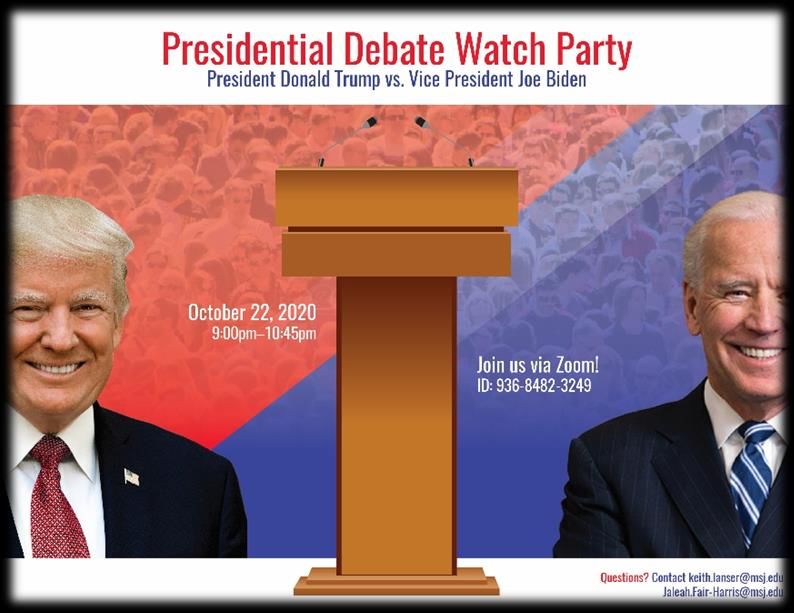
6

                      registered to vote using their        voting, how to identify your polling
                      dorm address.                         location, information on voter ID
                 3.   Assisted students with voter          requirements, and how to look up sample
                      registration checks, polling          ballots.
                      location checks, absentee        4.   Completed 65 voter registration checks, 2
                      ballot requests, and                  polling location checks, 36 absentee
                      absentee ballot checks.               ballot requests, and 7 absentee ballot
                 4.   Disseminated campus-wide              checks.
                      email reminders about            5.   Disseminated 5 campus-wide emails
                      absentee voting, voting               about absentee voting during spring
                      plans, and recruiting poll            primary election, 3 campus-wide email
                      workers.                              reminders about making fall voting plans,
                                                            and 1 campus-wide poll worker
                                                            recruitment email.
                                                                                                          1.   Students responded well
                                                                                                               to our event giveaways;
                                                                                                               they drove attendance
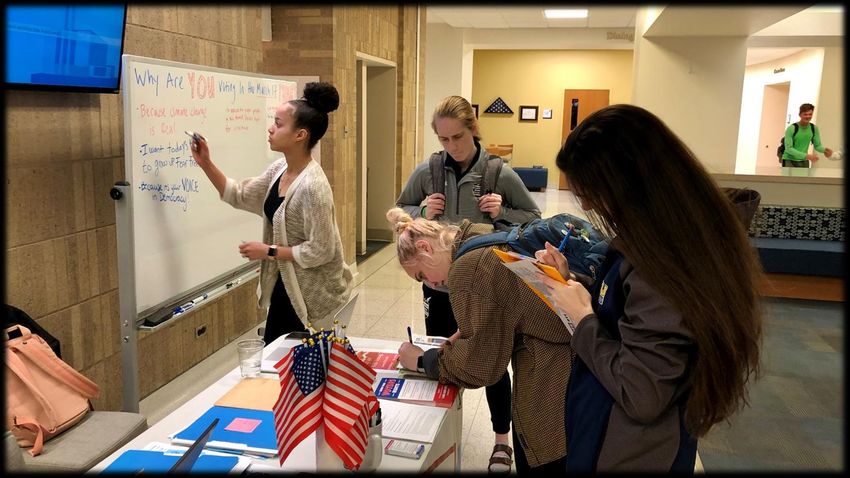
                 1.   Facilitated “Why Are You         1.   Approx. 75 people participated in the
                                                                                                               up at our voter education
                      Voting in the Primary?”               “Why Are You Voting in the Primary?”
                                                                                                               events.
                      tabling events.                       tabling events.
                                                                                                          2.   It was hard to maintain
                 2.   Disseminated campus-wide         2.   Disseminated 1 campus-wide email
                                                                                                               an October calendar
                      email reminder about the              reminder the day before the general
                                                                                                               because of the changes
                      general election.                     election.
                                                                                                               to the debate schedule.
                 3.   Promoted key election dates      3.   Added democracy program calendars for
                                                                                                          3.   Collaboration with other
                      in print marketing and                September and October to the democracy
                                                                                                               student organizations on
                      online.                               program page on our internal website.
                                                                                                               campus also helped to
                 4.   Facilitated a “Why Are You       4.   Posted 5 “Why Are You Voting This
                                                                                                               increase student
                      Voting This November?”                November?” videos to the Career
                                                                                                               participation at our
                      social media campaign.                Center’s Facebook page, featuring 19
                                                                                                               events and they helped
 Voter turnout   5.   Facilitated a social media            MSJ students/ faculty/ staff.
                                                                                                               us to distribute our
                      takeover in partnership with     5.   Successfully facilitated a social media
                                                                                                               VOTE masks and VOTE
                      the marketing department.             takeover in partnership with the marketing
                                                                                                               t-shirts.
                 6.   Wrote grants to help                  department.
                                                                                                          4.   Because we are a
                      purchase VOTE masks and          6.   Secured $1000 grant from Campus Vote
                                                                                                               heavily commuter
                      VOTE t-shirts for MSJ                 Project to purchase 250 VOTE masks
                                                                                                               campus/ because
                      students.                             and 40 VOTE t-shirts.
                                                                                                               students voted early, our
                 7.   Facilitated a March to the       7.   3 students marched together to the
                                                                                                               march to the polls was
                      Polls on Election Day.                polling location on campus on Election
                                                                                                               not very well attended.
                 8.   Our democracy program                 Day.
                                                                                                          5.   We are becoming an
                      was featured in national,        8.   Our democracy program was featured 8
                                                                                                               authority on voter
                      regional, and local news              times in national, regional, and local news
                                                                                                               engagement. We had
                      stories.                              stories.
                                                                                                               very relatable stories that
                                                                                                               viewers/ readers cared
                                                                                                               about.

Top Successes:
 1. We were surprised by how much media attention that our democracy program received this year.
    This fall Washington Monthly ranked the Mount 12th in the country in their “Best Colleges for
    Student Voting” list. Spectrum News 1 Ohio ran 3 stories across Ohio this fall where they tracked
    our democracy fellow, Jaleah Fair-Harris, as she educated herself on the issues and casted her
    ballot in her first presidential election. Our democracy program was also featured in a story by
    WCPO, two stories by WKRC, and one story by Northern Kentucky University. We believe we
    were successful in garnering media attention because we are becoming a national leader in
    election engagement and because we had very relatable stories to tell.
 2. Our voter education activities and events were very well attended this year, particularly our
    Virtual Presidential Debate Watch Parties and our Social Justice Forums. We believe that more
    students attended these events because of the virtual format; it allowed them to connect to the
    event whether they were on campus or at home. We might consider facilitating similar events
    virtually in the future to ensure equitable access to democracy program events.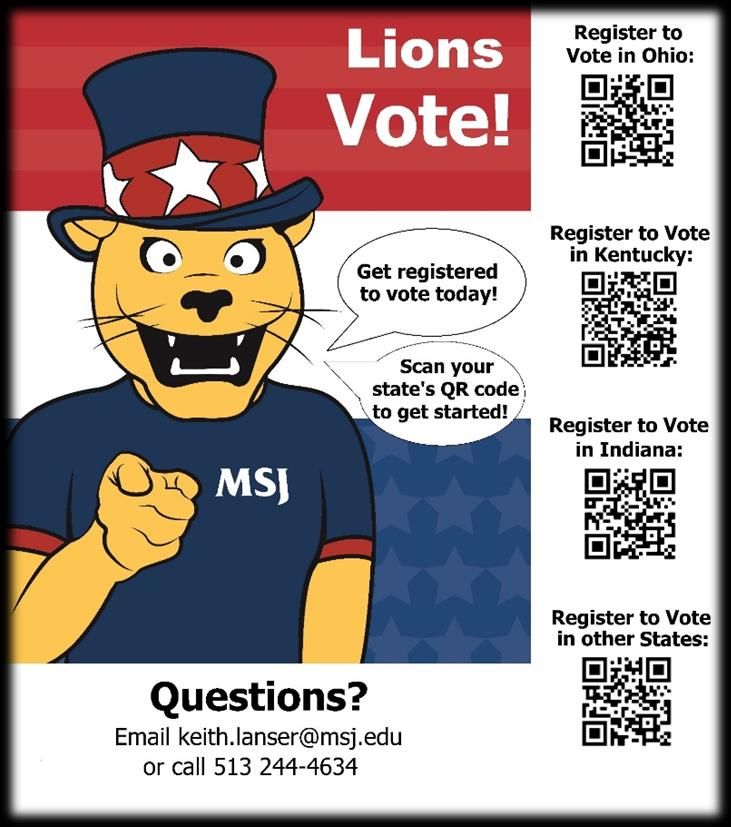
7

 3. Providing students multiple opportunities and formats to become registered to vote was
    successful in increasing student voter registrations compared to the registrations from 2016
    (+12.5%). Embedding voter registration into student orientations is the most effective way to
    register students to vote. Voter registration events like National Voter Registration Day and digital
    voter registration communications provided students who did not attend orientation the
    opportunity to become registered to vote.

Top Barriers:
 1. The COVID-19 pandemic was the obvious barrier to success during this election cycle. We were
    hoping to facilitate a variety of in-person events and to have more voter engagement within our
    courses this fall, but we were unable to do so because of limitations presented by the pandemic.
    However, we were able to shift our voter education focus more towards virtual co-curricular
    experiences, which were very successful.
 2. Voter registration this fall was more difficult than usual in large part because not all of our
    incoming freshmen attended orientations due to the pandemic. Voter registrations were also
    more difficult to track this fall because we believe some students used our voter registration
    email reminders and in-class voter registration drives to register to vote online.
 3. The current climate of political polarization in our community caused us to worry about backlash
    and incivility. We decided to change the name of our voter engagement program from democratic
    engagement program to democracy program to prevent the perception that the University could
    be endorsing political candidates and parties. Moreover, one of the topics of one of the Social
    Justice Forums was LGBTQ+ Issues. We were worried about trolling and censorship during this
    particular forum, but that did not occur to the best of our knowledge.

Beyond 2020:
Mount St. Joseph University will maintain its commitment to turning students into student voters
because we believe it strengthens our mission of “educating students through interdisciplinary liberal
arts and professional curricula emphasizing values, integrity and social responsibility.” Moving
forward, we hope to continue using NSLVE data to increase our student voting rates in majors with
lower voter turnout. We also hope to identify new ways to engage with graduate students, as our
current democracy program is heavily focused on undergraduate students. Finally, we intend to
continue facilitating Social Justice Forums because they provide safe spaces for folks in our campus
community to engage in meaningful dialogue about issues that our students truly care about.

NSLVE Data:
When we receive our NSLVE data for the 2020 general election, we will be looking for the following:
  1. Our 2020 student voter registration rate. We hope to continue the success our democracy
      program has had with getting students registered to vote. Our goal for the 2020 election was to
      increase student voter registration by 4.3% over 2016. Our student voter registration rate
      increased by 8% between 2014 and 2018, so it is possible that we could see an increase of
      higher than 4.3%.
  2. Our 2020 student voting rate. We aim to continue the success we have had with turning out
      student voters as well. Our goal for the 2020 election was to increase student voting by 4.8%
      over 2016. That said, we saw a 19% increase to student voting from 2014 to 2018, so it is
      possible that we could see a double-digit increase in student voting between 2016 and 2020.
  3. Our student voting rate by field of study. We hope to see an increase in voter participation
      from students in the following majors: communication & journalism, parks/ recreation/ leisure/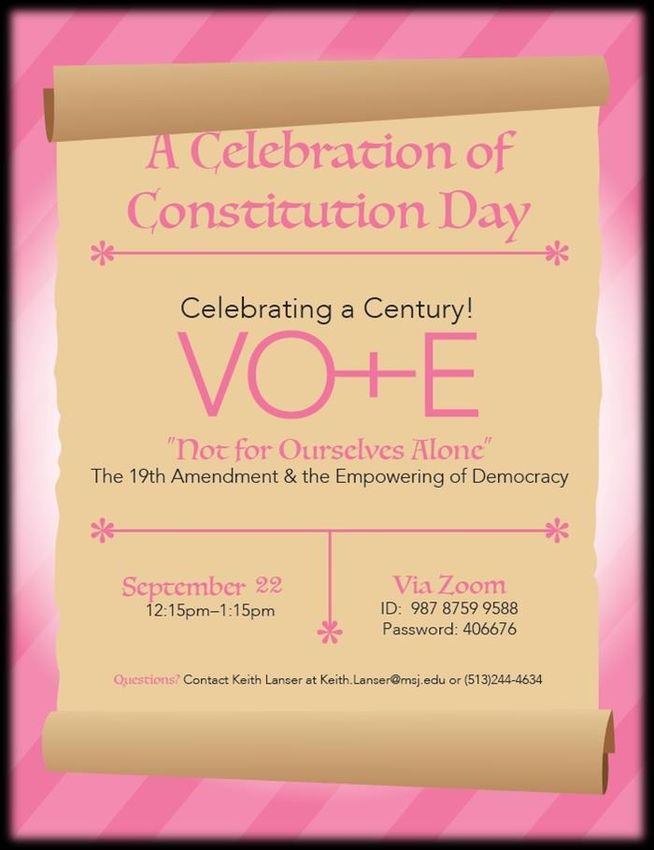
8
fitness studies, and visual & performing arts. We hope that the voter education events that we
facilitated will help to increase those numbers.
Mount St. Joseph University’s Democracy Program stories from 2020:
“Best Colleges for Student Voting”, Washington Monthly:
https://washingtonmonthly.com/magazine/september-october-2020/americas-best-colleges-
for-student-voting-2/
“How Mount St. Joseph University succeeds at turning students into voters”, WCPO:
https://www.wcpo.com/news/education/higher-education/how-mount-st-joseph-university-
succeeds-at-turning-students-into-voters
“College Students Face Challenges with Registering to Vote”, Spectrum News 1 Ohio:
https://spectrumnews1.com/oh/cincinnati/news/2020/09/23/college-students-face-challenges-
with-registering-to-vote
“Mount St. Joseph University encourages civic health”, WKRC:
https://local12.com/health/health-updates/mount-st-joseph-university-encourages-civic-health
“What’s Happening in Health: September 27, 2020”, WKRC: https://local12.com/health/whats-
happening-in-health/whats-happening-in-health-september-27-2020-wkrc-cincinnati-liz-bonis-
coronavirus-pregnancy-blood-pressure-cane-challenge-flu-halloween-knee-addiction
“First-Time Voters Weigh In On Debate”, Spectrum News 1 Ohio:
https://spectrumnews1.com/oh/columbus/news/2020/09/30/first-time-voters-weigh-in-on-
debate
“College Student Votes for the First Time”, Spectrum News 1 Ohio:
https://spectrumnews1.com/oh/columbus/news/2020/11/03/college-student-votes-for-the-first-
time
“Flynn’s Corner: A Conversation with Keith Lanser”, NKU Magazine:
https://inside.nku.edu/nkumagazine/2020/October/keithlanser.html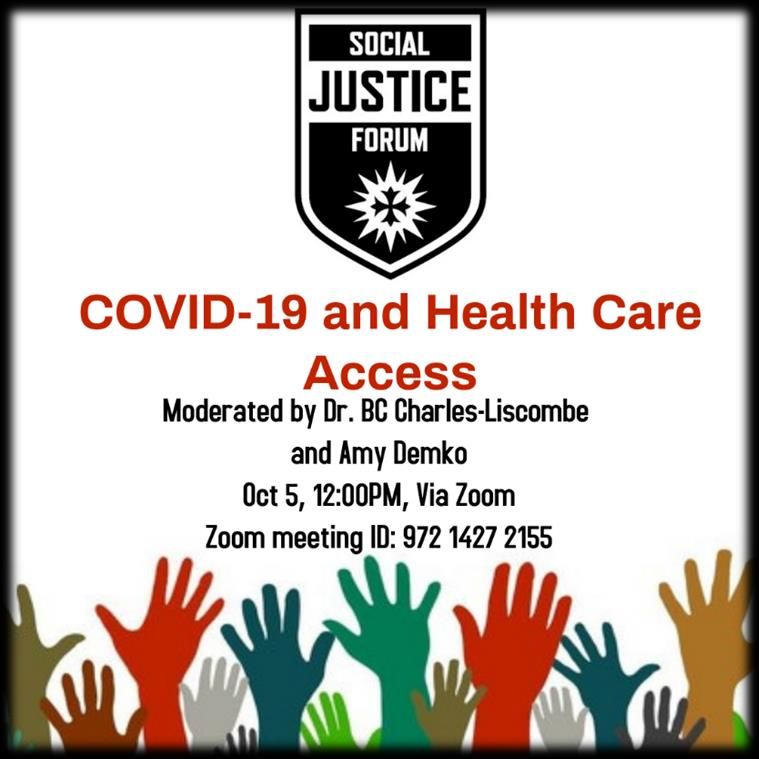
9

                    Southern Ohio
                    Student Voter
                       Summit

HON 263’s Trip to
 Washington DC
10

Lions Vote!

               Constitution Day:
              “Not for Ourselves
                    Alone”
11
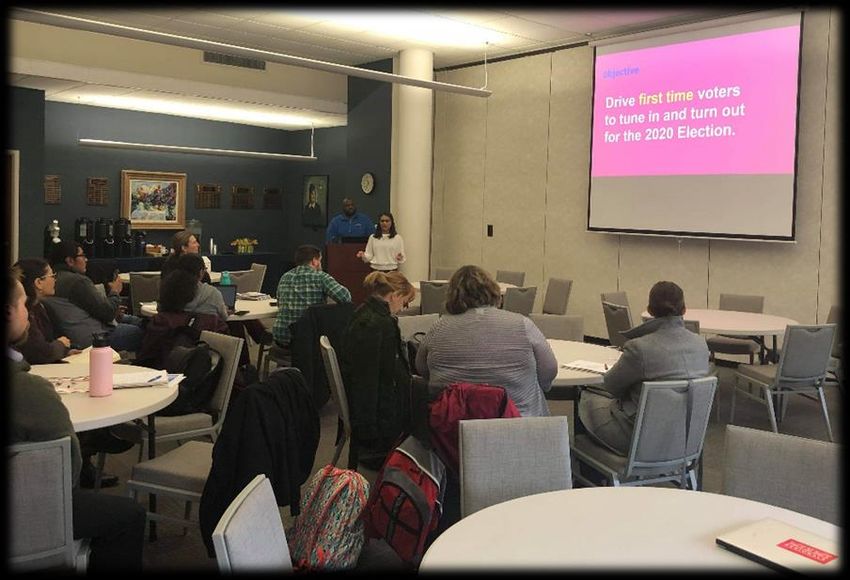
Social Justice
Forum:
COVID-19 and Health
Care Access
Vice Presidential
Debate Watch Party12 March to the Polls
You can also read


