DIVISION I REVENUE DISTRIBUTION PLAN 2019 - AWS
←
→
Page content transcription
If your browser does not render page correctly, please read the page content below

academic enhancement fund
         2019    academic performance fund
    DIVISION I   basketball performance fund
                 broad-based distributions
    REVENUE           - sports sponsorship
DISTRIBUTION          - grants-in-aid
        PLAN     conference grants
                 equal conference fund
                 special assistance fund
                 student-athlete opportunity
                 fund
SCHEDULE, AMOUNTS AND GENERAL INFORMATION
                          2019 REVENUE DISTRIBUTION
  FUND:                                                                DATE:                      AMOUNT:
  Equal Conference Fund                                               April 17                       $53,550,181
  Basketball Performance Fund                                         April 17                      $168,500,833
  Sports Sponsorship Fund                                              May 8                         $75,118,234
  Grants-in-Aid Fund                                                  May 22                        $146,932,780
  Academic Enhancement Fund                                           June 12                        $49,219,502
  Conference Grants                                                   June 12                         $9,965,217
  Special Assistance Fund (SAF)                                       June 12                        $18,630,621
  Student Athlete Opportunity Fund (SAOF)                             June 12                        $67,958.441
  2019 Revenue Distribution Total                                                                   $589,875,809

Disbursements:
    • Distributions are paid to either individual institutions or conferences. In the case of the Sports Sponsorship
       and Grants-in-Aid, the NCAA will defer to conference bylaws when processing the distributions. By the
       end of February, conferences are required annually to confirm in writing to the national office if it desires
       to have its conference distribution(s) sent directly to the conference office, substantiated by its bylaws. If
       a conference does not confirm in writing, with a copy of its relevant bylaw, the national office will disburse
       the funds directly to the respective institutions. All other distributions are paid to the conference.
    • A memorandum detailing the distribution(s) will be addressed to the conference commissioner, president
       or chancellor, director of athletics, institutional and athletic chief financial officer, senior compliance
       administrator and senior woman administrator. Email addresses for the above-mentioned individuals will
       be captured using the NCAA directory. Please update your membership contact information to ensure
       proper delivery.
    • Funds will be sent to the conference of which the institution is a member at the time of the distribution.
       The conference is responsible for disbursing the funds appropriately.
    • An institution that falls in the one-year membership probation period is eligible for revenue distribution.
       An institution that is beyond the one-year membership probation period and/or has been placed in
       restricted membership is not eligible for revenue distribution.

Report of Uses:
The following funds continue to require an annual report of uses, to be submitted through the NCAA Revenue
Distribution application by August 31st. The Division I Board of Directors Finance Committee will conduct an
annual compliance review of the report of uses, regarding both completion of timely reporting and actual expenses
consistent with the allowable uses.
    • Academic Enhancement
    • Conference Grants; and
    • Student Assistance Fund (SAF/SAOF)

Budgeting:
Annual increases of revenue distribution funds are nominal and will not necessarily result in an increase to an
individual institution’s distributions. Consideration should also be given to changes that have occurred within the
athletic department that would impact revenue distributions (e.g. adding or discontinuing a sport/scholarship).

                                                                                                            Page | 2
DIVISION I REVENUE DISTRIBUTION | totals
                              2019 Revenue Distribution Plan
                                  TOTAL: $589,875,809

                        Conference Grants     Special Assistance Fund    Student Athlete
                           $9,965,217               $18,630,621         Opportunity Fund
                               2%                       3%                 $67,958,441
Academic Enhancement                                                          11%
        Fund
     $49,219,502                                                                           Equal Conference Fund
         8%                                                                                     $53,550,181
                                                                                                    9%

         Grants-in-Aid Fund
            $146,932,780
                25%
                                                                        Basketball Fund
                                                                         $168,500,833
                                                                             29%
                                 Sports Sponsorship Fund
                                       $75,118,234
                                           13%

                                                                                                 Page | 3
ACADEMIC ENHANCEMENT FUND | distribution
The Academic Enhancement Fund is distributed equally among active Division I institutions. The fund is intended
for the enhancement of academic-support programs for Division I student-athletes. In June of 2018, each active
Division I institution received approximately $136,800 . The Academic Enhancement Fund will continue to allow
spending on academic support salaries and benefits and capital improvements that enhance the academic
services. The institution is encouraged to consider using this fund for the provision of other direct benefits to
student-athletes that enhance student-athlete welfare. Common uses are listed below.
                                                Newly active Division I institutions will receive the Academic
                                                Enhancement Fund within their first year. For example, if an
                                                institution becomes an active Division I member as of September
                                                1, 2018, they will receive a distribution in June 2019.

                                                The Academic Enhancement Fund will be sent to the conference
                                                to then distribute to their respective institutions. Conferences are
                                                required to submit a report of uses annually, based on information
                                                provided by their respective institutions, using the NCAA Revenue
                                                Distribution application. Independent institutions are eligible to
                                                receive the academic enhancement fund and are responsible to
                                                submit a report of uses annually to the national office.

•   Allowable Uses for Academic Enhancement:
        o Summer school.
        o Fifth or sixth year aid.
        o Tutoring.
        o International student fees and taxes.
        o Professional program testing.
        o Supplies (expendable or educational).
        o Champs/Life skills/Student-Athlete Advisory Committee.
        o Other educational expenses.
        o Insurance premiums for student-athletes.
        o Medical, dental or vision expenses for student-athletes (not covered by another insurance program
            for student-athletes).
        o Other health and safety expenses.
        o Clothing.
        o Travel.
        o Other personal or family expenses.
        o Other expenses related to attendance (e.g., cost of attendance).
        o Academic achievement or graduation award.
        o Academic support services.
        o Academic personnel salaries and benefits.
        o Capital improvements/equipment.
        o Other academic or programming expenses.

                                                                                                           Page | 4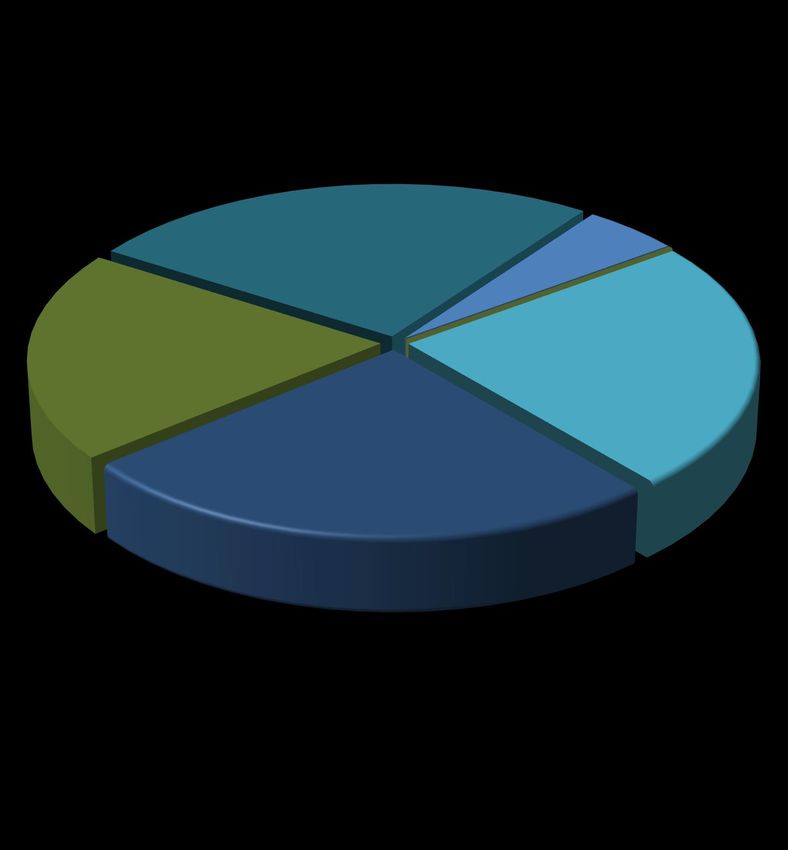
ACADEMIC ENHANCEMENT FUND | 2017-18 reported uses

                                                       Total Personal or
                                                       Family Expenses
                                                           $794,843
                                                              2%

        Total Institutional Academic
               or Programming
                Enhancements
                 $23,128,321
                     51%
                                       Total Educational Expenses
                                                and Fees
                                               $18,643,699
                                                  41%

    Total Health and
    Safety Expenses
       $2,526,988
           6%

                                                                           Page | 5
ACADEMIC PERFORMANCE FUND | distribution
The academic performance fund will begin in June of 2020. The fund will be distributed to conferences based on
the academic performance of active and qualifying Division I institutions. Independent institutions will receive the
funds directly.

The Division I Committee on Academics will manage the academic metrics and benchmarks pertaining to
eligibility requirements. An institution must meet one of the following criteria to be eligible for a distribution.
     • Institution's NCAA Division I APR for the previous year is equal to or greater than 985;
     • Institution's GSR for the most recently available year is equal to or greater than 90 percent; or
     • Difference between the institution's student-athlete and student-body rates for the most recently
           published FGR is greater than or equal to 13 percentage points.

                                                                                                                Page | 6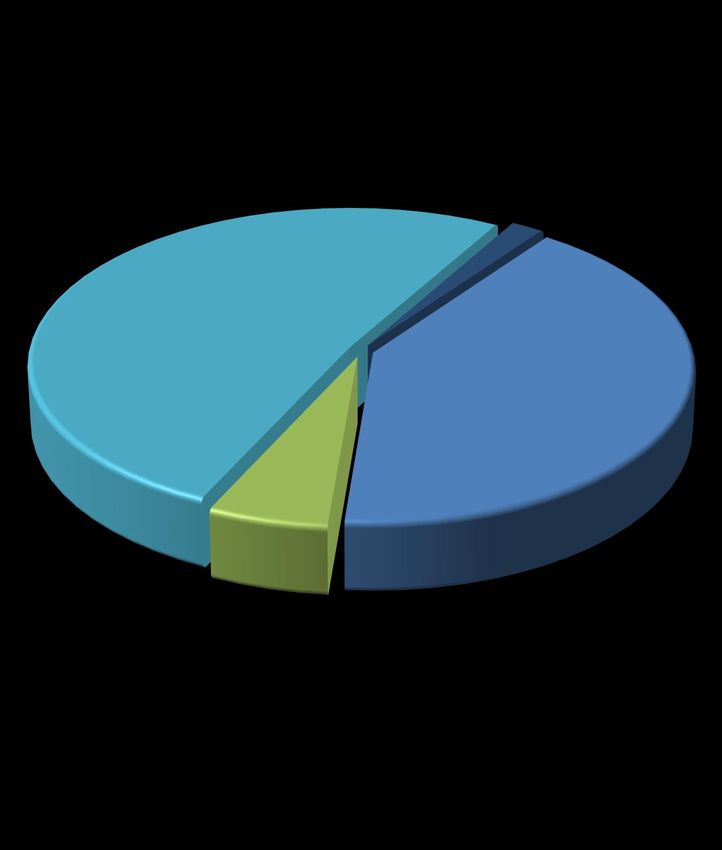
BASKETBALL PERFORMANCE FUND | description
The basketball performance fund is distributed to active Division I
conferences based on their performance in the Division I Men’s Basketball
Championship over a six-year rolling period. Independent institutions earn
unit(s) based on their championship participation within a six-year rolling
period. In 2018, each basketball performance unit was approximately
$273,500 based on units earned from 2012 to 2017. The 2019 basketball
fund will be sent in mid-April based on units earned from 2013 to 2018.
There are no reporting requirements for the basketball performance fund.

If a newly active Division I member participates in the Division I Men’s
Basketball Championship in March-April 2018, the units for participants will
be included in the 2019 basketball performance distribution.

One unit is awarded to each institution participating in each game, except
the first game played by automatic qualifiers and the championship game.
Units are retained by the conference in which they are earned. All units
earned by each conference or independent within a six-year rolling period
are included in the distribution calculation.

A multisport conference is defined as an entity that is comprised of at least seven-member institutions that are
classified as active Division I for eight preceding academic years.

Conferences are encouraged, but not required, to distribute the basketball performance fund equally among all
member institutions.

Conference realignment:
   a. If an institution leaves a conference to join another conference or becomes independent, while the former
       conference remains in operation, the units previously earned by the institution remain with the former
       conference.
   b. If an independent institution joins a conference, it retains the units it earned as an independent prior to the
       date it elected to join the conference; any units the institution earns after that date accrue to the
       conference.
   c. If a conference notifies the NCAA that it has ceased operations each institution retains the units it earned
       in the basketball performance fund.
   d. Impact of Division I multi-sport conference status (Bylaw 20.02.5):
           i.  During the two-year grace period, a conference will still accrue units and receive revenue
               distribution.
          ii.  By the end of the two-year grace period, if the conference meets the active Division I multi-sport
               conference requirements, it will maintain all the unit(s) earned by its member institutions over the
               six-year rolling period.
         iii.  After the two-year grace period, if the conference still does not meet the active Division I multi-
               sport conference requirements, the remaining member institutions will retain the unit(s) they have
               earned. Unit(s) earned by an institution which had previously left the conference will revert to that
               institution, if it is an independent, or its new conference.
                a. In the rare case that such a conference subsequently reconstitutes and meets the Division I
                    multi-sport conference requirements, sometime after the two-year grace period, it will be
                    treated as a new conference, for the purposes of unit accrual and revenue distribution.

                                                                                                            Page | 7
BROAD-BASED DISTRIBUTIONS | description
The broad-based distribution is sent to all active Division I institutions
based on the number of varsity sports sponsored (weighted one-third)
and athletic grants-in-aid awarded (weighted two-thirds).

The Sports Sponsorship Fund is sent in early-May; the Grants-in-Aid
Fund is sent in late-May. Newly active Division I institutions shall qualify
to begin receiving revenue distributions related to sports sponsorship and
grants-in-aid within its third academic year as an active Division I member
(Bylaw 20.5.3). The broad-based calculations are based on prior year
information which, in this case, would be the institution’s second active
year as a Division I institution. For example, the June 2019 grants-in-aid
distribution will be based on the 2017-18 academic year information that
will be submitted to the NCAA national office via the Membership
Financial Reporting System (FRS) in January 2019. Division I institutions
which are newly active in 2018-19 will not be eligible for these
distributions until June 2021.

SPORTS SPONSORSHIP FUND
An institution receives a unit for each sport sponsored beginning with the
14th sport. (The minimum requirement for Division I membership is 14.)
Only sports in which the NCAA conducts championship competition
(which meet the minimum contests and participants’ requirements of
Bylaw 20.9.6.3) and emerging sports for women are counted. In the 2018
distribution, for sports sponsored beginning with the 14th, an institution
received approximately $36,500 per sport (i.e., an institution sponsoring
16 total sports received approximately $109,500; an institution
sponsoring 23 total sports received approximately $365,000).

GRANTS-IN-AID FUND
The Grants-in-Aid Fund distribution is based on the number of athletic
grants awarded in the prior academic year by each institution (based on
full-time equivalencies), with an escalating multiplier which rewards
schools that provide more athletic grants. The unit value is determined
by the total number of athletic grants awarded by all active Division I
institutions. Last year, the “unit value” or “point amount” was $299.58.

Institutions are responsible to submit accurate data to ensure the integrity
of the grants-in-aid revenue distribution. Using Compliance Assistant will
contribute to data integrity.

                                                                               Page | 8
EXAMPLE
     Grant Multiplier        Grant Equivalents        Total Pt. Value      Pt. Amount       Grants-in-Aid Distribution
      1-50            1             50                       50              $299.58                  $14,979
     51-100           2             50                      100              $299.58                  $29,958
    101-150          10             50                      500              $299.58                 $149,790
      150+           20            29.45                    589              $299.58                 $176,453
                                   179.45                  1,239                                     $371,180

    a. The grants-in-aid data is based on prior academic year and drawn from the Membership Financial
       Reporting System (FRS) submitted by each institution. Grants-in-aid is calculated by using the revenue
       distribution equivalencies by sport and in aggregate. (Athletic grant amount divided by the full grant
       amount).
    b. Other expenses related to attendance (also known as gap money or cost of attendance) should not be
       included in the grants-in-aid revenue distribution equivalencies. Only tuition, fees, room, board and
       required course related books are countable for grants-in-aid revenue distribution per Bylaw 20.02.7.
    c. Full grant amount should be entered as a full year of tuition, not a semester or quarter.
    d. Student-athletes are to be counted once and should not receive a revenue distribution equivalency greater
       than 1.00.
    e. Athletic grants are valid for revenue distribution purposes only in sports in which the NCAA conducts
       championships competition, emerging sports for women and bowl subdivision football.
    f. Grants-in-aid are valid for revenue distribution purposes in NCAA sports that do not meet the minimum
       contests and participants’ requirements of Bylaw 20.9.6.3.
    g. Institutions providing grants to student-athletes listed on the squad list as “Exhausted Eligibility (fifth-year)”
       or “Medical” receive credit in the grants-in-aid component.
    h. The athletics aid equivalency cannot exceed maximum equivalency limits. However, the total revenue
       distribution equivalency can exceed maximum equivalency limits due to the additional exhausted eligibility
       and medical equivalencies (Bylaw 15.5.3.1).
    i. If a sport is discontinued and the athletic grant(s) are still being honored by the institution, the grant(s) are
       included in student-athlete aid for revenue distribution purposes.

Please reference the 2018-19 Division I Manual, Article 15, Financial Aid for additional information.

                                                                                                                Page | 9
CONFERENCE GRANTS | description
The Conference Grant Fund is distributed to Division I men's and women's basketball-playing conferences
that employ a full-time administrator and are eligible for automatic qualification into the Division I men's and
women's basketball championships. The fund is intended for enhancement of conference programs as
detailed below. The Conference Commissioners Association approved to have $260,000 of the Conference
Grant to be remitted to the regional officiating advisors program, regardless of whether the conference is
granted automatic qualification. In 2018, each active Division I conference received approximately $296,900
of the Conference Grant. Independent institutions are not eligible for distributions from the Conference Grant
fund.

These grant funds must be used to maintain, enhance or implement programs and services in each of the
following areas:

    a. Improvement of men's and women's officiating programs in all sports;
    b. Enhancement of conference compliance and enforcement programs;
    c. Heightening the awareness of athletics staff and student-athletes to programs associated with drug
       use, and assisting coaches, athletics administrators and student-athletes in this regard;
    d. Enhancement of opportunities: employment, professional development, career advancement and
       leadership/management training in intercollegiate athletics for ethnic minorities and women;
    e. Development of conference sports wagering education programs;
    f. Enhance diversity and inclusion efforts; and
    g. Enhance health and safety of student-athletes, coaches and administrators (including mental health).

The administration of the grant will take into consideration the diverse nature of conference structures and
allow conferences a reasonable degree of flexibility in constructing their programs. At the same time,
adherence to specific criteria and restrictions is required to ensure that the grant funds are used according
to the principles below and provide for responsible financial accountability. General principles guiding the
grant are as follows:

    a. A conference has the authority to determine the amount to allocate to the seven areas. However,
       the conference must spend a portion of the grant in all seven.
    b. The funds must be used to enhance existing programs, to maintain programs initiated by the NCAA
       grant funds or to implement new programs.
    c. Conferences may establish a "consortium" with one another in one or more of the seven areas by
       pooling grant funds and conducting joint programs, subject to the approval of the Board of Governors.
    d. A conference may allocate a portion of its grant in the form of sub-grants to one or more of its member
       institutions for specific programs approved by the conference in the areas of drug education and the
       enhancement of opportunities for ethnic minorities and women.
    e. It is assumed that programs provided by the conference in the areas of compliance, sports wagering
       and drug education will serve both men’s and women’s athletics programs. However, it is possible
       that in the area of officiating improvement, separate programs and services for men and women may
       be implemented. If separate officiating programs are implemented, at a minimum, the amounts
       allocated to the men's and women's programs must be in proportion to the total grant. [For example,
       Conference A receives $150,000, of which $112,500 is by virtue of its men's automatic qualification
       and $37,500 for the women's. If the conference determines that it will spend $60,000 of the
       conference grant funds on basketball officiating improvement then at least $15,000 must be allocated
       to women's basketball officiating (one-fourth, in proportion to the $37,500/ $150,000 split).]

                                                                                                     Page | 10
Conferences will complete an annual report of uses form. This form outlines the Conference Grant fund’s
uses within the approved stated areas.
• Men’s officiating.
• Women’s officiating.
• Sports wagering and compliance.
• Drug education.
• Enhancement opportunities – women.
• Enhancement opportunities – ethnic minorities.
• Enhance diversity and inclusion efforts.
• Enhance health and safety of student-athletes, coaches and administrators (including mental
health).
This information is utilized by membership as well as NCAA officiating, health and safety, and inclusion
groups to increase awareness of membership initiatives.
Page | 11CONFERENCE GRANTS | 2017-18 reported uses
Total Drug Education
$393,095
5%
Total Enhancement
Opportunities-Women
$2,066,723
26%
Total Enhancement
Opportunities-Ethnic Total Women's
Minorities Officiating
$1,595,819 $1,903,735
20% 24%
Total Men's
Officiating
$2,000,159
25%
Page | 12EQUAL CONFERENCE FUND | description
The equal conference fund is distributed to active Division I basketball playing conferences. In 2018, each
automatic qualifying unit was approximately $273,500 based on units earned from 2012 to 2017. The 2019
Equal Conference Fund will be sent in mid-April based on units earned from 2013 to 2018. There are no
reporting requirements for the equal conference fund. Conferences are encouraged, but not required, to
distribute the fund equally among all member institutions.
A multisport conference is defined as an entity that is comprised of at least seven-member institutions that
are classified as active Division I for eight preceding academic years.
Automatic qualifier status for basketball is determined by Bylaws 31.3.4.1 and 31.3.4.5.
Independent institutions are not eligible for distributions from the Equal Conference Distribution fund.
Conference realignment:
a. A new Division I multi-sport conference in year one would receive one-sixth of the amount of the
distribution; in year two: one third; in year three: half, and so forth until the full value of the conference
distribution is provided in year six and beyond.
b. If a conference notifies the NCAA that it has ceased operations no revenue will be distributed to that
entity.
c. Impact of Division I multi-sport conference status (Bylaw 20.02.5):
i. During the two-year grace period, a conference will still accrue units and receive revenue
distribution.
ii. By the end of the two-year grace period, if the conference meets the active Division I multi-
sport conference requirements, it will maintain all the unit(s) earned by its member institutions
over the six-year rolling period.
iii. After the two-year grace period, if the conference still does not meet the active Division I multi-
sport conference requirements, units previously earned over the six-year rolling period by the
automatic qualifier(s) for conference will be transferred to the Basketball Performance Fund as
at-large units and be distributed to the institution that earned the unit(s).
a. In the rare case that such a conference subsequently reconstitutes and meets the
Division I multi-sport conference requirements, sometime after the two-year grace period,
it will be treated as a new conference, for the purposes of unit accrual and revenue
distribution.
Page | 13STUDENT ASSISTANCE FUND | description
(Special Assistance Fund and Student-Athlete Opportunity Fund)
The Student Assistance Fund (SAF) is distributed to conference offices in mid-June and is segregated into
two funds; the Special Assistance Fund and the Student-Athlete Opportunity Fund. The only distinction
between these funds is the calculation methodology. Data used in the calculation for the Student Assistance
Fund was captured within the Membership Financial Reporting System. As a guiding principle, the SAF shall
be used to assist student-athletes in meeting financial needs that arise in conjunction with participation in
intercollegiate athletics, enrollment in an academic curriculum or to recognize academic achievement as
determined by conference offices. Accordingly, direct receipt of SAF funds shall not be included in
determining the permissible amount of financial aid that a member institution may award to a student-
athlete. The fund should not be used to replace existing budget items.
Division I student-athletes are eligible to receive SAF benefits, including international, regardless of
whether they are grants-in-aid recipients, have demonstrated need, have either exhausted eligibility or no
longer participate due to medical reasons. However, no prospective student-athlete shall be eligible to
receive SAF funds.
Pursuant to NCAA Bylaw 15.01.6.1, member institutions and conferences shall not use SAF for the following:
a. Salaries and Benefits.
b. Tuition and fees, room and board, and required course-related books during a regular term (other
than summer school) for student-athletes with remaining eligibility.
c. Capital improvements.
d. Stipends.
e. Competition related travel expenses for an ineligible student-athlete.
f. Development opportunities, such as:
i. Fees and other expenses associated with participation in a sports camp or clinic.
ii. Fees and other expenses associated with private sports-related instruction.
iii. Fees for other athletic development experiences (e.g., greens fees, batting cage rental).
iv. Expenses associated participation in a foreign tour.
The responsibility for oversight and administration of the fund, including interpretations, rests solely with the
conferences. The Division I Board of Directors establishes the guiding principles of the fund.
Conferences will be required to report annually, to the NCAA national office, the amount of funds used in
each category.
Newly active Division I institutions will receive the student-athlete Pell grant portion within its first academic
year. Newly active Division I institutions shall qualify to begin receiving revenue distributions related to
Grants-in-Aid and Sports Sponsorship within its third academic year as an active Division I member (Bylaw
20.5.3). The broad-based calculations are based on prior year information which in this case would be the
institution’s second active year as a Division I institution.
An institution that does not meet legislated (Bylaw 20.9.3.3.8) NCAA Division I sports-sponsorship minimum
requirements will not receive Student Assistance Fund (SAF/SAOF) attributable to the Sports Sponsorship
component of the distribution, even if the institution received a waiver of the sports-sponsorship requirements.
Regardless of the number of sports sponsored, an institution will receive a value of zero when minimum
sports sponsorship requirements are not met. This exclusion does not impact the Grants-in-Aid portion of the
SAF.
Page | 14Independent institutions are eligible to receive the Student Assistance Fund and are responsible to submit a
report of uses to the national office.
SPECIAL ASSISTANCE FUND
The Special Assistance Fund has three components to the calculation, as follows with the percentage of
the fund allocated to each component noted in parentheses along with the 2018 approximate unit vlaue:
1. Prior academic year number of Pell grants by institution (70%) ($418).
2. Prior academic year number of grants-in-aid equivalencies by institution (15%) ($44).
3. Prior academic year number of sports sponsored by institution (15%) ($419).
Pell Grant Data:
a. Only sports in which the NCAA conducts championships competition (which meet the minimum
contests and participant requirements of Bylaw 20.9.6.3) and emerging sports for women are valid
for revenue distribution purposes.
b. Only student athletes are countable for the Pell Grant submission (omit practice players).
c. Student athletes should only be counted once on the Pell Grant submission.
d. Only Pell Grants that have been awarded are countable for the Pell Grant submission (full,
semester, summer).
STUDENT-ATHLETE OPPORTUNITY FUND
The Student-Athlete Opportunity Fund (SAOF) includes the imposed Division I Committee on Infractions
(COI) fines collected in the previous fiscal year . The COI fine amount will vary from year to year. The fund
amount is calculated using the proportion of ‘broad-based’ distributions. Two-thirds of the fund are allocated
based on the current year submission for grants-in-aid while the remaining one-third is allocated based on
the current year submission for sports sponsorship. The 2018 unit value for the Grants-in-Aid portion was
approximately $92 and the Sports Sponsorship was approximately $11,151.
Page | 15STUDENT ASSISTANCE FUND | 2017-18 reported uses
Total Institutional
Academic or
Programming
Enhancements
$5,258,986
7%
Total Educational
Expenses and Fees
$39,187,043
49% Total Personal or Family
Expenses
$11,685,788
15%
Total Health and Safety
Expenses
$23,427,448
29%
Page | 16You can also read


