Sweet Facts Brush up on your sugars and nutrition knowledge with the facts TOOLKIT
←
→
Page content transcription
If your browser does not render page correctly, please read the page content below
Sweet Facts
   TOOLKIT                    �
Brush up on your sugars and nutrition knowledge with the facts
Who we are
     The Sugar Nutrition Resource Centre
     (SNRC) is an info hub for factual
     information on sugars and their role
     in nutrition. You can find us at
     www.sugarnutritionresource.org
     The website is run by a team of
     qualified nutrition professionals.
     We have input from a group of
     expert scientists, to make sure the                      Our mission
     information is evidence based. We                        We aim to gather the facts on sugars
     are funded by Sugar Australia and                        from the nutrition research. We want
     New Zealand Sugar.                                       to provide a local perspective on the
                                                              science and share the most relevant
                                                              updates for a clearer understanding
                                                              of sugars and nutrition.

     Our resources
                                                                     LA T ES T
                                                                      news and
                                                                      research
                                    Search our resource
                                    library for fact
                                    sheets, infographics,
                                    brochures and
                                    research briefs.

                      FR EE
                     to download
                      and share
                                                                           Our articles explore global
 weet Bites is our monthly newsletter, edited by a
S                                                                          sugars and nutrition news,
dietitian and circulating since 2002. Sign up for nutrition                research and issues,
news and articles on sugars, carbohydrates and health.                     providing context for the
                                                                           local ANZ environment.

                              K EEP
                              up to date

                                                                                                         P2
Sugars and
nutrition in
context
Obesity is complex -
sugars have a role
There can be many causes of obesity.
These include eating more energy
(kilojoules) than your body uses, inactivity,
genetics, conveniences linked to modern
living, and socio-economic factors. For
many, too much energy or kilojoules
consumed from any source, including
sugars, contributes to weight gain.

Eat sugars in moderation
Dietary guidelines in Australia and New
Zealand advise to choose foods and drinks
with little or no added sugars, and to limit
intake. In general, it appears ANZ
populations are listening to this advice
with the latest data showing sugars intake
decreasing over time.

Learn more               on our website about sugars
                         intake and recommendations

                                                       P3
How much do you know
about sugars and nutrition?

1      The scientific
       name for
       table sugar is
 sucrose. Sucrose is a
                                  2         Sugars are carbohydrates that
                                            provide energy for the body.
                                      1 gram of sugar = 17 kilojoules of energy
                                      1 gram of fat = 37 kilojoules of energy
 disaccharide, which
                                      1 gram of protein = 17 kilojoules of energy
 means it has two single
 sugar units joined                   We need about 8700 kilojoules per day to
 together.                            stay alive and active.
 Sucrose =
 glucose + fructose

3      Sugars in food can be
       natural (fruit, vegetable
       and dairy) or added during
       processing, cooking or at
                                              4       Sugars have many
                                                      functions in food and
                                                      drinks. They provide
                                                      sweetness, colour and
       the table.                              texture. They also act as a
 Both natural and added                        preservative (jams), balance out
 sugars are digested and used                  acidic and bitter flavours and are
 for energy in the same way.                   used for fermentation and rising
 What’s important is the overall               (bread, beer).
 healthiness of the food.

    Visit    our website for more
             FAQ’s and sugar facts.

                                                                                    P4
Sugars and nutrition
resource library

   Check out     these items on the website.

                          Fact Sheet
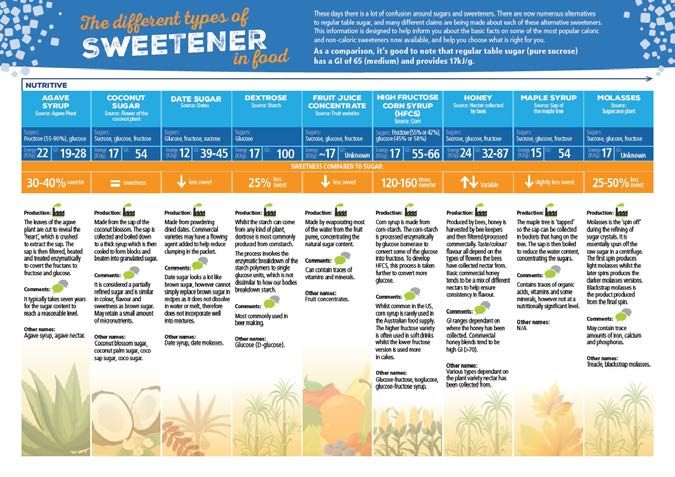
                          The different types
                          of sweeteners in food
                          • The main nutritive and non-
                             nutritive sweeteners
                          • How these sweeteners are
                             produced
                          • Sweetness compared to sugar
                          • The Glycemic Index of each
                             sweetener

               Fact Sheet
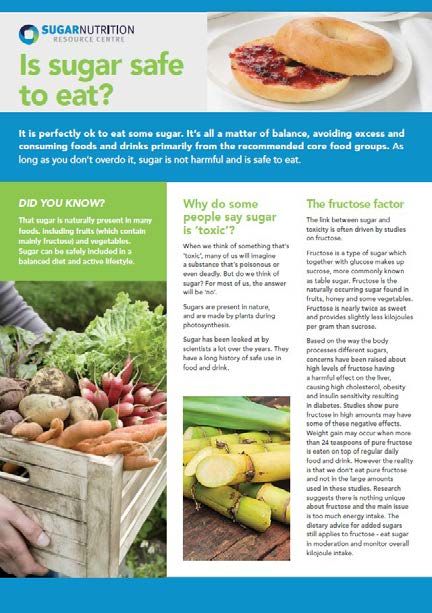
               Is sugar safe to eat
               • Why sugar is sometimes described as toxic
               • Fructose and its effect on the body
               • Should you follow a sugar-free diet

               Booklet
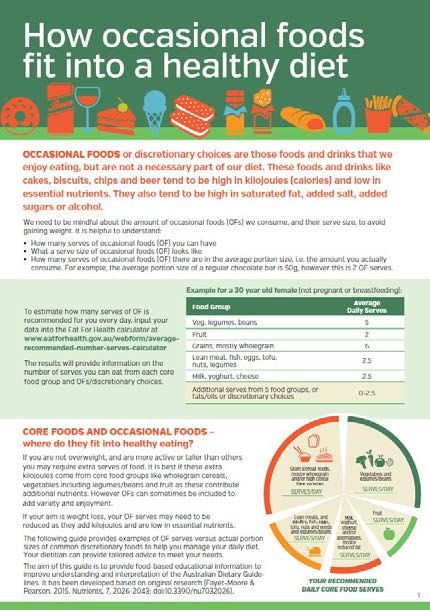
               How occasional foods fit into a
               healthy diet
               • What are occasional foods
               • How much occasional foods should we eat
               • Examples of common occasional foods
                  and portion sizes

                                                              P5
Find out more at sugarnutritionresource.org
This information is for general use only. Please consult a
qualified health professional for individual medical advice
if needed. October 2020
You can also read


