Sydney Nano strategy 2019 and beyond - The University of Sydney
←
→
Page content transcription
If your browser does not render page correctly, please read the page content below
Sydney Nano strategy 2019 and beyond
Contents

Message from the Director				                        1

The University of Sydney Nano Institute strategy		   4

Academic framework					6

Strategic fields						8

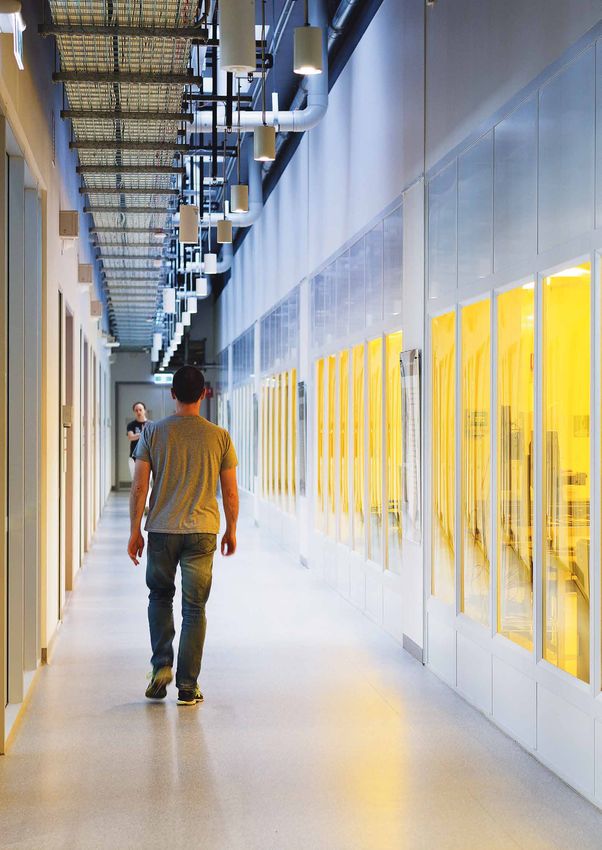
The Sydney Nanoscience Hub				                       12

Message from the Director

I would like to take this opportunity to share my enthusiasm for the
future of the University of Sydney Nano Institute.

                        In 2018, I was appointed as director   I believe that Sydney Nano

                                                                                                    Message from the Director
                        and since then I have been able        will change the direction of
                        to meet with many members and          nanoscience and technology
                        supporters of Sydney Nano as           in Australia and globally –
                        we explore how we can reach            nanoscience will impact on
                        our mission of transforming our        both fundamental research and
                        economy, society and everyday          the very fabric of our society,
                        life through multidisciplinary         economy and our daily life. I look
                        research in nanoscale science          forward to reaching out across
                        and technology. We have already        the whole University and building
                        broadened our engagement,              the large-scale, multidisciplinary
                        revised our strategy, restructured     collaborations that are needed to
                        the leadership team and selected       achieve this global impact.
                        our inaugural Grand Challenges.
                        From 2019 onwards we will bring
                        this strategy to life and I am
                        excited to turn our programs into
                        successes and create impact and
                        return on investment.                  Professor Ben Eggleton
                                                               Director, Sydney Nano

                                                                                                    Page 1
sydney.edu.au
2019 and beyond

                       Professor Ben Eggleton
                       Professor Eggleton has been an ARC            Professor Eggleton is one of the most highly
                       Laureate Fellow and founding director of      cited academics at the University, with an
                       the ARC Centre of Excellence for Ultrahigh    h-index of 67 (Web of Science). He is the
                       Bandwidth Devices for Optical Systems         author or co-author of more than 480
                       (CUDOS). His groundbreaking research into     journal publications, and has won several
                       nanoscale optical waveguides underpins        prizes, including NSW Scientist of the Year
                       novel applications in telecommunications,     for Physics and Astronomy, the Eureka
                       quantum technologies and sensing.             Prize for Leadership in Science, the
                                                                     Pawsey Medal, the Walter Boas Medal, and
                       An alumnus, Professor Eggleton completed      a Vice-Chancellor’s Award for Excellence
                       his undergraduate and PhD studies at the      for Outstanding Research.
                       University of Sydney. He held several roles
Sydney Nano strategy

                       in industry, including at prestigious Bell    Professor Eggleton is a Fellow of both
                       Laboratories in the United States, where he   the Australian Academy of Science and
                       was director of photonics devices research,   the Australian Academy of Technological
                       before joining the University again in        Sciences and Engineering. He is also
                       2003 as professor of physics.                 co‑director of the NSW Smart Sensing
                                                                     Network. Professor Eggleton commenced
                       Since then, he has received more than         as Director of Sydney Nano in May 2018.
                       $54 million in research grants while at the
                       University, including a Discovery grant and
                       an ARC Linkage grant in 2018 to develop
                       advanced technologies to enhance satellite
                       communications, radar systems and
                       surveillance capabilities for defence,
                       as well as lay the groundwork for future
                       fifth-generation wireless communications.
Page 2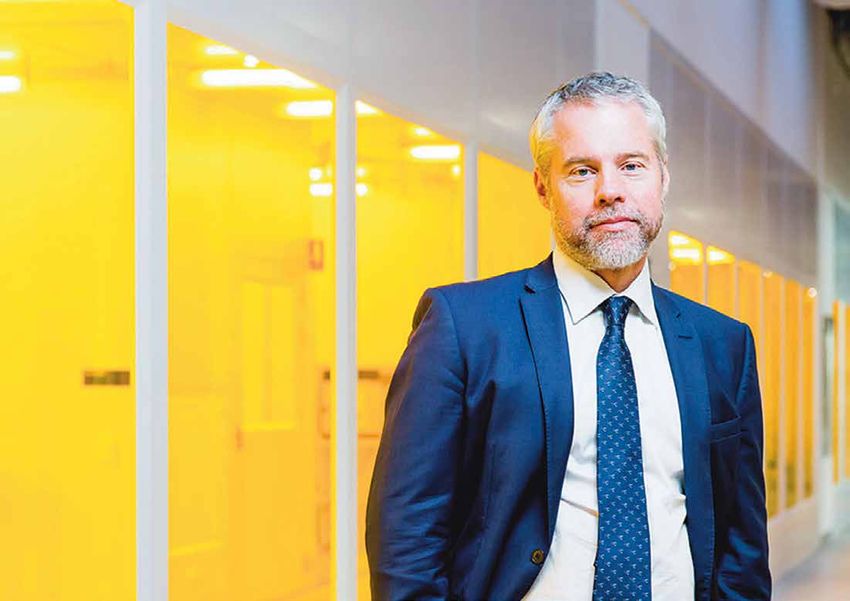
The next
giant leap is
  seriously
    small.
                Page 3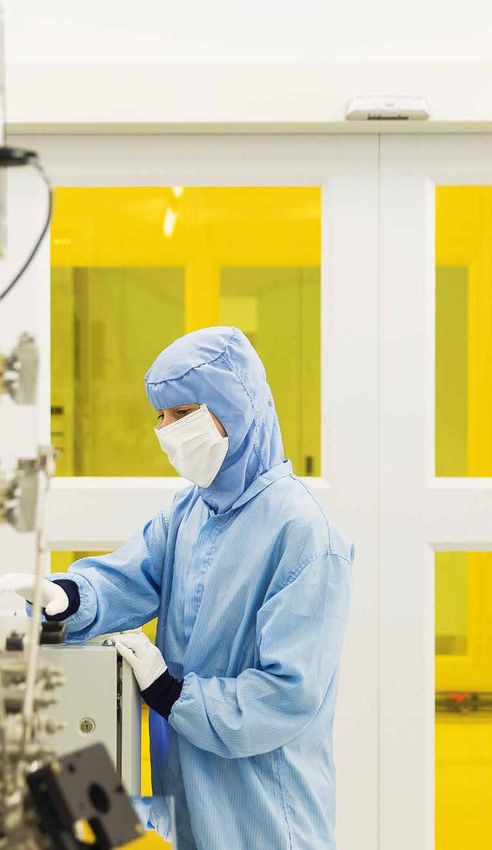
The University of Sydney Nano Institute strategy
sydney.edu.au

                       The University of Sydney Nano Institute
                       strategy aligns with the University’s
                       frameworks, in particular, its strategy
                       for 2016-2020 and the Sydney Model for
                                                                                                 Our vision
                       Multidisciplinary Institutes (MDIs).
                       The University’s Strategic Plan aims to position our university as the
                       best in Australia and a leading institution globally. We aim to do this
                       by enabling a culture of research excellence, offering a distinctive
                       Sydney education and providing a culture built on our values. We are
                       aiming to create and sustain a university in which, for the benefit of
                                                                                                 Our mission
                       both Australia and the wider world, the brightest researchers and the
                       most promising students, can thrive and realise their potential.
2019 and beyond

                       The Sydney Model for MDIs is an endorsed horizontal structure
                       (across many faculties) that enables, facilitates and promotes
                       transformational activities and translational outcomes that
                       would otherwise not be possible through existing faculty and
                       university structures.                                                    Our purpose

                       The model’s core criteria are for our work to be:
                       −− transformational and strategic in orientation and implementation
                       −− large scale, multidisciplinary and cross-faculty
                       −− translational with a focus on national and global challenges
                       −− representative of the vast array of research
                          strengths across the university
                       −− inspirational, invoking the creativity and
Sydney Nano strategy

                          innovation of our researchers.
Page 4
The University of Sydney Nano Institute strategy
Our vision is to be globally trusted and recognised experts in
nanoscience and technology.

Our mission is to transform our economy, society and everyday
life through multidisciplinary research in nanoscale science
and technology.

Our purpose is to enable, facilitate and promote transformational
activities and translational outcomes in nanoscience and technology
that would otherwise not be possible through existing faculty and
university structures.

Sydney Nano is not separate to faculties. We facilitate
transformational and translational research projects that are
populated by academics who belong to faculties.                          2016–20 Strategic Plan

              “The partnership between Microsoft and the University
               of Sydney will allow us to help build a rich and robust
               local quantum economy by attracting more skilled
               people, investing in new equipment and research, and
               accelerating progress in quantum computing.”
               Professor David Reilly
               Director, Microsoft Quantum Laboratory
               School of Physics
                                                                         Page 5
Academic framework
sydney.edu.au

                       At Sydney Nano, we like to say that the next giant leap is seriously small.
                       Revolutionary changes in science and technology have opened up
                       access to the nanoscale and together we are tackling some of the most
                       challenging problems that humanity faces: capturing water from air;
                       using nanotechnology for carbon-neutral manufacturing; developing
                       safe and sustainable nanotechnology; creating molecular nanorobots
                       for health care; discovering new techniques for the simulation of next-
                       generation materials; and delivering cures for neurological diseases.
2019 and beyond

                       The ongoing strategic research framework of Sydney Nano is based on themes and domains. These focus
                       on multidisciplinary research and bring together disciplines to focus on a set of shared goals.

                       Themes                                                   Domains
                       Sydney Nano research is focused on three interlinked     Our research is divided into four Domains, as shown
                       end-user and industry-focused Themes, as shown           below, which provide a framework that brings
                       in the figure below. These Themes directly address       together disciplines to focus on a set of shared goals.
                       societal challenges and will help to build a knowledge   The Domains interact to work towards the overall
                       and technology-based economy.                            objectives of Sydney Nano. Each Domain is led by a
                                                                                research expert.
Sydney Nano strategy

                       Research framework

                                     Themes                               Domains                 “The academic programs
                                                                                                   of Sydney Nano are truly
                                                                                                   multidisciplinary, creating
                            Manufacturing, energy                   Quantum science                cutting-edge opportunities.”
                              and environment                                                       Professor Thomas Maschmeyer
                                                                      Nanophotonics                 Founder and Director,
                                                                                                    Gelion School of Chemistry
                             Health and medicine
                                                                       Materials on
                                                                      the nanoscale
                             Communication,
                           computing and security                Molecular nanoscience
Page 6

                        Research framework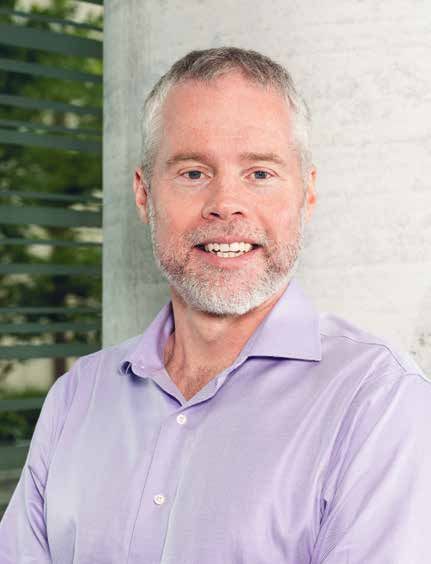
Grand Challenges
Some of the grand challenges facing humanity today
include water security, greenhouse gas emissions,
toxicity of nanomaterials, inoperable conditions,
hurdles in quantum technology development and
untreatable neural diseases. Our aim is to discover         “Being associated with
groundbreaking solutions to these challenges.                Sydney Nano means that
                                                             I have access to seminars
Bringing together researchers from across the
University, the multidisciplinary solutions for our Grand    and workshops – there’s
Challenge initiative will be enabled by advances in          a great educational aspect
nanoscience and nanotechnology. The current Grand            to the institute and being
Challenge projects are:
                                                             a participant has also
                                                             provided opportunities to

                                                                                          Academic framework
1. Advanced Capture of Water from the
    Atmosphere (ACWA)                                        interact with people from
    Developing a low-cost method to capture enough           different research fields,
    water from the atmosphere to alleviate the effect        which is something I find
    of drought by providing water for consumption
                                                             very valuable.”
    by humans and animals, and for irrigating plants.
2. CO2 Zero                                                 Christina Limantoro
                                                             PhD student
    Reducing CO2 emissions in manufacturing                  School of Chemistry
    processes and converting CO2 into commercial
    products through nanocatalysis.
3. Safe-by-design nanotechnology
    Developing a regulation framework to assess
    safety, efficacy and toxicity, and guide the future
    development of nanomaterials – across drug
    formulations, food additives and biosensors.
4. Nanorobotics for health
    Building autonomous, programmable
    nanorobots to navigate through the body
    to detect and treat early disease.
5. C
    omputational materials discovery
   Simulating new materials from a single atom
   to fully functioning devices using quantum
   computers, multiscale simulation, artificial
   intelligence and machine learning.
6. Unlocking the neural interface
    Rethinking the means of intervention into the
    human nervous system to make untreatable
    neurological diseases treatable, and to transform
    treatments into comprehensive cures.

Underpinning platforms
The academic framework is underpinned by enabling
capabilities platforms. These platforms provide the
state-of-the-art specific research infrastructure
required to conduct research on the nanoscale.
These platforms comprise innovative synthesis and
manufacturing technologies, analytical and imaging
tools, data processing as well as prototyping.
                                                                                          Page 7
Strategic fields
sydney.edu.au

                              Six strategic fields form the basis of the Sydney
                              Nano strategy, as shown below. Each is linked to the
                              academic framework and will support the Grand
                              Challenge projects.

                              1. Research excellence
                              2. Infrastructure and enabling capabilities
                              3. Member engagement
                              4. Outreach, training and education
                              5. Academic partnerships
                                                                              Safe-by-design nanotechnology
                              6. Industry, innovation and commercialisation
2019 and beyond

                              Interconnection between strategic fields and academic framework

                                                 Strategic fields                                            Academic framework
                                                                                                            3 Themes / 4 Domains

                                   Research excellence

                                   Infrastructure and enabling capabilities                                                                                                                       Grand Challenges
                                                                                           nanotechnology
                                                                                           Safe-by-design

                                                                                                             ACWA

                                                                                                                    CO2 Zero

                                                                                                                               materials discovery
                                                                                                                               Computational

                                                                                                                                                     Nanorobotics for health

                                                                                                                                                                               neural interface
                                                                                                                                                                               Unlocking the

                                   Member engagement

                                   Outreach, training and education
Sydney Nano strategy

                                   Academic partnerships

                                   Industry, innovation and commercialisation

                                                                                                            Underpinning platforms

                       Interconnection between Strategic Fields and Academic Framework
Page 8
“The Sydney Nanoscience Hub houses a collection
of research lab facilities that operate at the
frontier of capability in quantum science and
precision metrology. In our highest precision
Strategic fields
laboratories, a combination of controls on
temperature, air pressure, mechanical vibrations
and electromagnetic interference makes these
spaces among the most tightly controlled
environments in the world.”
Professor Michael J Biercuk
CEO, Quantum Control Laboratory
School of Physics
Strategic field 1: Strategic field 2:
Research excellence Infrastructure and enabling capabilities
Strategic objectives: Strategic objectives:
−− enable, foster and coordinate multidisciplinary −− enable access to world-class
and cross-faculty programs of the highest quality research infrastructure
2016–20 Strategic Plan
that address the most important problems −− maximise the return on the University’s investment
−− translate knowledge into beneficial in state-of-the-art research infrastructure.
public and/or commercial impact
−− attract and retain world-class We will achieve these objectives through:
researchers and thought leaders. −− facilitating the optimal use of the
Sydney Nanoscience Hub
We will achieve these objectives through: −− supporting the development and use of the
−− our strategic framework of Themes and Domains University’s Core Research Facilities
−− identifying, establishing and supporting −− facilitating the equipment platform
impactful Grand Challenges and projects accessible through and by our Members
−− working closely with the DVC Research, deans −− influencing the development of the
and heads of school in recruiting strategic hires Western Sydney campus
−− creating a stimulating and empowering environment −− gaining access to national and international
in which excellence in research is prized. research infrastructure.
Page 9Strategic field 3:
Member engagement
Strategic objectives: “Sydney Nano is the reason I
−− engage researchers at all academic levels, returned to Australia; the high
across disciplines and faculties quality facilities and strong
sydney.edu.au
−− provide added value to our Members community were enticing and
−− enhance academic performance exceeded other institutions in the
and career development United States and Europe.”
−− establish an empowering community of scholars,
Dr Shelley Wickham
marked by diversity and global orientation. Westpac Fellow
School of Chemistry and School of Physics
We will achieve these objectives through:
−− funding and award schemes,
and a mentoring program
−− academic and networking events that will
strengthen the Sydney Nano Community
−− regular engagement with Members through the
Early Career Researcher (ECR) Ambassadors
−− creating the foundation of
a Sydney Nano ECR Network
2019 and beyond
−− implementation of the University’s
diversity practices in our activities.
The Sydney Nano structure
−− Our structure brings together more than
400 academic and professional staff
from all faculties and service units.
−− Members are conducting nano-related
research at the University of Sydney. Members
−− Participants are PhD students and
postdocs working with Members.
Sydney Nano strategy
−− Both receive defined benefits Participants
including funding opportunities.
−− Our community comprises academic and
professional staff at the University and abroad Community
who work with Sydney Nano or have a general
Academic Professional
interest in nanoscience and technology.
−− We seek a wide and inclusive representation
from all disciplines and a higher proportion
of women than usual in STEM areas.
Page 10Strategic field 4: Strategic field 5:
Outreach, training and education Academic partnerships
Strategic objectives: Strategic objectives:
−− support high quality education in −− actively engage in collaborative research
nanoscience and technology, and enable and reciprocal exchanges with preferred
research-led, student-driven laboratory partner universities and research institutes
learning in multidisciplinary contexts −− establish strategic institute-to-institute
−− enhance capabilities of postgraduate students partnerships with leading nano institutes
through training in distinctive and transferrable skills −− cooperate with national and
−− be recognised for excellence in nanoscience international government-funded
and technology communication institutions and regulatory bodies.
−− promote the University of Sydney
as a destination for the best students. We will achieve these objectives through
Strategic fields
−− close cooperation with the Office of Global
We will achieve these objectives through: Engagement and active participation in its programs
−− eliciting the strong involvement of −− development and signing of MoUs with leading
research-active Sydney Nano Members in the nano research institutes with similar missions and
development and delivery of nanoscience complementary capabilities direct approaches to
and technology education units target partners.
−− exploring a potential doctoral training program
−− the foundation of a Sydney Nano Student Society
Strategic field 6: Industry, innovation
−− a Sydney Nano Student Ambassador program
and commercialisation
−− public lectures by eminent international researchers
−− participation in the Sydney Science Festival Strategic objectives:
−− Sydney Nano open days −− be the trusted and recognised experts for industry
partners looking for nano-based solutions
−− supporting a research program in
science communication −− support translating inventions into
commercially valuable innovation
−− development of a Sydney Nano
citizen science project. −− foster entrepreneurial activities.
We will achieve these objectives through:
2016–20 Strategic Plan
−− proactive engagement with top-level
executives of major enterprises in Australia
−− a deep understanding of and
addressing industry needs
−− advising and supporting Members in
their efforts to engage with industry and
commercialise their research output.
“Sydney Nano enabled me to enter into global academic partnerships
crucial for my research and was instrumental in initiating two industry
partnerships to help develop medical technologies.”
Associate Professor Wojciech Chrzanowski
Page 11
Vice President, Asian Federation for Pharmaceutical Sciences
School of PharmacyThe Sydney Nanoscience Hub
sydney.edu.au
A world-class building for nanoscale research and education.
The Sydney Nanoscience Hub (SNH) is the most technically
sophisticated building of its kind in Australia, and among just a few
of its type and performance, worldwide. It opens up opportunities
for our work and has been built with the future in mind.
State-of-the-art infrastructure Laboratories and teaching spaces
−− The SNH is a centrepiece of a −− 900m² clean room of ISO
University-wide commitment to class 5. Capabilities include
2019 and beyond
21st century science and innovation. world-class photolithography,
−− SNH was the recipient of a which is the highest resolution
Commendation Award in the Educational lithography platform in Australia.
Architecture category at the Australian
Institute of Architects NSW Chapter Core research facilities
Awards 2016 and the NSW Master −− The Research and Prototype Foundry
Builders Award for Construction offers instruments for the fabrication
and Design Excellence 2016. of devices and structures with features
on the micro and nanoscale, with
Cleanroom facility specialised processes allowing users to
−− 10,000m² teaching and learning make devices and prototype new ideas.
facilities accommodating a −− Sydney Analytical provides
range of pedagogical styles. state-of-the-art instruments
−− 32 nanoscience research laboratories and technical expertise for
comprising high-precision designs sample characterisation.
Sydney Nano strategy
created for specific kinds of research −− Sydney Microscopy and Microanalysis
including features such as decoupled is a cross-disciplinary research
floors to create an incredibly stable centre which explores physical
environment for measurement accuracy, and biological structures at the
air-conditioning enabling precise micro, nano and atomic scales.
temperature stability and imperceptible
airflow and electromagnetic shielding
to prevent outside interference.
Page 12sydney.edu.au
The University of Sydney
The University of Sydney Nano Institute
Sydney Nanoscience Hub (A31), Physics Road
CRICOS 00026A
The University of Sydney, NSW 2006 Australia
+61 2 9036 9050
sydneynano.admin@sydney.edu.au
sydney.edu.au/nano
Produced by the University of Sydney, January 2019. The University reserves the right to make alterations
to any information contained within this publication without notice.You can also read


