Tackling new diseases - Intervention choices: what are the issues? - Isaac Newton Institute
←
→
Page content transcription
If your browser does not render page correctly, please read the page content below
Tackling new diseases
Intervention choices: what are the issues?
                       Isaac Newton Institute Webinar, 11 September 2020

                                                       Salim S. Abdool Karim, FRS
                                                  Director: CAPRISA
                              CAPRISA Professor of Global Health, Columbia University
                                 Chair: Ministerial Advisory Committee on COVID-19
                                     Member: African Task Force for Coronavirus
                             Pro Vice-Chancellor (Research): University of KwaZulu-Natal
                     Adjunct Professor in Immunology and Infectious Diseases, Harvard University
                                   Adjunct Professor of Medicine: Cornell University
                              Director: DST-NRF Centre of Excellence in HIV Prevention
                                                            CAPRISA hosts a MRC HIV-TB Pathogenesis
  CAPRISA hosts a
                                                                  and Treatment Research Unit
 DST-NRF Centre of   CAPRISA is the UNAIDS Collaborating
    Excellence in     Centre for HIV Research and Policy
                                                            CAPRISA hosts a DoH-MRC Special Initiative
   HIV Prevention
                                                                 for HIV Prevention Technology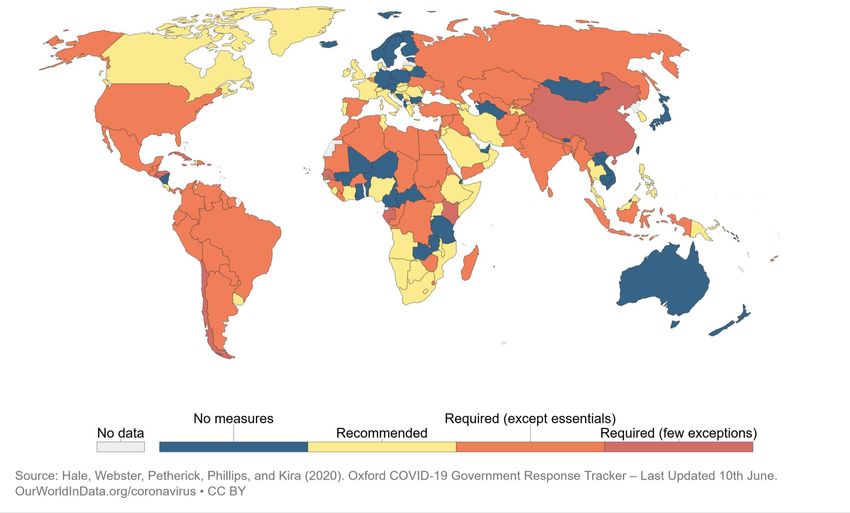
Outline
Learning from the past….
      ….. to better prepare interventions for future pandemics
• Drawing on epidemic experiences in Africa
   – Ebola
   – HIV
   – Covid-19
• Key lessons on interventions for future pandemics
• Intervention choices
• Planning for a marathon, not a sprint
• Conclusion - Five key lessons from epidemics in Africa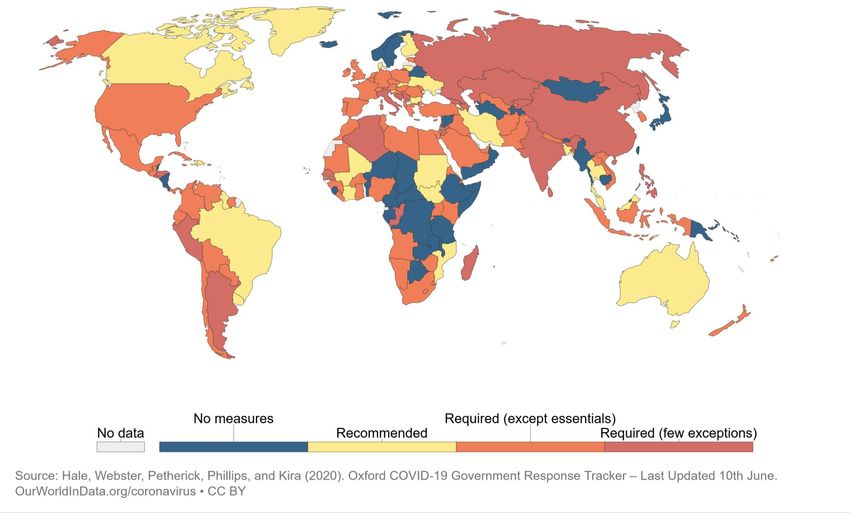
Epidemics in Africa:
                                                                                What have we learnt from
                                                                                 Ebola, HIV & Covid-19?
                                                                   What lessons for future pandemics?

                                                                                             Number of epidemics and
                                                                                                 other public health
                                                                                             emergencies in the WHO
                                                                                             African region, 2016–2018

Source: Talisuna, A.O., et al. Spatial and temporal distribution of infectious disease epidemics, disasters and other potential public health
emergencies in the World Health Organisation Africa region, 2016–2018. Global Health 16, 9 (2020). https://doi.org/10.1186/s12992-019-0540-4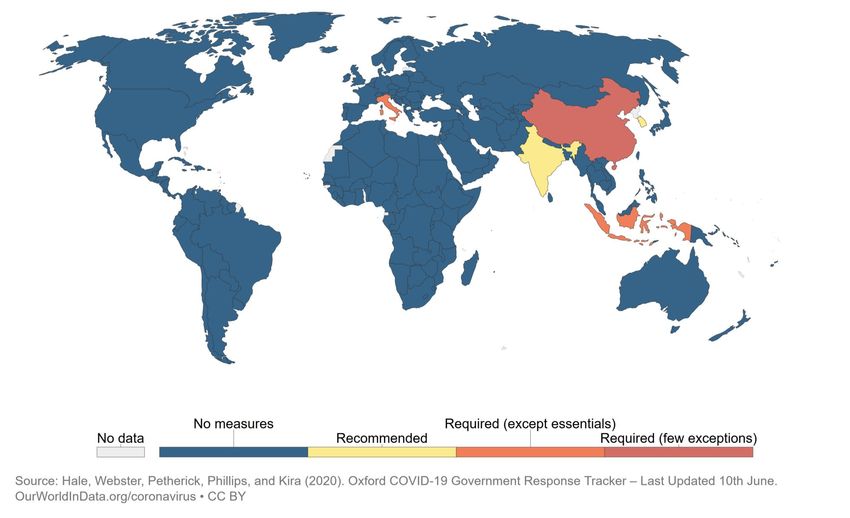
Ebola epidemics in Africa
• Ebola virus: a filovirus in fruit bats,
porcupines and non-human primates
• 2014-2016 outbreak – 28,616 cases &
11,310 deaths
• Average case fatality rate: 50%
• 2020 outbreak in DRC – 100 cases
and is ongoing
Ebola virus outbreaks by species and size,
since 1976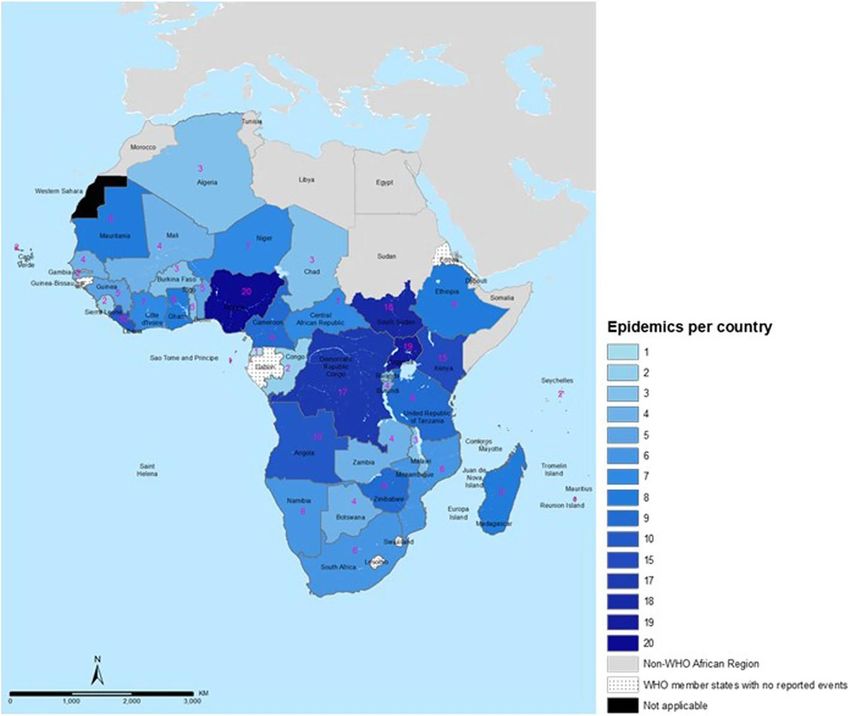
Ebola – key lessons for future pandemics

1. Early identification & decisive action is critical
2. Healthcare worker protection – high exposure-
   requiring PPE & proper cleaning and sterilization
3. Community engagement - key to successful contact
   tracing and control of community transmission
4. Comprehensive approach to outbreak control -
   package of interventions, including surveillance and
   contact tracing, laboratory services, infection
   prevention and control practices, case management,
   safe and dignified burials and social mobilisation
HIV epidemic in Africa
In Africa in 2019, there were:
• 25.6 million living with HIV (67% of global burden)
• 440,000 deaths (64% of global total)
• 970,000 new infections (57% of global total)
• In sub-Saharan Africa:
      - adolescent girls and young women
      account for 25% of all new infections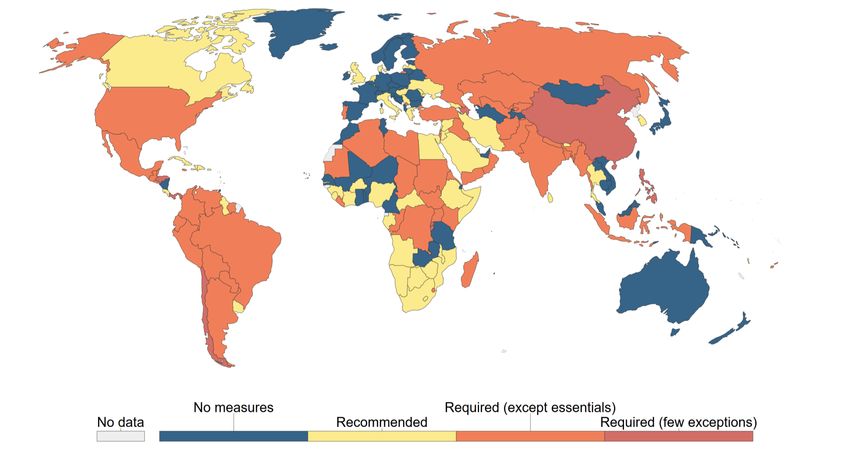
HIV – key lessons for future pandemics
1. Testing - rapid, reliable and affordable
   diagnostic test for HIV – a game changer
2. Human rights approach - to overcome
   stigma and discrimination of vulnerable
   groups
3. Community mobilization and
   advocacy – achieved many of the
   hard-won gains in HIV
4. Global solidarity - access to life-saving
   medication, e.g. Global Fund, UNITAID,
   PEPFAR
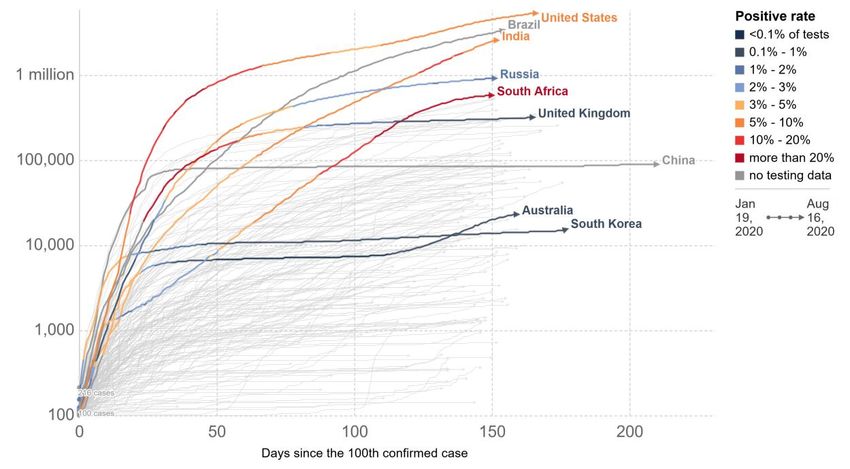
COVID-19 epidemic in Africa
In Africa, 1 Jan – 9 Sept, there were:
• 1,091,012 cumulative cases
•     23,323 deaths
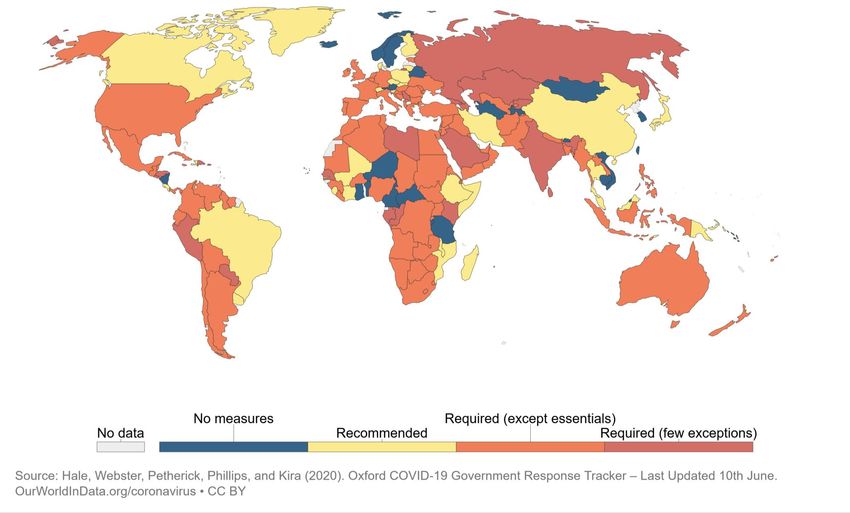
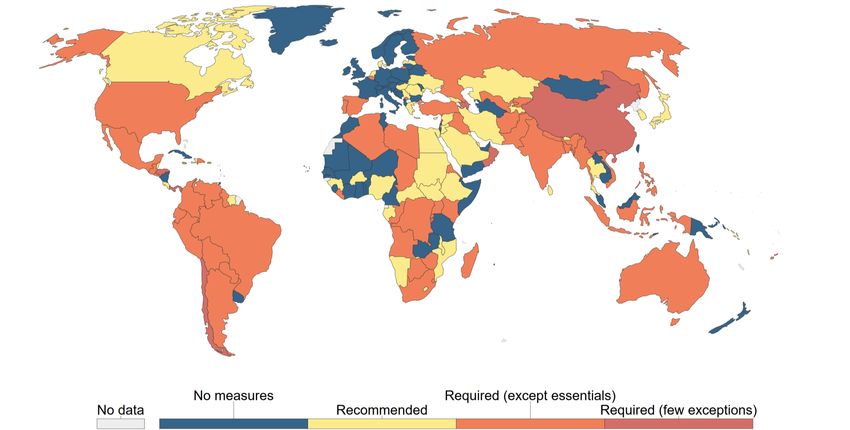
Stay-at-home restrictions during
    the Covid-19 pandemic

                      1 April:
                      1111August
                          June
                           July
                          March
                           May
                   1 September
  86 countries on national  or sub national lockdown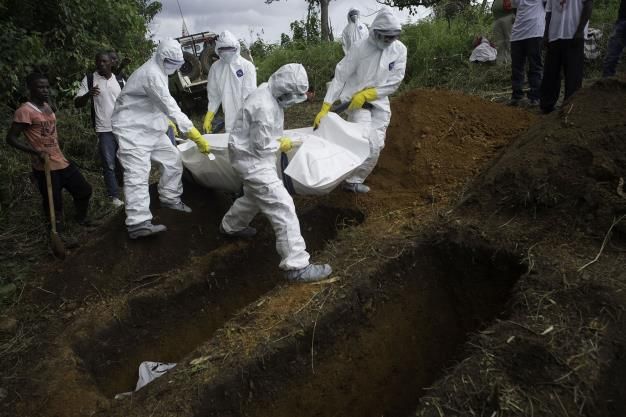
Burden of Covid-19 in South Africa
   7-day moving average of new cases, sentinel hospital admissions
      14000
                  and Covid-19 deaths – to 8 Sept            2500

                                                                                                                                                              7-day moving average of daily admissions
                                                                                                                                                               to DATCOV sentinel hospitals and deaths
7-day moving average of national daily

                                                 Sentinel hospital admissions   National   Deaths
                                         12000
                                                                                                                                                       2000

                                         10000

                                                                                                                                                       1500
                                         8000
               cases

                                         6000                                                       Admissions
                                                                                                                                                       1000

                                                                                                                              New cases
                                         4000

                                                                                                                                                       500
                                         2000
                                                                                                                                            Deaths

                                            0                                                                                                          0

Source: Lucille Blumberg and Waasila Jassat –                                                               *proportion of the population that have
DATCOV, NICD                                                                                                confirmed Covid-19 - cumulative risk (%)
Outline
Learning from the past….
….. to better prepare interventions for future pandemics
• Drawing on epidemic experiences in Africa
– Ebola
– HIV
– Covid-19
• Key lessons on interventions for future pandemics
• Intervention choices
• Planning for a marathon, not a sprint
• Conclusion - Five key lessons from epidemics in AfricaCovid-19 – key lessons for future pandemics:
1a. Early identification and action at global level
30 Dec 2019
First genetic
sequence of
SARS-CoV-2
– 10 January
Covid-19 a global health emergency - 30 January
…”We have therefore made the assessment that
COVID-19 can be characterized as a
pandemic.”…. - 11 March 2020Covid-19 – key lessons for future pandemics:
1b. Global leadership and governance
United Nations has had high-level meetings:
HIV
Tuberculosis
Non-communicable
diseases
? Covid-19Covid-19 – key lessons for future pandemics:
1c. Early identification and action at country level
to contain / mitigate spread of virusCovid-19 – key lessons for future pandemics:
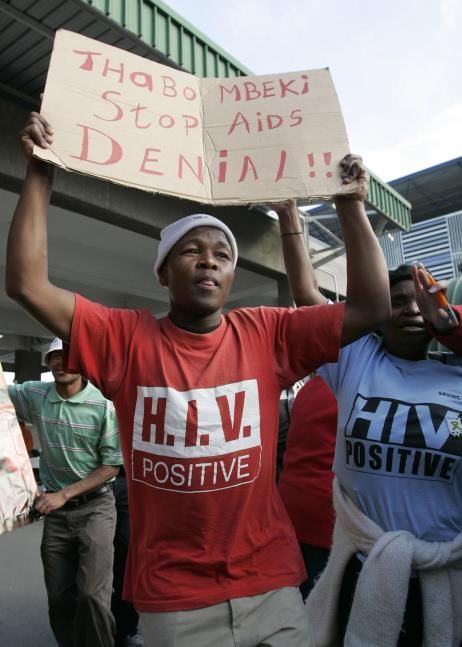
2. Avoid denial, interference and division by politicians
70000
Daily new confirmed COVID-
7-day moving average of
60000
“We’re prepared, and we’re 50000
19 cases
doing a great job with it. 40000
And it will go away. Just 30000
stay calm. It will go away.” 20000
10000
— Meeting with Republican senators,
0
March 10
0
6
102
108
114
120
126
132
138
144
150
156
162
168
174
180
12
18
24
30
36
42
48
54
60
66
72
78
84
90
96
Days since confirmed cases first reached 30 per dayDenialism compromised South Africa’s HIV response – this affliction has impacted the Covid-19 response of some other countries
Covid-19 – key lessons for future pandemics:
   3. Importance of science and rapid freely available
                      information

      Explosion of knowledge – scientific papers since Jan 2020:

                                 52,605 articles

                                 8,547 Articles
Outline
Learning from the past….
….. to better prepare interventions for future pandemics
• Drawing on epidemic experiences in Africa
– Ebola
– HIV
– Covid-19
• Key lessons on interventions for future pandemics
• Intervention choices
• Planning for a marathon, not a sprint
• Conclusion - Five key lessons from epidemics in AfricaIntervention choices: Covid-19 prevention toolbox
Hand hygiene
Social practices - hand Cloth masks &
distancing washing / sanitizing cough etiquette
Testing, Frequent
isolation, environmental
quarantine & cleaning & fresh air
contact tracing ventilation
Appropriate Symptom
use of PPE Lockdown
screening
(extreme form of
social distancing)Intervention choices: Male
circumcision
HIV prevention toolbox Auvert B, PloS Med 2005
Gray R, Lancet 2007
Treatment of STIs
Bailey R, Lancet 2007 Grosskurth H, Lancet 2000
Microbicides
for women
Abdool Karim Q, Science 2010
Female Condoms
Oral pre-exposure HIV
prophylaxis
Grant R, NEJM 2010 (MSM)
Baeten J , NEJM 2012 (Couples) prevention Male Condoms
Thigpen M, NEJM 2012 (Heterosexuals)
Choopanya K, Lancet 2013 (IDU)
toolbox
HIV Counselling
Dapivirine and Testing
intravaginal ring Coates T, Lancet 2000
Baeten J, NEJM 2016 Sweat M, Lancet 2011
Post Exposure Treatment for Behavioural
prophylaxis (PEP) prevention Intervention
Cohen M, NEJM, 2011
Scheckter M, 2002 Donnell D, Lancet 2010 - Abstinence
Tanser, Science 2013 - Be Faithful
Note: PMTCT, Screening transfusions, Harm reduction, Universal precautions, etc. have not been included – this is on sexual transmissionThe evolving Covid-19 response
Planning for a marathon – not a sprint
Virus spreading - Lifting some Very low / sporadic Sustained resumption of
trying to flatten restrictions with transmission all activities
the curve mitigation measures
Containment / Co-existing with Vaccine / Cure
Epidemic
a low transmission the virus Threat low
a
Risk of reversion to epidemic state
• Planning - To live with Coronavirus threat until ~2021
• Transitioning from “Anxiety to Self-efficacy” - empowering people
for sustainable self-implementation of prevention
• Enabling the new normal while mitigating risk of resurgenceCovid-19: Pivoting the prevention paradigm
Initial - Pivot – Subsequent - To reach –
government prevention Individual collective
action approach action community action
Anxiety Agency Self-efficacy Collectivism
Institutional Individuals Motivated
power power within individuals Motivated communities
over people people power to power for collective action
Stay-at-home act for
Public health prevention Ubuntu
orders /
interventions “I am, because you are”
Lockdown5 key lessons from past epidemics in Africa –
for interventions in future pandemics
1. Global interdependence – global / regional / country leadership
2. Community involvement – valuing collectivism (Ubuntu) – I am
safe, when you are safe
3. Working together for early identification (surveillance)
4. Evidence-based policy and decision making - Comprehensive
approach to epidemic control and not banking on a silver bullet
5. Global solidarity (e.g., COVAX challenging vaccine nationalism)You can also read


