Tanker Berth Manual - Updated April 2017 - Port of Tauranga
←
→
Page content transcription
If your browser does not render page correctly, please read the page content below
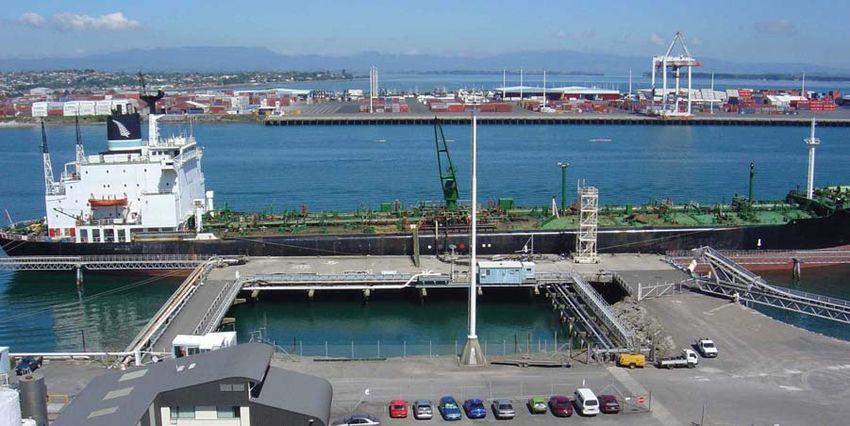
Tanker Berth Manual

                      Updated April 2017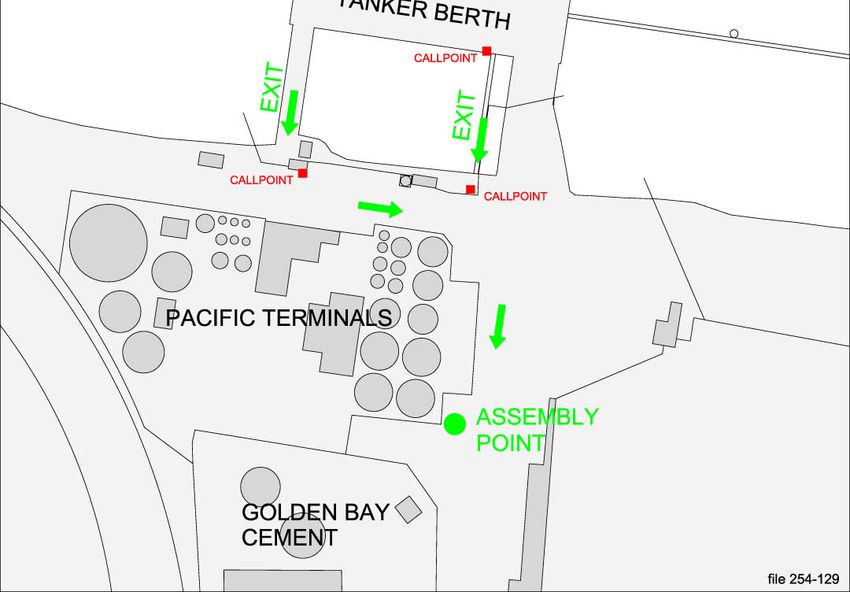
2

                                            TABLE OF CONTENTS

FOREWORD ............................................................................................................................. 3
GENERAL PORT INFORMATION ........................................................................................... 4
BERTH LAYOUT AND MOORING PLAN ................................................................................ 6
TECHNICAL AND GENERAL INFORMATION ........................................................................ 7
EMERGENCY EQUIPMENT ..................................................................................................... 9
FIRE EQUIPMENT AND ESCAPE ROUTES ......................................................................... 10
SECURITY .............................................................................................................................. 11
OPERATING LIMITS .............................................................................................................. 11
USE OF BERTH FOR VESSELS OTHER THAN TANKERS ................................................ 12
USERS CONTACT LIST ........................................................................................................ 13
ATTACHMENT 1 .................................................................................................................... 14
ATTACHMENT 2 .................................................................................................................... 15
ATTACHMENT 3 .................................................................................................................... 17
ATTACHMENT 4 .................................................................................................................... 18
ATTACHMENT 5 .................................................................................................................... 19
ATTACHMENT 6 .................................................................................................................... 28
ATTACHMENT 7 .................................................................................................................... 29
ATTACHMENT 8 .................................................................................................................... 30

S:\Manuals,SOPs & COPs\Tanker berth                                                                               Updated April 2017
Document Controller: Manager Operations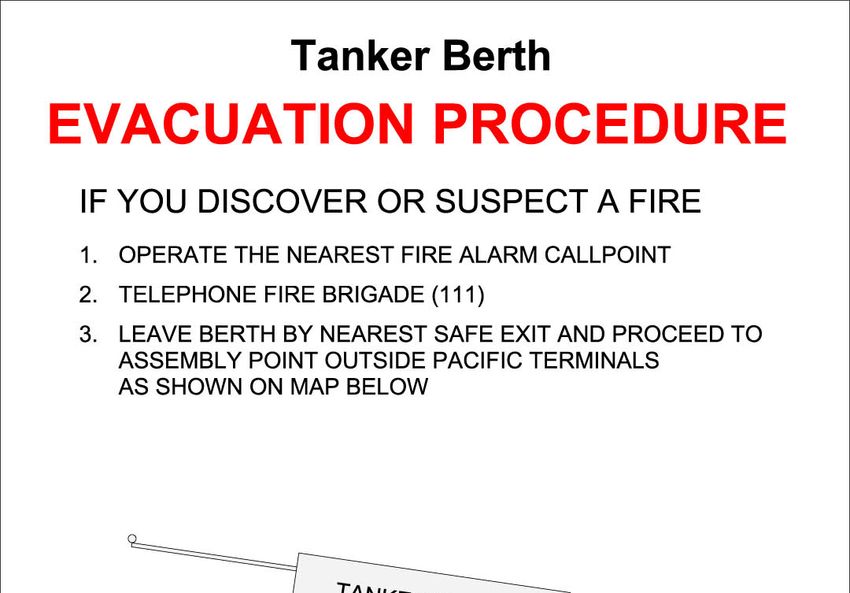
3

FOREWORD

Tanker Berth - (also known as Cement / Tanker Berth and Berth 16)

This manual contains information relating to the Port of Tauranga Tanker Berth. Procedures
are listed and information made available through attachments. This berth is also used for
cement and chip vessels, as well as occasional use by log vessels when lashing.

Contained within this document is general information for Tanker Berth users at Port of
Tauranga Limited (POTL).

POTL provides port facilities for the handling of bulk liquid cargoes at a purpose built berth
known as the “Tanker Berth” or Berth 16. In addition to bulk liquids, bulk cement is handled
regularly at this berth as well as wood chip on occasions.

Where cargoes are deemed to be hazardous, either being loaded, discharged or in transit,
then Port of Tauranga should be notified prior to arrival.

Upon notification, Port of Tauranga will provide a manned gated security service for the
duration of the vessels stay alongside.

Security will be for the controlled entry of personnel and ensure that personal safety
measures are adhered to. Furthermore, the Security Officer is available as a method of
communications with the Port and local emergency services, should they be required.

All Terminal operators utilising the facilities at the Tanker Berth, are expected to work within
the Industry Guidelines with due regard to the recommendations contained in the current
“International Safety Guide for Oil Tankers and Terminals” manual (ISGOTT).

Phil Julian
MANAGER OPERATIONS

S:\Manuals,SOPs & COPs\Tanker berth                                            Updated April 2017
Document Controller: Manager Operations
4

GENERAL PORT INFORMATION

Location
Tauranga (Mount Maunganui):               37° 39’ S 176° 11’E.

Admiralty Chart Reference:                NZ 54, 541, 5412, 5413.

Time Zone:                                UTC + 12
                                          UTC + 13 during Daylight Saving Time
                                          DST operates from 0200/ last Sunday in October
                                          until 0300/ first Sunday in April

Pilotage Area
Compulsory pilotage is required in that area of the Bay of Plenty Harbour, bounded by an arc
of a circle of radius three nautical miles, centred on North Rock and to include all the
commercial area of Tauranga Harbour.

Tides
Tidal rise and fall is between 1.3 and 2.0 m, and ebb/flood tides flow at approximately 2.6
knots at neaps and 4 knots at springs through the entrance channel.

Prevailing Winds
South westerly.

Radio
The Port of Tauranga Customer Service Centre, call sign “Tauranga Port Radio ZMH 70” is
fitted with radar, VHF and is manned 24 hours a day. Listening watch maintained on VHF
Channels 16 and 12.

Anchorages
Anchorage No.1:
37° 36.49’   South
176 ° 13.71’ East

Anchorage No.2
37° 37.49’   South
176° 15.21’ East

Anchorage No.3
37° 38.29’   South
176° 16.91’ East

Restricted Anchorage
From the intersection of the five-mile radius from North Rock and the No 1 Reach, leading
lights half a mile in width on the line of the leads. Any anchored vessel shall ensure that it
does not impede the safe navigation of any vessel of 500 GRT or more.

S:\Manuals,SOPs & COPs\Tanker berth                                           Updated April 2017
Document Controller: Manager Operations
5 Approach - Channel Depths The entrance approaches are dredged giving a minimum depth of 15.8m. During northerly and easterly gales, breaking seas may be experienced in this vicinity, particularly on an ebb tide. Inner harbour navigable channels have been dredged to 14.5m (transition point at buoy C2 in the Cutter Channel). Pilotage Pilot boarding area is 2.5 nautical miles NE of ‘A’ Beacon in position 37° 34.88’ South and 176° 12.49’ East. Maximum Size of Ships for Port Maximum length permissible is currently 350m, no restrictions on beam. Maximum arrival and departure draught at high water is 14.5m and at low water 13.2m. S:\Manuals,SOPs & COPs\Tanker berth Updated April 2017 Document Controller: Manager Operations
6

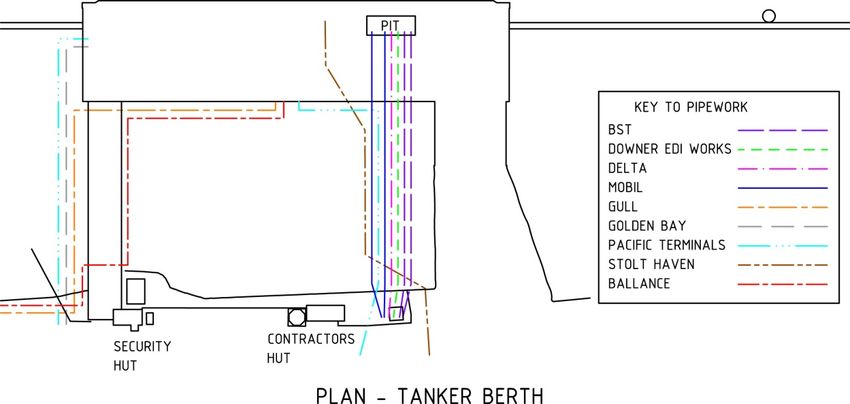
BERTH LAYOUT AND MOORING PLAN

S:\Manuals,SOPs & COPs\Tanker berth       Updated April 2017
Document Controller: Manager Operations
7

TECHNICAL AND GENERAL INFORMATION

Rated vessel DWT                          Berth designed for 50,000 tonnes

Maximum LOA                               250m - longer vessels considered on application

Minimum LOA                               NA

Maximum draught                           12.4m

Maximum beam                              NA

Minimum parallel length                   NA

Maximum bow to manifold                   Starboard side to 170m
                                          Port side to 170m

Minimum bow to manifold                   NA

Maximum stern to manifold                 Starboard side to 170m
                                          Port side to 170m

Minimum stern to manifold                 NA

Maximum manifold height                   Flexible hose used to connect manifold to shore
above datum                               No height restrictions within reason

Minimum manifold height                   NA
above datum

Minimum depth in approaches at            14.5m
datum

Minimum under keel clearance in           10%
approaches

Minimum water depth alongside             12.9m
at datum

Minimum under keel clearance              0.5m
alongside at datum

Terminal type                             Conventional Multi Point Mooring Berth

Cargo handled                             Black Prods/ White Prods/ Lubes/ Chemicals/
                                          Asphalt

Bunker                                    Fuel Oil/ Intermediate/ Diesel

Vapour recovery requirements              None

S:\Manuals,SOPs & COPs\Tanker berth                                                Updated April 2017
Document Controller: Manager Operations
8
TECHNICAL AND GENERAL INFORMATION (continued)
Slop capacity Limited capacity via road tanker
De ballast capacity Nil
Fresh water Yes
Derricks Berth is not equipped with derricks
Hydrographic survey Annual
Structural survey Annual
Berth complies with relevant
electrical classification codes Yes
Berth fending covers at least
25% of vessel maximum length Yes
Berth fending documented for
maximum energy rating Yes
Bollard safe working load Tanker Berth 60t Any direction
Chip Ship Dolphins 150t Unidirectional
Product pipelines Mobil/BP/Z Energy/ NZOSL 300mm White Oil
Mobil 250mm Black Oil
Downer EDI Works/Fulton 250mm Bitumen
Delta Corp 200mm Bitumen
Gull 300mm
Bulk Storage Terminals 200mm
Bulk Storage Terminals 150mm
Golden Bay 2 x Cement
Pacific Terminals 4 x Pipelines
Ballance Agri-Nutrients 200mm Sulphuric Acid
Stolthaven 150mm Heat Traced & Insulated: Phenol
150mm Caustic Soda
3 x 150mm Vegetable Oil / Tallow
Berth apron is bunded and has a capacity of 124,000 litres
S:\Manuals,SOPs & COPs\Tanker berth Updated April 2017
Document Controller: Manager Operations9 EMERGENCY EQUIPMENT Fixed Foam System Wharf manifold is protected by a foam monitor. This monitor is activated and operated remotely from the security hut at the head of the Tanker Berth. Foam type is Croda Filmfoam A836 AFFF alcohol resistant foam 3/6%. Quantity 2,000 litres. Water supply for pumps is seawater drawn via a 200mm pipe. The system is equipped with its own diesel pump. Pump capacity 2,700 litres/min Monitor capacity 2,300 litres/min 50kg Portable Dry Powder Extinguishers Two of this type of extinguisher are available. Fire Hydrants Located around berth. Charged from council water supply. Mains capacity 6000 litres/min. Emergency Wash-down Shower and Eye Bath Located on berth – north end near fire equipment hut and in manifold pit. Shower starts when person steps on pan. Eye bath is a push-to-start type. Oil Spill Equipment Located at Environment Bay of Plenty’s (EBOP) Wharf Road Depot Harbour Boom 600m Land/Sea Boom 320m Slickbar Mk 10 Boom 200m Ramjet Rope Mop 1 Desmi Minimax Skimmer 1 Frame Tank (25,000 litre) 1 Dispersant 6,000 litre Booms and Breaker Boards 1 set Dispersant Pump 1 Spate Pump 1 Absorbent Booms 48 Absorbent Pads 1,600 Oil Spill Equipment Located at other Sites within the Port Oil spill equipment is stored in three locations throughout the Port. These are: Sulphur Point (South), Butters Wharf (South of Tanker Terminal) and No 1 Berth (North). All emergency equipment owned by Port of Tauranga is serviced by contractors Fire Security Services on a weekly basis. The Port of Tauranga designated responsible person is Brent Clinton, Engineering Officer. S:\Manuals,SOPs & COPs\Tanker berth Updated April 2017 Document Controller: Manager Operations
10

FIRE EQUIPMENT AND ESCAPE ROUTES

S:\Manuals,SOPs & COPs\Tanker berth       Updated April 2017
Document Controller: Manager Operations
11

SECURITY

The Manager Operations is responsible for ensuring that the systems for managing the
Tanker Berth security and dangerous goods procedures are maintained.

The Security Supervisor is responsible for ensuring that the procedures are carried out
correctly, the Tanker Berth security hut is manned when required, the necessary equipment
is available and access ways are clear.

Security officers are responsible for performing their duties in accordance with established
procedures and maintaining a logbook covering the hours the berth is manned.

OPERATING LIMITS

The operating limits for pumping operations will vary significantly from vessel to vessel.
Therefore, no absolute limits can be set with regard to safe weather conditions for pumping
operations. However, during high winds and winds which would tend to blow the vessel off
the berth, particular care should be taken.

In any case to ensure that vessels and pumping operations remain safe at all times ship and
wharf personnel should closely monitor weather conditions and the effect they are having on
the vessel. To assist them in this, they may contact the Customer Service Centre at any time
for wind speed and direction information as well as current weather reports and forecasts.

The following guideline details actions for winds with average speeds of 30, 40 and 50kts
from a NE to SE direction:

30kts: Contact Customer Service Centre to ascertain current wind speed and direction wind
trends and forecast. Advise ship.

40kts: Stop cargo operations.

50kts: Disconnect hose.

Individual companies may elect to operate on the tanker berth using lower wind limits,
however in no circumstances should any operating limits exceed Port of Tauranga
guidelines. Harbour Master

S:\Manuals,SOPs & COPs\Tanker berth                                         Updated April 2017
Document Controller: Manager Operations
12

USE OF BERTH FOR VESSELS OTHER THAN TANKERS

This berth is also used for cement and wood chip ships. The extra security involved when
the berth is operating as a Tanker Berth is not required.

Cement ships berth in the usual manner and discharge through dedicated cement lines.

Wood chip ships require special mooring arrangements. These mooring arrangements
consist of running extra long headlines and stern lines to the remote dolphins situated either
end of the berth. The purpose of these mooring arrangements is to enable the vessels to
shift themselves up and down the wharf to facilitate loading.

The procedure for running these lines is:

Inbound ship – Two extra tug crew to board from Tug or Tanker Berth.

1. Lines passed from ship to tug
2. Tug takes lines to dolphin
3. Tug crew haul lines up onto dolphin and place over bollard

Outbound ship – Two extra tug crew to board from Tug Berth.
1. Tug lands crew on dolphin
2. Crew release lines using quick release hooks.      Note: weight must be on line for quick
   release to operate.

S:\Manuals,SOPs & COPs\Tanker berth                                           Updated April 2017
Document Controller: Manager Operations
13

USERS CONTACT LIST

 Agri-Feeds Limited                       Rob       Dorey       General Manager                             07 547 4540    rdorey@agrifeeds.co.nz
 Bakels Edible Oils (NZ) Ltd              Hans      Burggraaf   Manufacturing Manager                       575 9285       hans@beobakels.co.nz
 Bay of Plenty Regional Council           Peter     Buell       Harbour Master                              0800 368 267   peter.buell@boprc.govt.nz
 Bay of Plenty Regional Council           Adrian    Heays       Pollution Prevention Officer                0800 884 883   adrian.heays@boprc.govt.nz

                                                                                                            07 5752019
                                                                                                            ext 2
 Bulk Storage Terminals Limited           Aaron     Dohnt       Mount Maunganui Terminal Manager            021875046      aaron@bst.co.nz
 Z Energy Limited New Zealand             Triss     Hapgood     Operator                                    574 4371       triss.hapgood@z.co.nz
 Z Energy Limited New Zealand             Warren    Macneil     Terminal Manager                            574 4372       wmacneil@z.co.nz
 Golden Bay Cement                        Robert    Finnerty    Mount Maunganui Service Centre Supervisor   027 485 7565   Robert.finnerty@gbcwinstone.co.nz
                                                    Van
 GrainCorp Liquid Terminals               Adrian    Engelen     Terminal Manager                            07 575 6536    avanengelen@graincorp.co.nz
 Intertek                                 Uday      Behere      Operations Manager - New Zealand            09 432 7220    uday.behere@intertek.com
 Intertek                                 Haydan    Tompkins    Chemist Inspector - Mount Maunganui         07 985 6106    haydan.tompkins@intertek.com
                                                                                                            07 575 4077
 Mobil Oil (NZ) Ltd                       Stuart    Mallasch    Mount Maunganui Terminal Manager            ext 4067       stuart.m.mallasch@exxonmobil.com
 New Zealand Oil Services Limited         Dennis    Ford        Foreman                                     574 0612       dennis.ford@nzosl.co.nz
 New Zealand Oil Services Limited         Mark      Lolesi      Assistant Terminal Operations Manager       574 0612       mark.lolesi@nzosl.co.nz
 New Zealand Oil Services Limited         Hadley    Page        Terminal Manager                            574 2073       hadley.page@nzosl.co.nz
 New Zealand Oil Services Limited         Brendan   Wannop      Regional Terminal Manager - Northern        574 0612       brendan.wannop@nzosl.co.nz
 Orica Chemnet                            Ross      McLeod      Strategic Products Manager                  07 572 6851    ross.mcleod@orica.com
 Road Science                             Ross      Godkin      Manufacturing Manager - Bitumen Supply      575 1151       ross.godkin@roadscience.co.nz
 Road Science                             Murray    Northcott   North Island Technical Plant Manager        575 1150       murray.northcott@downer.co.nz
 SGS New Zealand Limited                  Stephen   Gatenby     Branch Manager                              575 6200       stephen.gatenby@sgs.com
 Stolthaven New Zealand Limited           Paul      Manson      Site Manager Mount Maunganui and Bluff      07 575 3714    p.manson@stolt.com
                                                                Australasian HSE, Quality Compliance &
 Stolthaven New Zealand Limited           Will      Struthers   Regulatory Manager                          09 551 6983    w.struthers@stolt.com
                                                                Team Leader: HSNO/Historic Land Use City    577 7200 ext
 Tauranga City Council                    Jack      Travis      Development                                 7317           jack.travis@tauranga.govt.nz
 Terminals NZ                             Ren       Keepa       Terminal Manager                            572 3806       renk@terminals.co.nz

S:\Manuals,SOPs & COPs\Tanker berth                                              Updated April 2017
Document Controller: Manager Operations
14
ATTACHMENT 1
MAINTENANCE WORK NOTIFICATION INSTRUCTION SHEET
1 All contractors to complete the "Cement and Tanker Berth Permit to Work” form. See
Attachment 2. This permit must be approved by Phil Julian, Manager Operations,
Port of Tauranga.
2 All contractors must contact Port of Tauranga Limited, Customer Service Centre on 572
8888 prior to commencement of any work.
3 All contractors to contact Luke Craig (Maintenance Supervisor, Mobil) on 575 4061 or
027 360 0826 prior to commencement of any work.
4 Contact details for other relevant companies are available on Page 14 of this
document. All relevant companies to be emailed at least 24 hours prior to
commencement of any work.
5 All contractors to operate under statutory health and safety regulations.
6 “Work Permits” to be utilised where appropriate, including but not limiting to: Hot Work,
Electrical Isolation, Working at Height and Confined Spaces.
7 “Hot Work” shall include Welding, Gas Cutting, Grinding and Drilling or any other
situation where heat or spark may be generated.
8 “Hot Work” MUST NOT commence while vessels are discharging flammable or
chemical cargoes or the ship alongside is not gas free - i.e.: the ship still has flammable
cargoes or vapour spaces on board the ship. These restrictions apply to the Mobil
operated pipeline to Tasman Quay.
9 Any Hot Work involving a vessel shall require the approval from the Harbourmaster and
the completion of Environment Bay of Plenty Hot Work Permit.
10 Upon completion or temporary suspension of work, all parties on the “Cement and
Tanker Berth Permit to Work” form are to be notified.
11 Completed Cement and Tanker Berth Permit to Work forms are to be returned to Phil
Julian, Manager Operations, Port of Tauranga.
S:\Manuals,SOPs & COPs\Tanker berth Updated April 2017
Document Controller: Manager Operations15
ATTACHMENT 2
CEMENT AND TANKER BERTH CONTRACTOR PERMIT TO WORK
PERMIT ISSUE TO Company:
Contact Number:
Contact Person:
Fixed Start Date: Completion: ___ / ___ / ___
___ / ___ /____
NATURE OF WORK:
YES NO
Port of Tauranga Limited Customer Services Centre (Ph 572 8888) has been contacted
Mobil Maintenance Coordinator (Luke Craig Ph 575 4601 or 027 360 0826) has been contacted
All relevant companies have been emailed 24 hours prior to commencement date/time
Approval received from other companies for Hot Work being to be undertaken within 4 m of their N/A
pipes.
Approval received from Harbourmaster to undertake vessel based Hot Work N/A
N/A
Environment Bay of Plenty Hot Work Permit for work on vessels has been completed
N/A
Pipe work locations identified prior to excavations commencing
Job Specific Hazard Management Plan
(E = Eliminate, I = Isolate, M = Minimise)
Hazard Control E Person
I Responsible
M
Hot Work
Confined Space
Electricity
Gases
Working at Height
S:\Manuals,SOPs & COPs\Tanker berth Updated April 2017
Document Controller: Manager Operations16
CONTRACTOR ACKNOWLEDGEMENT
By signing, I acknowledge the following:
I have correctly and honestly completed all of the requirements of the Permit to Work process.
I take over direct operational control of the work site and the operations within the site for the duration of the
Permit to Work.
I agree to notify all parties on the Permit to Work upon completion or temporary suspension of work.
Name: Signature: Date:
PERMIT APPROVAL
APPROVAL COMPANY NAME POSITION SIGNATURE DATE
Port of Tauranga Limited Phil Julian Manager Operations
EMERGENCY CONTACTS
Port of Tauranga Limited Customer Service Centre 24 Hours (07) 572 8888
Tauranga Port Radio VHF Channel 12
Fire Emergency 111
_____________________________________________________________________
ADDITIONAL INFORMATION
Any “Hot Work” within four metres of another company’s pipes or fittings will require their approval. These
restrictions will apply for the following lines from berth to:
Operating Company Limit Operating Company Limit
Mobil Tasman Quay Pacific Terminals Access Gate
BST Tasman Quay Terminals NZ (Gull) Access Gate
Works Tasman Quay Golden Bay Access Gate
Delta Tasman Quay Stolthaven Access Gate
With any excavation, care should be taken to identify any pipe work in the area including around Gull,
Golden Bay and Pacific Terminals.
S:\Manuals,SOPs & COPs\Tanker berth Updated April 2017
Document Controller: Manager Operations17
ATTACHMENT 3
SAFETY INFORMATION FOR CREW HANDOUT
S:\Manuals,SOPs & COPs\Tanker berth Updated April 2017
Document Controller: Manager OperationsPage 18 of 30
ATTACHMENT 4
RECORD OF VISITORS
VESSEL: __________________
PLEASE READ CAREFULLY
I HEREBY CERTIFY THAT I AM IN NOT IN POSSESSION OF ANY MATCHES, CIGARETTE LIGHTERS OR ANY OTHER IGNITION
SOURCE, INCLUDING ELECTRONIC EQUIPMENT - EG: MOBILE PHONES, RADIO TELEPHONES, PAGERS, PERSONAL SECURITY
ALARMS AND KEY REMOTES.
DATE PLEASE PRINT SIGNATURE AUTHORITY OR GUEST OF TIME TIME
NAME FIRM ON OFF
S:\Manuals,SOPs & COPs\~Masters of Manuals and SOPS\~Tanker Berth\Tanker Berth Manual.doc April 2017
Document Controller: Manager OperationsPage 19 of 30
ATTACHMENT 5
TANKER BERTH EMERGENCY PROCEDURES
Responsibilities
The Manager Operations is responsible for ensuring that systems for managing the Tanker
Berth security and dangerous goods procedure are maintained.
The Manager Security is responsible for ensuring that the procedures are carried out
correctly, the Tanker Berth security hut is manned when required and the necessary
equipment is available and access ways are clear.
Security Officers are responsible for performing their duties in accordance with established
procedures and maintaining a logbook covering the hours the berth is manned.
Procedures
MANAGER SECURITY
1. Advanced Notice on Daily Shipping List
Advise staff of probability of tanker visit and approximate date.
2. Confirmation of Visit
(a) Confirm cargo type and the need for security.
(b) Ensure that any repairs needed on safety equipment have been done and all
equipment is in good working order.
3. Vessel in Berth
(a) Make regular visits to ensure correct procedures are being followed.
(b) Take immediate steps to arrange repair or replacement of any defective items or
material when advised of name by Security Officer on duty.
(c) Be on call at all times when the berth is manned in case of emergency. If not available,
alternative person on call to be named and listed in logbook.
S:\Manuals,SOPs & COPs\~Masters of Manuals and SOPS\~Tanker Berth\Tanker Berth Manual.doc
Document Controller: Manager Operations April 2017Page 20 of 30
SECURITY OFFICERS
PROCESS STEP KEY POINTS
Immediately prior to ship 1 Lay out firefighting equipment.
berthing
2 Insert Bund Bungs.
3 Lock Gates.
4 Test radio and telephone
communications.
Ship Berthed 1 Control access to and from vessel.
2 Maintain surveillance of the area to
ensure all safety procedures are
followed.
3 Maintain a logbook.
4 Follow all procedures listed in case of
emergency keeping Supervisor informed
at all times.
5 Advise Customer Service Centre when
pumping of cargo commences and
ceases.
6 Pass on all relevant information to
Relieving Officers.
Ship Departed 1 Put away firefighting equipment.
2 Ensure berth is tidy with no obstructions.
3 Before contractors have left the berth,
ensure they have opened bungs on the
bund.
4 Secure Security hut.
S:\Manuals,SOPs & COPs\~Masters of Manuals and SOPS\~Tanker Berth\Tanker Berth Manual.doc
Document Controller: Manager Operations April 2017Page 21 of 30
LOG BOOK
A logbook must be maintained at all times that the tanker berth is manned. The logbook
must record the following:
Times of shift being covered;
Times that vessel arrives and departs;
Times that pumping commences and ceases;
Type of cargo being pumped;
When fire and safety equipment is checked;
Any incidents that should be brought to the notice of Security Supervisor.
Any equipment that requires repairs or replacement.
At the completion of his / her shift, the Security Officer must sign the logbook and make
reference to it when handing over to his / her relief.
TANKER BERTH GATEHOUSE
General
The prime function of staff assigned to Tanker Watch duties is the implementation of control
and safety procedures to minimise the likelihood of any mishap aboard the vessel whilst
berthed in the Port of Tauranga.
These procedures must be enforced firmly but diplomatically to allow speedy access of
authorised personnel to and from the vessel. At all times while on duty, the uniform issued
by the Company is to be worn, the communications link is to be kept operative and duty staff
must present an alert and cooperative image.
Access to vessels
(a) Crew Members, Agents and Contractors
When departing from or returning to the vessel, to be checked off against the
appropriate list.
(b) Crew Members’ Guests
Visitors must enter their name on the Visitors List before being allowed to proceed
past the checkpoint. They must be accompanied by a crew member. On
departure the time will be noted on the Visitor Sheet.
(c) Persons Other than Crew or Crew Members' Guests, Agents and Contractors
On occasions when providers, maintenance staff, customs or other persons having
official business on the ship are allowed access, they must enter their name on the
Visitors List. On departure the time will be noted on the Visitors List.
Ignition Sources
The Tanker Berth Security Officer shall enquire of every person intending to access a vessel
if they are in possession of any item with a potential ignition source.
These items may include cellular telephones, radio telephones, pagers, personal security
alarms, key remotes, cameras and any other items which may generate an ignition source.
S:\Manuals,SOPs & COPs\~Masters of Manuals and SOPS\~Tanker Berth\Tanker Berth Manual.doc
Document Controller: Manager Operations April 2017Page 22 of 30 These items shall be surrendered to the Security Officer at the security gate and retrieved when leaving the vessel. The following persons are exempt from surrendering electronic items: Ship’s Masters and Officers, Ship’s Agents, Officers from New Zealand Customs, Ministry for Primary Industries, Immigration and NZ Police. In these situations, all electronic items shall be completely turned off and not re-commissioned until safely inside the ships accommodation block, or until the holder is in a non-hazardous area as determined by the Ship’s Master or Officer in Charge. Electronic items that are intrinsically safe may be used, however these items MUST be clearly identifiable as being intrinsically safe for all aspects of their operation. All holders of items deemed to be intrinsically safe must be prepared to demonstrate compliance if requested by any other party. PPE At all times while on duty, the Security Officer must wear PPE that will enable him to react immediately to any incident. When making berth inspections, the Security Officer will wear the full PPE provided. This will include full overalls, hi-viz vest/jacket, hard hat, safety goggles. FIRST AID AND FIRE FIGHTING EQUIPMENT FOR TANKER BERTH It will be the duty of the Security Officer to lay out the fire fighting equipment, ie foam branch pipe and foam concentrate, hose, stand pipe and key. The decontamination shower and eye wash is always to be connected and the water turned on. The last Security Officer on duty during a tanker stay is to secure all hand-held fire equipment in the fire equipment hut, turn water to shower/eye wash off. Before the contractors have left the berth, following departure of a ship, they must remove the bungs from the berth bund to allow drainage. Should anomalies arise regarding the equipment during a tanker’s stay, ie items become damaged or expended, the Manager Security should be contacted for a replacement or advice. S:\Manuals,SOPs & COPs\~Masters of Manuals and SOPS\~Tanker Berth\Tanker Berth Manual.doc Document Controller: Manager Operations April 2017
Page 23 of 30

FOAM FIRE FIGHTING PROCEDURE

Manned / Unmanned Switch

(a)    Manned Position
       The switch should be in this position whenever the Tanker Watch Hut is manned. This
       allows the Automatic Start of the pump to occur if the pump priming water drops to an
       extra low level (AMBER LIGHT IS ON FOR THIS SWITCH POSITION).

(b)    Unmanned Position
       Automatic start does not occur with extra low priming water (GREEN LIGHT IS ON
       FOR THIS SWITCH POSITION).

       Note: The low water level alarm is a separate system to the automatic starting and
       gives a local alarm as well as giving a defect to the Fire Brigade on the fire alarm
       system (see separate instruction sheet for this alarm). This alarm will occur before the
       automatic start occurs.

(c)    Foam Control Switch
       Foam On:

       Foam valve opens (AMBER LIGHT IS ON WHEN VALVE IS OPEN).

       Foam Off:

       Foam valve closes (GREEN LIGHT IS ON WHEN VALVE IS CLOSED).

       Note: The valve takes approximately 11 seconds to go from fully open to fully closed
       and vice versa. Valve should only be opened for fire fighting or during emergency
       situation.

       Motor Ready Light (GREEN)
       Illuminated when pump motor is in a ready to start condition. The light goes out when
       the motor is running.

       Motor Ready Light (AMBER)
       Illuminated when the motor is running.

       Start Button
       PUSH to start motor. RELEASE AFTER MOTOR HAS STARTED.

       Monitor Controls
       As shown on Control Panel.

       Note: Monitor should always be left pointing down and away from the wharf until the
       foam delivery commences.

       When leaving the Watch Hut unmanned, the Control Panel should show only GREEN
       lights.

S:\Manuals,SOPs & COPs\~Masters of Manuals and SOPS\~Tanker Berth\Tanker Berth Manual.doc
Document Controller: Manager Operations                                                          April 2017
Page 24 of 30 EMERGENCY PROCEDURES IN CASE OF FIRE ACTIVATE FIRE ALARM CALLPOINT – BREAK GLASS AND OPERATE SWITCH This will automatically notify emergency services and will activate siren. Callpoints are located outside security gatehouse, on wharf apron and at emergency pedestrian gate. ADVISE EMERGENCY SERVICES BY USING 111 SYSTEM ADVISE CUSTOMER SERVICES CENTRE – PHONE 572 8888 (using second phone) ACTIVATE FIRE MONITOR IF REQUIRED Push start button until motor starts (press in for about five seconds). Ensure monitor is directed directly into the water below the nozzle. Do not spray water onto the berth. Leave pump and motor running to allow NZ Fire Service to activate foam and fight the fire. Evacuate the building to the safest assembly point. S:\Manuals,SOPs & COPs\~Masters of Manuals and SOPS\~Tanker Berth\Tanker Berth Manual.doc Document Controller: Manager Operations April 2017
Page 25 of 30

TANKER WATCH PROCEDURES

DO NOT BE SCARED OF OVERREACTING
IF THIS HAPPENS                      DO THIS                                NEXT ACTION
                                     Summon Fire Brigade
Ship’s alarm                                                               Advise Customer Service
                                     immediately 111
sounds                                                                     Centre.
                                     (sound alarm and dial
(except when
                                     111)
practice advised)

Fire in ship’s funnel                Summon Fire Brigade                   Advise Customer Service
or accommodation                     immediately                           Centre.
                                     (sound alarm and dial
                                     111)

Fire on deck of                      Summon Fire Brigade                   Advise Customer Service
vessel or wharf                      immediately                           Centre.
                                     (sound alarm and dial
                                     111)

Excessive chemical                   Summon Fire Brigade                   Advise Customer Service
spillage                             immediately                           Centre.
(refer to cargo plan                 (sound alarm and dial
notes to ascertain if                111)
cargo being pumped
is hazardous)
                                                                            1    Advise Customer
Inflammable liquid                   Summon Fire Brigade
                                                                                 Service Centre
spillage                             immediately
                                     (sound alarm and dial
                                                                            2    Direct Emergency
                                     111)
                                                                                 Service to spillage
                                                                                 scene.

                                                                            3    Stop unauthorised
                                                                                 traffic from entering
                                                                                 affected area.

S:\Manuals,SOPs & COPs\~Masters of Manuals and SOPS\~Tanker Berth\Tanker Berth Manual.doc
Document Controller: Manager Operations                                                                April 2017
Page 26 of 30
THE FOLLOWING MUST BE ADVISED IN CASE OF EMERGENCY (BY CUSTOMER
SERVICE CENTRE)
COMPANY POSITION NAME WORK CELL A/H
Graincorp Terminals Adrian van
Ltd Terminal Manager Engelen 07 575 6536 021 141 7665 07 573 5750
National Operations
Manager Jeff Tyrrell 07 572 3191 021 220 1311 07 579 3115
Branch Manager –
C3 Ltd Mt Logs Kevin Smylie 07 572 8905 027 255 5910
Mark Power 07 572 8916 027 839 4622
Kiwi Forest Industries Debarker Manager Neil Christensen 07 575 0323 027 490 5773
Managing Director David Parkinson 07 544 6237 021 066 2788
NZ Oil Services Brendan
Limited Terminal Manager Wannop 07 574 7603 027 549 7558
Assistant Terminal
Manager Mark Lolesi 07 574 0606 027 838 7572
SGS Branch Manager Steve Gatenby 07 547 4564 027 572 3644
Keith Cranswick 07 547 4989 027 534 1181
07 575 2019 ext.
BST Terminal Manager Aaron Dohnt 2 021 875 046
Rod West 07 579 9472 027 294 4711 07 575 2109
07 575 4077 ext
Mobil Oil Terminal Manager Stuart Mallasch 4067 027 443 6703
Andrew Moffatt 07 575 4060 021 705 973
Z Energy Terminal Terminal Manager Warren Macneil 07 574 4372 027 243 8892 07 573 5819
Terminal Operator Triss Habgood 07 574 4371 027 715 2113
Terminals NZ Ltd Terminal Manager Ren Keepa 07 572 3806 021 444 966
Stolthaven NZ Site Manager Paul Manson 07 575 6614 021 614 807
NZ Oil Services
Limited Terminal Manager Hadley Page 07 574 2073 027 494 7678
Assistant Terminal
(former BP Terminal) Manager Dean Salter 07 574 2072 021 455 010
BP Oil Emergency
Line 0800 805 111
S:\Manuals,SOPs & COPs\~Masters of Manuals and SOPS\~Tanker Berth\Tanker Berth Manual.doc
Document Controller: Manager Operations April 2017Page 27 of 30 S:\Manuals,SOPs & COPs\~Masters of Manuals and SOPS\~Tanker Berth\Tanker Berth Manual.doc Document Controller: Manager Operations April 2017
Page 28 of 30

                                                                                            ATTACHMENT 6

VEHICLES ON TANKER BERTH (PORT OF TAURANGA POLICY)

Flammable Cargoes

Petrol, Diesel, Avgas, MGO, MFO, Ethanol, Acetic Acid*

Vessel with flammable cargoes – loading or discharge hoses connected
No vehicles allowed entry to wharf

This is irrespective of whether cargo is being pumped or not.

Vessel with flammable cargoes – loading or discharge hoses not connected
Limited diesel powered vehicle access eg lines truck, stores and bunker vehicle.

Vessel must be secured and in a seagoing condition.

Non-Hazardous Cargoes but vessel not “gas free”, ie: parcel carrier discharging /
loading a non-hazardous cargo, but having other flammable cargoes on board or tanks
in a non “gas free” condition.

As long as the vessel is in a seagoing condition, limited diesel powered vehicle access
is allowed, ie: lines truck, stores and bunker vehicles.

Non-flammable Chemical Cargoes

Eg: Caustic Soda, Caustic Potash, Nitric Acid, Phosphoric Acid, Sulphuric Acid.

Limited diesel powered vehicle access is allowed ie lines’ truck, stores and bunker
vehicles.

Bitumen and Non-Hazardous Cargoes

Eg: Bitumen, Vegetable Oils, Tallow.

No restrictions. Normal vehicle access allowed.

Special Note

At all times vehicles shall exercise extreme care around the Tanker Berth area as
pipelines may be full of product, regardless of whether pumping operations are
under way or not.

* Vapours from Acetic Acid may create an explosion hazard.
S:\Manuals,SOPs & COPs\~Masters of Manuals and SOPS\~Tanker Berth\Tanker Berth Manual.doc
Document Controller: Manager Operations                                                             April 2017
Page 29 of 30
ATTACHMENT 7
TANKER BERTH CHECK LIST
DATE: TIME: VESSEL:
Prior to tanker arriving, the following check list should be ticked off:
Switch to manned control for fire fighting equipment. Check communications and
phone. Customer Service Centre to inform commencement of duty.
Inspection of wharf area, note any damage or oil spills.
Secure bungs and drain holes
Place fire hose out on table, connect upright stem in fire hydrant, check for water flow.
Place foam concentrate containers on wharf deck, near fire hose.
Check eye wash and shower for water supply.
Close all gates to prevent outside agencies vehicles entering berth whilst ship coming
alongside.
Check all gates after linesman have secured ship fast.
S:\Manuals,SOPs & COPs\~Masters of Manuals and SOPS\~Tanker Berth\Tanker Berth Manual.doc
Document Controller: Manager Operations April 2017Page 30 of 30
ATTACHMENT 8
AMENDMENTS AND REVIEWS
ALL PLAN HOLDERS
DATE AMENDMENT (INITIAL)
UPDATED
03.12.06 P1, P2, P8, P11, P13, P14, P16, P20, P25 (GA) Yes
08.03.07 P7, P11, P14 (GA) Yes
08.07.09 P7, P9, P16, P28 Website Updated
Cover, P2, P6, P9, P10, P12, P15, P22, P24, P25, Website Updated
24.03.10
P26, P28
01.07.10 P6, P8, P10, P12, P15, P24, P26 Website Updated
31.08.11 P28 – Evacuation Procedures Website Updated
22.05.12 Full manual review and updated. Website Updated
Emergency contact list added (p28), minor formatting Website Updated
06.08.13
changes
29.10.14 Full manual review and updated (p 13, 20-21, 25-27) Website Updated
11.06.15 Minor updates to emergency contact list (pg 28) Website Updated
Addition to attachment 5, pg 21 – Ignition sources for Website Updated
24.06.15
visitors
Update to contacts for NZOSL and Golden Bay (pg Website Updated
18.09.15
13, 26)
24.11.15 Update to contacts list for BOPRC (pg 13) Website updated
16.09.16 Remove Caltex / Chevron references and replace Website Updated
with Z Energy Limited.
19.09.16 Update draughts, LOA, tug names (Pg 5, 7, 10, 12)
12.04.17 Change Mobil Maintenance Supervisor details Website updated
S:\Manuals,SOPs & COPs\~Masters of Manuals and SOPS\~Tanker Berth\Tanker Berth Manual.doc
Document Controller: Manager Operations April 2017You can also read


