Teaching about the Magnificent Monarch: Resource Recommendations for Conservation Educators - Association of Fish ...
←
→
Page content transcription
If your browser does not render page correctly, please read the page content below
Teaching about the
                      Magnificent Monarch:
                       Resource Recommendations
                       for Conservation Educators
PHOTO CREDIT: USFWS

                                A Project of the Association of Fish and Wildlife Agencies’
                                   North American Conservation Education Strategy.
                                         Funded by a Multi-state Grant of the
                                      Sport Fish and Wildlife Restoration Program
                                                     December 2017
Teaching about the Magnificent Monarch: Resource Recommendations for Conservation Educators

                    PHOTO CREDIT: USFWS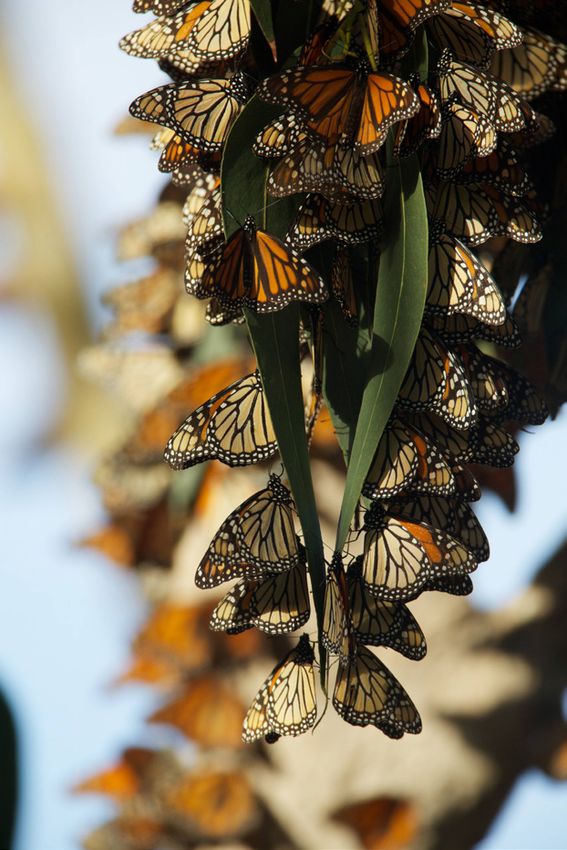
Teaching about the
Magnificent Monarch:
 Resource Recommendations for
 Conservation Educators

              Association of Fish and Wildlife Agencies
                            1100 First St. NE, Suite 825
                             Washington, DC 20002
                               www.fishwildlife.org

     A project of the                   Funded by a                 Developed By
  Association of Fish and          Multi-state Grant of the   Colorado Parks and Wildlife
    Wildlife Agencies’             Sport Fish and Wildlife
     North American                 Restoration Program
  Conservation Education
         Strategy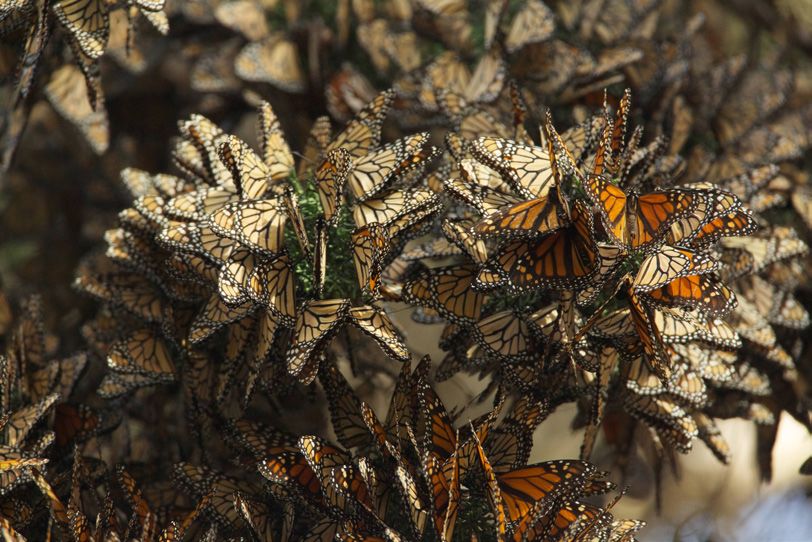
Teaching about the Magnificent Monarch: Resource Recommendations for Conservation Educators

Preface
In June of 2014, the Obama administration created a presidential memo calling for the restoration of
pollinator and monarch butterfly habitat (Thogmartin, et.al., 2017). Shortly after, the executive committee
of the Association of Fish and Wildlife Agencies, a non-profit professional organization comprised of the
leadership teams of federal, state, and provincial wildlife management agencies in North America, issued a
resolution calling for action to protect monarch habitat (Association of Fish & Wildlife Agencies, 2014). The
United States Fish and Wildlife Service (USFWS) was also petitioned in August of 2014 to add the monarch
to the threatened species list (Thogmartin, et.al., 2017). Based on this petition, the USFWS believed that the
case was compelling enough to open a status review for the species and the decision about listing will happen
in June 2019 (USFWS, 2016).
In response, the Conservation Education Strategy Subcommittee of the Education, Outreach, and Diversity
Committee of the Association of Fish and Wildlife Agencies’ applied for and received a 2016 Multi-state
Conservation Grant Program grant to complete the project titled Expansion and Implementation of the
North American Conservation Education Strategy’s Outdoor Recreation Adoption Model (Natural Pathways to
Recruitment). This grant included funding to create this resource recommendation to ensure that conservation
educators have the best-available resources for teaching about the conservation of monarch butterflies.
Resources were reviewed by professional conservation educators from across the United States using criteria
developed from the Guidelines for Excellence: Environmental Education Materials. These guidelines were
originally developed and adopted by the North American Association for Environmental Education (NAAEE)
in 1993 as part of the National Project for Excellence in Environmental Education.
                 PHOTO CREDIT: USFWS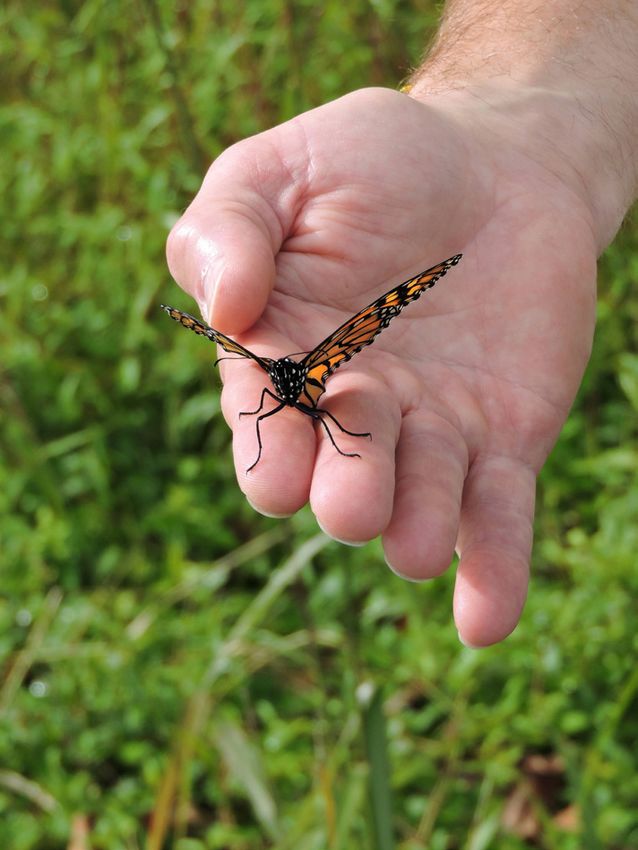
Teaching about the Magnificent Monarch: Resource Recommendations for Conservation Educators

Acknowledgments
Acknowledgments:
Developed and Written by Tabbi Kinion, Colorado Parks and Wildlife
Edited by Sheryl Horton, Colorado Parks and Wildlife
December 2017
The Association of Fish and Wildlife Agencies would like to thank the following people for contributing time
and expertise to the development of this recommendation resource.

Project Managers:
Grant Principle Investigator: Kellie Tharp, Arizona Game and Fish Department
Grant Contractor: Judy Stokes Weber

Resource Reviewers:
Ashley Leonard                   Wyoming Game and Fish Department
Barbara Dunbar                   Virginia Cooperative Extension
Clare Walker                     Maryland Department of Natural Resources
Drew Hopkins                     New York State Department of Environmental Conservation
Emily Snode-Brenneman            Colorado Parks and Wildlife
Erin Stimer                      Palm Beach Zoo and Conservation Society, Florida
Ginger Miller, Ph.D.             Missouri Department of Conservation
Glenda E. Fauske                 North Dakota State University - North Dakota Forest Service
Hannah Schauer                   Michigan Department of Natural Resources - Wildlife Division
Helen Holdsworth                 The Witte Museum, Texas
Jan Welsh                        Minnesota Department of Natural Resources
Jennifer Day Tariq               Douglas-Hart Foundation, Illinois
Jennifer Hammonds                National Wildlife Federation, Texas
Jennifer Standlee                Colorado Parks and Wildlife
Jessica Griglak                  New Jersey Division of Fish and Wildlife
Jody Turner                      Virginia Cooperative Extension
Kalman Mannis                    Arizona Science Center
Lauren Marshall                  Arkansas Game and Fish Commission
LeeAnn Mikkelson                 Oregon Natural Resources Education Program
Lori Adams                       Idaho Fish and Game
R. Craig Hensley                 Texas Parks and Wildlife Department
Susan Meyers                     Monarchs Across Georgia
Tracy McCleaf                    US Fish and Wildlife Service, West Virginia

AFWA Staff:
Patricia Allen                   Director of Communications

This project was undertaken as part of the Global Field Program, a Master of Arts in Biology degree program
completed by Tabbi Kinion through Miami University.
Teaching about the Magnificent Monarch: Resource Recommendations for Conservation Educators

Table of Contents
     Introduction.............................................................................................................................................1

     Monarch Decline and Conservation Need.............................................................................................2

     Review Methodology..............................................................................................................................4

     Recommendation Criteria.......................................................................................................................5

     Recommended Resources.......................................................................................................................6
               Curriculum Guides and Classroom Lessons................................................................................. 6
               Live Monarchs in the Classroom............................................................................................... 13
               Gardening for Monarchs........................................................................................................... 15
               Citizen Science Opportunities................................................................................................... 18

     Monarch Conservation Organizations.................................................................................................21

     Connecting Monarchs and the Next Generation Science Standards................................................23

     Bibliography...........................................................................................................................................26

     Appendix A: AFWA Conservation Education Core Concepts............................................................27

     Appendix B: Other Resources Available From the Conservation Education Strategy....................29
Teaching about the Magnificent Monarch: Resource Recommendations for Conservation Educators

Introduction
The monarch butterfly is one of the most recognizable insects in North America. For many, this is thanks
to classroom teachers using these charismatic lepidopterans as the means to teach about life cycles. From
caterpillar, to chrysalis, to adult butterfly, students across the continent have formed a connection to this
insect through up-close, in-class observations and investigations. Using monarch butterflies in environmental
education lessons brings science to life in a way that connects to students’ day-to-day life and allows them to
see science happening before their eyes.
Unfortunately, in recent years North American monarch populations have been in decline. In June of 2014,
the Obama administration created a presidential memo calling for the restoration of pollinator and monarch
butterfly habitat. Shortly after, the executive committee of the Association of Fish and Wildlife Agencies
(AFWA), a non-profit professional organization comprised of the leadership teams of federal, state, and
provincial wildlife management agencies in North America, issued a resolution (2014-1) calling for action to
protect monarch habitat. The United States Fish and Wildlife Service (USFWS) was also petitioned in August
of 2014 to add the monarch to the threatened species list. Based on this petition, the USFWS believed that
the case was compelling enough to open a status review for the species and the decision about listing will
occur in June 2019 (USFWS, 2016).
In response to the need for a concerted effort around monarch butterfly conservation, the AFWA
Conservation Education Strategy group responded by securing a multistate conservation grant that included
funding to create this resource.
The members of the AFWA Conservation Education Strategy group engaged wildlife educators across the
country to gather every readily available education resource about monarch butterflies that could be found.
More than 40 documents were submitted for review. Based on feedback gathered at the 2017 AFWA Annual
Conference during the Education Working Group meeting, the list was narrowed to 25 resources to review.
Reviewers were solicited from the conservation education community and represent conservation education
professionals from 20 states. Their reviews and feedback were compiled, averaged, and analyzed leading to the
following list of recommended resources.
This guide is designed for classroom teachers and non-formal wildlife educators to support high-quality
conservation education efforts that align with academic standards as well as the AFWA Conservation
Education Core Concepts and Framework (Appendix A). The resources included in this guide represent the
best-available resources for educators to use when teaching about monarch butterflies.
To best support educators in their efforts to incorporate monarchs into their programs, this guide also
includes: a list of organizations leading the charge in monarch conservation; connections between
monarch curriculum and Next Generation Science Standards (NGSS); an overview of the AFWA
Conservation Education Core Concepts; and a list of other resources available from the AFWA
Conservation Education Strategy.

                                                        1
Teaching about the Magnificent Monarch: Resource Recommendations for Conservation Educators

Monarch Decline and Conservation Need
To understand the causes behind the monarch population decline, it is important to first uncover the
complex, multi-generational, annual migration cycle of the species. While most people are familiar with
the butterfly life-cycle, the migration cycle undertaken by the monarch butterfly is a little-known natural
phenomenon that ranges across North America.
First, there are two distinct populations of monarch butterflies (Danaus plexippus spp.) in North America.
Western monarchs range west of the Rocky Mountains and winter in the forests of coastal California. Thanks
to habitat loss and climatic factors, if trends continue, this population is at a 72% likelihood of reaching
quasi-extinction (meaning that the wild population drops to less that 1,000 individuals) in the next 20 years.
The situation for the western subspecies may be even more dire than the situation for the eastern monarchs
thanks to significant
habitat losses in
wintering and breeding
grounds. However, the
population of western
monarchs has always
been dramatically
smaller than the eastern
population. Therefore,
most of the attention on
monarch conservation is
focused east of the Rocky
Mountains.
The eastern monarch
subspecies ranges
from east of the Rocky
Mountains to the east
coast and north into
Canada. These monarchs
congregate by the
millions in southern Mexico during the winter months, particularly in forests that include their preferred
wintering tree, the oyamel fir (Abies religiosa). In late winter, the overwintering butterflies mate and start their
migration north to the southern United States where they lay their eggs on emerging milkweed (Asclepias
syriaca) plants before dying. Upon maturation, the next generation continues the migration north and the
population expands out to southern Canada and both sides of the Appalachian mountain range. Multiple
generations of butterflies occur throughout the summer months in these breeding grounds. In late August, the
final summer generation of unmated butterflies migrate up to 4000 km back to Mexican wintering grounds
where millions of monarchs congregate in a small area. These same butterflies survive the winter to mate in
late winter, starting the cycle over again.
Thanks to this complex life cycle and extensive range, there are many possible causes for the decline of the
eastern monarch population and many potential points of vulnerability. It is likely that a host of causes is
leading to the decline of the population. Some of the proposed causes of decline include:

                                                                  2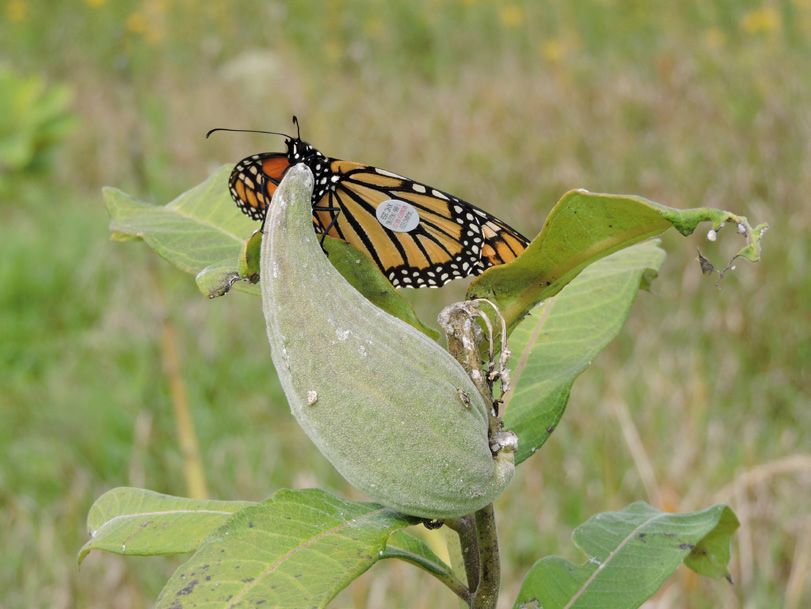
Teaching about the Magnificent Monarch: Resource Recommendations for Conservation Educators

   •   Loss of breeding habitat due to genetically-modified, herbicide-resistant corn and soy plants
       being planted in agricultural fields where, once the glyphosate herbicides are applied, milkweed is
       eradicated.
   •   Increased land development that has removed milkweed from breeding habitat.
   •   Severe weather events, linked to changes in the climate, have impacted both breeding and
       wintering grounds.
   •   Decrease in available wintering grounds in Mexico.
   •   Increase in the prevalence of diseases that affect butterflies.
   •   Increased agricultural applications of neonicotinoid insecticides (often used near municipalities for
       mosquito control) that also kill monarch larva and adults.
Proposed solutions to these issues center around habitat conservation for monarch butterflies. At the
forefront, most experts call for a concerted effort to increase the number of milkweeds planted in breeding
grounds. To illustrate how important this augmentation is, Thogmartin, et.al, (2017) estimated that the
amount of milkweed plants in Iowa declined by 58% between 1999 and 2010. During this same timeframe,
it is also believed that the overall loss in milkweed in the midwest has decreased monarch reproduction
by 81%. Milkweed conservation alone will not be sufficient to preserve the annual monarch migration.
Conservation of wintering habitat and mitigating the impacts of climate change will be critical to ensuring
the future of the massive migration phenomenon.
The annual migration cycle of the monarch butterfly in North America may become a phenomenon of the
past without conservation efforts. Part of conservation is ensuring that the public understands and participates
in these efforts. The Association of Fish and Wildlife Agencies Conservation Education Strategy exists to assist
educators in engaging students in conservation through high-quality education resources.
            PHOTO CREDIT: USFWS

                                                         3
Teaching about the Magnificent Monarch: Resource Recommendations for Conservation Educators

                      Review Methodology
                      The resources reviewed for this project were suggested by the members of the Association of Fish and Wildlife
                      Agencies (AFWA) Conservation Education Strategy mailing list along with extensive internet searches. More
                      than 40 documents about monarch butterflies were compiled for review. Based on feedback gathered at the
                      Education Subcommittee meeting during the 2017 AFWA Annual Conference, the list was narrowed to 25
                      viable resources to review.
                      The 25 resources reviewed are categorized into: monarch butterfly curriculum and lesson plans; using live
                      monarchs in the classroom; resources to encourage building pollinator gardens on school grounds; and citizen
                      science opportunities for students. The remaining resources included reports, informational web pages, and
                      children’s books and were not included in this resource review. The AFWA Education sub-committee felt that
                      these types of resources were beyond the scope of this project.
                                                                                Reviewers were solicited from the conservation education
                                                                                community and represent conservation education
                                                                                professionals from 20 states. Reviewers were randomly
                                                                                assigned to a set of five resources to review.
                                                                                Each reviewer received an email that contained a list of the
                                                                                resources they were asked to review, the recommendation
                                                                                criteria (see the next section), and a link to a Google form
                                                                                where they would complete each review. Reviewers were
                                                                                given two weeks to complete the process.
                                                                                The reviews and feedback were compiled, averaged, and
                                                                                analyzed to determine the highest-scoring resources. Based
                                                                                on these scores and the reviewers’ overall reactions and
                                                                                feedback, only the top-rated resources were included in this
                                                                                recommendation document. While there are many more
                                                                                quality resources for teaching about monarch butterflies,
                                                                                this list represents the current best-of-the-best of the free
                                                                                and easily available resources for educators.
PHOTO CREDIT: USFWS

                                                                                        4
Teaching about the Magnificent Monarch: Resource Recommendations for Conservation Educators
Recommendation Criteria
Reviewers were asked to review each of their randomly assigned
resources using criteria based on the North American Association for
Environmental Education’s (NAAEE), Guidelines for Excellence - EE
Materials (2004). The complete document is available at:
https://naaee.org/sites/default/files/gl_ee_materials_complete.pdf
The six categories that reviewers were asked to rate each resource
on represent the key characteristics of high-quality environmental
education materials outlined by the NAAEE team of experts that created
the guidelines document. Each category was scored on a scale from 1
(least_) to 5 (best_). The scores from each reviewer were compiled and
averaged to calculate the overall resource rating.
Reviewers were asked to look over each of their randomly assigned
monarch butterfly education resource and rate it based on the following:
1. Fair and Accurate - How fair and accurate do you believe the
resource to be? Resource should be well-researched, accurate, and
balanced.
Rank 1 - 5 (1 - Not fair and accurate, 5 - Extremely fair and accurate)
2. Depth of Knowledge - What is the depth of knowledge that this promotes? Resource should foster
awareness of the natural and built environment, promote understanding of environmental concepts, and these
concepts are developmentally appropriate for the target audience.
Rank 1 - 5 (1 - Does not foster awareness and/or not developmentally appropriate, 5 - Fosters awareness and
understanding and developmentally appropriate)
3. Skill Building - Does the resource promote skill building? Resource should encourage critical and creative
thinking, and/or applying skills to issues.
Rank 1 - 5 (1 - Does not promote skill building, 5 - Promotes skill building in one or more areas)
4. Action Orientation - Does the resource have an action orientation? Resource should promote civic
responsibility and encourage learners to solve problems and take action.
Rank 1 - 5 (1 - Does not promote action, 5 - Promotes action)
5. Instructional Soundness - Is the resource instructionally sound? Resource should be written in a way that
promotes an effective learning environment for students.
Rank 1 - 5 (1 - Not instructionally sound, 5 - Instructionally sound)
6. Usability - Is the resource usable? Resource should be well designed and easy to use.
Rank 1 - 5 (1 - Not usable/unclear methods, 5 - Very usable)
Finally, reviewers were asked if they would include the resource in a recommendation for educators as an
effective tool for teaching about monarchs and to describe the resource in one sentence.
Scores were compiled and the following resources represent the highest-rated resources that the reviewers
agree are the best resources to recommend to educators.
5Teaching about the Magnificent Monarch: Resource Recommendations for Conservation Educators
Recommended Resources
Curriculum Guides and Classroom Lessons
The Monarch Mission:
Empowering Students to Improve Habitat for Monarchs
A Next Generation Science Standards-based Curriculum K-12
Created by: National Wildlife Federation, 2016
Found at: https://www.nwf.org/Eco-Schools-USA/Partners/LEGO/Monarch-Misson-Lessons
Overall score: 4.9
Fair and Accurate - 4.8
Depth of Knowledge - 4.6
Skill Building - 5
Action Orientation - 5
Instructional Soundness - 4.8
Usability - 5
Target grade levels: Lessons for Kindergarten - High School
(K-2, 3-5, MS, & HS)
Reviewers said:
The Monarch Mission by NWF is a well-rounded resource
for K-12 students and teachers that promotes and encourages
scientific studies on habitat needs and causes of decline in
monarch habitats.
This is an excellent opportunity to incorporate both indoor and
outdoor education with a very hands-on, engaging curriculum.
Overview:
National Wildlife Federation (NWF) in partnership with the
Lego Community Fund, U.S. published this comprehensive
curriculum guide for teachers to complement NWF’s Eco-schools USA and Schoolyard Habitat programs.
Built using the Next Generation Science Standards as a guide, the interdisciplinary lessons and activities are
focused on project-based learning and Green Science, Technology, Engineering, and Math (STEM) teaching
techniques.
6Teaching about the Magnificent Monarch: Resource Recommendations for Conservation Educators
Monarch Butterfly Lessons
Created by: Missouri Department of Natural Resources, Youth Education & Interpretation, 2017
Found at: https://dnr.mo.gov/education/monarchs/
Overall score: 4.5
Fair and Accurate - 4.6
Depth of Knowledge - 4.6
Skill Building - 4.2
Action Orientation - 4.4
Instructional Soundness - 4.6
Usability - 4.4
Target grade levels: Middle School
Reviewers said:
The Missouri DNR’s Monarch Butterfly Lessons offer students a chance to research and understand an issue and
develop potential solutions.
The Monarch Butterfly Lessons for 6th-8th grade are well thought out, rich in resources and supporting content
while allowing for student voice and direction.
Overview:
While the number of activities are limited, Missouri DNR’s Youth Education & Interpretation group
provided the only middle-school-specific resource we reviewed. The activities provide developmentally-
appropriate, interdisciplinary activities aligned to Next Generation Science Standards and the website
provides a wealth of resources to support educators and students.
7Teaching about the Magnificent Monarch: Resource Recommendations for Conservation Educators
Butterfly Activity Guide
Hosted online by: United States Forest Service
Originally Created by: National Wildlife Federation and American Zoo and Aquarium Association, 2001
Found at:
https://www.fs.fed.us/wildflowers/pollinators/Monarch_Butterfly/documents/BFCI/BFCI_ActivityGuide.pdf
Overall score: 4.4
Fair and Accurate - 4.8
Depth of Knowledge - 4.4
Skill Building - 4.3
Action Orientation - 4.6
Instructional Soundness - 4.3
Usability - 4.3
Target grade levels: Kindergarten - Middle School
Reviewers said:
The Butterfly Activity Guide provides easy to follow, in-depth
studies about butterflies while also promoting the need for butterfly
conservation.
Great intro to butterflies and pollination.
Overview:
This guide provides activity ideas to promote butterfly
conservation and understanding. While not monarch-specific,
this resource provides solid activities that apply to all species of
butterflies.
8Teaching about the Magnificent Monarch: Resource Recommendations for Conservation Educators
Monarchs on a Mission
Created by: Nebraska Game and Parks Commission, 2017
Found at: http://outdoornebraska.gov/monarchsonamission/
Overall score: 4.4
Fair and Accurate - 4.4
Depth of Knowledge - 3.8
Skill Building - 4.2
Action Orientation - 4.6
Instructional Soundness - 4.2
Usability - 4.8
Target grade levels: Kindergarten - High School
Reviewers said:
Easy to use and easy to understand lesson plans that are a great introduction to monarch conservation and
awareness.
While this dual monarch/pollinator resource is targeted to citizens of Nebraska, the activities are applicable to a
broader audience.
Overview:
Nebraska Game and Parks Commission is committed to pollinator preservation. In response, the activities
and resources were created to support formal and non-formal educators teach about monarchs and other
pollinators. The activities and posters are easily adapted to other states and regions in North America.
PHOTO CREDIT: USFWS
9Teaching about the Magnificent Monarch: Resource Recommendations for Conservation Educators
Monarchs and More:
An Inquiry and Arthropod Based Curriculum
Created by: University of Minnesota Monarch Lab, 2000-2017
Found at: https://monarchlab.org/education-and-gardening/curricula
Overall score: 4.2
Fair and Accurate - 4.5
Depth of Knowledge - 4.3
Skill Building - 3.8
Action Orientation - 3.8
Instructional Soundness - 4.5
Usability - 4.5
Target grade levels: Kindergarten - 2nd grade, 3rd - 6th grade, and Middle School
Reviewers said:
This resource provides complete lessons that are clear and leave room for creative augmentation while learning about
the monarch butterfly.
The Monarchs and More curriculum guides are a compilation of grade-level appropriate lessons with detailed
background information on all aspects of monarch biology and ecology.
Overview:
The University of Minnesota Monarch Lab provides educational tools, workshops, and expertise through
different programs designed to promote and facilitate inquiry-based education through original curricula
and research opportunities. These 4th edition curriculum guides help teachers facilitate inquiry-based
education focused on monarch butterfly conservation. On the website there are many samples of activities
and supporting resources available to educators for free. To access the entire guides, there is a link to the store
where you can buy the complete resources as well as a variety of monarch-focused educational support items.
PHOTO CREDIT: USFWS
10Teaching about the Magnificent Monarch: Resource Recommendations for Conservation Educators
Monarch Butterfly - Royal Mail
A Manual for the Environmental Educator
Hosted online by: United States Forest Service
Originally Created by: Protección de la Fauna Mexicana (Profauna A.C.) and funded in part by the United
States Fish and Wildlife Service, 1999 (digitized in 2012)
Found at:
https://www.fs.fed.us/wildflowers/pollinators/Monarch_Butterfly/documents/royal_mail/monarch_pub.pdf
Profauna A.C. link to updated activities (in Spanish):
http://www.profauna.org.mx/monarca/maestro/comousar.html
Overall score: 4.2
Fair and Accurate - 4.3
Depth of Knowledge - 4
Skill Building - 4
Action Orientation - 4
Instructional Soundness - 4.3
Usability - 4.5
Target grade levels: Kindergarten - High School
Reviewers said:
This is a solid interdisciplinary curriculum about many aspects of
monarchs, covering everything from life cycle and habitat to history and
migration patterns.
A wonderful resource that provides information on monarchs from a perspective in Mexico where monarchs
overwinter as well as providing ideas that can be incorporated into curricula designed for those of us in the United
States and Canada.
Overview:
Written to inspire conservation of monarch butterflies during the migration months of September through
November, this comprehensive resource stands up to the test of time. The English version is a scanned PDF
file of the 1999 original resource. The version on the Profauna A.C. website is updated and can easily be
translated into English.
11Teaching about the Magnificent Monarch: Resource Recommendations for Conservation Educators
Flight of the Butterflies in 3D
Educator Guide
Created by: SK Films; Maryland Science Center, Monarchs in the Classroom; and funded by National
Science Foundation, 2012
Found at: http://www.flightofthebutterflies.com/in-the-classroom/
Overall score: 4.2
Fair and Accurate - 4.6
Depth of Knowledge - 4.2
Skill Building - 4.4
Action Orientation - 3.8
Instructional Soundness - 4.2
Usability - 4
Target grade levels: Kindergarten - High School
Reviewers said:
Flight of the Butterflies is an educator’s guide that can be used
in the classroom cross curricula. It engages students hands on
to give them a deeper understanding of the life cycle of monarch
butterflies and why their migration is endangered.
This resource provides the framework for an interdisciplinary
exploration of monarch butterflies that can be adapted to all
grade levels.
Overview:
Designed as a teacher’s guide to complement SK Films, Flight of the Butterflies in 3D, this resource is
designed to deepen students’ engagement and understanding after viewing the IMAX® film. Resource features
an in-depth discussion of the natural history and decline of the monarch and the lessons can be used in
complement to the film or without seeing the film.
12Teaching about the Magnificent Monarch: Resource Recommendations for Conservation Educators
Live Monarchs in the Classroom
Butterfly Science
Sustainability Lesson Clearinghouse
Created by: Green Education Foundation
Found at:
http://www.greeneducationfoundation.org/institute/lesson-clearinghouse/558-Butterfly-Science.html
Overall score: 3.9
Fair and Accurate - 4.7
Depth of Knowledge - 4.2
Skill Building - 4.3
Action Orientation - 1.8
Instructional Soundness - 4.3
Usability - 4.3
Target grade levels: Preschool - 3rd Grade
Reviewers said:
This well designed butterfly curriculum for young learners is
interactive, thorough and engaging.
This is a really great pre-K to 3rd grade resource that
incorporates observation and the scientific process into a
diverse and fun learning experience about butterflies.
Overview:
Designed for the youngest students, this guide provides early childhood teachers the resources and supporting
lessons to raise butterflies in the classroom. The students record their daily observations of the growth and
changes in the butterflies and use their observations to chart progress.
PHOTO CREDIT: USFWS
13Teaching about the Magnificent Monarch: Resource Recommendations for Conservation Educators
Monarch Watch in the Classroom
Created by: Monarch Watch - nonprofit organization based at the University of Kansas
Found at: http://monarchwatch.org/
Overall score: 3.6
Fair and Accurate - 4.2
Depth of Knowledge - 3.7
Skill Building - 3.7
Action Orientation - 3.5
Instructional Soundness - 3.2
Usability - 3.3
Target grade levels: Kindergarten - High School
Reviewers said:
This curriculum is a great way to introduce students to the process of scientific investigation and enables them to
contribute to real world monarch studies.
The Monarch Watch website provides great background information and support for classroom activities.
Overview:
Monarch Watch provides a variety of ways that students and teachers can get involved in monarch
conservation. From resources to teach about raising monarchs in the classroom, monarch tagging and
monitoring projects, to milkweed planting projects, the resources and curriculum ideas tend to be hands-on
and experiential.
PHOTO CREDIT: USFWS
14Teaching about the Magnificent Monarch: Resource Recommendations for Conservation Educators
Gardening for Monarchs
Schoolyard Butterfly Gardens
Created by: Monarch Joint Venture
Found at: https://monarchjointventure.org/images/uploads/documents/Schoolyard_gardens.pdf
Overall score: 4.3
Fair and Accurate - 4.8
Depth of Knowledge - 3.5
Skill Building - 4
Action Orientation - 4.8
Instructional Soundness - 4
Usability - 4.8
Target grade levels: Kindergarten - High School
Reviewers said:
The Schoolyard Gardens resource comprehensively guides students
and educators in the most direct action they can take on behalf of
monarch conservation.
A great resource to help you and your students get that butterfly
and pollinator garden started.
Overview:
This simple resource sheet is one of a series from the Monarch Joint Venture. This particular guide is filled
with best practices and ideas for creating a garden that will host monarchs and other pollinators.
15Teaching about the Magnificent Monarch: Resource Recommendations for Conservation Educators
Build a Butterfly and Pollinator Garden
Created by: United States Fish and Wildlife Service, 2017
Found at: https://www.fws.gov/midwest/news/PollinatorGarden.html
Overall score: 4
Fair and Accurate - 4.7
Depth of Knowledge - 3.3
Skill Building - 3.3
Action Orientation - 4.8
Instructional Soundness - 3.2
Usability - 4.5
Target grade levels: Kindergarten - High School
Reviewers said:
This is a quick and accessible introduction to planting a pollinator
garden.
Butterfly gardens are a great way to take science outside the classroom
and develop a place for children to learn observation skills first hand.
Overview:
USFWS created this simple and easy-to-follow guide for creating a pollinator and butterfly garden in seven
easy steps. This is a great place to start for anyone considering adding this outdoor component at their school
and includes links to more in-depth resources.
PHOTO CREDIT: USFWS
16Teaching about the Magnificent Monarch: Resource Recommendations for Conservation Educators
Attracting Pollinators to Your Garden
Created by: US Fish and Wildlife Service, 2011
Found at: https://www.fws.gov/pollinators/pdfs/pollinatorbookletfinalrevweb.pdf
Overall score: 3.7
Fair and Accurate - 4.8
Depth of Knowledge - 3.5
Skill Building - 2.3
Action Orientation - 4.3
Instructional Soundness - 3.5
Usability - 4
Target grade levels: Kindergarten - High School
Reviewers said:
A quick start-up guide to how you can attract pollinators to your
garden.
Great resource for teachers to introduce students to pollinators,
their importance, and getting their students involved in place-based
education.
Overview:
This short booklet is designed to help educators and enthusiasts
plant the correct plants that will attract pollinators to their flower
gardens. It can also be used as a simple resource for students to
learn more about pollination.
17Teaching about the Magnificent Monarch: Resource Recommendations for Conservation Educators
Citizen Science Opportunities
Driven to Discover
Facilitator’s Guide to Citizen Science - Monarchs
Created by: University of Minnesota Extension, 2015
Found at: https://monarchlab.org/education-and-gardening/curricula
Overall score: 4.9
Fair and Accurate - 5
Depth of Knowledge - 5
Skill Building - 5
Action Orientation - 4.6
Instructional Soundness - 5
Usability - 5
Target grade levels: 4th grade - High School
Reviewers said:
The gold standard for monarch butterfly curriculum.
This is one of the easiest to follow, all-encompassing guides on
citizen science that I have seen.
This guide is a must read for anyone interested in pursuing a
citizen science project with a group of youth (or adults). Driven
to Discover is very clearly written and helps the facilitator build
upon knowledge and skills that the students are gaining as they
move forward with their project.
Overview:
This program is designed around an inquiry-based
curriculum for afterschool and summer programming for
youth ages 10 - 14. The curriculum uses nationally-known citizen science programs as the basis for teaching
youth how to engage in science the way scientists do. The Facilitator’s Guide is an excellent basis for any type
of citizen science program and is accompanied by a student version of the guide.
18Teaching about the Magnificent Monarch: Resource Recommendations for Conservation Educators
Journey North - Monarch Butterflies
Created by: Journey North
Found at: http://www.learner.org/jnorth/monarchs
Overall score: 4.6
Fair and Accurate - 5
Depth of Knowledge - 4.8
Skill Building - 4.8
Action Orientation - 4.5
Instructional Soundness - 4.5
Usability - 4.5
Target grade levels: Kindergarten - High School
Reviewers said:
An engaging, real-time look at monarch migration where students become citizen scientists and conservation
stewards.
Journey North provides all of the information and resources for teachers/educators to confidently teach students about
monarch butterflies and their migration.
Overview:
Using the resources provided by Journey North, students are able to report monarch butterfly sightings each
fall and spring in order to help scientists learn more about monarchs. Students are also able to track migration
on real-time migration maps. There are a wide variety of resources, journal ideas, and lesson ideas collected to
build an interdisciplinary unit alongside the monitoring activities.
19Teaching about the Magnificent Monarch: Resource Recommendations for Conservation Educators
Monarch Watch Research Projects for Students
Created by: Monarch Watch - nonprofit organization based at the University of Kansas
Found at: http://monarchwatch.org/class/studproj/index.htm
Overall score: 4.1
Fair and Accurate - 4.3
Depth of Knowledge - 4.3
Skill Building - 4.3
Action Orientation - 3.7
Instructional Soundness - 3.8
Usability - 3.8
Target grade levels: Middle School - High School
Reviewers said:
Provides opportunities for classrooms to help scientists answer real relevant questions in monarch research.
Very in-depth, scientific exploration of monarch behavior and migration.
Overview:
Students are able to get involved in real-life, ongoing monarch research through Monarch Watch tagging and
monarch larva monitoring. There are also guides for conducting monarch research in the classroom.
PHOTO CREDIT: USFWS
20Teaching about the Magnificent Monarch: Resource Recommendations for Conservation Educators
Monarch Conservation Organizations
The following organizations represent the national and international leaders in monarch conservation efforts.
These websites provide background information and resources for students and educators to learn more and
get further involved in monarch conservation.
Journey North - Monarchs - http://www.learner.org/jnorth/monarchs
Track the annual migration of the monarch butterfly.
Monarch Butterfly Fund - https://monarchconservation.org/
The Monarch Butterfly Fund is meeting the challenge of preserving monarch butterflies and their spectacular
migration through a conservation strategy that fosters healthy ecosystems and sustainable communities
through partnerships, forest conservation, scientific research and monitoring, education and outreach, and
sustainable development.
Monarch Joint Venture - https://monarchjointventure.org/
The Monarch Joint Venture is a partnership of federal and state agencies, non-governmental organizations,
and academic programs that are working together to support and coordinate efforts to protect the monarch
butterfly migration across the lower 48 United States.
National Wildlife Federation (NWF) - https://nwf.org
NWF hosts information about monarchs, butterfly conservation, creating pollinator gardens, and ways for
kids and adults to get involved in preserving monarchs.
Natural Resources Conservation Service (NRCS) -
https://www.nrcs.usda.gov/wps/portal/nrcs/detail/national/plantsanimals/pollinate/?cid=nrcseprd402207
NRCS is working with agricultural producers in the Midwest and southern Great Plains to combat the
decline of monarch butterflies by planting milkweed and other nectar-rich plants on private lands.
North American Butterfly Association (NABA) - http://www.naba.org/
A membership-based not-for-profit organization working to increase public enjoyment and conservation of
butterflies in North America. Promotes butterfly gardening and hosts annual butterfly counts.
Protección de la Fauna Mexicana (Profauna A.C.) - http://www.profauna.org.mx/
Civil Association (non-profit) conservation organization based in Coahuila, Mexico dedicated to the
conservation of natural resources. Focuses on conservation of monarch wintering areas. Website is published
in Spanish.
United States Fish and Wildlife Service (USFWS) - https://www.fws.gov/savethemonarch/
The USFWS has created the Save the Monarch campaign to encourage monarch conservation.
United States Forest Service (USFS) -
https://www.fs.fed.us/wildflowers/pollinators/Monarch_Butterfly/conservation/index.shtml
The USDA Forest Service Conservation and Management of Monarch Butterflies: A Strategic Framework will
guide the USFS to effectively and efficiently use available resources and engage public and private partnerships
in taking action for the conservation of the monarch butterfly.
21Teaching about the Magnificent Monarch: Resource Recommendations for Conservation Educators
United States Geological Survey (USGS) - Monarch Conservation Science Partnership -
https://www.umesc.usgs.gov/management/dss/monarch.html
The Monarch Conservation Science Partnership is a USGS-led group of scientists, managers, and
conservation organizations who perform science related to the conservation of monarch butterflies.
University of Kansas - Monarch Watch - http://www.monarchwatch.org/
Monarch Watch is a non-profit education, conservation, and research program based at the University of
Kansas that focuses on the monarch butterfly, its habitat, and its spectacular fall migration.
University of Minnesota - Monarch Lab - https://monarchlab.org/
The Monarch Lab aims to combine real science with techniques that work for both teachers and students.
Within the Monarch Lab, there are opportunities for formal and informal educators to be guided in
instructing their students to learn science in ways that reflect the scientific process and methods scientists use
to understand the natural world.
Xerces Society for Invertebrate Conservation - https://xerces.org/
The Xerces Society for Invertebrate Conservation is an international nonprofit organization that protects
wildlife through the conservation of invertebrates and their habitats.
PHOTO CREDIT: USFWS
22Teaching about the Magnificent Monarch: Resource Recommendations for Conservation Educators
Connecting Monarchs and the
Next Generation Science Standards
The Next Generation Science Standards (NGSS Lead States, 2013)
were created based on the Framework for K-12 Science Education -
Practices, Crosscutting Concepts, and Core Ideas (National Research
Council, 2012). NGSS is a national set of standards that many
state department of education boards have adopted outright
and several other states have adopted very similar sets of science
standards.
The following is an excerpt of the life science performance expectations that naturally align with monarch
butterfly curriculum recommended in this guide. The complete standards and more details can be found at
https://nextgenscience.org/.
Standard Grade Level Discipline Core Idea Performance Expectation
K-LS1-1 Kindergarten Life Science 1. From Molecules to 1. Use observations to describe
Organisms: Structures patterns of what plants and animals
and Processes (including humans) need to
survive.
1-LS3-1 1st Grade Life Science 3. Heredity: 1. Make observations to construct
Inheritance and an evidence-based account that
Variation of Traits young plants and animals are like,
but not exactly like, their parents.
2-LS4-1 2nd Grade Life Science 4. Biological 1. Make observations of plants and
Evolution: Unity and animals to compare the diversity of
Diversity life in different habitats.
3-LS1-1 3rd Grade Life Science 1. From Molecules to 1. Develop models to describe that
Organisms: Structures organisms have unique and diverse
and Processes life cycles but all have in common
birth, growth, reproduction, and
death.
3-LS2-1 3rd Grade Life Science 2. Ecosystems: 1. Construct an argument that
Interactions, Energy, some animals form groups that
and Dynamics help members survive.
3-LS4-2 3rd Grade Life Science 4. Biological 2. Use evidence to construct an
Evolution: Unity and explanation for how the variations
Diversity in characteristics among individuals
of the same species may provide
advantages in surviving, finding
mates, and reproducing.
23Teaching about the Magnificent Monarch: Resource Recommendations for Conservation Educators
Standard Grade Level Discipline Core Idea Performance Expectation
3-LS4-4 3rd Grade Life Science 4. Biological 4. Make a claim about the merit
Evolution: Unity and of a solution to a problem caused
Diversity when the environment changes and
the types of plants and animals that
live there may change.
4-LS1-1 4th Grade Life Science 1. From Molecules to 1. Construct an argument
Organisms: Structures that plants and animals have
and Processes internal and external structures
that function to support
survival, growth, behavior, and
reproduction.
5-LS2-1 5th Grade Life Science 2. Ecosystems: 1. Develop a model to describe the
Interactions, Energy, movement of matter among plants,
and Dynamics animals, decomposers, and the
environment.
MS-LS1-4 Middle School Life Science 1. From Molecules to 4. Use argument based on
Organisms: Structures empirical evidence and
and Processes scientific reasoning to support
an explanation for how
characteristic animal behaviors
and specialized plant structures
affect the probability of successful
reproduction of animals and plants
respectively.
MS-LS1-5 Middle School Life Science 1. From Molecules to 5. Construct a scientific
Organisms: Structures explanation based on evidence for
and Processes how environmental and genetic
factors influence the growth of
organisms.
MS-LS2-1 Middle School Life Science 2. Ecosystems: 1. Analyze and interpret data to
Interactions, Energy, provide evidence for the effects of
and Dynamics resource availability on organisms
and populations of organisms in an
ecosystem.
MS-LS2-2 Middle School Life Science 2. Ecosystems: 2. Construct an explanation that
Interactions, Energy, predicts patterns of interactions
and Dynamics among organisms across multiple
ecosystems.
24Teaching about the Magnificent Monarch: Resource Recommendations for Conservation Educators
Standard Grade Level Discipline Core Idea Performance Expectation
MS-LS2-4 Middle School Life Science 2. Ecosystems: 4. Construct an argument
Interactions, Energy, supported by empirical evidence
and Dynamics that changes to physical or
biological components of an
ecosystem affect populations.
HS-LS2-1 High School Life Science 2. Ecosystems: 1. Use mathematical and/or
Interactions, Energy, computational representations to
and Dynamics support explanations of factors
that affect carrying capacity of
ecosystems at different scales.
HS-LS2-2 High School Life Science 2. Ecosystems: 2. Use mathematical
Interactions, Energy, representations to support and
and Dynamics revise explanations based on
evidence about factors affecting
biodiversity and populations in
ecosystems of different scales.
HS-LS2-7 High School Life Science 2. Ecosystems: 7. Design, evaluate, and refine a
Interactions, Energy, solution for reducing the impacts
and Dynamics of human activities on the
environment and biodiversity.
HS-LS2-8 High School Life Science 2. Ecosystems: 8. Evaluate evidence for the role
Interactions, Energy, of group behavior on individual
and Dynamics and species’ chances to survive and
reproduce.
HS-LS4-4 High School Life Science 4. Biological 4. Construct an explanation
Evolution: Unity and based on evidence for how natural
Diversity selection leads to adaptation of
populations.
HS-LS4-5 High School Life Science 4. Biological 5. Evaluate the evidence
Evolution: Unity and supporting claims that changes
Diversity in environmental conditions
may result in (1) increases in the
number of individuals of some
species, (2) the emergence of new
species over time, and (3) the
extinction of other species.
HS-LS4-6 High School Life Science 4. Biological 6. Create or revise a simulation to
Evolution: Unity and test a solution to mitigate adverse
Diversity impacts of human activity on
biodiversity.
25Teaching about the Magnificent Monarch: Resource Recommendations for Conservation Educators
Bibliography
Association of Fish and Wildlife Agencies. (2014). Resolution 2014-1: Support for the monarch
butterfly conservation. Washington, D.C., Association of Fish and Wildlife Agencies executive committee.
Brower, L., Taylor, O., Williams, E., Slayback, D., Zubieta, R., & Ramírez, M. (2012). Decline
of monarch butterflies overwintering in Mexico: Is the migratory phenomenon at risk? Insect Conservation And
Diversity, 5(2), 95-100.
Flockhart, D. T., Pichancourt, J., Norris, D. R., & Martin, T. G. (2014). Unraveling the annual
cycle in a migratory animal: breeding-season habitat loss drives population declines of monarch butterflies.
Journal of Animal Ecology, 2015(84), 155-165.
Inamine, H., Ellner, S. P., Springer, J. P., & Agrawal, A. A. (2016). Linking the continental
migratory cycle of the monarch butterfly to understand its population decline. Oikos, 125, 1081-1091.
National Research Council. (2012). A Framework for K-12 Science Education: Practices, Crosscutting Concepts,
and Core Ideas. Washington, DC: The National Academies Press.
NGSS Lead States. (2013). Next Generation Science Standards: For States, By States. Washington, DC: The
National Academies Press.
Schultz, C. B., Brown, L. M., Pelton, E., & Crone, E. E. (2017). Citizen science monitoring
demonstrates dramatic declines of monarch butterflies in western North America. Biological Conservation,
214, 343-346.
North American Association of Environmental Education. (2004). Guidelines for Excellence - EE Materials
(National Project for Excellence in Environmental Education, Publication). Washington, DC.
Thogmartin, W. E., Wiederholt, R., Oberhauser, K., Drum, R. G., Diffendorfer, J. E., Altizer, S., Lopez-
Hoffman, L. (2017). Monarch butterfly population decline in North America: identifying the threatening
processes. Royal Society Open Science, 4(9).
United States Fish & Wildlife Service. (September 2016). Species status assessment: monarch butterfly. United
States Department of the Interior fact sheet. Retrieved from: https://www.fws.gov/savethemonarch/SSA.html
26Teaching about the Magnificent Monarch: Resource Recommendations for Conservation Educators
Appendix A: Association of Fish and Wildlife
Agencies Conservation Education Core Concepts
These Core Concepts reflect the knowledge, actions and values that further the North American Model and
were developed as part of the Conservation Education Strategy.
Conservation Education Strategy Mission
To unify and strengthen conservation education efforts of the Association of Fish and Wildlife Agencies
(AFWA) member agencies and partners in a manner that effectively advances the AFWA Strategic Plan and
the North American Model of Fish and Wildlife Conservation.
Conservation Education Strategy Vision
Conservation Education becomes an effective, dynamic means for the AFWA, its members and partners to
achieve the AFWA Strategic Plan through an informed and involved citizenry that:
I. Understands the value of our fish and wildlife resources as a public trust.
II. Appreciates that conservation and management of terrestrial and water resources are essential to
sustaining fish and wildlife, the outdoor landscape, and the quality of our lives.
III. Understands and actively participates in the stewardship and support of our natural resources.
IV. Understands and accepts and/or lawfully participates in hunting, fishing, trapping, boating, wildlife
watching, shooting sports, and other types of resource-related outdoor recreation.
V. Understands and actively supports funding for fish and wildlife conservation.
Core Concepts for Conservation Education
I. Understands the value of our fish and wildlife resources as a public trust.
A. In North America fish and wildlife are public trust resources managed by governmental agencies.
B. Sustainable natural resources depend on the support of an informed and responsible citizenry.
C. Regulations are necessary for natural resources conservation.
II. Appreciates that conservation and management of terrestrial and water resources are essential to
sustaining fish and wildlife, the outdoor landscape, and the quality of our lives.
A. The health and well-being of fish, wildlife, and humans depend on the quality of their
environment.
B. Fish and wildlife can be conserved and restored through science-based management which
considers the needs of humans as well as those of fish and wildlife.
III. Understands and actively participates in the stewardship and support of our natural resources.
A. A person’s culture affects his or her view and use of fish and wildlife and their habitats.
B. The distribution and abundance of fish and wildlife provide significant economic benefits.
C. Everyone impacts fish and wildlife and their habitats and as human populations grow, impacts on
natural resources increase.
D. Unlike other organisms, only humans have the capacity and responsibility to consider the effects
of their actions on their environment.
IV. Understands and accepts and/or lawfully participates in hunting, fishing, trapping, boating, wildlife
watching, shooting sports, and other types of resource-related outdoor recreation.
A. Regulated hunting, fishing, and trapping are important tools for managing some wildlife
populations and habitats.
27Teaching about the Magnificent Monarch: Resource Recommendations for Conservation Educators
B. Fish and wildlife-based resources provide recreational benefits directly to participants and increase
advocacy for conservation
C. Responsible users of fish, wildlife, and the outdoors respect the rights and property of others.
V. Understands and actively supports funding for fish and wildlife conservation.
A. Within the U.S., state fish and wildlife management is funded primarily through hunting,
fishing and trapping licenses and through federal excise taxes collected from the sale of hunting,
target shooting, and fishing equipment and motorboat fuels.
B. Wildlife-based activities, such as hunting, fishing, viewing, and photography provide people
with millions of days of outdoor recreation each year and generate billions of dollars for the
economy.
C. The future of fish and wildlife conservation requires additional funding from a broad-based
constituency.
PHOTO CREDIT: USFWS
28Teaching about the Magnificent Monarch: Resource Recommendations for Conservation Educators
Appendix B: Other Resources Available From
the Conservation Education Strategy
state
north american
conservation education
strategy
Connecting More Americans to Nature
W hen young people connect regularly with nature, the outcomes
are profound. Children are happier, healthier from the exercise,
effects of attention-deficit disorder are reduced and they score higher
The North American Conservation Education Strategy:
A Toolkit for Achieving Excellence
on standardized tests when natural environments are integrated into
school curricula. State fish and wildlife agencies nationwide provide This kit includes the many research-
educational opportunities that can help bridge the gap between formal based products developed by the
school settings and the great outdoors and all offer outdoor skills Association of Fish and Wildlife
training in non-formal settings. Agencies (AFWA) as part of the
CE Strategy, including the mission,
Endorsed by the 50 state agencies, and winner of 2010 Conservation vision, goals and underlying
Education Award from The Wildlife Society, the North American principles of the North American
Conservation Education Strategy (CE Strategy) delivers unified, Conservation Education Strategy.
research-based Core Concepts and messages about fish and wildlife
conservation, translated
into K-12 academic Conservation Core Concepts, Top
standards to shape CE Core Concepts Poster
students’ environmental Developed by biologists and
literacy, stewardship and conservation education educators
outdoor skills. from state fish and wildlife agencies
Launched in 2004, the CE and non-governmental organizations,
Strategy is our blueprint these concepts clearly state what every
for identifying what every American should understand about
citizen should know, feel the conservation of fish and wildlife
and do related to fish and related resources.
and wildlife conservation, The poster highlights key messages
including the sustainable enjoyment and use of those resources. for the top 11 fundamental, over-
NORTH AMERICAN CONSERVATION EDUCATION arching concepts.
STRATEGY RESOURCES
Benchmarks for Conservation Literacy
With funding provided through a Multistate Conservation Grant of The Benchmarks for Conservation Literacy identify what students
the Sport Fish & Wildlife Restoration Program, state conservation should know and be able to do at the 5th, 8th and 12th grade levels
education experts have developed a variety of reseached-based resources to guide them on their way to becoming involved, responsible,
to help support agencies’ and even non-governmental organizations’ conservation-minded citizens.
fish and wildlife programs.
The Benchmarks were developed with input from professional educators
These resources are available for download from the Association of Fish in the formal and non-formal sectors. They can be used in program
& Wildlife Agencies’ website at www.fishwildlife.org in the Focus development and as an assessment tool.
Area section, Conservation Education.
29You can also read


