The water-food-energy nexus: Insights into resilient development
←
→
Page content transcription
If your browser does not render page correctly, please read the page content below
Collaborating to
     address shared
     resource risks

the water-food-
energy nexus:
Insights into
resilient development
The water-food-energy nexus – Insights into resilient development   01

Executive Summary

                WWF and SABMiller have a shared interest in strengthening the
                institutions that govern the way society manages and develops water,
                food and energy resources. For WWF, this is close to the heart of our
                mission: conservation is inseparable from the challenges of changing
                patterns of resource use. For SABMiller, this is a question of the viability
                of our business: good quality drinking water and agricultural products
                are vital for a brewing company – and essential for the societies within
                which we operate.
                So the risk of resource scarcity is a shared risk. We see that shared risk
                becoming more acute under changing consumption patterns and demographic
                pressures. The ambitious drive towards rapid development has often missed a
                fundamental dimension of progress, which we believe is essential to enable us
                to respond collectively to shared risks. Building the resilience of our water, food
                and energy systems is an essential and neglected part of development.
                Resilience is the ability to withstand shocks and pressures, whether economic,
                climatic or demographic in nature. Ultimately both national development
                strategies and business strategies need to be designed around resilience.
                Nexus policymaking is about designing resilient government or business
                strategies in ways that take account of the connections between food, water and
                energy systems. It starts by recognising the interdependence of those systems,
                and hence challenges single-sector approaches that can have substantial
                unintended consequences for a country’s future development options.
                This report looks at 16 countries or states, comparing the ways in which their
                development patterns have managed their different mixes of resources and
                different capacities to make use of those resources. Nexus issues play out very
                differently in contexts with differing resource endowments, and this is only
                partially determined by the climate and physical availability of natural resources
                in a country. The country’s ability to make use of its natural resource base can
                be at least as important.
                Decisions made in the early stages of development may lead to weak resilience
                at later stages. This is particularly seen in the evolution of both infrastructure
                and institutions for governing the use of natural resources. Developing and
                emerging economies have the opportunity to build resilience in from the outset.
                Trade has often enabled countries to manage their own resource scarcity,
                offering one strategy for building a nation’s apparent resilience. However, in
                today’s interdependent globalised world, in which resource scarcity has impacts
                on a global scale, trade is no longer a trump card that can enable rich countries
                to buy their way out of managing resource risks directly.
                From our research we have concluded that the most resilient economic systems
                combine robust infrastructure, flexible institutions and functioning natural
                capital. The case studies propose areas in which policymakers have particular
                levers for responding to nexus challenges in order to bring about resilience.
                They suggest policymakers should:
                •	Integrate all aspects of development planning, in particular ensuring that
                   water, energy and agricultural sector planning are not done in isolation, but
                   consider how each can contribute to the resilience of the others;
                •	Design institutions for resilience, in ways that strengthen cooperation and
                   coordinated decision-making;
                •	Use economic and regulatory instruments to strengthen the incentives and
                   requirements for building resilience into water, food and energy systems;
                •	Use trade, regional integration and foreign policy to manage nexus trade-offs
                   more effectively, and contribute further to resilience at both country and
                   global levels.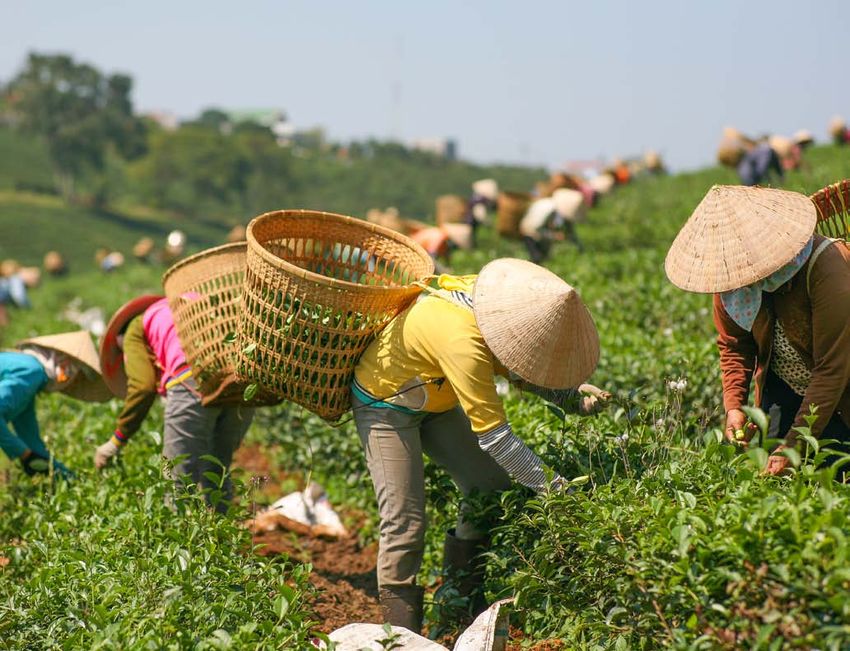
02   The water-food-energy nexus – Insights into resilient development

Introduction

Water scarcity will only                       WWF is the world’s largest independent             More than 70% of the world’s freshwater
                                               conservation organisation. Our mandate             use is in agriculture. The pressure of water
increase under new patterns                    is to safeguard the natural world, conserving      scarcity will only increase under new patterns
of consumption driven by                       biodiversity and the vital benefits provided       of consumption driven by an additional
                                               to humanity from natural systems. We see           three billion middle-class people by 2030,
an additional three billion                    securing natural capital – the natural assets      and a global population predicted to exceed
middle-class people by 2030.                   on which all our health and livelihoods            nine billion soon afterwards. Much of the
                                               depend – as an end in itself. But we were          population growth and the middle-class
                                               also interested in the business case               growth will occur in countries that are already
                                               SABMiller makes for thinking about water,          water-scarce. There are further pressures
                                               food and energy systems in a different way.        from competing need for land, and from the
                                                                                                  imperative to decarbonise our energy
                                               SABMiller is an international brewer with
                                                                                                  systems. Climate change means that rainfall
                                               operations in over 70 countries across six
                                                                                                  and water availability are likely to become
                                               continents. Our business growth is closely
                                                                                                  more uncertain.
                                               aligned with the transformation of the global
                                               economy, in particular through growth in           These challenges are well understood
                                               emerging markets and the expansion in their        and have already been written about
                                               middle classes. We see great opportunities         extensively. We wanted to investigate whether
                                               in this transformation – both for our business     it would be possible to offer more robust
                                               and for the societies within which we operate.     insights from cross-country comparisons,
                                                                                                  building on anecdotal local evidence of
                                               Yet those trends are entwined with great
                                                                                                  differences in how governments respond
                                               challenges for society and for all businesses.
                                                                                                  to these challenges.
                                               While hundreds of millions of people have
                                               been lifted out of poverty, many remain poor.      We see good stewardship of water, food
                                               Threats from the erosion of natural capital        and energy resources as the foundation of
                                               are challenging the basis of development,          resilient social and economic development.
                                               and these threats are particularly acute for       Starting from this viewpoint, this research
                                               businesses such as ours that depend so             aims to develop some new insights into
                                               directly on the natural world – on good quality    how different decision-making can develop
                                               freshwater and the products of agriculture.        economies to deliver rapid reduction in
                                                                                                  poverty, enable sustainable business growth,
                                               Business and the societies within which we
                                                                                                  and secure the natural systems that underpin
                                               operate rely on natural capital in ways that
                                                                                                  social and economic progress.
                                               become acutely obvious when that natural
                                               capital base is eroded. On one level,
                                               SABMiller experiences resource scarcity
                                               in terms of rising costs and the volatility
                                               of prices of our raw materials, but the threat
                                               is more fundamental than this. Without
                                               sufficient supplies of good quality water,
                                               our business could not exist. If rivers run dry,
                                               some of our businesses would have to shut
                                               down operations. The risk of water scarcity
                                               is a risk we share with the communities
                                               around us: these interdependences demand
                                               a collaborative response.
The water-food-energy nexus – Insights into resilient development     03

What is this “nexus”?

Water is a critical limiting                     Food, water and energy systems are              Food production requires energy –
                                                 connected in some obvious ways, along           for fertiliser production, and for planting,
factor for food production.                      with many less obvious links between            weeding, harvesting and transport. Equally,
But it is also central to                        them. Water is a critical limiting factor       there are tensions between the use of land
                                                 for food production. But it is also central     for food and animal feed production and for
energy production.                               to energy production – and not just in the      energy production, and this is not a new
                                                 countries with significant hydropower.          trade-off. Before fossil fuels, fodder crops to
                                                 The processing of fossil fuels, including       generate the original “horsepower” occupied
                                                 newer sources such as shale gas, is water       significant areas of northern European
                                                 intensive, as is the electricity generation     agricultural land. Feeding animals is a major
Nexus policymaking is                            process itself.                                 user of cereals, oilseed and grazing land
about designing resilient                        Conversely, rich, dry countries can solve
                                                                                                 worldwide, and informal biomass is a major
strategies in ways that                          their most acute freshwater supply problems
                                                                                                 contributor to household energy security.

take account of the                              if they can generate energy cheaply enough      Nexus policymaking is about designing
                                                 to desalinate seawater or process urban         resilient strategies in ways that take account
connections between                              wastewater to a high enough standard –          of the connections between food, water and
food, water and energy                           at the expense of growing carbon emissions.     energy systems. It starts with recognition of
                                                 Greenhouse gas emissions from energy            the interdependence of those systems, and
systems.                                         generation are, in turn, likely to result in    hence challenges single-sector approaches
                                                 shifting rainfall patterns.                     that can have substantial unintended
                                                                                                 consequences for a country’s future
                                                                                                 development options. As well as managing
                                                                                                 those kinds of risks, it points towards
                                                                                                 opportunities for each country to make
                                                                                                 the most of its particular mix of resource
                                                                                                 endowments, systematically aligning
                                                                                                 its development with the possibilities
                                                                                                 inherent in that mix.

                                                           United
                                                           Kingdom                   Poland

                                                                             Italy

                         California                                                  Turkey

                                                                                                 Uttar Pradesh
                                                                                                 and Rajasthan
                                                                            Chad
                                                                                                                 Vietnam

                                      Colombia

                                                                                      Tanzania
                                      Peru
                                                  Brazil

                                                                             Mozambique
                                                                                                                     Western
                                                                                                                     Australia
                                                                            South Africa
n Developed countries
n Emerging countries
n Developing countries
04    The water-food-energy nexus – Insights into resilient development

An increasingly pressing agenda

Pressure on land and                            We believe this approach to choosing               The demand for increasingly scarce resources
                                                development options is now essential,              to fuel development is shaping commodity
water availability will                         if governments are to adapt to the trends          markets across the world. SABMiller and
continue to grow – not                          that are making trade-offs between food,           other companies experience the effects in
                                                water and energy systems ever more                 terms of higher and more volatile input and
only through the need to                        acute. As emerging markets continue                raw material costs. Consumers experience
feed more people, but also                      to industrialise and develop, the                  this as fundamental changes in the patterns
from changes in their                           demographic and economic impact will               of their spending, driven by increases in the
                                                be faster and greater than the equivalent          cost of essentials such as food and fuel.
patterns of consumption.                        period in the Western economies, driven
                                                                                                   “For the middle classes, [more expensive food]
                                                by the scale of these countries’
                                                                                                   means cutting out medical care. For those on
                                                populations and amplified by both
                                                                                                   US$2 a day, it means cutting out meat and

16%
                                                globalisation and technology change.
                                                                                                   taking the children out of school. For those on
                                                In 2009, about 1.1 billion people in North         US$1 a day, it means cutting out meat and
                                                America, Europe and the more developed             vegetables and eating only cereal. And for
Since 2008 SABMiller has reduced its            economies in Asia-Pacific were classified as       those on 50 cents a day it means total disaster.”
absolute water use by 16%, despite an           “middle class”. According to the OECD, by          Josette Sheeran, formerly Executive Director
increase in production volumes, and is          2030 the number of middle-class people in          of the UN World Food Programme.
on track to meet its efficiency target of       these countries will remain the same but a
                                                                                                   Pressure on land and water availability will
using 3.5 litres of water per litre of beer     further three billion will have been created in
                                                                                                   continue to grow – not only through the need
by 2015.                                        the rest of the world – of which 90% will be
                                                                                                   to feed more people, but also from changes in
                                                in Asia, primarily in China and India. At the
                                                                                                   their patterns of consumption. Three billion
                                                same time, there will still be around 3 billion
                                                                                                   more middle-class people will demand more
                                                low-income consumers in the world in 2030:
                                                                                                   meat, for example – and meat-rich diets will
                                                that number includes an additional 1 billion
                                                                                                   require far more land than the traditional diets
                                                in Africa and Asia, compared with 2009.
                                                                                                   they will replace. Choices over competing
                                                “By 2030 the world will need to produce 50%        uses for land will become more acute. Land
                                                more food and energy, together with 30%            pressures also mean greater pressures on
                                                more available fresh water, while mitigating       biodiversity and threaten the natural capital
                                                and adapting to climate change. This threatens     that underpins our ability to provide for the
                                                to create a ‘perfect storm’ of global events.”     needs of a fully populated planet, even
                                                Professor John Beddington, former                  as middle class expectations of better
                                                UK Government Chief Scientist.                     environmental quality are on the rise.
                                                These changes will be accompanied by rapid
                                                urbanisation and greater concentration of
                                                wealth in cities. In simple numerical terms, all
                                                the new consumers in the world arising from
                                                population growth will be urban consumers.
                                                Urban growth and middle-class growth mean
                                                that the challenge of resource scarcity
                                                is more acute and more complex than simply
                                                providing for the food, water and energy
                                                needs of a growing world population.
The water-food-energy nexus – Insights into resilient development       05

Resilience and the nexus

Ultimately national                  These trends matter for governments                Ultimately national development strategies
                                     and businesses. They challenge the                 and business strategies need to be designed
development strategies               assumption that today’s development                around resilience; they need to work under
and business strategies              strategies, which have delivered                   many different scenarios of the possible
                                     impressive poverty reduction and growth            outcomes of the interacting trends described.
need to be designed                  in prosperity over the past two decades,           They need to proactively optimise the
around resilience.                   will continue to deliver into the future.          resilience of food, water and energy systems
                                     They challenge a model of business                 at different scales. They need to build in
                                     growth based on competition for natural            the capacity to absorb climate- and

70%
                                     resources, since all businesses and                population-driven shocks of many kinds, to
                                     communities share the risk of resource             reduce the impact of those shocks on people
                                     scarcity – a risk that is not solved by            and on the natural systems on which we
                                     seeking to control a higher share of               depend, and to mitigate the likelihood,
WWF’s Living Planet Report           a rapidly shrinking resource base.                 depth and frequency of those shocks.
2012 showed a decline of 70%
                                     Many of the pressures that challenge us            Even in rich countries that can well afford to
in measures of tropical freshwater
                                     to think differently about joining up the          make this kind of investment in the nation’s
biodiversity since 1970.
                                     management of food, water and energy               future, such an approach is rare. Our
                                     systems will be exacerbated by climate             comparative review of countries and states
                                     change. There is already evidence of climate       shows that, particularly at later stages of
                                     shifts putting greater stress on some river        development, the inflexibility of institutions
                                     basins that are also damaged by pressures          and the archaic state of infrastructure can
                                     from the growing water needs of agriculture        be major risk factors undermining those
                                     and industrialisation. Some of the regions         countries’ ability to respond to the climate-
                                     where food security is most prevalent are also     related and population-driven shocks that are
                                     regions where climate change is expected to        already beginning. The lessons for countries
                                     pose the greatest challenges for agriculture.      at a different stage – those rapidly developing
                                     And the rising energy needs of the growing         infrastructure and related institutions – could
                                     world population are in tension with the           be critically important for their ability
                                     urgency of the challenge to decarbonise            to sustain their development achievements
                                     and reduce the water intensity of our              into the future.
                                     energy system.
                                     The first priority in a response to these linked
                                     trends is to build resilience into national
                                     development strategies. We cannot predict
                                     in detail what the consequences of population
                                     pressures, changes in consumption patterns
                                     and climate change will be. A resilience-driven
                                     approach acknowledges this, recognising that
                                     there are multiple, complementary reasons
                                     for building flexibility into our design and
                                     management of food, water and energy
                                     systems, including into the infrastructure
                                     and institutions linked to them.
                                     For example, many of the policies that help
                                     to keep a river flowing under pressures from
                                     rising population and industrial needs will
                                     also be beneficial resilience measures
                                     pre-empting some of the future likely impacts
                                     of climate change on that river system.
06 The water-food-energy nexus – Insights into resilient development
Resilience and the nexus
continued
Nexus issues play This study uses three lenses in considering The first, simple insight from the country
how to address the national planning of comparisons is that nexus issues play out
out very differently in water, energy and food in a coherent and very differently in contexts with differing
contexts with differing sustainable manner. These three lenses are: resource endowments. Countries with
abundant natural resources for food, energy
resource endowments. • Resource endowment – what is the
and water, such as Brazil, face a different set
natural resource endowment of the country
of questions from countries with limited or
or region in relation to water, energy
unbalanced resource endowments. South
source, and agricultural land and food
Africa, for example, has limited water and
production potential? And what are the
agricultural land, but considerable reserves
human, financial and institutional
of coal and opportunities for solar power.
resources available to mobilise the
The choices facing its government are quite
natural resources?
different from those in Brazil. Even starker
• Development status – what is the level differences are presented by a comparison
of development and the nature of the of Chad and Vietnam.
economic development trajectory of the
country or area under consideration?
• H
ow does resilience thinking inform
nexus discussions and development
planning in the country?
Resilient
development
Resource Development
endowment status
Water Food
Energy
Figure A: A framework for understanding government nexus planningThe water-food-energy nexus – Insights into resilient development 07
A nexus comparison: Chad and Vietnam
Although Chad has substantial oil reserves in the Doba Basin in the southern part of
the country, it is an exceedingly water-scarce nation, with low average annual rainfall
(in the region of 320mm per annum). Lake Chad is the only permanent freshwater
source in the country, but has been diminishing rapidly over the past 30 years:
between 1982 and 1996, the lake’s surface area shrank from 22,772km2 to 2,276km2.
This phenomenon has been driven mainly by increased demands on the waters that
feed the lake, largely by upstream countries. Its high water stress has translated into
severe food insecurity and poor agricultural production potential. Almost a third of its
population of 3.6 million people are considered to be at risk of food insecurity and a
mere 0.03% of the country’s land area is under permanent cropland. Constraints on
transporting its oil to shipping have curtailed Chad’s ability to earn foreign exchange
and thereby import food.
Unlike Chad, Vietnam is a country rich in water resources; it is one of the world’s highest
rainfall countries. The climate thus provides highly favourable conditions for agricultural
production in most parts of the country. The government of Vietnam has prioritised
agricultural production to achieve food self-sufficiency. In doing so, the government has
made significant investments into improving irrigation infrastructure to lengthen growing
seasons. Currently, approximately 42% of all agricultural land is irrigated, with the majority
of irrigation water and fish protein coming from the Mekong River. Increased pressure being
placed on the Mekong River Basin by upstream countries, for example building of dams for
energy generation in the middle reaches of the Basin, is likely to have profound impacts on
Workers harvesting tea leaf in
both water flow and fish productivity for Vietnam downstream. Under these circumstances,
Bao Loc, Vietnam maintaining food self-sufficiency may become more challenging in the future.08 The water-food-energy nexus – Insights into resilient development
Resilience and the nexus
continued
The climate and physical Resource endowments include the natural Government decisions around the
water (rainfall, surface and ground water), development and maintenance of water,
availability of natural energy (fossil fuels and renewables) and land energy and transport infrastructure
resources in a country (arable and grazing) available to that country. fundamentally determine the nature of
Many of these depend in part on climatic resource use, including access by
only partially determine conditions. But the climate and physical households, allocation to manufacturing,
its resource endowments. availability of natural resources in a country or import and export to manage shortfalls
The country’s ability to only partially determine its resource and surpluses.
endowments. The country’s ability to make
make use of its natural use of its natural resource base can be at
Development priorities can only be met from
a country’s given mix of resources through
resource base can be at least as important. So the country’s skills
the judicious and coherent development
base, infrastructure and institutions also
least as important. play an important role in determining its
and management of those resources into
the future.
effective resource endowment – and these
in turn are closely linked to a country’s Interpreting national water, energy and food
stage of development. resource planning requires an understanding
Development priorities can For example, a country may have abundant
of the country’s development and
only be met from a country’s water resources, but until it has reservoir
sustainability goals, overlain on a distinction
between the natural resource endowment and
given mix of resources storage and transfer infrastructure, it cannot
the infrastructure and institutional systems
ensure reliable supply for industry or
through the judicious and domestic use during dry seasons. Similarly,
set up to supply water, generate energy and
cultivate food.
coherent development and a country may have underground fossil fuels,
but until these are extracted, refined and
management of those transported, they cannot be exported or
resources into the future. used to generate electricity. Arable land
in the absence of cultivation and transport
infrastructure is less productive, more
vulnerable to climate variability and cannot
be used to supply national or foreign markets.
Reflecting development priorities in terms
of the nexus
How a country defines its development priorities is determined, in part,
by its resource endowment and level of development. Conversely, the use
of its resources reflects its priorities, which help to focus resource allocation
and infrastructure development.
Tanzania, for instance, has a relative abundance of natural resources but infrastructure
and human and financial capacity challenges. Its National Development Plan identifies
five strategic areas for intevention, two of which include infrastructure and human capital
and skills development. For Tanzania, the national planning focus is currently on
improving access to the country’s key resources, rather than managing the trade-offs
between them, or ensuring the long-term supply of those resources.
South Africa has substantial fossil fuel reserves but is significantly more constrained by
its water and agricultural land availability. Water scarcity has implications for both energy
generation and agricultural production. Important political issues are emerging around
the constraints and opportunities for rural black farmers. Further agricultural development
would need to be supported by irrigation which in turn would necessitate efficiency gains,
regulation and new water infrastructure. Similar development, sustainability and
efficiency issues are part of national energy policy debates.
For the highly developed but relatively arid region of Western Australia, public policy
priorities are largely focused on increased efficiencies and growing energy supplies
(including cleaner energy, as emphasised in the Government’s Strategic Energy Initiative:
Energy 2031). Although the State is water scarce, it has the financial capacity and
relatively abundant fossil-fuel energy supply to produce freshwater through desalination.
So Western Australia has options to overcome nexus constraints and achieve its
objectives through capabilities linked closely with its highly developed state.The water-food-energy nexus – Insights into resilient development 09
Stages in development and
links to the nexus
Strategies to meet a In analysing the evolving choices The focus for the nexus during the
available in managing nexus and developing stage is on resource exploitation
country’s development and resilience issues, we used three (energy extraction and food cultivation).
sustainability goals are most generalised (and in reality, overlapping) This requires prioritisation of investment
categories to describe countries’ stages to overcome the infrastructural and other
resilient where they build of development: constraints on the use of these resources.
on a clear analysis of the Developing economies with low levels of
The overriding need is for infrastructure to
particular nexus resource industrial and infrastructural development,
enable extraction, cultivation, distribution and
export, while ensuring adequate consumption
challenges faced in that focused primarily on resource cultivation or
to sustain livelihoods.
extraction, and with relatively low human
country context. development indices. Here the country’s Good systems of governance are needed to
development goals typically focus on ensure effective and resilient development of
improving livelihoods, ensuring food security this resource endowment, together with the
and developing commodity driven exports. mobilisation of adequate financial and human
5 years
resource capacity to support more formalised
Emerging economies growing rapidly through
commercial production.
a shift towards secondary manufacturing,
with improved human development indices, Food security is an overriding nexus concern
SABMiller and WWF have been increased urbanisation and development of at this stage, as well as providing household
collaborating for five years on water economic and social infrastructure, often with access to safe water in urban and rural areas,
projects around the world. considerable remaining rural poverty. The together with adequate water supply to the
development focus is usually on ensuring primary economic activities (agriculture
sustained investment, diversification and and mining). Energy reliability is a major
bringing value added to economic activity challenge in meeting the needs of the
and trade, while addressing livelihoods in economy, as is managing biomass harvesting
rural and peri-urban areas. Water and air by the majority of the population.
quality may be rising up the political agenda.
For emerging economies, the focus from
Developed economies have shifted to a a nexus perspective is on ensuring adequate
consumption-based service-dominated availability of water, energy and food
economy supported by trade and by resources to support the growing domestic
specialisation in manufacturing and productive manufacturing economy and
commodities, with high rates of urbanisation. diversifying economic development for trade,
The focus here is on promoting growth while ensuring water, energy and food
through trade, sometimes seeking improved security for poor and rural households.
environmental quality, while maintaining Continued development and flexible
employment, welfare and aging infrastructure. management of infrastructure to supply
water, generate energy and cultivate food may
Distinct water, energy and food resource-
be necessary but there is now a greater focus
related challenges are faced by countries at
on human and financial resource productivity
different stages of development. Strategies
and adding value to the primary resource
to meet a country’s development and
production. Environmental challenges
sustainability goals are most resilient where
are also coming into focus, partly because
they build on a clear analysis of the particular
of growing middle-class expectations
nexus resource challenges faced in that
of environmental quality and partly
country context.
because of trade-offs made during
earlier infrastructure development.
Chad, Tanzania, Mozambique and Vietnam
Despite their obvious differences, Chad, Tanzania, Mozambique and Vietnam all
share a common need to develop infrastructure that will enable these countries
to harness their water, energy and land resources. This serves the dual goals
of catalysing their productive economies, while ensuring that their citizens have
access to safe water, reliable heating and adequate nutrition.
For these countries, developing infrastructure that is flexible and robust under different
plausible futures, and which takes advantage of complementary opportunities across food,
water and energy resources, is critical to building resilience to climate variability and other
likely future pressures. Lessons can be learned by looking at the infrastructure challenges
in emerging economies and developed countries.10 The water-food-energy nexus – Insights into resilient development
Stages in development and
links to the nexus continued
Comparison: Brazil and South Africa
Water abundance and energy resource abundance sometimes go hand-in-hand.
This is the case in Brazil, a country that has a renewable freshwater resource
endowment of almost 44,000m3 per capita, and where over 80% of the country’s
energy mix is hydropower. Due to its water abundance and fertile lands, Brazil’s
capacity for agricultural production is particularly large. As a result, the country
is a net exporter of food and agricultural products that account for approximately
35% of total exports. These exports include water (rainfall) intensive crops.
South Africa, on the other hand, is an example of a country that does not have an
abundance of water. It does have large proven coal reserves but water scarcity is a
constraint for energy production. Despite its low level of renewable freshwater resources
(about 640m3 per capita), South Africa is currently nearly food self-sufficient. Food imports
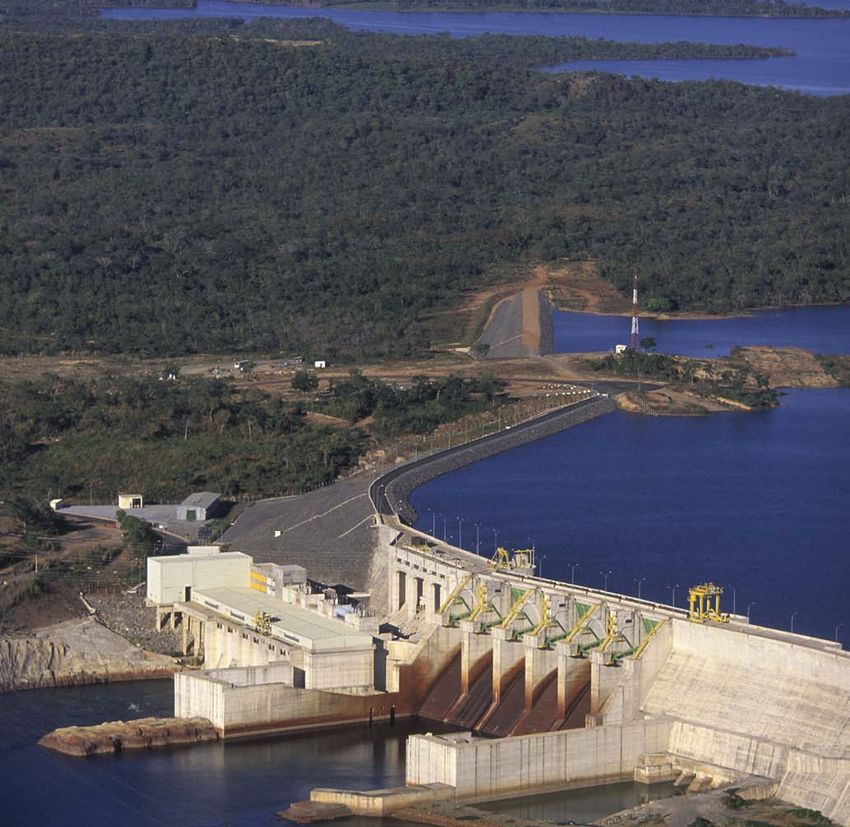
The Cana Brava Dam, Goias State, Brazil represent approximately 6% of total imported goods while food exports form approximately
Copyright: Edward Parker / WWF-Canon 9% of total exported goods.The water-food-energy nexus – Insights into resilient development 11
The major need at this stage is for resilient On the other hand, reliability and pricing
institutions (including mandates, policies and becomes the overriding concern for urban
mechanisms) that enable efficient, predictable household consumption and productive
development and allocation of nexus enterprises, and this typically frames the
resources within the economy. These are national approach to food, energy and
prerequisites for supporting increasing water security.
domestic consumption and for promoting
Countries under transition have distinct and
trade. Managing the associated scarcity
competing nexus challenges. These include
trade-offs, resource use choices and disaster
national production and trade to support
risk mitigation measures becomes an
economic development; consistency of supply
increasingly complex challenge in countries
and pricing for urban consumers to support
that have limitations in one or more of the
political stability; rural household access to
nexus resources.
support livelihoods; and rising expectations
Planning for food, energy and water security of environmental quality. At the same time,
plays out differently in these countries, the traditional developing country focus on
depending upon the resource endowment and agricultural self-sufficiency in basic food
the past economic evolution of the country. cultivation is in tension with the requirements
Significant livelihood challenges remain in for reliable water and energy supply to the
terms of access to adequate food, energy and industrial economy.
water by peri-urban and rural households.
India, Turkey, Brazil and Colombia
While the emerging economies of India and Turkey each have distinct water,
energy and land resource endowments, they face trade-offs in scarce resource
development and allocation to diversify economic development, increase urban
consumption and respond to stagnating rural livelihoods.
On the other hand, Brazil and Colombia have more abundant (though spatially uneven)
natural endowments of water, energy and food resources. This provides opportunities
to support livelihoods and development goals, rather than requiring sharp trade-offs in
resource allocation. Managing climate variability and extreme events in these countries
needs flexible institutional mechanisms, robust infrastructure and functioning natural
systems for disaster risk management and to ensure resilience.
Agricultural farmland and countryside, Turkey12 The water-food-energy nexus – Insights into resilient development
Stages in development and
links to the nexus continued
The transition to services In developed countries the focus of the risks associated with sourcing these
nexus shifts to improving efficiency in the resources from other countries and the
and trade-based economies use of water, energy and food resources to volatility of global markets. Given the global
implies a degree of enable domestic consumption, production power of these economies, shifting energy
and trade, while dealing with climate and policy decisions, such as increasing
uncoupling of the economy environmental challenges. Putting in place self-sufficiency and growing renewables, may
from domestic resource effective regulatory and economic have profound impacts on global energy and
constraints. instruments to achieve this is often a major agricultural markets.
challenge, along with the maintenance and
A country’s opportunities and required
adaptation of aging infrastructure and human
trade-offs in development and use of water,
resources to meet changing global conditions.
1.2 bn
energy and food are clearly dependent upon
The transition to services and trade-based its natural endowment of these resources.
economies implies a degree of uncoupling But these opportunities and trade-offs evolve
of the economy from domestic resource over time as available resources are used,
Globally, the UN estimates that constraints. National energy and food and they tend to converge as countries
around 1.2 billion people already security are interwoven with trade and foreign develop resource-delinked service and
live in areas of water scarcity. policy, with increasing awareness of the trade-based economies.
United Kingdom, Poland, California
and Western Australia
While these developed countries differ in their domestic resource self-sufficiency,
they are all to some extent shifting towards more resource-efficient,
environmentally sustainable, low-carbon, consumption-based tertiary economies
that are integrated into the global trade economy, albeit with aging infrastructure.
These countries tend to establish targeted regulatory and economic instruments, within
the context of stable (and often inflexible) institutions, and in some cases remove existing
infrastructure to rebuild natural system resilience. This implies a convergence between
national and global resilience, which is appropriate given these economies’ dependence
upon global trade.
Changing energy endowments in Italy
Italy began its industrial development as an energy self-sufficient country. From the
1910s through the 1940s, Italy relied almost solely on domestic hydropower for its
electricity generation, after an initial period of domestic fossil fuel-based electricity.
With post-war industrialisation, population and economic growth, the country’s energy
demands began to exceed the available hydropower supply, forcing Italy to import
alternative sources of energy in the form of fossil fuels. Today Italy depends on foreign
imports for over 80% of its primary energy needs, but is now starting a process of shifting
to domestic renewable energy and efficiency gains. This pattern of moving from energy
adundance to dependence, and later on to a shift towards renewables and efficiency,
is a common feature of the development paths of many countries.The water-food-energy nexus – Insights into resilient development 13
Climate change and global resilience
Resilient economies require Climate influences nexus resources as The multiple benefits of regulatory and
an underlying driver of water, energy market instruments that promote resource-
coherent and effective and food endowments. Variations in use efficiency include a resilience dividend.
planning of water, energy temperature, precipitation, wind and Achieving greater resource productivity can
sunshine can cause vulnerability in clearly have a direct developmental benefit,
and food that balances associated production systems. In with better outcomes achieved for a given
consumption, production particular, climate is closely tied with cost in terms of resources required. The
and trade requirements water resources, which are the resilience benefit is in addition to these
underpinning dimension of the nexus cost savings, and it occurs through reducing
against the country’s resource endowment – because water the most acute trade-offs in resource use.
natural resource abundance facilitates food abundance Those trade-offs are sharpest where peak
through irrigation, and energy abundance resource need coincides with peaks in
endowments. through hydropower, cooling water and, resource scarcity – a typical example being
in some instances, biofuels. the need for more freshwater for agriculture
and domestic use just when the dry season
Resilient economies require coherent and
is at its peak. Efficiency, combined with
effective planning of water, energy and food
appropriate regulation, can reduce both
that balances consumption, production and
overall resource use and the size of peaks
trade requirements against the country’s
in consumption, hence reducing the
natural resource endowments. That planning
vulnerability of the system to market
also needs to mitigate and manage the risks
or climate shocks that would otherwise
of climate-related variability and disasters.
be unmanageable at times of the highest
Resilient management of water, energy and
resource use. When it comes to energy
food at a national scale is sometimes in
resource use, greater efficiency brings
tension with the needs of climate change
benefits both for national development and
mitigation and global resilience to the effects
a reduced global threat of climate change.
of climate change.
46kms long Tehri Lake filling up after the construction of the New Tehri hydro electric project dam on the
River Ganga in Tehri Garhwal Chamba, India14 The water-food-energy nexus – Insights into resilient development
The importance of infrastructure,
institutions and natural systems
Decisions made in the early A recurring theme of this research is that and scale matter in considering the
decisions made in the early stages of associated development opportunities or
stages of development may development may lead to weak resilience constraints. The enabling framework and
lead to weak resilience at at later stages. This is particularly true in policy context may catalyse or constrain local
the early formation of institutions and in decisions. So it is essential to develop
later stages. the design of infrastructure. Consideration governance mechanisms and related
of the challenges faced by more developed institutions that support responsive and
economies around nexus resource coherent local resource-use planning, while
Resilient economic development and resilience can enable making the most of the opportunities to
developing and emerging economies to manage nexus trade-offs at a national level,
systems will be those that make planning decisions better suited to where the trade-offs may be less acute.
benefit from and reinforce possible future scenarios. The systems
The California case shows how over-reliance
they put in place have the potential to be
the preservation of the more resilient and sustainable in the
on extensive infrastructure development can
create demands for natural resources (in this
natural systems on which longer term, jumping a generation of
case, for water) that go far beyond the
they ultimately depend. outmoded infrastructure and institutions
available supply from within natural systems.
that were not designed with resilience
Damage to natural systems in turn
in mind.
undermines the resilience of the food system
Countries that have historically developed and hence of the wider economy. Similar
extensive water, energy and food-related issues arise in India, China and Turkey.
infrastructure without addressing coherence In some countries, this sequence can lead
or resilience questions have significant to the resilience of political systems also
financial maintenance challenges, while the coming under pressure. More broadly,
infrastructure is frequently unsuited to public expectations of improvements in air
current conditions of population pressure or quality, water purity and other quality-of-life
climate variability. In some instances these indicators are increasingly important factors
countries have removed inappropriate or shaping political choices in emerging
stranded infrastructure assets to improve economies as well as rich nations.
natural ecosystem resilience and reduce the
Perhaps the greatest tension between a
associated financial burden.
country’s early development decisions and
Strengthening institutions and ensuring its later resilience lies in the stewardship of
flexibility in the management of water, energy each nation’s natural capital. Some depletion
and agricultural land resources (through of natural assets may be an essential early
coherent development planning) enables strategy in finding pathways towards greater
countries to adapt to evolving development security of livelihoods. But soil quality,
needs and uncertain climate futures. This is freshwater availability and forest resources
closely related to the requirement for robust all make fundamental contributions to
water, energy, agricultural and transport a nation’s productivity. New sources of
infrastructure to support economic production insecurity and a permanent reduction in
and household access, within the context of resilience emerge from continued economic
limited financial and human resources. dependence on the destruction of natural
capital. Resilient economic systems will
Another institutional dimension of nexus
be those that benefit from and reinforce
planning is in the relationship between
the preservation of the natural systems
national and local nexus responses. The
on which they ultimately depend.
interplay between water, energy and land
resources is typically localised, so location
National and state-level nexus planning –
the example of California
In the United States, California is a major producer of food which is exported for
consumption elsewhere. However, in order for the State to accommodate these
demands, vast amounts of water (and energy) are required – arguably more than
California can sustainably support.
The water and energy inter-linkages in the State are pronounced; coherent management
of these will become increasingly important in the future, as climate change exacerbates
the current problems. The government of California has established regulatory
mechanisms and economic incentives to alleviate some of these constraints but
whether these mechanisms are sufficient to maintain the State’s economic and natural
resource resilience is unclear.The water-food-energy nexus – Insights into resilient development 15
The nexus at different scales
and the role of trade
It will become harder for Clarity about scale is fundamental So trade can offer an effective strategy for
when responding to nexus challenges. building a nation’s resilience. It can be
trade to remain a trump In practice, the impacts of resource mutually beneficial in nexus terms, where
card enabling countries trade-offs occur primarily at the local a country with one kind of resource scarcity
level. The national level is where trades with another country with a different
with resource scarcity development objectives related to mix of resources. But trade can also result
to buy their way the nexus are conceived and managed. in externalities that exacerbate resilience
into resilience. Climate change poses a risk to resilience challenges elsewhere: for example, the
at the global level. water-abundant UK imports soft fruits
from more water-stressed countries such
Achieving coherence and resilience at one
as South Africa.
scale is not necessarily sufficient or even
consistent with achieving resilience at other In today’s interdependent globalised world,
levels. Examples such as desalination of in which resource scarcity has impacts on a
seawater using fossil-fuel reliant energy can global scale (for example, through grain price
make sense in building resilience at the local spikes), there is a question about whether the
or national level, but can undermine strategy of building resilience through trade
resilience to climate change at the global will come under pressure. With three billion
level. Exploitation of fossil-fuel resources in additional middle-class people in developing
the early stages of development, as in the and emerging economies by 2030, countries
Chad case, may be an essential precondition that have traditionally been global suppliers
for building the nation’s resilience in the of natural resources will require more for
medium term, while again undermining domestic consumption. In the face of global
global resilience in the face of climate change. resource shocks, those nations’ own richer
Global responses to climate change may in citizens will increasingly have the market
turn eventually make development strategies and political power to demand first call on
based on fossil-fuel extraction less the resources originating within the country’s
economically resilient. For example, carbon borders. It will become harder for trade to
prices could leave some forms of fossil-fuel remain a trump card enabling countries
extraction no longer economically viable with resource scarcity to buy their way
in the future. into resilience. Managing trade-offs locally
and nationally may become more important
Trade can be an important mechanism for
in future.
overcoming the resource bottlenecks that lead
to acute trade-offs at the local or national
level. To take the most extreme case example:
a country such as Singapore has very limited
availability of its own water, food and energy
resources. But like other rich countries, it
manages the nexus through an economic
model relying on trade to provide for the
country’s water, food and energy needs.
Singapore is still dependent on the successful
resolution of nexus trade-offs, but these occur
in other countries.16 The water-food-energy nexus – Insights into resilient development
Conclusions: putting the
insights into practice
Nexus policymaking The risks and opportunities around water, Resilient economies require coherent and
food and energy resources are shared effective planning of water, energy and food
is not in itself complex. risks and opportunities. The vital that balances consumption, production and
It requires the strategies challenge for policymakers is how to trade requirements against the country’s
put in place a framework in which those natural resource endowments. To achieve
of a government or a risks and opportunities are engaged in this coherence, one crucial and neglected
business to be designed a collaborative way by all who have a role part of development planning is to forge
in ways that take account to play. The alternative, competition a shared perspective within government
to control resources, is one feature on where a country stands within the
of the connections of today’s incoherent responses to framework of resource scarcity and
between water, food the water-food-energy nexus, which abundance, and how this relates to
undermine resilience. the country’s development goals.
and energy systems.
From our research we have concluded that Some of the countries or states studied have
the most resilient economic systems combine clearly built a development strategy on a
robust infrastructure, flexible institutions and sound understanding of the opportunities
functioning natural capital. The case studies and risks defined by their resource
propose areas in which policymakers have endowments. Others have appeared to pursue
particular levers for responding to nexus strategies in tension with those fundamental
challenges in order to bring about resilience. constraints. Particularly where a country has
They suggest policy makers should: used trade to avoid confronting the risks
inherent in its nexus resource availability,
• Integrate all aspects of development
increasing global interdependence warrants
planning, in particular ensuring that water,
a review of whether that kind of development
energy and agricultural sector planning are
strategy can be pursued indefinitely.
not done in isolation, but consider how
each can contribute to the resilience Given that the risks outlined in this report
of the others; are shared risks, there is a central role
in development policy for creating the
• Design institutions for resilience, in ways
conditions in which different actors
that strengthen cooperation and
collaborate to overcome the threats they face
coordinated decision-making;
together. Examples of of such collaborative
• Use economic and regulatory instruments approaches include:
to strengthen the incentives and
Water Futures partnership, of which
requirements for building resilience into
SABMiller and WWF were founding
water, food and energy systems;
partners. It brings together businesses,
• Use trade, regional integration and foreign donors, governments, farmers, communities
policy to manage nexus trade-offs more and others who all face risks of increasing
effectively, and contribute further to water scarcity in an area, and builds a local
resilience at both country and global levels. alliance to put in place practical measures
to secure the resource base on which they
Generic policy prescriptions under these
all depend. The third founding partner,
headings will not work in every context.
Gesellschaft für Internationale
The first lesson of the country case studies
Zusammenarbeit (GIZ) GmbH, supports
is that the nexus plays out radically differently
the German government in achieving
in different settings, and responses
its objectives in the field of international
by both governments and businesses
cooperation for sustainable development,
need to be similarly rooted in the context.
and brings the crucial public sector
perspective to the partnership. Policies
that can catalyse and spread this kind
of collaborative approach at scale are
at the heart of a resilience-based
development strategy.The World Economic Forum and IFC The World Economic Forum’s New Vision
have partnered with a number of private for Agriculture (NVA) initiative facilitates
companies and official development agencies coordinated, market-based action, harnessing
to establish the 2030 Water Resources the power of agriculture and its connection
Group (WRG). In South Africa, the WRG to other resources to drive food security,
has initiated the Strategic Water Partners environmental sustainability and economic
Network, chaired by the South African opportunity. Since its creation in 2009,
Department of Water Affairs and co-chaired the NVA platform has engaged over
by South African Breweries; bringing 250 organisations from a wide range of
together businesses and other organisations stakeholders and geographies, and has
including the Development Bank of Southern catalysed multi-stakeholder partnership
Africa, the South African Water Research platforms in 14 countries in Africa, Asia
Commission and the South African Local and Latin America.
Government Association to improve water
Nexus policymaking is not in itself complex.
efficiency and infrastructure. The network
It requires the strategies of a government
represents a unique and progressive
or a business to be designed in ways that
multi-stakeholder platform for water resources
take account of the connections between
management. It provides practical ideas
water, food and energy systems. It involves
to help deliver sustainable water supplies
a deep understanding of the interdependence
and, to date, has identified seven national
of those systems, and of the consequences
projects on water conservation and
of climate change and demographic pressures
efficiency and on effluent partnerships,
for those systems. Resilience building
now under development.
becomes a central principle within any
strategy founded on this understanding.You can also read


