HELSINKI'S HOT HEART HELSINKI ENERGY CHALLENGE - Decarbonising the city- And making a global attraction
←
→
Page content transcription
If your browser does not render page correctly, please read the page content below

NEW ENERGY STRATEGY

HELSINKI ENERGY CHALLENGE
HELSINKI’S HOT HEART
Decarbonising the city—
And making a global attraction

January 22, 2021

2

TABLE OF CONTENTS

   1/ SUMMARY OF PROPOSAL
               INTRODUCTION                                                   3-7

               ENERGY CONCEPT FOR 2029
   1.1         HEAT GENERATION                                                8
   1.2         ENERGY BALANCE                                                 9
   1.3         ENERGY MIXES                                                  10
   1.4         “HELSINKI’S HOT HEART” STORAGE                                 11
   1.5         “HELSINKI’S HOT HEART” STRUCTURAL CONCEPT                     12
   1.6         “HELSINKI’S HOT HEART” LOCATION                               13
   1.7         AI, ANALYTICS AND CONTROL                                     14
   1.8         AI, ANALYTICS AND CONTROL                                     15
               “HELSINKI’S HOT HEART” AS WORLD-CLASS ATTRACTION
   1.9         A NEW DESTINATION                                             16
   1.10        A NEW DESTINATION: IMAGES                                      17
   1.11        HOLISTIC ENERGY CONCEPT FOR BEYOND 2029 / SCHEMATIC CONCEPT   18

   2/ EVALUATION CRITERIA

   2.1
   1.1         CLIMATE IMPACT                                                19
   1.2
   2.2         IMPACT ON NATURAL RESOURCES                                   20
   1.3
   2.3         COST IMPACT - CAPITAL EXPENDITURE                             21
   1.4
   2.4         COST IMPACT - OPERATING EXPENDITURE                           22
   1.5
   2.5         IMPLEMENTATION SCHEDULE                                       23
   1.6
   2.6         IMPLEMENTATION FEASIBILITY                                    24
   1.7
   2.7         RELIABILITY AND SECURITY OF SUPPLY                            25
   1.8
   2.8         CAPACITY25
   1.9
   2.9         CONCLUSION26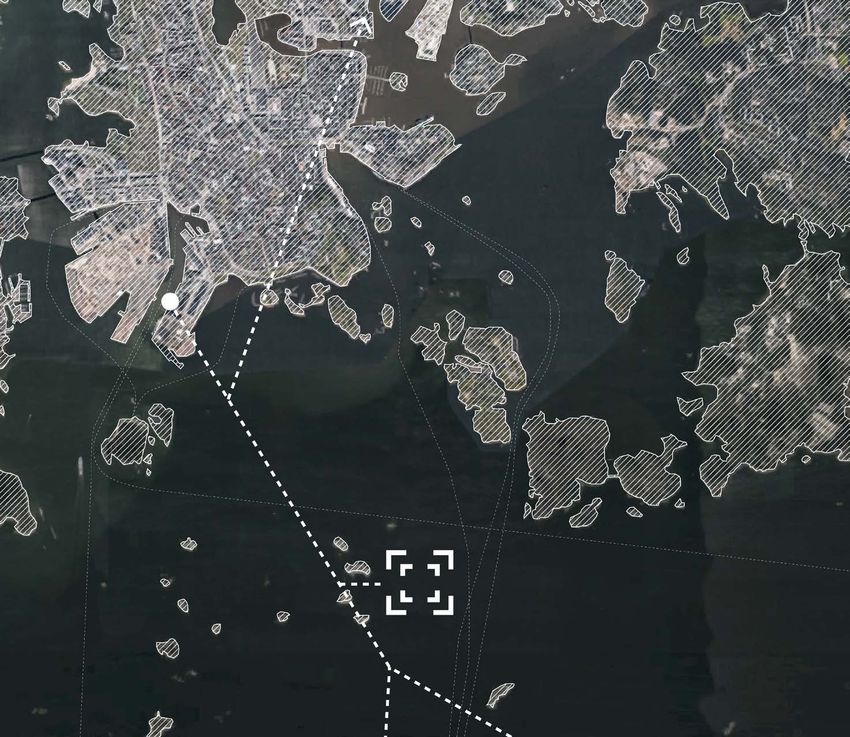
3

Energy Context
  Dollars / MWh                                                                   Euro / MWh
     600

                                                                                                                                 Electric Energy Price in Finland, 2020
    480                                                                             200

    360                                                                              150

    240                                                                              100

     120                                Wind Power Price                             50

       0                                                                              0
                    1990        2000         2010          2020        2030                2020.1           2020.4              2020.7                 2020.10            2021.1

     Changes in Wind Power Price Over Time [1]                                        Changes in Electric Energy Price Over Time, Finland, 2020 [2]

     Let’s look towards 2029: we don’t know what the best energy                       However, renewables are intermittent... and as a result, we are
     mix will be to heat the city of Helsinki—it will depend on future                 seeing increasing imbalances on the network and variable energy
     technological development and market conditions.                                  prices—sometimes even negative.
     However, we know that the price of renewable electric energy has                  Therefore, it is imperative to find cheap energy storage—but the
     been falling swiftly over the past 20 years and today is lower than               price of electric storage has been falling slower than the price of
     that of all other sources.                                                        production and is still extremely high.

     [1] “How Steady Can Wind Power Blow?” , Ramez Naam, accessed Jan 18, 2021,        [2] “Elspot-prices_2020_hourly_eur”, Nord Pool, accessed January 18, 2021, https://
     https://rameznaam.com/2015/08/30/how-steady-can-the-wind-blow/                    www.nordpoolgroup.com/historical-market-data/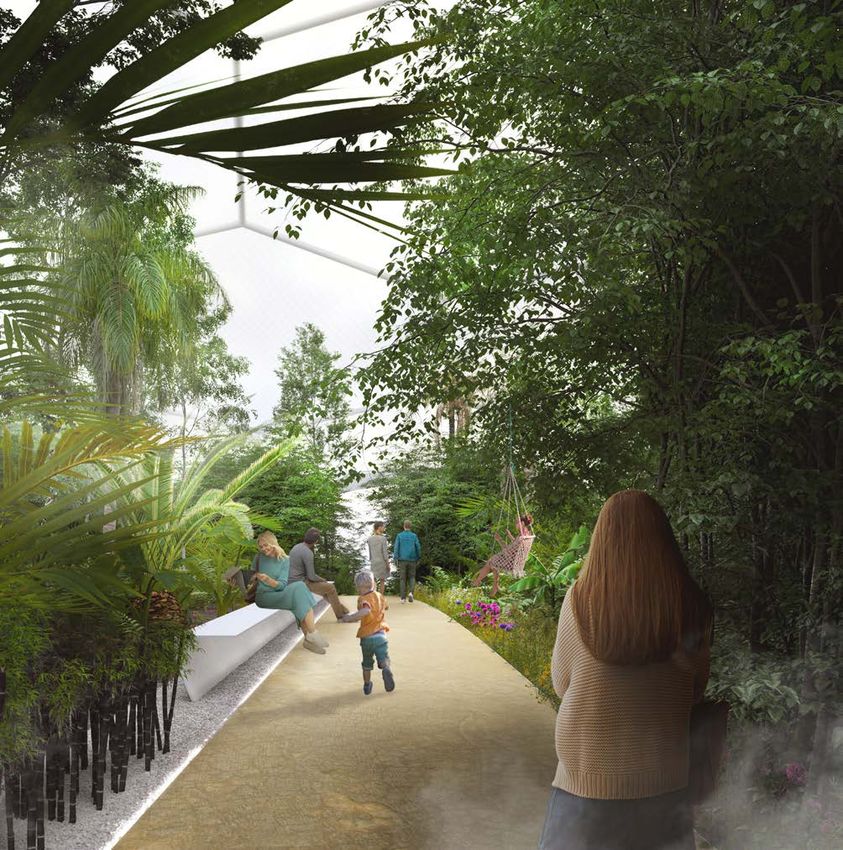
4

Our Proposal

                                        VS                                                                             Floating Structure

       1 MWh                                           1 MWh
   Battery Storage                                 Thermal Storage
    = €200,000 [1]                                     = €200                                                         Embedded Structure

   The percentage of renewables in the Finnish grid is increasing                        Helsinki’s Hot Heart is an array of cylindrical basins filled with
   rapidly—in particular wind energy. According to the Finnish                           hot seawater. They can be floating or partially dug into the
   Wind Power association, 18.5 GW [2] of wind farm projects are                         seabed near the city and provide heat storage at a cost as low
   currently being planned—which is more than a double of the                            as 200 Euros per MWh, 1000 times cheaper than electric storage
   Fingrid grid average load of 8.9 GW [3] in 2020.                                      (~200,000 Euros per MWh). With heat generated by electricity,
   All of this means that Finland will experience larger variations                      thermal storage will act like a battery storage, because the time
   in the price of electricity (including negative prices) and require                   periods to use electricity can be chosen almost freely.
   significantly more load balancing. While electric energy storage                      The overall system uses seawater heat pumps to convert
   is getting cheaper, it is still significantly more expensive than                     primarily carbon free electrical energy into heat. It helps
   thermal energy storage.                                                               decarbonize the Helsinki district heating system while providing
                                                                                         a needed balancing effect on the national grid of Finland—so
                                                                                         that even more renewables can be used in the future.
    [1] “A Behind the Scenes Take on Lithium-ion Battery Prices” , Bloomberg NEF, last   [2] “Wind Power Projects in Finland.” Suomen Tuulivoimayhdistys, tuulivoimayh-
   modified March 5, 2019, https://about.bnef.com/blog/behind-scenes-take-lithium-       distys.fi/en/wind-power-in-finland/projects-under-planning
   ion-battery-prices/                                                                   [3] Load and Generation.” Fingrid, 18 May 2017, www.fingrid.fi/en/electricity-mar-
                                                                                         ket/electricity-market-information/load-and-generation/
5

Helsinki’s Hot Heart: The System                                                                                                                Electric Energy
                                                                                                                                                Thermal Energy

     Renewable Energy to Heat                                       Thermal Storage                                             Existing District Heating

      Wind Power                                                                                                     Salmisaari, Hanasaari
                                                                                                                       and Vuosaari CHP
                                                                                                                       Pumping Stations
      Solar Power
                                              Sea Water
                                              Heat Pump                                  Helsinki’s
                                                                                         Hot Heart

    Solar Thermal

         Existing
  Biomass Thermal

    Other Thermal    ...                                                                                                                            Existing Waste
                                                                                                                                                    Water Thermal
                                                                          AI Control

     Helsinki’s Hot Heart is a flexible system made of 10 cylindrical                  estimated at 6,000 GWh at the end of the decade, without any
     reservoirs with a diameter of 225 meters (total volume                            carbon emissions and at a price for citizens significantly lower
     approximately 10 million m3), which can receive different energy                  than the one they pay today—with a discount of ~10%.
     sources as input. Electric energy is converted into thermal energy
     using heat pumps exchanging with the sea. Conversely, sources
     of heat are directly plugged into district heating.
     The output of Helsinki’s Hot Heart is heat that can be distributed
     across the existing district heating system. Today’s existing
     district heating network is maintained, in order to minimize                              ALT 1             ALT 2             ALT 3         ALT 4
     environmental cost, and connected with Helsinki’s Hot Heart at                          Base Case      Low Investment      Sea Water     Highly Mixed
     Salmisaari, Vuosaari and Hanasaari.                                                                                       with Biomass
     Our calculations, detailed later in this report, show that we are
                                                                                       Examples of possible energy mixes for our system
     able to cover the full heating demand of the city of Helsinki,
                                                                                       [Reference 1.2 for more detail]
6

Additional Benefits

                  MW
                 3000

                 2500

                 2000

                 1500

                 1000

                 500

                   0
                        Jan   Feb   Mar   Apr   May   Jun   Jul   Aug   Sep   Oct   Nov   Dec

                                                   Power                                                           “Floating Forests”
                                                Equalization                                                          Destination

   But there is more… In addition to providing carbon-free heating                              Such an attraction would embody an ideal life familiar to Finnish
   to the people of Helsinki for a price lower than what they pay                               culture: island, nature, silence, a peaceful space for anybody
   today, our system features a number of exciting benefits!                                    to freely think, relax, or just roam around - almost a new take
   Helsinki’s Hot Heart will use electric energy when it is cheap,                              on Finland’s ‘Jokamiehen Oikeudet’ (Everyman’s right) - albeit
   contributing to balancing the national grid as it moves toward a                             transposed into a tropical climate, amidst its lush vegetation.
   higher percentage of renewable energy generation.                                            Helsinki’s Hot Heart can become a model for cities around the
   “Moreover, Helsinki’s Hot Heart will establish a new, spectacular                            world—cementing Helsinki as a city that always pushes the
   attraction and public facilities available for locals and tourists                           boundaries of innovation, ingenuity, and sustainability in public
   alike. An inflatable structure will cover four cylinders of Helsinki’s                       space.
   Hot Heart, allowing the area underneath to enjoy a warm climate                              All of the above points come with economic benefits, which have
   all year long. There, a tropical forest will grow, and all around it,                        been estimated at several hundred million Euros. However, we
   people can swim into hot pools, or relax in the saunas.                                      have not included them in our financial calculations and consider
                                                                                                them as a ‘bonus’.
7

8

1.1
ENERGY CONCEPT FOR 2029
HEAT GENERATION

As described in the introduction, the system uses electric                                 Seawater as the main heat source                                                          Alternatively, one could generate snow from seawater. Such an
energy during times of overproduction and underconsumption,                                It is known that seawater heat pumps work. For example,                                   approach would significantly decrease the need for seawater
and stores it in Helsinki’s Hot Heart. It can work with a variety                          Stockholm, Sweden, has approximately 200 MW seawater heat                                 and the heat pumps would have an unlimited 0 °C heat source.
of energy sources. However, two key components are electric                                pump capacity in operation at a similar latitude to Helsinki. Helen                       The solution is currently used on a small scale to generate snow
power from wind and heat pumps exchanging with seawater.                                   energy company is already planning to implement seawater heat                             for ski centers—as in the Snow factory of Technoalpin (it is a
The resulting heat is then distributed using the existing district                         pumps. Our solution is similar, but at a larger scale.                                    commercial solution to generate snow from 5-20 °C water, when
heating network. The three components of the system are                                                                                                                              the outdoor temperature is approximately 15 °C).
described in more detail here.                                                             Seawater is an unlimited heat source for heat pumps. However,
                                                                                           we need to carefully consider sea temperatures. During 7 month
                                                                                           of the year, sea temperatures are above 5 °C, but during the                              Heat distribution in the district heating system
Wind as the main source of electric power                                                  remaining 5 winter months, the temperature is lower and could                             Our baseline solution is that heat from Helsinki’s Hot Heart
Currently, wind farms are being built in Finland without subsidies                         cause freezing next to the heat pumps.                                                    will be distributed through the district heating system at the
and typically generated electricity is sold in advance through                             One conservative approach to this issue—which incidentally is                             current temperatures, so that no changes are needed to the
Power Purchase Agreements. The price level is currently 25-30                              included in plans by Helen—is to build a tunnel to get seawater                           existing network of substations. However, it would be possible to
Euros per MWh, although such price is decreasing fast.                                     from a depth of approximately 60 m during the winter, where the                           improve the proposed base solution by installing heat-demand
When all electricity from one wind park is bought, the price of the                        temperature does not go below 3 °C. Such water is then fed into                           management systems adjacent to customers.
electricity is fixed during the whole contract period—typically 10                         the heat pumps.                                                                           Heat pumps would be cooling the seawater and generating
to 20 years. For example, Google recently signed Power Purchase                            However, there could also be other more cost-efficient solutions,                         approximately 80 °C heat for Helsinki’s Hot Heart or directly for
Agreements for several hundred MW and the wind farms are                                   although they have not yet been proven to work on a large scale.                          customers depending on the operating situation. Additional heat
under construction.                                                                        Therefore the seawater tunnel to 60 m deep is the baseline                                pumps will raise the temperature as needed in the district heating
Also, the price of electricity is close to zero during night and                           solution in our proposal, although the following alternatives could                       network while cooling down the storage. Higher than 80 °C supply
weekends, and has started entering negative territory at times.                            be investigated in more detail.                                                           temperatures are needed approximately for one month per year.
The heat storage in Helsinki’s Hot Heart makes it possible to use                          Surface water could be supercooled. It is well established that                           The heat storage is always full of water, but the temperature of the
electricity for heat pumps primarily when the price is low.                                moving seawater freezes at a temperature of -4 °C. In such a                              water in the storage is 5 °C, when it is empty and 80 °C, when it is
In general, heat pump capacity in terms of Euros per MW is                                 case, it could be possible to use heat pumps by cooling constantly                        fully loaded. The volume of the storage is approximately 10 million
expensive, but thanks to the heat storage capacity of Helsinki’s                           moving surface water from +1 C to -3 °C without freezing affecting                        m3 with the energy capacity of 870,000 MWh.
Hot Heart, they can be dimensioned for smaller overall capacity                            the system.
and hence lower investments.
  MWh/h                                                                                       MWh                                                                                        °C

    2000                                                                                      800k                                                                                       100

    1500                                                                                      600k                                                                                        90

    1000                                                                                      400k                                                                                        80

    500                                                                                       200k                                                                                        70

      0                                                                                         0                                                                                         60
           Jan   Feb   Mar   Apr   May   Jun   Jul   Aug   Sep   Oct   Nov   Dec   month             Jan   Feb   Mar   Apr   May   Jun   Jul   Aug   Sep   Oct   Nov   Dec   month             Jan   Feb   Mar   Apr   May   Jun   Jul   Aug   Sep   Oct   Nov   Dec   month

           District Heat Demand                                                                      Heat in Storage                                                                           Supply Temperature
           Source: Helsinki’s Hot Heart team                                                         Source: Helsinki’s Hot Heart team                                                         Source: Helsinki’s Hot Heart team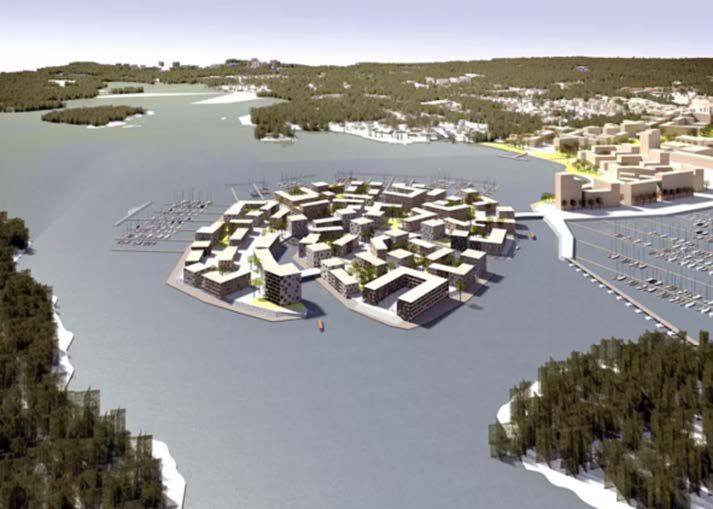
9

1.2
ENERGY CONCEPT FOR 2029
ENERGY BALANCE

Heat generation details
Let’s look now in more detail at all the assets needed for district
heating. In addition to electric energy from wind and heat pumps,                                                                                                                                                     Heat demand
                                                                                                                                                         Heat direct to customers
based on our analysis the baseline would be the following:                                                                                                                                                          6000 GWh per year
                                                                                                                                                           4200 GWh per year
•   Seawater heat pumps, with thermal capacity of 750 MW                                                                                                     ≥ 80 °C ≤ 45 °C
•   Wastewater heat pumps with the thermal capacity of 100 MW
    (aoready existing)                                                                                                          Heat to accumulator                Heat from accumulator             Heat storage
                                                                                                                                 900 GWh per year                    900 GWh per year                 900 GWh
•   250 MW biomass fired heating plant, which will be used as
    back-up capacity, but in normal situations is not needed                                                                         ≥ 80 °C                               ≥ 80 °C                     ≥ 120 °C
    (already existing)                                                                                                               ≤ 5 °C                                ≤ 5 °C                      ≤ 45 °C
•   Boilers for back-up, to secure heat supply in case failure of                           Electricity
                                                                                            2000 GWh        30 °C
    other assets (already existing)                                                                                                2-20 °C
                                                                                             per year
•   Use of Helsinki’s Hot Heart for heat storage
Helsinki’s Hot Heart storage will be fully loaded at the end of
summer, while its energy content will reduce during the autumn                                                                Sea Water
and winter. The figure below illustrates the energy content                                                                   3000 GWh                                                                 Biomass       Waste Water
                                                                                                            Solar heat
                                                                                                                               per year                                                             0 GWh per year 900 GWh per year
variation during the year. The storage will be loaded using solar                                            50 GWh
energy and seawater heat pumps. Because of the long time                                                     per year
period (approximately 6 months) to load the storage, the specific                                                                               Helsinki’s Hot Heart System Diagram
time periods and loading capacities can be selected freely and
adjusted to the time periods when wind power is available and
therefore the electricity has the lowest costs.

                                                                                           Energy Balance
                                                                                           Total heat demand is estimated to be 6,000 GWh per year in 2029.
    MWh
                                                                                           Seawater heat pumps would generate approximately 5,100 GWh
    800k
                                                                                           heat annually using approximately 2,000 GWh of electricity. Part
                                                                                           of the generated heat (4,200 GWh per year) would be transferred
    600k                                                                                   directly to the district heating network and part of it (900 GWh per
                                                                                           year) would be stored in Helsinki’s Hot Heart.
    400k
                                                                                           Existing wastewater heat pumps would generate 900 GWh per
    200k
                                                                                           year as base load during the whole year and biomass boilers
                                                                                           could be used for peak demand during the coldest winter days
      0                                                                                    and during sustained high electricity prices, but the estimated
           Jan   Feb   Mar   Apr   May   Jun   Jul   Aug   Sep   Oct   Nov   Dec   month   need is 0 GWh per year.
           Heat in Storage                                                                                                                                              District Heat Generation, Case 1
           Source: Helsinki’s Hot Heart team                                                                                                                            Source: Helsinki’s Hot Heart team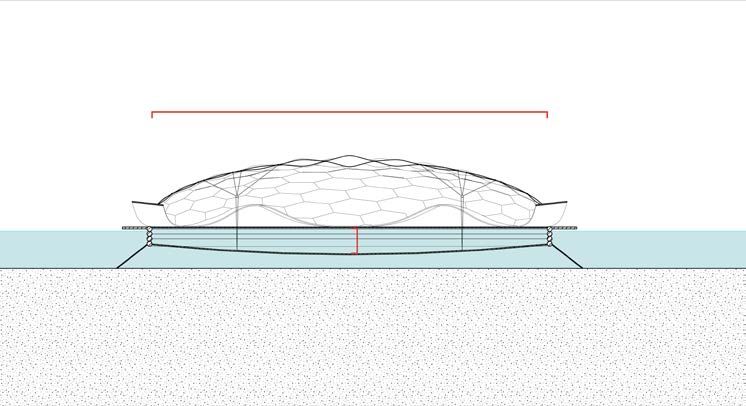
10

1.3
ENERGY CONCEPT FOR 2029
ENERGY MIXES

The proposed system can use several heat sources in an extremely flexible way. The figures illustrate some alternative mixes.

Case 1 - Most economical heat                                                                          Case 3 - Wind powered heat pumps
generation                                                                                             with biomass thermal energy
The most economical heat generation                                                                    The total capacity of heat pumps and
case is based on wind powering heat                                                                    the total investment could be reduced
pumps exchanging with seawater,                                                                        by utilizing the existing biomass
which would have thermal capacity of                                                                   heating plant during the winter. In such
750 MW. Total investment is estimated                                                                  case the total investment cost would
at 940 million Euros and variable heat                                                                 be 880 million Euros and variable heat
generation cost at 11.6 Euros per MWh.                                                                 generation cost 13 Euros per MWh.
BASE CASE               GWh / year     %                                                               BIOMASS + SEAWATER         GWh / year %
Seawater thermal        3,050       51 %                                                               Seawater thermal           2,700    45 %
Wind Power              1,400       23 %                                                               Wind Power                 1,300    22 %
Solar Power             50           1%                                                                Solar Power                50        1%
Other power             550          9%                                                                Other power                450       8%
Solar thermal           50           1%                                                                Solar thermal              50        1%
Biomass thermal          0           0%                                                                Biomass thermal            550       9%
                                               District Heat Generation, Case 1                                                                   District Heat Generation, Case 3
Wastewater thermal      900         15 %                                                               Wastewater thermal         900      15 %
                                               Source: Helsinki’s Hot Heart team                                                                  Source: Helsinki’s Hot Heart team
Total                   6,000      100 %                                                               Total                     6,000 100 %

Case  2 - Lowest investment
                                                                                                       Case  4 - Highly mixed energy sources
In order to minimize capex, natural                                                                    Heat pumps could use multiple heat
gas could be used initially to partially                                                               sources. In addition to seawater,
offset coal, while additional carbon-                                                                  heat could be taken from the ground
free heat generation could be added in                                                                 (geothermal) or air (air-to-water heat
later years (by 2035). Investment would                                                                pump). Geothermal is not a commercial
be 300 million Euros, although variable                                                                solution yet in Finland and therefore
heat generation cost would be high.                                                                    there would be uncertainties. Total
                                                                                                       investment would be approximately
LOW INVESTMENT          GWh / year       %                                                             950 million Euros and variable heat
Seawater thermal                       0%                                                              generation cost 13 Euros per MWh.
Wind Power                             0%
Solar Power		            50            1%                                                               HIGHLY MIXED            GWh / year    %
Other power                            0%                                                               Seawater thermal        1,890      32 %
Solar thermal                          0%                                                               Geothermal              810        14 %
                                               District Heat Generation, Case 2                         Wind Power              1,300      22 %   District Heat Generation, Case 4
Biomass thermal          2,300        38 %     Source: Helsinki’s Hot Heart team                                                                  Source: Helsinki’s Hot Heart team
Wastewater thermal       900          15 %                                                              Solar Power             50          1%
Natural gas              2,750        46 %                                                              Other power             450         8%
Total                    6,000       100 %                                                              Solar thermal           50          1%
		                                                                                                      Biomass thermal         550         9%
		                                                                                                      Wastewater thermal      900        15 %
                                                                                                        Total                   6,000     100 %
11
1.4
ENERGY CONCEPT FOR 2029
“HELSINKI’S HOT HEART” STORAGE
Storage Volume Construction Type Insulation
The energy content of the heat storage in Helsinki’s Hot Heart Helsinki’s Hot Heart is made of cylinders of 225 m diameter filled Heat losses of the storage can be minimized with insulation and
depends on the volume (m3) and the temperature difference (°C) with seawater. We have imagined two different types of storage— they are relatively small when compared to the total stored energy
between the empty and full storage. Dimensioning the storage is excavated and floating. The former is a more conservative amount. Estimated heat losses would be 3 GWh per year, or an
an optimization task, which has led us to approximately 700-1,100 solution. The design is similar to a standard pit heat storage, equivalent value of 50,000 Euros per year.
GWh depending on the energy mix. whereby most of the pit already exists thanks to the sea. There is a lot of available data about the existing pit heat storages
Our baseline is of a storage volume of 10 million m , with an
3
The volume of the biggest existing pit heat storage is 200,000 m .
3
and the insulation principles developed during the past 30 years.
energy content of 870 GWh based on a temperature difference of The structure of the seawater storage could be planned in detail The same insulation principles can be utilized in the proposed
75 °C (which means the temperature of full storage is 80 °C and during the planning phase. In areas where seawater is 20 m deep, storage. A conservative insulation solution is described below.
temperature of empty storage is 5 °C). only a 5 m excavation of sea bed would be needed. The amount For the excavated storage, 30 m thick rock walls will insulate the
The figure below illustrates the energy content in the storage of excavated ground would be 2.7 million m3, which would allow sides of the storage—similar to how ground material insulates
based on the temperature. The temperature of the empty storage building 30 m thick lateral walls. pit heat storages. It is not difficult to add insulating materials
can be achieved with a heat pump at the supply side of the An alternative is a fully-floating storage. This solution is more on the vertical walls, which are also covered with waterproof
storage. The electricity use of the supply side heat pump is taken experimental and will need to deal with the shallow seabed membranes.
into account in the seaside heat pump values. near Helsinki and the forces generated by tides and frozen sea The top of the storage would have a floating insulation cover
during the winter. However, such a solution could draw on recent with another kind of insulation. Such insulation would cover all
developments in offshore wind farm technology and would be surfaces in a floating solution. The precise type of insulation can
easily replicable across the world. be optimized during the planning phase of the project.
Parameters Sides Roof
Rock Material Polystyrol
GWh
900 (or similar) (or similar)
750 k-value W/mK 3 0.043
600 Thickness m 30 1.5
300
u-value W/m2K 0.1 0.029
Heat Loss MW 0.2 0.4
150
Heat Loss MWh per year 1,564 3,265
0
25 40 60 80 °C
Heat Loss Euro per year 17,209 35,910
Energy Content Based on Temperature Assumption for Energy Losses Calculations considering an avg. Possible Insulation Layering Detail
Source: Helsinki’s Hot Heart team temperature difference to surrounding of 32.5 °C Adapted from: “Insulation Material”, PTES the next generation of storing
Source: Helsinki’s Hot Heart team energy, Morten Vang Bobach, October 21, 2020, page 5.12
1.5
ENERGY CONCEPT FOR 2029
STRUCTURAL CONCEPT Seabed Embedded Storage Floating Storage
As mentioned, Helsinki’s Hot Heart is made of 10 basins, each
225 m in diameter with a varying depth averaging 25 m. Each
could either be a floating structure or partially excavated into
the seabed. The latter is more conservative and could work well
in Helsinki due to its shallow sea nearby. The former could use
innovative wind offshore technologies, have lower impact, and be Insulation Radial Cable
replicated in cities around the world. Wall
The excavated basin would require digging the sea bed. Excavated
225 m 225 m
rock will be used for the vertical walls, which could be up to 30 m
thick when the sea is 20 m deep. Excavating the seabed by about
5 meters would provide enough material for it—and also provide
Cable-
most of the required water volume. Thermal insulation would be
Stiffened
included on all surfaces to inhibit heat loss. Standard polystyrene Ring
could be used—or more innovative materials such as Tri-iso-
Super-10.
The walls of the floating basin would be made out of 100-inch
(approximately 2.5 m) diameter tubes, which are commercially
available for standard oil and water pipelines. They create a ring
to which prestressed radial cables are added to stabilize them
Structural Plan Structural Plan
(like bicycle wheels and as done in the Schmehausen Cooling
Tower in Germany). Up to 5 or 10 pipes would be put on the top of
each other, creating large cylindrical reservoirs of 225 m diameter
and 10-25 m high.
The rings are anchored to the seabed to prevent motion from wind
as well as sea and ice currents. At the bottom, they are closed
by a metal membrane. Water inside the floating reservoir is 0.5
m higher than sea level, which generates higher pressure inside,
keeping the lower membrane in tension (the higher water level is
Seabed Insulation Anchor Cable-
compensated by the floating power of the hollow rings). 225 m Wall 225 m Stiffened
Both basin types—excavated and floating—are able to carry Ring
domes that enclose attractions within. The domes are formed by
an inflatable structure made of ETFE. Each pillow of ETFE will
also contain nanogel to improve its insulating properties while
allowing natural light through them. 15 m Tubes
25 m
The top floating ring will also act as a cable-stiffened ring, utilized
at the base of the dome to counteract its outward-pushing forces.
Around the dome’s perimeter is a series of arches that allow
entrance to the dome and have a stiffening effect. The structural
floor of the attractions could be created using floating polystyrene
pontoons with bolted connections and thermal insulation. Structural Section Structural Section13
1.6
ENERGY CONCEPT FOR 2029
“HELSINKI’S HOT HEART” LOCATION
Location Scouting
Locations close to the coast might be too difficult in terms
of permits, so we have been looking at areas farther away. As
mentioned above, Helen has already started planning and
permitting for a 20 km long seawater tunnel from Salmisaari to
the deep sea to get warmer water for heat pumps during the cold TO HANASAARI CHP
winter months.
A possible location for Helsinki’s Hot Heart and the heat pumps
could be close to Pitkäouri Island, where the depth of the sea is
approximately 10-20 m (on the east side) and the sea bed is made
of solid rock. Helen is planning to have an access tunnel from the
Pitkäouri island to the seawater tunnel. Therefore it would be easy
to connect Helsinki’s Hot Heart storage to the seawater tunnel.
The aforementioned areas, military areas, ship routes etc. would
support the choice of the proposed location. The location is
approximately 3.5 km away from the shoreline of Helsinki. This
location could allow connection to the city in terms of heat pipes
and electricity for heat pumps.
A heat tunnel from Salmisaari to Hanasaari would also be
needed to allow the heat delivery to the whole district heating SALMISAARI CHP
network. Helsinki’s Hot Heart storage must be connected to 2 or
3 Combined Heat-and-Power (CHP) sites of Helsinki (Salmisaari,
Hanasaari, or Vuosaari) in order to have enough heat transfer
capacity. HELEN SEA WATER TUNNEL
TANK LOCATION
Potential location in the sea near Helsinki14
1.7
ENERGY CONCEPT FOR 2029 Apartment Building
Heating Data
AI, ANALYTICS, AND CONTROL
Weather Forecast
Helsinki’s Hot Heart and all its systems will be equipped with
a predictive energy management system. Predictive energy
management adds an additional layer for control and automation Electricity Tariff Rate
and allows the new installations to work synergistically with (hour/day ahead)
Cloud HMI
Helen’s district energy system and with the electrical grid.
Predictive energy management systems use data from sensors,
machine learning, and AI algorithms to optimize the use of the Thermal Tariff Rate
seawater heat pumps and other system components according (hour/day ahead)
to weather and thermal load forecasts. The system also allows
Helsinki’s Hot Heart to be used as a load balancer towards the
national electrical grid. Fingrid
The predictive management system also conducts operational CLOUD
and fault diagnostics to make sure that the system components
will be used in the most optimized way, minimizing the HELSINKI’S HOT HEART DISTRICT AREA
maintenance and life-cycle cost. The predictive energy
management system consists of the following components. Integration Hardware Integration Hardware Heating of
Helsinki’s Apartment
Buildings and
Energy monitoring and forecasting DH Network
Both electricity and heat generation / demand will be constantly
monitored and forecasted.
Tarif management (hour- or minutes-based data)
Electrical Photo- Waste
Automation Wind Biomass
Heat pumps will operate using electricity price information to Storage voltaics Water
minimize production cost.
Optional 1800 GWh 900 GWh 450 GWh
Peak load shaving
The energy management systems will minimize electric peak 20 MW
power demand.
Helsinki’s
Electrical network frequency control Heat Pumps Solar Heat Hot Heart
Storage
The high power consumption of heat pumps helps with the
300 MW 50 GWh 10 Mm3 Legend:
electricity network frequency control market to generate
870 GWh
additional income. The heat pump system will be sized and Control Part
designed to enable controlling according to electrical grid
frequency. Seawater 2800 GWh Electrical Part
Integration into the existing district heating system
Thermal Part
The predictive energy management system will be connected
and integrated with the control systems of the existing district
heating. The district energy system can be holistically optimized
to enable carbon neutrality and load balancing. Helsinki’s Hot Heart Energy Management System Diagram15
1.8
ENERGY CONCEPT FOR 2029
AI, ANALYTICS, AND CONTROL
Heat demand response of end users AI CONTROLLED
BUILDING
Additional benefits can be achieved by optimizing heat usage Remote control hardware and cloud AI makes every
in Helsinki’s apartment buildings. The main benefits of this apartment building in Helsinki smart.
approach include reduced total heat demand, smaller heating
power peaks, and resiliency of the district heating network.
Such benefits can be achieved from day one while Helsinki’s Hot Indoor sensor data
Heart is still being built. The proposed optimization method is
based on widely used and proven technologies and hence carries Weather data
little risk.
The district heating utility, Helen, could update the energy Adaptive & District heat data
contracts of its customers and install control equipment at Predictive AI
substations. The equipment gathers data and enables remote
control of heating. AI and machine learning algorithms can
then control and optimize the heat usage in the district heating System Diagram for Building with AI-Controlled Heat
network.
Benefits for building owners include reduced energy consumption
and a positive image coming from the participation in the
transition to carbon neutrality. At the same time, better real-time
knowledge of the heating substations allows the district heating
100% 50% 30%
utility to operate the network more efficiently. Quantity of Apartment Buildings in Heat Remote Control
12,000 6,000 3,600
Also, it would be possible to perform predictive maintenance
Estimated Yearly Energy Savings (GWh) 420 210 126
beforehand to improve the network’s resiliency. In case of
emergency, the utility can prioritize repairs, activate contingency
Savings compared to 2035 Consumption (6,000 GWh) 7.4% 3.7% 2.2%
boilers, and notify the customers on what procedures to take to
minimize the risk of damage to their buildings. Furthermore, data
Peak Power Savings (MW) 480 240 144
allows the utility to optimize the temperature in the network—
hence improving efficiency and reducing cost and emissions.
Total one-time Investment Cost Estimate (million Euros) € 18.0 € 9.0 € 5.4
Initially, the reduced overall energy demand will immediately
reduce carbon emissions while coal is still in use. Later, it will Yearly Operating Cost (million Euros) € 3.0 € 1.5 € 0.9
reduce the capacity needs of Helsinki’s Hot Heart. Similarly,
when power peaks are shaved, the need for biomass based peak Price for Saved Energy - 10 year life time (Euro per MWh) €9 €9 €9
boilers will be reduced. In short, such investment would be very
competitive against current and future investment opportunities Price for Saved Peak Power (Euro per MW) € 18,750 € 18,750 € 18,750
in energy efficiency, peak power generation and resiliency.
CO2 Emission Reduction (t)
. - Helen heat 2019: 198 g/kWh
83,160 41,580 24,948
Data Projections based on Percentage of Helsinki Apartment Buildings in Heat Remote Control
Source: Helsinki’s Hot Heart team16
1.9
HELSINKI’S HOT HEART
AS WORLD-CLASS ATTRACTION AMAZON RAINFOREST CENTRAL AMERICA RAINFOREST CONGO RAINFOREST SOUTHEAST ASIA RAINFOREST
A FLOATING TROPICAL FOREST BECOMES A NEW
DESTINATION FOR LOCALS AND TOURISTS
Helsinki’s Hot Heart is an unprecedented infrastructure that will
allow the city to achieve its ambitious carbon neutrality goals.
However, it can also do double-duty as an exciting, engaging
attraction for locals and tourists alike. It will become a new type of
urban experience, which will cement globally Helsinki’s leadership
in innovation and ingenuity and contribute to the wonder and joy of
being in the city.
We envision that four of the ten proposed 225 m diameter storage
basins would be each covered by a dome to create a climate-
controlled environment that we call the “Floating Forests”. Each
of these four domes would contain a year-round tropical forest—
one each from four key rainforest zones of the world (Amazon,
Central America, Congo, Southeast Asia). Visitors would spend the
day exploring and bathing in pools, immersed in the climate and
vegetation from faraway tropics.
These domes would provide an important service to local Helsinki
citizens as a way to experience warmth, light, and a change of
scenery during the long, cold winter months. For tourists (in all
seasons of the year), the Floating Forests would be a fun and
engaging attraction. The use of so-called sun-like LEDs, which emit
with the same spectrum of solar light, could also provide much-
needed exposure to sunlight during the cold winter months.
The simple pleasures of “island life” have been long praised by
Finnish writers and authors, as in Tove Jansson’s famous “Summer
Book”. Helsinki’s Hot Heart project imagines a new place where
people can live and roam amidst nature, in harmony and peace,
bringing about a new vision for Finland’s life in public spaces,
as enrishined in the country’s everyman’s right (“Jokamiehen
Oikeudet”). In addition to the forests and hot pools, there could
be saunas, huts, a museum and a research center on the future
of sustainable energy. Helsinki’s Hot Heart could become a global
tourist destination—one based on silence and respect of nature.
Rainforest Dome Plan Exploded Axonometric View17 1.10 HELSINKI’S HOT HEART AS WORLD-CLASS ATTRACTION A FLOATING TROPICAL FOREST BECOMES A NEW DESTINATION FOR LOCALS AND TOURISTS The domes on Helsinki’s Hot Heart that would add a significant financial benefit to the city in both direct and indirect revenue. While this revenue has not been included in our financial calculations, it has been estimated as several hundred million Euros per year. For all people, the opportunity to visit Helsinki’s Hot Heart would also be of educational value so they can learn about energy and how the city has made its way to carbon-neutrality.
18

1.11
HOLISTIC ENERGY CONCEPT FOR BEYOND 2029
SCHEMATIC CONCEPT

The system described above contains all the elements to generate
carbon-free heat at a price lower than today. Still, this section            SOURCE                              STORAGE                                             PRODUCTION                         DEMAND
integrates Helsinki’s Hot Heart within a holistic reflection and
                                                                                            650                                                                             390
proposes renewable energy technology add-ons in order to
integrate electricity production and flexibility of supply. We will                                             Heat storage
                                                                                                                                                                                                                 5‘800
focus in particular on the following two points.                            Solar thermal
First, instead of a Power Purchase Agreement to buy electric                                              260
energy, we could build a dedicated wind farm. The feasibility study                                                                                                                                                      City
                                                                                                  Heat pump                                                     Heat pump
has been done with one of the top utilities in the world and is
summarized below. Second, while the storage of electric energy                                                                                    260                         3‘000
is still very expensive, new systems based on Power-to-Gas (P2G)             Sea water                                                                                        2‘400
                                                                                      1‘300
are being developed and could become competitive by the end of
the decade. We have tried to include them as possible long-term                                                                              900                                               370
add-ons.                                                                                                                                                             150
                                                                                                                                                                                                     Waste heat
                                                                                                                   +   -        H       H   CO2
Dedicated wind farm                                                                                                        H2
                                                                                                                                    C
                                                                            Wind power6‘500                                                                                   650
                                                                                                                  H 2O          H       H
                                                                                                                                            CH4
As an additional possibility for adding to the holistic post-2029
energy vision for Helsinki, we have explored the possibility of a                                                Electrolysis Methanation               3‘200   Co-Generation (CHP)                      6‘700
new wind farm which is dedicated to providing the electric energy
for Helsinki’s Hot Heart’s heat pumps. Such an approach could be                                                                                                              1‘450
an alternative to the Power Purchase Agreement discussed above.
The new wind farm would most likely be located on the west                                                                                                                    4‘600
coast or in the north of Finland. Considering Finland’s current
wind farms and average resource availability, we estimate a wind            Renewables sources
capacity needed to be developed around 700 MW (approximately
                                                                                                                System Diagram for Holistic Concept for Beyond 2029 [1]
140 wind turbine generators) to provide the energy needed by the
heat pumps.

Electric energy storage
                                                                                                                                                                            [1] Based on approximation of total heat and
The implementation of hydrogen production and optionally              Such an approach would contribute to decarbonizing other                                              electricity required for Helsinki. Unit: GWh
methanization, completed with a co-generation process (which          sectors—such as mobility and industrial sectors—using existing
would be used as CO2 source) opens the opportunity to support         gas infrastructure for the transport of renewable methane.
both the heating system and electricity grid independently from       Together with Helsinki’s Hot Heart heat storage and other
the temporal fluctuation of the renewable source availability.        electricity storage technologies available in decentralized and
Indeed, wind energy excesses are stored as gas, which, when           smaller scales, this would bring Helsinki comprehensively in a
needed, is in turn used for powering a Combined Heat-and-Power        cross-sectorial way towards a climate-positive future.
plant.
19
1.12
EVALUATION CRITERIA
CLIMATE IMPACT
Heat generation in 2029 will entail zero carbon emissions. would be sold to the electricity market. Therefore, the net carbon kWh per year. With 2,300 GWh per year electricity required, the
Electricity for heat pumps will be generated primarily from wind, impact of the electricity would be zero. wind farm’s life cycle emissions are 25,760,000 kg CO2 per year or
either through a Power Purchase Agreement or through a newly If the CO2-emissions of electricity bought on the market are 644,000,000 kg CO2 for the whole life cycle. The overall estimation
constructed wind park. Partial use of other carbon-neutral considered, we get 23,000 tons per year of CO2, i.e. 3.9kg CO2 shows that the construction-related emissions can be covered
electricity and heat sources is also envisioned, as discussed in the per MWh of heat generation. The total annual CO2 savings of with one year’s CO2 savings gained from Helsinki’s Hot Heart.
section related to different energy mixes. Helsinki’s Hot Heart are estimated to be 1,188,000,000 kg of
CO2. Our 6,000 GWh carbon-neutral thermal energy compares
favorably with the current district heating production and its Climate impact of ‘Holistic Energy Concept for Beyond 2029’
Climate impact of operations average emissions of 198 kgCO2 per MWh of district heating.[1] The holistic concept Helsinki’s Hot Heart and add-ons are
The competition material estimates carbon emissions of anticipated to be completely climate neutral, as this is the exact
electricity in 2030 at 30 kgCO2 per MWh. Through the approach purpose of considering a holistic energy concept. This concepts
discussed above, the CO2-emissions would be reduced from the Climate impact of construction do not only target a sustainable heat supply for the district
competition estimates. This would occur in particular though The estimated emissions from the main construction materials heating of Helsinki as a replacement from the coal Combined
a Power Purchase Agreement to buy wind power only/partly or are presented in the following table. The crushed stone used for Heat-and-Power (CHP) plant, but also recognize the fact that,
building an ad-hoc wind park. the construction of the storage option that is excavated into the by turning down coal CHPs, a certain amount of electricity also
The wastewater and seawater heat pumps need approximately seabed is considered carbon neutral. The estimation doesn’t has to be replaced, as well as the fact that, heat pumps might
2,300 GWh per year of electricity. If the capacity of the newly include emissions from construction work; this will be analyzed require electricity during times of low wind. Therefore, it proposes
constructed wind park is 700 MW, 70% of the electricity needed further during the actual design phase as well as the embodied add-ons in the form of a power to gas installation, coupled to a
(1,600 GWh per year) will be generated with wind power and 700 emissions of different technical systems like the heat pumps. cogeneration plant, in order to store the excess wind power. This
GWh per year can be bought from the electricity market. The wind system is then able to produce heat and power in a very flexible
According to a recent study at Tampere University, the average way and to provide renewable heat and electricity to the city, even
park would generate 2,300 GWh per year electricity, and 30% of it life cycle for an onshore wind farm is estimated to be 11.2g per when the wind is still.
[1] ”Specific emissions of energy “. Helen. Accessed 17 January 2021.
https://www.helen.fi/en/company/energy/energy-production/specif-
ic-emissions-of-energy-production Seabed
Key Material Embedded Storage Floating Storage
Emissions
Volume Emissions Volume Emissions
tkg CO2 rate
[m3] [tkgCO2] [m3] [tkgCO2]
800k [kg CO2/m3]
80 % 400k
Steel 12,000 13 150 12,450 149,400
-1,188,000
60 % 0k
83,506 217,950 644,000 Concrete 600 137,000 82,200 110,200 66,120
40 % -400k Insulation 2 520,500 1,156 1,094,400 2,430
Crushed
20 % -800k 0 2,128,743 0 0 0
Stone
0% -1200k
Total 83,506 217,950
300 400 500 600 700 800 900 1000 MW Seabed embedded Floating storage Wind farm Annual CO2 savings type
Capacity of Wind Park storage (main materials) (main materials) Construction (198 tkg/GWh
6,000 GWh per year )
Share of Wind Power Estimated Emissions by Material Estimated Emissions by Material
Source: Helsinki’s Hot Heart team Source: Helsinki’s Hot Heart team Source: Helsinki’s Hot Heart team20
1.13
EVALUATION CRITERIA
IMPACT ON NATURAL RESOURCES
Artificial Islands The energy storage will be built in the sea as an artificial island or Again, we believe that this could be addressed in a similar manner
No fuels or materials are needed during operations. The impact as a floating solution. Therefore no existing land area is needed. to how it has been addressed in already-built systems (such as
of building Helsinki’s Hot Heart needs to be carefully assessed. The surface area of the storage is approximately 400,000 m2. the Stockholm one mentioned above) or in other examples under
However, we believe that any impacts will be rather limited and We do not anticipate major environmental concerns related to planning such as the Helen tunnel.
local. Several artificial islands have been planned in the Baltic Helsinki’s Hot Heart, although its exact location will have to be
sea and some of them are currently being built after careful carefully selected based on the environmental considerations.
Impact on natural resources for ‘Holistic Energy Concept for
assessment of their impact on natural resources. With the excavated basin option, the excavated seabed material
Beyond 2029’
For instance, the City of Espoo, not far from Helsinki, is planning will be used to build the walls of the storage. If the use of the
storage would someday be discontinued, the wall material could In this concept, hydrogen is being created through electrolysis
the new residential area of Finnoonsatama for15,000 inhabitants
be put back to the sea bottom where it was taken, according to and then turned to methane through methanation. This last step
to be built on an artificial island. An environmental impact
circular economy principles. enables the use of the existing gas network for gas (methane)
assessment for Finnoonsatama is publicly available (over 300
transport. In the process of electrolysis, H2O (the source of
pages)1 and no major environmental challenges have been
hydrogen) is being split using electrical energy coming from
identified. The study investigated the impact of building the
Local Cooling in Seawater excess wind power, a renewable energy. Finally, in order to create
artificial island on, for example, master planning, people, traffic,
The cooling of seawater, as a result of the operation of heat methane, CO2 from the co-generation plant is used and so the
noise, emissions, climate, people, ground, seabed, ecosystems,
pumps, will only have a very minor impact on the marine CO2 circle is closed: the emissions produced by burning the
animals, plants, insects and cultural issues, etc. Finnoonsatama
ecosystem. The heat pumps decrease the temperature of the renewably sourced methane is used for creating this methane.
is located 14 km from our planned heat storage location.
water very locally and only 1-2 °C especially in winter. The outlet A cogeneration system based on renewably-sourced methane
water of heat pumps will be mixed to the sea water and therefore allows the avoidance of systems relying on biomass, for which
the temperature impact is minor. Condensing power plants heat culture is necessary, as the necessary resources for operation are
1 https://www.ymparisto.fi/fi-FI/Asiointi_luvat_ja_ymparistovai- simply water and wind.
kutusten_arviointi/Ymparistovaikutusten_arviointi/YVAhankkeet/Fin- the sea remarkably more.
noon_sataman_ruoppaus_taytto_ja_lajitys_Espoo/Finnoon_satamaal-
ueen_rakentaminen_Espoo(17077)21
1.14
EVALUATION CRITERIA
COST IMPACT - CAPITAL EXPENDITURE
The cost of Helsinki’s Hot Heart overall system consists of the Investment in the storage Investment of heat pumps and other items
following main items: heat storage, heat pumps, tunnels, and Detailed construction solutions of the storage system can be Heat pumps: the investment cost of heat pumps is well
electricity connections. The system can be optimized by adding selected in detail during the next phase. However, the costs of known, and it is approximately 560 Euros per kW (thermal). The
solar thermal and/or PVs, although they are not essential. The existing pit heat storages are publicly available. One of the most investment costs also includes the required automation systems
total investment cost estimation is 940 million Euros. expensive parts of the investment is the floating insulation on the of each technology as well as the construction and integration
top of Helsinki’s Hot Heart storage. of the predictive energy management system. Electricity is likely
The investment cost of existing large pit heat storages has not available there with 300 MW capacity, so the grid must be
Storage (10,000,000 m3) € 200,000,000
been 20-40 Euros per m3. Construction at the sea will be more improved.
Heat Pumps (300 MWe) € 420,000,000 expensive than on land, but most excavation work will not be Seawater tunnel: 20-30 km long tunnels are needed to exchange
Solar Thermal € 20,000,000 needed thanks to the presence of the sea. For the excavated seawater and to contain district heating pipelines and electrical
solution, only 5 m out of 25 m must be removed, and the resulting cables. The cost of tunnels with equipment is approximately 4000
Tunnels (25 km) € 100,000,000 material could be used as the wall material of the storage Euros per meter.
Electricity Connection € 50,000,000 The realistic investment cost for the storage would be 20 Euros
Other and reserves € 150,000,000 per m3, so a 10 million m3 storage would cost 200 million Euros.
Total € 940,000,000
4%, 25 Years 60,171,245 Euro per year €/m³ WE Investment cost per m³ water equivalent
10.03 Euro per MWh 400
*) water equivalent volume: Tank (TTES)
Helsinki’s Hot Heart Investment Cost Estimation (VAT 0%) Hanover ρSM · c p,SM · ∆T SM
Source: Helsinki’s Hot Heart team 350
V WE =V SM
ρw · c p,w · ∆T w Pit (PTES)
Hamburg SM: storage medium Borehole (BTES)
W: water
300 ∆T: usable temperature difference Aquifer (ATES)
** ) monetary value 2017 Others
Munich
250
Marstal (75,000 m3) Cost (1,000 Euro) Euro per m3 Friedrichshafen
200
Eggenstein
Excavation 601 8.0 Neckarsulm 1
Chemnitz
Side and bottom liners 180 2.4 150 Crailsheim
Lid 1,069 14.3 Marstal-1, DK Okotoks, CA
In and outlet 172 2.3 ttenkirchen
A Neckarsulm 2 Dronninglund, DK
100
Water and water treatment 195 2.6 Marstal-2, DK
Toftlund, DK
Pipes and heat exchanger 413 5.5 50 Braedstrup, DK Gram, DK
Total 2,630 35.1 Vojens, DK
Rostock
0
1000 10000 100000 1000000 m³ WE
Comparison: Cost of Storage in Marstal (SUNSTORE 4)
Source: Kallesøe, A.J. & Vangkilde-Pedersen, T. (eds). 2019: Underground Thermal
Cost Comparison of Global Heat Storage Projects
Energy Storage (UTES) – state-of-the-art, example cases and lessons learned. HEAT-
Source: SOLITES 2019
STORE project report, GEOTHERMICA – ERA NET Cofund Geothermal. P109,P110.22
1.15
EVALUATION CRITERIA
COST IMPACT - OPERATING EXPENDITURE
Heat generation costs for 6,000 GWh per year in the existing Cost of electricity Seawater heat pumps can be utilized when low cost electricity is
heat generation system are approximately 165 million Euros. Most of the heat will be generated with heat pumps using available and can avoid the highest electricity prices. The average
The heat generation costs of our proposed solution is 70 million electricity. The electrical tax for heat pumps generating district price of the electricity for seawater heat pumps is estimated to
Euros per year—95 million Euros less expensive than current heat will be 0.5 Euros per MWh in 2022. The electrical grid cost of be 30 Euros per MWh including the grid cost of Fingrid and the
heat generation and 80 million Euros less expensive than a fully Fingrid is 8.80 Euros per MWh from December through February electrical cost in addition to the energy.
biomass-based solution. between 7:00 and 21:00, Monday through Friday. At other times, Wastewater heat pumps utilize approximately 15-20 °C
Personnel costs and other operational costs of the heat pumps the cost is 2.50 Euros per MWh. Because of the high electrical wastewater as a heat source. The average efficiency (COP) of
and storage are remarkably lower than Combined Heat-and- capacity, the heat pumps would be connected to the grid of the heat pump is estimated to be 3, but could be also higher.
Power (CHP) plants currently have. However, the cost impact Fingrid instead of the grid of Helsinki. Wastewater heat pumps generate 900 GWh per year heat and
is estimated to be zero. Typical Capex costs of heat pumps are The price of the electricity can be secured at least partly with consume therefore 300 GWh electricity per year. The cost of
estimated to be 1.5 % of the investment, and other O&M may wind Power Purchase Agreements, so that wind electricity from electricity is approximately 9 million Euros per year..
cost 0.5 Euros per MWh, but the CHPs being replaced have higher constructed wind parks would be bought in advance. The current Seawater heat pumps utilize a 3 °C heat source in Winter and
costs. Power Purchase Agreement price level is 25-30 Euros per MWh a 20 °C heat source in summer. The average efficiency (COP) is
The table includes estimated heat generation costs. Costs are and the realistic price level at the end of the 2020s decade is 2.5. When the heat pumps generate 5,000 GWh per year heat,
based on a solution of 10,000,000 m3 heat storage and 300 likely 20-25 Euros per MWh. Thanks to the seasonal heat storage, they consume 2,000 GWh per year in electricity. The cost is
MWe heat pump without the use of biomass. The total energy the heat pumps do not need to be used during the highest approximately 60 million Euros.
generating costs would be 70 million Euros per year without electricity prices.
capital costs and the average cost of generated heat would be Wastewater heat pumps will be used all the time and the use of
11.6 Euros per MWh. Current heat generation cost
them cannot be adjusted based on the electricity price. Therefore,
the electricity price is estimated to be 40 Euros per MWh on Based on the open district heating purchase prices, the heat
average. generation cost with the current production structure would be
165 million Euros per year (27.6 Euros per MWh) and with biomass
only 150 million Euros per year (27.5 Euros per MWh).
Price
Electricity for wastewater HP 9,000,000 Euro per year Purchase Price
Coefficient of
Season Period Euro per MWh,
Electricity for seawater HP 60,600,000 Euro per year the Energy Fee
0% VAT
for District Heat
Biomass 0 Euro per year
Personnel costs 0 Euro per year Winter 1/1 - 28/2/2021 37.95 70%
O&M 0 Euro per yearr Autumn 1/10 - 31/12/2020 28.22 55%
Total 69,600,000 Euro per year Summer 1/5 - 30/9/2020 11.25 40%
11.60 €/MWh Spring 1/3 - 30/4/2020 25.08 50%
Helsinki’s Hot Heart Heat Generation Cost (VAT 0%) Heat Purchase Prices of Helen
Source: Helsinki’s Hot Heart team Source: Helen23
1.16
EVALUATION CRITERIA
IMPLEMENTATION SCHEDULE
The solution can be implemented fully by 2028—two years in Risk assessment of the schedule
advance of the competition goal! The system is also built from The biggest risk in the time schedule is permitting. Because
modules ( smaller heat storages and heat pump plants) which of the influence of the city of Helsinki, and the fact that the
could be brought into use even earlier than 2028. With the use of environmental impact of the system is minor, the time schedule
biomass and natural gas, the coal could be replaced already in estimated is realistic.
2026, giving a four-years buffer for the time schedule.
From the technical point of view, the time schedule is plausible,
The first phase of storage and heat pumps are estimated to be and gives a good margin for unexpected challenges, e.g in the
brought into use in 2026. Already with the first phase, the use of permitting phase.
coal can be replaced; therefore, there is three years of buffer in
the time schedule to replace the use of coal in 2029. The aim is
to also replace the use of natural gas and biomass in 2028 with
phase 2 of the storage and heat pumps.
YEAR 2021 2022 2023 2024 2025 2026 2027 2028 2029 2030 ON GOING
Team
Mobilization
MASTER PLANNING
SYSTEM PLANNING
SCHEMATIC
DESIGN (SD)
DESIGN
DEVELOPMENT
(DD)
CONSTRUCTION
DRAWINGS
(CD)
ENVIRONMENTAL PERMITTING
TENDER
COMPETITIONS
CONSTRUCTION PERIOD
START OF START OF
OPERATION OPERATION
(PHASE 1) (PHASE 2) Anticipated project schedule24
1.17
EVALUATION CRITERIA
IMPLEMENTATION FEASIBILITY
The investment estimation for the system is 940 million Euros and The financing could be structured either a) a traditional way, i.e. due to the attractions on the storage. They can be remarkable
annual heat generation costs are 95 million Euros less expensive Helen would take the loan to its balance sheet or b) using a PPP- tourist attractions, bringing new income streams to Helsinki and
than currently. The payback period of the solution is 12.8 years structure, In the PPP-structure, an SPV company would take the promoting Finnish values.
(4% interest rate), making the system totally fuel and CO2- responsibility of building and operating Helsinki’s Hot Heart and a
emission free. In addition to its financial feasibility, we believe service agreement with the city of Helsinki (and/or Helen) would then
that the solution is very feasible from a technological, legal, secure the cash flow for the SPV to be able to fulfill its financial and Other relevant feasibility aspects
permitting, and cultural point of view. operational obligations during the service period. We think that a The system has a very positive impact on the whole power system
PPP-structure would attract a vast scale of international investors to of Finland and it enables the construction of a high amount of
take part in the financing, especially since the operations of Helsinki’s new wind power generation in Finland.
Technological feasibility Hot Heart would easily fall into the category of “green financing”.
All the district heating systems in Finland use fossil fuel at least
The heat storage and heat generation can be built with fully- In addition to traditional bank financing, also EIB/NIB involvement
at peak capacity. Energy storage as in Helsinki’s Hot Heart could
proven and commercial technologies. The technology of existing and/or bond market could be potential sources for financing. This is
be used in all district heating systems in Finland to replace the
pit heat storages can be utilized, and seawater heat pumps are especially true considering the current low interest levels: we see that
use of fossil fuels in peak heat generation. All district heating
already commercially used. We are using proven technologies, just the overall financing cost would be very feasible, taking into account
systems also abroad have the same kind of challenges related
at a bigger scale. There would also be the possibility to improve the importance of finding the most efficient and ecological district
to heat load variation and therefore this kind of solution could
the solution even further during the planning phase of the project. heating system for the biggest city of Finland.
be implemented in many places throughout the world, especially
The average energy price of district heat in Helsinki has been 51.05 since most cities are built near large bodies of water.
Euro per MWh (VAT 0%). Including the capacity fee, the average selling
Financial feasibility of Helsinki’s Hot Heart Utilizing the predictive energy management system, Helsinki’s
price of heat has been approximately 65.3 Euro per MWh (VAT 0%).
The aim of Helsinki’s Hot Heart is to replace Helsinki’s current Hot Heart also has a possibility to work as a load balancer for
Including all CAPEX and OPEX costs, the proposed solution of heat
district heating production units with a new, zero-emission the electrical grid. Currently the Fingrid frequency containment
generation is approximately 6 Euro per MWh cheaper than now.
storage solution and at the same time gain 10% lower production reserve for normal operation values 30 MW of flexible load at ~1.5
When all other costs would be the same, we could provide heat to the
cost, which can enable a 10% lower selling price for district -3.0 million Euro per year (4,380-8,760 active hours) depending
customers approximately 10% less expensive than currently.
heating compared to the current situation. The cash flow based on the time at which the system is active on the market. The heat
on heat storage only should be enough to cover the construction pump system of Helsinki’s Hot Heart will be designed and sized
and operating costs, including financing. Additional possibilities Legal feasibility in a way that maximizes the balancing load. Due to the large
relating to base load equalization in the national grid and a tourist amount of potential load, the connection to the relevant markets
The solution will not need changes in the current legislation. The
attraction that can be built on Helsinki’s Hot Heart concept would (frequency containment reserves, balancing energy or others) will
heat storage will need environmental and water permits, but
be providing an additional cash flow bonus. be determined together with Fingrid during the master planning.
artificial islands have already received permitting in the Baltic sea
without any major environmental issues.
Feasibility for ‘Holistic Energy Concept for Beyond 2029’
Investment 940,000,000 Euro
Administrative feasibility Our proposed solutions are already proven in numerous very
60,171,245 Euro per year different projects, ranging from apartment buildings to central
The system must have an environmental permit and a water
Annual Costs 69,600,000 Euro per year energy systems. The technology can easily be scaled up. To
permit. Permitting can be done by current permitting procedures.
quote Armin Schnettler, executive vice president of New Energy
Total Cost 129,771,245 Euro per year The city of Helsinki can play a role in the process.
Business at Siemens Gas and Power: “There are no limits to the
21.63 Euro per MWh size of Power-to-Gas plants”. In 2020 already, the planning of a
Cultural and ethical feasibility Power-to -Gas installation with an electrolysis power of 600 MW
Difference to current cost 35,228,755 Euro
was announced.
The impact of the proposed system to cultural and ethical
Helsinki’s Hot Heart Total Cost (VAT 0%) issues is very limited, but the impact could be also very positive
Source: Helsinki’s Hot Heart teamYou can also read


