The Art of Smart Crowe 100 Decision-Making Index and Report 2018 - Crowe LLP
←
→
Page content transcription
If your browser does not render page correctly, please read the page content below

The Art of Smart
Crowe 100 Decision-Making Index and Report 2018

Audit / Tax / Advisory / Risk   Smart decisions. Lasting value.

2

Table of Contents

Welcome2

Commentary | Hard Decisions Are Getting Harder                            4

Crowe 100 Decision-Making Index and Report 2018

        Introduction                                                      7

        Methodology                                                       8

        Index                                                             10

        Report | Decisions With Lasting Value Require More Than Science   12

Spotlight | The 21st-Century Milkman                                      14

Spotlight | Instinct and Adversity Cultivate a Healthcare Powerhouse      18

Spotlight | Choosing Investments from the Clients’ Perspective            22

Spotlight | The Gender Factor                                             26

Spotlight | Balancing Disruption and Heritage                             30

Spotlight | Brewery’s Fortune Favors the Bold                             34

                                                                                1
Welcome to
the Crowe 100
Decision-Making
Index and Report 2018
Helping clients make smart decisions           As part of our exploration of this topic,
that create lasting value is at the heart of   we made an early decision to share our
the Crowe value proposition. If you look       findings. As well as seeking the insights
at any of the services that our member         of experts around the world, including
firms provide — audit, tax, risk consulting    some of Crowe’s thought leaders, we
or advisory — you will find our people         decided to try and quantify the traits of
striving to do this in their work every day.   quality decision-making in the context of
We believe that this is part of what makes     corporate success.
us different, together with our core values
of caring, sharing, investing and growing.     Using data from the 2017 Forbes Global
                                               2000 report, public filings and a news
We wanted to apply those core values           audit, we researched the 100 most
to the concept of smart decisions,             profitable companies in industries we
so we decided to invest some time              frequently serve, weighing the effects of
considering what elements lead to smart        growth, diversity, boldness and innovation
decision-making. As we shared that             over a five-year period. (A full methodology
question we found a rich and dynamic           statement can be found at
area of study and thought. We found            www.crowe.com/methodology.) Our
that many of the world’s brightest minds       findings reflect the significance of these
continue to explore the many facets of         themes while also illustrating when outside
decision-making.                               factors affect the outcome of a decision,
                                               possibly creating a false sense of success
In making any significant decision, we all     or failure.
face a range of variables and also carry a
host of unseen biases that influence us.       We hope that both the report and index
At Crowe, we care about understanding          contribute to a deeper understanding of
this process better, and also asking the       what goes into smart decision-making
question: if we can learn more about the       and create further interest in an ongoing
art of decision-making, can we improve         dialogue on a subject that we are
the quality of our own decisions?              committed to in the service of our people,
                                               our clients and our communities.

                                                                            David Mellor
                                                                      CEO, Crowe Global
                                                                            June 4, 2018
Hard Decisions
    Are Getting
    Harder
    They’ve never been easy for anybody in a
    leadership position, of course. Many of the
    hundreds of CEOs I interviewed for the “Corner
    Office” series in The New York Times told me
    that this aspect of the job represented one of their
    steepest learning curves.“

    “You’re not going to be able to run the      The burden of decision-making can
    numbers and come up with the perfect         be paralyzing to many executives,
    answers,” Debra Lee, the veteran CEO of      creating a further bind. Indecision can be
    BET Networks, told me. “I had to learn to    demoralizing to teams, and defaulting to
    make decisions quicker on the spot and       the status quo is a risky decision in itself,
    follow my gut.”                              given how quickly the marketplace can
                                                 punish companies that stand still. If you
    With every industry in a constant state      look under the hood of organizations that
    of disruption, the stakes are higher, too.   perform well and have high employee
    There is more pressure to get the answer     engagement and retention, you likely will
    right every time, and there are new          find a strong culture of decision-making.
    challenges around every corner. What is
    our AI strategy? How do we disrupt our       Studying the patterns across more than
    own legacy business? Which unforeseen        2,500 senior leaders since the financial
    competitor might blindside us?               crisis, my colleagues at Merryck & Co.
                                                 and I have seen three guiding principles
                                                 for effective decision-making and one
                                                 recurring blind spot.

    Adam Bryant is managing director of Merryck & Co., a global
    senior leadership development and executive mentoring firm.
    Before joining the firm he worked as a journalist for 30 years.
    He interviewed more than 500 CEOs for the “Corner Office”
    series he created for The New York Times, work that also
    resulted in two highly regarded books on leadership.

4
First, be clear about the foundational        “The other 10 percent, though, are going
thinking for your business. What is the       to have existential implications for your
problem the organization exists to solve,     business,” Gordon said. “These are the
and what is your simple plan for winning      decisions that will determine whether you
against that problem? That plan is not        succeed or fail in the long run.” Knowing
an essay or a strategy deck. It is in         the difference between the 90% and the
one sentence that tells a clear story to      10% is a key aspect of leadership.
employees — to be able to say, in effect,
“Always remember where we’re going,           Third, develop a consistent framework for
how we’re going to get there, and how         making decisions. That creates a forcing
we’re going to measure progress.” That        mechanism to clarify thinking before
clarifying idea then becomes a compass        people meet for discussion and debate.
for navigating decisions at all levels of     Jeff Bezos, the CEO of Amazon, recently
your company: does this issue align with      shared in a letter to investors that he has a
our simple plan, and how will it move us      “No PowerPoint” rule, and requires people
further, faster?                              to write a narrative six-page memo to
                                              pitch a big idea.
“A leader’s job is to simplify complexity,
and be right,” said Kevin Sharer, who ran     “The great memos are written and
Amgen for a dozen years. “You’ve got          rewritten, shared with colleagues who are
to have the context for answering the         asked to improve the work, set aside for a
questions. When people struggle with          couple of days, and then edited again with
decisions, it’s often because they take       a fresh mind,” Bezos wrote.
refuge in complexity.”
                                              Lastly, guard against blind spots. That
Simplifying complexity also means             means enlisting a diverse group of
focusing on a few priorities at a time,       colleagues to study a problem, rather than
which is the only way to build to             just those within a single business unit.
momentum to create real change.               Different backgrounds lead to different
                                              perspectives, which help everyone
“Time is the only one clear constraint        see around more corners and inspire
in life, and if you focus on a few things,    questions and insights that illuminate an
you have a great chance of achieving          issue in an entirely new light.
something interesting,” said Rakesh
Kapoor, the CEO of London-based Reckitt       Making effective decisions is not going
Benckiser.                                    to get easier, and the best organizations
                                              develop it as a discipline that everybody
Second, be clear about which decisions        can practice, rather than a black-box
can be made quickly, and which ones           mystery. Decisions are the oxygen of
deserve more time. Bruce Gordon, the          organizations — they need them to survive
former CFO of Disney Interactive, who         and thrive.
has been a Merryck mentor to senior
executives for several years, often reminds   “People need to know whether we’re
them that about 90% of the decisions they     going left or right,” said Carter Murray,
face can be answered in a minute or two.      the CEO of FCB, the global advertising
The stakes for those decisions are low,       agency. “Making a decision is half
and people usually know enough at a gut       the battle.”
level to make the call and move on.

                                                                                              5

The Crowe 100
Surely decision-making is an art, but how close to
a science can we make it?

As noted in our special report, the study of decisions is a vibrant and growing field of
research. We wanted to know if there was any measurable correlation between the
themes we see in research and thought leadership and the performance of public
companies.

Using the 2017 Forbes Global 2000 list, we focused on three international sectors where
Crowe has deep experience: manufacturing, healthcare and real estate (omitting any
companies that had recently faced major scandals). We selected the top 100 companies
across these three sectors based on 2017 profits. This provided an even geographic and
industrial balance.

Our research revealed some interesting findings and case studies. We hope it provides
food for thought as we all endeavor to improve the process of making smart decisions.

                                                                                           7
Methodology

    One of the top challenges of corporate leadership is strong
    and effective decision-making. More than any other factor,
    decision-making remains the key component to determining
    successful companies from the flock and predicting
    future success.
    Through our history of working with top business     indicators and subjective analysis of the products
    leaders and corporate boards, we’ve come to better   and process of good decision-making.
    understand the importance of decision-making
    and of studying its impact and results. As part of   We recognize that while a good decision may be
    this process, we set out to create an index of the   difficult to grasp at any one point, the effects of a
    top decision-making companies by using objective     good decision can be thoroughly examined.

                        GROWTH                                                DIVERSITY
             An analysis of companies using financial              An analysis of governing boards and
             performance measurements, since                       C-suite executives that recognizes
             companies that make better decisions are              the powerful advantages of a diverse
             apt to perform above their peers in the               corporate team. We scrutinized annual
             long term. Recognizing that investment                reports to measure gender and nationality
             markets provide a gauge of relative                   diversity over the five-year period and the
             performance, we scored companies’                     growth of diversity over time.
             market capitalization growth over
             the period.

8
For the Crowe 100 Decision-Making Index 2018, Using the Forbes Global 2000 report as our
our methodology endeavors to unravel the minds of base data set, we created our index by breaking
top companies using the objective results of good decision-making into four components, which we
decisions and with analysis of a company’s actions, analyzed and weighted equally, using data from the
keeping in mind the characteristics of a strong five-year period from 2013 to 2017.
decision-making process.
BOLDNESS INNOVATION
An analysis of the critical yet eventful steps A study of the companies’ unique
that set companies apart. We conducted advances in management and
a media audit of major business news technology. As with Boldness, our
during the period, collecting and scoring researchers audited major business
relevant news on industry-relevant news for the period to collect and
parameters of bold action. score relevant stories, in this case
using industry-relevant parameters of
innovative action.
By combining scores across the four components, analysis. Our goal is to better understand the
we arrived at our ranking of top decision-making measurable aspects of decision-making to better
companies.. While inevitably imperfect, the Crowe inform conversations on this crucial art. A full
100 Decision-Making Index 2018 explores the methodology description can be found at
quantifiable aspects of decision-making using a www.crowe.com/methodology.
combination of related objective data and subjective
9Crowe 100 Decis
Report 2018 Growth Boldness
Diversity Innovation
1 Atlas Copco Sweden Manufacturing (Industrial Equipment) 7 6 8.5 7.5 29
1 Volvo Group 1 Sweden Manufacturing (Auto & Truck Manufacturers) 7 7 7 8 29
3 Apple United States Manufacturing (Computer Hardware) 6 5.5 9 8 28.5
3 Medtronic Ireland Healthcare (Medical Equipment & Supplies) 7 5 8 8.5 28.5
5 Cisco Systems United States Manufacturing (Communications Equipment) 6 6 7.5 8.5 28
6 Becton Dickinson United States Healthcare (Medical Equipment & Supplies) 8 5 7.5 7 27.5
6 Gree Electric Appliances China Manufacturing (Household Appliances & Electronics) 10 5 6.5 6 27.5
8 China Vanke China Real Estate 10 2 7 8 27
8 Country Garden Holdings Hong Kong Real Estate 10 4 8 5 27
8 Greenland Holdings Group China Real Estate 10 4.5 6.5 6 27
8 Klepierre France Real Estate 7 9 6 5 27
8 Northrop Grumman United States Manufacturing (Aerospace & Defense) 8 5.5 7.5 6 27
13 Great Wall Motor China Manufacturing (Auto & Truck Manufacturers) 9 5 6 6.5 26.5
13 Midea Group China Manufacturing (Household Appliances & Electronics) 10 3.5 7.5 5.5 26.5
15 CRRC China Manufacturing (Heavy Equipment) 10 2 7 7 26
15 Lockheed Martin United States Manufacturing (Aerospace & Defense) 7 5 8 6 26
15 Peugeot France Manufacturing (Auto & Truck Manufacturers) 10 8.5 3.5 4 26
15 Thermo Fisher Scientific United States Healthcare (Healthcare Equipment) 6 3.5 8.5 8 26
19 Fresenius Germany Healthcare (Medical Equipment & Supplies) 5 4.5 8 7.5 25
19 Stryker United States Healthcare (Medical Equipment & Supplies) 7 4.5 7 6.5 25
21 Brookfield Asset Management Canada Real Estate 10 5.5 7 2 24.5
21 Fiat Chrysler Automobiles 2 United Kingdom Manufacturing (Auto & Truck Manufacturers) 9 5.5 6 4 24.5
21 General Dynamics United States Manufacturing (Aerospace & Defense) 6 4.5 7.5 6.5 24.5
21 Hewlett Packard Enterprise 3 United States Manufacturing (Computer Hardware) 5 5 7.5 7 24.5
21 Raytheon United States Manufacturing (Aerospace & Defense) 7 4 8.5 5 24.5
21 Schneider Electric France Manufacturing (Electrical Equipment) 4 7 7 6.5 24.5
21 Vicinity Centres 4 Australia Real Estate 10 6 4.5 4 24.5
28 TE Connectivity Switzerland Manufacturing (Electronics) 5 5 7 7 24
29 Aetna 5 United States Healthcare (Managed Healthcare) 8 6 6 3.5 23.5
29 Anthem United States Healthcare (Managed Healthcare) 7 5 7 4.5 23.5
29 BAE Systems United Kingdom Manufacturing (Aerospace & Defense) 5 6 6 6.5 23.5
32 Annaly Capital Management United States Real Estate 7 5 6 5 23
32 HP United States Manufacturing (Computer Hardware) 5 8 5 5 23
32 Hyundai Motor South Korea Manufacturing (Auto & Truck Manufacturers) 1 6 7.5 8.5 23
32 SAIC Motor China Manufacturing (Auto & Truck Manufacturers) 7 3 7 6 23
36 Longfor Properties China Real Estate 8 2 7.5 5 22.5
36 Renault France Manufacturing (Auto & Truck Manufacturers) 5 5 6.5 6 22.5
36 UnitedHealth Group United States Healthcare (Managed Healthcare) 10 4 5 3.5 22.5
39 Boeing United States Manufacturing (Aerospace & Defense) 6 3 7 6 22
39 CRH Ireland Manufacturing (Construction Materials) 6 3.5 6.5 6 22
39 General Motors United States Manufacturing (Auto & Truck Manufacturers) 3 7 7 5 22
39 Hon Hai Precision Taiwan Manufacturing (Electronics) 8 1 7 6 22
39 Johnson & Johnson United States Healthcare (Medical Equipment & Supplies) 5 4.5 6.5 6 22
39 Safran France Manufacturing (Aerospace & Defense) 6 6.5 6 3.5 22
45 Corning United States Manufacturing (Communications Equipment) 3 4 7.5 7 21.5
45 Daimler Germany Manufacturing (Auto & Truck Manufacturers) 3 4 7.5 7 21.5
45 Eaton Ireland Manufacturing (Industrial Equipment) 3 4.5 6.5 7.5 21.5
45 Link REIT Hong Kong Real Estate 7 7 4 3.5 21.5
45 Poly Real Estate China Real Estate 9 4 4.5 4 21.5
45 Prologis United States Real Estate 7 3.5 5 6 21.5
10sion-Making Index and 1
Company also noted as AB Volvo. Does not include Volvo Cars.
2
Fiat merged with Chrysler in 2014. Pre-merger data from Fiat only.
3
Split from Hewlett-Packard (now HP Inc.) in 2015. Data from 2015 to present.
4
Part of 2015 merger with Novion. Pre-merger data from Federation Centres.
5
Acquisition announced by CVS in 2017.
6
Also noted as L E Lundbergforetagen Company.
7
Established in 2015 as spinoff from CK Hutchison Holdings. Data from 2015 to present.
8
Formed in 2014 when spun off from Westfield Group. Data is 2014 to present.
9
EADS and subsidiaries given Airbus SE name in 2017. Includes EADS and Airbus data.
10
Formed in 2015 with merger of Lafarge and Holcim. Data from 2015 to present.
45 Public Storage United States Real Estate 5 5 6 5.5 21.5
52 BMW Group Germany Manufacturing (Auto & Truck Manufacturers) 2 4.5 7.5 7 21
52 Deere & Company United States Manufacturing (Heavy Equipment) 5 3.5 6 6.5 21
52 Murata Manufacturing Japan Manufacturing (Electronics) 5 1 7 8 21
52 Saint-Gobain France Manufacturing (Construction Materials) 4 5 7 5 21
52 Toyota Motor Japan Manufacturing (Auto & Truck Manufacturers) 3 2.5 8.5 7 21
57 Cigna United States Healthcare (Managed Healthcare) 4 4.5 7 5 20.5
57 Cummins United States Manufacturing (Heavy Equipment) 4 4.5 5.5 6.5 20.5
57 HCA Holdings United States Healthcare (Healthcare Services) 5 4 6.5 5 20.5
57 Lundbergs 6 Sweden Real Estate 8 4.5 5 3 20.5
61 China Merchants Shekou Industrial Zone Holdings China Real Estate 6 3.5 4.5 6 20
61 Daikin Industries Japan Manufacturing (Construction Materials) 6 2.5 7.5 4 20
61 Emerson Electric United States Manufacturing (Electrical Equipment) 3 4 6 7 20
61 Kyocera Japan Manufacturing (Electronics) 5 1 7 7 20
65 Cheung Kong Property Holdings 7 Hong Kong Real Estate 4 4.5 6 5 19.5
65 Electronic Arts United States Manufacturing (Recreational Products) 10 3.5 3 3 19.5
65 Hitachi Japan Manufacturing (Electronics) 3 2 7 7.5 19.5
65 Unibail-Rodamco France Real Estate 4 4 6 5.5 19.5
65 Westfield 8 Australia Real Estate 6 3.5 5 5 19.5
70 Suzuki Motor Japan Manufacturing (Auto & Truck Manufacturers) 6 1 7 5 19
71 General Growth Properties United States Real Estate 4 5.5 5 4 18.5
71 Honda Motor Japan Manufacturing (Auto & Truck Manufacturers) 2 3 7 6.5 18.5
71 Illinois Tool Works United States Manufacturing (Industrial Equipment) 5 4 6.5 3 18.5
71 Mitsubishi Electric Japan Manufacturing (Electrical Equipment) 5 2 6 5.5 18.5
71 Simon Property Group United States Real Estate 4 3.5 6 5 18.5
71 Wheelock Hong Kong Real Estate 6 3.5 4 5 18.5
77 Airbus 9 Netherlands Manufacturing (Aerospace & Defense) 4 3 3 8 18
77 Ford Motor United States Manufacturing (Auto & Truck Manufacturers) 2 4 5.5 6.5 18
77 Fujitsu Japan Manufacturing (Computer Hardware) 4 3 5 6 18
77 Keyence Japan Manufacturing (Electronics) 10 1 1 6 18
77 New World Development Hong Kong Real Estate 7 3 4 4 18
77 Panasonic Japan Manufacturing (Consumer Electronics) 4 3 5 6 18
77 Sun Hung Kai Properties Hong Kong Real Estate 5 2 5 6 18
77 Tata Motors India Manufacturing (Auto & Truck Manufacturers) 3 3.5 5.5 6 18
85 Henderson Land Hong Kong Real Estate 4 2 5.5 6 17.5
86 Baxter International United States Healthcare (Medical Equipment & Supplies) 6 3.5 5.5 2 17
86 China Resources Land Hong Kong Real Estate 5 1 6 5 17
86 Emaar Properties UAE Real Estate 3 1 6 7 17
86 Subaru Japan Manufacturing (Auto & Truck Manufacturers) 5 2 5 5 17
90 Nissan Motor Japan Manufacturing (Auto & Truck Manufacturers) 4 1 5.5 6 16.5
91 Kubota Japan Manufacturing (Heavy Equipment) 4 1 6 5 16
92 Express Scripts United States Healthcare (Healthcare Services) 2 4 5.5 4 15.5
93 Dongfeng Motor Group China Manufacturing (Auto & Truck Manufacturers) 2 1 7 5 15
93 KIA Motors South Korea Manufacturing (Auto & Truck Manufacturers) 1 1 6.5 6.5 15
95 LafargeHolcim 10 Switzerland Manufacturing (Construction Materials) 4 2 5.5 3 14.5
95 Mitsui Fudosan Japan Real Estate 1 2.5 6 5 14.5
95 Porsche Automobil Holding Germany Manufacturing (Auto & Truck Manufacturers) 3 1 5.5 5 14.5
98 Fanuc Japan Manufacturing (Industrial Equipment) 3 2 4 5 14
99 Chongqing Changan Auto China Manufacturing (Auto & Truck Manufacturers) 3 3 2.5 5 13.5
100 Anhui Conch Cement China Manufacturing (Construction Materials) 6 1 4 1.5 12.5
11Decisions With
Lasting Value
Require More
Than Science
Smart Decision-Making in a Disruptive World
In 1999, a Stanford business school Fast-forward nearly two decades, and
student named Marcos Galperin saw an MercadoLibre is the leading online
opening for an eBay-style site to serve marketplace in Latin America, with a USD
the fast-growing, but underserved, online 15 billion market cap, a presence in 18
market in Latin America. Sensing a narrow countries, and 211 million registered users
window of opportunity, he began lining who can browse over 114 million listings
up investors even before collecting his daily. In 2017, the company recorded
diploma. USD 1.39 billion in net revenues, a 65.6%
increase from 2016. It also sold 270 million
Less than three months after returning to items on its platform, a 49.1% increase
Argentina, Galperin officially launched his from the previous year, in USD 11.7 billion
company, MercadoLibre. Within its first worth of transactions.
three months, the company gained more
than 15,000 users and facilitated USD 2 Investors have been cheering practically
million in transactions. non-stop since the company went
public in 2007. In 2017, MercadoLibre’s
12stock nearly doubled, and the company positions in Brazil, Chile, Colombia, Costa
replaced Yahoo on the Nasdaq 100, which Rica, Ecuador, Mexico, Peru and Uruguay.
includes the index’s largest domestic and
international non-financial companies They also saw opportunity in the
based on market capitalization. online payments business, launching
MercadoPago in 2003. In 2017, it handled
Every business success story involves its USD 13.7 billion in transactions.
own circumstances, nuances and quirks,
and it can be foolish to extrapolate too New Challenges, New
many lessons from just one. But it’s clear Opportunities
that MercadoLibre’s decision-makers have
balanced speed with a commitment to Study any great business throughout
the long term, a powerful combination for history, and you’re likely to find a lot of
any company. smart, strategic decision-making. Think
about Henry Ford’s decision to more than
“From day zero, my co-founders and I double worker pay at his Model-T factory,
wanted to build a company that would thereby curbing rampant employee
survive us and thrive for generations,” turnover and spurring a middle-class
Galperin once told Stanford Graduate market for his cars; or Honda’s decision to
School of Business researchers. “Some become the first Japanese manufacturer
of our competitors wanted to become rich to make cars in America, beating out its
and famous in the short term. That is why competition by 10 years; or Bill Gates’
we remain successful, and many of our decision to license — non-exclusively — a
competitors are gone.” rudimentary computer operating system
that he and his partners had bought
In 2008, that commitment to the long for $50,000.
term meant making a bold decision
to completely rebuild MercadoLibre’s Making smart decisions today has
technology systems, allowing it to arguably never been more important
transition from a web application to a to the fate of companies, regardless of
platform capable of supporting third-party their sector or geographic location. As
integration and mobile applications. MercadoLibre’s success shows, the
Galperin called it a “bet-your-company rewards for getting those decisions right
type of decision.” can be enormous.
Galperin and his colleagues were also But making decisions is also getting
undaunted by the legal and logistical more complex. The rapid pace of change,
challenges of aggressive expansion into driven by globalization, technology and
new markets. The payoff: leading market regulation, puts an unprecedented amount
Continued on page 16
“It used to be that companies would make strategic
plans for five years, but that number is decreasing.
Now, they’re revisiting those plans every year, and in
some cases, twice a year.”
Juan Carlos, Regional Executive (Americas), Crowe Global
13The Netherlands Restaurant & Retail
The 21st-Century
Milkman
Problem
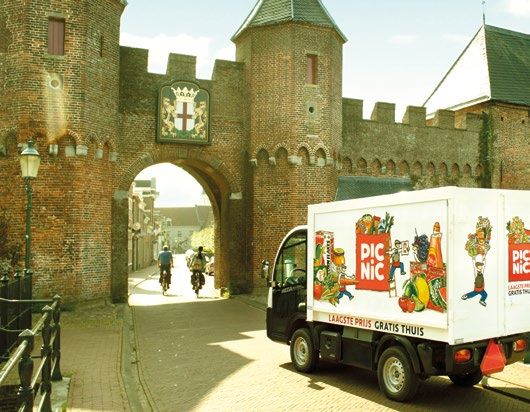
Big business is about efficiency and synergy. He remembered his childhood, when a van would
Streamlined logistics, savvy marketing and distribute milk bottles direct to customers’ doors.
active consumer engagement all help to improve Instead of 200 journeys from those streets to one
outcomes. In most industries, information supermarket for milk, one journey was made from
technology is an integral tool. the supplier to the end consumers. Simpler times,
he thought.
In grocery retail, however, digital models of
supermarket operation are an outlier in that their Under the traditional grocery store model,
offerings are not necessarily faster and cheaper perishable food must travel from original supplier to
than the traditional model. For food and drinks, supermarket vendor. It then sits in storage, waiting
the perishable nature of goods also means there to be scooped into a shopper’s basket. From there,
is a small window for matching consumers and it must traverse trolley traffic, dance the checkout
products. Inevitably, waste occurs. cha-cha, and ride the conveyor belt of cost-checks,
before another trip to the customer’s home.
Decision Grocery retailers responded with digital delivery
services. But without full focus on the online
Four partners spotted this market inefficiency in business, that arm is usually loss-making and,
the Netherlands, and devised a solution that would counterintuitively, online prices are higher.
remove inefficiencies and benefit the environment.
Michiel Muller was one of them.
14Market incumbents faced a conflict. dark, we add eight seconds. With precision comes
predictability.”
“They transition slowly, because if they successfully
migrate online, profit drains out of the business. This commitment to cutting inefficiency fuels Muller.
They’re stuck in their own system.”
“We’ve cut waste plastic and carbon, while our
Meanwhile, Muller and his partners at grocery app small electrical vans are super-efficient.”
Picnic created their own system. By using an app-
and-van model, they’ve cut down on wasted food
(and time). Outcome
“We’re the milkman 2.0: our last-mile model is Less than three years on, Picnic is launching in
unique in the world.” Germany. It has new products every month, such
as a tie-up with Heineken, which sees Picnic vans
Muller embraces the traditional value of yesteryear’s delivering beer at a low price and with minimal
milkman to service his more than 150,000 users: packaging.
reliability. Data is key here.
Muller and his team are fulfilling their ambition to
“We calculate journeys to the second, factoring reduce waste, and to provide normal families in
drivetime, order size, customer location — are normal towns with a truly affordable luxury.
they easy-access or on the seventh floor? If it’s
15 Continued from page 13
of pressure on decision-makers to make To be sure, some of the change is simply
the right call — frequently and quickly. The the result of mergers and acquisitions.
consequences of not getting it right can But there are also plenty of examples of
mean being disrupted or losing relevance. companies dropping off due to market
forces. Researchers at the consulting
“It used to be that companies would make company Innosight predict more rapid
strategic plans for five years, but that turnover. By 2027, they project the
number is decreasing,” says Juan Carlos, average time spent on the S&P will be
Regional Executive of the Americas for just 12 years.
Crowe Global, based in Costa Rica. “Now,
they’re revisiting those plans every year, The innovations of the information
and in some cases, twice a year.” age have improved certain aspects of
decision-making by putting information
In part, that’s because it’s no longer clear at our fingertips. But these new tools
where competition will come from or what come with a price. Managers must now
new opportunities will appear. After all, sift through an unrelenting stream of
MercadoLibre has been a public company data — IBM estimated in 2012 that some
for only 11 years. 2.5 quintillion bytes are created every
day — to discern what matters and what
The increasing turnover of the S&P 500, does not. Making matters worse, studies
a group of large companies with stock suggest that “information overload”
listed on the New York Stock Exchange can hurt decision-making by leaving us
or Nasdaq, also illustrates the impact of distracted and fatigued. Although coined
creative destruction. From 1964 to 2016, in 1964, the term has taken on new
the average time on the S&P 500 dropped relevance with the explosion of information
from 33 years to 24 years. technology.
Volvo Group, which manufactures heavy equipment such as trucks, buses and construction vehicles,
tied for highest overall in the Crowe 100 Decision-Making Index 2018. Its top overall score is attributable to
high scores across all categories rather than one particualr strength. Volvo increased market capitalization
and diversity in all but one year. Atlas Copco, which produces industrial equipment and, like Volvo, is
based in Sweden, similarly scored high in all categories.
40,000 60%
54%
35,000
50% 50%
47%
Percentage
30,000 of Board Diverse
42%
(Gender and
40%
39% 38% Nationality)
25,000 36%
31% 32%
30%
20,000
23%
22% 20% Percentage Market
Capitalization Growth
15,000 17% from Prior Year
10%
10,000
5%
5,000 0%
Market -2% Percentage
Capitalization -4% of Board Diverse
(in USD Millions) (Female)
0 -10%
2013 2014 2015 2016 2017
16Business leaders must also contend with best leverage the expert intuition of their
more long-standing obstacles, like our most seasoned and experienced workers.
emotions and cognitive weaknesses. As
research from cognitive psychologists Of course, no decision-making process
has long shown, we can be seduced by is guaranteed to result in good outcomes.
our biases, leading us to take mental The best decision-making process can
short cuts, and ultimately, to make bad still lead to bad results, and the reverse
decisions. is also true. Luck — good and bad — will
always be a factor.
The good news is that after decades of
research, we have a deeper understanding As we’ll see, the most successful
of decision-making processes, including businesses learn to embrace this reality,
common pitfalls to avoid. We have also create the most conducive environments
gained insight into how companies can for decision-making and constantly
re-evaluate it.
Growing Interest
Decision-making has long preoccupied Lewis wrote Moneyball: The Art of
psychologists, economists, Winning an Unfair Game, an examination
mathematicians and management of how the Oakland Athletics baseball
consultants, but the topic gained a club consistently outperformed other
considerably wider audience in 2003. teams that had larger budgets to spend
That year, the American author Michael on players.
Continued on page 20
French automaker Peugeot had the largest growth in market capitalization in the five-year
period among all consumer automakers in the index. Alongside launching new models and acquiring
Opel from General Motors, Peugeot also grew the gender and general diversity of its board each year.
The company scored in the top range for diversity and growth.
20,000 140%
133%
17,500 120%
Percentage
of Board Diverse
106% (Gender and
15,000 100%
Nationality)
85%
12,500 80%
65%
10,000 60%
55%
47% Percentage Market
45% Capitalization Growth
7,500 40% from Prior Year
35%
30%
5,000 21% 20% 24% 20%
17%
2,500 13% 0%
-3%
Market Percentage
Capitalization of Board Diverse
(in USD Millions) 0 -20% (Female)
2013 2014 2015 2016 2017
17Middle East Healthcare
Instinct and
Adversity Cultivate
a Healthcare
Powerhouse
Problem
“I never planned to be a businessman,” says Dr. Shetty thereby became the first-ever medical
B.R. Shetty, who moved to Dubai from India in representative in the United Arab Emirates — before
1973 with next to no money in his pockets. His him, the profession did not exist there.
only objective was to repay a bank loan he had
taken out, by becoming a pharmacist. But he met “I have always tried to be an early mover,” says
significant hurdles from day one. The decisions Shetty, and his career provides numerous examples
he made along the way were unconventional and of this in action: from introducing medical sales to
opportunistic. the UAE in the early 1970s to establishing the first
clinic with laboratory, dental and pharmacy services
Decision all under one roof in 1975.
It was difficult for Shetty to find a job, so instead, he “At that time there were no clinics. I didn’t have an
created one. ambulance, so I was carrying patients in my car, if
necessary.”
“I contacted pharmacies and started selling
medicines door to door.”
18This can-do attitude has been a key part of
Shetty’s success. Obstacles and mistakes are all
part of the journey. Navigating them improves the
decision-making process.
“Without mistakes you cannot learn. I have made
many mistakes and learned from them. There isn’t
a single day that goes by without a problem or
mistake,” he says. “If there is no problem, it is not a
good day for me.”
Timing is also very important in decision-making,
according to Shetty. Acting quickly can carry risks,
but Shetty knows his businesses, and trusts his
instincts. “If you are hands-on,
“I take very quick decisions. I follow my gut feeling then decision-making is
and intuition,” says Shetty. “I am actively involved easy. Opportunity comes
in my business. If you are hands-on, then decision-
making is easy. Opportunity comes once in a while.
once in a while. I grab
I grab the opportunities that knock at my door and opportunities that knock
avoid paralysis by analysis because I streamline the at my door and avoid
number of people involved in the final decision.”
paralysis by analysis
because I streamline the
Outcome
number of people involved
Dr. Shetty is the Founder and Chairman of in the final decision.”
conglomerate powerhouse BRS Ventures,
overseeing a diverse service portfolio covering Dr. B.R. Shetty, Chairman,
healthcare, pharmaceuticals, financial services, BRS Ventures
education, hospitality and infrastructure.
Recognized as one of the most successful
businessmen in the UAE, Shetty is the recipient
of the Order of Abu Dhabi and the Padma Shri,
among the highest civilian honors bestowed by the
governments of Abu Dhabi and India, respectively.
His decision to leave India and explore the UAE
was a risk, but one that he ensured would pay off.
As for the loan that hung over him as he began his
entrepreneurial career, Shetty paid that off within his
first year in the UAE.
19 Continued from page 17
Although ostensibly about baseball, history of those who helped pioneer the
at its core the book is about how an study of organizational decision-making
overreliance on human intuition and proves it.
expertise can lead to bad decisions. Lewis
found that professional baseball scouts, A New Field
often relying on their expert intuition, were
systematically overvaluing certain players In 1938, Harvard University Press
and undervaluing others. published a groundbreaking book on
organizational decision-making called The
Viewing talent through a different lens Functions of the Executive. But the author,
— advanced statistics — than did its Chester Barnard, was no academic.
competition, the Athletics management Raised in a middle-class household in
found ways to exploit this market New Jersey, he spent most of his career
inefficiency, scooping up mispriced as an executive with American Telephone
players passed over by the experts. & Telegraph Company and later became
President of New Jersey Bell Telephone
The term moneyball, of course, has since Company.
become shorthand for using big data
to make decisions traditionally made Unsatisfied with explanations for his
less rigorously and rationally. Notably, experience in business, Barnard sought a
companies like Amazon, Netflix and universal understanding of the role of an
Baidu came to embody the movement, executive within an organization, and a
leveraging their massive customer data to theory for how executives could approach
better predict customer preferences. decision-making.
But Moneyball the book did not turn all The book was notable for several reasons,
decision-making into a science. While big according to scholars. For one, it placed
data improved decision-making in certain decision-making squarely within the
areas, it had limits. executive’s job function, which had not
been widely articulated at the time. It
Indeed, just two years after Moneyball was also identified psychological aspects
published, the Canadian writer Malcolm of decision-making, defining it as an
Gladwell wrote Blink: The Power of amalgamation of influences.
Thinking Without Thinking. It explored how
expert intuition can often trump rational The decision-making process “transcends
thinking and how irrelevant information the capacity of merely intellectual
can often cloud our judgment. methods, and the techniques of
discriminating the factor of the situation,”
The fact is, decision-making is not always Barnard wrote. “The terms pertinent
easy to understand or even to detect. The to it are ‘feeling,’ ‘judgment,’ ‘sense,’
The Functions of the Executive, a groundbreaking book first
published in 1938, is credited with being among the first to
articulate the importance of decision-making by executives.
20‘proportion,’ ‘balance,’ ‘appropriateness.’ It In subsequent years, as scholars began
is a matter of art rather than science, and studying how decisions were made in
is aesthetic rather than logical.” organizations, they undercut assumptions
underlying classic rational choice theory.
Barnard also cast organizations in a Among those assumptions: that
new light. Before his book, the term decision-makers are aware of all
organization was used to describe social alternatives; that they are aware of the
clubs — a subject considered unworthy consequences of each alternative; and
of study, according to William Starbuck, that they apply consistent rules to make
Professor in Residence at the Lundquist their preferences.
College of Business of the University
of Oregon. The reality, researchers found, is much
messier. James March, now Professor
“People did not perceive organizations as Emeritus at Stanford University and
making decisions until the late 1930s and the Stanford Graduate School of
1940s,” says Starbuck. Education, once described the process
of organizational decision-making as
Expanding on Barnard’s work, in 1947 “organized anarchy.” He observed that
the economist and political scientist organizational goals change over time and
Herbert Simon wrote Administrative that people experience first and then deal
Behavior, which explored the interplay with the consequences later, rather than
between organizational structures evaluate options and then decide.
and decision premises. Simon also
introduced “bounded rationality,” a theory March and a colleague once likened
to capture the cognitive restraints on organizational decision-making to a
decision-makers. chaotic soccer game:
“The capacity of the human mind for “Consider a round, sloped, multi-goal field
formulating and solving complex problems on which individuals play soccer. Many
is very small compared with the size of different people (but not everyone) can join
the problems whose solutions is required the game (or leave it) at different times.
for objectively rational behavior in the real Some people can throw balls into the
world,” he wrote. game or remove them. While they are in
the game, individuals try to kick whatever
These limitations of the human mind ball comes near them in the direction of
led Simon to the idea of “satisficing,” goals they like and away from goals they
describing a process to make decisions wish to avoid.”
with limited information deemed
good enough.
Continued on page 24
21Singapore Financial Services
Choosing
Investments from the
Clients’ Perspective
Problem
Wong Seak Eng, Fund Manager and Executive founders were also personally invested, so they
Director of Singapore-based Aggregate Asset knew they were eating from the same pot they
Management (AAM), faced a problem. It was 2012, cooked with for clients.
and the lingering effects of the global financial crisis
of a few years earlier were still being felt. Regulatory Acknowledging the market frustration, and
reform was the order of the day, with new changes resentment toward the investment community
to apply to the investment community aimed at by some sections of society due to Lehman’s
better governance. AAM needed to contend with treatment of retirement minibonds, AAM’s founders
these changes while attempting to get the company sought to put themselves in others’ shoes and think
off the ground. about how they would want their retirement savings
to treated.
Decision The traditional model for large financial institutions
is to be driven by building assets under
Despite the challenging circumstances, AAM management (AUM). Fees would be charged at 2%
successfully qualified and launched. At the heart of AUM, and there was arguably little incentive for
of the company ethos, the founders decided, AAM fund managers to help their clients make money.
would be deeply influenced by Asian culture. The
22AAM wanted to bring greater alignment of interests, attraction of zero management fees, performance
with a focus on growing returns for clients. remained the most important element of the
numbers game. This was not a gimmick, so delivery
If you drove your ailing car to a mechanic, and the standards had to be high.
mechanic could not fix the problem, you would not
pay them. However, the fee-driven world of financial
services operated differently. Outcome
To shift the focus back onto client care, AAM took Fund managers saw that investors appreciated
a considered risk. They prioritized two key values: the innovative model and took care to protect their
good and cheap. AAM did away with management clients. Eggs were never piled into one basket.
fees. It dared to do so because it had confidence Over time, clients built more trust and confidence
in its investment performance over the mid to in the approach, and the decision to adopt a
long term. much more diversified investment style than any
competitors’ ensured that, from a risk management
Over time, its client-first approach and commitment perspective, if one investment failed, the client was
to growth would make AAM stand out among the protected.
competition. However, while investors liked this key
23 Continued from page 21
The Next Frontier University Pennsylvania summarized some
of the leading research in the field. They
In recent years, the role of feelings in noted, for example, that studies have
decision-making has taken on new shown that fear increases perceptions
prominence in scholarly circles. Indeed, of risk whereas anger decreases such
according to one account, academic perceptions.
papers on the subject doubled from 2004
to 2007 and again from 2007 to 2011. While emotions often occur rapidly,
they leave a “lingering impact” and
That’s for good reason. Research in color judgment and decision-making,
neuroscience shows that our brains they noted.
process emotions before allowing any
reasoning. For years, many business “Given their relatively short half-life, it may
leaders sought to deny the presence be tempting to conclude that emotions
of emotion in decision-making, or to matter little for organizational behavior,”
eliminate it — now understood as wishful they wrote. “The evidence suggests
thinking. otherwise. Although fleeting, emotions
serve an impressive coordination
In a new paper, currently under peer function. They trigger a chain of
review, researchers Charles A. Dorison biological, motivational, and cognitive
and Jennifer S. Lerner of Harvard consequences.”
University and Joowon Kim of the
Errors in Judgment
The history of business is littered with confirms pre-existing notions and ignoring
examples of companies making poor disconfirming information. Often, it’s been
decisions with disastrous results. a mix of all the above.
Sometimes, the culprit has been
overconfidence — a feeling of invincibility At the root of these bad outcomes is
or undue optimism. Or it’s been an what is known as cognitive biases,
executive’s decision to keep throwing mental blind spots that lead to errors in
money at a project, even though it judgment. To vastly oversimplify, we have
consistently proved to be a losing two ways of thinking. System 1, as it is
investment. Still other times, it has called in academic literature, involves our
involved focusing on information that intuition or unconsciousness. It allows us
Academic papers on the role of feelings in decision-making
doubled from 2004 to 2007 and again from 2007 to 2011.
24“In the first place you have to be very tolerant
of eccentrics because it’s very hard to sort the
eccentrics from the breakthrough innovators in the
early stages.”
Melissa Schilling, Herzog Family Professor of Management, New York
University Stern School of Business and author
to get through most of our day. It’s our confidence we have in our intuitive beliefs
default mode of thinking and includes our and preferences is usually justified,”
hunches. System 2, on the other hand, Kahneman wrote in his best-selling book,
involves more cognitively demanding Thinking, Fast and Slow. “But not always.
activities, like solving hard math problems We are often confident even when we are
or studying a foreign language. wrong, and an objective observer is more
likely to detect our errors than we are.”
After teaming up in 1969, the Israeli
psychologists Daniel Kahneman and Amos These biases are not just theoretical. To
Tversky began conducting experiments take one example, consider the “sunk-cost
that would show how, when presented trap,” which highlights how our aversion
with hard, System 2 questions, people will to losses can make us act irrationally. A
often substitute them with easier System 1 study by Barry M. Staw and Ha Hoang
questions — and do so without noticing. in 1995 showed that NBA teams granted
their highly drafted (and highly paid)
The switch is understandable. To use our players more playing time, even if it was
System 2 thinking requires mental focus, not justified.
of which we have a limited supply. It is
much easier to use System 1 thinking. But Businesses can often make the
that’s where we can run into problems, same miscalculation, remaining
they found. committed, for example, to a division that
is no longer performing well financially.
“As we navigate our lives, we normally Berkshire Hathaway CEO and Chairman
allow ourselves to be guided by Warren Buffett alluded to this bias in a
impressions and feelings, and the recent shareholder letter. He explained
Continued on page 28
Top Companies: Innovation
Overall Innovation
Rank Company Headquartered Sector Rating
3 Medtronic Ireland Healthcare (Medical Equipment & Supplies) 8.5
5 Cisco Systems United States Manufacturing (Communications Equipment) 8.5
32 Hyundai Motor South Korea Manufacturing (Auto & Truck Manufacturers) 8.5
1 Volvo Group Sweden Manufacturing (Auto & Truck Manufacturers) 8
3 Apple United States Manufacturing (Computer Hardware) 8
8 China Vanke China Real Estate 8
15 Thermo Fisher Scientific United States Healthcare (Healthcare Equipment) 8
52 Murata Manufacturing Japan Manufacturing (Electronics) 8
77 Airbus Netherlands Manufacturing (Aerospace & Defense) 8
25Spain
The Gender
Factor
Problem
“I’m talking about hiring, promoting and retaining prospects of female success, and also the national
more women. Not just because it’s the right thing economy, Uriarte says.
to do, or the nice thing to do, but because it’s the
smart thing to do.” Six in 10 Spanish graduates are women, but only
one of those six reaches an executive position.
That was Canadian Prime Minister Justin Trudeau’s Only two of the 35 largest Spanish companies
rallying cry to business leaders, when he spoke on are headed by women. But in this traditionally
gender diversity at the 2018 World Economic Forum patriarchal society, gender norms are changing,
in Davos. thanks to pioneering legislation and initiatives
like CEOE’s.
Among those watching his speech was Gabriela
Uriarte Taberna, Deputy Director at the Spanish “At CEOE we have the conviction that with more
Confederation of Employers and Industries (CEOE). women in decision-making positions, companies
Trudeau’s message mirrored a sentiment she has are more productive and innovative, have
long championed. better economic results and a better working
environment,” says Uriarte. “We knew we could
do something about it. We believe that business
Decision organizations must lead the change.”
Trudeau was not singling out any one nation when In 2012, CEOE launched its Promociona Project in
he uttered these words, but the problem he spoke conjunction with the Spanish Ministry of Equality
about resonated with CEOE. Spain, like others, and a prominent business school, ESADE.
faces a diversity problem. It negatively impacts
26“The goal of Promociona is to get more women “The face-to-face training is a general management
into top positions at companies. We do this in two program, dealing with communication skills,
ways: we prepare female participants to achieve finances, marketing, negotiating, digital
leadership positions, and we try to make companies transformation, leadership, being a role model
aware so that men and women have the same for other women and strengthening professional
opportunities,” says Uriarte. “Unless we change networks,” says Uriarte.
mentalities within companies and within society,
things will remain the same.”
Outcome
Among the selection criteria for the participants is a
requirement to be “a woman who wants to change With 45% of participants achieving promotion,
the world.” Being an active agent of change is Promociona is already bringing Trudeau’s words
imperative. into action. Not just because it is the right thing to
do, but because it makes business sense; it is a
The training program takes place over six months smart decision.
at ESADE, consisting of three weeks’ face-to-face
training and an online coaching course, followed by “The best result for us is that we feel we are
a six-month cross-mentoring to develop a Personal changing corporate mindsets, as well as society,”
Professional Plan through a series of meetings says Uriarte. “This matters not only for justice and
between the participant and the mentoring CEO of balance, but because it breeds economic results.”
another company.
27Top Companies: Boldness
Overall Boldness
Rank Company Headquartered Sector Rating
3 Apple United States Manufacturing (Computer Hardware) 9
15 Thermo Fisher Scientific United States Healthcare (Healthcare Equipment) 8.5
1 Atlas Copco Sweden Manufacturing (Industrial Equipment) 8.5
52 Toyota Motor Japan Manufacturing (Auto & Truck Manufacturers) 8.5
21 Raytheon United States Manufacturing (Aerospace & Defense) 8.5
3 Medtronic Ireland Healthcare (Medical Equipment & Supplies) 8
19 Fresenius Germany Healthcare (Medical Equipment & Supplies) 8
15 Lockheed Martin United States Manufacturing (Aerospace & Defense) 8
8 Country Garden Holdings Hong Kong Real Estate 8
Continued from page 25
that one of the advantages of being a Taming Our Biases
conglomerate is the ability to quickly
reallocate capital among businesses and Can we tame these biases that afflict
industries. our thinking and decision-making? The
answer may depend on whom you ask.
Although not perfect in its
decision-making, Berkshire, he argued, Some academics remain skeptical that
was well positioned because it was not much can be done. But others are more
burdened by “historical biases created by optimistic and have suggested ways to
lifelong association with a given industry” mitigate our biases or, at least, to check
and was “not subject to pressures from the validity of our intuitions. Cognitive
colleagues having a vested interest in psychologist Gary Klein, for example,
maintaining the status quo.” He continues: conceived of the “PreMortem Technique,”
“That’s important: If horses had controlled flipping the process of a post-mortem.
investment decisions, there would have In a traditional post-mortem, of course, a
been no auto industry.” physician seeks to determine the cause
of death. In a pre-mortem, the answers
are determined beforehand to be useful to
decision-makers.
The PreMortem Technique, used to test assumptions underlying
decisions, was first conceived by cognitive psychologist Gary Klein.
28The exercise requires a team to imagine “I recall going to see Gordon [Moore] and
a course of action going wrong. Every asking him what a new management team
member then writes down reasons why would do if we were replaced,” Grove told
the project — an investment, product researchers. “The answer was clear: Get
launch or acquisition, for example — out of DRAMs. So, I suggested to Gordon
failed. Exploring these potential pitfalls is that we go through the revolving door,
designed to sensitize people to what they come back in [as the new management
may have overlooked. team], and just do it ourselves.”
The leadership of the technology company As the example demonstrates, the first
Intel engaged in a similar exercise in steps to overcoming your biases are
the 1980s when it decided to exit the becoming aware of them and surfacing the
dynamic random access memory right questions. Promoting disagreements
(DRAM) chip business. Although Intel is another.
had introduced the first DRAM chip in
1970 and dominated the business for Overcoming potential biases is especially
years, it eventually lost market share as critical for auditors, says David Chitty,
competition increased and the business International Accounting and Audit
became more commoditized. As Director at Crowe Global, based in
recounted in a case study for Stanford London. A company with no previous
Graduate School of Business, Andy Grove, accounting problems, for example, could
then Intel’s President, said the decision’s lull an accountant into false comfort or
origin came as the result of an intellectual expectation that no problems will arise in
exercise with then-CEO Gordon Moore. At the future.
the time, Grove said he was worried that
the board would replace him and Moore: “We often talk about the need to exercise
professional skepticism,” Chitty says.
Team Dynamics
Intense competition and globalization activities has ballooned by 50 percent or
have made efficient collaboration a must, more” over the previous two decades.
while the development of communications
technology has made it routine. According This growing influence of collaboration
to research cited in Harvard Business in the workplace has put a premium on
Review in 2016, “the time spent by finding the right ingredients for successful
managers and employees in collaborative teams. For many companies, that means
Continued on page 32
“Diversity just can’t be the same person different
color or different genders; it has to be experience
that truly leads to different insights. If diversity is done
well, it absolutely can do that.”
Dorri McWhorter, CEO, YWCA Metropolitan Chicago
29Colombia Higher Education
Balancing Disruption
and Heritage
Problem
Founded in 1653, Bogota’s Universidad del The UK’s Oxford and Cambridge, Harvard in the
Rosario (UDR) values cultural heritage as part of its United States and Japan’s University of Tokyo all
lifeblood. trade on their historical reputations. Their ability
to deliver knowledge and cultivate learning at the
Yet every day, the school’s rector, Jose Manuel highest level must be shown, and their consistent
Restrepo Abondano, sees news in which production of leaders and success stories over
technology is disrupting higher education and decades — even centuries — is a testament to that.
impacting tomorrow’s leaders. How, then, is he
to preserve, respect and leverage the institution’s UDR, for instance, has produced 28 Colombian
venerable history, while taking advantage of presidents, and many more industry leaders.
new techniques and systems that can drive the History is important. Respected universities
university forward? conjure images of libraries fitted floor-to-ceiling
with leather-bound books, or of lecture halls with a
numinous element.
Decision
But today’s university also conjures images of
Businesses may somewhat easily decide “out supercomputers and labs where white-coated
with the old, in with the new.” For an academic researchers conduct cutting-edge experiments.
institution, however, embracing its ancestry and Just as universities bring together students of
heritage is a vital part of establishing its unique art and science, leadership must also marry
selling point. these disciplines in charting their organization’s
own future.
30You can also read


