The Arup Journal Issue 1 2021
←
→
Page content transcription
If your browser does not render page correctly, please read the page content below
Issue 1 2021

The Arup Journal
Contents
                        4 Raffles City Chongqing,                  32 Jengu handwashing unit, Global
                          Chongqing, China                            Developing handwashing facilities
                          Constructing a city in the sky              that are easy to construct worldwide
                            Penny Cheung, Lu-Lu Du, Gary Ge,          and will help to combat the spread
                            Antony Ho, Michael Kwok, Allen Sun        of disease
                                                                      Stephen Philips, Iñigo Ruiz-Apilánez,
                                                                      Martin Shouler

                        14 Central Interceptor Tunnel,             36 Ken Rosewall Arena,
                           Auckland, New Zealand                      Sydney, Australia
                           A new wastewater tunnel will               On a tight turnaround, this
                           have great benefits for Auckland’s         tennis stadium was turned into
                           health and environment                     a multipurpose sports venue
                            Jochem Dorst, Andreas Raedle              Jake Cherniayeff, Andrew Johnson,
                                                                      Hannah Lazenby, Xavier Nuttall

                        19 K11 ATELIER King’s Road,                42 Rose Fitzgerald Kennedy Bridge,
                           Hong Kong                                  Kilkenny and Wexford, Ireland
                           Wellbeing and sustainability               Ireland’s longest bridge
                           inform every aspect of                     provides vital national and
                           this development                           international connections
                            Kennis Chan, Tony Lam, Zoe Lee,           Mike Evans, Cian Long,
                            Ka-Man Miu, Tony Tang                     Alfonso Ramirez, Marcos Sanchez

                        26 Long-Baseline Neutrino Facility,        48 Great Western electrification, UK
                           South Dakota, USA                          Electrifying and upgrading a vital
                           This underground scientific lab            Victorian-era railway
                           will investigate the nature of matter      Luke Cooper, Nigel Fletcher,
                           and the origins of the universe            Michael Nops, Dan Raynor, Peter
                            Gordon Carrie, Seth Pollak,               Richardson, Tarek Sadek, Austin Smith,
                            Richard Potter, Josh Yacknowitz           Gareth Thompson

    Ken Rosewall Arena, Sydney, Australia: Martin Mischkulnig

2                                                                                1/2021   | The Arup Journal   3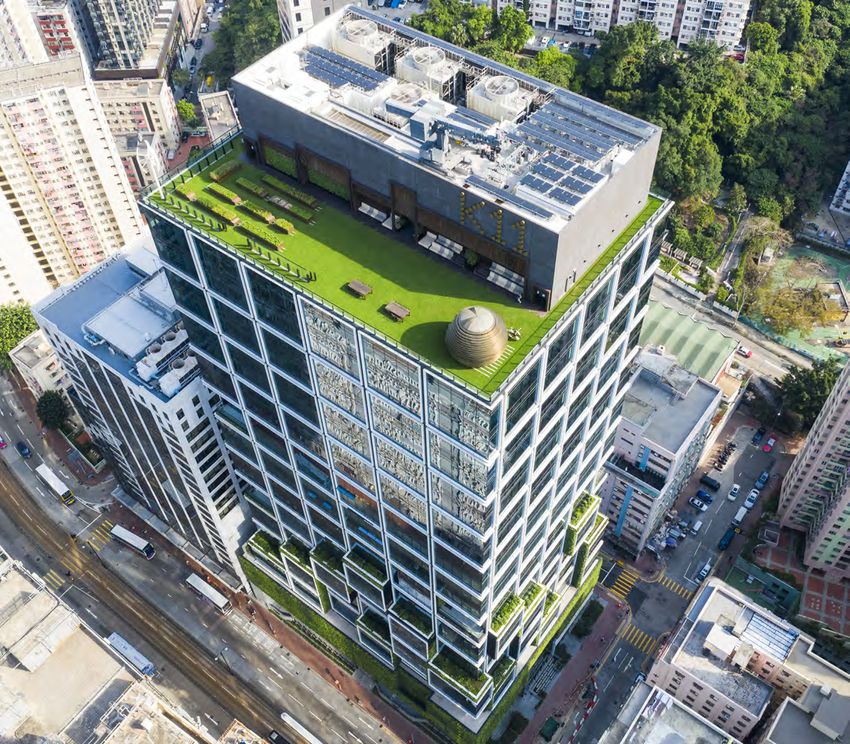
Raffles City Chongqing Chongqing, China
A city in the sky
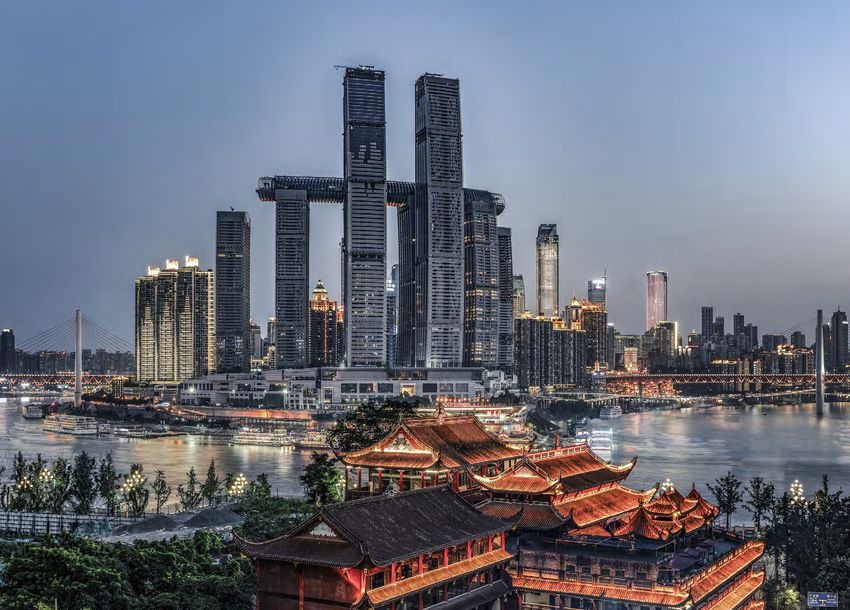
Raffles City Chongqing is located
at the heart of Chongqing, at the
confluence of the Yangtze and Jialing
rivers. This strategic position is fitting
for this mega-scale development, the
design of which was influenced by and
This landmark development was inspired by serves as a symbol of Chongqing’s past
old sailing vessels, drawing on Chongqing’s as a trading centre and its long-held
status as a gateway to western China.
status as a gateway to western China
Authors Penny Cheung, Lu-Lu Du, Gary Ge, Antony Ho,
The high-rise complex was designed
in collaboration with Safdie Architects
Michael Kwok and Allen Sun and was inspired by historical images
of great Chinese sailing vessels on the
river. Gently arcing towards the water,
the towers form the apex to the city’s
peninsula, like the masts of a ship,
with its sail pulling the city forward.
Raffles City Chongqing is a mixed-use
development, with a total floor area of
1.13 million m2. It comprises a shopping
mall and eight curved towers – two
350m-tall north towers and six 250m-tall
south towers – which house 1,400
residential units, offices, 200 serviced
apartments and 450 hotel bedrooms.
One of the north towers is fully dedicated
to residential use, making it the tallest
residential tower in China. The second
1: Chongqing’s past as north tower is office space below the
an important trading skybridge, with the hotel above.
centre is reflected in the
design of Raffles City
Chongqing, which was Six of the towers are linked 250m above
inspired by historical ground, with four of the 250m-tall towers
Chinese sailing vessels capped by the 15,000m2, 300m-long
2: The complex sits
skybridge, The Crystal, which faces
at the confluence of southwards over the city. Two smaller
the Yangtze and skybridges link it with the two 350m-tall
Jialing rivers towers. The Crystal brings amenities and
1. 2.
4 1/2021 | The Arup Journal 5
Raffles City Chongqing Chongqing, China
buildings around the world. With the belt earthquakes. The fuse can be readily
trusses and outer columns, a conventional replaced after yielding.
outrigger acts as a rigid arm, connecting
the building core to the outer columns Arup carried out numerous linear and
and providing lateral stability. However, non-linear analyses, even for extreme
typically it is an expensive system due to earthquake levels (higher than required),
the large amounts of steel required, the to justify the structural performance of
complex construction methods – the system. In addition, a scale-to-scale
especially at the connection joint at the experiment was carried out to test the
System Core wall
Mega-column
Second frame
Hybrid outrigger corner of the core wall – and the longer reliability of the solution and to confirm
construction time needed. the analytical findings.
with belt truss system
6.
Arup used an innovative hybrid outrigger This new application of a fuse in an
3. 4.
Mega-column Core wall system, developed specifically for this eccentric braced frame is a major
green space high into the sky, housing the (ground conditions are variable, and the the complexity of the tower design, Encased steel section
project, which uses a structural fuse. This innovation. Arup received patent
hotel lobby, bars and restaurants, a public position at the confluence of two rivers which also needed to accommodate the method is suitable for high-rise buildings approval for this hybrid outrigger wall
observatory, and a clubhouse, swimming creates high wind loading) and the high wind load and earthquake activity in Fuse shear in moderately seismically active regions system and was awarded the China
pool and gymnasium-type facilities for towers’ high slenderness ratio – each the area. The towers have a reinforced like Chongqing. The fuse connects the Innovation Award – Honourable
dissipation
component
the residential apartments. has a footprint of only 38m x 38m, concrete core, with composite concrete outrigger wall to the mega-column, Distinction for the design at the China
giving a slenderness ratio of 9.4. The and steel floor plates. controlling the load path during a International Exchange Committee for
The podium is approximately 400m x Chinese building code recommends a seismic event. Under normal wind Tall Buildings – Council on Tall
250m on plan and has nine storeys, tower slenderness ratio of around 7, and Such tall towers usually have a structural loads and level 1 earthquakes (an Buildings and Urban Habitat (CITAB-
including three basement levels. On the typically most super high-rise buildings system that includes mega-columns and a expected 100-year return period), CTBUH) China Tall Building Awards.
podium roof there is a landscaped park have a ratio of up to 8. This added to braced frame. However, the use of bracing the fuse remains fully elastic, acting
that consists of 45,000m2 of public and 7. in the same way as a typical outrigger. The system also improves buildability
private green space. The podium contains and shortens construction time, creating
250,000m2 of retail space and is an would have affected the views from the The hybrid outrigger gives a 7% further cost savings. The hybrid outrigger
important transportation hub, integrating towers so Arup adopted a stability system improvement on the towers’ lateral uses a full-storey-height reinforced
with the bus and ferry terminals and a without mega-bracing, comprising a stiffness at elastic stage compared with concrete wall, with thickened sections top
subway station; it also provides links to reinforced concrete core, four corner a traditional system. For level 2 and 3 and bottom near the core wall to provide
Chaotianmen Square, which overlooks mega-columns with belt trusses, a earthquake events, the fuse’s shear stiffness, thus reducing the quantity of
the meeting point of the two rivers. perimeter moment-resisting frame and dissipation component yields and steel required by 10% compared with
four levels of hybrid outriggers. deforms in a controlled way, allowing traditional outrigger systems.
To design this complex technical project, the energy to dissipate. This damping
Arup mobilised resources locally and from The outrigger is not a new concept and effect protects the outrigger wall and The 250m-tall south towers were mainly
around the globe, involving the firm’s has been applied to many high-rise core wall from damage in severe constructed with reinforced concrete, with
offices in Beijing, Chongqing, Hong
Kong, Shanghai, Tianjin, Ho Chi Minh
City, Boston and New York. The firm had
worked previously with the client,
CapitaLand, on Raffles City Chengdu and
Raffles City Hangzhou, and with Safdie 6: The structural
Architects on Marina Bay Sands in 3: The complex system for the two
Singapore, where there is also an elevated contains a hotel, north towers does not
residential and use a braced frame,
skybridge linking to high-rise towers.
office space, green thereby retaining the
public areas and a views from the towers
Arup provided civil, fire, geotechnical shopping mall
and structural engineering services, along 7: By connecting
4: The podium the outrigger wall to
with building sustainability design, for all consists of nine the mega-column, the
stages of the project from scheme storeys, including fuse can control the
through to construction. three basement levels. load path during
The roof features a seismic events
Designing the slender towers landscaped park
8: The hybrid outrigger
The design of the two 350m-tall north 5: The towers arch uses a full-storey-
towers was a major challenge for the towards the water height reinforced
project team due to the site location like a ship’s sails concrete wall
5. 8.
6 1/2021 | The Arup Journal 7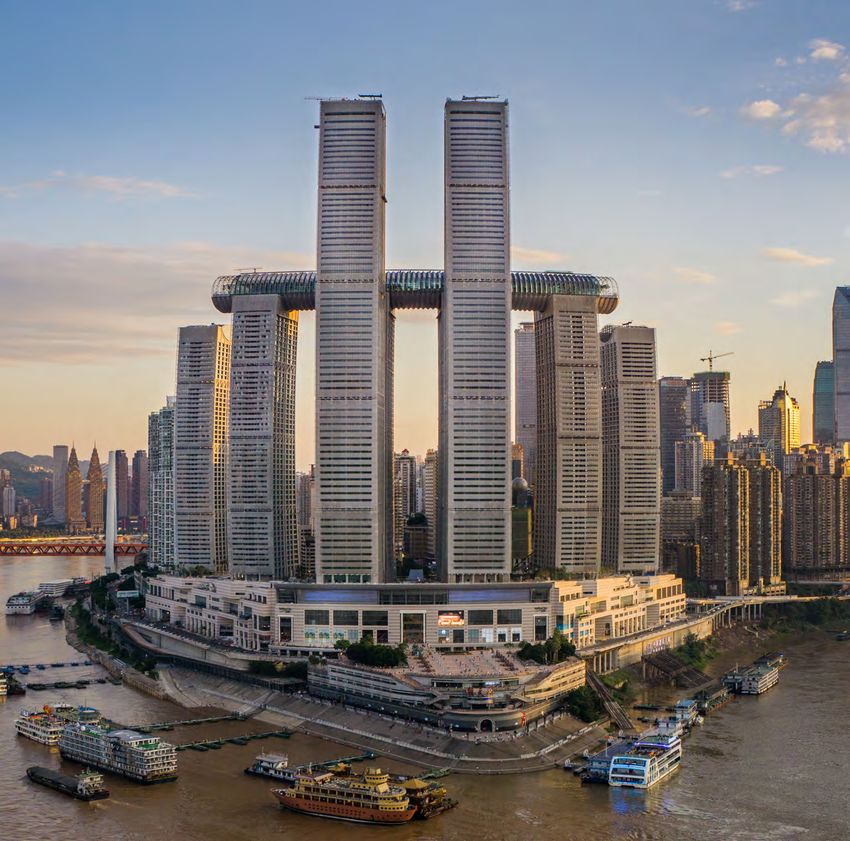
Raffles City Chongqing Chongqing, China
the floor system consisting of a concrete 9: The Crystal sits atop 12. A connecting
beam and slab frame. The stability system four of the towers refuge area below
for these towers utilises the concrete core, The Crystal reduces
10: An LS-DYNA
congestion during
perimeter moment-resisting frame, belt model was developed
evacuations
trusses and a limited number of outrigger to analyse The
trusses supporting the skybridge, which Crystal’s movement in 13: Friction pendulum
also provide horizontal stability for wind seismic conditions bearings were used to
support The Crystal
and seismic loads. 11: Two smaller
and accommodate
skybridges connect
seismic loads
Due to the scale and complexity of The Crystal to the two
the project, the design of the hybrid 350m-tall north towers
outriggers and elements relating to wind
engineering, slope stability, foundation
and seismicity design all required
approval from expert panel reviews. 11. 12.
Bridging the towers in the sky 250m-tall curved towers. The Crystal has using bearings that would isolate the large forces, as well as the relative testing determined the wind load to be engineering challenges. Arup introduced
The most notable feature of the a maximum span of 54m, with 26.8m end skybridge from the towers. LS-DYNA movement between the skybridge and applied to the two 350m north towers and several fire engineering firsts for China
development, and another major cantilever spans, and was constructed models of the four supporting towers and supporting towers, will not be transferred the torsional wind load for the six towers on this project to resolve these issues.
engineering challenge, was the design of using 11,000 tonnes of steelwork. The Crystal were developed to analyse the into the skybridge structure. A 1:25 scale connected 250m above the ground by They included:
The Crystal – the 300m-long, 32m-wide dynamic interaction during seismic events. shaking table test was carried out to skybridges. The testing also took into - emergency vehicle access provision
and 26m-tall glass-clad skybridge While the development bears a Analyses were carried out to extreme demonstrate the seismic performance of account the interference effect of the for a podium roof, along with a
structure that sits atop four of the resemblance to the 200m-tall Marina earthquake levels to justify the structural the six towers joined by The Crystal and many surrounding buildings. discharge and evacuation procedure
Bay Sands in Singapore, Raffles City performance of the design. In total, 900 the dynamically linked skybridges under onto this roof;
Chongqing has very different design analyses were run over the course of the extreme earthquake events. A wind climate analysis determined the - use of a refuge floor for evacuation
conditions. It has taller and more slender project; with 30 hours’ run time typically correct design wind speed, with a 1:3,000 transfer; and
towers, is located in a more active seismic required per model, approximately 27,000 The Crystal is made up of three primary scale topography effect test determining - applying a performance-based
zone and has relatively high wind loading hours of modelling were carried out. steel trusses, interconnected by secondary the wind turbulence profile and scale. design on such a large group of
due to its location at the confluence of steel and enclosed by a lightweight space A multi high frequency force balance connected buildings.
two rivers. These elements meant that a These studies supported the hypothesis truss enclosure. With different topping- (HFFB) wind tunnel test determined the
completely different supporting system to that the isolation options were the most out dates for each supporting tower, a design wind loads of the six towers
that used at Marina Bay Sands was beneficial solution, reducing the shear detailed construction sequence analysis connected via skybridges. A high
required for the skybridge. forces at the base of the towers by up was carried out to prove the whole frequency pressure integration (HFPI) Awards
to 30% compared with the fixed installation method was practical and wind tunnel test in two independent 2016
The Arup team compared different skybridge option. safe. Arup worked closely with the laboratories calculated the structural CITAB-CTBUH China Tall Building Awards
designs, with the skybridge fixed to or contractor on the sequence analysis, wind loads for the conjoined six-tower China Innovation Award
isolated from the towers, to determine A combination of seismic bearings – installation method and temporary works structure. A separate HFPI wind tunnel Honourable Distinction
the best option from a design and cost friction pendulum bearings (FPBs) – and design, before the sequence gained test was carried out on the two 350m
9. 2017
viewpoint. The stiffness of the building dampers were used in the final design. approval from the expert panel review. towers and the two 250m towers that are
Hong Kong Construction Industry
under wind loading required careful The 2m-diameter bearings, 26 in total, not below The Crystal. Finally, an
Council Innovation Award
consideration, as movement in the towers have a level of friction that means they Wind engineering LS-DYNA time-history analysis checked
Construction Productivity – Winner
needed to be kept at a minimum for the do not move below a certain force. Under Due to the site topography, which the performance of the isolation bearings
comfort of the occupants in the high-rise normal load conditions and level 1 includes rivers and mountains, extensive between The Crystal and the top of the 2020
elements where the residential and hotel earthquakes, the FPBs are fixed and The wind tunnel studies were carried out. The four supporting towers under the wind Council on Tall Buildings and Urban
floors are located. Crystal does not move relative to the loads. Both the HFFB and HFPI tests Habitat Structural Engineering and Fire
towers. Stresses arising from low seismic were carried out on a 1:500 scale model. and Risk Engineering
The baseline case saw The Crystal fixed activity, wind and thermal movements The detailed wind engineering testing Awards of Excellence
rigidly to the top of all four towers, are all resisted by the main structure. and analyses determined that the
Hong Kong Institution of
monolithically linking the buildings. structural design could be developed for
Engineers Innovation Award
However, this led to a design with However, under moderate or severe lower wind loads than those in the design
Grand Prize
excessive steel tonnage. The use of earthquake conditions (level 2 or 3), the code, providing a cost saving.
movement joints – as used in Marina Bay bearings allow movement and the Hong Kong Institution of
Sands – was ruled out because in extreme skybridge can move relative to the Fire engineering firsts Engineers Structural Division
seismic events the towers could potentially towers, thus dissipating the energy and The connectivity of the towers, both via Award of Excellence – China
move up to 3m apart. The team helping to mitigate the effects of the The Crystal and at podium level, Grand Award – Overseas Project
concentrated on exploring design options earthquake. The dampers ensure that presented a number of complex fire
10. 13.
8 1/2021 | The Arup Journal 9
Raffles City Chongqing Chongqing, China
The Crystal has many different functions implemented where possible to mitigate slopes gently from south to north, and The foundations for the towers were
– it acts as the hotel lobby and a the environmental impact on the building significantly to both the east and west, formed from large hand-dug caissons
clubhouse for residents and has many and its occupants. The Crystal’s glazed has varying ground conditions, and is (with pile diameters of up to 5.8m), with
public-access areas – so the design of its envelope creates amazing views high constrained by existing buildings, roads tension piles of various length used for
evacuation system was critical. With such above Chongqing; however, the quantity and flood protection measures. It is anti-uplift. Where lower loads allowed,
high occupancy, the evacuation design of glazing, the skybridge’s south-facing located in a seismic zone and adjacent machinery-bored piles were used.
includes 15 egress staircases that merge aspect and the hot weather in the city to the Jialing and Yangtze rivers, which Alternate foundations for the podium
into ten staircases in the towers beneath. during the summer presented design have large seasonal fluctuations in water were constructed depending on whether
A connecting refuge area was designed challenges. The Crystal’s energy levels (the river water levels are also the slab was founded on soil or rock.
below The Crystal to provide sufficient consumption could not be excessive, affected by the Three Gorges Dam, In the soil locations, hand-dug caissons
space for people to use each connecting but occupants’ thermal comfort had 600km away). were used under column locations for the
staircase and to reduce congestion. to be prioritised. Maintaining indoor compression loads, with tension piles for
thermal quality in an energy-efficient The site is made up of fill containing anti-uplift. Where the podium slab was
Evacuation lifts in the towers, which way was a complex task. construction waste, silty clay, silt and founded on rock, footings were used
are also used for normal circulation, 15. cobbles, above shallow lying rock under columns.
were included to improve evacuation Arup carried out a building physics (mudstone and sandstone), with the rock
efficiency and facilitate inclusive Arup’s fire team modelled The Crystal and structural modelling was reviewed study to optimise the skybridge head sloping across the site. The rock Although Chongqing is an area of lower
evacuation procedures. This allowed a using finite element analysis to optimise and approved by the fire engineering glazing. The design used an alternating also has inclined fissures and interfaces seismic intensity than Beijing or
reduction in the overall number of stair the fire protection of the structural steel expert panel review. glazing–cladding combination for a that the design needed to take account of. Shanghai, because of the sloping site
cores, increasing the useable floor area under possible fire scenarios. The balanced outcome of skylight visibility Arup used a GIS model to balance out and adjacent rivers, various slope
in the towers. analysis identified that a majority of Sustainable building strategy and solar shading. After extensive study the cut and fill so that excavated soil stability analyses had to be carried out
structural roof elements did not require Holistic sustainability design strategies of different glare scenarios, fritted from the site was used as backfill to determine the horizontal load and
To assess the evacuation strategy, a additional fire protection, resulting in a were adopted, with the aim of achieving patterns of changing densities were elsewhere to reduce cost. design measures required to protect the
benchmark was created by conducting a significant cost saving. The smoke a LEED Gold building certification. introduced to the overhead glazing structure from sliding. Plaxis and Oasys
comparative evacuation analysis using a ventilation design took into account the Arup developed solutions for façade portion of the envelope to refine visual The site’s sloping nature presented Slope software packages were used,
hypothetical design for separated towers impact of the wind due to the building’s optimisation and, working with the comfort – at the apex of the skybridge potential stability problems, which incorporating gravity, groundwater,
with no skybridge. The design was based location and the height of the skybridge. building services engineer, WSP, the maximum frit is 50%. The final needed to be addressed in the wind and seismic loads into the design.
on a number of conservative assumptions, introduced energy-efficient building design maximised views, ensured a foundation design. A combination
including a full maximum occupancy of At the podium level, the fire and services systems, with indoor visual comfortable environment and minimised of foundation types were adopted, Anti-slide stabilising piles of various
people on all levels and a fire blocking the structural engineering teams worked and thermal comfort modelling energy consumption. including shallow foundations, raft diameters were used at 4m centres. To
widest exit from the skybridge. The together on a design that could conducted to optimise envelope design foundations, rotary-bored piles, the west of the site these ranged from
evacuation and fire modelling analysis structurally accommodate the large loads and the heating, ventilation and air Geotechnical challenges percussion-bored piles, and hand-dug 1.6m to 3.1m in diameter; to the east of
demonstrated that, under each fire created by firefighting vehicles on the conditioning (HVAC) systems. The geotechnical design for the caissons of various shapes and sizes. the site, 1.5m-diameter anti-slide piles
scenario, the building occupants would podium roof, liaising with the local fire development was complex. The site The pile length varied from 7m to 44.5m. were used in conjunction with the piles
have sufficient time to evacuate before department on the loading and to ensure Energy-saving strategies include:
conditions became untenable, with an there was sufficient space for the vehicles low-emissivity glass to reduce heat gain; 16: Due to the site’s
evacuation time shorter than that in the to safely manoeuvre on the roof. The fire a high-efficiency energy centre; high- sloping nature, a
benchmark design. engineering analysis for evacuation, fire efficiency HVAC equipment; using natural variety of foundation
ventilation where possible; water-side free types were used,
cooling; air-side heat recovery; high- including shallow
14: An alternate foundations, raft
glazing–cladding efficiency lighting fixtures; and daylighting
foundations, rotary-
combination was used sensors. These systems meant the project bored piles, percussion-
for The Crystal, to achieved a 16.5% energy cost saving in bored piles and
allow for both visibility comparison with the American Society hand-dug caissons
and thermal comfort of Heating, Refrigerating and Air-
15: The Crystal Conditioning Engineers’ baseline level. By
Exploration Deck using recycled air conditioning condensate
provides a publicly and rainwater harvesting, 100% non-
accessible green potable water sources were used for
space and views
irrigation, with a 35% reduction of potable
high above the city
water use by occupants. There is 30%
green coverage over the development.
The site’s microclimate was studied to
investigate the impact of wind and
sunlight, with passive designs
14. 16.
10 1/2021 | The Arup Journal 11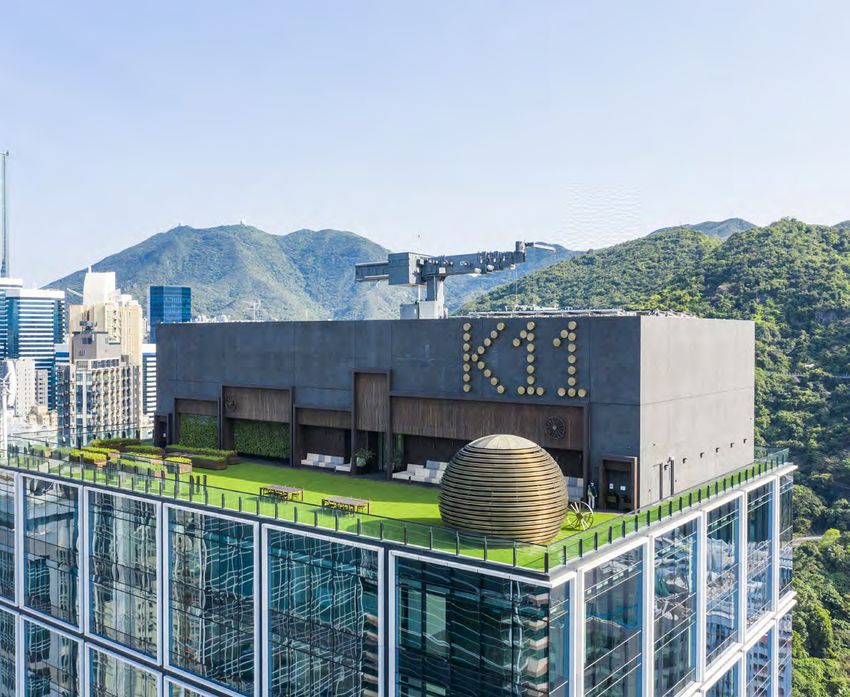
Raffles City Chongqing Chongqing, China
for the tower foundations and podium. developed several automation tools to
These provided resistance to horizontal improve the design delivery and accuracy.
forces and offered additional protection In order to establish an efficient design
for the slopes from sliding. Similar to a and production process, Building
number of elements of the design, the Information Modelling (BIM) software
foundation systems were reviewed by was used including Rhino, Grasshopper,
both local and national expert panels, ETABS, Revit and Tekla, with tools
which took into consideration the site developed to link the models and generate
stability for both static and seismic analysis results.
scenarios and for the hand-dug caissons.
The tools improved the understanding of
Delivering the design digitally the project geometry; allowed greater
Considering the scale, complexity, and efficiency of coordination between the
tight design and construction schedule for design team; facilitated information
this project, advanced digital technology transfer between the geometrical model,
17.
was used to deliver the design. Arup structural design model, production
model and calculation reports; and gave
the client a better understanding of the
structural design through visualisation.
Arup used C# programming to develop 9.
custom Grasshopper components and
generated multiple similar 3D tower
models directly from the architect’s 2D
plans and elevations to carry out the
sensitivity study of the building curvature 19.
and structural efficiency. During the
concept and scheme design stage, the
firm adopted parametric design tools to Authors Building services engineer WSP Patrick McCafferty, Tim McCaul, Thi Minh Nga
study the building geometry and column Penny Cheung was the Project Manager. He is a Contractor China Construction Eighth Vu, Phuong Nam Ta, Yen Ngan Nguyen, Minh
and core wall configuration, with Revit Director in the Shanghai office (and was formerly Engineering Division and China Construction Nhut Le, Kirk Nosho, Alvaro Quinonez, Dong-Wei
used during the design and construction based in Chongqing). Third Engineering Bureau Company Ren, Michelle Roelofs, Ngoc Ninh Pham, Michael
stage for the drawing production and Shearer, Pan Shen, Thomas Shouler, Bert Su, Allen
Lu-Lu Du worked on the fire engineering design.
coordination. Civil, geotechnical, fire, structural engineering and Sun, Jessica Sun, Yi-Bin Sun, Shi-Xuan Tian, Alex
She is an engineer in the Shanghai office.
building sustainability services Arup: To, Tri Nhan Tran, Huyen Trang Dinh, Tian-Yi Tu,
Skyscraper city Gary Ge led the geotechnical engineering design. Andrew Allsop, Anthony Buckley-Thorp, Chao Wang-Long Tu, Ethan Wang, Hong Wang, Hua
With six of the towers linked in the air, He is an Associate in the Shenzhen office. Cai, Fang Chen, Ivan Chan, Marco Chan, wang, Michael Wang, Ming-Min Wang, Will
Raffles City Chongqing is a mini Chun-Lai Chen, Long Chen, Johnny Cheng, Eric Wang, Yuan Wang, Ke-Quan Wei, Jacob Wiest,
Antony Ho led the sustainability design. He is an
skyscraper city. The design required Cheung, Penny Cheung, Ray Cheung, Robin Kin-Ping Wong, Chang-Song Wu, Shi-Chao Wu,
Associate in the London office (and was formerly
innovative approaches across the full Ching, Bao Chung Nguy, Matt Clark, Andrew Young Wu, Guang-Ting Xia, Fred Xiang, Irene Xu,
based in Hong Kong).
range of engineering disciplines to Cowell, Gary Dodds, Karen Dong, Xiao Dong, Jing-Mei Xu, Derek Yang, Fang Yu Neptune Yu,
deliver this landmark development – Michael Kwok was the Project Director. He is the Lu-Lu Du, David Farnsworth, Double Feng, Qian Raymond Yu, Vala Yu, Wenting Yu, Mei-Ling
one that serves as a symbol of the city’s Chair of Arup’s East Asia Region Board and a Gao, Gary Ge, Grace Gu, Shi-Yan Gu, Xiao-Juan Yuan, Xue-Wei Zeng, Ben Zhang, Brian Zhang,
thriving past, present and future. member of the Arup Group Board. He is based in Han, John Hand, Desmond Ho, Goman Ho, Yue-Qi Bruce Zhang, Forrest Zhang, Kevin Zhang, Li
the Hong Kong office. Hou, Eric Huang, Ying Huang, Shao-Lei Jia, Zhang, Oliver Zhang, Tom Zhang, Yan-Qi Zhang,
Yu-Huan Jia, Yu-Fan Jiang, Hong-Wei Jiao, Ye Zhang, Yue-Yue Zhang, Zi-Wei Zhang, Bruce
Allen Sun led the fire engineering design. He is
Ling-Ling Jiao, Yong-Wook Jo, Darren Jones, Zhao, Gui-Lan Zhao Vivian Zhao, Li-Gang Zhu,
Arup’s East Asia region fire engineering skill leader
Oi-Yung Kwan, Michael Kwok, William Lai, Jin-Lin Zou, Lin-Juan Zou.
and is an Associate Director in the Shanghai office.
Francois Lancelot, Henry Law, Sam Law, Bill Lee,
17: Arup used a variety of BIM software, including Image credits
Project credits Winnie Lee, Sanya Levi, Er-Chun Li, Ji-Cai Li,
Revit, during design and construction 1, 5, 15, 19: CapitaLand Ltd (China)
Client CapitaLand Jiao Li, Jing-Yu Li, Teng-Fei Li, Xin Li, Zhi-Xiang
2: Google Earth Digital Globe
18: The Crystal features many amenities, including Design architect Safdie Architects Li, Zi-Xuan Li, Jie Liang, David Lin, Benjamin
3, 14: Safdie Architects
a swimming pool Executive architects P&T Group Liu, Cherry Liu, Jie Liu, Hai-Xia Lu, Ken Lu, Lu
4, 6–13, 16, 17: Arup
19: Raffles City Chongqing provides residential Design institute Chongqing Architectural Lu, Zack Lu, Mingchun Luo, Yuvi Luo, Andrew
18: Arch Exist
units, offices, serviced apartments, a hotel and Design Institute Luong, Billy Ma, Yuan-Jun Mao, Brian Markham,
many areas for the public to enjoy
18.
12 1/2021 | The Arup Journal 13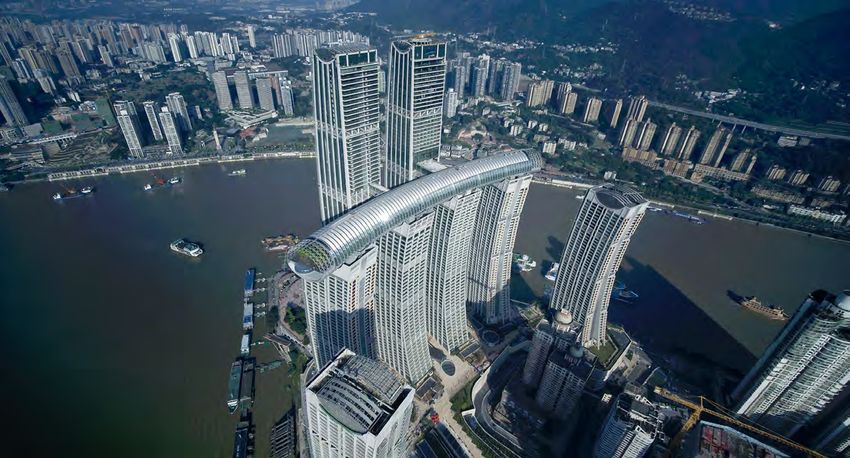
Central Interceptor Tunnel Auckland, New Zealand
Tunnelling for
In recent years, Auckland has Arup has developed a range of innovative with its launch point at Māngere
Grey Lynn experienced significant overflows of engineering solutions with the aim of Wastewater Treatment Plant in south
wastewater from its sewage system. improving productivity and safety while Auckland and its destination Grey Lynn
a cleaner city
Sky Tower
This pollutes the coast and beaches reducing risk. Many of these solutions in northern Auckland. Most of the
Tawariki
Street
2023
and endangers the health of anyone are also geared around making the design passage is through East Coast Bays
Auckland Zoo
who takes a dip in the water. Without and construction process more efficient Formation rock, which comprises
Western
Springs resolving this issue, the situation is through the use of digital modelling. sandstone and mudstone. However, at the
only set to get worse: the city’s There have been relatively few major start, the machine will encounter Kaawa
Rawalpindi 2022
Reserve
2021
Norgrove
Avenue
Mt Albert War
Memorial Reserve 2021 population is projected to grow by tunnelling projects in New Zealand to Formation (part of the Tauranga Group),
2021 St Lukes
Shopping
Mt Eden 1 million over the next 30 years, date, so Arup’s international experience a soft layer of sand, clay and silt that has
Lyon Avenue
2022
Centre
putting further pressure on its ageing of constructing wastewater tunnels has lower strength and stiffness than East
infrastructure, particularly the been invaluable. Coast Bays Formation rock. To help the
As Auckland continues to expand, Haverstock Road
2022
Greenlane
wastewater main that runs under machine navigate these variable
its infrastructure has to grow with it Walmsley Park the harbour. Boring the tunnel conditions, different types of
New Lynn
Dec 2020
Mt Roskill The sheer depth of the tunnel is a central reinforcement are being used: softer
Authors Jochem Dorst and Andreas Raedle Sep 2020 Miranda
Reserve
Jul 2020
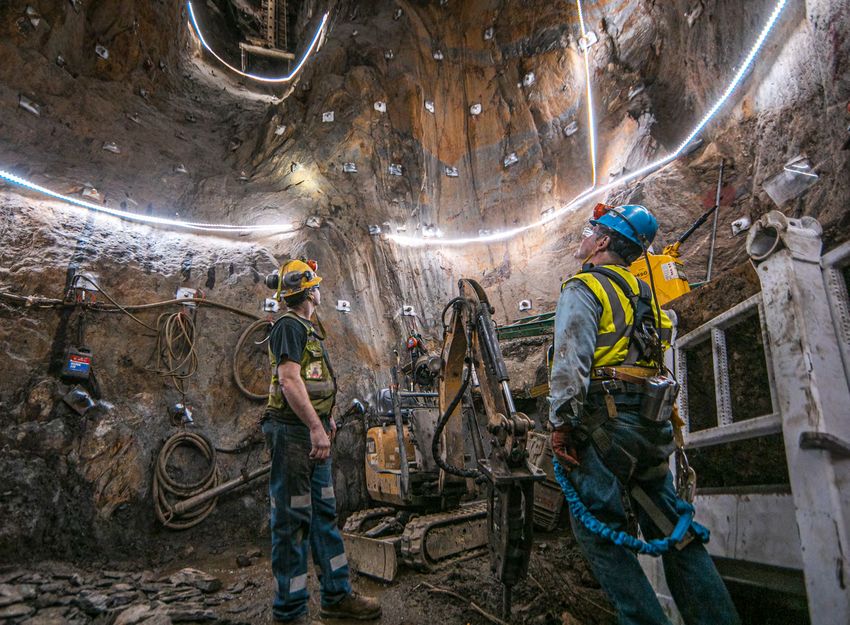
Dundale To confront this growing problem, challenge, requiring construction at 110m ground will be steadied by a robust
May Road Aug 2019
Watercare, the largest water and below ground level at some points. The concrete liner with a mix of steel
Avenue
PS 25 Keith Hay Park
Whitney
2021 Street
2021 Haycock
Jan 2020 wastewater company in New Zealand, tunnel will be excavated using a tunnel reinforcement bars and fibre, while for the
Avenue is constructing a new wastewater tunnel boring machine (TBM), which will work more favourable conditions, steel fibre
May 2020
Frederick Street
Onehunga that aims to reduce overflows into inland its way through a variety of soil reinforced concrete will be adequate.
2021 waterways, improving water quality and conditions, ranging from unweathered to
social and environmental conditions. moderately weathered rock, and from The pressure that will be applied by the
Ghella Abergeldie Joint Venture (GAJV) weak to extremely weak soil. The TBM is TBM has been optimised for every part
Central Interceptor was appointed in early 2019 as the main scheduled to start digging in mid-2021, of the journey. As well as a variety of
Construction site
Ambury
Park contractor, with Arup commissioned by
1: When complete, the Central Interceptor will reduce Construction started GAJV to provide detailed design services
wastewater overflows by 80% Construction start date
Manukau Harbour and construction phase support for the 3: The TBM will be
launched from the
2: The 14.7km-long tunnel will run from the suburb of tunnel and shafts. When completed in
Aug 2019
Māngere Wastewater
Grey Lynn in Auckland to the Māngere Wastewater Māngere Wastewater 2025, the Central Interceptor will be the Treatment Plant site
largest wastewater tunnel in New Zealand.
Treatment Plant
Treatment Plant
2. 4: Nineteen shafts
will be constructed
An ambitious plan
as part of the project
The 14.7km-long Central Interceptor to connect the
tunnel will run from the suburb of Grey new tunnel with the
Lynn in Auckland to the Māngere existing pipework
Wastewater Treatment Plant in the south and other facilities
of the city via Manukau Harbour. With an
internal diameter of 4.5m, it will run at a
depth of 15m below the seabed – in some
places as deep as 110m under the surface.
The project also consists of 19 shafts, 3.
which will provide access and connect
the existing pipe network with the new
tunnel, as well as a pumping station,
sewers, chambers and treatment facilities.
Arup’s project scope includes design
management, general geotechnical
design, shaft temporary works and
permanent lining design (structural and
geotechnical), main tunnel lining design,
link sewer jacking pipe selection and
design, temporary works design for
tunnelling operations for the main
tunnel, digital engineering and
construction phase support.
1. 4.
14 1/2021 | The Arup Journal 15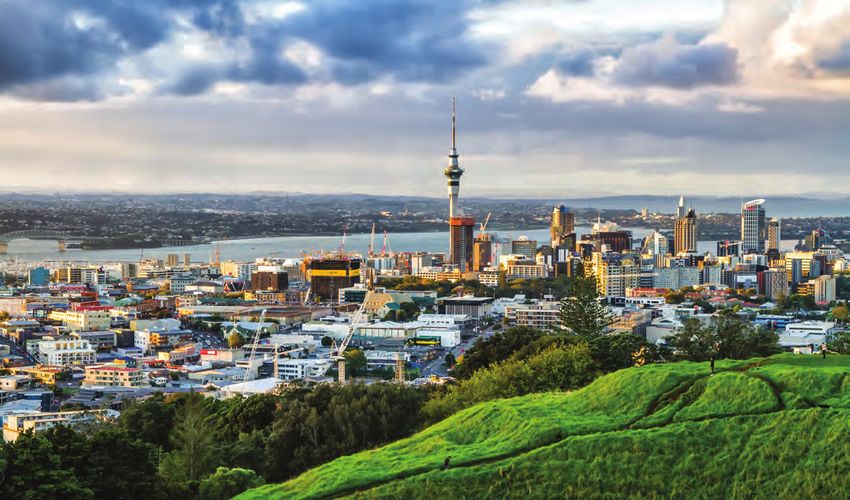
Central Interceptor Tunnel Auckland, New Zealand
The TBM will be launched in a novel Designing the drop shafts 7: The precast concrete
way. Normally, TBMs operate by Sewage is siphoned into the tunnel via tunnel linings elements
jacking against a static steel frame. For 19 drop shafts, which have an internal were constructed
the Central Interceptor, Arup designed a diameter of between 3m and 12m and off site
‘flying launch’ system: tension bars that reach depths ranging between 12m and 8: Bored pile walls
push the machine forward with the help 80m. Arup designed an innovative temporarily support
of a pressure ring. This means more system of cascade shelves for these drop the large volumes of
efficient use of space at the bottom of shafts, with the aim of improving the ground excavated
during shaft
the shaft, because the pressure ring and construction process. Central to this was
construction
tension bars move forward along with building certain elements of the system in
the TBM. This method is also faster and a factory, thereby enabling greater control
wastes less material, as there is no need over the quality and speed of construction
to erect and dismantle a temporary and minimising the amount of time
tunnel lining for the static frame. construction workers would need to 7.
spend in the deep shafts.
Microbes found in sewers can also cause with reinforced concrete sandwiched
The pipe jacking system
corrosion of the concrete lining, so a between them. Ultimately, FRP was
The two link sewers, with an overall The elements constructed in situ include
3mm-thick layer of high-density agreed upon for a number of shafts and
length of 4.3km, which channel used the lining and the corbels that carry the
polyethylene (HDPE), known to be Arup is undertaking a peer review of the
water into the tunnel, will be constructed weight of the cascade shelving system, as
resistant against microbial-induced shaft ideas to finalise the design.
using the pipe jacking method, also well as the lower part of each shaft wall
corrosion, was applied to the inside of the
referred to as microtunnelling, using and the lowest shelf. The remainder is 8.
tunnel. This was mechanically anchored Safe temporary works
micro TBMs. Australia and New built as precast elements off site:
to the concrete and the two elements To ensure a safe working environment developed an effective inspection and
Zealand standards for link sewers integrated modules comprising the rest of
5. were cast together off site. This single- while the project was under construction, quality control proposal to minimise
do not cover pipes constructed the shaft wall and the shelves, which are
step process allows greater control over Arup’s geotechnical team worked with human involvement in the construction
rock formations, it will cut through significantly deep below ground, as lowered into each shaft.
quality and a quicker process than if the in-house rock mechanic experts to of the wastewater environment.
different depths of soil, with varying most sewers and cables are placed at a
HDPE layer was constructed later on site. develop a temporary rock support system
levels of pressure depending on what is depth of less than 5m. Here, however, Reducing corrosion risk
that took into consideration the depth of The firm worked to improve the process
above – for example, the 1.5km stretch the depth ranges from 12m to 70m. The team was asked to design the tunnel
The client had specified acid-resistant the works and the weak sedimentary rock of designing the bored pile walls, which
across Manukau Harbour will place the Arup designed the pipe jacking in a and shafts for a 100-year design life, with
concrete (ARC) for a number of the drop around them. Arup challenged standard are used to temporarily support the large
lowest burden on the equipment. The similar way to a bored tunnel lining: minimum maintenance required. This
shafts, but Arup worked with GAJV on an practice in New Zealand by using the real volumes of ground excavated from the
tender specification demanded that the rather than using a formula to come was complicated by the aggressive
option to construct these using fibre- conditions of the rock – discovered shafts. There is a margin of error as to
TBM operate in ‘closed mode’ under the up with a conservative estimate for effects of the wastewater: biogenic
reinforced polymer (FRP). This system is through rock support interaction analysis where the piles are placed relative to the
harbour. This requires the excavation the load the pipes would have to bear, sulphide causes corrosion and the rapid
more durable, easier to procure locally and finite element modelling – rather position set out in the design, which
chamber to be fully filled and the face of the effect of ground arching and soil deterioration of ordinary Portland cement
and quicker to work with. The firm than working from approximations. This could mean a smaller contact area
the excavation to be pressurised to limit lining was considered in the design, and steel reinforcement (which make up
carried out a feasibility study on the use took into account factors such as the between intersecting piles and therefore
the amount of water seeping in and to resulting in a design specifically suited the tunnel’s concrete lining).
of this material for the permanent wall natural relaxation of the rock and the a weaker structure. Calculating the
minimise ground settlement on the to the local conditions.
lining, internal dividing walls and cascade fractured nature of the East Coast Bay worst-case scenario would normally be
surface and seabed.
shelves. One of Arup’s concepts, Formation and resulted in a highly a labour-intensive process using CAD
Accounting for seismic activity
developed in collaboration with the optimised design that will save cost and software and plenty of approximations
Greater pressure generally causes cutter The tunnel lining design also needed
University of Queensland and drawing on time. And, as less construction activity – a method that can also lead to
tools to wear out more quickly, meaning to take into account New Zealand’s
the shafts developed by the firm for the needs to take place underground, the inaccurate results. Arup created a digital
the boring team has to stop frequently for vulnerability to volcanic and seismic
Silicon Valley Clean Water project, was a health and safety aspects of the project tool that used data about the position and
maintenance. Arup decided to simulate activity. The requisite standards
dual-skinned FRP outer and inner liner have been improved. Arup also potential variation of the piles to generate
the actual tunnelling conditions the TBM make assumptions about the lining
would encounter to justify applying remaining fully bonded or slipping
lower pressure where it was appropriate. completely during an earthquake, 9: Mould of casting
Using Plaxis 3D software, the firm whereas the reality is more likely to lining showing the
conducted a 3D finite element analysis be somewhere between the two 5: Two link sewers, high-density
with an overall length polyethylene used
that breaks down each tunnelling section extremes. Arup went beyond these of 4.3km, will be to protect the
into discrete parts, then models their requisite standards, carrying out constructed using concrete against
performance and the required pressure finite element analysis to characterise microtunnelling microbiologically
based on the specific conditions. the potential friction where soil and induced corrosion
6: Arup developed an
This meant the TBM could apply a lining meet and get a realistic idea of innovative precast 10: The corrosion
significantly lower average pressure, how seismic activity would affect the concrete solution for protection lining
thereby minimising wear and tear and tunnel, rather than designing for the the cascade shelves in was applied to the
allowing swifter progress. conservative worst-case scenario. the drop shafts inside of the tunnel
6. 9. 10.
16 1/2021 | The Arup Journal 17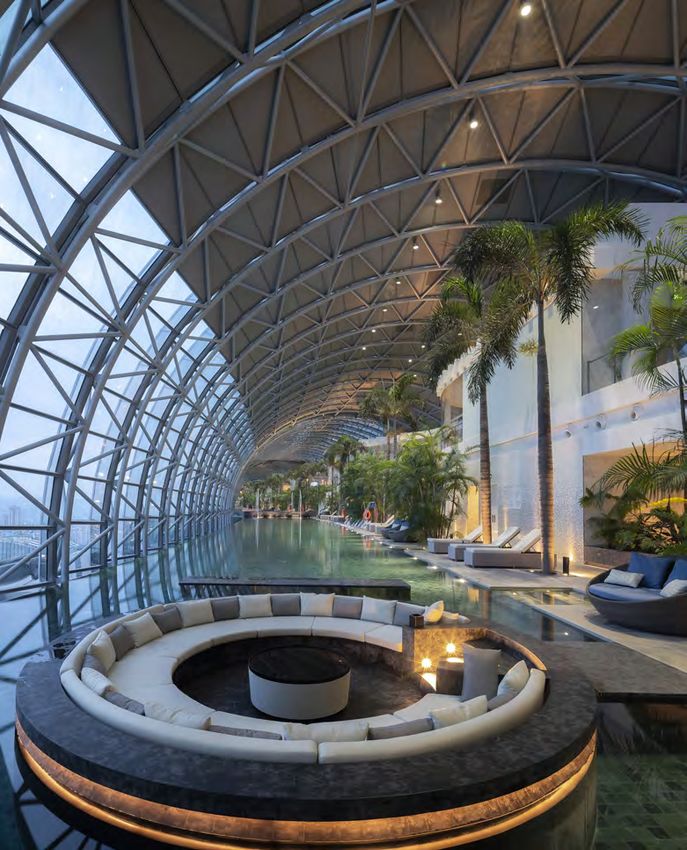
Central Interceptor Tunnel Auckland, New Zealand                                                                                                                                                                                  K11 ATELIER King’s Road Hong Kong

11.

a CAD-style image to illustrate the
possibilities and the concrete strength               Authors                                            Fernando, Megan Freeth, Mayurie Gunatilaka,
required. These calculations are much                 Jochem Dorst is the Project Manager. He is an      Elizabeth Halsted, Ronald He, John Hildyard,
more accurate than they would have                    Associate in the Auckland office.                  Kavan Illangakoon, Charles Im, Sanket Jadhav,
been if calculated manually.                                                                             Dylan Jayamaha, Jasper Jiang, Karen Jodinata,
                                                      Andreas Raedle is the Project Director.
                                                                                                         Sharyon Jonkers, Shashank Kumar, Thida Kyaw,
                                                      He is a Principal in the San Francisco office
A system built to last                                                                                   Daniel Lambert, Hannes Lagger, Ching Lau, Anna
                                                      (and was formerly based in Singapore and
The Central Interceptor will have a                                                                      Liu, Mikel Llaneta, Harry Lovelock, Steve Lu,
                                                      commuting on a regular basis to Auckland since
234,000m3 capacity, enabling the storage,                                                                Xiangyue Luo, Rob MacCracken, Gaurav Mathur,
                                                      2017 for this project).
redirection and effective treatment of                                                                   Wesley Mauafu, Sue Myocevich, Jake Naran, Andy
sewage for Auckland. This will have                   Project credits                                    O’Sullivan, Christine Park, Tommy Parker, Sarah
huge benefits for the health of the                   Client Watercare                                   Peters, Don Phillips, Seth Pollak, Sue Poo, Andreas
                                                                                                                                                               1.
population and the environment,                       Contractor Ghella Abergeldie Joint Venture         Raedle, Rajvinder Sethi, Matthew Simmons, Shane
through cleaner waterways and beaches                 Client’s consultants Jacobs, Aecom and McMillen    Small, Aoife Staunton, James Stringer, Leo
and the restoration of natural habitats.              Jacobs Associates                                  Suhaendi, Podianko Surya, Dean Sykes, Sergei

                                                                                                                                                               Going green
As Auckland continues to expand, its                  Hydrogeology Beca                                  Terzaghi, Michael Tran, Nina Tropina, Yannis
infrastructure has grown with it, ensuring            Civil and structural engineering, design           Vazaios, Francois Vermaak, Chris Vorster, Jack
a resilient environment that can meet the             management, general geotechnical design, shaft     Wang, Citra Wicaksana, Hannah Willis, Ricardo
needs of future generations.                          design, tunnelling design and construction phase   Wong, Yi Yang Lee, David You.
                                                      design services Arup:
                                                                                                         Image credits
                                                      George Acuna, Mark Adams, Charles Allen, Renato
                                                      Alcones, Mariela Angeles, Mia Balogh, Peter
                                                                                                         1, 2: Watercare                                       This urban development prioritises                                                       1: K11 ATELIER
                                                      Burnton, Fergal Brennan, Fergus Cheng, Nurul
                                                                                                         3, 4: Ghella Abergeldie Joint Venture
                                                                                                         5–10: Arup
                                                                                                                                                               sustainability and wellbeing, enhancing                                                  King’s Road has been
                                                                                                                                                                                                                                                        awarded a Platinum
11: Once complete, the Central Interceptor will       Chowdhury, Patrick Collins, John Davies, Mahak
                                                      Dewan, Andy Dodds, Jochem Dorst, Kaveesha
                                                                                                         11: Milosz Maslanka/Shutterstock                      the city environment                                                                     Final Certification
provide the essential water infrastructure Auckland                                                                                                                                                                                                     rating for both LEED
needs as its population rapidly expands                                                                                                                        Authors Kennis Chan, Tony Lam, Zoe Lee, Ka-Man Miu and Tony Tang                         and WELL

18                                                                                                                                                                                                                                          1/2021   | The Arup Journal   19
K11 ATELIER King’s Road Hong Kong
When envisioning K11 ATELIER on A revitalised site glass, including building energy
Hong Kong’s King’s Road, property K11 ATELIER King’s Road is a modelling, dynamic thermal modelling
development company New World 45,290m2, 125m-tall office development and daylight simulation. Special design
Development wanted to create a Vertical in North Point on Hong Kong Island. The workshops were held to review and refine
Creative City – an office and business site was transformed into its current form the plans for maintaining the curtain
complex containing a host of lifestyle over a period of four years, from the time walling in the most efficient way.
amenities, in which entrepreneurs and the land was secured to when the first
thinkers would come together to tenants moved in. The 22-storey structure The most eye-catching element of the
exchange ideas and drive the city’s includes office space, exhibition and event sustainability plan is the abundance of
growth. Arup previously worked with areas, retail outlets, restaurants, bars, a greenery. More than 230,000 plants are
New World Development on its sky garden and dozens of other amenities embedded across the building, including
K11 ATELIER Victoria Dockside aimed at enhancing the lives of the people 40 different flowering, fragrant and edible
development on the Hong Kong who inhabit the building. The design itself species. The plants are scattered across
waterfront of Tsim Sha Tsui. The was developed with occupiers’ wellbeing the building’s envelope, including the 4.
firm was commissioned on the K11 in mind, and the development has also sky garden and the façade around the
3.
ATELIER King’s Road project to enhanced the local cityscape through its podium. This is far above the statutory
provide sustainability, mechanical, design and its green façade. requirements, which specify that greenery
electrical, plumbing and façade Building Council’s LEED system. needs to equate to only 20% of the site
4: The hybrid solar
engineering services. Arup worked alongside a range of It was also the first project in the world area of a structure. In total, the greenery photovoltaic and
consultants and subcontractors on the to achieve all measures under the WELL contributes to the carbon sequestration thermal installation
This new building is an example of both project, using a communication platform Building Standard Pre-certification of 4 tonnes of CO2 each year and reduces on the roof generates
an inspiring and sustainable workplace called the Internet Project Communication scheme, which identifies buildings and the urban heat island effect in this electricity for lighting
and a piece of city-centre architecture that Centre to improve productivity and interiors that have outstanding health and high-density neighbourhood. It has also in the lift lobby and
benefits the surrounding community – help reduce the amount of paperwork wellness performance. Upon construction promoted local biodiversity, with birds hot water for the
bringing greenery and liveliness to the used in project administration. Building completion, the project was the first and butterflies drawn to the structure. showers
neighbourhood and fostering a creative Information Modelling (BIM) was building in Hong Kong to achieve 5: Monitoring devices
and productive working culture within also used throughout to strengthen both LEED and WELL final Platinum Reusing resources in the lobby track
its walls. In creating the building, coordination, minimise wastage and certifications. The design received Much of the sustainability strategy is and display changes
sustainability and wellness guided every streamline the project process. support from the Hong Kong authorities based around the generation of renewable in temperature
and humidity
aspect of the decision-making process. from the beginning – it was the first energy. The measures geared towards 5.
More than 70 eco-friendly design features Arup’s work on K11 ATELIER King’s project to receive a loan under the energy efficiency led to a saving of
– reflecting six of the 17 UN Sustainable Road was focused around three central territory’s new green financing initiative. more than 30% compared with the energy per year, which accounts for Water conservation has been tackled
Development Goals – ensure the building missions: to create a sustainable working local building energy code. Central 1.3% of the building’s total energy use. through various methods. The bleed-off
achieves the highest standards of environment; to improve the site context, Arup led the sustainability strategy for to this is the 220m2 hybrid solar By participating in the Hongkong Electric from the cooling tower is used to flush
efficiency. Together, these have brought streetscape and neighbourhood; and to the building and achieved these goals photovoltaic and thermal (PVT) Company’s feed-in tariff scheme, it is also toilets, and a rainwater harvesting system
the project a host of accolades and set promote green design in the city. using a diverse range of measures at installation on the roof – the largest of supporting the adoption of renewable reduces freshwater consumption by an
it up as a standard-bearer of green every step of the development, starting its kind for a commercial development energy on a wider scale. estimated 65%. A differential-pressure
construction in Hong Kong and a Green design with the construction process. Wherever in the Australasia region and the first pumping system allows water pressure to
model for office developments in the K11 ATELIER King’s Road achieves a possible, Arup specified regionally example of a commercial building in Arup’s design of the building services be automatically adjusted depending on
21st century. Platinum rating under the US Green sourced materials with recycled content Hong Kong adopting this technology. contributes an additional 30% saving demand on taps at different times.
and wood that had achieved Forest Comprising a total of 138 panels, the in energy use, compared with the
Stewardship Council certification. Glass system generates electricity for lighting standard set by the American Society The drive for sustainability also
panels were commissioned in a uniform, the building’s lift lobby and hot water of Heating, Refrigerating and Air- encompasses efforts to promote
customised size to ease the production for its showers. The panels have a higher Conditioning Engineers. environmental awareness. To that end,
and delivery process. energy efficiency than conventional monitoring devices tracking and
photovoltaic systems; this was required Effective waste management was also a displaying real-time changes in
As an example of the way sustainability because of the limited amount of surface priority. Recycling facilities have been temperature and humidity have been
was built into all aspects of the design, a area available on the tower. provided on each floor, with a dedicated installed in the main lobby. Meanwhile,
2: Over 230,000
plants are featured
curtain wall system with insulated glass recycling storage area located on one of electric vehicle chargers have been
around the structure units and low-emissivity coating was The PVT installation is complemented by the lower floors so that the cleaning provided in the car parking area to
selected for the office areas owing to its a 3kW wind turbine which powers the company has easy access. The volume encourage air-pollution-free motoring.
3: Sustainable heightened energy performance – as well building’s external lighting. The lighting of food waste is estimated to have
materials were sourced
where possible,
as because of its acoustic control abilities, system requires minimal maintenance and been reduced by 85% via a system Wellness
including wood with given the noisy urban context. Arup has motion sensors for energy saving. that converts it into environmentally Arup’s approach to wellness on this
Forest Stewardship conducted various analyses to determine Together, the PVT and wind turbine friendly fertiliser, about 15kg of which project was an extension of its
Council certification the window to wall ratio and type of generate about 77,000kWh of renewable is generated each day for use on site. environmental sustainability proposals.
2.
20 1/2021 | The Arup Journal 21K11 ATELIER King’s Road Hong Kong
With any given measure, both the analysis, have made the outdoor space Usually, the bases of office buildings in enrichment of the street experience for
environment and the people using and usable all year around – it would Hong Kong are fully enclosed, creating pedestrians over financial returns.
living around the structure were taken otherwise have only been tolerable for large, obtrusive bulks at ground level that
into account. 54% of the winter. On the rooftop, a block natural ventilation and the visual Additional greenery, designed by P&T
weather station monitors the outdoor connection and access between streets. Group, interior designer ESKYIU and
The building interior was designed with climatic and environmental conditions, With K11 ATELIER King’s Road, a landscape designer P Landscape, comes
these principles in mind. The LED including temperature, solar radiation glazed, transparent entrance lobby is set in the form of a floating ‘green box’ that
lighting system is linked to daylight intensity, wind speed and more. This back from the street on three sides to hovers 9.2m above ground level at the
sensors for energy saving and equipped information is collected and translated into create a landscaped open space near the base of the office tower’s raised podium.
with glare-free luminaires, while the a thermal comfort index for display on a building, creating better walkability and This gives shelter to the people passing
high-performance, low-energy glazing sustainability dashboard at the threshold ventilation. The setbacks range from 1.4m through the open space below and adds
provides solar control as well as excellent of the sky garden. When stepping out, at the back to 12.8m on the main King’s visual appeal to the structure.
daylight. The air-handling units and users can glance at the display to get the Road, the latter of which creates a
supply diffusers ensure that the air is of latest updates and recommendations, as distance of 42.8m from the building The ground floor restaurants are open to
the highest quality, with air movement well as a rundown of the building’s opposite. This configuration means that the public. The exhibition spaces on the
and thermal comfort closely monitored renewable energy generation. on the ground floor only 52% of the site second floor are designed to be
and optimised. They also filter out comprises built area, compared with multifunctional, and are equipped with
pollutants such as PM2.5, PM10 and The roof also houses a 70m2 span of 100% on most similar properties. measures to support rapid reshaping, such
volatile organic compounds (VOC), and urban-farming planters, which means Furnished with greenery, these voids as a computerised lighting control system,
6. use ultra-violet germicidal irradiation to people can take up gardening and enjoy occupy valuable rentable space, but the movable partitions, curtains, and a ceiling
eliminate bacteria and mould. Lead- the freshly grown vegetables and fruits at design team decided to prioritise the and column hanging system, all of which
restricted building materials and those K11 ATELIER’s healthy-eating-focused
with low levels of VOC have been used restaurants and cafés. A 170m-long
for the safety of building occupants, and jogging path made of real grass runs
sound and smell have been considered alongside the planters, encouraging
throughout to create a soothing exercise and an active lifestyle. Each floor
experience within the structure. of the building includes a nursing room
8: A floating
for new mothers. Several have direct ‘green box’ at the
Similarly, the rooftop garden is a green access to balconies, so users can step base of the tower’s
feature but also gives those working in the outdoors into the fresh air. raised podium gives
building a pleasant environment in which shelter and enriches
to spend time and interact with each other, The building also houses a public art the environment for
encouraging creative collaboration and gallery, which helps to further promote pedestrians
fostering a sense of community. The mental wellbeing. Crafted design 9: Granite stones
garden’s microclimate has a comfortable elements add a human touch: granite that were excavated
temperature, which is controlled by stones excavated on site during from the site during
strategically placed 2m-high shields that construction have been upcycled as a construction were
used in the
protect the space and its benches from stone feature wall. In addition, the K11 lobby walls
winter winds. These measures, designed ATELIER ACADEMY in-house curation 8.
using computational fluid dynamics team puts together an eclectic mix of
wellness, education and interaction
programmes for the workforce.
6: The LED lighting Awards
system saves energy 2020 Site planning
by being linked to MIPIM Asia Awards As well as considering the needs of the
daylight sensors and is Best Green Development – Winner building’s users, Arup also took into
equipped with Best Office Development – Winner account how the development might
glare-free luminaires affect the people living and working
Council on Tall Buildings and Urban Habitat
7: The roof garden around the building. K11 ATELIER
Structural Engineering
microclimate is kept King’s Road is located in a dense part of
at a comfortable Best Tall Building 100–199 meters
a dense city, and is a towering, visible
temperature year- Award of Excellence
presence. However, its form and envelope
round through the
placement of 2m-high
Urban Land Institute Asia Pacific Awards were designed to reduce the negative
shields that protect for Excellence impact of this presence; rather than being
the area from Winner constructed simply of glass and steel, the
winter winds aim was to create a green, pleasant view.
7. 9.
22 1/2021 | The Arup Journal 23You can also read


