The Impact of Health Literacy on Knowledge and Attitudes towards Preventive Strategies against COVID-19: A Cross-Sectional Study
←
→
Page content transcription
If your browser does not render page correctly, please read the page content below
International Journal of
               Environmental Research
               and Public Health

Article
The Impact of Health Literacy on Knowledge and Attitudes
towards Preventive Strategies against COVID-19:
A Cross-Sectional Study
Maria João Silva 1 and Paulo Santos 1,2, *

                                            1   Department of Medicine of Community, Information and Health Decision Sciences (MEDCIDS),
                                                Faculty of Medicine, University of Porto, 4200-319 Porto, Portugal; up201403571@edu.med.up.pt
                                            2   Center for Health Technology and Services Research (CINTESIS), Faculty of Medicine, University of Porto,
                                                4200-319 Porto, Portugal
                                            *   Correspondence: psantosdr@med.up.pt

                                            Abstract: The coronavirus disease 2019 (COVID-19) pandemic introduced a set of mitigation mea-
                                            sures based on personal behavior and attitudes. In the absence of vaccination or specific treatment, it
                                            became essential to comply with these measures to reduce infection transmission. Health literacy
                                            is the basis for changing behaviors. AIM: To characterize the impact of literacy on knowledge and
                                            attitudes towards preventive strategies against COVID-19. METHODS: This cross-sectional study
                                            involved an online questionnaire applied to students of the University of Porto, Portugal, containing
                                            questions about knowledge and attitudes towards COVID-19 based on European guidelines. Health
                                            literacy was assessed through the Newest Vital Sign questionnaire. Logistic regression estimated
                                  the relationship between health literacy and both knowledge and attitudes. RESULTS: We included

                                            871 participants (76.3% female), with a median age of 22 years old. We found adequate literacy in
Citation: Silva, M.J.; Santos, P.
                                            92% of our sample, irrespective of gender and age. In the global analysis, 78.6% of the participants
The Impact of Health Literacy on
                                            had adequate knowledge, and 90.4% had adequate attitudes. We found that better literacy was
Knowledge and Attitudes towards
                                            significantly associated with attitudes towards COVID-19, but not with better knowledge. In a model
Preventive Strategies against
COVID-19: A Cross-Sectional Study.
                                            adjusted for gender, age, and previous education in the health field, female gender and previous
Int. J. Environ. Res. Public Health 2021,   education in the health field were associated with better knowledge and attitudes. CONCLUSION:
18, 5421. https://doi.org/10.3390/          Better health literacy is associated with better attitudes towards preventive strategies against COVID-
ijerph18105421                              19. We should invest in ways to improve health literacy, so we can improve people’s attitudes and
                                            consequently reduce coronavirus’ transmission.
Academic Editor: Paul B. Tchounwou
                                            Keywords: health literacy; COVID-19; health behavior; attitudes; health knowledge; practice
Received: 13 April 2021
Accepted: 18 May 2021
Published: 19 May 2021

                                            1. Introduction
Publisher’s Note: MDPI stays neutral
                                                  Early in 2020, the world experienced an unexpected health crisis. Suddenly, our lives
with regard to jurisdictional claims in
                                            changed dramatically as the new coronavirus, SARS-Cov-2, widely spread, leading to the
published maps and institutional affil-
                                            declaration of the pandemic by the World Health Organization [1]. The onset of a new
iations.
                                            infectious threat, in a time where infectious diseases were no longer a public concern, raised
                                            old fears. Current technological capacity was not enough to protect people from disease
                                            and even death. The total impact extended far from health issues to the social, economic
                                            and political levels.
Copyright: © 2021 by the authors.
                                                  The fast development of coronavirus disease called for people to acquire health
Licensee MDPI, Basel, Switzerland.
                                            information and to apply it, adapting their behavior at a fast pace [2]. Since vaccination
This article is an open access article
                                            is still proceeding at a slow rate, and in the absence of a specific treatment, adopting non-
distributed under the terms and
                                            pharmacological public health interventions became really important to combat COVID-19
conditions of the Creative Commons
Attribution (CC BY) license (https://
                                            by slowing down the virus transmission [3–5].
creativecommons.org/licenses/by/
                                                  In this sense, literacy has become more relevant than ever. Ratzan, in 2000, settled the
4.0/).                                      concept of literacy as the capacity to deal with basic health information by obtaining it,

Int. J. Environ. Res. Public Health 2021, 18, 5421. https://doi.org/10.3390/ijerph18105421                       https://www.mdpi.com/journal/ijerph
Int. J. Environ. Res. Public Health 2021, 18, 5421 2 of 12
processing and understanding it, along with the knowledge of services needed to make
appropriate health options [6]. Over the past years, literacy has assumed an important
role in health communication, leaving the closed aspect of simple knowledge to a more
functional perception of the activation of individuals for better behaviors, activating them
and not only teaching them [7]. More than what each person knows, it matters what
each person does. This higher complexity led to a new definition proposed by Berkman
separating health literacy from intelligence, adding importance to oral communication
skills as a critical component of health literacy, and eliminating the term “basics” [8].
Health literacy is not merely a function of basic skills. It includes the capacity to
communicate about health issues, depending on individual and systemic factors, such as
beliefs, culture, education, and health services organization, framed by healthcare needs
and context demands [9]. Literacy is a relevant determinant for health, empowering
individuals to participate and take action in their own healthcare [1], with an impact on
health outcomes. Furthermore, health literacy improves health and well-being, addresses
health inequalities, and builds individual and community resilience [1]. Moreover, it
allows individuals to make better health decisions and have a stronger commitment
and higher levels of efficiency [10]. On the other hand, low literacy is associated with
higher mortality [11], higher morbidity [12], higher rates of depression [13], and lower
adherence to medications [14,15], and commonly is correlated with lack of education,
poverty, unemployment, and low socioeconomic status. Notwithstanding, even those
with preeminent education and income can have low health literacy when experiencing
something for the first time [1].
Since the beginning of the COVID-19 pandemic, a great amount of daily new data were
delivered to the public from numerous official and non-official sources [16]. Comments
and explanations of many experts and opinion makers invaded the news, sometimes in a
contradictory way. The oversaturation of information made it hard to distinguish between
correct and wrong information, allowing for the introduction of misconceptions and wrong
beliefs, many times under the cover of almost scientific speech. Furthermore, the way
people access information has changed over the years. Information sources are crucial
to frame how to reach people. For the younger population, internet has substituted the
classical media as the preferred source of mass information, with easily accessible and
comprehensive content. However, internet is associated with lower literacy levels [17],
because of the amount of fake information that is disseminated without technical review
and appraisal [18]. Recent studies on digital health literacy about COVID-19 show that,
although students generally achieve high levels, they are unable to make judgments about
the reliability of online health information [19–21]. Without true information there is no
real freedom to decide. Most of the time, this lack of autonomy results in low adherence
and even rejection of preventive health measures [22]. Consequently, many people have
adopted wrong behaviors against COVID-19.
Health literacy, both in knowledge as in behavior, is the key for an effective preven-
tive medicine [10] and the way to a greater justice and equity in society as a long-term
measure [23].
In this COVID-19 pandemic, Gautam et al. showed that health literacy is a significant
predictor for awareness and preventive behaviors among chronic disease patients [24].
In the younger population, COVID-19 has shown low impact both in incidence and in
the clinical severity. In this group, the relation between literacy and preventive COVID-
19 behaviors has not yet been established, nor have its determinants, making hard to
intervene preventively. The aim of this study is to characterize the impact of literacy levels
on knowledge and attitudes towards preventive strategies against COVID-19, prospecting
for the determinants, to allow for the design of specific and effective interventions of
health education.Int. J. Environ. Res. Public Health 2021, 18, 5421 3 of 12
2. Materials and Methods
We conducted an observational cross-sectional study involving all students from
the University of Porto, applying an online questionnaire. Although completely anony-
mous, students had to authenticate before answering to ensure that they answered the
questionnaire only once.
The University of Porto is one of the biggest universities in Portugal. It has 14 faculties
with approximately 20,000 students in 34 bachelor’s degrees and 18 integrated master’s
degrees and more than 10,000 students in postgraduate education. All students enrolled at
the University of Porto in the academic year 2021 were considered eligible for participation.
Data collection occurred from January 2021 to February 2021. All eligible students
were invited to participate in the survey, on different occasions, through the institutional
email system.
The self-answer questionnaire consisted of 3 parts.
In the first part, we measured health literacy through the Newest Vital Sign (NVS)
questionnaire developed by Barry Weiss et al. [25], translated and validated to Portuguese
by Anabela Martins et al. [26]. This instrument is a nutrition label compounded by six
questions that require three minutes for administration. It has an internal consistency
(Cronbach’s alpha) between 0.67 and 0.83. Using factor analysis with varimax rotation, two
subscales explained 60.97% of the variance. Depending on the number of correct answers,
we can classify the level of health literacy: a score of 0–1 suggests a high probability (50%
or more) of limited literacy, a score of 2–3 indicates the possibility of limited literacy, and a
score of 4–6 almost always indicates adequate literacy.
In the second section, we assessed students’ knowledge and attitudes towards pre-
ventive strategies related to COVID-19. For the elaboration of the questions, we used the
guidelines for the implementation of non-pharmaceutical interventions against COVID-19
of the European Centre for Disease and Prevention Control [27].
Knowledge was assessed through 6 sentences: keeping physical distancing of 1–2 m,
wearing shields/visors to replace masks, wearing gloves, wearing masks, hand hygiene,
and avoiding contact of hands with the respiratory tract. We used a Likert scale of 5 points
to assess students’ confidence in each preventive measure (from no trust to full confidence),
dichotomized as correct (4–5) or not correct (1–3). Correct answers worth 1 point and
wrong answers worth 0 points. The total score consisted of the sum of the punctuation. To
be considered adequate knowledge, students should answer at least 5 questions correctly.
We also evaluated participants’ knowledge about the symptoms related to COVID-19.
Attitudes were assessed through 7 sentences: keeping physical distancing of 1–2 m,
wearing gloves, wearing masks indoors, wearing masks outdoors, hand hygiene, avoiding
contact of hands with the respiratory tract, and respiratory hygiene. We also used a 5-point
Likert scale (from never to always), dichotomized into correct (4–5) and not correct (1–3),
with a total score varying from 0 to 7. Adequate attitudes corresponded to at least 6
correct answers.
The last part evaluated social and demographic variables: gender, age, education or
practice in health, height, weight, nationality, civil status, family situation, the existence
of children, the highest education level completed, current working condition, difficulty
paying bills at the end of the month, easiness in buying medicines, easiness to access
physician, and level in society (self-perception).
The sample size was established in a minimum of 765 participants, considering a mar-
gin of error of 3.5% for a confidence interval of 95%, without knowing the expectant results.
We used descriptive and inferential statistics. We used the logistic regression analysis,
adjusted for gender, age, and the formation or practice in health, to assess the relationship
between the literacy (total NVS score) and the adequacy of knowledge and attitudes.
We also used a logistic regression multivariate model, adjusted for the same variables,
to estimate the weight of each determinant in knowledge and attitudes about COVID-
19. The relationship between the scores of knowledge and attitudes was assessed by a
bivariate correlation of Pearson. The significance level was set at 0.05. Data were encodedInt. J. Environ. Res. Public Health 2021, 18, 5421 4 of 12
and registered in a Microsoft Office Excel 2013® database and analyzed using IBM SPSS
Statistics® , version 27.0 (IBM Corp., Armonk, NY, USA).
The study protocol was assessed and approved by the Ethical Committee of Hospital
de São João/Faculty of Medicine of University of Porto. In this investigation, we followed
the principles of the Helsinki Declaration and the Oviedo Convention about the protection
of human rights in biomedical investigation. The first page of the web form, before the
questionnaire itself, included information for participants and asked for their explicit
written consent, allowing for their refusal, which led to them automatically dropping out
of the study.
3. Results
3.1. Participants’ Characteristics
A total of 871 students participated in the survey, all considered valid. As expected by
the demography of students from the University of Porto, females represented the main
proportion (76.3%), and the mean age was 23.9 (±7.0) years old (median = 22). Most of
them were Portuguese (94.9%). The group with specific education or work practice in
health represented 29.0% (n = 253). About a quarter presented at any time symptoms of
COVID-19 (25.8%), and 83 (9.5%) referred to a confirmed infection. A total of 270 students
(31.0%) had been in prophylactic isolation. Almost half of the participants had taken a
diagnostic test (428; 49.1%). Table 1 shows the general demographic characteristics of
our sample.
Table 1. Sociodemographic characteristics.
Characteristics n = 871 (%)
Gender
Female 665 (76.3%)
Male 206 (23.7%)
Mean age (SD) 23.9 (±7.0)
Practice or education in health 253 (29.0%)
Overweight/Obesity 111 (12.7%)/28 (3.2%)
Had symptoms of Coronavirus 225 (25.8%)
Have been infected 83 (9.5%)
Have been in prophylactic isolation 270 (31.0%)
Have taken a diagnostic test 428 (49.1%)
Nationality
Portuguese 827 (94.9%)
Other 43 (4.9%)
Do not know/did not answer 1 (0.1%)
Civil status
Single 781 (89.7%)
Married 78 (9.0%)
Other 7 (0.8%)
Do not know/did not answer 5 (0.6%)
Family situation
Lives alone 28 (3.2%)
Lives with the household 717 (82.3%)
Lives away from home 119 (13.7%)
Do not know/did not answer 7 (0.8%)Int. J. Environ. Res. Public Health 2021, 18, 5421 5 of 12
Table 1. Cont.
Characteristics n = 871 (%)
Highest education level completed
Upper secondary education 440 (50.5%)
Bachelor 205 (23.5%)
Post-graduation 221 (25.3%)
Do not know/did not answer 5 (0.6%)
Current working condition
Student 663 (76.1%)
Student workers (paid or unpaid) 180 (20.7%)
Other 25 (2.8%)
Do not know/did not answer 3 (0.3%)
Difficulty in paying bills at the end of the month (during the past
12 months)
Most times and sometimes 136 (15.6%)
Almost never and never 619 (71.1%)
Do not know/did not answer 116 (13.3%)
Easiness in buying medicines
Very easy and easy 772 (88.6%)
Difficult and very difficult 33 (3.7%)
Do not know/did not answer 66 (7.6%)
Easiness to access to own physician
Very easy and easy 564 (64.8%)
Difficult and very difficult 216 (24.8%)
Do not know/did not answer 91 (10.4%)
Socioeconomic level (self-perception)
Low 25 (2.9%)
Middle 488 (56%)
High 332 (38.1%)
Did not answer 26 (3%)
Literacy levels assessed by the NVS showed an adequate literacy in 801 participants
(92%; 95%CI: 90.2%–93.8%), a possibility of limited literacy in 65 (7.5%; 95%CI: 5.7%–9.2%),
and a high likelihood of limited literacy in 5 (0.6%; 95%CI: 0.1%–1.1%). There were no
differences between gender or age.
3.2. Participants’ Knowledge and Attitudes towards Preventive Strategies Related to COVID-19
Table 2 shows the frequency of correct answers for each knowledge and attitudes
question. Hand hygiene was the topic most hit in the knowledge evaluation by 99.3% of
participants (95%CI: 98.8–99.9), and the indoor use of mask the most referred in attitudes
by 98.9% of respondents (95%CI: 98.2–99.6). On the other hand, the use of gloves revealed
some lack of knowledge at only 44.5% (95%CI: 41.2–47.8), as the attitudes towards the
eviction of the contact of hands with respiratory tract was 81.2% (95%CI: 78.6–83.8). There
was a positive, although weak, correlation between knowledge and attitudes (Pearson
ρ = 0.180; p < 0.01).
Knowledge and attitudes scores were dichotomized into adequate or non-adequate.
A total of 685 participants (78.6%; 95%CI: 77.2–80.0) presented adequate knowledge, and
787 participants (90.4%; 95%CI: 89.4–91.4) presented adequate attitudes.
3.3. Participants’ Knowledge about Symptoms
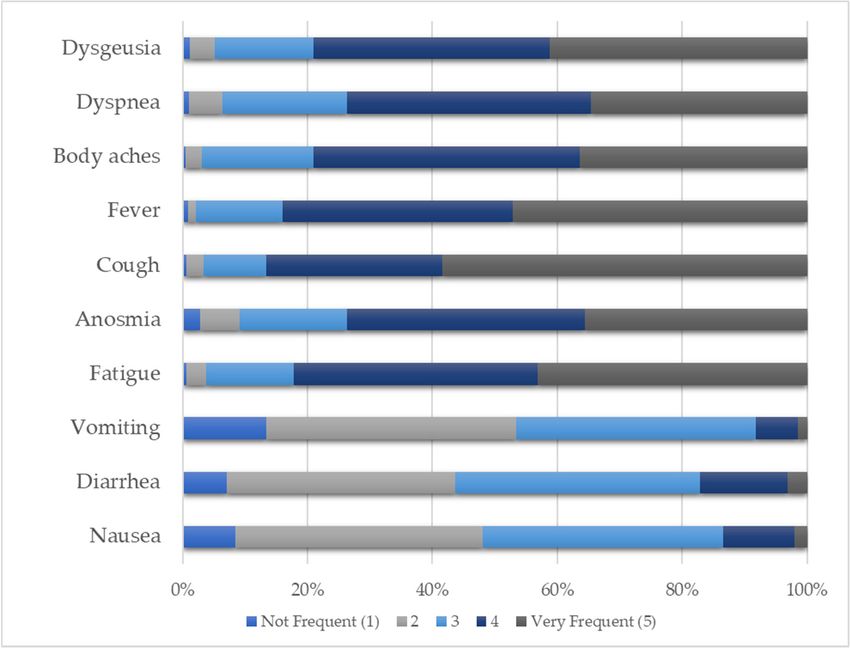
Concerning participants’ knowledge about the symptoms, they identified cough
(86.7%), fever (84.0%), and fatigue (82.2%) as frequent or very frequent and vomiting
(53.4%), nausea (48.1%), and diarrhea (43.6%) as less frequent or not frequent. Figure 1
shows the distribution of the answers.Int. J. Environ. Res. Public Health 2021, 18, 5421 6 of 12
Int. J. Environ. Res. Public Health 2021, 18, x FOR PEER REVIEW 6 of 12
Table 2. (A) Frequency of adequate responses to each question that assessed knowledge. (B) Frequency of adequate
responses to eachDo
question that assessed
you maintain attitudes.
the recommended social distance? 91.6 89.8–93.4
Do you wear gloves? % 89.8 87.8–91.8
95%CI
Do you wear a mask indoors? 98.9 98.2–99.6
(A) Knowledge
Do you wear a mask outdoors? 94.9 93.4–96.4
The minimum distance required to ensure a safe contact is 2 m. 89.4 87.4–91.4
Do you wash your hands? 97.2 96.1–98.3
The use of a visor replaces the use of a mask. 81.2 78.6–83.8
Do There
you avoid contact
is a proven of the
benefit hands
in the use with the respiratory tract?
of gloves. 44.5 81.2 78.6–83.8
41.2–47.8
ThereDois ayou adopt
proven respiratory
benefit hygiene
in wearing a mask.measures? 97.5 94.7 93.2–96.2
96.5–98.5
Hand washing/disinfection should be a frequent practice in everyday life. 99.3 98.8–99.9
We must avoid contact of theKnowledge
hands with the respiratory tract. 97.9 96.9–98.9
and attitudes scores were dichotomized into adequate or non-adequate.
(B) Attitudes A total of 685 participants (78.6%; 95%CI: 77.2–80.0) presented adequate knowledge, and
787recommended
Do you maintain the participants social
(90.4%; 95%CI: 89.4–91.4) presented adequate
distance? 91.6 attitudes.89.8–93.4
Do you wear gloves? 89.8 87.8–91.8
Do you3.3. Participants’
wear Knowledge about Symptoms
a mask indoors? 98.9 98.2–99.6
Do you wear a mask outdoors? 94.9 93.4–96.4
Concerning participants’ knowledge about the symptoms, they identified cough
Do you wash your hands? 97.2 96.1–98.3
(86.7%),
Do you avoid contact of fever
the hands with(84.0%), and fatigue
the respiratory tract? (82.2%) as frequent
81.2 or very frequent and vomiting
78.6–83.8
(53.4%), nausea
Do you adopt respiratory hygiene(48.1%), and diarrhea (43.6%) as less94.7
measures? frequent or not frequent.
93.2–96.2 Figure 1
shows the distribution of the answers.
Figure 1. Participants’ knowledge about the symptoms related to COVID-19.
Figure 1. Participants’ knowledge about the symptoms related to COVID-19.
3.4.Logistic
3.4. LogisticRegression
Regression
Literacy
Literacy is significantly
is significantly associated
associated with attitudes
with attitudes towardstowards
preventivepreventive
strategiesstrategies
against
against COVID-19 (OR = 1.212; 95%CI: 1.002–1.467; p = 0.048), but
COVID-19 (OR = 1.212; 95%CI: 1.002–1.467; p = 0.048), but not to knowledge (OR = 1.141; not to knowledge (OR
= 1.141;
95%CI: 95%CI: 0.981–1.326;
0.981–1.326; p =the
p = 0.086), in 0.086), in regression
logistic the logisticmodel
regression model
adjusted adjusted
to age, gender,toand
age,
gender, and
education education
or practice on or practice
health. on health.
Gender Gender and
and previous previous
education education influenced
significantly significantly
influenced
the model (Tablethe model
3). (Table 3).
Otherdeterminants
Other determinantsofofinterest
interest are
are in Figure
Figure 2.2.TheTheanalysis
analysisadjusted
adjustedforfor
gender, age,
gender,
age,
andand health
health topics
topics experience
experience showed
showed thatthat having
having beenbeen infected
infected (OR (OR = 0.476;
= 0.476; 95%CI:95%CI:
0.289–
0.289–0.784; p = 0.004)
0.784; p = 0.004) andand having
having difficulty
difficulty paying
paying bills
bills (OR (OR = 0.531;
= 0.531; 95%CI:
95%CI: 0.342–0.823;
0.342–0.823; p=
p 0.005)
= 0.005) were
were related
related to to worse
worse knowledge.
knowledge. It also
It also showed
showed thatthat higher
higher knowledge
knowledge waswasasso-
ciated with Portuguese nationality (OR = 3.143; 95%CI: 1.582–6.242; p = 0.001), high edu-
cation level (OR = 1.305; 95%CI: 1.067–1.597; p = 0.01), easiness to access physician (OR:Int. J. Environ. Res. Public Health 2021, 18, 5421 7 of 12
associated
Int. J. Environ. Res. Public Health 2021, 18, x FOR PEERwith Portuguese
REVIEW nationality (OR = 3.143; 95%CI: 1.582–6.242; p = 7 of0.001),
12 high
education level (OR = 1.305; 95%CI: 1.067–1.597; p = 0.01), easiness to access physician
(OR: 1.507; 95%CI: 1.023–2.219; p = 0.038), and certain information sources, such as spe-
cialized
1.507; books
95%CI: (OR = 1.556;
1.023–2.219; 95%CI:
p = 0.038), and 1.055–2.295; p = 0.026)
certain information andsuch
sources, healthcare professionals
as specialized
(OR = 1.840; 95%CI: 1.225–2.766; p = 0.003). On the other hand, worse
books (OR = 1.556; 95%CI: 1.055–2.295; p = 0.026) and healthcare professionals (OR = 1.840; attitudes were
95%CI: 1.225–2.766; p = 0.003). On the other hand, worse attitudes were apparent
apparent in students who were previously infected (OR = 0.502; 95%CI: 0.263–0.961; in stu-
dents who were
p = 0.037), andpreviously
they wereinfected
better (OR = 0.502;
in those who 95%CI: 0.263–0.961; books
use specialized p = 0.037),
(ORand they 95%CI:
= 2.513;
were better in those who use specialized books (OR = 2.513; 95%CI: 1.436–4.398; p = 0.001)
1.436–4.398; p = 0.001) and healthcare providers (OR = 5.149; 95%CI: 1.734–15.288; p = 0.003)
and healthcare
as their mainproviders
sources of(OR = 5.149; 95%CI: 1.734–15.288; p = 0.003) as their main sources
information.
of information.
(A)
(B)
Figure 2. (A) Knowledge and (B) attitudes about COVID-19.Int. J. Environ. Res. Public Health 2021, 18, 5421 8 of 12
Table 3. Relation between (A) knowledge or (B) attitudes towards COVID-19 and literacy for health, adjusted for age,
gender, and practice or formation in health.
(A) Knowledge (B) Attitudes
OR 95%CI p OR 95%CI p
Total NVS Score 1.141 0.981–1.326 0.086 1.212 1.002–1.467 0.048
Gender 0.579 0.401–0.835 0.003 0.541 0.333–0.879 0.013
Practice or formation in health 1.705 1.134–2.562 0.010 3.974 1.873–8.429Int. J. Environ. Res. Public Health 2021, 18, 5421 9 of 12
partly due to the legal obligation of some of the preventive measures. During the period in
which the answers were collected, wearing masks indoors and outdoors was mandatory by
Portuguese law. According to our results, 98.9% and 94.9% of our participants wore masks
indoors and outdoors, respectively. These findings are in line with previous studies that
also document a high percentage of mask use [4,31]. We can assume the legal obligation as
one reason for its use by some of our participants.
Our students identified cough, fever, and fatigue as the most frequent symptoms and
nausea, vomiting, and diarrhea as the less frequent, which agrees with what we found in
recent studies concerning the prevalence of symptoms [37–41]. The amount of information
available and its dissemination might justify this correct identification of symptoms. One
of the relevant measures to reduce the transmission of the disease is the fast and correct
identification of cases, where the recognition of the symptoms is crucial.
Our study shows a high prevalence of adequate health literacy in 92% of participants
(95%CI: 90.2%–93.8%) and a low prevalence of a high likelihood of limited health literacy
in 0.6% of participants (95%CI: 0.1%–1.1%). These results are different from those found
in previous research. In the Portuguese adaptation and validation of the Newest Vital
Sign, Martins et al. (2014) found adequate health literacy in 76% of participants and
a likelihood of limited health literacy in 10% [26]. Paiva et al. (2017) observed 27.1%
(95%CI: 26.6–30.6) of their sample with adequate literacy and 42.5% (95%CI: 38.3–46.6)
of their sample with a high likelihood of limited health literacy [42]. The differences
found in our study can be explained by the composition of our sample. According to
the literature, people with a complete college education are less likely to have limited
health literacy compared to people with a less than 4th grade education [42]. This might
explain the differences found as our population only includes university students. We
found no significant differences between gender in line with previous studies [26,42–44].
Despite the common description of the increase of limited literacy with age [42,43,45], in
our sample, the range of ages was small, explaining why we did not find it. On the other
hand, limited literacy in older people is commonly associated with a lesser education,
which was also not the case in our college students. Our findings are concordant with
the European Health Literacy Survey [43], conducted in eight European countries. This
survey found some specific subgroups where the proportion of people with limited health
literacy was higher, such as financial deprivation, low social status, low education, or old
age. When developing public health strategies to improve health literacy, these aspects
must be considered. Students’ behaviors should be promoted by adequate government
action and policies not only by providing health information, but also by providing health,
social, and economic services for students to cope with the situation. We should develop
policies and programs to encourage healthy and protective behavior, and adherence to
COVID-19 prevention strategies [46]. It is also relevant to adjust curricula and train health
professionals to better deal with health literacy challenges. The photo-novels (visual stories)
are a new instrument available that can be used to provide vital information, resources,
and support to vulnerable populations. In a recent study, they were used to improve health
literacy by including a visual story within the text messages that showed people adopting
healthy behaviors to protect against the virus [47].
Although there are already some studies that evaluate the relationship between digital
health literacy and COVID-19 behaviors, as far as our knowledge, this is the first study
measuring health literacy in college students, and one of the first in the world characteriz-
ing the impact of literacy on knowledge and attitudes towards preventive strategies against
COVID-19. Nevertheless, we should interpret our results considering the limitations of this
study. First, the cross-sectional design lacks temporality, opposing a longitudinal design
that would have evaluated temporal relationships. Second, the sample was restricted to
active students of the University of Porto, students who are all part of a highly educated
population. This social context might have influenced the results. Furthermore, the ques-
tionnaire was sent through dynamic emails, and we are unable to guarantee that all emails
were updated or that all students had access to their institutional email. Participation inInt. J. Environ. Res. Public Health 2021, 18, 5421 10 of 12
the study was voluntary, which may have led to a selection bias, where students who
participated may present different characteristics to those who did not participate. Addi-
tionally, the self-response questionnaire may lead to an information bias, in which students
may respond according to what they believe to be socially acceptable instead of their own
beliefs, despite the use of a Likert scale to prevent the tendency for the correct answer.
Another aspect that can be considered a limitation of the study was the questionnaire
that assessed knowledge and attitudes towards COVID-19. Although we used the ECDC
guidelines for elaborating the questions, they were not part of a validated questionnaire.
Even though it is not possible to extrapolate our results to non-college students, we believe
that similar patterns may be present in other populations.
5. Conclusions
In conclusion, our study shows that better health literacy associates with better atti-
tudes towards preventive strategies against COVID-19. Even without a significant impact
on knowledge, these findings help to improve the global awareness among citizens and
decision-makers towards health literacy as a tool to prevent communicable diseases. The
results corroborate the expression that refers to literacy as the key for effective preventive
medicine, because literacy empowers university students and all other population groups
to take greater control in the prevention of COVID-19 and its spread, thus leading to better
health outcomes. From a community and public health perspective, we should highlight
programs that aim to improve health literacy. Possible strategies include improving the
quality of available health information about COVID-19 and training to improve general
or coronavirus-specific search skills. Adequate government action and policies should
provide health information as well as social and economic services, making literacy for
health a fundamental skill in college students, who are the future professionals in different
subject areas.
Author Contributions: M.J.S. and P.S. contributed equally to the conceptualization, methodology,
software, validation, formal analysis, investigation, resources, data curation, writing—original draft
preparation, writing—review and editing, and visualization. All authors have read and agreed to the
published version of the manuscript.
Funding: This article was supported by National Funds through FCT-Fundação para a Ciência e
Tecnologia, I.P., within CINTESIS, R&D Unit (reference UIDB/4255/2020).
Institutional Review Board Statement: The study was conducted according to the guidelines of the
Declaration of Helsinki and approved by the Ethics Committee of Hospital de S. João/Faculdade de
Medicina da Universidade do Porto (protocol code 440/2020; 08/01/2021).
Informed Consent Statement: Informed consent was obtained from all subjects involved in the study.
Data Availability Statement: The data presented in this study are available on request from the
corresponding author. The data are not publicly available due to ethical and privacy constraints.
Conflicts of Interest: The authors declare no conflict of interest. The funders had no role in the design
of the study; in the collection, analysis, or interpretation of data; in the writing of the manuscript, or
in the decision to publish the results.
References
1. Spring, H. Health literacy and COVID-19. Health Inf. Libr. J. 2020, 37, 171–172. [CrossRef]
2. Paakkari, L.; Okan, O. COVID-19: Health literacy is an underestimated problem. Lancet Public Health 2020, 5, e249–e250.
[CrossRef]
3. Iezadi, S.; Azami-Aghdash, S.; Ghiasi, A.; Rezapour, A.; Pourasghari, H.; Pashazadeh, F.; Gholipour, K. Effectiveness of the
non-pharmaceutical public health interventions against COVID-19; a protocol of a systematic review and realist review. PLoS
ONE 2020, 15, e0239554. [CrossRef] [PubMed]
4. Cowling, B.J.; Ali, S.T.; Ng, T.W.Y.; Tsang, T.K.; Li, J.C.M.; Fong, M.W.; Liao, Q.; Kwan, M.Y.; Lee, S.L.; Chiu, S.S.; et al. Impact
assessment of non-pharmaceutical interventions against coronavirus disease 2019 and influenza in Hong Kong: An observational
study. Lancet Public Health 2020, 5, e279–e288. [CrossRef]Int. J. Environ. Res. Public Health 2021, 18, 5421 11 of 12
5. Zamir, M.; Shah, Z.; Nadeem, F.; Memood, A.; Alrabaiah, H.; Kumam, P. Non Pharmaceutical Interventions for Optimal Control
of COVID-19. Comput. Methods Programs Biomed. 2020, 196, 105642. [CrossRef] [PubMed]
6. Ratzan, S.; Parker, R. Introduction. In National Library of Medicine Current Bibliographies in Medicine: Health Literacy; Selden, C.R.,
Zorn, M., Ratzan, S., Parker, R.M., Eds.; National Institutes of Health: Bethesda, MD, USA, 2000; pp. v–vii.
7. Nutbeam, D. Health literacy as a public health goal: A challenge for contemporary health education and communication strategies
into the 21st century. Health Promot. Int. 2000, 15, 259–267. [CrossRef]
8. Berkman, N.D.; Davis, T.C.; McCormack, L. Health Literacy: What Is It? J. Health Commun. 2010, 15, 9–19. [CrossRef]
9. National Center for Health Statistics (U.S.). Healthy People 2010: Final Review; U.S. Department of Health and Human Services,
Centers for Disease Control and Prevention, National Center for Health Statistics: Hyattsville, MD, USA, 2012.
10. Santos, P.; Sá, L.; Couto, L.; Hespanhol, A. Health literacy as a key for effective preventive medicine. Cogent Soc. Sci. 2017,
3, 1407522. [CrossRef]
11. Hersh, L.; Salzman, B.; Snyderman, D. Health Literacy in Primary Care Practice. Am. Fam. Physician 2015, 92, 118–124.
12. Sheridan, S.L.; Halpern, D.J.; Viera, A.J.; Berkman, N.D.; Donahue, K.E.; Crotty, K. Interventions for Individuals with Low Health
Literacy: A Systematic Review. J. Health Commun. 2011, 16, 30–54. [CrossRef]
13. Nguyen, H.C.; Nguyen, M.H.; Do, B.N.; Tran, C.Q.; Nguyen, T.T.P.; Pham, K.M.; Pham, L.V.; Tran, K.V.; Duong, T.T.; Tran, T.V.;
et al. People with Suspected COVID-19 Symptoms Were More Likely Depressed and Had Lower Health-Related Quality of Life:
The Potential Benefit of Health Literacy. J. Clin. Med. 2020, 9, 965. [CrossRef] [PubMed]
14. Berkman, N.D.; Sheridan, S.L.; Donahue, K.E.; Halpern, D.J.; Crotty, K. Low health literacy and health outcomes: An updated
systematic review. Ann. Intern. Med. 2011, 155, 97–107. [CrossRef] [PubMed]
15. Bennett, I.M.; Chen, J.; Soroui, J.S.; White, S. The contribution of health literacy to disparities in self-rated health status and
preventive health behaviors in older adults. Ann. Fam. Med. 2009, 7, 204–211. [CrossRef]
16. Abel, T.; McQueen, D. Critical health literacy and the COVID-19 crisis. Health Promot. Int. 2020, 35, 1612–1613. [CrossRef]
17. Santos, P.; Sá, L.; Couto, L.; Hespanhol, A. Sources of information in health education: A crosssectional study in Portuguese
university students. AMJ 2018, 11, 352–360. [CrossRef]
18. Allcott, H.; Gentzkow, M. Social Media and Fake News in the 2016 Election. J. Econ. Perspect. 2017, 31, 211–236. [CrossRef]
19. Patil, U.; Kostareva, U.; Hadley, M.; Manganello, J.A.; Okan, O.; Dadaczynski, K.; Massey, P.M.; Agner, J.; Sentell, T. Health
Literacy, Digital Health Literacy, and COVID-19 Pandemic Attitudes and Behaviors in U.S. College Students: Implications for
Interventions. Int. J. Environ. Res. Public Health 2021, 18, 3301. [CrossRef] [PubMed]
20. Rosario, R.; Martins, M.R.O.; Augusto, C.; Silva, M.J.; Martins, S.; Duarte, A.; Fronteira, I.; Ramos, N.; Okan, O.; Dadaczynski, K.
Associations between COVID-19-Related Digital Health Literacy and Online Information-Seeking Behavior among Portuguese
University Students. Int. J. Environ. Res. Public Health 2020, 17, 8987. [CrossRef]
21. Dadaczynski, K.; Okan, O.; Messer, M.; Leung, A.Y.M.; Rosario, R.; Darlington, E.; Rathmann, K. Digital Health Literacy and
Web-Based Information-Seeking Behaviors of University Students in Germany during the COVID-19 Pandemic: Cross-sectional
Survey Study. J. Med. Internet Res. 2021, 23, e24097. [CrossRef]
22. Santos, P.; Hespanhol, A. An ethical view of vaccine refusal. Rev. Port. Med. Geral. Fam. 2013, 29, 328–333.
23. Santos, P.; Sá, L.; Couto, L.; Hespanhol, A. Literacia em Saúde e Equidade. In Vulnerabilidades & Saúde: Grupos em cena por
Visibilidade no Espaço Urbano, 1st ed.; Figueiredo, G.L.A., Martins, C.H.G., Akerman, M., Eds.; HUCITEC: São Paulo, Brazil, 2018;
pp. 462–473.
24. Gautam, V.; Dileepan, S.; Rustagi, N.; Mittal, A.; Patel, M.; Shafi, S.; Thirunavukkarasu, P.; Raghav, P. Health literacy, preventive
COVID 19 behaviour and adherence to chronic disease treatment during lockdown among patients registered at primary health
facility in urban Jodhpur, Rajasthan. Diabetes Metab. Syndr. 2021, 15, 205–211. [CrossRef]
25. Weiss, B.D.; Mays, M.Z.; Martz, W.; Castro, K.M.; DeWalt, D.A.; Pignone, M.P.; Mockbee, J.; Hale, F.A. Quick assessment of
literacy in primary care: The newest vital sign. Ann. Fam. Med. 2005, 3, 514–522. [CrossRef] [PubMed]
26. Correia Martins, A.; Andrade, I.M. Adaptação cultural e validação da versão portuguesa de Newest Vital Sign. Rev. de Enferm.
Ref. 2014, IV, 75–84. [CrossRef]
27. European Centre for Disease Prevention and Control. Guidelines for the Implementation of Nonpharmaceutical Interventions
against COVID-19 in the EU/EEA and the UK. ECDC. Stockholm; 2020; p. 38. Available online: https://www.ecdc.europa.eu/
en/publications-data/covid-19-guidelines-non-pharmaceutical-interventions (accessed on 17 May 2021).
28. An, L.; Bacon, E.; Hawley, S.; Yang, P.; Russell, D.; Huffman, S.; Resnicow, K. Relationship between Coronavirus-Related eHealth
Literacy and COVID-19 Knowledge, Attitudes, and Practices among US Adults: Web-Based Survey Study. J. Med. Internet Res.
2021, 23, e25042. [CrossRef] [PubMed]
29. Dumitrescu, A.L.; Wagle, M.; Dogaru, B.C.; Manolescu, B. Modeling the theory of planned behavior for intention to improve oral
health behaviors: The impact of attitudes, knowledge, and current behavior. J. Oral Sci. 2011, 53, 369–377. [CrossRef] [PubMed]
30. Li, X.; Liu, Q. Social Media Use, eHealth Literacy, Disease Knowledge, and Preventive Behaviors in the COVID-19 Pandemic:
Cross-Sectional Study on Chinese Netizens. J. Med. Internet Res. 2020, 22, e19684. [CrossRef]
31. Wong, J.Y.H.; Wai, A.K.C.; Zhao, S.; Yip, F.; Lee, J.J.; Wong, C.K.H.; Wang, M.P.; Lam, T.H. Association of Individual Health
Literacy with Preventive Behaviours and Family Well-Being during COVID-19 Pandemic: Mediating Role of Family Information
Sharing. Int. J. Environ. Res. Public Health 2020, 17, 8838. [CrossRef] [PubMed]Int. J. Environ. Res. Public Health 2021, 18, 5421 12 of 12
32. McCaffery, K.J.; Dodd, R.H.; Cvejic, E.; Ayrek, J.; Batcup, C.; Isautier, J.M.; Copp, T.; Bonner, C.; Pickles, K.; Nickel, B.; et al. Health
literacy and disparities in COVID-19-related knowledge, attitudes, beliefs and behaviours in Australia. Public Health Res. Pr.
2020, 30. [CrossRef]
33. Riiser, K.; Helseth, S.; Haraldstad, K.; Torbjørnsen, A.; Richardsen, K.R. Adolescents’ health literacy, health protective measures,
and health-related quality of life during the Covid-19 pandemic. PLoS ONE 2020, 15, e0238161. [CrossRef]
34. Castro-Sánchez, E.; Chang, P.W.S.; Vila-Candel, R.; Escobedo, A.A.; Holmes, A.H. Health literacy and infectious diseases: Why
does it matter? Int. J. Infect. Dis. 2016, 43, 103–110. [CrossRef]
35. Pampel, F.C.; Krueger, P.M.; Denney, J.T. Socioeconomic Disparities in Health Behaviors. Annu. Rev. Sociol. 2010, 36, 349–370.
[CrossRef]
36. Chen, X.; Chen, H. Differences in Preventive Behaviors of COVID-19 between Urban and Rural Residents: Lessons Learned from
A Cross-Sectional Study in China. Int. J. Environ. Res. Public Health 2020, 17, 4437. [CrossRef] [PubMed]
37. Zhang, J.J.; Dong, X.; Cao, Y.Y.; Yuan, Y.D.; Yang, Y.B.; Yan, Y.Q.; Akdis, C.A.; Gao, Y.D. Clinical characteristics of 140 patients
infected with SARS-CoV-2 in Wuhan, China. Allergy 2020, 75, 1730–1741. [CrossRef] [PubMed]
38. Wu, J.; Wu, X.; Zeng, W.; Guo, D.; Fang, Z.; Chen, L.; Huang, H.; Li, C. Chest CT Findings in Patients With Coronavirus Disease
2019 and Its Relationship With Clinical Features. Investig. Radiol. 2020, 55, 257–261. [CrossRef]
39. Wang, D.; Hu, B.; Hu, C.; Zhu, F.; Liu, X.; Zhang, J.; Wang, B.; Xiang, H.; Cheng, Z.; Xiong, Y.; et al. Clinical Characteristics of
138 Hospitalized Patients With 2019 Novel Coronavirus–Infected Pneumonia in Wuhan, China. JAMA 2020, 323, 1061–1069.
[CrossRef] [PubMed]
40. Guan, W.-J.; Ni, Z.-Y.; Hu, Y.; Liang, W.-H.; Ou, C.-Q.; He, J.-X.; Liu, L.; Shan, H.; Lei, C.-L.; Hui, D.S.C.; et al. Clinical
Characteristics of Coronavirus Disease 2019 in China. N. Engl. J. Med. 2020, 382, 1708–1720. [CrossRef]
41. Chen, N.; Zhou, M.; Dong, X.; Qu, J.; Gong, F.; Han, Y.; Qiu, Y.; Wang, J.; Liu, Y.; Wei, Y.; et al. Epidemiological and clinical
characteristics of 99 cases of 2019 novel coronavirus pneumonia in Wuhan, China: A descriptive study. Lancet 2020, 395, 507–513.
[CrossRef]
42. Paiva, D.; Silva, S.; Severo, M.; Moura-Ferreira, P.; Lunet, N.; Azevedo, A. Limited Health Literacy in Portugal Assessed with the
Newest Vital Sign. Acta Med. Port. 2017, 30, 861–869. [CrossRef]
43. Sørensen, K.; Pelikan, J.M.; Röthlin, F.; Ganahl, K.; Slonska, Z.; Doyle, G.; Fullam, J.; Kondilis, B.; Agrafiotis, D.; Uiters, E.; et al.
Health literacy in Europe: Comparative results of the European health literacy survey (HLS-EU). Eur. J. Public Health 2015, 25,
1053–1058. [CrossRef] [PubMed]
44. Paiva, D.; Azevedo, A.; Lunet, N.; Ferreira, P.M.; Barros, H.; Silva, S. Medição da literacia em saúde individual: O Newest Vital
Sign. In A Informação Sobre Saúde dos Portugueses: Fontes, Conhecimentos e Comportamentos; Ferreira, P.M., Lunet, N., Silva, S., Eds.;
Associação Para Investigação e Desenvolvimento da Faculdade de Medicina de Lisboa: Lisboa, Portugal, 2017; pp. 73–82.
45. Dewalt, D.A.; Berkman, N.D.; Sheridan, S.; Lohr, K.N.; Pignone, M.P. Literacy and health outcomes: A systematic review of the
literature. J. Gen. Intern. Med. 2004, 19, 1228–1239. [CrossRef] [PubMed]
46. Brors, G.; Norman, C.D.; Norekval, T.M. Accelerated importance of eHealth literacy in the COVID-19 outbreak and beyond. Eur.
J. Cardiovasc. Nurs. J. Work. Group Cardiovasc. Nurs. Eur. Soc. Cardiol. 2020, 19, 458–461. [CrossRef] [PubMed]
47. Brar Prayaga, R.; Prayaga, R.S. Mobile Fotonovelas within a Text Message Outreach: An Innovative Tool to Build Health Literacy
and Influence Behaviors in Response to the COVID-19 Pandemic. JMIR mHealth uHealth 2020, 8, e19529. [CrossRef] [PubMed]You can also read


