The Impact of the COVID-19 Pandemic on IBD Care in Alberta: Patient and Provider Perspectives
←
→
Page content transcription
If your browser does not render page correctly, please read the page content below

Journal of the Canadian Association of Gastroenterology, 2022, XX(XX), 1–8
                                                                            https://doi.org/10.1093/jcag/gwab042
                                                                                                     Original Article

Original Article

The Impact of the COVID-19 Pandemic on IBD Care in Alberta:
Patient and Provider Perspectives

                                                                                                                                               Downloaded from https://academic.oup.com/jcag/advance-article/doi/10.1093/jcag/gwab042/6510535 by guest on 24 February 2022
Monica Dahiya, BSc, MD1, Lily Olayinka, PhD2, Gilaad G. Kaplan, MD, MPH3, , Leanne Reeb, BSW,
MBA4, Christopher Ma, MD, MPH3, , Remo Panaccione, MD3, Karen I. Kroeker, MSc, MD, FRCPC2
1
 Department of Medicine, University of Alberta, Edmonton, Alberta, Canada; 2Division of Gastroenterology, Department
of Medicine, University of Alberta, Edmonton, Alberta, Canada; 3Department of Medicine, Division of Gastroenterology
and Hepatology, Department of Medicine, University of Calgary, Calgary, Alberta, Canada; 4Department of Medicine,
Digestive Health Strategic Clinical Network, Alberta Health Services, Alberta, Canada
Correspondence: Karen I. Kroeker, MSc, MD, FRCPC, Division of Gastroenterology, University of Alberta, 2-40 Zeidler Ledcor
Centre, 8540 – 112 Street, Edmonton, Alberta, T6G 2X8, Canada, e-mail: karen.kroeker@ualberta.ca

ABSTRACT
Objective: The COVID-19 pandemic necessitated changes in the delivery of ambulatory care for pa-
tients with inflammatory bowel disease (IBD), including transitioning many visits to virtual formats
and delaying non-urgent assessments. We aimed to evaluate the impact of the COVID-19 pandemic
on IBD patient care from health care providers’ (HCP) and patients’ perspectives.
Methods: We administered a 42-question HCP survey and a 44-question patient survey, which evalu-
ated HCP and patient experience and satisfaction with care delivery and delays in access to IBD care
during the first wave of the COVID-19 pandemic.
Results: Surveys were completed by 19.2% (24/125) HCPs and 25.8% (408/1581) patients. Overall,
82.7% of patients with IBD maintained their care without disruption. The majority of patients were
satisfied with a transition to virtual care. All HCPs were willing to use virtual care in the future; how-
ever, 60% (14/24) of HCPs reported that virtual care was not equivalent to in-person visits. Patients
reported concerns around access to health resources, the uncertainty of IBD-specific care, and fear
and stress due to employment uncertainty and safety. Providers also reported concerns about patient
safety, patient education, adequate remuneration and challenges with providing care for new patients
on virtual platforms.
Conclusion: While some delays in health care delivery occurred during the first wave of the pan-
demic, both patients and HCPs were satisfied with a transition to new models of care delivery. These
models may remain in place post-pandemic and allow for flexibility in care delivery that is acceptable
to both patients and HCPs.

Keywords: COVID-19; Inflammatory bowel disease; Pandemic; Patient experience; Patient care;
Provider satisfaction

Introduction                                                               Wuhan, China, but soon after rapidly spread throughout China,
                                                                           and subsequently worldwide (1). In Canada, the pandemic was
The coronavirus disease 2019 (COVID-19) pandemic is a global
                                                                           declared in March 2020, leading to federal and provincial public
pandemic precipitated by the spread of coronavirus SARS-
                                                                           health regulations aimed at limiting the spread of the virus (2).
CoV2 (1). The first outbreak was reported in December 2019 in

Received: July 20, 2021; Accepted: October 22, 2021.
© The Author(s) 2022. Published by Oxford University Press on behalf of the Canadian Association of Gastroenterology.
This is an Open Access article distributed under the terms of the Creative Commons Attribution-NonCommercial License                      1
(https://creativecommons.org/licenses/by-nc/4.0/), which permits non-commercial re-use, distribution, and reproduc-
tion in any medium, provided the original work is properly cited. For commercial re-use, please contact journals.permis-
sions@oup.com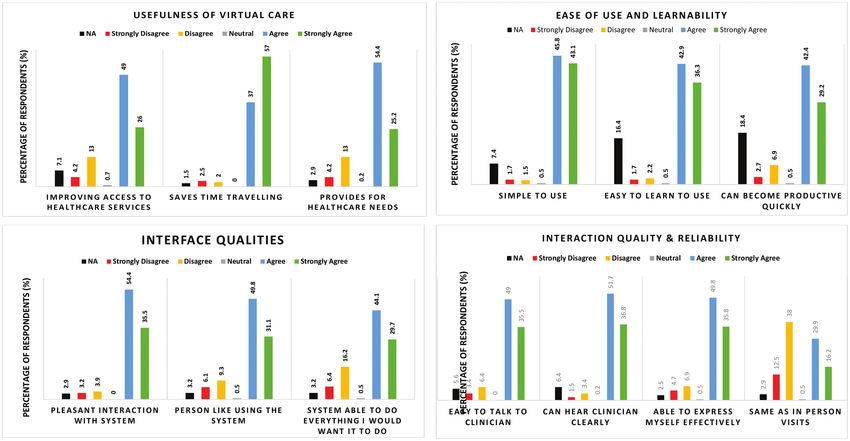
2                                                         Journal of the Canadian Association of Gastroenterology, 2022, Vol. XX, No. XX

As of current ( June 1, 2021), Canada has declared the third             of 4 or higher would be representative of the ‘agree/strongly
wave of the pandemic, with over 1 million cases across Canada            agree’ response categories. Open-ended feedback regarding vir-
and 171 million cases worldwide (2).                                     tual care experience was obtained from providers.
   With the growing concerns around the COVID-19 pan-
demic, health care professionals (HCPs) have required adapta-            Patient Survey
tion to alternative avenues to deliver care to patients to protect       We conducted a retrospective chart review of outpatient
the safety and wellness of both patients and HCPs, in addition           encounters at the University of Alberta Hospital IBD clinic from
to diverting health care resources to the management of the              March 16, 2020 to July 30, 2020 to obtain the contact informa-

                                                                                                                                                Downloaded from https://academic.oup.com/jcag/advance-article/doi/10.1093/jcag/gwab042/6510535 by guest on 24 February 2022
COVID-19 pandemic. Changes that were implemented include                 tion of eligible patients. We sent survey links via the REDCap
introducing mandatory personal protective equipment (PPE)                system to patients with email addresses included on their med-
for all health care staff and visitors, physical distancing, lim-        ical charts. For those who did not have email addresses avail-
itations of visitors within the hospital setting, and adopting a         able, we conducted the surveys via telephone. At the University
shift in health care provision from in-person appointments to            of Calgary IBD clinic, patients were invited to participate in a
primarily ‘virtual’ clinics, with direct patient communication           public REDCap survey from August 2020 to October 2020 via
occurring by telephone or videoconferencing. Additionally,               e-mail. All patients aged 18 years old or older seen via telephone
non-urgent procedures, including surgeries, radiological im-             or video-based (Alberta Health Services approved Zoom video
aging and endoscopies were delayed due to health care resource           conferencing consultations) encounter were included.
limitations (3).                                                            The patient survey was also stratified into three categories: pa-
   In Alberta, patients and HCPs were mandated to implement              tient demographics, patient satisfaction and patient experience.
virtual care as of March 16, 2020, during the first wave of the          The demographics portion of the survey included questions on
pandemic. This study aims to assess the perceived health care            patient age, gender, hospital site, postal code, IBD type and dis-
delivery experience in IBD patients and providers and better             ease location, consultation type (first consultation, follow-up),
understand the overall challenges experienced by IBD patients            and means of consultation (telephone, telehealth and/or video
and gastroenterologists during the first wave of the COVID-19            call). Like the provider survey, the patient satisfaction survey
pandemic.                                                                used a 5-point Likert scale ranging from 1 (strongly disagree)
                                                                         to 5 (strongly agree) to rate the usefulness, interface qualities,
                                                                         interaction quality and reliability, overall satisfaction and future
METHODS                                                                  use of virtual care. The patient experience questionnaire was
We administered separate HCP and patient structured online               mainly open-ended, including questions exploring patients’
surveys by adapting the Telehealth usability questionnaire               perceived advantages and disadvantages around virtual clinics,
(TUQ) (4). The patient and provider satisfaction question-               general challenges experienced by patients with IBD pertaining
naire included 18 to 20 questions, divided into six different            to the COVID-19 pandemic, and delays in care. Delay in care is
subsections: usefulness, ease of use and learnability, interface         defined as a delay in originally scheduled appointment date for
quality, interaction quality, reliability, and satisfaction and          surgical or endoscopic procedures, radiological imaging and/or
future use.                                                              biologic infusion

HCP Survey                                                               Statistical Analysis
A REDCap survey was disseminated to gastroenterologists                  Study variables were summarized using descriptive statistics
across Alberta. Distribution was achieved via en masse e-mail            (percentages and numbers for discrete variables, and when
with a total of five reminders sent every 10 days. The provider          appropriate, mean or medians for continuous variables).
survey consisted of 38 items, stratified into three categories:          Open-ended responses were reviewed and summarized into
demographics, provider satisfaction and provider experience.             major thematic categories by the primary investigator (M.D.).
Using a 5-point Likert scale ranging from 1 (strongly disagree)          Responses were then coded according to each major theme to
to 5 (strongly agree), providers were asked to rate the usefulness,      allow for quantitative analysis of the responses. All tests were
interface qualities, interaction quality and reliability, overall sat-   two-sided and the level of significance was set at P < 0.05.
isfaction and future use of virtual care. As a metric evaluation         Statistical analyses were performed using SPSS v27(SPSS Inc.,
for satisfaction, Alberta Health Services has created a model that       Chicago, IL).
evaluates the percentage of patients/providers who report a sat-
isfaction score of 4 or higher to reflect some of the dimensions         Ethical Considerations
of quality (acceptability, accessibility, appropriateness, effective-    The provider study was reviewed by the University of Alberta
ness and efficiency) based on the Alberta Quality Matrix for             Institutional Review Board (IRB), while the patient study
health. On the Likert scale used for this study, a satisfaction score    went through an additional review phase through the A project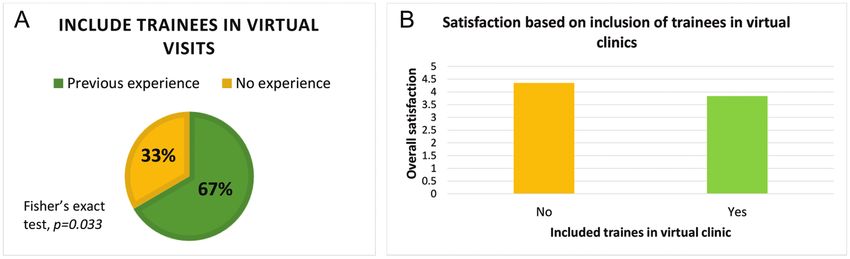
Journal of the Canadian Association of Gastroenterology, 2022, Vol. XX, No. XX                                                        3

Ethics Community Consensus Initiative (ARECCI), an                   Experience with Virtual Care
Alberta Innovates-Health Solutions (AIHS) initiative. AHS is a       The mean proportion for new consultations as reported by
province-wide, integrated, single-payer, public health authority     HCPs was 32.8% (±21.9). Seventy-five per cent (18/24) of
responsible for delivering all medical and surgical care within      HCPs mentioned they had complete patient information for all
the province of Alberta and servicing approximately 4.3 million      their virtual visits. Of the 25% (7/24) that had incomplete data,
residents. AHS is geographically divided into five discrete re-      the reported missing information was absence of physical exam-
gions (South, Calgary, Central, North). Two major metropol-          ination, laboratory and radiology investigations, paper charts
itan centers (Calgary, Edmonton) where there are tertiary-care       and referral letters. Inconclusive virtual consultations due to

                                                                                                                                            Downloaded from https://academic.oup.com/jcag/advance-article/doi/10.1093/jcag/gwab042/6510535 by guest on 24 February 2022
referral IBD centers, although 29.3% of the population lives in      the lack of physical examination and missing lab values was re-
rural or smaller urban areas (5).                                    ported by 75% (18/24) and 33% (8/24) of HCPs, respectively.
   Verbal informed consent was obtained from patients surveyed       Of the 24 respondents that completed the survey, only 6 (25%)
over the telephone. Digital permission, embedded within the          had trainees involved in their clinics (Table 1). The type of clinic
REDCap survey, was obtained from all patients and providers          consultations conducted were telephone only (50%, 3/6), a
who completed the survey online.                                     combination of telephone, video and hospital-based telehealth
                                                                     (33.3%, 2/6) and hospital-based telehealth only (16.7%, 1/6).
                                                                     The observation methods used were indirect (50%, (3/6) and
RESULTS                                                              direct observation (50%, 3/6). Preceptors with previous expe-
Provider Survey                                                      rience with virtual consultation before the pandemic were more
The overall response rate was 19.2% (24/125), with 46%               likely to include trainees in their virtual clinics (66.6% versus
(11/24) female respondents. Most respondents worked in               33.4%; Fisher’s exact test, P = 0.033; Figure 2A). For preceptors
an academic facility (63%, 15/24) and have been in prac-
tice for a mean duration of 12.3 years (7.6 ± 12.3 years;
                                                                     Table 1. Provider characteristics (N = 24)
Table 1). Respondents were from seven facilities within the
South, Calgary, Central and Edmonton Health zones. Of non-           Characteristics                                    Percentage (N)
responders, majority were from Calgary or Edmonton Health            Age group
zones (94%, 95/101) (Table 4).                                          25–44                                                 50% (12)
                                                                        45–54                                                 33% (8)
Satisfaction with Virtual Care
                                                                        55–64                                                 17% (4)
Virtual care reported was a hybrid model consisting of tele-
                                                                     Gender
phone and in-person (54%, 13/24) or telephone and video
                                                                        Female                                                46% (11)
consults (42%, 10/24). Although 96%(23/24) indicated that
                                                                        Male                                                  54% (13)
virtual care tools improved access to health care and provides
                                                                     Type of facility
location flexibility, only 42% (10/24) agreed that it saved time
                                                                        Academic                                              63% (15)
(Figure 1A). Ninety-five per cent of HCPs who used video con-
                                                                        Community                                             38% (9)
ferencing found it simple, easy to learn and quickly became
                                                                     Mean years in practice (years) (±SD)                12.3 ± 7.6
productive with it. About 60% (14/24) of HCPs reported that
                                                                     Virtual clinic with trainees
virtual care (irrespective of the platform used) was not the same
                                                                        Yes                                                   25% (6)
as in-person visits (Figure 1B,C). The mean overall satisfaction
                                                                        No                                                    66.7 (16)
for health care providers who rarely or never had virtual care
                                                                     Type of virtual care with trainees
before the pandemic was 0.57 points (4.36 versus 3.79; 95%
                                                                        Telephone only                                       50% (3)
confidence interval [CI]: 0.26 to 0.88, P = 0.001) higher than
                                                                      Telephone, Video and Hospital-based                  33.3% (2)
those who often provided virtual care. Overall, 88% (21/24)
                                                                        telehealth
of providers were satisfied with virtual care and all respondents
                                                                        Hospital-based telehealth only                      16.7% (1)
were willing to use it again (Figure 1D). Access to Alberta
                                                                     Observation method
Netcare (a provincial electronic health record containing in-
                                                                        Direct observation                                    50% (3)
formation on laboratory, radiology and surgical procedures)
                                                                        Indirect observation                                  50% (3)
was reported to be valuable for laboratory investigations during
                                                                     Previous remote consultations before
this period. In the qualitative analysis of open-ended responses,
                                                                       the pandemic
identified areas of concern included patient safety, patient edu-
                                                                        Never                                               16.7% (1)
cation on best practices, adequate remuneration, additional ad-
                                                                        Rarely                                              16.7% (1)
ministrative duties, and challenges with providing care for new
                                                                        Often                                               66.6% (4)
patients on virtual platforms.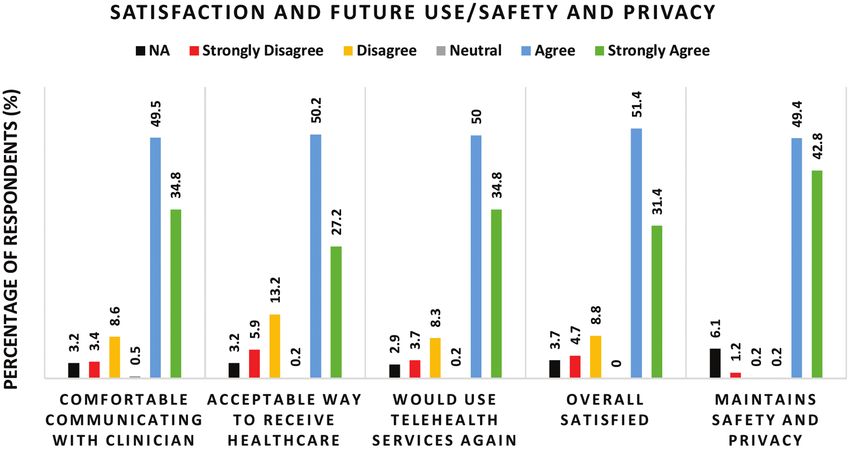
4                                                               Journal of the Canadian Association of Gastroenterology, 2022, Vol. XX, No. XX

                                                                                                                                                                   Downloaded from https://academic.oup.com/jcag/advance-article/doi/10.1093/jcag/gwab042/6510535 by guest on 24 February 2022
Figure 1. Health care providers’ opinion on the usefulness of virtual care (A), interface qualities video call (B), interaction quality and reliability of phone
call (C) and overall satisfaction with virtual care (D).

Figure 2. (A) Virtual care experience status of providers who included trainees in their virtual clinic and prior virtual care experience, (B) Provider satis-
faction based on the inclusion of trainees in virtual clinics.

who included trainees in their virtual clinics, their overall satis-              Demographics Questionnaire
faction averaged 0.51 (4.34 versus 3.83; 95% CI: 0.19 to 0.84,                    The mean age of patients who participated in the survey was
P = 0.004) points lower (Figure 2B). Providers were asked to                      48 years (SD = 15.19). The majority of patients who participated
provide comments, suggestions and concerns about their vir-                       in the survey were female (61.5%). 71.2% (301/423) of patients
tual experience and the impact of the virtual clinic on medical                   received their care from the University of Alberta, 24.6%
education. Concerns identified were lack of trainee engage-                       (104/423) from the IBD Clinic in Calgary, and 2.9% (18/423)
ment, adequate remuneration for health care providers, and                        did not list either hospital as their primary site of care. Of the
lack of training for trainee and providers on how to navigate vir-                patients involved in the study, 28.2% (121/429) of patients
tual platforms, especially with new consultations.                                resided outside of the Edmonton/Calgary metropolitan area.
                                                                                    Patients with Crohn’s disease made up 63.6% (273/429) of
Patient Survey                                                                    survey participants, while 26.6% (114/429) of patients had ul-
A total of 1581 patients were invited to complete the survey.                     cerative colitis, and 5.6% (24/429) of patients had indetermi-
The survey had a 39.7% response rate amongst patients, where                      nate colitis. The remaining 4.2% (18/429) of patients did not
628 of the 1581 patients completed at least one component of                      know what type of inflammatory bowel disease they had. The
the survey.                                                                       disease location of patients who participated in the study was
Journal of the Canadian Association of Gastroenterology, 2022, Vol. XX, No. XX 5
as follows: 29.9% (162/541) had colonic involvement, 11.3% agree/strongly agree they were satisfied with the telehealth
(61/541) had upper gastrointestinal (GI) involvement, 32.9% system (Figures 3 and 4). Similar responses to the satisfac-
(178/541) had small bowel disease and 7.0% (38/541) had pe- tion questionnaire were seen with patients with first consulta-
rianal disease. The remaining 18.9% (102/541) of patients were tion visits, where 80% (16/20) of survey respondents agree/
unsure of their disease location. strongly agree that they were comfortable communicating to
Follow-up visits were the most common type of virtual care the physician using the remote system, that virtual clinic is an
visit scheduled amongst patients, where only 4.9% (21/429) acceptable way to receive health care services, that they would
patients had a first consultation scheduled via virtual care. Of use virtual care services again, and they were overall satisfied
Downloaded from https://academic.oup.com/jcag/advance-article/doi/10.1093/jcag/gwab042/6510535 by guest on 24 February 2022
the virtual care visits, 98.1% (203/207) were completed over with the telehealth system.
the telephone and 1.9% (4/207) over hospital-based telehealth.
Interestingly, none of the patients reported their visits to in- Experience Questionnaire
clude a video component (Table 2). In addition to GI virtual clinics, 30.9% (123/398) of patients also
experienced a non-GI virtual care appointment. When asked to
Telehealth Usability Questionnaire/Satisfaction provide further details around their non-GI virtual care appoint-
Overall, patients were satisfied with their virtual care experi- ment, 19.2% of patients who had a non-GI virtual clinic visit
ence, where 84.3% (344/408) patients agree/strongly agree provided a response. Of the 19.2%, 60.3% described the con-
they were comfortable communicating to the physician using text around their appointment (i.e., type of appointment), while
the remote system, 77.5% (316/408) of patients agree/strongly 34.7% described an overall positive experience and 5% reported
agree that virtual clinic is an acceptable way to receive health an overall negative experience. The main advantages of virtual
care services, 84.8% (346/408) of patients agree/strongly agree care clinics described by patients included time efficiency/con-
they would use virtual care services again, and 82.6% (337/407) venience (20.2%), cost-effectiveness (46.3%), reduced risk of
COVID-19 exposure (10.6%), and they expressed that the virtual
Table 2. Patient characteristics (N = 429) care clinics provided a good platform to meet patient care needs
(16%). The main disadvantages expressed by patients include
Characteristics Percentage (N) challenges with communication (25.1%), difficulty establishing
Median Age (years) (±SD) 48.0 (15.19) a physician/patient care relationship (2.7%), absence of physical
Gender examinations, especially when symptomatic (19.5%), and overall
Female 61.5% (264) impersonal/unfamiliar platform for patients (6.2%).
Male 38.5% (165) Additional challenges experienced by patients during the
Communication Type COVID-19 pandemic were reported by 228 patients. A chal-
Telephone 98.1% (203) lenge reported by 57.4% (131/228) patients was the fear and
Hospital-based Telehealth 1.9% (4) stress brought on by the COVID-19 pandemic (i.e., infection
Video Call 0 (0) risk/mental health concerns/unemployment). Access to health
Consultation Type care services, PPE and community resources was a challenge
First Consultation 4.9% (21) experienced by 26.3% (60/228) patients. Additionally, 16.2%
Follow-up 95.1% (408) (37/228) patients experienced uncertainty around IBD-specific
IBD Type care, including procedures, treatments, labs and medications.
Crohn’s Disease 63.6% (273) Overall, 17.3% of patients reported some type of delay in care
Ulcerative Colitis 26.6% (114) by July 2020 (Table 3). Of the patients who have experienced
Indeterminate Colitis (IBD unclassified) 5.6% (24) a delay, 11.5% (8/69) experienced a delay in two areas of care,
I do not know 4.2% (18) whereas 5.8% (4/69) experienced a delay in three areas of care.
Disease Location For those who were scheduled for endoscopy, 13% (5/38) also
Colonic 29.9% (162) experienced a delay in surgery. Between the hospital sites, delays
Upper GI 11.3% (61) were experienced by 16.9% (51/301) of patients who received
Small Bowel 32.9% (178) their care from the University of Alberta, 15.4% (16/104) of
Perianal Disease 7.0% (38) patients from the University of Calgary and 11.1% (2/18) of
I do not know 18.9% (102) patients who received care from another hospital site.
Hospital Site
University of Calgary 24.6% (104) Discussion
University of Alberta 71.2% (301)
The COVID-19 pandemic has required rapid adaptations on a
Other 2.9% (18)
federal, provincial and individual level to mitigate the spread of6 Journal of the Canadian Association of Gastroenterology, 2022, Vol. XX, No. XX
Downloaded from https://academic.oup.com/jcag/advance-article/doi/10.1093/jcag/gwab042/6510535 by guest on 24 February 2022
Figure 3. Patients’ opinion on the usefulness of virtual care (A), ease of use and learnability (B), interface qualities (C), and interaction quality and relia-
bility of virtual care (D).
Figure 4. Overall satisfaction of patients and opinion on the future use, safety and privacy of virtual care.
the virus. Specifically, within health care settings, the COVID- satisfaction and willingness to continue to use telehealth, even
19 pandemic has necessitated the rapid implementation of beyond the pandemic (6). These studies were conducted across
telehealth to provide continuity of care to patients. During the different general and subspecialized medicine and surgical serv-
COVID-19 pandemic, several studies have assessed patient ices, including gastroenterology (6–8). However, fewer studies
satisfaction with telehealth. In an integrative review of studies have focused specifically on patients with IBD.
evaluating patient and physician satisfaction of telehealth serv- In this study, we found that patient perception of care was
ices during the COVID-19 pandemic, Andrews et al. concluded overall positive despite the rapid transition to telehealth. The
that the majority of telehealth services were well received by majority of IBD patients felt comfortable with the telehealth
both physicians and patients, demonstrating a high level of system, found the telehealth system easy to use, and mostJournal of the Canadian Association of Gastroenterology, 2022, Vol. XX, No. XX 7
importantly, felt as if their health care needs were still being met. providers, they reported a lack of trainee engagement, learning
The overall positive response to telehealth has been reported in limitations for more experienced trainees, and the challenge of
other studies that assessed IBD patient satisfaction with virtual navigating new consultations on virtual platforms. Canadian
care services, where patients expressed a high level of satisfac- gastroenterology trainees have also expressed concerns about
tion, perceived quality of care, and quality of communication, achieving and maintaining clinical competence as well as pro-
similarly compared to in-person visits (9–11). These findings longed clinical training due to the pandemic (16).
support the feasibility of telehealth as an acceptable alternative Although we attempted to provide a comprehensive under-
to health care delivery for IBD patients during a pandemic. standing of the patient-perceived impact of the COVID-19 pan-
Downloaded from https://academic.oup.com/jcag/advance-article/doi/10.1093/jcag/gwab042/6510535 by guest on 24 February 2022
From this study, we were also able to assess delays in access demic on IBD patient care, there are limitations to the study that
to care for patients with IBD during the COVID-19 pandemic. should be acknowledged. First, we recognize that the response
Individuals living with IBD require continuous patient-specific rate of the survey was low in both the patient and provider
monitoring by specialist gastroenterologists to reduce relapse surveys; the low response rate subjects our findings to pos-
and minimize disease complications (12,13). Considering the sible non-responder bias and may influence the generalizability
changes resulting from government stipulated social distancing of our results as it may result in overestimation of patient and
and policies centered around movement restrictions, one would provider satisfaction, which may not be truly representative of
expect that the delivery of IBD care will be disrupted, as access the patient and provider experience as a whole. Additionally, al-
to in-person facilities and resources were often limited. Despite though we found a high satisfaction rate for patients as a whole,
these limitations in access, we found that most IBD patients in it is important to note that our survey was completed virtually
the study did not experience a significant delay in access to care. and may encompass those that are more technologically in-
Despite a rapid uptake of virtual care services during the clined; this may correlate to higher perceived satisfaction and
COVID-19 pandemic, substantial barriers may affect the im- openness to the implementation of technology in health care
plementation of telehealth services as a modality for standard versus those with challenges or barriers with online platforms.
health care delivery (14). Significant concerns were highlighted Another limitation is that there is a potential for selection
by this survey, including challenges with effective communi- bias as stable patients were mainly scheduled as virtual visits
cation, difficulty establishing and maintaining the provider/ during the first wave of the COVID-19 pandemic. Secondly,
patient relationship and the inability to perform physical there is a large discrepancy noted between the number of
examinations. Effective communication can be limited by new consultations and consultation type by providers versus
hearing impairment, poor hearing quality of virtual service, patients, which may be skewed by the overall response rate. For
limitations in non-verbal cues and language barriers (14,15). patients, most participants attended the clinics for follow-up
In other patient populations, such as older patients, those visits, who have previously had encounters with their gastroen-
with cognitive impairment, and/or those with socioeconomic terologist in person, so results may not be generalizable to pa-
constraints, navigating and accessing technology can be a bar- tient experience for new consultations. Third, although video
rier and deter patients from accessing virtual care services, espe- calls was an option for virtual care delivery, none of the patients
cially outside a pandemic setting (14,15). Due to these barriers, who responded to the survey completed a video call, which ulti-
telehealth may serve better as an adjunct to in-person visits. mately could influence reported patient experience. Finally, this
Still, it should not replace in-person visits entirely, especially in study focused only on two tertiary hospital sites within a single
settings where a lack of in-person services impacts patient care. province and may not be generalizable to patients of smaller
In this study, health care providers also expressed concerns hospital sites and/or different provinces. Furthermore, it is
about the negative impact of virtual clinic on medical educa-
tion. Although virtual care seemed efficient for health care Table 4. Percentage of non-responders by health zones and fa-
cility type
Table 3. Proportion of IBD patients with delays in care (N = 398)
Health zone % (N = 101)
Type of Care % Patients (n) Median delay in weeks
North Zone 2
(25–75th percentile)
Edmonton Zone 45
Surgery 5.7 (23) 10 (8–16) Central Zone 2
Endoscopy 9.5 (38) 12 (8–17) Calgary Zone 50
Radiology 3.7 (15) 8 (3–13) South Zone 1
Biologic 2.2 (9) 2 (2–5) Facility type
infusions Academic 57
Overall 17.3 (69) 9 (3.5–11.5) Community 448 Journal of the Canadian Association of Gastroenterology, 2022, Vol. XX, No. XX
important to note that although patients were recruited from global pandemic and limitations of in-person services, the ma-
two tertiary hospital sites, gastroenterologists were recruited jority of patients with IBD were still able to maintain their care
throughout the province, which could result in potential bias without disruption. Going forward, the continued use of virtual
when trying to compare the HCP and patient survey responses. IBD care shows a promising future in evolving the way health
As our study focused on the experiences of HCP and patients care is delivered.
during the first wave of the pandemic, future studies are needed
to further assess patient perceptions as we enter the different
Funding
phases and waves of the COVID-19 pandemic and post-
Downloaded from https://academic.oup.com/jcag/advance-article/doi/10.1093/jcag/gwab042/6510535 by guest on 24 February 2022
pandemic, in addition to determining provider and patient ac- None declared.
ceptance of virtual clinic consultation post pandemic, when the
need for virtual clinics may not be as pressing. When creating AUTHOR CONTRIBUTIONS
future studies, researchers should attempt to recruit IBD
Concept: L.O., K.K., G.K., L.R., C.M., R.P.; Writing: all authors; Data
patients from multiple hospital sites, including community and
Collection/Analysis: M.D., L.O., K.K.; Revision: all authors.
tertiary hospital sites. Additionally, as our study did not have
any patients with video calls and very few patients with new
consultations, to help determine if there is a significant differ- CONFLICT OF INTEREST
ence in patient experiences, future studies should attempt to in- Relevant Disclosures: None. Writing assistance: None.
clude different consultation types (i.e., video call) and patients
with new consultation visits. With the transition to virtual serv-
ices, evaluation of patient literacy of IBD-related health knowl- References
edge among those who are cared for virtually versus in-person 1. World Health Organization: Coronavirus. https://www.who.int/health-topics/
coronavirus#tab=tab_1 (Accessed June 1, 2021).
would be beneficial in assessing patient understanding of 2. Coronavirus Disease (COVID-19): Outbreak Update. https://www.canada.
disease. ca/en/public-health/services/diseases/2019-novel-coronavirus-infection.
html?utm_campaign=hc-sc-phm-21-22&utm_medium=sem&utm_source=ggl-
Overall, this study has provided a good insight into the pa-
grant&utm_content=ad-text-en&utm_term=coronavirus&adv=2122-0008&id_
tient and HCP experience with the rapid transition toward vir- campaign=12663558361&id_source=119762101589&id_content=511679450582
tual care during the first wave of the COVID-19 pandemic. The (Accessed June 1, 2021).
3. Coronavirus Disease (COVID-19): Canada’s Response. https://www.canada.ca/en/
knowledge obtained highlights the overall positive satisfaction public-health/services/diseases/2019-novel-coronavirus-infection/canadas-reponse.
with the virtual care platforms for both HCP and patients; how- html (Accessed June 1, 2021).
4. Parmanto B, Lewis AN Jr, Graham KM, et al. Development of the Telehealth Usability
ever, telehealth is not without its own limitations and challenges. Questionnaire (TUQ). Int J Telerehabil 2016;8(1):3–10.
In the future clinical application of telehealth services, it is im- 5. Government of Alberta: Interactive Health Data Application. 2019. http://www.
ahw.gov.ab.ca/IHDA_Retrieval/selectSubCategoryParameters.do (Accessed June 1,
portant to recognize that telehealth may be used as an adjunct 2021).
to health care delivery, especially in the setting of stable patients 6. Andrews E, Berghofer K, Long J, et al. Satisfaction with the use of telehealth during
COVID-19: An integrative review. Int J Nurs Stud Adv 2020;2:100008.
with well established patient–provider relationships, but should
7. Dobrusin A, Hawa F, Gladshteyn M, et al. Gastroenterologists and patients report
not replace in-person modalities entirely. As demonstrated high satisfaction rates with telehealth services during the novel coronavirus 2019 pan-
from this study, patients reported challenges with establishing demic. Clin Gastroenterol Hepatol 2020;18(11):2393–7.e2.
8. Lechien JR, Radulesco T, Distinguin L, et al. Patient and otolaryngologist perceptions
an effective patient–provider relationship, challenges with com- of telemedicine during COVID-19 pandemic. Eur Arch Otorhinolaryngol
munication, and not being able to have physical examinations 2021;278(10):4101–5. doi:10.1007/s00405-021-06624-9
9. Painchaud M, Singh S, Penner RM. Inflammatory bowel disease patient’s satisfac-
performed in the setting of active symptoms; for the potential tion with telehealth: During the COVID-19 pandemic. J Can Assoc Gastroenterol
new patient or those with active symptoms, having the option 2021;4(1):56–7.
10. Taxonera C, Alba C, Olivares D, et al. Innovation in IBD care during the COVID-19
of in-person delivery, either as an initial visit or a subsequent pandemic: Results of a cross-sectional survey on patient-reported experience meas-
follow-up visit, may be beneficial. ures. Inflamm Bowel Dis 2021;27(6):864–9.
11. Ghosal UC, Sahu S, Biswas SN, et al. Care of inflammatory bowel disease patients
during coronavirus disease-19 pandemic using digital health-care technology. JGH
Open. 2021;5(5):535–41.
Conclusions 12. Kirsner JB. Inflammatory bowel disease. Part II: Clinical and therapeutic aspects. Dis
Mon 1991;37(11):669–746.
In order to sustain the delivery of health care to patients
13. Nguyen GC, Nugent Z, Shaw S, et al. Outcomes of patients with Crohn’s disease
during the COVID-19 pandemic, it has required health care improved from 1988 to 2008 and were associated with increased specialist care.
professionals to adapt to virtual care. Despite an initially rapid Gastroenterology 2011;141(1):90–7.
14. Gajarawala SN, Pelkowski JN. Telehealth benefits and barriers. J Nurse Pract
transition toward virtual care, this study demonstrates the 2021;17(2):218–21.
overall satisfaction of patients and providers with telehealth 15. Elbeddini A, Tayefehchamani Y. Amid COVID-19 pandemic: Challenges with access
to care for COPD patients. Res Social Adm Pharm 2021;17(1):1934–7.
services during the first wave of the COVID-19 pandemic. In 16. Khan R, Tandon P, Scaffidi MA, et al. COVID-19 and Canadian Gastroenterology
addition, this study demonstrates that despite the presence of a trainees. J Can Assoc Gastroenterol 2021;4(3):156–62.You can also read


