The Local Co-Working Hub: A Merging Solution - MDPI
←
→
Page content transcription
If your browser does not render page correctly, please read the page content below
Hypothesis
The Local Co-Working Hub: A Merging Solution
Bahareh Motamed 1, * and Kamyar Shirvanimoghaddam 2

                                          1   Urban Design Team, Infrastructure and City Services, Brimbank City Council, Melbourne, VIC 3020, Australia
                                          2   Carbon Nexus, Institute for Frontier Materials, Deakin University, Geelong, VIC 3216, Australia;
                                              kamyarshirvani@gmail.com
                                          *   Correspondence: BaharehM@brimbank.vic.gov.au

                                          Abstract: The coronavirus pandemic has brought unprecedented challenges and has changed society;
                                          some of these changes seem temporary, and others seem permanent. The uncertainty of the duration
                                          of this pandemic has introduced changes without the knowledge of how permanent they are, and has
                                          raised awareness regarding a need for a shift to a new normal. This new normal will affect different
                                          aspects of our life routines and activities, such as travel behaviour, personal hygiene, socializing,
                                          and our working environment. In the wake of the global pandemic, which has been followed by
                                          lockdowns, curfews, social distancing, and working from home, the future of the office has turned
                                          into an open question, as COVID has changed our expectation of how, where, and when people
                                          can do their jobs. Big companies like Twitter and Facebook have announced that they are allowing
                                          employees to permanently work from home; however, some industry leaders are using the work-
                                          from-home experience to reimagine the role of the office in the future. What will the future office
                                          look like, and what can we expect of the workplace environment? In this paper, we propose a third
                                          solution, which is the merging of the current scenario of the classic office and working from home,
                                          which is entitled the ‘local co-working hub’. By studying the challenges and opportunities of each of
                                          the current approaches, the potential of the local co-working hub is highlighted.

                                   Keywords: COVID-19 pandemic; work from home; co-working hub; merging solution
Citation: Motamed, B.;
Shirvanimoghaddam, K. The Local
Co-Working Hub: A Merging
Solution. Urban Sci. 2021, 5, 15.         1. Introduction and Statement of the Problem
https://doi.org/10.3390/urbansci                On March 11, 2020, the World Health Organization (WHO) declared the pandemic as a
5010015                                   global health emergency [1]. The COVID outbreak was not only a public health crisis; it also
                                          significantly affected the global economy through business closures, the loss of life, travel
Received: 26 December 2020
                                          bans and trade disruption [2]. Notwithstanding the negative impact COVID-19 had on
Accepted: 24 January 2021
                                          all aspects of our life, we have been surprised by our exceptional adaption, the possibility
Published: 27 January 2021
                                          of remote working, and the power of digital technology and virtual communication. In
                                          just a few months, working from home has been suddenly normalised. According to new
Publisher’s Note: MDPI stays neutral
                                          research conducted by Roy Morgan [3], over 4.3 million Australian workers (one third)
with regard to jurisdictional claims in
                                          have been working from home since the pandemic shutdowns. Millions of us used to spend
published maps and institutional affil-
                                          about a third of our time in the office, but the COVID-19 forced–work-from-home time has
iations.
                                          shown us the possibility of flexible remote working and the power of choosing when, where
                                          and how we can productively do our jobs while experiencing a new work-life balance.
                                                In addition to a reduction of operation costs, remote working has resolved the chal-
                                          lenge of traveling to and from work. As can be seen in Figure 1, a substantial amount of
Copyright: © 2021 by the authors.
                                          workers’ time has been wasted in daily commuting.
Licensee MDPI, Basel, Switzerland.
                                                According to statistics, New Yorkers have the longest commute times in the U.S. [4],
This article is an open access article
                                          at nearly 2 h, which is similar to those of Tokyo [5]. Seoulites spend 96 min on their daily
distributed under the terms and
                                          commute [6]; in other big cities, such as London and Buenos Aires, the average commute
conditions of the Creative Commons
Attribution (CC BY) license (https://
                                          time is from 74 to 76 min [7,8]. In two of the biggest mainland cities of Australia, Sydney
creativecommons.org/licenses/by/
                                          and Melbourne, workers spend more than an hour travelling to and from work each day [9].
4.0/).

Urban Sci. 2021, 5, 15. https://doi.org/10.3390/urbansci5010015                                             https://www.mdpi.com/journal/urbansci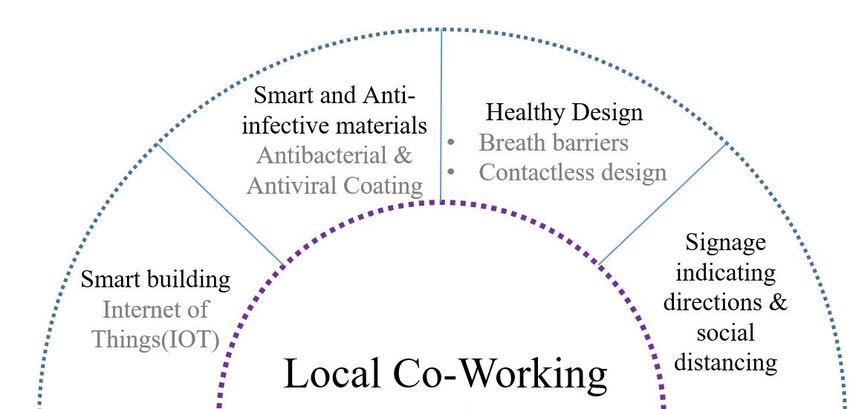
Urban Sci. 2021, 5, 15 2 of 8
Urban Sci. 2021, 5, x FOR PEER REVIEW 2 of 8
and Melbourne, workers spend more than an hour travelling to and from work each day
Although
[9]. AlthoughTehran andand
Tehran Beijing havehave
Beijing a better position
a better in this
position list,list,
in this their workers
their workers stillstill
spendspendan
average
an of 52–55
average minmin
of 52–55 commuting
commuting to and from
to and work
from [10,11].
work [10,11].
Several studies
Several studieshave
haveshown
shownthat
thatlong-duration
long-duration commuting
commuting notnotonlyonly
hashas negative
negative im-
impacts on worker’s efficiency and job satisfaction but also has serious negative
pacts on worker’s efficiency and job satisfaction but also has serious negative impacts on impacts
on both
both physical
physical andand mental
mental health
health andand wellbeing,asasworkers
wellbeing, workershavehavelessless time
time for
for physical
physical
activities and social interaction. Moreover, increases to the degree of travel-related
activities and social interaction. Moreover, increases to the degree of travel-related stress via
stress
exposure to traffic noise, congestion, and uncomfortable weather/temperature
via exposure to traffic noise, congestion, and uncomfortable weather/temperature condi- conditions
are some
tions of theof
are some other negative
the other impacts
negative of long
impacts ofcommutes to andtofrom
long commutes and work [12]. [12].
from work
New York
120
Buenos Aires London
100
80
Chicago 60 Singapore
40
20
Seoul 0 Hong Kong
Tokyo Melbourne
Tehran Sydney
Beijing
Figure
Figure 1.
1. Average commuting time
Average commuting time in
in big
big cities
cities around
around the
the world.
world.
The COVID 19 pandemic has also resulted resulted in the acceleration
acceleration of of the
the digital
digital transfor-
transfor-
mation, as according to Microsoft CEO Satya Nadella “We have seen two years’ worth of
digital transformation in two months” [13]. This new flexible way of working provides an
opportunity to to spend
spend moremorequality
qualitytime timewith
withthe
thefamily
family while
while using
using innovative
innovative ways waysto beto
be a productive
a productive employee.
employee. OnOn March
March 31,31, 2020,
2020, Microsoft
Microsoft Teams
Teams recorded
recorded 2.72.7 billion
billion meet-
meeting
ing minutes
minutes in one
in one dayday [14].[14].
Several cities around the globe have experienced lockdowns, curfews, economic and
transport shutdowns, and different stages of restrictions to control the spread of the the virus,
virus,
which has been resultedresulted in in significant
significant economic,
economic,physical,
physical,and andmental
mentalhealth/wellbeing
health/wellbeing
consequences. This
consequences. Thismajor
majorinterruption
interruptionhas has affected
affected thethe environment
environment through
through a major
a major re-
reduction
duction in in
airair pollution
pollution around
around thethe
globe.globe. According
According to the
to the Carbon
Carbon BriefBrief
20202020 analysis,
analysis, the
the Coronavirus
Coronavirus hashas resulted
resulted in the
in the largest
largest ever
ever annual
annual fallfall in CO
in CO 2 emissions
2 emissions since
since thethe start
start of
of the 20th century [15]. Moreover, we observed the enhancement
the 20th century [15]. Moreover, we observed the enhancement of the sense of localism, of the sense of localism,
an injection of of new
new life
lifeinto
intothethelocal
localcivic
civiccenter,
center,and
andgreater
greater support
support forfor
local businesses
local businesses as
a result of the commuting restriction. Additionally, it resulted in
as a result of the commuting restriction. Additionally, it resulted in the growth of de- the growth of demands for
and dependence
mands on local businesses
for and dependence on localto achieve daily
businesses needs, daily
to achieve as people spent
needs, more time
as people spent in
their local
more time civic centers.
in their local Even buying aEven
civic centers. coffee from aalocal
buying coffee shop
from instead
a localofshop
a café in Central
instead of a
Business
café District
in Central (CBD) can
Business change
District (CBD) the can
game by improving
change the gamethe bylocal economy,
improving the supporting
local econ-
omy, supporting local businesses, and providing an opportunity for people tolocal
local businesses, and providing an opportunity for people to get to know their get totraders
know
better,local
their which enhances
traders better,their
whichsense of localism.
enhances their sense of localism.
The positive
The positiveenvironmental
environmental impacts
impacts of the
of COVID
the COVID pandemic and the
pandemic risethe
and of arise
stronger
of a
stronger sense of localism, which resulted in greater support of local businessesflexible
sense of localism, which resulted in greater support of local businesses and a more and a
work–life
more regime,
flexible have regime,
work–life already haveencouraged
alreadygovernments in several parts
encouraged governments of the world
in several parts toof
the world to attempt to lock in some of the temporary changes caused by the pandemic in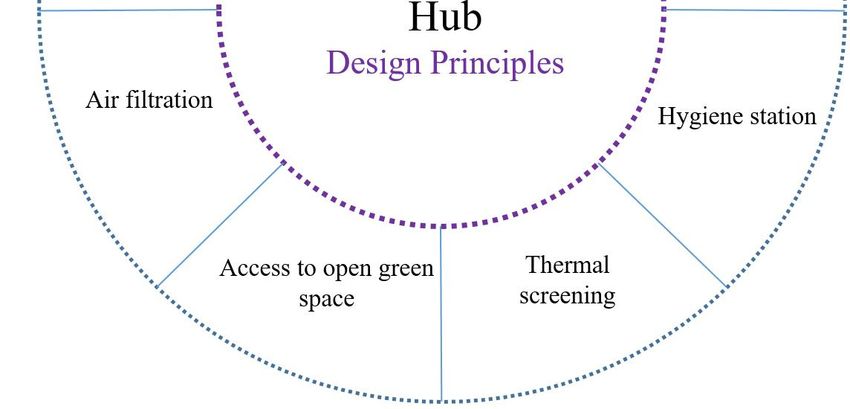
Urban Sci. 2021, 5, 15                                                                                             3 of 8

                         attempt to lock in some of the temporary changes caused by the pandemic in order to set a
                         new normal. The new normal can help us to mitigate climate change challenges and other
                         global issues through the reduction of traffic; the reallocation of road space to walking and
                         cycling; the use of electric cars; a move towards smart, resilient, and sustainable cities; and
                         support for local businesses.

                         2. Work from Home (WFH)
                               The unprecedented changes in our daily life routines, the acceleration of the digital
                         transformation, and the adoption of remote working in response to this global pandemic
                         has raised serious questions regarding commuting, the use and purpose of office spaces,
                         the reassessment of space utilization, the volume of office demand, and the need for a
                         more flexible working regime, which has forced companies across a variety of industries
                         to reimagine what office work will look like in the future. In the wake of the Coron-
                         avirus pandemic, one of the largest tech firms, Google, has changed its work routine by
                         announcing that its employees will work from home until at least summer 2021; similarly,
                         Twitter has announced that its employees can work remotely forever if they wish, and
                         Facebook expects that at least half of its employees will work from home for the next five
                         to ten years [16].
                               It has been reported that, from March 2020, one in three Australians with a job
                         worked from home, compared to one in eight before March [17]. In response to more
                         staff working from home, and the growing demand for a more flexible working regime,
                         a global engineering consultancy, AECOM, has broken its lease two years early and cut
                         two floors from the space it occupies in central Sydney [18]. All of these actions due to
                         the uncertainty regarding the future resulted in a rise of vacancy rates and available office
                         space for subleasing, even in the best locations of big cities such as Sydney and Melbourne.
                               However, it is believed that working from home (WFH) will not replace the office in
                         the future, but a complementary remote working and rotation-based working routine will
                         benefit employers in different ways. Surveys around the world have revealed that a high
                         percentage of employees are willing to adopt a more flexible working regime by spending
                         just two to three days a week in the office and working remotely for the rest of the week,
                         which makes the requirement for big office spaces to accommodate all employees on a
                         daily basis inessential. This new work routine will result in lower operational costs and
                         office expenses for employers, such as a reduction of rental costs, utilities, office supplies
                         and insurance. According to Global Workplace Analytics’ estimation, “a typical employer
                         can save about $11,000 per year for every person who works remotely half of the time” [19].
                               Freeing up spaces and the increase in space options in the market also provide an
                         opportunity for employers to reduce their rental cost by finding more affordable and
                         flexible lease options.
                               On the other hand, employees will benefit from this new remote working regime, as it
                         will provide a more flexible and location-independent working style, with an opportunity
                         to save commuting costs and time, and to achieve a better life–work balance.
                               Although the new work routine in the COVID-19 Global pandemic period provides
                         a more flexible work regime which has several positive impacts, not only on employers
                         and employees’ lifestyles but also on the environment, working from home can be quite a
                         challenge (Figure 2).
                               Unlike the work environment, which has been designed to help employees to effec-
                         tively engage in work, the home environment has not been set up for that purpose, which
                         means adapting to new sets of distractions, technical issues, screen fatigue, less social
                         interaction, a sense of isolation and loneliness, a loss of motivation, and lack of ergonomic
                         and standard workplace facilities. Overcoming all of these demands in order to be able to
                         engage effectively in work requires self-control.
                               In occupational health psychology, self-control is defined as the ability to suppress in-
                         trusive thoughts, behaviours, and emotions which are not relevant or helpful for achieving
                         a goal [20]. As such, battling more with self-control consumes more mental energy, which
ci. 2021, 5, x FOR PEER REVIEW 4 of 8
Urban Sci. 2021, 5, 15 4 of 8
which has negative impacts on mental health and wellbeing [21]. Unlike the effect of leav-
ing the office on the immediate detachment from work, managing the boundaries between
work and non-work time—and the detachment from work and all work-related thoughts
and activities—ishasnot that simple,
negative impactsand many employees
on mental health andend up squeezing
wellbeing in work
[21]. Unlike any- of leaving the
the effect
time they can, office
whichonincreases the negative
the immediate effect of
detachment self-control,
from which can
work, managing thethreaten the between work
boundaries
worker’s wellbeing.
and non-work time—and the detachment from work and all work-related thoughts and
In addition, the lack of access
activities—is tosimple,
not that a dedicated workplace
and many with ergonomic
employees and standard
end up squeezing in work anytime they
facilities is another
can, challenge of WFH,
which increases which
the has negative
negative effect of impacts on employee’s
self-control, which canphysical
threaten the worker’s
wellbeing.
health and well-being.
FigureFigure
2. Benefits and challenges
2. Benefits of working
and challenges from home
of working for employers
from home and employees.
for employers and employees.
In addition,
Despite the positive impactthe of lack
WFH ofon access to a dedicated
the elimination of workplace
commute time withand ergonomic
its as- and standard
sociated stress facilities is another
and challenges, challenge
research of WFH,etwhich
by Ettema al. [22]has
onnegative
the analysisimpacts on employee’s
of travel be- physical
health and well-being.
haviour based on a subjective well-being (SWB) framework (SWB is the degree to which
Despite
an individual positively the positive
evaluates impact
the overall of WFH
quality on the
of their life)elimination
has revealed ofthe
commute
other time and its
associated stress and challenges, research by Ettema
side of the coin. According to the research outcome, participation in goal-directed activi- et al. [22] on the analysis of travel
behaviour based on a subjective well-being (SWB) framework
ties, facilitated or hindered by travel, can contribute to SWB; although the travel-related (SWB is the degree to which
an individual
stress reduces SWB, the positivepositively evaluates the
affect associated with overall
travelquality of theirSWB
can enhance life)[22].
has revealed
Ac- the other
side of the coin. According to the research outcome,
cording to this framework, the negative impact of no work travel should not be ignored, participation in goal-directed activities,
facilitated or hindered by travel, can contribute to SWB;
as it might result in the reduction of the sense of motivation and progress toward goals, although the travel-related stress
reduces SWB, the positive affect associated
and may lead to isolation in employees who are working from home. with travel can enhance SWB [22]. According
Reviewingtoallthis
of framework,
the benefits the andnegative
challenges impact
of WFHof nohaswork travel
raised theshould
question notofbe“how
ignored, as it might
result in the reduction
long we can continue to work from home?” of the sense of motivation and progress toward goals, and may lead
to isolation in employees who are working from home.
3. Local Co-Working Reviewing
Hub Design all ofPrincipals
the benefits and challenges of WFH has raised the question of “how
long we can continue to work from home?”
As some countries, such as Australia and New Zealand, became mostly COVID-free,
with continuous days of
3. Local zero cases Hub
Co-Working and promising news of access to the vaccine in the
Design Principals
next few months, workers have been encouraged
As some countries, such as Australia to go back to theZealand,
and New workplace. becameAlthough
mostly COVID-free,
the work regime will not go back to its previous normal, there
with continuous days of zero cases and promising news of access to the is a fear of more car-de-
vaccine in the next
pendent travelfew aftermonths,
the pandemic,
workersashave people been areencouraged
afraid to use topublic
go back transport, and even Although the
to the workplace.
heavier traffic congestion
work regime andwillextended
not go backcommute times arenormal,
to its previous expected, which
there is a will
fear not only car-dependent
of more
affect employees’ wellbeing but also have a serious negative impact on the environment.
travel after the pandemic, as people are afraid to use public transport, and even heavier
We don’t wanttraffic
to go back to the past
congestion andsituation;
extendedas such, there
commute is aare
times need to set a new
expected, which normal
will not only affect
and a new life employees’
and workingwellbeing
regime, and to take the most from this major interruption
but also have a serious negative impact on the environment. by We
COVID 19, as itdon’t
offers us a chance to rethink our working-life routine in order
want to go back to the past situation; as such, there is a need to set a new normal to be able
and a new life and working regime, and to take the most from this major interruption by
COVID 19, as it offers us a chance to rethink our working-life routine in order to be able toUrban Sci. 2021, 5, 15 5 of 8
Urban Sci. 2021, 5, x FOR PEER REVIEW 5 of 8
to respond better to other major issues such as global warming and climate change chal-
lenges. Considering the WFH challenges that have been discussed above, working from
respond better to other major issues such as global warming and climate change challenges.
home might not be the best solution for all workers, which highlights the need for the
Considering the WFH challenges that have been discussed above, working from home
creation of a third space that offers workers a standard workplace environment with the
might not be the best solution for all workers, which highlights the need for the creation of
best facilities and technologies within walking distance of their home.
a third space that offers workers a standard workplace environment with the best facilities
and According
technologies to within
Carloswalking
Moreno,distance
who is ofa driving force behind Paris’s 15-minute city
their home.
plan, According
“The 15-minute city represents the possibility
to Carlos Moreno, who is a driving force of behind
a decentralized city,” [23].
Paris’s 15-minute city This
plan,
model, which aims
“The 15-minute citytorepresents
provide access to most people’s
the possibility needs within
of a decentralized a short
city,” [23].walk
Thisor bike
model,
ride
whichfromaimstheir home, has
to provide already
access been
to most established
people’s needsinwithin
many acities
shortaround
walk orthe world,
bike and
ride from
has been picked up by the C40 Mayors as part of their ‘Green and
their home, has already been established in many cities around the world, and has been Just’ recovery plan
[23,24].
picked up by the C40 Mayors as part of their ‘Green and Just’ recovery plan [23,24].
AsAsstated
statedby byMoreno,
Moreno,“because
“becausewe wenow
nowhavehavethe
thepossibility
possibilitytotostay staycloser
closerto tohome,
home,
people have rediscovered
people have rediscoveredusefuluseful time—another
time—another pacepace for living”
for living” [23]. According
[23]. According to Moreno, to
Moreno, “not all people have the possibility of having jobs within 15 min”;
“not all people have the possibility of having jobs within 15 min”; thus, it is time to follow thus, it is time
to
a follow a more inclusive
more inclusive approach approach
by creatingby creating a thirdi.e.,
a third space, space, i.e., co-working
a local a local co-working
hub withinhub
within the 15–20 min distance, which offers a free and bookable co-working
the 15–20 min distance, which offers a free and bookable co-working space in order to space in order
to provide
provide anan opportunity
opportunity forfor remote
remote working.
working. Although,
Although, in 2020–2021,
in 2020–2021, the creation
the creation of
of such
such
a locala local co-working
co-working space/hub
space/hub becomes
becomes a demanding
a demanding method method
to helptocities
helpwork
citiesaround
work
around
COVID-19,COVID-19,
it coulditbe could be asolution
a great great solution
to offerto offer alocal,
a more morehealthy,
local, healthy, and sustain-
and sustainable way
able way
of life forof life
the for the
future futurethe
beyond beyond the post pandemic
post pandemic period.
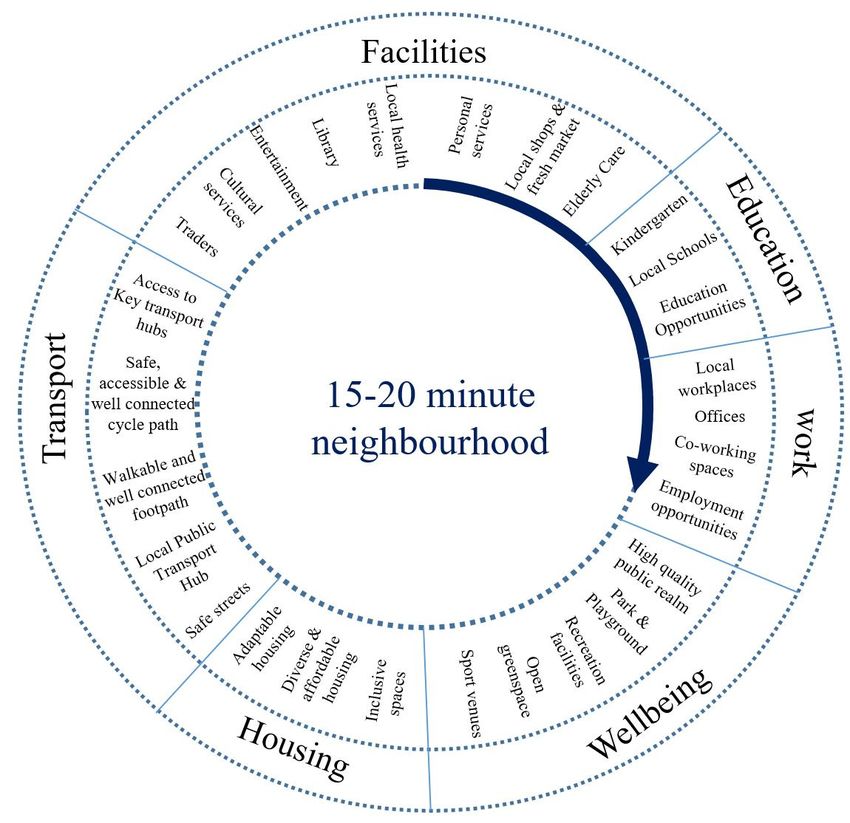
period. Figure Figurethe
3 shows 3 shows the key
key principals
principals of theofcreation
of the creation a 15–20of mina 15–20 min neighborhood.
neighborhood.
Figure
Figure3.3.Key
Keyprinciples
principlesofofcreating
creatingaa15–20
15–20min
minneighbourhood.
neighbourhood.
Theselocal
These local co-working
co-working hubshubscan
canprovide
provideananopportunity
opportunityforfor
workers to work
workers withwith
to work like-
minded people in a standard, smart and modern space within walking/cycling
like-minded people in a standard, smart and modern space within walking/cycling dis- distance,
away away
tance, from any
fromofany
theofdistractions that workers
the distractions experienced
that workers at home.
experienced at home.
Morespecifically,
More specifically,the
thelocal
local work
work hubs
hubs will
will help
help to
to reduce
reduce unnecessarily-long
unnecessarily-longwork
work
commutes, create less environmental impact, and enhance worker’s physical
commutes, create less environmental impact, and enhance worker’s physical and mental and mental
health and
health and wellbeing.
wellbeing. TheyTheywill
willdo
dothis
thisby
bythe
the provision
provision of
of better
better work–life
work–life balance
balanceUrban Sci. 2021, 5, 15 6 of 8
Urban Sci. 2021, 5, x FOR PEER REVIEW 6 of 8
through immediate detachment from work, more social interaction, and adequate facili-
tiesthrough immediate
to perform detachment
their duties, enhance from work,
their more social
motivation, and interaction,
increase their and adequate
sense facilities
of progress-
ingtotoperform their duties,
a destination enhance
in order their motivation,
to achieve the goal of theandday.
increase their sense
Everyone of progressing
can book a space
to a destination
within the co-workingin order
hubtobased
achieve the goal
on their of the schedule
personal day. Everyone canto
in order book a space
be able within
to work
the co-working hub based
in a hub and use its facilities. on their personal schedule in order to be able to work in a hub
and use its facilities.
Creating a local co-working hub for workers within the 15–20 min neighborhood/city
will also Creating
providea alocal co-working
great opportunity hubtofor workers
support within
local highthe 15–20businesses,
street min neighborhood/city
strengthen
thewill alsoofprovide
sense community a great
andopportunity
localism, and to support local high street businesses,
fight inequality—especially strengthen
in disadvantaged
the sense of community and localism, and fight inequality—especially
locations—by increasing the demand for shops, parks, and facilities on the local scale. in disadvantaged
locations—by
In order to be increasing
ready fortheany demand
future for shops, parks,
pandemic and toand
set afacilities on thefor
new normal local
the scale.
future
In order to be ready for any future pandemic and to set a new
beyond the post-pandemic period, the following design principles are required consider- normal for the future
beyond
ations the design
for the post-pandemic period, the
of the proposed following
local design
co-working hubsprinciples
(Figure are required consider-
4). Following these
eight proposed principals will provide an opportunity to achieve an Following
ations for the design of the proposed local co-working hubs (Figure 4). these
anti-infection,
eight proposed
healthy and smartprincipals
co-working willspace.
provideTheanuseopportunity to achieve
of technology an anti-infection,
for thermal screening, air healthy
fil-
and smart co-working space. The use of technology for thermal screening,
tration and contactless design; the use of antibacterial and antiviral coatings for furniture air filtration
and contactless design; the use of antibacterial and antiviral coatings for furniture and
and other materials; and the provision of access to open green space, hygiene stations,
other materials; and the provision of access to open green space, hygiene stations, signage
signage and breath barriers are the key principals that can provide a safe, healthy and
and breath barriers are the key principals that can provide a safe, healthy and high-tech
high-tech co-working space.
co-working space.
Figure 4. Proposed
Figure design
4. Proposed principles
design forfor
principles local co-working
local hubs.
co-working hubs.
Although
Although finding
finding thethe right
right location
location within
within thethe local
local highhigh street
street andand achieving
achieving design
design
principals
principals ininexisting
existingbuildings
buildingsor or designing
designing a newnewbuilding
buildingcan canbebeexpensive,
expensive, it isit believed
is be-
that—if
lieved the project
that—if is runisby
the project runcouncils—it could could
by councils—it provide more opportunities
provide for access
more opportunities for to
ac-the
right location, the ability to repurpose available public places, and access
cess to the right location, the ability to repurpose available public places, and access to to government
funding tofunding
government cover thetocost.
cover the cost.
It should not be
It should not be forgottenforgotten that
that dedicating
dedicating a place
a place to to
oror designing
designing a local
a local co-working
co-working
hubhub within
within thethe 15–20
15–20 min min neighborhood
neighborhood might
might bebe challenging.
challenging. TheThe access
access to to open
open space,
space,
as as well
well as as Internet
Internet of of Things
Things (IOT)
(IOT) issues
issues such
such asas information/cyber
information/cyber security,
security, areare
some someof of
the other issues which might be in the way, and which need further
the other issues which might be in the way, and which need further investigation. investigation.Urban Sci. 2021, 5, 15 7 of 8
As the provision of such a co-working hub in the 15–20 min neighborhood requires
enough population density, as well as good access to public transport and job opportunities
in other regions, it might not be a suitable or achievable solution in small and isolated
cities.
4. Conclusions
In order to achieve a balance between the challenges and opportunities of working
from home and the classical office, a third solution—entitled the local co-working hub—has
been proposed. Based on this approach, the local work hubs will help to reduce commuting
times and environmental impact, and to enhance both worker’s mental health and wellbe-
ing via the provision of a better work–life balance through immediate detachment from
work, and more social interaction. They will also provide adequate facilities for workers
to perform their duties, enhance their motivation, and increase their sense of progressing
toward a destination in order to achieve the goal of the day. It is believed that, based on
the COVID-19 pandemic experiences, there is a need to adopt a working scenario based on
the availability and type of the work in order to benefit from the opportunities of WFH
and the classical office through a merging solution called a ‘co-working hub’.
Author Contributions: Conceptualization and idea generation, B.M. and K.S.; methodology, B.M.;
formal analysis, B.M.; visualization and data curation, B.M.; resources, B.M.; writing—original draft
preparation, B.M. and K.S.; writing—review and editing, B.M. and K.S. All authors have read and
agreed to the published version of the manuscript.
Funding: This research received no external funding.
Institutional Review Board Statement: Not applicable.
Informed Consent Statement: Not applicable.
Data Availability Statement: The data presented in this study are openly available in references that
cited in a paper.
Conflicts of Interest: The authors declare no conflict of interest.
References
1. World Health Organization. Coronavirus Disease 2019 (COVID-19): Situation Report 100; World Health Organization: Geneva,
Switzerland, 2020.
2. Pak, A.; Adegboye, O.A.; Adekunle, A.I.; Rahman, K.M.; McBryde, E.S.; Eisen, D.P. Economic Consequences of the COVID-19
Outbreak: The Need for Epidemic Preparedness. Front. Public Health 2020, 8, 241. [CrossRef] [PubMed]
3. Roy Morgan. Nearly a Third of Australian Workers Have Been ‘#WFH’. Available online: http://www.roymorgan.com/findings/
8451-roy-morgan-working-from-home-june-2020-202006290638 (accessed on 27 January 2021).
4. Perlman, M.J.; Brown, S.R. New Yorkers have longest commute times in the U.S.: Report. New York Daily News, 13 August
2013. Available online: https://www.nydailynews.com/new-york/new-yorkers-havelongest-commute-times-article-1.1426047
(accessed on 20 December 2020).
5. Chie, S.; Yoko, W.; Masayuki, H. No More Decline in Sleeping Time, More Time Now Spent on Neccessary Activities—From the
2015 NHK Japanese Time Use Survey; NHK Broadcasting Culture Research Institute, Japan Broadcasting Corporation: Japan.
2016. Available online: https://www.nhk.or.jp/bunken/english/reports/pdf/report_16071301.pdf (accessed on 20 December
2020).
6. Bae, H.-j. Seoulites Spend 96 Minutes on Daily Commute: Data. The Korea Herald, 16 May 2018. Available online: http:
//www.koreaherald.com/ (accessed on 30 November 2020).
7. Alex, C. The Unforgiving Hour: What Our Longer Commutes Are Really Costing Us. Prospect, 17 September 2019. Available
online: https://www.prospectmagazine.co.uk/politics/commute-times-london-uk-work (accessed on 27 January 2021).
8. Imogen, R.-T. City of Buenos Aires Residents Spend 13 days Commuting Every Year. Available online: https://www.thebubble.
com/city-of-buenos-aires-residents-spend-13-days-commuting-every-year (accessed on 27 January 2021).
9. Liang, M.; Runing, Y. Australian City Workers’ Average Commute Has Blown Out to 66 Minutes a Day. How Does Yours
Compare? Available online: https://theconversation.com/australian-city-workers-average-commute-has-blown-out-to-66
-minutes-a-day-how-does-yours-compare-120598 (accessed on 27 January 2021).
10. Mahya, K. Tehran’s Traffic among Global Worst. Iran Economy in Brief (IEB), 30 August 2017.
11. Alex, G. Think Your Commute Is Bad? Some Beijing Workers Spend Six Hours a Day Getting to Work; World Economic Forum: Geneva,
Switzerland, 2017.Urban Sci. 2021, 5, 15 8 of 8
12. Ma, L.; Ye, R. Australian city workers’ average commute has blown out to 66 minutes a day. How does yours compare?
The Conversation, 30 July 2019.
13. Spataro, J. 2 Years of Digital Transformation in 2 Months. Available online: https://www.microsoft.com/en-us/microsoft-365/
blog/2020/04/30/2-years-digital-transformation-2-months/ (accessed on 27 January 2021).
14. Spataro, J. Remote Work Trend Report: Meetings. Available online: https://www.microsoft.com/en-us/microsoft-365/blog/20
20/04/09/remote-work-trend-report-meetings/?wt.mc_id=AID2409697_QSG_SCL_424041&ocid=AID2409697_QSG_SCL_42
4041%2020 (accessed on 27 January 2021).
15. Evans, S. Analysis: Coronavirus Set to Cause Largest Ever Annual Fall in CO2 Emissions; Carbon Brief-Clear on Climate: London, UK,
2020.
16. Paul, K. Google employees will work from home until at least summer 2021. The Guardian, 27 July 2020. Available online:
https://www.theguardian.com/technology/2020/jul/27/google-employees-work-from-home-coronavirus-pandemic (accessed
on 20 November 2020).
17. Australian Bureau of Statistics. Household Impacts of COVID-19 Survey; Australian Bureau of Statistics: Belconnen, Australia, 2020.
Available online: https://www.abs.gov.au/statistics/people/people-and-communities/household-impacts-covid-19-survey/
latest-release (accessed on 20 December 2020).
18. Bleby, M. AECOM cuts Sydney office footprint as staff work from home. Financial Review, 19 December 2020.
19. Global Workplace Analytics. Work-At-Home/Telecommuting/Mobile Work/Remote Work Statistics. 2020. Available online:
https://globalworkplaceanalytics.com/telecommuting-statistics (accessed on 27 January 2021).
20. Klaus-Helmut, S.; Stefan, D. Self-Control Demands-From Basic Research to Job-Related Applications. J. Pers. Psychol. 2015, 14,
49–60.
21. Wladislaw, R. Working from home? Why detachment is crucial for mental health. The Conversation, 9 May 2020.
22. Ettema, D.; Gärling, T.; Olsson, L.E.; Friman, M. Out-of-home activities, daily travel, and subjective well-being. Transp. Res. Part A
2010, 44, 723–732. [CrossRef]
23. Alter, L. The 15-Minute City Is Having a Moment. Available online: https://www.treehugger.com/the-15-minute-city-is-having-
a-moment-5071739 (accessed on 27 January 2021).
24. C40 Cities Climate Leadership Group, Inc. How to Build Back Better with a 15-Minute City; C40 Cities Climate Leadership Group,
Inc.: London, UK, 2020; Available online: https://www.c40knowledgehub.org/s/article/How-to-build-back-better-with-a-15
-minute-city?language=en_US (accessed on 27 January 2021).You can also read


