The Massachusetts Paid Family and Medical Leave Act Starts January 2021 - Jackson Lewis
←
→
Page content transcription
If your browser does not render page correctly, please read the page content below
9/22/2020

    The Massachusetts Paid Family and
    Medical Leave Act Starts January 2021
    What You Need To Know

    Presented by:
    Jeffrey Brody
    Brian Lewis
    Keerthi Sugumaran

    © 2020 Jackson Lewis P.C.

1

                                •   Recap of the Law
                                •   Key Changes to the Final Regulations
                                •   How can I prepare for 2021?

2

                                                                                  1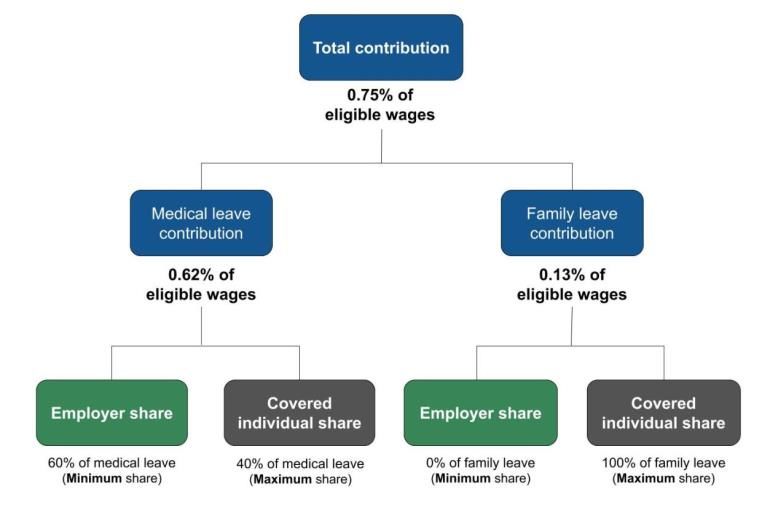
9/22/2020

    Recap of the Law

3

                Overview: Paid Family & Medical Leave

    • Starting 2021, Massachusetts workers will be entitled to paid family and
      medical leave.
    • The state will pay benefits from a State Trust Fund
    • The State Trust will be funded through employer contributions based upon
      worker earnings.
    • The costs of the employer contributions may be passed to the employee
      through payroll deductions (with some limitations).
    • Employer contributions began October 1, 2019.

                                                                                 4

4

                                                                                        2
9/22/2020
September 30, 2019
• Employers must provide notice to workforce of contribution rates
and leave benefits
October 1, 2019
• Employers must begin withholding for PFMLA contributions to
state trust fund.
January 31, 2020
Timeline of • Contributions for first quarter of PFMLA due
Key Dates January 1, 2021
• Paid family leave benefits will be available for bonding with a new
child, and service member-related events
• Paid medical leave benefits will be available for serious personal
health conditions
July 1, 2021
• Paid family leave benefits will be available for the care of a family
member with a serious health condition
5
5
Contribution to the Fund By Large Employers
6
6
39/22/2020
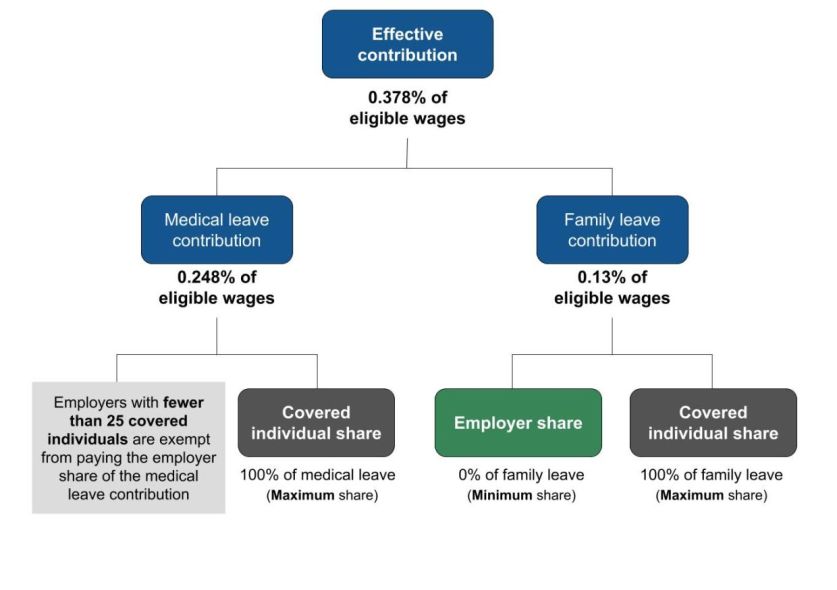
Contribution to the Fund By Small Employers
7
7
What Leave Do Employees Get
Under the Law?
Type of Leave Annual Benefit Allotment Effective Date
Medical (employee’s own serious health 20 weeks January 1, 2021
condition)
Family (bonding with new child, care for 12 weeks January 1, 2021 – bonding and
a family member with a serious health military exigency
condition, or qualifying military exigency) July 1, 2021 – family member with
SHC
Family (injured servicemember) 26 weeks January 1, 2021
Maximum Combined Family/Medical 26 Weeks January 1, 2021
Notes: Leave runs concurrently with FMLA and MA Parental Leave Law, if eligible.
Employees continue to receive health coverage as if active during leave.
8
8
49/22/2020
Amount of Paid Benefits During Leave
• Employees who make up to $669 per week will receive 80% of their weekly
pay ($669 is equal to 50% of the state’s current average weekly wage of
$1,338.05).
• Employees who make > $669 per week, will receive an additional amount at
the rate of 50% of earnings above $669 per week.
• Benefit is currently capped at $850 per week.
• The cap may be adjusted annually based on changes to the state’s average
weekly pay.
9
9
Penalties and Enforcement
• Private right of action for aggrieved employees.
• 3-year statute of limitations.
• Court may award reinstatement, treble damages for lost wages, attorney’s fees.
• If employer fails to comply with notice provisions
• $50 civil penalty per employee for 1st violation
• $300 civil penalty per employee for each subsequent violation
• No right to reinstatement if other employees of equal length and status in the same or
equivalent positions have been laid off due to economic conditions or other operation
changes.
10
10
59/22/2020
Key Changes to the Final
Regulations
11
Definitions and Clarifications
• Accrued Paid Leave: Expanded the definition to state that Accrued Paid
Leave does not include paid leave under an employer or CBE’s (1) disability
policy or program; or (2) paid family or medical leave policy.
• Active Duty: A new definition that requires deployment to a foreign country to
qualify as Active Duty.
• Average Weekly Wage: Clarified the definition to address multiple
employers. If a covered individual has multiple employers, the Average
Weekly Wage will be calculated for each employer or covered business entity
(“CBE”) separately.
• Average Working Week: A new definition, where the Average Working Week
is the average number of hours worked from the two highest quarters of the
12 months preceding a worker’s application for benefits under the PFML Law.
•Jackson Lewis P.C. 12
12
69/22/2020
Definitions and Clarifications (cont.)
• Base Period: Clarified the definition as the last four completed calendar
quarters within the previous five calendar quarters.
• Continuing Treatment by a Health Care Provider: Expanded the definition
to include an allowance for telehealth and removed qualification to substance
abuse disorders.
• Extended Illness Leave Bank: A new definition that states an Extended
Illness Leave Bank is a voluntary program that allows covered individuals to
donate accrued leave time to fund a bank for the benefit of a co-worker
experiencing a qualifying reason under the PFML Law.
• Financial Eligibility Test: Expanded the definition to allow wages received
from multiple employers or CBE within the Base Period to be aggregated to
determine financial eligibility for leave.
Jackson Lewis P.C. 13
13
Definitions and Clarifications (cont.)
• Former Members of Armed Services: Deleted reference to the exclusion of
workers for dishonorable discharge.
• Intermittent Leave: The revised definition allows the usage of intermittent
leave in 15-minute increments consistent with the employer’s policies
provided, however, that payment by the DFML will not be made in requests of
less than eight hours.
• Job Protected Leave: The definition clarifies that use of leave under an
employer’s disability policy, paid leave policy, and Extended Illness Leave
Bank program will begin job protected leave and such time will run
concurrently with the PFML benefits.
Jackson Lewis P.C. 14
14
79/22/2020
Employee Notice Obligations
• The final regulations require covered individuals to provide notice to their
employer prior to applying for benefits. The DFML will reject benefits
applications absent proof of such notice.
• Covered individuals must submit benefits applications at least 30 days in
advance of the anticipated leave start date, but no more than 60 days in
advance.
• The final regulations include a carve out for covered individuals to file
applications as soon as practicable, if the covered individual was unable to
meet the filing deadline for reasons beyond the covered individual’s
“reasonable” control.
Jackson Lewis P.C. 15
15
Employer Rights to Medical Certifications
• An employer may seek medical certification of the employee’s serious health
condition under two circumstances:
• following the expiration of an initial period of incapacity cited in the
healthcare certification, or
• where an intermittent leave has extended for a period of more than six
months from the approval by the DFML, whichever occurs first.
Jackson Lewis P.C. 16
16
89/22/2020
Substitution of Accrued Paid Leave/Employer
Reimbursement
• Employees who choose to use accrued paid leave may not receive PFML benefits
while they are receiving accrued paid leave. The PFML leave allotment, however,
will run concurrently with the accrued paid leave.
• Employers may not be reimbursed for payment of accrued paid leave.
• However, an employer who makes payments to a covered individual taking leave
that are equal to greater than the PFML benefit is entitled to reimbursement from
the DFML but only if those payments were made from a:
• Short term disability program
• Paid family and medical leave program; or
• Extended illness leave bank
• All of these programs must be separate and in addition to any accrued paid leave.
Jackson Lewis P.C. 17
17
Covered Individuals With Multiple Employers
• Calculation of the Weekly Benefit Amount is based on wages for a specific
employer.
• The final regulations clarify that a covered individual with multiple employers is
not required to take leave from each employer or CBE at the same time.
Accordingly:
• If all of the covered individual’s employers are on the State’s public plan, then the
State should theoretically administer the worker’s PFML benefits appropriately.
• If the covered individual is employed by one or more employers on a private plan,
then any PFML benefits received under one private plan will be separate and apart
from PFML benefits received from another employer’s private plan.
Jackson Lewis P.C. 18
18
99/22/2020
Covered Individuals With Multiple Employers (cont.)
• The DFML cannot reduce or offset benefits where the covered individuals has
other benefits under another employer’s private plan or for wages earned from
other employment. However, the DFML may consider wages from another
employer or CBE or through self-employment if the aggregate amount a
covered individual receives would exceed the covered individual’s Average
Weekly Wage.
Jackson Lewis P.C. 19
19
Substance Abuse Disorders and Policies
• Substance abuse disorders may now qualify as a serious health condition.
Accordingly, covered individuals may take family or medical leave for
treatment by a qualifying treatment provider.
• Note: absences because of an employee’s use of the substance does not
qualify for leave.
• The final regulations provide guidance regarding when an employer may take
action against an employee for substance use that violates an employer’s
established policy.
Jackson Lewis P.C. 20
20
109/22/2020
Intermittent Leave
• Each request for intermittent leave must be recertified consistent with the new
definition of intermittent leave as described below.
• The regulations allow the use of intermittent leave in 15-minute increments
consistent with the employer’s policies provided, however, that payment of
PFML benefits by the DFML will not be made in requests of less than eight
hours, unless more than 30 calendar days have elapsed since the initial taking
of such leave.
• Employers must confirm to the DFML wages paid to an employee on a
monthly basis or at other intervals deemed necessary by the DFML. The
DFML may seek a refund from the covered individual or offset future benefit
payments where the DFML determines that the covered individual has
received wages or from both the employer and from the state PFML program.
Jackson Lewis P.C. 21
21
Additional Issues to Note
• Covered individuals are required to notify the DFML within seven days of a
change in circumstances affecting benefits.
• The final regulations clarify that no PFML benefits are payable during the first
seven calendar days after the date on which job protected leave begins,
except for medical leave during a pregnancy or recovery from childbirth if
supported by a healthcare provider that this medical leave is followed by
family leave, in which case there will be no waiting period for the family leave.
• The final regulations also clarify that in case of multiple births, no more than
12 weeks of leave benefits are permitted in a benefit year.
• Note: the Massachusetts Parental Leave law that provides up to eight weeks of unpaid,
job-protected leave for each child.
Jackson Lewis P.C. 22
22
119/22/2020
Important Changes to Private Plan Exemptions
• Private plans must be available to the entire workforce and not select groups
of employees.
• Employers and covered business entities (CBE) with an approved private plan
exemption must make coverage available to covered individuals by their date
of hire.
• The private plan must provide notice to covered individuals, as part of any
determination, of their rights under both the private plan and the PFML.
• With respect to the Financial Eligibility Test, employers may request
verification of wages earned in Massachusetts.
• Private plans may now be approved for periods that are more or less than one
year. If the approval period is reduce, the DFML must provide 60 days’ notice.
Jackson Lewis P.C. 23
23
Important Changes to Private Plan Exemptions
• The weekly benefit amount and the leave allotment will be based on the
covered individual’s average working week in addition to the wages or
qualified earnings earned with the employer or CBE at the time of an
application for benefits.
• Private plan employers are not permitted to seek reimbursement from DFML.
• A private plan must provide covered individuals with an internal appeals
process through the private plan administrator before the covered individual
can exercise their rights to an appeal with the Department.
• The internal appeals process must give the individual at least 10 calendar
days to submit an appeal, and must extend that period if the individual can
establish that circumstances outside of their control prevented the filing of the
appeal within the proscribed period.
Jackson Lewis P.C. 24
24
129/22/2020
Important Changes to Private Plan Exemptions
• When a former covered individual, who has been separated from an employer
or CBE for less than 26 weeks, applies for benefits, the entity that the
individual applies to for benefits will depend on whether the individual is
employed or unemployed at the time of filing.
• If the covered individual remains unemployed on the filing date, the
covered individual should submit the application with the former employer
or CBE.
• If the covered individual has become employed by a different employer or
CBE at the time of filing, the covered individual should submit the
application with the new employer or CBE.
Jackson Lewis P.C. 25
25
Special Considerations When Transferring Between
Private Plans and the State Trust und or Vice Versa
• Includes new language to avoid gaps in coverage when an employer or CBE
is transitioning to a different private plan or between the State Trust Fund and
a private plan.
• If an employee was receiving benefits from the DFML prior to the effective
date of the employer transferring from the State Trust Fund to a private
plan, then the employee will continue receiving benefits from the DFML for
the duration of the leave.
• If the employee was receiving benefits from an employer prior to the
effective date of the employer transferring from a private plan to the State
Trust Fund, then the employer will continue paying benefits for the duration
of the leave.
• Covered individuals may file applications for benefits with the DFML on the
first day of the first quarter after the termination of a private plan.
Jackson Lewis P.C. 26
26
139/22/2020
State Application Process
27
Application Process—What we know as of now
• The state application process will be online. If individuals cannot apply online,
there will be a call center run by the state for the individuals to provide
information, which will be inputted online
• As part of the application process for medical leave, individual will be required to submit
medical certification form (which is being prepared by the state)
• Individual also will have to provide consent, so that the state can share this information,
including the medical certification form with the employer
• Individual will have to provide evidence that notice of the leave was provided to the
employer
• State will request information from employer
• Wages/earning information for past 12 months
• Description of individual’s position/schedule
• Description of the employer’s current paid leave policies, and whether the individual is
receiving pay from these policies
Jackson Lewis P.C. 28
28
149/22/2020
Application Process—What we know as of now
• Other information requested from the employer
• Whether the individual is receiving other “wage replacement benefits”, such as STD or
other paid family and medical leave policy
• “Any other relevant information or records related to the claim, including any evidence of a
potentially fraudulent claim.”
• Employers will have 10 business days to respond to the state
• Within 14 calendar days of receiving the application, the state will provide its
approval/denial of the leave
• Within 14 calendar days after approving an application, the state will begin
payments (unless the leave is scheduled to start later)
• Payment will be through direct deposit or state issued pay card
Jackson Lewis P.C. 29
29
How can I prepare for 2021?
30
159/22/2020
Understand FMLA vs. PFMLA
• PFMLA eligibility is same as unemployment (not 12 months/1250 hours).
• Leave under PFMLA is potentially greater than 12 weeks.
• Benefit year is different (no option to use rolling 12-month period).
• Broader PFMLA coverage for family members (not limited to spouse, parent,
child).
• Can’t require use of PTO for leave taken under PFMLA.
Jackson Lewis P.C. 31
31
Keep In Mind the Anti-Retaliation Provision
• Any adverse action taken within 6 months of an employee taking leave for reasons
associated with the new law is presumptively retaliatory.
• Employer can only rebut the presumption with clear and convincing evidence.
• A “negative change” does not include “trivial” or subjectively perceived inconveniences
that affect de minimis aspects of an employee’s work.
• Employer’s notification to DFML of a bona fide belief of fraud in the application for benefits
will not give rise to a retaliation claim.
• A negative change resulting from the application of a preexisting employment rule or policy
constitutes clear and convincing evidence sufficient to rebut a presumption of retaliation.
• If a covered individual’s use of approved intermittent leave is inconsistent with the DFML’s
approval, it will not be considered retaliation for an employer to request additional
information related to the use of leave.
32
32
169/22/2020
What does this mean for employers?
• Conduct manager training on leave management (e.g., how requests
are handled, working with HR on requests for leave/accommodations,
applicable leave laws, and the meaning of retaliation).
• Conduct manager training on best practices for documenting
performance/conduct issues.
• HR should be more vigilant in documenting performance issues and
contemplated actions.
• Scrutinize any potential adverse employment action contemplated in
the 6-month period following protected PFMLA leave.
Jackson Lewis P.C. 33
33
Handbook/Policy Revisions
• Implement a Paid Family and Medical Leave Policy to address the
requirements of the new law.
• Review your existing leave policies to ensure they coordinate with the Paid
Family and Medical Leave Policy. For example, review the following:
• Family and Medical Leave Act policy
• Parental Leave policy
• Military Leave policy
• Personal Leave
• Consider adding a substance abuse policy or revising an existing policy.
• Review and possibly expand code of conduct, workplace rules and
discipline/performance management policies.
Jackson Lewis P.C. 34
34
179/22/2020
Practical Issues For 2021
• Stacking with FMLA or MA Parental Leave
• What about employees already on statutory protected leave as of January 1, 2021?
• What about employees who exhaust PFMLA for a reason not covered by federal FMLA?
• What about medical leave under PFMLA that evolves into family leave?
• Topping off – can employers allow employees to “top off” using PTO/vacation
(i.e., to use PTO to bridge the gap between state benefit and regular pay)
• Partial day deductions for exempt employees on intermittent leave if not FMLA
eligible
• Taxability?
• Are the employer's contributions on behalf of its employees into the state insurance
system taxable to the employee?
• ·Are employee benefits paid from the state fund taxable to the employee?
Jackson Lewis P.C. 35
35
Questions?
36
189/22/2020
Thank you.
37
19You can also read


