MDOT UPDATED 2019 Everything You Need to Know About the Michigan Department of Transportation - Updated Dec 2019
←
→
Page content transcription
If your browser does not render page correctly, please read the page content below
The Official Guide to

MDOT                              UPDATED
                                  DECEMBER
                                  2019
    Everything You Need to Know About
 the Michigan Department of Transportation
Dear Michigander,
Michigan’s transportation system is a key driver of our state’s economy and job creation. The system ranges
from the smallest rural roads serving farms and tourism to the major interstate routes carrying so much
of our state’s commerce. The overall transportation system includes bridges, airports, local public transit
systems, bikeways, passenger and freight rail, ferries, and Great Lakes ports. These are all vital movers of
people and goods.
Serving as a national leader in the transportation industry, the Michigan Department of Transportation
(MDOT) has constructed creative and cost-effective solutions to persistent traffic issues, such as the
US-23 Flex Route in Washtenaw County and the US-131 zipper wall project in Kent County. Michigan also
serves as a model for other states in the deployment and testing of advanced vehicle technology. And while
exciting new developments in the transportation world are being realized, MDOT is also doing its part to be
as efficient as possible with the resources that the taxpayers provide. Changes in the way we do business,
including bond refinancing, solar panels, reusing and recycling materials, virtual offices, electronic invoicing,
online payment systems, and using green lights on tow plows, highlight a few of the many efficiencies
MDOT has employed.
While MDOT has worked to improve transportation for all modes through efficiencies and innovations,
Michigan residents have made loud and clear their concern over the state’s crumbling infrastructure. The
simple truth, however, is that even with the recent revenue increases, which are not scheduled to be fully
realized until 2021, MDOT will not be able to maintain our road system at a level expected from residents
and businesses. When adjusted for inflation, our current level of investment is about what it was 20 years
ago. Today, while MDOT is smaller and leaner, and innovative “best practices” have helped stretch hard-
earned taxpayer dollars, these efforts alone are insufficient to generate the amount of money needed to
repair our roads and highways.
More investment is needed in other transportation modes as well, including our airports, local public
transit systems, freight rail and Great Lakes ports, which are all crucial in moving people and goods.
Young people especially are seeking other means of transportation, such as bus rapid transit, commuter
rail and accelerated passenger rail. Businesses looking to attract talent to Michigan increasingly cite the
vibrancy and accessibility of urban areas as a major draw for recruitment.
MDOT will continue to think beyond the ordinary to find solutions to the challenges facing our infrastructure
and we remain committed to building and maintaining the best possible transportation system in Michigan.
This guide explains the operations of MDOT as it works to provide the “highest quality integrated
transportation services for economic benefit and improved quality of life.” You may find the Frequently Asked
Questions section to be particularly helpful. For more in-depth information, I encourage you to visit MDOT’s
website at www.Michigan.gov/MDOT.
Sincerely,

Paul C. Ajegba, Director
Michigan Department of Transportation
MDOT on the Web
The Michigan Department of Transportation (MDOT) provides many online services and sources of informa-
tion. In addition to its main website, MDOT also offers the Mi Drive website, featuring an interactive map
for motorists with lane closure information, traffic incident updates, and traffic camera views for I, M and
US routes in Michigan. MDOT also is a pioneer among state DOTs using social media to connect with the
public. MDOT uses social media sites like Twitter, Facebook, YouTube, and Instagram to interact with the
public, answer questions, and raise awareness of transportation issues facing the state.
MDOT website - www.Michigan.gov/MDOT
Mi Drive - www.Michigan.gov/Drive
   The Mi Drive website provides real-time travel information for motorists, including incidents, lane
   closures, work zones, message boards, camera views, carpool lots, and weather-related conditions on
   Michigan’s I, M and US routes across the state.
Facebook - www.facebook.com/MichiganDOT
Twitter
   Statewide - www.twitter.com/MichiganDOT
   Metro Detroit - www.twitter.com/MDOT_MetroDet
   West Michigan - www.twitter.com/MDOT_West
   Southwest Michigan - www.twitter.com/MDOT_Southwest
   Flint/Saginaw and the Thumb area - www.twitter.com/MDOT_Bay
   Lansing/Jackson area - www.twitter.com/MDOT_LanJxn
   Ann Arbor area - www.twitter.com/MDOT_A2
   Upper Peninsula - www.twitter.com/MDOT_UP
   Northern Lower Peninsula - www.twitter.com/MDOT_Traverse
   Rail - www.twitter.com/MDOT_Rail
   Blue Water Bridge - www.twitter.com/MDOT_BWB
   Mackinac Bridge - www.twitter.com/MackinacBridge
   Media Clips - www.twitter.com/MDOT_MediaClips
YouTube - www.youtube.com/MichiganDOT
Instagram - www.instagram.com/MDOTPicOfTheDay
Top three MDOT videos (as of Dec. 3, 2019):
1) How to Use a Roundabout - 402,840 views
   The State of Michigan is installing roundabouts to improve safety and reduce congestion in
   certain intersections. This video demonstrates the proper use of a roundabout, whether you are
   a motorist, bicyclist or pedestrian.
2) Railroad Crossing Safety in Michigan - 303,574 views
   MDOT partnered with Operation Lifesaver to create this video to urge motorists to pay close attention
   when approaching a railroad crossing. The video also provides facts about state laws
   and safety tips about crossing safety.
3) MDOT explains flashing yellow left-turn signal - 230,407 views
   This video was developed to help motorists understand new flashing yellow left-turn signals
   being installed across the state. The signals are being introduced nationwide and ultimately will
   be required at all intersections where there is a separate left-turn arrow signal.
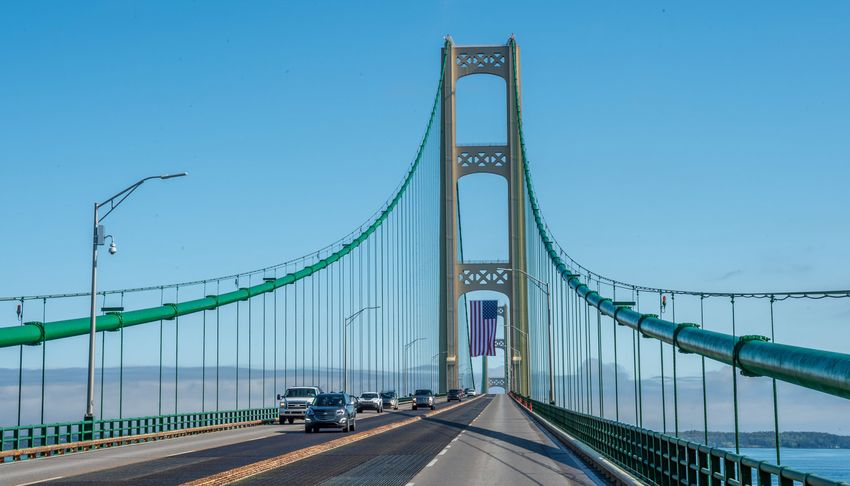
Table of Contents
Introduction .  .  .  .  .  .  .  .  .  .  .  .  .  .  .  .  .  .  .  .  .  .  .  .  .  .  .  .  .  .  .  .  .  .  .  .  .  .  .  .  .  .  .  .  .  .  .  .  .  .  .  .  .  .  .  .  .  .  .  . 1

Contact Information .  .  .  .  .  .  .  .  .  .  .  .  .  .  .  .  .  .  .  .  .  .  .  .  .  .  .  .  .  .  .  .  .  .  .  .  .  .  .  .  .  .  .  .  .  .  .  .  .  .  .  .  .  . 3

Fast Facts .  .  .  .  .  .  .  .  .  .  .  .  .  .  .  .  .  .  .  .  .  .  .  .  .  .  .  .  .  .  .  .  .  .  .  .  .  .  .  .  .  .  .  .  .  .  .  .  .  .  .  .  .  .  .  .  .  .  .  .  . 5

Frequently Asked Questions .  .  .  .  .  .  .  .  .  .  .  .  .  .  .  .  .  .  .  .  .  .  .  .  .  .  .  .  .  .  .  .  .  .  .  .  .  .  .  .  .  .  .  .  .  .  . 7

MDOT Organization Chart .  .  .  .  .  .  .  .  .  .  .  .  .  .  .  .  .  .  .  .  .  .  .  .  .  .  .  .  .  .  .  .  .  .  .  .  .  .  .  .  .  .  .  .  .  .  .  . 16

Highway Operations  .  .  .  .  .  .  .  .  .  .  .  .  .  .  .  .  .  .  .  .  .  .  .  .  .  .  .  .  .  .  .  .  .  .  .  .  .  .  .  .  .  .  .  .  .  .  .  .  .  .  .  . 17

Regions .  .  .  .  .  .  .  .  .  .  .  .  .  .  .  .  .  .  .  .  .  .  .  .  .  .  .  .  .  .  .  .  .  .  .  .  .  .  .  .  .  .  .  .  .  .  .  .  .  .  .  .  .  .  .  .  .  .  .  .  .  . 17

Bureau of Bridges and Structures .  .  .  .  .  .  .  .  .  .  .  .  .  .  .  .  .  .  .  .  .  .  .  .  .  .  .  .  .  .  .  .  .  .  .  .  .  .  .  .  .  . 17

Bureau of Development .  .  .  .  .  .  .  .  .  .  .  .  .  .  .  .  .  .  .  .  .  .  .  .  .  .  .  .  .  .  .  .  .  .  .  .  .  .  .  .  .  .  .  .  .  .  .  .  .  . 19

Bureau of Field Services .  .  .  .  .  .  .  .  .  .  .  .  .  .  .  .  .  .  .  .  .  .  .  .  .  .  .  .  .  .  .  .  .  .  .  .  .  .  .  .  .  .  .  .  .  .  .  .  . 20

Office of Business Development .  .  .  .  .  .  .  .  .  .  .  .  .  .  .  .  .  .  .  .  .  .  .  .  .  .  .  .  .  .  .  .  .  .  .  .  .  .  .  .  .  .  . 22

Office of Operations Administrative Services  .  .  .  .  .  .  .  .  .  .  .  .  .  .  .  .  .  .  .  .  .  .  .  .  .  .  .  .  .  .  .  .  . 25

Office of Organizational Development .  .  .  .  .  .  .  .  .  .  .  .  .  .  .  .  .  .  .  .  .  .  .  .  .  .  .  .  .  .  .  .  .  .  .  .  .  .  . 26

Office of Enterprise Management .  .  .  .  .  .  .  .  .  .  .  .  .  .  .  .  .  .  .  .  .  .  .  .  .  .  .  .  .  .  .  .  .  .  .  .  .  .  .  .  .  . 26

Bureau of Transportation Planning  .  .  .  .  .  .  .  .  .  .  .  .  .  .  .  .  .  .  .  .  .  .  .  .  .  .  .  .  .  .  .  .  .  .  .  .  .  .  .  .  . 27

Bureau of Finance and Administration  .  .  .  .  .  .  .  .  .  .  .  .  .  .  .  .  .  .  .  .  .  .  .  .  .  .  .  .  .  .  .  .  .  .  .  .  .  . 30

Office of Aeronautics .  .  .  .  .  .  .  .  .  .  .  .  .  .  .  .  .  .  .  .  .  .  .  .  .  .  .  .  .  .  .  .  .  .  .  .  .  .  .  .  .  .  .  .  .  .  .  .  .  .  .  . 30

Office of Economic Development  .  .  .  .  .  .  .  .  .  .  .  .  .  .  .  .  .  .  .  .  .  .  .  .  .  .  .  .  .  .  .  .  .  .  .  .  .  .  .  .  .  . 31

Office of Passenger Transportation .  .  .  .  .  .  .  .  .  .  .  .  .  .  .  .  .  .  .  .  .  .  .  .  .  .  .  .  .  .  .  .  .  .  .  .  .  .  .  .  . 34

Office of Rail  .  .  .  .  .  .  .  .  .  .  .  .  .  .  .  .  .  .  .  .  .  .  .  .  .  .  .  .  .  .  .  .  .  .  .  .  .  .  .  .  .  .  .  .  .  .  .  .  .  .  .  .  .  .  .  .  .  . 36

Commissions .  .  .  .  .  .  .  .  .  .  .  .  .  .  .  .  .  .  .  .  .  .  .  .  .  .  .  .  .  .  .  .  .  .  .  .  .  .  .  .  .  .  .  .  .  .  .  .  .  .  .  .  .  .  .  .  .  . 39

Transportation Funding .  .  .  .  .  .  .  .  .  .  .  .  .  .  .  .  .  .  .  .  .  .  .  .  .  .  .  .  .  .  .  .  .  .  .  .  .  .  .  .  .  .  .  .  .  .  .  .  .  . 42

Department of Transportation Budget .  .  .  .  .  .  .  .  .  .  .  .  .  .  .  .  .  .  .  .  .  .  .  .  .  .  .  .  .  .  .  .  .  .  .  .  .  .  . 46

FY 2018 Investment  .  .  .  .  .  .  .  .  .  .  .  .  .  .  .  .  .  .  .  .  .  .  .  .  .  .  .  .  .  .  .  .  .  .  .  .  .  .  .  .  .  .  .  .  .  .  .  .  .  .  .  . 47

Funding Distribution . . . . . . . . . . . . . . . . . . . . . . . . . . . . . . . . . . . . . . . . . . . . . . . . . . . . 47

Transportation-related Acronym List .  .  .  .  .  .  .  .  .  .  .  .  .  .  .  .  .  .  .  .  .  .  .  .  .  .  .  .  .  .  .  .  .  .  .  .  .  .  .  . 50
Paul Ajegba                    Tony Kratofil, P.E.
Director                       Chief Operations Officer
517-335-1646                   and Chief Engineer
AjegbaP@Michigan.gov           517-335-1645
                               KratofilT@Michigan.gov

Laura J. Mester, C.P.A.        Jeff Cranson
Chief Administrative Officer   Director of Communications
517-241-2674                   517-648-8247
MesterL@Michigan.gov           CransonJ@Michigan.gov

Troy Hagon
Director of
Governmental Affairs
and State Transportation
Commission Adviser
HagonT@Michigan.gov

  “Providing the highest quality
integrated transportation services
     for economic benefit and
      improved quality of life.”
Introduction
Have you ever wanted to find out which                   Here to Help
agency maintains a certain road? Or how                  There are so many variables that are needed to
to report a pothole? Order a state map?                  create and sustain a transportation system; one
MDOT prepared this guide to help answer those            of the most important is the people who make it
questions and more, provide an overview of               happen. Throughout the state’s good times and
MDOT’s operations, and offer a resource on who           challenges, MDOT and its staff will always work to
to call for questions impacting your transportation      make Michigan’s transportation system better than it
needs. This updated guide has been reworked              was the day before.
based on customer feedback to include the sections
that are most beneficial towards the front. Also         Thinking Beyond the Ordinary
included is MDOT’s Fast Facts publication that           MDOT remains committed to continuously seek new
notes quick facts about transportation-related topics.   ways to operate more efficiently and find solutions
                                                         to make the most of transportation infrastructure
Positioned to Serve                                      investment and improvements. Many of MDOT’s
Not only is MDOT available to help in Lansing, but       programs, publications, projects, and research
there are also staff all over the state that stand       initiatives have been studied and adopted by states
ready to assist Michigan’s citizens.                     across the nation as recognized best practices.
MDOT has positioned itself to serve citizens through
                                                         Paving the Way
seven region offices managed by professional
engineers trained to direct and oversee the              MDOT has worked to improve transportation for
transportation activities and programs of their          all modes, support the economy, improve safety,
respective regions.                                      and create partnerships, all while being as efficient
                                                         as possible to make the best use of limited funds.
Within each region there are multiple Transportation     As Michigan continues to grow and thrive, MDOT
Service Centers (TSCs) that are geographically           will continue to help “pave the way” with strong
located so no Michigan resident is more than an          partnerships, creative innovations, and effective and
hour from a TSC. TSCs are designed to respond to         transparent investment in all transportation modes.
the transportation needs of local communities.
                                                         Thank you for your time and interest in
                                                         MDOT and its operations.

 1                                                                               ►Back to Table of Contents
MDOT
MDOT Regional Service AreasRegional
and Facilitys Map
Service Areas and Facilities
KEWEENAW
17
HOUGHTON
ONTONAGON
22
BARAGA
SUPERIOR
F LUCE
H 43
Ishpeming M
GOGEBIC
Newberry
IRON MARQUETTE ALGER
SCHOOLCRAFT CHIPPEWA
MACKINAC
DICKINSON
Crystal Falls 9
DELTA
41
E N
SUPERIOR REGION 11
Crystal Falls TSC 44 G
Ishpeming TSC
Newberry TSC Escanaba
Superior Region Office EMMET
MENOMINEE
NORTH REGION
Alpena TSC
Gaylord TSC NORTH CHEBOYGAN PRESQUE ISLE
North Region Office CHARLEVOIX
Traverse City TSC I OTSEGO ALPENA
16
GRAND REGION 2
Cadillac TSC
ANTRIM
MONTMORENCY
Alpena
Grand Rapids TSC LEELANAU Gaylord
Grand Region Office
Muskegon TSC 21
Traverse City CRAWFORD OSCODA ALCONA
BAY REGION BENZIE GRAND KALKASKA 28
Bay City TSC TRAVERSE
Bay Region Office
OGEMAW IOSCO
Davison TSC
Mt. Pleasant TSC MANISTEE WEXFORD MISSAUKEE ROSCOMMON
5
SOUTHWEST REGION
Kalamazoo TSC
Cadillac
24 ARENAC
BAY
Marshall TSC
MASON LAKE OSCEOLA CLARE GLADWIN
Southwest Region Office
UNIVERSITY REGION 35
Brighton TSC
Jackson TSC
GRAND A
ISABELLA MIDLAND
BAY
Bay
HURON
NEWAYGO
Lansing TSC City
OCEANA MECOSTA 29
University Region Office
TUSCOLA SANILAC
METRO REGION Mt. Pleasant 37
Detroit TSC Muskegon 38 36
Oakland TSC MONTCALM Saginaw
Macomb TSC
Metro Region Office GRATIOT SAGINAW
Taylor TSC
MUSKEGON 13 Grand
14
Rapids GENESEE LAPEER ST. CLAIR L
34 45
CLINTON
SHIAWASSEE
REGION OFFICE OTTAWA IONIA Davison
TSC OFFICE MACOMB
KENT
Oakland
REGION/TSC OFFICE 12 23 LIVINGSTON OAKLAND 27
REGION BOUNDARY 10 15
16 42
6
Lansing 4 Macomb
TRANSPORTATION SERVICE AREA ALLEGAN BARRY 3
26 Brighton Southfield
MDOT BRIDGE FACILITIES EATON INGHAM
MDOT FACILITIES 40
32
8 METRO
VAN BUREN C
CENTRAL REPAIR/BUILDUP KALAMAZOO CALHOUN JACKSON
18 Detroit
WAYNE (excludes Wayne County)
20 25 WASHTENAW
WELCOME CENTER 7 31
33 Marshall Jackson
REST AREAS Kalamazoo Taylor
(excludes Detroit)
ROADSIDE PARKS
BRANCH MONROE
SCENIC TURNOUTS
39 1
BUSINESS OFFICES 19 B J
BERRIEN 30 CASS ST. JOSEPH HILLSDALE LENAWEE D
K
WELCOME CENTERS
A. CLARE...................................BAY SOUTHWEST UNIVERSITY
B. COLDWATER........................SWR
C. DETROIT...............................MET MDOT FACILITIES AND 11. GLADSTONE SIGN/ 22. L'ANSE GARAGE...........................SUP 34. PORT HURON GARAGE................BAY
D. DUNDEE...............................UNV CENTRAL REPAIR/BUILDUP SIGNAL FACILITY.........................SUP 23. LANSING CENTRAL 35. REED CITY GARAGE.....................GRD
E. IRON MOUNTAIN..................SUP 1. ADRIAN GARAGE.........................UNV 12. GRAND LEDGE GARAGE............UNV REPAIR/BUILDUP.........................UNV 36. SAGINAW EAST SIDE GARAGE. .BAY
2. ATLANTA GARAGE/LAB...............NOR 13. GRAND RAPIDS GARAGE...........GRD 24. MARION GARAGE.........................GRD 37. SAGINAW REGION CREWS..........BAY
F. IRONWOOD..........................SUP
14. GRAND RAPIDS REGION 25. MARSHALL GARAGE...................SWR 38. SAGINAW WEST SIDE GARAGE. BAY
G. MACKINAW CITY..................NOR 3. AUBURN HILLS
REGION CREWS...........................MET CREWS/LAB...................................GRD 26. MASON GARAGE..........................UNV 39. SAWYER GARAGE.........................SWR
H. MARQUETTE........................SUP
4. BRIGHTON GARAGE....................UNV 15. HASTINGS GARAGE....................GRD 27. METRO LAB...................................MET 40. SOUTH HAVEN GARAGE..............SWR
I. MENOMINEE........................SUP 16. HILLMAN LAB................................NOR 28. MIO GARAGE.................................NOR
5. CADILLAC REGION CREWS.......NOR 41. ST. IGNACE GARAGE....................SUP
J. MONROE..............................UNV 17. HOUGHTON GARAGE..................SUP 29. MT. PLEASANT GARAGE.............BAY
6. CHARLOTTE GARAGE.................UNV 42. WILLIAMSTON GARAGE...............UNV
K. NEW BUFFALO.....................SWR 7. COLOMA GARAGE........................SWR 18. JACKSON REGION CREWS/LAB UNV 30. NILES GARAGE.............................SWR MDOT BRIDGE FACILITIES
L. PORT HURON.......................BAY 8. DETROIT GARAGE.......................MET 19. JONES GARAGE...........................SWR 31. PAW PAW CENTRAL REPAIR......SWR 43. INTERNATIONAL BRIDGE.............SUP
M. SAULT STE. MARIE..............SUP 9. ENGADINE GARAGE....................SUP 20. KALAMAZOO GARAGE................SWR 32. PLAINWELL GARAGE..................GRD 44. MACKINAC BRIDGE.......................NOR
N. ST. IGNACE...........................SUP 10. FENNVILLE GARAGE...................GRD 21. KALKASKA GARAGE/LAB............NOR 33. PORTAGE REGION CREWS.......SWR 45. BLUE WATER BRIDGE...................BAY
►Back to Table of Contents 2Contact Information
BAY REGION OFFICE Grand Rapids TSC Southeast Michigan
5859 Sherman Road 2660 Leonard St., NE Transportation Operations
Saginaw, MI 48604 Grand Rapids, MI 49525 Center (SEMTOC)
Phone: 989-754-7443 Phone: 616-464-1800 1060 W. Fort St.
Fax: 989-754-8122 Fax: 616-464-1189 Detroit, MI 48226
Serves: Allegan, Barry, Ionia, Phone: 313-256-9800
Bay City TSC and Kent counties Fax: 313-256-9036
2590 E. Wilder Road
Bay City, MI 48706 Muskegon TSC
NORTH REGION OFFICE
Phone: 989-671-1555 2225 Olthoff Drive
Fax: 989-671-1530 Muskegon, MI 49444 1088 M-32 East
Serves: Arenac, Bay, and Phone: 231-777-3451 Gaylord, MI 49735
Saginaw counties Fax: 231-777-3621 Phone: 989-731-5090
Serves: Mason, Muskegon, Oceana, Toll-Free: 888-304-MDOT (6368)
Davison TSC and Ottawa counties Fax: 989-731-0536
9495 E. Potter Road Alpena TSC
Davison, MI 48423 METRO REGION OFFICE 1540 Airport Road
Phone: 810-653-7470
Fax: 810-653-1248 18101 W. Nine Mile Road Alpena, MI 49707
Serves: Genesee, Lapeer, and Southfield, MI 48075 Phone: 989-356-2231
Shiawassee counties Phone: 248-483-5100 Fax: 989-354-4142
Fax: 248-483-9602 Serves: Alcona, Alpena, Iosco,
Huron Service Area Montmorency, Ogemaw, Oscoda,
(Virtual TSC) Detroit TSC and Presque Isle counties
Phone: 989-754-7443 1060 W. Fort St.
Detroit, MI 48226 Gaylord TSC
Serves: Huron, Sanilac, St. Clair,
and Tuscola counties Phone: 313-965-6350 1088 M-32 East
Fax: 313-965-5933 Gaylord, MI 49735
Mt. Pleasant TSC Serves: Detroit Area Phone: 989-731-5090
1212 Corporate Drive Fax: 989-732-3637
Macomb TSC Serves: Antrim, Charlevoix,
Mt. Pleasant, MI 48858
Phone: 989-773-7756 26170 21 Mile Road Cheboygan, Crawford, Emmet,
Fax: 989-775-6329 Chesterfield Township, MI 48051 Otsego, and Roscommon counties
Serves: Clare, Gladwin, Gratiot, Phone: 586-421-3920
Fax: 586-598-4043 Traverse City TSC
Isabella, and Midland counties
Serves: Macomb County 2084 US-31 South, Suite B
Traverse City, MI 49685
GRAND REGION OFFICE Oakland TSC Phone: 231-941-1986
1420 Front Ave. N.W. 800 Vanguard Drive Fax: 231-941-3397
Grand Rapids, MI 49504 Pontiac, MI 48341 Serves: Benzie, Grand Traverse,
Phone: 616-451-3091 Phone: 248-451-0001 Kalkaska, Leelanau, Manistee,
Toll-Free: 866-815-MDOT (6368) Fax: 248-451-0125 Missaukee, and Wexford counties
Fax: 616-451-0707 Serves: Oakland County
Cadillac TSC Taylor TSC
7915 US-131 6510 Telegraph Road
Cadillac, MI 49601 Taylor, MI 48180
Phone: 231-775-3486 Phone: 313-375-2400
Fax: 231-775-0301 Fax: 313-295-0822
Serves: Lake, Mecosta, Montcalm, Serves: Wayne County
Newaygo, and Osceola counties
3 ►Back to Table of ContentsSOUTHWEST REGION SUPERIOR REGION UNIVERSITY REGION
OFFICE OFFICE OFFICE
1501 E. Kilgore Road 1818 3rd Ave. North 4701 W. Michigan Ave.
Kalamazoo, MI 49001 Escanaba, MI 49829 Jackson, MI 49201
Phone: 269-337-3900 Phone: 906-786-1800 Phone: 517-750-0401
Toll-Free: 866-535-MDOT (6368) Toll-Free: 888-414-MDOT (6368) Fax: 517-750-4397
Fax: 269-337-3916 Fax: 906-789-9775
Brighton TSC
Coloma Business Office Crystal Falls TSC 10321 E. Grand River, Ste. 500
3880 Red Arrow Highway 120 Tobin-Alpha Road Brighton, MI 48116
Benton Harbor, MI 49022 Crystal Falls, MI 49920 Phone: 810-227-4681
Phone: 269-849-1165 Phone: 906-875-6644 Fax: 810-227-7929
Fax: 269-849-1227 Toll-Free: 866-584-8100 Serves: Livingston, Monroe,
Fax: 906-875-6264 and Washtenaw counties
Kalamazoo TSC Serves: Delta, Dickinson, Gogebic,
5372 South 9th St. Iron, and Menominee counties Jackson TSC
Kalamazoo, MI 49009 2750 N. Elm Road
Phone: 269-375-8900 Ishpeming TSC Jackson, MI 49201
Fax: 269-544-0080 100 S. Westwood Drive Phone: 517-780-7540
Serves: Berrien, Cass, Kalamazoo, Ishpeming, MI 49849 Fax: 517-780-5099
and Van Buren counties Phone: 906-485-4270 Serves: Hillsdale, Jackson,
Toll-Free: 888-920-MDOT (6368) and Lenawee counties
Marshall TSC Fax: 906-485-4878
15300 W. Michigan Ave. Serves: Baraga, Houghton, Lansing TSC
Marshall, MI 49068 Keweenaw, Marquette, 2700 Port Lansing Road
Phone: 269-789-0560 and Ontonagon counties Lansing, MI 48906
Fax: 269-789-0936 Phone: 517-335-3754
Serves: Branch, Calhoun, Newberry TSC Fax: 517-335-3752
and St. Joseph counties 14113 M-28 Serves: Clinton, Eaton,
Newberry, MI 49868 and Ingham counties
Phone: 906-293-5168
Toll-Free: 866-740-6368
Fax: 906-293-3331
Serves: Alger, Chippewa,
Luce, Mackinac, and
Schoolcraft counties
►Back to Table of Contents 4MDOT Fast Facts
2019
MDOT is responsible for all trunkline (M, US, I routes) throughout the state.
This includes highways, railroads, pedestrian bridges, and all adjacent infrastructure
(i.e., carpool lots, rest areas, noise barriers).
65% ofmoved
all freight tonnage
by truck
23 82 264 77 14
73% by truck on state trunkline
of all freight value travels Scenic Roadside Carpool
Rest
Turnouts Parks
Welcome
Lots Areas Centers
9,664 state trunkline
route miles (M, US, I routes)
33 active
cargo ports 14% of all freight tonnage
moved by water 4,811 highway, railroad and
pedestrian bridges
81 transit agencies
3 520 miles
intercity Amtrak passenger
routes =
83 million passenger trips per
year for both urban and rural 764,230 passengers
in FY 2018
annual vehicle
21% 54
miles traveled
(AVMT) on 9
million
of all trunkline
tonnage billion Trunkline is
665 freight
miles
moved
by rail
8 % of mileage,
of state-owned rail 53
but carries % registered vehicles
234
of all traffic in Michigan in Michigan
airports
statewide
18 commercial
airports
3 U.S. bicycle routes = more than 1,000 miles
4 state-owned
airports 178 open trails = 2,754 miles
More
than45 million passengers
per year 3,168 miles of paved shoulders
on trunkline
For more details, see the full report at
https://www.Michigan.gov/documents/mdot/MDOT_fastfacts02-2011_345554_7.pdf
5 ►Back to Table of Contents►Back to Table of Contents 6
Frequently Asked Questions
How do I order a state map?
Free state maps can be ordered from MDOT’s website at www.Michigan.gov/MDOT. See “Online
Services,” “State Map” to order. You can use the online form to order up to 25 maps; for larger
quantities, please call 517-335-1644.

How does a member of the Legislature obtain state maps?
MDOT provides complimentary state maps to the Legislature. The maps are packaged in quantities of 250
or 500. If you are interested in receiving maps, please contact the Office of Governmental Affairs by phone
at 517-335-1644 or by e-mail at MDOT-Legislative@Michigan.gov. In addition to contacting Governmental
Affairs, if you would like to have the maps personalized with a label from LSB Printing, the Michigan House
of Representatives must contact their caucus printing coordinator to order this service. The Michigan State
Senate must submit a Booklet and State Map Order Form to LSB Printing via ID Mail or fax to 517-373-0172.

What are the guidelines for memorial highway and bridge signs?
MDOT has developed guidelines for memorial highway and bridge signs. Standards for the design (shape,
size, color) and application of all signs erected on public highways are specified in the Michigan Manual of
Uniform Traffic Control Devices (MMUTCD) and are required to conform with national standards.
As additional signs, memorial signs can reduce the effectiveness of essential signs, causing an information
overload for motorists. However, if the following conditions are met, MDOT will install signs for memorial
highways and bridges:
     • The memorial highway or bridge must be named in a bill passed by the Senate and House and signed
       by the governor.
     • The sign on memorial highway bridges shall be placed in rest areas, scenic overlooks, turn outs or
       recreation areas.
     • The memorial signs will not appear on guide signs nor interfere with other necessary signs or
       compromise safety.
     • The memorial sign’s legend shall be simple and signified, devoid of any tendency toward advertising
       and in general conformance with other highway signs.
     • The group requesting the memorial signs will be required to pay for the fabrication and all associated
       costs of installation. MDOT region staff shall approve the size and design of all signs placed within
       the roadside.
     • Placement of the sign within a roadside facility will be at the sole discretion of MDOT.

How much does it cost to reconstruct 1 mile of urban highway?
A reconstruction project in an urbanized area, on average, costs $2 million per lane mile on the freeway
system. Therefore, reconstructing a 1-mile segment of a freeway that has two lanes in each direction would
cost, on average, $8 million.

Does MDOT use warranties for construction projects
and how do they determine where warranties apply?
Yes. MDOT staff follow guidelines that take into account scoping, design, and construction issues associ-
ated with different fix types to ensure that the right warranty is placed on the right project.

 7                                                                               ►Back to Table of Contents
How many warranties does MDOT have annually? Does MDOT have a warranty monitoring program? MDOT averages approximately 170 warranties per year. These warranties cover three areas of work: • Road rehabilitation and reconstruction, • Road capital preventive maintenance, and • Bridge painting. Each warranty is entered in the MDOT Statewide Warranty Administration Database (SWAD), which is an Internet-based tool developed to help track project warranties through a series of reports. These reports are produced monthly and allow the department to track when warranty inspections are due, when warranties expire, and warranties that have had corrective action completed. These reports provide information on a statewide basis and also can break down information by region and by individual offices within a region. For more information on warranties, please see the MDOT warranty white paper at http://www.Michigan.gov/documents/mdot/MDOT_Warranties_2-11-15_481185_7.pdf. How frequent is corrective action done on warranty projects? Since the MDOT warranty program began in 1996, approximately 13 percent of the warranties have required corrective action. What is the difference between centerline miles and lane miles? Centerline miles (or route miles) measure the length of a road between points. The number and width of the lanes are ignored when calculating centerline mileage. Under Act 51, funds are distributed to local agencies based partly on centerline miles. Lane miles are calculated by multiplying the centerline mileage of a road by the number of lanes it has. Lane mileage provides the total amount of road pavement. What is a “complete street”? Complete Streets legislation (Public Acts 134 and 135) gives new project planning and coordination respon- sibilities to city, county and state transportation agencies across Michigan. The legislation defines Complete Streets as “roadways planned, designed, and constructed to provide appropriate access to all legal users… whether by car, truck, transit, assistive device, foot or bicycle.” The law further requires Complete Streets policies be sensitive to the local context, and consider the func- tional class, cost, and mobility needs of all legal users. The primary purpose of these laws is to encourage development of Complete Streets as appropriate to the context and cost of a project. The STC adopted a Complete Streets policy in July 2012. For more information on MDOT Complete Streets, please visit the Complete Streets website at www.Michigan.gov/CompleteStreets. Where can I find MDOT projects advertised on the web? MDOT projects are advertised on the “Bid Letting Information” page on MDOT’s website at www.Michigan.gov/MDOT under “Doing Business.” You can visit the page at http://www.Michigan.gov/MDOT/0,4616,7-151-9625---,00.html. This is the only way to get construction project bid information from MDOT. ►Back to Table of Contents 8
Are Michigan’s roads “worse” than those in surrounding states? If so, why?
There is a perception that highways in Ohio, Indiana, and Wisconsin are better than Michigan’s. Numerous
factors play into roadway condition and whether Michigan’s roads are perceived as worse than those in sur-
rounding states. Some of the factors that affect pavement condition and the variables that may affect driver
perception of pavement condition are highlighted below.
Factors Affecting Condition:
  • Traffic per lane mile: Michigan trunkline traffic per lane mile is significantly higher than the comparison
    states, especially in the urban areas.
  • Funding distribution: Although other states have larger fractions of their roads under state control,
    Michigan makes state funds available to all 111,000 miles of local roads, and distributes road-user fees
    among 697 road and transit agencies.
  • Tolls: Illinois, Indiana, and Ohio collect tolls on their busiest routes, freeing fuel and vehicle taxes for
    use on other state highways.
  • Gasoline tax: Michigan’s gas tax rose to 25.9 cents per gallon in 2017. Before 2017, Michigan’s gaso-
    line tax was 18.7 cents per gallon, well below Wisconsin (31 cents) and Ohio (28 cents), and similar to
    Indiana (18 cents).
  • Diesel fuel tax: Before 2017, Michigan’s diesel fuel tax was 15 cents per gallon. Michigan’s current
    26.3-cent tax is still below the rates in nearby states, including Wisconsin (31 cents), Ohio (28 cents),
    and Indiana (27 cents).
  • Vehicle taxes: Michigan’s $1,992 per year fee for an 80,000-pound truck is less than in Wisconsin
    ($2,560), Indiana ($2,604), and especially Illinois ($3,191). Because truck weight fees are paid
    per-mile to each state, these high truck fees act as tolls on interstate truck traffic through Chicago.
  • Soils and geotechnical impacts on pavement: Pavement design and construction in Michigan can be
    complicated and costly. Soils in Michigan are often variable, extremely frost-susceptible, contain deep,
    soft clay deposits, and are destabilized by the ebb and flow of the Great Lakes,
    11,000 inland lakes, and changing water tables.
For more information, please view the MDOT Reality Check video at
https://www.youtube.com/watch?v=5W321V9WiYU.

How do I find out which agency maintains a road?
First, determine whether the road is a state trunkline (I, M, or US routes). If it is an MDOT road, MDOT’s
Office of Governmental Affairs at 517-335-1644 will determine which office handles maintenance for that
road. In some cases, MDOT contracts with the county road commission to provide maintenance on state
trunklines. All other roads outside city limits are county roads. Roads within cities and villages may be under
state, county, or city jurisdiction, and MDOT’s Office of Governmental Affairs can determine who owns a road,
block by block. Some roads are private and maintained by property owners’ associations.

 9                                                                                   ►Back to Table of Contents
What is MDOT doing to save money? MDOT has undertaken numerous efforts to operate more efficiently and to find every available dollar in its budget for infrastructure. Some of the efforts include a major reorganization and undertaking innovative cost-saving measures to reduce operating costs, extend the life of projects, or maximize energy efficiency. Examples include: • Best-value contracting methods; • New material mixes, such as warm-mix asphalt; • Pre-cast bridges for quicker construction; • Carbon-fiber components to extend the life of a bridge; • Using recycled concrete and asphalt in construction; • Coordinating projects and maintenance with other agencies to minimize redundancies; and • Context-sensitive solutions and stakeholder engagement to improve project benefits. MDOT will continue to maximize its resources by finding efficiencies and incorporating them into its business practices to support MDOT’s mission. You can view the current MDOT Economies, Efficiencies and Innova- tions report at http://www.Michigan.gov/documents/mdot/MDOT_CumulativeListofEfficiencies_450744_7.pdf. Who locates and fixes potholes? How do I go about reporting potholes? MDOT maintenance personnel routinely inspect state trunklines, monitoring them for many conditions, including the development of potholes. If you notice a pothole forming on an I, M or US route, you can report it any of three ways: 1. Go to the MDOT website at www.Michigan.gov/MDOT and look for the “How Do I” tab near the center of the screen. Select “Report a Pothole” or visit the “All About Potholes” page at www.Michigan.gov/Pothole. 2. Call the Pothole Hotline at 888-296-4546; 3. Contact your local TSC or MDOT region office. To report potholes and other problems related to local roads, contact the local city or county road commission involved. How can I find out about construction on state roads? MDOT’s Mi Drive traffic information website (www.Michigan.gov/Drive) features an interactive map for motorists with lane closure and construction project information, traffic camera views, and other information regarding state trunklines. MDOT also communicates via news releases, Twitter, Facebook, and YouTube, and produces project brochures. ►Back to Table of Contents 10
What is a roundabout?
A roundabout is a type of circular intersection. Roundabouts maximize traffic flow by keeping traffic moving,
which also decreases emissions and improves fuel economy. Modern roundabouts increase safety by reduc-
ing conflict points and slowing traffic through the intersection. Vehicles do not stop in roundabouts and there
are no left turns across opposing traffic lanes. Visit www.Michigan.gov/Roundabout for more information.

How do I request a change in a speed limit?
MDOT plays a role in the process of changing speed limits on state trunklines along with the Michigan State
Police. Speed limits are based on scientific analyses of traffic that includes looking at traffic flow, access
points (driveways), and safety. Legislators interested in addressing potential speed limit changes should do
the following:
1. Contact the local MDOT Transportation Service Center (TSC). The requestor should include their name,
   the location and nature of the request (i.e., traffic going too fast, increase speed limit).
2. Once the request is received by MDOT, the TSC staff will ask the requestor to contact their city council/
   township board for a formal resolution requesting that MDOT conduct a speed study. The city council/
   township board resolution must state that it is requesting a speed study be done and that they will abide
   by the final study recommendation. Please note the study could show that the speed limit should be
   reduced, stay the same, or be increased. A speed study will not be initiated until the resolution is sent to
   the TSC.
3. Once the resolution is received by the TSC, the TSC staff will collect data regarding the location including:
      • Crash history
      • Traffic volumes
      • Future improvement plans
4. The TSC staff then conducts a preliminary field review, considering:
       • Physical roadway characteristics
       • Type of roadway (urban, rural or mixed)
5. TSC staff then reviews the data and recommends one of the following options:
   A. Perform a detailed speed study (by MDOT’s Lansing office)
   B. Location does not warrant any changes from the posted speed limit
      (requestor is notified of such via letter)
6. If a detailed speed study is performed, it will identify:
         • Eighty-fifth percentile speed
         • Geometric configuration of the roadway
         • Roadside features
7. The recommended speed limit is accepted if the TSC and the Michigan State Police determine it is
   reasonable, enforceable, and meets the characteristics of the roadway.
(Note that the process is lengthy to determine if a speed limit should be changed or added. It can take up to
four months from the time of the request until a final determination is made.)

11                                                                                ►Back to Table of Contents
How do I request that a traffic signal be installed?
MDOT is responsible for placing traffic signals on all state trunklines. Legislators who are interested in a
traffic signal should do the following:
1. Contact the local MDOT TSC. The requestor should include their name, location, and nature of the
request (e.g., new signal, revise existing signal operations).
2. Once the request is received by MDOT, the TSC staff will conduct a preliminary screening to determine
if further studies are needed. The preliminary screening uses crash history, traffic volume, peak hour
gaps and delay, and upcoming work plan data to determine the next actions.
A. If the screening finds that a new signal or modifying an existing signal is not supported,
then the requestor will be notified via letter.
B. If the screening finds that a new signal or modifying an existing signal needs further
consideration, the TSC will request a full traffic signal study from the MDOT Traffic Signal
Unit in Lansing. The study will analyze the following:
• Closeness of buildings to the roadway
• Measure preliminary running speeds of traffic
• Parking allowances
• Pedestrian activities
• Crash history
3. Once a full traffic study is ordered, the Lansing Traffic Signal Unit will conduct a detailed traffic signal
survey and compare the results against the 11 traffic signal warrants (requirements) from the Michigan
Manual of Uniform Traffic Control Devices (MMUTCD).
The warrants will be evaluated considering minimum vehicular volumes, gaps in traffic, presence of
pedestrians, proximity of nearby signals, and the intersection’s crash history. (Note that the satisfaction
of a warrant or warrants is not in itself a justification for a traffic signal. The signal must improve the
overall safety and/or operation of the intersection.)
4. Once the full traffic signal study is completed, the requestor will be notified by the TSC whether the
intersection warrants a signal or not. (Note that the process to determine if a new signal should be
changed or added is lengthy. It can take up to six months from the time of request until a final determi-
nation is made.)
How do I make a Freedom of Information Act (FOIA) request?
Requests for public records must be submitted to MDOT’s Freedom of Information officer. There is no FOIA
form to fill out. You must make a request in writing, by U.S. mail, e-mail or fax to the MDOT FOIA officer.
Questions on how to write a written request may be directed to MDOT’s FOIA officer at 517-230-6912.
How do I determine if my vehicle/load is oversized or overweight?
You can go online at www.Michigan.gov/Truckers for information to help determine whether your vehicle
is oversized or overweight. Under the Permits section, select Frequently Asked Questions - Commercial
Vehicle Transport Permits, and Question #2. How do I determine if my vehicle/load is oversized or over-
weight? If you have additional questions, call 517-241-8999.
►Back to Table of Contents 12How do I obtain an oversize or overweight vehicle permit? For over-length or overweight vehicles, drivers can obtain one of two kinds of permits: extended and single trip. Single-trip permits may be issued for up to a five-day period. A single-trip permit is valid for one trip only, but may be issued to include a return move. Extended permits may be issued on an annual basis and are issued based on the vehicle and load being transported. All oversize/overweight transport permit applications are submitted and permits purchased through the Michigan Business One Stop (MBOS) online service. You must first register in MBOS, which can be done by going to www.Michigan.gov/Truckers and following the One Stop/MiTRIP registration instructions. Once you are registered in MBOS, you can order oversize/overweight permits by going to the bottom of the web page under MiTRIP User Guide, selecting the permit option needed, and following the directions. For more information, call 517-241-8999. What agency is in charge of rest areas and Welcome Centers? MDOT operates and maintains 77 rest areas along major freeways and roadways for the convenience of the traveling public; 14 of these also are Welcome Centers with tourism information. These rest area facilities are open 24 hours a day, offer a variety of services and conveniences, and are located within an hour’s travel time of each other. Rest area facilities provide modern restroom facilities, telephones, picnic areas, pet exercise zones, paved parking areas, and fresh drinking water. Additional information is available on MDOT’s website at www.Michigan.gov/MDOT and on the MDOT Welcome Center page at www.Michigan.gov/WelcomeCenters. Why does it seem that my area isn’t getting its fair share of transportation funding? When looking at a short period of time to assess whether a geographical area is receiving a level of funding that is appropriate for its population, it may seem that some regions are receiving greater amounts of funding. It is important to remember that in any given year MDOT may be working on a large project or two that make the figures seem out of balance. For instance, when MDOT was constructing M-6 through southern Kent County, or reconstructing I-94 through Wayne County, those regions received more funding over short periods of time than their population would dictate. Over time, state transportation funding has been spread equitably through MDOT’s seven regions. How can I submit a claim for damage sustained to my vehicle on a state trunkline? If you have sustained damage to your vehicle from a pothole or other problem on a state trunkline, you may submit a damage claim. Claims must be submitted to the MDOT region office or TSC closest to where the damages occurred. The state will only consider damages not covered by the vehicle owner’s insurance company. The majority of claims are denied under governmental immunity laws. Information and damage claim forms are available on MDOT’s website at http://www.Michigan.gov/MDOT/0,4616,7-151-9615_30883-93194--,00.html. Does MDOT have any funds for businesses affected by road construction? The use of transportation funds is closely regulated by statute. Under current law, MDOT does not operate a fund for businesses affected during periods of road construction. Major projects are planned years in advance, with community input and notice. Unfortunately, MDOT does not have any other way to mitigate the impacts on businesses that may be affected while roads are closed or under construction. 13 ►Back to Table of Contents
Why are there out-of-state companies doing work on Michigan roads?
In order to make sure that Michigan roads are built and maintained by the most qualified and efficient
contractors, companies from other states are allowed to bid on contracts. MDOT’s rules and federal guide-
lines require that we accept the lowest qualified bids on contracts, regardless of the location of the parent
company. These guidelines help ensure efficiency and save taxpayer money.

How do I get a permit for a sign/billboard along the highway?
MDOT has not issued permits for new signs since Jan. 1, 2007. In order to apply for a location to construct
a sign, a person or business first needs to hold a permit. The permit is then used to apply for a proposed
location along the highway. To obtain a permit, one would need to purchase it from an existing permit holder.
Inquiries related to existing permit holders can be directed to MDOT Highway Advertising Specialist Melissa
Staffeld at 517-335-2209.

If I hold a permit, what is the process to apply for a new location?
If the permit holder has an interim permit, and has determined a proposed location, they can apply online
using the interim permit(s). If the permit holder has a permit associated with a built sign, the sign and sign
structure would need to be removed, and that permit exchanged for an interim permit.
Prior to applying for a location approval, the permit holder should be aware that the location needs
to meet, but is not limited to, the following requirements:
   • 1,000-feet spacing between permitted signs along freeways and interstate
   • 500-feet spacing between permitted signs along non-freeway
   • Landowner consent
   • Zoning of commercial, industrial or business (if the location is beyond 1 mile of an incorporated
     municipality, it shall be within 800 feet of an active commercial or industrial business on the same
     side of the highway)
   • If the location is not zoned, it shall be within 800 feet of an active commercial or industrial
     business on the same side of the highway
Further questions on the process and/or to obtain application instructions, contact the
Highway Advertising Specialist Melissa Staffeld at 517-335-2209.

Are there any exemptions for certain signs?
On-premises signs and official signs are exempt from the permit requirement. An on-premises sign
is a sign advertising activities conducted or maintained on the property on which it is located. An official
sign is erected within the municipality, for non-commercial purposes, and maintained by the local
governmental entity.

What are the rules for operation of unmanned aerial systems (UAS), or drones?
The landscape for operation of UAS is constantly evolving on both the federal and state levels. MDOT’s
Office of Aeronautics maintains a website (www.Michigan.gov/Aero) that contains up-to-date information on
current federal operating requirements and state law related to UAS operations.

►Back to Table of Contents                                                                                       14
15 ►Back to Table of Contents
16
Michigan Department of Transportation
Governor
Michigan Aeronautics State Transportation
Commission Commission Office of Commission
Department of Transportation Audits
Director Auditor
Equal Commission Advisor
Office of Human Mackinac Bridge
Employment
Resources Authority Advisor
Opportunity
Director Executive Secretary
Officer
North Region
Region Engineer
Senior Policy &
Office of Economic Office of Governmental TRAC Coordinator
Legislative Chief Administrative Officer Office of Communications Chief Operations Officer
Development Affairs
Advisor Bay Region
Chief Administrative Officer State Assistant Director Chief Operations Officer
Administrator Director Administrator
Advisor Region Engineer
Grand Region
Bureau of Finance & Bureau of Office of Passenger Office of Operations
Enterprise Organizational Bureau of Field Services Region Engineer
Administration Transportation Planning Transportation Administrative Services
Information Development
Management Officer Director
Director Director Administrator Administrator
Director
MDOT Organizational Chart
Metro Region
Region Engineer
Financial Operations Statewide Planning Construction Field Office of Business
Office of Rail
Division Division Services Division Development
Director
Administrator Administrator Bureau of Administrator Administrator
Southwest Region
Development
Region Engineer
Director
Contract Services Asset Management Operations Field
Office of Aeronautics Bureau of Bridges and
Division and Policy Division Services Division
►Back to Table of Contents
Structures
Administrator Administrator Superior Region
Administrator Administrator
Director
Region Engineer
Development
Accounting Services Data Inventory & International Bridge Design Division
Services Division
Division Integration Division Administration Office of Structure
Administrator Blue Water Bridge University Region
Administrator Preservation &
Administrator Administrator General Manager Management Administrator Region Engineer
AdministratorMDOT Organization
Overview Transportation Service Centers (TSCs) are
designed to respond to the transportation needs
The Michigan Department of Transportation (MDOT)
of local communities. The TSCs are geographi-
has direct jurisdiction over Michigan’s nearly
cally located throughout the state, so no Michigan
10,000-mile state highway system, comprised of all
resident is more than an hour from a TSC. Typically,
I, US, and M-numbered routes. It is the backbone of
there are two or three TSCs in each region. The
Michigan’s 120,000-mile highway, road and street
TSCs perform a number of functions, including
network. The state also owns:
issuing permits, performing road and bridge
• 4,775 highway, railroad and pedestrian bridges, construction and maintenance, and responding to
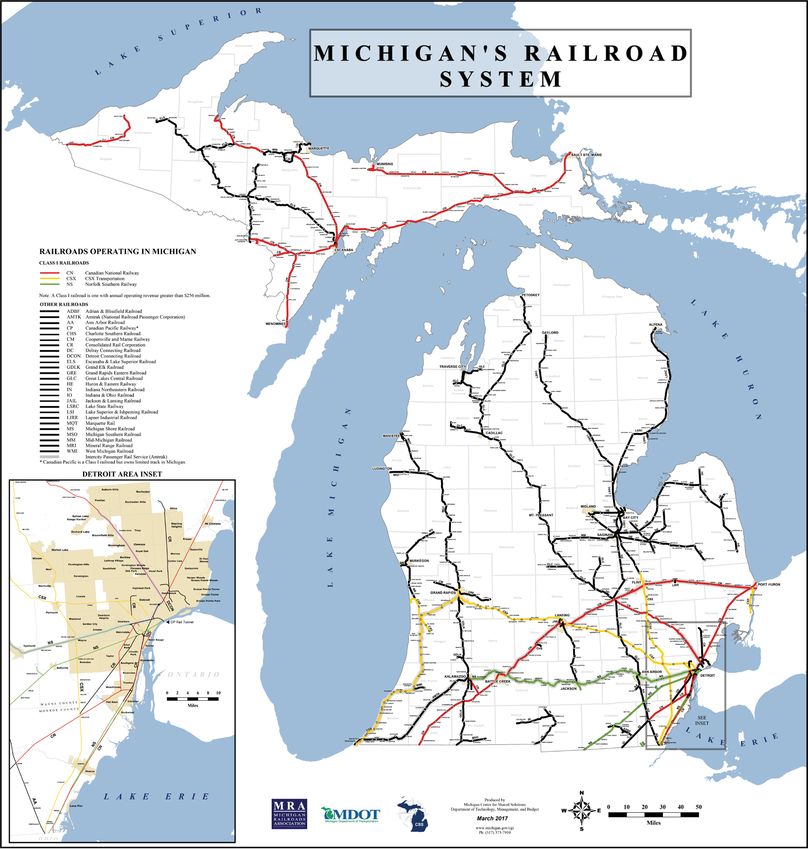
• 665 miles of railroad track (which is managed urgent transportation needs, such as road closures
by private operators), due to storm damage. TSC staff also advise local
residents about state and federal funding op-
• 2,754 miles of nonmotorized trails, and portunities to meet local needs, and provide road
• Four airports. and travel information for construction schedules,
detours, road closures, traffic delays, bad weather
MDOT also administers other state and federal conditions, traffic volume counts, bus and train
transportation programs for aviation, intercity pas- schedules, and state, county and city maps.
senger services, rail freight, local public
transit services, the Transportation Economic Bureau of Bridges and Structures
Development Fund (TEDF), the Transportation The Bureau of Bridges and Structures is responsible
Alternatives Program (TAP), and others. for all trunkline bridges in the state of Michigan,
In addition, the department is responsible for including large, complex, and moveable bridges.
developing and implementing a comprehensive It is comprised of the Blue Water Bridge,
transportation plan for the entire state that includes Office of Structures Preservation and Management,
all modes of transportation. Geotechnical Support Area, Structure Construction
Support Area, and the Structure Design Area.
Highway Operations
MDOT’s Highway Operations is comprised of the Blue Water Bridge
Bureau of Bridges and Structures, Bureau of Devel- The bureau manages and administers the 24/7
opment, and Bureau of Field Services, along with operations of the Blue Water Bridge, which is the
seven regions, the Office of Business Development, busiest publicly administered international crossing
and Office of Operations Administrative Services. in Michigan. Its responsibilities include:
Regions • Resources and staffing toll collections, bridge
MDOT’s seven region offices (Metro, Grand, safety officers, and the necessary support
University, Bay, Southwest, North, and Superior), network to ensure efficient flow of vehicles
each handle transportation-related construction, through the border.
maintenance and programs within their geo- • Essential and complex maintenance capabili-
graphic boundaries. Region offices are managed ties to ensure serviceability of the bridge.
by professional engineers who direct and oversee
the transportation activities and programs of their • Capital outlay, and rehabilitation project
respective regions. development and delivery.
• Management and operation of plaza facilities,
including shared space with MDOT, State
Police, Customs and Border Protection, and
General Services Agency staff.
17 ►Back to Table of ContentsOffice of Structure Preservation • Treatment of existing soils, such as lime
and Management stabilization, and other structural treatments
Responsible for overall safety and management of to ensure support of transportation
Michigan bridge assets. The focus of this office is on structural assets.
bridges already in service and in use by the public. • Recommendations for foundations over
Its responsibilities include: waterways and consideration of scour risks.
• Administration of all bridge management • Foundation recommendations for ancillary
functions, including the Structure Inspection structures, such as freeway signs, high-mast
Program, Structure Load Rating Program, and luminaire light structures, sign trusses, and
structure data collection and management. traffic signal poles.
• Development of structure life cycle data, along • Design of permanent and temporary earth
with tracking and reporting on annual structure retaining structures.
construction contract costs.
• Analysis of slope stability risks, and recommen-
• Deployment of emergency structural response dations for mitigation.
resources, such as the specialized Statewide
Bridge Repair Crew, and other assets to Structure Construction Support Area
respond to high-load hits and other forms of Responsible for providing expertise and guidance to
structural damage to in-service bridges. field offices construction bridge projects. Its respon-
• Fabrication, installation and upgrade of struc- sibilities include:
tural freeway signs, along with priority • Development of unique project specifications
sign replacements. for complex structure construction.
• Deployment of specialized bridge • Coordination with field offices and other
inspection equipment. stakeholders to ensure initial quality of
• Development of statewide capital program structure construction.
strategies, with a focus on asset management. • Modeling of structure stability during
• Management and administration of the overall staged construction and overall
statewide capital budgets for MDOT bridges. constructability recommendations.
• Management of large (bridges greater than • Modeling of construction and permanent
100,000 square feet) bridge, complex, and stresses, and providing recommendations on
moveable bridge inventory. structural detailing, materials, and workmanship
on bridge construction projects.
Geotechnical Support Area
• Shop inspection and compliance with specifica-
Responsible for all subsurface and geotechnical tions for fabricated structural steel and precast,
feature assessment, and recommendations for prestressed concrete bridge components.
treatment of subsurface features to properly
support transportation structural assets. • Assistance in the administration of
Its responsibilities include: construction projects on large, complex,
and moveable bridges.
• Soil boring and subsurface evaluations to
determine feasibility of structure placement.
• Deep and shallow structure foundation
design recommendations.
►Back to Table of Contents 18Structure Design Area • Prepare final engineers’ estimates for all
Responsible for direct force and consultant design trunkline projects let for construction.
of new, rehabilitation, and maintenance bridge • Provide coordination and support for automated
projects. Its responsibilities include: survey and engineering systems and standards.
• Design of all new bridges per current • Maintain statewide survey information and
national standards. surveying infrastructure used by both MDOT
• Evaluation of existing bridges and determina- and non-MDOT entities.
tion of rehabilitation options. • Coordinate the review and implementation
• Developing the designs, details and specifica- of innovative contracting methods to deliver
tions for all bridge design projects in the state. construction project.
• Design of ancillary structures. Development Services Division
• Design of large, complex, and moveable The Development Services Division provides real
bridge projects. estate services, permit and coordination services,
and Local Agency Program services. Duties include:
• Maintenance and administration of in-house,
and proprietary structural evaluation and design • Appraise, establish compensation, and acquire
software packages. right of way for transportation projects.
• Administration of bridge design policies • Provide real estate expertise, including
and procedures. property management and other real estate
technical activities.
Bureau of Development
• Provide relocation assistance and demolition
The Bureau of Development is comprised of two improvement information and support.
divisions: Design and Development Services, as well
as the Environmental Services Section. • Manage and dispose (sale or auction) of excess
property to maximize returns on department-
Design Division owned real estate.
The Design Division provides service and support • Monitor and oversee the appraisal, acquisi-
for the development of plans and specifications. tion, and relocation programs of local units of
Duties include: government to ensure compliance with state
and federal laws.
• Provide design and review for municipal utilities
and roadside development. • Prepare conceptual relocation plans, project cost
estimates, and environmental assessments.
• Conduct quality assurance reviews to
ensure plans and proposals are prepared • Analyze and authorize or deny oversize/over-
in conformance with the standards of the weight permit applications for the movement of
Federal Highway Administration (FHWA), vehicles and/or loads on state trunklines.
American Association of State Highway and • Manage the construction permit program,
Transportation Officials (AASHTO), and MDOT. the utility coordination and accommodation
• Develop and revise manuals, standard plans, program, the highway advertising program,
special details, and other design guidance and the development of trunkline and
documents used in the development of plan/ local agreements.
proposal packages.
19 ►Back to Table of ContentsYou can also read


