The Port Phillip Gathering Place Report 2020 - The City of Port ...
←
→
Page content transcription
If your browser does not render page correctly, please read the page content below

The Port Phillip Gathering Place Report 2020

Figure 1 Peanut Farm Mural.

City of Port Phillip          Gathering Place Report 2020
                                                            1
Background

The Urban South Indigenous Gathering Place Report 2014-15 “Where do You Mob Want to Meet
Up?” 1identified an emerging complexity in relation to establishing a gathering place where
standalone, or dedicated community facilities were in limited supply. The report was carried out in
response to Council’s Reconciliation Action Plan commitment to

                          “support the local Aboriginal and Torres Strait Islander
                          community’s efforts to establish an Aboriginal gathering
                          place in the area.”

                          RECONCILIATION ACTION PLAN 2012 - 2015

While findings indicated that single, or standalone venues had been adopted in outer metropolitan
areas like Hastings (Willum Warrain) and Frankston (Nairm Marr Djambana), there was an argument
for different gathering options when considering inner urban settings like the City of Port Phillip.
This was based on the premise that shared space over a variety of settings may present greater
community benefit.

The function and purpose of community space is influenced by the broad needs of the community
that intends to access that space. Whether the outcome is a contemplative setting like the St Kilda
Botanic Gardens, passive recreation spaces like walking trails, or venues for organised sport and
events like Peanut Farm Reserve, the use will be determined by general demand and uptake. The
2015 study found that ATSI gathering was however equally about self-determination, cultural
learning, social connection and leadership. Gathering not only provided opportunities for people’s
access to services and supports but settings for ATSI people throughout the community to come
together.

At times ATSI gathering will occur in open spaces and shared settings including parks and public
seating areas. At times, open public gathering can be misconstrued as problematic when it occurs in
contested spaces like shopping strips or recreation reserves. This is evident in community requests
to remedy situations where gathering occurs in commercial shopping strips like Fitzroy Street. In
such circumstances the strengths and assets of this community can be negated by fear and
perceptions of safety. Inevitably this can lead to inequity around the right to gather in public space.

1
    The Urban South Indigenous Gathering Place Report 2014-15 City of Port Phillip

City of Port Phillip              Gathering Place Report 2020
                                                                                                          2
Between the 1940s and the 1990s, Cleve Gardens, at the south end of Fitzroy Street, was an
informal gathering place for many Aboriginal people who arrived in St Kilda from across the country.
The setting was synonymous for its toilet block painted in Aboriginal flag and cultural imagery. The
setting was cleared on the eve of the 1996 Australian Grand Prix and a memorial and cultural art
installation were erected by St Kilda Council the following year.

While the Urban South Indigenous Gathering Place Report 2014-15 identified the value of multiple
gathering settings, the report recognised Our Rainbow Place in St Kilda as a key gathering location.
As Star Health will relocate from Mitford Street, St Kilda to the Pride Centre, Our Rainbow Place
will cease as a venue in late 2020.

This report provides gathering options post Our Rainbow Place as well as considers program
settings to assist Covid19 recovery. While continuing to recognise the value of multiple settings for
gathering, this report focuses more specifically around a shared facility (Peanut Farm Pavilion) and
targeted opportunities where impromptu gatherings may occur.

Figure 2 Cleve Gardens St Kilda

City of Port Phillip              Gathering Place Report 2020
                                                                                                        3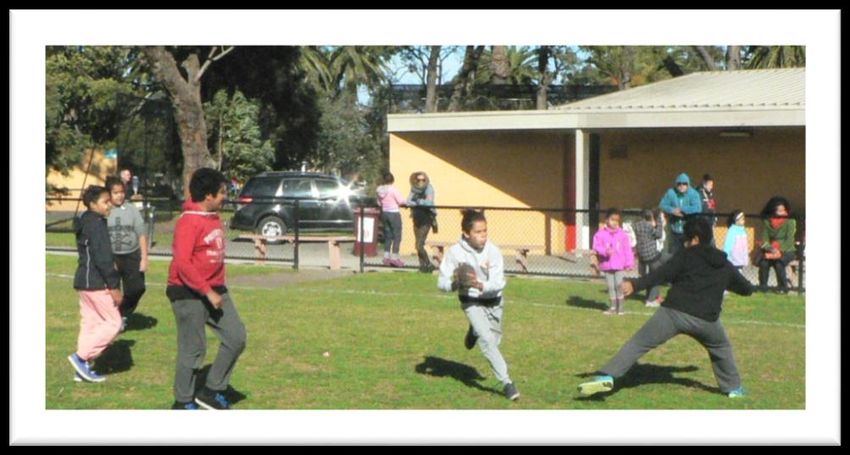
Contents
Background ............................................................................................................................................. 2
Definitions ............................................................................................................................................... 5
Acknowledgement of Country ............................................................................................................... 5
Summary ................................................................................................................................................. 5
Traditional Owners................................................................................................................................. 7
Council Commitment to Reconciliation ................................................................................................. 7
Demographics ......................................................................................................................................... 8
Gathering in Port Phillip.......................................................................................................................... 9
Gathering Versus Meeting....................................................................................................................... 9
Korin Korin Balit-Djak .......................................................................................................................... 10
ATSI People........................................................................................................................................... 11
Service Delivery Aspirations ................................................................................................................. 13
Emerging pressures ............................................................................................................................... 13
Governance ........................................................................................................................................... 15
Peanut Farm Meeting Place ................................................................................................................... 15
Location-based support. ....................................................................................................................... 17
Planning and Evaluation ......................................................................................................................... 18
Funding Proposal for Tied Grant .......................................................................................................... 18

City of Port Phillip                          Gathering Place Report 2020
                                                                                                                                                                4
Definitions

        Aboriginal – Used to refer to the first peoples of Australia (people who identify as Aboriginal
        or Torres Strait Islander).
        ATSI – Aboriginal and Torres Strait Islander
        Indigenous – Used to refer to the Indigenous people of Australia
        LGA – Local Government Area
            • CoPP - City of Port Phillip

Acknowledgement of Country

The City of Port Phillip respectively acknowledges the traditional owners of the Yaluk-ut Weelam
Clan of the Boon Wurrung. We our respect to their elders past and present. We acknowledge and
uphold their continuing relationship to this land.

Council acknowledges Parbin-Ata Carolyn Briggs for her insight and advice, and all those who
participated and contributed in consultation.

Summary

This study proposes a model for a contemporary shared community setting that will support a
meeting place for Aboriginal and Torres Strait Islander people in the City of Port Phillip and outlines
key components required to generate a culturally responsive social and service setting.

City of Port Phillip           Gathering Place Report 2020
                                                                                                          5
2
“A meeting place must be a cultural setting where all people feel safe and welcome
on Boon Wurrung Country”.
The meeting place must
• be a learning place where people are supported to ask questions of culture and
belonging
• provide a setting where all people feel culturally safe and welcome on Boon Wurrung
Country.
• support a “Hand Up not Hand Out” and value “togetherness” through caring for
each other.
• support ATSI people to manage their own lives in a setting of learning.
• be different for each person’s needs, whether it be learning circles, a free feed or
coffee and a chat.
Drawn from consultation with Parbin Ata Carolyn Briggs
2
Yalukit Willam: The River People of Port Phillip, Meyer Eidelson
City of Port Phillip Gathering Place Report 2020
6Peanut Farm Pavilion
Traditional Owners
A Meeting Place that stands on Boon Wurrung Country, must be underpinned by the traditional values
of the land.
Traditional Owners representing the Yaluk-ut Weelam Clan of the Boon Wurrung will be engaged with
regards to cultural leadership and oversight of any dedicated meeting place on Country and the values it
must stand for. This will include provision of advice and endorsement of cultural development programs,
workshops and ceremonial duties.
Current and future Councillors should be encouraged to see the Meeting Place proposal as in-keeping
with Council’s strong commitment to Reconciliation and investment in ATSI programming over many
years.
While Traditional Owners can champion such a project there is also the need for continued “progressive
thinking” from Council.
Drawn from consultation with Parbin Ata Carolyn Briggs
Services consulted in the development of this report concurred that Traditional Owner cultural
leadership will be essential to the design and intention of a meeting place. The City of Port Phillip
Reconciliation Action Plan acknowledges the First People as the Yalikat Willam Clan of the
Boonwurrung and commits to an ongoing relationship with the Traditional Owners.
Council Commitment to Reconciliation
The City of Port Phillip has a long and proud history of Reconciliation, and Aboriginal and Torres
Strait Islander Engagement, from the 1994 Special Needs Report – Koorie Community through to
the 2020 the We-Akon Dilinja Morning of Mourning commemoration on Australia Day. Significant
milestones in this commitment have been:
• 1995- –The appointment of a dedicated Aboriginal and Torres Strait Islander Policy
Officer
City of Port Phillip Gathering Place Report 2020
7• 1997 – The Mayor’s apology to the Stolen Generations and the formal Statement of
Commitment to Indigenous Australia
• 1998 –Council endorsed development of a Memorandum of Understanding (MOU)
with the local Indigenous community
• 1999 –Council establishes and launches MOU with the local Indigenous community
• 2002 – The establishment of the Indigenous Advisory Committee and the ‘Bless
Your Blak Arts’ Festival’, is hosted as part of the St Kilda Festival
• 2005 – First Yalukit Willam Ngargee Festival held
• 2008 – CoPP establishes MOU with local Indigenous community, which includes
service agreements with the Boon Wurrung Foundation, Our Rainbow Place, and
Port Phillip Citizens for Reconciliation.
• 2011 – First Reconciliation Action Plan (RAP) is endorsed.
• 2017-– Council implements its first Reconciliation Action Plan
• 2019-2021 – Three-year funding deed between CoPP and Boon Wurrung
Foundation agreed to – for the provision of Aboriginal cultural heritage advice, and
input into future Council policies, strategies and reviews.
• 2020 – We-Akon Dilinja morning of mourning ceremony on Australia Day in January
developed by the Boon Wurrung Land and Sea Council,
Demographics3
In the 2016 Census, Aboriginal and Torres Strait Islander people made up 0.4 per cent of the Port
Phillip population. The Census saw the number of ATSI people residing in the City had increased by
39 per cent from 282 to 392 people. Of the ATSI people residing in Port Phillip 32 per cent (125)
lived in St Kilda, 17 per cent (68) lived in Port Melbourne.
38 per cent (149) of ATSI people lived alone and 24 per cent (94) were in households of families
with Children. 54 percent of ATSI people were privately renting, 21 percent resided in social
housing and 21 per cent were home owners. 37 percent of wage earners were in the lowest weekly
income quartile range of up to $309 per week.
When looking at workforce statistics 64 percent of all ATSI people of working age are working full
time, 23 per cent are working part time and 13 per cent were unemployed.
3
Australian Bureau of Statistics Port Phillip (LGA25900) 2016 Census Population
City of Port Phillip Gathering Place Report 2020
8Gathering in Port Phillip
In 2014-15 the City of Port Phillip undertook an Urban South Indigenous Gathering Place study. The
study explored the concept of ‘gathering’ by Aboriginal and Torres Strait Islander people in an inner-
city environment and identified the importance of partnership and shared goals in relation to the
advancement of health and wellbeing outcomes through integrated and culturally responsive service
settings.
The study concluded that a model of gathering had developed in CoPP that differed from outer
urban gathering place models but was still capable of supporting health and wellbeing outcomes for
the ATSI community. This model was dependent upon all stakeholders being responsive to the
needs of ATSI community and capable of delivering community gathering across multiple sites. The
study emphasised an important connection between community meeting, culturally sensitive settings
and improved health
Gathering Versus Meeting.
In considering gathering opportunities for ATSI community in 2020, Parbin Ata Carolyn Briggs
recommended value in the use of the term “Meeting Place” rather than a “Gathering Place”. The
emphasis being that “Meeting” represents coming together with purpose around cultural, social and
resilience-focused engagement while “Gathering” suggested a more passive attendance.
Community Meeting
In keeping with the vision proposed by Parbin-Ata Carolyn Briggs the concept of meeting represents
community coming together for a shared reason and common good. This may include cultural
learning, socialisation, sport and recreation, celebration, men’s business, women’s business, sorry
business or simply to have a feed.
Culturally Sensitive Places
Culturally sensitive places foster trust and belonging while supporting connection to people, services
and supports. Dedicated places for Aboriginal people can assist in strengthening cultural identity and
visibility within the broader community. Culturally sensitive places can form the foundation for
meaningful networks that extend beyond the physical setting.
Improved Health
From a health and wellbeing perspective gathering can be a mechanism for evolving health outcomes
through integrated services focused upon support, trust and engagement.
City of Port Phillip Gathering Place Report 2020
9Culturally
Community Improved
Sensitive
Meeting Health
Place
Figure 3 Gathering, Place and Health Logic
Korin Korin Balit-Djak
Aboriginal health, wellbeing and safety strategic plan 2017–2027
Koolin Balit Victorian Government Strategic Directions for Aboriginal Health 2012-2022 evaluation
findings (DHHS 2015) identified specific success factors of ATSI gathering place models. The
evaluation, part of the Korin Korin Balit-Djak Aboriginal health, wellbeing and safety strategic plan
2017–2027 spoke specifically of the value of programs where communities self-determined their
solutions and programs. Services were identified as stronger when they were culturally responsive
and centred around personal relationships. The evaluation specifically noted success factors across
the themes of community, people, place and programs.
Community People Place Place
•Ownership •Community •Location, •Flexibility,
•Drive, champions, •Historical •Local priorities
•Engagement, •Elders, context, and needs,
•Empowerment, •Motivated •Regional •Partnerships
•Dedicated staff individuals service context,
•Sense of place
Figure 4 Features of successful Gathering Places
The Koolin Balit 4evaluation found that Gathering Places have a substantial impact on improving the
health and wellbeing of the community members who attend their sites from the social, cultural,
emotional and physical holistic view of health.
4
Koolin Balit: Victorian Government Strategic Directions for Aboriginal Health 2012-2022
City of Port Phillip Gathering Place Report 2020
10The Korin Korin Balit-Djak further commits Victorian Government support for the value of ATSI
gathering through
• the sustainability of existing Aboriginal organisations and Gathering Places,
• the establishment and sustainability of Aboriginal Gathering Places in locations of
most need in partnership with Aboriginal communities and
• the establishment of a supported network of Aboriginal Gathering Places to provide
support for their local Aboriginal communities
ATSI People
The success of the Meeting Place will always be dependent upon the engagement of ATSI
people. This might include the role of Indigenous intermediaries and connectors and settings
that prioritises multi-generational engagement, skills development and cultural pride.
The Meeting Place should aim to engage ATSI people who are residents and workers in the City
and those people that are passing through. This will include families, children, young people,
elders and people experiencing hardship or rough sleeping in the area
Drawn from consultation with Parbin Ata Carolyn Briggs
City of Port Phillip Council has a long-standing commitment to meaningful engagement with ATSI
people. Council employ an Indigenous Policy Officer, ATSI Community Broker, Indigenous Festivals
& Events Officer and Indigenous Arts Officer. Council also hosts a regular ATSI services forum and
funds ATSI gathering activities. The City of Port Phillip is in a strong position to foster and support
the engagement and participation of a broad cross section of ATSI people.
Figure 5 Marngrook Family Day Peanut Farm 2015
City of Port Phillip Gathering Place Report 2020
11Current Context for ATSI Services
ATSI services within the City of Port Phillip are delivered across several organisations and dedicated
portfolios. Services meet regularly through local planning forums like the ATSI services group. A
snapshot of services operating in the City is presented below. These services are provided across
different venues and settings.
Table 1. ATSI program snapshot City of Port Phillip 2020
Star Health Galliamble Winja Access Events
Ulupna,
Health
ATSI Youth Intense Case Parenting Skills ATSI Health DayWe-Akon
programs Management Outreach Dilinja
Koori Women’s Cultural Programs Women's Health Hygiene Yalukit Willum
Group and Skills Health and and shower Ngargee festival
development Nutrition station (CoPP),
Elders group Exercise and Abuse and Friday Street NAIDOC
Health Programs Group Therapy Barbeque Week
Reconciliation
Week
Mabo Day
Wominjeka BBQ Alcoholics Self Esteem and Urban South
at Veg out Anonymous and Anger Local
Community Narcotics Management Indigenous
gardens (CoPP) Anonymous Network
attendance
Our Rainbow Self Esteem and Family and The Aboriginal
Place Anger Domestic Men’s Circle
Management Violence Gasworks Park
Family and
Domestic
Violence
ATSI Youth Individual and Alcoholics and Port Phillip 3
programs Group Narcotics on 3 ATSI
Counselling Anonymous Basketball
meetings tournament
Men's Talking Individual and Phillip Citizens
Circle Group for
Counselling Reconciliation
Treaty Forum
City of Port Phillip Gathering Place Report 2020
12Service Delivery Aspirations
Historically, ATSI people have not engaged well with many mainstream services. Accessibility
can be hindered by culturally unwelcoming service models. This can mean ATSI people don’t
have equal access to health services
The meeting place will provide an opportunity for targeted services already evident in the work
of agencies like Star Health, Access Health and Galiamble. Services like Our Rainbow Place BBQ
prioritise connection of staff to client which supports referrals.
The Meeting Place must avoid operating from a deficit model where marginality is the key
driver for service planning and engagement. A strength-based asset building model should be
championed
Drawn from consultation with Parbin-Ata Carolyn Briggs
Partnering agencies have discussed the short and long-term benefit of gathering to the delivery of
services for ATSI people. Establishing a meeting place in St Kilda will immediately alleviate the loss of
Our Rainbow Place as well as provide further potential for establishing additional programs and
activities. For example. services noted an immediate need for programs around women’s business,
Men’s business, elder’s groups and youth focused wellbeing.
Services described an aspirational outcome being a place for the benefit of all ATSI people; from the
most marginalised through to those who live or work in the City
Emerging pressures
Since the 2015 report several factors have emerged that could impact on the multiple venue ATSI
service model in Port Phillip.
Transient Populations
ATSI people who are transient can become more visible when people gather socially in small groups
in public settings. At times, such gatherings have been misconstrued as homelessness or vagrancy by
some residents resulting in requests for response or intervention.
Our Rainbow Place.
City of Port Phillip Gathering Place Report 2020
13Our Rainbow Place operates every second Thursday from a purpose build cottage at the rear of the
Star Health in Mitford Street St Kilda. Over the past 14 years Our Rainbow Place has been a
cornerstone of engagement and health focused partnership with ATSI people. Plans for relocation of
the service will see a loss of this key location in the multi-venue gathering model.
ATSI Rough Sleeping
A street count in February 2018 found that of the 91-people sleeping rough in the City, a third
identified being of Aboriginal or Torres Strait Islander descent.
At the time of writing this report 105 people had been recorded as sleeping rough in the City of
Port Phillip over the last 90 days. Of these, 19 (18%) were of Aboriginal or Torres Strait Islander
descent.
Limited housing options
While the City of Port Phillip has historically been known for a high number of rooming house beds
and crisis accommodation there has been significant depletion of housing options over recent years.
The decline in rooming house accommodation has seen the loss of more than 270 beds since 2017.
Because of these same pressures most people forced to sleep rough are at best on a housing waiting
list or referred to temporary emergency accommodation
While the Victorian Government’s response to Covid19 has seen an increase in emergency short
term housing options. Aboriginal and Torres Strait Islander people remain overly represented in the
City’s rough sleeper count.
Covid19 impact on service delivery
Feedback through outreach services has identified Covid19 restrictions are impacting strongly on
ATSI people’s wellbeing around social connection. This is especially significant to people currently
rough sleeping who have been impacted by the cessation of programs and have been required to
access short term emergency accommodation outside the City.
Cultural days of significance.
The Covid19 pandemic and subsequent declaration of a State of Emergency has had major
impact on the local ATSI community. The public health crisis has meant that Council
buildings and grounds are subject to social distancing restrictions and Council run events
for significant recognition including Reconciliation Week, Mabo and Naidoc week have
been cancelled.
ATSI Aboriginal Men’s Circle
City of Port Phillip Gathering Place Report 2020
14The ATSI Aboriginal Men’s Circle previously held weekly at Gasworks Arts Park has
ceased permanently. The program delivered non-clinical and peer-support focused on
personal development and respect for culture.
Meal sharing and Social support
Local ATSI services have postponed delivery of Our Rainbow Place, Health Time and
Womanjeka and Access Health Barbeques owing to requirements around social distancing
Social distancing,
Local ATSI outreach services note a tendency for community members to return to the street to
gather in groups. While reflecting a genuine desire to connect socially, such gathering has raised
concerns around potential susceptibility to the covid19 virus as well as resulted in the community
concerns around breeching of State laws and community transmission.
Governance
The Meeting Place provides the opportunity to pull together funds and activities that currently
generate ATSI programs in the City. The governance model could support broader
accountability of ATSI specific funds and services in the City to ensure the greater good is
reaching the needs of local ATSI people
While Traditional Owners, through the Boon Wurrung Foundation and the Boon Wurrung Land
and Sea Council have an overarching role in relation to the land, the people and cultural
leadership Community must be engaged to guide the development programs and governance
of the Meeting Place.
Drawn from consultation with Parbin-Ata Carolyn Briggs
Services highlighted Governance as a priority for early planning and prefaced the need to bring the
right people to the table. Governance must understand cultural aspects of such a setting therefore
links to the traditional owners is essential.
Peanut Farm Meeting Place
Feedback received in developing this report indicate value in exploring both a physical setting for a
meeting place as well as looking at discreet locations to engage community.
City of Port Phillip Gathering Place Report 2020
15Peanut Farm Pavilion: A physical setting for a meeting place
St Kilda (Euro-Yroke) has cultural significance to the Yalikat Willam Clan of the Boon Wurrung that
is celebrated through public art murals in the precinct.
While Peanut Farm Pavilion in St Kilda has been identified as a preferred shared-space location it
remains a venue that will be shared with other groups. Contributors to this study have indicated the
importance of
• ATSI people and services being welcome in this space
• Regular and reliable access to the centre
• Availability of recreation spaces, meeting rooms, storage, food preparation areas and
showering facilities
• ATSI services and programs delivered in partnership
Peanut Farm has previously been used for ATSI gathering including health programs, Local Area
Network Meetings and Family events. It is also home for the St Kilda City Saints who have a strong
history of supporting and celebrating Indigenous players.
The location of the Peanut Farm Pavilion is close to transport, walking distance from Our Rainbow
Place, adjacent to the Womanjeka Barbeque venue and is an area currently serviced by free food
vans. The Peanut Farm reserve is also the setting of the Homeless Memorial.
Feedback from stakeholders indicate logistical aspects like shared space, timing of activities and
events and storage will be important to consider. It is also important that the setting remains a
shared space for ATSI services and not a venue that prioritises or advantages any one service.
Program potential centres around
• Fortnightly Our Rainbow Place BBQ, funded by CoPP, staffed by Star Health Aboriginal
team, now held at 18 Mitford, St Kilda – looking for new venue
• Monthly Urban South Local Aboriginal Network, organised by Aboriginal Victoria, staffed by
AVs Indigenous Community Broker
• Port Phillip Citizens for Reconciliation (PPCfR), funded by CoPP, staffed by members of
PPCfR –currently looking for new venue
• Homeless outreach base for staff from Access Health, Sacred Heart Mission, Launch Housing
and Ngwala Willumbong,
• Social connection and support to reduce rough sleeping in the City.
• ATSI 3 on 3 Basketball Competitions, and a netball equivalent.
• St Kilda City Saints smoking ceremony and welcome to country for Indigenous Round.
City of Port Phillip Gathering Place Report 2020
16• Reconciliation/NAIDOC Week events in City of Port Phillip
• Programs such as the didge for young indigenous men to support lung health and
reduce/remove smoking of tobacco and other drugs
Peanut Farm Pavilion: Availability
Peanut Farm is a shared venue with potential access weekdays between until 3.00 pm. While access
to change rooms is currently limited due to Covid19 support workers (Working For Victoria) using
these rooms as a base, the Community Room and kitchen is currently available weekdays until
3.30pm.
Sports clubs use the pavilion and grounds from 3:30pm to 8:30pm each day once pavilion access is
allowed by State restrictions).
Figure 6 Homeless Memorial
Location-based support.
Cleve Gardens sits on the Corner of Fitzroy Street and the Esplanade in St Kilda. The location was
an informal gathering place where Aboriginal and Torres Strait Islander people would meet. While
informal gathering ceased in 1994 with the demolition of the Cleave Garden toilet block, a memorial
to Robbie Hunter (one of the original “Parkies” who met on the site) remains. Cleve Gardens is
currently an evening venue for free food vans.
Local services note that at the time people relocated from Cleve Gardens to O’Donnell Gardens St
Kilda which remains a discrete meeting place. Access Health continue to provide outreach services
and programs to ATSI people who frequent this location
Both Cleve and O’Donnell Garden settings are within walking distance of areas like Fitzroy Street
and Acland Street strip shopping areas. This proximity provides an opportunity to generate
movement from contested space into more social settings.
City of Port Phillip Gathering Place Report 2020
17ATSI service providers have discussed the potential of such settings for more informal gatherings
around food, social connection and health support. This is especially important at a time of Covid19
restrictions. Location based support will trial informal gathering through program outreach work
focused on Covid19 education, engagement, social connection and culture.
Planning and Evaluation
Effort must be made to understand the type of service and learning opportunities to best
advantage ATSI people. Success should be measured incrementally through the experience of
those who access the centre and programs Meeting place programs should focus on tangible
benefits for community for example:
• Linking local artists to industry assistance and skills development and greater
exposure.
• Bringing programs to people in community settings "Where they are at".
• In such models ‘word of mouth’ should generate greater engagement
• provide “scaffolding’ around young people to support health and hygiene, cultural
understanding, sport and recreation and voice.
Drawn from consultation with Parbin-Ata Carolyn Briggs
Planning and evaluation of ATSI programs will be strengthened through strong community
connections, established partnerships and respectful and progressive relationships with the
Traditional Owners. This commitment will be identified in Council’s Reconciliation Action Plan.
Funding Proposal for Tied Grant
Total sought: $150,000
• One-off consultancy fees to the Boon Wurrung Foundation to support Council to establish
culturally appropriate, safe and relevant gathering places $15,000
• 0.8 FTE Indigenous Development Officer to support staffing the places when open and
program location based gathering work as part of Covid recovery $90,000
• Rental of the Peanut Farm Pavilion and utilities for 1 year $15,000
• Project establishment and co-ordination of the initiative for 12 months $27,500
• Rental of Basketball courts $65.00 per week per term $2,500
City of Port Phillip Gathering Place Report 2020
18References
1. The Urban South Indigenous Gathering Place Report 2014-15 City of Port Phillip: Daniel Carter
2. Meyer Eidelson: Yalukit Willam: The River People of Port Phillip, Published by the City of Port
Phillip, 2014
3. Australian Bureau of Statistics Port Phillip (LGA25900) 2016 Census Population and housing:
Aboriginal and Torres Strait Islander Peoples (Indigenous) Profile.
4. Koolin Balit: Victorian Government Strategic Directions for Aboriginal Health 2012-2022
State of Victoria, Department of Health 2012 Authorised and published by the Victorian
Government,
City of Port Phillip Gathering Place Report 2020
19You can also read


