The Real Meal Deal How family restaurants and attractions are damaging our children's health - Soil Association
←
→
Page content transcription
If your browser does not render page correctly, please read the page content below
The Real Meal Deal
How family restaurants and attractions are
damaging our children’s health

in partnership with
2
Contents

                                            3    Foreword
                                                                                                                                     1

                                            5    Executive summary: the state of children’s food at restaurants
                                                 and tourist attractions

                                            11   Introduction
                                            15   Restaurants: headline findings
                                            21   Resturant meals to avoid and meals to enjoy
                                            23      What parents said
                                            23      The right to know
                                            25      Nothing homemade
                                            29   Tourist attractions: Junk Food Villains versus Good Food Heroes
                                            33   A call to action
                                            33      Ten steps to a healthier and happier restaurant meal
                                            34      Eight steps to a healthier and happier day out

                                            37   Appendix 1: Methodology and school meal standards
                                            41   Appendix 2: Children’s menus analysed
                                            41   Appendix 3: Assessment criteria for tourist attractions

                                            47   References

                                                 Figures and tables: Restaurants
                                             6   Figure 1    Restaurant ranking on nutrition, food sourcing, food policy and
                                                              information provision
                                            16   Table 1     Children’s menus assessed against school food-based standards
Written by Joanna Collins                   17   Figure 2    Children’s menus assessed against school nutrition-based standards
with additional contributions from          18   Figure 3    Average non-milk extrinsic sugar content of children’s menus
Larissa Chambers (on tourist attractions)
                                                             compared to school meal nutrition standards
Nutritionist Annie Seely BSc RPHNut
                                            18   Figure 4    Average saturated fat content of children’s menus compared to school
Designed by Ben Millbank
                                                              meal nutrition standards
Researchers Larissa Chambers
and Nekolina Griffin
                                            21   Figure 5    The three least healthy children’s meals based on fat, sugar and salt
Report managed and edited by
                                                              levels
Emma Noble and Jodie Welton                 23   Figure 6    Parents’ views on the surveyed restaurants
All trademarks remain the property of       40   Table 3     Restaurant ranking: factors other then nutrition
their respective owners
                                                 Figures and tables: Tourist attractions
                                            30   Table 2     Junk Food Villains versus Good Food Heroes: the rankings
2

Foreword

                                              There is much to celebrate in the changes happening across the country
                                                                                                                               3
Our survey                                    to improve the quality of children’s school meals. Sadly, our survey of
                                              children’s food in restaurants and at visitor attractions reveals that this
of 10 popular                                 progress is being undermined by the continuing prevalence of junk be-
                                              ing served up and excused as ‘treat food’ for children. Every one of the
restaurant                                    major restaurant chains we surveyed failed to come close to meeting the
                                              minimum standards that have been set for school meals.
chains found                                  Eating out is no longer an occasional treat. It’s becoming a weekly fixture
                                              for many families, a growing number of whom don’t have a dinner table
that not one                                  at home any more. The companies that are benefiting from this huge
                                              and growing market need to start taking their fair share of responsibility
came close to                                 for promoting healthy eating to a generation of children who risk dying
                                              before their parents, thanks to an epidemic of obesity and diet-related
meeting the                                   diseases. Parents who want something better for their children urgently
                                              need restaurants and tourist attractions on their side.
new minimum                                   Leading restaurants and destinations like Center Parcs, the National Trust
school meal                                   and healthy fast food chain Leon show that food for children can be
                                              tempting, nutritious and affordable. Crucially, their policy of serving fresh,
standards                                     seasonal produce and quality extensively reared or organic meat delivers
                                              a double dividend for nutrition and the environment. Tackling the impacts
for children’s                                of our current food system on human health and the climate is a huge
                                              cultural challenge. Much of this needs to start at home. But if unhealthy,
meals.                                        poor quality, processed food continues to be the norm in restaurants and
                                              on family outings, parents will have a hard time convincing their children
                                              that healthy food can be a treat too.
                                              The Soil Association’s work is based on the principle, put forward by our
                                              founder Lady Eve Balfour, of the crucial link between human health and
                                              food production methods. This report builds on earlier work by the Soil
                                              Association and Organix, including their ground-breaking 2003 Food
                                              for Life report on the state of school meals, and by Organix through its
                                              Carrots or Chemistry? series of reports on children’s diets and health (see
                                              back cover for more details). Both our organisations continue to campaign
                                              vigorously for urgently needed improvements to the quality of food being
                                              fed to our nation’s children, and to reconnect children to where food
                                              comes from, how it is grown, and how it is cooked.

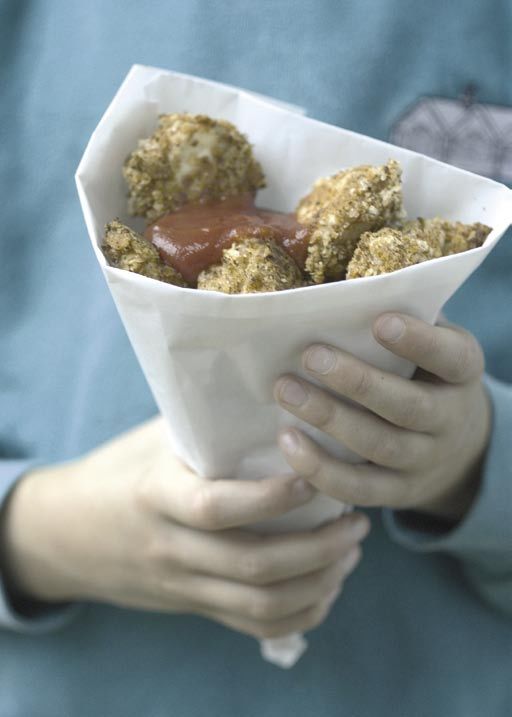
Opposite page: Fast food made good. Healthy
takeaway snacks, such as these real chicken
                                              Peter Melchett                          Lizzie Vann
nuggets, are a practical alternative to       Policy Director                         Founder and Managing Director
processed, pre-made meals (recipe page 26).   Soil Association                        Organix Brands plc
4

Executive summary:
                                                         The state of children’s food
                                                         at restaurants and tourist
                                                         attractions

                                                         This report takes a timely look at what’s on the menu for children at 10
                                                                                                                                            5
By 2020, over                                            popular family restaurant chains and 14 major visitor attractions.
                                                         The first section of the report puts the spotlight on family restaurants,
25% of children                                           and assesses how their children’s menus compare with the new nutrition
                                                          standards for school meals. We rank the restaurant chains from 1 to 10,
will be obese                                             with some surprising results. We also expose the degree to which this
                                                         ‘treat’ food is pre-proces t ly made, and call for more attention to sourcing
and children                                              better quality, local or organic ingredients.

will have a                                              The second section looks at the food on offer at the 14 most visited tour-
                                                         ist attractions in the UK, from Blackpool Beach to the Eden Project. We
shorter life                                             separate out the Good Food Heroes from the Junk Food Villains, according
                                                         to how easy or possible it is for a concerned mum to find healthy treats
expectancy                                               with children in tow.
                                                         Finally, we issue a call to action. Restaurants and tourist attractions need to
than their                                               raise their ga me and give parents the healthy and tasty options they want
                                                         for their children. We set out 10 steps to a healthier and happier restaurant
parents.                                                 meal, and eight steps to a healthier and happier day out.

                                                 The case for change
                                                         The British Medical Association predicts that by 2020 over one quarter of
British Medical Association (2005), Preventing
childhood obesity, BMA, London
                                                         children will be obese and that children will have a shorter life expectancy
                                                         than their parents.1
                                                         Radical changes are desperately overdue. Thanks to the media spotlight
                                                         shone on the school meals scandal by Jamie Oliver, building on years of
                                                         work by the Soil Association, Organix and many others, school food is
                                                         finally on the road to reform. But, to date, almost all other major
                                                         providers of children’s meals are simply continuing with their un-
                                                         healthy business as usual. A quarter of families now eat out at least
                                                         once a week, with much of the market captured by a handful of popular
                                                         restaurant chains. In the school holidays, millions of parents grab lunch for
                                                         their children at the UK’s iconic tourist attractions. ‘Treat’ food needs to get
                                                         healthier, now that such treats are a frequent part of children’s diets, with
                                                         the power to influence every child’s notion of what is good to eat. Parents
                                                         urgently need restaurant chains and tourist attractions on their side.

                                                 The research: what we did
                                                     g   We asked an expert nutritionist to analyse children’s menus from 10 popu-
                                                         lar restaurant chains between April and June 2006, and a researcher to
                                                         survey the food choices on offer at 14 major visitor attractions in England
                                                         and Wales.
g We ranked the restaurant chains from 1 to 10, based on how their food
compared to the government’s new minimum standards for school meals,
by carrying out a nutritional assessment and by looking at how food was
sourced and prepared.
g We also asked parents to rate the restaurants from their own experience.
g We ranked the tourist attractions according to the availability of healthy
food and drink and the prevailing food culture.
This analysis represents a snapshot, based on the information supplied
by restaurant staff about the menus at the time of the survey in June
2006. Of course, menu improvements could have been made since we
carried out the research and much depends on the choices made by
parents and their children. However, our objective was to assess what
the restaurants and attractions were doing to make it possible, easy and
attractive for families to make those healthier choices
6 Figure 1 Restaurant ranking on nutrition, food sourcing, food policy and
information provision (out of a possible 30 points)
30
28
26
24
22
20
Total points (out of possible 30)
18
16
14
12
10
8
Key 6
Food-based standards met (/9)
4
Nutrient-based standards met (/14)
Information provision (/3) 2
Additive policy (/2)
Local or organic items (/2) 0
See table 3 on page 40 for an explanation
’s
r
r
re
t
s
e
s
e
f
te
te
Hu
e
o’
el
ug
rs
ay
ay
Ch
nk
ea
es
nd
Ho
r id
Ro
sF
a
rv
fu
ef
Na
tl e
zz
IF
ry
er
Ha
Be
fé
ar
Pi
L it
ng
TG
ew
Ca
G
Hu
Br
Best WorstJunk food is king in the restaurant
Not one restaurant chain came close to meeting the new minimum school
meal standards for meals. Although TGI Friday’s came top of the rankings
overall, this only showed up the woeful nature of the competition. The
average children’s meal at TGI Friday’s, after all, has double the school meal
maximum saturated fat content. Not one chain passed the fat and sugar
tests, spelling trouble for parents worried about obesity or hyperactivity.
Processed meat products and ‘have-as-much-as-you-like’ ice cream and
fizzy drink promotions are still the norm. The average meal at Nando’s
contains eight teaspoons of added sugar, taking a primary school child
very close to the recommended maximum for a whole day.
Café Rouge came bottom of the rankings, thanks to a near com-
plete absence of fruit and vegetables on their children’s menu. Their
average children’s meal provided only 9% of the vitamin A and 14% of
the fibre needed by a primary school child each day. Half the restaurants
failed to provide a minimum of fruit and vegetables.
7
Nothing is Our rankings are very similar to the judgements made by parents. They
homemade, rightly gave Harvester their biggest thumbs up on nutrition, perhaps
thanks to the absence of chips and fizzy drinks on the menu, and the free
except the access to the salad bar. Little Chef fared worst in parents’ eyes, with good
justification. Some, positive steps are being taken in a handful of the chains,
odd bit of in terms of salad provision, chip substitutes and increased fruit and fruit
juice provision. But often these are still upstaged by Mega Grills and Candy
grilled chicken. Mania puddings, designed with children’s health very far from mind.
The rankings were not only based on nutrition but also on nutritional
Pasta comes information at point of sale, additive policies and food sourcing.
pre-cooked The redundant chef: nothing is homemade
and frozen. The only activity behind the scenes in the kitchens at these restaurants is
the opening of packets and the reheating of frozen ready meals. Nothing
is homemade, except the odd bit of roast beef and grilled chicken. Pasta
comes pre-cooked and frozen. Mashed potato, for the most part, is frozen
and re-heated. Parents might well wonder why they didn’t just stay at
home with a ready meal.
Equally, in restaurant chains nothing is locally sourced, menus do not reflect
the seasons, and you only get organic if you’re still on baby food. The
opportunity to promote the double dividend for health and sustainability
that comes from fresh, well sourced food is not being taken.
Parents’ right to know?
Parents have a right to know what they are feeding their children. But
parents trying to make well informed food choices for their child when
eating out face an uphill battle. None of the restaurants analysed have a
policy on additives. In fact, no nutritional information at all could be found
in the restaurants, from menus or staff, apart from passing references to ‘5
a day’ at TGI Friday’s and Brewers Fayre. Since we carried out this research
Hungry Horse has introduced some nutritional advice on its menus. Only
three of the restaurants supplied website advice. McDonalds – although
not included in our survey – does set a good example on transparency for
these restaurants to follow, with detailed nutritional information available
in their restaurants.
Hungry Horse promoted their chicken and vegetable nuggets as ‘added
vitamins’ but staff at restaurants and head office were unable to tell us
what these vitamins were. No information was available on where the food
actually came from. Openness is far from being the policy at any of theserestaurants. After repeated evasion, our researchers had to go under cover
as mystery mums or nutrition students to get any useful information.
Children’s food can be tasty and healthy
Leading examples such as new restaurant chain Leon, and visitor attrac-
tions Center Parcs and the National Trust, show that it is possible to make
fresh, well sourced, healthy food available for families in double-quick
time and at an affordable price. The myth that healthy food cannot be a
treat for children is turned on its head. It is time that the restaurant chains
and tourist attractions in this survey raised their game in line with these
and other leading players, and took their fair share of responsibility for
children’s health and well-being.
We are not arguing for the ban on unhealthy junk food to be extended
outside schools. Rather, we want to see healthy choices, and clear informa-
tion on which to base those choices made universally available to parents.
‘Treat’ food for children really can be tempting, affordable and nutritious
8
Healthy ‘treat’ all at the same time, and get children into the good habits they’ll need for
a happy, healthy life.
foods for
Tourist attraction food: taking our children for a ride
children can The food in our popular tourist attractions is no better. Little has moved on
get them into from the situation reported by the Which? Day Chipper survey in 2004.2
Hot dogs, burgers and chips still dominate the choice on offer, and it is
the habits challenging to find a portion of vegetables if you don’t care for mushy
peas. A parent on the look-out for a piece of fresh fruit at Flamingo Land,
they’ll need New MetroLand, Great Yarmouth Pleasure Beach or Camelot Theme Park
needn’t bother: there’s none to be found. And in eight other attractions it
for a healthy, took our researcher at least an hour’s dedicated searching to find any.
Fizzy drinks are heavily promoted via meal deals and bottomless refills,
happy life. whereas healthy drink options like pure fruit juice and milk are hard work
to find at most of the attractions visited and seemingly unavailable at
Camelot Theme Park. What are on offer are new branded ‘juice’ drink
products like Fruit Shoots and Ribena Light. The marketing behind these
drinks even extends to branded rides, such as Blackpool’s ‘Fruit Shoot’ and
Chessington’s ‘Ribena Berry Bouncers’.
Dedicated children’s food is as bad as the rest, with no healthy drinks,
fruit or portions of vegetables to be found in any of the kid’s menus, deals
and lunch boxes at Thorpe Park, New MetroLand, Oakwood or Camelot
Theme Park.
The Eden Project and the Tower of London are the leading exceptions
to this grim rule. These hugely popular destinations prove that millions
of parents do buy quality healthy food for their children when it is made
available to them.Stop ‘eat as much as Provide a wide range
you like’ promotions of tasty healthy
on puddings and choices, promoted to
sugary drinks children on the menu
Enable and Increase the Incorporate 9
encourage children availability and vegetables in the
to have half-portions desirability of fresh main dish, rather
of adult meals fruit and vegetables than as a side order
Connect menus with Always provide free Introduce local and
the seasons water organic food, and
cut out additives
Raise ingredient Use more non-meat
quality, especially protein, like oily fish
meat.3 (sustainably sourced),
beans and pulses10 Provide free water at Make healthy snacks Stop fizzy drink
all outlets and pure fruit juice promotions via
cartons available in meal deals and
all vending machines bottomless refills
Include fresh fruit, Ensure healthy Improve ingredient
salad and juice choices like salads quality and cooking
cartons in children’s or fresh savoury method of popular
menus and lunch foods are readily food eg sausages
boxes available at and burgers
attractions
Introduce organic Keep portion sizes
and local food items healthy: cut out king
into menus and -size and unhealthy
lunch boxes eat-as-much-as-you-
can dealsIntroduction
Parents everywhere are waking up to the fact that the food choices we
11
“The hardest make for our children can affect their chances of future health and hap-
piness. The number of clinically obese children has almost doubled in the
part is when last decade and the trend is accelerating. The British Medical Association
predicts that by 2020 over one quarter of children will be obese and that
we are out. children will have a shorter life expectancy than their parents.4 Already,
obesity is estimated to affect almost one in five of two to 15 year-olds.5
Food in It’s not just children, of course. People of all ages are overeating and
under-exercising. High calorie, fatty, sugary junk food is cheap and it’s
children’s play become the norm.
areas is awful But our children are at particular risk. UK children have got fatter faster
than anywhere else in Western Europe. Critically, obese teenagers are
– I would not 15 times more likely to be obese as adults,6 storing up for themselves
what the Chief Medical Officer, Professor Sir Liam Donaldson, has called
feed it to a a ‘time-bomb’ of chronic health problems in adult life, like heart disease,
diabetes, cancer and arthritis. For the first time ever we are seeing furring
dog.” of the arteries in teenagers, a risk factor for heart disease. Already, the
number of children developing Type 2 diabetes – which normally affects
overweight people in middle age – has risen ten-fold in the past five years.7
A high intake of sugary soft drinks is now being implicated with increased
obesity risk.8, 9, 10
Donna Air, Air Miles, Living Earth (2006) Diet-related diseases are already costing the NHS an estimated £4 billion
a year.11
School meals and the Food for Life campaign
The dismal role that school meals were playing in this debacle was
highlighted in 2003, with the launch of the Food for Life report by the
Soil Association and Organix and the subsequent campaign by the Soil
Association. Its headlines reached an audience 14–million strong. In 2005,
their work with schools inspired Jamie Oliver’s hugely influential TV series,
Jamie’s Dinners. Alongside the Food for Life campaign, the Scottish gov-
ernment’s Hungry for Success initiative and work by many others, Jamie
finally catalysed new funding and nutritional standards from government,
the establishment of a School Food Trust to drive reform, and parallel
action in Wales.
The Soil Association’s work with schools has exposed as a myth the
claim that children will simply refuse to eat healthy meals. Food for
Life schools have, without exception, seen uptake rates for school meals
improve, often by 100% or more, an effect that is amplified if parents
and children are actively involved in the process of setting new menus.
These schools have broken free of the old processed junk food model,and proved that it is possible to prepare nutritious and affordable meals
using fresh ingredients, and to work, either independently or through
major catering firms, to source from local and organic suppliers. The Food
for Life targets – 75% unprocessed, 50% local and 30% organic – have
given schools a framework for menu change, and encouraged them to
foster a more sustainable school food culture through cooking lessons and
vegetable growing projects. Schools such as Columbia Primary in Tower
Hamlets show what is possible. There, lesson time is given to healthy eat-
ing and farm visits, and fruit and salads are now organic, with the result
that some 60% of children now choose salad by preference.12 Menus
designed around fresh food not only sell, they can also deliver a double
dividend for health and environmental benefits. Shifting from processed,
meat-intensive diets to a more balanced use of healthier extensively reared
or organic meat, sustainably sourced oily fish and seasonal fresh produce
has benefits for dietary health, biodiversity and the climate.13
Spotlight on restaurant food and tourist attractions
12
One in four But school meals are not the end of the story. Popular restaurants and
families in the tourist attractions now need to take their fair share of responsibility for
children’s health. Eating out as a family used to be an occasional treat. Now,
UK don’t have for many households, it is more a way of life. The eating out market
was worth an estimated £35.8 billion in 2005, and now accounts
a dining table for 31% of total food and drink expenditure.14 A survey carried out by
Beefeater in 2006 found that nearly a quarter of us eat out once a week,
to eat around. and three quarters of families have a pub or restaurant meal at least once
a month.15
Whitbread, owner of Beefeater, Brewer’s Fayre and TGI Friday’s, serves up
more than three million meals a week, a significant proportion of which
are to children.16 If, on a conservative estimate, one in four of these is a
Blythman, J. (2006) Bad Food Britain
children’s meal, that is 750,000 meals a week, or 39 million children’s
meals a year. Schools in England serve approximately 570 million meals
each year. Based on these figures, for every 14.5 meals served in a school,
one children’s meal is served by Whitbread. Put another way, Whitbread’s
children’s meals operation is around twice the size of Birmingham City
Council’s, who serve 380,000 school meals a week. For Whitbread, to
continue to assert, as they do, that parents aren’t interested in healthy
choices because Whitbread meals are a one-off treat, is plain wrong. It
also perpetuates the flawed assumption that healthier options can’t be
made enticing to children. Either parents should stop eating Whitbread’s
food nearly so often, or Whitbread should pledge to give parents a choice
of meals for their children that at least matches the minimum standards
for school meals.
The poor quality of children’s meals in restaurants was first highlighted
by the Food Commission’s Parents Jury in 2003 when they held their
Children’s Menu Awards.17 Then, in 2004, a report from Metropolitan
University surveyed 141 children’s meals in popular restaurants, and found
that every single one failed against the Caroline Walker Trust standards
for school meals,18 which have since been updated and adopted by the
government and the School Food Trust.19 The view that children’s food
is simply not good enough is also shared by parents. A survey of 3,000
parents in 2006 by the Baby Friendly Britain Campaign revealed that 96%
of parents think food aimed at children in pubs, restaurants and cafés is
unhealthy and unimaginative.20 This is a view which seems to be shared by
many more parents, including the actor and TV presenter, Donna Air:
“The hardest part is when we are out. Food in children’s play areas is awful
– I would not feed it to a dog.”Similarly, a survey by Which? in 2004, Day Chipper, reported that processed
junk from fast food outlets was the mainstay at most theme parks.21 Trips
to big attractions are a school holiday treat, but that’s no reason why it
should be a headache for parents to find their children a snack that’s both
tempting and healthy. Tourist attractions feed a lot of mouths: over 470
million people passed through their doors in 2004. Many have values that
should be better reflected in the food they serve.
In this report, we set out to update both surveys to see whether the
radical reform of school meals now underway has had a knock-on effect
on the food being served up in family restaurants and tourist attractions
in 2006.
Don’t put it in your mouth: you don’t know where it’s been
At the very least, restaurants and tourist attractions should be
taking responsibility for knowing where their food has come from,
how it has been produced and prepared and its nutritional content, and
13
making such information easily available to concerned parents. We are
about to enter a new era of transparency, spearheaded by the Food
Standards Agency’s drive for nutrition labelling. Responsible catering out-
lets should be leading the way, not dragging their heels. Above all, they
need to be far more open about food origins and quality. Parents should
be able to enjoy eating out as a family, without having to worry that the
food on offer undermines their best efforts to encourage their children
into healthy and sustainable eating habits.
Many restaurants and attractions are already raising their game. A former
Little Chef, just off the A1, has been transformed into a food and farming
visitor centre known as ‘The Friendly Farmer’.22 Its restaurant and shop
showcase local and organic food and serve half portions of quality adult
meals to children. The Youth Hostel Association is also developing its
menus to use more local and organic food.23 And Europe’s biggest family
restaurant, the Rainforest Café in London, serves over 3,000 children’s
meals a week, many of which are organic and made from fresh ingredients.
What we did
We asked an expert nutritionist to analyse children’s menus from 10
Restaurants surveyed: popular restaurant chains between April and June 2006. We also assessed
the food choices on offer at 14 major visitor attractions across England
Beefeater and Wales.
Brewers Fayre Restaurants
The restaurant chains surveyed all have dedicated children’s menus, avail-
Café Rouge able at outlets nationwide, and are popular family destinations. We also
asked 1,851 parents to rate the same restaurants from poor to excellent,
Garfunkels based on their children’s menus, for comparison with our findings.
Harvester We ranked the 10 restaurants according to how well their menus compared
with the new minimum standards for school meals aimed at children
Hungry Horse aged 5–11, as set out by the School Food Trust (see appendix 1). From
September 2006, schools must comply with nine ‘food-based standards’,
Little Chef which define the types of food that children should be offered in a school
lunch and their frequency. With the help of the independent nutritionist,
Nando’s we adapted these standards to apply to availability on restaurant menus,
and gave a score out of nine according to how many of the standards were
Pizza Hut met. Schools will also have to meet 14 nutrition-based standards from
2008 (primaries) or 2009 (secondaries), which set out the proportion of
TGI Friday’s key nutrients that children should receive from school lunches over a week.
Adopting the same method used to assess school menus, we assessedrestaurant menus against these standards. Our nutritionist included all
possible menu choices, method of cooking and portion size in the analysis
in order to calculate nutrition values for the average meal. We then gave
the restaurants scores out of 14 according to how many of the standards
the average meal met. We also identified the healthiest and least healthy
meals on offer.
Finally, we allocated a further seven points according to how much infor-
mation was available to parents, and how likely their meals were to be
freshly prepared, additive-free and using some local or organic ingredients.
The overall scores and rankings can be seen on page 30.
Getting hold of this information was no easy matter. Initially, researchers
were open with restaurant managers and chefs about the reasons for their
enquiries. Repeated brush-offs forced them to take the mystery customer
route, posing as a concerned mother or student. We asked every restaurant
the same detailed questions about portion sizes, cooking methods and
salt content, as well as about the origins of the food and how much was
14 homemade, local or organic. The mystery mothers then called other outlets
to verify the information given. Finally, we wrote to the company HQs
asking for any missing information, but – with the exception of Harvester
– they chose not to respond. The difficulty that any concerned parent
would face in obtaining information was one of the most strikingly
depressing lessons from our research.
Tourist attractions visited: Tourist attractions
For each of the tourist attractions, we sent a researcher to investigate
Alton Towers
how easy it is to track down fresh, healthy food and drink for children
and their families.
Blackpool Pleasure Beach
We ranked the attractions from 1 to 14, based on their scores out of a
Camelot Theme Park total possible of 25 points. Twelve points were allocated to healthy drink
provision. Our mystery mum gave points for free drinking water, and for
Chessington World of the availability of healthy drinks like pure juice, milk and water in vending
Adventures machines and kiosks. Eight points were allocated to healthy food provision,
with points for availability of fresh fruit, and for including healthy fruit and
Eden Project veg in children’s menus and lunch boxes. Finally, we assigned points out of
five according to how positive the culture of food promotion was at the
Flamingo Land attraction, with poor scores for those using meal deals to promote junk
Theme Park and Zoo food at the expense of healthier options.
Our mystery mum also made a careful note of how long it took her to find
Great Yarmouth Pleasure
fresh fruit at each destination, if it was there to find at all. Included in our
Beach
target list were the two attractions ranked bottom by the 2004 Which?
survey: Camelot Theme Park and Flamingo Land. On page 29 we give our
Legoland
verdict on whether things have moved on.
London Zoo
Madame Tussauds
New MetroLand
Oakwood Theme Park
Thorpe Park
Tower of LondonRestaurants: headline findings
It is clear that family restaurants are lagging far behind the good work
now beginning to happen in schools. All 10 of the major restaurant chains 15
surveyed serve food to children that does not reach the minimum required
of school meals. This will of course depend on what gets ordered, with
some meals far worse than others, as we show on page 18. But astonish-
ingly, even the healthiest meals on offer fail to meet all the school meal
standards. TGI Friday’s emerges as the best of a bad bunch, and – perhaps
surprisingly – Café Rouge takes the bottom slot.
Figure 1: Restaurant ranking on nutrition, food sourcing, food policy and
information provision (out of a possible 30 points)
18
16
14
Total points (out of possible 30)
12
10
8
Key 6
Food-based standards met (/9)
4
Nutrient-based standards met (/14)
Information provision (/3)
2
Additive policy (/2)
Local or organic items (/2) 0
’s
r
r
re
t
s
e
s
e
f
te
te
Hu
e
o’
el
ug
rs
ay
ay
Ch
nk
ea
es
nd
Ho
r id
Ro
sF
a
rv
fu
ef
Na
tl e
zz
IF
ry
er
Ha
Be
fé
ar
Pi
L it
ng
TG
ew
Ca
G
Hu
Br
However, it’s worth a closer look at the apparent leader of the pack before
we lend them any glory. TGI Friday’s scores well on vitamins and minerals,
and makes salad freely available with all its meals. But if we were looking at
obesity risk alone they would have gone from top to bottom of the rankings.
Their average meal is higher in saturated fat than any other restaurant in
the survey, at double the school meal maximum (almost two thirds of the
maximum recommended daily amount for a primary school child), and on
added sugar content they are right up there with the worst offenders.Nando’s takes the biscuit when it comes to added sugar: its average meal
has a non-milk extrinsic sugar content of 42.4g, over twice the school meal
maximum of 16.3g.24 That’s a shocking eight teaspoons of sugar, almost
a primary school child’s maximum recommended intake for a whole day.
At least six teaspoons of added sugar also go into the average meal at TGI
Friday’s, Pizza Hut, Little Chef, Brewers Fayre and Hungry Horse.
Worryingly, all menus failed the average fat and energy test, except Pizza
Hut, which was the only restaurant to offer no more than one deep fried
item on the menu. Most of the average fat content is likely to come from
chips, processed potato products, processed meat, and fatty puddings
which are prevalent on most menus. Every meal at TGI Friday’s, for instance,
comes free with that old and discredited school meal staple ‘smiley faces’
– fried processed potato – or fries, alongside the choice of baked beans
or vegetables.
What will surprise and shock many parents is that virtually none of the food
on offer in these restaurants is freshly prepared on-site. With the exception
16
Virtually none of the odd salad and grilled chicken, all the food is cooked and processed
off-site and the kitchen staff simply reheat it from frozen, in some cases
of the food in via the deep fat fryer. Families might often be better off at home eating a
cheap processed ready meal.
the restaurants It may also come as a surprise that Café Rouge, a relatively upmarket
destination for adult diners, comes out bottom of the pile. Its pitiful score
we visited is is largely due to an almost complete absence of fruit and vegetables on the
children’s menu, meaning that it cannot meet more than a handful of the
freshly prepared food and nutrient-based standards being set as a minimum for schools.
on-site. Restaurant food
The food-based standards, as we have applied them to restaurants, are
designed to ensure that all the components of a balanced diet are avail-
able on the menu in the right proportions. As such, there is little merit in
meeting around half the standards as these restaurants have done. It is
hardly surprising that all the chains were able to meet, and exceed, the
standards referring to minimum availability of meat protein, starchy foods
like potatoes, and dairy items on the menu. But half the restaurants failed
on minimum fruit and vegetable provision, having fewer than two por-
tions on the menu. Café Rouge and Nando’s offered no fruit except fruit
juice. Only Beefeater had made oily fish available, to supply children with
health-giving omega-3 fatty acids.
Table 1: Children’s menus assessed against school food-based standards
Number of school food-based
Restaurant
standards met (out of 9)
Beefeater, Brewers Fayre,
Pizza Hut and TGI Friday’s 6
Garfunkels, Harvester and Nando’s
5
Café Rouge, Hungry Horse
and Little Chef 4
Unsurprisingly, the standards most consistently failed were those designed
to set maximum limits on the availability of deep-fried foods and manu-
factured meat products. Pizza Hut was the only restaurant to meet thesestandards. (Further details on these standards are in appendix 1.) Harvester
has taken steps to improve their children’s menus following earlier criticism.
However, their replacement of chips by potato wedges was not as healthy
as was first thought, as staff informed our researcher that these are also
deep-fried!
Figure 2: Children’s menus assessed against school nutrition-based standards
14
12
School nutrition standards (14)
10
8
6
17
4
Key
2
Vitamins / minerals
Macronutrients / energy
0
r
re
e
s
r
e
s
f
t
’s
te
te
e
Hu
o’
el
ug
rs
ay
ay
Ch
nk
ea
es
nd
Ho
r id
Ro
sF
a
rv
fu
ef
Na
tl e
zz
IF
ry
er
Ha
Be
fe
ar
Pi
L it
ng
TG
ew
Ca
G
Hu
Br
As would be expected, given the poor balance of foods on the menu, some
glaring problems emerge from detailed nutrition analysis of the average
meal. The findings will horrify parents concerned about the future health
of their children.
Every single restaurant chain except Pizza Hut had too much energy
and fat in their average meal. Saturated fat levels were twice the school
meal maximum at Harvester and TGI Friday’s, thanks to the prevalence of
processed meat products such as beefburgers and sausages, cheese-based
products and fatty puddings, and too high at all other chains save Nando’s.
Small praise for Nando’s, though, when its average meal contained nearly
80% of a primary school child’s maximum recommended sugar intake for
the whole day, closely rivalled by Brewer’s Fayre and TGI Friday’s whose
meals contained two thirds of the daily recommended maximum. Much
of this sugar will be in the sugary soft drinks that accompany the meals.
Despite the current spotlight on salt reduction, half the restaurants had
more than the recommended 600mg of salt in their meals, with Harvester
averaging 684mg and Nando’s 670mg.
Good nutrition is not just about cutting back on fat, sugar and salt, of
course. Café Rouge, Nando’s and Pizza Hut came bottom of the league on
nutrition because they met so few of the minimum standards for essential
vitamins and minerals. All three failed to supply minimum levels of vitamin
A and folate. Nando’s can be singled out for particular criticism: its aver-
age meal is deficient in calcium, iron, zinc and folate, and has a meagre
9% of a seven year-old’s minimum recommended daily intake for vitamin
A. Pizza Hut and Café Rouge were the worst offenders on iron and zinc
deficiency, although this was a problem nearly right across the board. Fibre
was another key missing ingredient. More than half the children’s menus
failed the fibre test, and Café Rouge again occupied the inglorious bottom
slot, with only 14% of a primary school child’s recommended minimum
fibre intake for the day.Figure 3: Average non-milk extrinsic (NME)* sugar content of children’s
menus compared to school meal nutrition standards
260
260%
240
maximum recommended content
220
226%
223%
200
207%
202%
196%
180
190%
Percentage of
160
156%
140
137%
120
128%
100
* NME sugars are those sugars which have
been extracted from the stem, root or fruit 80
of a plant and are no longer incorporated 60
into the cellular structure of food. They
include table sugar, sugar in cakes, biscuits 40
and recipe dishes, confectionery, soft 20
drinks and fruit juices.
0
18
r
re
ge
s
r
e
s
f
t
’s
te
te
e
Hu
o’
el
rs
ay
ay
Ch
u
nk
ea
es
nd
Ho
r id
Ro
sF
a
rv
fu
ef
Na
tl e
zz
IF
ry
er
Ha
Be
fe
ar
Pi
L it
ng
TG
ew
Ca
G
Hu
Br
The very high protein levels in all average meals (ranging from 204% of
the minimum standard at Café Rouge to 495% at Nando’s) reflect the
dominance of meat on the menus and the large portions served. Such
high protein intakes offer no nutritional benefit, and it has been suggested
that it is prudent to avoid protein intakes greater than twice the minimum
intake standard due to links to potential kidney problems.25 The vegetarian
meals on the menus tend to be rather unimaginative – pasta and tomato
sauce, vegeburgers, vegetable nuggets or cheese sandwiches – and make
little use of nutrient-rich non-meat proteins like pulses.
Overall, a better nutritional balance would be achieved by reducing por-
tions of food that are high in protein, fat and sugar content, like quarter-
pounder burgers and candymania-style puddings, and giving fruit and
vegetables a more central role in all meals.
Figure 4: Average saturated fat content of children’s menus compared to
school meal nutrition standards
220
212%
200
maximum recommended content
200%
180
185%
160
171%
165%
159%
Percentage of
151%
140
140%
120
126%
100
96%
80
60
40
20
0
r
re
e
s
r
e
s
f
t
’s
te
te
e
Hu
o’
el
ug
rs
ay
ay
Ch
nk
ea
es
nd
Ho
r id
Ro
sF
a
rv
fu
ef
Na
tl e
zz
IF
ry
er
Ha
Be
fe
ar
Pi
L it
ng
TG
ew
Ca
G
Hu
BrCase study one They don’t have a separate and smoothies. Their use of
19
L
children’s menu as they wholemeal breads, brown
eon is a new fast
believe that ‘kids should rice and tasty salad and
food chain with four
eat the same as grown fruit-based dishes is also to
outlets across London,
ups’.26 Little portions of be highly commended.
serving 3,000 meals a day.
adult options like hummus,
They have set themselves Another big plus point is the
meatballs and rice, and
four food principles: way that useful nutrition
grilled chicken nuggets are
information is supplied on the
1 All dishes are boldly recommended. All the meat
menu. Parents choosing from
flavoured and great tasting served is extensively reared,
the ‘little round pots’ for their
2 Ingredients are seasonal and milk and ice cream
children can read off symbols
and well sourced are organic. Refined white
that signal good carbs only,
3 Use ingredients that do sugars are avoided in favour
no or low animal fat, and
you good of good carbs and whole
wheat or dairy free.
4 Treat yourself. foods, even in their indulgent
‘treat’ foods. Their chocolate
All food is prepared from
brownies, for instance, use
fresh ingredients, either on
fruit sugars that, as the menu
site or at their own central
says, “won’t make you fall
‘production kitchen’. Emphasis
asleep and wake up fat”, and
is placed on seasonality,
ground almonds instead of
reflected in daily changes
white flour.
to soups and stews, and
seasonal menus, which Our expert nutritionist
also help keep their menus rated Leon very highly,
affordable. They also credit especially for the clever
seasonality with cutting down way in which they integrate
food miles and supplying healthy ‘superfoods’ like
food with maximum flavour toasted seeds into rice and
and nutrition. They have salads, and for the absence
shunned additives and excess of cola and other usual
salt in favour of fresh herbs suspects on the soft drinks
and spices. menu in favour of juices20
Restaurant meals to avoid,
                                                   and meals to enjoy

                The unhealthiest                                                                                                         21
                                                  The booby prize for least healthy meal on offer goes to Café Rouge.
                                                  Its croque monsieur (toasted cheese sandwich) with deep-fried French
                                                  fries, washed down with cola, and followed by ice cream, failed a record
                                                  10 out of the 14 nutrition standards. A total lack of fruit and vegetables
                                                  means this meal is woefully lacking in vitamins and minerals, as well as
                                                  fibre, a fact that is not helped by the use of white bread. Saturated fat
                                                  levels, meanwhile, are more than double the recommended level.
                                                  The prize for highest calorie content, fat and saturated fat content goes
                                                  to TGI Friday’s.
                                                  Their burger in a bun, with deep-fried French fries, baked beans, accom-
                                                  panied by cola and followed by Maltesers Munch Madness – “chocolate
                                                  brownie pieces with vanilla flavour ice cream, caramel sauce and Maltesers
                                                  and whipped cream” – manages to contain one and a half times a primary
                                                  school child’s recommended saturated fat intake for the whole day.

                Figure 5: The three least healthy children’s meals based on fat, sugar and
                          salt levels
                                            550
                                            500                                                                     526%
                                            450
                Percentage of school meal

                                                                                            447%

                                            400
                    nutrition standards

                                                                                                                           406%
                                                                390%

                                            350
                                                                                     349%

        Key                                 300
                                                                                                             322%

                                            250
                                                         276%

                                                                                 261%

                                                                                                          266%

      Energy
                                                       247%

                                            200
                                                      229%

                                                                               228%

          Fat
                                                                                                   179%

                                            150
Saturated fat
                                                                                                                                  136%

                                            100
NME Sugars
                                                                       79%

                                             50
     Sodium
                                              0
                                                       Brewers Fayre            Hungry Horse                TGI Friday’s

                                                  Hungry Horse scoops the prize for highest added sugar and salt.
                                                  A child choosing garlic bread followed by chicken nuggets with deep fried
                                                  chips and beans, washed down with cola, and followed by Candy Mania
                                                  pudding would have, at a conservative estimate, put away 179% of their
                                                  recommended salt intake for a meal, or more than half their maximum rec-
                                                  ommended salt intake for the day, and a record one and a third times their
                                                  maximum recommended sugar intake for the whole day or 15 teaspoons
of sugar. This assumes that the child had shared the Candymania experi-
ence – chocolate and vanilla ice cream, chocolate sauce, one bag of white
chocolate Maltesers, milk chocolate Maltesers, Milky Way Magic Stars, one
Wagon Wheel, one Milkyway Crispy Roll and cream – with three others, as
one outlet said was intended. Another outlet however, disagreed, raising
the possibility that a child could in reality be consuming four times those
sugar levels in a single sitting.
The healthiest
At the other, more positive end of the scale, the healthiest meal option
can be found on the children’s menu at Brewer’s Fayre.
Cottage pie with potato skin and cheese topping, served with seasonal
vegetables and a glass of milk, followed by fruit with chocolate dipping
sauce, would fail only one of the 14 nutrition standards, narrowly
exceeding the recommended energy intake by 16 calories.
22
We are not Beefeater had the next healthiest meal on offer:
A starter of vegetable sticks and a dip, a main course of roast beef,
arguing to new or roast potatoes, Yorkshire pudding and vegetables, and fruit
pieces with chocolate dipping sauce for pudding, all washed down
extend the with drinking water.
school junk While this meal would be slightly down on carbohydrates and calcium, it
scores well by having the lowest available saturated fat content at 2.5g
food ban to compared to the maximum standard of 6.8g, and the highest iron level
at 4.34mg compared to the minimum standard of 3.5mg. Unfortunately
restaurants but this meal is only an option on Sundays.
there needs What the doctor ordered?
Of course, to some extent it all depends on what gets ordered. The worst
to be more offenders do have some healthier options. Café Rouge for instance, may
serve up the least healthy meal we found, but also gives children the
meals on the relatively healthy balanced option of egg and cheese salad, followed by
ice cream and accompanied by apple juice. TGI Friday’s gives the option
menu that of upping the fruit and cutting the fat with its healthiest option, spaghetti
bolognese with cheese and garlic bread and a fruit smoothie followed by
are tasty and fruit sundae, while Hungry Horse offers an alternative to sugar overload
with a chicken burger with baked potato and salad, washed down with a
nutritionally glass of water, and followed by fresh melon medley.
beneficial. At the other end of the spectrum, a child eating at Brewer’s Fayre might
quite conceivably decide against our top-rated cottage pie option in favour
of fat and sugar overload via a beefburger in a bun and chips and baked
beans, followed by a doughnut with chocolate flavour dipping sauce, and
accompanied by Orange Tango.
And it wouldn’t be hard for a child to avoid vegetable batons and fruit at
Beefeaters and instead opt for the hugely energy-and fat-intensive Mega
Mixed Grill: grilled chicken, sausages, and bacon rashers with chips and
peas, followed by a Mini Chocolate Challenge: marshmallow, chocolate
sauce, Maltesers, whipped cream with a wafer, and all washed down with
a Cola.
As our headline findings showed, none of these children’s menus actively
promote healthy choices, and most do not even make such choices readily
available. This reinforces the need for parents to be given the information
they need so they can avoid the worst offenders if they want to.What parents said
It is interesting to compare our findings with parents’ perceptions. Parents
were asked to rate all 10 restaurants from poor to excellent, based on
nutritional quality. Bearing in mind that these restaurants purport to offer
a special experience or treat, it is perhaps surprising that around half of our
sample group of 1,851 parents, from the Organix parents database, felt the
meals were poor or very poor, or were merely satisfied with the children’s
meals on offer, with roughly half finding them ‘good’ or ‘excellent’.
Figure 6: Parents’ views on the restaurants surveyed
100%
90%
80%
Percentage of parents
70%
60% 23
50%
Key 40%
Excellent 30%
Good 20%
Satisfactory
10%
Poor / very poor
0%
r
re
ge
s
r
e
s
f
t
’s
te
te
e
Hu
o’
el
rs
ay
ay
Ch
u
nk
ea
es
nd
Ho
r id
Ro
sF
a
rv
fu
ef
Na
tl e
zz
IF
ry
er
Ha
Be
fé
ar
Pi
L it
ng
TG
ew
Ca
G
Hu
Br
Little Chef has clearly made the worst impression to date, with 35% of
parents reporting them to be either ‘poor’ or ‘very poor’. They are not
far wrong, either, with the chain ranked second from the bottom in our
assessment. Interestingly, Café Rouge, our bottom ranker, split parents,
prompting both the greatest praise (55% saying good or excellent) and
the third highest level of criticism. Café Rouge’s strong reputation for
quality adult meals may be supporting unduly good perceptions of its
children’s menu.
Harvester, second in our rankings, came out best from the survey. This
positive impression is likely to have been reinforced by the fact that, for
instance, they offer a choice of baked potato or wedges with each meal,
rather than fries, and include free trips to the salad bar.
Clearly it is not always easy for parents to make accurate judgements of the
nutritional quality of the food on offer to children. They need restaurants
to be more open about what’s on the menu in nutritional terms, and
to give them more confidence that they are designing their menus with
children’s health in mind.
The right to know
Parents have a right to know what they are feeding their children, and
where the food comes from. For parents, getting information about the
food on offer is easier said than done. Not one of the chains provides any
advice about nutrition or food origins for parents in the restaurant itself,
to help them make informed decisions for their children. Even a dedicated
web search yields no relevant nutritional information, with the honourable
exception of www.pizzahut.co.uk, which provides a nutritional calculator,
and to a lesser extent Harvester.Case study two All meals are home-made, The Trust also stocks a range
24
W
and freshly prepared on-site, of organic drinks and snacks
ith 145
rather than with bought-in, for children’s ‘grazing boxes’.
restaurants
processed ingredients. This
nationwide, the Our expert nutritionist rated
guarantees that their food
National Trust provides the Trust’s menus highly for
is free of troublesome
lunches to the millions of offering small portions from
additives. Long before Jamie
children who visit their the adult menu; preparing
Oliver turned the spotlight
properties on family days food freshly on-site with
on chicken nuggets, the
out each year. Chips have lower salt levels than
Trust had taken reconstituted
never been included on their processed food; being free
chicken meat off the menu,
children’s menu. Their policy of chips, low quality meat
and now, wherever possible,
is to treat children like mini and additives; and being
serves meat certified
adults, with half portions rich in fruit and vegetables,
Freedom Food by the RSPCA.
available of any dish off the beneficial dairy products,
All beef is from the UK.
adult menu. vitamin A-rich eggs and filling
In line with their overall starchy carbohydrates. To
food sourcing policy, the further improve these menus
fresh fruit and vegetables on our nutritionist recommended
offer are varied through the supplying juice instead of
year to reflect the seasons. squash, and breadsticks or
All properties will source vegetable sticks as a healthier
as locally as possible to alternative to crisps. Every
maximise freshness, help the opportunity should also be
local economy and reflect taken to include fruit with
the distinctive character of ice cream puddings, as this
the region as part of the is a great way to get children
visitor experience. appreciating fresh fruit.Not one restaurant could tell us their policy on the use of artificial sweeten-
ers and preservatives, either; despite the advice of nutritionists about the
adverse impact such additives can have on child behaviour. Most, however,
did tell us that their food was GM-free. Taking a step in the right direction,
Hungry Horse’s Pony Club menu for children now includes a colour-coded
‘flower power’ system for the ‘key to a healthy meal’. Unfortunately, the
multi-coloured petals dotted about the menu turn what should be a simple
guide into a challenging game of mix and match.
Nothing homemade
A big part of the problem is that these restaurants are not preparing
their own food, so staff are generally unable to supply information about
origins and ingredients. Many members of staff were not aware that their
restaurant was in the process of reducing salt content in their food. The
vast majority of meals in all the restaurants are supplied pre-prepared and
frozen by the global food distributor 3663. It is the school meals story
all over again. The kitchens are used for reheating or rehydrating, not 25
“Nothing is chopping and cooking.
made on the The mince for the cottage pie at Brewer’s Fayre is supplied pre-cooked and
frozen, as are the potato skins to go on top. The potato mash is frozen
premises, we and re-heated. Spaghetti bolognese at Little Chef is delivered pre-cooked
in packets ready for reheating on demand. Omelettes and pasta dishes at
are a fast food Hungry Horse are cooked elsewhere, frozen and reheated.
“Nothing is made on the premises, we are a fast food restaurant.”
restaurant.” Restaurant staff member, Garfunkels, Edinburgh
Café Rouge is unusual in that it mashes its own potato, rather than rehy-
drating a packet mix, and it boils its own eggs. Otherwise, all its children’s
Restaurant staff member, Garfunkels, menu dishes are pre-cooked or processed too. Chicken goujons come in
Edinburgh frozen and are deep fried. The only suggestion staff could make for a
non-processed meal was salad, or a cheese sandwich.
“All our food is processed, it’s the safest way to produce our food”
“All our food is Restaurant staff member, Brewer’s Fayre, Southampton
In fact, right across the board, the only freshly prepared items are salad,
processed, it’s grilled chicken and roast meat. The grilled chicken at Nando’s is not frozen
but marinated while fresh. At Brewer’s Fayre, the beef is roasted on-site,
the safest way but the roast potatoes are bought in frozen and then deep-fried to the
right temperature.
to produce it.” The restaurants do not generally know where the food has come from.
None of the restaurants has a policy of sourcing anything locally, and
menus are standardised and bear no relation to the seasons. Aside from
organic baby food, on offer in TGI Friday’s and Little Chef, the only organic
Restaurant staff member, Brewer’s Fayre, item on any of these children’s menus is the frozen yoghurt in Nando’s.
Southampton
This centralised, standardised model of catering makes for an unhealthy,
homogenous, unadventurous approach to food. It may be an efficient
way of managing some immediate food safety risks and allergies, but it
fails to address the long-term risks of diet and food habits. The resulting
menus are unimaginative, as the parents who took part in the Baby Friendly
Britain survey testified.27
Not only is children’s health not at the heart of these menus, but also the
opportunity is being missed to promote a double dividend for health and
environmental benefits, by procuring fresh, seasonal, local and organic
food. The best school meal services, with the highest levels of uptake, are
taking this double dividend route, showing that it yields benefits for taste
and sales too.26
Q uick bites can be
good for you. And
healthy food doesn’t
SERVES 4
225g bread
1/2 tsp garlic powder
have to be ‘brown rice
1/2 tsp paprika
and carrots’.
1 egg
The following two recipes 125ml milk
are from Jeanette Orrey’s
900g chicken, extensively reared
recipe books, The Dinner or organic, diced
Lady and Second Helpings.
Both recipes currently 1 Slice the bread and toast until light
feature on school menus brown. Break into pieces and crumble in
a food processor. Add the garlic powder
and show how fast food and paprika, and whiz again.
doesn’t have to be full of
2 Place the breadcrumbs in a large freezer
fat, sugar and salt to be bag or on a deep tray.
attractive to children and 3 Beat the egg in a large bowl with the
adults alike. If a school milk. Add the chicken pieces.
kitchen can do it why 4 Transfer the chicken pieces to the bag
can’t our high street or tray of breadcrumbs and toss to coat
restaurant chains? evenly.
5 Arrange the crumbled chicken on a
lightly greased baking sheet, and bake in
the preheated oven for 10 minutes until
browned and crisp, and cooked through.
Serve with homemade tomato sauce
or relish.You can also read


