The role of The Life2000 Ventilation System, a novel NIV device, during a COVID-19 outbreak and national ventilator shortage
←
→
Page content transcription
If your browser does not render page correctly, please read the page content below
Updated April 7, 2020

The role of The Life2000® Ventilation System, a novel NIV
device, during a COVID-19 outbreak and national ventilator
shortage
Background and Purpose                                          These estimates pose several potential threats to the
                                                                capacity of hospitals and healthcare providers’ ability to
According to a February 14, 2020 report from Johns
                                                                source and utilize medical equipment. For this reason,
Hopkins Center for Health Security1, there are
                                                                clinicians will likely need to be especially judicious with
approximately 8,900 stockpiled ventilators in the United
                                                                decisions on when to initiate and wean mechanical
States. American hospitals have an additional 62,000
                                                                ventilation (MV) and look to alternative modes of support,
fully featured ventilators and 98,000 ventilators that
                                                                such as non-invasive ventilators (NIV) that offer similar
can provide basic functions in an emergency standard
                                                                ventilatory capacity sufficient to meet patient need
of care. Additionally, on March 15, 2020, Dr. Anthony
                                                                in order to protect limited resources. NIV’s apply end-
Fauci, Director of the National Institute of Allergy and
                                                                expiratory positive airway pressure increasing functional
Infectious Diseases, reported an updated number of
                                                                residual capacity and opening collapsed alveoli,
12,700 ventilators in the national strategic stockpile during
                                                                thereby improving ventilation–perfusion matching and
a televised press-conference.2
                                                                reducing intrapulmonary shunt as well as improving lung
Worldwide, there have been varying reports of the               compliance, thus reducing respiratory load.7
percentage of patients testing positive for COVID-19
requiring ICU admission (and presumably a fraction of
those requiring mechanical ventilation) with 5% in China        Description of Life2000 Ventilator
and 12% in Italy.3 There are several reasons these countries
could have seen differing percentages including co-             The Life2000 Ventilator is an FDA cleared volume-control
morbidities (e.g., China with more male smokers and Italy       ventilator for adult patients requiring partial or total life
with the world’s second highest elderly population) and         support and is indicated for invasive or non-invasive
respective preparedness and response strategies to the          ventilation with a maximum positive end-expiratory
outbreak.                                                       pressure (PEEP) of 10 cmH2O and peak inspiratory
                                                                pressure (PIP) of 40 cmH2O as seen in appendix 1. In the
Currently, the U.S has a population of 327.2 million people4    acute care setting, the device can use wall O2, wall air,
and assuming that 40%-70% are estimated to contract             cylinders, or its own compressor. Fraction of inspired
the novel COVID-19 virus, there could be 130.8 million          oxygen (FiO2) is based on liter flow bleed-in or entrainment
to 229 million infected Americans which could mean              and supports spontaneous breathing for patients unable
an estimated 6.5 million to 27.5 million people requiring       to drive their own respirations and can be delivered via
hospital admission, potentially requiring ventilatory           nasal pillows, face mask, or ET tube (see Appendix Figure
support in a fairly short period of time (weeks to months)      1) in conjunction with a heat-moisture exchanger (HME) for
for COVID-19 cases alone. As of the date this paper was         humidification and can deliver FiO2 no higher than 50%
published, according to the 2020 American Hospital              for stand-alone units and up to 90% if using supplemental
Association (AHA) Hospital Statistics Report5, there are        bleed-in techniques. See Table 1 for technical specs and
about 55,663 med-surg ICU beds, 15,160 cardiac ICU beds,        Figure 2 and 3 for FiO2 adjustment in which Appendix.
and 7,419 ICU beds classified as ‘other’ nationally. A report
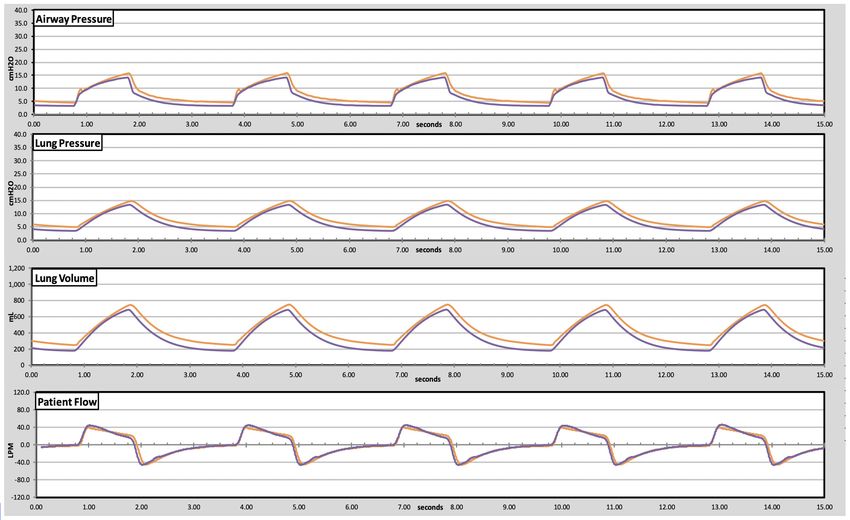
from the Imperial College of London6 anticipates critical       Waveform comparisons of the Life2000 Ventilator to
care bed capacity, in an unmitigated pandemic, would be         a nationally stockpiled MV, LTV® 1200, show similar
exceeded as early as the second week in April 2020, with        performance capabilities across different patient lung
an eventual peak in ICU or critical care bed demand that is     types/needs: healthy, obstructive, restrictive, and
over 30 times greater than the maximum supply in the U.S.       spontaneous breathing (appendix 2). This demonstrates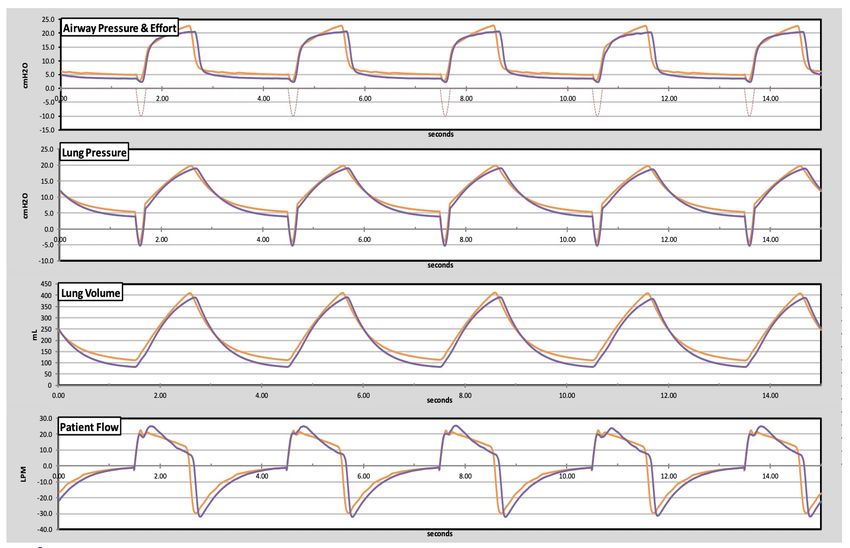
that it can be used in patients needing ventilatory support            (PP) when position was maintained for a minimum of 2
who do not require ventilation that exceed maximum                     hours a day and had significantly improved PaO2/FiO2
output capabilities of the Life2000® device.                           in comparison to respective standalone therapies. The
                                                                       unique Life2000 Ventilator configuration combines the
                                                                       benefit of nasal pillows to reduce dead space (typically
                                                                       seen in HFNC) and positive pressure therapy (reserved to

.
Clinical Considerations for Applicability                              NIV) that may assist in patient tolerance and therapeutic

                                                                   .
    The Life2000 Ventilator’s small form factor and low-profile        effectiveness.
    nasal pillow interface allows for utilization across various
                                                                       It is recognized that more moderate to severe cases of
    acute care settings, including the following: ER/ED, Med/
                                                                       ARDS may exclude the use of NIV systems like Life2000
    Surg Recovery, general floor, and post-ventilator weaning
                                                                       Ventilator due to the increased demand of PEEP ≥ 12

.
    support.
                                                                       cmH2O and a higher rate of NIV failure in these cases.
    Traditional face masks have a limitation of anatomical             Current recommendations from The American Thoracic
    dead space where CO2 blow off can require higher PEEP              Society (ATS)10 state early predictors of NIV failure include
    settings. This limitation can be avoided with Life2000 nasal       higher severity score, older age, ARDS or pneumonia
    pillows that conform to the nostril, creating a seal that          as the etiology for respiratory failure, or a failure to
    prevents leakage, while eliminating the risk of nasal bridge       improve after 1 hour of treatment. This sentiment was
    skin breakdown and the formation of mask pressure ulcers           recently reiterated by the Chinese Clinical Guidance

.
    from prolonged periods of NIV usage.8                              for COVID-19 Pneumonia Diagnosis and Treatment
    The benefits of weaning patients from MV to NIV has been           Guidelines.13 Clinicians should use careful considerations
    well established in clinical research and meta-analysis9           and best practice guidelines established by the American
    and can significantly reduce risk for other nosocomial             Association of Critical-Care Nurses (AACN), ATS, and other
    infections and lung injury. It is recommended that                 professional organizations when evaluating patients who
    clinicians use best practices that are in line with their          are at risk for or are presenting with ARDS and mode of
    facilities’ standards and professional guidelines.                 ventilation selected.

                                                                   Conclusion
.
ARDS Specific Considerations
    Patients who are at risk for developing Acute Respiratory  Thoughtful patient selection and NIV application can be
    Failure (ARF) or have mild respiratory distress may be     extremely important in pandemic situations where there
    appropriate candidates for Life2000 Ventilator initiation  is a shortage of full capacity mechanical ventilators. At
    to prevent escalation to MV by setting a low tidal volume  the core of the above clinical considerations should be
    (6-8mg/kg of ideal body weight) and a high PEEP (relative  interdisciplinary clinician driven protocols and guidelines
    to Life2000’s capabilities) of 9-10 cmH2O in accordance    that are consistent with best practices. Continued
    to American Thoracic Society (ATS) guidelines10 and may    understanding of novel ventilation devices and their role
    prevent the patient from developing or advancing to more   in patient care is critical to improving clinician knowledge
    severe forms of Acute Respiratory Distress Syndrome        and improved patient outcomes in times of crisis. The

.
    (ARDS).                                                    distinctive features of Life2000 Ventilator may add clinical
                                                               benefit in an acute care setting by reducing burden of
    Numerous professional organizations10-11 and other peer-   more invasive forms of ventilation without compromising
    reviewed studies have suggested that lying a patient prone patient safety and outcomes.
    may help improve oxygen levels in the blood and increase
    survival in patients at risk or with mild to moderate
    ARDS. In a recent 2020 multicenter prospective cohort
    study12, investigators combined the prone technique with
    the addition of High-Flow Nasal Canula (HFNC) or NIV
    treatment and found that when patients with pneumonia
    secondary to influenza and other viral infections were
    admitted to a hospital, those with mild ARDS had a
    reduced risk of progressing to invasive ventilation when
    using HFNC/NIV in combination with a prone position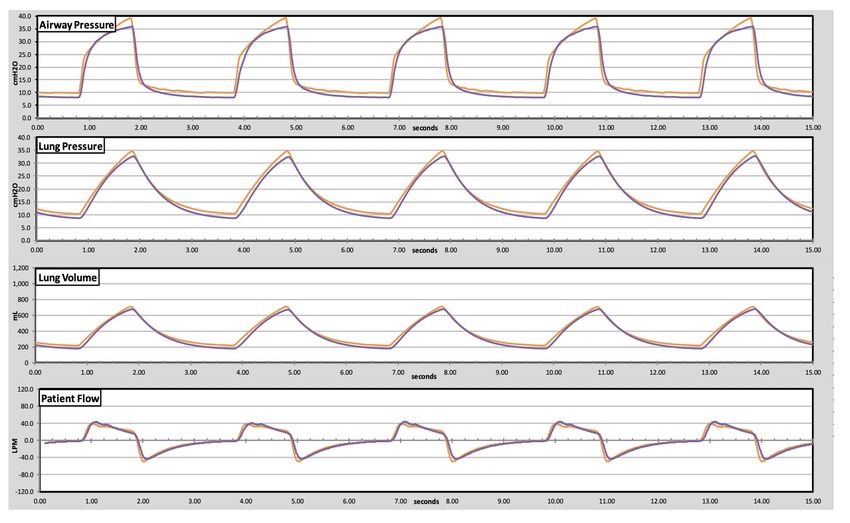
Appendix 1: Waveform Comparisons
TABLE 1. LIFE2000® VENTILATION SYSTEM SPECIFICATIONS

FEATURES                                             LIFE2000
Product Code                               NOU/CBK

Life Sustaining/Support Device             Yes

Patient Interfaces - Compatible            Nasal Cannula, NIV Masks,
                                           ET Tubes
Recognized Consensus Standards             ISO 80601-2-72
                                           ISO 80601-2-12
Modes - Volume Mode                        Proportional Open
                                           VentilationControl and
                                           Assit Control
Essential Performance
  Max. Inspiratory Pressure (cmH2O)        0 to 40
  Tidal Volume (ml)                        50 to 2000
  Inspiratory Time (sec)                   0.15 to 3.0
  Breath Rate (bpm)                        0 to 40
  PEEP (cmH2O)                             0 to 10
  FiO2 (%)                                 O2 bleed in
  Patient Trigger (Adjustable)             1 to 9
Monitor/Alarms
 Peak Pressure (cmH2O)                     0 to 50
 Respiratory Rate (bpm)0 to 60             0 to 60
 O2 liter flow (L)
 High/Low Peak Pressure (cmH2O)
 High/Low Breath Rate (bpm)
 High PEEP (cmH2O)                         Set PEEP + 7
 Breath Time Out (Apnea)                   60 sec

FIGURE 1. VENTILATION SYSTEM

COMPATIBLE INTERFACES
                                                                Full Face Mask    Tracheostomy        Intubation

                                  Breathe Pillows
                                  Interface®

.
Comfortable Breathe Pillows Interface
                                                                .
                                                                Breathe Universal Circuit® Connector

.
 Small-diameter tubing (5 mm vs traditional 22 mm)                Compatible with any third-party interface
                                                                  (including full face mask, tracheostomy tube, and
    Patients can talk while wearing the noninvasive

.
                                                                  intubation tube).
    Breathe Pilows Interface

.
    Comfortable fit for around-the-clock use
    Available in multiple sizes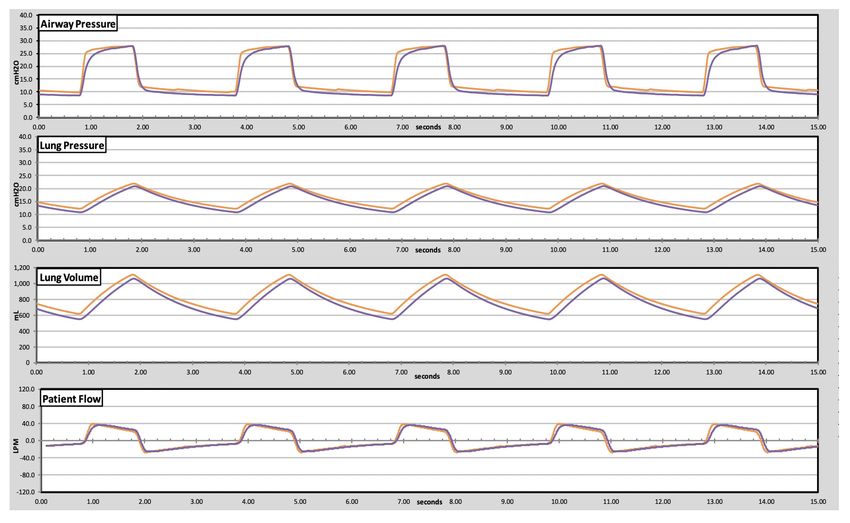
FIGURE 2: LIFE2000® - DELIVERED FIO2

.
Delivered FiO2 on a Life2000 is based on three elements
 Drive gas to the ventilator
     – Air - 21% oxygen

.
     – O2 - 100% oxygen
    Entrainment Rate (RE) - Varies w/ Peak Press. & set Peak Flow, Typically:
     – RE = 3 when PIP ≤ 13 (Drive gas is 33% of total pat. gas)
     – RE = 2 when 13 < PIP ≤ 26 (Drive gas is 50% of total pat. gas)

.
     – RE = 1 when 26 < PIP ≤ 40 (Drive gas is 100% of total pat. gas)
    Liter flow of O2 bled into the Inspire cannula
     – 0 to 30 lpm

FIGURE 3: LIFE2000 - RECOMMENDATIONS FOR DELIVERED FIO2

.
For FiO2 < 50%

.
  Use Air as the drive gas
    Titrate O2 bleed flow until delivered FiO2 is achieved

.
For FiO2 ≥ 50%

.
  Use O2 as the drive gas

.
    Titrate O2 bleed flow until delivered FiO2 is achieved
    Note entrainment rate (RE) affects FiO2
     – RE = 3; FiO2 = 47% with no O2 bleed flow
     – RE = 2; FiO2 = 60% with no O2 bleed flow
     – RE = 1; FiO2 = 90% with no O2 bleed flow

Appendix 2: Waveform Comparisons
TEST CASE 1 (HEALTHY): LIFE2000 VENTILATOR AND LTV® 1200

                                                                                WAVEFORM COMPARISON
                                                                                PARAMETERS

                                                                                PARAMETER        VALUE
                                                                                Tidal Volume     500 ml

                                                                                Peak Pressure   15 cmH2O
                                                                                (airway)
                                                                                Peak Pressure   15 cmH2O
                                                                                (lung)
                                                                                PEEP            5 cmH2O

                                                                                Peak Flow        40 lpm

• Life2000 vs • LTV 1200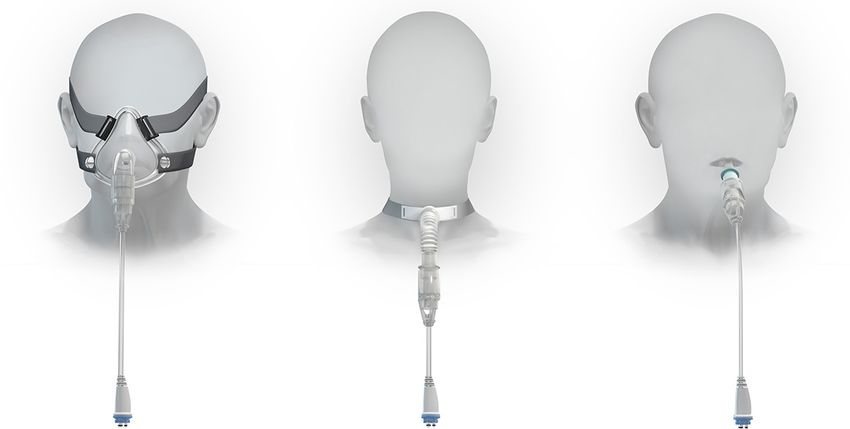
TEST CASE 2 (OBSTRUCTIVE): LIFE2000® VENTILATOR AND LTV 1200
                                                               WAVEFORM COMPARISON
                                                               PARAMETERS

                                                               PARAMETER        VALUE
                                                               Tidal Volume     500 ml

                                                               Peak Pressure   28 cmH2O
                                                               (airway)
                                                               Peak Pressure   21 cmH2O
                                                               (lung)
                                                               PEEP            10 cmH2O

                                                               Peak Flow        40 lpm

• Life2000 vs • LTV 1200

TEST CASE 3 (RESTRICTIVE): LIFE2000 VENTILATOR AND LTV 1200

                                                               WAVEFORM COMPARISON
                                                               PARAMETERS

                                                               PARAMETER        VALUE

                                                               Tidal Volume     500 ml

                                                               Peak Pressure
                                                                               35 cmH2O
                                                               (airway)
                                                               Peak Pressure
                                                                               35 cmH2O
                                                               (lung)

                                                               PEEP            10 cmH2O

                                                               Peak Flow        40 lpm

• Life2000 vs • LTV 1200
TEST CASE 4 (SPONTANEOUS): LIFE2000® VENTILATOR AND LTV 1200
WAVEFORM COMPARISON
PARAMETERS
PARAMETER VALUE
Tidal Volume 300 ml
Peak Pressure
20 cmH2O
(airway)
Peak Pressure
20 cmH2O
(lung)
PEEP 5 cmH2O
Peak Flow 25 lpm
• Life2000 vs • LTV 1200
For more information, please contact your local Hillrom sales
representative or call Hillrom Customer Service at 1-800-426-4224.
respiratorycare.hill-rom.com/Life2000
References
1
Ventilator Stockpiling and Availability in the US. (2020, February 14). Retrieved March 17, 2020, from http://www.centerforhealthsecurity.org/resources/COVID-
19/200214-VentilatorAvailability-factsheet.pdf
2
(2020, March 15). Retrieved from https://twitter.com/CNNPolitics/status/1239181816411631616
3
Grasselli, G., Pesenti, A., & Cecconi, M. (2020). Critical Care Utilization for the COVID-19 Outbreak in Lombardy, Italy Early Experience and Forecast During an
Emergency Response. JAMA. doi:10.1001/jama.2020.4031
4
United States Census Bureau. (2018). Retrieved March 17, 2020, from https://data.census.gov/cedsci/
table?q=USpopulation&g=0100000US&hidePreview=false&tid=ACSDP1Y2018.DP05&vintage=2018&cid=DP05_0001E
5
Fast Facts on U.S. Hospitals 2020. (2020, January). Retrieved March 17, 2020, from https://www.aha.org/statistics/fast-facts-us-hospitals
6
Ferguson, N. M. et. al. (2020). Impact of non-pharmaceutical interventions (NPIs) to reduce COVID-19 mortality and healthcare demand. Retrieved from
https://www.imperial.ac.uk/media/imperial-college/medicine/sph/ide/gida-fellowships/Imperial-College-COVID19-NPI-modelling-16-03-2020.pdf
7
Demoule A, Hill N, Navalesi P. Can we prevent intubation in patients with ARDS? Intensive Care Medicine. 2016;42(5):768-771. doi:10.1007/s00134-016-4323-6
8
Schallom M, et al. Pressure Ulcer Incidence in Patients Wearing Nasal-Oral Versus Full-Face Noninvasive Ventilation Masks. Am J Crit Care 1 July 2015; 24 (4):
349–356.
9
Yeung J, Couper K, Ryan EG, Gates S, Hart N, Perkins GD. Non-invasive ventilation as a strategy for weaning from invasive mechanical ventilation: a systematic
review and Bayesian meta-analysis. Intensive Care Med. 2018;44(12):2192–2204. doi:10.1007/s00134-018-5434-z
10
Rochwerg B, Brochard L, Elliott MW, et al. Official ERS/ATS clinical practice guidelines: noninvasive ventilation for acute respiratory failure. Eur Respir J 2017;
50: 1602426 [https://doi.org/10.1183/13993003.02426-2016]
11
Marchetti, N. (2018, January). Diagnosing and Treating ARDS. Retrieved March 17, 2020, from https://foundation.chestnet.org/patient-education-resources/
acute-respiratory-distress-syndrome-ards/#diagnosis
12
Ding, L., Wang, L., Ma, W. et al. Efficacy and safety of early prone positioning combined with HFNC or NIV in moderate to severe ARDS: a multi-center
prospective cohort study. Crit Care 24, 28 (2020). https://doi.org/10.1186/s13054-020-2738-5
13
Chinese Clinical Guidance for COVID-19 Pneumonia Diagnosis and Treatment (7th edition). (2020, March 17). Retrieved March 19, 2020, from https://www.acc.
org/latest-in-cardiology/articles/2020/03/17/11/22/chinese-clinical-guidance-for-covid-19-pneumonia-diagnosis-and-treatment
LTV® 1200 is a trademark of Carefusion Corporation. Life2000®, Breathe Pillows Interface®, and Universal Circuit® Connector are registered trademarks of
Breathe Technologies, Inc., a Hill-Rom Company. Hill-Rom reserves the right to make changes without n otice in design, specifications and models. The only
warranty Hill-Rom makes is the express written warrantyextended on the sale or rental of its products.
© 2020 Hill-Rom Services PTE Ltd. ALL RIGHTS RESERVED. APR7440 rev 1 07-APR-2020 ENG – USYou can also read


