The Sempel Life at Pokey Creek Farm - Pioneer Utility ...
←
→
Page content transcription
If your browser does not render page correctly, please read the page content below
Clearwater Power

     Greg and Leah Sempel
   enjoy mountain farming
       at Pokey Creek Farm
         near Santa, Idaho.

   The Sempel Life at Pokey Creek Farm
   By Lori Mai                                    to evolve into a successful enterprise.       hobby into a larger operation, but the
                                                     Forty years ago, Greg, a Seattle native,   mountainous, forested terrain provided a
   Far away from the increasingly high-tech       and Leah, who was raised in New Orleans,      challenge.
   world of commercial agriculture, Greg and      met in Washington, where she was pick-            “We were crazy,” Greg says of attempt-
   Leah Sempel tend to their 5-acre hillside      ing fruit and he was planting trees. The      ing to grow vegetables in a forest. “We gar-
   farm near Santa, Idaho, mainly by hand.        pair connected over their love of the out-    dened the south hillside since we moved
      Named after the creek that meanders         doors and desire to get back to the land.     here. We’ve always grown food on it. I
   along their mountainside property, Pokey          They bought 23 acres of hillside prop-     thought of the northside garden to pre-
   Creek Farm fashions an unusual vegeta-         erty when there was virtually nothing else    serve water. Then I thought, ‘You know,
   tive blanket amidst the towering ever-         in the area.                                  it’s all in the tilth (soil condition). If you
   greens in the forest.                             “We just wanted to do a little home-       have good tilth, you can grow anything.’ ”
      “We do what I call mountain farming,”       stead, raise kids and live a simple life,”        Greg wanted to grow garlic, which
   Leah says, “which means we do a lot of         Leah says.                                    is hardy and can be planted in colder
   hand planting and hand weeding. This is           They built a cabin from logs on the        climates.
   not traditional agriculture ground, but we     property and used solar panels for energy         “Greg has always been fascinated with
   plant amongst the trees.”                      since there was no electrical power. Greg     garlic species and varieties,” Leah says.
      The Sempels believe the quality of food     worked a variety of forestry jobs. Leah       “There was this old guy, Emil, who grew
   affects the quality of life. They also think   maintained a large garden and raised          garlic. He gave Greg bulbs to use for
   a combination of meticulous hand work,         their four children.                          seed. We’re still planting garlic from Emil
   ideal altitude, clean air and pure water of       Every year, Leah took bedding plants       40 years later.”
   this pristine northern Idaho mountain          and excess vegetables from the garden to          To boost the soil quality, Greg experi-
   location is essential to the high quality,     sell at the Moscow Farmers Market.            mented with amendments such as bio-
   certified organic food they grow.                 As forestry work dwindled, Greg            char, which is carbon-rich and holds
      Pokey Creek Farm is well known to           began helping Leah at the farmers mar-        nutrients in the soil.
   Moscow and Coeur d’Alene area farmers          ket and saw the potential in growing              “We’ve really increased the size of our
   markets, natural food stores and restau-       good food for people. He developed an         garlic and the fertility of other plants by
   rants, but it has taken time and hard work     interest in turning their small, part-time    using it,” Greg says.

   4    J A N UA R Y 2 0 1 9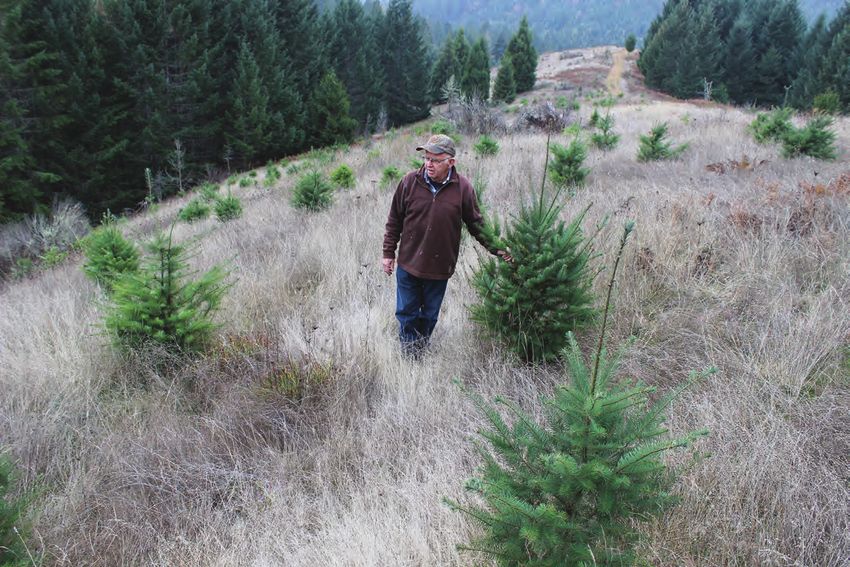
From left, Leah checks on arugula in one of the eight greenhouses at Pokey Creek Farm. Greg and Leah inspect their potatoes and garlic.
Photo at right courtesy of the Sempels

   He added potatoes as another major                  ingredients used must adhere to a strict                potatoes in three hours in 2018.
crop, learning the art from an organic                 list of materials approved by the federal                   In a normal year, the Sempels grow
potato breeder in southern Idaho.                      Organic Materials Review Institute.                     more than 4,000 pounds of garlic. They
   He phased out of forestry work and                      This means that for Pokey Creek Farm                distribute up to 3,000 pounds nationwide
began farming full time.                               to use the certified organic inscription,               for organic seed through Filaree Garlic
   “Once Greg got involved, it exploded,”              each item used in the growing process                   Farms in Omak, which requires large
Leah says.                                             needs a certificate. It is time-consuming,              bulbs at least 2 inches in diameter. Each
   This growth meant that they needed                  but the Sempels say it is paramount to be               clove of a bulb is considered a seed.
more land and more power. The solar                    able to provide the healthiest food pos-                    Greg and Leah grow approximately
panels couldn’t keep up with their need                sible to customers.                                     5 tons of 13 potato varieties such as
for electricity so they chose to connect to                To help manage nutrients and increase               German Butterball and Huckleberry
Clearwater Power.                                      flavor, Greg and Leah use natural ingre-                Gold, which include five fingerlings
   “We couldn’t farm like this without                 dients such as kelp spray, organic chicken              such as Amarosa and Peruvian Purple.
electricity,” Greg says. “Once we got                  manure, fish fertilizer, cover crops and a              Moscow-area restaurants buy about 2,000
power, we really expanded.”                            powder called azomite that contains 100                 pounds of potatoes each year.
   They also received permission from                  volcanic minerals to fertilize and create the               “It’s so great when you go into a res-
the Martin family in St. Maries to farm                best possible environment for their crops.              taurant hauling all the food, and the
their 5-acre, flat, river bottom parcel.                   “There’s a lot of study involved because            people can see for themselves that it is
   “We have to do a whole different                    new products and techniques come out                    local,” Leah says. “We’re lucky to have a
farming system there,” Leah says. “We                  all the time,” Greg says.                               community that really supports the farm-
use some equipment, and it is self-irri-                   Pokey Creek Farm has eight on-site                  to- table concept.”
gated for much of the year. We lay plastic             greenhouses for plant starts in early                       In addition to selling to restaurants
because the weeds are incredible.”                     spring. There is a washing station, stor-               and natural food stores, the Sempels load
   On the new field in St. Maries, the                 age coolers and cabins for University of                their truck every weekend from May
Sempels grow onions, beans, kale, pep-                 Idaho student interns or others who wish                through October to sell their fresh pro-
pers, strawberries, celery, beets, cabbage,            to study the operation.                                 duce at the Moscow Farmers Market.
spinach, lettuce, arugula and more in                      Greg and Leah rely on help from about                   “We get so much love from our cus-
addition to their major crops of garlic                five workers each season. On a week-                    tomers and we are uplifted,” Leah says. “It
and potatoes.                                          end day in September, they host a “crop                 is worth it for us to do the work, because
   Everything grown at Pokey Creek                     mob” where people and families come                     it is appreciated. People like to feel con-
Farm is certified organic by the Idaho                 out to the farm, take a tour, eat a meal,               nected to people they get their food
State Department of Agriculture                        help plant garlic and harvest potatoes.                 from. That people-to-people connection
Organic Crop Certification program. All                The crop mob harvested 1,800 pounds of                  is what keeps us going.” n

                                                                                                                                          J A N UA R Y 2 0 1 9   5
Columbia Basin

       Joyce and Glen Ward
           spend the winter
         looking forward to
      spring when they can
      head up to their cabin
           at Lake Penland.

  Why Not Make a Lake?
  Ambition leads to adventure and two new bodies of water
  By Jody Foss                                Wildlife Commission. Later, when he         team, taking the team to meets in La
                                              was raising his family in Heppner, he       Grande, Hermiston, John Day and
  As the sun wraps around the Wards’          took groups of Boy Scouts to the high       beyond.
  hilltop home in Heppner, a forked-horn      country, teaching them not only the            “Glen is one of these people that if you
  buck deer pushes on the kitchen door,       joys of getting out in the wild but also    need anything done, go ask Glen,” Joyce
  ready for a morning snack.                  sharing what he knew about the forest       says. “And that is everything he’s ever
      Glen and Joyce Ward have lived in       and the animals that call it home. He       involved in. Go ask Glen, he’ll do it.”
  their home on Cemetery Hill since they      initially intended to coach sports teams,      When the local theater burned down
  married in 1956.                            but his time in the wilderness translated   in 1964, Glen was commander of the
      “It used to be just this front part,”   into a career with Fish and Wildlife.       American Legion, so he set up and
  Glen explains. “When we started having         When Glen met Joyce in 1952, she         showed movies in the hall. When the
  our family, we needed extra room. I         was working as a deputy sheriff for         Kinzua Mill closed down in 1978, Glen
  asked my neighbor if he would sell me a     Morrow County.                              arranged for roller skating equipment
  little more land from his lot. He said he      “I figured I couldn’t get in too much    to end up in Heppner, and a roller rink
  would—for a dollar.”                        trouble if I was married to a deputy        was created at the fairgrounds. He and
      After Glen graduated from Oregon        sheriff,” Glen says.                        a friend went to Portland and bought
  State University in 1951 with a degree in      When the couple’s three children         80 pairs of roller skates and a music
  wildlife biology, he went to work in the    were in school, Glen coached the girls’     machine. A wooden floor was laid and
  high country of Eastern Oregon, running     softball team and Little League, and        the fun began.
  a pack string of mules for the Fish and     was transportation director of the swim        “We had a room full of kids and all

  4      J A N UA R Y 2 0 1 9
What was once Penland Prairie became Lake Penland. In January 1972, Orville Cutsforth decided to try the   Glen tags a fawn as part of his job with the Fish and
first boat on the lake, even though the it was still frozen.                                               Wildlife Commission.
Photo courtesy of Glen Ward                                                                                Photo courtesy of the Fish and Wildlife Commission

they wanted was to go fast,” Glen says.               Land Management and national forests.                got it built,” Glen says. “Got 26 people to
“They put a fast song on the music                       When Glen came to the area, there                 give $250 to start with.”
machine and off they went. It was                     were no lakes in Morrow County.                         Two people backed out after learning
mayhem.”                                              Mel Cummings—a close friend of the                   that it might not hold water.
   “He has been active in everything that             Wards—was chukar hunting with Glen                      After getting a high bid to build the
has went on,” Joyce says.                             in the late 1950s, and the two men were              dam from a contractor, local wheat
   Glen’s job for Fish and Wildlife was an            discussing this.                                     farmer Orville Cutsforth offered the
important one. A wildlife management                     “Get busy,” Mel said to Glen.                     services of his brother-in-law, Earl
district was created that included                       The idea took hold.                               Baldwin, who built the dam to create
Wheeler, Gilliam, Morrow, Grant, Crook                   Bull Prairie Reservoir was built in               Lake Penland for $40,000.
and Sherman counties. Glen managed                    1959 and opened three years later.                      It took two years to build the lake and
the area for 40 years.                                   Glen was teaching an outdoor school               the dam on Mallory Creek.
   In 1978, Glen went with a crew to                  at Bull Prairie. There was already a house              “I couldn’t have done it without the
Hart Mountain to trap Rocky Mountain                  and a campground there.                              volunteers,” Glen says.
sheep that were hauled in horse                          “Looked like we could get about a                    Glen’s friends surprised the family by
trailers to some large ranches along the              30-acre lake,” Glen says. “It had narrows            pouring the foundation for the Wards’
Columbia River.                                       to build a dam, and Kinzua and the                   cabin at Lake Penland: a two-story
   “That is a pretty hazardous job,                   Forest Service agreed to donate the land.”           26-feet-by-34-feet building with a stone
jumping out of the helicopter onto                       Morrison Knudson out of Boise got                 fireplace, full kitchen and bathroom.
the rims, landing in shale rock,” he                  the contract to build the dam to create                 Now Lake Penland is open to the
remembers.                                            Bull Prairie Reservoir                               public year-round, and is a favorite
   When he left home, Joyce says, “I                     Then it was on to Lake Penland,                   summer place to camp and fish. In the
didn’t know if he would come back in                  which was built in 1962. After two failed            winter, snowmobilers enjoy the remote
one piece or not.”                                    core drillings at two different locations,           location. Each year, 20,000 rainbow trout
   Glen took care of all the beaver, deer             they settled on its location—27 miles                are delivered to stock the lake.
and elk habitats and introduced new                   from Heppner—although they were not                     Glen goes to the cabin about three or
species such as wild turkeys, chukars and             100 percent sure it would hold water.                four times a week in the spring, summer
antelope. He taught children hunting                     “We went up and down the street                   and fall.
safety and wilderness preparedness, and               and got people involved in it, with the                 “He can’t wait to go back,” Joyce says.
enforced hunting laws in the Bureau of                promise to open it to the public if we               “He just loves it up there.” n

                                                                                                                                         J A N UA R Y 2 0 1 9   5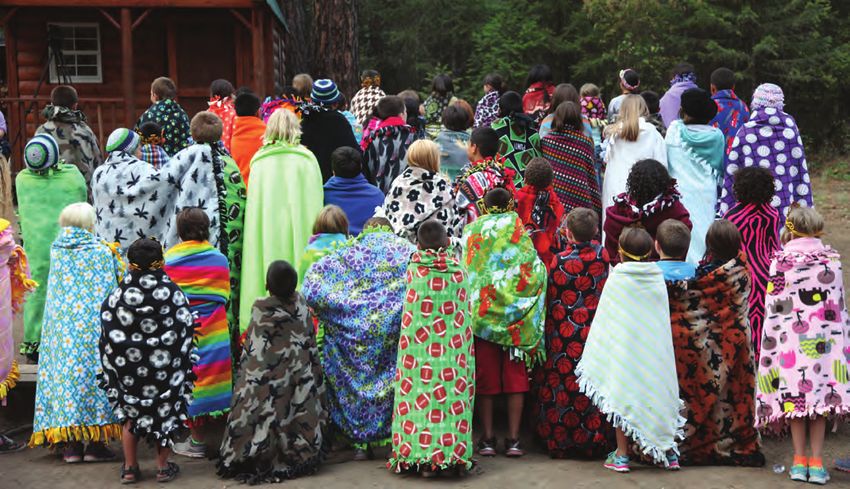
Northern Wasco PUD

 Expanding Opportunities
 Marta Yera Cronin works to extend the reach of Columbia Gorge Community College
 By Kathy Ursprung

 For the new president of Columbia Gorge
 Community College, access is a priority:
 access for remote communities, career
 seekers and diverse populations, and
 access to community education classes
 and financial aid.
    Marta Yera Cronin has lived and
 worked in urban settings most of her life,
 yet she sees many parallels with her role
 in a rural community college.
    “I grew up in urban poverty with a
 single mother, so I know what that’s like,”
 Marta says. “I would not have been able
 to afford housing. If I had not had the
 train, I would not have been able to go to
 school.”
    Poverty, housing and transportation
 are issues that translate from an urban to
 a rural setting. Education as the pathway
 to a better life is a mantra emphasized in
 Marta’s family since childhood.
    “That’s why it became so important to
 me for people on the outskirts to have
 access,” she says.
    Marta is working to expand CGCC’s
 reach so students in communities outside
 the college service area have access to
 services comparable to what students
 have in The Dalles and Hood River.
 She and her administration are working
 on outreach to Sherman and Gilliam
 counties, and she envisions working with
 Wheeler County.
    “Some students may go into family
 businesses, whether farming or whatever,
 but some of them maybe don’t want to,”        Marta Yera Cronin is the new president at Columbia Gorge Community College.
 Marta says. “They need to have oppor-
 tunities. For me, access is the important     a wait list when classes are full. Now, they             SOAR—CGCC’s student outreach
 thing we do here.”                            open a new class section.                             team—has increased its efforts to build
    Fall enrollment at CGCC increased             “It’s important for students to have               partnerships with high schools and gener-
 6 percent. Marta credits part of that to      reliable access to the classes they need,”            ate buzz and excitement about the college.
 ending the practice of putting students on    Marta says.                                              One of Marta’s early priorities as head

 4   J A N UA R Y 2 0 1 9
of CGCC has been to review the roles of
members of the leadership team.
   “We identified strengths and people
we weren’t really putting to good use,”
she says. “That’s one of the first things we
needed to do before we decide where we
are going: make sure the right people are
in the right places.”
   CGCC plans to get high school stu-
dents started in programs earlier. Part of
that effort is expanding the virtual cam-
pus so more students can take college-
level classes while still in high school.
   “We know, in some cases, students are
not able to make the drive,” Marta says.
   Marta hopes availability of new stu-
dent housing and a new skill center will
improve access.
   “We’re not going to neglect academic
and transfer students, but we want to be
sure we are offering all the vocational and
Career Technical Education tracks needed       Marta hopes the amphitheater at the heart of the college campus will soon be busy with new activities to
in the area,” she says. “We could easily       enhance the student experience.
triple the welding program, but we don’t
have the space for it.”                           “Student government this year is very               ethnicity, to be able to take advantage of
   The college is working to secure            active,” she says. “They are working on                all sorts of classes, whether academic or
$3.5 million of funding for the housing        more events and are encouraging students               not,” she says. “It used to be that a lot of
and skill center projects before the end of    to offer more clubs.”                                  our dual-credit classes were academic.
January.                                          Some of the spaces on campus are                    Now we’re moving in the other direction
   Surveys have indicated other needed         being re-envisioned, including the library.            because not every student is an academic
career tracks include fiber-optics installa-      “We want it to be more of a hub, with               student.”
tion and mechanics.                            a coffee bar and a tutoring center,” Marta                 While settling in at the college, Marta,
   On the academic side, CGCC is redo-         says.                                                  her husband and her dogs are also
ing the general education portion of the          Expanded scholarship and financial                  settling in their new home in The Dalles.
curriculum, including math, science and        aid opportunities are also a high priority.            It took some time to find a house, which
English—the core courses needed to             College teams are visiting high schools to             she says speaks to similar challenges for
transfer to a four-year institution.           help students and parents complete the                 students.
   State university transfer requirements      free application for federal student aid.                  “I’m loving small-town life,” says
vary, so some students end up with sur-        The foundation director’s position has                 Marta, who grew up in Manhattan and
plus credits they don’t need, which can        increased from part-time to full-time to               moved to The Dalles from a college
unnecessarily spend financial aid.             help grow scholarship opportunities for                district of 300,000 residents. “It’s
   “There are limitations on how many          students.                                              interesting to me to go places and be
credits financial aid will pay for,” Marta        “We’re also trying to get more word                 recognized. I was at the farmers market
says. “We don’t want them to get to their      out on Pell grants,” Marta says. “Most                 and was recognized by so many people.
bachelor’s degree and run out of aid.”         students are eligible for Pell grants, and             Back home, I had 265 faculty and could
   To ensure students don’t lose credits in    that’s money you don’t have to pay back.”              go out on a weekend and not run into
transfer, the state is developing universal       Marta is continuing with minority                   a single one of them. This is more like
degrees, starting with English, biology,       outreach efforts—a key strategic goal of               a family environment. There is such
teacher’s education and business.              the college since before she took office.              strength in how the community works
   Marta hopes to encourage more                  “We want all of our high school                     together. You don’t see that in a lot of
vibrant campus life.                           students, no matter what their race or                 other places.” n

                                                                                                                                  J A N UA R Y 2 0 1 9    5
Colleen Leskinen greets one of the children she cares for after school. She and her late husband, Fred, started a home-based afterschool care program many years ago.

A Lifetime of Stories From Nespelem
                                                        By Vic Bobb                                                Pivotal to this world of memories is
                                                                                                                a gentleman named Fred Leskinen. On
                                                        Ask Colleen Leskinen to share a memory                  Halloween 1975, the rodeo man showed
                                                        of a lifetime spent in Nespelem, and you                up at Colleen’s house and presented her
                                                        never know from what historical period                  with a female German shepherd that he
                                                        the reminiscence is going to emerge.                    believed would be useful as protection.
                                                           It might be a small ocean of informa-                The next day, Fred came back to chat and
                                                        tion about the town’s landmark millpond                 take Colleen to the Sage for a meal.
                                                        and the place it had in the lives of young                 They married in April, beginning
                                                        people. She might weigh in on the debate                a 31-year partnership that would end
                                                        as to what business served the best ice                 only with Fred’s death when, as the fam-
                                                        cream in downtown Nespelem. Despite                     ily put it in the newspaper obituary, he
                                                        some folks’ votes for Edna’s, Colleen insists           “rode his last horse in the pasture above
                                                        Mr. Davis’ was the superior product.                    Five Lakes.” He was mortally injured in
                                                           Having known the businesses and peo-                 a horse wreck triggered by an encounter
                                                        ple who defined Nespelem since before                   with a bear.
                                                        its incorporation as a town, Colleen                       Today, nearly a dozen years after
                                                        enjoys sharing a world of information                   Fred’s last ride, Colleen carries out
                                                        with lively and riveting narratives.                    her child care commitments west of

4    J A N UA R Y 2 0 1 9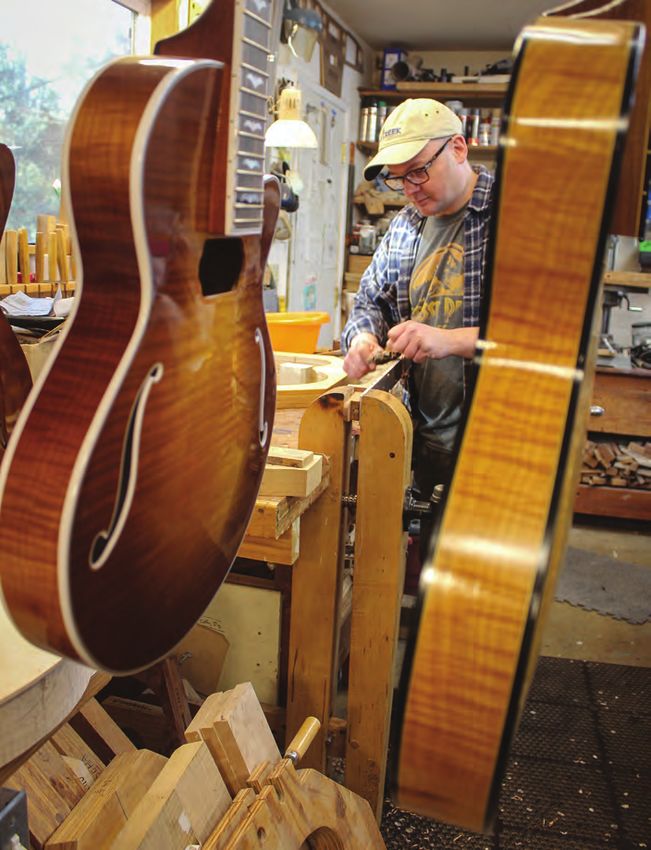
Nespelem Valley

Above and lower right, Colleen keeps her home
unique inside and out with sculpture and a variety of
decorations. Above right, Colleen reviews a writing
assignment with one of her afterschool students.

town. Although the house she and Fred
planned to build on their 80-acre patch
of land had not yet come into being that
fatal June day—and although their dream
business of raising broncs and other
rodeo stock had already been scaled
back—Colleen looks at her life today
with nothing but gratitude.                             yard, to the present, to the immense         Fred had to interact with another horse,
   “I don’t know if Fred had a plan or                  steel sculpture of an uprearing horse that   who unintentionally head-butted the
not,” she says, “but it sure turned out to              anchors the space around her home.           already anguished man. The result of
be a good one.”                                            Colleen says she is at peace, wholly      the head-butt? Fred’s joint slipped back
   Her positive attitude might seem                     grateful for every aspect of her life—even   into place, and the shattered mandible
implausible to anyone familiar with her                 the pain and the loss.                       was pushed into alignment so perfect
story. While the new house was being                       “I grew so much from it,” she says.       that the emergency room doctor said he
built, Colleen hired movers who stole                      She has stories to tell, both those       couldn’t have put him back together any
most of her possessions, including family               involving Fred and those of the com-         better.
heirlooms. They even stole Fred’s ashes.                munity at large: the time she and some          Want to hear about the epic mustard
   And what is Colleen’s response to this               other Nespelem kids were playing             fight in the old dance hall? Curious about
avalanche of loss and disappointment?                   Dudley Do-Right at the old mill and          the miners’ cabins along the highway, or
   “Fred always said two things,” she                   one of them managed to turn on one           buying candy at Casey’s? Interested in
says. “Life goes on, and don’t let it get               of the immense saws; the miracle when        knowing about the one-armed woman
you down. I don’t let things bother me                  Fred was kicked in the face by a horse,      who lived upstairs in New Deal Hall and
the way they did back then.”                            the hoof breaking and dislocating his        could play “In the Mood” on the piano?
   Her gaze draws back to her front                     jaw. Before they could go to the hospital,      Ask Colleen. She can tell you. n

                                                                                                                            J A N UA R Y 2 0 1 9   5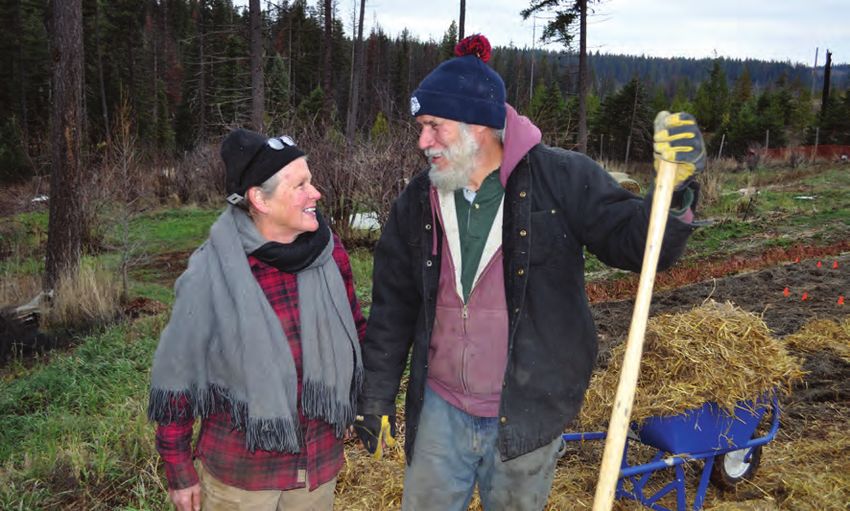
The Corvallis Boys and Girls Club has more than 3,000 members, with an average of 1,000 kids participating each day.

Corvallis Youths Have a New Hangout
Boys and Girls Club builds new facility to focus on supporting area teens
By Craig Reed                            green-with-white-trim ping                says. “The board said yes,          barriers that might be out
                                         pong table sit in the middle of           there is clearly a need for         there for kids,” Helen says.
The Dr. Ken & Dot Johnson                the center.                               these kids.”                        “We did it with dental care.
Center For Youth Excellence                  Hanging on a wall over-                  At the same time that deci-      We pulled out a lot of loose
Teen Center at the club                  looking the teen center is a              sion was being made, Helen          teeth, and kids began to walk
opened September 7, 2018,                picture of a bull with long               says there was a teen suicide       themselves into the dentist.
culminating a five-year                  horns. The silent message to              crisis going on in Benton           Our hope in putting health
project.                                 the center’s visitors is to take          County. Because a 10-year-          and mental health services on
   The entrance to the new               the bull by the horns and cre-            old dental clinic in the club       campus is that kids will walk
teen center at the Boys &                ate an enjoyable, successful              had greatly decreased tooth         in on their own.
Girls Club of Corvallis is dec-          life.                                     issues for kids, it was decided        “We want them to real-
orated with colorful designer                Helen Higgins, the club’s             a medical and mental health         ize their physical and mental
concrete blocks and wood                 CEO, says the center was                  center in the new addition          health are really important
benches backed by raised                 needed because the club                   might also be successful.           and are a component of
flower and plant beds.                   had 150 high school student                  The Dr. Fred & Mark              their overall wellness. There
   Inside, teenagers walk                members. They needed their                Brauti Wellness Clinic is on        is nothing to be feared or
on a tricolored carpet high-             own space instead of sharing              the second floor over what          embarrassed about, but rather
lighted by a bright sky blue.            with grade school and middle              has become known as the             something to be embraced.”
There are bright orange,                 school kids.                              Johnson Teen Center or JTC.            Ken Johnson, who started
green, blue and gray chairs at               “The board had to decide                 “We’ve created a system          the club’s dental clinic and
tables and at the coffee and             whether we were going to                  where we’ve brought youth           volunteered his services
smoothie shop counter. A                 deliver programs to high                  and health care together to         for many years, was both a
green felted pool table and a            school kids or not,” Helen                break down any of those             financial donor and capital

4    J A N UA R Y 2 0 1 9
construction of the facil-        only to provide a safe place
                                                                             ity, and donated to the club’s    for high school students, but
                                                                             scholarship program through       to also provide them with
                                                                             Operation Round Up.               academic support, job skills
                                                                                “The Boys and Girls Club       training, leadership opportu-
                                                                             has such a positive influence     nities and skills, and career
                                                                             on the kids and families it       exploration.
                                                                             serves, and helps them set           In addition, the upstairs
                                                                             up a good foundation to suc-      wellness center offers physi-
                                                                             ceed,” says James Ramseyer,       cal health and mental health
                                                                             director of member services       services, nutrition educa-
                                                                             at CPI. “This additional facil-   tion, residency education and
                                                                             ity will further allow our next   research initiatives through
                                                                             generation to access any assis-   Samaritan Health Services.
                                                                             tance they need.”                 Complete primary care is
                                                                                Mariah Morales has seen        provided for babies, children
                                                                             the teen project gradually        and teens. Mental health
                                                                             become reality. She became a      services include counseling,
                                                                             club member when she was a        medication management and
                                                                             sixth-grader. Now 21, she is      evaluation, and treatment
                                                                             the club’s front office coordi-   of a wide range of mental
                                                                             nator, a full-time position.      health concerns with a focus
                                                                                “Watching it grow from         on education, prevention and
                                                                             an idea to what it is now has     early identification.
                                                                             been amazing,” Mariah says.          Resident physicians, a pedi-
                                                                             “It provides a safe place for     atrician, a child psychiatrist, a
                                                                             kids. There are a lot of kids     therapist and child psychiatry
                                                                             with nowhere else to go. If we    fellowship interns staff the
                                                                             weren’t here for them, they’d     center.
                                                                             be out on the streets not            “There are a lot of pres-
                                                                             doing great things.”              sures on teens today with the
Above, the entrance to the new teen facility is modern and inviting. Top,       Guillermo Valla, a 17-year-    pace of communication and
Guillermo Valla runs the coffee and smoothie shop at the club.
                                                                             old high school junior, is        the impact of social media,”
campaign fundraiser for the               than I envisioned.”                another long-time club mem-       Helen says. “There’s pressure
new center and clinic.                       The capital campaign raised     ber. He is in his second year     to perform academically and
    “One of the main problems             $6.5 million for the construc-     as manager of the club’s coffee   socially. Our goal is to help
our community has had is                  tion. An additional $1 million     and smoothie shop, a position     build skills in kids so they are
mental health issues with our             has been raised, and the goal      previously held by Mariah.        better able to deal with any of
teens,” he says. “That was a              is to raise another $2.5 million      “The new center is a great     their future concerns.”
big emphasis for me to step               to create an endowment that        place for kids to experience         The club has 3,095 mem-
forward to help solve and                 will sustain the teen programs     more of a community, to           bers, ranging from kin-
eliminate that problem among              and provide maintenance            have a strong sense of friend-    dergartners to high school
teens. We needed a building               of the facility. Individuals,      ships and to gain job skills,”    seniors. On average, about
specifically for teenagers, and           couples, businesses, agencies      Guillermo says.                   1,000 kids a day are involved
it is now something that the              and foundations have all been         Deantay Harrison, a            in the club’s after school pro-
community will benefit from               donors.                            12-year-old seventh-grader,       grams, both at the club and at
for many decades.                            As a community member,          says the club provides him        area schools. Many of them
    “I love what I see now.               CPI recognizes the impor-          with something to do “instead     will eventually be old enough
Every time I talk about the               tance of teen health and           of being lazy at home.”           to benefit from the new JTC
center with someone, I get                helping residents prosper.            The mission of the club        and know the wellness center
goose bumps. It’s way more                CPI donated to aid in the          and the teen center is not        is there to help them. n

                                                                                                                            J A N UA R Y 2 0 1 9   5
Children at Royal Family Kids' Camp enjoy blankets donated by the Tri-Cities Project Linus Chapter.
Photo courtesy of Project Linus Tri-Cities Chapter
Warming Hearts & Bodies
Local chapters of national By Taylor Beightol Linus who spend their time making a
variety of blankets for children in need in
non-profit look to help Blankets have been seen as a source of
their community.
comfort for children for many years, and
children in need by one of the best depictions of that is the
The Yakima County chapter of Project
Linus is one of over 400 across the coun-
providing them with hand- character Linus, from “Peanuts”. He was
try who make blankets for children who
always carrying around his blue blanket
made blankets. as he followed along on adventures with
are seriously ill, traumatized or in need.
Eva Mitchell, chapter coordinator for
his older sister and her friends.
Yakima County, started out as a blanke-
Project Linus hopes to give every child
teer for the Tri-Cities chapter.
in extreme circumstances just a glim-
For about five years Eva quilted blan-
mer of comfort through a hand-made
kets throughout the month and then
blanket, created by their “blanketeers”.
drove them up to the Tri-Cities to add to
Blanketeers are volunteers at Project
their donations. This was until she start-
ed the Yakima County chapter.
“I was working on finding a speak-
er for a group of women and I asked
Project Linus to tell people in Sunnyside
what Project Linus is,” Eva said. “From
then on there was such a huge interest
from a lot of women down here in the
Lower Valley who wanted to know if we
could have one here.”
So, the Yakima County chapter was
born. Eva quickly found out that a few
Eva Mitchell (left) and Agnes VanWingerden make the finishing touches on a
other women in the Yakima Valley had
crocheted blankets ready for children to love.
been volunteering with the Tri-Cities
Photos by Elecia Copenhaver
4 J A N UA R Y 2 019 Benton REABenton REA
chapter as she did, and from there it has
only grown. Around two dozen women,
including a handful from Yakima,
Ellensburg and even out of state, are
serving as blanketeers for the Yakima
County chapter.
“It’s inspiring to see all of these differ-
ent quilts,” Eva said. “We have some real-
ly talented ladies and we have had some
wonderful donations.” One of the biggest
donations that the chapter has received
was from a late blanketeer, Nancy Smith,
whose daughters donated her extra fabric
and yarn after she passed away.
“The donation from Nancy was such
a huge help to us,” Eva said. “It was so
expensive when we were first getting
started, but now we have a wonderful
supply of fabric from a beautiful quilter.”
Project Linus’ two-fold mission state- Each blanket is folded and tied with a
ment says that not only will they provide ribbon. A message is attached with care
love, a sense of security, warmth and that says, "It may look like a blanket, but
comfort to children who are seriously it's really a hug—made just for you with a
ill, traumatized, or otherwise in need whole lotta love!"
through giving them handmade blankets,
valley. Wildfires in Calgary, Alberta,
but the organization will also provide a role in helping the Yakima County chap-
and Paradise, California, have provided
rewarding and fun service opportunity ter get started, but it is the volunteers
Project Linus chapters across the nation
for interested individuals and groups and the need in the community that has
with another area where they can focus
in local communities, for the benefit of helped drive both chapters forward.
their blanket making.
children. “We have really dedicated ladies who
When the Tri-Cities chapter started
Organizations up and down the put in a lot of time,” Eva said. “They all
18 years ago, they chose to make Kadlec
Yakima Valley have benefitted from the love doing it, because it goes to a good
Regional Medical Center their major
work that the Yakima County chapter is cause. I never expected this, it really
benefactor. Today they donate blankets to
doing. The Sunnyside School District,
over 30 other organizations throughout
■
takes on a life of its own.”
Child Protective Services in Sunnyside,
the Tri-Cities and give out a minimum of
Heartlinks Hospice and Rod’s House,
250 blankets per month.
which helps teenagers experiencing
“We go with how our community
homelessness, are all local benefactors of
Project Linus.
wants to do it,” said Linda Porter, Tri-
Cities Project Linus chapter coordinator.
Project Linus
The chapter has also been able to help
people much farther away than the lower
“We looked at our community and we
had a ready-made avenue to give blan- Local Chapters
kets to children who needed them. We
give Kadlec close to 100 blankets every Yakima County
month.”
Both local Project Linus chapters are Eva Mitchell
looking to expand in terms of finding
more avenues to help the children in
509-831-4322
their community through giving blankets
to various organizations and in turn they Tri-Cities
would need more volunteers to make
blankets.
Linda Porter
Every blanket is tagged with a Project
The two groups work together closely, 509-545-5391
and the Tri-Cities chapter played a large
Linus label.
www.BentonREA.org J A N UA R Y 2 0 1 9 5Douglas Electric
Ken Harrison, along with his wife, Sharon, has applied his forestry knowledge to his tree farm, earning recognition by the Douglas Small Woodland Association as
the Tree Farmers of the Year for 2018.
The Family Trees
Ken and Sharon Harrison lovingly care for their forest on 127 acres
By Craig Reed his house in the east side foot- is that the 127-acre Harrison were named Tree Farmers of
hills of the Coast Range. Tree Farm looks like a park. the Year for 2018.
When Ken Harrison wants a For the past 18 years, Ken, The Harrisons’ effort in The Harrisons have been
workout, all he has to do is with help from his wife, managing and maintain- members of the 200-member
step out the front door of his Sharon, has worked among ing their property to benefit association since 2002.
rural home. these trees, planting seedlings, the trees and the habitat for “For me, I get emotional
“This is my way of going to pruning, doing pre-commer- frequent visits from deer, talking about it,” says Ken, 77.
the gym, this is my golf game cial thinning, and spraying elk, bear and other wildlife “To be recognized for what
out here,” he says while look- and controlling blackberry, was recently honored by the you believe in and what you
ing around at the Douglas fir scotchbroom, poison oak, Douglas Small Woodland enjoy doing is very gratify-
trees growing on all sides of grass and weeds. The result Association. Ken and Sharon ing. I do this because I like it.
4 J A N UA R Y 2 0 1 9Above, Ken’s grandson, Riley Stutzman, helps plant Ponderosa pine trees on a
hillside of his property. Right, Ken and Sharon inspect their trees.
stagecoach line. Since the end in 2016 after Sharon finished
There’s personal satisfaction He then worked for a private of that era, cattle and sheep her three two-year terms as
in improving the property.” timber company for sev- had grazed in the area. mayor.
“I just follow along behind eral years before moving to To return that area to tim- “I bowed out of politics
and help when I can,” Sharon Douglas County and working ber and to fill in other areas because we were moving out
says. “I contend that if Ken for Roseburg Lumber for 10 with trees, the Harrisons here,” Sharon says. “I had the
lives long enough, he’ll have years and Lone Rock Timber hired a planting crew and had last 17 years in the house we
the whole place looking like for six years. 10,000 Douglas fir seedlings designed and helped build in
a park.” “I just enjoy forestry,” he planted between 2014 and town, so I figured he could
Roy Brogden, president says. “I did a lot of manage- 2016. have the next 17 years out
of the woodland associa- ment work, taking care of tree During that same time, here in his trees.
tion, says forest management planting during my career.” Ken and grandson Riley “Working with the trees
is the key criteria when the The Harrisons, who were Stutzman planted 600 1-foot is something he enjoys, it’s
association selects an award living in Winston at the time, tall Ponderosa pine plugs on a something he’s done all his
winner each year. Properties bought 34 acres in 2001. The dry hillside where they would life. It keeps him active.”
are toured before a winner is property had been logged. do better than Douglas fir. Ken admits he loves his
picked. Ken described it as being “in More recently, Ken has trees and to date hasn’t har-
“The Harrisons have done disarray.” After some clean up, planted another 2,000 fir vested any of them. But he is
a lot of work,” Roy says. he and Sharon planted 5,500 seedlings. He plans to plant considering the prospect.
“They’ve taken care of the seedlings. another 1,000 this winter, “I want to log some of my
land and have managed it “I was the mule,” Sharon replacing a few previously trees, even if it is just one
well. They’ve prepared the says of packing the seedlings planted seedlings that died load,” he says with a laugh.
ground for planting, they’ve while Ken dug the holes and and filling in some other “I’m considering some select
planted and reforested, they’ve planted the trees. areas. cutting for wildfire preven-
done weed control, they’ve In 2014, the Harrisons “I get excited when I think tion. That would make for
taken care of their roads bought 93 acres to the south that four years ago that was a load or two. Trees do have
so there’s no erosion, and that was next to their origi- just grass,” Ken says of the value, so they just might have
their trees are surviving and nal 34 acres. Fifty acres of the former pasture area. “Now it’s to go to the mill.”
growing.” purchase had second-growth a young forest, what it was Whatever decisions are
Ken gained forestry trees that had germinated originally. It has come full cir- made for the future of the
experiences from previ- naturally in the 1980s. The cle. I get excited every time I Harrison Tree Farm, the small
ous jobs. After one year in property also had some acre- look around and I see a green woodlands property will
a forestry tech program at age that had been slashed and spot growing.” remain in the family since
Lane Community College in burned in the early 1900s to After living in Winston it is in a trust to go to the
Eugene, he worked eight years provide pasture for horses for 38 years, the Harrisons, Harrisons’ two grandchildren,
for the U.S. Forest Service. that were used on the nearby moved out among the trees Riley and Emma. n
J A N UA R Y 2 0 1 9 5West Oregon
What Happens When the Lights Go Out?
Power outages are not typical,
but WOEC’s crews jump into
Powering Up After an Outage
When the power goes out, we expect it to be restored
action when the power goes out within a few hours. But when a major storm or natural
disaster causes widespread damage, extended
outages may result. Our line crews work long, hard
hours to restore service safely to the greatest number
By Scott Laird of consumers in the shortest time possible. Here’s
what’s going on if you find yourself in the dark:
Many of us take for granted that when we flip a
light switch or plug something into an outlet, the
power to run that appliance or lightbulb is going to 1. High-Voltage Transmission Lines:
be there for us. But sometimes, the power goes out. Transmission towers and cables that supply power to
transmission substations (and thousands of members)
What causes a power outage? What should rarely fail. But when damaged, these facilities must be
repaired before other parts of the system can operate.
customers do when power goes out? How does West
Oregon Electric Cooperative respond to an outage?
Why do some outages last longer than others? 2. Distribution Substation:
Don Rose, WOEC’s director of operations, A substation can serve hundreds
or thousands of consumers.
manages the linemen who maintain the poles and When a major outage occurs,
line crews inspect substations to
lines that bring members their electricity. When determine if problems stem from
there is an outage, linemen work day and night in transmission lines feeding into
the substation, the substation
all kinds of weather and all kinds of circumstances itself or if problems exist further
down the line.
to restore the power.
“It’s often not the best scenarios that we have 3. Main Distribution Lines:
If the problem cannot be
to work in,” Don says about his linemen crews. isolated at a distribution
“Sometimes they have to be pretty inventive because substation, distribution lines are
checked. These lines carry
it’s not a textbook repair. But they have enough power to large groups of
consumers in communities or
experience—and the aptitude and the talent—to housing developments. 4. Tap Lines:
figure out a solution and get it done.” If local outages persist, supply lines (also
known as tap lines) are inspected. These
Members should stay clear of fallen lines and call lines deliver power to transformers,
either mounted on poles or placed on
WOEC to let the co-op know about any outages. pads for underground service, outside
This helps crews identify where the problem is, as businesses, schools and homes.
well as the size and scope of the outage.
Although the co-op uses social media during 5. Individual Homes:
major storms and outages to help get the word out If your home remains without power, the service line
between a transformer and your residence may need
to members and inform them of specific areas and to be repaired. Always call to report an outage to
help line crews isolate local issues.
the repair schedule, staff doesn’t monitor those sites
for outage notices from customers.
According to Don, 90 percent of outages are home or business helps explain what happens when the power
caused by trees or limbs falling onto power lines. Reliability is out.
across WOEC’s system has improved dramatically. Tree-related WOEC gets most of its power from the Bonneville Power
outages have dropped by 64 percent in the past five years. Administration. WOEC has six local substations fed directly
“We’ve changed our tree-trimming program in our right- from BPA. Those six substations are tied together to form a
of-way,” Don says. “We’ve gotten more aggressive by adding large loop, so power can be fed around the system in either
another crew, purchasing some new equipment and making direction if any part of the system goes down. WOEC is
our program more efficient. We still have tree-related outages, upgrading the feed from the Mist Substation to Vernonia—
but those are mostly big trees that are outside the right-of-way a weak spot in the system—with new poles and wires.
that we can’t touch.” In some of the more remote areas of WOEC’s service area—
A basic understanding of how WOEC gets electricity to a areas that bump up against other service providers—WOEC
4 J A N UA R Y 2 0 1 9“Every outage can be so different because there are so many variables.”
—Don Rose
has six metering points where they receive power from other During a big storm, WOEC crews clean up any normal
utilities including Portland General Electric, Pacific Power work they have and then stand by for the storm to hit. Crews
and Light and Columbia River PUD. Those utilities provide may wait until the storm is over before heading out to make
the power up to the metering point, where WOEC buys it for repairs.
its members beyond that point. From those substations and “If it’s really raging, there’s no sense in starting to put the
metering points, the power is fed along WOEC’s distribution wires back up if the trees are still falling,” Don says.
lines to individual homes and businesses. Crews go out and make assessments of the damage, where
Often the power goes out when there’s a big storm. Strong it’s occurring and what they need to fix it. They prioritize
winds or heavy, wet snow are a danger to power lines and the repairs, with transmission lines and lines to substations
power poles. Add in the heavily treed region that WOEC first, then the feeds to larger populated areas. Next are
serves, and that danger multiplies. WOEC maintains a 40-foot major distribution points, and finally the more remote areas,
right-of-way along its power lines in areas known for trees that especially the more heavily treed areas.
can grow to more than 200 feet, so damages can happen when Crews make repairs in needed areas, check in with the
trees or limbs fall. When a big storm hits, usually there’s some dispatcher, then move on to another assignment. In some of
warning. WOEC has its crews on standby, ready to head out the more difficult-to-reach areas, communication between the
and get the power back on. crews and the dispatch may be spotty or even non-existent. In
Power outages don’t only occur during storms, and there can some situations, repairs may need to wait until daylight.
be many different causes. Traffic accidents often take out power “You can’t accomplish anything in a ravine full of brush and
poles and lines. In some areas, lines travel through dense forest trees at night,” Don says. “During storm work, we try to take
and across ravines and canyons where trees and limbs are advantage of the daytime hours as much as possible.”
plentiful, making them difficult to reach except on foot. Underground repairs may also be delayed because of the
People operate heavy equipment without knowing where heavy equipment needed to dig and uncover them.
power lines are, especially underground lines. Sometimes lines Don reminds WOEC members who use generators during
just get old. emergency outages to make sure they are wired correctly.
“Every time something falls on a line, or if we have to splice “We’ve been really fortunate here, but there have been
it back together, it weakens it,” Don says. “We can’t just replace a lot of linemen burnt or even killed over the years due to
all our miles and miles of wire. Sometimes when the power generators that were hooked up improperly,” he says.
goes out, we put it back up as fast as we can and get the power During a large storm, crews usually work for 30 to 36 hours
back on, and then have to move on to the next problem.” straight. After 30 hours, the crews are assessed for fatigue.
In certain areas, getting the power restored is completely out After 36 hours, crews are given an eight-hour break, usually
of WOEC’s hands. An outage along a line to a remote metering during dark hours so they can get some sleep. Crews are called
point—the responsibility of those other utilities previously back during daylight hours so they can get as much work done
mentioned—may not be a priority for those utilities to repair, as possible. In really large storms, Don may have to call in
so WOEC customers may have to wait longer than usual to assistance from other utility crews to help with repairs.
have their power restored. Don says BPA is usually pretty quick If an outage happens that’s not during a storm, either the
to respond to outages on their lines. office notifies a crew or—if the outage is after hours—the
What does WOEC do during a typical power outage? 24-hour dispatch notifies an on-call lineman. The crew will
First, there is no such thing as a typical outage. mobilize and head to the location where an assessment is done
“Every outage can be so different because there are so many to identify the problem. Either the repair is made on the spot
variables,” Don says. “A lot of what we do involves assessment, or more equipment is brought in if needed. Sometimes more
because the locations are always different. The reason for the than one crew may need to be activated if there are outages in
outage and the time of day may be different, or the damages several locations, and repairs are going to be time consuming.
that caused it are different. It’s hard for us to even know how “I’m really proud of our crews,” Don says. “They often have
long it’s going to take to get power restored or how many crew to work under extremely difficult situations. But they work
members it might take, until we’ve done the assessment and very safely and conscientiously, and they do what they have to
find out what’s wrong.” do to get the job done.” n
J A N UA R Y 2 0 1 9 5ATouchstone Energy® Cooperative
Custom Guitars With Flair
Luthier crafts unique
guitars and mandolins
to match each
customer’s dream
By Craig Reed
Stephen Holst began playing guitar at age
15. He played in a five-member band,
The Backdoor, with school friends.
A year later, Stephen decided to build
his own guitar because he wanted his
own instrument.
“I was one of six kids in my family, so
there wasn’t a lot of money for things like
that,” he explains.
Stephen admits his first two or three
finished guitars were hardly worth play-
ing. There were issues with being out of
tune or staying in tune, strings breaking
and the wood pieces not fitting tightly.
At first he used a hard maple wood, but
eventually discovered it was too heavy.
He was persistent, revisiting his father’s
wood shop in the family garage and
starting over on another guitar. There
was no internet in the mid-1980s to give
him guidance. He just tried to copy what
he could see when looking at a guitar.
The 1986 Sheldon High School gradu-
ate was finally somewhat pleased with
his guitar building on his fourth or fifth
effort.
“I knew I had it right when it would
stay in tune,” Stephen says of a guitar
made with alder and mahogany. “I liked
playing in bands a lot, and it was too
Stephen Holst shapes the neck of a custom archtop guitar in his shop.
much fun to not keep trying.”
Photo by Craig Reed
Those early efforts, his persistence,
and a three-year part-time job at a “I didn’t play archtop guitars myself, Now 50, Stephen has sold 168 archtops
Eugene business that made custom elec- but I thought they were the prettiest gui- and 45 mandolins. His instruments sell for
tric guitars and bass guitars led Stephen tars,” he says. an average of $5,000 depending on their
to decide to become a professional cus- The hollow, steel-stringed guitars have wood type, ornamentation and trim. All
tom guitar maker. He decided to special- a distinctive arched top on the body are customized to the customer’s requests.
ize in archtop guitars and later added and are popular with jazz players. Those Like his father, Stephen’s home work-
mandolins. musicians became Stephen’s customers. shop is in half of the garage at his family
4 J A N UA R Y 2 0 1 9happy to send those off, to know when instrument that will give them a lifetime
the guy opens the box, it’ll be a wow of enjoyment.”
moment.” Stephen starts each order with a solid
Stephen’s instruments can be found block of wood. He carves it out, stopping
in the hands of professional musicians, when he taps on the wood and hears the
many of them jazz players, throughout the tone he wants.
world. In early November, he shipped his “The wood and tone resonates, and
most recently finished archtop guitar to it takes experience to know when to
Australia. stop,” he explains. “Guitar builders are all
“Throughout my career I’ve had the different and all have a different inter-
pleasure of making guitars for people pretation of the tone and when to stop
from all over the world,” Stephen says. carving.”
“One of the most important things I’ve Stephen says maple, because of its
learned through this experience is that grain, is most popular for the back and
every customer will have a totally unique sides of the instrument. Spruce is the
set of needs and wishes for their instru- traditional wood for the top because it is
ment. One of my archtop guitars is a true light yet strong and resonates well. The
collaboration with the result being a gui- neck is generally mahogany and the fin-
tar that is as much my craft as it is a per- gerboard is ebony. Stephen buys wood
son’s vision and inspiration.” from businesses that specialize in instru-
Several years ago, Stephen built a ment wood and obtain them from forests
mandolin for Jim Magill, a professional around the world.
musician in North Carolina. Jim posted a “I feel like I’ve done enough of these
review about the instrument on Stephen’s and I feel confident enough that if some-
website. body comes to me who wants a certain
“I find it to have an elegant, gratifying sound, I can create it for them,” he says.
tone that is both exciting and familiar,” he “Every guitar is like a series of variables,
wrote. “Tone is something you can’t do and a builder can manipulate those vari-
much about; an instrument either has it ables to get the sound that a musician
or it doesn’t. To my great satisfaction, this wants.”
one has it, and I hear much potential in Kathi Holst, Stephen’s wife and a mid-
an instrument that I already find impres- dle school special education teacher in
Above, a finished mandolin. Top, a finished archtop sive, and have high hopes that it will Creswell, says what her husband creates
guitar.
become a truly outstanding mandolin.” is amazing.
Photos courtesy of Stephen Holst
Because of the distance between the “He’s humble about it, but he makes
home several miles east of Creswell. workshop and the customer, Stephen beautiful art,” she says. “He makes
“I still take a lot of pride in what I do,” has extended conversations via phone dreams come true for those people who
he says. “What’s fun is when I put the and email to determine what musicians want a customized guitar or mandolin.
strings on it, when I finish it, when I first want in their instruments. He says deci- He spends hours talking to them about
play it, when I first listen to it. It never sions must be made on neck widths, what they want and then creates an
gets old.” body shapes, finish colors, choice of scale instrument they like.”
Stephen plays the new instrument for lengths and fingerboard radius, unique At the couple’s 1994 wedding, Stephen
30 minutes or so to check its tone and and personal inlay designs, wood types played an archtop guitar he made and
sound. Then it is placed in a pressed ply- and the appropriate response, tone and sang the Beatles’ “In My Life” and Eric
wood case with padding and packed in a feel of the instrument. Clapton’s “We’re All the Way.”
stout cardboard box with more packing “Each guitar and mandolin I make That guitar has a special story, and
material for its trip to its new owner. reflects the unique needs and wishes of Stephen is hopeful all the others he has
“I never want to keep them because I its owner,” Stephen says. “It’s my sincere made have also created special memories
want to get paid,” he says matter of factly. desire to provide every customer with for their owners. n
“But every once in a while, all the stars not only a beautifully crafted guitar or To learn more, visit www.pacinfo.com/~sholst/
align and it turns out extra special. I’m mandolin, but to furnish them with an index.htm.
J A N UA R Y 2 0 1 9 5You can also read


