The State of Black Girls in New York State - Girls for Gender ...
←
→
Page content transcription
If your browser does not render page correctly, please read the page content below
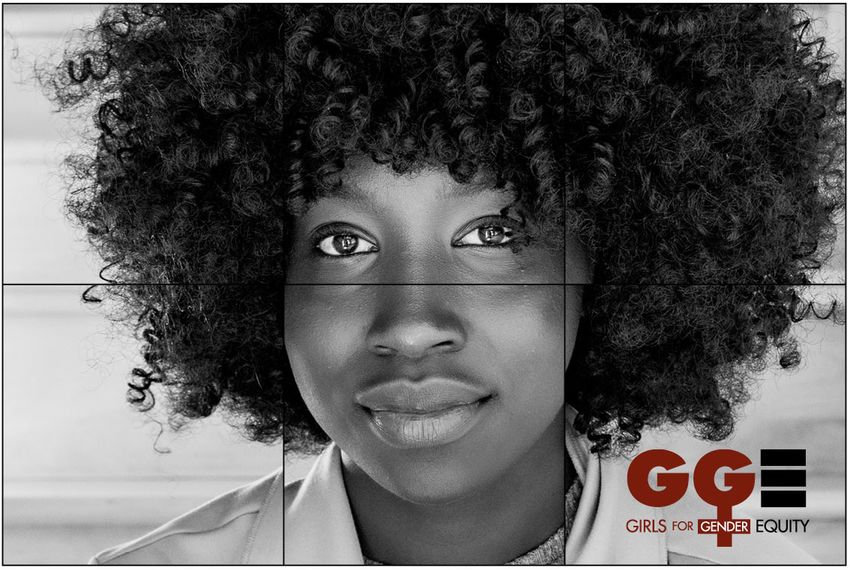
The State of Black Girls in New York State
Introduction
In early 2019, four 12-year-old girls of color were subjected to         Part I:
sobriety tests, strip searches, and/or suspensions for refusing to       Education &
disrobe in a Binghamton, New York middle school. The basis for           Criminalization
this humiliation was an adult staff member who felt that the girls
were giggling too much and being “hyper and giddy.” The                  Part II:
                                                                         Sexual Violence
traumatization that these children experienced led over 200
                                                                         Compounds Educational
community members to pack a school board meeting in solidarity
                                                                         Inequity
with the young girls. This horrific incident brings a spotlight to the
many ways that Black girls are criminalized in their educational         Part III:
settings and adultified – or perceived and responded to as more          Family Regulation &
adult-like, excluded from the social construction of childhood –         Criminalization
with their needs often left out of the popular narratives around
both the school-to-prison pipeline and women’s rights.                   Part IV:
                                                                         A Costly Web of Girls’
New York State must shift to recognizing Black girls’ joy,               Criminalization
including their acts of resistance, as an extraordinary asset.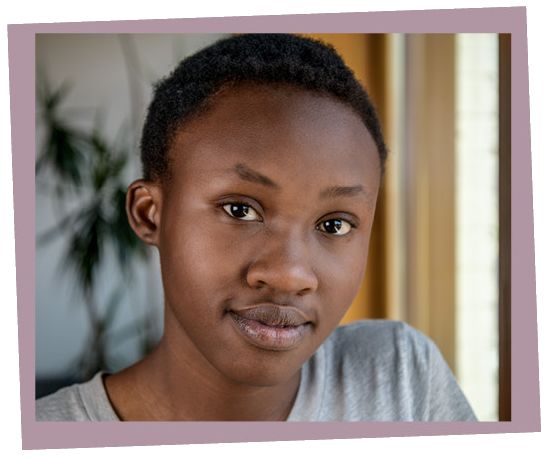
Black girls across the state of New York face
challenging barriers, including racism, sexism,
transmisogyny, homophobia, poverty, and
economic inequity, that threaten their ability to
live self-determined lives or access opportunity.
While Black girls continue to persevere and
demonstrate incredible brilliance despite
structural violence, careful attention must be
paid to what must be dismantled in order to
make New York State more equitable and just.

Around the same time as the incident in
Binghamton,1 the Office of the Governor of the
State of New York released a report on the status
of women and girls. The report outlined key
investments and commitments to improve the                     Part I:
opportunities available to girls in the state.2 In
                                                               Education & Criminalization
particular, access to computer science and
                                                               The public invests in the public education system
technology in public schools, access to
                                                               to function as a protective factor, supporting
menstrual hygiene products in grades 6-12, and
                                                               young people through caring relationships, high
school-based mentoring programs. Despite these
                                                               expectations, and opportunities for learning.
important commitments, we know that without
                                                               However, as education becomes bound with
an intersectional analysis explicitly naming the
                                                               criminalization, a system that is meant to support
systems that converge in the lives of Black girls
                                                               is too often intensifying the marginalization of
in particular, any efforts to improve the lives of
                                                               Black girls. Punishing institutions of the state,
girls will fall short.
                                                               like the juvenile justice and policing systems,
This year, New York and its local governments                  and nurturing institutions, like the education
will be working to recover from incalculable loss              system, instead come together to criminalize,
and an unprecedented disruption to schooling                   stigmatize, and limit the life chances of Black
while facing a financial crisis. Looming cuts on               girls.
the state level mean local districts may cut
                                                               Schools can support young people’s
services or programs for young people at the
                                                               development and strengthen factors that
same time as remote learning exacerbates
                                                               increase their life chances, but the absence of
inequality. Advocates and government leaders
                                                               care extended to Black girls and hyper-exposure
must listen to the knowledge of Black girls
                                                               to punitive practices fuels systemic inequities
produced through navigating systems of power
                                                               and disproportionately pushes Black girls out of
and oppression in their daily lives, including
                                                               school and further into the margins. Initiatives
through their acts of defiance, creativity, and
                                                               and recommendations too often ignore the
survival.
                                                               complexity of systemic and interlocking forces at
Decision-makers must work with young people to                 work in education, neglecting the ways girls are
address structural inequities and take action to               multiply marginalized and consistently
reform systems and meet the needs of those at                  criminalized for the ways in which they navigate
the margins.                                                   through structural inequalities.3

A 2021 Report of Girls for Gender Equity, Inc. | www.ggenyc.org | media@ggenyc.org | @GGENYC        Page 2 of 14
There has been mounting scrutiny for schools’ According to the most recently available
reliance on harsh disciplinary practices over the national Civil Rights Data Collection, there were
past decade, specifically critiquing ‘zero 2,203 school expulsions in New York State
tolerance’ discipline like suspensions and during the 2015-2016 school year: while Black
expulsions. girls represented 8.6% of all girls enrolled in
school they made up 32.7% of all expulsions of
Research and government initiatives have
girls.8
established attention to the needs of boys of
color often neglecting to attend to the Studies that examine girls’ experiences suggest
experiences and needs of girls of color, that girls of color are being disciplined for
specifically Black girls who are overrepresented reasons that differ from their male peers. In
across all categories of school discipline and are particular, girls are more likely to face discipline
made to endure a unique standard of arbitrary for failing to meet dominant white cisgender
acceptable school-based behavior.4 expectations of femininity.9 Black girls in
particular are more likely to be disciplined for
Educational research has consistently shown
“talking back” and being “unladylike,”10 and are
that the strongest predictor of academic
also more likely to be arrested in their schools for
achievement is active academic engagement,
being “disrespectful” and “uncontrollable.”11 In
drawing into question strategies such as
addition to experiencing their own gender-
suspension that remove students from their
specific forms of policing, Black girls are also
opportunity to learn.5 The use of suspension and
disciplined for behaviors such as disruption,
expulsion has also raised civil rights concerns
defiance, and fighting. Many of these infractions
due to strong and consistent evidence that
are subjective, and determined by the opinions of
students of color are over-represented among
school teachers and administrators.
those who are so disciplined.
Often neglecting attention to girls’ experiences,
According to data obtained by GGE from the
like survivorship or impact of gender violence,
New York State Education Department, school
this punishment of girls as a form of classroom
districts outside New York City imposed out-
management is a state-sanctioned way to
of-school suspensions on more than 70,000
control girls and limit their access to opportunity.
students in the 2018-19 school year — an
A healing-centered and restorative framework
average of at least one student a minute, every
for school communities would instead cultivate
hour of the school day according to the New
respect for the creativity and dignity of Black
York Equity Coalition.6
girls and girlhood, and inspire action to remedy
Schools impose the most disproportionate inequities that motivate resistance.12
discipline on Black female students; a report from
In the fall of 2020, the Solutions Not Suspensions
the New York Equity Coalition explains that
Coalition, a statewide coalition of organizations
elementary and middle schools outside of New
advocating for education justice of which GGE is
York City were nearly eight times as likely to
a part, called on the Governor, Board of Regents,
suspend Black female students as their white
and State Education Department to bring about a
female peers, and in New York City the district
statewide moratorium on school suspensions
was nearly 11 times as likely to suspend Black
during the 2020-2021 school year. As safe,
female elementary and middle school students
healthy schools are suspension-free schools, this
as their white female peers.7
moment calls for bold demands.
A 2021 Report of Girls for Gender Equity, Inc. | www.ggenyc.org | media@ggenyc.org | @GGENYC Page 3 of 14Advocates contend that students who have been The Governor’s August 2020 guidance book for
excluded from school are more likely to fall the New York State Police Reform and
behind academically and become distanced from Reinvention Collaborative, released as part of
supportive relationships, subsequently pushing Executive Order 203 requiring each local
students out of school where they are then government in N.Y. State to adopt a policing
uniquely targeted by the criminal legal system. reform plan by April 1, 2021, goes as far as to ask
Others contend that schools create militarized the question of “Should law enforcement have a
conditions for students, where students of color presence in schools?” but does not advance the
are constantly subject to security systems and progressive leadership this moment demands.18
profiling by school administrators and school
A 2019 report from the American Civil Liberties
police, and are disciplined and monitored in ways
Union (ACLU) revealed that 14 million students
that create a punitive, hostile environment.13
across the country are in schools with police but
Across New York State, school districts utilize no counselor, nurse, psychologist, or social
exclusionary and punitive school discipline worker.19 While the report alleges New York State
practices in a variety of forms, some resorting to clearly underreported police presence to the Civil
expulsion and others utilizing police intervention Rights Data Collection (CRDC), there were still
through school-based school resource officers or more police and security officers than social
municipal police departments. Researchers also workers, with New York State operating well
contend that the increasing presence of police above the School Social Work Association of
officers has translated to more criminalization America’s recommended ratio of 250 students to
and arrests of students at school, where the one social worker.
presence of police officers who are authorized to
Falling short to address policing and its harmful
criminalize and arrest students leads to the
impacts on child development will continue to
inevitable criminalization and arrest of
undermine health and educational equity for
students.14 Taken together, schools have not
Black girls and their communities across New
only failed to address girls’ needs but also
York.
punished them for acting out in response to
compounding forms of violence in their lives.
Part II:
In June of 2020, the Minneapolis Public School Sexual Violence Compounds
Board made movement history by adopting a
resolution to disband school policing. Since then, Educational Inequity
districts across New York State have been having In January 2019, three Black girls and one Latina
conversations about police-free schools. Two student were subjected to unlawful sobriety tests
weeks after Minneapolis, the Rochester City and strip-searches for appearing “hyper and
Council voted to make police-free public schools giddy” while leaving lunch at their Binghamton,
a reality for the young people of Rochester.15 New York middle school.20 The girls were each
Then, in late August, the Plattsburgh City Council asked to remove articles of their clothing by the
unanimously voted not to renew the School school nurse, and were subjected to offensive
Resource Officer contract between the city and comments about their breasts and physical
district.16 School Districts like Syracuse, appearance.21 By April, the nation’s oldest civil
Jamesville-DeWitt, Massena, New Paltz, Kingston and human rights law office, the NAACP Legal
and many others have also been reported as part Defense and Educational Fund, filed a lawsuit on
of the national police-free schools momentum.17 the girls’ behalf.
A 2021 Report of Girls for Gender Equity, Inc. | www.ggenyc.org | media@ggenyc.org | @GGENYC Page 4 of 14The lawsuit stated that the girls were subjected Over one year later, the girls, now entering high
to violations of their 4th and 14th Amendment school, are quoted as saying that because the
rights, violations to their right to a free and district continues to deny their experience, they
appropriate education under the Individuals with still do not feel comfortable attending school.23
Disabilities in Education Act (IDEA), and violations
In 2017, GGE released The School Girls Deserve
of Title VI of the Civil Rights Act. The lawsuit
Report, the outcome of a participatory action
alleges, among other things, that the girls were
research project conducted through listening
targeted for this humiliating experience because
sessions with 120 participants aged 9-23 across
of both their race and gender, and stereotypes New York City.24 The examples of interpersonal
associated with Black women, Latinas, and girls. violence that the young people reported included
The staff at the Binghamton middle school did in but were not limited to: sexual harassment, racial
fact make comments rooted in historic race- harassment, Islamophobia, and control of their
based and gender-based stereotypes in front of gender expression and identity. Our research
the girls, including stating that the girls had showed that approximately one out of three of
“attitudes” and that they were “disrespectful,” the vision session participants reported
presumably for laughing or for questioning the experiencing some form of sexual harassment in
unlawful searches.22 school. For girls across the state, attending
school is not a source of joy and promise, but
These stereotypes facilitated school- instead a place to be treated harshly or treated
sanctioned sexual violence and are not limited suspiciously by the adults charged with their
to this one middle school in Binghamton. care.
According to research commissioned by the Adults’ practices of routine surveillance and
American Psychological Association, Black youth hyper-scrutiny which rely heavily on the absence
in particular are viewed to be much older than of consent culture and the presence of subjective
they actually are and, according to research by understandings of appropriate behavior often
the Georgetown University Center for Poverty and target girls of color, especially Black girls, for
Inequality, as a result of these beliefs, Black girls discipline or punishment.
are not afforded the protections of youth and
notions of childhood innocence.16 National-level research finds that 60 percent of
Black girls have experienced sexual assault
These beliefs are not innocuous, the decision- before the age of 18.25 In order to end child
making of adults in schools, as evidenced by sexual assault, abuse, and gender based
the staff at Binghamton East Middle School, violence, we understand solutions within the
have detrimental impacts on the ways that spectrum of preventing violence before it begins
Black girls are able to access education in New and offering supportive, non-coercive, voluntary
York State and live free of the fear of sexual or services for survivors.
gender-based violence.
There is overwhelming evidence documenting
The girls from Binghamton all “felt uncomfortable the effectiveness of comprehensive sexual health
returning to school because their trust in school education, particularly education that the
officials had been violated. They felt American College of Obstetricians and
embarrassed, humiliated, and targeted for Gynecologists (ACOG) cites as embracing
unwanted attention.”17 “community-centered” efforts.26
A 2021 Report of Girls for Gender Equity, Inc. | www.ggenyc.org | media@ggenyc.org | @GGENYC Page 5 of 14Curricula that teach students about gender and While there is little transparency on the full scope
power are more effective at protecting young or prevalence of police sexual misconduct,
people than those that do not.27 However, research indicates that police sexually harass
according to the Sexuality Information and and assault women and girls with alarming
Education Council of the United States (SIECUS), frequency.32 As one example, analysis of a New
only one state in the country has a health York City youth survey conducted by the CUNY
education curriculum that mandates that Graduate Center found that 40% of the young
students are educated about consent.28 women surveyed had experienced sexual
harassment by police officers, and LGB youth
New York State, in fact, does not currently require
were twice as likely to have experienced negative
comprehensive sexual health education (CSE) in
sexual contact with police.33
public schools. This means many schools do not
provide any sexuality education and when they In 2018, when BuzzFeed released thousands of
do, it is too often exclusionary, discriminatory, records of NYPD misconduct cases, GGE filtered
inaccurate, and stigmatizing. through documentation of school safety agents
engaging in sexual misconduct, such as wrongful
According to New York State’s 2019 High
searches, simulating sexual gestures, engaging in
School Youth Risk Behavior Survey results,
sexual activity on school premises, digital
15% of Black girls reported experiencing sexual
harassment and harassing remarks.34 It is with
violence, 11% reported experiencing sexual
this context that we make the argument that
dating violence, and 9.2% reported
the work to win police-free schools is work to
experiencing physical dating violence.29
end gender-based violence.
An audit by the New York Civil Liberties Union
Public schools should be one of several venues
(NYCLU) documented only 42% of the state’s
to prevent sexual violence and abuse. The state
school districts taught about sexual harassment,
must work with districts and invest in the
with only 28% teaching about sexual assault or
resources and services that provide healing,
rape.30 Further, GLSEN’s 2017 New York State
emotional support, housing, and advocacy for
Snapshot reported that “most lesbian, gay,
survivors of gender-based violence. It is critical to
bisexual, transgender, and queer (LGBTQ)
ensure affordable, safe, and stable housing for
students in New York experienced anti-LGBTQ
youth survivors of gender-based violence.
victimization at school,” inclusive of homophobic
Researchers identify homelessness as the
remarks, negative remarks about gender
greatest predictor of involvement with the
expression and transphobia, with only 33% of
juvenile justice system, and with a national
students who reported incidents saying it
estimate of 40% of homeless youth identifying as
resulted in effective staff intervention.31 New York
LGBT, LGBT youth experiencing homelessness
State waffles on adopting CSE just as research
are especially targeted for policing and
links social and emotional competencies
incarceration.35 Further, the racial disparities in
developed in CSE programs to improved physical
youth homelessness contribute to the
and mental health outcomes, as well as to
overrepresentation of youth of color incarcerated,
healthy and satisfying relationships, and respect
especially LGBTQ youth of color. This means, in
for gender identity and bodily autonomy.
combination with ending youth incarceration,
The nexus of schools and state-sanctioned New York must address the specific needs of
gender-based violence is further complicated LGBTQ youth of color, homelessness and
by the stationing of police in schools. growing access to stable housing.
A 2021 Report of Girls for Gender Equity, Inc. | www.ggenyc.org | media@ggenyc.org | @GGENYC Page 6 of 14Part III: The research overwhelmingly points to a need to
prevent young people from ever experiencing
Family Regulation & sexual violence and to care for survivors rather
Criminalization than invisibilizing them through criminalization.
Multiple systems converge to hyper-criminalize Yet New York State continues to ignore the
Black girls in New York State. In other words, unmet social, emotional, or material needs of
agencies and actors advance and create young people, especially Black youth, and then
processes of making a person or peoples or punishes those same young people for their own
certain behavior illegal, or criminalizable. victimization.
Work to broadcast phenomena such as but not New York State must hold itself responsible for
limited to the “sexual abuse to prison pipeline” or each family it chooses to entangle itself in as
“foster care to prison pipeline” explains the ways facilitated by child welfare systems, and for each
girls of color, especially Black and Latinx young child it removes from their family. The state must
people, are punished for their response to also be responsible for the immediate and long-
traumatization and a myriad of historic, term consequences of those actions.
structural, and institutional system failures. Nationally, one quarter of the children placed into
LGBTQ+ girls and youth of color are the foster care system are projected to be
overrepresented in these two systems of child targeted by and enter the criminal legal system
welfare and juvenile justice as a result of within two years of leaving foster care.18 As
compounded structural racism and LGBTQ another example, in New York City 57.1% of
stigma.36 Further, LGBTQ youth of color appear to young people who were in both foster care and
stay longer in the systems and are overexposed the juvenile justice system experience adult
to discrimination and violence compared to other incarceration within six years of exiting care, as
groups of youth.37 compared to 14.7% of all NYC foster alumni.40
Again, the adultification of LGBTQ children of Even though Black children (under 18) make up
color leads to their exclusion from the least only 15% of the New York City population, they
restrictive interventions or hyper-exposure to constitute 53% of the 9,000 children in foster
punishment through systems. Essentially, in this care.41
web of youth criminalization is the family
regulation system and family policing. Further, a November 2020 survey commissioned
by the New York City Administration of Children’s
According to one of the nation’s most recognized Services (ACS) reported LGBTQAI+ youth are
law offices dedicated to addressing the issues overrepresented in foster care, representing more
arising from the juvenile justice and child welfare than one out of three young people, are more
systems; “[f]oster youth, particularly girls, are frequently youth of color, and more likely to be
targeted by sex traffickers, and the placed in group homes or residential care and
criminalization of sex work can funnel these less likely to be placed in family-based care.42
victims of modern-day slavery into the criminal
justice system.”38 The groundbreaking report, The The pandemic has raised the issue of
Sexual Abuse to Prison Pipeline: The Girls’ Story, educational neglect calls during remote learning,
made clear that sexual abuse is one of the with school staff responding to student absences
primary predictors of a girl’s entry into the from remote learning programs by contacting the
criminal legal system.39 State Central Registry (SCR).43
A 2021 Report of Girls for Gender Equity, Inc. | www.ggenyc.org | media@ggenyc.org | @GGENYC Page 7 of 14Communities have amplified that throughout the This describes a scenario where police enter
COVID-19 crisis families have encountered a schools to effectuate an arrest, disrupting the
litany of roadblocks to connecting children to school day and tarnishing the young person’s
remote learning. relationship to their school building. Black girls
are pulled in at disproportionate rates for a
Hundreds of thousands of parents statewide –
number of reasons: rates of poverty which may
disproportionately Black and Latinx parents –
have an impact on family conflict, attending
experience devastating barriers to employment
persistently underfunded and hyper-policed
because of the SCR when there is no child safety
schools, and, not the least of these, subjective
concern. At the end of 2019, despite
understandings about “appropriate” attitude,
overwhelming support from the legislature,
body-language, and behavior. These subjective
Governor Cuomo vetoed legislation to reform the
understandings often put Black girls at odds with
SCR. As allegations of neglect are often the direct
the adults in their lives, and revisit racist
result of the absence of access to adequate child
stereotypes, like that of the “angry Black woman”
care, shelter and medical care, refusing SCR
onto young girls.
reform is a choice to punish family poverty.
Antiquated laws designed to control the
The child welfare or family regulation system and
normal, youthful expression of girls and young
the juvenile legal system overlap with the legal
women rely on dangerous stereotypes about
category of “status offenses,” meaning offenses
“ladylike” behavior, which often squelch the
that are applied to a class of people, often
expression of girls of color, lesbian, bisexual,
meaning young people. These are primarily
and queer girls, and youth who are gender non-
activities deemed unlawful due to the person’s
conforming.
age, and would not be illegal if performed by an
adult. Over several years New York State has In New York State, language in the Family Court
adopted reforms to PINS, or “Persons in Need of Act permits girls to be dragged into the court
Supervision,” including the end of PINS detention. system for being “incorrigible.” This term was
However, reforms continue limited out-of-home used by the system over one hundred years ago
placements prior to court disposition in foster to categorize young girls who were incarcerated
care settings. This is referred to in statute as at the first “Training School for Girls,” a prison for
“pre-dispositional placements.” girls in Hudson, New York. During the summer of
2020, state legislation to amend the Family Court
From January to September 2020, girls
Act and eliminate the use of the term incorrigible,
represented 71% of all PINS pre-dispositional
passed the State Senate, and is to be
placements, demonstrating a unique gendered
reintroduced in 2021.
overrepresentation in this particular kind of
youth control.44 Youth of color represented 95% In the wake of landmark Raise the Age legislation,
of PINS PDPs in all of New York State, and “incorrigible” is a stain on the state as it continues
100% of all PINS PDPs in New York City. to label young girls, overwhelmingly girls of color,
facilitating their entry into the court system
In New York City in 2019 for example, girls
through persons in need of supervision (PINS)
represented 68% of arrests at school under PINS
petitions. Legally- and socially-constructed
warrants, 100% of whom were girls of color, and
definitions of childhood and girlhood have and
56% were Black girls.45
continue to shape the treatment of young people.
A 2021 Report of Girls for Gender Equity, Inc. | www.ggenyc.org | media@ggenyc.org | @GGENYC Page 8 of 14In the midst of national uprisings for racial justice That led to 3,003 total admissions to detention
this July, a case came to mainstream attention (with girls representing 23% or 685 detention
where a 15-year-old Black girl in Michigan faced admissions). Ultimately, 129 girls were admitted
incarceration during the coronavirus pandemic for placement.50 Of 3,867 family court petitions,
after a judge ruled that not completing her 23% or 906 targeted girls. Information is further
schoolwork violated her probation.46 Grace’s limited to be able to understand the scope of
entry into the legal system, a court diversion probation intake and probation supervision for
program, was for “incorrigibility.” During and in girls, as the 1,783 probation cases opened are
the aftermath of this pandemic and fiscal crisis, not disaggregated by race or gender.
New York State must take common-sense action
In the 2006 landmark report, “Custody and
and shift away from pushing girls of color into
Control: Conditions of Confinement in New York’s
the court system for “incorrigibility” and instead
Juvenile Prisons for Girls,” Human Rights Watch
seek to meet their real material needs.
and the ACLU describe how in New York State,
Part IV: the proportion of girls in custody had grown from
14 percent in 1994 to over 18 percent in 2004.51
A Costly Web of Girls’ More recently, girls represented 22% of all youth
Criminalization in placement in 2014 and 23% in 2018.
The juvenile justice system is a boundless This mirrors a national trend, where over the
network of police departments, detention past quarter century, there has been a profound
facilities, probation departments, county change in the involvement of women and girls
attorney’s offices, and courts. The Division of within the criminal legal system.
Criminal Justice Services’ (DCJS’) statewide
juvenile justice profile presents data on juvenile Nationwide, girls of color are much more likely to
justice case processing for arrest, detention, be incarcerated than white girls, where Black girls
probation intake, family court, probation are three-and-a-half times as likely as white girls
supervision and placement. However, the to be incarcerated (110 per 100,000 compared to
reporting does not disaggregate the data by 32).52 While 60% of women incarcerated in state
multiple identity categories; thus, while we know prisons across the country have a child under the
that Black youth are disproportionately age of 18, we do not have that data for New
represented across all categories – for example, York’s Department of Correction and Community
making up 16% of the state population but 60% Supervision (DOCCS) aside from 61% of all
of all juvenile delinquent (JD) and juvenile people imprisoned having one or more
offender (JO) youth in detention – numbers on children.53 We include this consideration as
the specific impact on Black girls are not among many impacts of parental incarceration,
currently publicly accessible.47 according to one statistic, children of
incarcerated parents are, on average, six times
We are able to deduce that hundreds of young more likely to be targeted for incarceration.54
girls across the State are targeted for criminal
justice system responses. In 2018, the most Custody and Control also raised that because of
recent available data from DCJS, there were the remoteness of youth prisons, incarcerated
8,666 arrests of young people ages 7 to 15 girls were isolated from their families and
statewide,48 with 25% (or 2,198) of those arrests communities.
being arrests of girls.49
A 2021 Report of Girls for Gender Equity, Inc. | www.ggenyc.org | media@ggenyc.org | @GGENYC Page 9 of 14This concern later complemented the passage of In November 2020, The Imprint published “Sticker
Close to Home in 2012 and the removal of New Shock: The Cost of New York’s Youth Prisons
York City youth from large, dangerous, and Approaches $1 Million Per Kid,” detailing that
expensive facilities far from their homes. New York’s youth lockups were the costliest in
the nation. In 2019, there were 47 girls admitted
In these non-secure placement and limited-
to OCFS limited secure, non-secure, and secure
secure placement facilities operated by the
facilities – Harriet Tubman, Taberg, Brentwood,
New York City Administration for Children’s
and Columbia – with 50 girls incarcerated on
Services, there were 15 girls incarcerated in
December 31, 2019.
Fiscal Year 2020 – while we do not have
disaggregated data across multiple identity Using rates reported by The Imprint, we
categories, 98% of all admissions were of youth calculated that this cost of incarcerating girls in
of color.55 New York State reached almost $45 million last
year.
At this juncture, the exploding costs of reforms to
tinker with youth incarceration are being With the fiscal impact of the pandemic, and
questioned. increased public transparency around the
escalating expenses of state-operated youth
In September of 2017, Governor Cuomo
confinement facilities – price tagged at $900,000
announced bidding for $89 million in
per young person per year – some lawmakers
construction projects to repurpose four facilities
are considered redirecting funds.57
to incarcerate new legal categories of young
people.56 Under Raise the Age, the New York In December 2020, DOCCS announced the
State Office of Children and Family Services planned closure of three adult prisons in 2021,58
(OCFS), which operates the state’s juvenile that same trend can be adopted for the 12 OCFS-
justice facilities, and DOCCS, which temporarily operated “residential centers for post-adjudicated
operated adolescent offender facilities before youth” – the youth prison system.
authority was transferred to OCFS in October
Aside from the ballooning fiscal cost of youth
2020, were extended added imprisonment
incarceration in New York City and State, youth
capacity.
incarceration comes at incalculable social cost. It
This included $12 million in construction projects is well established that incarceration harms
at the Harriet Tubman Residential Center in young people developmentally, psychologically,
Cayuga County, for the facility to be a limited and physically, and many of the barriers affecting
secure residential center for the incarceration of youth in the juvenile justice system are directly or
25 sixteen- and seventeen-year-old girls. indirectly tied to structural issues such as
systemic poverty, institutional racism, and a
In name, this site of youth imprisonment
myriad of public health concerns.59 Ending
represents the co-optation of a radical legacy,
incarceration of Black girls and girls of color is
appropriating a progressive narrative, in both
one step toward chipping away at a culture of
form and content, to meet regressive aims.
punishment and moving toward a culture of care.
A 2021 Report of Girls for Gender Equity, Inc. | www.ggenyc.org | media@ggenyc.org | @GGENYC Page 10 of 14Conclusion & For the coming year, we invite you to join us in
fighting for our key policy priorities:
Vision for the Future
2020 was a year of remarkable challenges for 1. Resourcing public schools to build
youth of color across the State of New York. It connections. We are working to end school
was a year marked by a worldwide pandemic that suspensions, build positive school climates,
shut down their school buildings, limited access place a moratorium on the Regents exams,
to supports and services, and brought about and demand full funding of the Foundation
immeasurable loss. Aid Formula.
The spring of 2020 was defined by yet another 2. Ending criminalization of youth and families
flashpoint of Black suffering: the killings of Black of color. We are working to remove racially
people including George Floyd, Tony McDade, biased terms like “incorrigible” and habitually
and Breonna Taylor. Breonna Taylor, a young defiant from the state Family Court Act,
Black woman, had her dreams snatched from her ending dangerous practices of youth
by state violence. interrogation, stopping the collection of DNA
from youth by police, and challenging the
There are concrete connections between the family regulation system.
national conversations around race and gender,
and long overdue state-level action. 3. Ensuring safe, supportive, and healthy
school environments. We are supporting
If the New York State government is truly comprehensive sexual health education in all
committed to healing from devastation and public schools, where students learn about
building toward a more just future, the state consent and healthy relationships to prevent
must commit to a serious re-prioritization of school-based sexual harassment and assault.
resources and a divestment from the
criminalization of Black youth. We wrote this report with the belief that partners
in movement work will join us to transform the
Yet, the government will only be accountable to State of New York with and alongside young
those that it feels have power. Despite the people, we hope that you will join us.
struggles of the recent year, there have been
countless examples of the effectiveness of About Girls for Gender Equity
organizing and the might of collective struggle.
GGE is a Brooklyn-based intergenerational
Thousands of people who gathered in streets all advocacy organization, engaging cisgender and
across New York State to demand racial justice transgender girls of color and gender non-
placed pressure on governmental leaders to take conforming youth of color. GGE centers Black
action on issues that they long evaded. girls in the movement to achieve gender and
racial equity. Since 2001, GGE has committed to
Our vision is one where people who are the optimal development of our communities
committed to radical transformation across the through a combination of direct service, policy
state are both mobilized and prepared to apply advocacy, community organizing, and culture
pressure. change work.
A 2021 Report of Girls for Gender Equity, Inc. | www.ggenyc.org | media@ggenyc.org | @GGENYC Page 11 of 14Endnotes
1 12
Gold, M. (2019, January 30). “After Report of 4 Girls See, for example, GGE’s Police-Free Schools Framework,
Strip-Searched at School, Cuomo Calls for Inquiry.” New “Sustaining Police-Free Schools Through Practice: A
York Times; See also, See Disla et al. v. Binghamton City Tool for New York City’s School Communities. (2020).
School District et al. Retrieved from Available at https://www.ggenyc.org/the-schools-girls-
https://www.naacpldf.org/wp- deserve/police-free-schools-toolkit/.
content/uploads/Binghamton-Complaint.pdf 13
See, for example, Monahan, T., & Torres, R. (Eds.).
2 (2010). Schools Under Surveillance: Cultures of Control
See “2019 Women's Justice Agenda,” (August 2019).
in Public Education. Rutgers University Press.
Retrieved from
14
https://www.governor.ny.gov/sites/governor.ny.gov/file See, for example, Kim, C., Losen, D., & Hewitt, D. (2010).
s/atoms/files/WomensReport021919.pdf. The School-to-Prison Pipeline: Structuring Legal Reform.
3 NYU Press.
Crenshaw, K. 1997. “Intersectionality and Identity
15
Politics: Learning from Violence against Women of Alliance for Quality Education. (2020, June 16). Police-
Color.” In Reconstructing Political Theory: Feminist Free Schools Are a Victory for Rochester’s Students &
Perspectives, edited by Mary Lyndon Shanley and Uma Families. Retrieved from
Narayan, 178–193. Pennsylvania: Pennsylvania State https://www.aqeny.org/2020/06/16/police-free-schools-
University Press. will-be-a-victory-for-rochesters-students-and-
4 families/#:~:text=ROCHESTER%2C%20N.Y.,murder%20a
Crenshaw, K., P. Ocen, and J. Nanda. 2014. “Black Girls
nd%20the%20subsequent%20uprisings.
Matter: Pushed out, Overpoliced, and Overprotected.”
16
African American Policy Forum and Center for Menard, B. (2020, September 1). Plattsburgh City
Intersectionality and Social Policy Studies. New York: Council Votes to Not Renew Contracts for SRO’s. My
Center for Intersectionality and Social Policy Studies. NBC 5. Retrieved from
5 https://www.mynbc5.com/article/plattsburgh-city-
Brown, Kevin D.; Skiba, Russell J.; and Eckes, Suzanne E.,
council-votes-to-not-renew-contracts-for-
"African American Disproportionality in School Discipline:
sros/33867201.
The Divide Between Best Evidence and Legal Remedy"
17
(2009). Articles by Maurer Faculty. See, for example, GGE’s Police-Free Schools Movement
6 Map, Available at https://www.ggenyc.org/the-schools-
See “Suspension-Free Schools” (September 2020). Girls
girls-deserve/police-free-schools-movement-map/.
for Gender Equity. Available at
18
https://www.ggenyc.org/wp- New York State Police Reform and Reinvention
content/uploads/2020/09/Suspension-Free-Schools-A- Collaborative: Resources and Guide for Public Officials
Report-By-GGE.pdf; Student per minute citing the New and Citizens. (August 2020). See Page 18, Available at
York Equity Coalition (see citation 7). https://www.governor.ny.gov/sites/governor.ny.gov/file
7 s/atoms/files/Police_Reform_Workbook81720.pdf.
The New York Equity Coalition. (2019). Stolen Time: New
19
York State’s Suspension Crisis. Retrieved from American Civil Liberties Union. (2019). Cops and No
https://equityinedny.edtrust.org/wp- Counselors How the Lack of School Mental Health Staff
content/uploads/sites/14/2019/08/Stolen- Is Harming Students. Retrieved from
Time_2018.pdf. https://www.aclu.org/sites/default/files/field_document
8 /030419-acluschooldisciplinereport.pdf.
See Civil Rights Data Collection, 2015-16 State and
20
National Estimations. Analysis by Girls for Gender Disla et al. v. Binghamton City School District et al.,
Equity. Available at Complaint at 3 (2019), available at,
https://ocrdata.ed.gov/estimations/2015-2016. https://www.naacpldf.org/wp-
9 content/uploads/Binghamton-Complaint.pdf
Sharma, S. 2010. “Contesting Institutional Discourse to
21
Create New Possibilities for Understanding Lived Disla et al. v. Binghamton City School District et al.,
Experience: Life‐Stories of Young Women in Detention, Complaint at 9.
Rehabilitation, and Education.” Race, Ethnicity and 22
Education 13 (3): 327–347. IBID
23
10
Morris, E. W. 2007. ““Ladies” or “Loudies”? Perceptions Green, E.L., Walker, M., and Shapiro, E. (2020, October 1).
and Experiences of Black Girls in Classrooms.” Youth & ‘A Battle for the Souls of Black Girls’. New York Times.
Society 38 (4): 490–515. Retrieved from
https://www.nytimes.com/2020/10/01/us/politics/blac
11
Morris, Monique. 2012. Race, Gender, and the School-to- k-girls-school-discipline.html.
Prison Pipeline: Expanding Our Discussion to Include 24
Black Girls. New York: African American Policy Forum Girls for Gender Equity. (2017). The School Girls
Deserve. Available at https://www.ggenyc.org/wp-
A 2021 Report of Girls for Gender Equity, Inc. | www.ggenyc.org | media@ggenyc.org | @GGENYC Page 12 of 14Retrieved from
content/uploads/2017/11/GGE_school_girls_deserveDR https://www.prisonpolicy.org/blog/2019/01/22/lgbtq_y
AFT6FINALWEB.pdf. outh/.
25 36
The National Center on Violence Against Women in the Conron, K.J. and Wilson, B.D. M (Eds.)(2019). A
Black Community, Black Women and Sexual Assault. Research Agenda to Reduce System Involvement and
(2018). Black Women and Sexual Assault. Retrieved Promote Positive Outcomes with LGBTQ Youth of Color
from https://ujimacommunity.org/wp- Impacted by the Child Welfare and Juvenile Justice
content/uploads/2018/12/Ujima-Womens-Violence- Systems. Los Angeles, CA: The Williams Institute.
Stats-v7.4-1.pdf 37
IBID
26
American College of Obstetricians and Gynecologists. 38
Juvenile Law Center, (2018, May 26). Referencing Teen
(2016; Reaffirmed 2018). Comprehensive Sexuality
Vogue's series, Fostered or Forgotten, Retrieved from
Education. Committee Opinion No. 678. Available at .
https://jlc.org/news/what-foster-care-prison-pipeline
https://www.acog.org/-/media/Committee-
39
Opinions/Committee-on-Adolescent-Health- Human Rights Project for Girls, Georgetown Law Center
Care/co678.pdf?dmc=1&ts=20190116T0040261550 on Poverty and Inequality, Ms. Foundation for Women.
27 (2019). The Sexual Abuse to Prison Pipeline: The Girls’
Haberland, Nicole. (2015). The Case for Addressing
Story. Retrieved from
Gender Power in Sexuality and HIV Education: A
https://www.law.georgetown.edu/poverty-inequality-
Comprehensive Review of Evaluation Studies.
center/wp-content/uploads/sites/14/2019/02/The-
Guttmacher Institute International Perspectives on
Sexual-Abuse-To-Prison-Pipeline-The-Girls%E2%80%99-
Sexual and Reproductive Health. Volume 41, Issue 1.
Story.pdf.
28
Eisenstein, Z. (2018). We’re Starting to Make the Link 40
See Anspach, R. (2018, May 25). “The Foster Care to
Between Sexual Assault and Sex Ed. But We Need to Do
Prison Pipeline: What It Is and How It Works.” Teen
Better. Sexuality Information and Education Council.
Vogue. Retrieved from
https://medium.com/@siecus/were-starting-to-make-
https://www.teenvogue.com/story/the-foster-care-to-
the-link-between-sexual-assault-and-sex-education-but-
prison-pipeline-what-it-is-and-how-it-works.
we-need-to-do-better-afb900ccf278.
41
29 Fitzgerald, M. (2019). “New York City Confronts Massive
Centers for Disease Control and Prevention. (2019). New
Overrepresentation of Black Children in Foster Care” The
York 2019 Results. Retrieved from
Chronicle of Social Change: Children, Youth, and Family
https://nccd.cdc.gov/youthonline/app/Results.aspx?LID
Center.
=NY.
42
30 Sandfort, T. (2020, November). Experiences and Well-
New York Civil Liberties Union. (2012). Birds, Bees, and
Being of Sexual and Gender Diverse Youth in Foster Care
Bias: How Absent Sex Ed Standards Fail New York’s
in New York CIty. Retrieved from
Students. Retrieved from
https://www1.nyc.gov/assets/acs/pdf/about/2020/Well
https://www.nyclu.org/en/publications/report-birds-
BeingStudyLGBTQ.pdf
bees-and-bias-2012.
43
31 See, for example, Letter from Advocates, retrieved from
GLSEN. (2018). School Climate in New York. Retrieved
https://assets.documentcloud.org/documents/7221584
from https://www.glsen.org/sites/default/files/2019-
/Request-for-OCFS-to-Issue-Guidance-Regarding.pdf.
11/New%20York_Snapshot_2017_0.pdf.
44
32 New York State Office of Children and Families Services.
Ritchie, A.J., and Jones-Brown, D. (2017) Policing Race,
(2020, November 21). Persons in Need of Supervision
Gender, and Sex: A Review of Law Enforcement Policies,
Pre-Dispositional Placement Report. Retrieved from
Women & Criminal Justice, 27:1, 21-50.
https://ocfs.ny.gov/programs/youth/pins/assets/docs/
33
Stoudt, B.G., Fine, M. and Fox, M. (2011) Growing Up 2020-PINS-PDP-Report.pdf.
Policed in the Age of Aggressive Policing Policies, 56 45
Student Safety Act Data reported by the NYPD. Analysis
N.Y.L. Sch. L. Rev. 1331; Michelle Fine, Nicholas
by GGE. Data available at
Freudenberg, Yasser Payne, Tiffany Perkins, Kersha
https://www1.nyc.gov/site/nypd/stats/reports-
Smith, & Katya Wanzer (2003) “Anything can happen
analysis/school-safety.page.
with police around”: Urban youth evaluate strategies of
46
surveillance in public places. Journal of Social Issues See Cohen, J.S. (2020, July 14). A Teenager Didn’t Do
59:141-58. Her Online Schoolwork. So a Judge Sent Her to Juvenile
34 Detention. ProPublica. Retrieved from
Taggart, K., Hayes, M., and Pham., S. (2018, April 16).
https://www.propublica.org/article/a-teenager-didnt-do-
Here Are The Secret Records On Thousands Of New
her-online-schoolwork-so-a-judge-sent-her-to-juvenile-
York Police Misconduct Cases. BuzzFeed News.
detention.
Retrieved from
47
https://www.buzzfeednews.com/article/kendalltaggart/ See, for example, New York State Office of Children and
nypd-police-misconduct-database#.uf5OLLlaN. Family Services’ New York State Juvenile Justice
35 Detention Stat Sheet, Retrieved from
See Griffith, D. (2019). LGBTQ youth are at greater risk of
homelessness and incarceration. Prison Policy Institute.
A 2021 Report of Girls for Gender Equity, Inc. | www.ggenyc.org | media@ggenyc.org | @GGENYC Page 13 of 14Educational Outcomes: An Analysis of Risk Factors
https://ocfs.ny.gov/reports/detention/stats/nys/NYS- (Philadelphia: Temple University, 2009).
Detention-Stats-2020-Q3.pdf. 55
New York City Administration for Children’s Services
48
New York State Division of Criminal Justice Services. Non Secure Placement and Limited-Secure Placement
(2019, June 12). Statewide Juvenile Justice Indicators. Demographics Report to City Council, Fiscal Year 2020,
Retrieved from Retrieved from
https://www.criminaljustice.ny.gov/crimnet/ojsa/jj- https://www1.nyc.gov/assets/acs/pdf/data-
reports/JJ%20Indicators%20Trend%202010-2018.pdf. analysis/2020/NSPLSPDemographicsReportFY20.pdf.
49 56
Op. Cit. Statewide Juvenile Justice Profile. Retrieved Office of the Governor. (2017, September 19). Governor
from https://www.criminaljustice.ny.gov/crimnet/ojsa/jj- Cuomo Announces Bidding for $89 Million in
reports/newyorkstate.pdf Construction Projects to Re-Purpose Four Facilities to
50 House Youth Under Raise the Age. Retrieved from
Op. Cit. Statewide Juvenile Justice Indicators. Retrieved https://www.governor.ny.gov/news/governor-cuomo-
from https://www.criminaljustice.ny.gov/crimnet/ojsa/jj- announces-bidding-89-million-construction-projects-re-
reports/JJ%20Indicators%20Trend%202010-2018.pdf purpose-four-facilities.
51
Human Rights Watch. (2006, September 24). Custody 57
See, for example, Yoger, S. (20201, January 3). NY state
and Control: Conditions of Confinement in New York’s lawmakers look to trim youth prison costs. The
Juvenile Prisons for Girls. Retrieved from auburnpub.com, Available at
https://www.hrw.org/report/2006/09/24/custody-and- https://auburnpub.com/news/local/crime-and-
control/conditions-confinement-new-yorks-juvenile- courts/ny-state-lawmakers-look-to-trim-youth-prison-
prisons-girls costs/article_a760fd48-8f2b-5aec-a815-
52
Sentencing Project. Incarcerated Women and Girls. 7325b9caa94e.html.
Retrieved from 58
See, for example, Reisman, N. (2020, December 21).
https://www.sentencingproject.org/publications/incarce New York Moves to Close 3 Update Prisons. Spectrum
rated-women-and-girls/. News. Available at
53
New York State Department of Corrections and https://spectrumlocalnews.com/nys/watertown/ny-
Community Supervision. Under Custody Report: Profile state-of-politics/2020/12/21/new-york-moves-to-close-
of Under Custody Population As of January 1, 2018. 3-prisons-.
Retrieved from 59
Juvenile Law Center. (2018). Broken Bridges: How
https://doccs.ny.gov/system/files/documents/2019/09/ Juvenile Placements Cut Off Youth from Communities
.
Under%20Custody%20Report%202018.pdf and Successful Futures. Retrieved from
54
Megan Cox, The Relationships Between Episodes of https://jlc.org/sites/default/files/attachments/2018-
Parental Incarceration and Students' Psycho-Social and 12/2018BrokenBridges-FINAL-WEB_0.pdf.
A 2021 Report of Girls for Gender Equity, Inc. | www.ggenyc.org | media@ggenyc.org | @GGENYC Page 14 of 14You can also read


