ThespinSUMMER 2020 Paradox - Caregiver The - Spinal Cord Injury BC
←
→
Page content transcription
If your browser does not render page correctly, please read the page content below

thespin
 ORTHOTICS FOR HEALING   THE PAIN/ANXIETY CYCLE    GRIP-ENHANCING GLOVE

SPINAL CORD INJURY BC                                       SUMMER 2020

                                                      The
                                                  Caregiver
                                                  Paradox
                                                  How can you practise
                                                      social distancing
                                                      when you rely on
                                                  caregivers every day?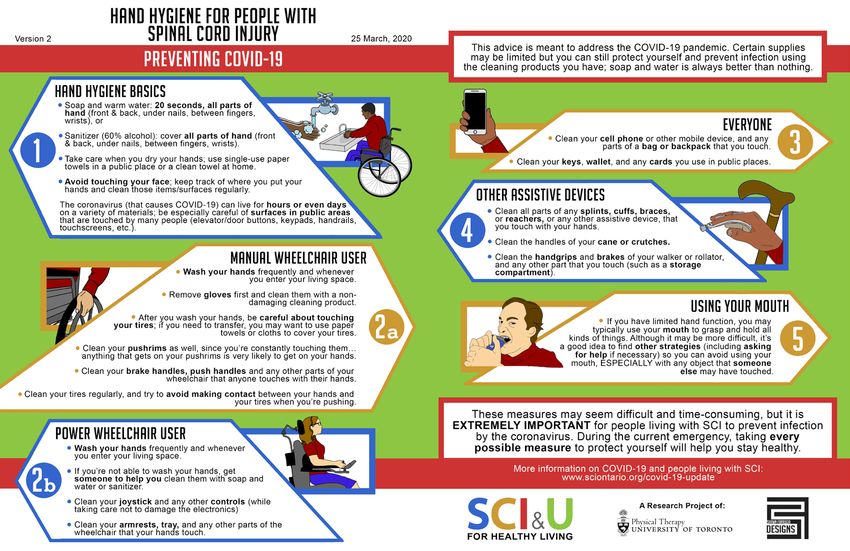
Assistive Technology Services are available to individuals who have a work related barrier due to
      a disability or functional limitation. Learn about how this service can benefit you by attending a
      Webinar.
      Assistive Technology Services are available to individuals who have a work related barrier due to
      aTopics
         disability or functional limitation. Learn about how this service can benefit you by attending a
              include:
       Webinar.
        • Workplace accommodations                       • Available resources
      Topics include:
        • Community       supports programs              • Funding options
        • Assistive technology demonstration
        • Workplace accommodations                       • Available resources
        • Community
      Webinars  take placesupports programs
                           online every                  • Funding
                                        Wednesday from 12:30pm       options
                                                               to 1:00pm.
        • Assistive technology demonstration

      Webinars take place online every Wednesday from 12:30pm to 1:00pm.
         For more information or to register, please contact Marketing Manager, Nate Toevs:
                               604-473-9363 ext. 122 or natet@neilsquire.ca
                                   For more information: workbc-ats.ca
         For more information or to register, please contact Marketing Manager, Nate Toevs:
                               604-473-9363 ext. 122 or natet@neilsquire.ca
                                   For more information: workbc-ats.ca

2   THE SPIN   SUMMER 2020
12
contents                                  SUMMER 2020

features
                                                                                                                                      6
12   Brace Yourself
     How do you heal an injured arm or shoulder when you
     have to rely on it daily for mobility? One solution might be
                                                                                           10
     an orthotic brace.

15   Vicious Circle
     A Canadian researcher has developed an online counselling
     platform with the goal of giving people the tools they need to
     break the pain/anxiety/pain cycle.

21   Cover Story
     What do you do when it’s impossible to practise social
     distancing? That’s the reality for many of our Peers with
     quadriplegia who rely on caregivers each and every day.

24   Grasping the Subject
     Three Kelowna post-secondary students take full advantage
     of a class project to create a glove that enhances the
                                                                                                         12
26
     gripping ability of people with quadriplegia.

     Connect with Tech
     Our hi-tech recommendations for easing boredom and
                                                                      28
     keeping your sanity during social distancing.

28   Born to Ride
     It’s been quite a life journey for SCI BC Peer Tara Llanes,
     but the one constant throughout it all has been a passion for
     mountain biking.

departments
4    editor’s message
     Here in BC, our government’s response to the pandemic
     has been, for the most part, praiseworthy.

6    gear & gadgets
     New products, devices, and aids to daily living that might
     make a difference in your life.                                  Knowledge is a click away.
8    events                                                           GOT
                                                                       GOTQUESTIONS?
                                                                           QUESTIONS?
     Important dates for your calendar.

10   peer shoutouts                                                      How
                                                                          Howdo
                                                                              doI....
                                                                                  I....                                    Search
                                                                                                                            Search
     Giving credit where credit’s due.

14   the spin doctor
                                                                      GET
                                                                      GETANSWERS.
                                                                          ANSWERS.
     Are people with SCI considered high risk for COVID-19?

32   participate in research                                          Visit
                                                                       Visitour  onlineSCI
                                                                             ouronline  SCIInfo
                                                                                            InfoDatabase
                                                                                                 Databasefor
                                                                                                          forover
                                                                                                              over800
                                                                                                                   800trusted
                                                                                                                        trustedresources.
                                                                                                                                resources.
     ICORD research projects that need your participation.

34   last word                                                                 sci-bc.ca/info-database
                                                                                sci-bc.ca/info-database
     Peers have been finding some interesting ways to have fun
     and stay busy during this time of self-isolation.

                                                                                                       SUMMER 2020     THE SPIN   3
editor’s message n

BC’s Response: Blueprint for a Pandemic?
                                                                                                     thespin
                                                                                       The Spin is the quarterly magazine of Spinal Cord Injury BC. An
                                                                                       online edition of The Spin is available on the SCI BC website
                                                                                       www.sci-bc.ca.
It’s a strange business, this novel coronavirus. In many ways it’s similar to the      Executive Editor..................................................... Chris McBride
                                                                                       Managing Editor....................................................... Cliff Bridges
invisible conditions so many of you are all too aware of—neuropathic pain, de-         Assistant Editor.....................................................Alison Brierley
                                                                                       Design...................................................................... Cliff Bridges
pression, anxiety. Because people can’t see it, they have a hard time believing it’s   Administration................................................Maureen Brownlee
real. But when you’re experiencing it or someone close to you is, the intangible       SUBSCRIPTIONS
                                                                                       Free subscriptions are available for BC residents and health
quickly becomes very tangible.                                                         professionals:
    From the onset, I never doubted the threat of COVID-19, but I’ll concede that      T: 604.324.3611 TF: 1.877.324.3611 E: thespin@sci-bc.ca
                                                                                       ADVERTISING
it became very real when someone close to me contracted it. Someone close to           Advertising rates and a publishing calendar for The Spin are
my age, in good health, who had a long nip-and-tuck go of it before recovering.        available online at sci-bc.ca/stories/spin-magazine. You can also
                                                                                       contact Shelley Milstein at smilstein@sci-bc.ca or 604.326.1222.
    Thankfully, under the exceptional guidance of our Provincial Health Officer and    SUBMISSIONS
provincial government, the vast majority of people throughout BC haven’t had           Submissions, suggestions and comments are greatly
                                                                                       appreciated—please email these to thespin@sci-bc.ca or send
to witness the struggles of a friend or family member with COVID-19 in order to        by regular mail to:
                                                                                       Assistant Editor, The Spin
comprehend that the threat of COVID-19 is real. Collectively, we have modified our     Spinal Cord Injury BC, 780 SW Marine Drive
                                                                                       Vancouver, British Columbia V6P 5Y7
behaviours in order to flatten the curve and keep as many of us safe as possible.
                                                                                       COPYRIGHT
    Indeed, BC’s response has been exemplary. Through my role as Chair of Spinal       You are welcome to reproduce material from The Spin after
                                                                                       gaining permission from the Executive Editor. All reproduced
Cord Injury Canada’s Executive Directors Council, I have heard repeated praise         material must be appropriately acknowledged.
for how our province has responded to the pandemic, including the attention and        The opinions expressed in The Spin are not necessarily those
                                                                                       of SCI BC. Also, SCI BC does not endorse nor is responsible
consideration given to people with disabilities in this province.                      for the products or services advertised within The Spin. The
                                                                                       information contained within The Spin is presented for the
    One reason for this is the government’s engagement with disability-focused         purpose of educating people about spinal cord injury. Nothing
organizations early on in the pandemic. I’m particularly appreciative of the extent    contained in The Spin is intended to be used for medical
                                                                                       diagnosis or treatment. It should not be used in place of the
to which the Minister of Social Development and Poverty Reduction and his staff        advice of your physician or other qualified health care provider.
have asked for input from the disability community, and provided clear and timely      Publications Mail Agreement #: 40684573
                                                                                       ISSN #: 1922-9445
information about the emergency benefits and policy and service adjustments            Return undeliverable Canadian addresses to:
the government was making.                                                             Spinal Cord Injury BC, 780 SW Marine Drive
                                                                                       Vancouver, British Columbia V6P 5Y7 T: 604.324.3611
    In April, Minister Simpson created the COVID-19 Disability Working Group. I        To update/change delivery address, email thespin@sci-bc.ca or
was honoured to be named co-chair of this body, which has been providing ad-           call 604.324.3611.
                                                                                       SCI BC HEAD OFFICE
vice and guidance to government about how people with disabilities are being           780 SW Marine Drive, Vancouver, British Columbia V6P 5Y7
impacted by COVID-19 and helping to identify solutions, increasing awareness           T: 604.324.3611 TF: 1.877.324.3611 F: 604.326.1229
                                                                                       E: info@sci-bc.ca
within the disability community of available supports, and helping share import-       REGIONAL PEER CONTACTS
ant information about COVID-19 to the disability community. We are also advising       Fort St. John: Lori Slater, Peer Program Coordinator
                                                                                       T: 250.787.1912 E: peervolunteerfsj@sci-bc.ca
on what measures have been working and what positive changes should be kept            Kelowna: Scott James, Peer Program Coordinator
after the pandemic is over.                                                            T: 250.308.1997 E:sjames@sci-bc.ca
                                                                                       Nanaimo: Bert Abbott, Peer Program Coordinator
    All of the early measures and the cooperation of British Columbians have al-       T: 250.616.1186 E: babbott@sci-bc.ca
lowed the province to move to new phases of recovery from the pandemic. In             Prince George: Brandy Stiles, Peer Program Coordinator
                                                                                       T: 250.563.6942 E: bstiles@sci-bc.ca
many ways, this is encouraging as we are all keen to return to some sense of           Quesnel: Alison Duddy, Peer Program Coordinator
                                                                                       E: peervolunteerq@sci-bc.ca
normal life.
                                                                                       Metro Vancouver: Teri Thorson, Peer Program Coordinator
    But we know that many of you are feeling uneasy about the easing of restric-       T: 604.714.4185 E: tthorson@sci-bc.ca
                                                                                       Metro Vancouver: Ryan Clarkson, Peer Program Coordinator
tions and the increased risk of COVID-19 that goes along with it. We get it, and       T: 604.714.4185 E: rclarkson@sci-bc.ca
it’s why SCI BC will continue to provide all the online services we have been          Vernon: Sonja Gaudet, Peer Program Coordinator
                                                                                       E: sgaudet@sci-bc.ca
offering over the past three months to keep you informed and socially connected        Victoria: Scott Heron, Peer Support Specialist
                                                                                       T: 250.812.0773 E: sheron@sci-bc.ca
during the pandemic.
    As proud as I am of our province’s response to COVID-19, I am equally so of        SCI BC acknowledges the financial support of the BC
                                                                                       Gaming Commission, the Rick Hansen Institute, the BC
the team here at SCI BC, which responded to the pandemic                               Paraplegic Foundation, and the Craig H. Neilson Foundation.
so quickly and has continued to work so hard to ensure
continued support through our Information and Peer ser-                                SCI BC InfoLine: 1.800.689.2477
vices. Like the Province of BC, SCI BC’s response has been
exemplary. We are still here to help.

         —Chris McBride, PhD, Executive Director, SCI BC

4   THE SPIN   SUMMER 2020
JOIN TEAM SCI BC!
 At a Glance:
 SCI BC & COVID-19                                                            Race in the first-ever
                                                                              VIRTUAL Scotiabank
How has SCI BC changed its services during the pandemic?
We have made many programming changes since the onset of the                   Charity Challenge!
COVID-19 public health crisis. Essentially, we have suspended all
services that take place in public spaces. We have transitioned to
offering a number of online events and meetups. Specific changes          GIVE to a good cause.
include the following:

• We have increased our capacity to meet an elevated demand of            GO wheel, walk or run.
  calls to our toll-free, staffed InfoLine service (1.800.689.2477).
• We have postponed or cancelled all in-person Peer events for the
                                                                          GET more events, support,
  summer, and will continue to monitor the situation to see when small
  Peer group activites might resume (acknowledging that many of our       and adventure from SCI BC!
  members are uneasy about the relaxing of restrictions).
• We have transitioned to offering online events and meetups              How does it work? Set a fitness goal of
  throughout the province. You can stay abreast of these events by        5, 10 or 21 km, then join Peers across the
  visiting our online event calendar (sci-bc.ca/online).                  province and race throughout the month
• We remain committed to providing you with accurate, relevant in-        of July. Raise money for SCI BC, win prizes,
  formation through all of our various channels, including our website,   and celebrate at an online race party on
  our social media pages, e-newsletters, and The Spin magazine.           July 30!
How is SCI BC working to ensure the concerns and priorities of
people with SCI are heard at the government level during this
                                                                          SIGN UP:
pandemic? We are committed to ensuring your voice is heard at all
                                                                          Email Shelley at smilstein@sci-bc.ca
levels of government. Specifically:

• Our Executive Director, Dr. Chris McBride, is co-chairing our prov-     LEARN MORE:
  ince’s COVID-19 Disability Working Group.                               www.sci-bc.ca/scc-2020
• We are working with SCI Canada to inform the federal govern-
  ment on the impact of COVID and COVID restrictions on people
                                                                          “This event is truly close to my heart … I got
  with SCI and to advocate for support for people with disabilities             the support [from SCI BC] when I was
  in Canada.                                                                     first injured so to be able to give that
• SCI Canada continues to work with other partners on a federal task                  support now is pretty awesome.”
  force and its pandemic disability advisory group (bit.ly/disability-
  pandemic-advisory).                                                                               - Kristen McBride
                                                                                                         SCI BC Peer &
How is SCI BC working with its partners to ensure basic levels                                                five-time
of service remain available to our Peers? As a member of the                                                      racer.
BC SCI Services Network, we are working daily with our partners
(BC Wheelchair Basketball, BC Wheelchair Sports Association, Neil
Squire Society and the Disability Foundation) to coordinate services,
share information about what services we each have available, and
collectively try to minimize the impact of the pandemic for all of the
people we serve. You can stay abreast of all of our partners’ service
changes and updates by visiting sci-bc.ca/bc-sci-network-covid19.

Things continue to change rapidly during the pandemic, so we
urge you to regularly visit our website (sci-bc.ca) and follow us
on our social media pages (including Facebook, Instagram and
Twitter) to get the latest news, information and event updates.

                                                                                                     SUMMER 2020      THE SPIN   5
gear & gadgets n

                                             SLICK SKIS
                                             Slick Skis are caster attachments designed to make both sand and snow easier to
                                             navigate by wheelchair users. Once attached, they allow the front of your wheel-
                                             chair to float on top of sand or snow and glide with ease. Essentially lightweight
                                             plastic paddles, Slick Skis attach easily—you slide your casters into brackets and
                                             then pull the straps tight to lock them into place. Slick Skis also help to protect
                                             your bearings from becoming packed with sand and snow. See product details at
                                             livingspinal.com.

CHEELCARE COMPANION
The Companion, made by Canadian company Cheelcare, is a power assist add-
on suitable for most rigid manual wheelchairs. It connects and disconnects in
                                        just ten seconds, and since it weighs less
                                        than ten kilograms, it’s easy to take along
                                        on a car trip or a longer voyage. The           LIGNORIM
                                        eight-inch wheels turn in place, provid-        The makers of Lignorim wooden push
                                        ing outstanding manoeuvrability and the         rims tell us that their products stay much
                                        ability to negotiate narrow spaces. The         warmer than metal rims during winter
                                        motor is smooth, powerful and fast, with        months, and that they provide better
                                        three different speeds to choose from.          grip as well—particularly in wet condi-
                                        Range is up to 25 kilometres, and the           tions. They’re reported to be extremely
                                        battery charges in three hours. A hand-         strong and lightweight, with a set add-
                                        operated drum brake provides excellent          ing under a kilogram of weight to your
                                        stopping ability. The device is reported        ride (that’s about the same as carbon
                                        to be stable, safe and secure. Visit cheel-     fibre push rims). Being laminated, they
                                        care.com to learn more.                         are guaranteed not to splinter, nor will

Innovations
                                                                                        they degrade in high humidity or when in
                                                                                        contact with snow or rain. They’re made
                                                                                        in Austria from locally sourced spruce,
                                                                                        birch and ash—see lignorim.com for
                                                                                        more details.

New products, devices, and aids to daily living that
might make a difference in your life...
VITAGLIDE
The newly-redesigned Vitaglide is a fitness machine that can be used independently in your
home to give you a great cardiovascular workout while strengthening the arms, shoulders, back,
chest and core. Like the original version, which was developed almost 20 years ago, the new
Vitaglide allows users a way to perform a cross-country skiing motion while seated. However,
it offers many significant improvements such as the addition of a rowing motion. As well, a
touchscreen attached to the frame provides control of all features—resistance, duration and
intensity of workout—and allows users to set workout goals and monitor their performance
and energy expenditure. And unlike the original version, the arms move independently of
each other and offer resistance going forward and backward, resulting in a more bal-
anced workout for both arms. Resistance can also be adjusted for each arm in order
to accommodate strength differences. The machine can be raised or lowered to
accommodate any type or size of wheelchair. Learn more at vitaglide.com.

6   THE SPIN   SUMMER 2020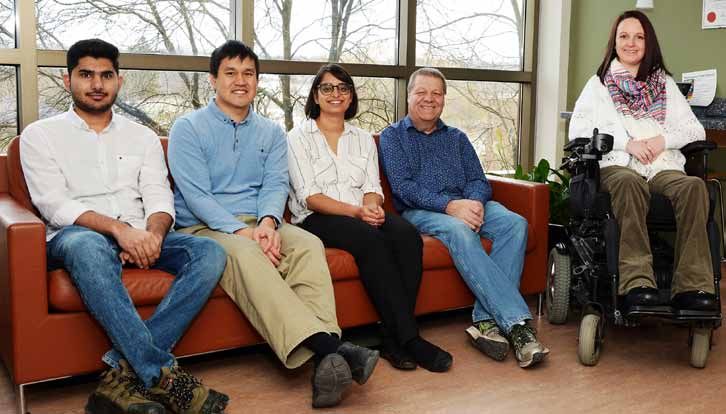
Suppor ting Chairstuf f
        Suppor ts SCI BC!
        SCI BC is proud to announce a
        new, long-term sponsorship
        agreement with Chairstuff.
       GREATER REACH & BETTER SERVICE

                Chairstuff has your back ...                            A supply company by people
      And your front! We really understand bowel                        with SCI—for people with SCI

                                                                        “
      and bladder issues. Over the years, our staff
 has been made up of people living with different                           I have been ordering my colostomy supplies,
       disabilities, and we regularly mesh with the                            catheters, and leg bags through Chairstuff
     local SCI peer community. Combine this with                               since 2001. My stuff is always on time and
 our legendary efficiency, wide range of products,                          that’s pretty great considering I live 900 kms
 and competitive prices, and you have a winning                                      away from where they do business.”
        team in your corner. Our products include:                                                              — Crystle

                           Intermittent Catheters
                                  Bowel Products                        “      I switched over to Chairstuff from one of the
                                                                         bigger companies, which was more expensive.
                                                                           I like dealing with Steve because he’s a dude
                                                                        in a chair who’s got his own business. Anytime I
                                External Catheters
                                                                          need supplies, they’re delivered to my door.”
                                  Foley Catheters                                                                  – Kevin

                                   Drainage Bags

                       Contact us for free product
                         samples or to chat about
                             your specific needs!

                                         “We’re here
                                        for you 24/7.
                                        We mean it.”
                                                  STEVE MILUM
                                                      Founder & CEO
1-866-363-0025 | 604-876-4133                              Chairstuff
info@chairstuff.com
                                                                                           SUMMER 2020      THE SPIN   7
chairstuff.com
events n

Join our VIRTUAL team.                       Stay connected—have fun.                       Connect with our partners.
Team SCI BC is going virtual! This year’s    In light of the COVID-19 pandemic, SCI         SCI BC is a member of the BC SCI Com-
Scotiabank Charity Challenge will be         BC has suspended all services that take        munity Services Network. Like us, our
held on sidewalks, tracks, trails and        place in public spaces. But fear not—we        partners at BC Wheelchair Basketball,
living rooms around BC as we practise        have an amazing array of online events         BC Wheelchair Sports Association, Neil
social distancing and raise critical funds   happening every week. From movie               Squire Society and the Disability Foun-
for SCI BC. It’s a different look, but the   nights, trivia and adaptive boxing, to         dation are all still here for you during
fun will remain the same. No matter          virtual coffee groups, cooking classes         this challenging time and look forward
where you live, now is your chance to        and book clubs, there’s something for          to connecting with you in new ways. To
join the team and get in on the action,      everyone! Connect with one easy click,         learn more about our partners’ service
and help us reach our fundraising goal       or dial-in and join the fun via phone.         updates, check out their individual web-
of $50,000. Learn more by contacting         Visit sci-bc.ca/online or call our toll-free   sites, or take a look at our website where
Shelley (smilstein@sci-bc.ca) or visiting    InfoLine (1.800.689.2477) to find out          you’ll find a list of their service updates:
sci-bc.ca/scc-2020.                          how to dial in.                                sci-bc.ca/bc-sci-network-covid19.

8   THE SPIN   SUMMER 2020
Discretion by design
Introducing a discreet catheter with design that is truly inspired.
  The Infyna Chic catheter was designed with input from clinicians to help provide a high
  level of discretion for women who use catheters. It is beautiful and easy to use. The Infyna
  Chic catheter can help a woman feel better about having to use one.

  To learn more or to request a sample, visit www.hollister.ca/en-ca/infynachic
  or call us at 1.800.263.7400

  Prior to use, be sure to read the Instructions For Use for information regarding Intended Use, Contraindications,
  Warnings, Precautions, and Instructions.
  The Hollister logo and Infyna Chic are trademarks of Hollister Incorporated. ©2018 Hollister Incorporated.

                                                                                                                             Intermittent Catheter
  0050

                                                                                                                      Continence Care
                                                                                                                      SUMMER 2020   THE SPIN   9
peers n
A sunny Okanagan shoutout to SCI BC Peer                 Congratulations to North Vancouver’s TARA
TYLER TINGLE for his tireless commitment to              LLANES, who was recently honoured with
volunteering and Peer mentoring.                         the BC Wheelchair Basketball Society’s cov-
    “Tyler has long been a pillar in the wheelchair      eted MJ Boudreault True Sport Award.
community here in the Okanagan,” says Scott                 Boudreault, who passed away in 2011,
James, our Kelowna Peer Program Coordinator.             was an inspirational leader in our province’s
“He travels all around and makes it to nearly            wheelchair basketball community. The
every event. He’s very giving of his time and will       award created in her memory is presented
help out a friend anywhere. He also worked for           annually to an individual who displays Boud-
SCI BC (as a Peer Counsellor in Kamloops in              reault’s tenacity, sportsmanship, competitive
the 90s), and he started volunteering with us            spirit and dedication to the sport.
recently. He promotes and hosts coffee groups               Llanes definitely exhibits those traits. Originally a professional mountain biker who
and is a contact for the Kamloops area.”                 grew up in California, Llanes was injured during a 2007 competition in Colorado. She
    “When I was first injured three decades ago, I       moved to Vancouver in 2010, and was playing competitive wheelchair tennis in 2016
was lucky that I already knew a couple guys who          when former Team Canada player Amanda Yan encouraged her to try wheelchair
were paras,” says Tingle. “Some gave advice to           basketball. In just two short years, Llanes became a force to be reckoned with on the
my parents, who were looking at the changes              hardwood. Her aggressive style of play quickly led her to be invited to play on Canada’s
they would need to make to their home once               national team, where she is now a mainstay on the roster.
I returned from GF Strong. As well, the people               “I didn’t know MJ Boudreault, but it’s clear that she was a leader and had a strong
at BCPA helped with questions I had along the            competitive spirit, which makes me extremely proud to accept this award,” says Llanes.
way...Long story longer, many people have                “I take a lot of pride in pushing myself to be better as well as being there for my team-
helped me through my long journey in the SCI             mates. Thank you again to BCWBS for acknowledging the hard work these past few
life; if I can give a little back and that can make      years and for their continuous support.”
a difference for someone, it’s the least I can do.”         You can read more about Llanes on page 28 of this issue of The Spin, where we’ve
                                                         profiled her and her business, Tara Llanes Industries, which sells adaptive mountain
                                                         bikes, or aMTBs.

                                                                          Peer
                                                         Shoutouts
Usually, when we write about DR. JAIMIE BORISOFF, it’s all about one of his innovative rehab
engineering projects—as an ICORD Principle Investigator and the Canadian Research Chair in
Rehabilitation Engineering Design at BCIT, he’s the brains behind the Elevation wheelchair and the
accessible rowing machine featured in our last issue. But in this issue, we’re giving him a shoutout
for his recent induction into the BC Wheelchair Basketball Hall of Fame.
   Borisoff had an incredible career as a member of the BC Men’s Wheelchair Basketball team
(1991 to 2012) and Team Canada (1995 to 2008). He won numerous individual and team accolades,
including two Paralympic Gold Medals and one World Championship. He was a natural leader on
any team he played for, and was respected for playing as much with his mind as his body.
   “It’s quite an honour to be singled out like this for the Hall of Fame,” says Borisoff. “My generation
of athletes was really quite fortunate to have the infrastructure and resources in place already. And
I was also quite fortunate to have the quantity and quality of local players to compete with. Past,
current, and future national team members were regular teammates. So I always had plenty of op-
portunity to learn from the best. We really had a perfect storm of opportunity. I just had to show up!”

Are you an SCI BC Peer who has something to shout about? Or do you know a Peer who has
recently achieved something noteworthy? Send the details to thespin@sci-bc.ca.

10   THE SPIN   SUMMER 2020
Some things you don’t plan for... ...others you do. Leave a Lasting Legacy Your generous contribution to Spinal Cord Injury BC will help people with spinal cord injuries and related disabilities adjust, adapt, and thrive. For more information on how to leave a gift in your will, please contact Maureen Brownlee: mbrownlee@sci-bc.ca, 604-326-1225. Start planning today—it’s easier than you think. Visit sci-bc.ca/legacy for details. SUMMER 2020 THE SPIN 11
health n

Brace Yourself!
How do you heal an injured arm or shoulder when you have to rely
on it daily for mobility? One solution might be an orthotic brace.

         A
                     rm and shoulder injuries are one thing for          I was younger and simply exercised it. Not surprisingly,
                     able-bodied people, who can immobilize and          there was no improvement, so I just put up with it being
                     rest an arm during the healing process with-        weak. It affected my transfers, and even my ability to push
                     out compromising their ability to get around.       doors open with the right arm. Worst of all, it destroyed my
                     But these types of injuries are an entirely dif-    basketball shot. I couldn’t even shoot the ball high enough
         ferent animal for manual wheelchair users. Completely           to get it in the hoop if I was right under it!”
         resting an injured arm or shoulder in a sling or cast means       After a year of pain, Clark admitted defeat and ap-
         almost a complete loss of mobility and independence—            proached his family physician with the problem. He was
         no wheeling, no ability to transfer. And failing to allow       referred to Allan Blyt, a prosthetist and orthotist with Ke-
         these types of injuries to heal completely often leads to       lowna’s Hager Orthopaedic Clinic Ltd.
         chronic, life-long problems. Even if they do heal, they’re        The goal was to explore whether or not an orthotic brace
         not likely to heal the right way, so mobility can be forever    could help.
         compromised. (Younger readers take note: you’re not im-           Blyt confirmed that there was no suitable out-of-the-box
         mune. You might believe your youth and resilience make          brace available, but he was eager to take on the challenge
         you invincible, but be warned that you have countless           of creating a custom solution unlike anything he’d ever
         older Peers living with chronic injuries who once thought       built—an orthotic device that would allow the arm to heal
         the same way you do.)                                           but without completely compromising Clark’s mobility and
           Could one answer be a brace or orthotic device? SCI           independence.
         BC Peer and Kelowna-based optometrist Dr. Paul Clark              “At the initial assessment in my clinic, I heard from Paul
         is a believer.                                                  how active he was, using his bike as his primary mode
           “My story is one of a partial triceps tear in the right arm   of transportation to and from his office daily,” says Blyt.
         which required full rest for six weeks that I never gave        “He explained that the main issue was with transferring
         it,” says Clark. “In the beginning, I did what I did when       in and out of his chair and bike due to the permanent

12   THE SPIN   SUMMER 2020
tear in his triceps muscle on his right
arm. This did not allow him to maintain
a straight elbow when weighted by his
body as he attempted to transfer. I knew
we could be of assistance because I had
dealt with a similar issue across the knee
joint of a patient who wanted to stand,
but had quadriceps weakness due to ill-
ness. The concepts were the same and
so it was just a matter of working across
the elbow and not the knee.”
“The brace was meant to take the
weight off the tendon during trans-
fers at that extreme flexed time,” adds
Clark. “It would lock to hold my weight
without the tendon needing to be in- HOW IT WORKS: When the arm is bent (left), the brace allows the elbow joint to operate through
volved. Of course, Allan tried to make a normal range of motion. But when the arm is straightened (right), as it is during transfers and
weight shifts, the mechanism ratchets up into a locked position, supporting the body weight
it lightweight, which meant I broke it in
and taking the pressure off the injured triceps tendon so that it can continue to heal.
the first week. So a stronger joint was
ordered; one that’s normally used for Blyt explains that this is often the anical joints and upright bars to support
knee braces. That turned out to be just biggest challenge when creating a new the weight without being too bulky and
the ticket.” orthosis—finding the right sized mech- heavy. But once he had resolved the
COVID-19, SCI and Vision
Since Dr. Paul Clark was willing to share his experiences with using a brace to heal his tricep, we thought
we’d take advantage of his expertise as an optometrist and ask him for some specific information about vision
care for people with SCI during the pandemic.
Can I still get an eye exam? As of May 19, BC optometrists resumed regular eye exams using elevated
measures to reduce the spread of COVID-19—for example, patients will be required to wear masks and
practise social distancing in waiting rooms. Optometrists are also continuing to offer virtual examinations for
prescription refills and urgent concerns. You can call your optometrist for more details.
Should I switch from contact lenses to glasses during the COVID-19 pandemic? No. You should continue
to wear your contact lenses, albeit with greater attention to hand washing. Having single use disposable contact lenses at this time is
certainly safer than multi-use lenses, which involve more handling.
Are people who put glasses on to read at greater risk of infection because they’re touching their face more? Yes, any time you
might touch your face, whether it be to put glasses on or scratch your cheek, you need to be cautious and wash your hands frequently.
There is greater risk for people with SCI who require someone else to put their glasses on for them—personal care assistants should
be repeatedly washing their hands for this and other tasks.
I’ve heard you can get the virus through your eyes—is that true? Any virus can cause red eye, which is called conjunctivitis. Conjunc-
tivitis has been seen in a small percentage of hospitalized patients—less than two percent of diagnosed COVID patients get conjunctivitis.
It has never been shown that a patient acquired the virus though the eye. It is much more likely to get the virus by respiration or orally, so
wash your hands. And if you get what you think is an eye infection, do not go to the emergency room—see your doctor instead.
Why have my eyes have been bothering me lately with dryness and and soreness? Online reading has increased during this pandemic
by almost 50 percent! If your vision or the binocular balance of your eyes is not optimal, you may suffer from sore or dry eyes, along with
headaches. When you read, not only do your eyes need to focus, they have to precisely turn inward. Many people have eyes that are
slightly out of focus or suffer slight alignment problems, which is never an issue until they start doing more reading. Having glasses with
the best focus can certainly help, as can making the print larger on digital devices. Dry eyes occurs because our blink rate reduces by
half when we read and each blink restores the tear film. A good solution is just to stop reading and give your eyes and your brain a rest!
—Dr. Paul Clark is an SCI BC Peer and an optometrist with IRIS in Kelowna. You can reach his office at 250.861.5665.
SUMMER 2020 THE SPIN 13sizing issue, he was confident that the
device would be successful. ask the SPIN DOCTOR
“We had several follow up appoint- Jas on the Sunshine Coast asks, “As a person with SCI, I’m still confused about whether
ments to fine-tune the orthosis—to trim I’m considered high risk for COVID-19. Am I considered immunocompromised? If so,
the lines of the cuffs, make length chan- how do I explain this to people around me when I need to protect myself?”
ges to the straps, and flare the plastic
cuff edges,” says Blyt. “No major issues Great question, Jas, and one we’ve heard from many Peers recently. To answer
arose during those visits, so that meant your question, we’re drawing on the expert opinions shared in our Ask an Ex-
the concept was working.” pert video series held last month (www.sci-bc.ca/askanexpert).
Clark wore the brace faithfully, despite In their respective sessions, Dr. Jennifer Grant, an infectious diseases special-
never knowing if it would produce any ist at Richmond Hospital, and Dr. Andrei Krassioukov, GF Strong physiatrist,
explained that many chronic complications of SCI elevate the risk for serious
result because he never had pain when
cases of COVID-19. While your SCI itself is not as much of a risk factor, certain
it was on. His patience would eventually
complications of SCI may present bigger concerns. For example, respiratory
pay dividends.
compromise is common at higher injury levels, and weakened breathing mus-
“After six weeks of wearing it last
cles or an impaired cough affect how well your body is able to get rid of
summer, I stopped,” says Clark. “The
respiratory secretions—which is an important part of your body’s ability to
rest had done the trick, and while my
clear the virus. Additionally, people with SCI who use ventilators are at higher
arm was weak from lack of use, there
risk of pneumonia, which is a known feature of COVID-19. Early reports about
was no pain. That allowed me to get
COVID-19 patients with SCI also suggest there may be fewer early symptoms,
back to exercising and strengthening or symptoms are obscured by SCI complications. For example, lack of a fever
the arm. It’s still not quite where it was may be due to autonomic dysfunction, leading to missed or slower diagnosis.
prior to injury—at that time, I could But should people with SCI truly be considered immune compromised? It’s a
do triceps exercises with 20 pounds. I difficult question. Dr. Krassioukov stated that SCI does result in some degree of
have improved from two to five pounds systemic immune suppression, although not to the level of serious immune de-
before resting the injury, to 12 pounds ficiency syndromes like HIV/AIDS. However, SCI affects the nerve connections
currently. And although my basketball to important immune system organs like the spleen, bone marrow and liver,
shot is not back to what it once was— which produce immune cells that help the body fight off infections. People with
and many of my fellow players would higher levels of injury are likely to have higher degrees of immune suppression.
say it never was that great—it’s now so SCI may also pose some extra risks of exposure to the virus. Many people
much better.” require caregivers from outside their household who are not able to self-isolate,
The result has also been gratifying for yet must provide care at close quarters. Careful use of personal protective
Blyt to see. equipment (PPE) and regular proper handwashing for both caregiver and client
“It was a real pleasure getting to know are essential for this situation, stressed Dr. Grant. She also noted that some
and working with Paul,” says Blyt. “It was people find it difficult to effectively keep their hands clean because they touch
rewarding to be able to solve his unique their chair so much. She recommended washing your hands properly and
and interesting mobility challenge; it’s wiping your wheelchair down with household detergent and water regularly,
and that caregivers should clean any equipment they’ve touched before they
why I enjoy my career so much!”
finish. See the excellent SCI U graphic on handwashing on page 18.
He adds that, if you’ve got a similar
Your last question is the trickiest. Many Peers are finding it hard to protect
issue, consider getting a referral to his
themselves from people around them who aren’t taking precautions. First, talk
clinic if you’re in the Okanagan area, or
to your doctor or a rehabilitation clinician about your specific risks. Realize that
to your local orthotist if you live in an-
the most powerful actions you can take to protect yourself are personal: wash
other part of the province.
your hands properly and often, and keep your distance from those around you
“What we do here at Hager Ortho-
outside your household. Plan extra cleaning of high touch surfaces and provide
paedic Clinics is primarily all custom
PPE for yourself and caregivers or family who aren’t able to physically distance
work of this nature,” he says. “We have a
outside your home. Have a direct conversation or write down your concerns
fully-equipped onsite fabrication labora- for people in your life who aren’t respecting your precautions. Reduce contact
tory with the equipment, materials, hand with things they touch like utensils or remote controls, and keep your distance.
skills and knowledge to provide treat- You can set up a handwashing station with hand sanitizer near your front door
ment options for almost any problem so it’s convenient and hard to miss! If you need PPE or household cleaning
presented to us. We believe we can be support, or just want to talk through how to explain your needs to those around
of assistance to anyone’s mobility issues you, reach out to our InfoLine team: info@sci-bc.ca or 1.800.689.2477.
provided they are willing to work with us — Jocelyn Maffin, Manager, SCI BC Resource Centre
and adapt to an orthosis being worn.” n
14 THE SPIN SUMMER 2020health n
Vicious
SWATI MENTAL
Circle
HEALTH
For many people with SCI, chronic
pain leads to depression and
anxiety—which, in turn, leads to more
severe pain and other secondary
complications. A Canadian researcher
has developed an online counselling
platform with the goal of giving people
the tools they need to break this cycle.
M
anaging your emotional and physical symptoms when experiencing
distress and chronic pain at any point in your post-injury life can feel
isolating. No doubt, for many readers, the COVID-19 pandemic and
its ensuing lockdown have greatly exacerbated the problem.
If this has been the case for you, you’re far from being alone. Over 60
years of helping people adjust to and cope with chronic pain after SCI have made that
clear to all of us here at Spinal Cord Injury BC. A great deal of credible research also
confirms the link between chronic pain, mental health issues, and SCI.
In several surveys, people with SCI have reported that pain is the most important fac-
tor for decreasing their quality of life—in fact, pain was found to be associated with greater
emotional distress than the SCI itself. Several studies have found that those with chronic pain
often also experience significant symptoms of depression and anxiety at some point in their
post-injury lives.
In a perverse negative feedback loop, more depression and anxiety have been found to be as-
sociated with reports of greater post-SCI pain severity—sometimes so bad that it interferes with
activities of daily living. Other concerns such as feelings of low self-esteem, isolation, and negative
body image are reported all too commonly.
So how do you spell relief? Counselling from mental health professionals can offer some respite—par-
ticularly when one of its goals is to help people develop skills for self-management of symptoms.
The problem, of course is that it’s pretty difficult to access appropriate counselling. In 2014, a cross-country
study led by Laval University’s Dr. Luc Noreau concluded that almost 60 percent of Canadians with SCI do not
SUMMER 2020 THE SPIN 15have their emotional counselling needs taking time off work. The internet-de- online course is open to any Canadian
met. The result is often a vicious circle livered option that we offer allows the with an SCI. Participants of the program
of declining health, both mental and individual to work at their own pace; they will receive up to $50 in Amazon gift
physical, according to Dr. Swati Mehta, can break each week’s lessons down to cards for participating.
a researcher at Lawson Health Research 10 minute intervals which are easier to At the heart of the program is cogni-
Institute in London, Ontario. digest and less of a daily burden.” tive behaviour therapy, or CBT. CBT is an
“These issues not only place an emo- The program was recently piloted evidence-based program that has been
tional burden on the individual, but can among a small group of individuals shown to be a powerful tool to help some
also influence management of other SCI across Canada. The study found signifi- people manage their anxiety, depres-
secondary conditions,” explains Mehta. cant improvements in pain interference, sion, and chronic pain by changing the
“For example, chronic anxiety has been self-efficacy, symptoms of depression way they think and behave. CBT aims to
significantly correlated with other sec- and anxiety, and quality of life among help people recognize when they make
ondary conditions such as chronic pain those with SCI. negative interpretations of events and
and sleep interference. Increased distress Participants were interviewed about situations in their lives and behavioural
has been shown to result in slower recov- their experiences in the program. Sev- patterns that reinforce their distorted
ery during the rehabilitation process and eral reported that having the program thinking, and then develop strategies to
greater rates of rehospitalizations.” online allowed it to be more accessible avoid these negative thoughts.
Mehta believes that one way to im- and flexible. “For me, I’m sure for all SCI “It’s an eight-week program that aims
prove access is an online service that people too, driving is hard,” reported to provide skills for managing emotional
provides mental health guidance and one participant. “Having it online and wellbeing after SCI,” Mehta explains.
coaching. Through a patient-oriented being able to see if I even qualified on- “The guided course consists of five les-
approach, Mehta and her team created line was really good.” sons, do-it-yourself activities, and case
an SCI online program that was adapt- Others mentioned that having weekly vignettes based on experiences of real
ed from a similar, successful initiative guidance from a trained clinician made people with SCI. The lessons cover infor-
in Australia. This course is intended to it easier to engage in counselling and mation about symptoms of chronic pain,
bypass one of the biggest hurdles people allowed them to stay motivated. Others depression, anxiety, unhelpful thoughts
encounter when accessing traditional reported that the program was a great and practical strategies to manage them,
mental health services—simply the diffi- resource for developing skills to manage evaluating physical symptoms of how
culty of getting to a physical location for not only their emotional symptoms, but anxiety and depression manifest, prac-
face-to-face counselling. It’s an obstacle also other secondary symptoms. tical skills for overcoming some of the
for even those living in cities where such “Getting emails asking if we were behavioural aspects, and how to improve
services exist, and one that is particular- okay, learning how to apply the skills motivation and get more involved.”
ly magnified for those who live in small in daily life, and being accountable to Along with the online lessons, course
towns and rural settings. someone each week were really import- participants have the option of partici-
ant,” said one participant. pating in weekly check-ins with a trained
“Getting emails asking if “I feel more capable,” reported an- clinician via email or telephone.
we were okay, learning how other. “I have more tools in my tool belt The course also provides guidance and
to apply the skills in daily to deal with things that used to get me resources on other essential skills for
life, and being accountable down. I am doing more planning. Just the persons with SCI, including effectively
way I look at possibilities now, it seems communicating with health care pro-
to someone each week
that there are more options.” fessionals, assertiveness training, and
were really important.” Based on the results from the pilot improving sleep hygiene. Mehta says
“I think this solution offers a con- study, Mehta and her team, in collab- some of the most powerful components
venient option for people who might oration with the Online Therapy Unit of the course are the vignettes or stories
be experiencing barriers to accessing at University of Regina, have obtained from people with SCI, which make it eas-
traditional mental health services,” says funding from the Craig H. Neilsen Foun- ier for course participants to challenge
Mehta. “Also, it allows people to work dation to conduct a larger three-year their own depression-skewed views.
on their wellbeing at their own pace. study to evaluate its effectiveness among “You don’t have to have clinically
Sometimes, when you access traditional a much larger group of people with SCI. significant symptoms of depression or
services, you have to allocate one to two The study is a randomized controlled anxiety to feel under pressure from
hours of your day to attend the session, trial which compares the effectiveness of the stressors in everyday life. The pro-
and appointments may only be available the online program compared to an edu- gram is there to help participants learn
during office hours, which might mean cation-only group. The free eight-week skills that can be used in normal every-
16 THE SPIN SUMMER 2020The people behind the research (left to right): Mitesh Chaudhary, Dr. Eldon Loh, Dr. Swati Mehta, Dr. Dalton Wolfe, and Julie Watson.
day situations. For example, one of our feedback so that I can figure out how I Amazon gift card when they complete
participants commented that, since his can make the program more accessible. each follow-up questionnaire.
injury, he sometimes feels badly that he All feedback, even negative, is important Initially, the service is being offered
hasn’t been able to take his kids out to in the process of making improvements and evaluated as a research project—
some activities they previously did as a that may end up helping others.”She Mehta hopes to publish the data and, if
family. And these passing thoughts can adds that spouses or caregivers can successful, hold workshops to help other
make him feel isolated and decrease his also take part to give their perspective clinicians understand the power and po-
self-worth. But through the program, on how their lives have changed. tential of the online intervention.
he was able to see that there are other “I think the biggest reason people “We will anonymize the information we
new activities they’re able to engage in should get involved in the study is to collect to ensure confidentiality, and pool
together, and though his wife might take become empowered and improve their the data to examine if the intervention
the kids to some of the activities alone, ability to exercise control over meeting helps to improve participants’ outcomes,”
he still feels fulfilled and connected.” their care needs in a way traditional she says. “Also, we hope to examine which
The biggest challenge for Mehta at the services can’t allow,” says Mehta. “An- individuals are likely to benefit from this,
moment is to get the word out to people other reason is to help us contribute to and why. We do need to confirm that this
who might benefit from the course, and the understanding of wellbeing among is a program that will be helpful and ac-
make the course even more effective by all people with SCI. Everyone has differ- ceptable for people with SCI.”
providing their feedback. ent experiences and needs in their life. Given positive results, Mehta says the
“Anyone in Canada that has sustained Participating in the study can help bring ultimate goal will be to create a perma-
an SCI, both traumatic and non-traumat- about changes and improve the system nent home for the program, as well as
ic, is able to participate,” she says. “It’s for other people in the future.” expand into other settings across Canada.
meant for everyone, not just those that She estimates it takes about 20 min- “For our next step, our team would like
are experiencing symptoms of depression utes to complete the initial survey, to work with SCI clinicians, administra-
and anxiety.” She also encourages people and then about an hour a week to do tors, and persons with lived experiences
with SCI to get in touch with her even if the lessons. At the end of the course, to figure out a way we can implement
they don’t want to formally participate. participants complete a 40-minute post- this program in SCI rehabilitation pro-
“Everyone is in a different stage of life, treatment assessment. Additionally, grams and the community,” she says.
and some lack time or have other prior- there is a three month and one year For more details or to sign up, visit
ities. But I would really appreciate any follow-up. Participants receive a $25 www.onlinetherapyuser.ca/sci. n
SUMMER 2020 THE SPIN 1718 THE SPIN SUMMER 2020
SUMMER 2020 THE SPIN 19
PHYSICAL ACTIVITY GUIDELINES
     for Adults with Spinal Cord Injury
                                                                   The Physical Activity Guidelines
                                                                   are based on the best scientific
                                                                       evidence available and have
                                                                            two levels. If you’re just
                                                                    beginning an exercise regimen,
                                                                         consider incorporating the
                                                                     recommendations included in
                                                                     the STARTING LEVEL. If you’re
                                                                           already physically active,
                                                                          you might want to begin
                                                                        using the ADVANCED LEVEL
                                                                                 recommendations.

                                                                   LEARN MORE AT:
                                                                   www.sciguidelines.com

                        •
                                                               no limits.
                            driver adaptation & transfer seating
                        •   accessible vehicles
                        •   experienced, professional staff           silvercrossauto.com

                        •   extensive inventory                    1.877.215.7609

20   THE SPIN   SUMMER 2020
cover story n
The
Caregiver
Paradox
What do you do when it’s impossible to practise social distancing? That’s the dilemma
faced by many of our Peers with quadriplegia who rely on caregivers every day.
N
early four months into the who rely on caregivers—particularly prepare for a second wave, they’re all
COVID-19 pandemic, there after reaching out to three of them who dreading that possibility.
are countless questions that fall into this category. Vancouver’s Barry “I may be doing my part staying at
remain unanswered. But one Araña, and Victoria’s Joe Coughlin and home at all times, but my exposure is
fact is indisputable: social Chris Marks, all agreed to share their high because of my home support work-
distancing and isolation, along with strict experiences navigating the pandemic up ers,” says Araña, a C-5/6 quadriplegic
hygienic practices, can lower the risk of to this point. We wanted to know if they who receives about four hours of assist-
contracting or spreading the virus. managed to stay healthy, what their fear ance daily from three different workers
That’s reasssuring for the majority factor was, what steps they took to miti- via Vancouver Coastal Health. “They
of individuals and families. But what gate the risk, and how they’re preparing visit multiple patients per day in the
about people who are absolutely reli- for a possible (perhaps even probable) community; they take public transpor-
ant on daily support from caregivers second wave this fall and winter. tation. There was an outbreak at Haro
for the most basic of needs? That’s the The good news is that all three have Park where over 20 home support work-
reality for many readers—people with stayed infection-free—at least, to the ers tested positive for COVID. Learning
higher levels of quadriplegia who face best of their knowledge. The bad news this created paranoia for me. There’s no
the double jeopardy of being potentially is that they’ve all found the experience doubt that I was panicking about get-
exposed because of their reliance on extremely frightening, and although ting the virus from a home care support
caregivers, and being at high risk for they’ve been doing the best they could, worker. But I have no choice but to con-
serious COVID complications because of they’ve all felt a loss of control, rely- tinue using home support from VCH. I
their compromised immune and respira- ing on improvisation rather than a firm cannot function normally without the
tory functions and other health issues plan. Not only that, they’ve all felt un- help of home support.”
related to their SCI. supported by government and our health Coughlin, also a C-5/6 quadriplegic,
We suspect this dilemma has elevated care system. And despite the fact that all agrees the pandemic has been incred-
the anxiety levels of most SCI BC Peers are doing what they can this summer to ibly stressful.
SUMMER 2020 THE SPIN 21SAFE AND SOUND UP TO THIS POINT; WORRIED ABOUT THE FUTURE: From left to right, Joe Coughlin, Chris Marks and Barry Araña
“My anxiety level has increased ten- of stress and the need for creative prob- threat, and did their best to minimize
fold, but whose hasn’t?” muses Coughlin, lem-solving to make it through the worst the risk.
who self-manages his own seven hours of the pandemic. “For the first month or six weeks, care-
of daily care via the CSIL program. “I’ve “I had been watching the news and givers would come in and remove their
been flying by the seat of my pants. If seeing China welding doors shut for shoes, wash their hands really well, and
anyone tells you that they were com- entire apartment complexes, and Italy, put on a mask,” says Marks. “We would
pletely prepared for a global pandemic, Spain and France getting hit, and the both wear masks for the shift except for
they’re flinging bullshit. I laid off all my USA denying it would be an issue,” says eating, brushing teeth, and showering,
part-time staff back in late March, when Marks. “There were definitely some times where I would remove mine briefly.” He
the Medical Health Officer declared I was concerned. I slept with a thermom- adds that he started to relax the protocols
that HCAs could only work for one fa- eter and pulse oximeter beside my bed, gradually beginning in mid-May, when it
cility—my part-time staff fell under that and still do. On a scale of one to ten, I felt started to become clear that BC—and
declaration. My live-in worker stepped like (my stress) went from a three up to a Vancouver Island in particular—had man-
up to the plate and got me through this seven or eight as far as increased risk.” aged to avoid much of the community
pandemic. She hasn’t had a break and is At the start of the restrictions, Marks spread that had become so disastrous in
looking forward to some well-deserved had two roommates. other provinces. Coughlin and Araña also
rest. Both of us were very concerned “One left about March 12th to isolate began to breathe a little easier and relax
about infection spread from part-time with their family, and the other one iso- their protocols around the same time,
workers who served a multitude of cli- lated with me as a caregiver back in the although both are still instructing their
ents during their full-time duties.” beginning, but that only lasted about ten staff to practice superb hygiene and use
Like Araña, Coughlin is only now be- or 12 days before they also went to go personal protective equipment, or PPE.
ginning to relax a little. At the time of isolate with family,” he says. “Luckily, two “I’ll insist that the part-time staff mask
writing this (first week in June), he was of my longer-term caregivers came back and glove up, at least until we get a vac-
just considering the idea of bringing to help, and another friend helped out cine,” says Coughlin.
back one part-time worker, primarily so with some shifts—which paradoxically “All my home support workers con-
he could give his primary caregiver some was great but also increased my risk of tinue to wash their hands as soon as
much-needed respite. exposure to COVID-19. I needed all three they arrive and use PPE at all times,”
Marks, who is also a CSIL client and, to fill in the shifts for the week, but by any adds Araña.
as a C-5 quadriplegic, relies on the same math that multiplied my risk of exposure Disturbingly, the trio have been left
approximate amount of care as Cough- coming into my house many times.” with the impression that they’ve been
lin, also reports experiencing high levels All three were never in doubt of the dealing with the crisis largely on their
22 THE SPIN SUMMER 2020You can also read


