This syllabus is subject to small changes. The final version of syllabus and calendar will be on your myCourses.
←
→
Page content transcription
If your browser does not render page correctly, please read the page content below
McGill                                                                    Faculty of Arts
                                French Language Centre
                 Near Beginner's French FRSL 103 – Hiver 2021
This syllabus is subject to small changes. The final version of syllabus and calendar will
                                  be on your myCourses.

Coordinator & instructor: Alida Soucé                    E-mail: alida.souce@mcgill.ca
Office hours: Wednesday from 11:30 am-12:30 pm on Zoom
 Given the exceptional circumstances imposed by the COVID-19 situation, FRSL 103 course offered
 at the French Language Centre will be delivered remotely.

 Teaching principles:
     • In accordance with University and Faculty of Arts’ guidelines, teaching and learning will
         consist of both synchronous and asynchronous activities. Synchronous activities will
         occur on Zoom during regular course hours as scheduled on Minerva. Although session
         recordings will be posted on myCourses, students are strongly encouraged to attend all
         synchronous sessions since active participation in synchronous interaction with the
         instructor and peers, and between peers is essential to effective second language
         acquisition.
     • Communication with instructors, and online office hours will take place during regular
         working hours (Montreal time zone). For more information on remote learning, please
         visit Teaching and Learning Services' Remote Learning Resources.

 Required equipment:
    • Each student enrolled in an FRSL course is required to have access to a computer
        webcam and headphones equipped with a microphone. Instructors can require students
        to turn their video ‘on’ for oral exams and presentations. Eligible students may request
        financial aid from SSAO (see https://www.mcgill.ca/studentaid/faq/covid-19-faq). Note
        that some interactive activities cannot be accessed on a cellphone.
    • Homework and exams will be submitted remotely via myCourses and/or via other online
        learning platforms vetted by McGill.

 Academic integrity:
    • Evaluations in FRSL courses are designed to assess progress and give feedback
       on students’ proficiency throughout the course, so they will fully benefit from their
       learning experience. In these times of remote delivery, academic integrity remains of vital
       importance to any higher education institution with rigorous standards. Admittedly,
       learning conditions are currently affected by pandemic constraints, which can cause some
       confusion regarding students’ responsibilities. Students are encouraged to familiarize
       themselves with McGill policies on plagiarism and to consult with their instructor should
       they have any doubt regarding what is or is not permitted.

 For the latest updates on the Winter semester, please visit the COVID 19 Help and Information for
 Students page.

1. COURSE DESCRIPTION AND PEDAGOGICAL APPROACH

                                                                                                     1
FRSL 103 is a one-semester (3 credits) refresher course for students who have had previous
French instruction but do not have the prerequisite knowledge for the elementary level (as
determined by the Placement Test).
The course is designed for students who need to develop awareness of French grammar and
syntax; to review basic grammatical rules, structures and tenses; to practice basic speech
patterns; and to acquire basic vocabulary useful in real life situations in a French-speaking Quebec
community. Focus is on both oral and written skills. Students enrich their linguistic experience by
being exposed to Quebec and French cultures.
2. LEARNING OUTCOMES
Focusing on both oral and written skills, students should, by the end of the course, be able to:
Oral comprehension understand simple oral texts when read in a clear manner;
understand a French native speaker when the person speaks slowly
with simple sentences;
Oral expression talk about topics related to everyday life, express ideas, feelings
and opinions, ask and answer simple questions, relate events mostly
in the present, and to some extent, in past and future;
Written comprehension read a variety of short texts (informative, descriptive, narrative,
dialogues) related to everyday life; understand short and simple
authentic texts;
Written production write a variety of short texts about themselves, their family and
childhood, everyday life, traveling, environment, etc. with structural
accuracy and reusing new vocabulary; relate events mostly in the
present, in the future and past (with guidelines);
3. EXPECTATIONS FOR STUDENT PARTICIPATION
1. On their own, students are expected to prepare home readings and acknowledge the linguistic
elements of the course: read the grammar points, learn vocabulary lists and verbs conjugation
and prepare the grammar activities. (2 hours per class)
2. The professor will reinforce the ahead studied material in contexts through formal teaching and
encouraging interactions (1 hour).
3. Students will confirm their knowledge by completing activities, assignments, lab practices and
evaluations through myCourses. (2 hours per class)
2• Students are required to prepare before each class by reading and preparing
the linguistic elements on the coursepack and on myCourses. Follow the section
Before class - "before class #" for each class. (cf. Calendrier détaillé for a general overview)
2 hours
• Synchronous Zoom sessions will be dedicated to a formal teaching, review and
practice of the linguistic elements which are being studied ahead
autonomously.
• Students are strongly encouraged to actively take part in synchronous
interactions with peers in order to acquire grammar and vocabulary efficiently.
During class Students are expected to review and reuse studied vocabulary items as much
as possible.
• After class, students will have to complete asynchronous actvities on
myCourses. Follow the section "after class #" for each class.
After class - • Also prepare for the next class. Vocabulary lists practice are available on
myCourses (Quizlet) for more practice and review.
2 hours
4. RECORDINGS OF SESSION
Though students are expected to attend all synchronous
sessions. Zoom lectures will be recorded for delayed
consultation on myCourses in case of technical issues.
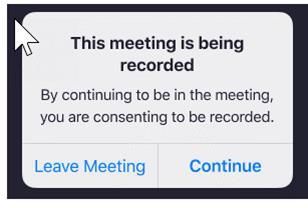
While on Zoom, you will be notified through a ‘pop-up’ box in Zoom if a lecture or portion of a
class is being recorded. By remaining in sessions that are recorded, you agree to the recording,
and you understand that your image, voice, and name may be disclosed to classmates. You also
understand that recordings will be made available in myCourses to students registered in the
course.
Please read the Guidelines on Remote Teaching and Learning:
https://www.mcgill.ca/tls/instructors/class-disruption/strategies/guidelines-remote
5. REQUIRED TEXTS AND MATERIAL
Online access & equipment:
Students are required to have access to an internet connexion and a computer webcam in order
to be able to take part in interactive individual or group projects/activities. Students should also
make sure they have a headset or headphones equipped with a microphone, so they can record
themselves (oral activities /exams) and participate to synchronous and asynchronous course
activities.
3Mandatory materials:
• FRSL 103 - Near Beginner’s French course pack, 2020 (e-book version or paper version at
McGill Le James Bookstore).
• Readings, exercises and instructions for the activities/projects will be available in
myCourses. Other tools (such as Learning Branch, Bongo or polling tools, etc.) will be
used for teaching and evaluation purposes.
© All materials of FRSL 103 courses offered on myCourses (e.g. handouts, content, calendars,
ppt presentations, assignments, summaries, exam questions, recorded classes, etc.) belong to
Alida Soucé. They are protected by law and may not be copied or distributed in any form or in
any medium without explicit permission of the instructor (alida.souce@mcgill.ca). Note that
infringements of copyright will be subject to follow up by the University under the Code of
Student Conduct and Disciplinary Procedures.
Optional materials:
• A bilingual dictionary: WordReference
• A French dictionary: Littré
The use of Google Translate is prohibited for any uses (practices, assignments, composition,
exams, etc). Its suspected use might be brought for investigation to the Disciplinary officer of
the Faculty of arts.
6. COURSE CONTENT
Module 1 Module 2 Module 3 Module 4
• Parler de • Parler de sa • Parler du • Parler d’un
soi famille, de climat, des projet
• Parler de ses amis activités • Raconter
ses études, • Parler de sa sportives et ses vacances
de sa vie sur vie sociale de son état • Évoquer des
le campus et et physique souvenirs
de son amoureuse • Magasiner d’enfance
avenir • Exprimer • Raconter sa
ses goûts et fin de
ses semaine.
opinions.
47. WINTER 2021 - CALENDAR (Please find the detailed calendars in a separate document).
Mardi Jeudi
Cours 1 : le 7 janvier 2021
Test diagnostic / Présentation du cours
Cours 2 : le 12 janvier 2021 Cours 3 : le 14 janvier 2021
Administration / Activités / Module 1 Module 1
Cours 4 : le 19 janvier 2021 Cours 5 : le 21 janvier 2021
Module 1 Module 1
Cours 6 : le 26 janvier 2021 Cours 7 : le 28 janvier 2021
Module 1 Pratique orale 1 / Quiz 1
Cours 8 : le 2 février 2021 Cours 9 : le 4 février 2021
Module 2 / Devoir écrit et oral 1 Module 2
Cours 10 : le 9 février 2021 Cours 11 : le 11 février 2021
Module 2 Module 2 / Devoir écrit et oral 2
Cours 12 : le 16 février 2021 Cours 13 : le 18 février 2021
Pratique orale 2 / Quiz 2 Module 3
Cours 14 : le 23 février 2021 Cours 15 : le 25 février 2021
Projet Module 3
Semaine de relâche
du 1 au 5 mars 2021
Cours 16 : le 9 mars 2021 Cours 17 : le 11 mars 2021
Module 3 Module 3 / Devoir écrit et oral 3
Cours 18 : le 16 mars 2021 Cours 19 : le 18 mars 2021
Pratique orale 3 / Quiz 3 Module 4
Cours 20 : le 23 mars 2021 Cours 21 : le 25 mars 2021
Composition Module 4
Cours 22 : le 30 mars 2021 Cours 23 : le 1 avril 2021
Module 4 Module 4 / Devoir écrit et oral 4
Cours 24 : le 6 avril 2021 Cours 25 : le 8 avril 2021
Pratique orale 4 / Quiz 4 Révision
Cours 26 : le 12 avril 2021
Examens écrit et oral
Dates for assignments are not flexible. No late assignment will be accepted.
8. DUE DATES
For all exams, quizzes, project and compositions, students have a window of 48 hours.
For all written practices are due on the next day of the synchronous class at 23:59.
For all graded assignments and oral practices, students have a due date as these assignments are
opened from the beginning of the Module.
Even if all submissions will be accessible during a certain time window.
• All exams, quizzes and compositions are timed and have a single access and a single
5attempt. Once the students access an evaluation, they have to complete it in one shot as
they will not be able to edit their answers once they leave the assignment/test/quiz).
• All graded assignments, oral practices and the project are accessible multiple times
until the final submission of the single attempt at the due dates.
• All written practices have multiples attempts until the due dates.
The following dates are due dates.
• Vendredi 8 janvier 2021 à 23h59 :
o Test diagnostic (mandatory to be in the class)
o Questionnaire sur le genre
o Questionnaire le fuseau horaire
Module 1
• Vendredi 15 janvier 2021 à 23h59 : Module 1 - Entraînez-vous ! - Exercices 2 et 3
• Mercredi 20 janvier 2021 à 23h59 : Module 1 - Entraînez-vous ! - Exercices 4, 5, 6 et 7
• Vendredi 22 janvier 2021 à 23h59 : Module 1 - Entraînez-vous ! - Exercices 1, 8 et 9
• Mercredi 27 janvier 2021 à 23h59 : Module 1 - Entraînez-vous ! - Exercices 10, 11, 12, 13
et 14
• Jeudi 28 janvier 2021 à 23h59 : Pratique orale 1
• Vendredi 29 janvier 2021 à 23h59 : Module 1 - Entraînez-vous ! - Exercice 15
• Lundi 1er février 2021 à 23h59 : Quiz 1
• Mardi 2 février 2021 à 23h59 : Devoir écrit 1 et devoir oral 1
Module 2
• Vendredi 5 février 2021 à 23h59 : Module 2 - Entraînez-vous ! - Exercice 2
• Mercredi 10 février 2021 à 23h59 : Module 2 - Entraînez-vous ! - Exercice 1
• Jeudi 11 février 2021 à 23h59 : Devoir écrit 2 et devoir oral 2
• Vendredi 12 février 2021 à 23h59 : Module 2 - Entraînez-vous ! - Exercices 3 et 4
• Mardi 16 février 2021 à 23h59 : Pratique orale 2
• Mercredi 17 février 2021 à 23h59 : Module 2 - Entraînez-vous ! - Exercices 5,6 et 7
• Jeudi 18 février 2021 à 23h59 : Quiz 2
Module 3
• Mercredi 24 février 2021 à 23h59 : Module 3 - Entraînez-vous ! - Exercice 1
• Jeudi 25 février 2021 à 23h59 : Projet
• Vendredi 26 février 2021 à 23h59 : Module 3 - Entraînez-vous ! - Exercice 3
• Mercredi 10 mars 2021 à 23h59 : Module 3 - Entraînez-vous ! - Exercices 2 et 4
• Jeudi 11 mars 2021 à 23h59 : Devoir écrit 3 et devoir oral 3
• Vendredi 12 mars 2021 à 23h59 : Composition pratique
• Mardi 16 mars 2021 à 23h59 : Pratique orale 3
• Jeudi 18 mars 2021 à 23h59 : Quiz 3
Module 4
• Mercredi 24 mars 2021 à 23h59 : Module 4 - Entraînez-vous ! - Exercice 1
• Jeudi 25 mars 2021 à 23h59 : Composition
• Mercredi 31 mars 2021 à 23h59 : Module 4 - Entraînez-vous ! – Exercices 2, 3 et 4
6• Jeudi 1er avril 2021 à 23h59 : Devoir écrit 4 et devoir oral 4
• Mardi 6 avril 2021 à 23h59 : Pratique orale 4
• Jeudi 8 avril 2021 à 23h59 : Quiz 4
Examens finaux
• Jeudi 14 avril 2021 à 10h05 : Examen écrit et examen oral
9. GRADES AND EXAMINATIONS
Exams - 35 %
• 1 written (myCourses - 15 %)
• 1 oral (Learning Branch - 20 %)
Assignments (8) - 25 %
• 4 written (myCourses - 10 %)
• 4 oral (Learning Branch - 15 %)
Quizzes (4) - 15 %
Written composition - 10 %
Project - 5 %
Class involvement and autonomous learning - 10 %
• Involvement in course activities and active participation: The student speaks
French (synchronous sessions, asynchronous assignments) and contribute
actively in group discussions. Homework completion: the student has
completed home readings and exercises ahead of time for each class*. (3 %)
• Oral practices: the student completes "Pratiques orales 1, 2, 3 et 4" (3 %)
• Written practices: the student completes all the "Entraînez-vous" activities
on myCourses and the written practice composition. (3 %)
• Linguistic quality and progress: The student takes feedback into account as
the session unfolds. In other words, the quality of the linguistic output will be
taken into account. (1 %)
* Students are advised to keep up with the day-to-day work in order to make progress.
IMPORTANT CONSIDERATIONS AND STUDENT RESPONSIBILITIES
71. The department reserves the right to transfer a student to a lower-level or a higher-level
language course if it is deemed that the course for which the student has registered is not
appropriate for the extent of his or her knowledge of the language.
Attending class without a placement test or auditing without formal registration are not
permitted.
2. Add-drop period:
Students registering for language courses during the add/drop period (after classes have
commenced) are required to make up missed assignments and assessments. It is the student's
responsibility to catch up on work missed during the add/drop period. Any request for make-
up regarding assignments and exams due/held during the add-drop period should be made to the
instructor within 10 days of course registration.
3. Involvement is a mandatory part of a French course. Active preparation, participation in
synchronous/asynchronous assignments, group discussions, lab practices, written practices, in-
class progress, awareness of mistakes (taking into account feedback – instructor comments,
quizzes and tests results – continuously) and self-discipline (daily preparation of assigned work,
speaking only French during synchronous assignments, etc.) will be considered for the
involvement and autonomous learning grade.
4. MyCourses and emails: MyCourses is the online course management system used in this
course. Students are responsible for checking the site on a regular basis for information about
the course, calendar postings, assignments and documents required for class activities. Students
are responsible for reading the McGill mail (name.lastname@mail.mcgill.ca). No excuse will be
accepted for not be aware of emails content sent by instructor or coordinator.
5. Evaluations: Students must engage in all course activities and meet all due dates unless
exceptional circumstances exist (medical reasons only for which a doctor's certificate is
necessary). If a problem arises, students are expected to contact their professor BEFORE the
evaluations. Students who miss a due date will receive a 0. Marks may not be upgraded through
additional work. No credits will be awarded to a student who missed more than a 3rd of the course
even under medical or other attenuating circumstances.
Students must do all required course evaluations (exams, composition, assignments, quizzes, etc.)
in order to obtain a passing grade. A grade “J“ will be given if the required work is not
submitted/written/completed, even if the student has earned a passing grade in the course with
the missing work/exam. (See: http://www.mcgill.ca/oasis/general/grading/#F). Marks may not be
upgraded through additional work.
The final exam (oral & written) is an in-departmental evaluation and is not governed by the McGill
formal examination schedule. In case of scheduling conflict, follow instruction that will be sent
you at the appropriate time or contact the course coordinator.
6. Oral submissions: Oral practice and oral assignments are done by using Learning Branch, an
online platform for language learning. Students registered in FRSL103 will have access to the
platform for the entire duration of the session, free of charge, using their McGill credentials.
For each of the four modules of your course pack, you have one hour of oral practice to complete
8(Pratique orale). The due dates are in the calendar.
For each module, you have an oral graded assignment (Devoir) due along with the written
assignments in MyCourses. Due dates are advertised in your course detailed calendar.
The high quality of recordings is essential for assessment. Always make sure that your recordings
are in good quality. No recordings or poor-quality recordings will be considered as none answered
questions. Earbuds are not appropriate.
7. Virtual office hours: The instructor may be consulted during his/her office hours or by
appointment (individually or in small groups). Note that he/she will not be able to deliver
delayed lectures during these office hours and that students should come prepared with
questions.
8. Audio recording of oral presentations, debates and discussions
In order to keep a record of students’ work, and to promote constructive instructor feedback,
interactions during oral presentations, debates and discussion will be audio-recorded by the
instructor, who will be the only person to have access to these recordings. Recordings will be
destroyed one year after the end of the course.
9. Grading: Graduate students are expected to obtain a minimum final grade of B-. Students
interested in taking this course as Satisfactory/Unsatisfactory (S/U option) must do so before the
University’s deadline. More information here:
https://www.mcgill.ca/study/2020-
2021/university_regulations_and_resources/undergraduate/gi_course_info_regulations#bookn
ode-1339
10. Policies: Students are responsible for informing themselves about the university rules and
regulations regarding to Method of course evaluation and grading procedures.
http://www.mcgill.ca/oasis/general/grading/
Students are required to consult the calendar for test dates and to read about the policies related
to this course in the syllabus. Students must advise the instructor through MyCourses mail that
they are aware of these requirements by the end of the “add drop” period.
IMPORTANT REMINDERS
MERCURY EVALUATIONS
"End-of-course evaluations are one of the ways that McGill works towards maintaining and
improving the quality of courses and the student’s learning experience. You will be notified by e-
mail when the evaluations are available on Mercury, the online course evaluation system. Please
note that a minimum number of responses must be received for results to be available to
students."
PLAGIARISM IN ACADEMIC WORK
MCGILL UNIVERSITY VALUES ACADEMIC INTEGRITY. THEREFORE, ALL STUDENTS MUST
UNDERSTAND THE MEANING AND CONSEQUENCES OF CHEATING, PLAGIARISM AND OTHER
ACADEMIC OFFENCES UNDER THE CODE OF STUDENT CONDUCT AND DISCIPLINARY
9PROCEDURES.
In oral or written assignments, dictations, translations, essays, oral or written presentations,
summaries, projects, thesis, research reports, etc.:
What is not accepted?
• Copying or submitting any academic work that has been produced by another student or
another person (all or in part). Allowing another student or any another person to provide
answers or correct your work.
• Allowing a resource person (native speaker, language teacher, monitor, tutor, advanced
student) to produce or correct your work, translate written texts to or from the target
language or interpret/explain oral comprehension exercises for you.
• Handing in written work or preparing oral work largely inspired by or copied from somebody
else's work without clearly acknowledging sources (books, articles, essays, course notes,
films, radio programs, audio documents, Web, etc.) and showing the extent of the
borrowing.
• Presenting for grading any academic work (oral or written) for which you have already
received academic credit or presenting the same work for grading more than once.
What is acceptable or recommended?
• Consulting resource persons for explanations but without receiving answers or corrections
for the work to be submitted.
• Practising language skills with qualified resource persons.
• Studying intelligently with fellow students.
• Sharing information within team members working on a group project.
• Using your own words, making up your own sentences and using quotation marks when
borrowing from someone’s work.
• Identifying sources and documenting information and ideas even when material is not
directly quoted.
(see http://www.mcgill.ca/students/srr/honest/ for more information)
The use of Google Translate is prohibited. Its suspected use might be brought for investigation
to the Disciplinary officer of the Faculty of arts.
10You can also read


