THREE SPRINGS Creating a Satisfying Lifestyle - A village of rural renewal that will inherently have meaning and purpose, and will provide ...
←
→
Page content transcription
If your browser does not render page correctly, please read the page content below
THREE SPRINGS
Creating a Satisfying Lifestyle

                     A village of rural renewal that will
                     inherently have meaning and purpose,
                     and will provide children with a safe,
                     stimulating, beautiful environment in
                     which to live and learn.

                                                          1
Three Springs is a design concept for a living community.

   Essentially it is a village, containing all the ecological, biological, and sociological
   elements needed to promote a sustainable, holistic, and quality lifestyle. It is
   proposed as an inspiring model for the wider community.

   The nucleus of the village will be a school.
   The school will provide a genuine heart, where emotional intelligence, spiritual
   intelligence, kinesthetic intelligence, and beauty are prized. It will infuse
   enthusiasm and purpose into the entire project. The workshops, homes, farms, and
   businesses; craftspeople, artists, families and individuals will have a direct, practical
   link to the educational provision.

School as Heart
'In an age of secularism I hope with all my heart that, in the new millennium, we will begin to
rediscover a sense of the sacred in all that surrounds us, whether in the way we grow our crops or raise
our livestock on the land that God has given us, whether in the way we create places for people to live
in the countryside we have inherited, whether in the way we treat disease in our fellow human beings
or whether in the way we educate or motivate our young people.
                                                                           Prince Charles 2000
The School
Within the pattern of homes and buildings, paths and gardens, fields and flowers - at the heart of
the community, stands the school. It will focus and inspire the entire ‘Three Springs’ endeavour.
The school will provide for twelve classes and three kindergartens of approximately fifteen
children each. It will be a unique educational environment that responds to an ever-present need
for an alternative education that will encourage a committed, gradually changing group of
parents and other family members into the locality.

                                                       Learning/Life Interface
                                                       The wonderful result of designing an
                                                       ecologically and socially sustainable
                                                       community is that it is also an excellent
                                                       context for educational life. Those factors
                                                       that make the community self- supporting
                                                       and self-regulating will become living,
                                                       learning situations for the students.

                                                    The school will have buildings and beautiful
                                                    grounds that may be used for community
                                                    activities such as seasonal festivals and
                                                    cultural events. It will provide a meeting
place for the local and wider community. The elderly will be given their rightful place within the
social fabric of the community, both they and the children benefiting from the interchange of
wisdom and energy. The school will be a healthy focus for the community as it involves those
most precious to us, and also gives the villagers a worthwhile creative task that is constantly
evolving.
                                                                                                      2
Living In And Around The Village
People who are attracted towards the village will be fully autonomous. They may choose
to buy privately in the surrounding area as properties are offered for sale, or to purchase
land from ‘Three Springs’. In the latter case, covenants will protect land use and building
design so that the ecological and educational ideals are enhanced. No further limitations
will be placed on residents.

The children will have the opportunity to go to the school, which will involve a walk
through orchards and gardens, animals and plants, all thriving in a varied and sustainable
environment.

Work
The adults will have satisfying employment options if they want to work within the
village structure. A variety of avenues will be available. The adults will further the wider
purpose of the community by welcoming the children from the school into their daily
work environments. The curriculum will ensure that this is well managed.

Commonality of Purpose
In the Village the educational provision will give commonality of purpose to three
central aspects of human activity, Commercial, Cultural, and Residential.

   The Educational Provision:
   An Early Childhood Centre and Primary School, Years 1 to 7, and secondary school,
   years 8 to 12 will be the heart of the Village. The purpose, curriculum, architecture and
   landscape are founded on holistic educational insights that recognise and reflect the
   unique culture that is childhood.

   When this culture is respected, children are affirmed.

How?
Simple observation can identify three major stages within
this culture of childhood.

The path from birth to adulthood begins with the
development of physical competency. This is followed by
a period of subjective and enthusiastic interest. Finally,
during adolescence a stage of critical, independent thought
emerges.

Although we understand that these developmental stages
are not mutually exclusive, we nevertheless operate three
styles in order to support and respect the prevalent trend
of development.

                                                                                               3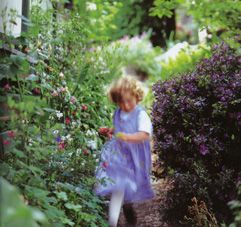
Our entire curriculum is designed to reflect and strengthen the phases implicit within this
broad framework. The subject matter and teaching methods are shaped by the observable
physical and psychological needs of the students and not by outer dictates - for example
economics, or mere linear logic. By building around this foundation, we fulfil the basic
purpose of this education - that of producing well-rounded personalities, assured of their
self worth, who are eager to learn and take their part in society.

We already have a fully developed, comprehensive, detailed curriculum, derived from
this picture of child development, which fulfils all the requirements of the national
standards of New Zealand and Australia and has received approval from the
Educational Review Office and curriculum advisory services in Canberra and New
South Wales.

Three Styles
The three major phases of childhood influence the teaching strategies as follows:

                             Firstly, in the time which is essentially bodily activity, where the
                             infant develops physical dexterity (approximately birth to six
                             years), a major portion of the learning takes place by:
                             • copying the activities of adults,
                             • engaging in the movement games of early childhood,
                             • responding to a rich warm environment, and by playing.

                            Next, in the period of subjective and
imaginative interaction, where the child develops emotional
diversity (approximately six to thirteen), a major portion of the
learning takes place by:
• developing artistic talents, (especially music, drama, painting,
    and drawing)
                                • working with traditional
                                    stories, and by
                                • the example of committed,
                                    vocationally minded teachers.

                                 Thirdly, in the stage of critical
                                 thinking, where the young person develops conceptual agility
                                 (approximately fourteen to eighteen),a major portion of the
                                 learning takes place by:
                                 • debating the merits of arguments,
                                 • opposing some defined positions, and by
                                 • clarifying personal beliefs and opinions.

      STUDENTS EDUCATED IN THIS WAY ARE LIKE SWIMMERS ENTERING
               WATER AT THEIR OWN BODY TEMPERATURE.

                                                                                               4
Architectural and Environmental Consequences

 “My question is: what does it
really take to build up a world in
which our houses sustain and
enlarge childish, innocent life in
us?

Christopher Alexander 1994

The design of the entire school environment is guided by the following brief:

   ‘Three Springs’ Early Childhood, Primary, and Secondary School sections will
   provide environments that:
   A) Nourish the imagination of the child.
   B) Are secure and child-centred.
   C) Are healthy and ecologically sustainable.
   D) Contain technologies that may be understood and used by everyone.
This brief will have a number of consequences:

• The School will be a village in itself, with subdivisions arranged as defined
  hamlets.
• A gatehouse serving as administration, reception, and exhibition area will be the
  boundary between the outer social and inner school village.
• At the heart of the school will be a community hall and common green, linked
  by natural footpaths to the different hamlets.
• Organic gardens and fields will surround the hamlets, which will include natural all-
  weather play areas.
• Scattered through the landscape will be enigmatic monumental works e.g. standing
  stones and carved tree stumps.
• Defined by boundaries and various features, the children will pass from the common
  areas of the school through a significant gate into the security of their own hamlet.

                                                                                          5
•
• The defined hamlets will be:
Hamlet One Early Childhood.
Hamlet Two Years 1, 2, and 3.
Hamlet Three Years 4 and 5.
Hamlet Four Years 6 and 7
Hamlet Five Years 8 and 9
Hamlet Six Years 10, 11, and 12
• The hamlet gardens will contain planting and wildlife to encourage student
involvement.
• Animal habitats will abound, such as rabbit
warrens, dovecotes, and duck shelters.
• Laced throughout the area will be nooks and
crannies, quiet spaces and features for the eye,
ear, and heart to play with.
• There will be a school cottage for each class
within the particular hamlets.
• Students will pass through a small gate to
enter the security of their own garden.
• Each cottage will contain a kitchen,
bathroom, two quiet rooms and a main
learning area.
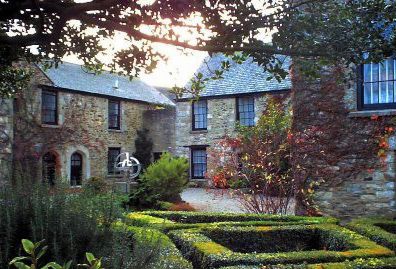
• The cottages, inside and out, will have soft
contours, large and small windows, and features for encouraging sunny areas
and the play of dappled light.
• Each school home will blend and move into its garden with gentle building
edges, bay windows, built in seats, and varying levels of indoor and outdoor
space.
• Crafted but not over finished features will abound; suitable for a philosophy
which values emotional intelligence.
• All services within the buildings will be sustainable and sensitive to the wider
environment.
• Hot water will be made through solar power and wood burning stoves.
• Water will be pumped by water rams and windmills to tanks for gravity
feeding.
• Power will be generated by water turbine and photovoltaic cells, and stored in
transportable batteries.
• Food waste and effluent will be composted through a dry toilet system such as a
Clivus.
• Animal waste will be used for methane production.
• All of these fundamental utilities will be maintained and operated by the older
students.
6The Commercial Purpose
Three Springs will provide for lease a number of premises, built to accommodate a
variety of small businesses and crafts.
These will be designed as small village
w o r k areas, with a winding road,
footpaths, lunch areas and a common
green, all placed within the current
boundary though separate from the
school.
A long term plan is to include vacant
buildings in the locality, which may act
as retail shops and foster links between
village and town, and provide the
children with the opportunity to spread
out into the wider world.
The workshops will be open-fronted to
encourage open dialogue and activity between the shop and students or visitors.
(A successful precedent is the Hoglund Glassblowing Studio in Nelson. Workshop,
gallery and café are set in a park like environment that offers visitors a stimulating and
complete experience.
The buildings will contain sustainable utilities, and the design will flow and change
throughout with alcoves, balconies, windows and stairs to different levels. Noise and
other polluting factors will be carefully considered.
Business or crafts people will Business or crafts people will
receive: provide:
A flow of customers and visitors. Crafted items for the learning
Cross fertilisation from other environment.
workshops. Quality and ambience to the
Beautiful, aesthetically pleasing larger village.
surroundings. Lease monies to the school body.
A clean, healthy, sustainable Learning opportunities for the
environment. students.
A further purpose – educating the
young.
7Possible ventures might include:
Farm Hospitality
Livestock of all types Café
Horticulture and Agriculture – Accommodation
(C.S.A.) Shopping
Small Business or Crafts Health
Bakery Medical centre
Cheese, Butter and Ice Cream Elderly Care
Electrical Veterinary
Foundry and Blacksmith
Furniture Advisory
Glass Blowing Eco Building
Jewellery Eco Power and Systems
Leather Education
Mechanic
Sustainable Power and Eco
Equipment
Textiles
8The Cultural Purpose
‘Three Springs’ will provide premises that will be made available to local musicians,
artists, movement and drama specialists.
The community hall and other areas will be possible venues for performance, exhibitions
and adult education. A covenant will unite the use of the facilities with the ethos of the
village.
In this way Three Springs will ensure the Arts are an integral part of life, and not
separate from the daily activities of work and learning. Colour, warmth, and feeling will
be added and bring to the whole village a satisfying way of seeing the world.
This cultural component is seen as vital for a successful, healthy community, and will lift
the tone of the whole venture.
Artists, musicians and performers will receive:
A creative environment.
Customers/audiences.
Crafted aesthetic surroundings.
Cross fertilisation from other artists.
Joining with the further purpose of education
Artists, musicians and performers will
provide:
A rich learning opportunity for students
through performance and teaching.
Cultural quality and beauty.
Possible rental money for facilities.
“God respects me when I work
But He loves me when I sing.”
Tagore
9The Residential Purpose
‘Three Springs’ will provide a small number of residential allotments for purchase within
the boundaries, and plans to obtain further
residential blocks and/or properties in the
neighbourhood that may also be sold to families
who are attracted to the area.
A covenant will unite these residential properties
with the ethos of the school. In this way Three
Springs will ensure a consistent approach to the
close environment, and encouragement towards
a larger village style of settlement.
In brief, the covenant will ensure that:
• Appropriate technology is used throughout the homes and buildings: solar
heating for water and home comfort, alternative power generation, and
ecologically sound effluent disposal.
• Designs will make use of environmentally friendly materials, local and
recycled products, earth or straw based walls, to create healthy, safe, energy
efficient homes.
• Home and garden design is of the sort that encourages imagination and
beauty, and a sense of the social working of form and structure within a village
setting. (See appendices – Christopher Alexander)
• The structures are supportive of the school village and wider environs.
10Residents of the wider village will receive:
Community life.
A beautiful environment.
Healthy sustainable surroundings.
Opportunities to join local work places.
A sense of purpose and meaning.
Residents of the wider village will provide:
Aesthetic ambience through building and landscape.
Capital return from properties for the school.
Intention. Response ability. Social framework.
Legal Structure
It is intended to form an Incorporated Society of at least twelve persons, drawn from those who
are most interested in the commencement of an alternative independent school. Competent
people, who are willing to serve, will be found with wide and varied expertise in management,
trusteeship, education, accountancy and legal areas.
A management board will be appointed, directly responsible to the Society for the
administration of ‘Three Springs’, and the conduct of the School in accordance with the
relevant Education Acts. The management board will consist of
three main facilitators, for the areas of education, business, and
environment.
Funding
Endowments will enable ‘Three Springs’ to have a healthy,
sustainable life for the school, and will allow independent operation
from the State.
If the school can establish itself in this way, the plan has income
generating components that will ensure a sustainable future. It will mean that all school
buildings and facilities can be put in place, surrounding land may be protected and held for
future use, and the seed for village areas - both commercial and residential - can be initiated.
We want to build a community around the
school that will support the most
fundamental principles of education, and
show that a school can be a fulfilling, self
regulating body without State intervention;
a village of rural renewal that will
inherently have meaning and purpose, and
provide children with a safe, stimulating,
beautiful world.
11Information
For questions regarding any aspect of this proposal please do not hesitate to contact:
Alan & Ruth Wagstaff
Email: alan@raweducation.com
12Appendix A Christopher Alexander
…We imagine a world in which each part is nurtured, cared for, and integrated harmoniously
into nature, and into the threads of human existence. We seek a process which is capable of
returning the world to a state, in which people are themselves, can discover themselves, and
are truly free in a psychological and emotional sense…We need to develop a conception of the
world as nature, but yet as a creation of ours…an approach where the artifacts of the modern
world, roads, bridges, (homes, schools) etc. are united with nature in a new form of human-
made construction where we are once again consciously creating nature.
A New Vision of the World, Christopher
Alexander
Christopher Alexander with colleagues from the Centre for Environmental Structure
published three books in 1977 that lay a basis for the rebuilding of our entire human
environment: A Pattern Language, The Timeless Way of Building, The Oregon Experiment.
They are a new approach to what until now has been unspoken in the world of
architecture, building, planning, environmental design and appreciation. The books
speak of a ‘language’ of patterns that have been taken for granted and largely forgotten in
our modern world.
Patterns that give human beings a sense of who they are, within the spaces that they live.
The books are a practical commentary on making large and small environments, from
cities to cupboards, that can encourage healthy social living. They give a fundamental
picture of where we have come to as human beings, and where we must go in order to
continue through the new millenium in conscious appreciation of our surroundings.
The books, and further works by Christopher Alexander, will be a great aid in
establishing many of the aspects of the village environments – educational, commercial,
and residential - that Three Springs wishes to initiate.
Encompassing social spaces that offer warmth,
grace, and beauty. Places that our ‘selves’ will
naturally reflect when given time and gentle
nurture. An “archetypal core of all possible
languages, which can make people feel alive
and human.” C.A.
13Appendix B Our Part in the Global Village
The concepts within Three Springs School allow us to see how a child may be held within
many layers of their world. This is of great pedagogical significance, for the further a child
enters into the microcosm, the deeper their reverence will become. From that quiet space,
aided by the vision of a teacher and a holistic curriculum, they may in turn gaze back into their
world. Through successive layers of the years, and in growing complexity and knowledge, they
will return in a conscious manner, to become part of the Global Village.
CHILD
COTTAGE
HAMLET
SCHOOL
VILLAGE
COMMUNITY
REGIONAL
NATIONAL
GLOBAL
“The creation of true community is the first step to world peace.”
M. Scott Peck
14You can also read


