Three-Year Cluster Action Plan 2018 - 2021 City Cluster - Primary Care One
←
→
Page content transcription
If your browser does not render page correctly, please read the page content below
Three-Year Cluster Action Plan 2018 - 2021
               City Cluster

                                             1|Page
Welcome to the City Three Year Cluster plan, 2018 - 2021
  1. City Cluster Overview

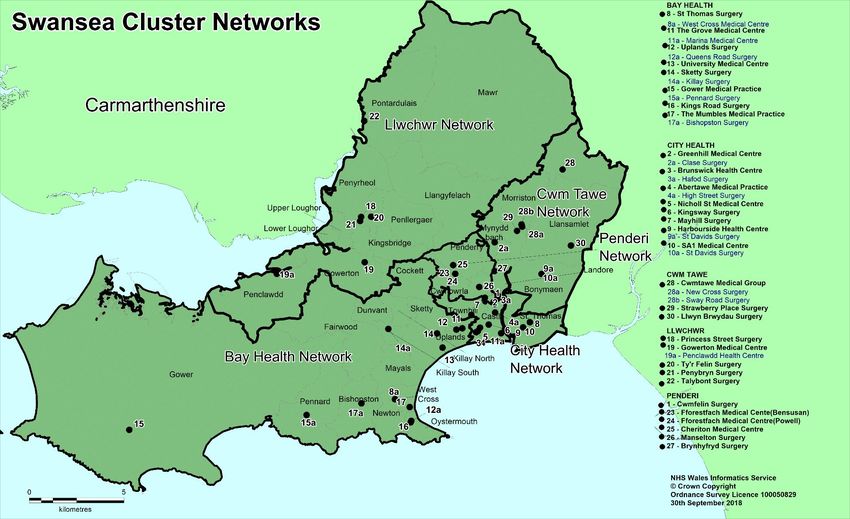
The City Cluster is one of five clusters in Swansea, geographically covering south east and central Swansea.

                                                                                                               2|Page
The City Cluster is made up of eight general practices working together with partners from social services, the voluntary sector, and ABMU
Health Board, with practice populations ranging from 4331 to 10535, and a cluster total of 50,654 (October 2018 figures).
Clusters aim to work together in order to:
Prevent ill health enabling people to keep themselves well and independent for as long as possible.
Develop the range and quality of services that are provided in the community.
Ensure services provided by a wide range of health and social care professionals in the community are better co-ordinated to local needs.
Improve communication and information sharing between different health, social care and voluntary sector professionals.
Facilitate closer working between community based and hospital services, ensuring that patients receive a smooth and safe transition
from hospital services to community based services and vice versa.
Through the delivery of their plans they work to meet the Quadruple Aims set out for Health and Social Care Systems in Wales in ‘a Healthier
Wales’ (2018):
Improved population health and wellbeing
better quality and more accessible health and social care services
higher value health and social care
a motivated and sustainable health and social care workforce
2.1 Swansea wide ‘Headline’ Information
Population: 242,4000. High concentrations of population in and immediately around the City Centre, the adjacent wards of Cwmbwrla
and uplands (6,800 people per square km, the highest density in the county) and also in Townhill and Penderi
Population has steadily grown between 2001 and 2015. Main driver of population growth in Swansea has been migration. Recorded live
births has steadily risen since 2001 and number of deaths have fallen.
3|PageLife expectancy in Swansea is increasing: Average life expectancy for males is 78 (Wales 78.5) and 82.4 for females (Wales 82.3). This
will impact significantly on the provision of health, social care and other public services in Swansea
Projected population Change: Welsh Government’s latest trend based population projections suggest that Swansea’s population will
grow by 9% (21,600 people) between 2014 and 2039
2011 Census suggests that 14,326 people in Swansea were from a non white ethnic group: 6% of the total population and 20,368 (8.5%)
of Swansea’s Population were non white British. (above the Wales average (6.8%). Census data (2011) suggests the largest non white
ethnic groups are: Chinese 2,052 (0.9%), Bangladeshi 1,944 (0.8%), Other Asian 1,739 (0.7%), Black African 1,707 (0.7%), Arab 1,694
(0.7%)
Welsh Language : Proportion of people able to speak Welsh in Swansea decreased from 13.4% (28,938) in 2001 to 11.4% (26,332) in
2011. A fall of 9% despite an increase in population.
Health and Attainment of Pupils in Primary Education Network (HAPPEN)
Established in April 2015, HAPPEN focuses on children in Swansea Schools aged 9-11 years who complete health and wellbeing assessments
as part of the Swan Linx Project. Data is collected on body mass index, fitness, nutrition, physical activity, sleep, wellbeing, concentration and
children’s recommendations on improving health in their area. Cwm Glas, Terrace Road and St Thomas schools (three of the Primary Schools
within the Network) have undertaken the study within the last two years, areas of interest are shown below:
Cwm Glas % Terrace Road % St Thomas % Swansea %
Sedentary Screen time for 2 hours or more a day 33% 32% 32% 31%
5 Portions of Fruit and Veg a day 25% 24% 26% 27%
At least 3 take aways a week 13% 16% 15% 18%
Physically active for 1 hr or more a day 28% 25% 25% 24%
Happy with family 96% 93% 94% 94%
Happy with Life as a whole 91% 89% 90% 91%
4|Page2.2 Our Local Health, Social Care and Wellbeing Needs and Priorities
Information has been collated on a wide range of health needs within the City Cluster area in order to develop the priorities for this plan.
Health Profiles
Obesity: 7.6% obesity rate, 3992 patients (Swansea average is 9%)
25.3% of smokers across the cluster population. Welsh Government have set a target of 16% by 2020.
The cluster has the 4th highest rate of lung cancer per 100,000 at 82.5 across the 11 clusters. (Lung Cancer profile 2015)
Asthma: 2nd highest rate 7.2% in Swansea (7.0%)
Influenza vaccination uptake of 68.1% in those 65 years and older (ranked 4th across 11 clusters), 51.8% in those under 65 years at clinical risk
(ranked 1st across 11 clusters) and 48.2% for 2 & 3 year olds. PHW 2017/18 (Welsh Government target is 75%)
The cluster is the lowest for the uptake of childhood immunisations by the age of 4yrs at 78.21% (Welsh Government target is 95%)
City has the lowest uptake in ABMU (PHW 2016/17) for all four screening programmes:
- - 3656 eligible for bowel screening, 1628 were screened (44.5%). Target 60%
- - 11857 are eligible for cervical screening, 8216 were tested (69.3%). Target 80%
- - 219 eligible for AAA screening, 161 people were tested (73.5%). Target 80%
- 5763 eligible for breast screening, 3787 were tested (65.7%). Target 70%
An estimated 4,653 of Swansea’s adult population have a learning disability; of this number 969 (20.8%) have a moderate or severe learning
disability.
Around 32,200 people aged 16 or over in Swansea may have one Common Mental Disorder e.g. anxiety depression and OCD. Nearly half this
number (14,573) have two or more conditions, along with those experiencing borderline personality disorder (913), antisocial personality disorder
(703) and those experiencing psychosis (811). City Health has the highest rate in Swansea rate of 1.5% for those registered as having a mental
health condition. 6 of the 7 practices reporting the highest burden are within City Cluster.
Alcohol reported intake for those 16+years is 71.97%. This is the lowest in the 5 clusters. ABMU average is 76.58%
71.9% of registered patients aged 16+ had been recorded as having drunk alcohol in the last 7 days
5|PageKey Population Features Cluster Area features
High deprivation levels; with 24,833 (49%) Major employers: City & County of Swansea, BT, Grwp Gwalia Cyf, Coastal Housing, University of
residents living in the most deprived fifth of Wales Trinity St. David, HM Prison, Tesco, Sainsburys, Marks & Spencer, Debenhams, other city
areas in Wales centre businesses (west side of the River Tawe), Admiral Insurance, Associated British Ports,
A high proportion of young people due to the 4 General dental practices
large student population. 1 specialist Orthodontic Practice
1 specialist dental practice (sedation and oral surgery)
High level of asylum seeker and multi-
racial/multi-cultural groups.(more than double Across Swansea:
the Swansea average) - Great diversity of landscapes, habitats, species and geology (50% of the county is of significant
ecological value.)
There are slightly higher number in City Cluster
(24.2) than the Swansea average (23.3%)
living with a disability Good level of accessible green space across most of the county (Open Space Assessment) 15 Green
flags for parks and 7 community spaces
12.4% are young parents. Swansea average
11.7%
29.2% of those living within City Cluster have
no qualifications (Swansea 23.9%) Population and Community Assets
16.8% of patients are aged 65+ (19.2% across Active Community and Voluntary Organisations.
Swansea) and 7.8% of patients are 75+ (8.9%
Leisure centres
across Swansea)
Entertainment venues
This area consists of 22 LSOAs in the city Libraries
centre area and adjacent urban areas to the Community Hubs
north, west and east; across both sides of the Beach access
Football and Rugby stadiums
River Tawe
University
Many of the men released from HMP Swansea Kilvey Country Park
are provided housing within the City Cluster. Access to the River Tawe and the Marina
City regeneration, together with the development of continuous cycle routes along the bay and road
improvements to reduce congestion along Fabian Way have facilitated easier and safer access to
the city.
Road Safety Wales raise awareness in new drivers of the main traffic accident causes.
6|Page•
Service Demands
•
Other key Influencing Factors
Highest
• number of A&E attendances of any cluster in Swansea at
The City and County of Swansea declared parts of the lower Swansea Valley
164.90 per 1K (16584 patients)
• an Air Quality Management Area on the 12th September 2001. The area is
GP •OP referrals, 2nd highest in number of referrals in Swansea cited as the Hafod Air Quality Management area - City and County of Swansea
• 84.54 per 1000.
(4142) (Hafod Air Quality management Area (NO2)) Order , much of which sits within
• the City cluster area.
The second highest rate in Swansea of emergency inpatient
• LDP Strategy- Plans to extend further the Development of the University and
admissions
• Student Accommodation.
The• highest rate of prescription of anxiolytics and hypnotics,
Bus fares have fluctuated a little but generally the trend has been upward,
antidepressants, opiod analgesics, tramadol, NSAIDs in Swansea worsening the poverty premium, (the amount people living in poverty have to
The long-term general trend of an ageing population, which pay for essential items).
stands at 78.0 years for males in Swansea (Wales 78.5) and 82.4
for females (Wales 82.3) and is likely to impact on health and Public Service Board, Local Wellbeing Plan Focus:
wellbeing services. ONS
Early years: Making sure children have the best start in life.
OOH attendance between 1st September 2017 and 31st August Live Well. Age Well – making Swansea a place to live and age well.
2018, rate per 1000 was 84.52. This is the second highest within
the 5 clusters Working with nature- improving health, supporting biodiversity and reducing our
carbon footprint
Strong communities- supporting communities to promote pride and belonging.
PSB aims to make all services work together by sharing resources, assets and
knowledge
2.3 Antibiotic Prescribing:
Detailed below is the most current figures for antibiotic prescribing within the Swansea Cluster areas. Nationally there was a 2.2% reduction in
antibiotic prescribing levels for the same period City increased its antibiotic prescribing level by 0.45%.
Entity Items Apr 17 - Mar 18 Items Apr 16 - Mar 17 Items % Variation Items Difference
City Health (Swansea) 35,303 35,144 0.45% 159
7|Page2.4 GP Disease Register Information
Disease Register City Register Total 2018 (%) Swansea % ABMU % Trends/Highlights
Asthma 3700 (7.2%) 7.0 7.4 2nd highest in Swansea
Cancer (2.1%) 2.7 2.9 Lowest percentage
COPD 1311 (2.6) 1.9 2.2 Highest % in Swansea, 4th highest in ABMU
Mental Health 767 (1.5%) 1.1 1.1 Highest % in Swansea
Diabetes 3119 (6.2%) 5.6 6.2 Higher than Swansea average
Palliative care 0.2 0.2 0.2 Joint 2nd highest
8|Page3. Strengths Weaknesses Opportunities and Threats (SWOT) analysis: City Health Cluster
Strengths Weaknesses
Recognising Network population needs and taking measures to support Lack of time to develop initiatives
Building on relationships with Secondary Care, Third Sector, Local Authority Staff working at full capacity
and other partners
Difficulty regarding recruitment and retention of GPs
Cluster Network maturing and developing
Lack of/Increasing cost of locums
Self-assessing and acknowledging gaps in provision and acting to fill i.e.
Implementation and Business Development Manager, Paramedic Indifference/Lack of genuine participation
Strong leadership by the Cluster Lead Consistency in ensuring that the cluster message is relayed back to GP's
Capacity to deliver - Implementation and Business Development Manager within the practice and that their thoughts are fed into the cluster
Cluster SWOT
Analysis Threats
Opportunities
-LDP shows proposed additional 1700 houses being built in the cluster
Tailor Protected Learning Time Sessions to attract and inform staff in order for area.
primary care teams to engage with new ways of working and direction of GP retirement/ recruitment issues
travel for the cluster
Staff shortages in other areas
Strengthen links with Secondary Care, Third Sector, Local Authority and other
Partners Staff morale/wellbeing
Link with neighbouring Clusters for mutual benefit Practice sustainability
Tailor the Plan further to the needs of the network population (substance Reduced allocation of budget by Welsh Government
misuse/mental health/asylum seekers) Change in government policy regarding clusters
Access external funding sources
9|Page4. Cluster Vision
In May 2018, the City Cluster jointly agreed a Cluster Vision for the next three years. The Vision sets out how this Cluster sees its
role in providing Health, Social Care and Wellbeing with and for the population of the City area and its practices.
“City Health Cluster has a vision to improve its patient’s health and wellbeing
outcomes alongside focusing on the future sustainability of General Practice.
We will achieve this by embracing and encouraging multi-agency and peer
collaborative working, participating in and promoting education, sharing our skills
and resources across our Cluster efficiently and effectively”
5. City Cluster Practice Priority Issues
Practices have expressed a range of areas which are a priority for them in delivering a sustainable and effective primary care
service. These issues have also been taken into account in developing the City Cluster Plan.
10 | P a g eOur Cluster Plan
Strategic Aim 1: To understand and highlight actions to meet the needs of the population served by the Cluster Network
with a preventative approach
Our three year focus:
Address obesity for school aged children, adults and elderly
Improve the pace of reduction of smoking rates and respiratory disease for the City Health population
No What action will be taken Responsible When will it What will success look Current position RAG
for delivering be completed like? What will the Rating
outcome be for
patients?
Obesity GPs March 2019 Reduced levels of obesity Limited resources for supporting
1.1 Work with Third Sector – to develop a Practice and ongoing resulting in greater patients outside of healthcare
comprehensive range of information to Managers wellbeing environment.
support patients. ABMU HB
Establish city centre walking groups to All Cluster July 2019 Clinicians able to refer to Limited peer/communal activity for
1.2 support physical activity levels members, more timely closer to patients to engage in regarding
NIBDM home services. increasing physical activity and
Increased physical activity diet.
among practice
populations.
Explore potential of exercise therapist for All Cluster Ongoing to Enhanced level of service NERS referral is current option for
1.3 Cluster members, March 2021 available for patients to practices, together with Weight
NIBDM, HB improve physical activity Watchers Vouchers.
levels
Improved physical and
mental health outcomes
for patients
Reduced demand on
primary and community
services
1.4 Smoking: GP practices Ongoing Increase smoking All practices have received CO
Increase use of CO monitors in cessation service uptake. monitor, including branch practice.
collaboration with ASH
11 | P a g eIncreased use of CO Event held by PHW and ASH
monitors recorded and fed Wales.
back to practices.
Respiratory: GP practices, March 2021 Improved prescribing 2 practices have undertaken so
1.5 Rollout of Interface Pharmacy Group NIBDM savings far
inhaler reviews to all 8 practices; review of
COPD patients on triple therapy inhalers Better control of condition
Improving patient education around use of
inhalers and condition management
1.6 Flu vaccinations targeted programme: Cluster November Increased uptake of flu
Undertake MDT flu vaccination Pharmacist, 2018 vaccinations in hard to
programme over 2 dedicated weeks for Cluster reach groups
housebound patients in the Cluster Paramedic
Vulnerable patients less
likely to become seriously
ill.
Reduced demand on
primary and unscheduled
care.
Strategic Aim 2: To ensure the sustainability of core GP services and access arrangements that meet the reasonable
needs of local patients including any agreed collaborative arrangements
Our three year focus:
Ensuring practice teams are fully supported to deliver practice and cluster service requirements
Reducing the administrative burden for practices
No What action will be taken Responsible When will it What will success look like? Current position RAG
for delivering be completed What will the outcome be for Rating
patients?
Explore the potential for the Cluster to NIBDM, July 2019 Implementation of a prescribing Individual practices/GPs
2.1 develop its own administrative hub for Cluster Lead hub. undertaking all prescribing
core duties such as prescribing Time saved for GPs. related activity
12 | P a g eIncreased prescribing savings.
Undertake a skills audit for staff to identify NIBDM, all May 2019 Team skills expanded - Practices focus on own
2.2 training and development needs against practices supporting them to meet the requirements only.
practice, organisational and Cluster needs needs of the
practice/depts./organisations
All staff provided with access and
capacity to undertake relevant
training programmes
Agree to develop a workforce plan for All practices, Sept 2019 Practice sustainability, clear plan Progress has been made
2.3 Cluster: Cluster to ensure appropriate workforce in to deliver a strong MDT,
Administration members, HB, place to deliver prudent opportunities for longer
Nursing & paramedical NIBDM healthcare. term planning
Clinical Better access for patients
Cross-practice working
opportunities maximised.
Collaborative working - Develop list of NIBDM, HB March 2018 Access to a variety of enhanced
2.4 enhanced services for cross-practice services for patients.
referral
Strategic Aim 3: Planned Care - to ensure that patient’s needs are met through prudent care pathways, facilitating rapid,
accurate diagnosis and management and minimising waste and harms. To highlight improvements for primary
care/secondary care interface.
Our three year focus:
Increase the screening rates significantly within the Cluster, reducing variation, for Bowel, AAA, Cervical and Breast Screening by
2021.
Improve Cluster access to imaging to improve cancer diagnosis, with focus on radiology
No What action will be taken Responsible When will it What will success look Current position RAG
for delivering be completed like? What will the Rating
outcome be for
patients?
13 | P a g e3.1 Cancer: GP practices, March 2021 Improved treatment times
Improve Cluster access to imaging to Cluster Lead, and outcomes for patients
improve cancer diagnosis, with focus on Secondary diagnosed with cancer
radiology by: Care
- Closer liaison with the MacMillan (radiology), Less unnecessary
GP Lead NIBDM variation across practices
- Training of GPs in all practices on
Red Whale course
- Undertaking peer review where
possible
Undertake training and education GP practices July 2019 Improved screening rates. Lowest rates of screening uptake
3.2 programme to upskill non-clinical staff on across the ABMU Clusters.
improving screening uptake (through
Cancer Research Wales)
Strategic Aim 4: To provide high quality, consistent care for patients presenting with urgent care needs and to support the
continuous development of services to improve patient experience, coordination of care and the effectiveness of risk
management. To address winter preparedness and emergency planning.
Our three year focus:
To reduce the high levels of GP Out of Hours attendance from a level of 84.54 per 1000 patients.
No What action will be taken Responsible When will it What will success look Current position RAG
for delivering be completed like? What will the Rating
outcome be for
patients?
Paramedic, Pharmacist and LAC project Cluster Lead, Sept 2019 Key outcome measures Interview with Health Foundation
4.1 HB, LAC include: for project funding scheduled 12th
Manager, Improved Multi- November.
Cluster MDT, disciplinary team
NIBDM effectiveness and
seamless, cross
organisational working
relationships,
14 | P a g eReduced attendances at
GP practices;
Patient numbers attending
the Community Clinic;
Patient Feedback on the
service provided;
Identification of previously
undiagnosed issues eg:
Hyper tension, high blood
pressure, pre diabetes;
Number of ‘social
prescribing’ referrals to
community services.
Implement training in Care Navigation NIBDM, March 2020 Patients better able to
4.2 for receptionists practices, HB have their needs met
before seeing a GP,
better understanding of
their care pathways.
Reduced unnecessary
contacts with GPs
Promote Common Ailments Service Health Board Ongoing Better access for patients
4.3 Community to treat common ailments.
Pharmacy Increased time for GPs to
team, undertake complex
Practices, consultations.
NIBDM
Explore opportunities to adopt the 24/7 NIBDM, HB March 2018 Improved access to Limited practice/Cluster specific
4.4 GP self-help website within the Cluster information for patients, online support
better enabled for self-
care.
To ensure effective planning is in place GPs Sept /Oct 2018 High levels of patients Cluster Flu Vaccination Figures
4.5 for the winter season to ensure continual and ongoing to including older and based on PHW Data 2017/18
increase in uptake of Flu Vacs and Practice 2021 housebound patients,at included in Health Profile section
advanced promotion of self care Managers risk patients and children
- Practices to host flu parties immunised against flu.
- Vacs for Housebound patients to Patients ‘health literate’
continue with regard to myths
- Publicity/self care info for patients surrounding flu and
including myth busting actively seeking flu vacs.
15 | P a g e- Consider other methods and
channels of publicising/promoting
the benefits of the flu vacs
- See 1.6 for designated MDT
programme
Strategic Aim 5: To develop the Cluster as a structure for delivery of identified priorities.
Our three year focus:
Identify cluster specific benefits and scope potential for formal collaboration
Identify key service areas the cluster would like to become
No What action will be taken Responsible When will it What will success look Current position RAG
for delivering be completed like? What will the Rating
outcome be for
patients?
Vision, Purpose, Functions and Cluster Lead Dec 2019 Best support possible in Cluster has discussed potential
5.1 strategy Lead GPs place for Cluster benefits of working more closely
Agree operational model for Cluster PMs, HB practices, enabling better together, yet to look closely at
that best meets needs of Cluster and continued access for options available
patients.
Cluster members able to
deliver and provide clarity
regarding roles and
responsibilities.
Develop potential for planning Cluster Ongoing To have clear aims, Cluster vision set, priority areas of
spend across 3 year period objectives and vision of focus. 18-24 mth spend plans in
areas in which City Health place.
Cluster wish to implement
change and develop
existing services to
enable planning and
resource identification
16 | P a g eCommunication and Engagement Cluster Lead June 2019 Strategic stakeholders Comms made on opportunistic
5.2 Lead GPs, aware of key cluster basis eg via WG comms scheme
Establish Cluster communications NIBDM, programmes. through Health Board.
strategy, identifying key stakeholders PMs, HB
to influence to maximise impact, Cluster members better
including sharing best practice aware of outcome from
delivered in City Health use of time and
resources.
Employment and Training NIBDM, March 2019 Sustainable MDT working Clusters across Wales identifying
5.3 Arrangements Practices, at Cluster and practice varying solutions to employment
Cluster Lead level. of MDT staff.
To ensure practices within the cluster
have appropriate employment and Safe and effective care Varying levels of team training
training arrangements in place, delivered by the most across practices in cluster.
including clarity on indemnity issues for appropriate professional.
all professional groups
Safe management of risk.
Robust processes for cluster workforce
planning and OD. Staff equipped to work to
highest level.
Improved service to
patients
Infrastructure, Support and Cluster Lead Ongoing, Cluster programmes able Cluster Lead allocated ½ day per
5.4 Leadership Lead GPs commencing to be delivered more week to deliver all cluster work.
PMs, HB Jan 2019 quickly, time for cluster
Allocate protected time and headspace lead to further consider
for innovation for cluster leadership strategic direction.
roles
Review of cross cluster IT, Estates Cluster Lead Dec 2019 Better use of current Clear understanding of resources
infrastructure to meet aims Lead GPs resources across the to be considered in planning of
PMs, HB, cluster services.
NIBDM
Implement mobile technology to Cluster Lead Delivery of services Good use of mobile IT to benefit
support Cluster working, working Lead GPs Dec 2019 effectively and efficiently patient care and improve workflow
closely with ABMU for Digital PMs, NIBDM using modes of not yet considered at Cluster level
Mobilisation technology
17 | P a g eAddressing Population Needs
5.5
Enable practice and team time Cluster Lead Dec 2019 Demonstration of Practices identifying time within
to collate and set out data for Lead GPs effectiveness of Cluster current constraints.
external evaluation PMs, HB, programme.
NIBDM
Identify and secure additional External funding available Cluster has commenced with
funding streams for the cluster to deliver some level of application for
services meeting its additional external funding but
identified priorities little leverage of additional funding
and resources currently achieved
Integration and Partnership Cluster Lead May 2019 Cluster partners Code of Conduct required.
5.6 Draw up a code of conduct Lead GPs understand their
between cluster partners and PMs, HB, respective roles
organisation NIBDM
Understand local assets and Patients and citizens Local assets not extensively
how to access local services aware of local assets and utilised on a Cluster basis
benefits to them of their
use
Quality Assurance
5.7
Establish clear cluster Cluster Lead May 2019 Cluster programmes Lack of clear resource/capacity for
accountability mechanisms for Lead GPs delivered more rapidly, implementation.
agreed work programmes PMs, HB, with engagement.
NIBDM
Establish business planning More vigorous approach In place on an ad hoc basis in
cycle for cluster to prioritise to delivering cluster relation to cross cluster issues.
cluster projects and planning strategic direction and
spend minimising likelihood of
slippage, ensuring most
effective use of funding.
Ensure Cluster compliant with
All staff will receive GDPR Training resource to be identified
GDPR for Cluster
training
based/delivered activity
18 | P a g eStrategic Aim 6: Other Cluster and area specific issues
Our three year focus:
To improve the low uptake of immunisations and vaccinations for children in City Health
No What action will be taken Responsible When will it What will success look Current position RAG
for delivering be completed like? What will the Rating
outcome be for
patients?
Imms and Vacs – Develop a project on March 2021 Improved rates of
6.1 childhood vacs, including an audit of vaccination for children.
those not being vaccinated and
develop a plan to improve figures.
6.2 Support the mainstreaming of services Cluster Oct/Nov 2018 Services mainstreamed, Pharmacy outline case
via the business case application Development and ongoing resources transferred and summarised for consideration by
process through ‘Balancing the System Managers, Cluster funds released ABMU Strategy and Finance
– shifting resources from secondary to Cluster Lead where relevant Depts.
primary care’ for: Mental Health Physiotherapist preferred option
Services for Tier 0, Pharmacist model being costed.
Provision Physiotherapy on a Mental Health Options appraisal
Cluster basis being undertaken
Three cases to be included in
IMTP for the Unit
6. Cluster Finance Statement
The City Cluster has a financial allocation from the Welsh Government of £165,073. In addition Clusters have access to other funding streams
such as through the Health Board delivered PMS+ scheme.
19 | P a g eYou can also read


