#LangSummit2019 through Google with effective SEO - How to get more website visitors - Netzbekannt
←
→
Page content transcription
If your browser does not render page correctly, please read the page content below

How to get more website visitors
                        A
through Google with effective SEO

#LangSummit2019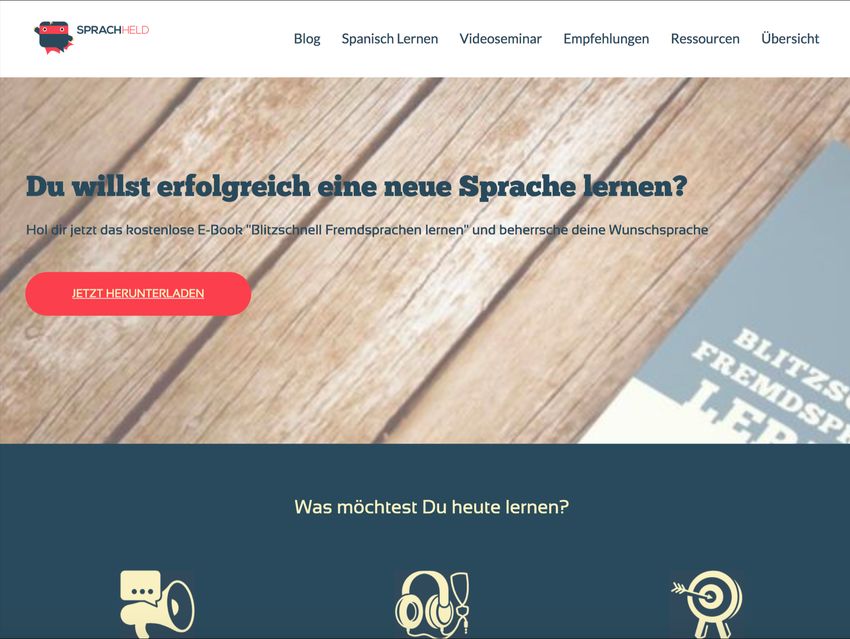
About me: Gabriel Gelman

§ Running the SEO agency Netzbekannt GmbH

§ Founder of language learning website Sprachheld.de

§ About 1/3 of clients are in language related businesses

§ Marketing partner of EXPOLINGUA Berlin

§ Online Marketing & Sponsoring at Polyglot Gathering

E-Mail: gabriel@sprachheld.de

Website: www.sprachheld.de

                                                            2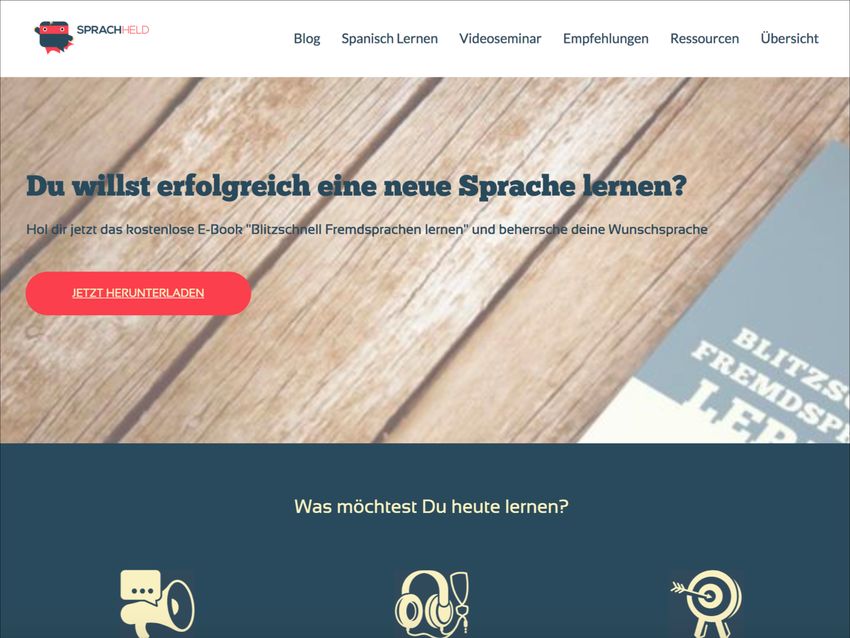
Overview of what is expecting you

1. Quick overview of               4. Main ranking factor 2:
   Sprachheld                         Online authority

2. Success factors of              5. Tool tips
   Sprachheld & intro into
                                   6. Main takeaways & next
   SEO / Content
                                      steps
   Marketing

3. Main ranking factor 1:
   Content – main topic

                             Slides: at the end of presentation   #LangSummit2019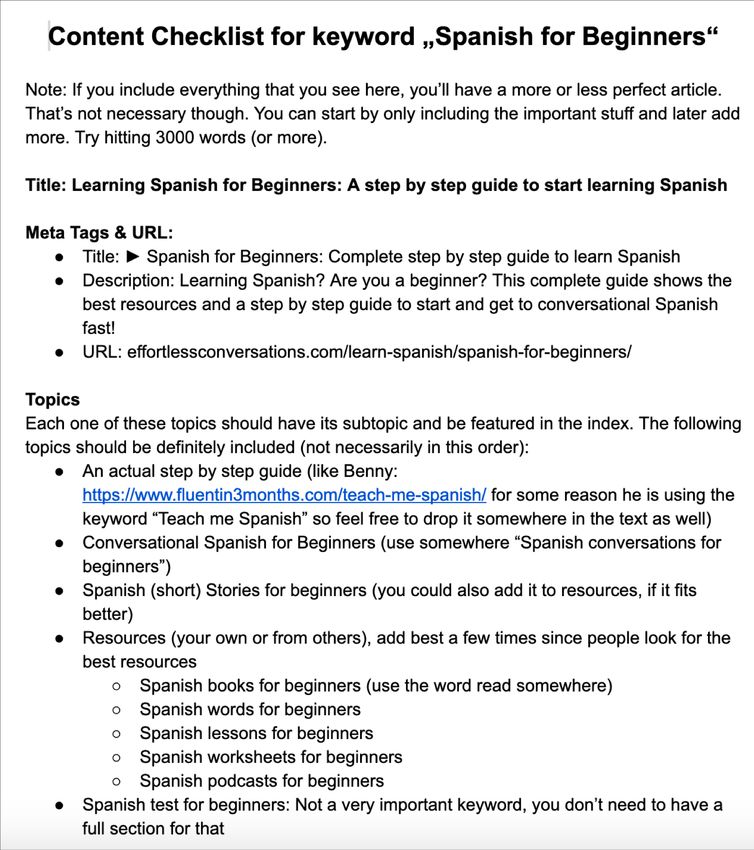
What is Sprachheld?
§ Launched in Fall 2014 as German language learning blog

§ Video course about language learning

§ Since 2018: Spanish course with personalized help

§ Lots of content about effective language learning

§ Recommendations for programs, apps and software

§ About 100k visitors per month

                                                           4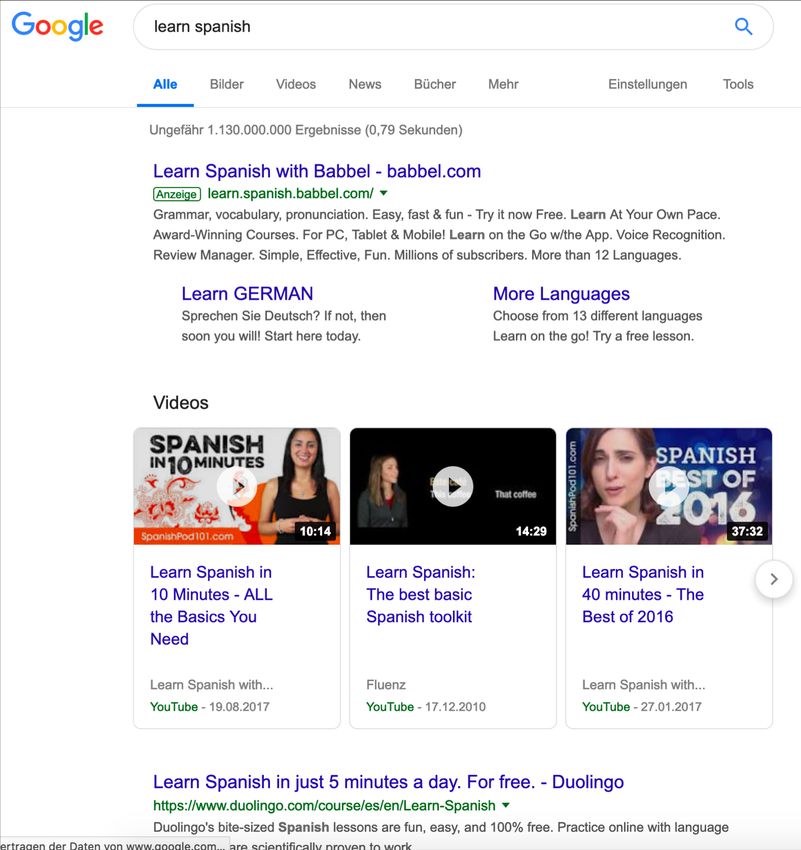
Disclaimer

             5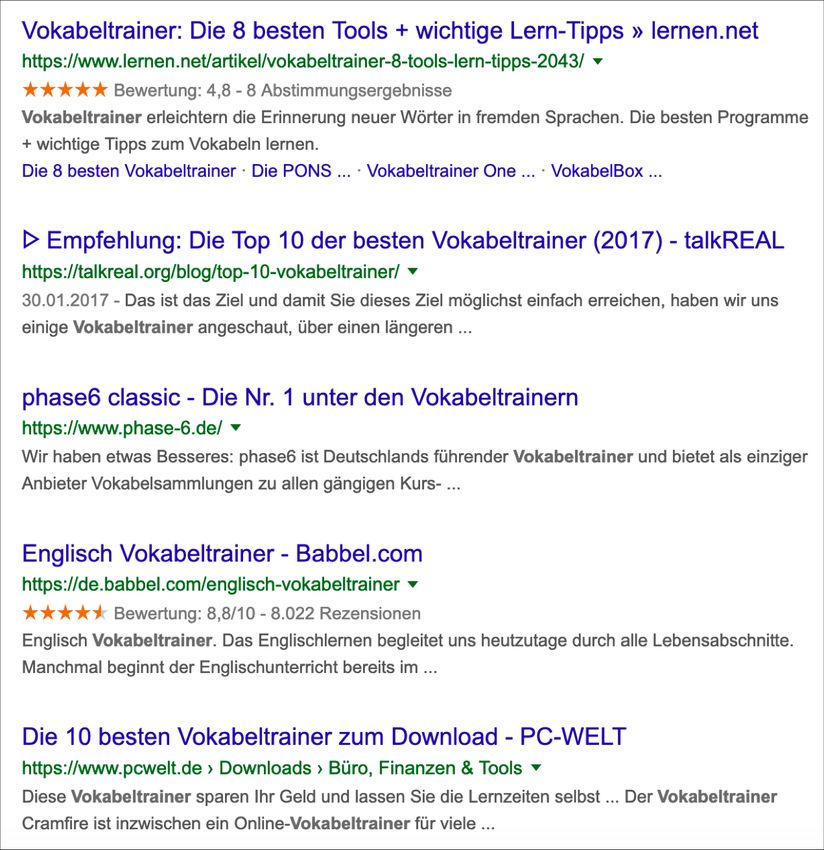
Part 1: Success factors at Sprachheld & intro to
SEO / Content Marketing

                                                   6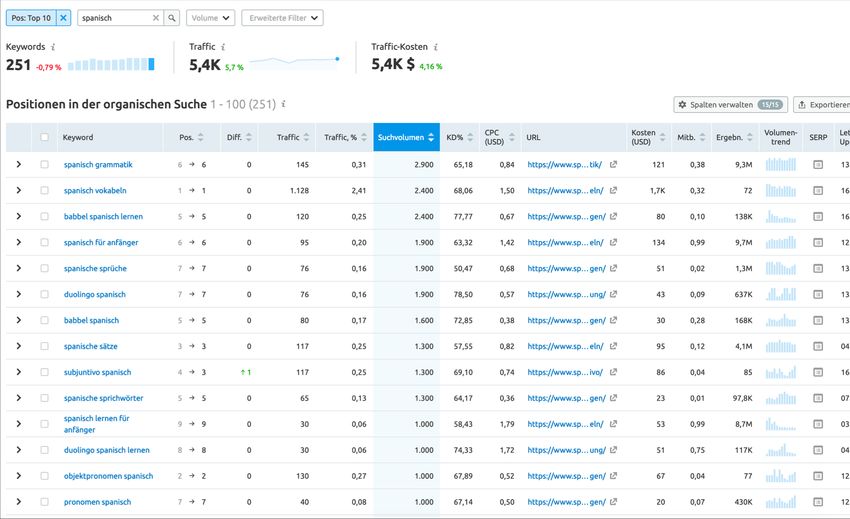
The most important success factor: content marketing

§ Give the best content that really helps to learn a
  language

§ 197 pieces of content (most have 1000+ words)

§ Extensive information, when searching language
  learning related topics on Google you will usually find
  Sprachheld

§ Following two main SEO concepts: holistic content &
  content hubs

                                                            7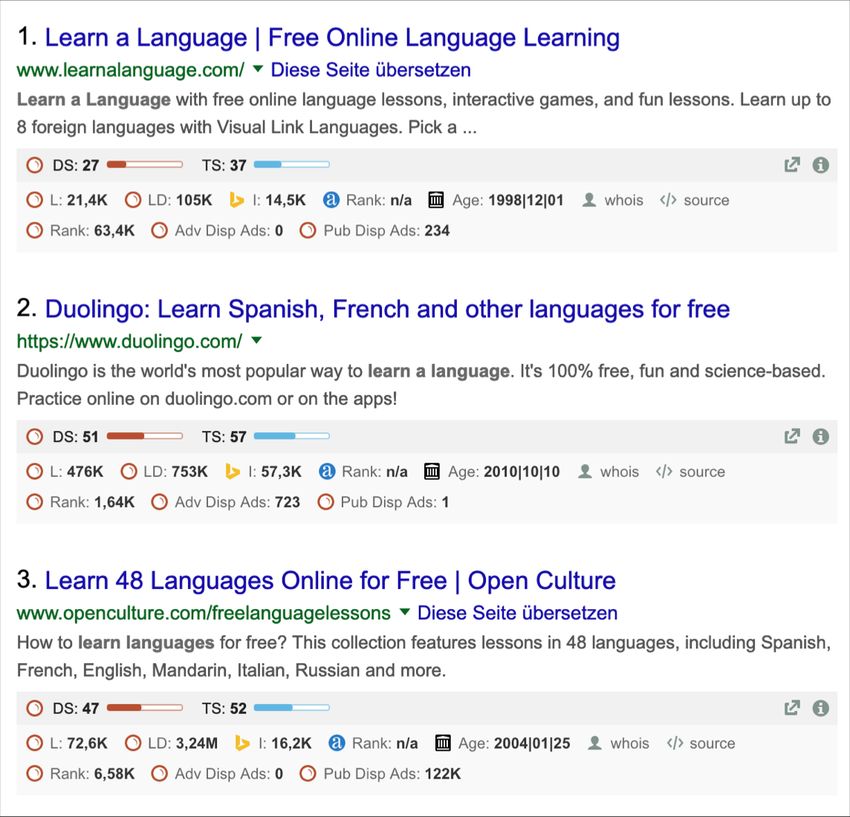
The 2 (+ 1) most important Google ranking
factors
                    To be done once (more or less), the SEO foundation

                                                                         10%
                               Website optimization:                            Google ranks by competition, to
                                speed, technical factors, mobile                outrank them you have to be better.
                         friendliness, SSL, visuals, UX, broken links,
                                       schema.org, etc.
                                           (onpage)

                                          60%                                            20%

            1. Content:                                  2. Online authority:
     quality, length, exhaustiveness,                brand searches, backlinks, social
        keywords, structure, etc.                              signals, etc.
                 (onpage)                                        (offpage)

           Requires regular work, most important factors, put your focus here
                                                                                                 Time dedicated
                                                                                                             8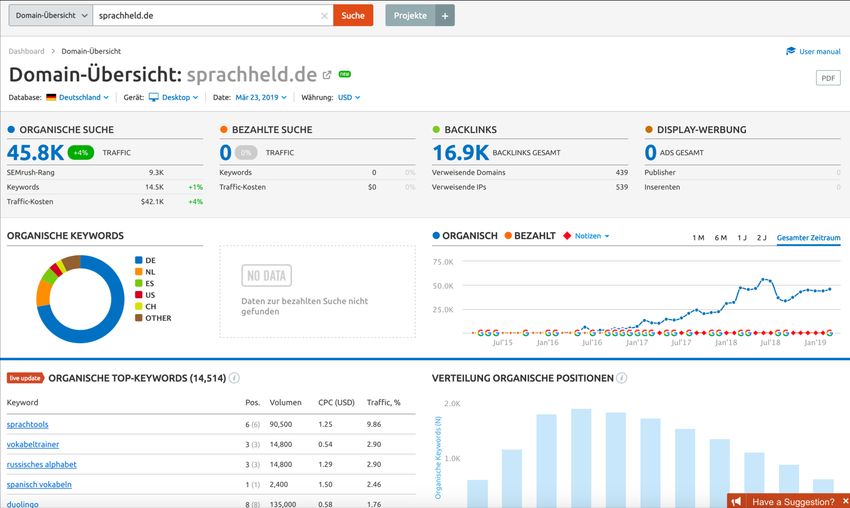
Two essential SEO concepts: holistic content & content hubs

        Holistic Content:                                       Content Hub:
       How exhaustive is an article?                         How many subtopics are
          (main metric: length)                           covered? (main metric: quantity)

        Example: Exhaustive article about                   Example: 5 subpages explaining
      learning Spanish with over 5k words.                  specific Spanish grammar rules.

                              The more competitive the keywords, the
                               more important this is. Quality is key!
                                                                                              9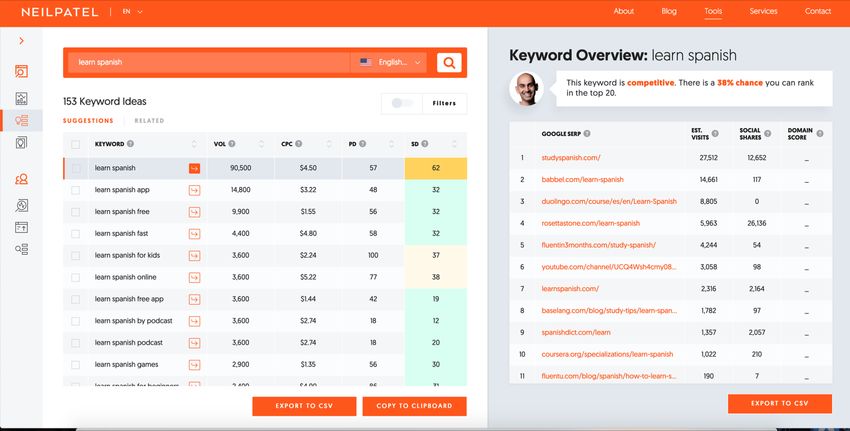
Content hub example for learning Spanish

§ Specific languages have more competition
  because a purchase is more likely (e. g. Learn
  Spanish), aka money keywords

§ Holistic content + a content hub is necessary

§ Sprachheld: About 20k traffic for Spanish
  related topics

                                                   10
Content hub for learning Spanish, 15 articles (partial overview)
Depth
Structured like a pyramid
Spanisch
lernen 1
Spanisch für Spanisch für Spanische Spanische Spanische Spanisch 2
Kinder Anfänger Grammatik Vokabeln Aussprache online lernen
Desde Hace 3
Preterito
Imperfecto &
Indefenido
Every article is holistic: text, videos, explanations, tables, excercises, downloads, etc.
11Example of holistic content: vocabulary apps
§ One of our most popular articles with more than 10k hits per month
§ Ranks for more than 750 different keywords
§ 6886 words
§ Anatomy (holistic):
• 5 best apps & table overview
• Index (with anchor links) for quick navigation (essential for long content)
• Advantages and disadvantages of such programs
• Split in paid and free
§ Also: lots of test details, many images & screenshots, always updated
§ Link: https://www.sprachheld.de/besten-vokabeltrainer-apps/
12Holistic content: sometimes less is more -> satisfy search intent!
§ We used to have 17 apps
§ Search intent is -> 1 app and only one
§ Give the solution quickly, holistic content only supplemental
• At the beginning quick overview of the best of
§ Other competitors have 10 or less (all of them rank worse)
Search intent is essential!
13Main ranking factor 1 - content
14The steps to create content that ranks
Creating the content Optimizing the content
1. Pick a topic 1. Wait and monitor
2. Do keyword research 2. If no satisfactory rankings after 3 months, improve
content
3. Analyze competitor results (how strong?)
3. And / or extend into content hub structure
4. Create an outline / briefing
4. Try to get high quality backlinks on the content / get an
5. Create content
influencer to share it
6. Publish and promote
15Step 2: Keyword research
§ Tools
• We use: SEMrush (starting at 99$/month) & Termlabs.io (starting
at 129€/month)
• Google Suggest & Related Search (YouTube Suggest)
• Questions tool: answerthepublic.com (free)
• Free keyword tools: ubersuggest & kwfinder.com
§ Steps
1. Pick a root / main keyword (e. g. learn grammar, Chinese words,
language learning apps)
2. Plug it into a tool
3. Save all relevant keywords for later use
16Step 3: Analyze competitor results
§ Google main keyword and check results on page 1 –
this is your reference point, you must be better
§ Analyse the search result page – Are there videos?
Images? Google Questions?
§ What makes the competition results good? How can
you make it better?
§ How long are the results? Usually the longer the better
(BUT: look out for search intent!)
17Step 4: Create an outline / briefing
§ Here is a briefing example:
https://docs.google.com/document/d/1-
PYs7GS_QjggdpuL9kwCFedpSLpEC9YgKEXEFqH-ESY/edit
§ Which keywords need to be used?
§ Which topics need to be covered?
§ How long should the article be?
§ What other content formats should be implemented?
Images? Videos? Infographics? Tools? Audios?
§ What else is important?
18Step 6: Promote the content
§ For Google to see it as relevant try to get at least 100-
200 hits within the first few days of publication
(seeding)
§ Promote your content in your own channels: social
media, newsletter, (consider ads), etc.
§ Promote in other channels: relevant Facebook groups,
ask people to share
§ The more visitors you get, the more relevant it will be
seen by Google
19The steps to create content that ranks
Creating the content 1. Wait and monitor
1. Pick a topic 2. If no satisfactory rankings after 3 months, improve
content
2. Do keyword research
3. And / or extend into content hub structure
3. Analyze competitor results (how strong?)
4. Try to get high quality backlinks on the content / get an
4. Create an outline / briefing
influencer to share it
5. Create content
6. Publish and promote
Optimizing the content
20Wait & optimize
Remember: main ranking factors
§ Usually Google needs a few weeks to give you a ranking
§ Sometimes it can take a few months 1. Content:
quality, length,
§ Depends on quality of results on first page of Google and exhaustiveness, keywords,
your online authority structure, etc.
§ If you don‘t rank (well) after 3 months start
troubleshooting:
2. Online authority:
• What else can you do to improve your content? brand searches, backlinks,
social signals, etc.
• Maybe the authority of page 1 results is too high? Then
create more articles to form a hub structure
21Creating a content hub
§ If you just can‘t rank well for the keywords, creating a
content hub will usually help
§ What are sub-topics of this topic where you can write Main topic
an extensive article? (hub)
§ Make sure the spokes link to the hub with the main Sub topic 1 Sub topic 2 Sub topic 3
keyword(s) in the anchor
(spoke 1) (spoke 2) (spoke 3)
22Main ranking factor 2 – online authority
23What is online authority?
How popular is your brand on the internet?
Factors include:
• Number of backlinks from high quality websites (still most
important factor)
• How often do people Google your brand?
• How often is your brand mentioned on other websites
and social media? (what‘s the quality of the websites?)
• How often is your content shared on social media (social
signals)?
• How long has your domain been in active use?
• Online reviews (if you have products).
24How do you build online authority?
§ Similar to the way you build it offline
§ Takes a lot of time
§ Get your brand name (or personal name – if you are a
personal brand) out there!
§ Cooperate with other (bigger) brands
§ Get other websites to link back to you
§ Create great content on a consistent basis
25Tool tips
26Tool tips
1. Keyword research: answerthepublic.com (questions) & ubersuggest &
kwfinder.com & lsigraph.com (LSI Keywords)
2. Definitely use Googe Analytics & Search Console!
3. SEO Suites: SEMrush & ahrefs (paid)
4. Backlinks: openlinkprofiler.org
5. Browser extension: SEOquake
6. Check broken links: Brokenlinkchecker.com
7. Page speed: Google Page Speed Insights & Pingdom
8. SEO plugin: Yoast SEO for WordPress
9. Crawler: Screaming Frog (for advanced users)
The essentials: (1) Keyword tool,
(2) Analytics, (3) Search Console
27Main takeaways & next steps
2813 Main SEO takeaways: overview
1. The most important SEO factors are content and authority, focus 8. Do keyword research – don‘t create content nobody will find (and
most of your work on these nobody is looking for)
2. It‘s better to writer fewer but better and exhaustive articles 9. One page = one main keyword, don‘t create several pages for the
same keyword (keyword cannibalization)
3. Text is important but mix in other content formats, in the language
niche videos work extremely well 10. Look at your best competitors (for a keyword you are trying to
rank) and look at the search result to get a feel for what Google
4. Rather than writing 10 articles about different topics, write 10
sees as relevant
articles about the subtopics of the same (example Spanish)
11. Internal linking can go a long way, have good internal linking with
5. Promote your content, Google will honor that with better rankings
keyword-rich anchor texts
6. If you don‘t get the ranking you wished for improve your content &
12. Click-through-rate is a ranking factor, create good meta tags that
add more rather than starting over
people want to click
7. Focus on search intent – how can you get the best match between
13. Keep at it: Success (in SEO) does not come over night
intent and your result?
29What is the next step? Your homework
Perform the following steps:
§ To not get overwhelmed,
1. Find a keyword you rank alright for (pos. 8-30)
I suggest to start with
2. Find keywords around that topic with ubersuggest
this homework (shoot for
3. Find relevant questions on answerthepublic.com that you have not
a 5 hour work window):
answered
§ Optimize that content 4. With these keywords and questions extend your content by at least 50%
piece and try to improve 5. Find 5-10 related articles and create internal links that include the main
keyword(s) in the anchor text
your ranking for this
6. Improve your meta title & description, use symbols, make them attractive
particular keyword
7. Shoot a vide, upload it to YouTube, optimize title & description for the
main keyword, link to the article and embed it
8. Get at least 300 visitors to the article within 3 days by promoting it
30If you forget everything…
Content: Online authority:
quality, length, brand searches, backlinks,
exhaustiveness, keywords, social signals, etc.
structure, etc.
Find the slides at:
Google „Netzbekannt Influencer Summit“
31#LangSummit2019
You can also read


