TikTok without filters - The Consumer Voice in Europe - BEUC
←
→
Page content transcription
If your browser does not render page correctly, please read the page content below
TikTok without filters

                     The Consumer Voice in Europe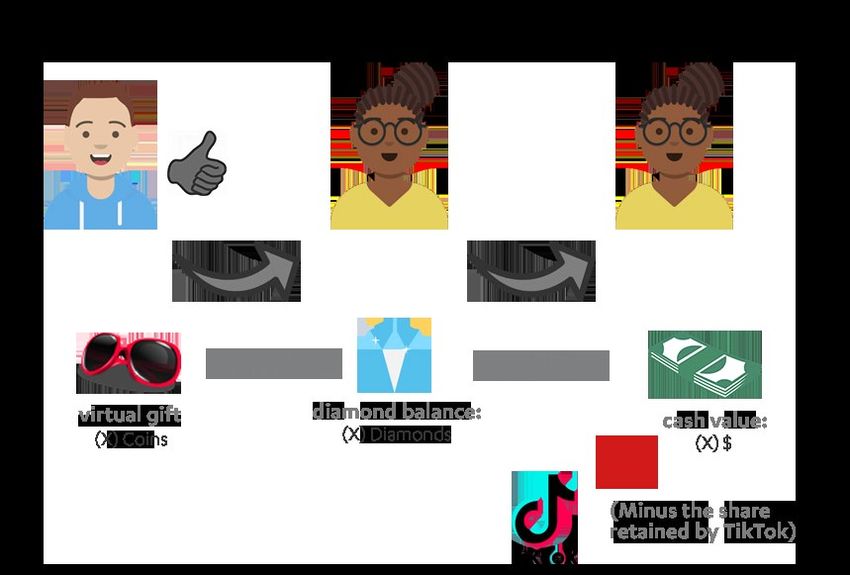
TikTok without filters

            Table of contents
                Just for fun, really? Looking at the dark sides of TikTok ______ 6
                   1. TikTok and its (real) audiences _______________________________________ 6
                   2. Issues with TikTok __________________________________________________ 8
                   3. TikTok’s unfair practices constitute a widespread infringement with an EU
                   dimension ___________________________________________________________ 9
                   4. Assessing TikTok’s practices through the lens of children and teenagers as
                   target groups ________________________________________________________ 10

                TikTok’s unfair Terms of Service _________________________________ 11
                   1. Unfair terms due to a lack of transparency in TikTok’s Terms of Service ___ 11
                   2. Unfair term on content ownership and license for intellectual property
                   rights _______________________________________________________________ 13

                TikTok’s unfair and abusive “Virtual Items Policy” ____________ 15
                   1. TikTok “coins” and “virtual gifts”: how does it work? ___________________ 15
                   2. What’s wrong with TikTok’s Virtual Items Policy? ______________________ 17

                TikTok’s misleading commercial practices about the processing
                of users’ personal data ____________________________________________24

                TikTok’s failure to take diligent measures to protect young
                users against hidden advertising and potentially harmful
                content ______________________________________________________________ 32
                   1. Hidden advertising and TikTok’s responsibility ________________________ 32
                   2. TikTok’s failure to take sufficient measures to limit children’s exposure to
                   advertising. _________________________________________________________ 35
                   3. TikTok’s failure to undertake due diligence to prevent young users’
                   exposure to inappropriate content. ____________________________________ 36

                Annex _______________________________________________________________ 40

                                                                                                       2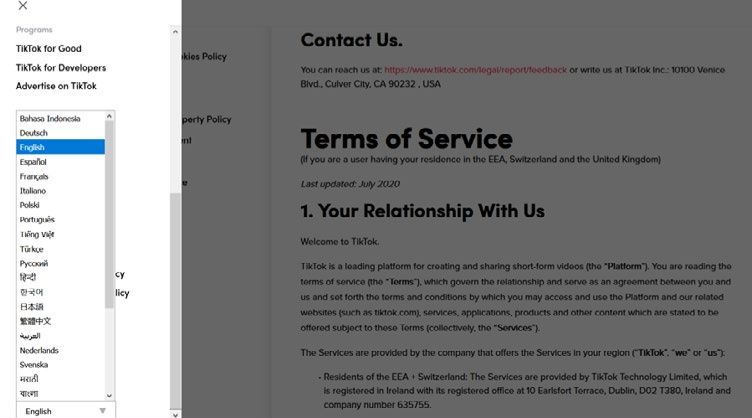
Sources of the report:

   Except as otherwise indicated, the screenshots featured in this report were taken by BEUC between November
    2020 and February 2021.
   The analysis is based on the following Tiktok policy documents: the Virtual Item Policy (last updates:
    December 2019), the Terms of Service (last updates: February 2020), the Privacy Policy (last updates: July
    2020) and the Community Guidelines (last updates: December 2020) accessed in the English language
    version and applying to users domiciled in Europe.

             Disclaimer

Terms and conditions of all the above-mentioned TikTok policies may not be exactly the same in all
language versions. Furthermore, not all features of all TikTok services may be available in the same manner
in all EU Member States and EEA countries. However, an investigation should consider all aspects raised in
the report as they seem to be relevant in most EU Member States and EEA countries.

                                                                                                                 3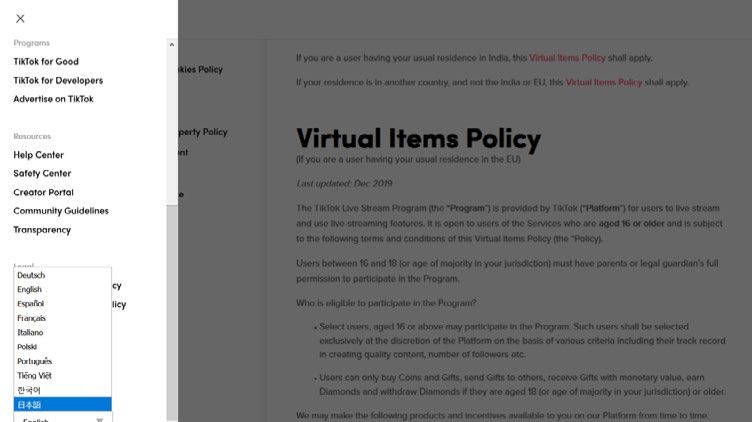
TikTok without filters

             Just for fun, really?
             Looking at the dark sides of TikTok

      1. TikTok and its (real) audiences                                             As the description of TikTok on the Google Play
      TikTok is one of the fastest-growing social media                              store more straightforwardly highlights:
      application in the world. It is owned by the Chinese
      company ByteDance and has offices across Europe.                                     “Watch millions of videos selected
      The app has over two billion downloads on the                                        specifically for you - A personalized video
      Google Play and Apple’s app stores1, and counts                                      feed specifically for you based on what you
      over 800 million active users worldwide2. The app                                    watch, like, and share. TikTok will quickly
      enables its users to create, post and share, in a                                    adapt to your taste to offer the most relevant,
      simple and entertaining way, 15-to-60 seconds                                        interesting, fun, quirky, head-turning videos
      videos sound-tracked with music clips, such as                                       that you’ll never want to stop watching”.4
      dance competitions, lip-syncs, funny sketches and
      more. A large part of TikTok’s popularity can be                               TikTok users spend hours on the app, watching,
      explained by the wide range of content-editing                                 creating, and sharing videos.5 In addition, the app
      tools and filters that users can easily use when                               enables its users to purchase “virtual coins”, which
      making videos. It is also a consequence of TikTok’s                            can then be used to send “virtual gifts” to reward
      algorithm which actively exposes users to never-                               content providers during live videos. Because of
      ending streams of videos tailored to their personal                            its popularity, TikTok has become over the years a
      characteristics and continuously adapted to their                              go-to-point for businesses willing to promote their
      online behaviour and reactions. As TikTok explains:                            brands and products and wishing to reach out to
                                                                                     younger audiences.
           “When you open TikTok and land in your For
                                                                                     TikTok does not disclose detailed information about
           You feed, you’re presented with a stream of
                                                                                     its users’ demographics and states that it does not
           videos curated to your interests, making it
                                                                                     allow registration for users who are below the age of
           easy to find content and creators you love.
                                                                                     13.
           This feed is powered by a recommendation
           system that delivers content to each user that
           is likely to be of interest to that particular
           user”.3

      1
        https://techcrunch.com/2020/04/29/tiktok-tops-2-billion-downloads/ (accessed January 2021).
      2
        https://datareportal.com/reports/digital-2020-global-digital-overview (accessed January 2021).
      3
        https://newsroom.tiktok.com/en-us/how-tiktok-recommends-videos-for-you (accessed January 2021).
      4
        https://play.google.com/store/apps/details?id=com.zhiliaoapp.musically.go&hl=en&gl=US (accessed January 2021).
      5
        One hour on average in France (https://blog.digimind.com/fr/agences/tiktok-chiffres-et-statistiques-france-monde-2020). On average, Norwegians
        open the app 17 times a day amounting to 74 minutes in total (www.bloomberg.com/news/articles/2020-09-30/tiktok-users-in-uk-germany-france-italy-
        norway-ages-screentime-open-rates (accessed January 2021).
                                                                                                                                                            4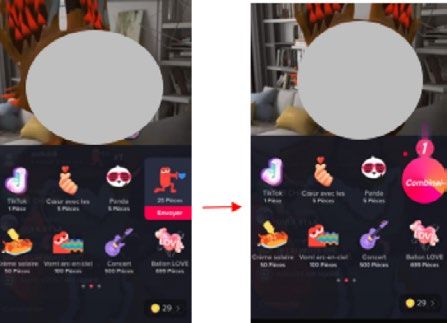
TikTok without filters                                                                                                                  Just for fun, really?
                                                                                                                        Looking at the dark sides of TikTok

   For example, TikTok’s privacy policy claims:                                          In practice, it is very easy for underage
                                                                                         users to register on the platform as the age
        “TikTok is not directed at children under the                                    verification process is very loose and only
        age of 13. If you believe that we have personal                                  self-declaratory (see the screenshot below,
        data about or collected from a child under                                       dated November 2020).
        the relevant age, contact us at: https://www.
        tiktok.com/legal/report/privacy”.6

       Yet, it is a matter of fact that TikTok’s primary
       audience is composed of children (including
       children under 13) and teenagers. In other
       words, it can be assumed that a very big part
       of TikTok’s users are children below 18.

   In France, 45% of children below 13 have indicated
   using the app.7 In the United Kingdom, a 2020 study
   from the Office for Telecommunications (OFCOM)
   revealed that 50% of children between eight and 15
   upload videos on TikTok at least weekly.8 In Czech
   Republic, a 2019 study found out that TikTok is very                              In its Community Guidelines, TikTok claims that its
   popular among children aged 11-12.9 In Norway, a                                  “users must meet the minimum age requirements
   news article reported that 32% of children aged                                   to use TikTok, as stipulated in our Terms of Service.
   10-11 used TikTok in 2019.10 In the United States, The                            When underage account holders are identified,
   New York Times revealed that more than one-third                                  [TikTok] will remove those accounts”.13 Yet
   of daily TikTok users are 14 or younger, and many                                 according to media reports several of TikTok former
   videos seem to come from children who are below                                   employees have highlighted that the platform does
   13.11 The fact that many underage users are active on                             not take any proactive measures to ensure that the
   the platform does not come as a surprise as recent                                underage users’ accounts are swiftly deleted when
   studies have shown that, on average, a majority of                                they are identified.14 According to media reports,
   children owns mobile phones earlier and earlier (for                              TikTok seems to be aware that many users under 13
   example, by the age of seven in the UK).12                                        are active on its platform.

   6
      www.tiktok.com/legal/report/privacy (accessed in January 2021)
   7
      https://blog.digimind.com/fr/agences/tiktok-chiffres-et-statistiques-france-monde-2020 (accessed in January 2021).
   8
      www.ofcom.org.uk/about-ofcom/latest/features-and-news/uk-internet-use-surges (accessed in January 2021).
   9
      www.e-bezpeci.cz/index.php/ke-stazeni/vyzkumne-zpravy/117-ceske-deti-v-kybersvete/file(accessed in January 2021).
   10
        https://nrkbeta.no/2019/06/20/en-av-tre-10-aringer-bruker-tiktok-ukentlig/ (accessed January 2021).
   11
      www.businessinsider.com/tiktok-children-users-data-privacy-safety-concerns-coppa-ftc-report-2020-8?r=US&IR=T; www.nytimes.com/2020/08/14/
       technology/tiktok-underage-users-ftc.html (accessed in January 2021).
   12
       www.theguardian.com/society/2020/jan/30/most-children-own-mobile-phone-by-age-of-seven-study-finds (accessed in January 2021).
   13
       www.tiktok.com/community-guidelines?lang=en#31 (section on minor safety) (accessed in in January 2021).
   14
       Complément d’enquête – Tous toqués de TikTok !, (2021- France 2). In the US, the New York Times highlighted that “a former TikTok employee told the
        Times that workers regularly pointed out videos from children on the platform who appeared to be younger than 13, but those users weren’t immediately
        removed” (www.businessinsider.com/tiktok-children-users-data-privacy-safety-concerns-coppa-ftc-report-2020-8?r=US&IR=T, accessed in January 2021).
                                                                                                                                                                5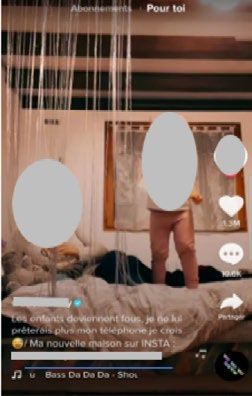
TikTok without filters

      2. Issues with TikTok                                                                TikTok’s misleading practices for the

      TikTok is already on the radar of several European                                   processing of users’ personal data. TikTok
      authorities investigating possible violations of                                     does not clearly inform its users, especially
      data protection and privacy rules (including issues                                  children and teenagers, about what personal
      relating to children’s privacy)15 and consumer                                       data is collected, for what purpose and for what
      laws.16 In January 2021, the Italian data protection                                 legal reason. These practices are problematic
      Authority (Garante per la protezione dei dati                                        inter alia as they do not allow consumers to
      personali) issued a temporary ban on the app after                                   make a fully informed decision about whether to
      a young Italian girl aged 10 died from asphyxiation                                  register to the app and/or to exercise their
      after taking part in a viral “blackout challenge” on                                 rights under the GDPR19.
      TikTok.17 In other parts of the world, TikTok has
                                                                                           TikTok’s failure to take diligent measures to

      also been facing bans and fines from several public
                                                                                           protect children and teenagers from hidden
      authorities.18
                                                                                           advertising and potentially harmful content.
      This report serves to substantiate BEUC’s external                                   TikTok fails to take adequate measures
      alert to the European Commission and the                                             preventing hidden advertising from proliferating
      Consumer Protection Cooperation network                                              on its platform, fails to limit the exposure of its
      (hereafter “CPC-Network”) according to Article 27                                    users below 18 to such advertising, and fails to
      CPC Regulation (EU) 2017/2394. It highlights how                                     limit their exposure to inappropriate content for
      the company has been engaging into several unfair                                    children.
      and misleading commercial practices infringing the
                                                                                         In its Common Position on social networks of
      rights of EU consumers. In particular, regarding:
                                                                                         2016,20 the CPC-Network already identified the
              nfair terms in TikTok’s “Term of Service”.
             U                                                                           lack of fairness and opacity of some terms used
             Several of these terms are unclear, ambiguous                               by social media services. The present analysis
             and/or create an unbalanced relationship                                    reveals that many of these terms and practices can
             between the platform and its users in favour of                             be found in TikTok’s policies. Furthermore, in its
             TikTok.                                                                     Common Position on in-app games,21 the CPC-
                                                                                         Network already stressed that consumers should
            Unfair terms and misleading practices in

                                                                                         not be debited through default settings without
            TikTok’s “Virtual Item Policy”. This includes,
                                                                                         consumers’ explicit consent. A similar practice is
            among other things, a lack of clear pre-
                                                                                         however also ongoing on TikTok. Where relevant,
            contractual information, several unfair terms, or
                                                                                         we refer to the above-mentioned Common
            the absence of an effective authorisation
                                                                                         Positions in the report.
            mechanism to prevent abuses with the in-app
            payment system used for purchasing virtual
            coins.

      15
          mong others, the European Data Protection Board (EDPB) has set up a task force to investigate TikTok privacy practices; the Danish Data Protection
         A
         Authority has launched investigations into TikTok to check whether the platform complies with EU rules on data protection (GDPR), the Dutch, French,
         Italian and UK Data Protection Authorities have also launched investigations to check whether the platform adequately protects children privacy
      16
            The Hungarian competition Authority has initiated investigations into TikTok in October 2020.
      17
         www.euronews.com/2021/01/22/italy-orders-tiktok-to-block-underage-users-after-10-year-old-girl-dies-doing-viral-challe (accessed in January 2021).
      18
          In 2019, the US Federal Trade Commission fined TikTok for infringing children privacy. In 2020, the Pakistan Telecommunication Authority decided to
           temporarily ban the app for immoral and indecent content. In June 2020, India banned the app due to data and privacy concerns.
      19
           See J. Ausloos & V. Verdoodt, (2021). TikTok and the GDPR - Legal Analysis of TikTok’s Privacy Policy in light of the GDPR. Study for BEUC.
      20
             Common position of national authorities within the CPC-Network concerning the protection of consumers on social networks.
      21
          https://ec.europa.eu/info/sites/info/files/common-position_of_national_authorities_within_cpc_2013_en_0.pdf (accessed January 2021).
                                                                                                                                                                 6
TikTok without filters                                                                                                                         Just for fun, really?
                                                                                                                               Looking at the dark sides of TikTok

   3. TikTok’s unfair practices constitute                                                Member States. It proposes the app in 14 different
   a widespread infringement with an EU                                                   European languages (English, German, Spanish,
   dimension                                                                              Finnish, French, Czech, Italian, Hungarian, Dutch,
   Under Article 3(4) of Regulation (EU)2017/2394                                         Polish, Portuguese, Romanian, Swedish and Greek),
   (hereafter “CPC Regulation”)22, a widespread                                           which are also official languages of 18 Member
   infringement with a Union dimension is defined                                         States (Ireland, Germany, Austria, Spain, Finland,
   as “an infringement which does or is likely to do                                      France, Belgium, Luxembourg, Czech Republic,
   harm to the collective interests of consumers in at                                    Italy, Hungary, the Netherlands, Poland, Portugal,
   least two-thirds of the Member States, accounting,                                     Romania, Sweden, Greece and Cyprus). Altogether,
   together, for at least two-thirds of the population                                    these Member States represent more than 415
   of the Union”. Consequently, to be considered as                                       million Europeans. This is notwithstanding the
   a “widespread infringement with a EU dimension”,                                       other EU countries where the app is not available
   the unfair practices should affect or potentially                                      in the national language but which may still count
   affect 18 Member States representing at least 298                                      numerous users accessing the platform in a foreign
   million Europeans.23                                                                   linguistic version.24
   TikTok is available for users in all EU Member
   States. Based on the language of the app as a
                                                                                              According to BEUC’s assessment, TikTok’s
   criterion to identify targeting of consumers, as
                                                                                              unfair practices constitute a widespread
   the screenshots (taken in February 2021) below
                                                                                              infringement with a Union dimension.
   show, TikTok targets EU consumers in many EU

   Screenshots (February 2021) showing TikTok’s available languages

   22
       OJ L 345, 27.12.2017, p. 1–26
   23
      T he 27 EU Member States counted 447,7 EU citizens on 1 January 2020 (www.touteleurope.eu/actualite/la-population-des-pays-de-l-union-europeenne.
       html, accessed January 2021).
   24
        For example, the app is not available in Lithuanian language but it appears that TikTok is still the 22nd most downloaded app in this country (see e.g. www.
         similarweb.com/apps/top/google/store-rank/lt/all/top-free/).
                                                                                                                                                                        7
TikTok without filters

      4. Assessing TikTok’s practices through                                            Directive 2011/83/EU (Consumer Rights Directive
      the lens of children and teenagers as                                              – hereafter “CRD”)29 makes a similar reference to
      target groups                                                                      the vulnerable consumer benchmark, and requests
      While the practices highlighted in this report                                     traders to “take into account the specific needs of
      are already problematic from the point of view                                     consumers who are particularly vulnerable because
      of adult users, they are all the more alarming                                     of their mental, physical or psychological infirmity,
      when considering that the platform hosts a                                         age or credulity in a way which the trader could
      significant number of children and teenagers who                                   reasonably be expected to foresee”30.
      are particularly vulnerable to unfair commercial
                                                                                         Finally, although Directive 1993/13/EEC (Unfair
      practices and whose behaviour may easily be
                                                                                         Contract Terms Directive – hereafter “UCTD”)31
      distorted or manipulated. As also explained later in
                                                                                         does not make any direct reference to the
      this report, the app explicitly invites advertisers and
                                                                                         vulnerable consumer benchmark, it is considered
      proposes tools to target an audience aged between
                                                                                         that the same standard should be applied when
      13 and 17.25
                                                                                         assessing the unfairness of contract terms.32
      EU consumer protection law imposes a higher
      fairness standard to protect vulnerable consumers
      who may be particularly at risk due to, among other                                   Since it is clear that a very high number of
      things, their age, credulity, or lack of maturity.                                    children are using the app, Tik Tok could
      Consequently, particular care needs to be taken                                       reasonably be expected to foresee the
      to protect them from traders’ unfair practices.                                       impact of its services and commercial
      In accordance with this approach, a commercial                                        communication provided/hosted by it on
      practice could be unfair if assessed based on a                                       children and teenagers. TikTok’s contractual
      vulnerable consumer even if it is considered fair                                     terms and commercial practices must be
      compared to the ‘average consumer’ or an average                                      analysed from the specific perspective of the
      consumer of a particular group of consumers.                                          vulnerable group of children and teenagers
                                                                                            who are particularly at risk.
      Directive 2005/29/EC (Unfair Commercial
      Practices Directive – hereafter “UCPD”)26 identifies
      children as an example of “vulnerable consumers”
      who may be affected by unfair commercial
      practices.27 In its Guidelines on the UCPD, the
      European Commission also identifies teenagers
      as a group of vulnerable consumers.28 According
      to Article 5 UCPD, where a commercial practice
      is aimed at a particular group of consumers, its
      impact should be assessed from the perspective of
      the average members of that group.

      25
            S ee screenshot on “Ad targeting” at p.37 of this report.
      26
              OJ L 149 11.6.2005, p. 22
      27
           Recital 18 of the UCPD.
      28
             UCPD Guidance, SWD(2016)163 final. at point 2.6.1
      29
               OJ L 304, 22.11.2011, p. 64–88
      30
                Recital 34 of the CRD.
      31
         OJ L 95, 21.4.1993, p. 29–34
      32
          See (inter alia) S. Whittaker, “Language or Languages of Consumer Contracts?”, Cambridge Yearbook of European Legal Studies, 2005-2006, 244.
                                                                                                                                                          8
TikTok without filters                                                                                                               TikTok’s unfair Terms of Service

                       TikTok’s unfair
                       Terms of Service

   1. Unfair terms due to a lack of                                                        Application to Tik Tok’s Terms of Service: the
   transparency in TikTok’s Terms of Service                                               analysis of TikTok’s Terms of Service reveals that
   Legal basis: Article 5 of the UCTD provides that all                                    several of its provisions infringe these fairness
   contract terms must be drafted in plain, intelligible                                   requirements. It is also noteworthy that terms
   and unambiguous language. Article 3(1) of the                                           comparable to those highlighted below have been
   UCTD further states that the terms should not                                           considered as unfair by the CPC-Network in its
   cause significant imbalances between the parties’                                       Common Position of 2016 on social networks.35
   rights and obligations, contrary to good faith to the
                                                                                           The list of issues presented below does not intend
   detriment of consumers. As the UCTD Guidance
                                                                                           to be exhaustive:
   explains, this means that, inter alia, the terms of
   services must be clear and transparent both in                                                he general presentation of TikTok’s Terms of
                                                                                                T
   substance and format.33 They must also be drafted                                            Service is ambiguous and unclear. For
   and presented in a format and style that is adapted                                          example, the provisions relating to the exclusion
   to the public,34 which means, in the case of TikTok,                                         of liability of the company are dispatched
   suited for children and teenagers. Article 7(2) of the                                       between different lengthy sections of the policy
   UCPD requires traders to provide information in a                                            document.36 Moreover, the section describing
   clear and intelligible way further strengthening the                                         how content (section 9 of the Terms of
   requirements of Article 5 of the UCPD. As the CPC                                            Service)37 is available and shared on the platform
   network clearly highlighted in its Common Position                                           is lengthy and hardly understandable for users.
   on social networks of 2016, social media operators                                           Also, TikTok compiles its Terms of Service
   “are also prevented from using contract terms to                                             applicable for all the geographical areas on a
   implement unfair commercial practices in their                                               single page.38 All of this make the policy
   relations with consumers, given that such conduct                                            particularly difficult to understand for users,
   is prohibited by Directive 2005/29/EC”.                                                      especially children and teenagers.

   33
      S ee point 3.3 of the Guidance Notice on the interpretation and application of Directive 93/13/EEC.
   34
       Case C-96/14, Van Hove (ECLI:EU:C:2015:262), Points 40 to 50.
   35
      Common position of national authorities within the CPC-Network concerning the protection of consumers on social networks.
   36
       See for instance “Liability” and “Exclusion of warranties” terms dispatched between Sections 9, 11, 12 and 13 of TikTok terms of service.
   37
       www.tiktok.com/legal/terms-of-use (accessed in January 2021)
   38
       www.tiktok.com/legal/terms-of-use#terms-us (accessed in January 2021)
                                                                                                                                                                   9
TikTok without filters

            he way the terms are presented disregards
           T                                                                             teenagers who may not be able to read
           the fact that the platform is used by many                                    English. As the screenshots (dated February
           children and teenagers. Their format should                                   2021) below show, TikTok’s Term of Service are
           be adapted to fit this audience.39 The Terms of                               available in German, English, Spanish, French,
           Service and the Virtual Items Policy and other                                Italian, Polish, Portuguese, Dutch, Swedish and
           documents should be understandable and                                        some other non-European languages. However,
           communicated in a way that is adapted to the                                  they are, for example, not available in Croatian
           target audience, as also clearly stated by the                                although media reported a “boom” of users in
           CJEU in its decision Van Hove (case C-96/14).40                               Croatia.42 Lithuania is another example of
           Children below 18 should be able to fully                                     countries counting a growing number of users
           understand the full economic and legal                                        but for which the documentation is not available
           consequences of the decisions they take on the                                in the national language. Recently, the
           platform.41                                                                   Hungarian Competition Authority also
                                                                                         highlighted that TikTok’s Terms of Service are
            ikTok only provides some of its policies in
           T
                                                                                         not available in Hungarian.43 This seems all the
           English language in several EU Member
                                                                                         more ironic considering that Hungarian users
           States, which makes them unintelligible to
                                                                                         are targeted by commercial communications in
           many consumers, in particular children and
                                                                                         Hungarian.

      39
         See e.g. Section “9. Content” of TikTok’s Terms of Service.
      40
           CJEU case C-96/14, Van Hove, ECLI:EU:C:2015:262 points 40 to 50.
      41
         Case C-26/13, Kasler and Kaslerne Rabai, points 71 & 72 (ECLI:EU:C:2014:282).
      42
          www.dentsu.com/hr/en/tik-tok-in-croatia (accessed in January 2021).
      43
         www.gvh.hu/en/press_room/press_releases/press-releases-2020/the-competition-authority-has-initiated-a-proceeding-against-tiktok (accessed in
          December 2020).
                                                                                                                                                         10
TikTok without filters TikTok’s unfair Terms of Service
As highlighted also below as well as in the the English, Dutch and Swedish languages, show
accompanying data protection report,44 a similar that several TikTok policy documents are still not
observation can be made concerning TikTok’s available in certain national languages although
other policy documents. The three screenshots there are consumers using the app in these
below (taken in February 2021), which focus on countries.
Policies available in Dutch (ie.cookies
policy, Terms of Service & Privacy policy Policies available in Swedish (Terms of
service and privacy@
Policies available in English
It is noteworthy that the Berlin Superior Court of Breaches of:
Justice (Berlin Kammersgericht) in a ruling in a - Article 3(1) and 5 UCTD
2016 case brought BEUC’s member organisation - Article 7(2) UCPD
vzbv against Whatsapp - which provided its terms
of use and privacy policy only in English - decided
that everyday English is common in Germany but
2. Unfair term on content ownership and
legal, contractual and commercial English is not.
license for intellectual property rights
No consumer should expect to be exposed to
Legal basis: under Article 3(1) of the UCTD, terms
“an extensive, complex set of rules with very, very
should not cause significant imbalances in the
many clauses” in a foreign language which they can
parties’ rights and obligations to the detriment of
hardly understand. The court ruled that as long as
the consumer. In addition, national copyright laws
the terms and conditions were not translated into
may consider users having to give broad licenses to
German, all clauses were deemed ’untransparent’
platforms over inexistent or future users’ content as
and therefore invalid45.
unlawful practices.46
As a consequence, the Terms of Service are highly
Application to TikTok’s Terms of Service:
complex and not comprehensible, particularly
several terms define the rights and obligations of
when considering that many children and
the parties regarding so-called “user-generated
teenagers are exposed to a foreign language.
content”. When registering on the platform, users
44
See J. Ausloos & V. Verdoodt, (2021). TikTok and the GDPR - Legal Analysis of TikTok’s Privacy Policy in light of the GDPR. Study for BEUC.
45
ww.vzbv.de/sites/default/files/en_kom_2016-05-13_pm_whatsapp_ibu.pdf (accessed in January 2021).
w
46
For example as highlighted by the “Commission des Clauses Abusives” in France (www.clauses-abusives.fr/recommandation/contrats-de-fourniture-de-
services-de-reseaux-sociaux-nouveau/, accessed in January 2021).
11TikTok without filters
have to accept them. One of these terms relates to User Content or viewing your User Content
intellectual property rights (see below) and reads as for entertainment or other private, non-
follows: commercial purposes (…).
“User-generated content: (…) except as
You further grant us and our affiliates, agents,
expressly provided otherwise in these Terms,
services providers, partners and other
you or the owner of your User Content still
connected third parties a royalty-free license
own the copyright and any other intellectual
to use your user name, image, voice, and
property rights in User Content sent to us, but
likeness to identify you as the source of any of
by submitting User Content via the Services,
your User Content” (…).
you hereby grant:
This allows TikTok, its partners, affiliated companies
(i) to us and our affiliates, agents, services and third-party companies to (amongst other
providers, partners and other connected things) use, distribute and reproduce all content
third parties an unconditional irrevocable, published by users (videos, images, voices, names
non-exclusive, royalty-free, fully transferable etc.) worldwide. This license is granted without
(including sub-licensable), perpetual remuneration for consumers and is irrevocable.
worldwide licence to use, modify, adapt,
It is noteworthy that, in two cases brought by our
reproduce, make derivative works of, publish
member organisation UFC-Que Choisir against
and/or transmit, and/or distribute and to
Twitter47 and Facebook,48 the Paris court of first
authorise others users of the Services and
instance (Tribunal judiciaire de Paris) took the
other third-parties to view, access, use,
view in 2018 and 2019 that similar terms were
download, modify, adapt, reproduce, make
unfair. In these two cases, the social networks
derivative works of, publish and/or transmit
granted themselves an absolute, royalty-free,
your User Content in any format and on any
worldwide license to transfer and sub-license all
platform, either now known or hereinafter
content published by their users. The Paris Court
invented;
ruled in both decisions that this provision was
unclear and ambiguous, and created a significant
(ii) to other users of the Services an imbalance between parties’ rights and obligations,
unconditional irrevocable, non-exclusive, to the detriment of consumers. These arguments
royalty-free, perpetual worldwide licence also apply to Tik Tok’s terms which impose an unfair
to use, modify, adapt, reproduce, make licence on consumers.
derivative works of, download, publish and/
or transmit, and/or distribute some or all of
your User Content in any format and on any Breaches of:
platform, either now known or hereinafter - Article 3(1) UCTD
invented for the purpose of generating other - National copyrights laws (where applicable)
47
TGI Paris, 9 April 2010, No 14/07298 (available here).
48
www.quechoisir.org/action-ufc-que-choisir-reseaux-sociaux-et-clauses-abusives-l-ufc-que-choisir-obtient-la-suppression-de-centaines-de-clauses-des-
conditions-d-utilisation-de-twitter-n57621 (accessed in January 2021). An appeal is pending in the Twitter case.
12TikTok without filters TikTok’s unfair and abusive “Virtual Items Policy”
TikTok’s unfair and abusive
“Virtual Items Policy”
1. TikTok “coins” and “virtual gifts”: During live videos, users can send “virtual gifts”
how does it work? to reward their favorite content providers and to
In addition to the personalised video feeds express their appreciation of their videos. Virtual
displayed on their “For You” pages, users have gifts are exchanged against TikTok “coins” that
the possibility to follow “live” streams of other users have previously purchased on the platform.
users. According to TikTok’s rules, live streams According to TikTok’s Virtual Items Policy, only
are reserved to users aged 16 or above. However, users aged 18 and above are allowed to buy and
as pointed out earlier, the platform hosts many send virtual gifts to live streamers. Those users who
underage users. On several occasions during our receive virtual gifts may then convert them into
investigation, we came to observe many users who “diamonds”, and ultimately cash in real money.
were (or seemed to be) underaged.
The process can be summarised as follows:
(Graph by BEUC)
13TikTok without filters
To be able to send virtual gifts, users first need Once the user has sent the gift to the content
to buy “coins”. The price of the coins is displayed provider, the gift is converted into Diamonds in
at the point of purchase and users can chose the content provider’s account. In simple terms,
between different bundles, ranging from 70 coins diamonds are thus virtual credits measuring the
for €1.09 and up to 7000 coins for €109.99 (see popularity of the videos posted.They are based on
screenshots below dated December 2020). The the virtual gifts received by the content provider
payment is either added to the user’s monthly “at a rate of conversion to be determined by
phone bills or made via a bank transfer through a [Tiktok] from time to time in its absolute and sole
payment provider authorised by TikTok. The user’s discretion”.49
bank details may be pre-filled if they have already
The content provider may then convert the
indicated their details in the Apple or Google Stores
diamonds into real money denominated in US
for past purchases (see screenshots below dated
dollars. However, the amount of the final monetary
November 2020). Once the purchase is completed,
compensation that is ultimately earned by the
users accounts are credited with the virtual coins.
content provider remains obscure. According to
TikTok, the compensation is calculated “based on
various factors including the number of diamonds
that the user has accrued”.50 The conversion of
diamonds into cash payments is made directly into
the user’s nominated PayPal account or processed
via other third-party payment channel accounts.
TikTok does not indicate how much the app retains
when content providers decide to convert their
diamonds into cash. In 2019, a BBC article stressed
that “TikTok declined to say how much of that
money it kept – but several influencers told the BBC
they took home 50% of all gift revenue earned”.51 A
French television documentary went even further
Once the coins have been credited on the users’
and claimed that TikTok retains up to two thirds of
accounts, they can be used to buy and send “virtual
these amounts.52
gifts” during live videos (see screenshots below
dated January 2021 where BEUC sent a gift of 25 Playful at a first glance, TikTok’s Virtual Item Policy
coins to a content provider). is highly problematic from the point of view of
consumer rights.
49
https://www.tiktok.com/legal/virtual-items#virtual-items-eu
50
Idem.
51
www.bbc.com/news/technology-48725515 (accessed in January 2021).
52
Complément d’Enquête – Tous toques de TikTok (France 2 – 2021, at 50’).
14TikTok without filters TikTok’s unfair and abusive “Virtual Items Policy”
2. What’s wrong with TikTok’s Virtual show, TikTok’s Virtual Items Policy is available in
Items Policy? only a few national European languages (German,
Spanish, French, Italian, Polish and Portuguese).
This means that users who live, for example, in
TikTok’s Virtual Item Policy is not
Sweden or in the Netherlands cannot have access to
available in all the languages where the app
TikTok’s Virtual Items Policy in their own language.
is used.
As also shown on the screenshot below, in Norway,
users can buy virtual coins in Norwegian Krone
but the Virtual Items Policy is not available to them
Legal basis: Article 5 of the UCTD provides that all
in Norwegian language. As highlighted before
contract terms must be drafted in plain, intelligible
concerning TikTok’s Terms of Service, although users
and unambiguous language. They must also be
may be able to understand ‘everyday English’, many
drafted and presented in a format and style that is
are not familiar with legal English used in such policy
adapted to the public.53 In parallel, Article 7(2) of the
documents. The terms of TikTok’s Virtual Items
UCPD requires traders to provide information in a
Policy are thus highly complex and presented with
clear and intelligible way.
legal and commercial vocabulary. As a consequence,
Application to TikTok’s virtual items policy: as they are unclear and unintelligible for consumers,
the screenshot below (taken in February in 2021) particularly the young audience of TikTok.
Explanation of the screenshot:
Norwegian users can buy virtual coins in
their local currency (Norwegian Krone) but
Breaches of: do not have access to TikTok’s Virtual Items
- Article 3(1) and 5 UCTD Policy in Norwegian language.
- Article 7(2) UCPD
53
Case C-96/14, Van Hove, Points 40 to 50.
15TikTok without filters
Clear pre-contractual information is donation but as a contract where TikTok retains an
missing. important share at the end of the process.
Legal basis: under Article 6 of the CRD, consumers Breaches of:
must be provided with a set of pre-contractual - Article 6(1)(e) CRD
information to be able to make informed purchase - Article 7(4)(c) UCPD
decisions. As Article 6(1)(e) of the CRD further
specifies, this includes information about the price.
In parallel, Article 7(4)(c) of the UCPD provides An effective authorisation mechanism to
that a commercial practice is misleading if it omits prevent abuse during the purchase of virtual
information relating to price. coins is lacking.
Application to TikTok’s Virtual Items Policy:
when users send “virtual gifts” to content providers,
Legal basis: In its Common Position on in-
the value of the gift that is sent is only displayed in
game apps, the CPC Network clearly stressed
TikTok coins with no additional correspondence in
that consumers should be adequately informed
real currency (euros or other applicable national
about the payment arrangements as a matter of
currencies) (see screenshot below, dated February
professional diligence and should not be debited
2021). Combined with shiny colours and funny
through default settings without consumers’
emojis, everything is designed to ensure that
explicit consent.54 A failure to do so is regarded as
users handling TikTok coins forget that they are
a breach of EU consumer law, in particular Articles
actually using real money.
5, 7(2) and 7(4)(d) of the UCPD and Article 6(1)
(g) of the CRD. In addition, the Guidelines of the
Dutch consumer and market Authority (Autoriteit
Consument & Markt – “ACM”) on the Protection of
online consumer issued in 2020 have pointed out
that “if a game is frequently played by children, the
business must design the payment settings in such
a way that children cannot make any purchases
without parental supervision, for example, by
requiring a password for each purchase.”55
Application to TikTok’s practices: Media reported
several examples of underage users who – while
often pushed by social influencers – spent a lot
This practice amounts to an omission of mandatory
of money to buy TikTok coins (TikTok accounts
precontractual information to consumers.
were in most cases linked to the pre-filled banking
Purchasing coins and sending gifts are not two
details of one of the parents).56 In September
different and separate operations but are clearly
2020, the French consumer organisation “60M
two parts of the same action since coins can only
de consommateurs” reported that influencers
be used on TikTok to buy and send virtual gifts.
had been calling on their young followers to send
Furthermore, the term “gift” is actually misleading
them virtual gifts.57 A documentary broadcasted
as this process can by no means be seen as a
on French public television made a similar
54
https://ec.europa.eu/info/sites/info/files/common-position_of_national_authorities_within_cpc_2013_en_0.pdf
55
www.acm.nl/sites/default/files/documents/2020-02/acm-guidelines-on-the-protection-of-the-online-consumer.pdf (accessed January 2021).
56
See e.g in the UK, “Mum’s desperate warning after 11-year-old daughter racks up ‘£3,500 bill’ on TikTok”, in Canada: 12-year old girl spends 12 000 dollars to
buy tiktok coins).
57
www.60millions-mag.com/2020/09/09/sur-tiktok-des-influenceurs-font-raquer-les-ados-17653
16TikTok without filters TikTok’s unfair and abusive “Virtual Items Policy”
observation.58 In 2019, a BBC investigation also TikTok’s policy reads as follows:
found evidence of influencers promising to share
their phone numbers or to make “duets” (allowing “If you wish to make changes to your
users to collaborate with TikTok stars via split- purchase, please contact us at the email
screen videos) in exchange for virtual gifts.59 Since address set out below. We will let you
TikTok knows that a big portion of the content of know if this change is possible. Please note
the site is clearly aimed at children and thus many that changes may impact price as well as
children and teenagers are encouraged to buy other aspects of your purchase. If you live
coins and use virtual items, its lack of necessary in the European Union, you have certain
protective measures to prevent abuse and rights to withdraw from a purchase under
to monitor payments constitutes a breach of the Consumer Rights Directive and its
due diligence and the omission of material implementing legislation. However, if you
information is misleading consumers. Users purchase Coins, you acknowledge and agree
should be clearly informed about the price of the that we start supplying the Coins to you
virtual gifts sent to content providers. as soon as the purchase is complete and
therefore, your right to cancel or withdraw
from the agreement to purchase is lost at this
Breaches of: point”.
- Articles 5, 7(2) and 7(4)(d) UCPD
- Articles 6(1)(e) and 6(1)(g) CRD The provisions dealing with the right of withdrawal
are mixed with other provisions (e.g. with provisions
on how to “make changes to a purchase”). The
The information about the right of proximity between different provisions dealing with
withdrawal is unclear and insufficient. different users’ rights is confusing. While the first
sentence suggests that consumers wishing to make
changes to their purchase can do so (depending on
Legal basis: Under Articles 9 and 16 of the CRD, TikTok’s good will), the following sentences seem
consumers may or may not, depending on the to indicate the contrary, by referring to the loss of
type of contracts concluded, benefit from a right the right of withdrawal. In addition, the contested
of withdrawal when making online purchases.60 clause does not explain what a “change” to a
Article 16 of the CRD lists several exceptions from purchase is. The wording is therefore ambiguous,
the right of withdrawal, which among include unclear, likely to mislead consumers and thus does
service contracts when the service has fully been not meet the requirements of Article 6(1)(k) of the
performed. Yet even in situations where the right CRD.
of withdrawal is not provided, Article 6(1)(k) of
the CRD stipulates that traders must still inform
consumers about the absence of the right of Breach of Article 6(1)(k) CRD
withdrawal in a clear and comprehensible manner.
Application to TikTok’s policy: the
wording that TikTok uses in its Virtual Item
Policy to inform its users that the right of
withdrawal is not provided is ambiguous and
unclear.
58
Complément d’Enquête – Tous toques de TikTok, (France 2- 2021).
59
www.bbc.com/news/technology-50651125 (accessed in January 2021).
60
Art. 6, 9 and 16 CRD.
17TikTok without filters
Several terms in TikTok’s virtual items a reasonable belief that law violations have taken
policy are unfair. place. The term also specifies that TikTok may
eliminate its coins policy for “technical reasons”,
which does not provide for a sufficiently clear
TikTok’s virtual item policy contains several unfair explanation for a user about changes to this
terms from a consumer rights point of view. It is policy. In addition, TikTok states that it cannot
noteworthy that similar terms have already be held liable, even if this comes from a technical
been declared unfair by the CPC network in its problem or a wrong appreciation from the
Common Position on social networks.61 platform. For example, in a situation where users
would be erroneously suspected to be in breach
Below we list on some of these unfair terms.
of TikTok internal rules, TikTok would be allowed
to cancel the coins accrued without bearing any
TikTok keeps full and unilateral control responsibility. As a consequence, the term gives
over users’ coins for a wide range of reasons TikTok disproportionate unilateral powers to the
the company may consider “valid”. detriment of the user and contrary to good faith
(e.g. by deliberately using vague terms in the
reasons given to dispose of users’ coins).
Legal basis: under Art.3(3) of the UCTD and Points
( j) and (k) of its Annex, traders must not modify any
Breaches of:
characteristics of the product or service unilaterally
- Article 3(3) UCTD
and without valid reason. Moreover, according
- Points (b) ( j) (k) and (q) UCTD Annex
to Points (b) and (q) of the same Annex, terms
limiting or excluding the liability and legal rights of
consumers are also deemed to be unfair.
TikTok keeps an “absolute right to
Application to TikTok’s policy: TikTok’s virtual manage, regulate, control, modify and/or
item policy reads as follows: eliminate” the exchange rate between coins
and gift “as it sees fit in their sole discretion,
“You agree that we have the right to manage, in any general or specific case, and has no
regulate, control, modify and/or eliminate liability” to the user.
such Coins, where we have a valid reason to
do so such as where we reasonably believe
you have violated this Policy, you are in Legal basis: Under Art.3(3) of the UCTD and points
breach of any applicable law or regulation or ( j) and (k) of its Annex, terms granting traders an
for legal, security or technical reasons and absolute and unilateral power to modify without a
that we will have no liability to you based on valid reason any characteristic of a contract is likely
our exercise of such right. If we decided to to be considered as unfair. According to Points (b)
eliminate Coins from our services completely, and (q) of the same Annex, terms diminishing or
we will do so by providing reasonable notice limiting the legal rights of consumers against the
to you”. trader may also be deemed unfair. Furthermore,
according to Point (i) of the UCTD Annex, changes
This provides that TikTok keeps a unilateral right to in the terms should be communicated to the
regulate, control, modify or even remove its coins consumers sufficiently in advance.
policy. A vague and non-exhaustive list of reasons
Application to TikTok’s policy: TikTok’s Virtual
that TikTok may consider “valid” is indicated. It
Items Policy reads as follows:
includes, for example, a reasonable belief that the
user has breached the platform’s policy rules, or
61
Common Position of national authorities within the CPC-Network concerning the protection of consumers on social networks.
18TikTok without filters TikTok’s unfair and abusive “Virtual Items Policy”
“You agree that we have the absolute right to withdraw Diamonds in exchange for
to manage, regulate, control, modify and/or monetary compensation (to be denominated
eliminate such exchange rate as we see fit in in US dollars). The applicable monetary
our sole discretion, in any general or specific compensation will be calculated by us based
case, and that we will have no liability to you on various factors including the number of
based on our exercise of such right”. Diamonds a user has accrued”.
This gives TikTok disproportionate unilateral This is unclear as it does not allow users to fully
powers and deprives consumers of their rights. For understand how the monetary compensation is
consumers, it is essential to know upfront what the calculated. It merely specifies that the calculation is
applicable terms are. However, TikTok does not based on “various factors” without any further clear
specify that consumers will be notified in advance in explanation. In addition, the contentious term allows
case of changes. TikTok – once again - to unilaterally modify the
applicable monetary compensation at its sole and
only discretion.
Breaches of:
- Article 3(3) UCTD Points (b) (i) ( j) (k) and
(q) UCTD Annex Breaches of:
- Article 3(3) UCTD and Point (I) of the UCTD
Annex,
When users send virtual “gifts” to content - Article 7 UCPD,
providers, the gifts are converted into - Article 6(1)(e) CRD.
“diamonds” at a rate of conversion to be
determined by TikTok from time to time at its
absolute and sole discretion TikTok keeps full and unilateral control
over the withdrawal feature of diamonds for a
very wide range of reasons that the company
Legal basis: under Article 7 of the UCPD, traders considers “valid”.
should not hide essential information, such as
price (Article 7(4)(c) of the UCPD). The information
must be disclosed in a clear, unambiguous, and Legal basis: under Article 3(3) of the UCTD and
timely manner. Furthermore, according to Art. 6(1) Points (i) ( j) and (k) of its Annex, allowing traders
(e) of the CRD, users must be informed, prior the to alter unilaterally and without valid reasons or
conclusion of their contract, of the total price of a prior notification, any characteristics of a product
service, or, at least, where applicable, of the manner or service should be considered unfair. According
in which the price will be calculated (this refers to to Points (b) and (q) of the same Annex, terms
the “applicable monetary conversation” from gifts to diminishing or limiting the legal rights of consumers
diamonds). Finally, Article 3(3) of the UCTD and Point against the trader may also be deemed unfair.
(l) of its Annex provide that terms allowing traders to
Application to TikTok’s policy: TikTok’s Virtual
display the price of goods or services only upon their
Items Policy policy reads as follows:
delivery should be considered as unfair.
Application to TikTok’s policy: TikTok’s Virtual “You agree that we have the right to manage,
Items Policy reads as follows: regulate, control, modify and/or eliminate
such withdrawal feature where we have a valid
“A content provider can choose, by selecting reason to do so such as where we reasonably
the relevant options in their user account, believe you have violated this Policy, you are
19TikTok without filters
in breach of any applicable law or regulation clearly informed and be given a reasonable notice
or for legal, security or technical reasons, and to potentially react to the changes.63 Finally, terms
that we will have no liability to you based on limiting or excluding the liability and legal rights of
our exercise of such right”. consumers against a trader would also be considered
unlawful.64
As explained earlier, live content providers may
Application to TikTok’s policy: TikTok’s Virtual Item
decide to convert their diamonds into real money.
Policy reads as follows:
However, according to TikTok’s virtual items
policy, the platform retains the right to manage,
“We may cancel the operation of the Diamond
regulate, control, modify or unilaterally eliminate
incentive at any time. If we cancel the
the possibility for users to withdraw their diamonds
Diamond incentive, we shall make reasonable
when it has a “valid reason” for doing so. Similarly,
efforts to provide you with prior notice to
and without further explanation, the platform
enable you to convert your Diamonds into
retains the right to eliminate its diamond policy
cash. Where we have a valid reason (such
for “technical reasons”, whatever this may mean in
as where we reasonably believe you have
practice. Once again, like for the virtual coins, TikTok
violated this Policy, you are in breach of any
provides a vague and non-exhaustive list of possible
applicable law or regulation or for legal,
violations that would authorise the platform to take
security or technical reasons), we may cancel
such steps. Also, once again, TikTok grants itself the
the operation of the Diamond incentive
power to use this right unilaterally without bearing
without notice. In either case, you shall
any liability towards its users.
have no right or entitlement to any financial
compensation in respect of any Diamond
accrued prior to the date of cancellation of
Breaches of:
the incentive that has not been converted
- Article 3(3) UCTD and Points (b) (i) ( j) (k)
into cash using the mechanism set out in this
and (q) UCTD Annex
Policy”.
TikTok grants itself the right to cancel the ‘Diamond
TikTok grants itself a unilateral right to
incentive’ at any time, without providing any
cancel the operation of the Diamond
clear grounds to do so, and without bearing any
incentive at any time, for a wide range of
responsibility towards consumers. Consumers
reasons and without automatically informing
cannot obtain financial compensation for the
users.
diamond collected prior to the date of cancellation
of the incentive when the latter have not been
converted into cash. If the platform decides to
Legal basis: under Art. 3 (3) of the UCTD, traders
cancel the diamond incentive, it will only make
may not grant themselves the right to alter
“reasonable efforts” to provide the user with a prior
unilaterally and without a valid and clearly defined
notice. Where the platform considers it has a “valid
reason, the characteristics of the service to be
reason” - such as a reasonable belief that the user
provided to their users.62 Such terms are likely
has violated the internal rules, are in breach of any
to be considered unfair. In addition, prior to any
applicable law, or for other technical reasons (again
modification to the contract, users should be
whatever this may mean), TikTok may cancel the
62
Art. 3(3) UCTD and Points ( j) and (k) of its Annex.
63
Art. 3(3) UCTD and Points (i) of its Annex.
64
Art. 3(3) UCTD and Point (b) and (q) of its Annex.
20TikTok without filters TikTok’s unfair and abusive “Virtual Items Policy”
operation of the diamond incentive without notice
to its users.
Yet TikTok should always inform consumers,
not merely “make reasonable efforts” to do so.
Furthermore, by indicating that consumers will not
be systematically informed about the elimination
of the diamond incentive, and that they will not be
able to benefit from a financial compensation for
unconverted diamonds before the cancellation of
the initiative, TikTok retains the right to keep the
sums paid by consumers.
Breaches of:
- Article 3(3) UCTD Points (b) (i) ( j) (k) and
(q) UCTD Annex
21TikTok without filters
TikTok’s misleading commercial practices
about the processing of users’ personal data
Legal basis: when consumers register on a video- information should be communicated in a clear,
sharing platform like TikTok, they are entering intelligible, timely and unambiguous manner.
into a contract which must comply with the Failure to do so may constitute a misleading
requirements laid down in EU consumer rights omission and be considered as an unfair
legislation. commercial practice. It is also noteworthy that
the UCPD guidelines recognise on two occasions
Under Article 6(1)(a) of the CRD, before being
that “the data protection obligation to inform
bound by a contract, consumers must be informed
consumers about the data processing [...] may
about the main characteristics of a service in a clear
be considered substantial under Article 7 of the
and comprehensive manner. This would include a
UCPD65 and that “The data protection information
complete explanation of the app’s business model
requirement of consumers about the processing
and what personal data is collected, processed, and
of personal data, not limited only in relation to
transferred to third parties by the app as this is an
commercial communication, may be considered as
essential feature of the services provided by TikTok.
material [under] Article 7(5) [UCPD]”66.
Under Article 5 of the UCTD, all contractual terms
Furthermore, as highlighted earlier, Article 5(3)
must be drafted in plain and intelligible language
of the UCPD deals specifically with the situation
for consumers to whom the clauses are addressed.
of vulnerable consumers, which includes children,
This would require that TikTok’s privacy policy
who may be particularly at risk and therefore need
terms and terms of use should be intelligible by
more protection. Thus, the fairness of a commercial
the children and teenagers users of the application
practice should be assessed from the perspective of
as to their wording, the terminology used, their
the average member of that vulnerable group. Since
structure and whether important provisions are
TikTok’s primary audience is composed of children
duly highlighted and not hidden among other
(including children under 13) and teenagers, the
provisions. The transparency of TikTok’s policies
upmost professional diligence67 should guide the
should allow (young) consumers to foresee the
platform when delivering this information.
economic consequences that flow from the privacy
policy. Application to Tik Tok’s Privacy policy and
Terms of Service: the analysis of TikTok’s Terms
Further to this, under Article 7 of the UCPD
of Services and Privacy Policy shows that the
consumers should not be misled by not informing
information communicated to consumers is
them about the key characteristics of the product
unclear, in particular about the way data is
needed to make an informed purchase decision.
collected, used and transferred to third parties.
To be understandable to the consumer, this
65
See UCPD Guidance point 1.4.9, point 1.4.10 and point 3.4.1.
66
See UCPD Guidance point 1.4.10.
67
Article 2 (h) UCPD: “‘professional diligence’ means the standard of special skill and care which a trader may reasonably be expected to exercise towards
consumers, commensurate with honest market practice and/or the general principle of good faith in the trader’s field of activity”.
22You can also read


