Tokyo 2020 Equestrian Freight Manual - Welcome to INSIDE FEI
←
→
Page content transcription
If your browser does not render page correctly, please read the page content below

12345678

                          Tokyo 2020
           Equestrian Freight Manual
                          Version 1.0 January 2020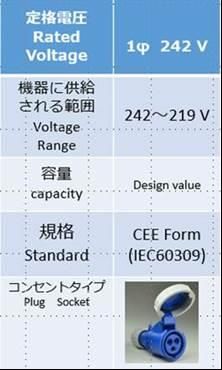
PREFACE
This Equestrian Freight Manual (EFM) is the guideline for shipping equestrian freight for the Equestrian Events of the
Tokyo 2020 Olympic and Paralympic Games. All NOCs/NPCs/NFs wishing to ship equestrian freight for the Tokyo
2020 Olympic and Paralympic Games should understand and follow the procedures described in this guide.

The EFM has been developed to assist all NOCs/NPCs/NFs with logistical planning in their preparations for the Tokyo
2020 Olympic and Paralympic Games. The manual contains details of health requirements, customs procedures, arrival
& departure details, security provisions, ground transportation and key contact information.

The Tokyo Organising Committee of the Olympic and Paralympic Games (Tokyo 2020) has appointed Peden Bloodstock
GmbH as the Official International Shipping Agent and Stable Management Provider. Peden will provide the
coordination of equine transportation services for the Tokyo 2020 Games as well as back of house stable management.

Specifically, the role of Peden is to organise and coordinate the smooth transfer of all qualified and P horses, their
attendants and equipment, to and from the Tokyo 2020 Venues. Peden will coordinate the import and export of all
non-Japanese origin horses and all necessary transport operations between the ports of entry and the Baji Koen (EQP)
& Sea Forest (SFC) Olympic and Paralympic Equestrian venues.

Tokyo 2020 and Peden have been coordinating with the Customs, Immigration, Police, Animal Health, Import & Export
Authorities in Japan (MAFF), The Fédération Equestre Internationale (FEI), Ministries of Agriculture across the world,
and various other regulatory bodies to ensure the smooth transfer of all equine athletes, their attendants and
equipment to and from Japan.

Tokyo 2020 has appointed Peden to co-ordinate the consolidation and dispatch of horses on flights to and from Japan,
and manage the equestrian airfreight services provided under the Tokyo 2020 Freight Support Plan.

National Olympic/Paralympic Committees (NOCs/NPCs) are the appropriate authorities responsible for confirming the
utilization of the Tokyo 2020 Freight Support Plan. However, in practical terms, each National Equestrian Federation
(NF) will be the party preparing horses for shipment to and from Japan. It is essential that each NF works closely with
the Tokyo 2020 appointed agent Peden Bloodstock GmbH.

The purpose of this document is to provide NOCs/NPCs/NFs with as much background information as is presently
available on transport procedures for their horses.

This EFM will be updated as appropriate prior to the Tokyo 2020 Olympic and Paralympic Games. Should the EFM be
updated it will be sent via email to all NOCs/NPCs/NFs.

We hope that the Tokyo 2020 Olympic and Paralympic Equestrian Events are a great experience for you. If you have
any questions related to Equestrian freight please contact Peden Bloodstock.

                                                                                                                     2
CONTENTS
SECTION
1 Operational Contacts
2 Freight Support Plan
3 Flight Schedules
4 Charges
5 Flight Bookings
6 Attendants on Flights
7 Equine Health Documentation Requirements
8 Equipment
9 Forage, Feed, Supplements & Bedding
10 Veterinary Medicines
11 Flight Formalities
12 Re-export from Japan
13 Storage Containers
14 Veterinary Surgeon & Farrier Registration
15 Hippobase
16 Substitutions
17 Visa Requirements
18 Stable Guide
19 Sustainability
20 Responsibility & Liability
ANNEX
A Airfreight Booking Form
B Responsibility of Attendants
C Dangerous Goods List
3SECTION 1: OPERATIONAL CONTACTS
A) OFFICIAL SHIPPING AGENT
Peden Bloodstock GmbH Peden Bloodstock Ltd.
Leyenburg Dogtails, Borough Court Road
47509 Rheurdt Hartley Wintney, Hampshire
Germany UK
Tel: +49 208 3782410 +44 1638 732 118 (Fiona Direct Dial)
+44 1638 732 101 (Henry Direct Dial)
http://www.pedenbloodstock.com
KEY PEDEN CONTACTS
Martin Atock atock@peden.de +49 171 414 7303
Dr. Fiona McCormack MRCVS fiona@peden.co.uk +44 7748 864 089
Henry Bullen henry@peden.co.uk +44 7818 413 185
Bella Atock bella@peden.de +49 208 378 2412
B) TOKYO ORGANISING COMMITTEE FOR THE GAMES OF THE XXXII OLYMPIAD
(TOKYO 2020)
THE TOKYO 2020 ORGANISING COMMITTEE FOR THE OLYMPIC AND PARALYMPIC GAMES
23rd Floor, Harumi Island Triton Square Office Tower Y
1-8-11 Harumi Chuo-ku,
Tokyo, 104-6123 Japan
http://www.tokyo2020.org
Equestrian Logistics: Masasumi Kito masasumi.kito@tokyo2020.jp
Veterinary Services Manager: Dr. Hiroko Aida hiroko.aida@tokyo2020.jp
Equestrian Sports Manager: Dr. Yasuhiko Haruta yasuhiko.haruta@tokyo2020.jp
Technical Operation Manager: Mário Minoru Kuamoto minoru.kuamoto@tokyo2020.jp
4SECTION 2: FREIGHT SUPPORT PLAN
▪ All non-Japanese origin horses must arrive in Japan at the hub ports of entry, Haneda International Airport and
Narita International Airport, for the 2020 Olympic & Paralympic Games.
▪ Tokyo 2020 will bear the air transport cost from the designated hub airports to and from Japan for the following
number of horses which are permitted to compete at the Games under the FEI Qualification System.
- Eventing 65 horses
- Dressage 60 horses
- Jumping 75 horses
- Paralympic Dressage 78 horses
▪ P alternate Athletes may travel on Tokyo 2020’s aircraft to and from Japan at NOCs/NFs expense.
- Eventing 15 horses
- Dressage 15 horses
- Jumping 20 horses
▪ The hub airports where all horses from the respective regions will be consolidated are Liege/Belgium, New
York/USA & Melbourne/Australia.
▪ Travel from country of origin to hub airport and return is at NOC/NPC/NF expense. The only hubs are as stipulated
above. Please contact Peden Bloodstock for assistance with these arrangements.
▪ Space will be provided for all horses to travel in 112cm wide stalls (two horses per pallet).
▪ All flights between Liege (LGG) and Haneda (HND) will be Emirates B777F aircraft with an estimated flight time of
18 hours, 15 minutes. All flights will make a technical stop in Dubai (DWC) for refuelling & crew change. The cargo
doors will not be opened during this technical stop.
▪ All return flights between Haneda (HND) and Liege (LGG) will be Emirates B777F aircraft with an estimated flight
time of 19 hours, 40 minutes. All flights will make a technical stop in Dubai (DWC) for refuelling & crew change.
The cargo doors will not be opened during this technical stop.
▪ All flights between New York (JFK) and Narita (NRT) will be B747F aircraft with an estimated flight time of 15 hours
based on 2019 schedules. All flights will make a technical stop in Anchorage (ANC) for refuelling & crew change.
The cargo doors will not be opened during this technical stop.
▪ All return flights between Narita (NRT) and Chicago (ORD), will be B747F aircraft with an estimated flight time 13
hours, 50 minutes to ORD, based on 2019 schedules. All flights will make a technical stop in Anchorage (ANC) for
refuelling & crew change. The cargo doors will not be opened during this technical stop.
▪ All flights between Melbourne (MEL) and Narita (NRT) will be B747F aircraft with an estimated flight time of 16
hours based on 2019 schedules. All flights will make a commercial stop in Hong Kong (HKG).
▪ All return flights between Narita (NRT) and Melbourne (MEL) will be B747F aircraft with an estimated flight time
of 17 hours, 15 minutes based on 2019 schedules. There will be an aircraft change in Hong Kong (HKG).
▪ Under the Tokyo 2020 freight support plan horses should be returned to the designated hub of origin after the
event.
▪ Before the services in this manual can be utilized each NOC/NPC/NF must sign a “Commitment Letter”, which will
be forwarded to all NOCs/NPCs/NFs on receipt of the freight booking form.
5SECTION 3: FLIGHT SCHEDULES
The following are the draft flight schedules for horses to and from Japan in 2020.
Discipline Op No, Routing Depart Arrive
OP 01 MELNRT Monday 13th July MEL 1520 Tuesday 14th July NRT 0620
D OP 25 NRTMEL Monday 24th August NRT 2130 Tuesday 25th August MEL 1545
R
E OP 02 LGGHND Wednesday 15th July LGG 0045 Thursday 16th July HND 0200
S OP 13 HNDLGG Saturday 1st August HND 0600 Sunday 1st August LGG 1840
S OP 03 LGGHND Thursday 16th July LGG 0045 Friday 17th July HND 0200
A OP 14 HNDLGG Sunday 2nd August HND 0600 Sunday 2nd August LGG 1840
G
OP 04 JFKNRT Thursday 16th July JFK 0535 Friday 17th July NRT 1130
E
OP 12 NRTORD Friday 31st July NRT 2130 Friday 31st July ORD 2005
OP 05 LGGHND Monday 20th July LGG 0045 Tuesday 21st July HND 0200
E OP 16 HNDLGG Thursday 6th August HND 0600 Thursday 6th August LGG 1840
V
E OP 06 MELNRT Monday 20th July MEL 1520 Tuesday 21st July NRT 0620
N OP 25 NRTMEL Monday 24th August NRT 2130 Tuesday 25th August MEL 1545
T OP 07 LGGHND Thursday 21st July LGG 0045 Wednesday 22nd July HND 0200
I OP 17 HNDLGG Friday 7th August HND 0600 Friday 7th August LGG 1840
N
OP 08 JFKNRT Thursday 23rd July JFK 0535 Friday 24th July NRT 1130
G
OP 15 NRTORD Wednesday 5th August NRT 2200 Wednesday 5th August ORD 2105
OP 06 MELNRT Monday 20th July MEL 1520 Tuesday 21st July NRT 0620
J OP 25 NRTMEL Monday 24th August NRT 2130 Tuesday 25th August MEL 1545
U OP 09 LGGHND Sunday 26th July LGG 0045 Monday 27th July HND 0200
M OP 18 HNDLGG Tuesday 11th August HND 0600 Tuesday 11th August LGG 1840
P
I OP 10 JFKNRT Sunday 26th July JFK 0515 Monday 27th July NRT 1110
OP 19 NRTORD Tuesday 11th August NRT 1335 Tuesday 11th August ORD 1325
N
G OP 11 LGGHND Monday 27th July LGG 0045 Tuesday 28th July HND 0200
OP 20 HNDLGG Wednesday 12th August HND 0600 Wednesday 12th August LGG 1840
OP 21 MELNRT Monday 17th August MEL 1520 Tuesday 18th August NRT 0620
D OP 29 NRTMEL Monday 14th September NRT 2130 Tuesday 15th September MEL 1545
R
P E OP 22 LGGHND Wednesday 19th August LGG 0045 Thursday 20th August HND 0200
A S OP 26 HNDLGG Thursday 3rd September HND 0600 Thursday 3rd September LGG 1915
R S OP 23 LGGHND Thursday 20th August LGG 0045 Friday 21st August HND 0200
A A OP 28 HNDLGG Friday 4th September HND 0600 Friday 4th September LGG 1915
G
OP 24 JFKNRT Thursday 20th August JFK 0535 Friday 21st August NRT 1130
E
OP 27 NRTORD Thursday 3rd September NRT 1130 Thursday 3rd September ORD 1120
▪ LGG = Liege HND = Haneda NRT=Narita JFK=New York ORD = Chicago MEL = Melbourne
▪ All EU origin flights ex Liege will arrive in Tokyo on the following day at 0200 local time.
▪ All flights returning to the EU ex Tokyo will arrive on the same day in Liege
6▪ The schedules for the line flights to and from Australia & the USA are based on 2019 schedules and may therefore
be subject to change. Any changes will be advised to NFs by Peden immediately upon receipt of the 2020
schedules by the airlines in March 2020.
▪ The schedule service flights to/from the USA will operate subject to their being at least two horses per discipline
booked to travel. Alternative schedules may be considered should this not be the case.
▪ There are no facilities available in Japan to receive horses outside the official arrival windows, which begin on 14 th
July 2020 for the Olympic Games and 18th August 2020 for the Paralympic Games. Horses may only arrive into the
Baji Koen Olympic Equestrian Venue (EQP) on Tokyo 2020 arranged transport.
SECTION 4: CHARGES
Under the Freight Support Plan Tokyo 2020, through their appointed agent Peden Bloodstock, is responsible for
providing and paying the air freight charges for qualified horses based on two horses in a pallet including fuel and
security surcharges on flights from and returning to the hub airports of Liege/ Belgium, New York returning to
Chicago/USA, & Melbourne/Australia.
▪ In the country of origin each NOC/NPC/NF is responsible for paying to prepare its own horses for export to Japan
and delivery to the hub airport of departure.
▪ NFs whose horses need to travel to a hub airport will be responsible to pay all arrival, residency and re-export
charges to reach the hub both on route to and returning from Japan.
▪ In Japan, each NOC/NPC/NF is responsible for payment of Ministry fees, landing and handling fees, road transport
between airports & EQP and all other re-export expenses & related charges.
▪ In the country of origin each NOC/NPC/NF is responsible for paying all re-importation charges.
▪ All costs associated with equipment, including the airfreight charges are the responsibility of the respective
NOC/NPC/NF.
▪ Airfares for accompanying attendants on flights will be payable by NOCs/NPCs/NFs.
▪ The following airfreight costs are for NOC/NPC/NF accounts. On receipt of bookings and prior to transport Peden
Bloodstock will invoice these costs to NOCs/NPCs/NFs for and on behalf of Tokyo 2020.
Ex Europe
P alternate Athletes round trip in a wide stall € 22,700.00
Attendant ticket round trip € 1,200.00
Equipment round trip per Kilo € 8.40
Feed one way per kilo € 4.20
Ex North America/Australia
P alternate Athletes round trip in a wide stall to be advised
Subject to availability of a co-load. If no co-load is available the whole pallet price would be payable
Attendant ticket round trip to be advised
Equipment round trip per Kilo to be advised
Feed one way to be advised
SECTION 5: FLIGHT BOOKINGS
▪ Bookings will be accepted on a first come, first served basis.
▪ Please return the booking form attached to atock@peden.de to make your booking.
▪ Airfreight bookings should be received by Peden before 31 st March 2020.
▪ NOCs/NPCs/NFs with horses wishing to travel ex the USA or AUS should please contact Martin Atock
atock@peden.de directly to discuss their requirements.
7SECTION 6: ATTENDANTS ON FLIGHTS
▪ A limited number of seats will be available for attendants to accompany horses on the flights to and from Japan.
The seats will be allocated on a pro rata basis to NOCs/NPCs/NFs and should be booked through Peden Bloodstock.
▪ All flight tickets for personnel not accompanying their horses as attendants on the OC flights must be organised
by the respective NOCs/NPCs/NFs.
▪ For entry to Japan all attendants MUST travel with their pre-valid cards (PVC) which will be distributed by the
respective NOCs.
▪ For the flights originating from and returning to Europe a total of nine (9) seats are available on the Emirates Sky
Cargo B777F aircraft for NOC/NPC/NF attendants. This should equate to one seat per NOC/NPC/NF with a full
team & reserve horse. To fulfil the quota of available seats any remaining seats will be allocated to the
NOC/NPC/NF with the highest number of horses on a given flight.
▪ For the flights originating from and returning to the USA and Australia seat capacity will be advised to
NOCs/NPCs/NFs as swiftly as possible.
▪ NOCs/NPCs/NFs must collectively nominate a minimum of 1 veterinarian per charter flight.
▪ Passports and Grooms’ Luggage Packing Lists will be requested by Peden closer to the time.
▪ Accompanying attendants shall be carried on the actual carrier’s passenger ticket conditions. The cost of the
attendant’s ticket will be borne by the respective NOC/NPC/NF and not by Tokyo 2020
▪ Additionally, Peden appointed AATA/NPTC flying grooms will accompany every shipment between Europe, the
USA, Australia and Japan (& return). The professional groom is appointed as Peden Bloodstock’s representative
on the flight with the prime responsibility for both horses and (shippers’) attendants on that aircraft.
▪ Responsibilities of Attendants can be found at ANNEX B.
SECTION 7: EQUINE HEALTH DOCUMENTATION REQUIREMENTS
▪ All horses competing must have either a valid FEI Passport or FEI recognition card. See the FEI Veterinary
Regulations: http://www.fei.org
▪ All horses MUST be Microchipped for travel to Japan (an import permit will not be issued for any horse that has
not been Microchipped).
▪ All horses must be accompanied by a specific Japan 2020 Export Health Certificate signed by a Ministry vet. The
content of this temporary entry certificate which was in place for the Tokyo 2020 Test Event (August 2019) is
being reviewed by the Authorities and will be forwarded to NFs once the content is finalised.
▪ Peden will send a memo to all NFs in Q2 2020 with a time specific action plan in regard to the pre-export health
requirement preparations.
The main requirements are outlined below:
7.1 MOVEMENT RECORDS
▪ Movement records must be completed for all horses for 60 days before they are exported. This document will
form part of the final health certificate.
▪ For movements within Europe this must be completed by the Stables/Team vet for each place at which the horse
resides.
▪ For movements outside Europe this must be completed by the Ministry vet for each place at which the horse
resides.
▪ During the 60 days prior to export to Japan your horses may only be present in the following countries:
8Argentina, Australia, Canada, Chile, Japan, Saudi Arabia, New Zealand, Norway, Qatar, Singapore, Switzerland,
United Arab Emirates, United Kingdom, United States of America and all Member States of the European Union.
▪ Originals of all health certificates (including TRACES/Annex II/EU papers) issued in the 60 days before travel to
Tokyo must be retained and accompany the horse to Tokyo.
▪ Horses should not be bred (natural or artificial insemination) or enter a breeding premises within the 60 days
before entering Tokyo.
7.2 PRE-EXPORT QUARANTINE
All horses must complete 7 days quarantine prior to export to Tokyo.
Peden Quarantine
▪ Peden will operate quarantines in Aachen, Germany for NFs wishing for Peden to take care of all formalities in
this regard. On completion of quarantine horses will travel from Aachen to Liege Airport in their own transport.
Peden can assist with arranging transfers if required.
Private Quarantine
▪ The option also exists for NFs to establish their own quarantines. In this case although Peden will endeavor to
provide optimal support, NFs are strongly reminded that they assume responsibility for establishing the
quarantine, receiving approval for the quarantine and operating the quarantine as well as issuance of all necessary
documentation required by the local Ministry responsible for the export as well as the Japanese Authorities.
▪ The exact quarantine parameters will be dictated by your own Ministry. NFs must satisfy your own Ministry’s
requirements for construction and operation of the quarantine. We recommend that Standard Operating
Procedures (SOPs) and a quarantine venue plan are established and agreed well in advance. These should be kept
as a point of reference in the event of an audit at any time.
▪ You will be required to liaise with your Ministry to have your quarantine inspected and approved well ahead of
the Games time. We would not recommend you beginning these discussions any later than March 2020.
▪ Normally the Ministry vet will need to be present throughout the quarantine period to varying degrees and you
must agree with them the exact SOPs, timetable of operation, official treatments and sampling/swabbing and
health certificate issuance with them. It is also recommended to have a plan agreed in the event of a sick horse
or a non-negative result.
▪ Furthermore, it will be the responsibility of the NF to ensure that documentation is completed as required and
forwarded to Peden within strict timeframes. Currently the Japanese Ministry require unsigned final versions of
the health certificate to be forwarded to them 5 days before shipping. The signed version will need to be sent as
soon as on hand prior to departure from the quarantine premises.
▪ For NFs undertaking their own private quarantines we recommend that there is a dedicated person responsible
for all quarantine matters present throughout the 7 days.
▪ Further guidance regarding galloping, transfer to the airport including any stop overs on route as well as reserve
horses will be forthcoming from the Japanese Ministry and distributed by Peden.
7.3 LABORATORY SELECTION
▪ For horses completing quarantine in Aachen all samples will be required to be sent to Labor Bose, Germany.
▪ For horses completing private quarantine the signing Ministry vet will advise their choice of laboratory in advance.
7.4 PRE-EXPORT TEST REQUIREMENTS
Pre-export testing will be required for
▪ Equine Infectious Anaemia (all horses)
▪ Equine Piroplasmosis (all horses) – Piroplasmosis positive horses WILL be permitted to travel.
▪ Equine Influenza (all horses)
▪ Dourine (if the country of export has not been free for 2 years) eg Italy
▪ Glanders (if the country of export has not been free for 3 years)
▪ Vesicular Stomatitis (If the country of export has not been free for 2 years) eg USA
97.5 VACCINATION REQUIREMENTS
Equine Influenza – Compulsory
▪ All horses must be vaccinated according to FEI rules (please ensure that the booster is visible).
▪ ALL horses must be given a booster in a period no shorter than 14 days and no longer than 90 days prior to
shipment.
▪ No vaccinations whatsoever within 14 days of shipping.
Japanese Encephalitis – Optional
▪ Japanese encephalitis (JE) is caused by the infection with JE virus. JE virus is transmitted to horses through bites
from mosquitoes of the Culex species. The enzootic cycle is from carrier pigs (no symptoms) that get bitten by
mosquitoes who then carry the disease. The mosquitoes’ natural reservoir are large rice paddies. Therefore, the
cases are predominantly found in rural and/or peri-urban area, where horses are kept in proximity to a big swine
population and rice paddies.
▪ A survey confirmed that the pig population within a 5 km radius of EQP is below 5 individuals and that they were
entirely surrounded by residential areas without rice paddies. No pigs were identified within 5km of sea (Sea
Forest Park). Furthermore, the Organization Committee will instigate measures to control the mosquito’s
population at the venues before and throughout the events. For example, the stable environment including drains
will be treated periodically with the appropriate insecticides. Electric mosquito traps are located at appropriate
locations around the stable area.
▪ Therefore, Tokyo2020 biosecurity team’s assessment is that there is virtually no risk of the presence of
mosquitoes carrying JE at the Olympic venues.
7.6 INTERNAL AND EXTERNAL PARASITE TREATMENT
The horse must be treated for internal and external parasites (with products licensed/registered for use on horses)
within 48 hours prior to entering quarantine.
SECTION 8: EQUIPMENT
▪ On return of ANNEX A to book the airfreight each NOC/NPC/NF should please confirm the amount of equipment and
feed that they wish to take, and a booking will be made accordingly.
▪ A comprehensive list of contents must be attached to the exterior of each box. Peden will forward the format for
this to all NOCs/NPCs/NFs in due course.
▪ No WOOD may be imported into Japan. The extent of this prohibition is being clarified with Japanese Authorities
and further guidance will be published.
▪ No item of equipment may exceed 1.60 m in height.
▪ All equipment must be labelled as follows:
NF code {Please Enter}
Name of Athlete {Please Enter}
Name of Responsible Person {Please Enter}
Contact Number {Please Enter}
▪ No dangerous goods may travel on the aircraft, see ANNEX C
▪ All equipment will be weighed at the airport of departure. Any equipment over and above the booked quantity
may not be guaranteed to travel as it will be subject to available aircraft capacity.
▪ Mobility Aids are permitted to travel. No Lithium batteries permitted. Please check this carefully in advance as
the airline will check each one at the time of loading and if there is any doubt the mobility device will be removed
from the aircraft. Any concerns please contact Peden as soon as possible.
10SECTION 9: FORAGE, FEED, SUPPLEMENTS AND BEDDING
9.1 FEED
▪ Peden are working with the authorities in Japan to pre-approve a comprehensive list of feeds that will be
permitted for import into Japan on the horse flights and will require no phyto-sanitary certification or inspection.
It is anticipated that this list will be available March 2020. Unused feed will not be re-exported from Japan, except
for that required during flight.
▪ Feed will also be available to purchase from Tokyo 2020. This will be supplied by JRAF (JRA Facilities). Peden will
include a list of feed available for purchase on the venue in the Feed Update in March 2020. JRAF will also be
responsible for distributing feed, carrots and hay.
▪ NFs will be provided with locked reefer storage containers on the venue where feed can be stored.
▪ NOCs/NPCs/NFs will be responsible for implementing their own anti-doping controls for feed. Contact details and
advice in this regard will be included in the feed update which is anticipated to be published in March 2020.
9.2 HAY
Details regarding the hay that will be available to purchase from Tokyo 2020 on the venue will be included in the feed
update in March 2020. This will include nutritional analysis and information regarding sourcing the same hay ahead of
the Games to transition horse diets. Any hay replacement products that are permitted to import on the horse flights
will also be notified to NFs at that time.
9.3 SUPPLEMENTS
▪ Non-veterinary supplements (purchased without prescription/ from the local saddlery) should please be listed
on the horse equipment packing list.
▪ Any supplements that are veterinary products (ie issued by your veterinarian under prescription) must travel in
the vet kit (and be listed by the vet on the packing list which must be approved in advance by the Japanese
Ministry). Such supplements must not travel with the horse equipment.
9.4 BEDDING
▪ Horses will be bedded on Shavings procured from JRAF. The first bedding is provided free of charge by Tokyo2020.
Subsequent bales will be charged.
▪ Straw and paper will also be available. Please note that should paper be required the minimum quantity which
can be ordered is 50 bales @ 20kg.
▪ NOCs/NPCs/NFs should please advise Peden before the 31 st March 2020 if they anticipate any issues relating to
specific horse bedding needs.
SECTION 10: VETERINARY MEDICINES
▪ Veterinary Medicines are permitted to import into Japan on the horse flights. A full packing list will be required
approx. 2 months before export. Date to be advised in Peden shipping memo.
▪ Team Veterinarians who have been identified by their NF to the Veterinary Service Manager (VSM) are
permitted to bring a reasonable amount – with respect to the number of horses in their care and the duration of
their stay – of medications approved by the Japanese Ministry of Agriculture, Forestry and Fisheries (MAFF), and
other non-prohibited nutraceuticals into Japan for the purposes of veterinary treatment of their own Team
Horses. These medications are the responsibility of the Team Veterinarians.
▪ Before coming to Japan, the list of medicines to be brought into Japan by overseas veterinarians must be
submitted to MAFF through Tokyo 2020 approx. 2 months before the arrival of horses. We anticipate capturing
this information through Hippobase. Peden will advise further in the shipping memo.
▪ If MAFF confirms the list submitted from overseas veterinarians and there are no abnormalities, MAFF will issue
a confirmation sheet which will allow the import of the listed products.
11SECTION 11: FLIGHT FORMALITIES
11.1 HAY, FLIGHT BAGS AND RUGS
▪ Please ensure that horses arrive at the airport with one large haynet.
▪ NOCs/NPCs/NFs will be required to provide their own water containers and buckets for the flight. Please ensure
that the water containers are full before arriving at the airport.
▪ Peden will provide one small “overnight” bag per horse which is able to fit in the front of the stall. This should
contain a bridle / rug etc.
▪ If your horse is wearing a rug on the aircraft, please ensure that there are no filet strings attached to the rug and
that it is the type that is easily removed should this be required. We strongly recommend that horses travel
without rugs.
11.2 EQUIPMENT SCREENING AT DESIGNATED HUB AIRPORTS
▪ All equipment will be security screened prior to palletising.
▪ Please find a list of Prohibited items at ANNEX C.
11.3 PARKING AT DESIGNATED HUB AIRPORTS
▪ LIEGE: Parking is available at the long stay car park approximately 2km from the loading area. Peden will provide
a shuttle for drivers. http://www.vppark.be/EN/location.php
▪ NORTH AMERICA & AUSTRALIA: It is assumed that commercial hauliers will be utilised.
11.4 ARRIVAL IN TOKYO
▪ On arrival at Haneda (HND) or Narita (NRT) airports all formalities and procedures will be completed as swiftly
and smoothly as possible to ensure that all horses, their attendants, equipment, feed & vet medicines are
transferred simultaneously to the EQP Olympic venue as quickly as possible.
▪ Horses are briefly inspected before unloading from the aircraft and relevant documents are collected by the
MAFF officers.
▪ The horses and their attendants will be transferred from the aircraft, which will be parked at the freighter
terminal, via a transfer ramp onto the horse trucks. Each vehicle can accommodate up to 4 horses, in 1.12m
wide stalls in a forward travelling configuration and loaded/unloaded via a rear ramp.
▪ Once the horses are securely transferred onto the horse trucks, customs and immigration formalities will be
completed.
▪ Simultaneously all pallets with horse equipment, vet medicines and feed will be broken down. The authorities
will inspect the consignment prior to it being loaded onto vehicles for transfer to the secure venue (EQP).
▪ Once all formalities are completed at the airport the horses accompanied by their attendants, equipment, vet
medicines & feed will be transferred to EQP; the transit time will be in the region of 45 minutes from Haneda &
2 hours 30 minutes from Narita depending on traffic.
▪ Horses will be inspected, and relevant documents will be checked after arriving at EQP.
▪ A comprehensive procedural document will be issued prior to departure to Tokyo enabling all attendants to
familiarise themselves with the procedures on arrival in Japan.
11.5 AIRPORT ACCESS FOR NON-FLYING NF PERSONNEL
▪ Airport access at the hubs of origin will be coordinated by Peden directly with the NOCs/NPCs/NFs delivering
their horses & equipment to the respective airports.
▪ Airport access at both Haneda (HND) & Narita (NRT) airports is strictly restricted to those attendants travelling
on the official Tokyo 2020 horse flights.
12SECTION 12: RE-EXPORT FROM JAPAN
▪ Following the completion of the Games, Tokyo 2020 flights will return all horses, their attendants & equipment
to the designated hub airports from which they commenced their journey to Japan.
▪ Any attendant who travels to Japan on a flight is required to travel home on the return horse flight to the
designated hub airport of origin.
▪ For the return journey, all export formalities & logistics as well as export, customs and equine health certification
will be arranged and coordinated by Peden Bloodstock at each NOC/NPC/NF’s expense.
▪ A comprehensive procedural document will be issued prior to departure from Japan enabling all NOCs/NPCs/NFs
and their attendants to familiarise themselves with the departure procedures.
▪ On arrival back at the Designated Hub Airport of origin Peden Bloodstock in conjunction with their appointed
agent will arrange customs clearance, airport handling and quarantine inspection. The respective NOC/NPC/NF is
responsible for payment of all charges in connection with these services.
▪ Should any horses have to temporarily remain in Japan due to illness or injury the NOC/NPC/NF will be responsible
for all consequent costs including return airfreight.
SECTION 13: STORAGE CONTAINERS
▪ A limited quantity of shipping containers can be positioned at EQP for storage purposes.
▪ NOCs/NPCs/NFs must make a firm booking with Tokyo 2020 before the 28 th February 2020 (email:
kaori.toyama@tokyo2020.jp) if they plan to store a container at EQP. Tokyo 2020 will confirm container
allocations to NOCs/NPCs/NFs before 31st March 2020.
▪ Only containers with a maximum size of 20 feet can be accommodated.
▪ The power supply for each container will be to a connector type IEC 60309、16A or 32A、3pin、AC 230V (Voltage
range: 219V – 242V) 50 Hz
▪ Electricity for containers will be sold by rate card and must be paid in advance.
▪ When making bookings NOCs/NPCs/NFs should advise Tokyo 2020 of the following:
- Number of containers
- Length of container (cannot be more than 20foot)
- Reefer or regular container
▪ Please contact Kaori TOYAMA kaori.toyama@tokyo2020.jp with the requested booking information and with any
further queries in this regard.
▪ The Bump-in period will be between the 1st – 2nd July 2020 and the Bump-out period 14th - 15th Sept 2020. These
are the only permitted dates for delivery & collection of storage containers.
13▪ To prevent the infestation of fire ants in Japan, Tokyo2020 request your cooperation, to the extent that is possible
and with consideration for safety, in executing the measures concerning containers and cargo originating in or
transiting through fire ant habitants (e.g., China, Taiwan, and the United States). Please visit the Ministry of the
Environment's website for more information on the IAS (Invasive Alien Species) ACT. The Invasive Alien Species
Act: http://www.env.go.jp/en/nature/as.html
SECTION 14: VETERINARY SURGEON & FARRIER REGISTRATION
Any enquiries related to Vet and Farrier registration should be directed to the Tokyo 2020 Veterinary Services Manager.
The Vet Services Guide will provide further details.
SECTION 15: HIPPOBASE
▪ As with the Beijing 2008, London 2012, & Rio 2016 Olympic and Paralympic Games, Peden Bloodstock will be
using Hippobase to consolidate all horse & shipping information e.g. horse passport copies, attendant passport
copies, addresses of origin and return and, vehicle details.
▪ Peden will advise all NOCs/NPCs/NFs when the system is ready for data input.
▪ It is then the NOC’s/NPC’s/NF’s responsibility to ensure that all details are completed by the dates stipulated.
▪ If you have not used Hippobase before please contact Andreas Steidle of Hippobase to obtain login details
andreas@Hippobase.com
▪ All information held in Hippobase is confidential and may only be accessed by persons authorised through
password access.
SECTION 16: SUBSTITUTIONS
▪ Whilst in Tokyo all horses will be held in a bio secure bubble. There will be no opportunity to substitute horses
other than by using P alternate horses which will be stabled on site at EQP.
SECTION 17: VISA REQUIREMENTS
▪ Please ensure that all visa requirements are met https://www.mofa.go.jp/j_info/visit/visa/index.html
▪ All attendants/veterinarians on the aircraft must hold a Tokyo 2020 Accreditation pre-valid Card.
SECTION 18: STABLE GUIDE
▪ Peden Bloodstock is the Stable Management Provider for the Tokyo 2020 Games. Peden stable managers will be
on site prior to horse arrival until the last horse has departed.
▪ Tokyo 2020 volunteers will form the rest of the stable management team under the direction of the Peden Stable
Managers.
▪ Peden will be responsible for formulating the stable plan and, as has historically been the case, horses will be
stabled by NOC/NPC/NF and not by discipline.
▪ A Stable Guide will be published in due course.
SECTION 19: SUSTAINABILITY
▪ For your road transport please use Ultra Low Sulphur Diesel wherever possible to help us meet our sustainability
targets. Please try to consolidate trucking where possible.
14SECTION 20: RESPONSIBILITY & LIABILITY
Neither Tokyo 2020, nor Peden Bloodstock GmbH/Ltd. accepts any responsibility for any accident or illness that may
befall any horse, athlete, groom or any other person. The same applies in case of damage to vehicles, saddlery, utensils
and all other objects (including damage resulting from theft, loss, fire).
NOCs/NPCs/NFs are responsible to ensure that each participating horse & related horse equipment, trunks, feed,
veterinary medicines, vet equipment & mobility devices are insured for a sufficient amount to cover any eventuality
that can occur during or in relation to the Equestrian Events of the Tokyo Olympic Games & Paralympic Games,
including without limitations, problems occurring during Tokyo 2020 organised transportation between the designated
hubs of origin to/from the Baji Koen Olympic Venue (EQP) or between EQP and Sea Forest (SFC) venues.
All NOCs/NPCs/NFs are responsible for damages to third parties caused by themselves, their employees their agents
or their horses. They are therefore, strongly advised to take out third-party insurance providing full coverage for
participation in the Equestrian Events of the Tokyo Olympic Games & Paralympic Games at home and abroad and to
keep the policy up to date.
ANNEX A – AIRFREIGHT BOOKING FORM (Please see attached)
ANNEX B – ATTENDANT’S RESPONSIBILITIES (As Below)
ANNEX C – DANGEROUS GOODS LIST (As Below)
15ANNEX B - RESPONSIBILITY OF ATTENDANTS
▪ Each attendant must be at least 18 years of age.
▪ For entry to Japan each attendant MUST travel with their pre-valid cards (PVC) which will be distributed by the
respective NOCs.
▪ Each attendant must have a good command of the English language
▪ It is the responsibility of each attendant to ensure that all horses are loaded and unloaded from aircraft and
vehicles either with a chifney or a bridle.
▪ Each NOC/NPC/NF is responsible to ensure that their attendants have valid passports and visas for Japan should
they be required; attendants not in possession of the correct documentation will not be accepted for passage.
▪ Each nominated attendant must provide a criminal background check issued by the authority authorised to issue
this document in their country of residence or nationality at least 4 weeks prior to the departure of their
respective flight. The criminal background check must have been issued inside the previous 5 months.
▪ Each NOC/NPC/NF attendant (vet or groom) will not only be responsible for their own horses in flight but
collectively for all horses on the flight.
▪ Peden Bloodstock will provide all NOCs/NPCs/NFs travelling on a flight with a list of those NOCs/NPCs/NFs also
travelling on the same aircraft. It is strongly recommended that a consensus is reached between NOCs/NPCs/NFs
as to who will provide vets and who will provide attendants (grooms) to travel on each aircraft to ensure the
necessary balance is reached.
▪ Smoking is strictly prohibited at all airports and on all flights.
▪ The consumption of alcohol is strictly prohibited on all flights. Any attendants thought to be under the influence
of alcohol will not be accepted for passage.
▪ Hi-visibility jackets (Hi-Vis) which will be provided by Peden must be worn at all times in the warehouse, on the
ramp and at any time near the aircraft
▪ All attendants shall follow the directions of the Peden professional groom and / or Peden staff at all times whilst
on the ramp and on the aircraft.
▪ All attendants shall follow the required safety briefings by the crew without interruption and shall act on these
accordingly.
▪ Any communication with the Crew or cockpit shall be made through a Peden professional groom
▪ Attendants shall wear appropriate clothing and footwear on the aircraft and whilst loading. Grooms shall make
every effort to ensure they are as clean as possible prior to returning from any horse compartment to a passenger
seating area
▪ NO medication is to be administered in flight to ANY horse without prior consultation with a veterinary surgeon
and/or Peden groom
▪ For attendants on all-Cargo flights, oxygen bottles shall be carried as per the Crew’s direction.
▪ There is to be no tampering with oxygen bottles, jet stalls or any other aircraft equipment
16ANNEX C – DANGEROUS GOODS
What are dangerous goods?
Dangerous goods are articles and substances which are capable of posing a significant risk to safety when transported
by air. They may be corrosive, flammable, explosive, oxidizing or reactive with water.
Class Examples
EXPLOSIVES: Fireworks, flares, toy gun caps.
COMPRESSED SUBSTANCE: Gas cylinders, aerosols (other than medicines/toiletries).
FLAMMABLE SUBSTANCE: Lighter fuel, paints, thinners, firelighters, cigarette lighters containing
unabsorbed lighter fuel.
OXIDIZERS: Some bleaching powders, acids, chemicals.
ORGANIC PEROXIDES: Hair or textile dyes, fibreglass repair kits, certain adhesives.
POISONS: Arsenic, cyanide, weedkillers.
IRRITATING SUBSTANCES: Tear gas devices such as mace, pepper sprays.
INFECTIOUS SUBSTANCES: Biological products and/or diagnostic specimens containing pathogens.
RADIOACTIVE MATERIALS: Medical or research samples which contain radioactive sources.
CORROSIVES: Acids, alkalis, wet cell batteries, caustic soda, mercury.
MAGNETISED MATERIALS: Magnetrons and anything containing strong magnets.
Spare Lithium ion batteries and cells with a Watt hour rating greater than
LITHIUM BATTERIES:
160Wh, are not permitted on an aircraft under any circumstances.
Why are you not allowed to take them?
Due to their properties and their potential for injury and destruction it is illegal to take dangerous goods without special
notification.
Expert declaration, classification, packing, marking, labelling and documentation are required.
What do you need to do if you would like to take goods classified as dangerous?
Should you intend to take dangerous goods please contact us and we can verify additional charges and options.
What happens if you take dangerous goods without notification?
The agent and airport or government officials may inspect and/or search your baggage with or without your presence.
Any dangerous goods not declared will be removed from the trunks and either returned with the sender or destroyed
at the airport. IF YOU TAKE DANGEROUS GOODS ON BOARD, EVEN INADVERTENTLY, YOU MAY BE LIABLE TO
PROSECUTION AND A JAIL TERM. Strict and severe penalties apply.
17You can also read


