Tor Guide 2021 Capi - Province of British ...
←
→
Page content transcription
If your browser does not render page correctly, please read the page content below

to r G u i d e
                      o  j e c  t s Se c
     Ca p i ta l  P  r
2021             n g G ra n t s
         Ga m i
        it   y
 Commun
Table of Contents
            What’s New in the 2021 Capital Projects Guidelines   3

           1. Program Overview                                   4

            2. Mandatory Eligibility                             6

            3. Application Process                               11

            4. Assessment                                        13

            5. Using Capital Project Grant Funding               15

            6. Required Documentation                            17

            7. Conditions for Capital Project Grants             27

            8. Project Completion                                27

            9. Acknowledgment of Funds                           27

           10. Contact Information                               27

Arts Umbrella
received funding
for two new busses
through a Capital
Projects grant.
Over 400 children
and youth will
benefit each year
through increased
accessibility to
arts education
programs across the
Lower Mainland
of Vancouver.

                                                        2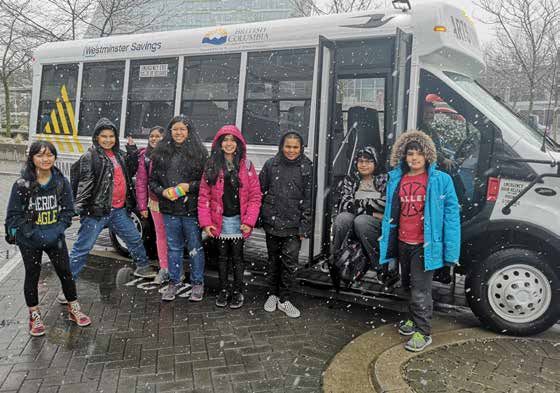
What’s New in the 2021 Capital Projects Guidelines
The 2021 Capital Projects Guidelines continues to include temporary modifications
introduced in 2020, in light of the on-going challenges not-for-profit organizations are
facing due to the COVID-19 pandemic.
Specifically, the Capital Project Grant Program continues to accept applications from
organizations for projects or acquisitions that meet the following criteria:
1. Projects or acquisitions needed in order to modify how programs and services are
delivered as a direct result of the COVID-19 pandemic. These may include, for
example: modifications to facilities to support physical distancing (e.g. protective
shields/barriers, a secondary building entrance, kitchen reconfigurations, etc.),
renovations to expand hand washing/hygiene stations, acquisitions to support
remote or tele-work arrangements or other IT equipment required to deliver
programming online.
2. Projects or acquisitions that will support organizations which have experienced an
increase in demand for programs and services as a direct result of the COVID-19
pandemic. These may include, for example: vehicles to deliver food or other essential
goods, renovations to expand shelter capacity, kitchen expansions, or friendship centre
facility upgrades.
In consideration of the financial challenges faced by not-for-profit organizations as a
result of the COVID-19 pandemic, the minimum matching funds contribution has been
reduced from 50% to 20% for projects or acquisitions that meet either of the criteria
described above, i.e.:
Projects or acquisitions are needed in order to modify how programs and services
are delivered as a direct result of the COVID-19 pandemic.
Projects or acquisitions will support organizations which have experienced
an increase in demand for programs and services as a direct result of the
COVID-19 pandemic.
In 2020, capital projects that met the above COVID-19 criteria were given additional
consideration in the assessment process, in order to prioritize and support projects that
arose as a direct result of the COVID-19 pandemic. For 2021, these projects will continue
to be supported to help organizations respond to the impacts of COVID-19. Recognizing
that many organizations have now implemented the necessary changes to the delivery of
their programs or services, capital project applications for regular or COVID-19 projects
will be assessed on equal consideration.
3
1.    Program Overview
1.1   Purpose
      The Community Gaming Grants program distributes $140 million of commercial
      gambling revenues to not-for-profit community organizations throughout the province.
      The Government of British Columbia allocates a portion of this funding to capital
      projects, undertaken by not-for-profit agencies, that have a total cost between $20,000
      and $1,250,000. The objective of the Capital Projects sector is to enable not-for-profit
      organizations to complete capital projects that provide significant benefit to communities.
      The Capital Projects sector is designed to support community-identified needs and
      priorities. Its’ focus is on people – their needs, their development, and their involvement
      with the community. The Capital Project Grants sector supports inclusive projects that
      provide widespread benefit to a diverse range of community members.

1.2   Eligible Projects
      To be considered for funding, a capital project must fit into one of the following
      categories. Applicants should apply under the category that best matches their project:
      1. Facilities: the construction of new facilities and renovation or maintenance of
         existing facilities;
      2. Community Infrastructure: the development of public amenities that improve B.C.
         residents’ quality of life; and
      3. Acquisitions: the purchase of fixed capital assets for long-term ownership and use by
         the organization (e.g. vehicles and equipment).
      If all work on, or purchase of, the proposed capital project is scheduled to be completed
      before the notification of grant awards (late Fall 2021), the project is not eligible.

1.3   Application Assessment Process
      The application assessment process will be competitive. Grant applications that meet all
      of the mandatory eligibility criteria (see Section 2) will be evaluated using the assessment
      criteria (see Section 4).
      Additional consideration will be given to the allocation of grant funding across the six
      Community Gaming Grant sectors, the geographic distribution of grants throughout the
      province, project size, the inclusion of applicants that have not received a Capital Project
      Grant in the previous three years and Indigenous not-for-profit organizations.
      The Branch also reserves the right to deny Capital Project Grant funding to organizations
      deemed to be a high risk, such as those with poor compliance records with the Branch.

                                          4
1.4 Amount of Grant
Eligible not-for-profit organizations may be approved for up to 50%* of the total cost of a
project, to a maximum of $250,000.
If the requested grant amount is less than 20% or greater than 50% of the total cost of a
project, the project will not be eligible for funding.
*Applications for projects or acquisitions which are needed in order to modify how
programs and services are delivered as a direct result of the COVID-19 pandemic
or which will support organizations that have experienced an increase in demand for
programs and services as a direct result of the COVID-19 pandemic, may be approved for
up to 80% of the total cost of a project, to a maximum of $250,000.
* If the application is not for projects or acquisitions directly related to COVID-19 and the
requested grant amount is greater than 50% of the total estimated project cost, the project
will not be eligible for funding.
1.5 Matching Funds
The applicant must demonstrate that matching funds are secured and available for
immediate use upon application for a Capital Project Grant.
The applicant must demonstrate it has the matching funds required for project
completion (ie. there is no shortfall to cover the entire project budget). The applicant’s
matching funds contribution must equal or exceed the level of capital project
funding requested.
For example:
Organizations applying with a total project budget of $1,250,000 requests the
maximum $250,000 grant (20% of the project budget). The applicant organization
must demonstrate that it has the matching funds to complete the project (ie.
$1,000,000, or 80% of the project cost).
Organizations applying under the COVID-19 criteria with a total project budget
of $50,000 requests $40,000 grant (80% of the project budget). The applicant
organization must demonstrate that it has the matching funds to complete the project
(ie. $10,000, or 20% of the project cost).
If an applicant organization has been holding designated restricted funds for the capital
project, it is expected that the restricted fund be used in full towards the matching fund
requirement.
Tangible in-kind contributions, such as donated equipment and materials, will be
considered as matching funds. Confirmed conditional agreements will be accepted;
vague or unclear commitments will not be considered matching funds. Land, discounts
on products, and intangible in-kind support, such as volunteer time, donated labour or
services will not be accepted as matching funds.
Please refer to Section 6.1 for the supporting documentation required to demonstrate
matching funds.
5
2. Mandatory Eligibility
2.1 Organization Eligibility
2.1.1 Eligible Organizations
To be considered for funding, an applicant (including PACs) must:
Be a not-for-profit organization (including designated community service co-operatives);
Operate primarily for community benefit;
Deliver or facilitate programs that fall within one of the following six sectors: Arts and
Culture; Sport; Environment; Public Safety; Human and Social Services; and Parent
Advisory Council or District Parent Advisory Councils;
Provide programs that benefit the community and not solely its members’ interest;
Engage volunteers in the operation of the organization and/or program(s);
Have a membership that is inclusive and reasonably open to anyone with an interest
in the organization and its programs. Members are involved in the management and
control of the organization and participate in democratic voting processes as part of
decision making for the organization;
Restrictions on who is able to become a member are permitted only in
instances where there is a defensible rationale (e.g. to ensure representation of
an underrepresented group or organization or to fulfil bona fide operational
requirement).
Have a voting membership that is more than double the number of board members;
Have a minimum of 2/3 board members democratically elected by its
voting membership;
Board positions are periodically contested by election and are open to the
organization’s entire membership. Permanent board positions are not permitted.
Restrictions on who is able to hold board positions and board appointments are
permitted only in instances where there is a defensible rationale (e.g. to ensure
representation of an underrepresented group or organization or to fulfil bona fide
operational requirement).
Have a board with at least two-thirds of its members residing in B.C.; and
Have a board whose members do not receive remuneration or other financial benefit
for their services while acting in their capacity as board members1.
1 As set out in the Societies Act, organizations must report the remuneration of directors who received remuneration for
being a director or acting in another capacity, as a note in the financial statements.
6
Organizations do not have to be federally or provincially incorporated; however,
organizations that are provincially incorporated or registered as extra-provincial societies
must be in good standing2 with the B.C. Registrar of Companies, and organizations that
are federally incorporated must be in good standing3 with Industry Canada.
2.1.2 Ineligible Organizations
An organization is ineligible for a Capital Project Grant if it:
Is for-profit;
Is a member-funded society;
Is a co-operative (with the exception of designated community service co-operatives);
Is a community contribution company4 (C3) or other social enterprise whose sole
purpose is to generate profit to fund the organization;
Is an ancillary group sustaining a for-profit business;
Is a chamber of commerce or board of trade;
Is a political party, political action group or lobby group5 ;
Is a federal, provincial, regional, municipal, First Nation or other local government;
Is a government (as described above) operated library, museum, gallery, recreation
centre or other facility;
Is a hospital, medical or health care facility;
Is an educational institution, school or school authority;
Is a penal institution or correctional centre;
Has objectives, programs or expenditures that do not conform with all laws,
regulations and the general public policies of the Province of British Columbia;
Provides programs that promote racial or ethnic superiority, religious intolerance,
persecution or social change through unlawful action; or
Is an organization where the majority of the board members are employed by the
organization or provide services under contract to the organization.
2 Organizations must be in good standing at the time of application.
3 Organizations must be in good standing at the time of application.
4 A for-profit business with an asset lock component restricting the level of dividends paid to shareholders and requiring
the bulk of the company profits to be invested in community purposes
5 A lobby group is defined as an organization whose primary functions include advocacy and lobbying activities with
the intention to influence government decisions.
7
2.2 Project Eligibility
2.2.1 Eligible Project Categories
To be considered eligible for funding, a project must fall within one of the applicable
capital project categories. Applicants should apply under the specific project category that
is best suited for their project. For examples of eligible projects, please see Section 2.2.2.
Facilities Projects:
The project is undertaken by an eligible organization primarily for
community benefit;
Upon completion, the project – or the facility within which the project is located – is
accessible to the public;
The project is for the construction of new facilities, renewal, expansion or material
enhancement of existing facilities or property development;
The project is located on:
Land that is owned by an eligible organization;
Land that is leased to an eligible organization on a long-term basis; or
Public land.
Please refer to Section 6.1 for the supporting documentation required.
Community Infrastructure Projects:
The project is undertaken by an eligible organization primarily for
community benefit;
Upon completion, the project – or the facility within which the project is located – is
accessible to the public and is inclusive of the greater community;
The project is for the installation of public amenities that improve B.C. residents’
quality of life;
The project is located on:
Land that is owned by an eligible organization;
Land that is leased to an eligible organization on a long-term basis; or
Public land.
Please refer to Section 6.1 for the supporting documentation required.
Acquisitions:
The acquisition is made by an eligible organization primarily for community benefit;
The project is for the purchase of privately owned fixed capital assets for long-term
use; and
The capital acquisition must fully belong to the eligible organization.
8
2.2.2 Examples of Eligible Projects
Examples of eligible projects in each category may include, but are not necessarily limited
to, the following types of capital projects:
Facilities Projects: the construction of new facilities, renovation or maintenance of
existing facilities and property development. Examples include:
Construction of a new permanent built structure (e.g. office, centre, daycare facility,
theatre, food bank storage, sports facility);
Renovations that restore, refurbish, upgrade, retrofit or otherwise improve the
general conditions of an existing facility to extend its useful life (e.g. roofs, flooring,
air circulation, seismic resilience, foundation repair, kitchens, bathrooms, elevators,
gutters, accessibility retrofits, hall expansions, asbestos abatement); and
Property development projects (e.g. fences, courtyard, irrigation systems for sports
fields, parking lots, floodlights).
Community Infrastructure Projects: the development of public amenities that
improve B.C. residents’ quality of life. Examples include:
Outdoor structures (e.g. docks, playgrounds, outdoor pools, sport rinks, industrial
sheds, courts, artificial turf, boardwalks, trestles);
Parks (e.g. water parks, skate/bike parks, fitness and recreation spaces); and
Natural areas (e.g. hiking and walking trails, green spaces, wetlands, community
gardens, habitat restoration).
PLEASE NOTE: Playgrounds located on public school grounds that are eligible
for support through the Ministry of Education Playground Equipment Program
will not be eligible for Community Gaming Grant funding through the Capital
Projects Sector.
Acquisitions: the purchase of fixed capital assets for long-term ownership and use.
Examples include:
Vehicles, boats, vehicle part replacements/modifications (e.g bus, van, delivery truck,
fire truck);
Machinery and equipment (e.g. safety equipment, sports equipment, commercial
kitchen equipment, stage and lighting equipment, sound equipment, instruments);
Technological resources (e.g. computer systems, IT system, security system); and
Property and/or buildings.
92.3 Financial Eligibility
2.3.1 Eligible Financial Status
At the time of application, organizations must meet specific financial criteria in order to
be considered for a grant:
The applicant must have a separate gaming bank account (“Gaming Account”) that
is held in British Columbia specified in the organization’s full name, for the exclusive
purpose of receiving, holding and disbursing gaming funds, including any gaming
funds received through licensed gaming, Community Gaming Grants or gaming
fund donations from Service Clubs. Non-gaming funds must not be deposited into
the Gaming Account.
Recipients must also obtain cheques for the organization’s Gaming Account which are
imprinted with the organization’s full name and the words “Gaming Account.” New
applicants must open their Gaming Account and obtain cheques before applying; and
Past recipients of Community Gaming Grants must be up to date and in good
standing with their Gaming Account Summary Reports6 . Organizations must
have their most recent Gaming Account Summary Report submitted in order to be
considered for a Capital Project Grant.
6 Gaming Account Summary Reports are a financial reporting instrument used by the Community Gaming
Grants Branch.
103. Application Process
3.1 Application Intake Period
Applications for the Capital Projects sector will be received from June 1 to July 31, 2021
with approved grants awarded by late Fall 2021.
3.2 How to Apply
The application form can be found online at: https://www.gaming.gov.bc.ca/gaming/Home.do.
For projects that are collaborations between multiple organizations, a single organization
must be designated as the lead. Only the lead organization is eligible to submit a Capital
Project Grant application for the project. The other organization(s) must be indicated as
partners within the application.
First-time applicants to the Gaming Online Service are required to call in to the
Community Gaming Grants Branch at 1 800 663-7867 or 250 356-1081 before starting
the application. Organizations that have never applied for a Community Gaming Grant
or a Gambling Event Licence before will be unable to complete an online application for a
Capital Project Grant without registering with the Branch first.
3.2.1 Online Application Resources
Application Tutorial
This document provides a step-by-step preview of what you will see during your online
application. It includes application instructions as well as tips and suggestions for
completing your application. https://www2.gov.bc.ca/assets/gov/sports-recreation-arts-and-
culture/gambling/grants/capital_project_grants_-_application_tutorial.pdf
Frequently Asked Questions:
This document includes commonly asked questions about using the Gaming Online
Service website to apply for a Capital Projects Grant and understanding the Sector Guide:
https://www2.gov.bc.ca/assets/gov/sports-recreation-arts-and-culture/gambling/grants/
capital_project_grants_-_frequently_asked_questions.pdf
Example Documents:
These documents are examples of financial documents that you will be asked to provide
during your online application. These types of documents are referenced in the pre-
application checklists.
Organization Balance Sheet (PDF) - https://www2.gov.bc.ca/assets/gov/sports-
recreation-arts-and-culture/gambling/grants/example-grants-org-balance-sheet.pdf
11 Organization Revenue and Expense Statement (PDF) - https://www2.gov.bc.ca/assets/
gov/sports-recreation-arts-and-culture/gambling/grants/example-grants-org-revenue-
and-expenses.pdf
Organization Budget (PDF) - https://www2.gov.bc.ca/assets/gov/sports-recreation-arts-
and-culture/gambling/grants/example-grants-org-budget.pdf
3.3 Application Limit
Each organization is permitted to submit one application for a Capital Project Grant
and one application for a Community Gaming Grant per year.
Capital Project Grants will be one-time funding only. Successful applicants may not
apply for the same project more than once. Unsuccessful applicants may apply in
future funding intakes for the same project.
124. Assessment
4.1 How Applications are Assessed
Each application that meets all of the mandatory eligibility criteria (see Section 2) will be
evaluated using the assessment criteria (see Section 4.2). Grants will not be awarded until
all applications are received and reviewed. An application does not guarantee any level of
funding. Incomplete and/or late applications will not be considered.
4.2 Assessment Criteria
The project assessment criteria are provided in the table below. For additional information
on the assessment process, please see Section 1.3. For additional information on the
supplementary documentation required with each application, please see Section 6.1.
13Section 1: Alignment with Sector Objectives (25%)
Strategic alignment with Capital How the project will benefit the community by addressing a
Projects sector purpose community-identified need or priority and will enhance the
wellbeing of individuals in the community.
How the project and its associated programming will be open
and accessible to people of all ages, abilities, sexual orientation,
gender identify and expression (LGBTQ2S+), ethnicities,
cultural backgrounds, religions, languages, under-represented
communities and socio-economic conditions, except in instances
where the exclusion of some identifiable group is required for
another identifiable group to be effectively serviced.
Section 2: Project Feasibility (25%)
Project planning Detailed project timeline indicating project can be
accomplished within 36 months, project start date, key
milestones and date of completion.
Identification and ranking of potential risks and identification of
proposed mitigation strategies.
All required approvals and permits have been identified and a
plan is in place to ensure they are obtained.
Operational viability The applicant exhibits a plan for the long-term operation of the
of the project project, including an asset management plan to manage and
maintain the facility and/or property into the future.
Section 3: Financial Considerations (45%)
Financial need If the applicant has restricted funds available and designated for
the capital project, they have been used in full.
The requested amount required to complete the project.
Financial feasibility of project Presentation of project budget, including budget assumptions,
contingencies and projections.
Price quotations have been recently obtained.
Use of grant funds will be for eligible expenses.
Project readiness, including the security of financial resources to
carry out the project.
Section 4: Special Project Features (5%)
Environmental efficiency The project includes climate action or energy-efficient features
that will reduce the organization’s greenhouse gas emissions,
lower the organization’s long-term operational expenses, such
as heating/ cooling costs, etc. and/or improve the use of the
organization’s human and/or technological resources (e.g.
reduced resource consumption).
Final determination of approved projects is the responsibility of the Community Gaming
Grants Manager. All decisions are final, and organizations do not have the opportunity to
request a reconsideration of the decision regarding an application for a Capital Project Grant.
145. Using Capital Project Grant Funding
5.1 Appropriate Use of Funds
Capital Project Grants must be used within British Columbia to cover costs considered to
be direct and necessary for the successful implementation of an approved project. These
costs must be consistent with and comparable to those identified in the approved grant
application. No substantial changes can be made to the approved project without the
written consent of the Community Gaming Grants Branch.
Eligible costs include, but are not limited to:
Project-related fees paid to professionals, technical personnel, consultants and
contractors specifically engaged to undertake the capital project;
The costs of project materials;
The costs required to transport or ship acquisitions such as equipment;
The costs of licenses, permits and insurance required for the approved project;
The costs of an environmental impact assessment, where applicable; and
Any other direct and necessary costs incurred in the implementation of an
approved project.
The grant funds must be fully disbursed within 36 months of receipt, unless otherwise
approved in writing by the Community Gaming Grants Branch. Project must start
within 12 months of receipt of funding.
Grant funds may be transferred – by cheque or electronically – from the Gaming Account
to the General Account (i.e. the organization’s day-to-day operating bank account) for the
reimbursement of eligible project expenses. Transfers from the Gaming Account to the
General/Operating Account are required to reconcile dollar for dollar to the applicable
General Account program expenses and must have supporting documentation (i.e.
invoices/receipts). A clear and defined audit trail is required for the use of all Gaming
Account funds.
Upon dissolution of an organization, all unused grant funds and assets purchased with
grant funds must be transferred to the Minister of Finance, or if those assets are not in
a form that can be easily transferred to the Minister of Finance, then to another eligible
organization within B.C
Grant funds cannot be used for purposes not approved by the Community Gaming Grants
Branch and may not be redistributed amongst the grant recipient’s other expenses or
transferred between projects. Funds must be returned to the Minister of Finance (care of the
Community Gaming Grant Branch) if not completely used for the approved capital project.
155.2 Prohibited Use of Funds
Capital Project Grants cannot be used for:
Contributions to annual fundraising drives or capital campaigns;
Costs incurred for cancelled projects;
Financing charges and interest payments on loans;
Leasing or rental of equipment not directly related to the capital project;
Costs associated with ongoing operating expenses;
Costs associated with routine facility/property maintenance;
Decommissioning or recycling of a previous project/asset;
Costs associated with program delivery; or
Any goods and services that are received as donations.
5.3 Reporting
To ensure Capital Project Grants are used for eligible project expenses, all successful
applicants must submit a Gaming Account Summary Report to the Branch within
90 days of fiscal year end. The Gaming Account Summary Report must provide clear
and complete detailed program expense reporting.
The report must include a list of all disbursements and/or reimbursements made
from the Gaming Account and must include details about each disbursement/
reimbursed expense.
For each disbursement/reimbursement, the organization must include the
following details:
the date
the cheque or reference )(bullet) number
the payee
the purpose of the payment
the amount paid
As per section 18.f of the Conditions for a Community Gaming Grant, all grant
recipients must ensure that cheques issued against the Gaming Account are signed
by at least two, unrelated signing officials, at least one of whom must be an officer of
the organization.
As per section 18.g of the Conditions for a Community Gaming Grant, two current,
unrelated board members must authorize electronic transfers and/or automated debit
transactions in writing and the authorization document must specify the specific
purpose and maximum dollar amount permitted.
166. Required Documentation
6.1 Application Instructions
Grant Analysts use the requested documents to carefully assess each capital project grant
application. The following is the information the Branch is looking for in each section of
the application.
Applicants must upload required supporting documentation in .pdf, .jpg, .doc(x), or .xls(x)
format at the time of online application. Please do not take and submit photographs
of documents; proper scanning is required to upload documentation to the online
application system.
Before beginning the application form, please make sure you have the following
information from your files at hand.
R Required Information
£ Organization Registration
First-time applicants to the Gaming Online Service are required to call in to the Community Gaming
Grants Branch at 250 356-1081 before starting the online application. Organizations that have never
applied for a Community Gaming Grant or a Gambling Event Licence before will be unable to
complete an online application for a Capital Project Grant without registering with the Branch first.
£ Organization information
Full, legal name (if applicable);
Mailing address associated with the organization; and
Program/service or purpose of the organization.
£ Sector Details
Capital Project Grants support a wide range of programming delivered and/or facilitated by not-for-
profit organizations across British Columbia. The applicant should apply under the sector that is the
closest fit to the organization’s purpose(s) as outlined in its Constitution:
Arts and Culture;
Sport;
Public Safety;
Environment;
Human and Social Services; or
Parent Advisory Councils.
NOTE: Applicants also have the option to self-identify as an Indigenous not-for-profit organization.
£ Organization Programming
Applicants must provide a description of programming delivered by their organization that includes
key information, including the size and scope of the program, length of time the program has been
in operation, as well as how the program operates and who it benefits. Please see section 4.4 of the
Community Gaming Grant Guidelines for more information on program descriptions.
The applicant may provide a program description previously used for a Community Gaming Grant
application, or a new/modified program description that describes on-going programming may
be provided.
17R Required Information
£ Constitution and Bylaws
The applicant must attach a copy of the organization’s most recent Constitution and Bylaws if
have not been provided in the last 2 years (e.g. through a past Community Gaming
Grants application).
£ Board of Directors
The applicant must attach a Board of Directors list, including their names, positions on the board,
home addresses, e-mail addresses and phone numbers.
£ Membership and Governance Structure
Total number of members who are eligible to vote at the annual general meeting (AGM).
£ Annual General Meeting Details
Most recent AGM minutes, including the election of the board and the number of eligible voting
members who attended the meeting. If elections are not held at the AGM, please attach the
minutes from the meeting at which the board of directors was elected.
£ Organization Financial Statements and Budgets
The applicant must demonstrate its financial capacity to proceed with the project by providing
complete financial statements and budgets:
Revenue and expense statements from the most recently completed fiscal year at the time of
the application;
• The most formal presentation of financial statements available at the time of application
is required, including notes to the financial statements. If the organization has internally
restricted funds, accompanying minutes from the board meeting where the motion was
passed to restrict the funds are also required. Internally prepared financial statements are
acceptable if the formal presentation is not available at the time of application.
A balance sheet from the most recently completed fiscal year at the time of the application;
A budget for the current fiscal year;
• The budget must show anticipated revenues and expenses for all of the organization’s
activities and show anticipated expenditures related to the requested capital project, if any.
The Gaming Account Summary Report for the previous fiscal year (if it has not been submitted
already).
NOTE: If an organization’s fiscal year recently ended and the year-end financial statements are
not finalized (e.g. being prepared by an accountant), please submit draft or internally prepared
financial statements.
18R Required Information
£ Gaming Account
The applicant must demonstrate that it has a separate “Gaming Account,” specified in the
organization’s full name, for the exclusive purpose of receiving, holding and disbursing gaming
funds. The gaming bank account must be held in British Columbia and have cheques that have the
organization’s full name and the words “Gaming Account” printed on them.
Acceptable supporting documents include:
A scanned void cheque that has the organization’s full name and the words “Gaming Account”
printed on it. All account information must be visible; or
A cheque order form, signed and stamped by the bank, that has the organization’s full name, the
words “Gaming Account” printed on it, and complete account information.
NOTE: Organizations new to the Branch must open their gaming account before applying.
Some banks de-activate accounts when there is no activity for a certain amount of time. Please
contact your bank to ensure your gaming account status is active so, if approved, your grant funds
can be electronically transferred without issue.
£ Project Category
Applicants should apply under the specific project category that is best suited for their
capital project:
1. Facilities (construction, renovation or maintenance of facilities)
2. Community Infrastructure (public amenities such as docks, parks, playgrounds, etc.)
3. Acquisitions (fixed capital assets for long-term use, including vehicles and equipment)
£ Project Description
The applicant must include a description of the capital project for which it seeks funding. The
project description helps the Branch understand the overall rationale and goals for the project, the
location of the project and the specifics of what the project will entail.
Please indicate in this section if the project or acquisition meets either of the following two criteria*:
The project or acquisition is needed in order to modify how programs and services are delivered
as a direct result of the COVID-19 pandemic.
The project or acquisition will support your organization to respond to an increase in demand for
programs and services as a direct result of the COVID-19 pandemic.
*Applicant organizations wanting their projects assessed under the COVID-19 criteria must
demonstrate how the majority of the project originated as a direct result of the COVID-19 pandemic.
NOTE: Project descriptions should be clear and concise. Applicants may use the text box or attach a
document (1-2 pages in length maximum).
19R Required Information
£ Community Benefit
The Capital Project Grant program is designed to support community identified needs and priorities.
Its focus is on people – their needs, their development, and their involvement with the community.
The Community Benefit section of the application requires details about the numbers of people
that are likely to benefit, and how they will benefit, from the project and associated programming.
Include evidence of community support for your project and describe the needs or gaps the project
will address.
Please include information such as the following as evidence of community support for your project
and describe the needs or gaps the project will address in your community:
Discuss what the broader problem or need is in the community that this project and its
associated programming will address (e.g. aging facility is unsafe and no other service of its
type is available within a 45-minute drive; there is a current gap in service that the proposed
equipment purchase would enable).
Describe the number and population(s) of people who will directly benefit from the project and
its associated programming in a year (e.g. ‘over 150 newcomers and refugees in the Cowichan
Valley;’ ‘50 Indigenous youth ages 13-17;’ ‘all community members interested in salmon
restoration;’ ‘100 socially isolated adults over the age of 65 in the Vanderhoof area’).
If applicable, include details, numbers, or statistics to substantiate the community benefit
(e.g. share findings from a recent community consultation study, provide waitlist numbers
demonstrating that existing facility has more users than it can accommodate).
Where possible, quantify the impact this project would have on the community if complete (e.g.
approximate number of individual visits to facility annually, kilometres of trails maintained).
The assessment of a project’s community benefit may also include sector specific criteria.
For example:
Arts and Culture: Describe the accessibility of the project and any associated programming.
Examples might include: providing an opportunity for members of the public to see an
exhibition for free or reduced cost, access to performances or access to try out artistic activities.
Sport: Describe how the project and associated programming will provide broad access for
people to engage in organized, competitive physical activity at the community level. Include any
steps your organization has taken to remove any barriers to participation.
Environment: Describe how the project and associated programming will help to protect the
environment or help people interact with, benefit from, or learn about the environment or
local ecosystems. Examples might include: volunteer clean-up, conservation activity and public
education and awareness.
Public Safety: Describe how the project and associated programming contributes to the safety
of a community by assisting in emergency preparedness, providing education on public safety
issues, enhancing public safety through volunteer engagement in emergency services, using
restorative justice or creating safe outdoor spaces.
Human and Social Services: Describe how the project and associated programming will
contribute to enhancing the quality of life of people in your community and will expand access
to services and support.
Parent Advisory Councils: Describe how the project will support K-12 students’ extracurricular
activities and opportunities and/or broad access by the community.
NOTE: Community benefit descriptions should be clear and concise. Applicants may use the text
box or attach a document (1-3 pages in length maximum).
20R Required Information
£ Public Inclusiveness
To support equity, diversity and inclusion, we support applications from organizations whose
programs and facilities are open and accessible to people of all ages, abilities, sexual orientation,
gender identify and expression (LGBTQ2S+), ethnicities, cultural backgrounds, religions, languages,
under-represented communities and socio-economic conditions, except in instances where the
exclusion of some identifiable group is required for another identifiable group to be effectively
serviced. If your organization does have a limitation on individual access for any reason, please
explain why. The Branch may contact you if further information is required.
The Branch is committed to British Columbia’s Gender-based Analysis Plus (GBA+) policy. For more
information, please visit: https://cfc-swc.gc.ca/gba-acs/index-en.html and https://www2.gov.
bc.ca/gov/content/gender-equity
Describe how the project and its associated programming is accessible to and inclusive of the
greater community. Projects should demonstrate broad public access by a diverse range of
community members and provide special consideration for reducing barriers to participation for
persons with disabilities, where applicable.
NOTE: Public Inclusiveness descriptions should be clear and concise. Applicants may use the text
box or attach a document (1-2 pages in length maximum).
£ Project Timeline
The applicant should demonstrate that a well-considered plan is in place that shows how the project
will successfully begin within 12 months of the receipt of gaming funds and will be fully complete
within 36 months of the receipt of gaming funds, as per the Capital Project Grant Conditions.
The project timeline may include:
Project start and completion dates;
Dependencies or relationships between project tasks (i.e. external factors that affect your
timeline); and
Dates for major milestones.
NOTE: While the project timeline for an acquisition project will likely be brief, it must still
demonstrate that a well-considered plan is in place. Stating ‘not applicable’ in the application is
not sufficient.
£ Project Risk Management
The applicant should provide a risk management plan for the proposed project in table format. A
well-considered risk management plan may include:
Possible risks that may be encountered during the realization of the project;
Potential effects of the identified risks;
Likelihood and severity of the risks (high, medium or low);
Strategies for the mitigation of the risk; and
How the risks to the project will be managed and/or mitigated.
NOTE: While the risk management plan for an acquisition project will likely be brief, it must still
demonstrate that a well-considered plan is in place. Stating ‘not applicable’ in the application is
not sufficient.
21R Required Information
£ Appropriate Approvals
List all approvals and permits required for the project and identify those which have been obtained
to date. If any approvals or permits are outstanding at the time of application, the applicant should
describe the organization’s plan to ensure that they are acquired.
Examples of approvals and permits may include, but are not limited to:
Legislative or regulatory requirements and enactments;
Land use and zoning bylaws;
Environmental impact assessments; and
Trade permits.
NOTE: If no approvals or permits are required for the project, the applicant should provide an
explanation explaining why. Stating ‘not applicable’ in the application is not sufficient. Applicants
may use the text box or attach a document (1-2 pages in length maximum).
£ Ongoing Operational Viability of the Project
The applicant should demonstrate that a long-term plan is in place for the operation, management
and maintenance of the project, by providing an asset management plan.
An asset management plan may include items such as:
A budget showing costs associated with the maintenance and operation of the project and a
revenue source identified to pay for maintenance expenses;
A maintenance schedule;
A list of any staff resources required for the management and maintenance of the project;
A multi-year plan for the project’s future operation.
NOTE: Costs associated with ongoing operating expenses are not eligible project expenses.
Applicants may use the text box or attach a document (1-2 pages in length maximum).
£ Project Cost
Provide the total estimated cost of the capital project.
NOTE: To be eligible for this grant the total estimated costs of the project must be between $20,000
and $1,250,000.
22R Required Information
£ Project Budget
Submit a budget for the proposed capital project. Please include all accompanying notes to the
budget and clearly identify assumptions, projections and contingencies. The applicant should
demonstrate that all financial considerations related to the requested project have been identified
by providing a project budget that clearly indicates the availability of funds for the project.
Instructions for the project budget:
The budget should show all anticipated revenues and all anticipated expenses to realize the
requested capital project. If the project requires more than one year to complete, all budgets
required to realize the project must be submitted.
Ensure that all matching funds are included in revenue.
Ensure that any assumptions, projections or contingencies necessary for the realization of the
project are indicated.
The amount requested for the Capital Project Grant must be included in the project revenues.
If the budgeted revenues and expenses show an anticipated deficit, an explanation should be
provided indicating how that deficit will be managed.
If the applicant has restricted funds, provide minutes of the board meeting approving the
restriction of funds for the specific project and the amount.
If project funds are not formally restricted, provide an explanation of what funds shown in the
financial statements will be used towards the project.
£ Cost Estimates
Provide one or more recent cost quotes from third party providers that support the total cost of the
capital project or acquisition. Preference will be given to applicants that attach at least two quotes
from third party providers that are accurate at the time of application. If a sole source provider is the
only option, please explain why.
£ Requested Grant Amount
The amount of funding requested for the project.
NOTE: The total amount requested must be between 20 and 50* per cent of the total estimated
project cost. The total requested amount cannot exceed $250,000. Priority will be given where the
requested amount represents a significant contribution towards the total project cost.
*Applications for projects or acquisitions which are needed in order to modify how programs
and services are delivered as a direct result of the COVID-19 pandemic or which will support
organizations that have experienced an increase in demand for programs and services as a direct
result of the COVID-19 pandemic, may be approved for up to 80% of the total cost of a project, to a
maximum of $250,000.
If your application is not for projects or acquisitions directly related to COVID-19 and your requested
grant amount is greater than 50% of the total estimated project cost, your project will not be eligible
for funding.
£ Use of Grant Funds
List the specific items to be purchased with Capital Project Grant funds and the amounts. The total
of the specific items to be purchased must equal the amount of the request.
23R Required Information
£ Matching Funds
The applicant must demonstrate that matching funds are available to complete a project or
purchase an acquisition upon award of a Capital Project grant. Matching funds must be specified in
the Project Budget and the amounts supported by attached documents.
If the organization’s matching funds are internally or externally restricted:
• Attach financial statements (e.g. balance sheet, internally prepared financials or bank
statements) that clearly indicate the availability of funds for the project; and
• Attach minutes of the board meeting approving the restriction of funds for the specific project
and the amount.
If the organization’s matching funds are not formally restricted (e.g. cash on hand):
• Attach an explanation of what funds shown in the financial statements (e.g. balance sheet,
internally prepared financials or bank statements) will be used towards the proposed
capital project.
• NOTE: Providing financial documents that show a cash surplus does not fulfil this requirement
– applicants must provide an explanation of the funding source and amount that will be used
toward the project.
If the matching funds are to be provided by other agents, the applicant must demonstrate the
surety of these funds for the specific project. Attached documents may include:
• Signed and dated funding agreements;
• Signed and dated promissory letters;
• Signed and dated loan agreements; and/or
• Signed and dated irrevocable letter of credit.
If the matching funds include donated materials or equipment, attached documents
may include:
• Signed and dated promissory letters indicating what will be donated and the fair market value
of the donation; and/or
• Dated invoices showing what will be donated and the fair market value of the donation.
The applicant must demonstrate it has the matching funds required for project completion (ie. there
is no shortfall to cover the entire project budget). The applicant’s matching funds contribution must
equal or exceed the level of capital project funding requested.
Applicants’ matching funds must be secured and available for immediate use upon application
for a Capital Project Grant. Confirmed conditional agreements will be accepted; vague or unclear
commitments will not be considered matching funds. Intangible in-kind support such as volunteer
time, donated labour and services and discounts on products and supplies will not be accepted
towards the matching funds requirement.
24R Required Information
£ State of Title or License to Occupy
The applicant must demonstrate that the project has the authority to proceed.
If the land or facility is owned by the applicant:
• The applicant must provide a certificate of title that indicates the name of the applicant
and the legal description of the land or facility. Alternatively, the most recent BC Property
Assessment for the land or facility that includes the name of the applicant is also acceptable.
If the project is located on land that is leased to the organization:
• The applicant must provide a recent document of permission for the project to proceed from
the owner of the land or facility. The document of permission must be dated and signed
by the owner and reference the specific project and the specific property described in
the application.
• A signed copy of the lease is required. The term of the lease must demonstrate that the
applicant is in control of the land or facility for a minimum of 10 years from the date of
the application.
• If the signed copy of the lease is for a term less than 10 years, a letter of commitment signed
by the owner and the applicant is required that demonstrates a firm commitment to renew
the lease for an additional term. The lease and the letter of commitment must demonstrate
the applicant is in control of the land or facility for a minimum of 10 years from the date of
the application.
If the project is located on public land:
• Provide a document that authoritatively demonstrates that the applicant has the authority to
proceed and will be in management and control of the resulting asset for a minimum of 10
years from the date of the application.
• Letters of support are not sufficient. The document must demonstrate that a final and
irrevocable approval to proceed with the specific project has been granted to the applicant
from the controlling body (e.g. minutes of council meeting showing motion and approval,
letter dated and signed by the authority for the land or facility that references the specific
project and the specific property described in the application).
NOTE: If the applicant’s project is located on land it does not have proper authority to use, then it is
not eligible for a Capital Project Grant.
If an acquisition project requires permission from a landowner to proceed (e.g. installation of an
acquisition into a facility or publicly owned asset), the applicant must demonstrate the above
conditions are met.
£ Environmental Efficiency
The applicant should describe how any climate action or energy-efficient features have been built
into the project to reduce the organization’s greenhouse gas emissions, lower the organization’s
long-term operational costs and/or improve the use of the organization’s human and/or
technological resources (e.g. reduced resource consumption).
NOTE: Applicants may use the text box or attach a document (1-2 pages in length maximum).
25R Required Information
£ Board positions, names, home addresses, e-mail addresses and phone numbers of two to four
members of the organization associated with the application:
Two must be named as Officers Responsible for the Application;
One must be named as the Submitter (an Officer Responsible may also assume this role); and
One must be named as the Contact Person (an Officer Responsible may also assume this role).
Enter two email addresses in the delivery method:
• One email address for the President of the Board (or equivalent); and,
• One alternative organization email notification address.
NOTE: The Contact Person must be accessible during regular office hours.
267. Conditions for Capital Project Grants
The recipient of a Capital Project Grant must comply with the Conditions for a
Community Gaming Grant, with the exception of Conditions 7 through 11 pertaining
to the Use of Grant Funds. The Conditions can be found online at: http://www2.gov.
bc.ca/ assets/gov/sports-recreation-arts-and-culture/gambling/grants/cond-cgg.pdf. The
recipient of a Capital Project Grant must adhere to Section 5 of this Capital Projects
sector guide regarding the use of grant funds.
8. Project Completion
Upon completion of the funded project, the Capital Project Grant recipient must notify
the Community Gaming Grants Branch in writing at: communitygaminggrants@
gov.bc.ca. Please include with this email a short post-completion report, to include:
a description of the completed project and how it is benefitting your community, a
breakdown of total project expenses and a minimum of three photos. The Branch may
request that these materials be used to publicize the benefits of the Capital Project
Grants Sector.
9. Acknowledgment of Funds
Grant recipients must acknowledge the financial assistance provided by the Province of
British Columbia in all promotional materials, both in print and online and including
any signage or plaques. Please review the logo-use guidelines at the following link and
complete the application for third-party use of the logo. Note that designed mock-ups
of the logo’s intended use is also required for approval: https://www2.gov.bc.ca/gov/
content/governments/services-for-government/policies-procedures/bc-visual-identity
10. Contact Information
Ministry of Municipal Affairs Community Gaming Grants Branch
Telephone: 1 800 663-7867 or 250 356-1081
E-mail: CommunityGamingGrants@gov.bc.ca
www.gov.bc.ca/gaminggrants
2728
You can also read


