Trademark Litigation 2021 - A Global Guide Germany Meissner Bolte Patentanwälte Rechtsanwälte Partnerschaft mbB Michael Munsch, Samantha Köhler ...
←
→
Page content transcription
If your browser does not render page correctly, please read the page content below

Trademark
Litigation
2021

                                                    Germany
Meissner Bolte Patentanwälte Rechtsanwälte Partnerschaft mbB
          Michael Munsch, Samantha Köhler and Tobias Wuttke

                                     A Global Guide
Uniqueness
    is a sensitive
    asset.

We help to protect your trade mark.
With our international team of European, German,        are defending your trade marks in opposition or nullity
Italian and UK qualified Patent and Trade Mark          proceedings, or enforcing your rights against third
Attorneys in combination with specialist IP lawyers,    parties to obtain injunctive relief and ultimately
we are always at your side: protecting your brand and   damages for infringement, we never lose sight of the
helping you assert your rights under all aspects of     importance of your name and market presence. The
Intellectual Property Law. Our Trade Mark experts are   goals of our clients provide the focus and direction of
highly experienced in defending and promoting the       our actions. Our recipe for successful IP being the
image of your company and products; whether they        interplay of passion, commitment and know-how.

                                                        Patents | Trademark | Designs | Prosecution
mail@mb.de            |   www.mb.de                     Litigation | Asia Desk

AMBERG | AUGSBURG | BREMEN | DUSSELDORF | GERA | HAMBURG
HEBDEN BRIDGE | MUNICH | NUREMBERG | OSNABRUCK | SCHORNDORF
Germany
                         Meissner Bolte Patentanwälte Rechtsanwälte
                                                 Partnerschaft mbB

Authors
Michael Munsch, Samantha Köhler and
Tobias Wuttke

Legislative framework and causes of action       Article 17). Section 125b of the Trademark Act
Trademark law, rules and regulations             contains provisions that supplement the EU
The following provisions apply with respect to   Trademark Regulation both substantively
German national trademarks:                      and procedurally.
• the German Trademark Act; and                      Germany is also a party to all international
• the EU Trademark Regulation.                   treaties regarding international registration
                                                 trademarks, in particular the Madrid
The Trademark Act was modified in 2019 in        Agreement and the Protocol Relating to the
order to implement EU Directive 2015/2436        Madrid Agreement, with Sections 107 to 125
(known as the Trademark Modernisation            of the Trademark Act serving to transpose the
Act). A 2019 amendment to the act allowed        Madrid System into German law.
for the possibility to register trademarks           The legal framework for any litigation
such as sound marks, multimedia marks and        proceeding before the civil courts is governed
holograms, among others. Trademarks can be       by the German Procedural Code.
filed in electronic formats; the requirement         Further relevant treaties applicable in
of graphic representation has been abolished.    Germany include:
A certification mark can be registered by an     • the Paris Convention for the Protection of
independent entity in Germany, which protects        Industrial Property;
certain properties of products or services.      • the Agreement on Trade-Related Aspects of
    EU trademarks, which automatically               Intellectual Property Rights;
include Germany, are ultimately regulated by     • the Nice Agreement; and
the EU Trademark Regulation 2017/1001, both      • the Vienna Agreement.
in terms of substantive law and procedural
law. However, specific national provisions       Causes of action
are applicable in those cases where this is      The following give cause for an infringement
expressly permitted by the regulation (eg,       action before the German civil courts:

www.WorldTrademarkReview.com                                   Trademark Litigation: A Global Guide 2021 | 47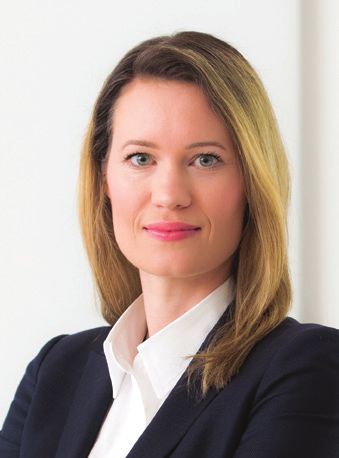
GERMANY MEISSNER BOLTE

  Michael Munsch                                       Samantha Köhler
  Lawyer                                               Lawyer
  mail@duesseldorf.mb.de                               mail@mb.de

  Michael Munsch advises his clients in all            Samantha Köhler advises national and
  areas of IP law, with a focus on trademark and       international companies on all aspects of IP
  patent litigation. He represents his clients both    law, focusing on trademark and competition
  in and out of court. In relation to patents, his     law, including data protection aspects. She
  experience covers a wide range of technical          is also experienced in advertising regarding
  fields (in particular telecoms, electronics,         German and cross-border patent and utility
  mechanical engineering and pharmaceuticals)          model disputes. Ms Köhler has comprehensive
  and ranges from simple proceedings to                experience in IP-related disputes and regularly
  complex, often international disputes. A             represents parties before the German courts.
  particular focus of his work is in the field         She is experienced in a wide range of industry
  SEPs and the associated antitrust aspects            sectors, from the automotive industry and
  (in particular the FRAND licence defence).           windows production, to medical devices.
  Furthermore, Mr Munsch is experienced and            Ms Köhler’s clients respect her expertise in
  provides comprehensive advice to all other           obtaining and defending preliminary injunctions
  IP-related aspects, including trademark and          in trade fairs and other urgent matters.
  design protection, portfolio analysis, licensing,       She regularly publishes articles regarding
  contract drafting and unfair competition law.        legal issues on unfair competition law and
                                                       design rights. Her publications include the
                                                       article ‘Labelling requirements concerning
                                                       influencer marketing’ (GRUR-Prax 2019, 343).

• infringement of an (earlier) registered             such mediation proceedings are possible only
  trademark with protection in Germany (either a      after the main proceedings on the merits have
  German national trademark, an EU trademark          been filed and provided that both parties agree
  or an international registration designating        to mediation. Arbitration proceedings are
  Germany and/or the European Union);                 independent from standard court proceedings
• infringement of an unregistered trademark           and are available only if both parties have
  (Section 14 of the Trademark Act); and              stipulated that option in advance.
• infringement of commercial designations (ie,
  company names, titles and domain names              Litigation venue and formats
  (Section 15 of the act)).                           The court system and litigation venues
                                                      explained
Alternative dispute resolution                        Trademark infringement cases are heard before
Mediation proceedings are offered by some             the district courts as a first instance, either by
German courts (eg, Dusseldorf). However,              way of preliminary injunction proceedings or

48 | Trademark Litigation: A Global Guide 2021                           www.WorldTrademarkReview.com
MEISSNER BOLTE GERMANY
or its representative. A power of attorney is ordinary civil divisions decide the case – these
required, plus a document proving the capacity are composed of three professional judges. In
of the person who signed the power of attorney less complicated cases, the parties have the
to represent the applicant. option to agree that a single judge can decide
the dispute. Appeals filed before the higher
Protectable subject matter regional courts are heard by three judges.
The Industrial Property Law defines an German trademark litigations are front-
‘industrial design’ as any appearance of the loaded. Proceedings on the merits therefore
whole or a part of a product which is new and commence with the filing of a statement of
has individual character resulting from the complaint with the court, which contains
features of, in particular, the lines, colours, the requests and a detailed account of the
shapes, textures or materials of the product and infringement. The statement of complaint is
itsTobias
ornamentation.
Wuttke then formally served on the defendant.
‘Product’ means any industrial or handicraft
Partner There is a maximum of two further instances.
item, including packaging, get-up, graphic
mail@mb.de
symbols and typefaces, but excluding Forum shopping
Tobias Wuttke heads the litigation Forum shopping is possible under certain
department of Meissner Bolte. Each year circumstances. The jurisdiction of the
he deals with more than 30 in-court IP competent court is determined by:
litigation cases and even more out-of-court • the place of the defendant’s domicile;
disputes. Dr Wuttke’s mission is to solve • the place where the infringer committed the
these disputes and obtain the best possible infringement; or
result for his clients. He believes in the • the place where the damages resulting from
importance of intellectual property and the trademark infringement occurred.
has a passion for developing IP awareness
among entrepreneurs, industry and public In cases where these venues do not concur, it
institutions. His tasks include complex is for the plaintiff to decide where to go. For
national and cross-border procedures in example, if the alleged infringer is located in
IP law, particularly litigation proceedings Germany and offers the disputed products for
in patent, utility model, design and sale online, every German district court will
trademark law; portfolio analysis, build- be competent to hear this matter since the
up and exploitation; forensic advice in disputed products are accessible throughout
pharmaceutical law, unfair competition and Germany via a website. This is true with
antitrust law; drafting contracts in all areas of respect to German trademarks, but not
technology transfer and R&D agreements; as EU trademarks. According to the Supreme
well as know-how protection. Court’s decision in Parfummarken (BGH, I
ZR 164/16), infringement proceedings based
on an EU trademark in cases of cross-border
a main proceeding on the merits. A total of 21 infringement before a German court require
specialised district courts can hear trademark an overall assessment of the infringer’s acts in
infringement cases. The most prominent – and order to determine the original infringement
the busiest – courts for trademark matters rather than focusing on separate infringing
are Cologne, Dusseldorf, Frankfurt, Hamburg acts. However, in its recent decision C-172-18
and Munich. (5 September 2019), the European Court of
In general, the commercial divisions – Justice corrected this case law and held that
established within the district courts – are the decisive factor is whether internet offers
competent. These chambers comprise one are “directed” to consumers of an EU member
professional judge and two honorary judges state that is different from the member state in
with professional experience in business and which the website owner is domiciled.
trade matters. All members of the commercial
division have the same voting rights. However, Jury versus bench
the parties often implicitly agree to let the No jury trial is available in Germany.
www.WorldTrademarkReview.com Trademark Litigation: A Global Guide 2021 | 49GERMANY MEISSNER BOLTE
The term ‘unlawfully marked goods’ includes
infringing products and, under certain circumstances,
original goods of the trademark owner
Damages and remedies In order to calculate the amount of the
Available remedies claim for damages and to decide on one of the
For trademark infringement in particular, the calculation methods, the trademark owner has
following remedies are available: the right to information regarding the origin
• injunctive relief; and the sales channels for unlawfully marked
• damages; goods and services according to Section 19(1)
• claims for information and rendering of (2) of the Trademark Act. In special cases, these
accounts; claims not only exist against the infringer but
• claims for the destruction of the infringing may also exist against certain third parties.
products; The claim for information includes names
• claims for the recall and definite removal and addresses of manufacturers, suppliers,
from sales channels; other previous owners of the products or
• claims for the publication of the judgment; services, commercial customers and the
• claims for inspection; and quantity of goods manufactured, delivered,
• claims for the preservation of evidence. received or ordered, as well as the prices paid.
The claim for information can be applied in
Damages can be calculated in three ways: the main proceedings as well as in preliminary
• the trademark owner’s or plaintiff’s lost injunction proceedings (see Section 19(7) of the
profits; Trademark Act).
• licence analogy (ie, damages calculated According to Section 18(1) of the Trademark
based on the amount that the infringer Act, the claim for destruction of the illegally
would have paid as an appropriate licence marked goods is provided. This claim against
fee if it had obtained permission to use the the infringer is independent of fault.
infringed right); and The term ‘unlawfully marked goods’
• the infringer’s profit – the profits that includes infringing products and, under certain
the infringer made as a result of the circumstances, original goods of the trademark
infringement (product-related costs incurred owner. Original goods of the trademark owner
specifically through the manufacture or must be destroyed if:
distribution of the infringing products are • the goods were put on the market outside the
deductible; overhead costs are not). European Union or the European Economic
Area by the trademark owner and then
The plaintiff may choose between the above reimported by third parties without the
calculation methods and has the option to owner’s consent; and
alternate between these methods until a final • the goods were changed or were otherwise
decision on damages is handed down. The worsened by third parties after the goods had
plaintiff may even choose one method for been put on the market by the trademark
past use of the trademark and another for owner.
future use. A trademark owner’s lost profits are
seldom chosen due to the difficulty of proving The destruction claim is excluded if the claim
what profits the owner would have made had is disproportionate. It may only be asserted
the infringement not occurred. Damages do not in the main proceedings. In the context
tend to be punitive in nature. of a preliminary injunction, the claim for
50 | Trademark Litigation: A Global Guide 2021 www.WorldTrademarkReview.comMEISSNER BOLTE GERMANY
destruction may not be ordered as it cannot be proceedings depends on the submissions in the
reversed. Preliminary injunction proceedings specific case. The more detailed the submission
in Germany are only intended to secure a with respect to one fact, the more detailed
provisional state of affairs, not to cause an must be the response. This means that it is the
irreparable condition. plaintiff’s duty to substantiate all facts relevant
If the trademark infringement is to the decision (ie, all facts should be presented
confirmed, there is a statutory claim for the precisely and, if possible, indicating the source
recall and definite removal of the infringing of knowledge).
products from the distribution chain. Such
remedy is, however, granted only if it is not Survey evidence
disproportionate. In practice, such remedy is Surveys can provide important evidence. They
painful since the infringer is obliged to inform are particularly important when it comes
all its customers and to request them to send to proving the reputation of a trademark or
back the infringing products in return for the its acceptance through use. Since it must
reimbursement of the purchase price. comply with certain requirements in order
Theoretically, there is a statutory claim to be accepted to demonstrate reputation, it
for the publication of the judgment once the is highly advisable to engage independent
trademark infringement is confirmed (Section and experienced market research agencies to
19c of the Trademark Act). However, in general, conduct such surveys. This reduces the risk of
the 21 specialised district courts that can hear potential objections.
trademark infringement cases do not provide Typically, surveys are meant to represent
such relief. a cross-section of the total population or
Regarding claims for inspection and claims of particular consumer groups recruited
for the preservation of evidence there is a from it, or by investigating different types of
statutory claim for inspection pursuant to experts. The survey results are documented in
Section 19a of the Trademark Act. written reports.
Injunctive relief Use of expert witnesses
The claim for injunctive relief is the most In practice, the judges deciding the case are
important remedy where infringement is competent to assess the distinctiveness of
confirmed. The scope of the injunction is vast a trademark or the likelihood of confusion.
since the injunctive relief covers activities However, expert witnesses are an effective tool
that are identical to the accused infringement, in order to provide reliable information on
but in addition, under governing German customer awareness, particularly in cases of
practice, it also covers such activities that non-traditional trademarks (eg, 3D marks), the
are are “in their core” identical (known as reputation of a trademark and in order to assess
the ‘core theory’). There is a significant risk the scope of protection of a trademark. Expert
for accused infringers to find design-around opinion will be presented to the court in written
solutions that clearly depart from the “core of form. During the oral hearing, the judges
the infringement”. Any violation of injunctive and both parties can ask the expert to answer
relief subjects the infringer to a penalty of up to specific questions regarding their written
€250,000. opinion. Cross-examination (such as that found
in the United States) does not exist in Germany.
Evidencing the case
Investigations and first steps Available defences
In general, each party must set out and prove It is the duty of both parties to respond to
the actual features of the legal rule favourable the submission conclusively and, in case of a
it. The plaintiff must prove the conditions on dispute, to substantiate its allegations. This
which its claims are based, the alleged infringer includes any defence that the other party may
must prove the facts that deny the claims, rely on.
whereas the concrete distribution and extent Where the specific facts of the submission
of the burden of proof in the course of the of one party are substantially disputed by the
www.WorldTrademarkReview.com Trademark Litigation: A Global Guide 2021 | 51GERMANY MEISSNER BOLTE
other party, it is the burden of the party to • there is doubt in relation to the correctness
provide sufficient proof for this fact, either by and completeness of the facts determined
way of documents, witnesses or experts. The by the first-instance court based on concrete
defence strategy therefore also depends on indications; and
the concrete degree of substantiation by the • if explicitly allowed by law, in particular by
other party. Section 53(II) of the Procedural Code:
In addition to arguing that the earlier • the court has apparently overlooked one
trademark is not used by the defendant and aspect or inaccurately determined it as
that there is no likelihood of confusion between irrelevant;
the trademarks in question, the following • the new facts were not considered due to a
defences are available: procedural error; and
• non-use defence – the earlier trademark is • the delayed submission of the new fact is
ready for cancellation if it is not genuinely not due to negligence.
used by the trademark owner for five years
following its registration; A third instance is available only in specific
• claiming intervening rights; circumstances. An appeal to the Federal
• bad faith registrations may be deleted on Court of Justice may be permitted by the
request be the defendant; Court of Appeal if the case is of fundamental
• claims have lapsed due to limitation periods; importance or if a decision by the Federal
• forfeiture (toleration of (infringing) use for Court of Justice is necessary for the further
more than five years); development of the law. In practice, the courts
• the alleged trademark infringer may of appeal rarely allow an appeal. Parties who
file an own declaratory action for non- are dissatisfied with a decision can also request
infringement, particularly following a failure that the Federal Supreme Court allow an appeal
to respond to a warning letter; and despite the refusal of a court of appeal. Such
• wherever a preliminary injunction is at risk, non-admission appeals are rarely successful. If
the potential infringer may file protective the appeal is allowed by the court of appeal or
letters with all relevant infringement courts if the non-admission appeal is successful, the
– such a document will be considered by the case is referred to the Federal Supreme Court
court and it may protect against an adverse for a decision.
decision (the court will most likely not
decide without hearing both parties in an
oral hearing).
Appeals process
Trademark infringement cases are heard in up
to three instances. The decision of the district
courts (first instance) can be appealed to the
higher district courts (second instance), which
will be a full legal review of the case. Therefore, Meissner Bolte Patentanwälte Rechtsanwälte
in general, the appeals court must base its Partnerschaft mbB
review on the facts and evidence determined Widenmayerstrasse 47
by the first-instance court, which is why it is of Munich 80538
utmost importance to submit all relevant facts Germany
and evidence at first instance. Tel +49 89 2121860
However, under very narrow circumstances Fax +49 89 21218670
new facts and evidence are permitted where: Web www.mb.de
52 | Trademark Litigation: A Global Guide 2021 www.WorldTrademarkReview.comYou can also read


